【 The Concept 】
A cat carved mid-perch — sitting upright and watchful, its one long tail poured down over the edge it rests on. It is a creature built for a boundary: not the middle of the table but the lip of a shelf, the corner of a desk, the sill of a window, where it can sit and look out over the drop. The colouring is that of a Siamese: a warm russet body darkening to near-black at the ears, the mask of the face, the tips of the paws, and the whole length of that hanging tail. In the island craft tradition of Bali, where a cat like this is carved, the cat keeps quiet company with the goddess of art and learning — the small animal that sits beside makers and thinkers while they work. So it is less an ornament than a companion: a little watchman for a working corner, alert but entirely at ease.
【 The Function 】
This is a shelf-sitter. The long tail drops well below the seat, so the cat cannot stand on a flat tabletop at all — it belongs on an edge, and only an edge: a bookshelf lip, a windowsill, the top of a stack of books, the corner of a desk or a stair. Placed there, the dangling tail turns a still carving into something that seems to lounge over the drop and look down — an animal caught in the act of keeping watch. It claims the neglected border of a room, the line most objects can't sit on, and makes a small event of it.
【 The Texture 】
Warm russet wood, close to chestnut, with the open grain of the timber reading softly through the colour. The dark points — ears, muzzle, paw-tips, and the long tail — deepen to a smoky near-black, shaded rather than flatly painted, so the coat looks graded the way a real Siamese's does. The surface keeps the gentle irregularity of hand carving: faint facets across the rounded back, the soft muscle of the folded haunches, a natural check or two in the wood left honest and unhidden. The face is hand-painted — blue-touched almond eyes, a dark nose, a few fine whiskers, and a small closed-mouth smile — so no two of these creatures wear quite the same expression.
【 Presence 】
It asks for a hard edge and softens it. Perched and watchful, faintly comic in its stillness, it brings an organic, hand-worked warmth to the coldest line in a room — the glass shelf, the concrete lip, the bare minimalist ledge. Set it where the eye lands: the end of a shelf, the corner of a desk, the sill above a sink. A carved animal this relaxed, one paw forward and its tail swung loose over the edge, is difficult to walk past without feeling the room ease a little. It stops being a piece of wood and becomes a quiet housemate.
Sourced from a private collection in Japan.
【 The Concept 】
A cat carved mid-perch — sitting upright and watchful, its one long tail poured down over the edge it rests on. It is a creature built for a boundary: not the middle of the table but the lip of a shelf, the corner of a desk, the sill of a window, where it can sit and look out over the drop. The colouring is that of a Siamese: a warm russet body darkening to near-black at the ears, the mask of the face, the tips of the paws, and the whole length of that hanging tail. In the island craft tradition of Bali, where a cat like this is carved, the cat keeps quiet company with the goddess of art and learning — the small animal that sits beside makers and thinkers while they work. So it is less an ornament than a companion: a little watchman for a working corner, alert but entirely at ease.
【 The Function 】
This is a shelf-sitter. The long tail drops well below the seat, so the cat cannot stand on a flat tabletop at all — it belongs on an edge, and only an edge: a bookshelf lip, a windowsill, the top of a stack of books, the corner of a desk or a stair. Placed there, the dangling tail turns a still carving into something that seems to lounge over the drop and look down — an animal caught in the act of keeping watch. It claims the neglected border of a room, the line most objects can't sit on, and makes a small event of it.
【 The Texture 】
Warm russet wood, close to chestnut, with the open grain of the timber reading softly through the colour. The dark points — ears, muzzle, paw-tips, and the long tail — deepen to a smoky near-black, shaded rather than flatly painted, so the coat looks graded the way a real Siamese's does. The surface keeps the gentle irregularity of hand carving: faint facets across the rounded back, the soft muscle of the folded haunches, a natural check or two in the wood left honest and unhidden. The face is hand-painted — blue-touched almond eyes, a dark nose, a few fine whiskers, and a small closed-mouth smile — so no two of these creatures wear quite the same expression.
【 Presence 】
It asks for a hard edge and softens it. Perched and watchful, faintly comic in its stillness, it brings an organic, hand-worked warmth to the coldest line in a room — the glass shelf, the concrete lip, the bare minimalist ledge. Set it where the eye lands: the end of a shelf, the corner of a desk, the sill above a sink. A carved animal this relaxed, one paw forward and its tail swung loose over the edge, is difficult to walk past without feeling the room ease a little. It stops being a piece of wood and becomes a quiet housemate.
Sourced from a private collection in Japan.


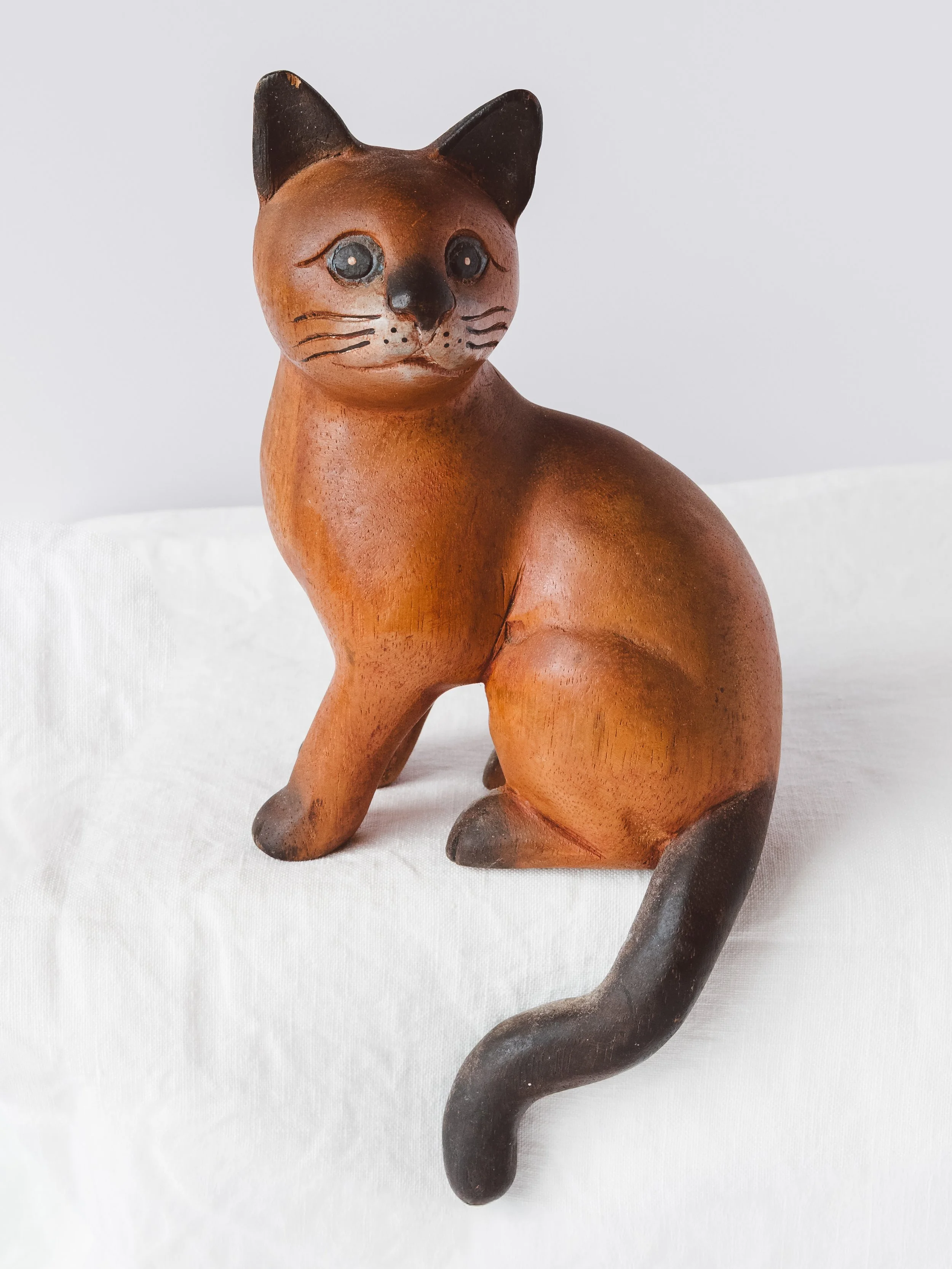 Image 1 of 6
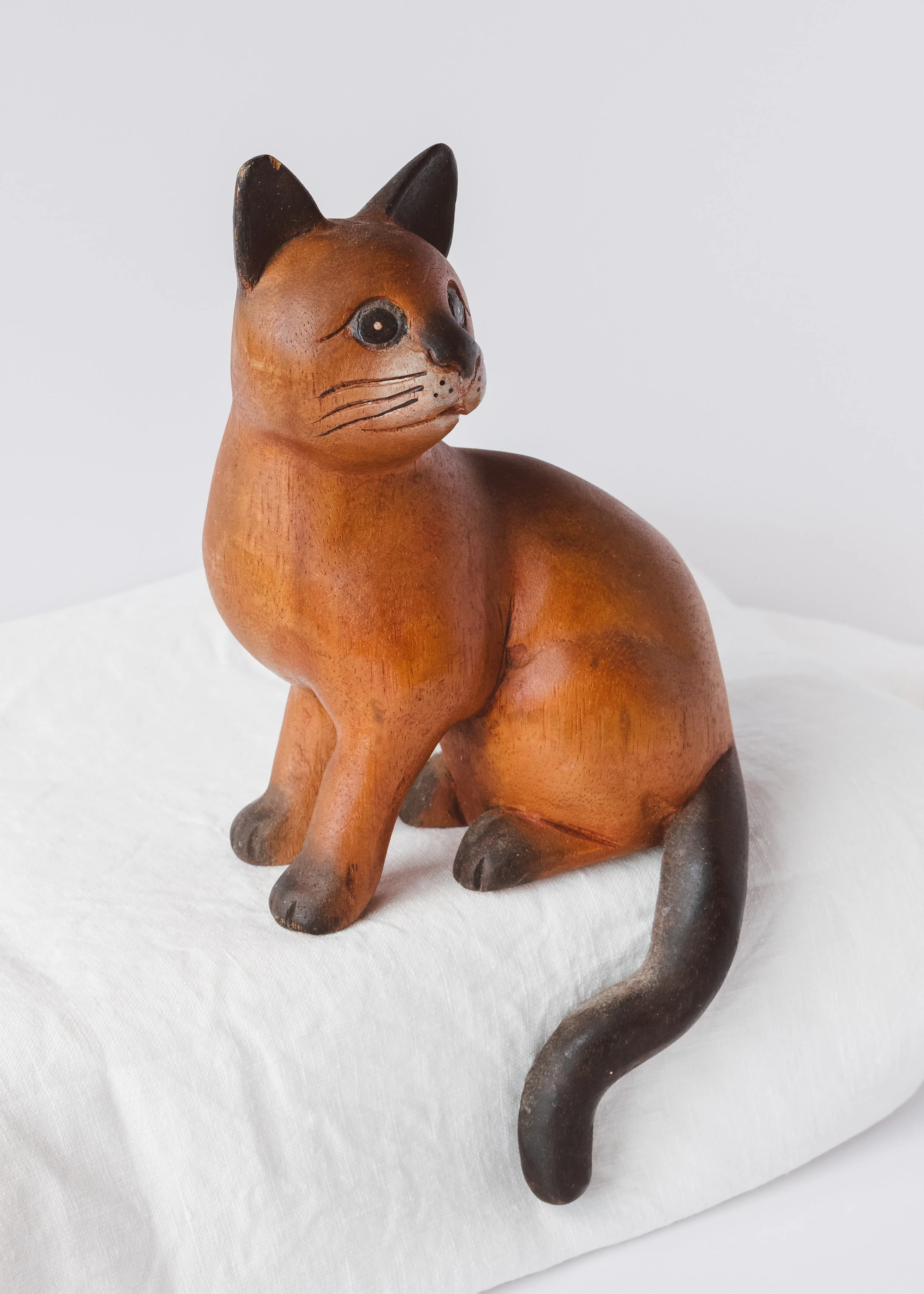 Image 2 of 6
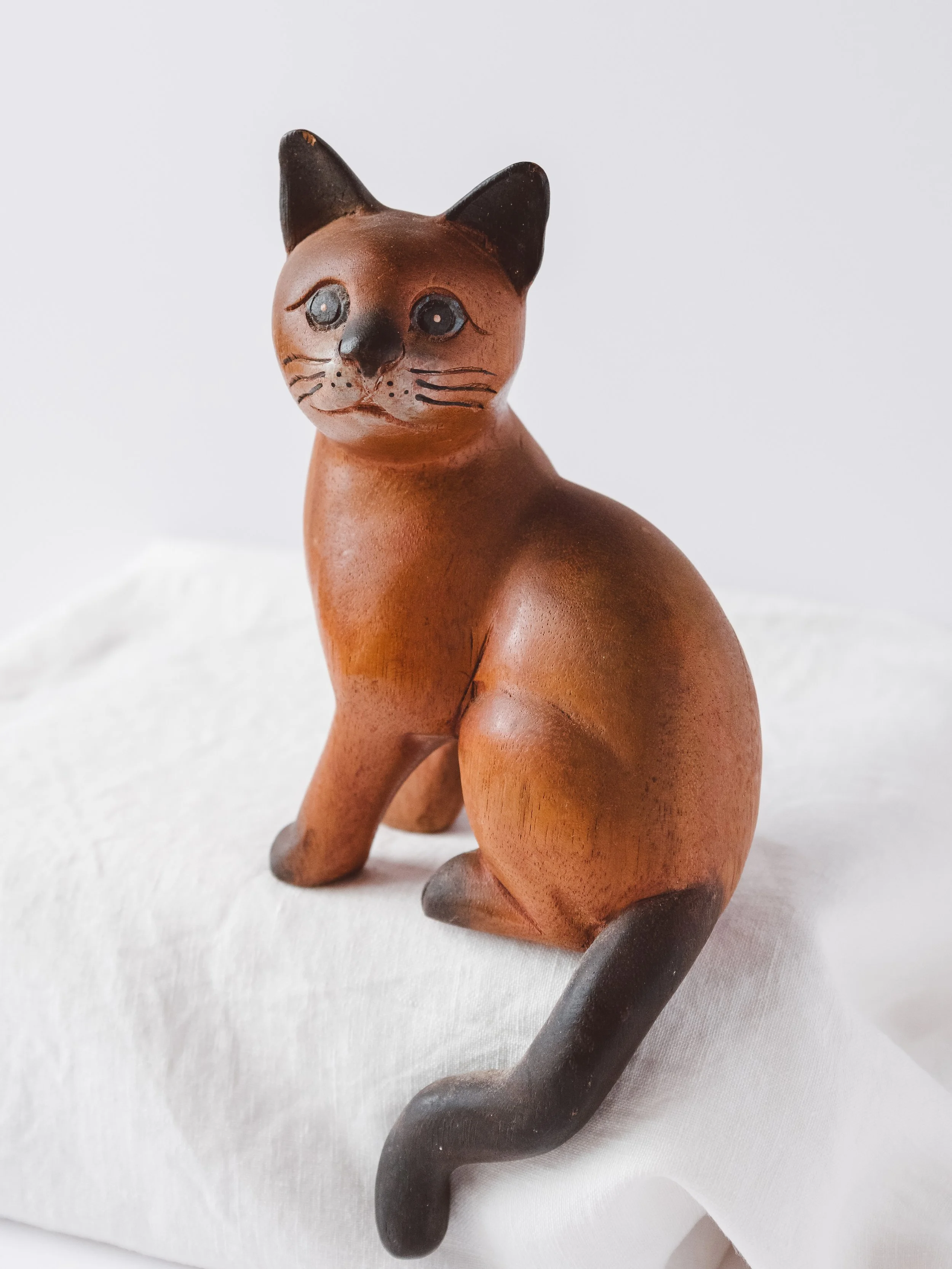 Image 3 of 6
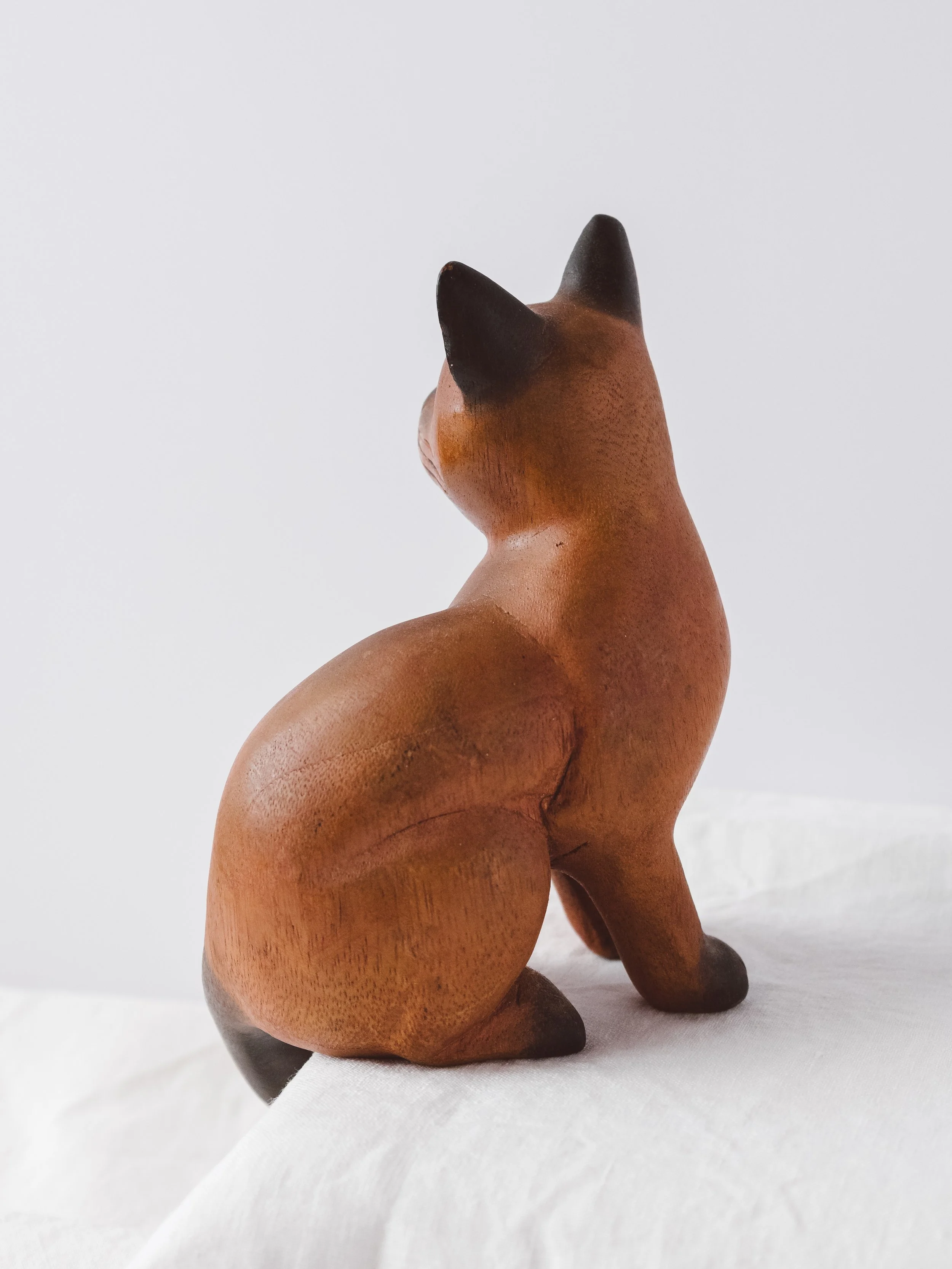 Image 4 of 6
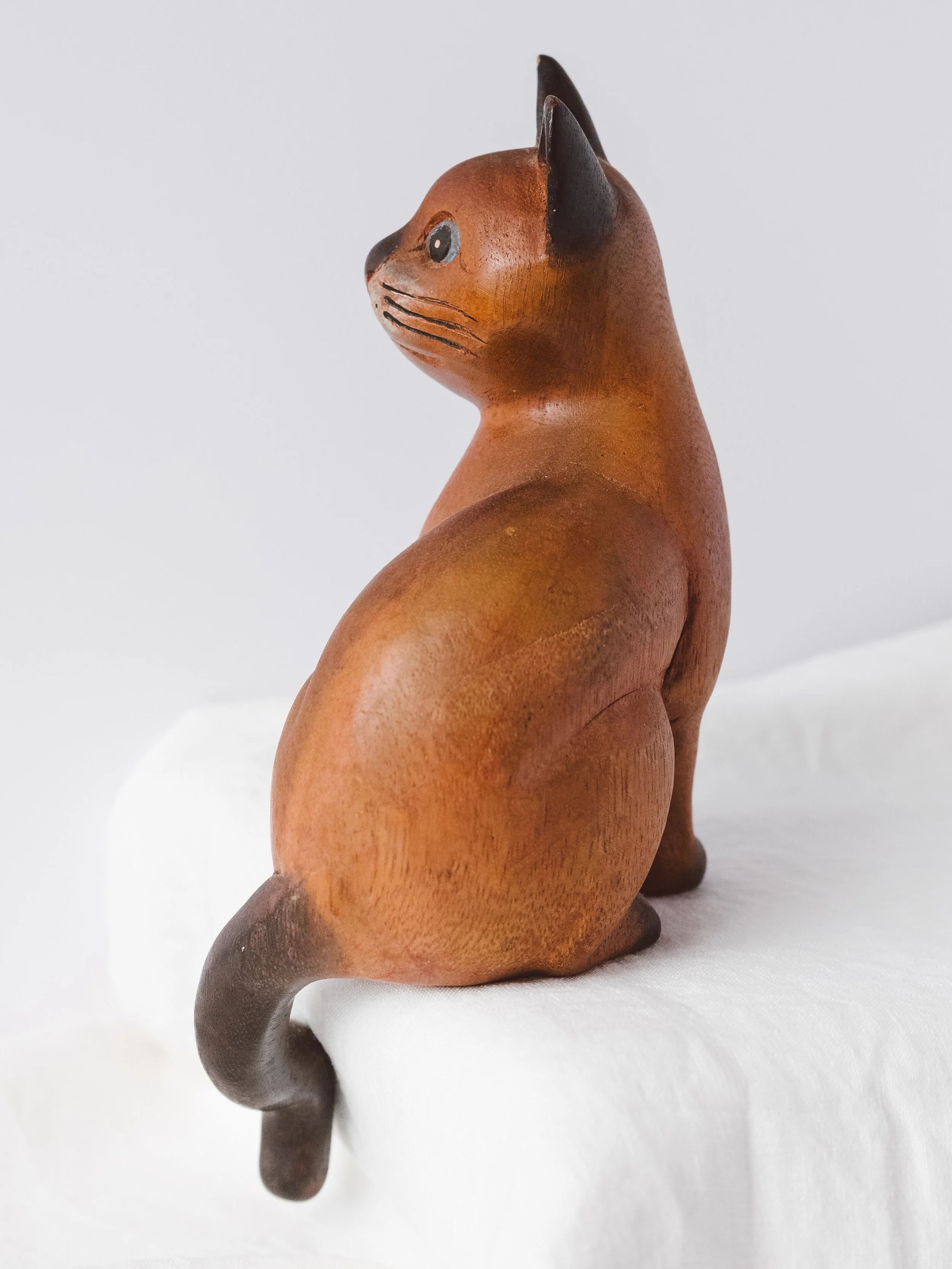 Image 5 of 6
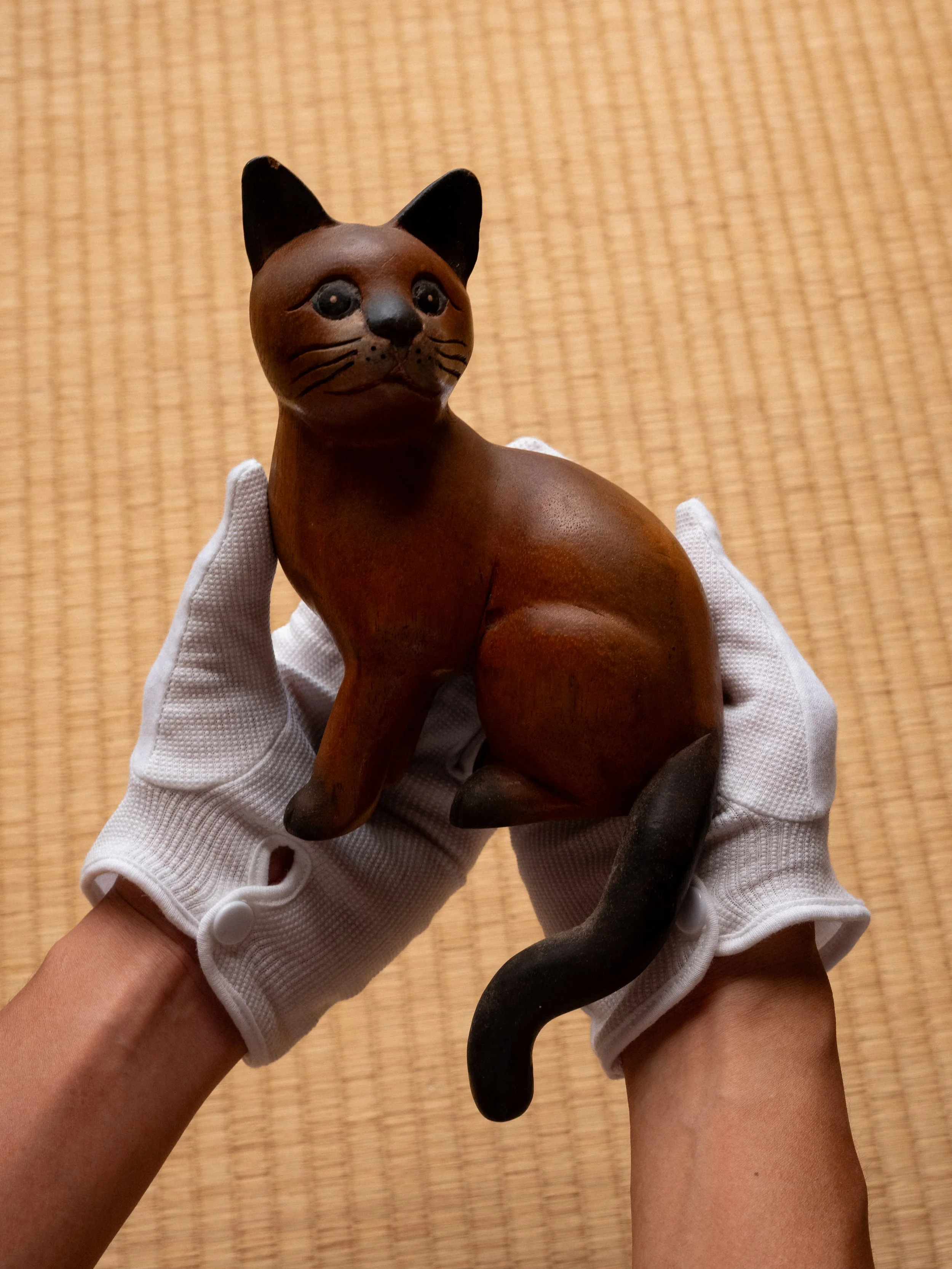 Image 6 of 6