

HIRAMATSU BAMBOO CRAFT
The first chapter of a new project — soon to have a home of its own, separate from MINGEI 1926. This is where it begins.
Two baskets, woven from green bamboo cut on a mountainside in autumn. One of each. Available soon.
Where it begins
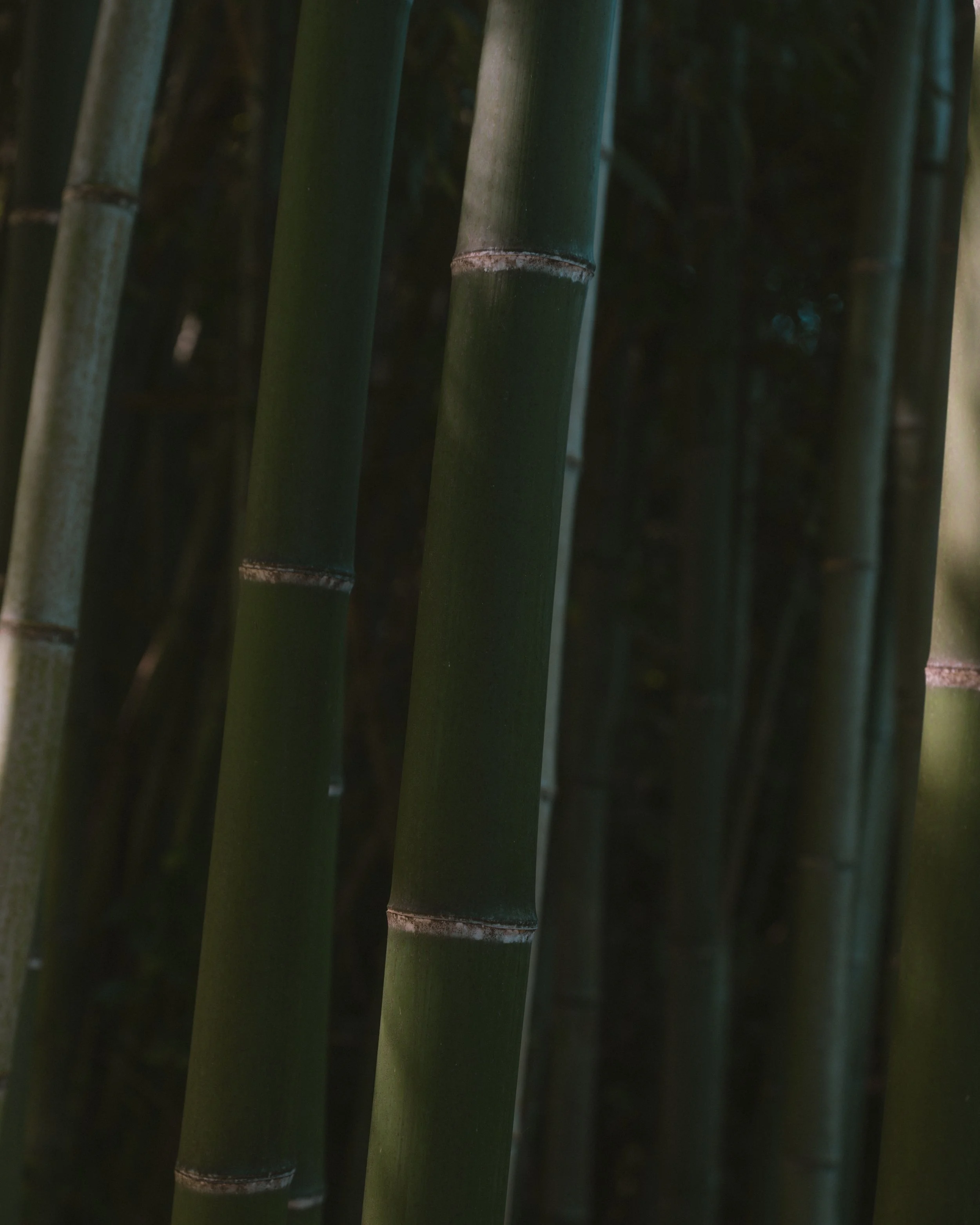
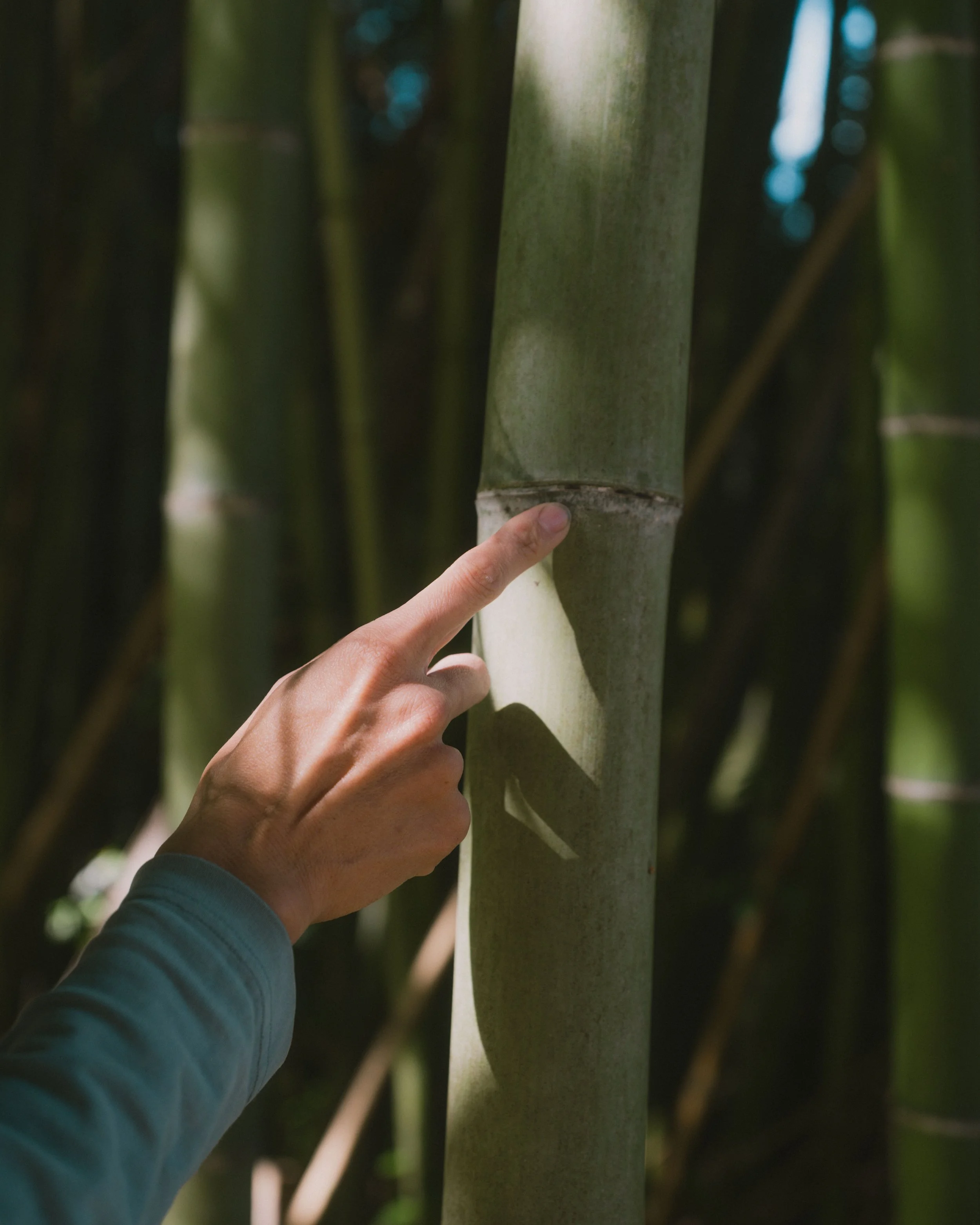
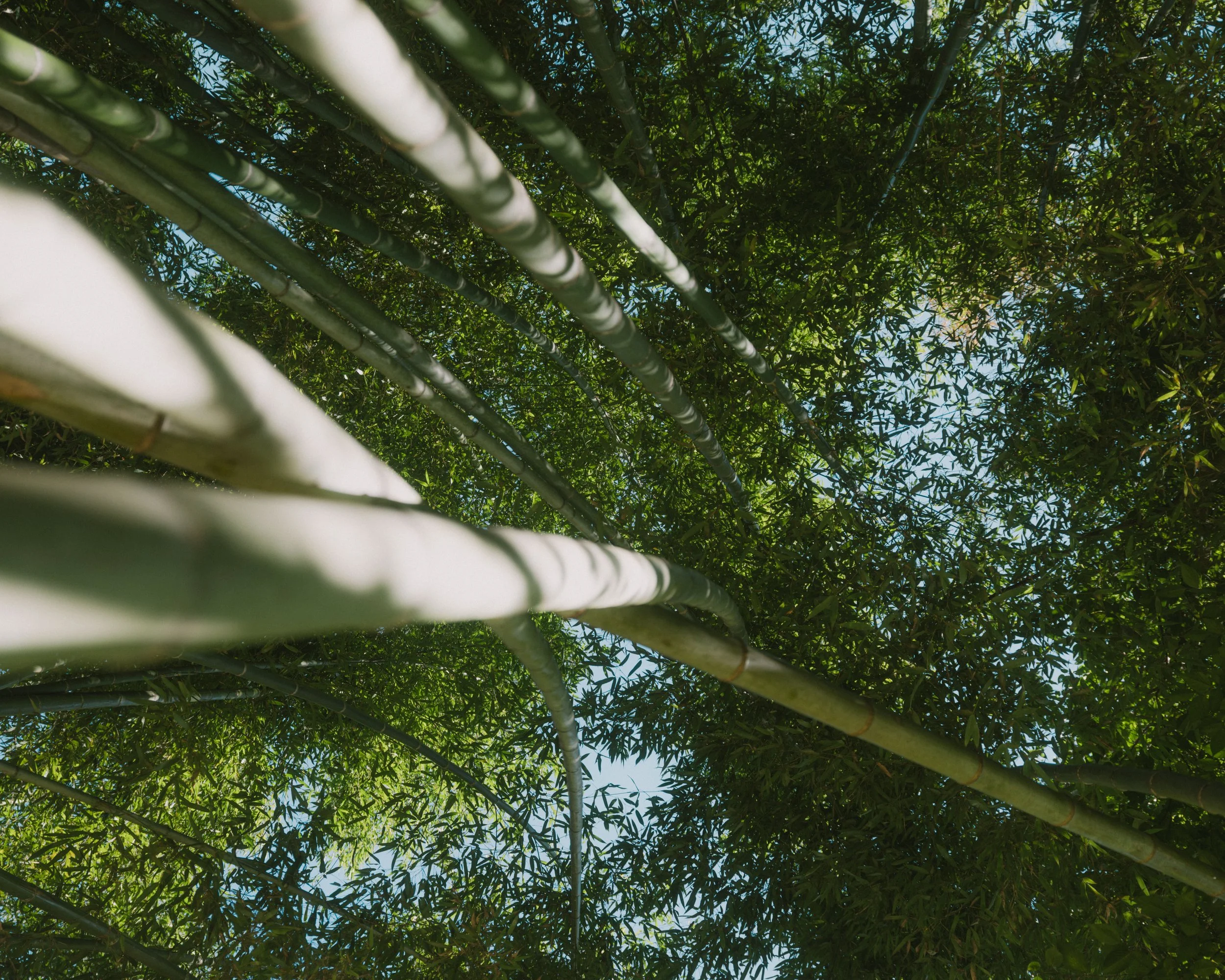
Before it is a basket, it is a forest. A grove of madake bamboo on a mountainside in northern Okayama, standing the way it has stood for longer than anyone remembers. Nothing here is hurried. The bamboo takes three to five years to grow tall enough to be worth cutting. The maker walks in and listens before he takes anything.A forest nobody wants anymore
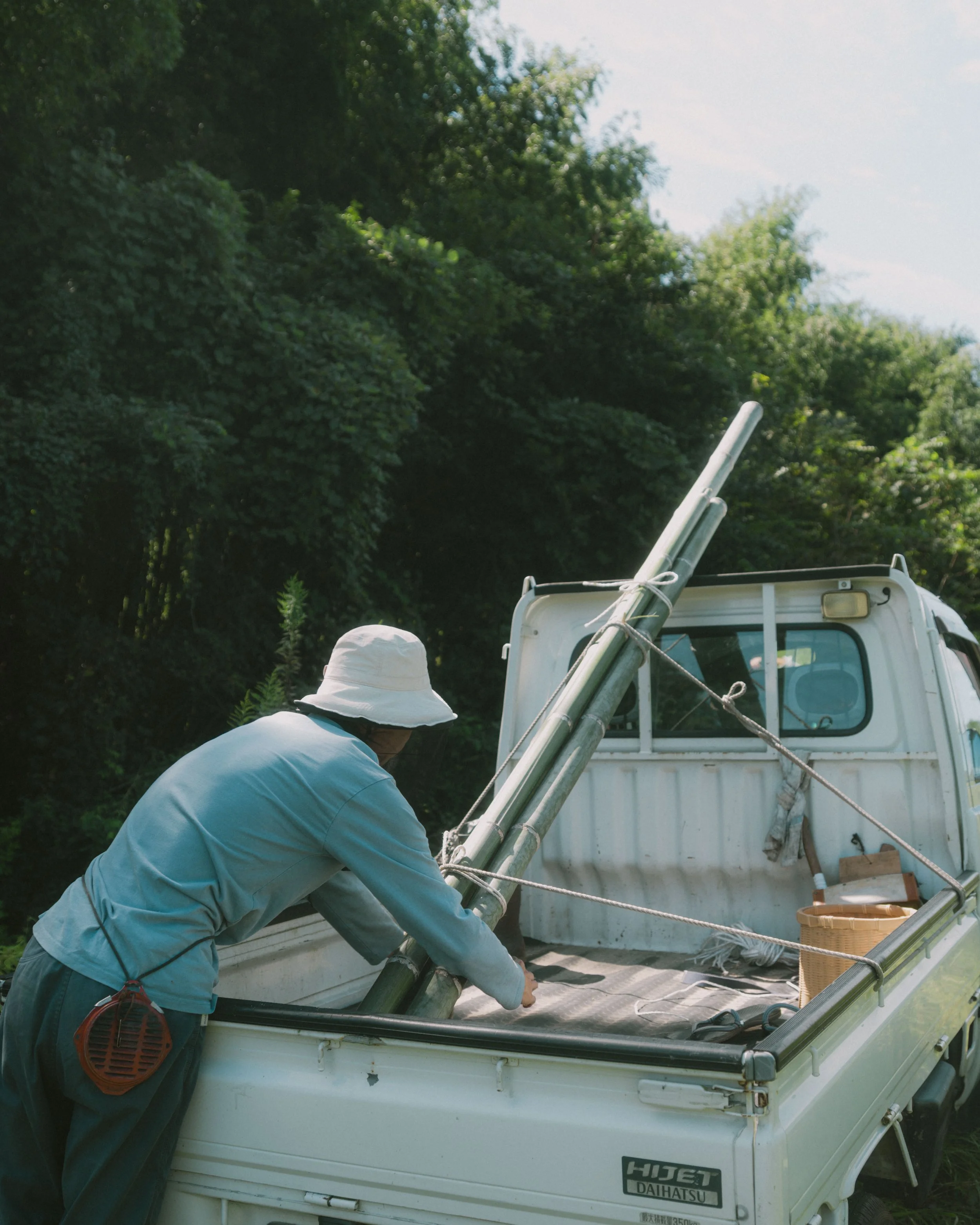
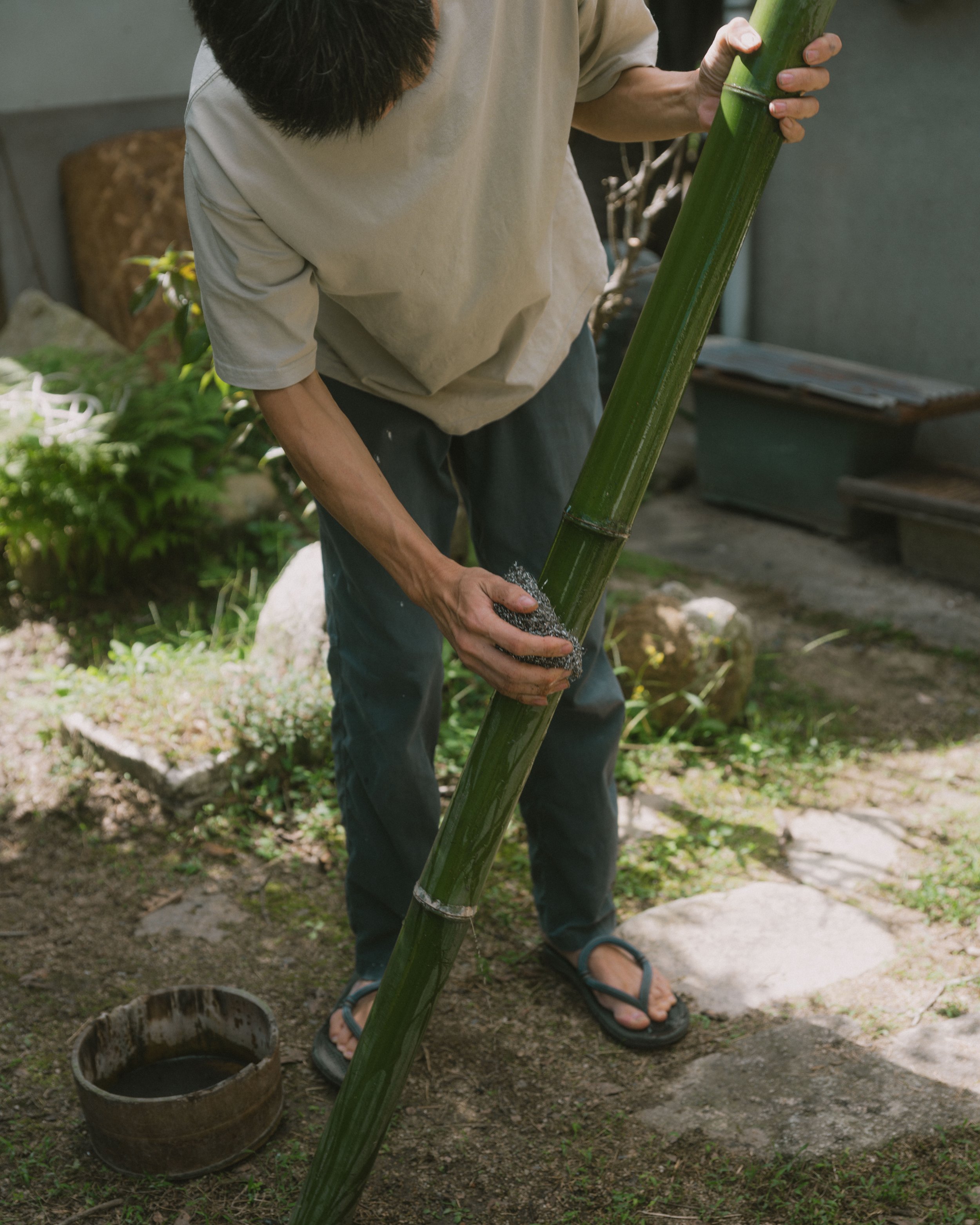
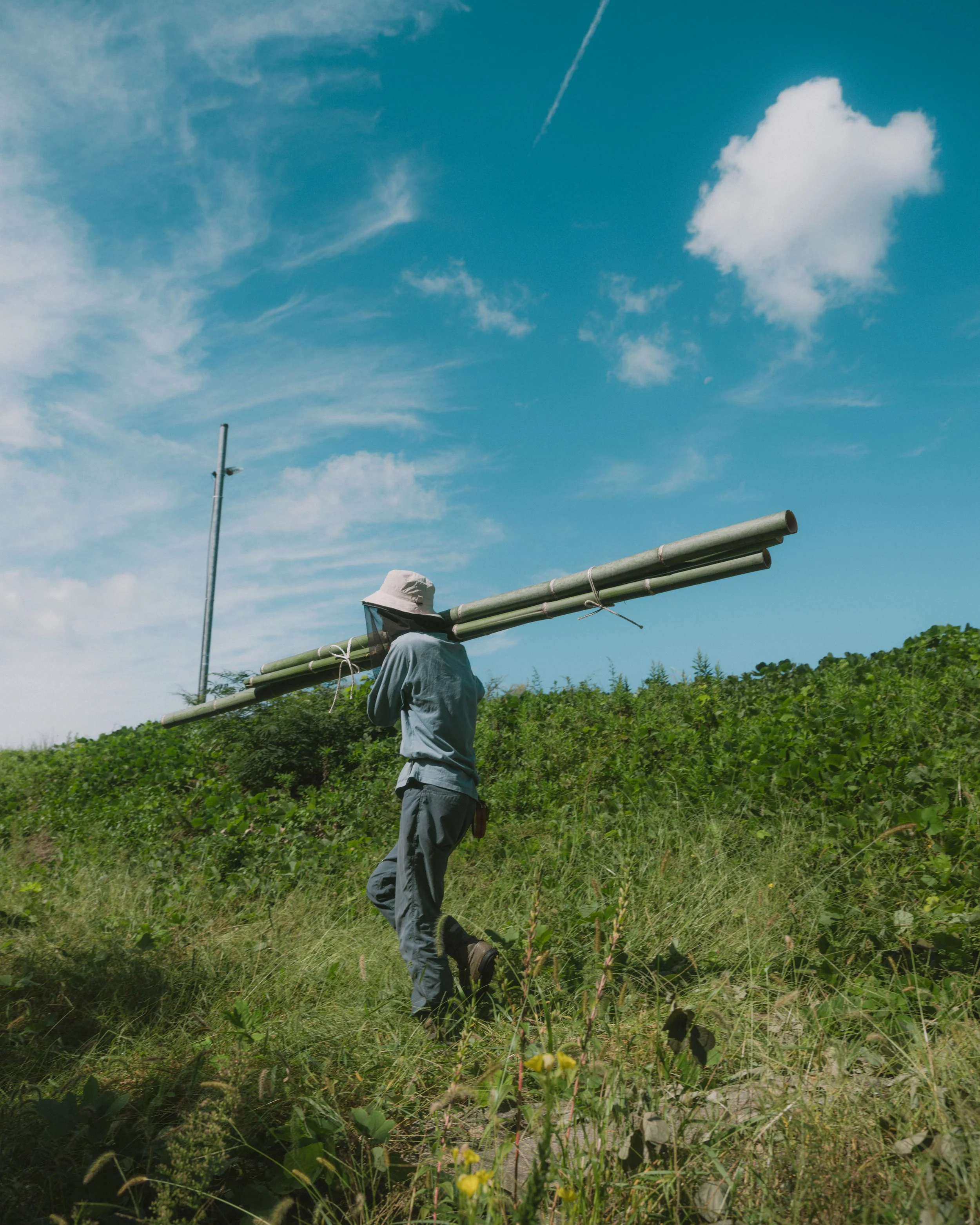
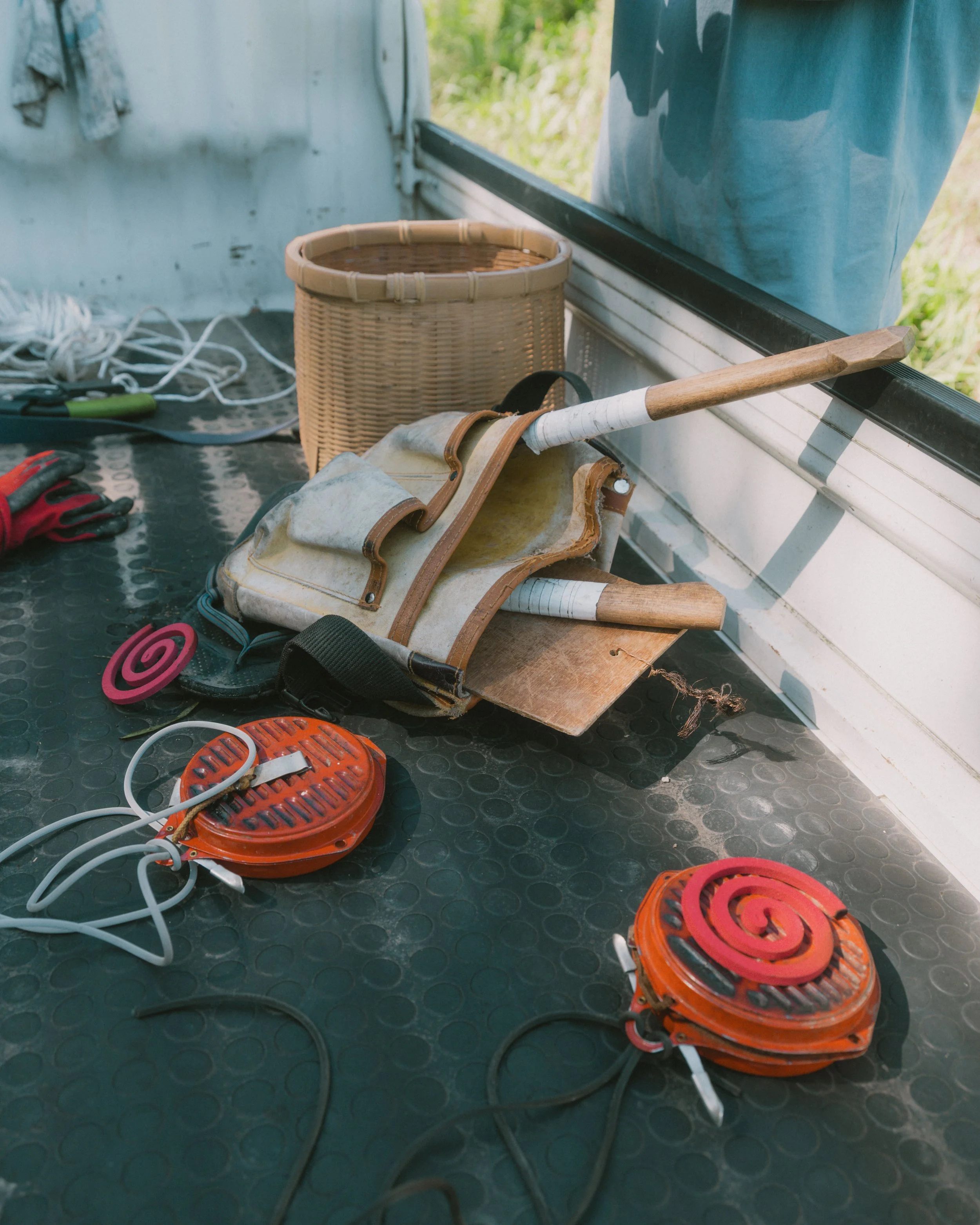
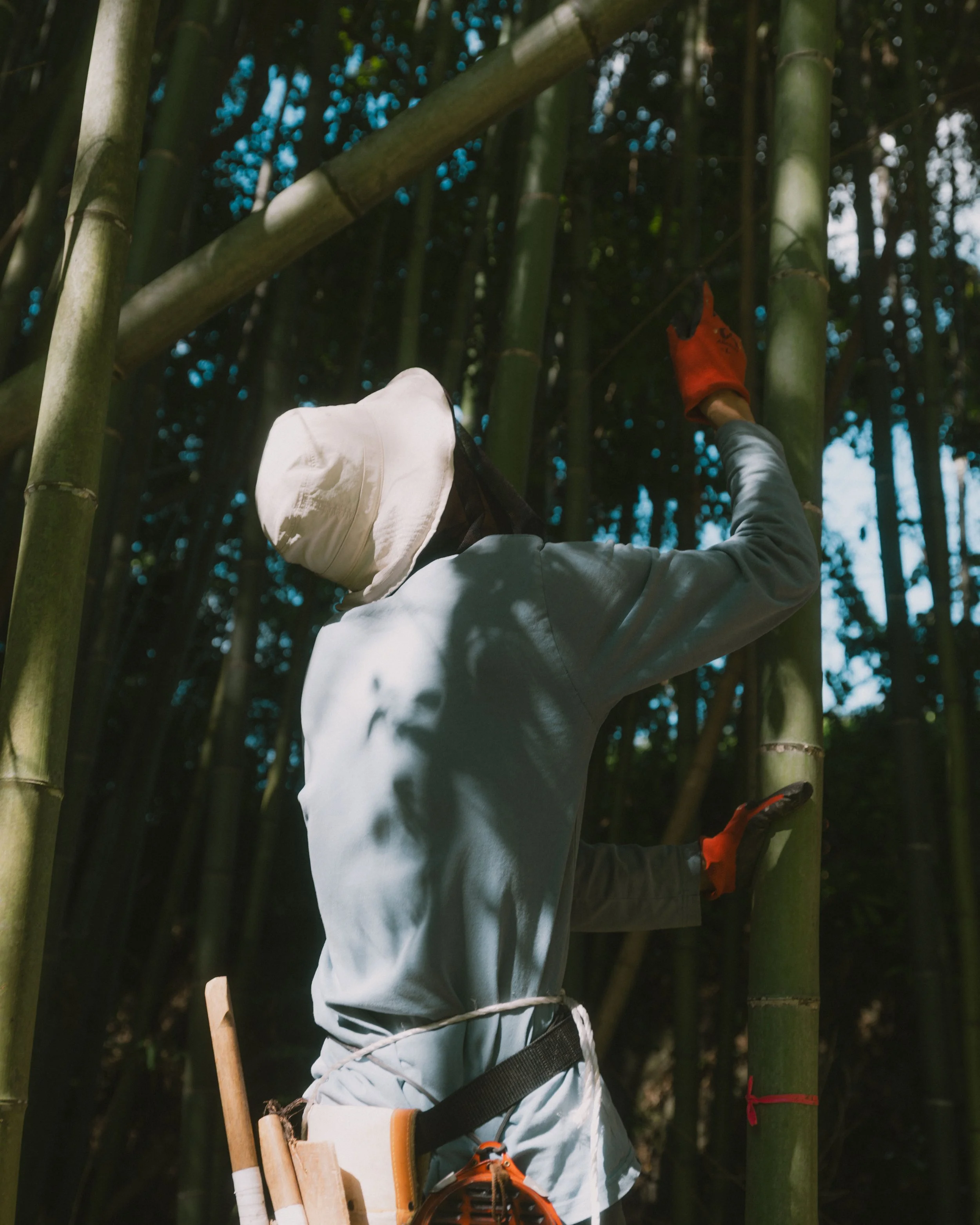
There was a time when a bamboo grove was wealth. It gave you baskets, fences, the frame of your house, the handle of every tool. For most of Japan's history, bamboo was what a whole life was built from — fast to grow, strong, free to anyone who tended the land.That time has passed. Plastic took the work the bamboo used to do. An untended grove is treated as a nuisance now — it spreads, it swallows hillsides, it is something to be cut back and cleared away. The forest that once fed a village is in the way.To cut this bamboo and weave it gives the forest a reason to stand again. What the world calls a nuisance, a pair of hands calls material.
Half of a life
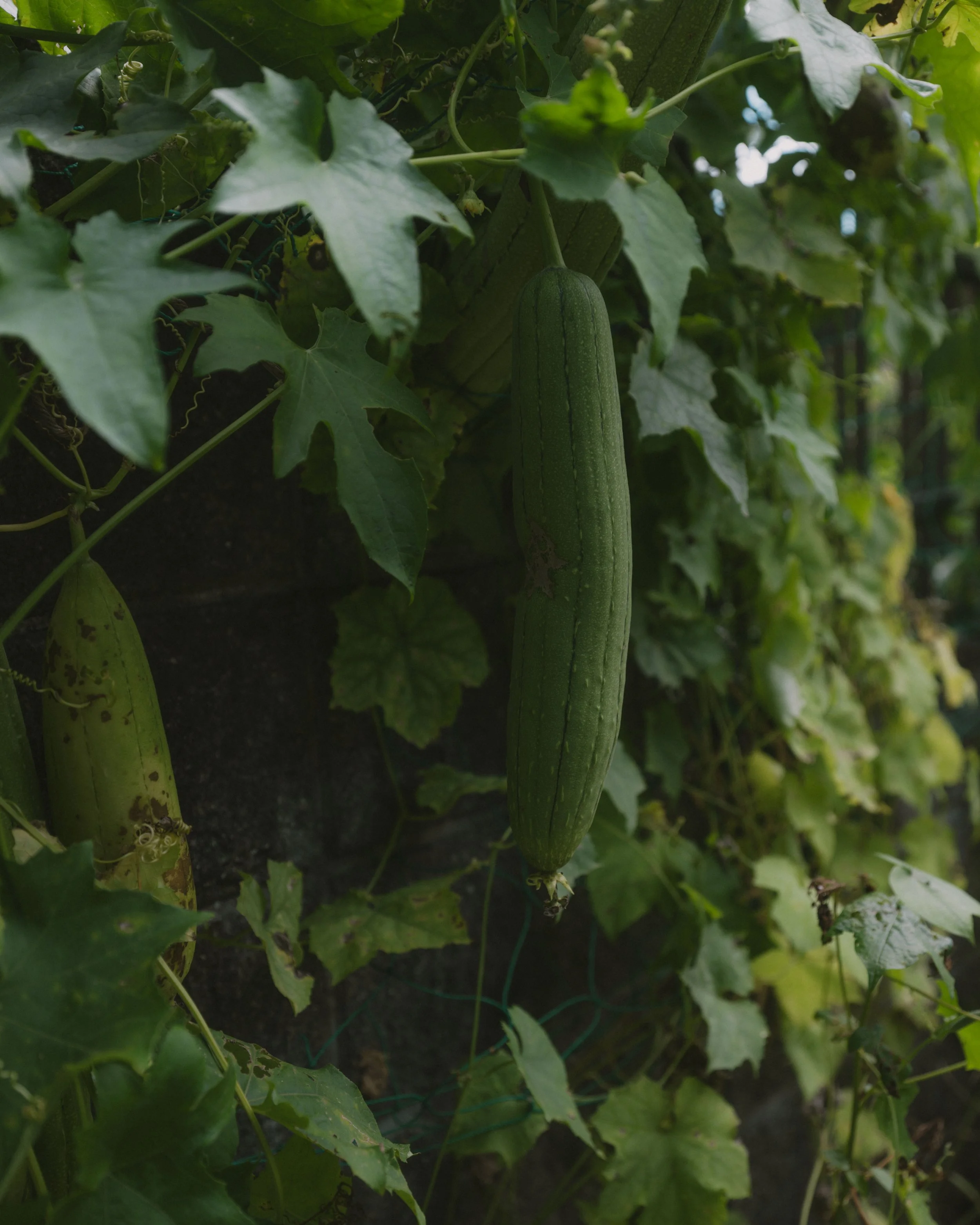
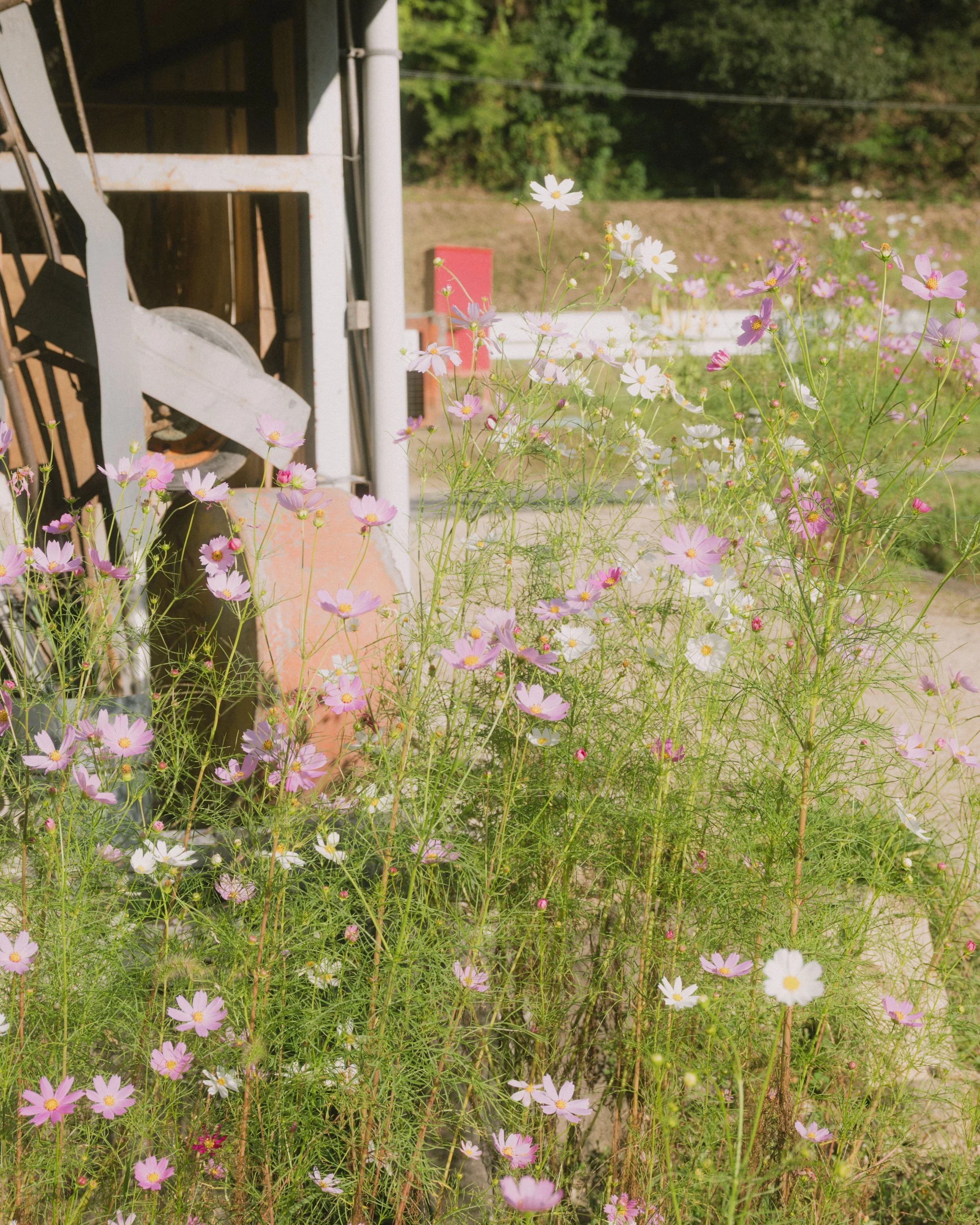
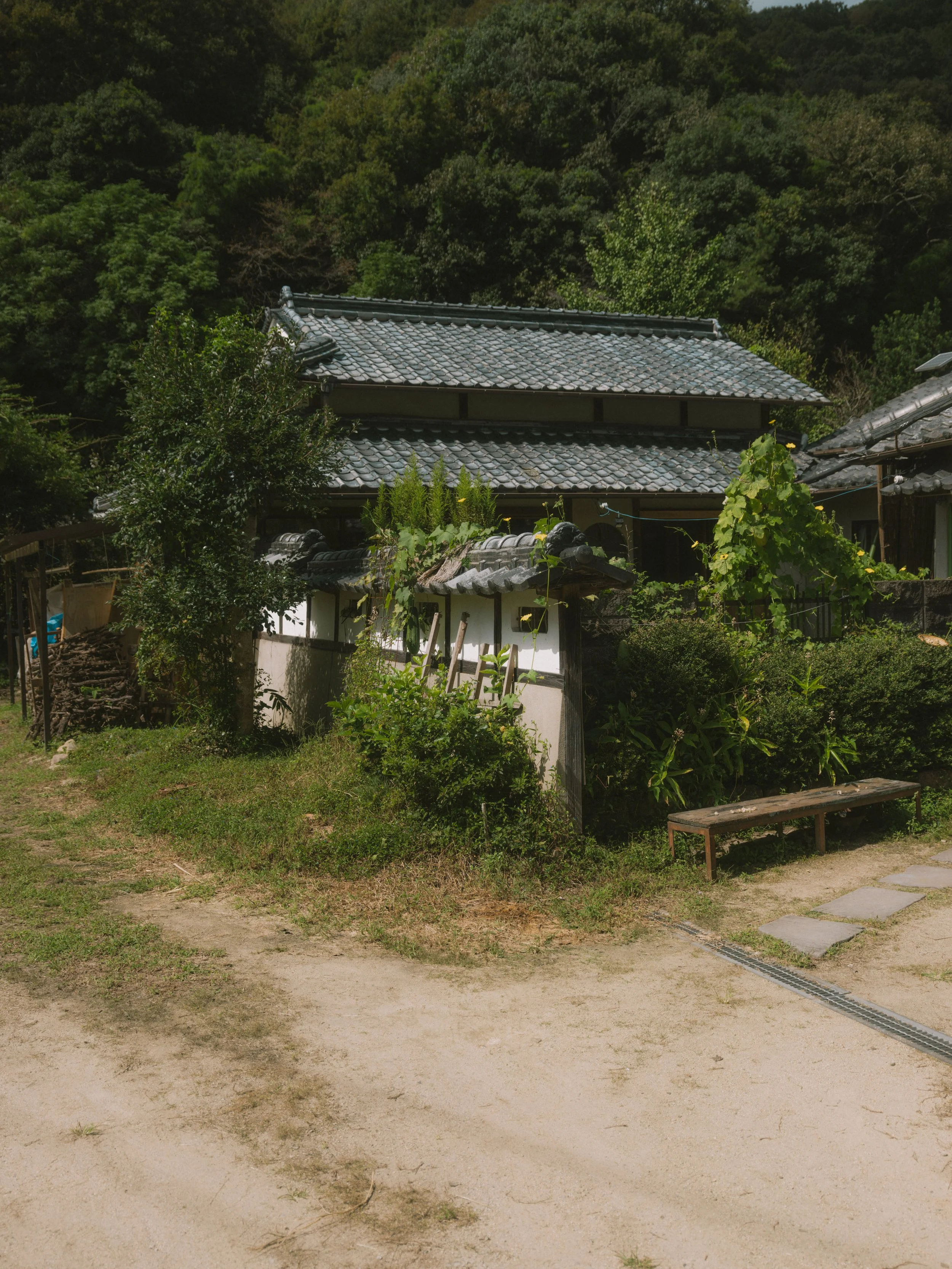
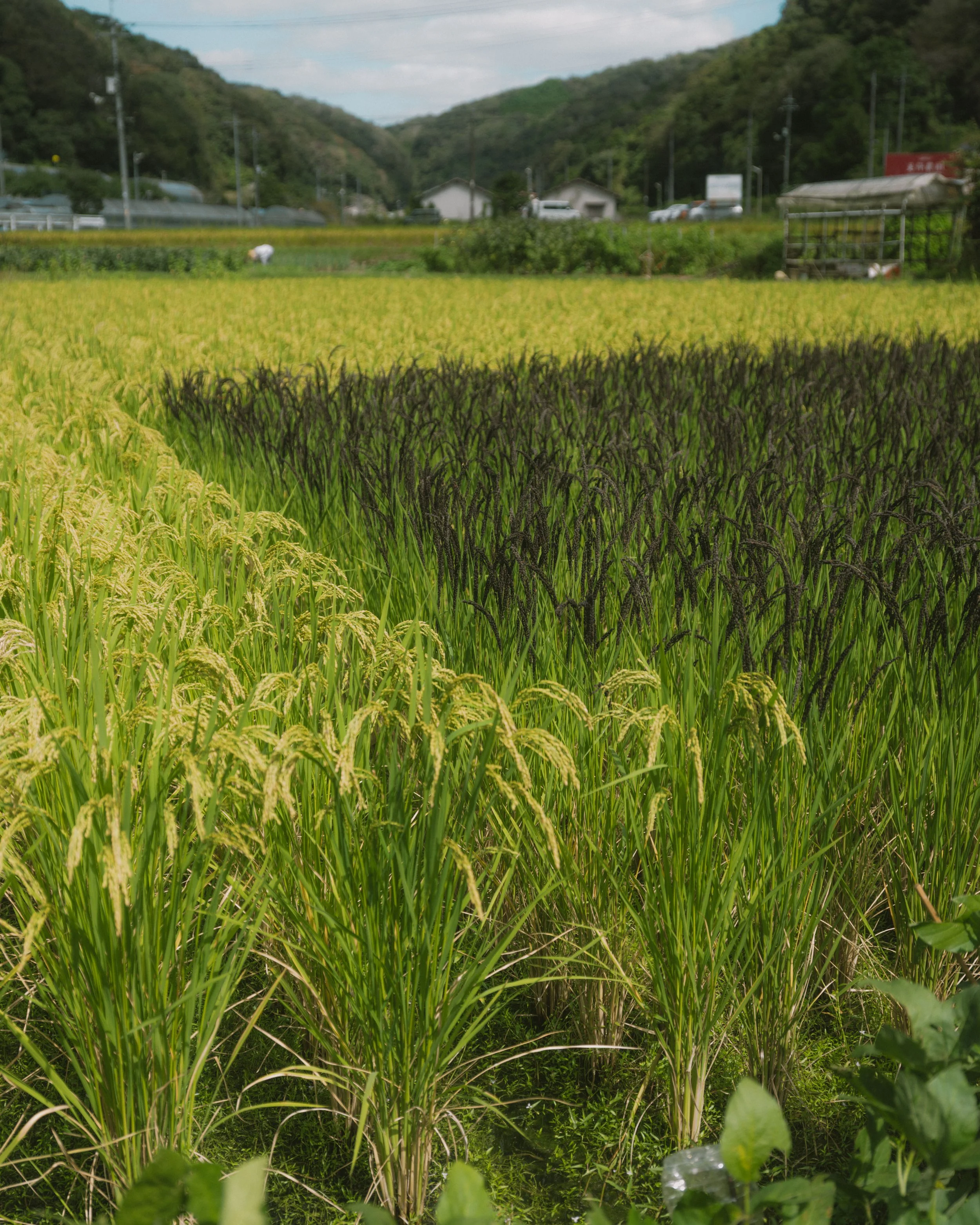
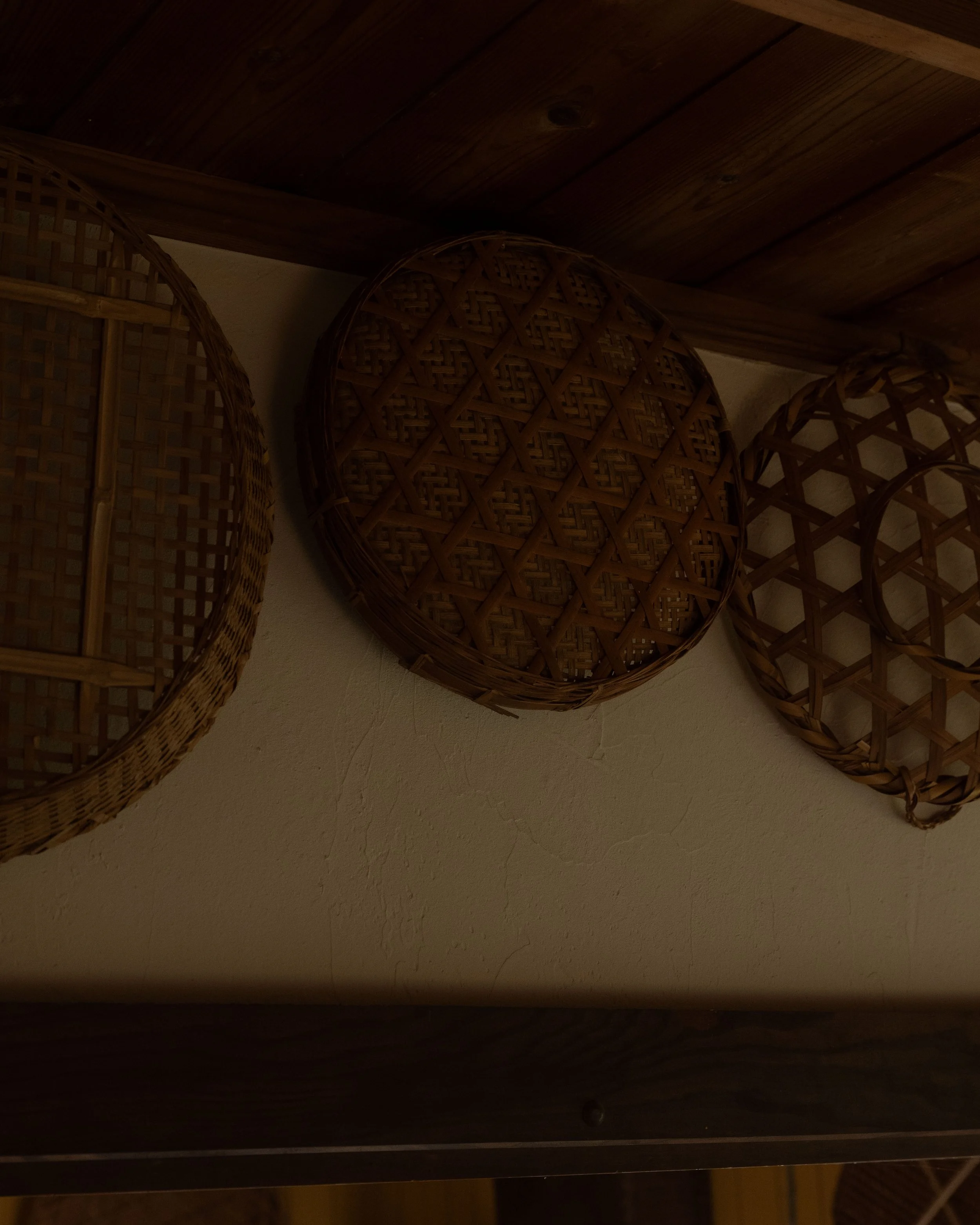
The workshop is a house, and the house is surrounded by what the two of them also tend: flowers by the door, and their own rice, grown without chemicals in their own fields. They do not make much. They do not sell much. The baskets are one half of a life. The other half is the field. When you understand that, you understand the baskets.
Inside
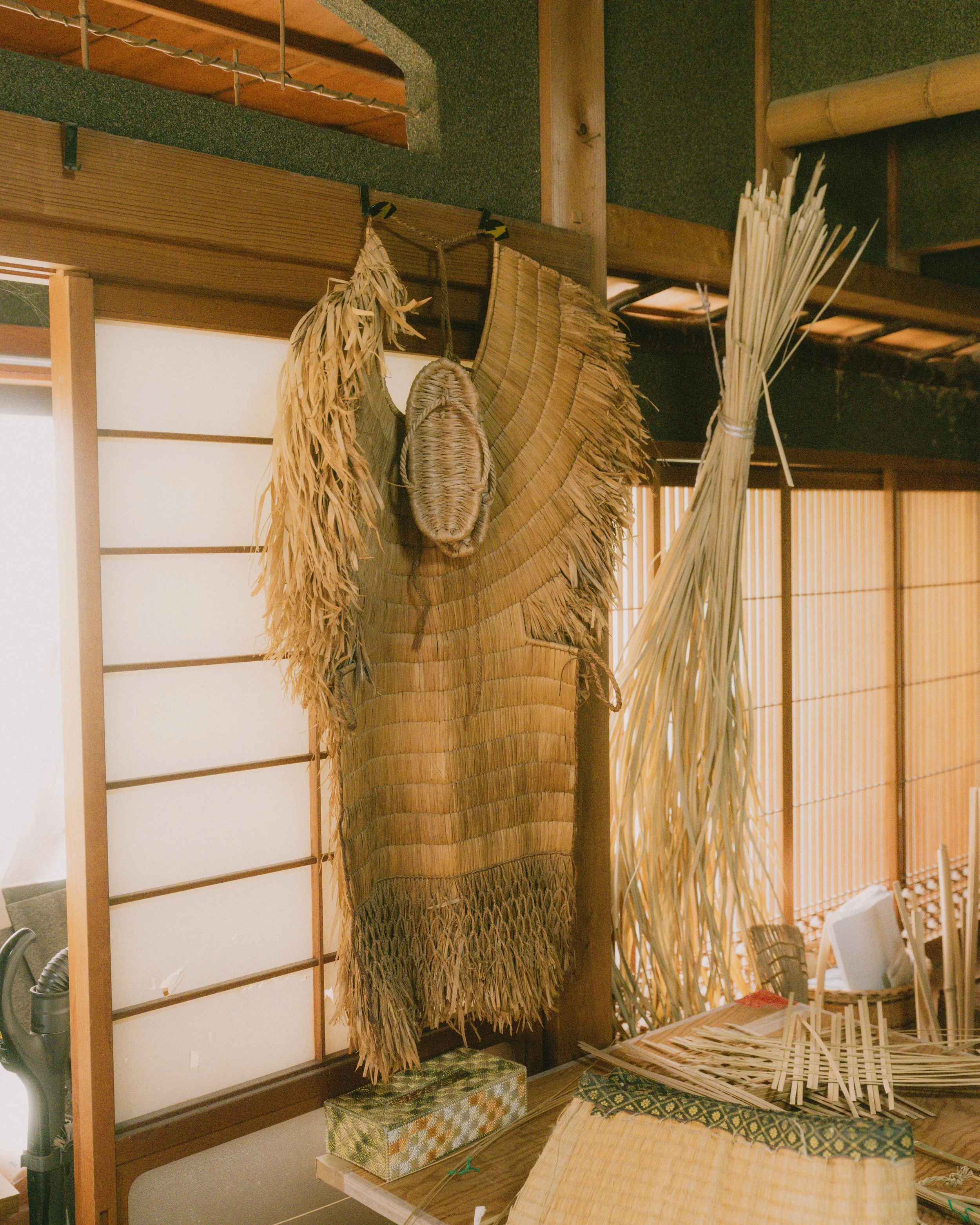
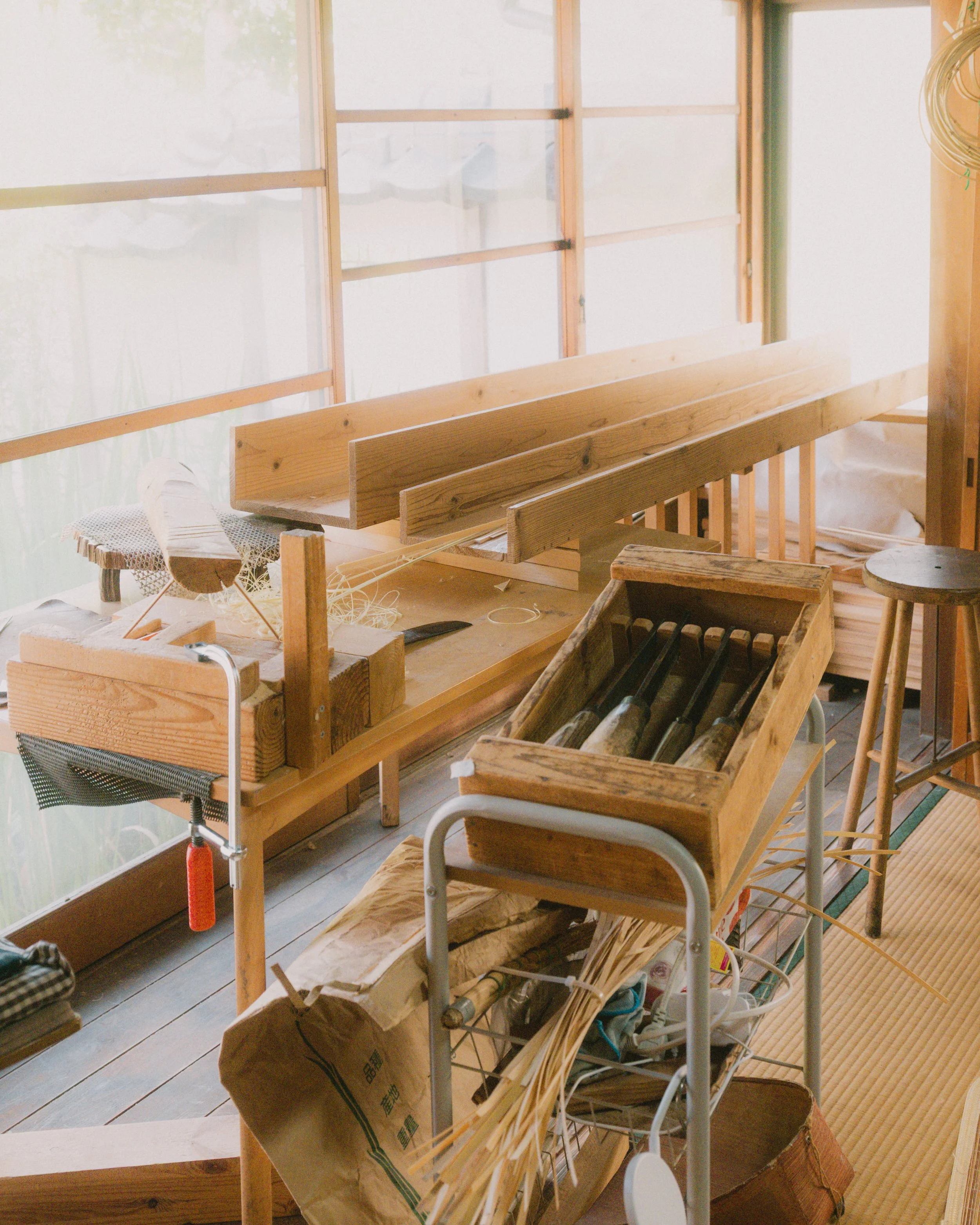
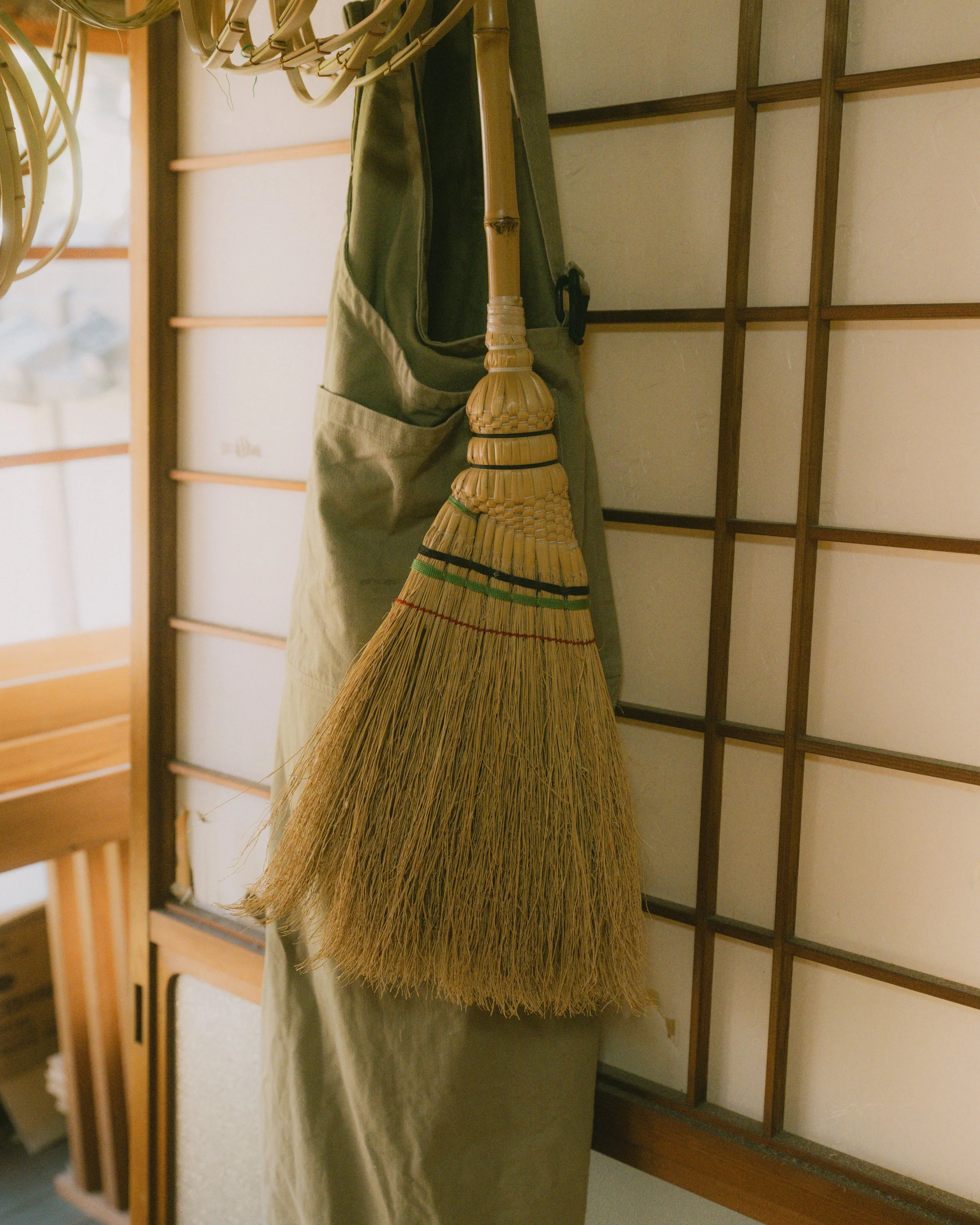
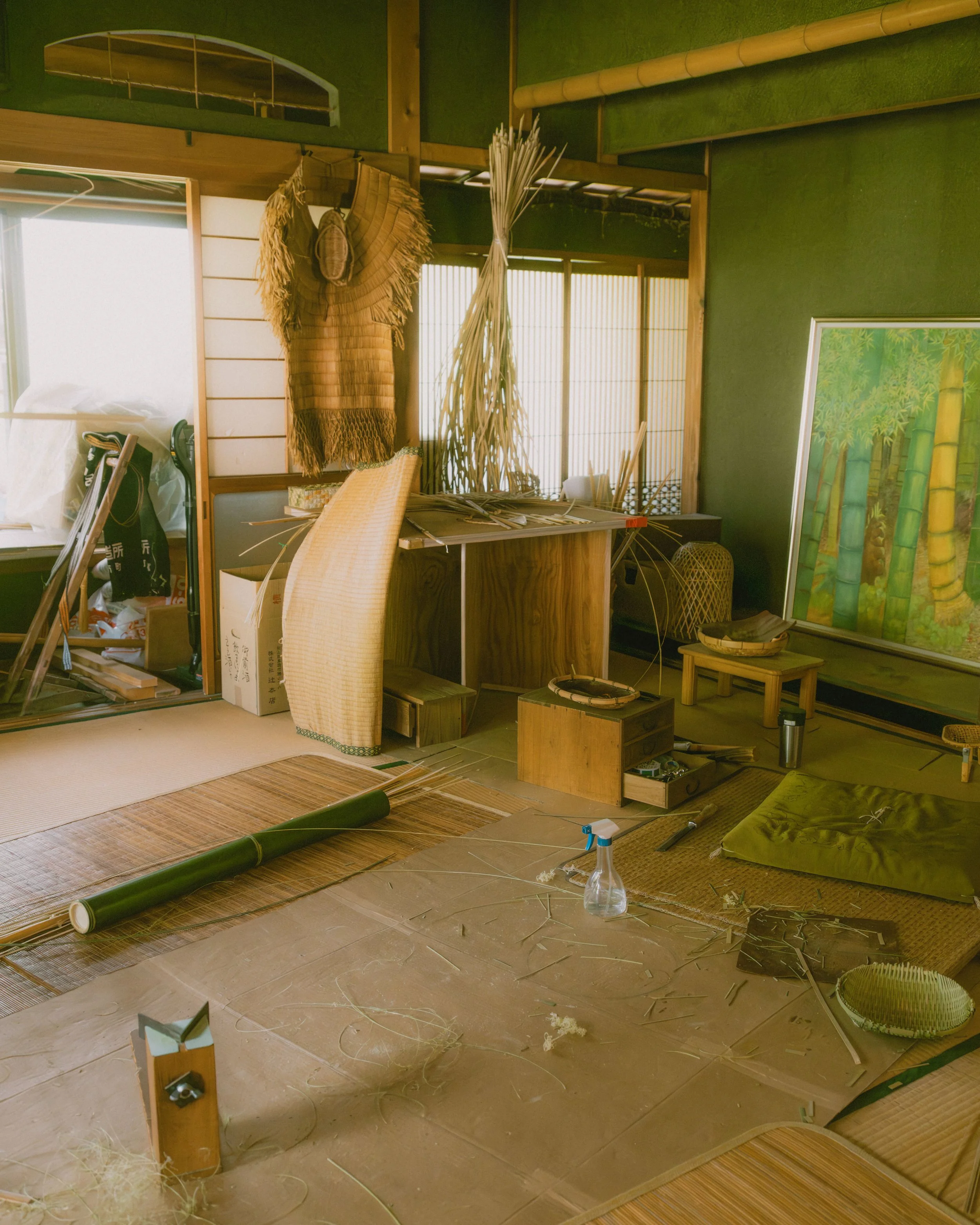
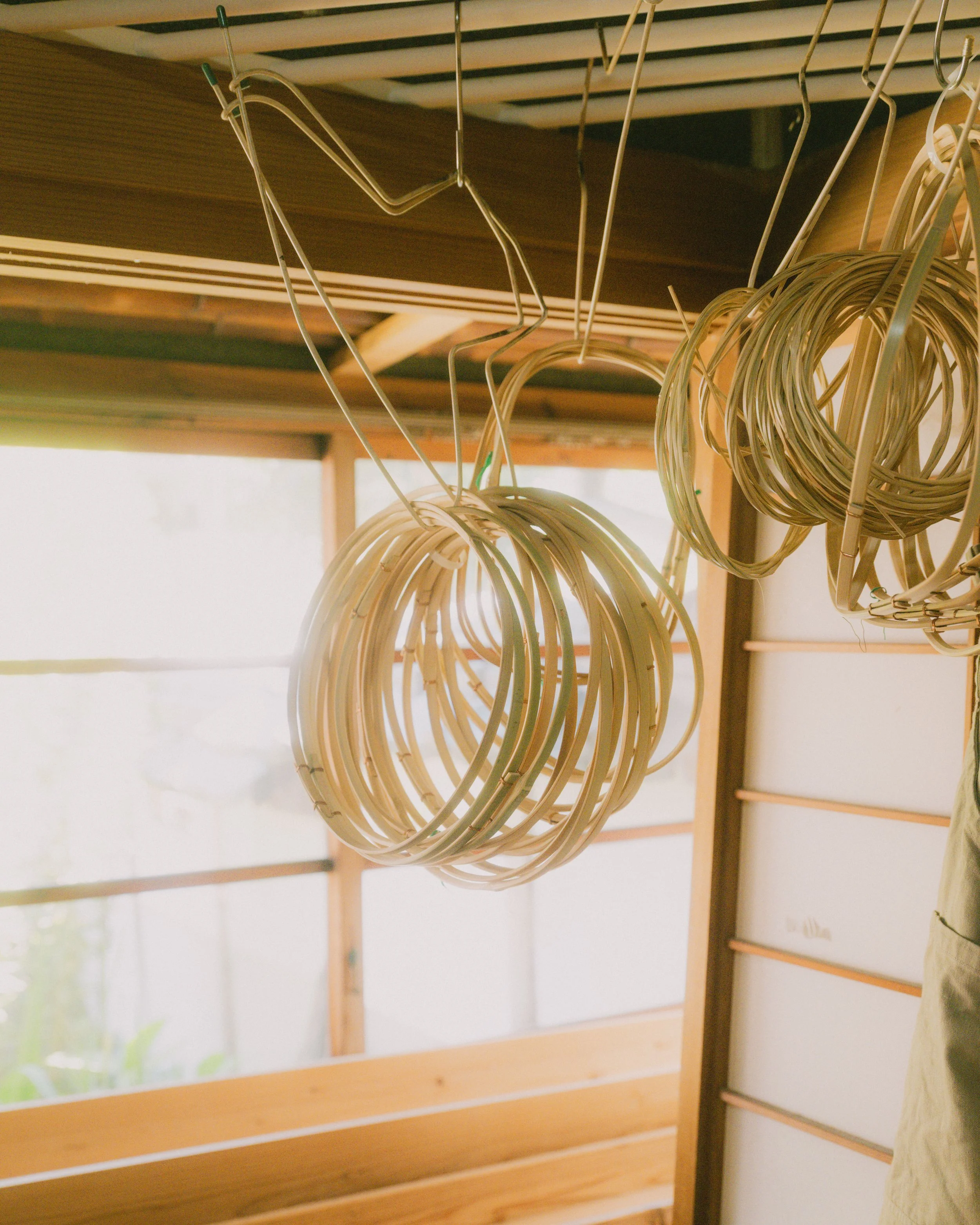
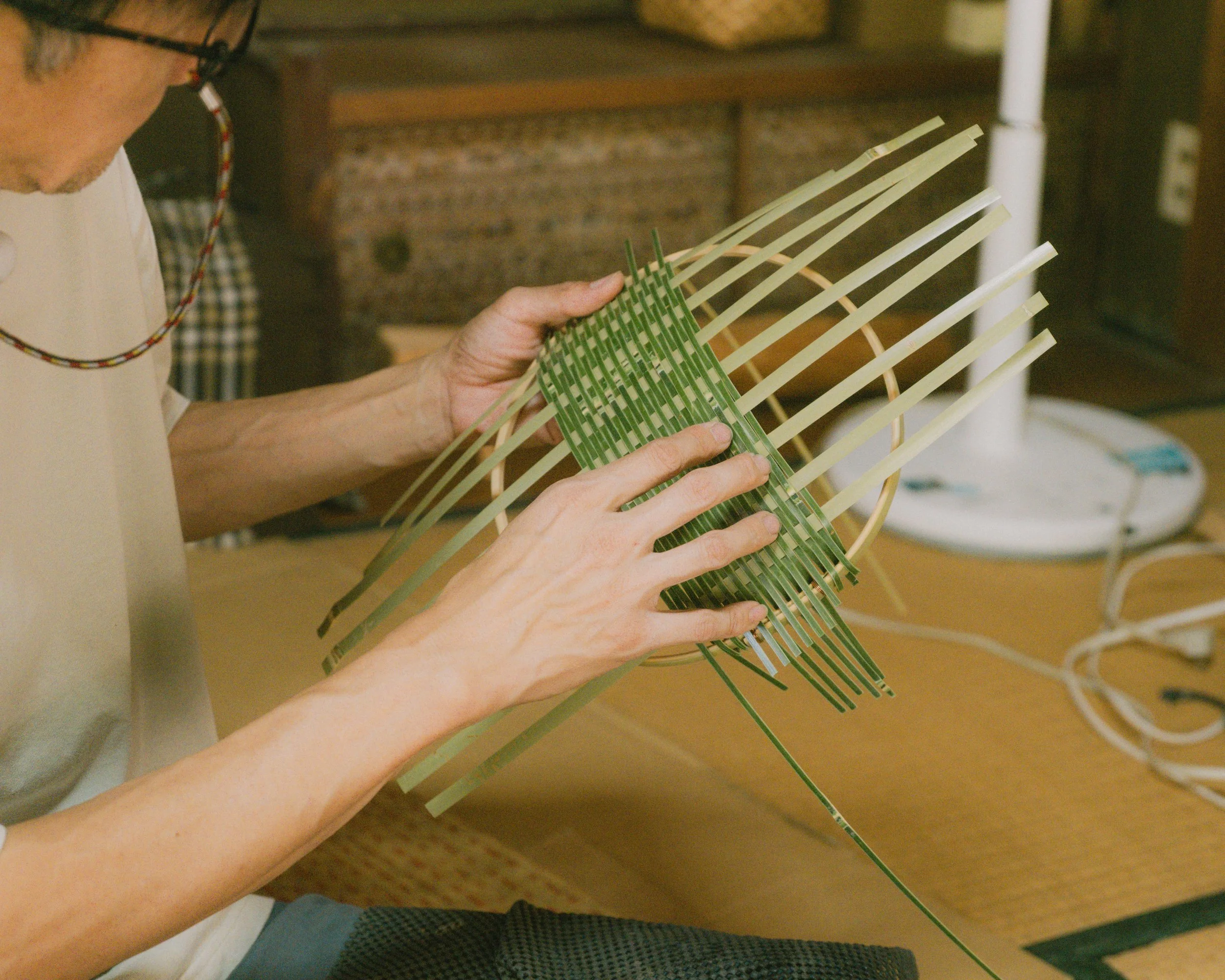
There are no machines here of any size. The maker works on the floor, seated cross-legged on the tatami, the way this craft has always been done — the basket growing in the lap, the whole body bent around it. A few blades, worn to the shape of the hands that hold them. Light from the doorway. This is where bamboo from the mountain becomes something that will sit in a kitchen for the next fifty years.
Splitting — the part no one sees
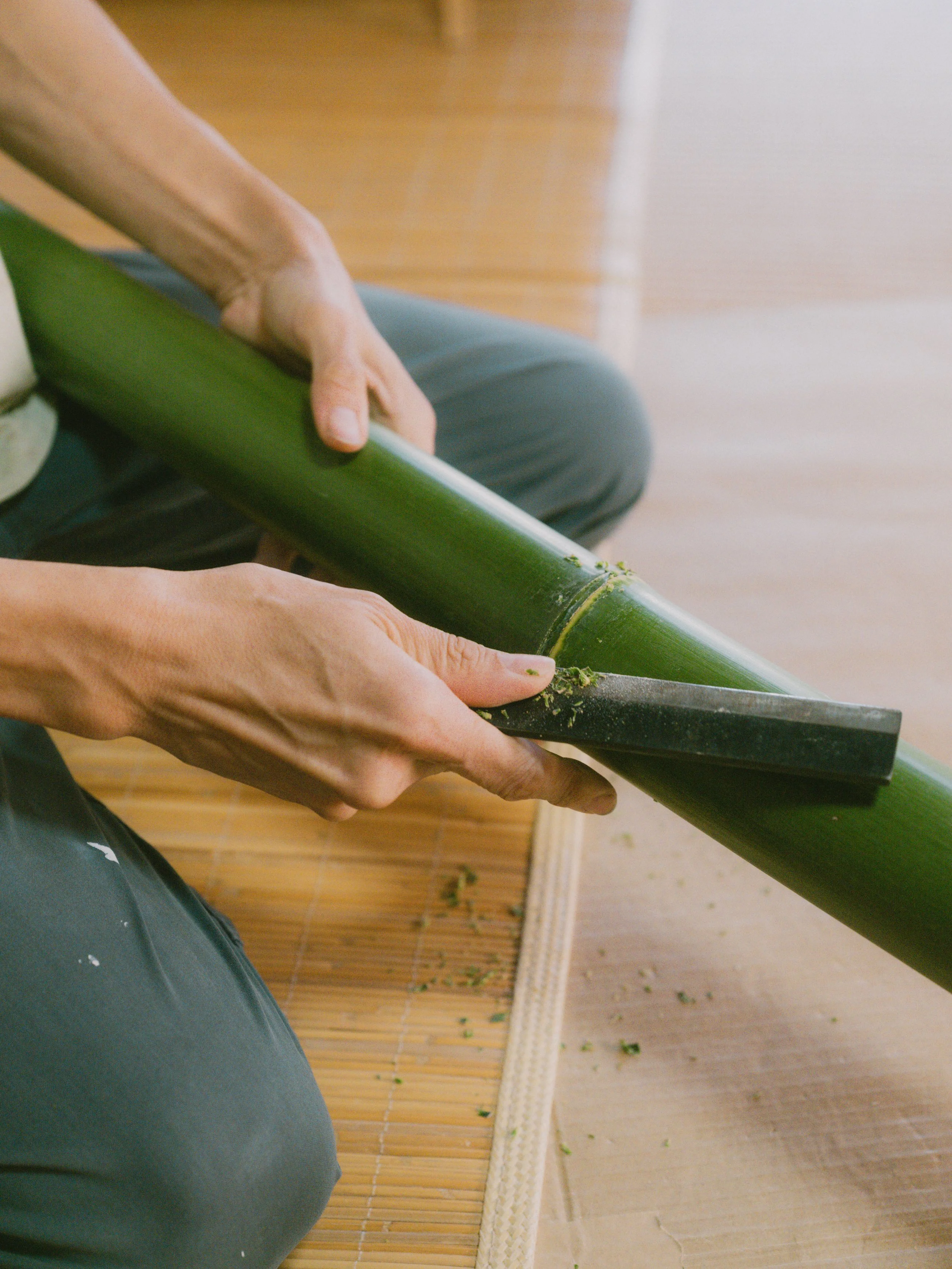
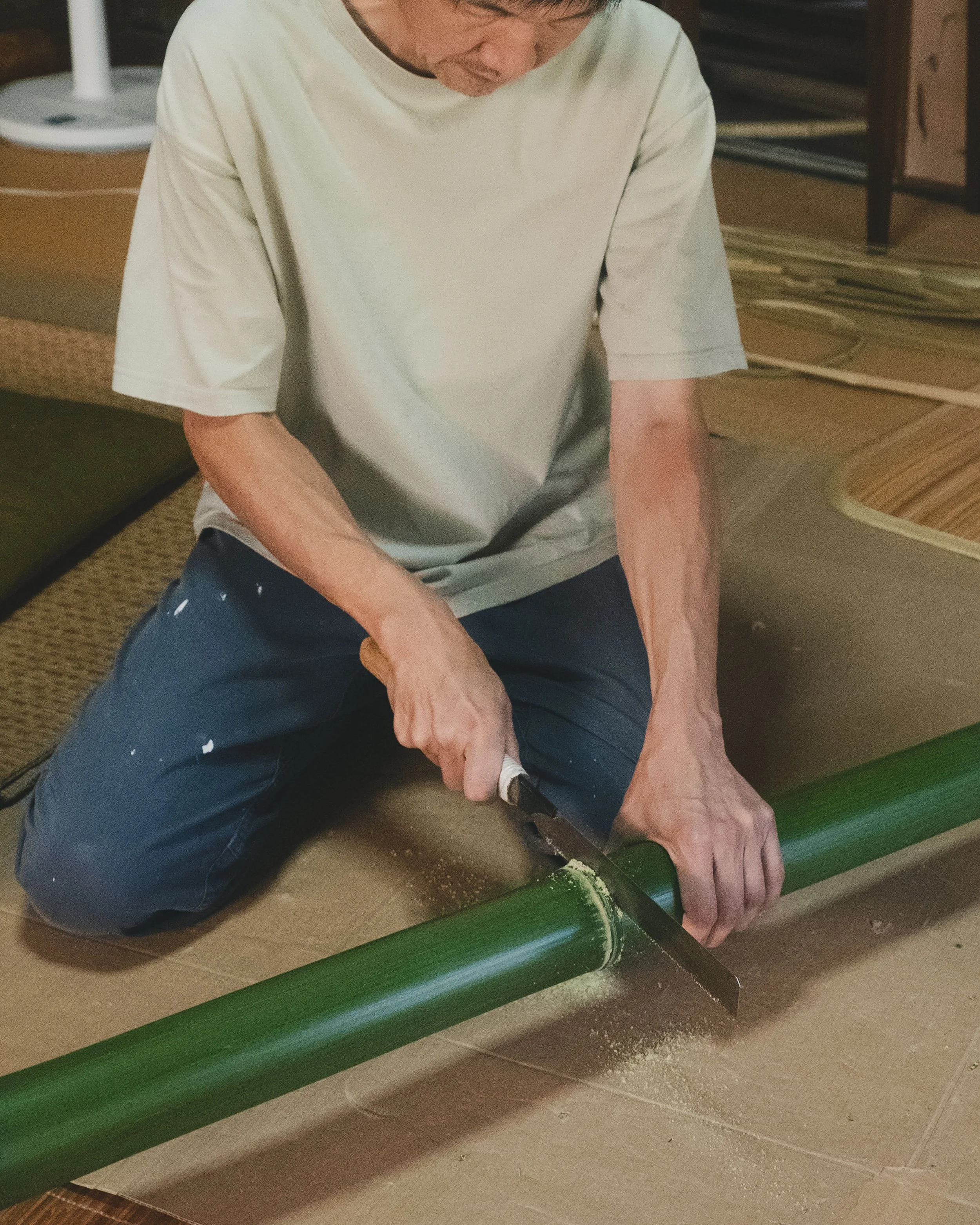
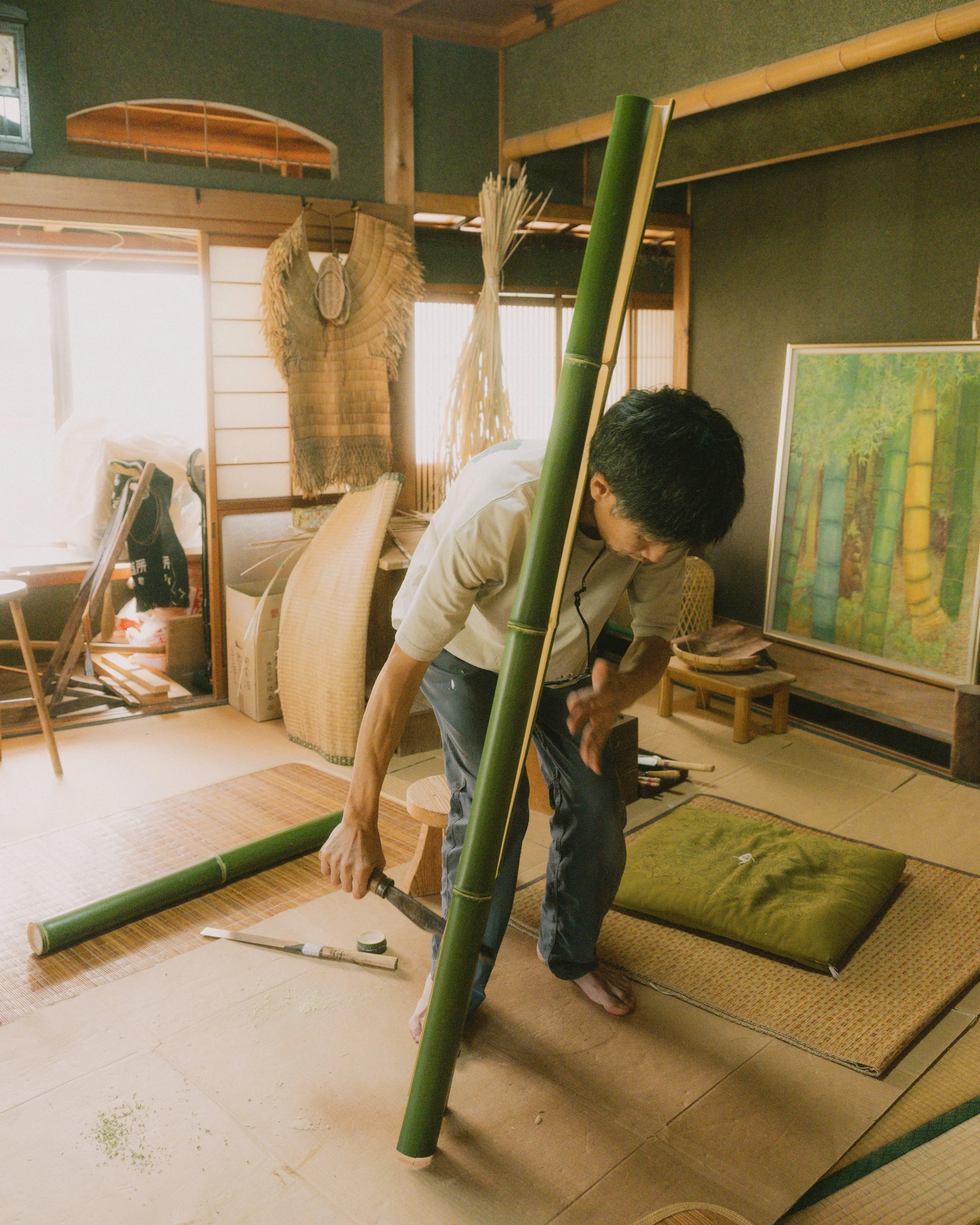
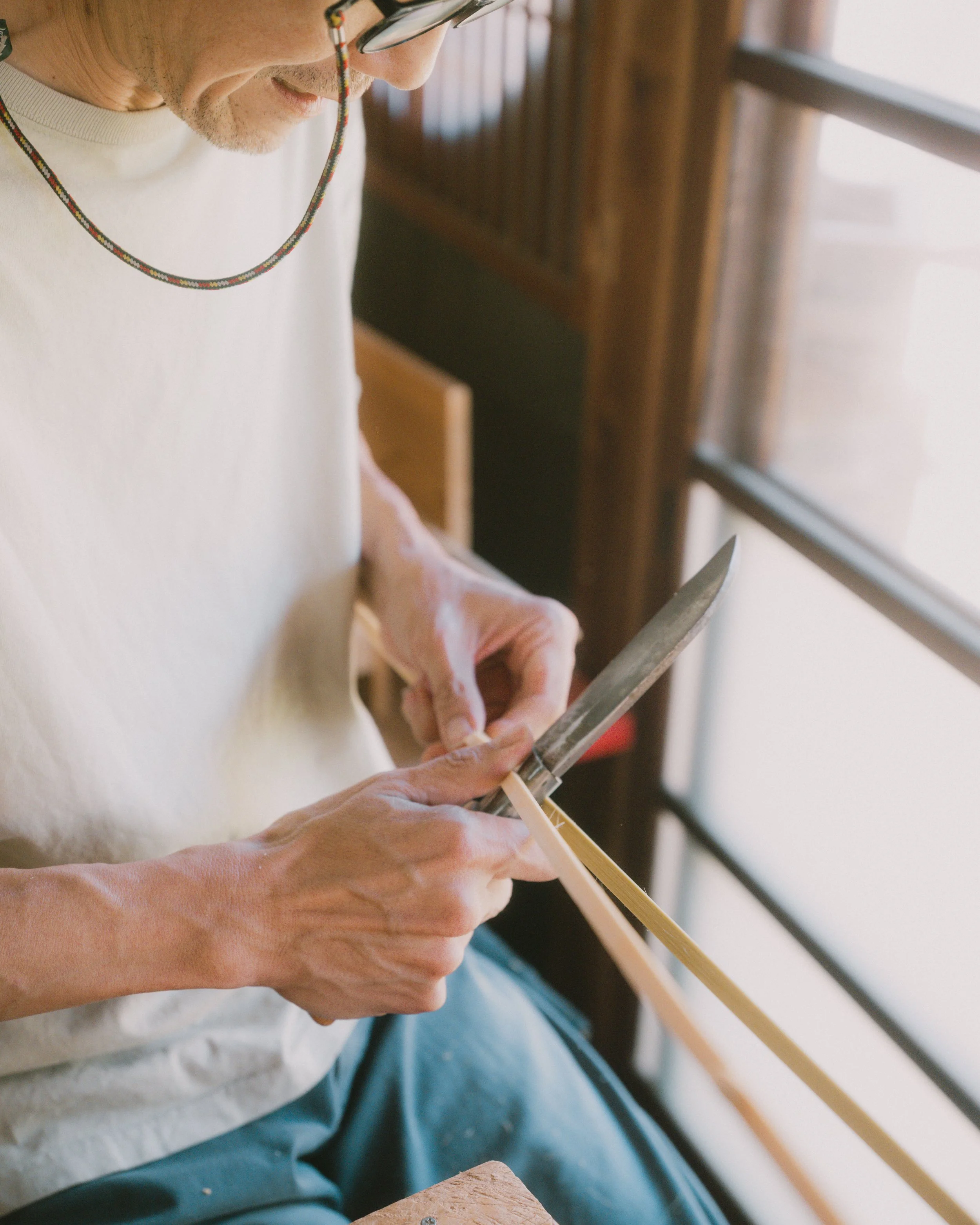
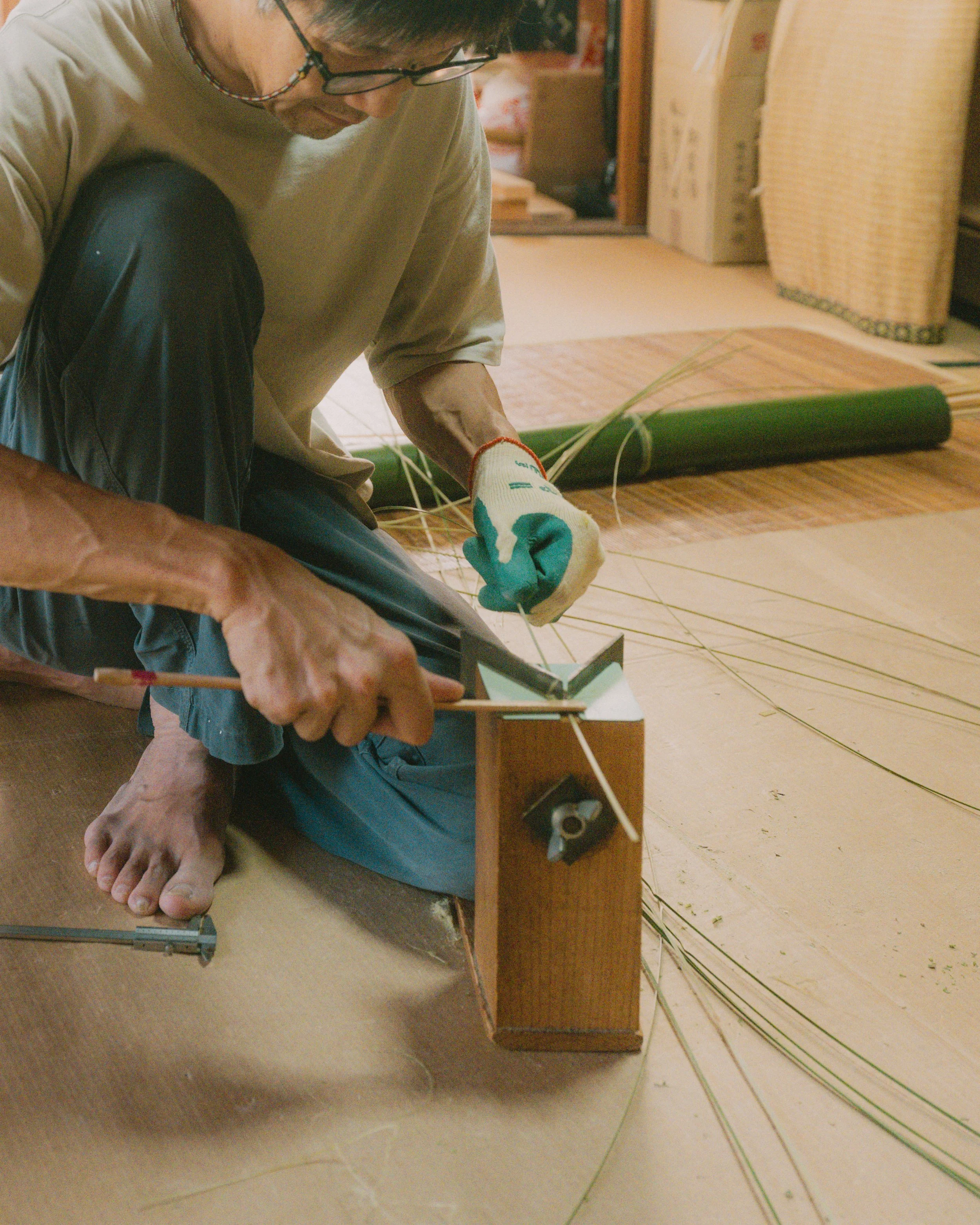
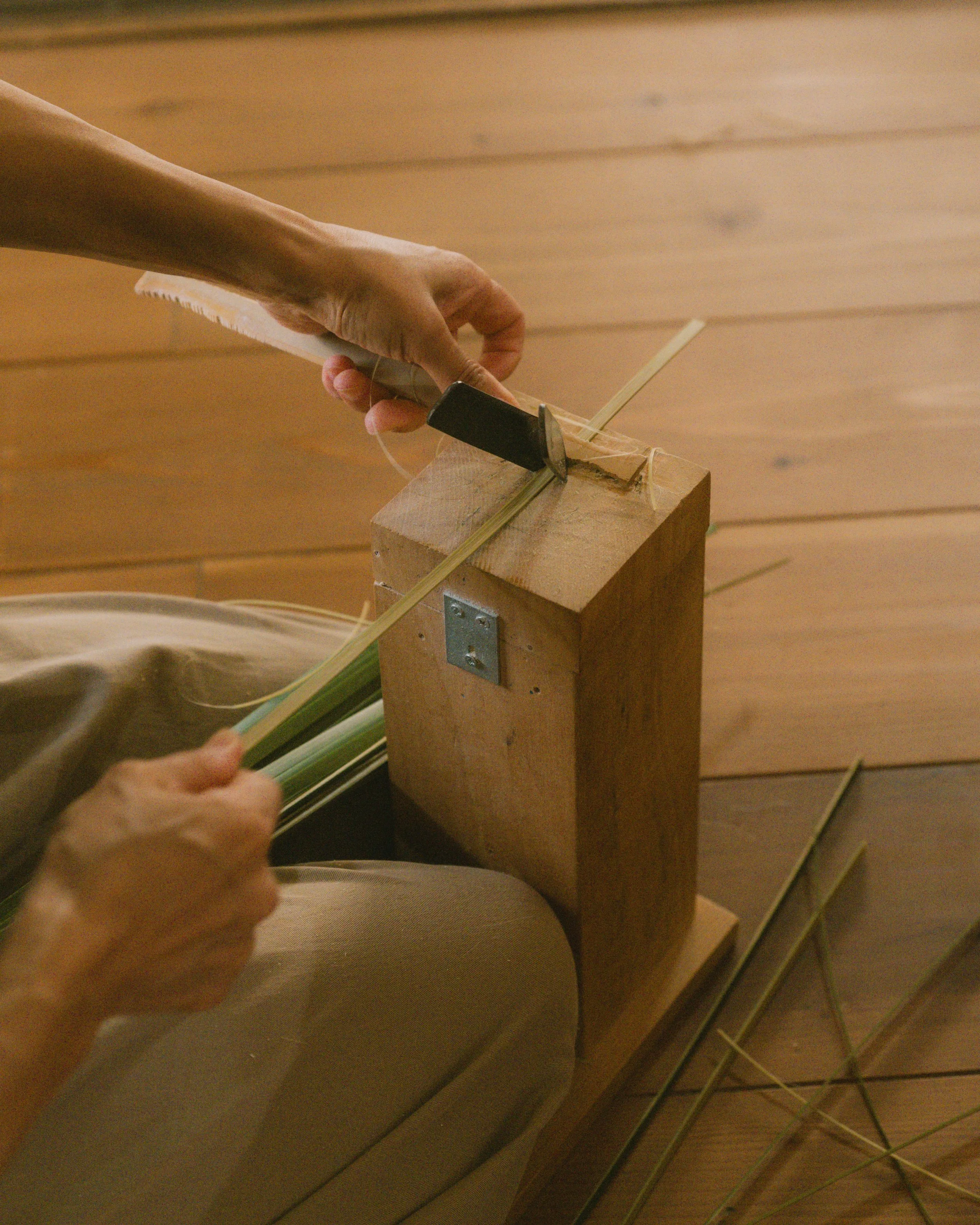
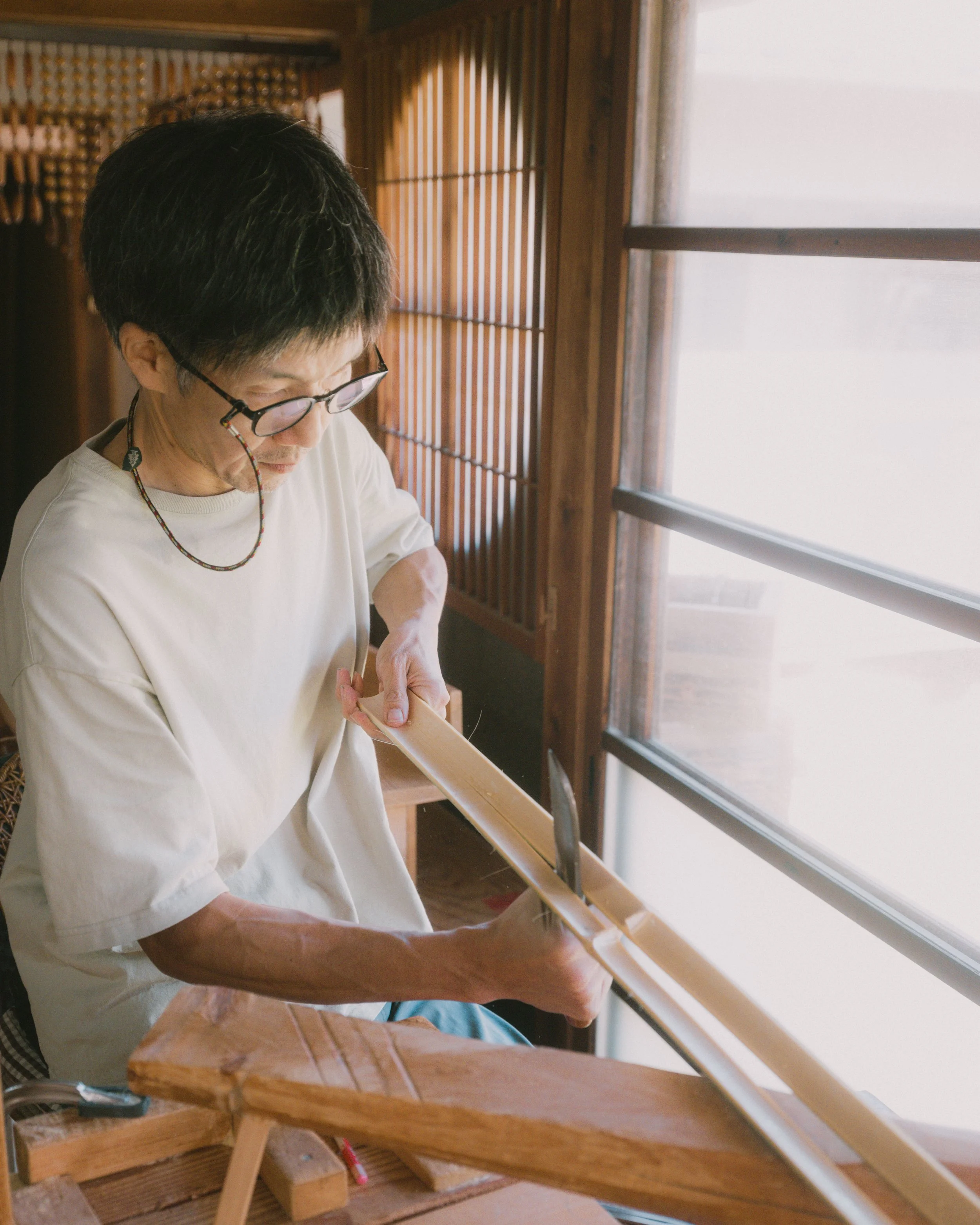
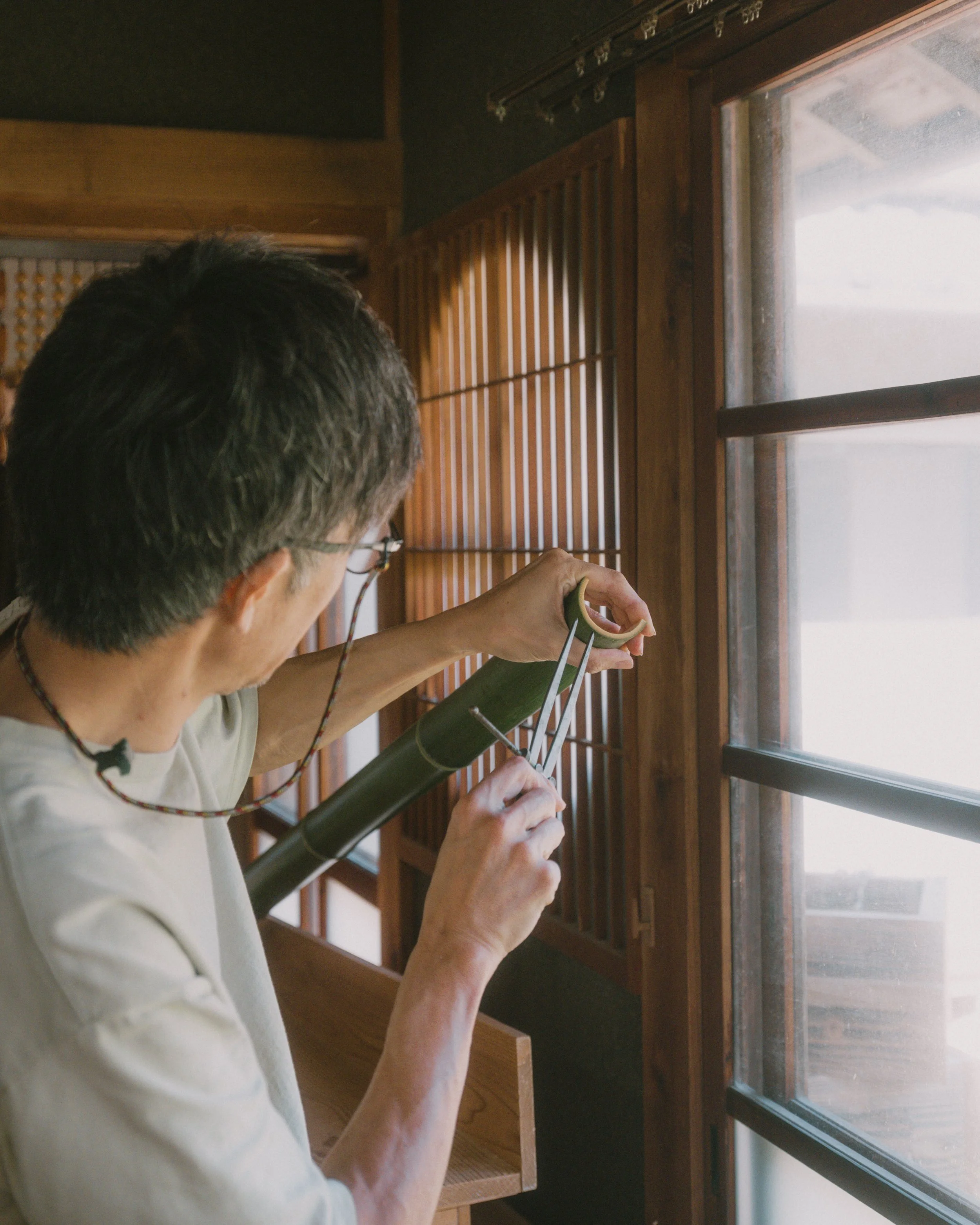
Here is the truth of this craft, the part that is never photographed: the weaving is the easy part.

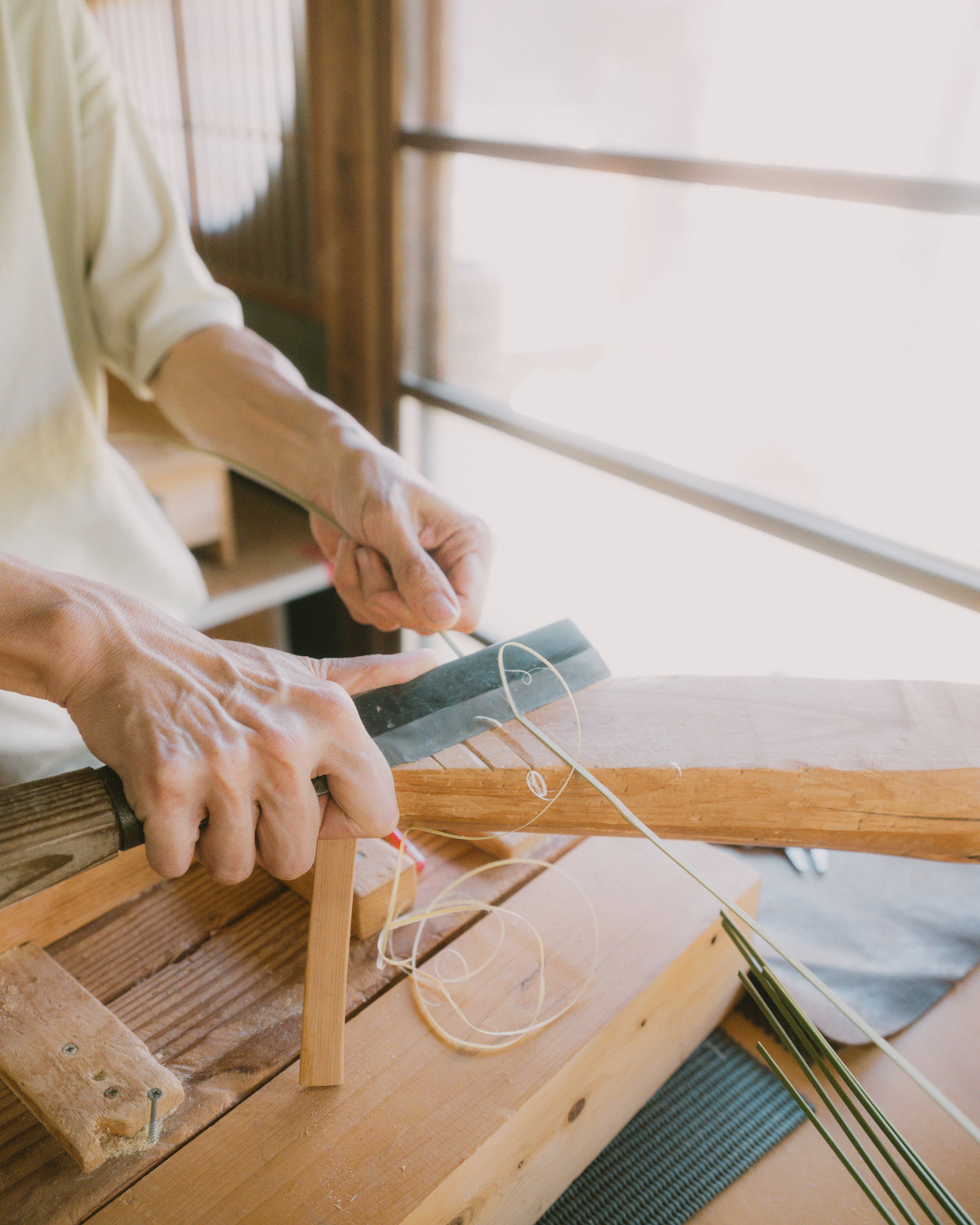
The green culm is split, and split again, down to strips thin enough to weave — and every strip must be brought to the same width and thickness, not by a machine but by hand, drawn through a blade by feel. In Katsuyama there is a technique found almost nowhere else: the maker trims four strips to an identical width at once, judging them by nothing but his fingertips.

Then the edges. Cut into the surface of his wooden workblock is a shallow V-shaped groove, worn there on purpose over the years. He lays each thin strip into that groove and shaves the sharp corners away, one edge at a time — so that when the basket washes rice it will not catch a grain or cut a hand. It is a tiny thing, this rounding of an edge you will never consciously notice. It is also the difference between a tool made for a day and a tool made for fifty years.

They have a saying in this trade. Three years to learn to split the bamboo. Five years to learn to cut the strips. The weaving comes last, and takes the least time. Almost no one is willing to give those years now.
Weaving
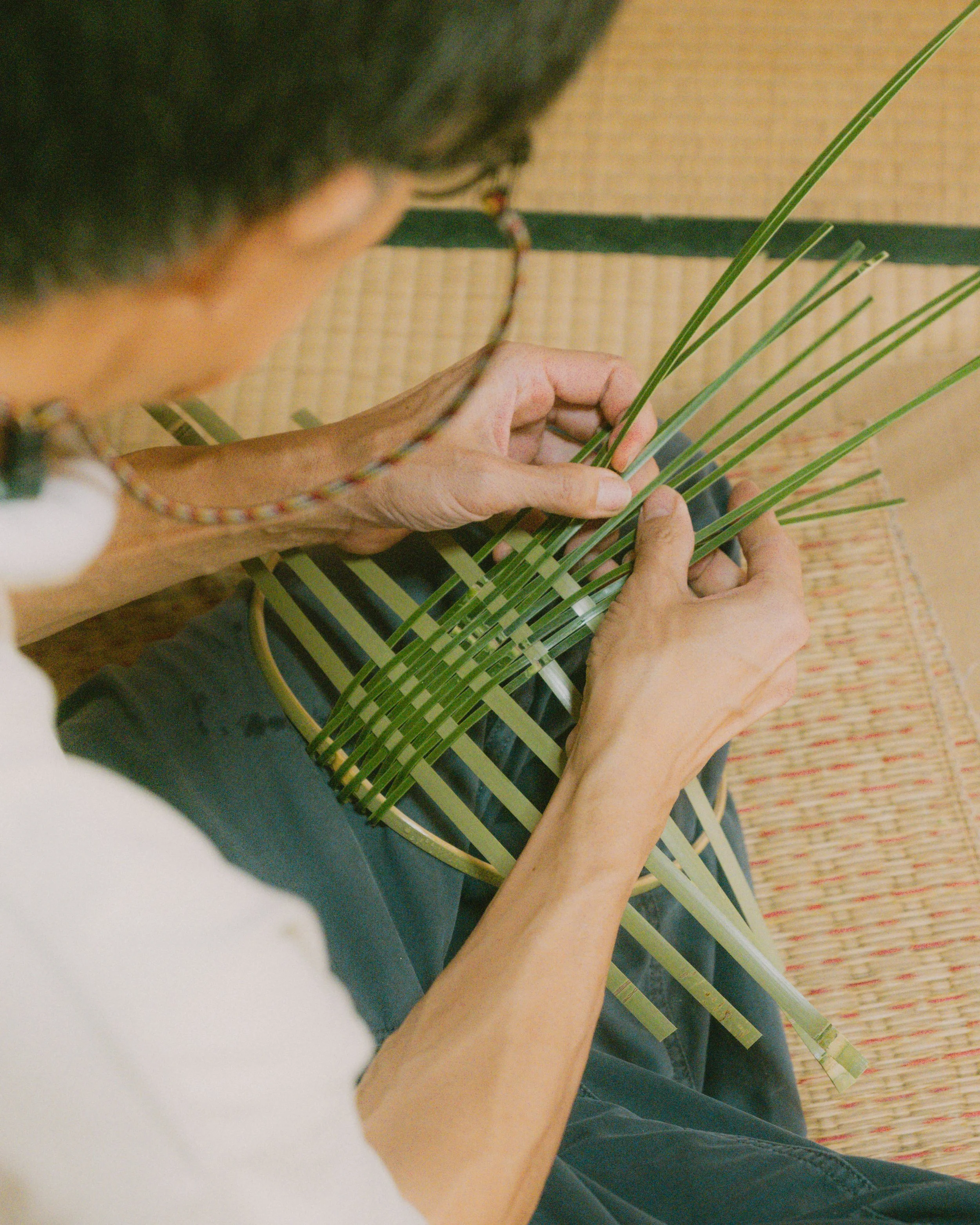
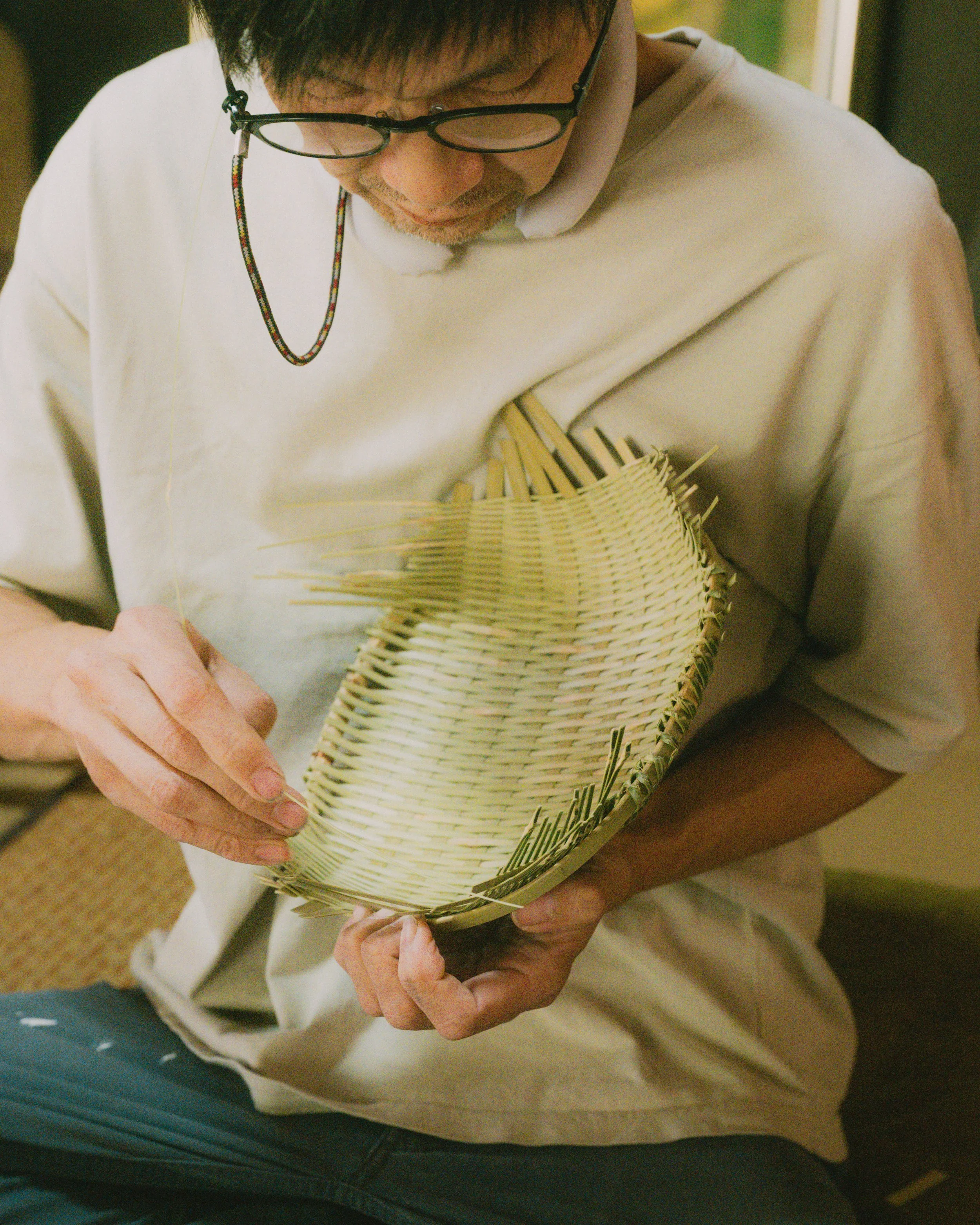
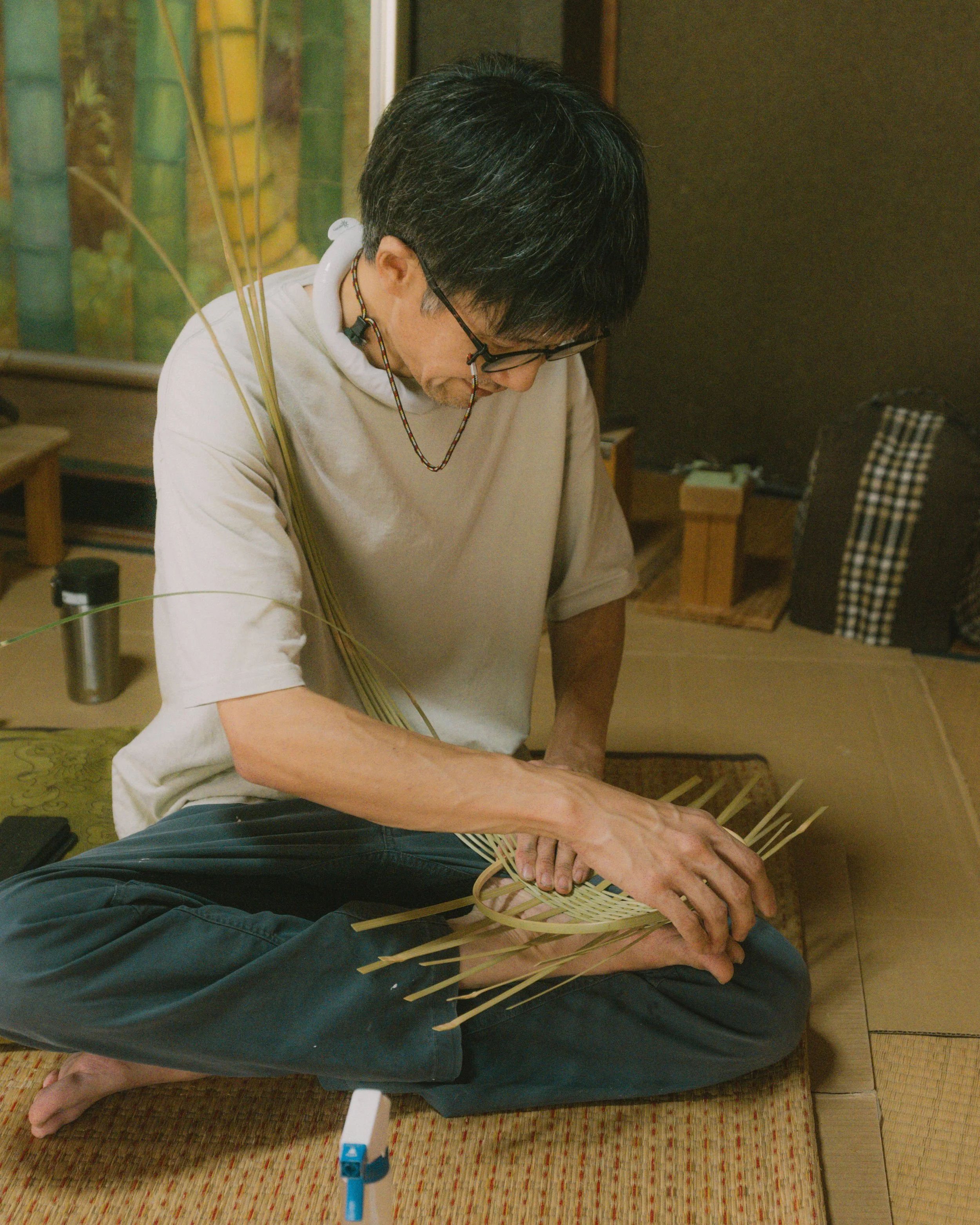
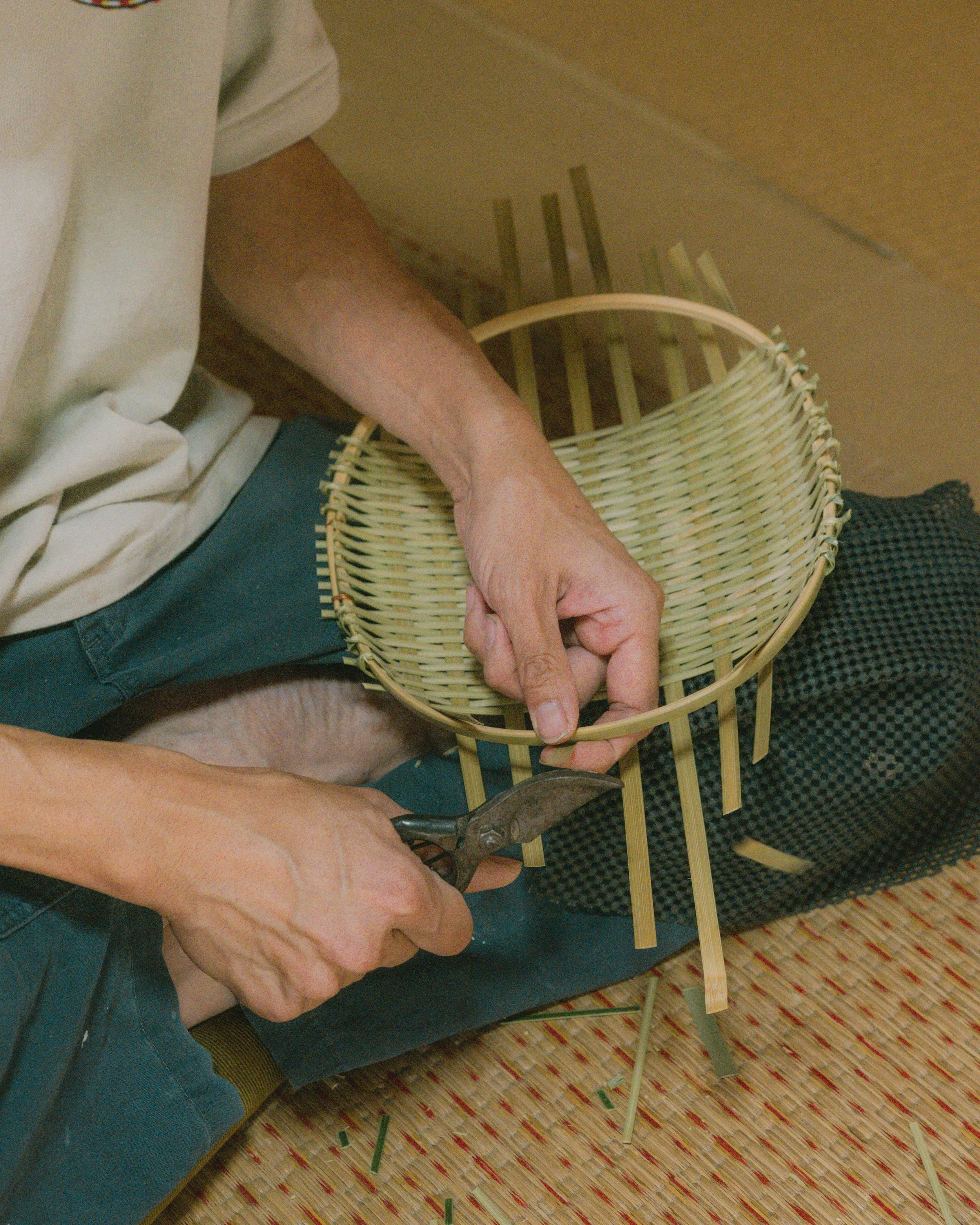
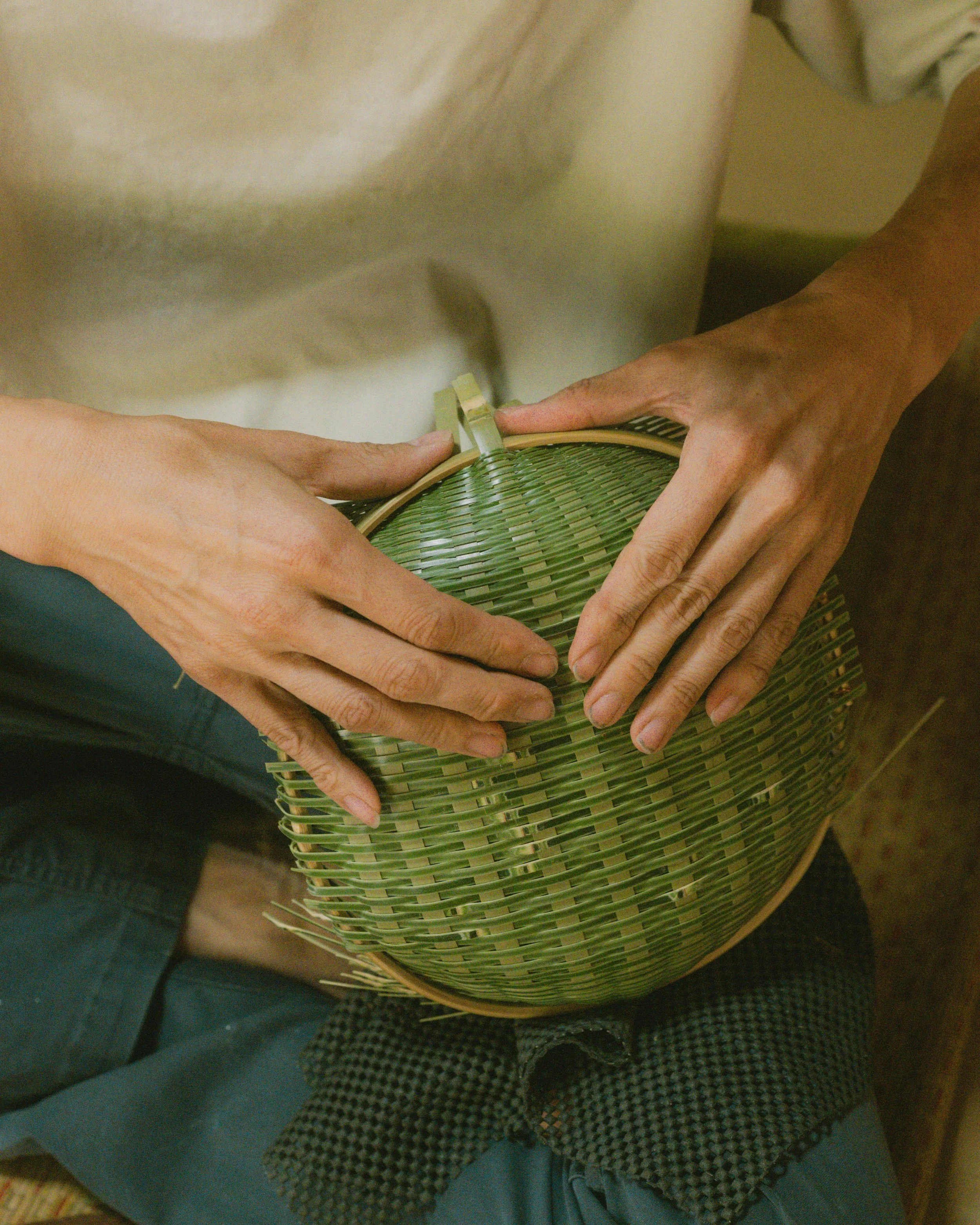
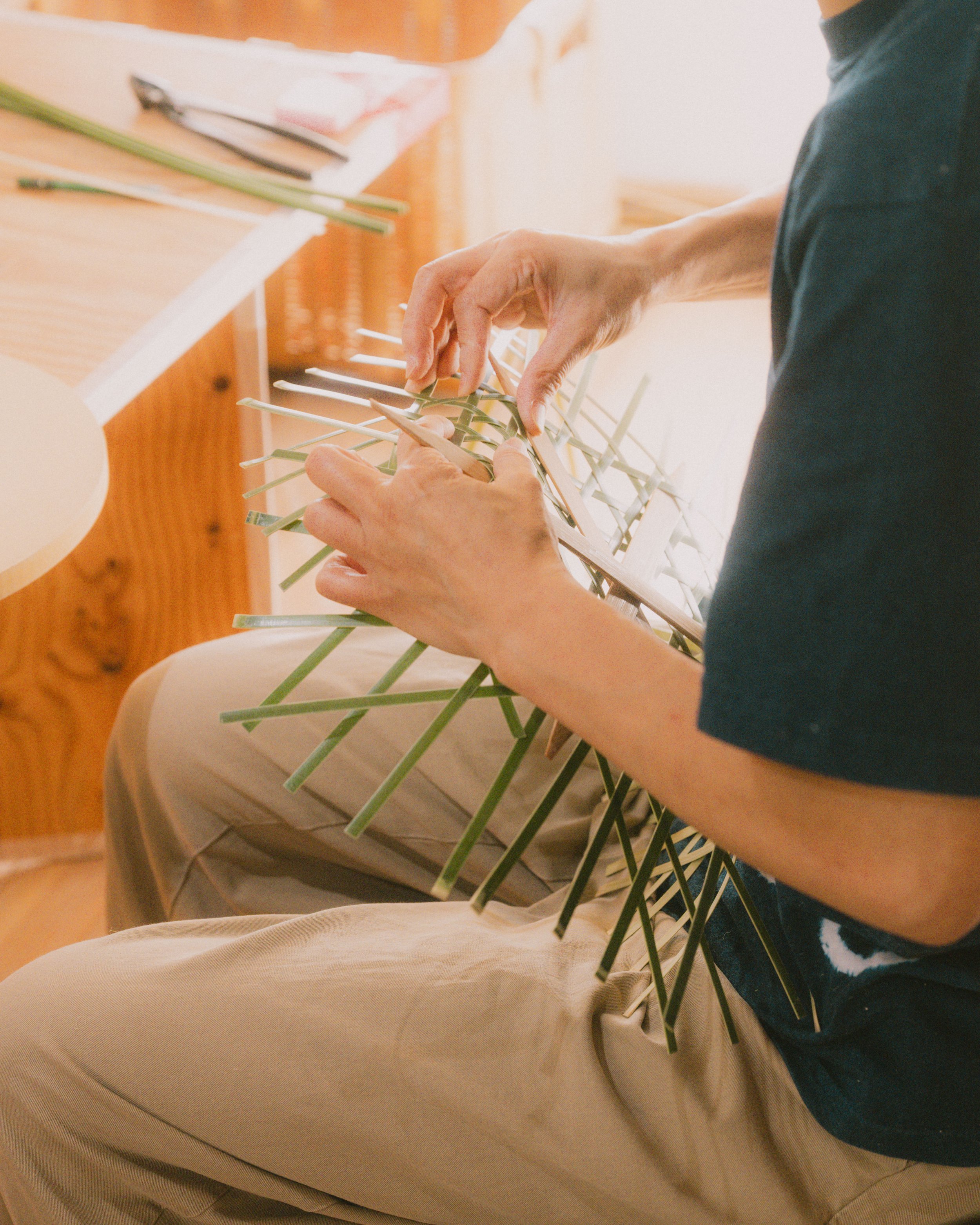
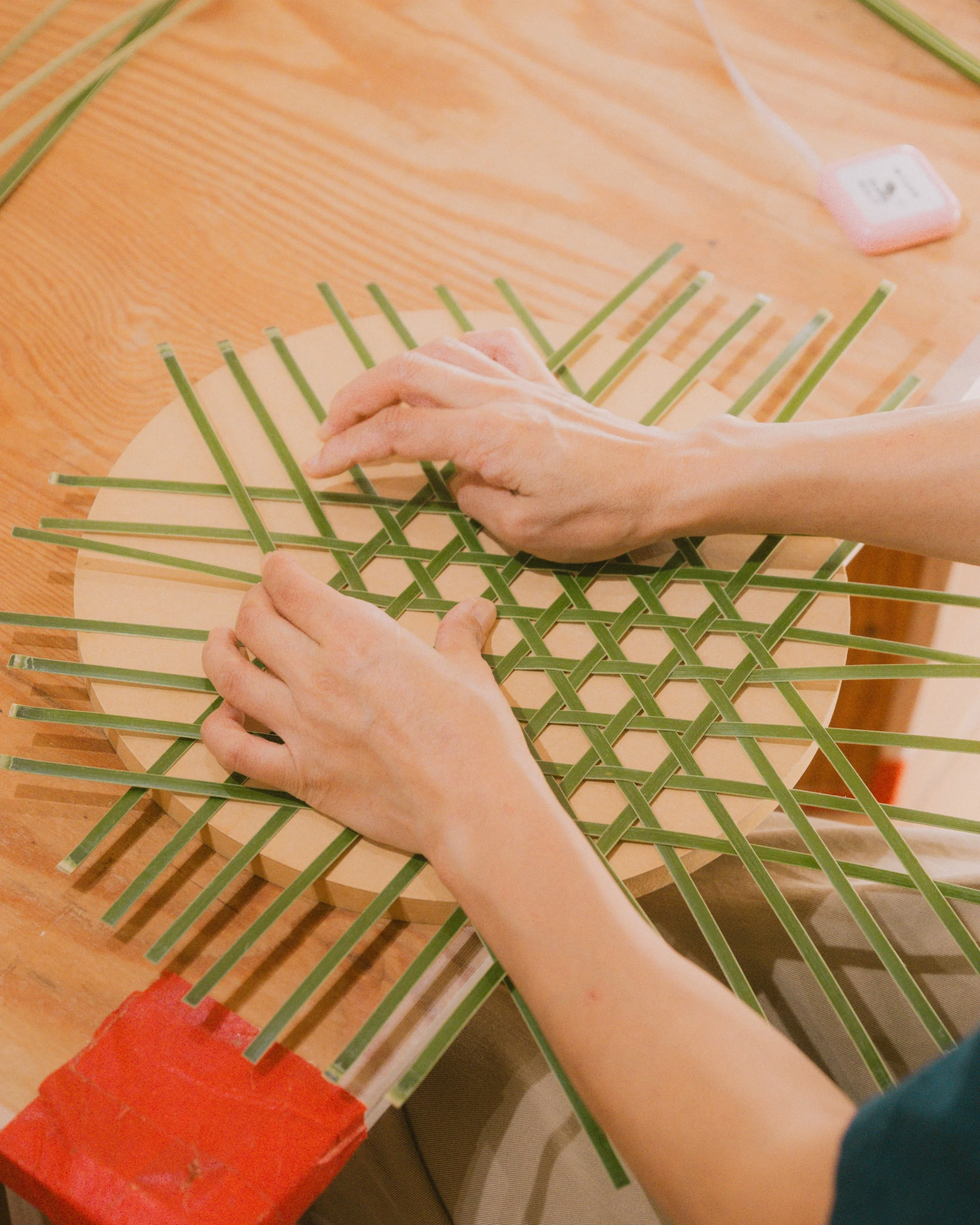
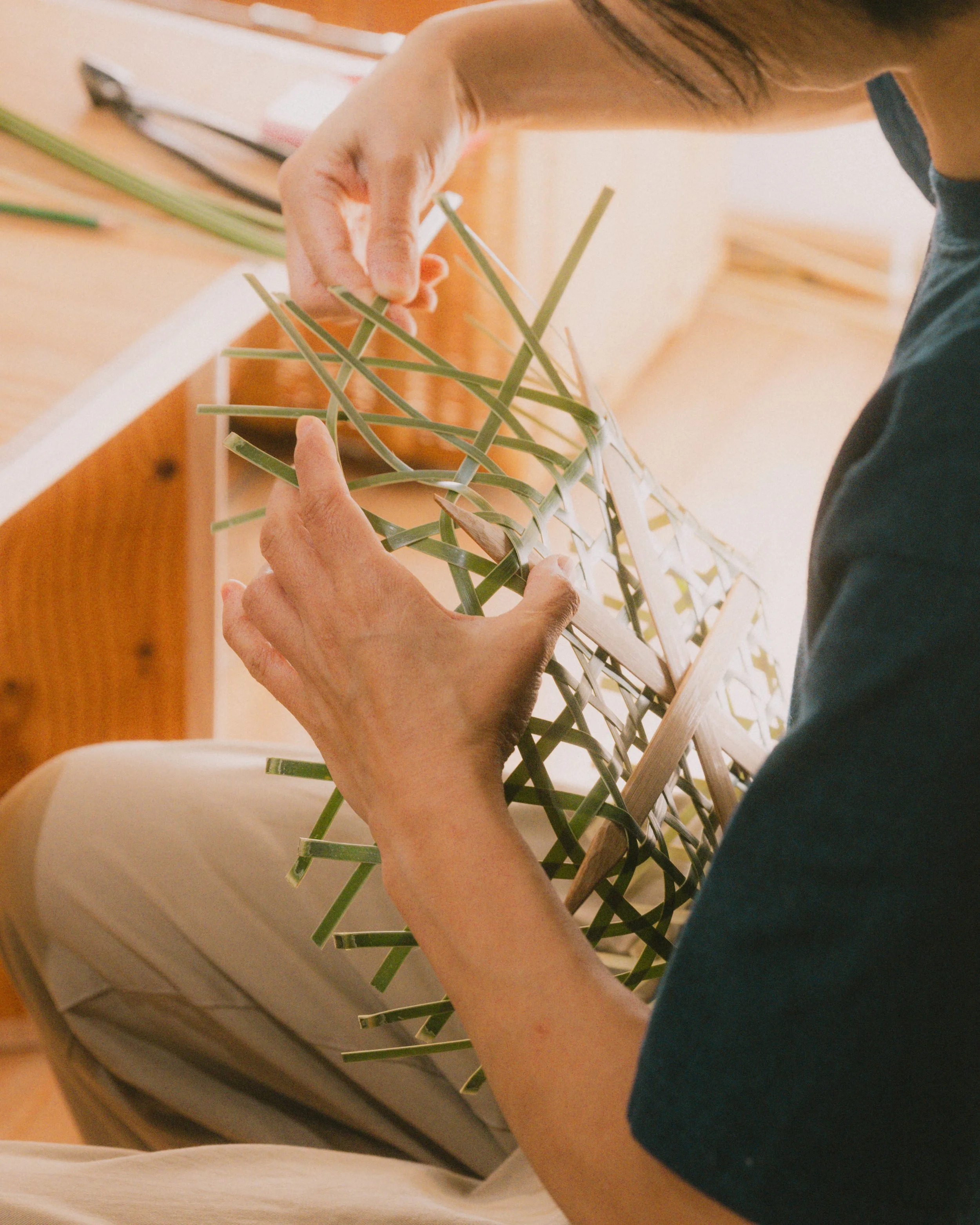
Only now do the strips become a basket. The green outer skin and the pale inner flesh cross over and under each other, and the two-tone pattern appears — the mark of bamboo left unbleached, used as it came off the mountain. No stain, no paint. The color is the plant itself.
The last binding
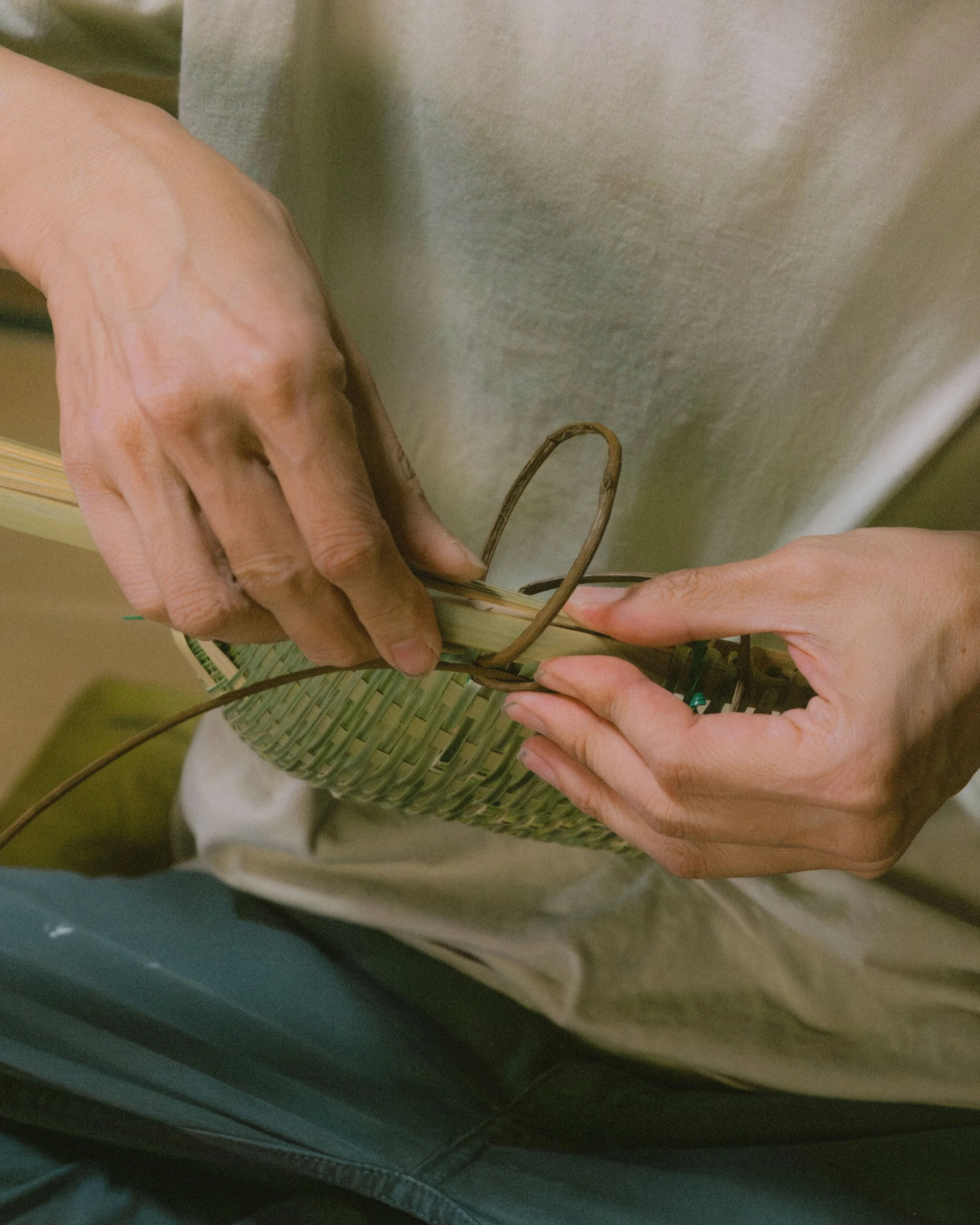
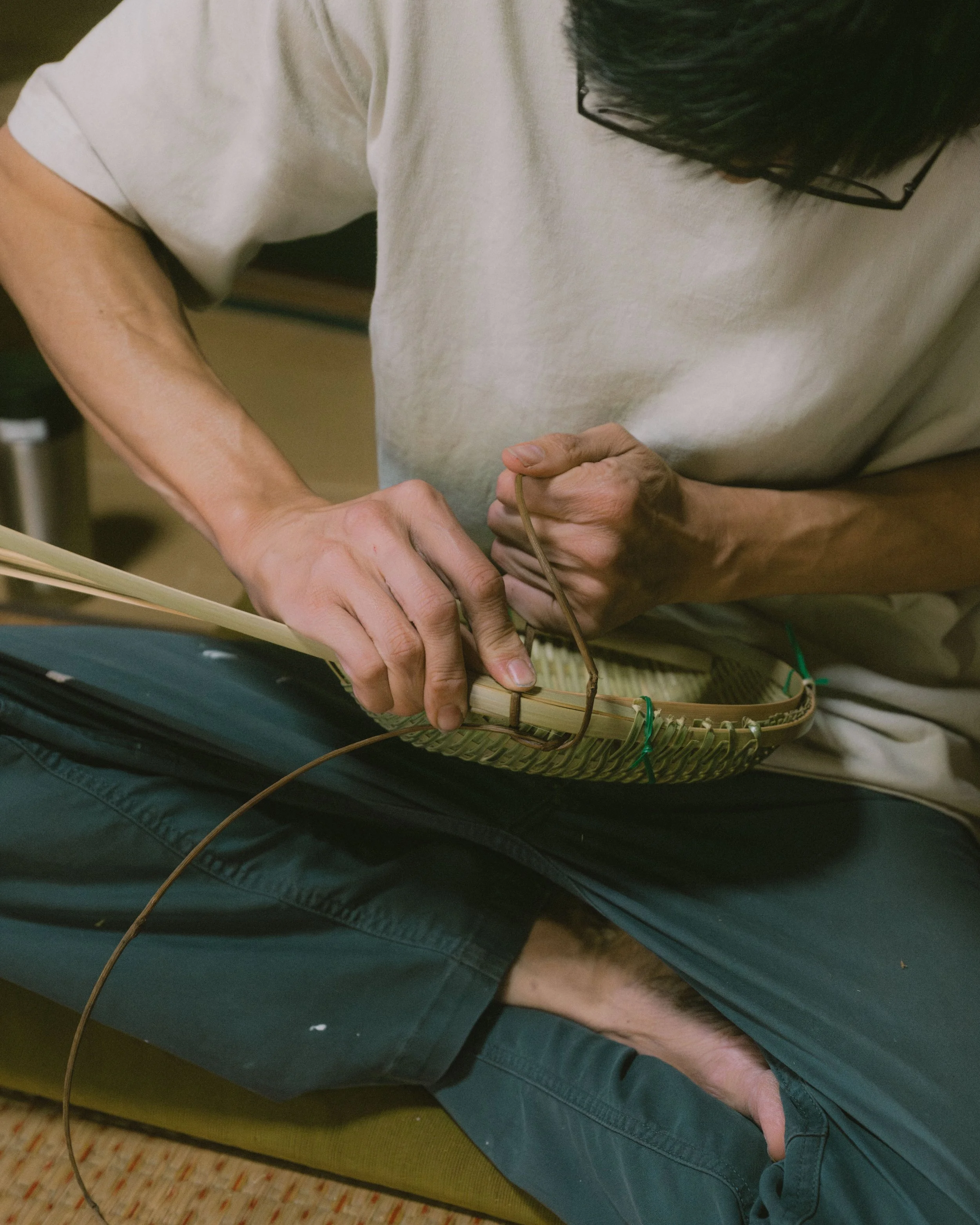
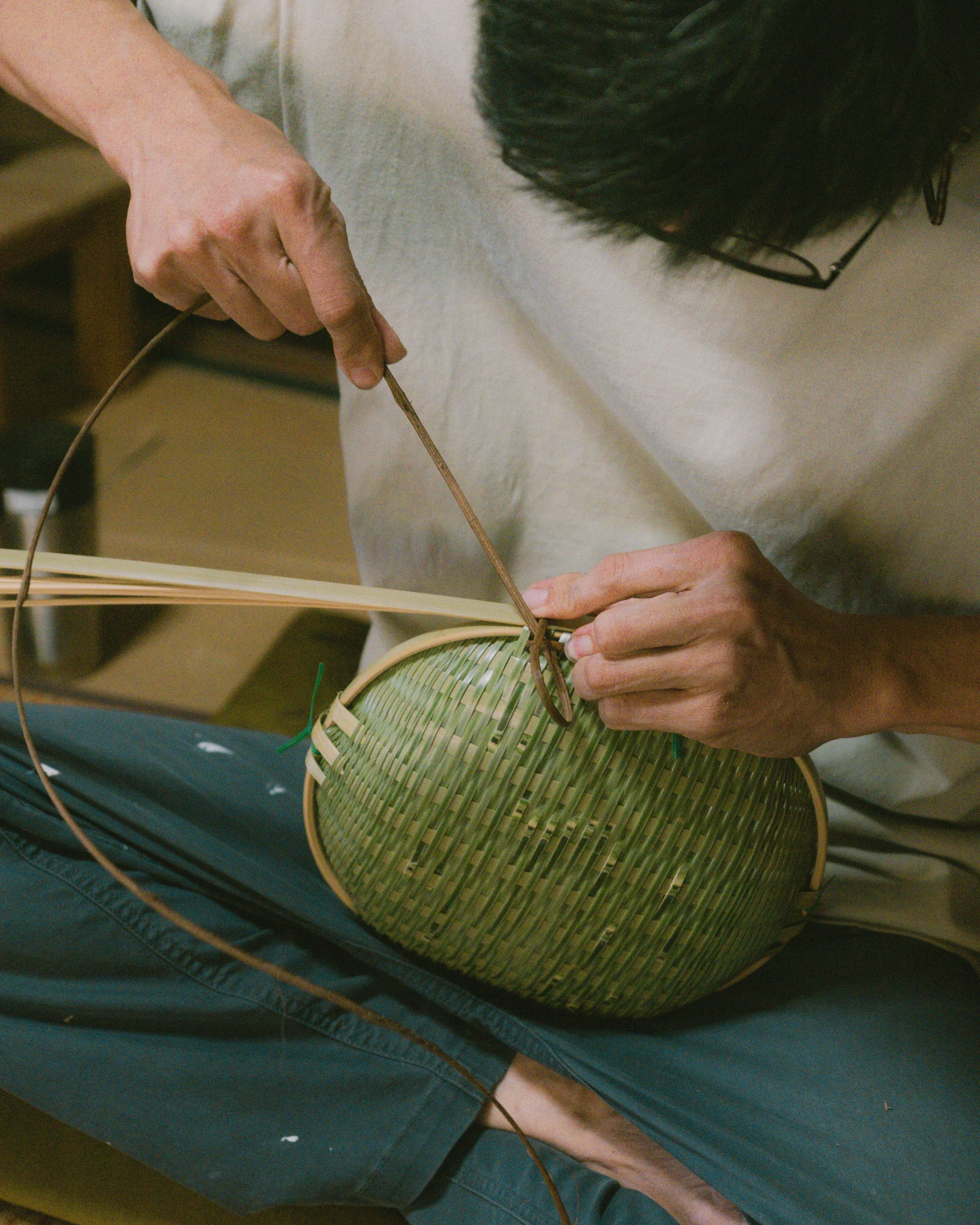
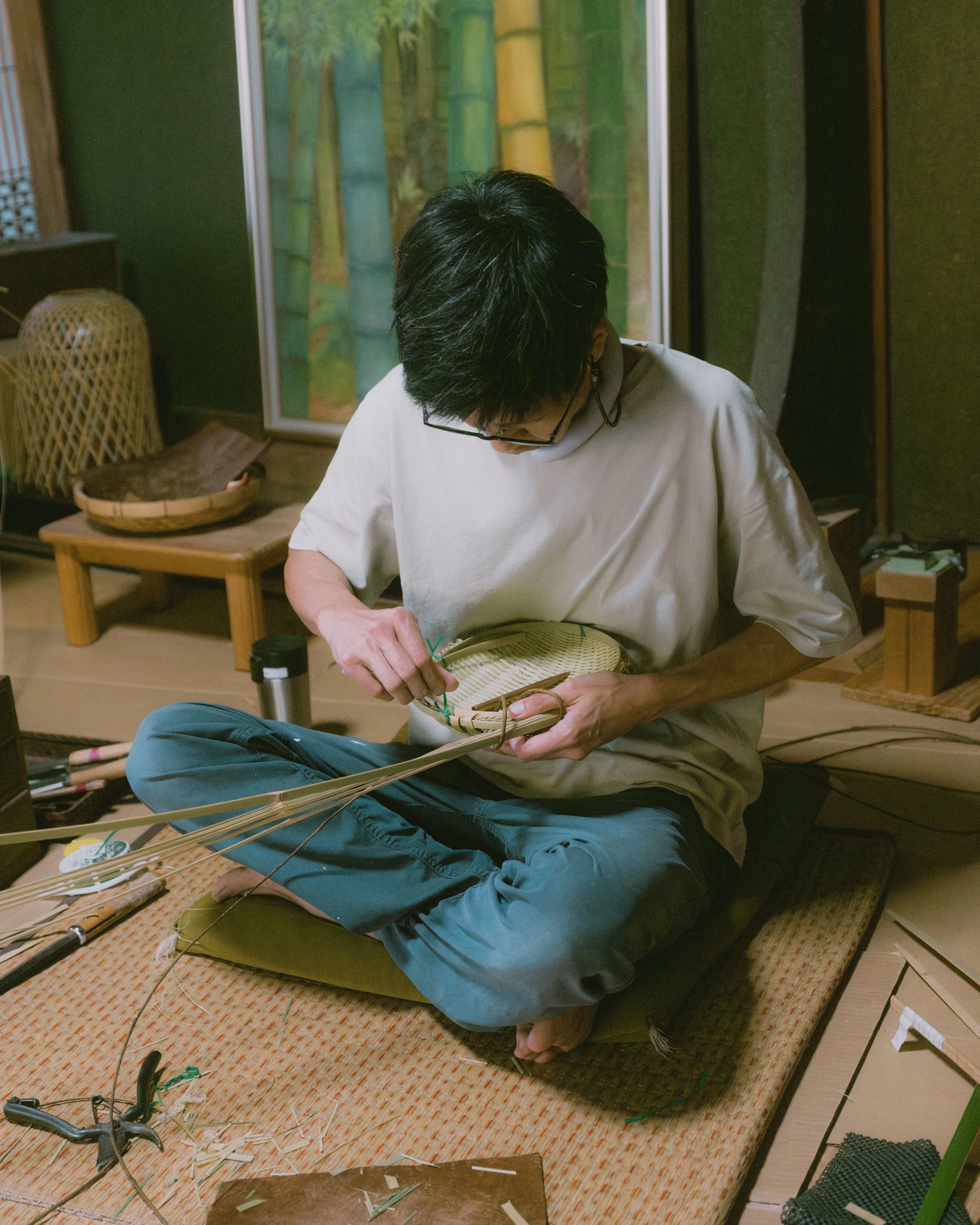
The woven basket is left to dry. Then, at the very end, a length of tsuzura vine is soaked soft in water and wound tight around the rim. No wire, no plastic — a vine from the same hills as the bamboo, binding the basket shut. This is not decoration. It is the reason a basket survives for generations, and it is the exact detail the country requires before it will call this work a traditional craft at all.
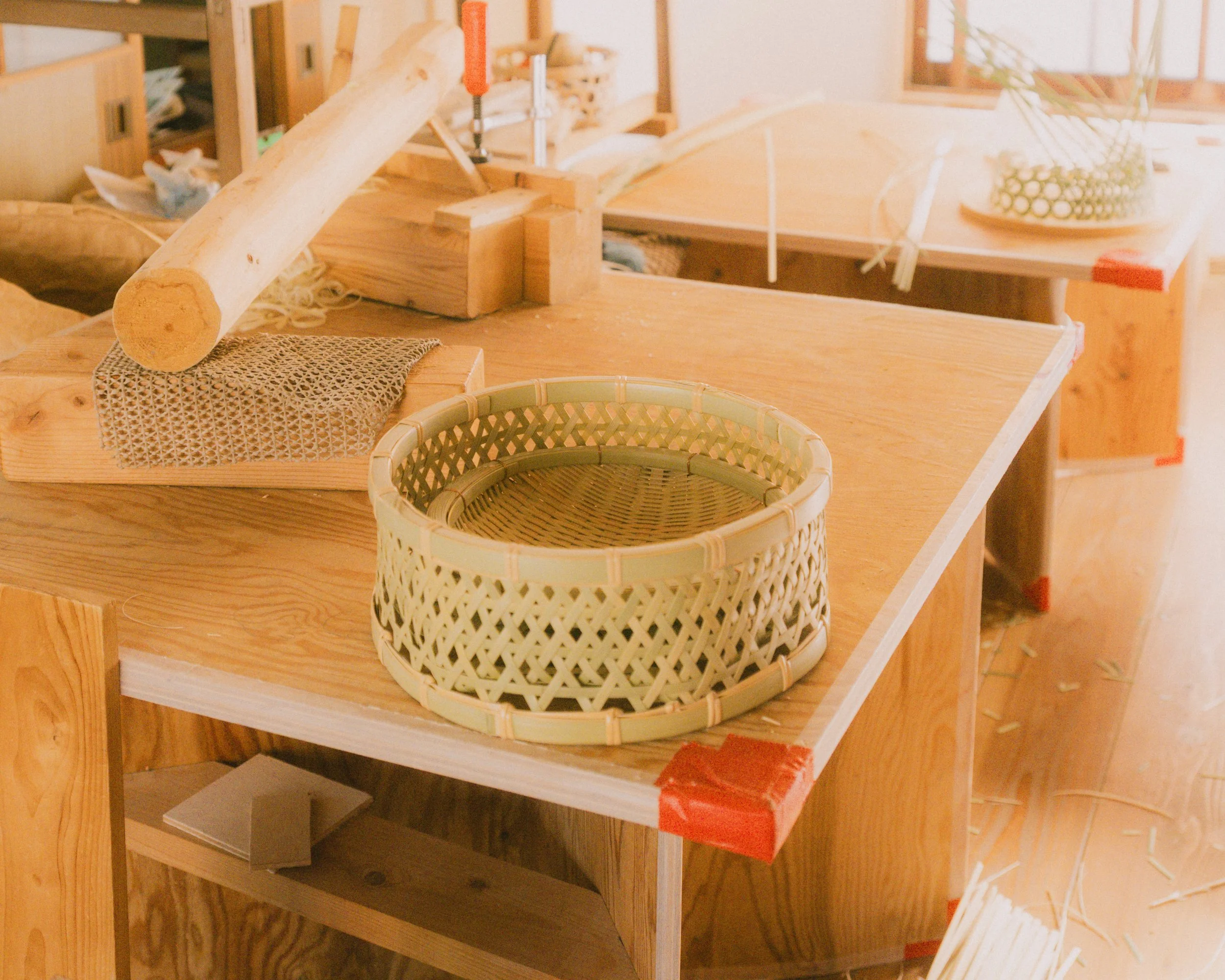
Finished. Green now. But not for long.
By the time it reaches you it may still be green, or it may have started to turn. Either way. Use it in the kitchen, wash it, dry it, use it again — and the green bamboo slowly becomes the color of honey, a little darker each year. It does not get worn down. It gets worn in.That color becomes the record of your years. No other basket ages the way yours will.A new basket is not a finished thing. It is a beginning. You do not buy it so much as agree to raise it — and one day, still changing, to pass it on.
THE TWO PIECES
This is a beginning, and a small one on purpose. For now, only two baskets are offered — one of each, and no more. Not because more could not be made, but because this is the first time I have carried a living workshop’s work out to the world, and I would rather start with two baskets told completely than a shelf of them told in a line each.

When these two are gone, they are gone. If they find the right homes, there will be more — more baskets, more workshops, told the same way.
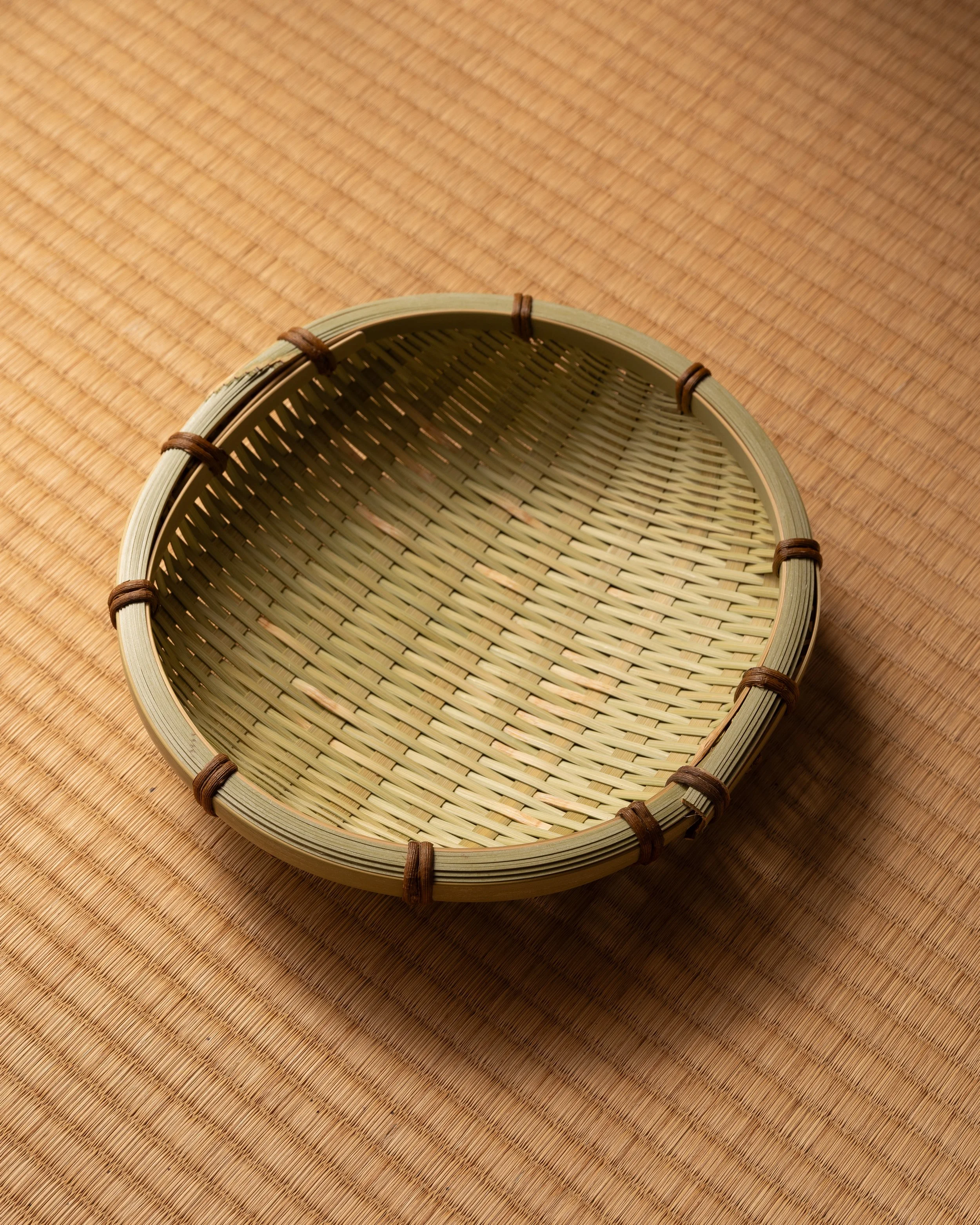
【 The Basket 】
A shallow draining basket, its base woven in tight rows of fine bamboo laid close against one another — no open pattern, just a dense green field that holds even a grain of rice while the water falls straight through. The bamboo is left as it came off the mountain: unboiled, unbleached. The colour is the plant itself, and it will deepen toward amber as the years pass.
【 The Craft 】
Katsuyama bamboo craft, from the mountains of northern Okayama, began around 1860 as the work of farming families. The madake bamboo is cut in autumn, split and shaved into strips entirely by hand, and the rim is bound with tsuzura, a wild vine gathered from the same hills. No wire, no plastic. It is this vine binding that the craft is known for, and the reason a basket lasts for generations.
【 How to Use It 】
Draining — rinsed rice, washed berries, herbs, or boiled noodles straight from the pot: somen, udon, soba.
Serving — onigiri, steamed buns, sliced fruit; food looks right on pale bamboo.
By the door — a low dish for keys, coins, and the small things of a day coming and going.
【 Care 】
If you use it with water, hang it in a sunny spot in the kitchen to dry. It will darken gently with the years. You are not buying a finished object — you are agreeing to carry one forward.
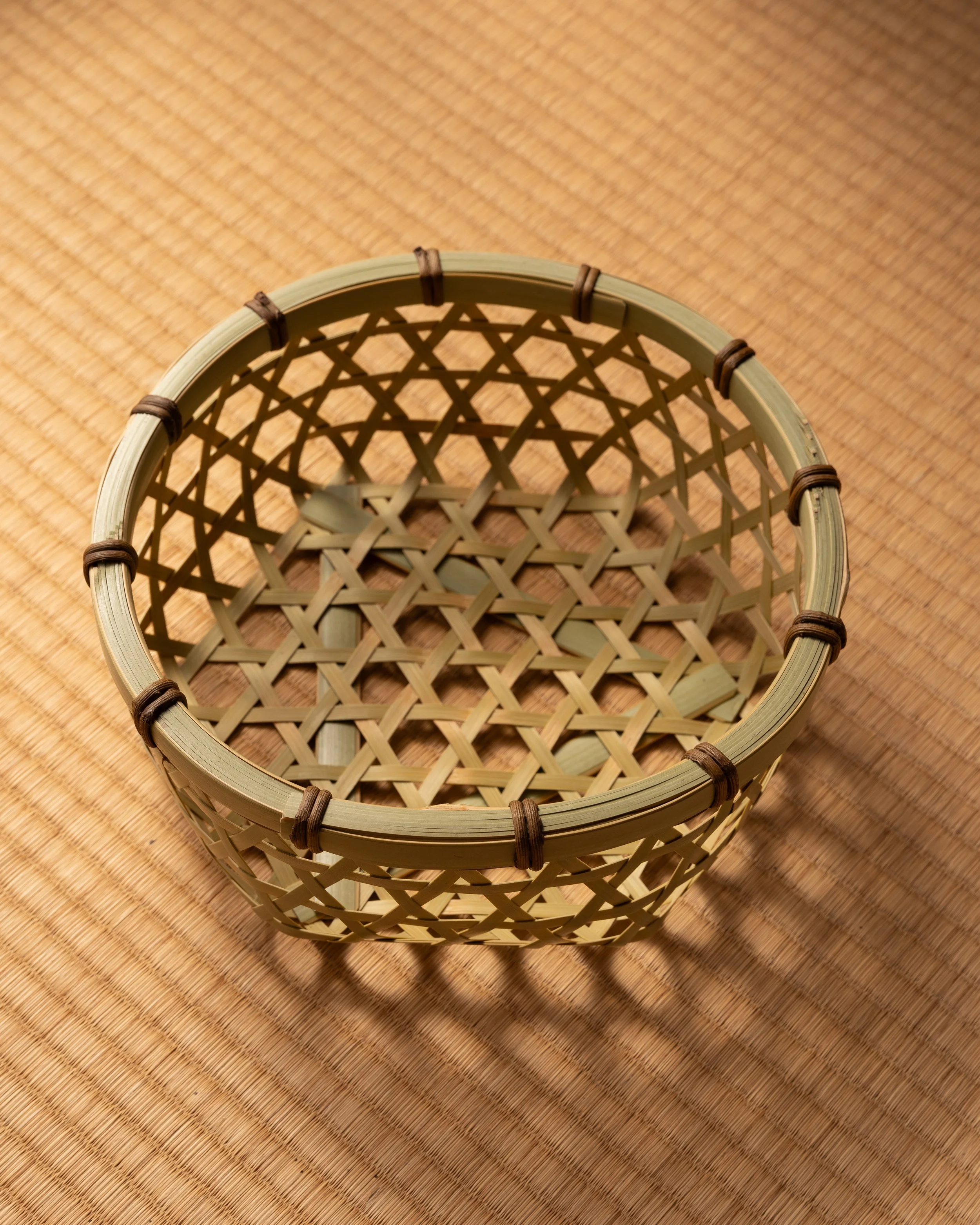
【 The Basket 】
A deep basket woven in the open six-eye pattern — strips of green bamboo crossing in threes to form a field of six-sided holes, strong at every join and open to the air on every side. The bamboo is left as it came off the mountain: unboiled, unbleached. The colour is the plant itself, and it will deepen toward amber as the years pass.
【 The Craft 】
Katsuyama bamboo craft, from the mountains of northern Okayama, began around 1860 as the work of farming families. The madake bamboo is cut in autumn, split and shaved into strips entirely by hand, and the rim is bound with tsuzura, a wild vine gathered from the same hills. No wire, no plastic. It is this vine binding that the craft is known for, and the reason a basket lasts for generations.
【 How to Use It 】
Bread — loaves and rolls keep their crust instead of sweating soft; the depth holds a whole day's baking.
Fruit and vegetables — onions, potatoes, lemons, garlic on the counter; what spoils in a sealed bowl keeps far longer in open bamboo.
A catch-all — by the door, the deep kind of basket you drop things into and always find again.
【 Care 】
If you use it with water, hang it in a sunny spot in the kitchen to dry. It will darken gently with the years. You are not buying a finished object — you are agreeing to carry one forward.
Why this page is so long
Most places that sell a thing like this give you four or five lines. The size, the weight, "handmade in Japan," add to cart. I have always found that unbearable.A basket sold in five lines arrives with no story, and a thing with no story is thrown away one day without a second thought. No one knows what it was. No one can speak of it.I believe the opposite is where an object should end up — not forgotten, but remembered. Told. Passed from one person to the next.Years from now, when a friend visits your home and picks this basket up, I want you to be able to tell them everything: the grove the world had started to treat as a nuisance, the two people who chose this craft rather than inherited it, the three years it takes just to learn to split the cane, the green bamboo slowly turning the color of honey in your kitchen. I want that story to outlive the basket itself — carried on by the people who keep it, long after all of us are gone.This is why I write at such length, and will for every workshop after this one. An object is not finished when it is sold. It is finished when its story has been told so many times it can never be lost.That is the whole of what I am building:To keep a craftsman's tradition from disappearing. To help a family keep their life. And to send each object out wrapped in a story deep enough that it will be told, and retold, for as long as the object exists.-Hisashi Teramoto