【 The Concept 】
A cat asleep on its back, one paw flung up over its eyes to keep the light out — the most defenceless pose an animal can take, and the most trusting. Belly bared, legs loose, tail curled, it has given itself completely to the nap. That total ease is the whole meaning of the thing. In Japan the sleeping cat is a quiet emblem of peace: the most famous of them, carved above a shrine gate, dozes while sparrows play unafraid close by — the hunter so at rest that even its prey is safe, an image of a world settled enough that no one need keep watch. A cat that can sleep like this is a house at peace.
There is an older, more practical affection underneath. The cat earned its place indoors by keeping mice from the silk and the grain — the small guardian of a household's livelihood — and its comfort came to stand for prosperity secured: the threat gone, the family provided for. So a cat rendered in metal and set on a desk is not only charming; it is, faintly, a charm — for calm, for safety, for a life at ease.
【 The Function 】
Small and solid, it was made to be handled. At a little over six hundred grams it sits on a desk as a paperweight, holds down a corner of a room, and asks, always, to be picked up — a palm-sized weight of warm metal, smooth all over, with nothing sharp to catch. Keep it by the monitor or on a stack of papers; it is the kind of object a hand reaches for without thinking, and the reaching is half the point.
【 The Texture 】
Warm brass the colour of old gold, worked almost entirely smooth. The maker has left off fur and detail — only a few fine incised whiskers and the closed, smiling curve of the eyes — so the eye rests instead on the soft swell of the belly and the loose fold of the limbs. The metal is bright on the raised places, where hands have polished it over the years, and settles to a darker honey-brown in the hollows: the round of the cheek and the tuck of the paws lit, the crevices left in shadow. It is a surface that has been touched, and shows it.
【 Presence 】
It asks for almost nothing and gives back a disproportionate amount of calm. Small enough to hold in one hand, it disarms a desk or a shelf simply by being so completely at rest — a little gold animal that has decided, utterly, to sleep. Set it where a glance will find it in a busy moment; it is hard to look at a creature this untroubled and stay wound tight.
Sourced from a private collection in Japan.
【 The Concept 】
A cat asleep on its back, one paw flung up over its eyes to keep the light out — the most defenceless pose an animal can take, and the most trusting. Belly bared, legs loose, tail curled, it has given itself completely to the nap. That total ease is the whole meaning of the thing. In Japan the sleeping cat is a quiet emblem of peace: the most famous of them, carved above a shrine gate, dozes while sparrows play unafraid close by — the hunter so at rest that even its prey is safe, an image of a world settled enough that no one need keep watch. A cat that can sleep like this is a house at peace.
There is an older, more practical affection underneath. The cat earned its place indoors by keeping mice from the silk and the grain — the small guardian of a household's livelihood — and its comfort came to stand for prosperity secured: the threat gone, the family provided for. So a cat rendered in metal and set on a desk is not only charming; it is, faintly, a charm — for calm, for safety, for a life at ease.
【 The Function 】
Small and solid, it was made to be handled. At a little over six hundred grams it sits on a desk as a paperweight, holds down a corner of a room, and asks, always, to be picked up — a palm-sized weight of warm metal, smooth all over, with nothing sharp to catch. Keep it by the monitor or on a stack of papers; it is the kind of object a hand reaches for without thinking, and the reaching is half the point.
【 The Texture 】
Warm brass the colour of old gold, worked almost entirely smooth. The maker has left off fur and detail — only a few fine incised whiskers and the closed, smiling curve of the eyes — so the eye rests instead on the soft swell of the belly and the loose fold of the limbs. The metal is bright on the raised places, where hands have polished it over the years, and settles to a darker honey-brown in the hollows: the round of the cheek and the tuck of the paws lit, the crevices left in shadow. It is a surface that has been touched, and shows it.
【 Presence 】
It asks for almost nothing and gives back a disproportionate amount of calm. Small enough to hold in one hand, it disarms a desk or a shelf simply by being so completely at rest — a little gold animal that has decided, utterly, to sleep. Set it where a glance will find it in a busy moment; it is hard to look at a creature this untroubled and stay wound tight.
Sourced from a private collection in Japan.


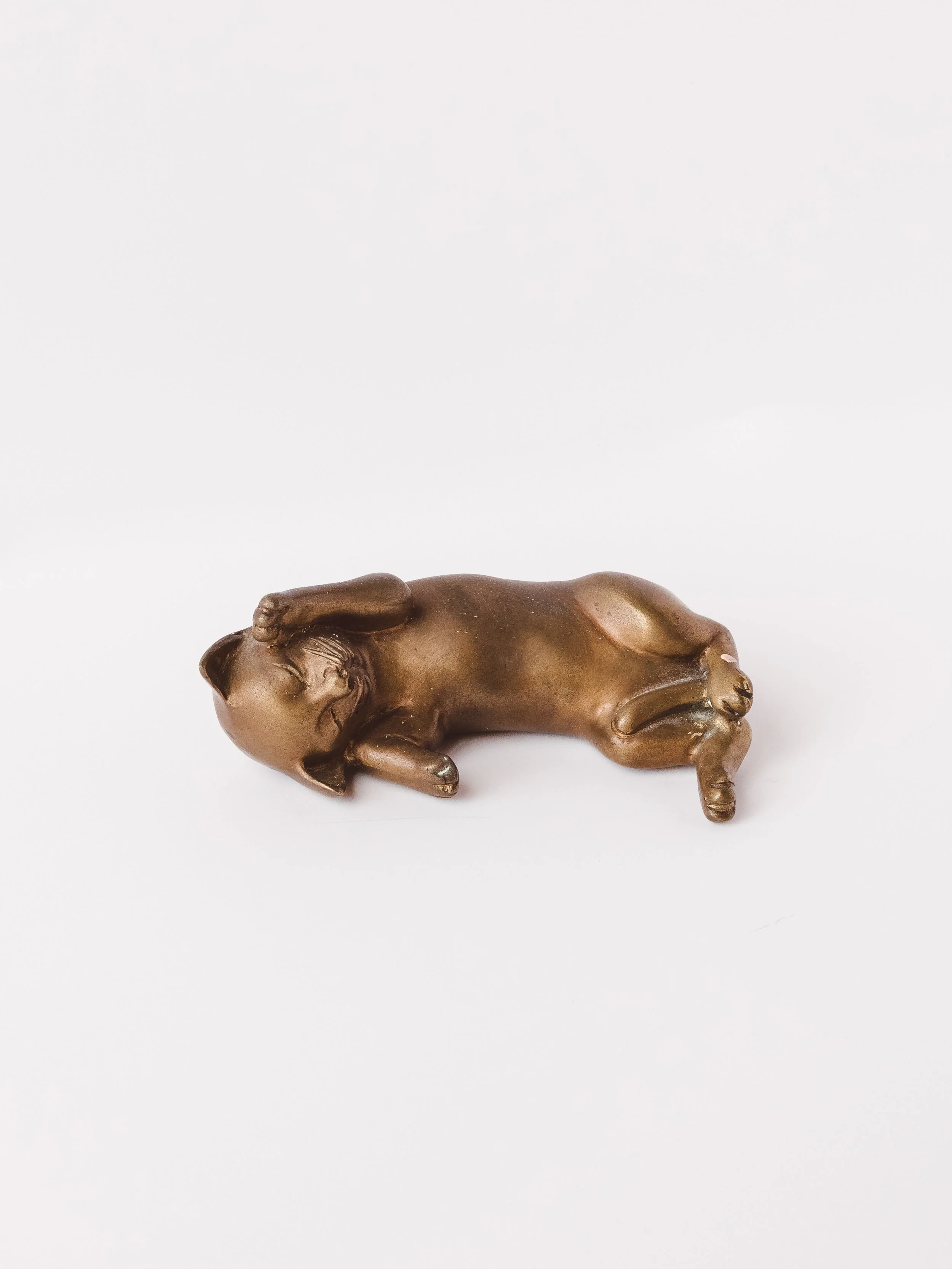 Image 1 of 7
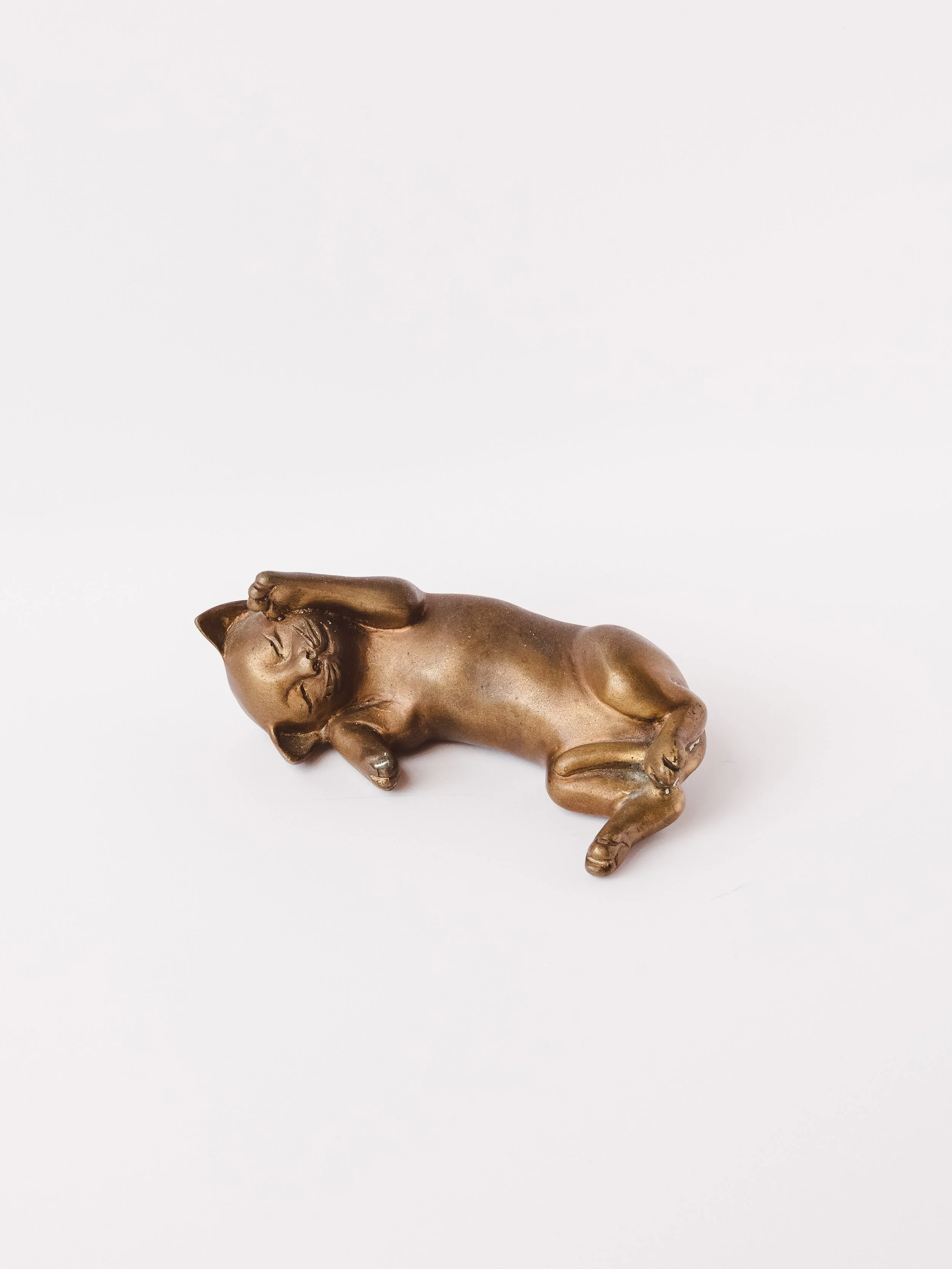 Image 2 of 7
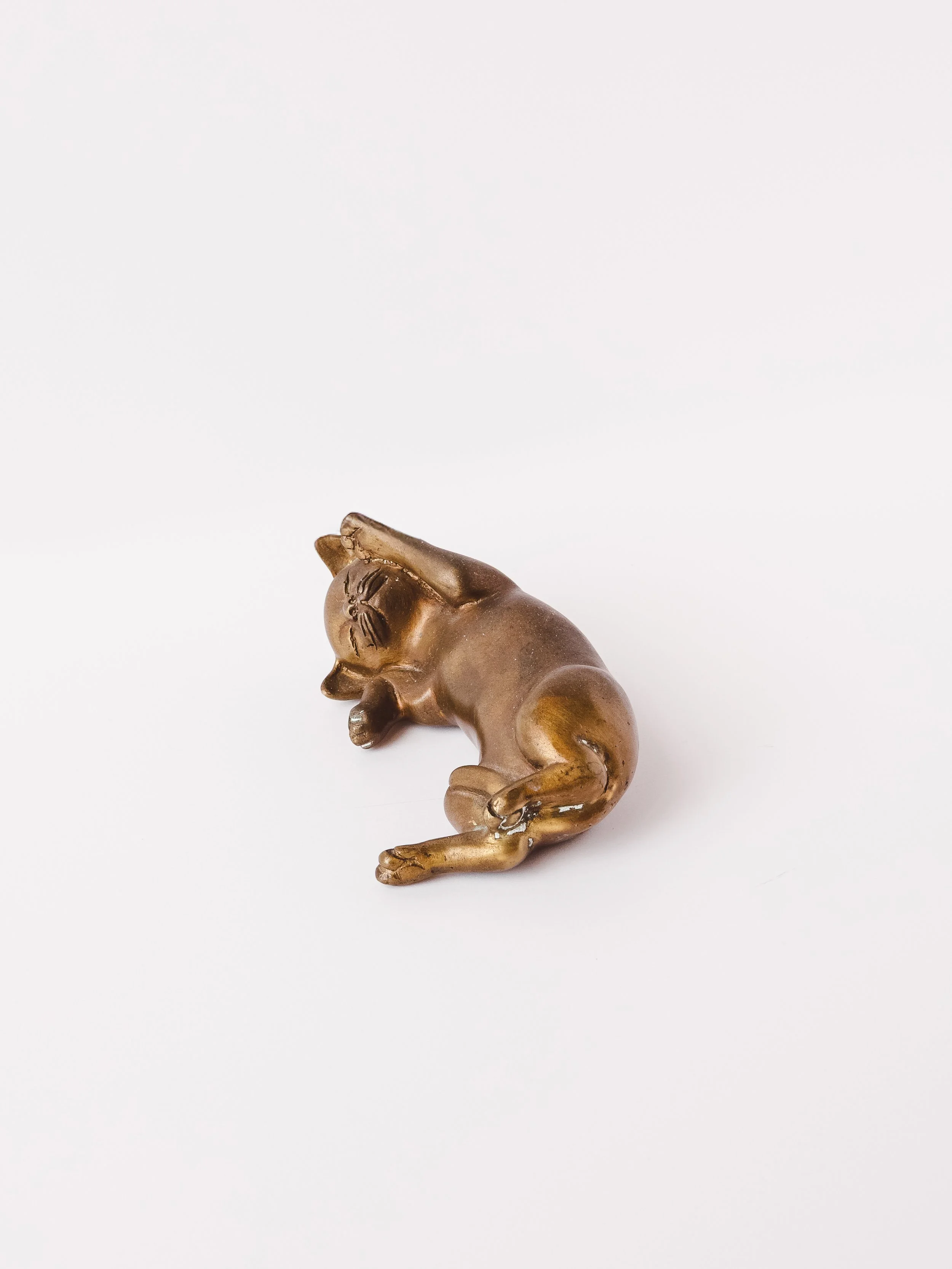 Image 3 of 7
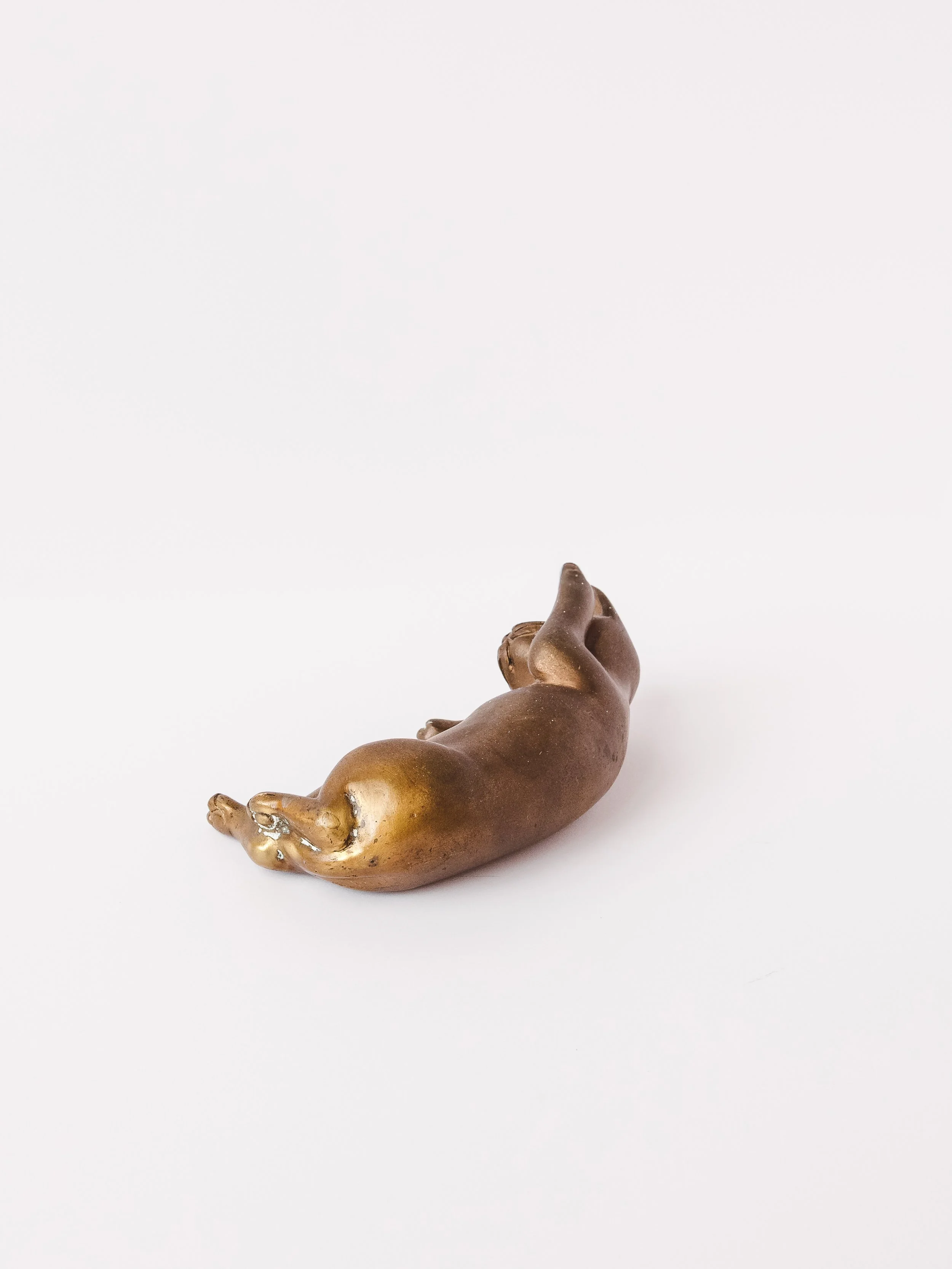 Image 4 of 7
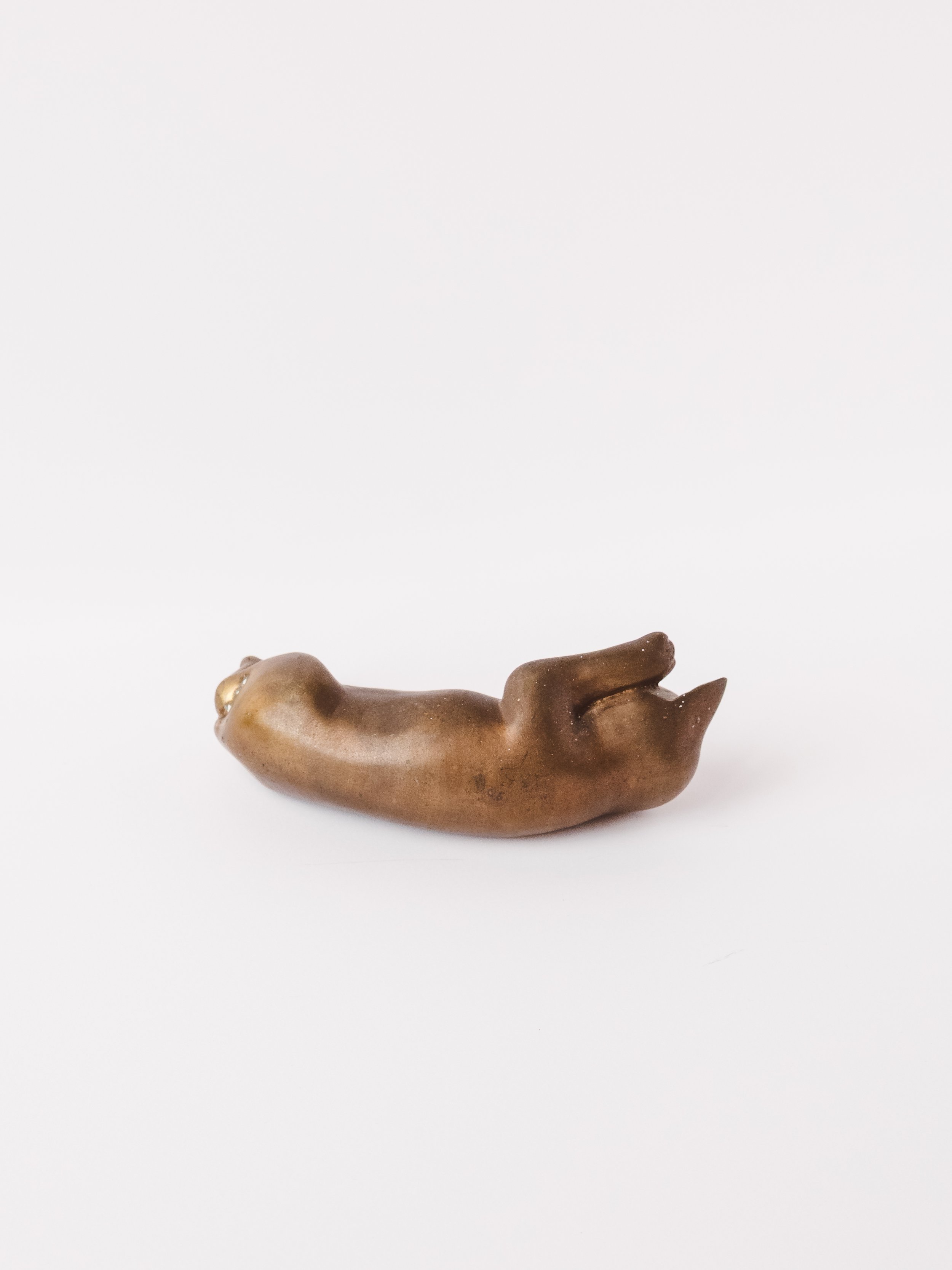 Image 5 of 7
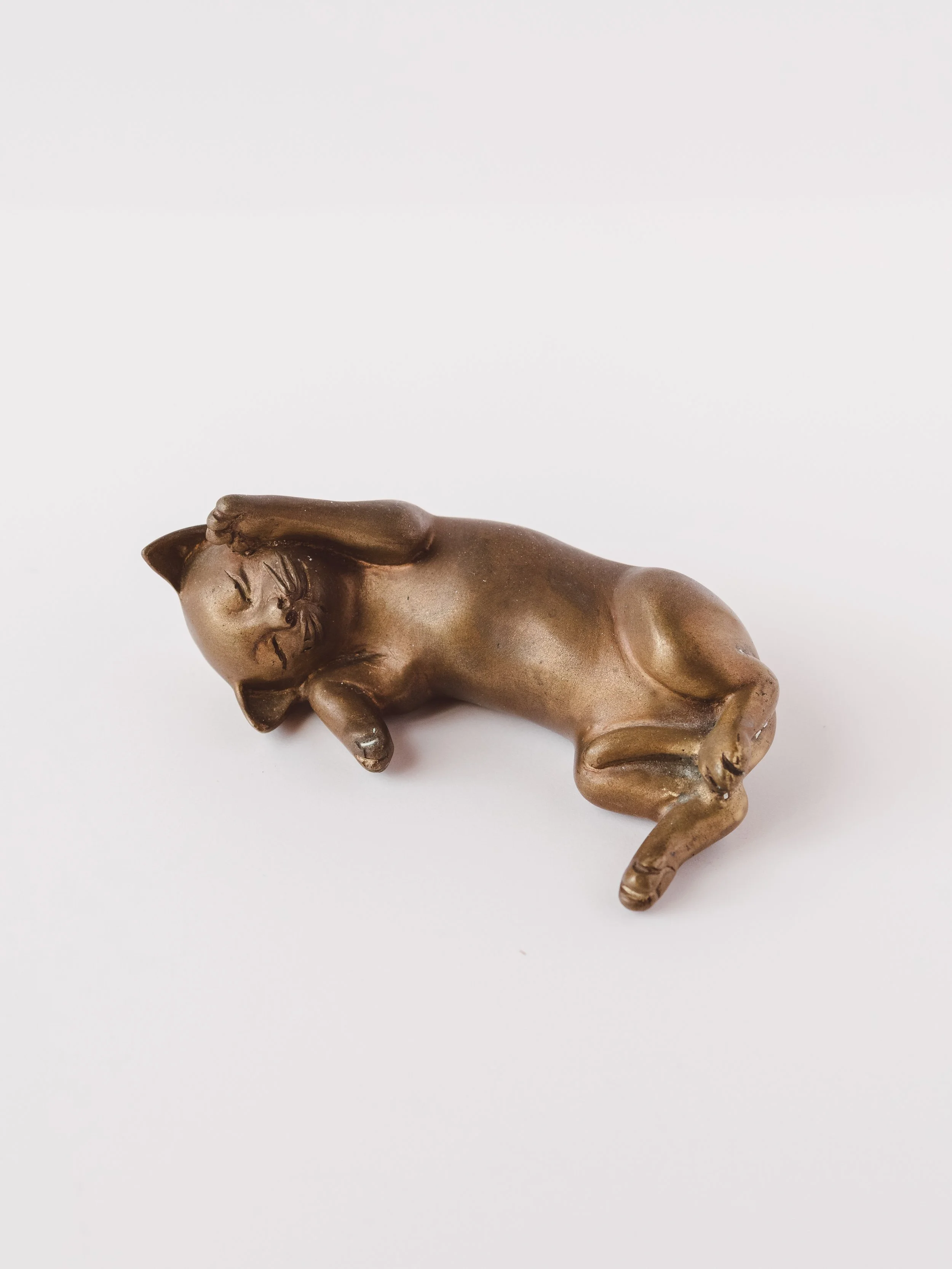 Image 6 of 7
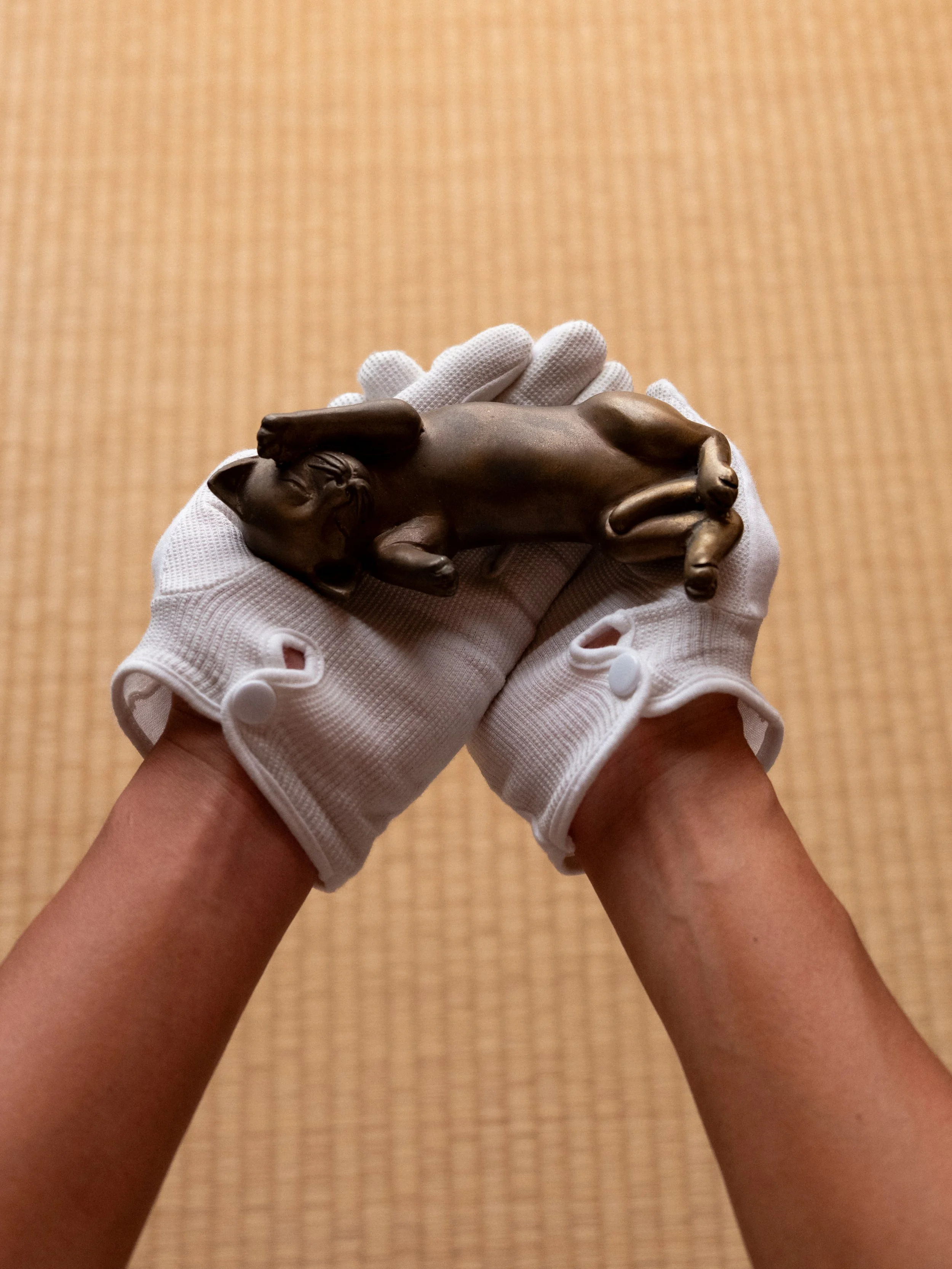 Image 7 of 7