【 The Concept 】
A standing Kannon carved from a single piece of pale boxwood, left entirely unpainted. A soft hood falls from the crown of the head over the shoulders — the mark of the Byakue Kannon, the White-robed Kannon — framing a calm, downturned face. The hands are folded quietly at the front of the body, and from them a long strand of prayer beads hangs down over the robe. The figure stands in a gentle S-curve on a double lotus, as though caught in the first moment of stepping forward.
Everything is in the carving and the bare wood. Boxwood is the densest and finest-grained of the Japanese carving woods — the material of netsuke and of the best small devotional figures — and it holds detail that softer woods cannot: the beadwork of the necklace, the individual beads of the rosary, the deep fall of the drapery, the curl of each lotus petal. No colour, no gilding — only the pale, close grain and the play of light across the folds.
【 The Function 】
A devotional figure (念持仏 / nenjibutsu) — a keep-close Kannon for a home altar, a desk, or a quiet shelf, at a scale meant for private contemplation. Very light and small, barely taller than a hand.
【 The Texture 】
Bare, matte boxwood, close-grained and smooth, with the faint tooling of the carver still legible in the deeper folds. The pale cream surface carries the soft sheen of finished wood and a few natural flecks in the grain. It is warm and light in the hand — the particular near-weightlessness of a small boxwood carving.
【 Presence 】
Quiet and intimate. It has none of the weight of a metal or stone icon; its presence is in stillness and fineness of detail, the downturned face and the long line of beads drawing the eye slowly down. A small, calm point in a room.
Provenance Note: Sourced from a private collection in Japan.
Care Note: Unpainted boxwood is a living material. Keep it out of direct sun and very dry or damp air; dust with a soft brush rather than a cloth. Over the years the wood will mellow on its own from pale cream toward a deeper amber — part of how such a piece ages.
【 The Concept 】
A standing Kannon carved from a single piece of pale boxwood, left entirely unpainted. A soft hood falls from the crown of the head over the shoulders — the mark of the Byakue Kannon, the White-robed Kannon — framing a calm, downturned face. The hands are folded quietly at the front of the body, and from them a long strand of prayer beads hangs down over the robe. The figure stands in a gentle S-curve on a double lotus, as though caught in the first moment of stepping forward.
Everything is in the carving and the bare wood. Boxwood is the densest and finest-grained of the Japanese carving woods — the material of netsuke and of the best small devotional figures — and it holds detail that softer woods cannot: the beadwork of the necklace, the individual beads of the rosary, the deep fall of the drapery, the curl of each lotus petal. No colour, no gilding — only the pale, close grain and the play of light across the folds.
【 The Function 】
A devotional figure (念持仏 / nenjibutsu) — a keep-close Kannon for a home altar, a desk, or a quiet shelf, at a scale meant for private contemplation. Very light and small, barely taller than a hand.
【 The Texture 】
Bare, matte boxwood, close-grained and smooth, with the faint tooling of the carver still legible in the deeper folds. The pale cream surface carries the soft sheen of finished wood and a few natural flecks in the grain. It is warm and light in the hand — the particular near-weightlessness of a small boxwood carving.
【 Presence 】
Quiet and intimate. It has none of the weight of a metal or stone icon; its presence is in stillness and fineness of detail, the downturned face and the long line of beads drawing the eye slowly down. A small, calm point in a room.
Provenance Note: Sourced from a private collection in Japan.
Care Note: Unpainted boxwood is a living material. Keep it out of direct sun and very dry or damp air; dust with a soft brush rather than a cloth. Over the years the wood will mellow on its own from pale cream toward a deeper amber — part of how such a piece ages.


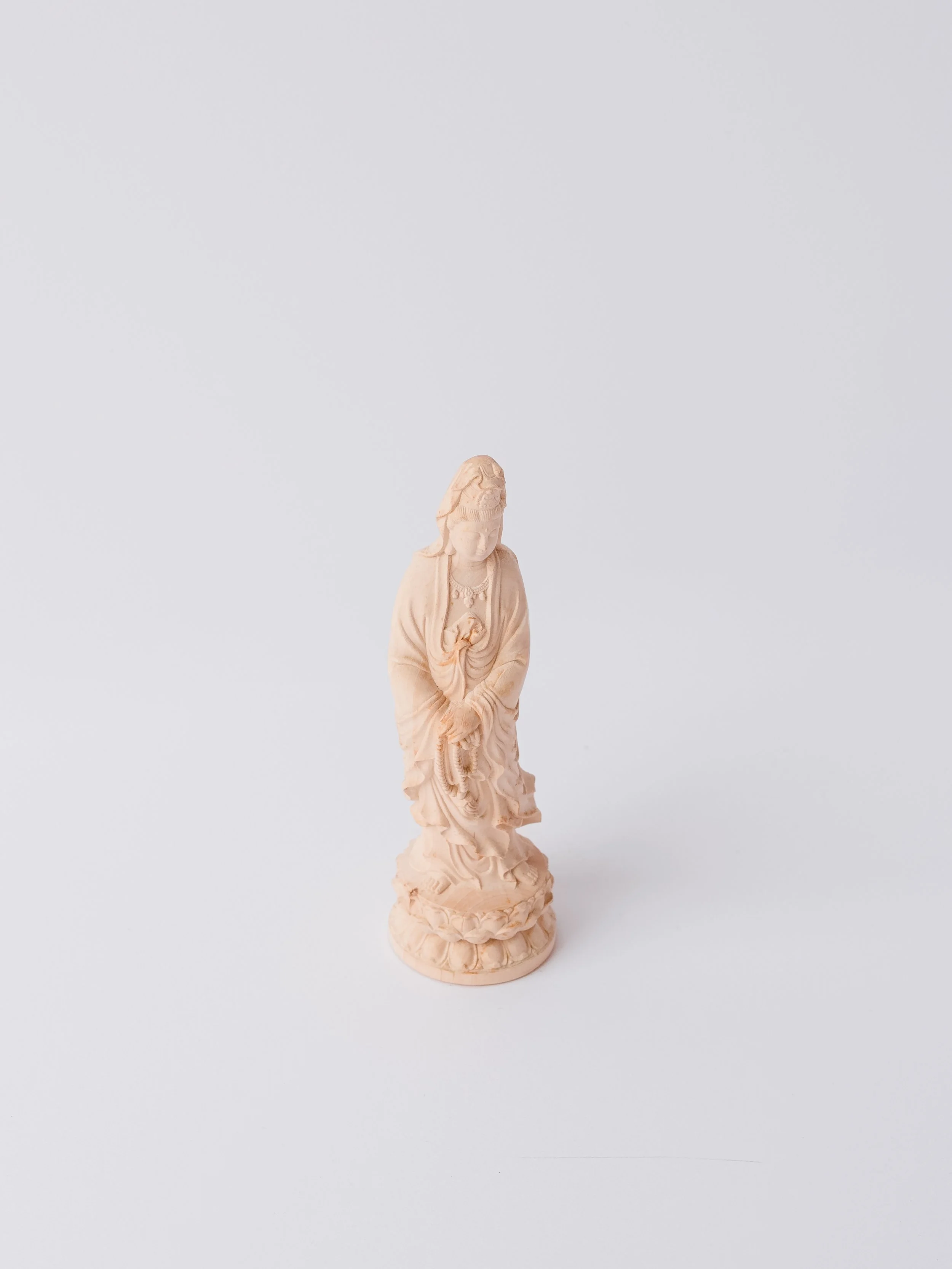 Image 1 of 10
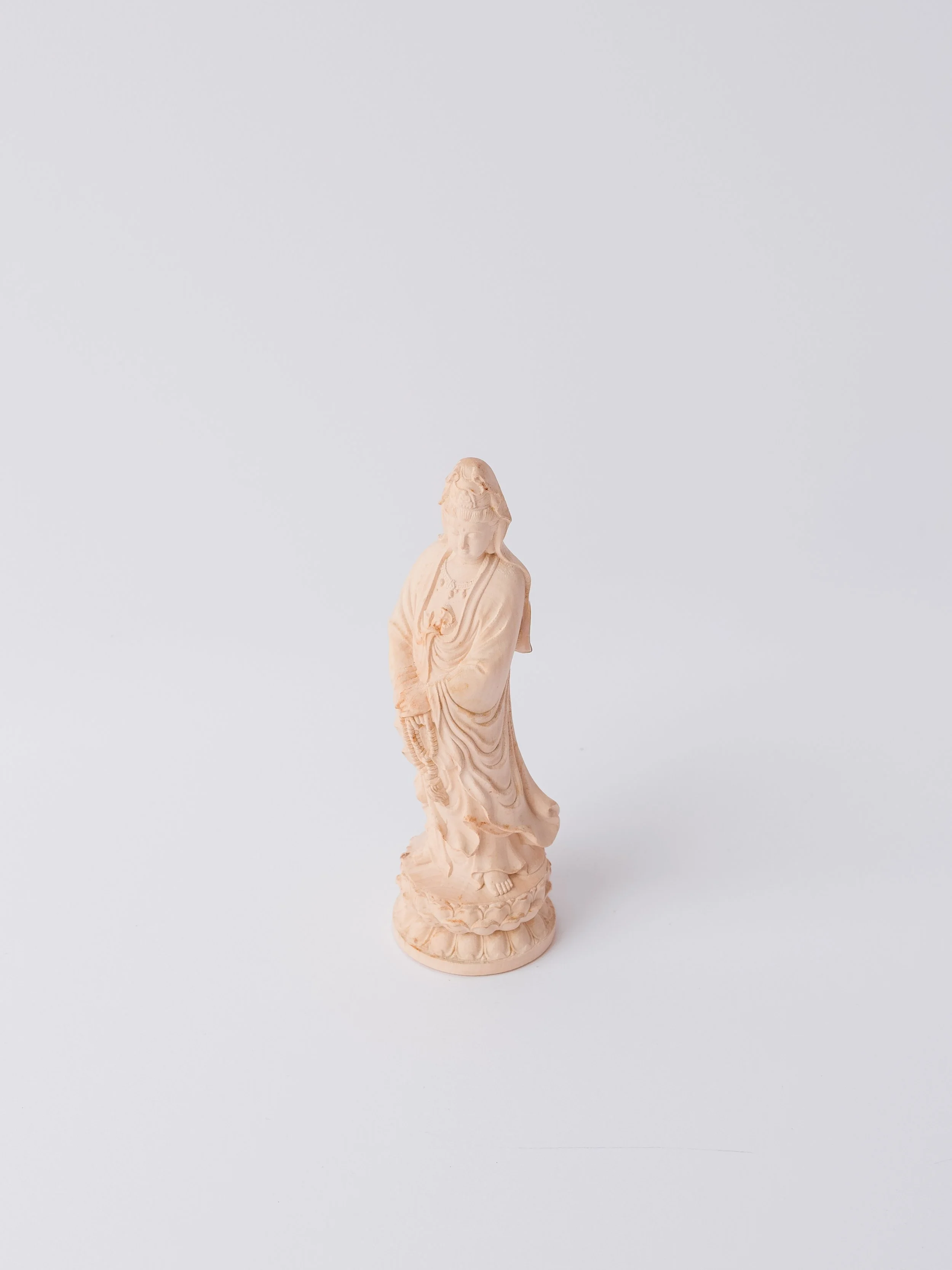 Image 2 of 10
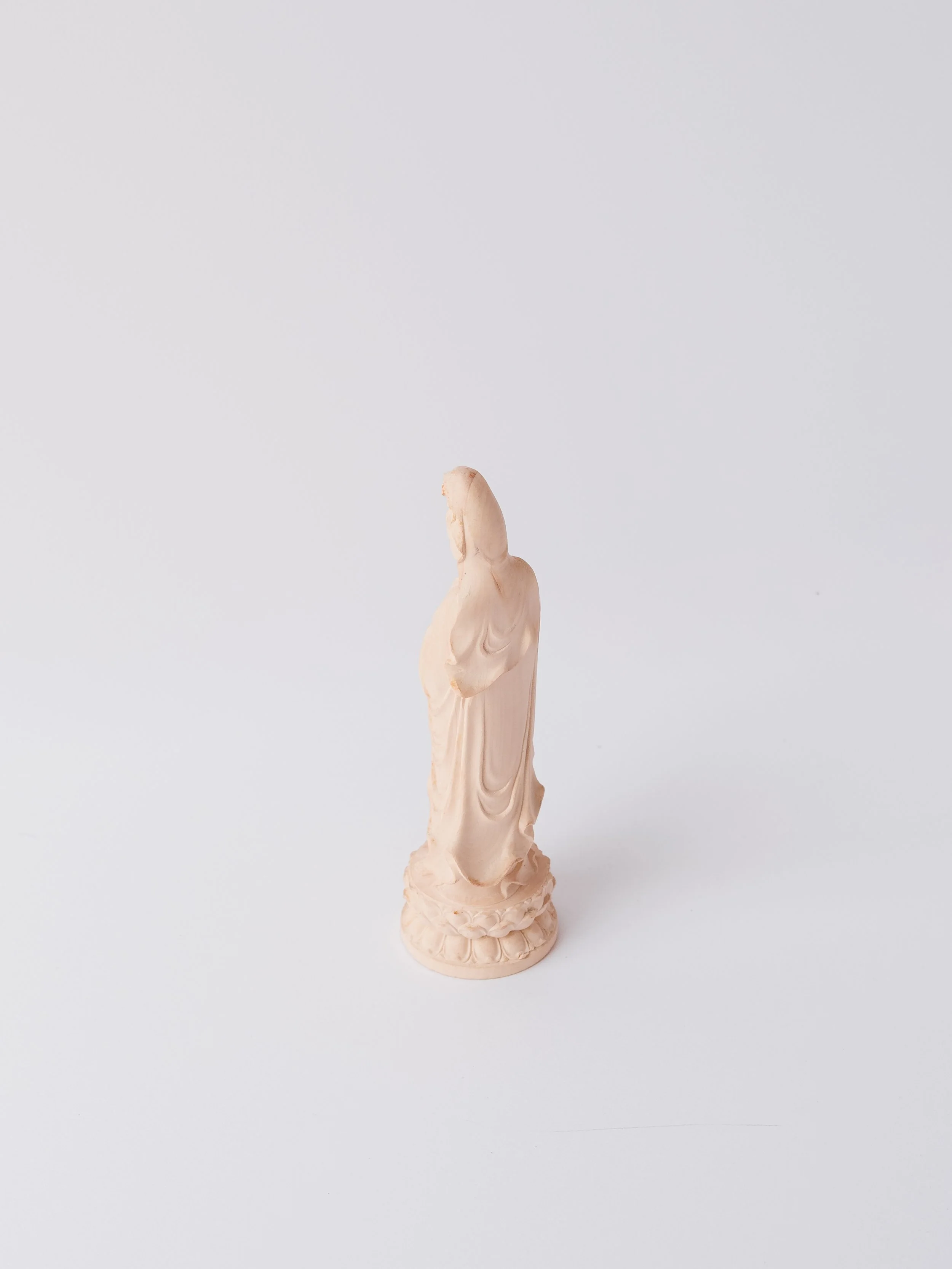 Image 3 of 10
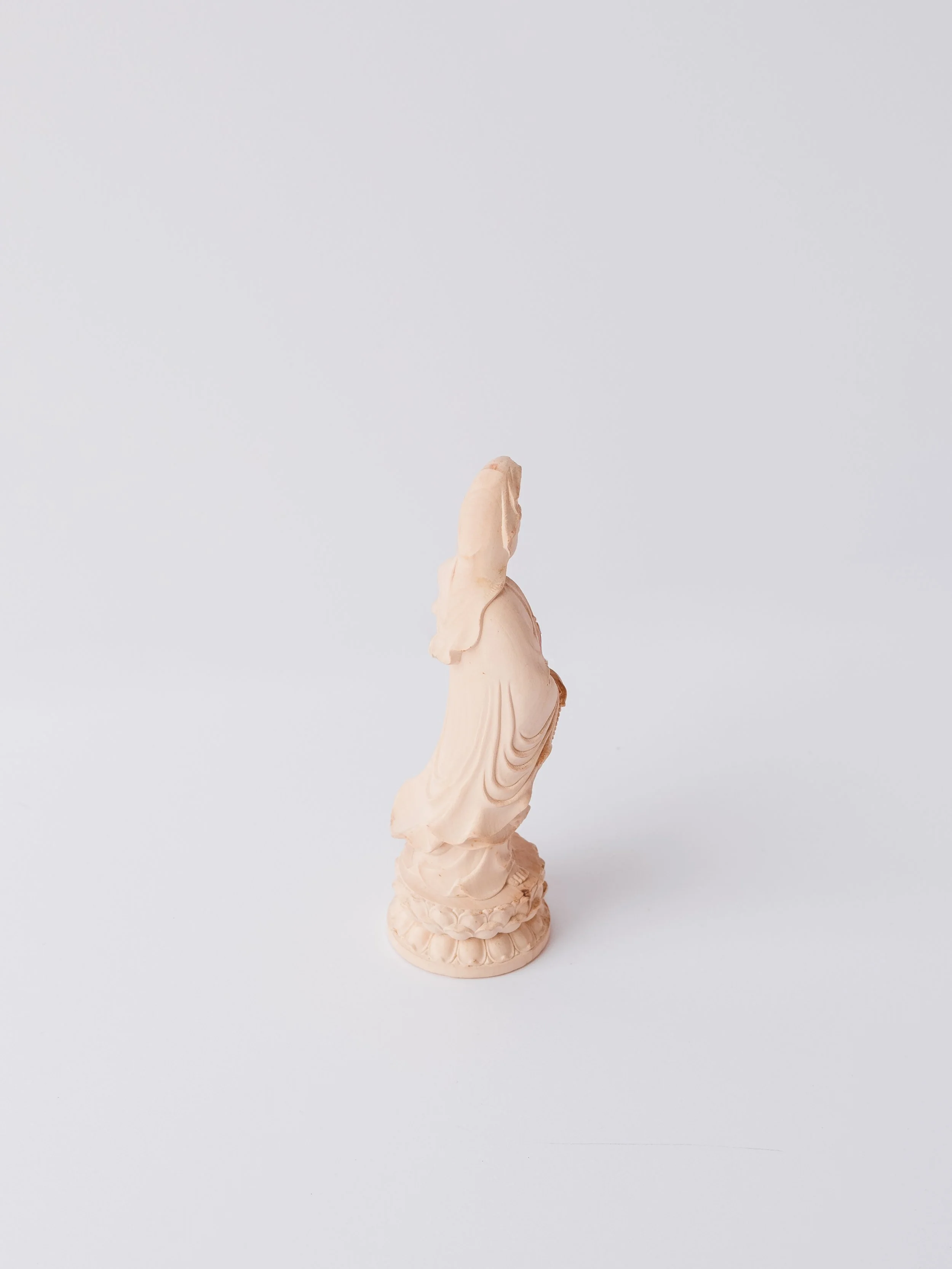 Image 4 of 10
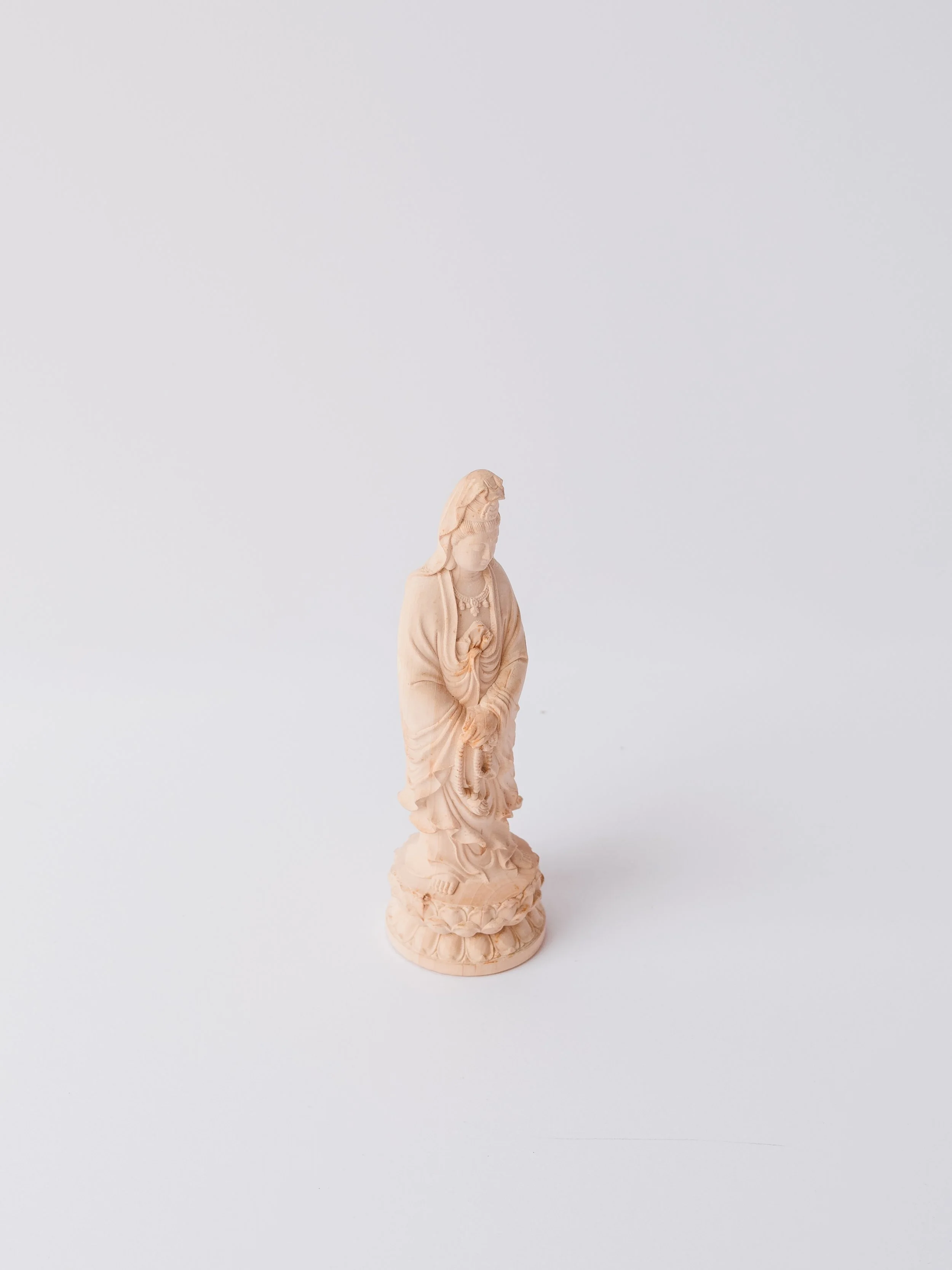 Image 5 of 10
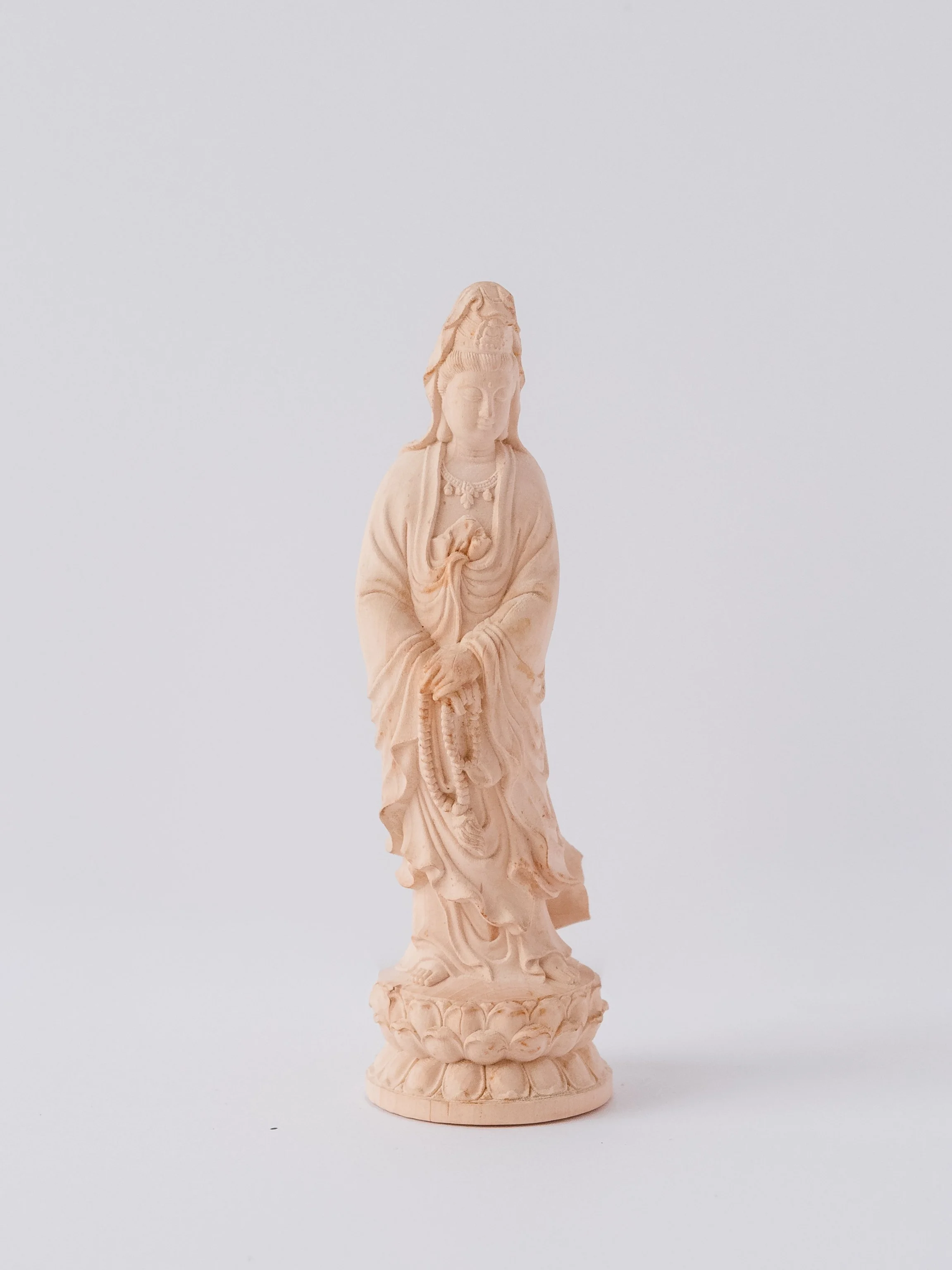 Image 6 of 10
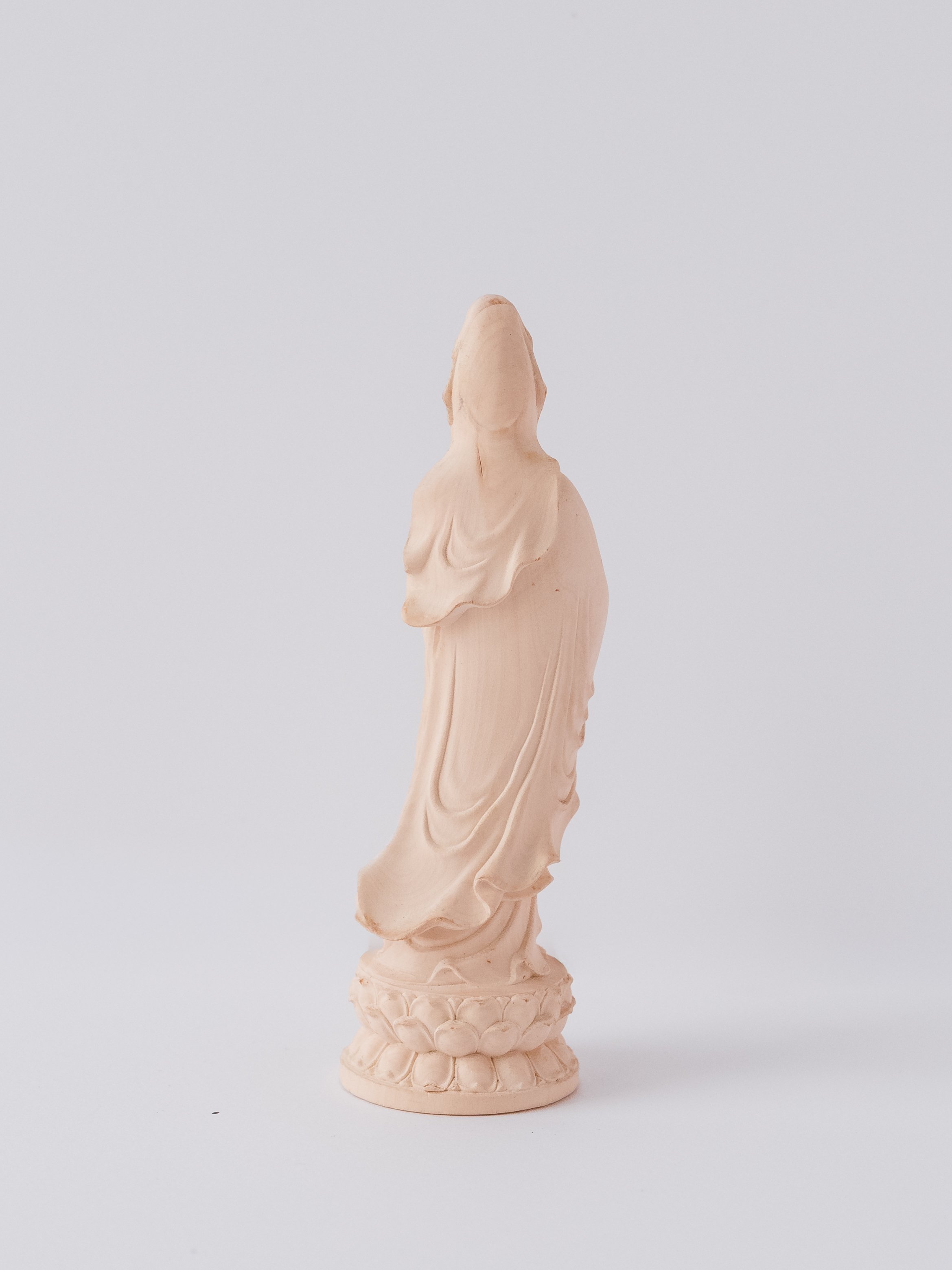 Image 7 of 10
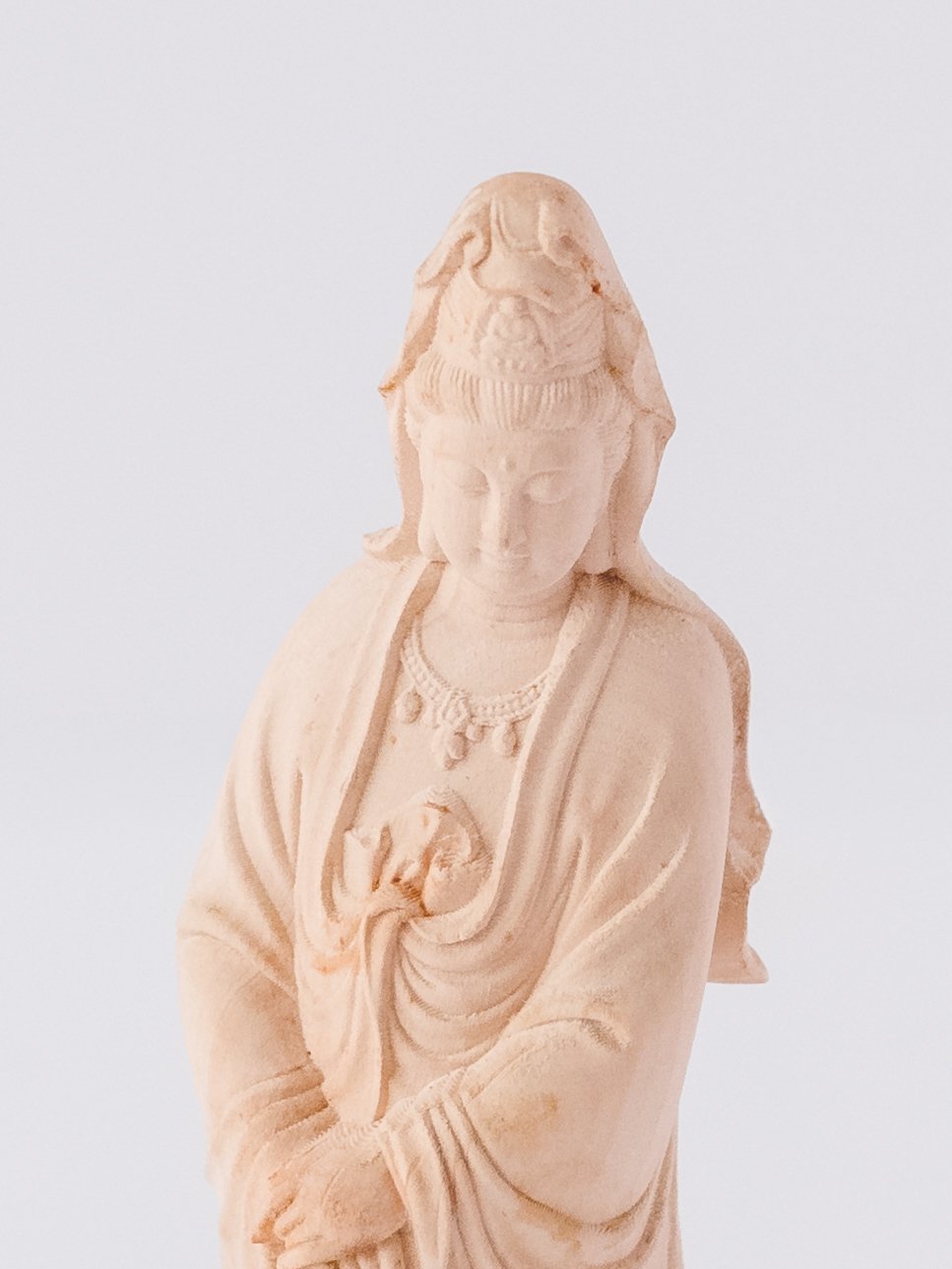 Image 8 of 10
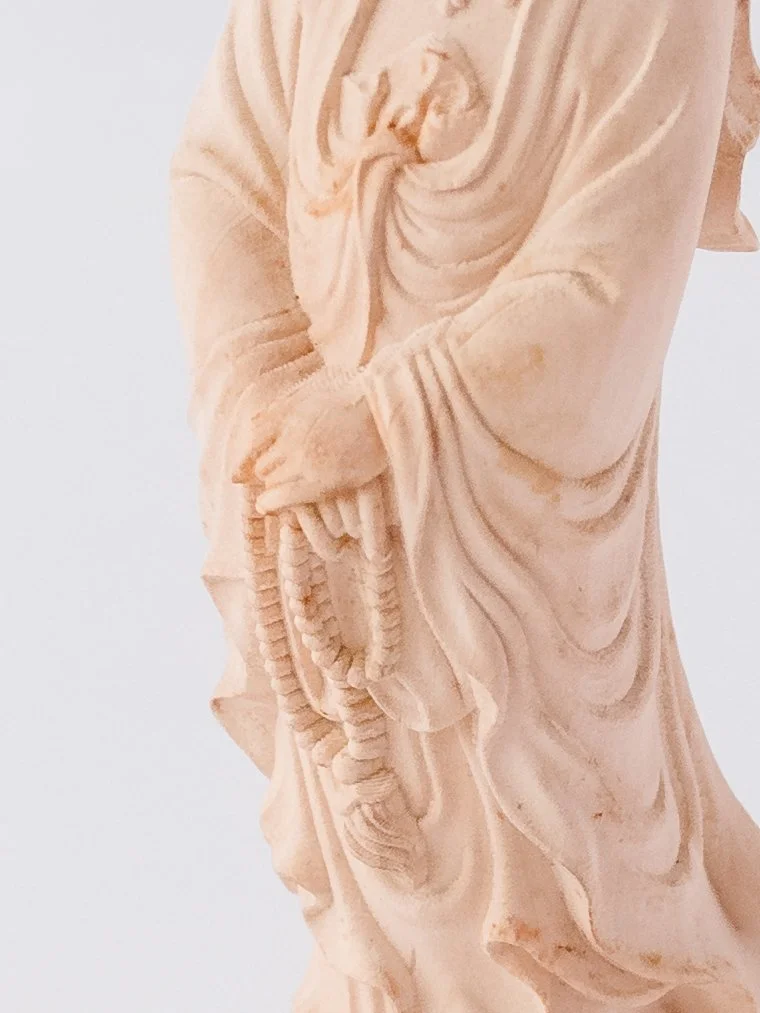 Image 9 of 10
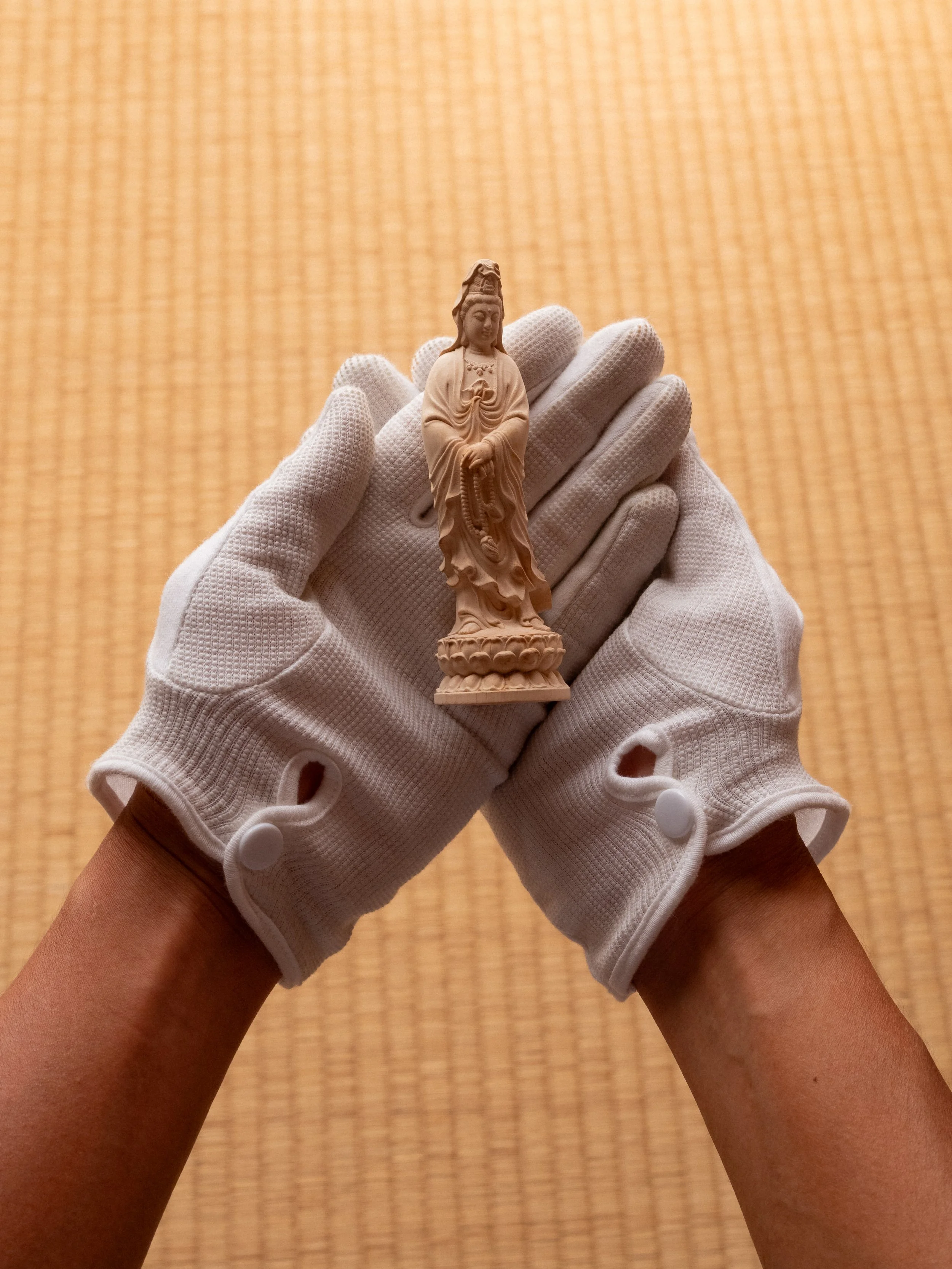 Image 10 of 10