【 The Concept 】
Kannon — the bodhisattva of compassion, the one who hears the cries of the world — carved standing on the waves. The figure sways in a soft S-curve, weight on one foot, robes streaming, the head inclined and the eyes lowered to half-closed in an expression of complete calm. This is the Kannon of sweet dew, her attributes all bound to water: the willow spray held up in the right hand — the branch that bends in the wind but never breaks — and, in the lowered left hand, a slender water-vase tilted to pour a long stream of kanro, the sweet dew of compassion, down over the sea below — carved with such force and continuity that the water seems as though it will never stop, the inexhaustible mercy of a vessel that never runs dry. With the willow she scatters that dew to cleanse defilement, heal sickness, and soothe suffering. The carver has let that poured stream run unbroken all the way down to the base, where it gathers into cresting waves — so the water seems to become the very sea beneath her, and coiled within it is a dragon-fish (ao), a mythic creature with a fish's scaled tail and the face of a dragon. She stands serene above it: not casting it out but holding it still, the churning sea and the beast within it alike gathered up and calmed by the water of her mercy. It is, in short, a Kannon of the water — for healing, for purification, for safe passage across the "sea of suffering," and, in the old auspicious reading of a figure poised upon the ao's head, for rising to the very top.
【 The Function 】
A devotional carving and a sculptural presence in one. Tall and slender, it holds a space with quiet authority — a shelf, an alcove, a mantel, a side table, a study — and rewards looking from every angle, the drapery, the attributes, and the openwork waves each carrying the eye around the figure. It needs no shrine and no explaining; it simply stands, still and composed, and slows the room around it. Set it where the light can rake across the carving and where a glance will find it in a quiet moment.
【 The Texture 】
Carved from a single block of boxwood — tsuge, the slow-grown, close-grained hardwood long prized for the finest carving because it takes an edge without splitting. It is left as bare wood, unpainted: a warm honey-amber that has deepened with age to a soft, glowing patina, the grain so fine as to be almost invisible, the surface smooth and satin to the hand. With no colour to hide behind, everything is the carver's line — the combed strands of the hair, the beaded necklace, the fine leaves of the willow, the tilted water-vase and the carved stream falling from it, the scaled tail of the dragon-fish at the base, the deep folds of the robe cut sharp enough to hold real shadow, and the wave-scrolls at the base pierced clean through in openwork. Bright on the raised planes where hands and years have polished it, darker in the hollows: a surface that has been kept, and shows it, and will only deepen further with time.
【 Presence 】
Serene, devotional, and quietly commanding. Where a bright object performs, this one draws a room inward — the lowered eyes and faint smile, the endless slow fall of the robes, the stillness of a figure poised above moving water. It carries the weight of a real object of prayer, yet asks nothing: no belief, only attention. The bare boxwood keeps it warm and human rather than remote, and the intricacy rewards a long look without ever growing loud. A piece to steady and centre a space — a small still point of compassion to keep in sight.
Sourced from a private collection in Japan.
【 The Concept 】
Kannon — the bodhisattva of compassion, the one who hears the cries of the world — carved standing on the waves. The figure sways in a soft S-curve, weight on one foot, robes streaming, the head inclined and the eyes lowered to half-closed in an expression of complete calm. This is the Kannon of sweet dew, her attributes all bound to water: the willow spray held up in the right hand — the branch that bends in the wind but never breaks — and, in the lowered left hand, a slender water-vase tilted to pour a long stream of kanro, the sweet dew of compassion, down over the sea below — carved with such force and continuity that the water seems as though it will never stop, the inexhaustible mercy of a vessel that never runs dry. With the willow she scatters that dew to cleanse defilement, heal sickness, and soothe suffering. The carver has let that poured stream run unbroken all the way down to the base, where it gathers into cresting waves — so the water seems to become the very sea beneath her, and coiled within it is a dragon-fish (ao), a mythic creature with a fish's scaled tail and the face of a dragon. She stands serene above it: not casting it out but holding it still, the churning sea and the beast within it alike gathered up and calmed by the water of her mercy. It is, in short, a Kannon of the water — for healing, for purification, for safe passage across the "sea of suffering," and, in the old auspicious reading of a figure poised upon the ao's head, for rising to the very top.
【 The Function 】
A devotional carving and a sculptural presence in one. Tall and slender, it holds a space with quiet authority — a shelf, an alcove, a mantel, a side table, a study — and rewards looking from every angle, the drapery, the attributes, and the openwork waves each carrying the eye around the figure. It needs no shrine and no explaining; it simply stands, still and composed, and slows the room around it. Set it where the light can rake across the carving and where a glance will find it in a quiet moment.
【 The Texture 】
Carved from a single block of boxwood — tsuge, the slow-grown, close-grained hardwood long prized for the finest carving because it takes an edge without splitting. It is left as bare wood, unpainted: a warm honey-amber that has deepened with age to a soft, glowing patina, the grain so fine as to be almost invisible, the surface smooth and satin to the hand. With no colour to hide behind, everything is the carver's line — the combed strands of the hair, the beaded necklace, the fine leaves of the willow, the tilted water-vase and the carved stream falling from it, the scaled tail of the dragon-fish at the base, the deep folds of the robe cut sharp enough to hold real shadow, and the wave-scrolls at the base pierced clean through in openwork. Bright on the raised planes where hands and years have polished it, darker in the hollows: a surface that has been kept, and shows it, and will only deepen further with time.
【 Presence 】
Serene, devotional, and quietly commanding. Where a bright object performs, this one draws a room inward — the lowered eyes and faint smile, the endless slow fall of the robes, the stillness of a figure poised above moving water. It carries the weight of a real object of prayer, yet asks nothing: no belief, only attention. The bare boxwood keeps it warm and human rather than remote, and the intricacy rewards a long look without ever growing loud. A piece to steady and centre a space — a small still point of compassion to keep in sight.
Sourced from a private collection in Japan.


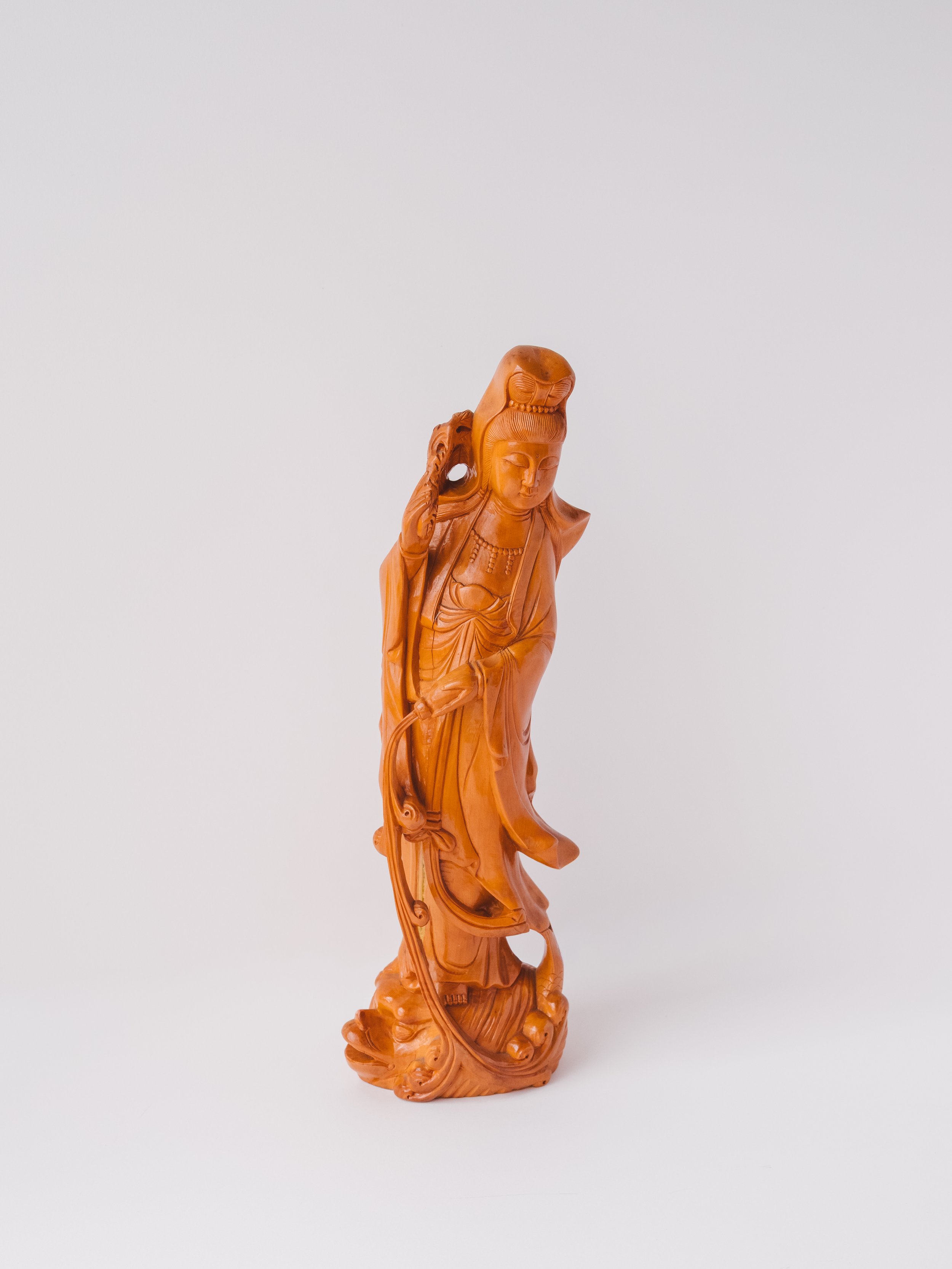 Image 1 of 15
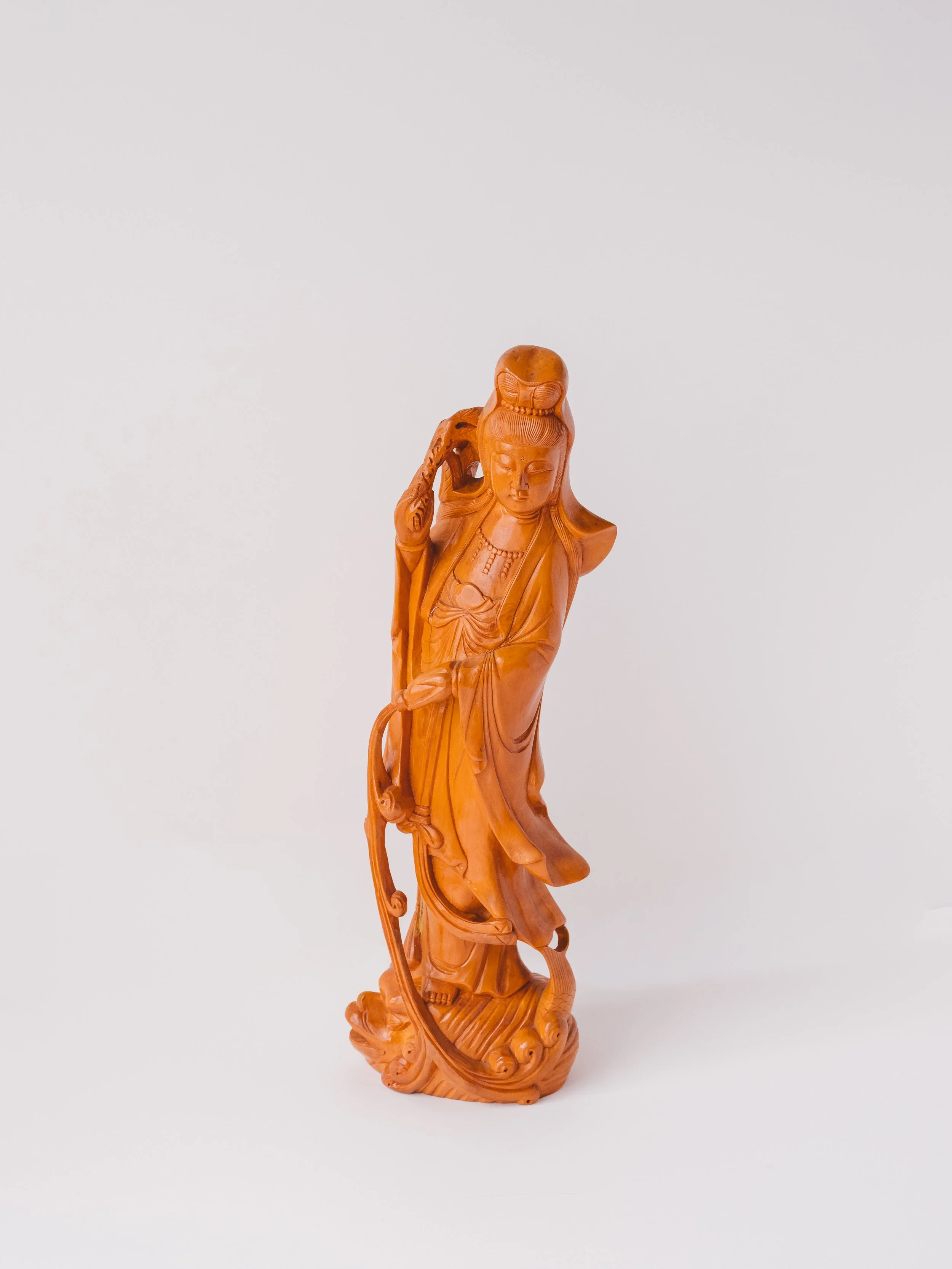 Image 2 of 15
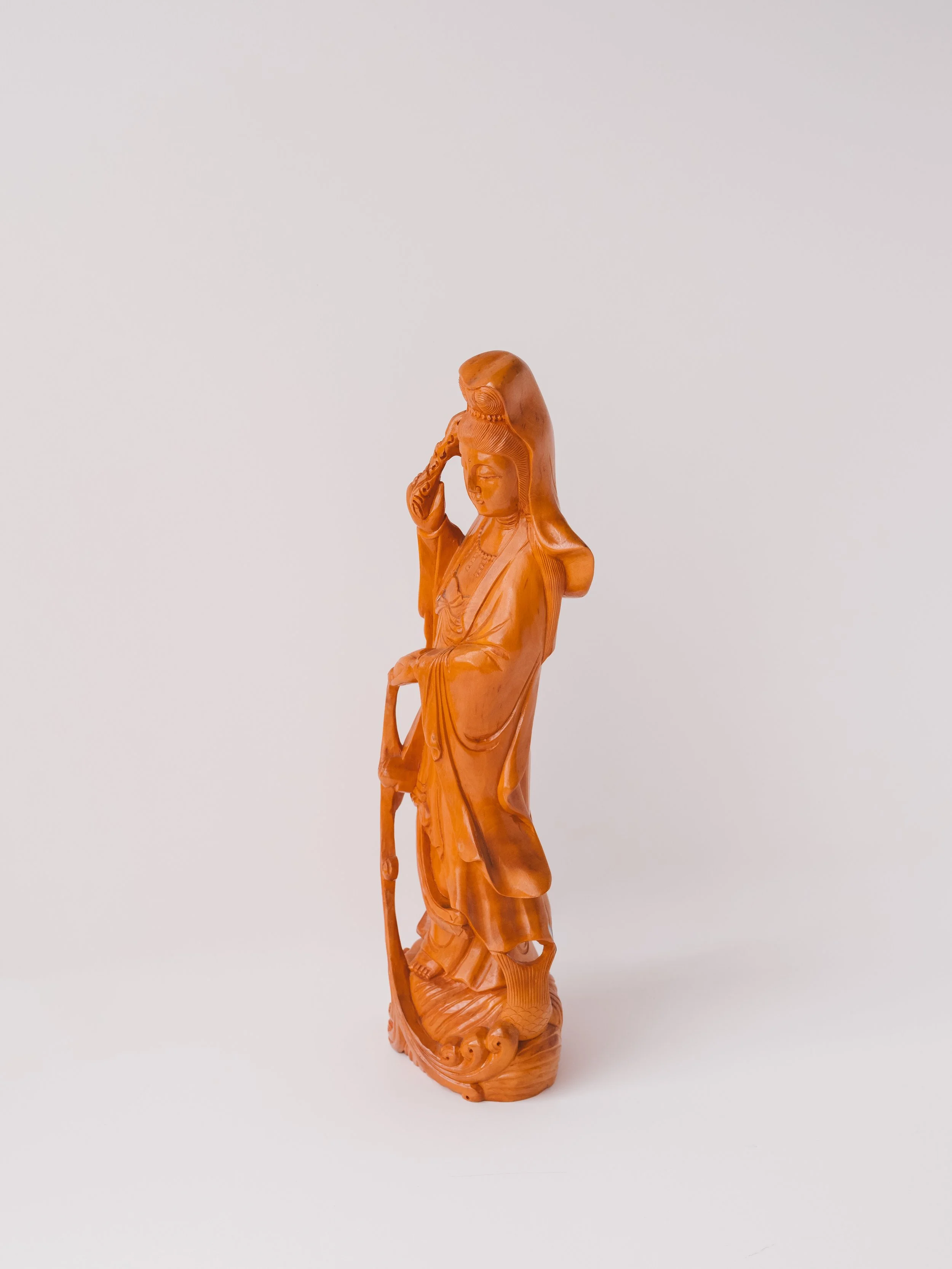 Image 3 of 15
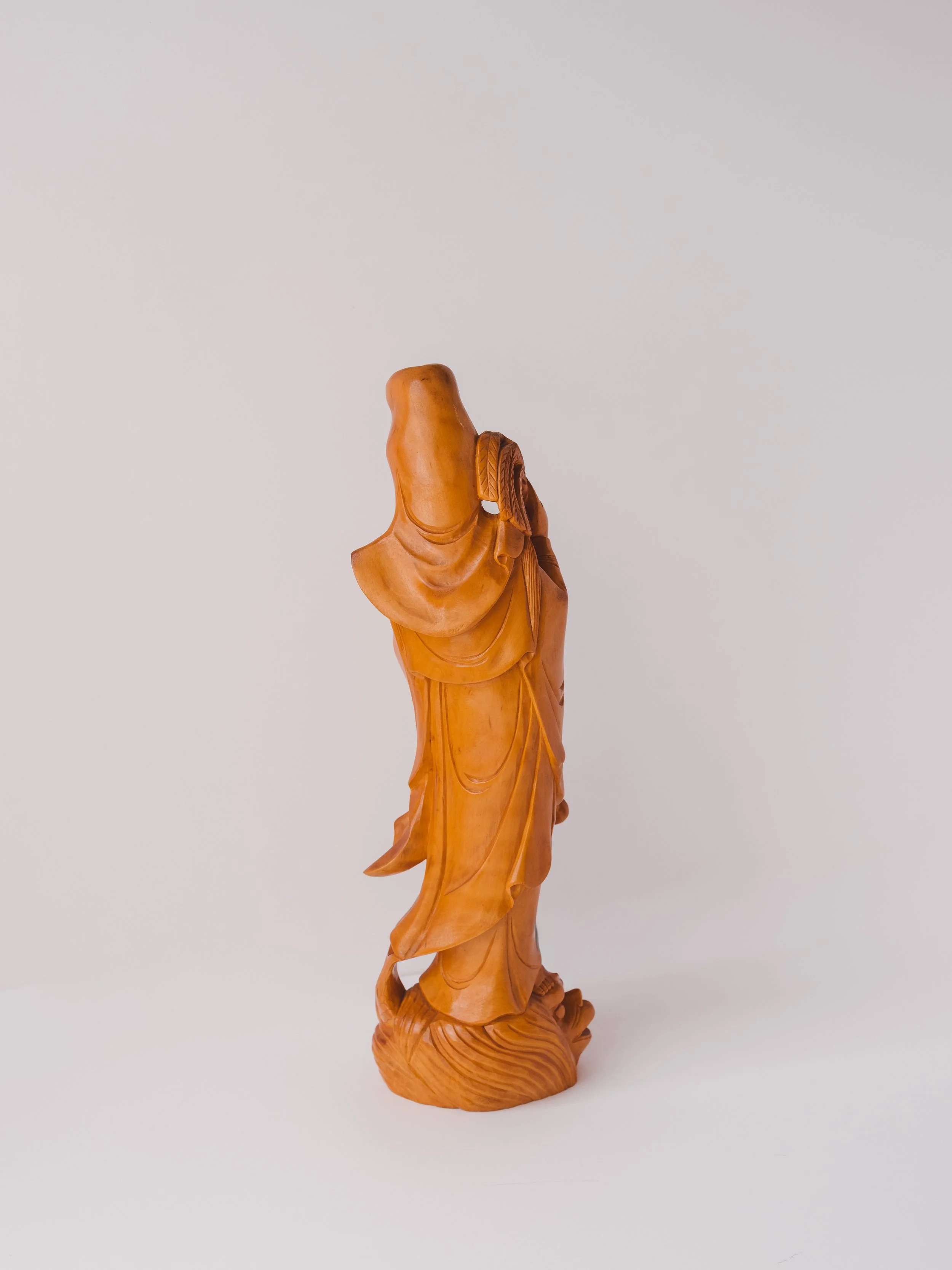 Image 4 of 15
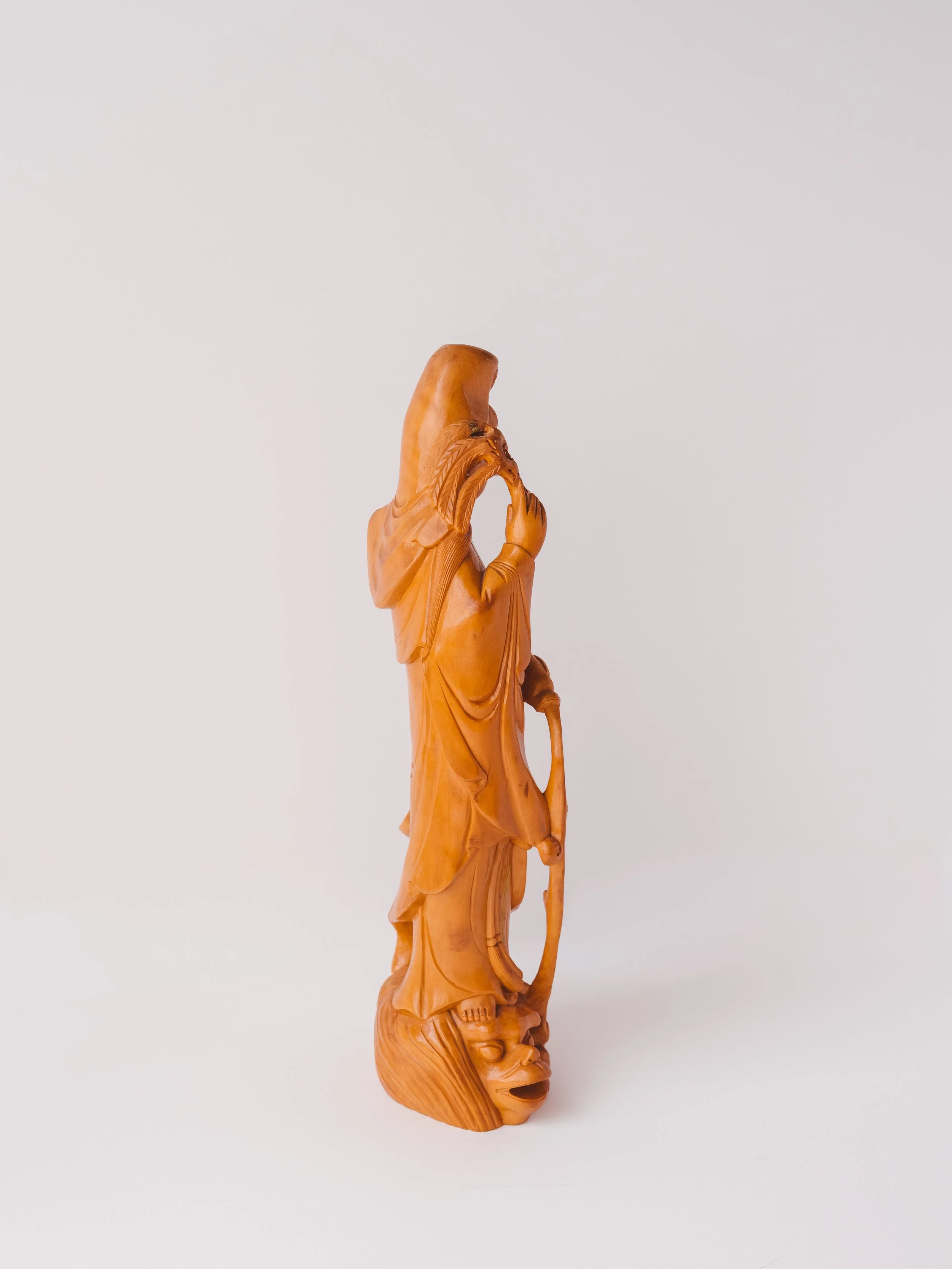 Image 5 of 15
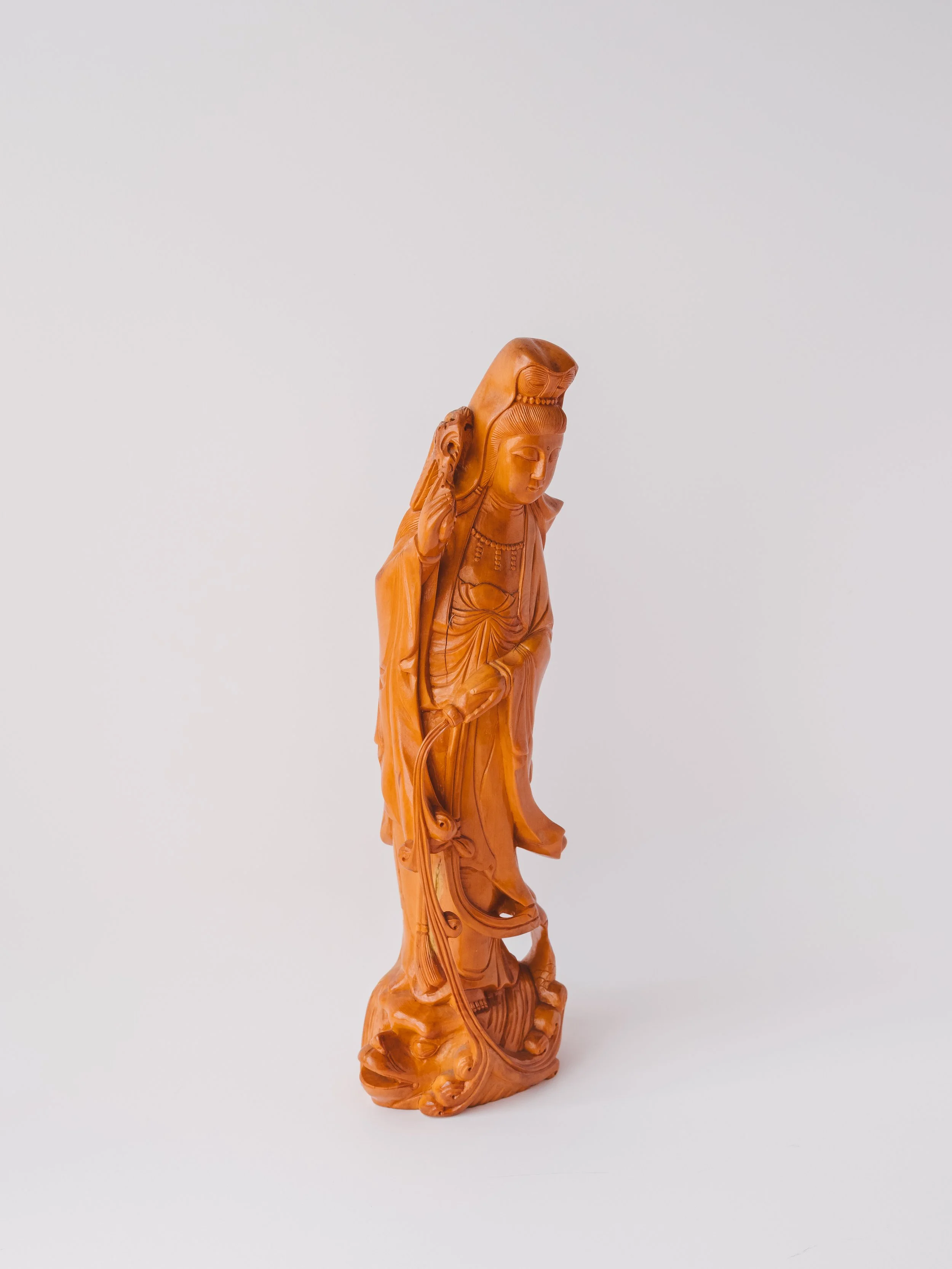 Image 6 of 15
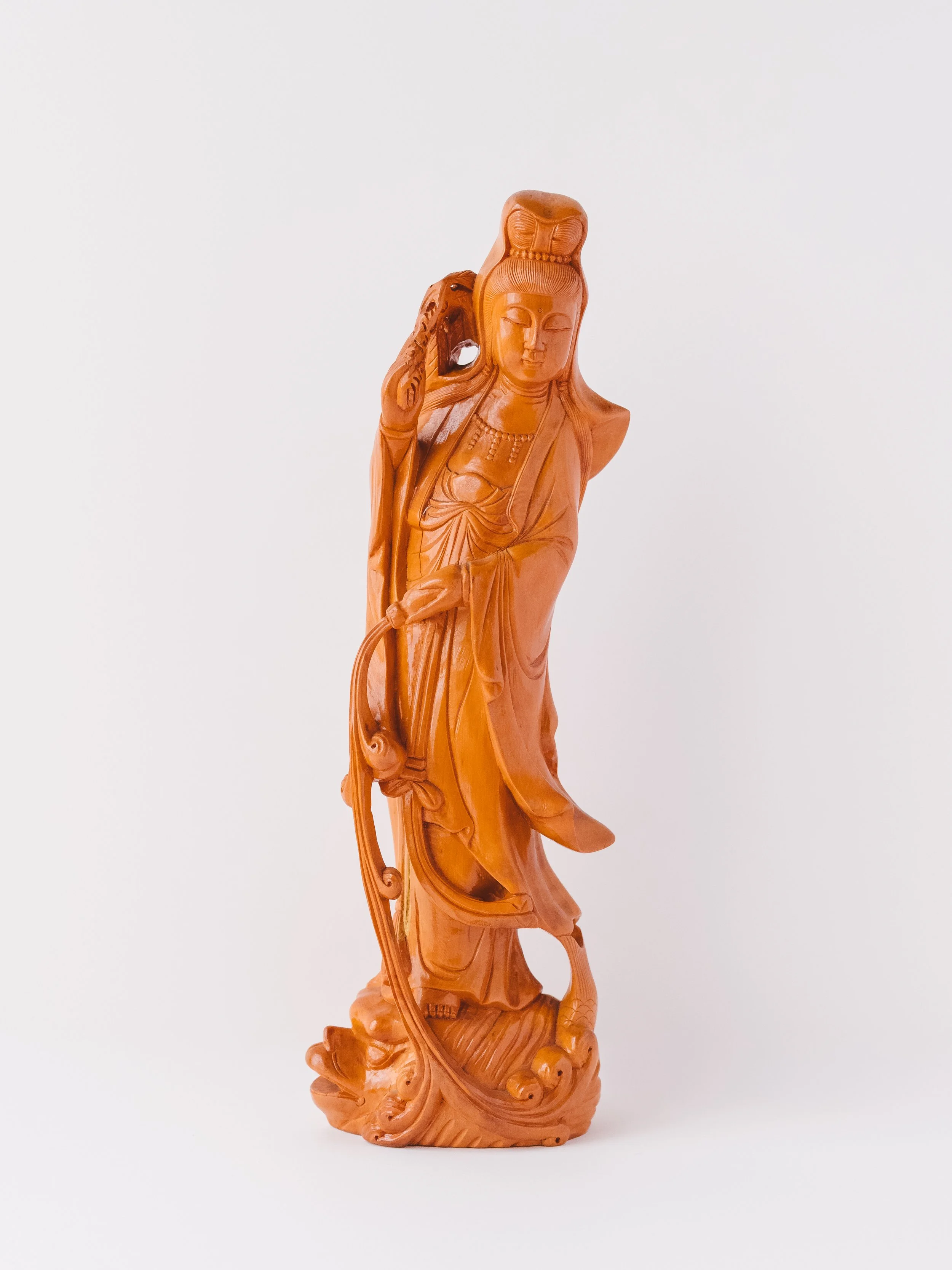 Image 7 of 15
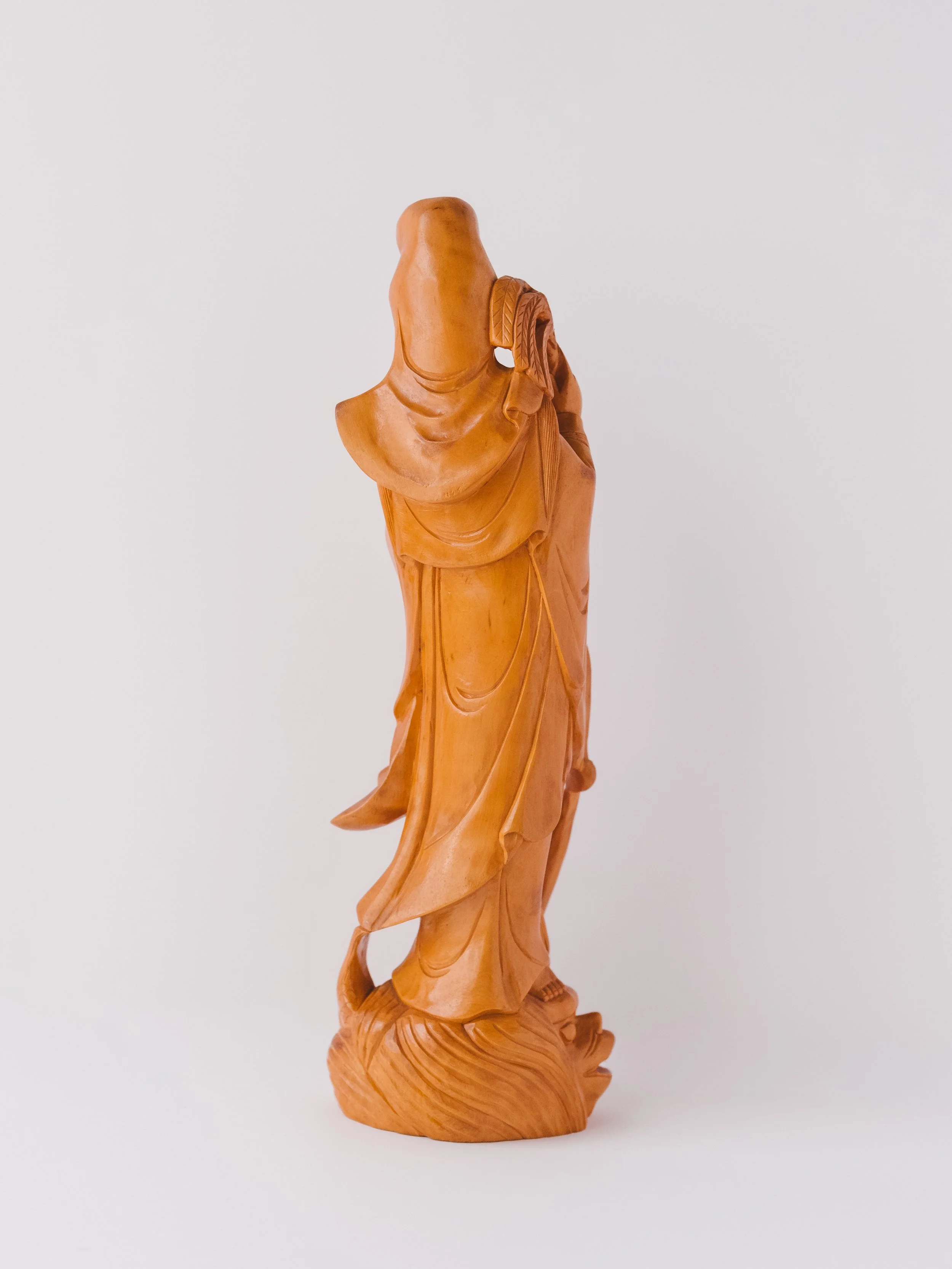 Image 8 of 15
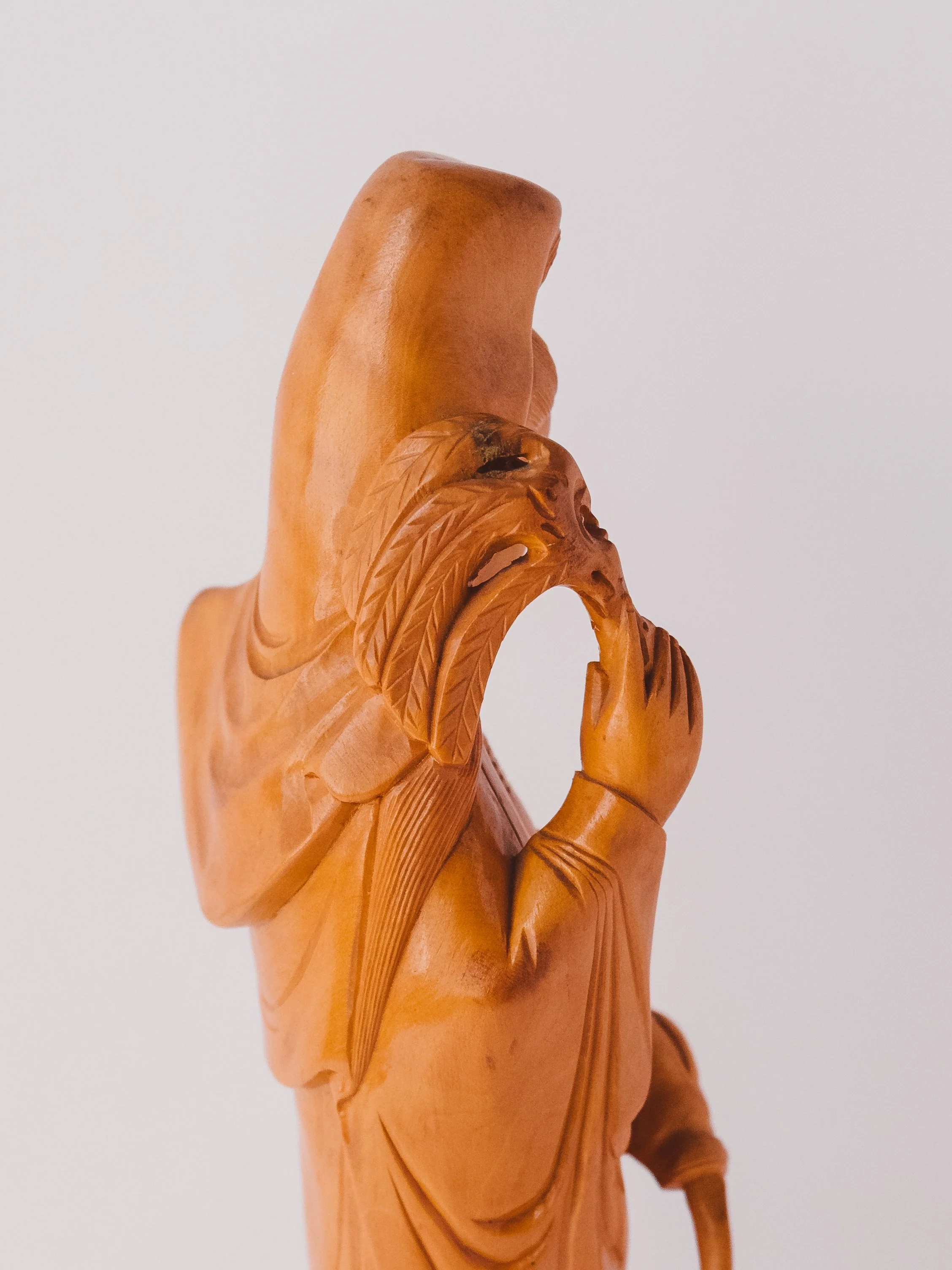 Image 9 of 15
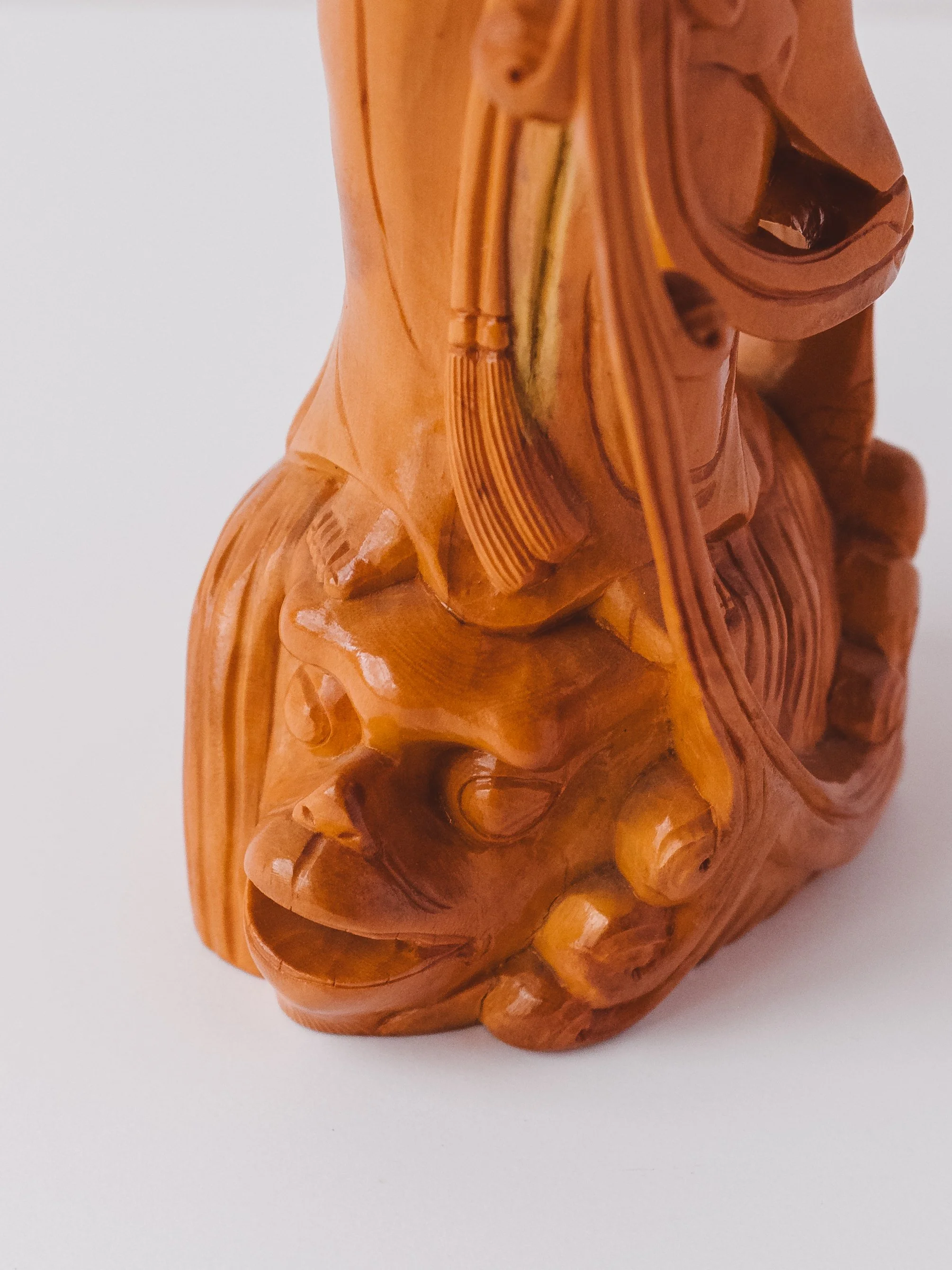 Image 10 of 15
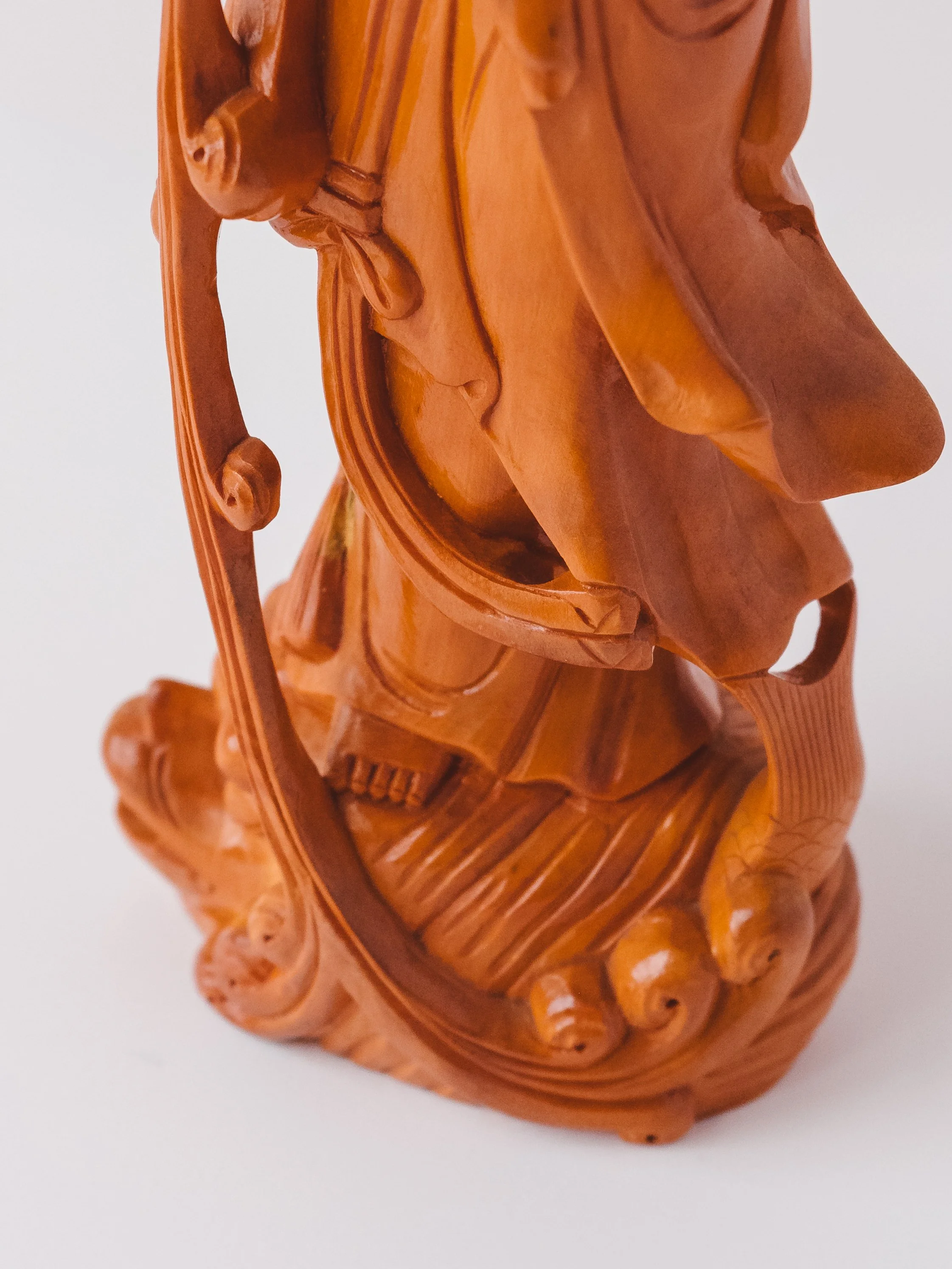 Image 11 of 15
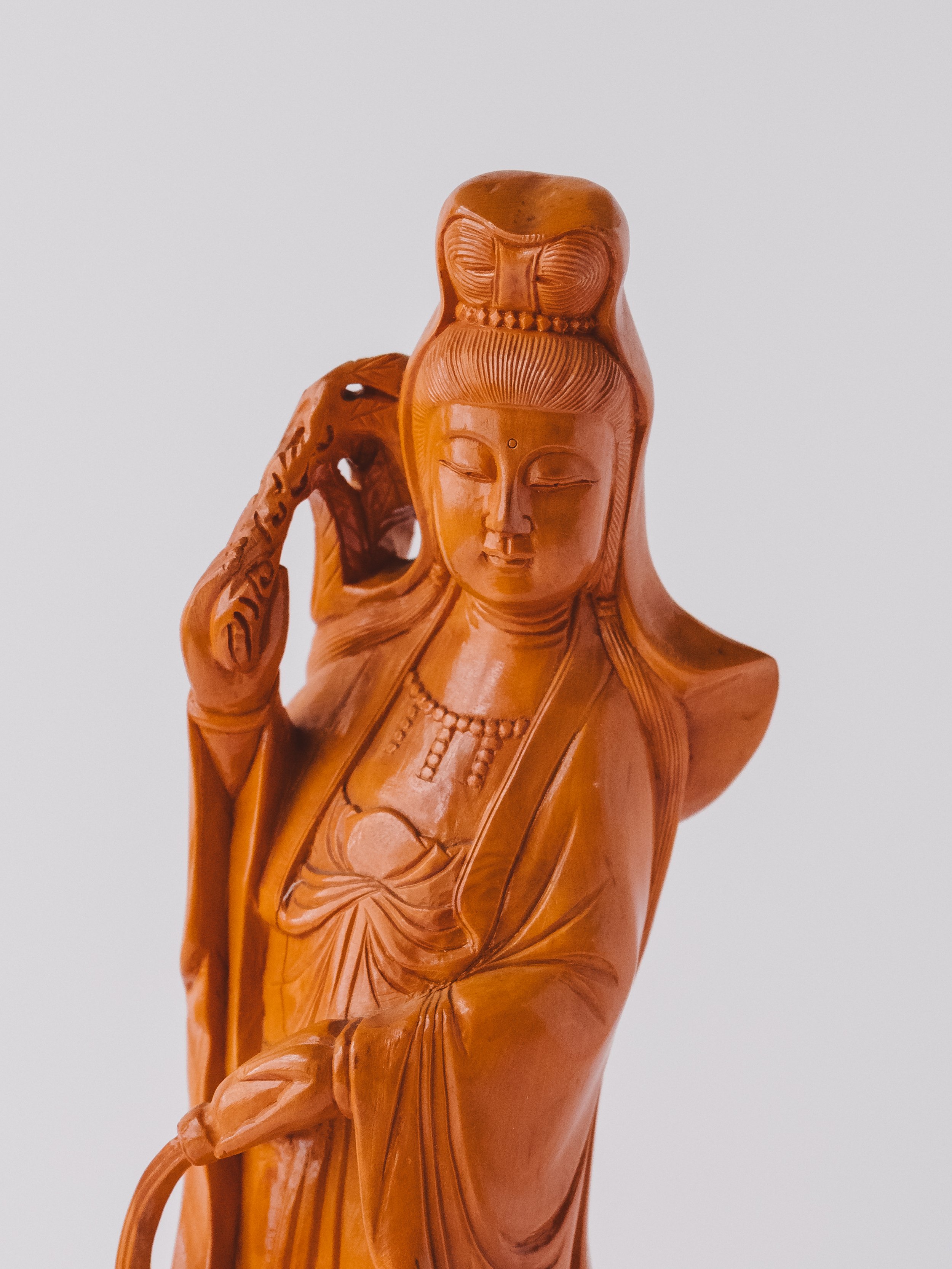 Image 12 of 15
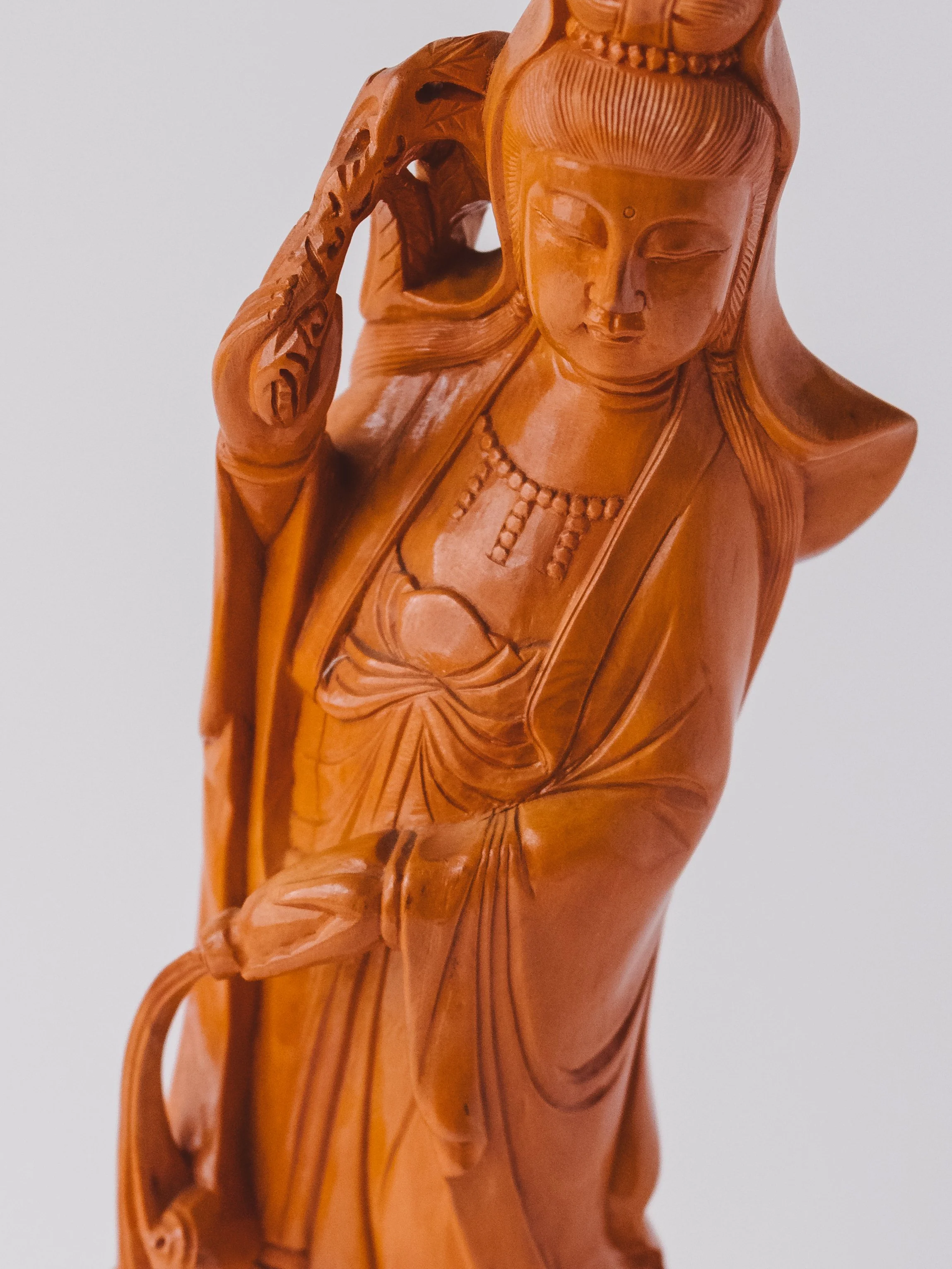 Image 13 of 15
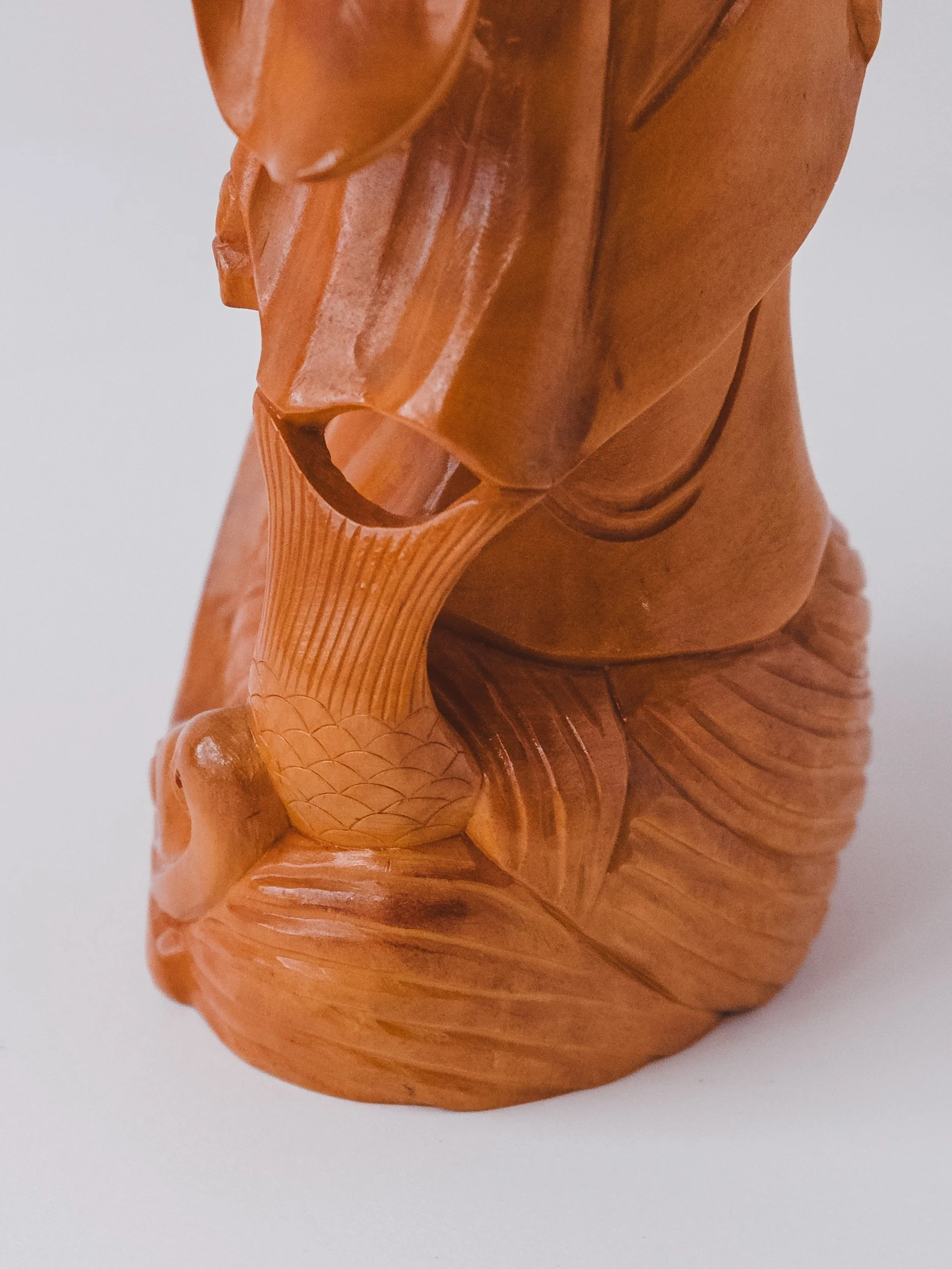 Image 14 of 15
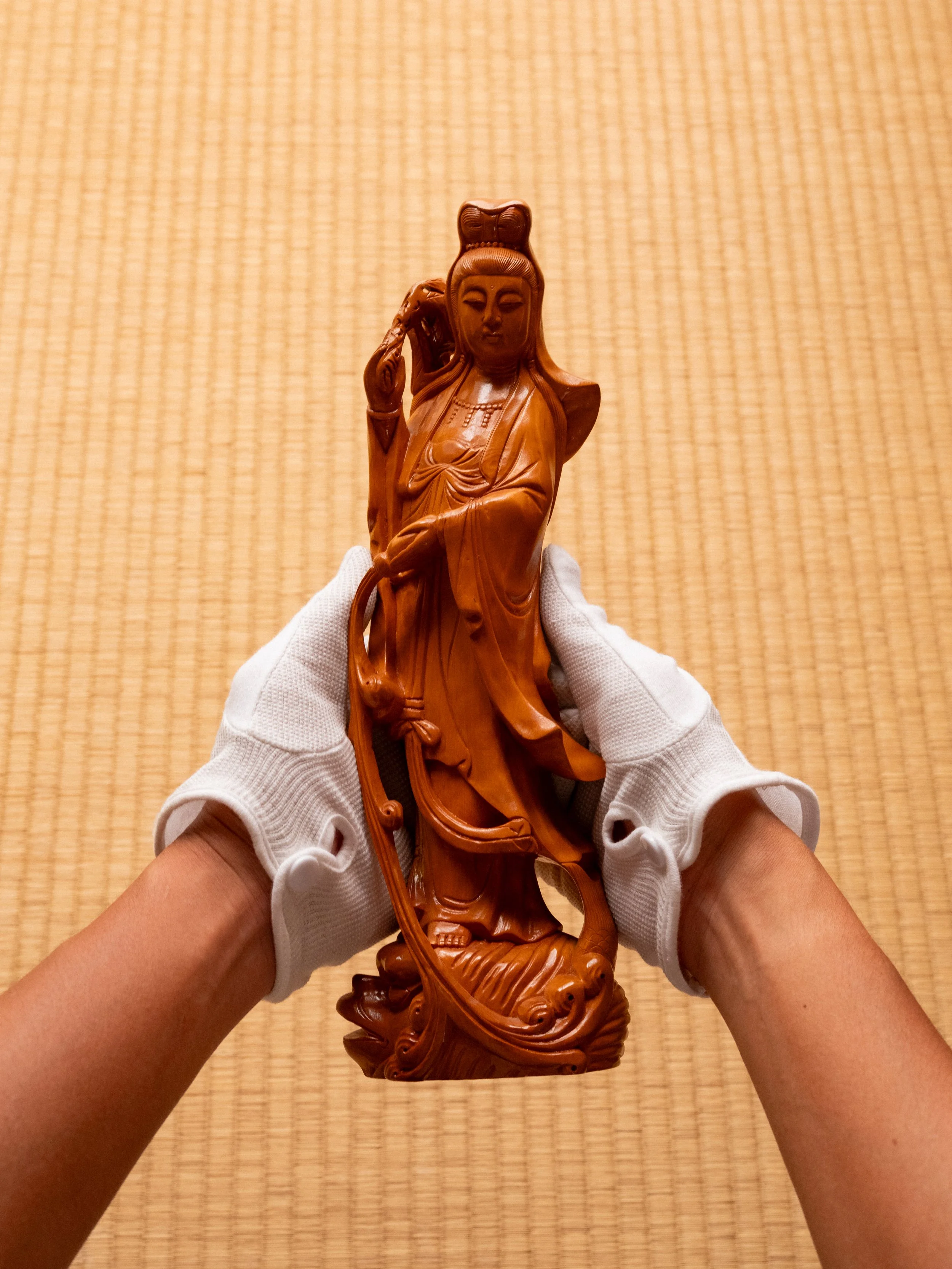 Image 15 of 15