【 The Concept 】
Three small monkeys stacked into a single warm-glazed sculpture: one perched on top with its hands clapped over its mouth, one on the lower left with its hands over its eyes, one on the lower right with its hands over its ears. This is san-zaru — the Three Wise Monkeys of Japan, "see no evil, hear no evil, speak no evil" — pressed into a single hand-sized figure in the amber-glazed pottery tradition of Kyoto (Kyō-yaki). The fur is painted in fine directional strokes; the faces are left in cream porcelain with dotted eyes and a hint of red mouth. Small enough to hold in one hand, quietly wise on any shelf.
【 What the Three Monkeys Are 】
The Three Wise Monkeys are one of Japan's most famous — and most misread — moral emblems, and their whole meaning lives in a pun that only works in Japanese. Each monkey names a thing not to do: mi-zaru ("do not see"), kika-zaru ("do not hear"), iwa-zaru ("do not speak"). But -zaru is also the classical word for monkey. So each monkey is at once the syllable and the picture of the very thing the phrase forbids — a visual pun impossible to translate but instantly readable at a glance. In their original Japanese sense they are not a picture of turning a blind eye; they are a rule of self-cultivation: keep your senses closed to what is base, so your mind stays clear.
【 A Long Road to Three Monkeys 】
The idea behind them travels a very old road. Confucius, five centuries before this era began, is said to have told his student: "Look not at what is contrary to propriety; listen not to what is contrary to propriety; speak not what is contrary to propriety; act not upon what is contrary to propriety." When Tendai Buddhism carried Chinese thought to Japan in the eighth century, that four-line moral came with it. It struck local ground in Kōshin belief — a Taoist night-vigil, still kept, in which three "bug-spirits" inside the body are said to slip out on a certain sixty-day night to report our misdeeds to heaven; the deity Shōmen-Kongō, who suppresses them, is almost always shown with three monkeys at his feet, because the very word Kōshin contains saru ("monkey"). By the seventeenth century the master carver Hidari Jingorō set three of them into the door lintel of the sacred stable at Nikkō Tōshō-gū, in a series that follows a monkey's whole life — and from that panel, in the Meiji era, the image traveled outward to the world.
【 Why the Monkey 】
In Japan the monkey is far from a comic animal. In Shintō, especially in the Hie / Sannō tradition of Mount Hiei above Kyoto, the monkey is the messenger of the mountain gods — the shin-en, or masaru — and the pun is not lost on anyone: masaru means both "monkey" and "to surpass," and saru rhymes with the verb "to leave." From that comes the monkey's charm as a bringer of luck: it makes evil leave (saru), it lets you surpass rivals, it "leaves illness behind." A three-monkey figure is therefore a double emblem — a moral reminder to control what you see, hear and say, and a folk talisman to send trouble on its way.
【 The Craft: Kyō-yaki 】
Kyoto has been a ceramic capital for more than four centuries; Kyō-yaki / Kiyomizu-yaki is the collective name for the wares born from its temples and tea houses, refined for the imperial city's taste. Unlike a village kiln with one house style, Kyoto grew as a city of small workshops each free to try any form and any glaze — so a Kyō-yaki piece is defined less by a single look than by a certain composed, hand-finished intimacy. This figure is exactly that: a compact one-piece sculpture in a warm amber transparent glaze (amejū / iro-ame) that gathers dark and glassy where it pools between the monkeys and thins to a lighter honey over the raised backs, brushed with directional fur strokes underneath. The faces are left as unglazed light porcelain, painted with tiny black eyes and a small red mouth on each. A few fine open crawls in the glaze and specks of gold catch on the surface are the kiln's own signature and part of the character of the piece.
【 Reading the Figure 】
The composition is a small pyramid. Top: the monkey with its hands clenched over its mouth — iwa-zaru, "speak no evil." Lower left: the monkey with its hands over its eyes — mi-zaru, "see no evil." Lower right: the monkey with its hands cupped to its ears — kika-zaru, "hear no evil." Their bodies press together as if the three were leaning into one another for support — a single wisdom held between three small figures.
【 Where to Place It 】
Set it somewhere you sit or think: a desk, a bookshelf, a genkan console, a bedside — anywhere its message of restraint and clear-headedness is welcome. Small and quietly composed, it slips into a Japanese-modern interior, a study, or any home where a quiet talisman is preferred to a loud one. In Japanese tradition, place it above the floor on a clean surface; a little dust is thought to dull a charm's power as well as its color.
【 Care 】
Glazed ceramic — dust with a soft dry cloth or brush, and lift, do not slide, when moving. No dishwashers, no abrasives, no soaking. The color is fired into the glaze and will not fade.
【 Function & What It Brings 】
Keep it, place it, or give it. As a talisman it carries a doubled wish — the moral one (keep your senses clear of what is base) and the folk one (may trouble saru, "leave"). That makes it a strong gift for a new office, a new home, a new year, or anyone who values a small daily reminder to speak, look and listen with care. As an object it is a small, warm sculpture with real character in the hand — the kind of piece the eye keeps returning to.
【 The Texture 】
Glazed ceramic in warm amber, glassy where the glaze pools, honey-toned where it thins over the raised fur; the faces are matte cream. Small and dense in the hand.
【 Presence 】
Wise and a little playful. The three faces — one hidden behind its own hands, two looking calmly out — give the piece a real warmth, while the deep glaze and hand-brushed fur keep it composed and quietly serious.
Archive Note: The number in the name (1636) references the completion of Nikkō Tōshō-gū, whose carved sacred-stable panel gave the Three Wise Monkeys their most famous form. It is NOT the date this piece was made.
Provenance Note: Sourced from a private collection in Japan. A figure in the Kyoto (Kyō-yaki / Kiyomizu-yaki) pottery tradition; the workshop is not identified here.
Condition Note: Sold as acquired, in very good condition. Fine glaze crawls and small specks caught in the glaze are natural kiln features of a warm amber ceramic glaze, not damage. Please see the photographs as part of the description.
【 The Concept 】
Three small monkeys stacked into a single warm-glazed sculpture: one perched on top with its hands clapped over its mouth, one on the lower left with its hands over its eyes, one on the lower right with its hands over its ears. This is san-zaru — the Three Wise Monkeys of Japan, "see no evil, hear no evil, speak no evil" — pressed into a single hand-sized figure in the amber-glazed pottery tradition of Kyoto (Kyō-yaki). The fur is painted in fine directional strokes; the faces are left in cream porcelain with dotted eyes and a hint of red mouth. Small enough to hold in one hand, quietly wise on any shelf.
【 What the Three Monkeys Are 】
The Three Wise Monkeys are one of Japan's most famous — and most misread — moral emblems, and their whole meaning lives in a pun that only works in Japanese. Each monkey names a thing not to do: mi-zaru ("do not see"), kika-zaru ("do not hear"), iwa-zaru ("do not speak"). But -zaru is also the classical word for monkey. So each monkey is at once the syllable and the picture of the very thing the phrase forbids — a visual pun impossible to translate but instantly readable at a glance. In their original Japanese sense they are not a picture of turning a blind eye; they are a rule of self-cultivation: keep your senses closed to what is base, so your mind stays clear.
【 A Long Road to Three Monkeys 】
The idea behind them travels a very old road. Confucius, five centuries before this era began, is said to have told his student: "Look not at what is contrary to propriety; listen not to what is contrary to propriety; speak not what is contrary to propriety; act not upon what is contrary to propriety." When Tendai Buddhism carried Chinese thought to Japan in the eighth century, that four-line moral came with it. It struck local ground in Kōshin belief — a Taoist night-vigil, still kept, in which three "bug-spirits" inside the body are said to slip out on a certain sixty-day night to report our misdeeds to heaven; the deity Shōmen-Kongō, who suppresses them, is almost always shown with three monkeys at his feet, because the very word Kōshin contains saru ("monkey"). By the seventeenth century the master carver Hidari Jingorō set three of them into the door lintel of the sacred stable at Nikkō Tōshō-gū, in a series that follows a monkey's whole life — and from that panel, in the Meiji era, the image traveled outward to the world.
【 Why the Monkey 】
In Japan the monkey is far from a comic animal. In Shintō, especially in the Hie / Sannō tradition of Mount Hiei above Kyoto, the monkey is the messenger of the mountain gods — the shin-en, or masaru — and the pun is not lost on anyone: masaru means both "monkey" and "to surpass," and saru rhymes with the verb "to leave." From that comes the monkey's charm as a bringer of luck: it makes evil leave (saru), it lets you surpass rivals, it "leaves illness behind." A three-monkey figure is therefore a double emblem — a moral reminder to control what you see, hear and say, and a folk talisman to send trouble on its way.
【 The Craft: Kyō-yaki 】
Kyoto has been a ceramic capital for more than four centuries; Kyō-yaki / Kiyomizu-yaki is the collective name for the wares born from its temples and tea houses, refined for the imperial city's taste. Unlike a village kiln with one house style, Kyoto grew as a city of small workshops each free to try any form and any glaze — so a Kyō-yaki piece is defined less by a single look than by a certain composed, hand-finished intimacy. This figure is exactly that: a compact one-piece sculpture in a warm amber transparent glaze (amejū / iro-ame) that gathers dark and glassy where it pools between the monkeys and thins to a lighter honey over the raised backs, brushed with directional fur strokes underneath. The faces are left as unglazed light porcelain, painted with tiny black eyes and a small red mouth on each. A few fine open crawls in the glaze and specks of gold catch on the surface are the kiln's own signature and part of the character of the piece.
【 Reading the Figure 】
The composition is a small pyramid. Top: the monkey with its hands clenched over its mouth — iwa-zaru, "speak no evil." Lower left: the monkey with its hands over its eyes — mi-zaru, "see no evil." Lower right: the monkey with its hands cupped to its ears — kika-zaru, "hear no evil." Their bodies press together as if the three were leaning into one another for support — a single wisdom held between three small figures.
【 Where to Place It 】
Set it somewhere you sit or think: a desk, a bookshelf, a genkan console, a bedside — anywhere its message of restraint and clear-headedness is welcome. Small and quietly composed, it slips into a Japanese-modern interior, a study, or any home where a quiet talisman is preferred to a loud one. In Japanese tradition, place it above the floor on a clean surface; a little dust is thought to dull a charm's power as well as its color.
【 Care 】
Glazed ceramic — dust with a soft dry cloth or brush, and lift, do not slide, when moving. No dishwashers, no abrasives, no soaking. The color is fired into the glaze and will not fade.
【 Function & What It Brings 】
Keep it, place it, or give it. As a talisman it carries a doubled wish — the moral one (keep your senses clear of what is base) and the folk one (may trouble saru, "leave"). That makes it a strong gift for a new office, a new home, a new year, or anyone who values a small daily reminder to speak, look and listen with care. As an object it is a small, warm sculpture with real character in the hand — the kind of piece the eye keeps returning to.
【 The Texture 】
Glazed ceramic in warm amber, glassy where the glaze pools, honey-toned where it thins over the raised fur; the faces are matte cream. Small and dense in the hand.
【 Presence 】
Wise and a little playful. The three faces — one hidden behind its own hands, two looking calmly out — give the piece a real warmth, while the deep glaze and hand-brushed fur keep it composed and quietly serious.
Archive Note: The number in the name (1636) references the completion of Nikkō Tōshō-gū, whose carved sacred-stable panel gave the Three Wise Monkeys their most famous form. It is NOT the date this piece was made.
Provenance Note: Sourced from a private collection in Japan. A figure in the Kyoto (Kyō-yaki / Kiyomizu-yaki) pottery tradition; the workshop is not identified here.
Condition Note: Sold as acquired, in very good condition. Fine glaze crawls and small specks caught in the glaze are natural kiln features of a warm amber ceramic glaze, not damage. Please see the photographs as part of the description.


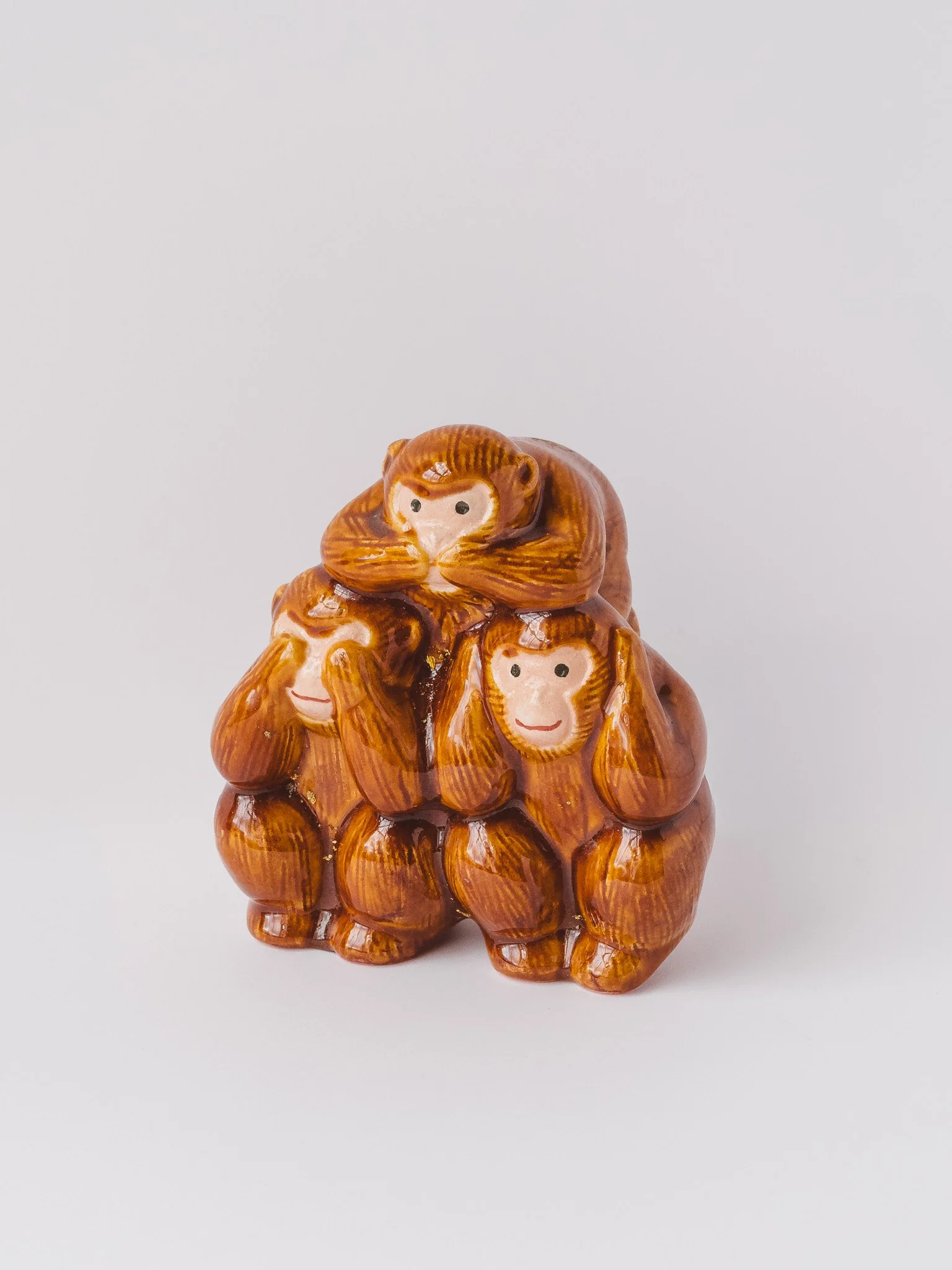 Image 1 of 10
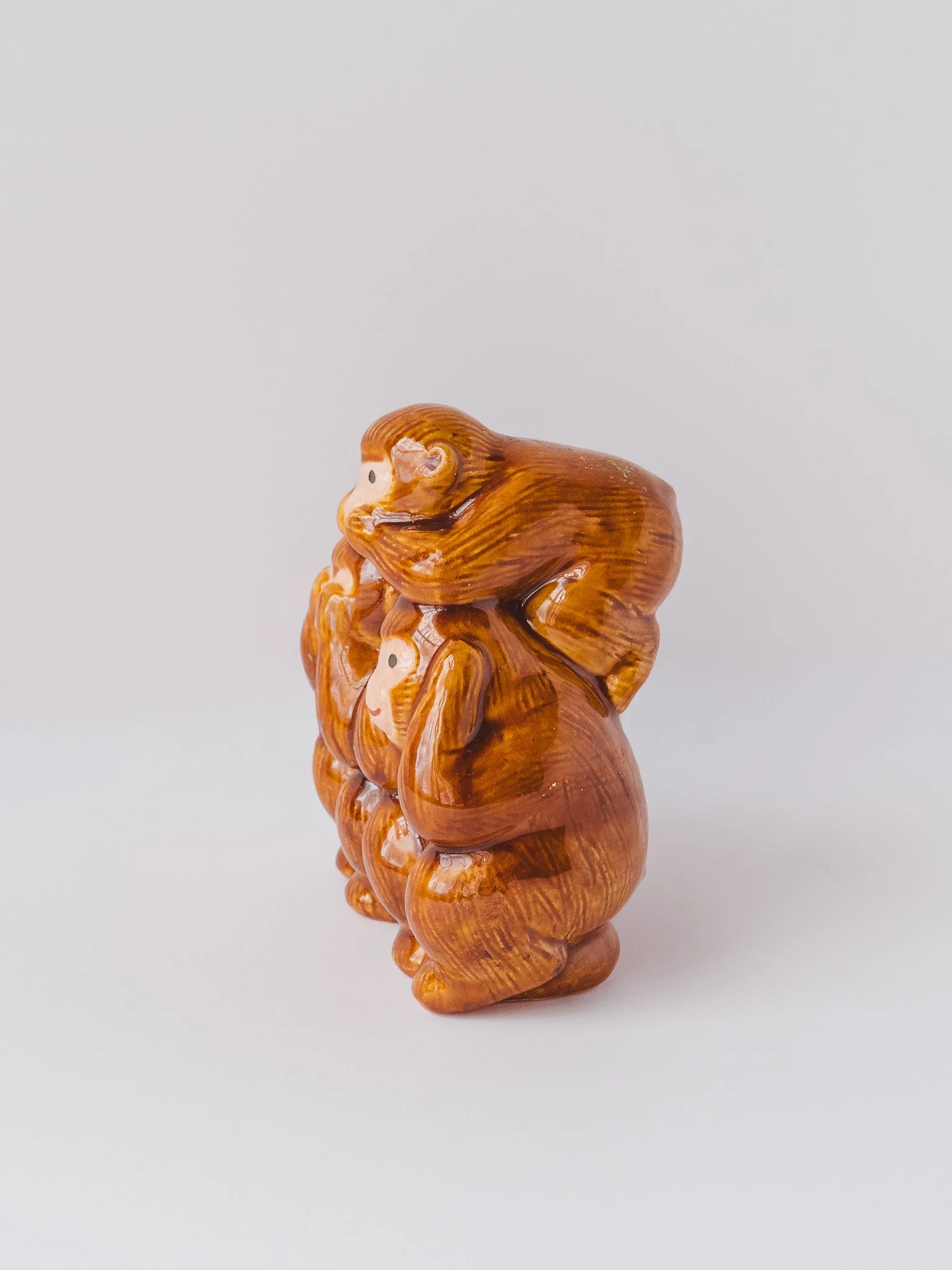 Image 2 of 10
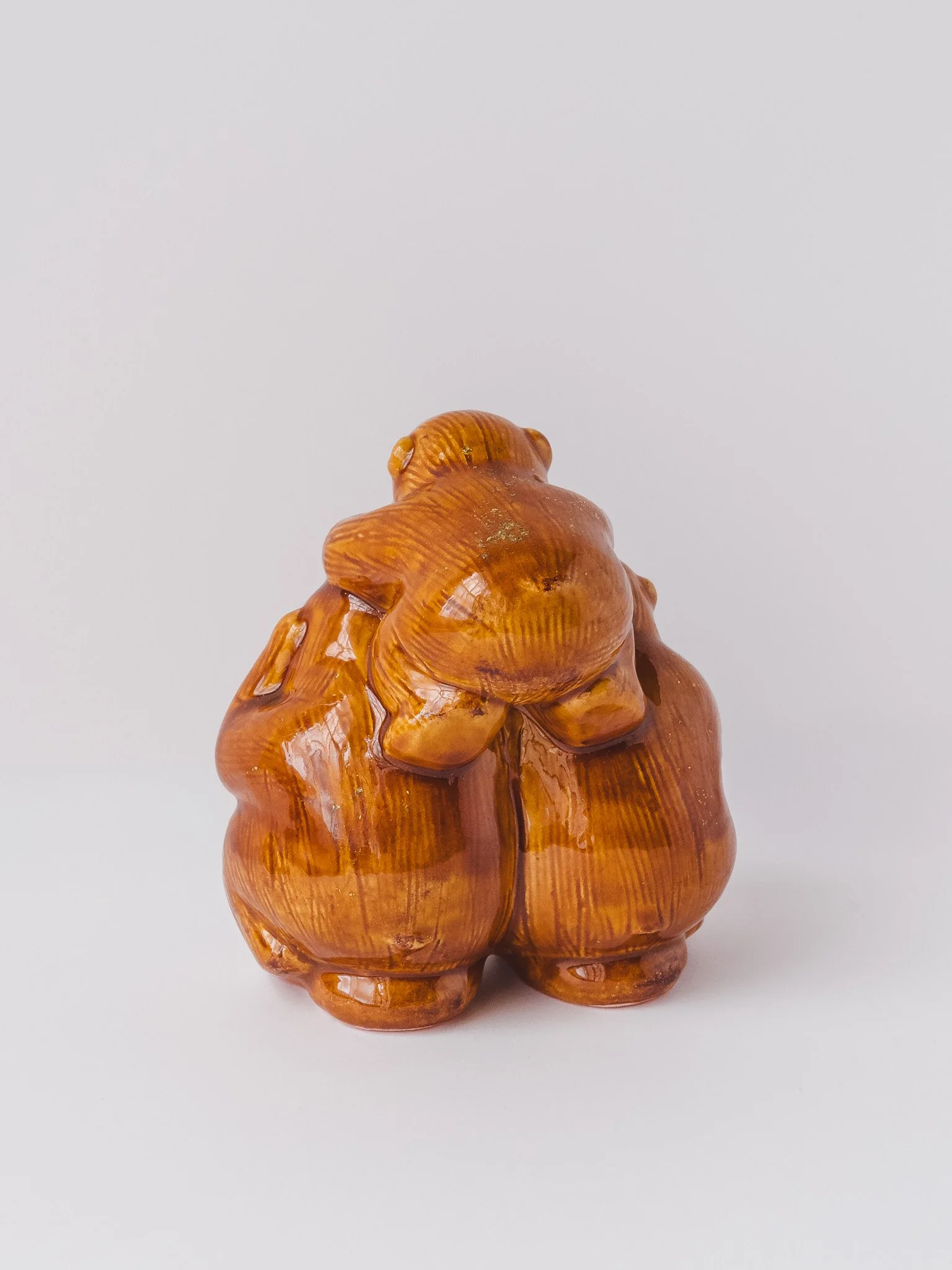 Image 3 of 10
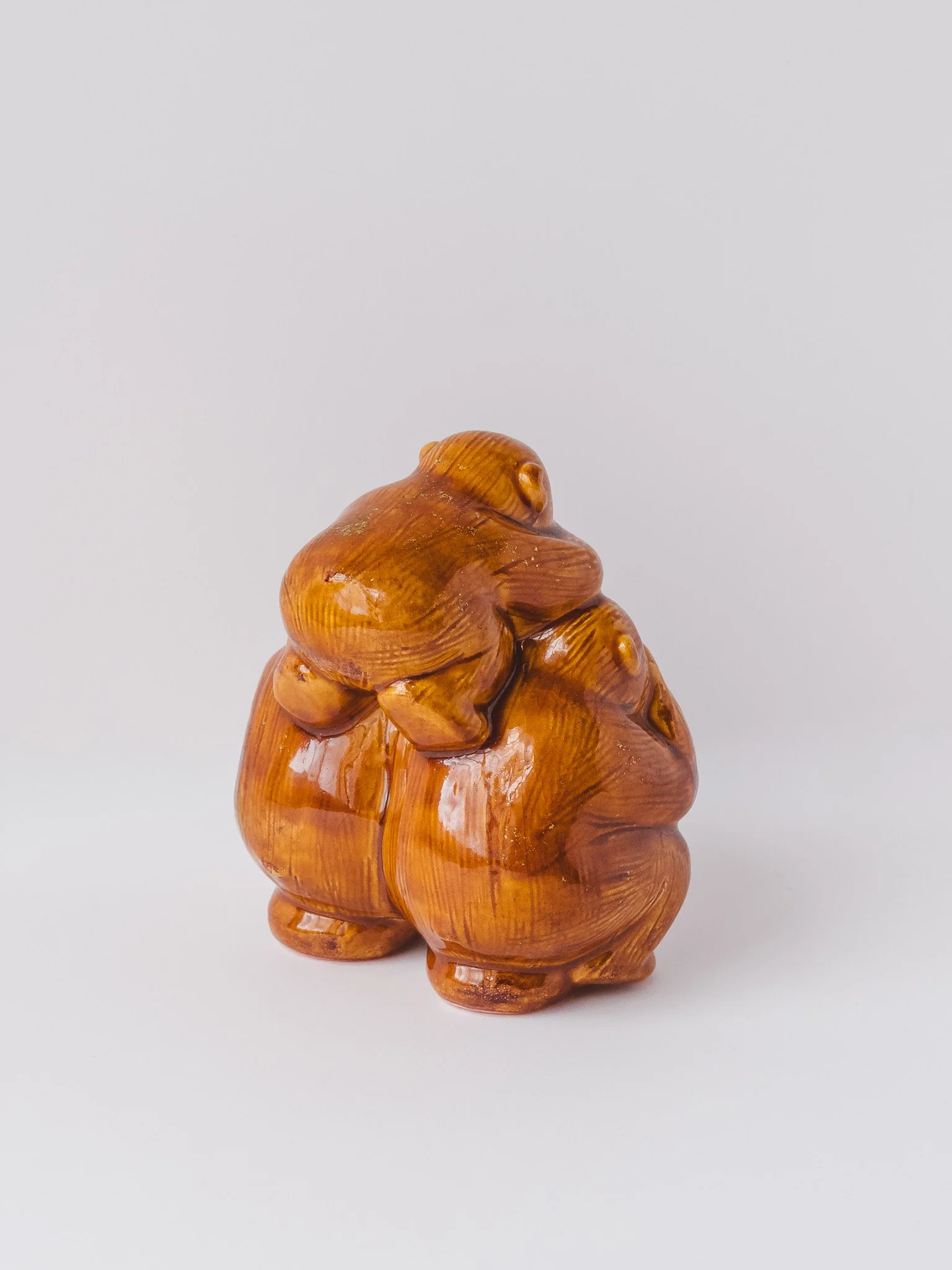 Image 4 of 10
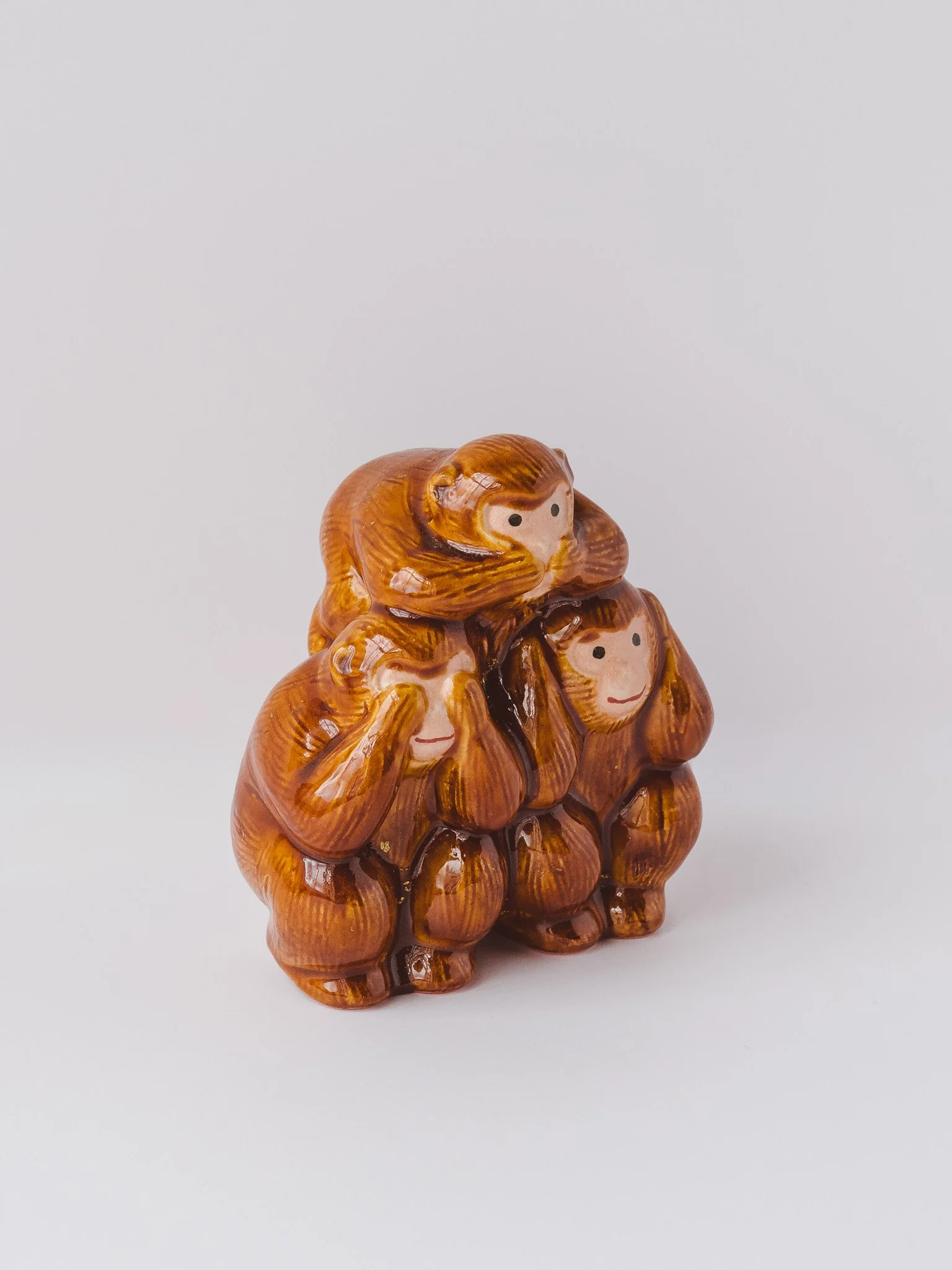 Image 5 of 10
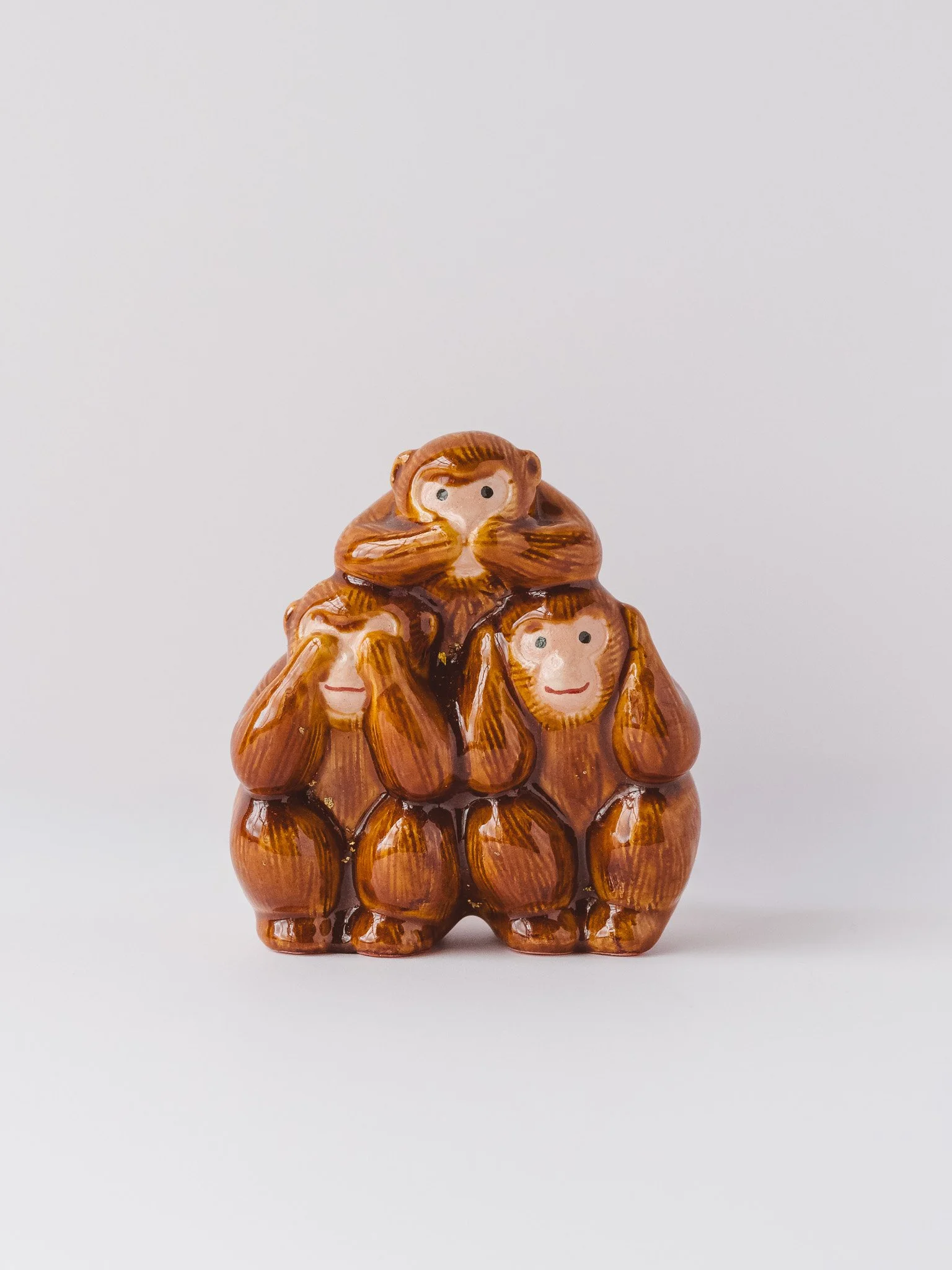 Image 6 of 10
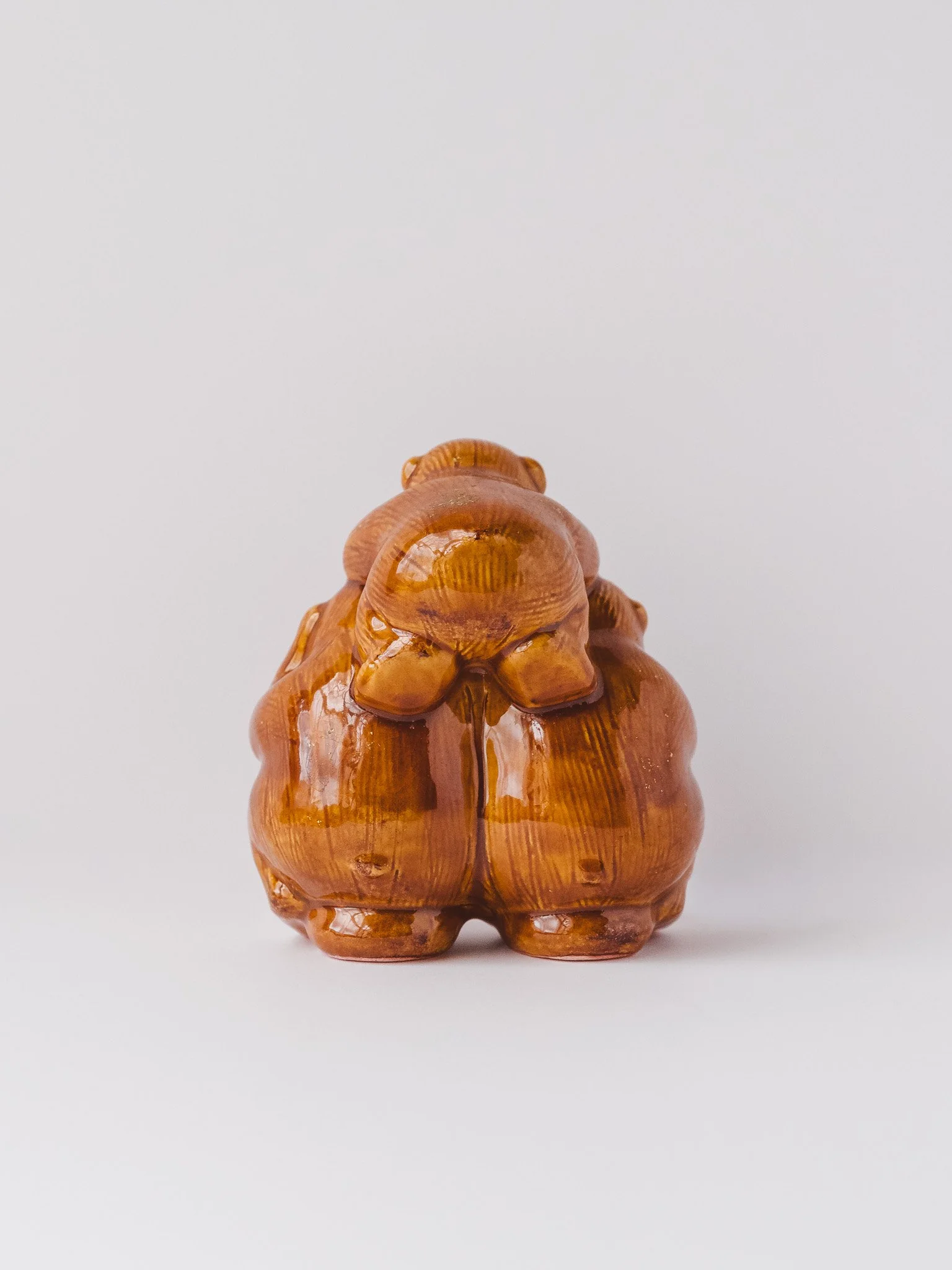 Image 7 of 10
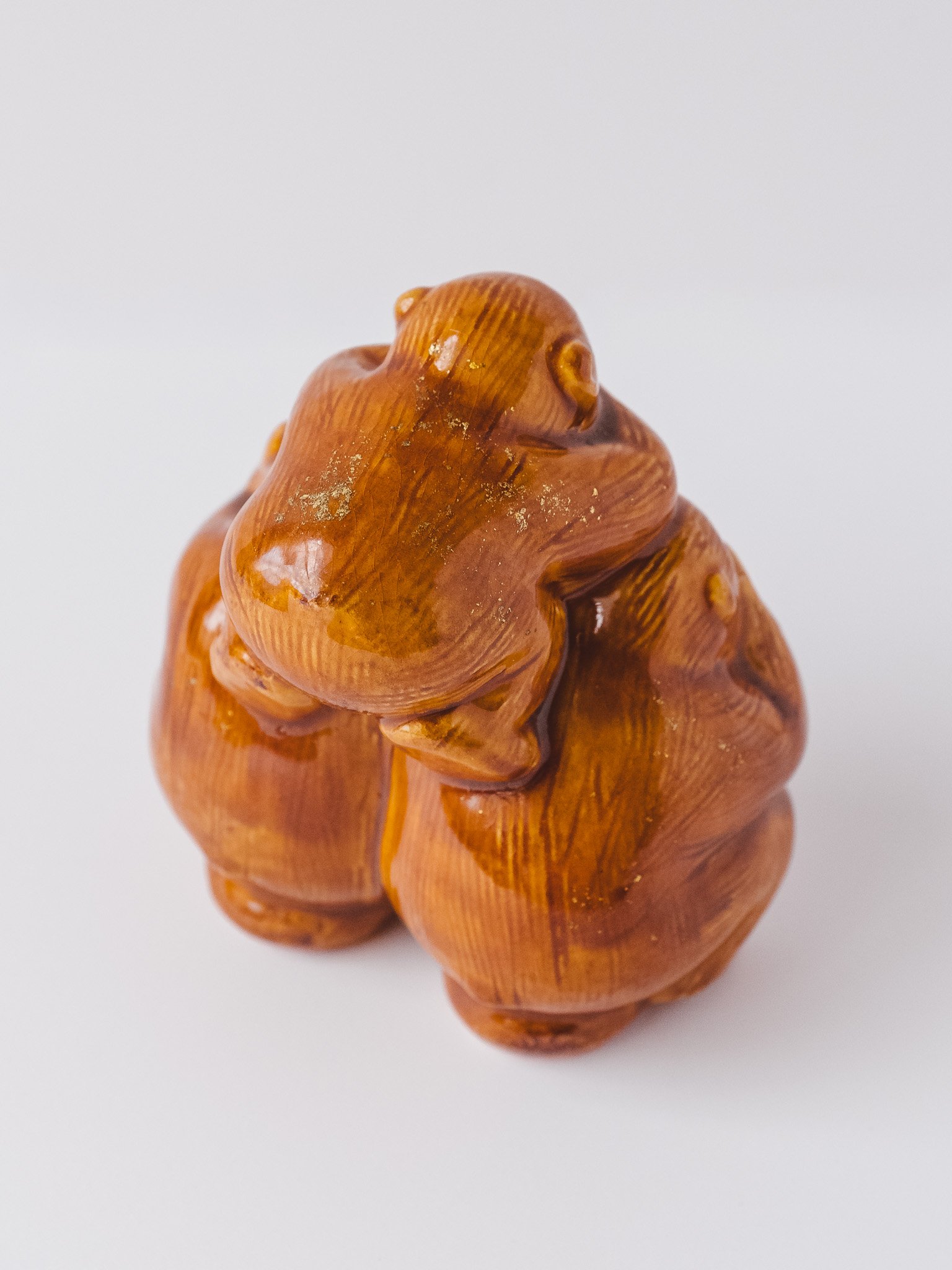 Image 8 of 10
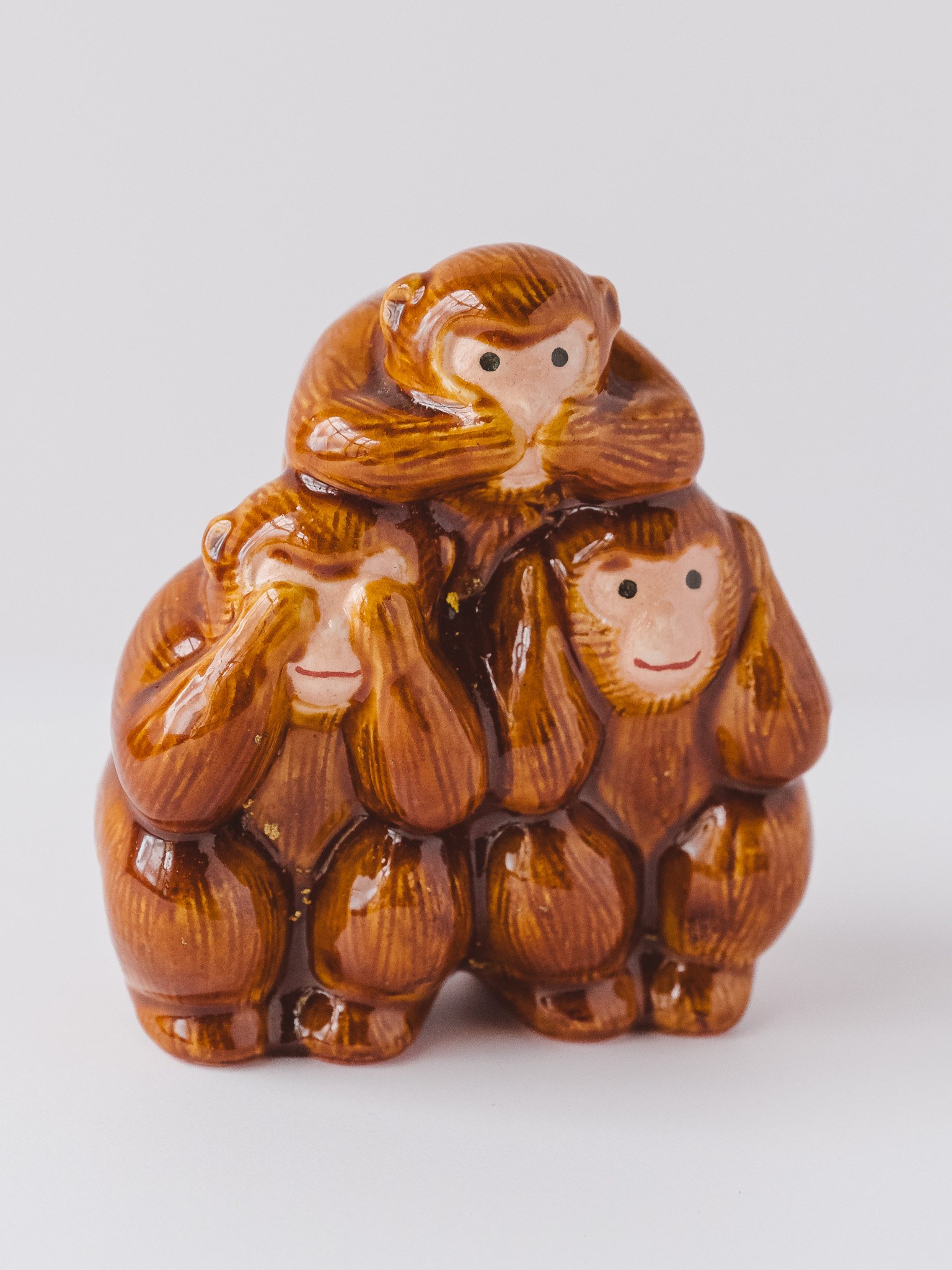 Image 9 of 10
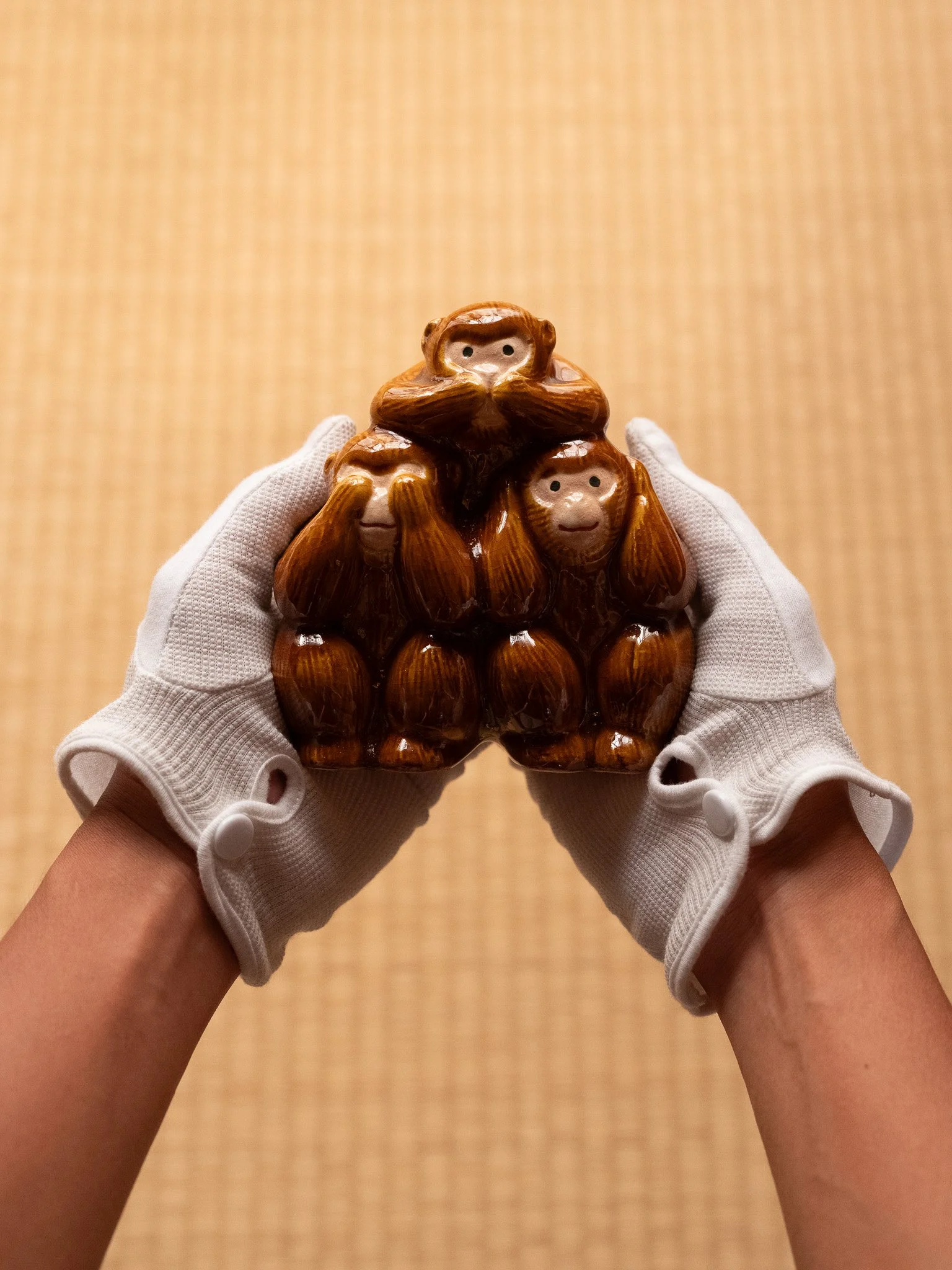 Image 10 of 10