【 The Concept 】
A fighting dog standing planted and four-square, dressed in the full regalia of a grand champion. This is the Tosa — Japan's great mastiff-type fighting breed — and it is turned out exactly as a champion of the ring would be: a thick twisted rope bound across its back and tied into two upright loops, a decorative apron falling over its flanks with heavy braided cord and tassels, a studded collar at the throat. The heavy folds of loose skin at the face and neck, the deep chest, the unbothered gaze straight ahead — all of it reads as power held in reserve rather than aggression. The regalia is borrowed straight from the sumo ring, where the champion's rope is a sacred boundary marker that wards off evil, and it turns the animal from a mere strong dog into a guardian: a figure that stands watch and drives ill fortune back from the door. On the apron a dragon coils in low relief — the beast of rising fortune and success — so the piece carries a layered wish: strength that protects, and luck that climbs.
【 The Function 】
A substantial ceramic guardian, made to hold a spot with authority. Heavy and low-set, it sits with real weight on a shelf, a cabinet top, an entrance console, or a shop counter — the traditional place for a guardian figure, set to face the door and meet whatever comes toward the room. It is the kind of object that anchors a corner and gives it gravity; substantial enough that it reads across a room, detailed enough to reward a close look. Set it where it can look outward and stand watch.
【 The Texture 】
An amber glaze — the warm caramel-brown of traditional ame-yu — run over a modelled ceramic body, breaking and pooling the way that glaze does: bright and honeyed on the raised muscle and the folds of the rope, darkening to a deep treacle brown in every recess and crease, so the whole surface reads with the depth of an old bronze. Lower down the body the glaze thins and breaks over a speckled, matte red-brown clay, giving the legs and base an earthier, mottled skin against the gloss above. The regalia is worked in crisp relief — the twist of the rope, the fringe of the tassels, the scales and whiskers of the dragon — and the glaze settling into all of it is what makes the detail read. It is weighty, glassy where it catches the light, and warm in tone throughout.
【 Presence 】
Commanding, dignified, a little theatrical. Where a quiet piece recedes, this one plants itself and holds the room — the champion's rope rising off its back, the deep amber glaze catching the light, the whole figure carrying the swagger of a title-holder in full dress. Yet there is warmth in it too, and even humour: a fierce animal turned out in ceremonial finery, proud of its costume. It lends a surface nerve, weight, and a note of old-fashioned bravado, and it does the old job of a guardian — standing watch, warding trouble, and wishing the household strength and rising luck.
Sourced from a private collection in Japan.
【 The Concept 】
A fighting dog standing planted and four-square, dressed in the full regalia of a grand champion. This is the Tosa — Japan's great mastiff-type fighting breed — and it is turned out exactly as a champion of the ring would be: a thick twisted rope bound across its back and tied into two upright loops, a decorative apron falling over its flanks with heavy braided cord and tassels, a studded collar at the throat. The heavy folds of loose skin at the face and neck, the deep chest, the unbothered gaze straight ahead — all of it reads as power held in reserve rather than aggression. The regalia is borrowed straight from the sumo ring, where the champion's rope is a sacred boundary marker that wards off evil, and it turns the animal from a mere strong dog into a guardian: a figure that stands watch and drives ill fortune back from the door. On the apron a dragon coils in low relief — the beast of rising fortune and success — so the piece carries a layered wish: strength that protects, and luck that climbs.
【 The Function 】
A substantial ceramic guardian, made to hold a spot with authority. Heavy and low-set, it sits with real weight on a shelf, a cabinet top, an entrance console, or a shop counter — the traditional place for a guardian figure, set to face the door and meet whatever comes toward the room. It is the kind of object that anchors a corner and gives it gravity; substantial enough that it reads across a room, detailed enough to reward a close look. Set it where it can look outward and stand watch.
【 The Texture 】
An amber glaze — the warm caramel-brown of traditional ame-yu — run over a modelled ceramic body, breaking and pooling the way that glaze does: bright and honeyed on the raised muscle and the folds of the rope, darkening to a deep treacle brown in every recess and crease, so the whole surface reads with the depth of an old bronze. Lower down the body the glaze thins and breaks over a speckled, matte red-brown clay, giving the legs and base an earthier, mottled skin against the gloss above. The regalia is worked in crisp relief — the twist of the rope, the fringe of the tassels, the scales and whiskers of the dragon — and the glaze settling into all of it is what makes the detail read. It is weighty, glassy where it catches the light, and warm in tone throughout.
【 Presence 】
Commanding, dignified, a little theatrical. Where a quiet piece recedes, this one plants itself and holds the room — the champion's rope rising off its back, the deep amber glaze catching the light, the whole figure carrying the swagger of a title-holder in full dress. Yet there is warmth in it too, and even humour: a fierce animal turned out in ceremonial finery, proud of its costume. It lends a surface nerve, weight, and a note of old-fashioned bravado, and it does the old job of a guardian — standing watch, warding trouble, and wishing the household strength and rising luck.
Sourced from a private collection in Japan.


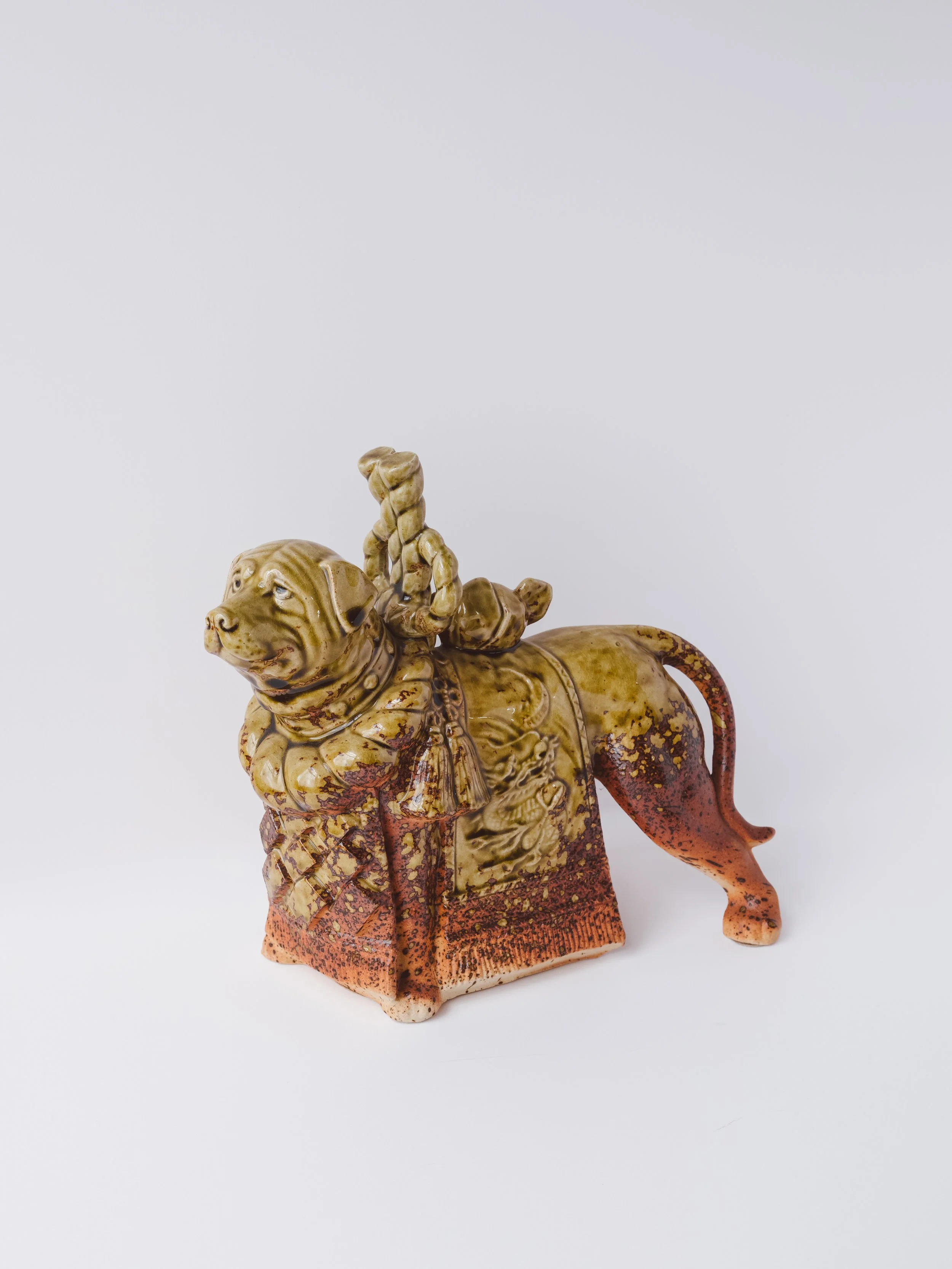 Image 1 of 13
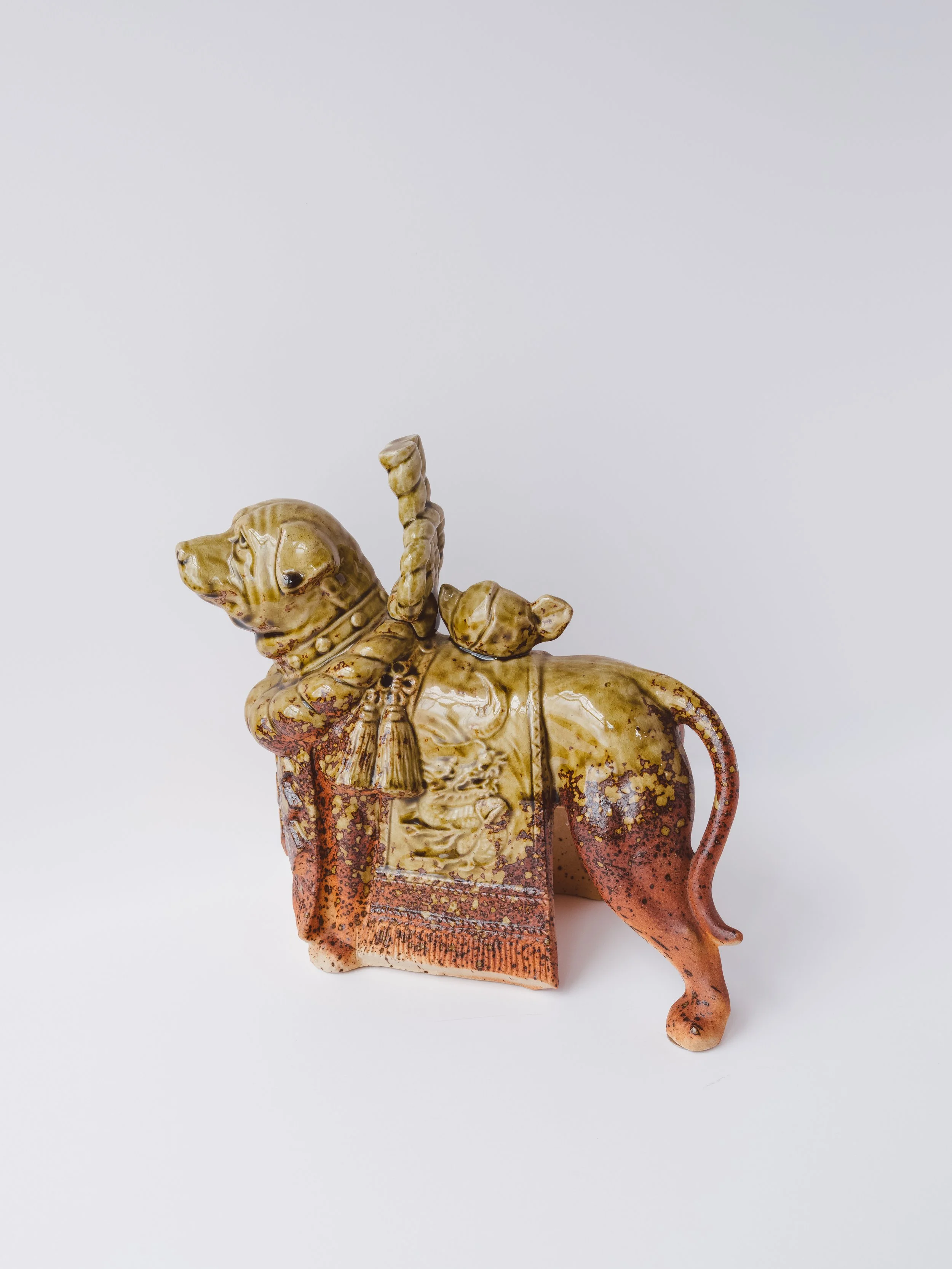 Image 2 of 13
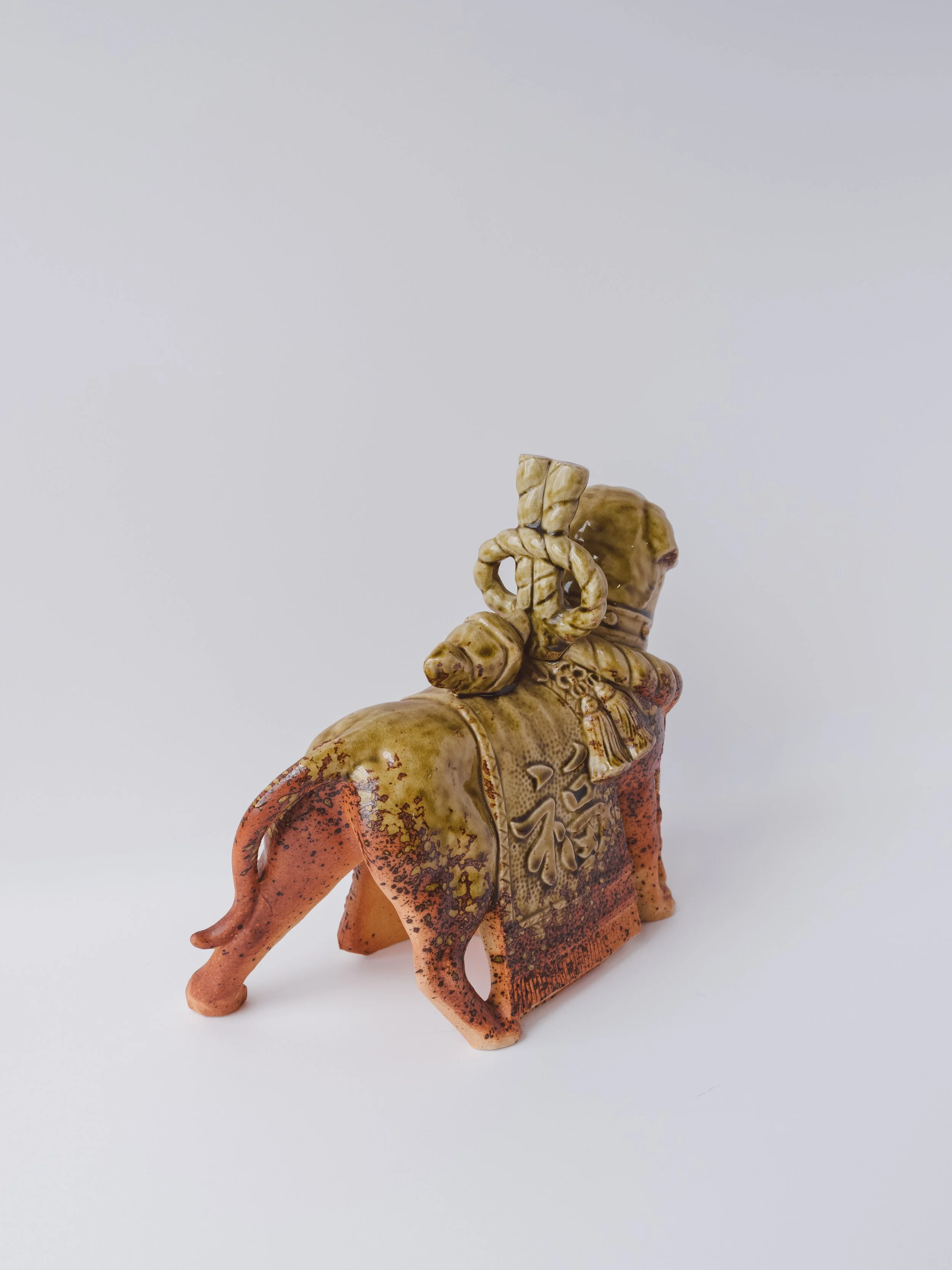 Image 3 of 13
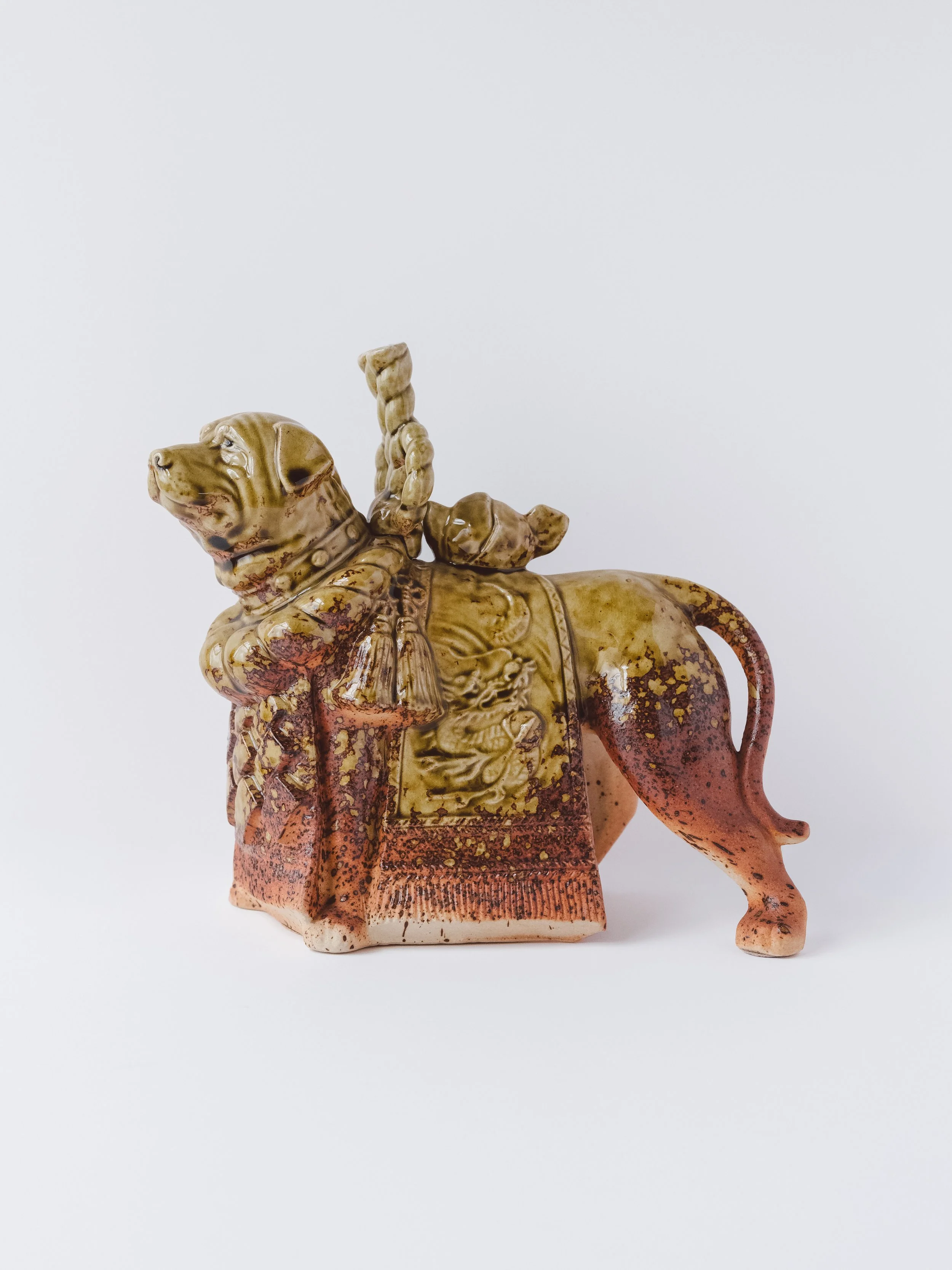 Image 4 of 13
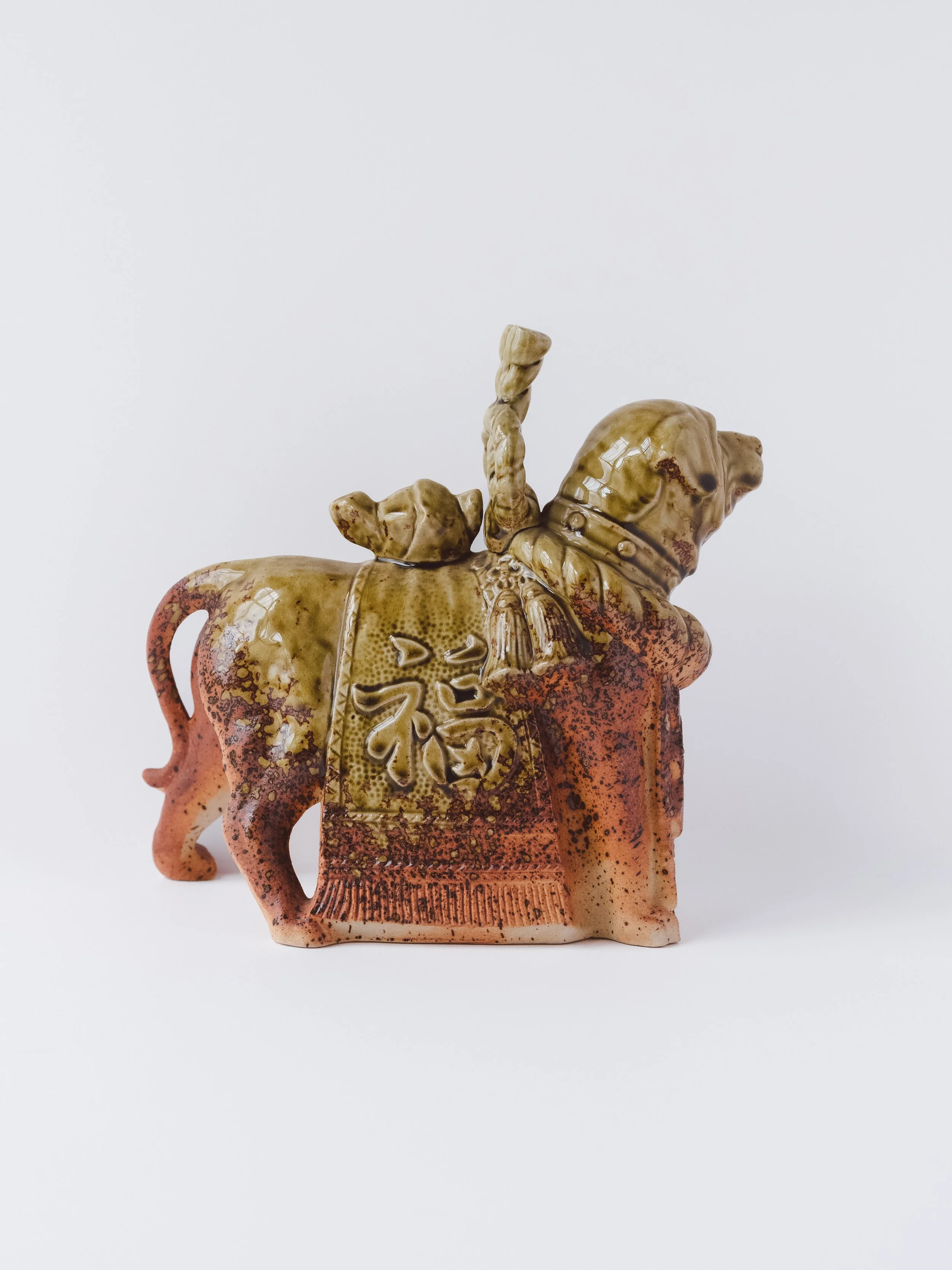 Image 5 of 13
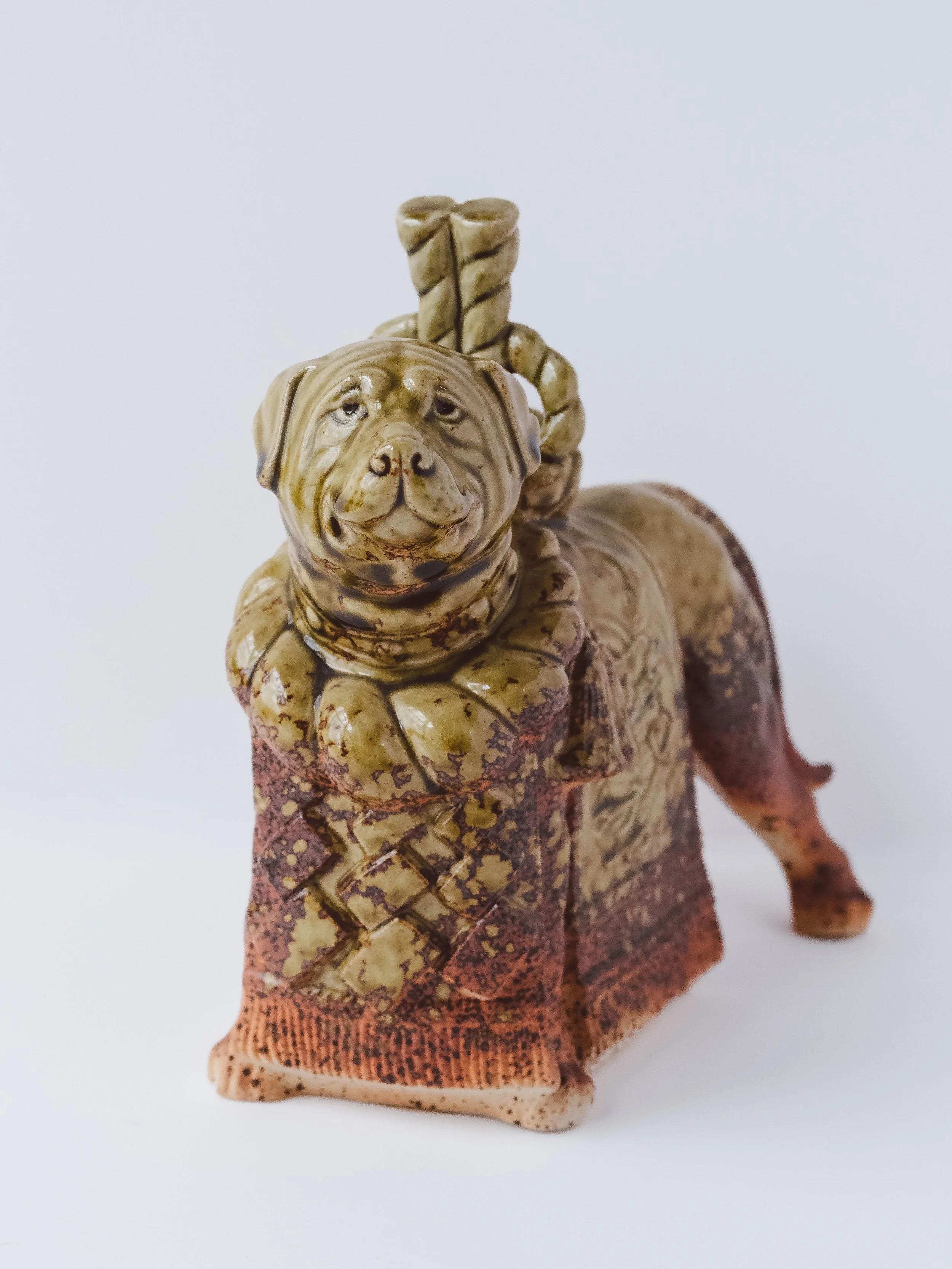 Image 6 of 13
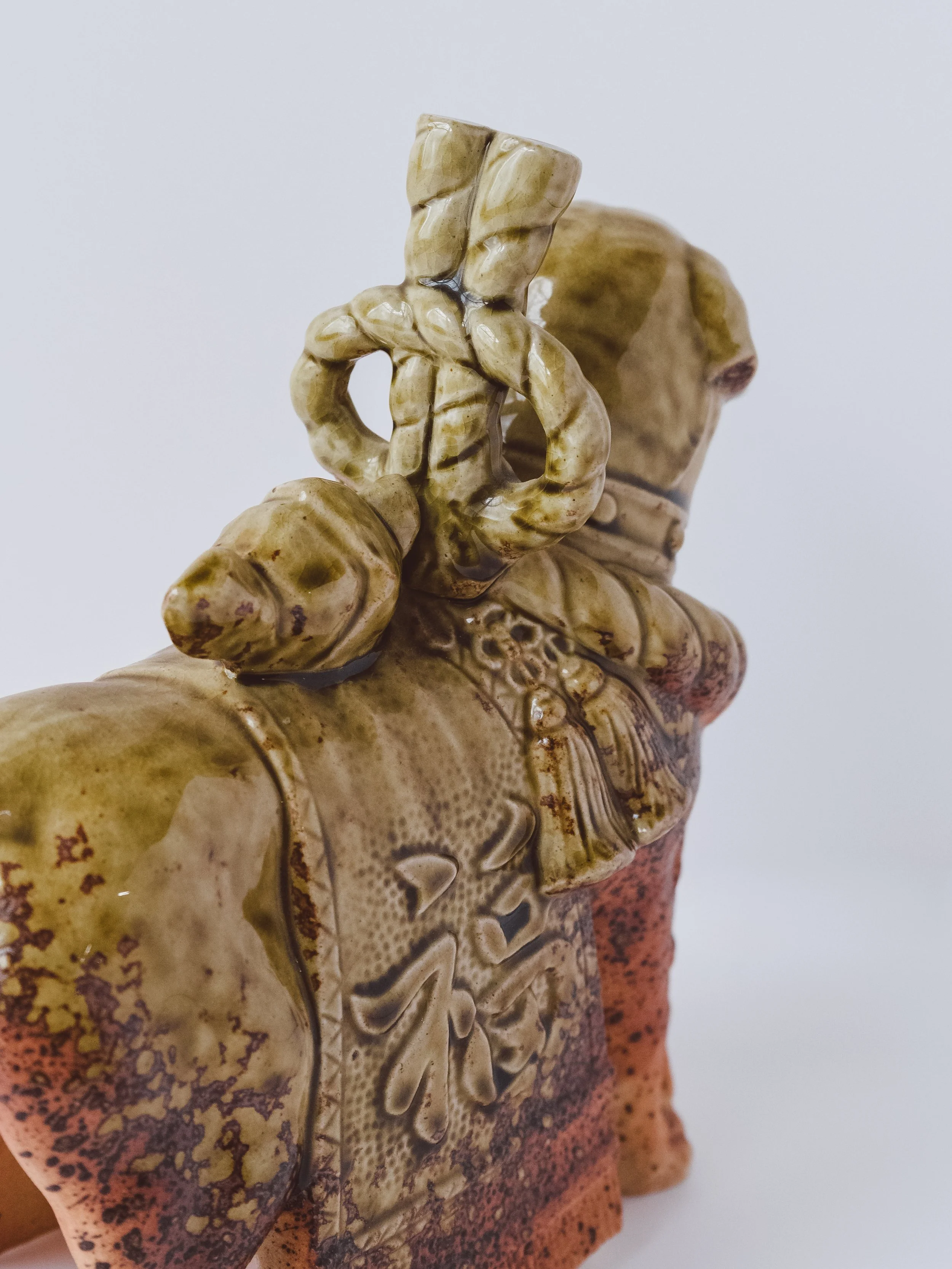 Image 7 of 13
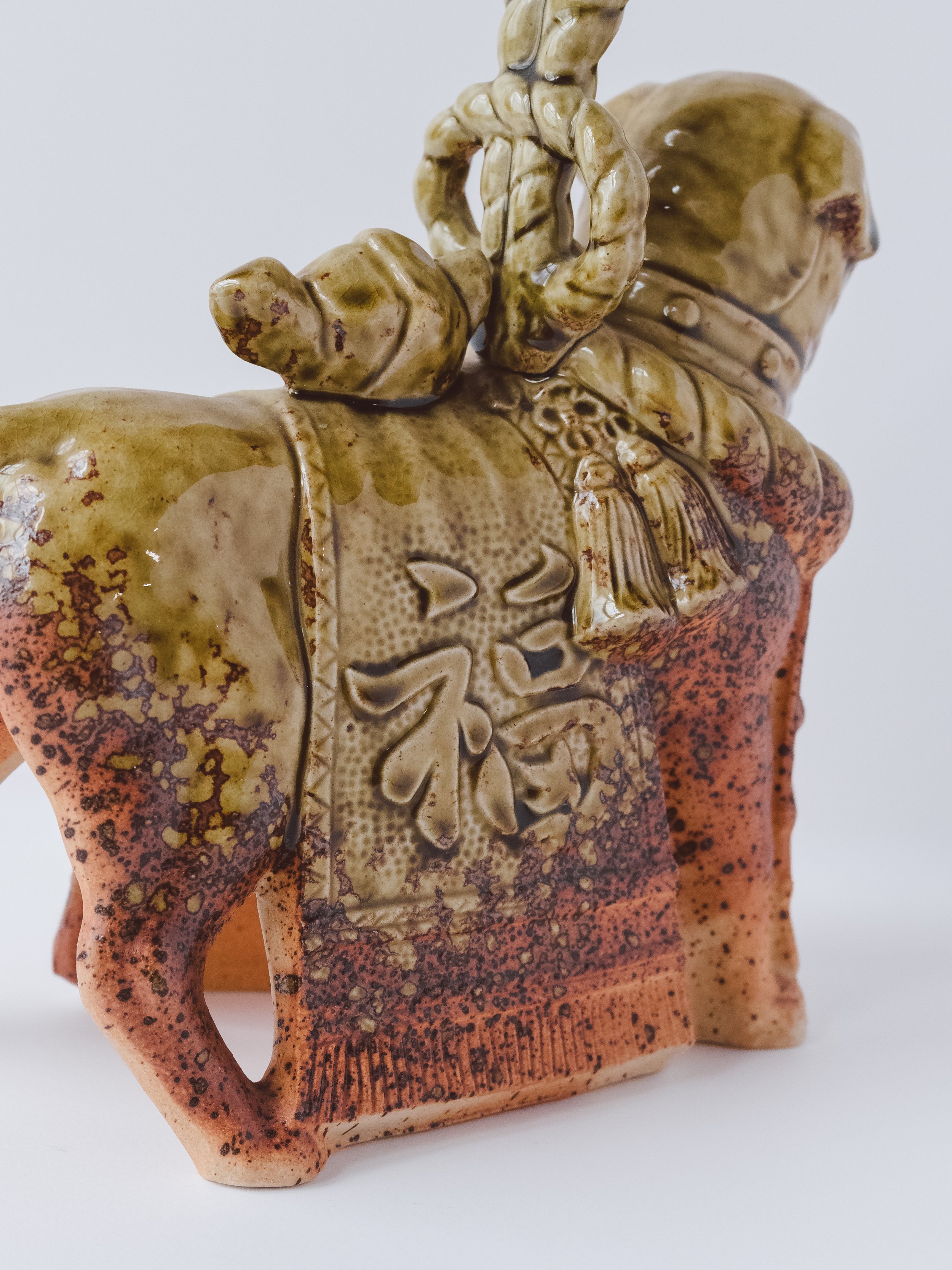 Image 8 of 13
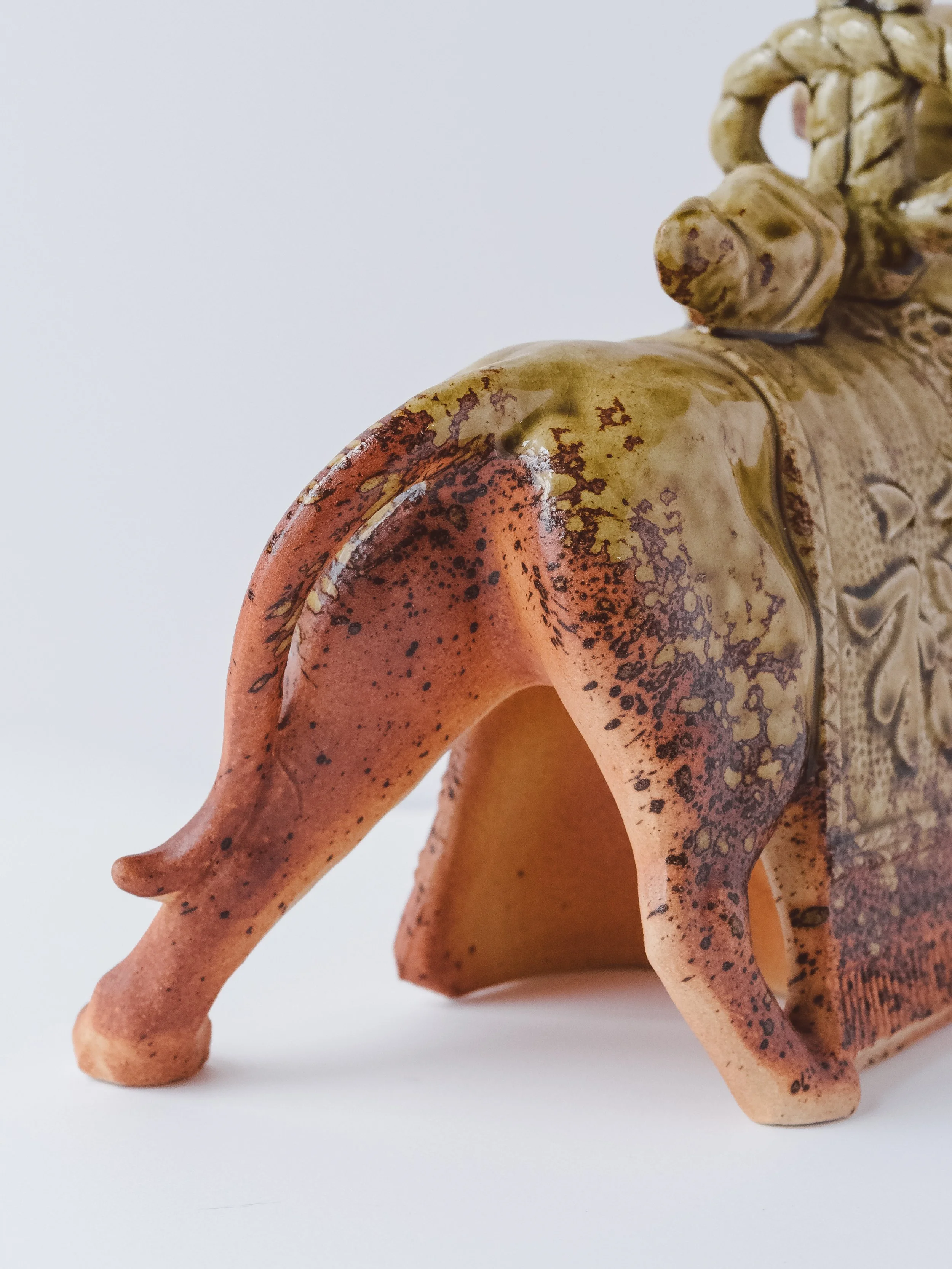 Image 9 of 13
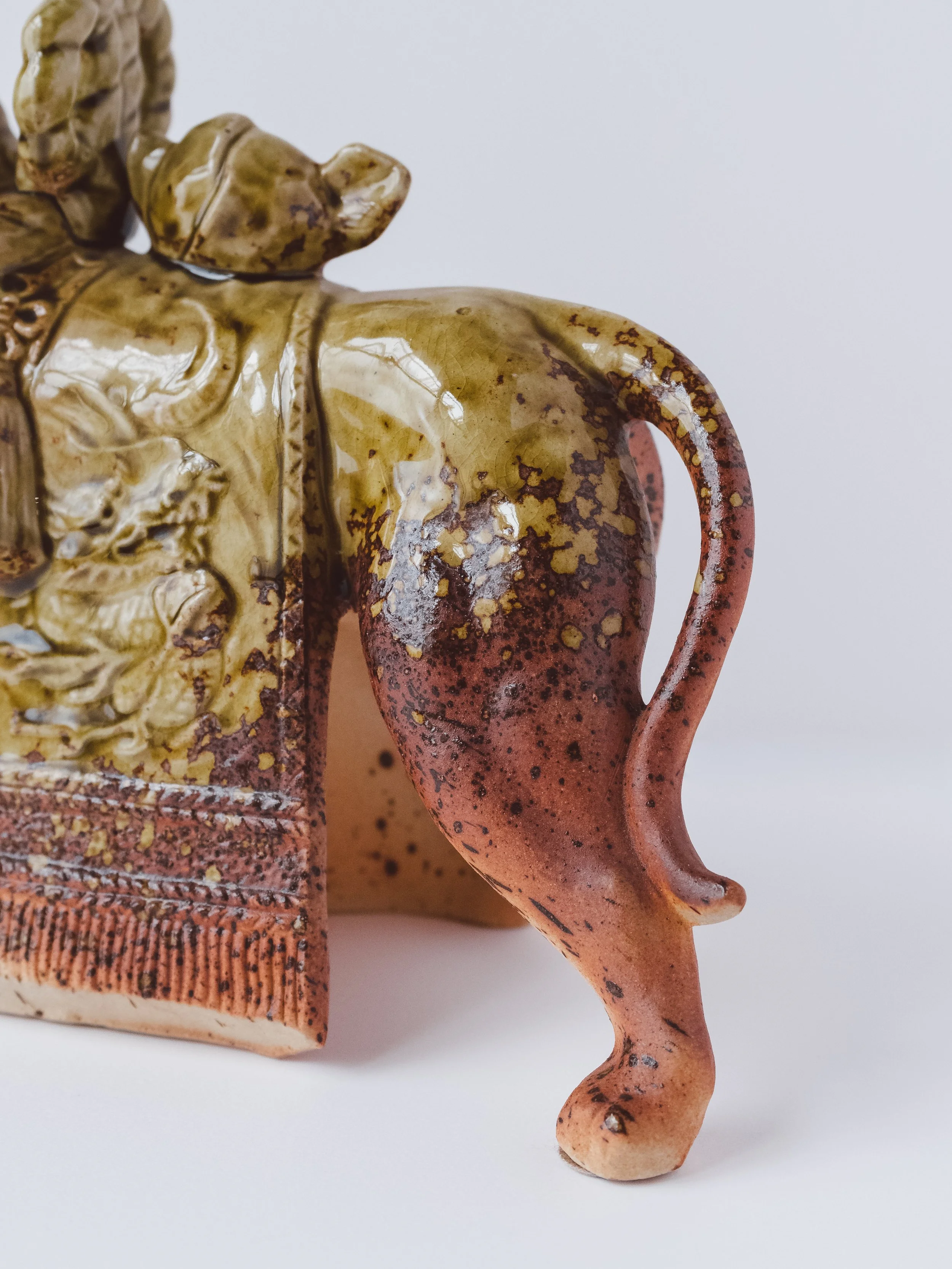 Image 10 of 13
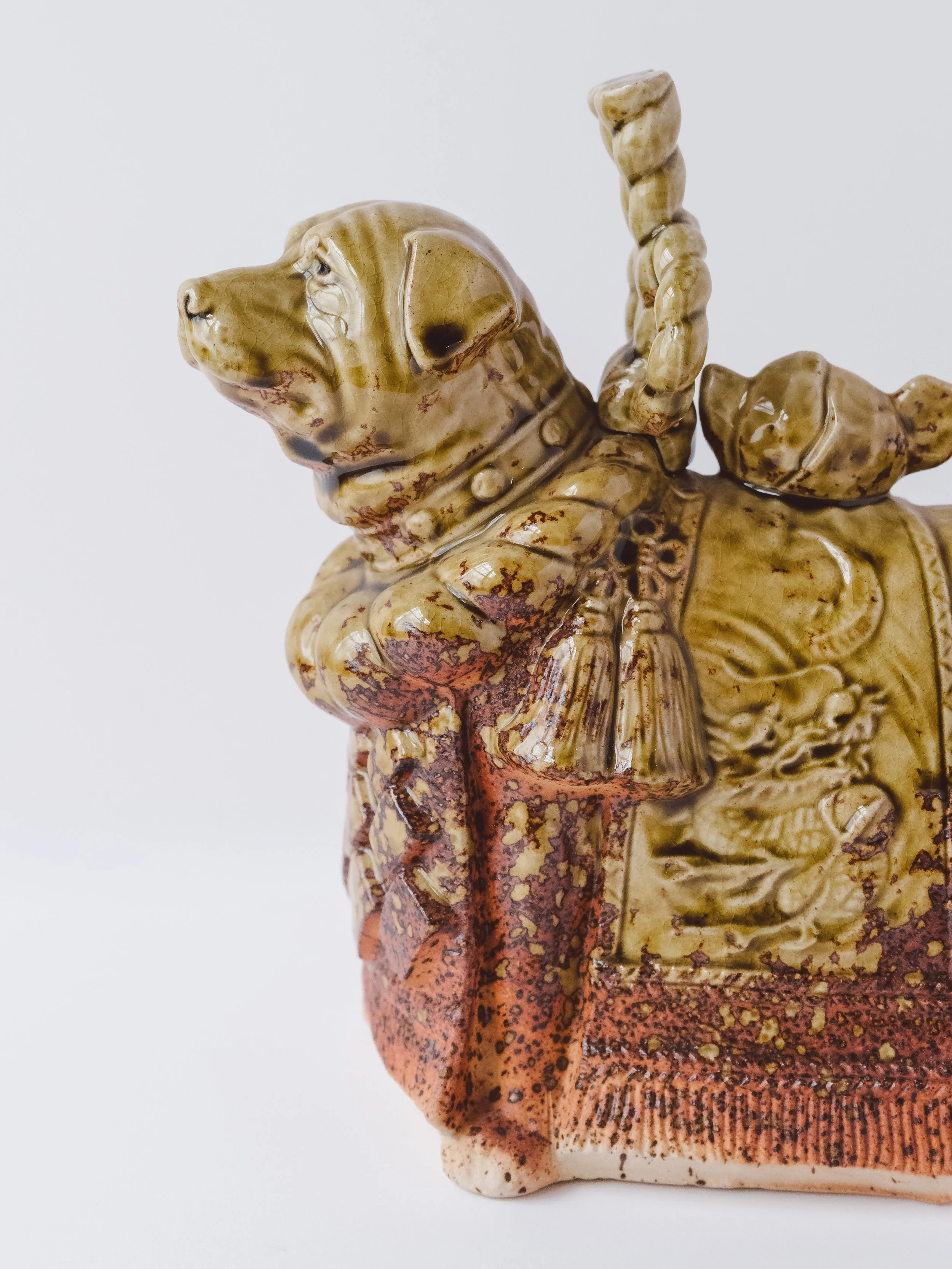 Image 11 of 13
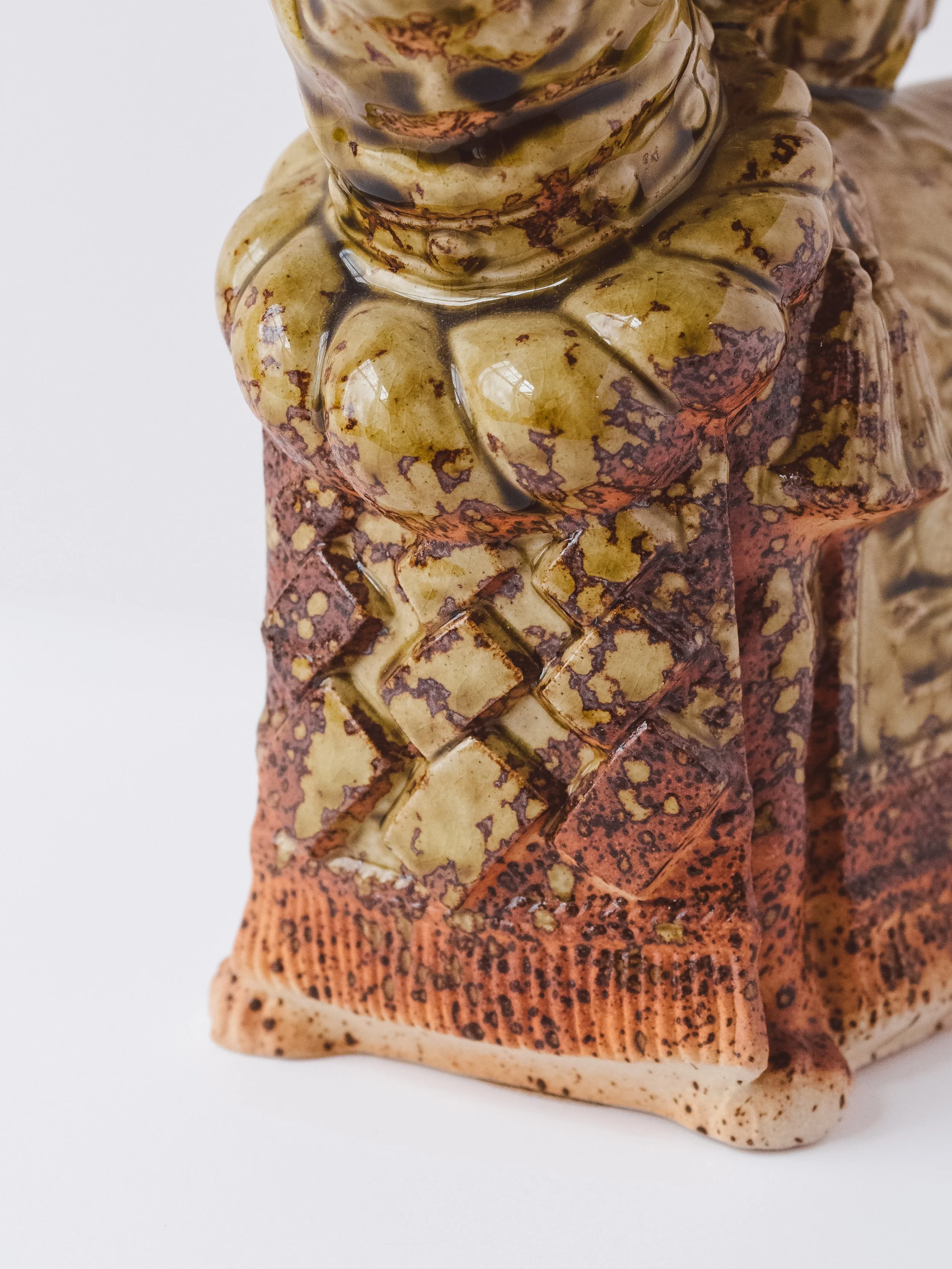 Image 12 of 13
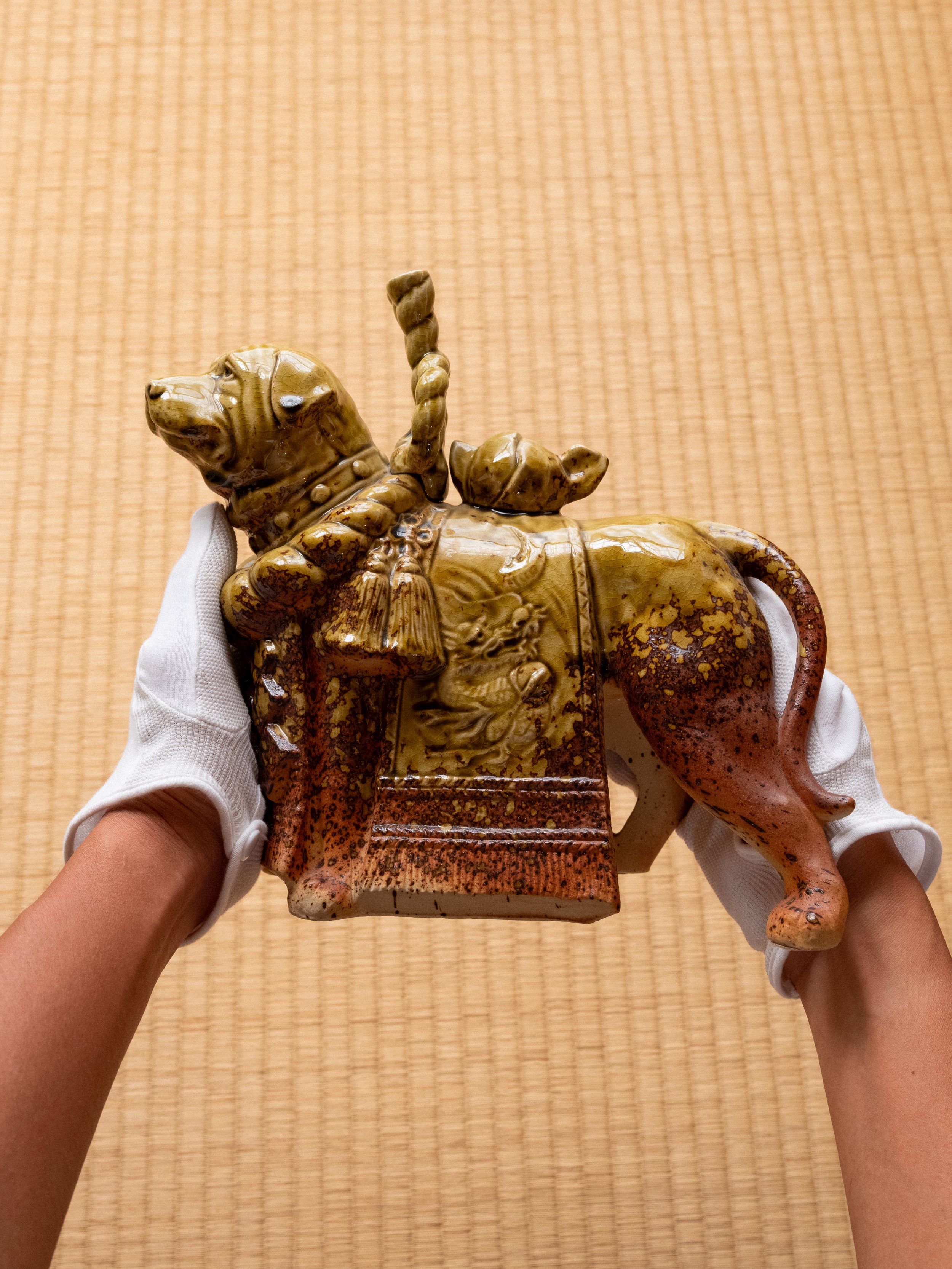 Image 13 of 13