【 The Concept 】
A cast-metal horse, its head thrown back to point its muzzle straight at the sky, finished in a soft turquoise patina with warm gold showing through at every edge. The design is pure mid-century modernism: the body is built from flat planes and clean angles, the front and back legs are each a single tapering slab, and the tail juts out behind like a short, straight rod. A few details are kept and simplified: a small ear, a mane cut as a row of square notches down the back of the neck, and a saddle in low relief with its girth strap and a line of small square stitches. Fine hatched marks cover the whole surface, catching the light like brushstrokes on the patina. A single-character maker’s mark is stamped low on the rear leg. It is a small piece of Japanese modern design that holds one of the oldest symbols in Japanese culture: the horse that carries prayers to the gods.
【 The Horse That Carries Prayers 】
In Shinto, the horse is the mount of the gods. In ancient Japan, people offered living horses to the great shrines when they prayed for rain or for the rain to stop, and some shrines still keep a sacred horse, a shinme, today. Over the centuries the living horse was replaced by horses of wood, clay and metal, and finally by a painting of a horse on a small wooden board. That is the origin of the ema, the votive tablets that hang by the thousand at every Japanese shrine, carrying wishes for exams, health, love and safe journeys. Even now, most ema are still decorated with a horse, a memory of the animal that first carried people’s prayers to the gods.
The horse also carries a happy pun. In Japanese, uma means “horse,” and umaku iku means “things go well.” For this reason a horse is a classic good-luck gift for a new business, a new job, or any new beginning, and a horse with its head held high is a symbol of leaping forward and rising in the world.
【 The Year of the Fire Horse 】
2026 is a Year of the Horse in the East Asian zodiac, and a very particular one: hinoe-uma, the Year of the Fire Horse, which comes round only once every sixty years. In Japan it carries a famous superstition. People once believed that women born in a Fire Horse year would be fiery and strong-willed, a belief often linked to the story of Yaoya Oshichi, a young girl in seventeenth-century Edo who, according to legend, was born in a Fire Horse year and set a fire in the hope of seeing her lover again. The tale became a favourite of novels and kabuki theatre.
The superstition was so powerful that in 1966, the last Fire Horse year, the number of births in Japan fell by about a quarter compared with the year before, one of the most striking dips in the country’s population history. Today the old belief is remembered more with curiosity than fear, and the Fire Horse is celebrated as a symbol of energy, passion and bold action.
【 Cast Metal Meets Modern Design 】
Japan’s foundry towns, with Takaoka in Toyama as the most famous, have cast bronze bells, Buddhist images and household metalwork for four centuries. In the post-war decades, sculptors and designers began working with these foundries to create a new kind of object: zodiac animals and small figures in a clean, modern style, made for living rooms rather than temples. This horse belongs to that movement. Its shapes are simplified almost to geometry, yet it keeps the energy of a real horse lifting its head into the wind. The turquoise patina recalls the green of old bronze, while the gold beneath it shines through on every raised edge.
【 What Owning This Piece Brings 】
・ Things going well. The horse’s pun on “going smoothly” makes it a natural charm for success in work, study and new ventures.
・ Forward momentum. With its head raised to the sky, this horse is a symbol of ambition, energy and moving ahead with confidence.
・ A prayer carried upward. As the horse once carried wishes to the gods, it can sit on a desk or shelf as a quiet reminder of what you are hoping for.
・ A piece for the Year of the Horse. For anyone born in a Horse year, or celebrating the Fire Horse year of 2026, it makes a meaningful zodiac gift.
A fitting gift for a new business or promotion, a graduation, someone born in the Year of the Horse, or a collector of mid-century modern design.
【 Where to Place It 】
On a desk or office shelf, where its upward gaze brings energy to the workspace; on a bookshelf beside design books; or at an entrance, where a horse traditionally welcomes good fortune. Side lighting brings out the hatched texture and the gold beneath the patina.
【 Care 】
Dust with a soft, dry cloth or brush. Do not use water, metal polish or cleaning products, which would damage the patina. Keep away from humidity.
【 Reading the Object 】
A standing horse in cast metal, head raised with the muzzle pointing upward, a small ear, and a mane rendered as a row of square notches down the back of the neck. A saddle in low relief with a girth strap and square stitch marks. Front legs and hind legs each formed as a single tapering slab with an arch between them; a short cylindrical tail held straight out behind. Turquoise patina over a gold-toned metal, which shows through on edges and raised details; fine hatched texture over the whole surface. A single-character mark in a small square, stamped low on the rear leg.
【 Presence 】
Poised, modern and full of quiet energy. A horse lifting its head to the sky, as if listening for the wind.
Archive Note: The number in the name (2026) marks the current Year of the Fire Horse (hinoe-uma), which comes round once every sixty years. NOT the date this piece was made.


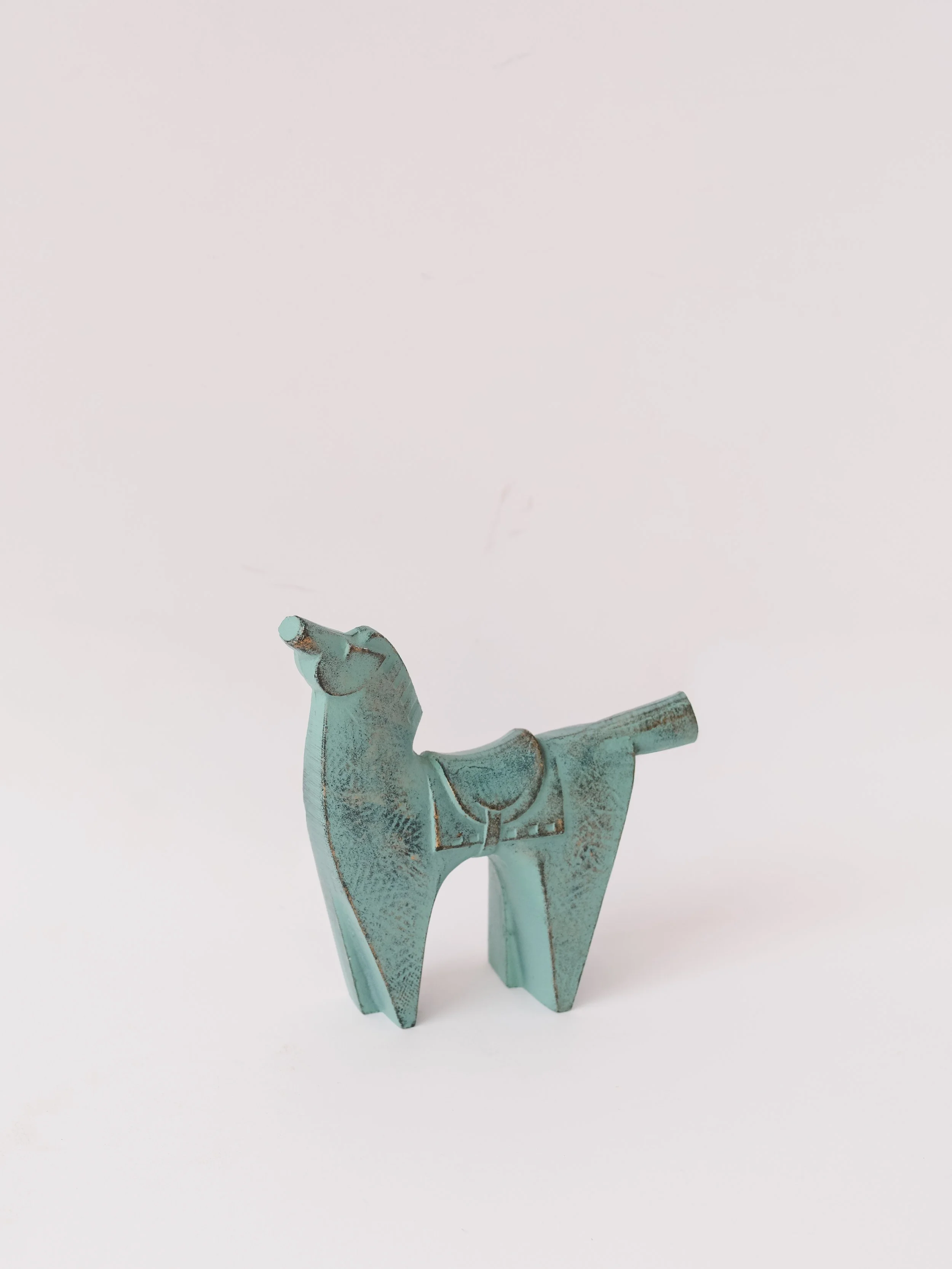 Image 1 of 8
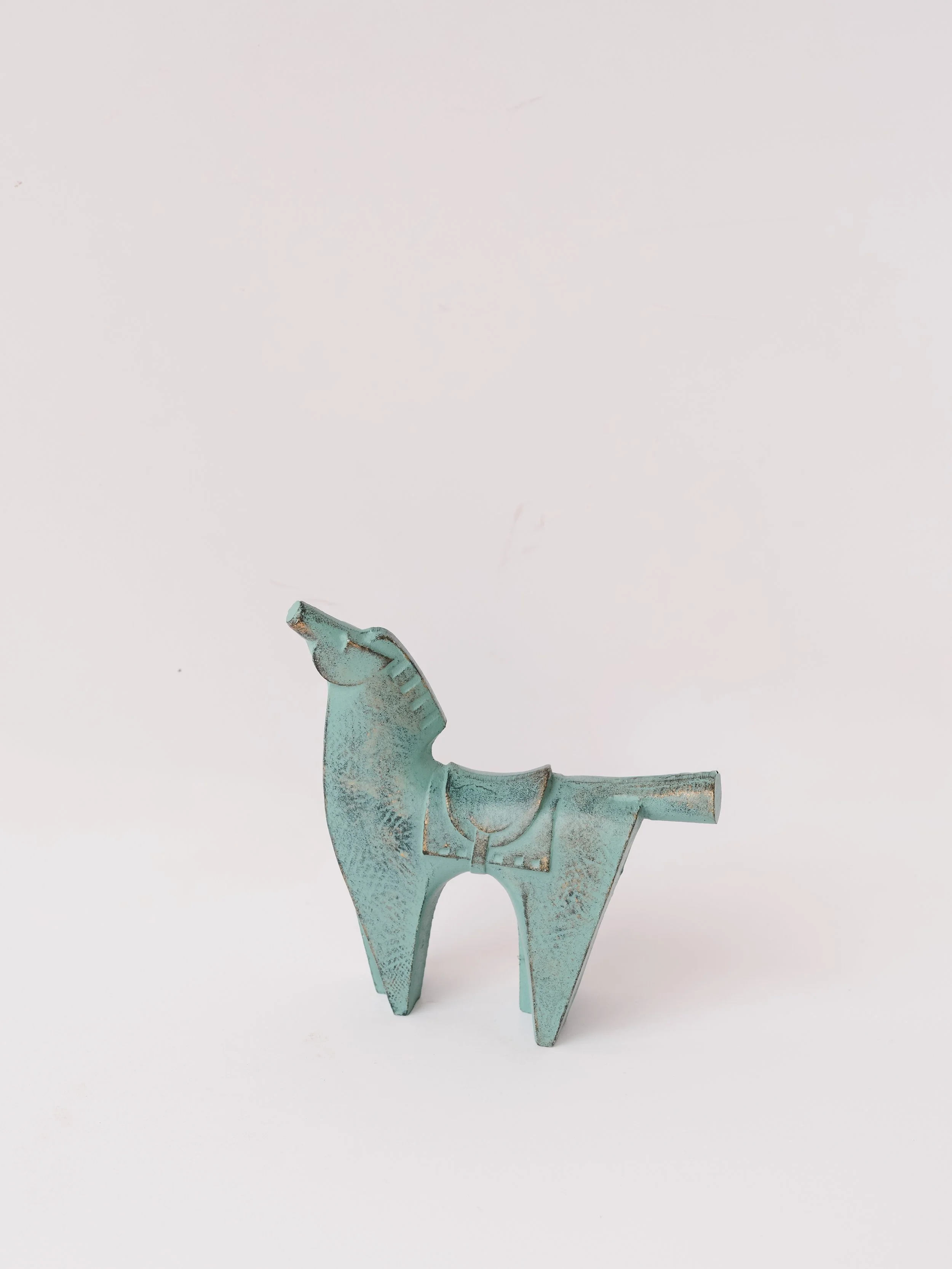 Image 2 of 8
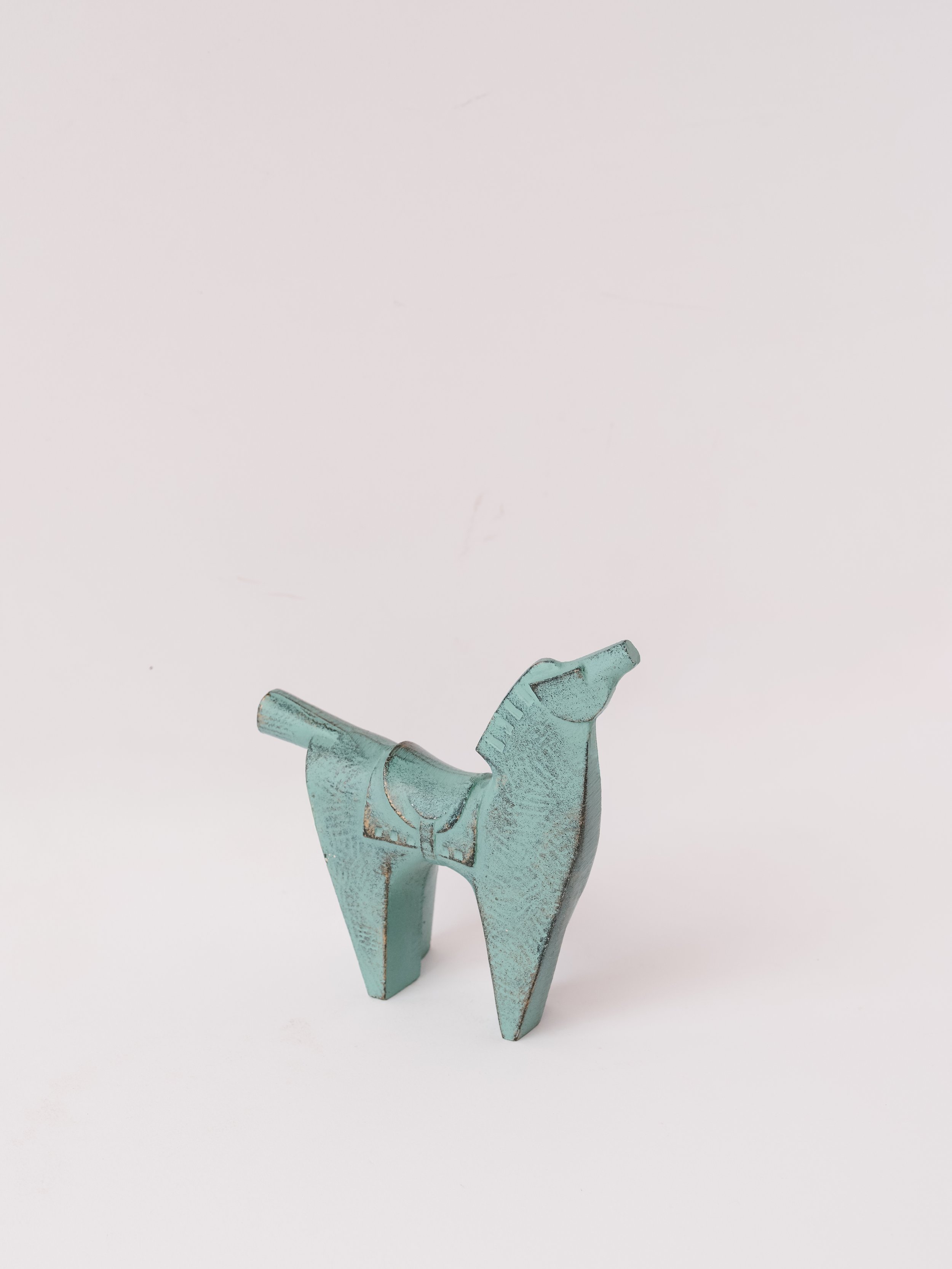 Image 3 of 8
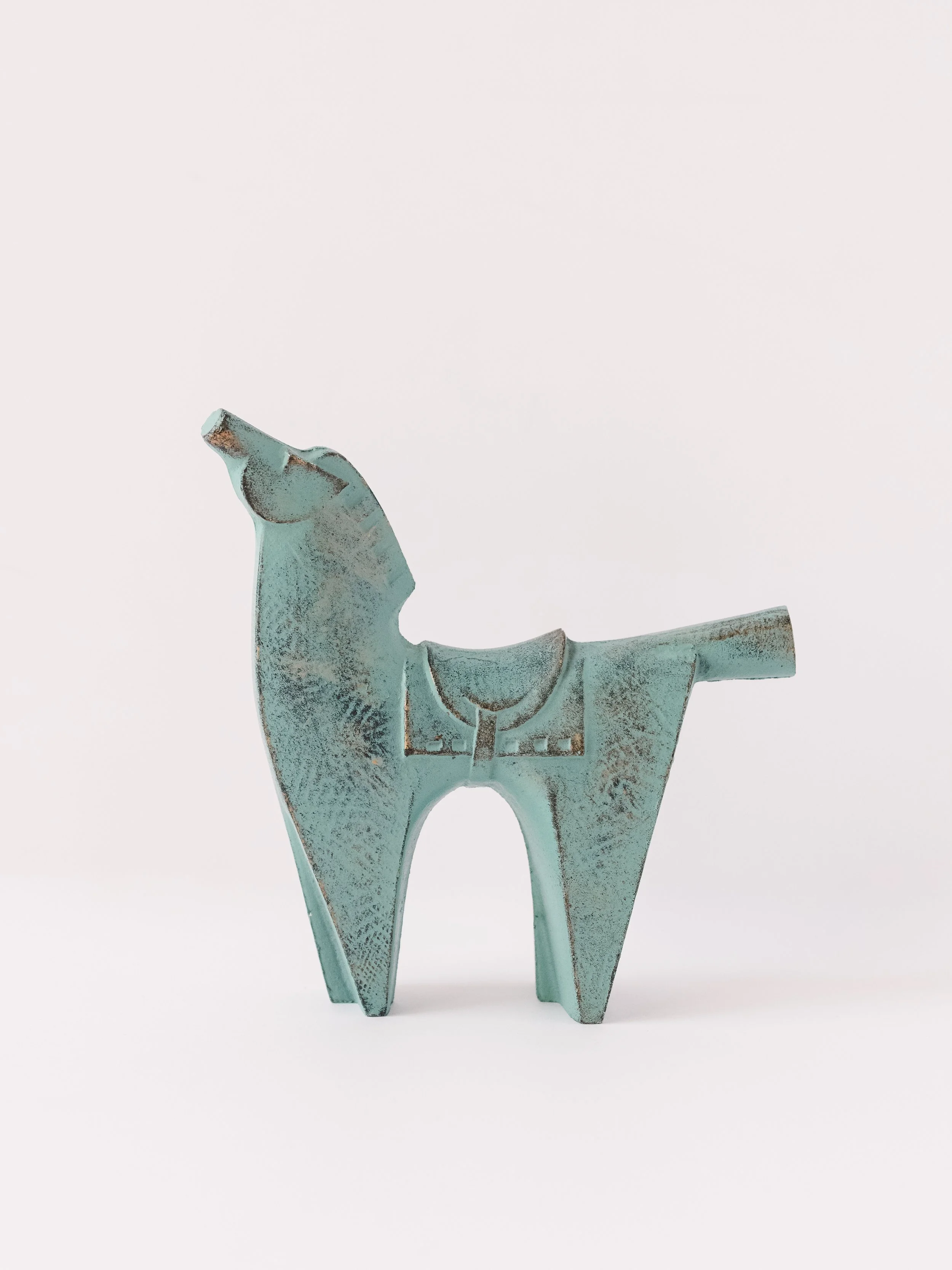 Image 4 of 8
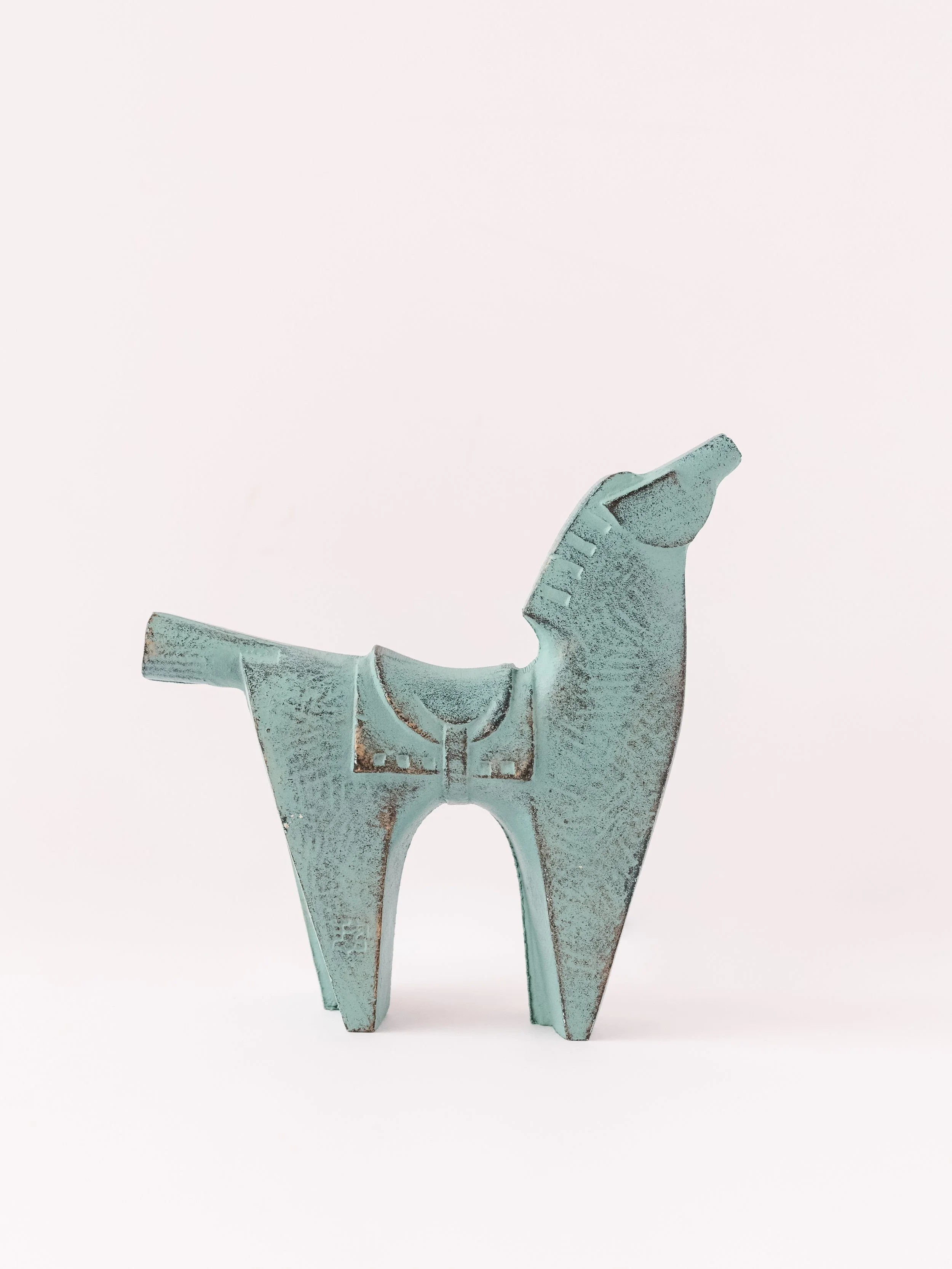 Image 5 of 8
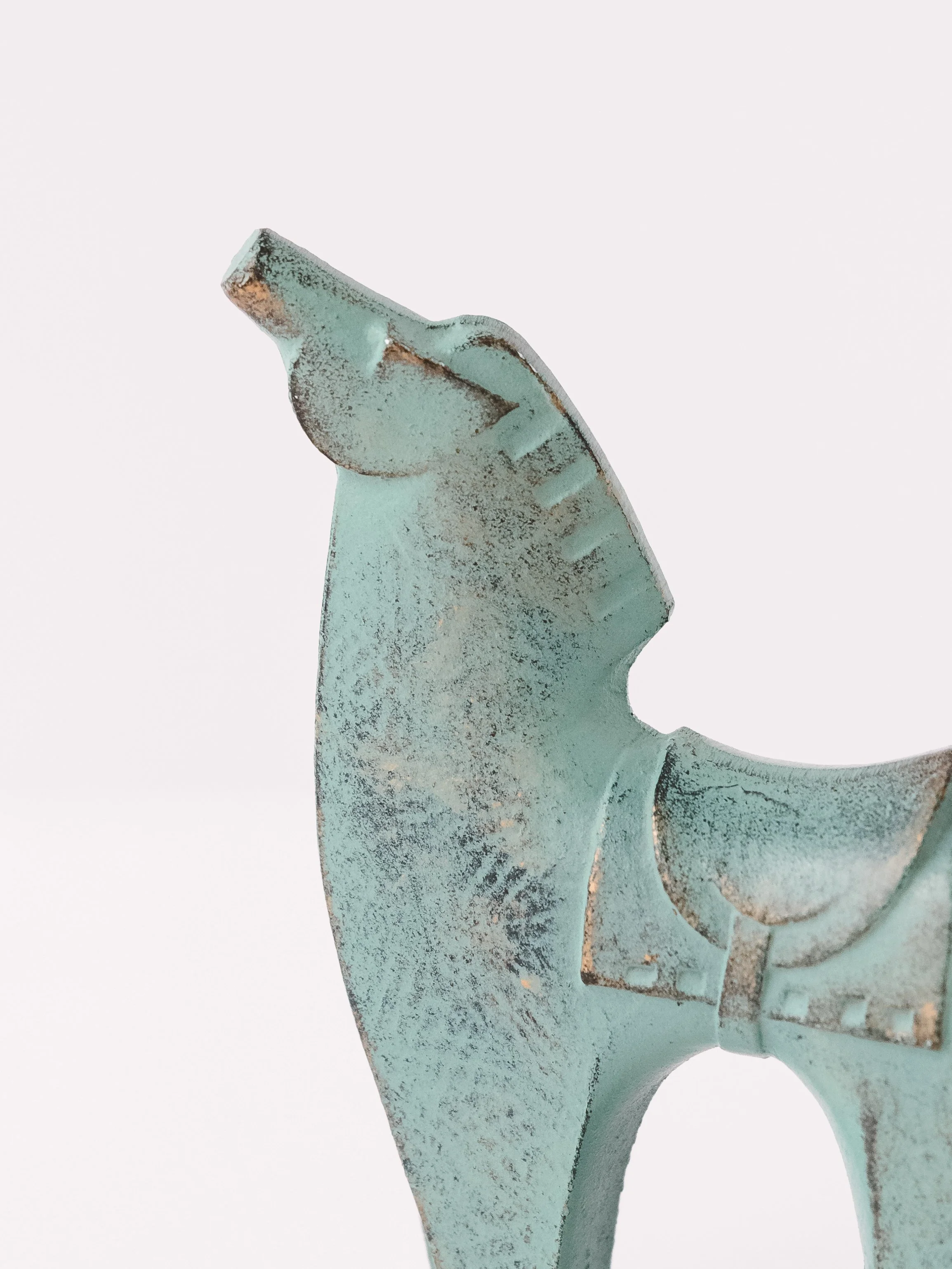 Image 6 of 8
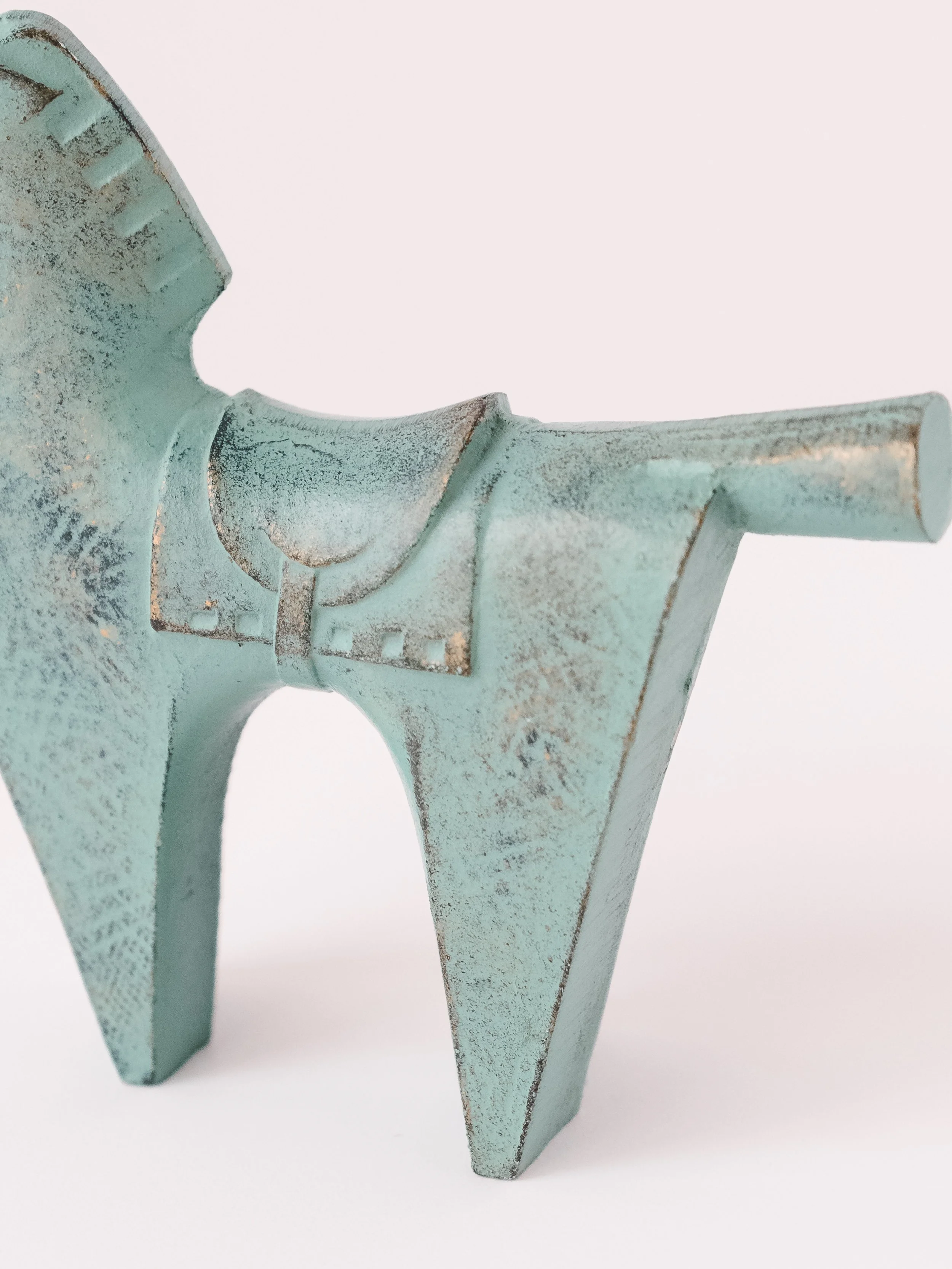 Image 7 of 8
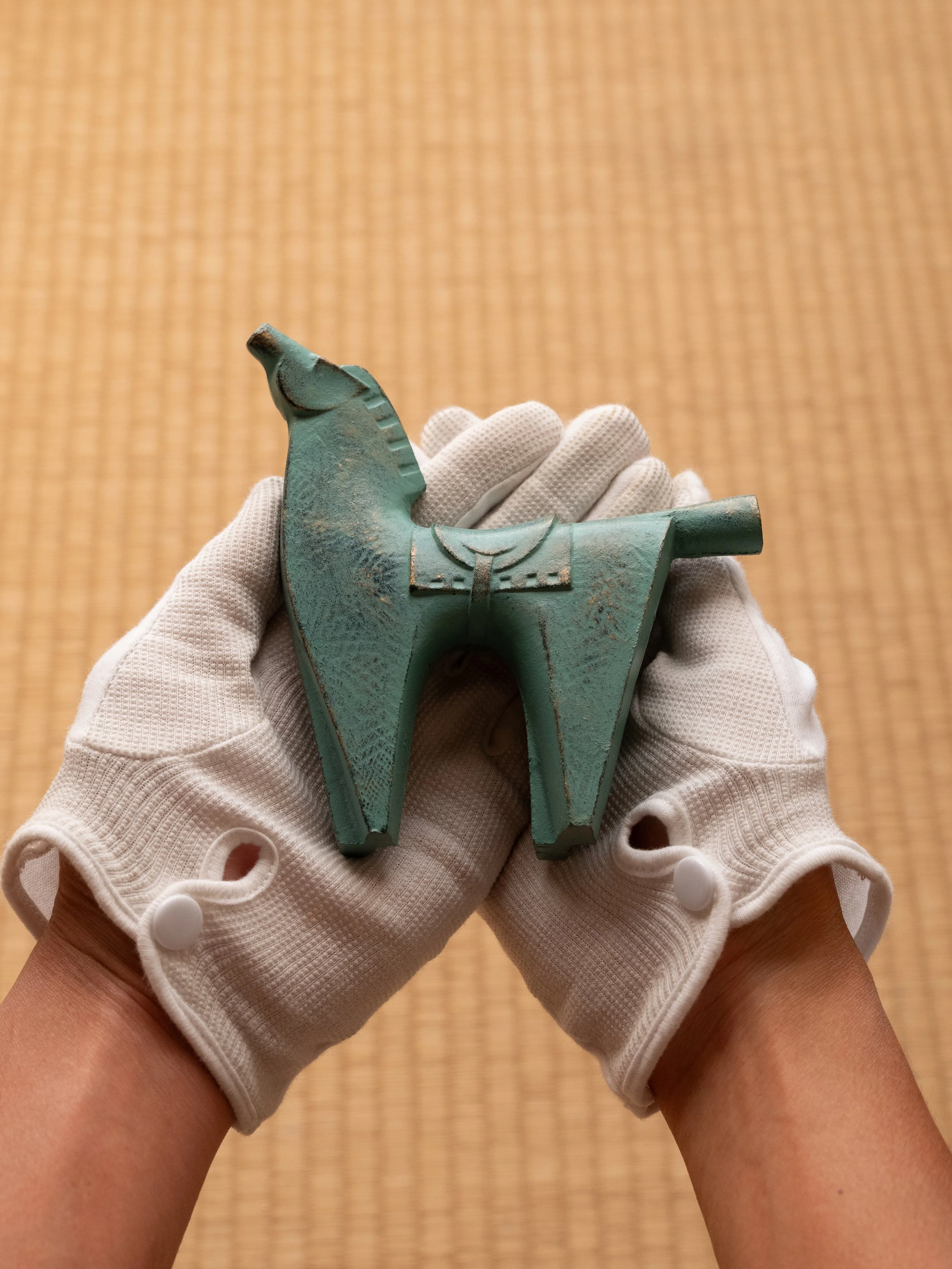 Image 8 of 8