PHOENIX SHIP 1973

$265.00
SOLD

【 The Concept 】

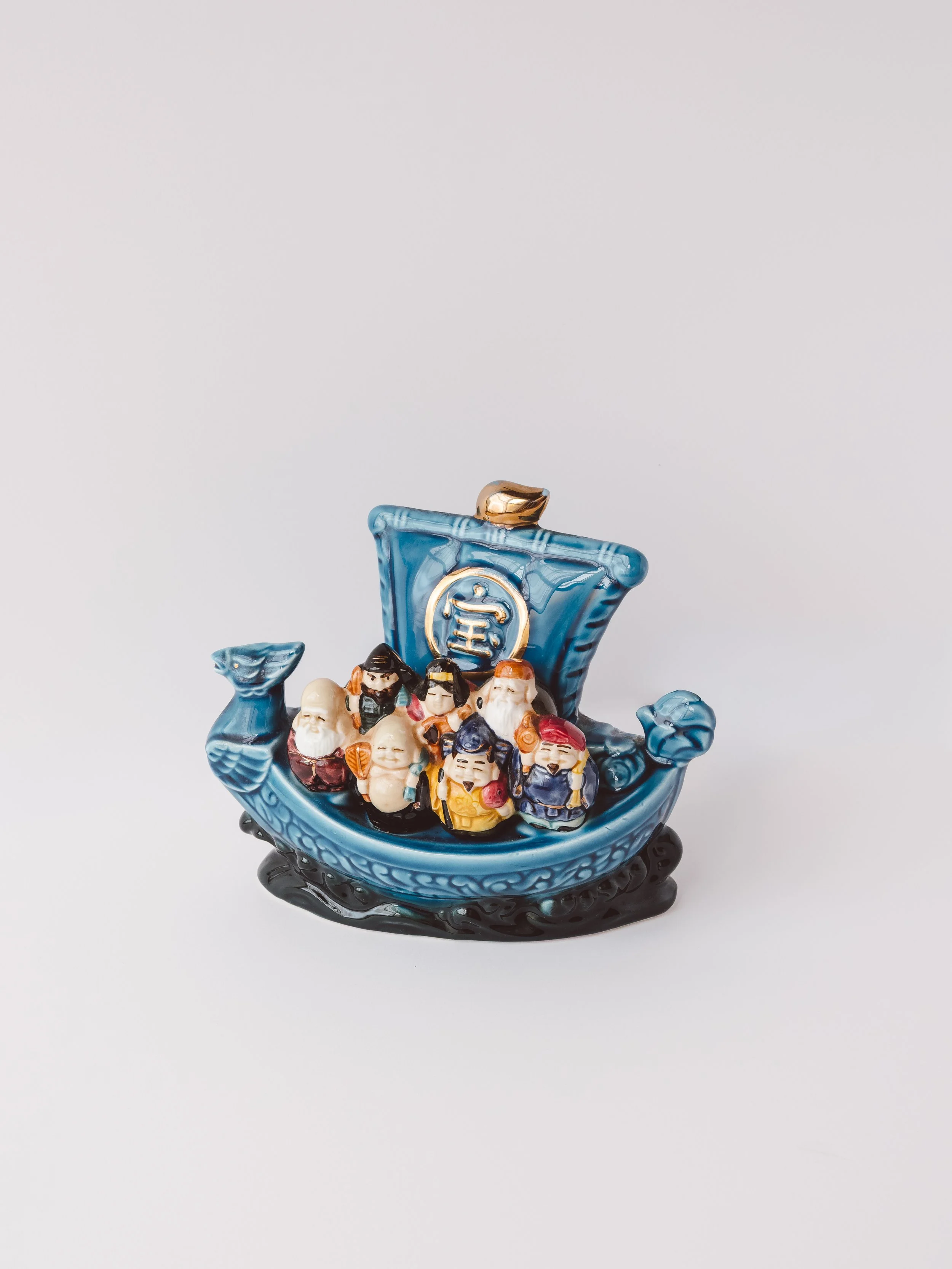
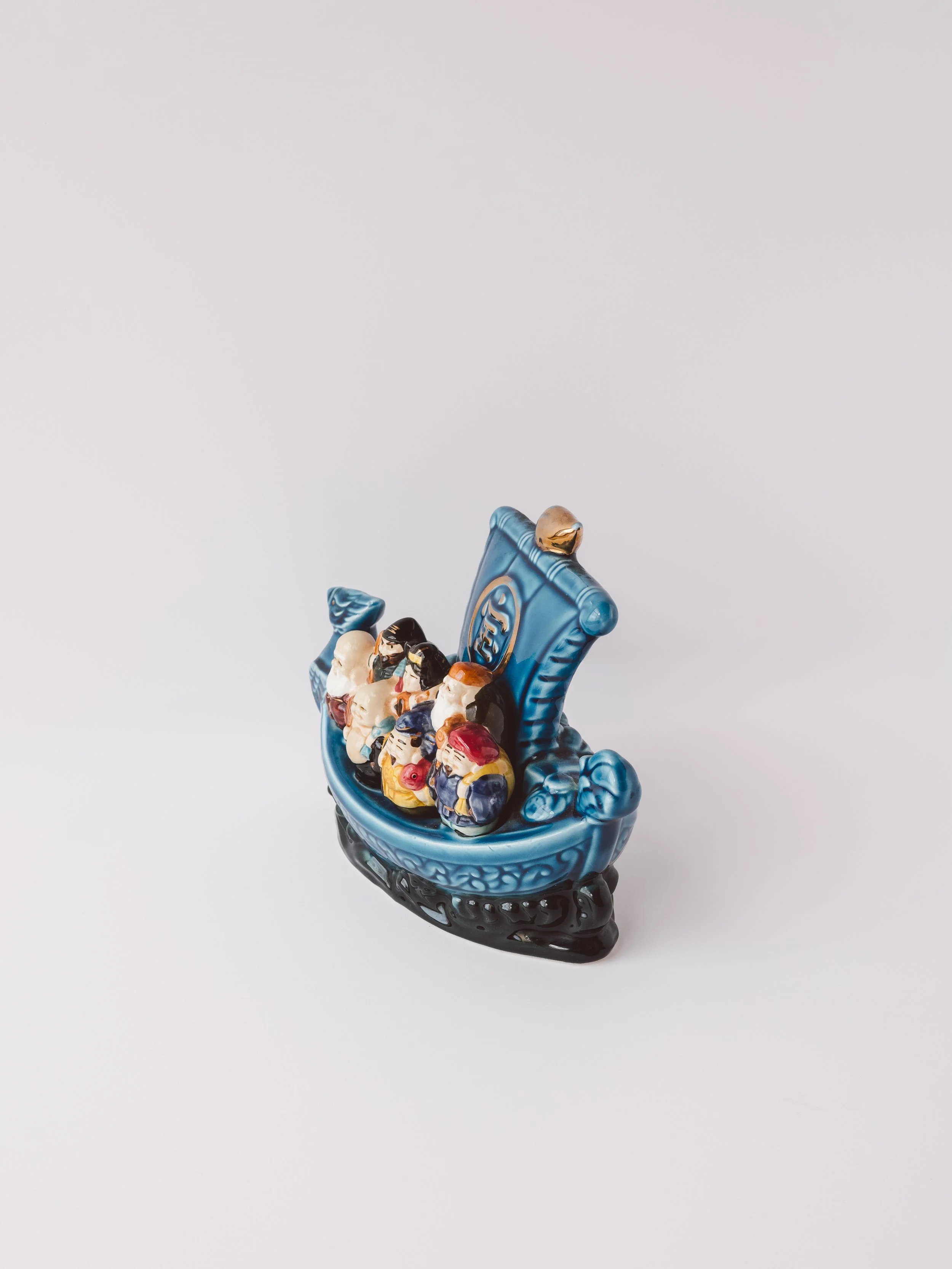
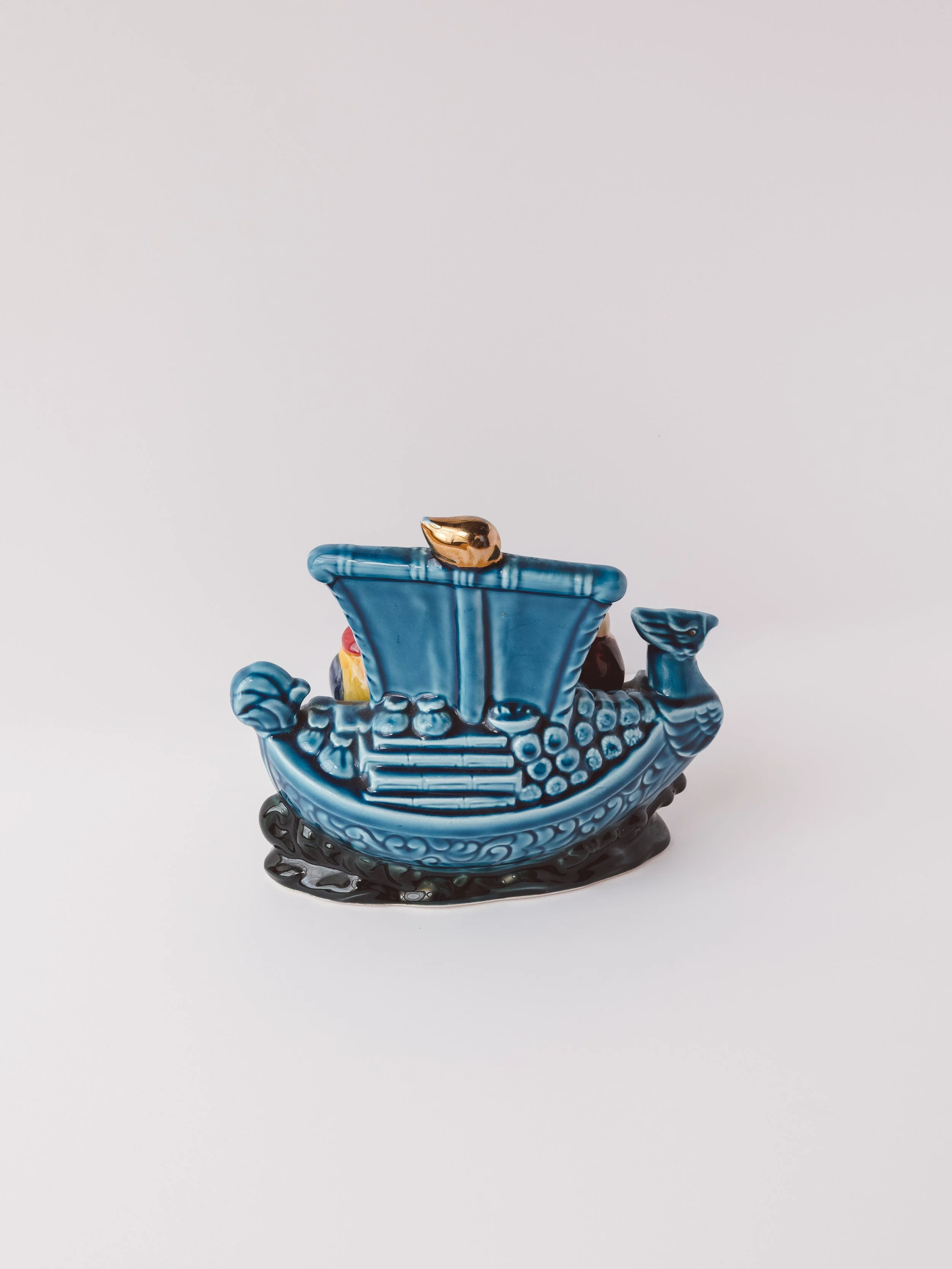
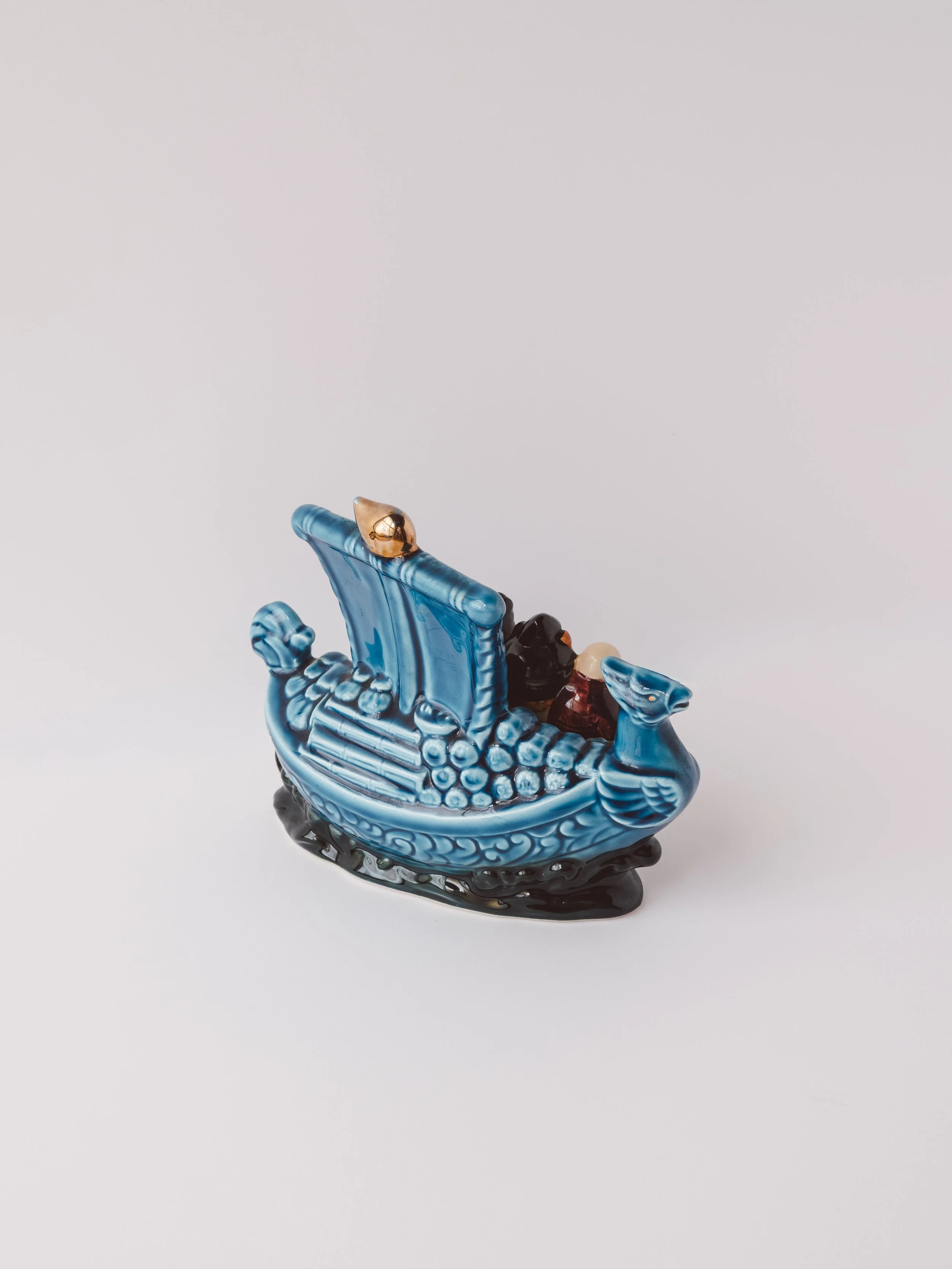
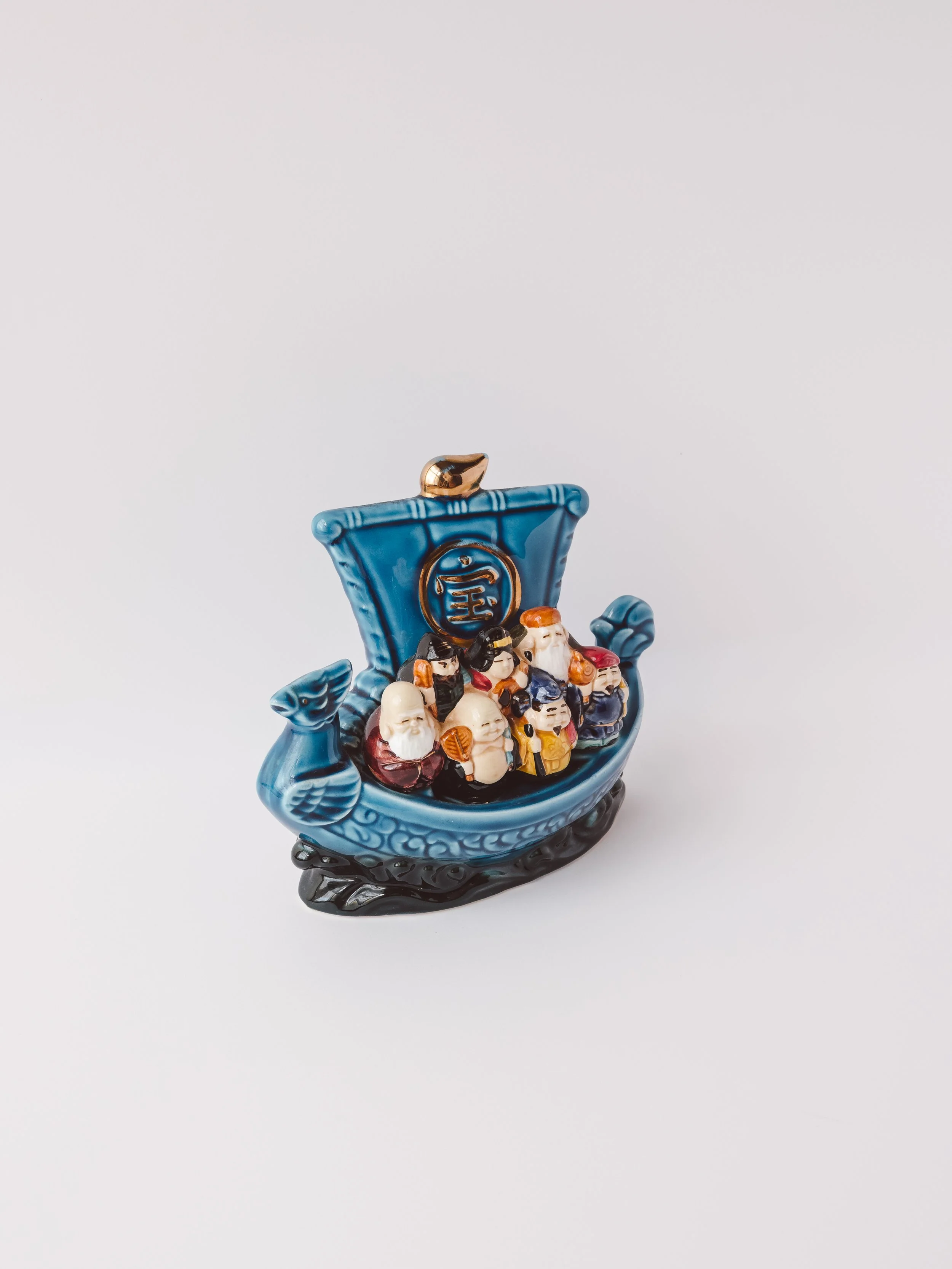
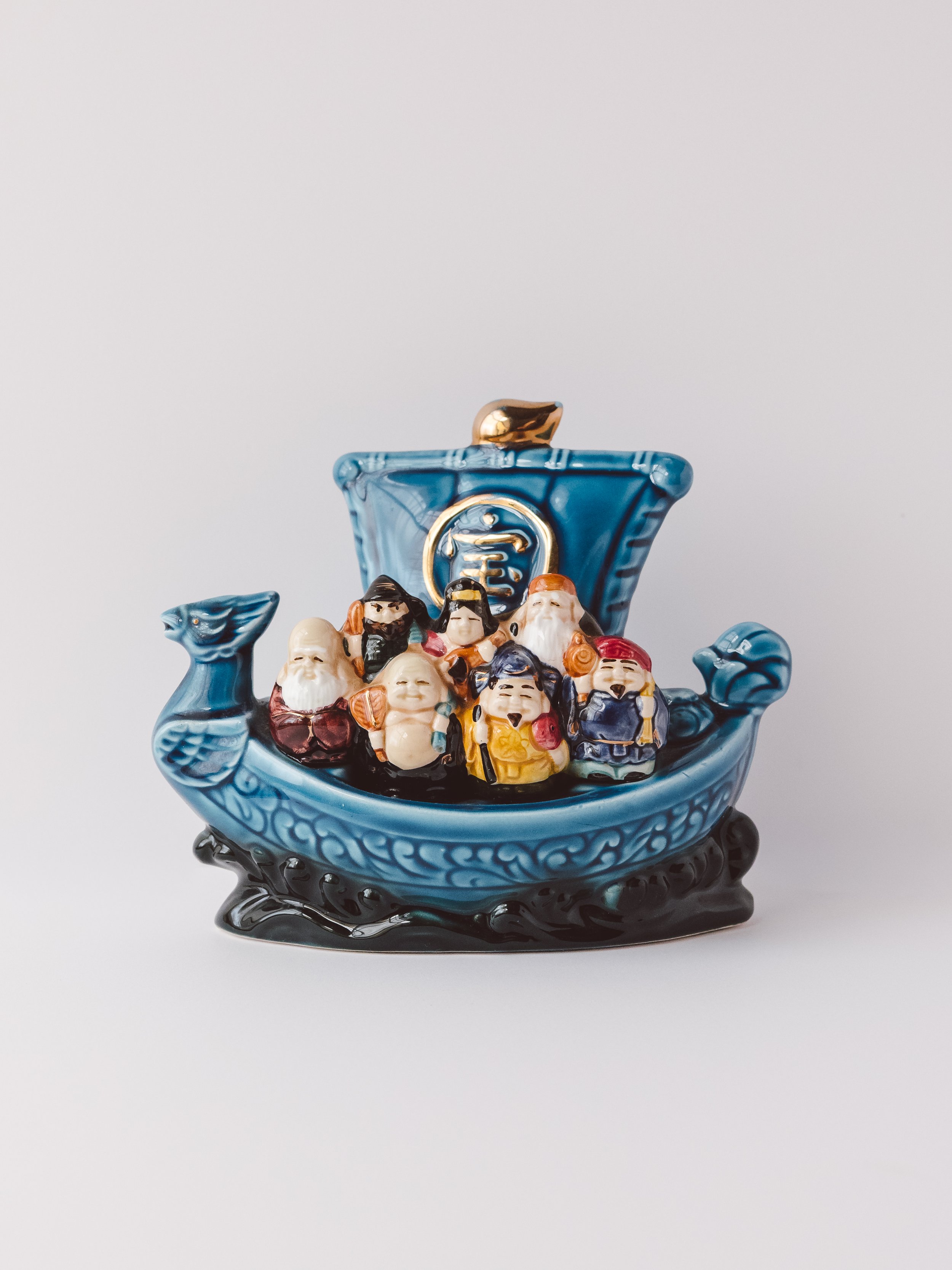
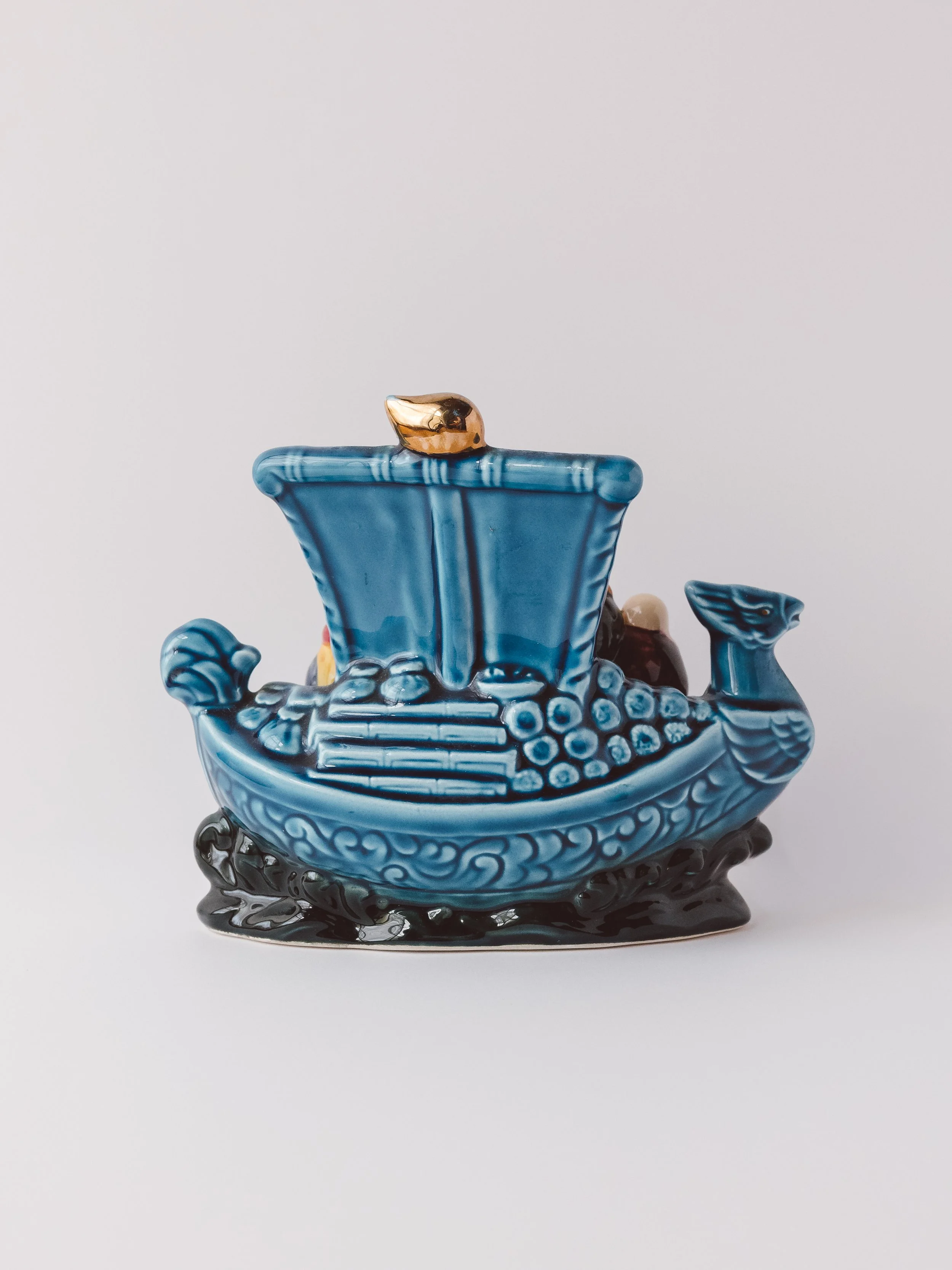
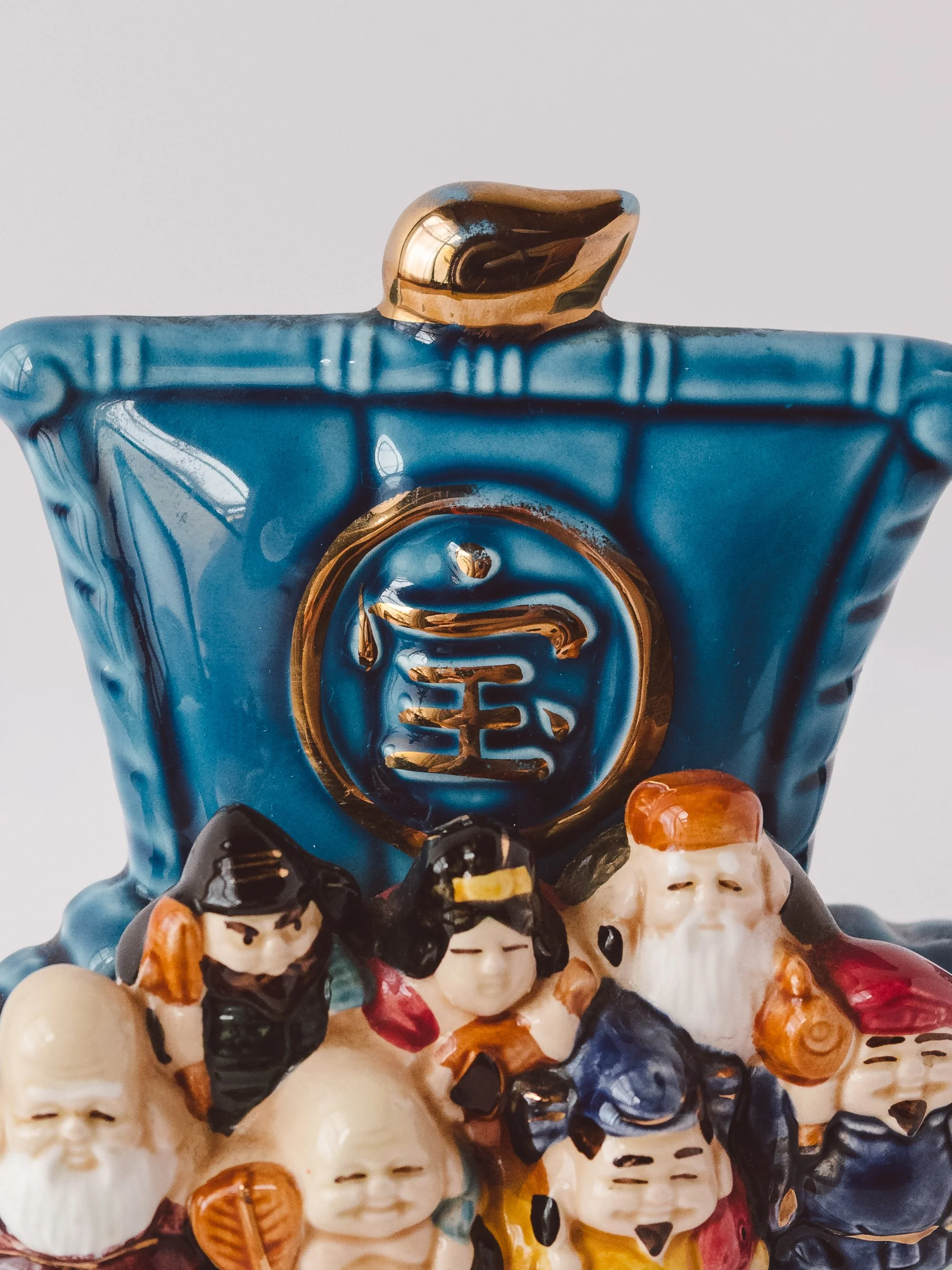
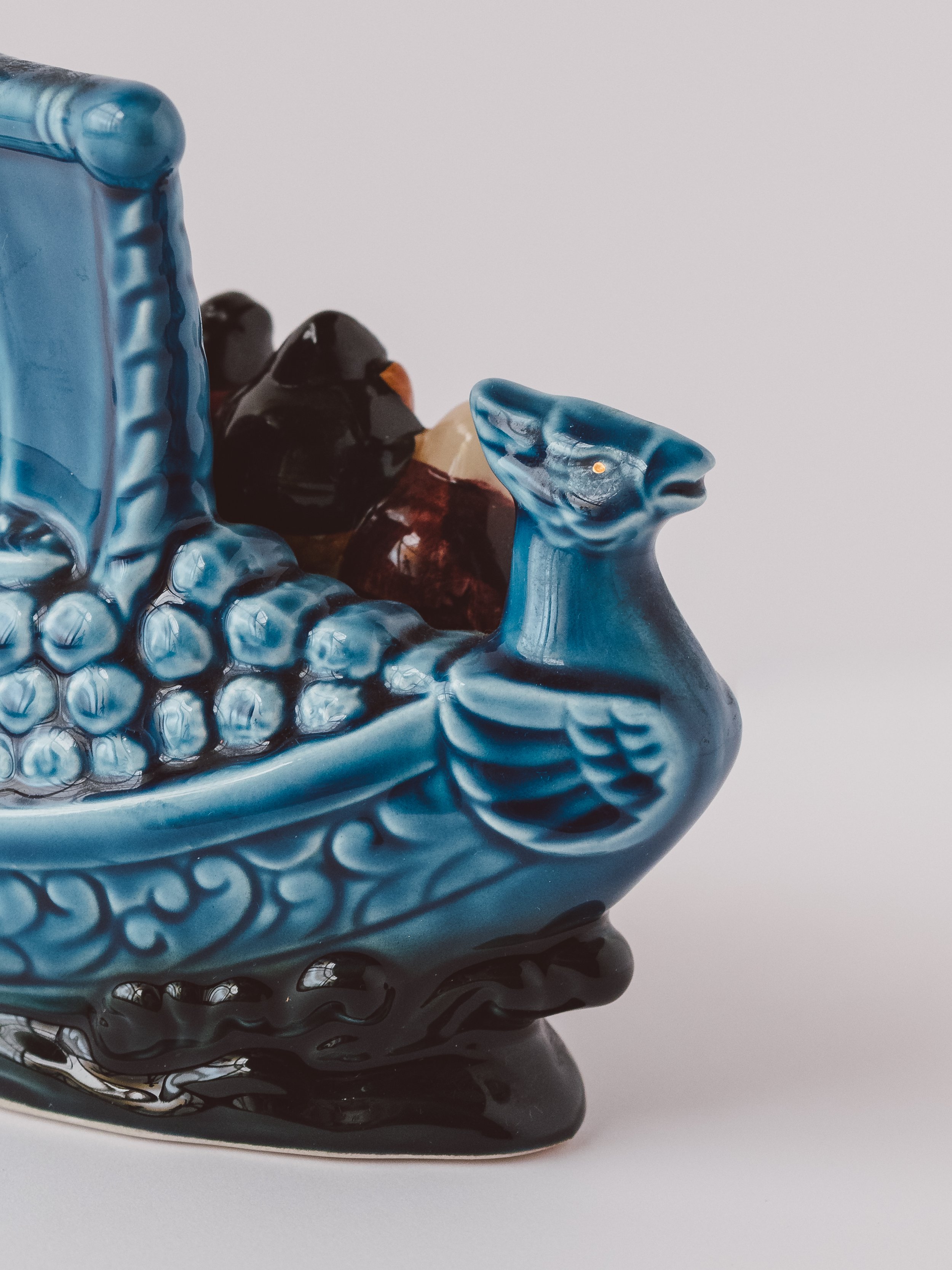
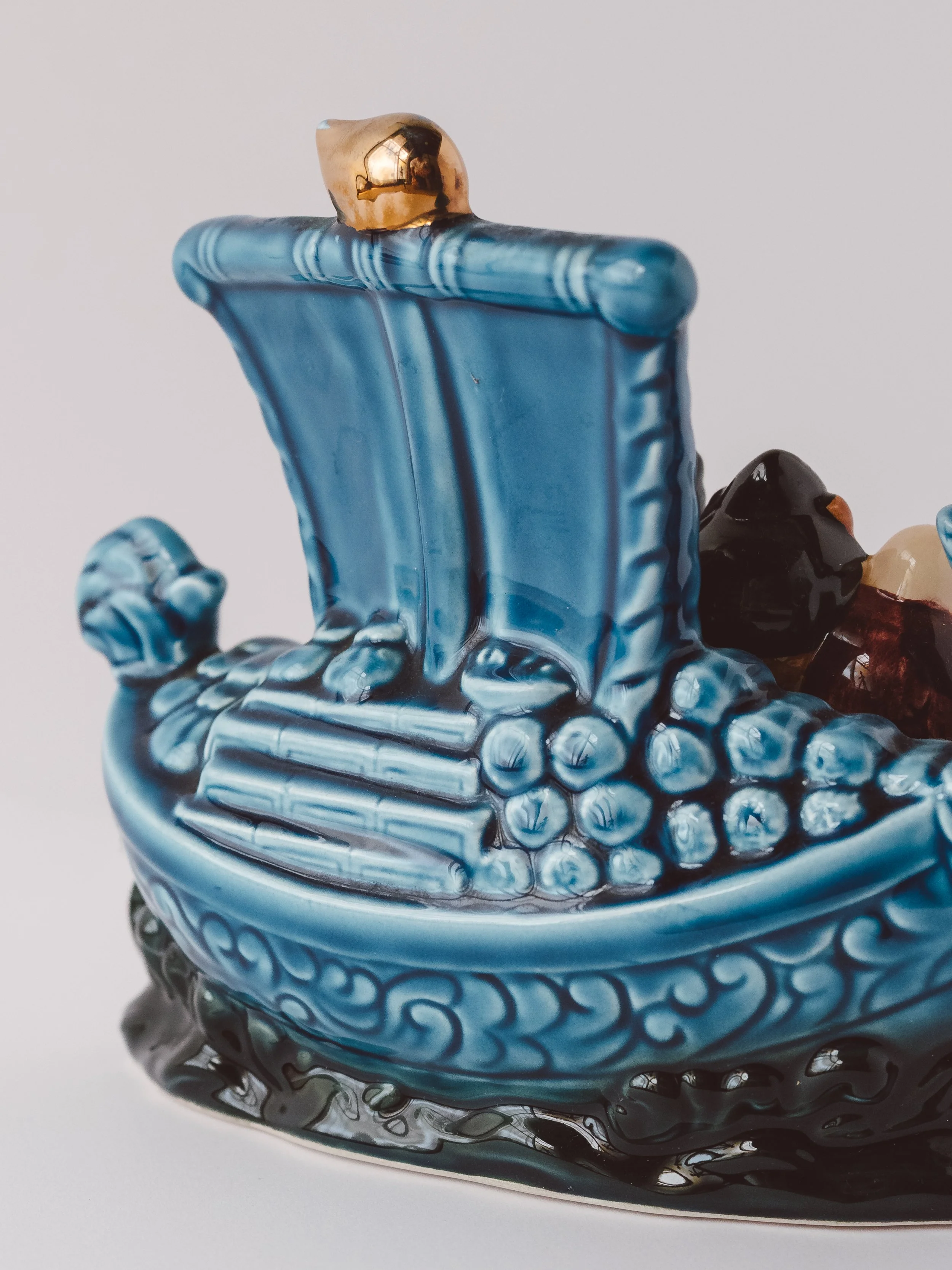
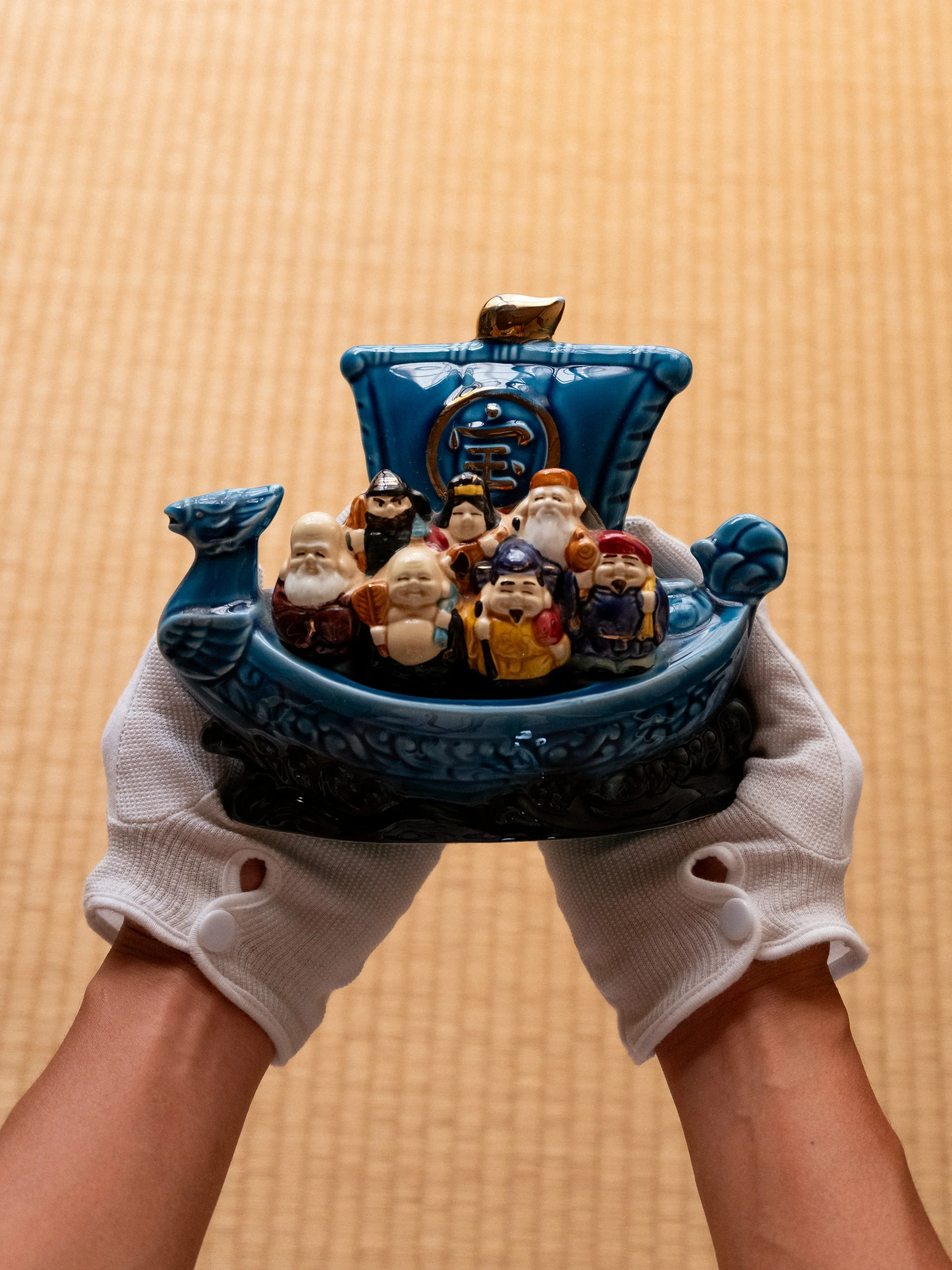
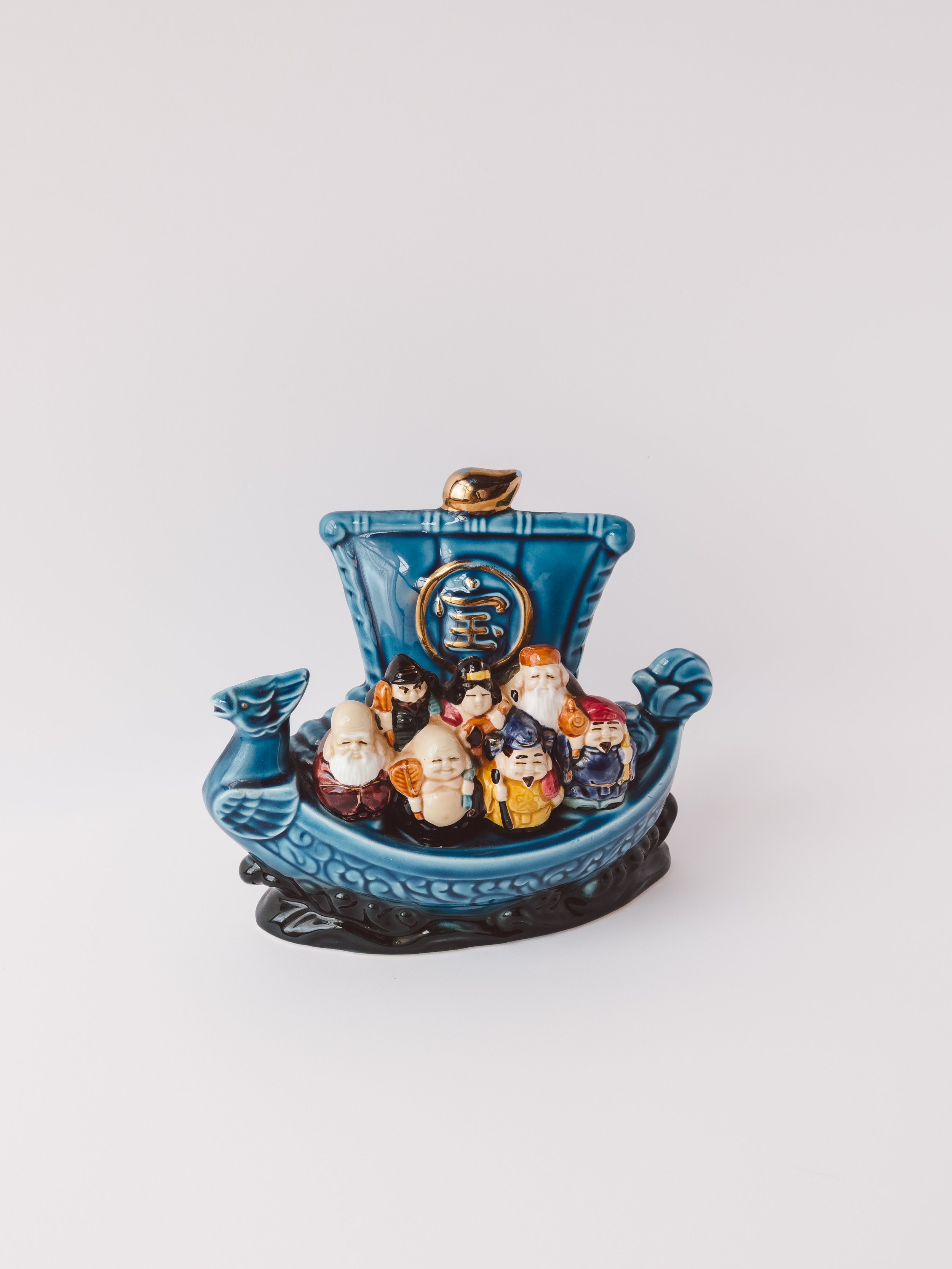
The seven gods of fortune, crowded together in a single treasure-ship, glazed a deep lapis blue and riding a crest of black waves. The whole scene is compressed into one ceramic object: a phoenix-headed prow at one end, a curled stern at the other, a tall back-sail rising behind the figures, and between them the seven deities packed shoulder to shoulder on the deck. It is the classic New-Year image — the takarabune, the ship that sails in from the far shore each year loaded with luck — rendered small enough to keep on a shelf.

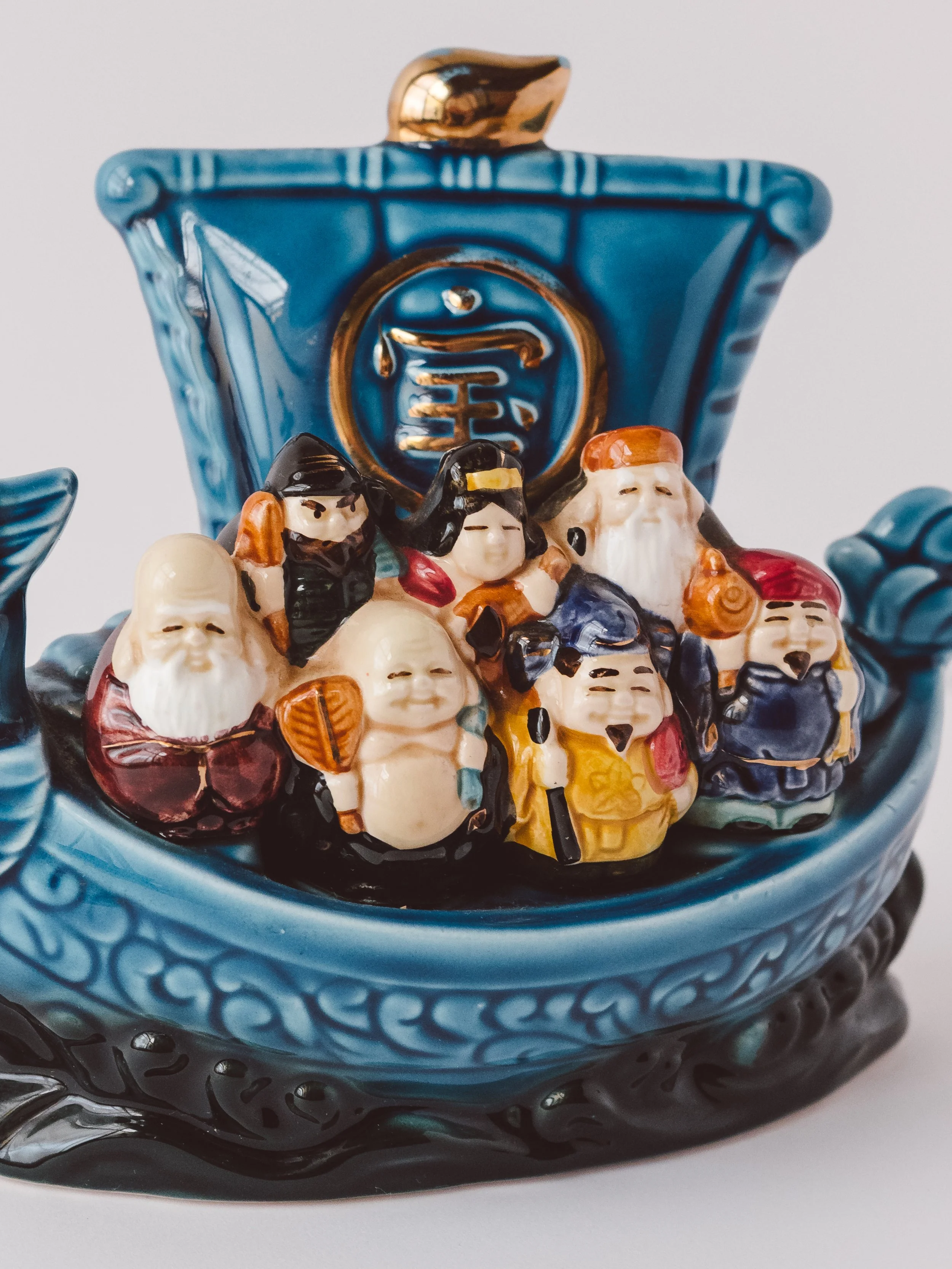
Against the single blue of the hull, the gods themselves are painted in full colour: cream faces and white beards, robes of red, black, yellow, and deep blue, each with the attribute that names it — a sea bream, a treasure sack, a round fan, a lute, a suit of armour, the long high brow of the god of longevity. On the sail, a gold ring encircles the single character takara (宝, "treasure"); a gilded emblem crowns the mast; and the prow is a phoenix, head lifted, the auspicious bird that appears only in a time of peace.

【 The Function 】

A New-Year and year-round auspicious ornament (縁起物 / engimono) — the single most complete good-luck image in the Japanese repertoire, gathering wealth, long life, wisdom, and protection into one hull. Made for a shelf, a cabinet, or a tokonoma alcove, and traditionally brought out at the New Year.

【 The Texture 】

High-gloss glaze throughout. The ship is a deep, even lapis blue that pools darker in the incised scrollwork of the hull; the base is a wet-looking black, modelled into curling waves; and the figures are picked out in bright polychrome enamels with touches of gold, so the coloured gods stand sharply out of the blue vessel that carries them. Gold leaf marks the takara character, the mast emblem, and the fittings.

【 Presence 】

Dense and cheerful. For its size the piece holds an enormous amount of incident — seven distinct faces, a phoenix, a sail, a sea of waves — yet it reads as one compact, stable object. It is busy in the way a good-luck charm is meant to be busy: every part is another wish.

Provenance Note: Sourced from a private collection in Japan.

【 The Concept 】

The seven gods of fortune, crowded together in a single treasure-ship, glazed a deep lapis blue and riding a crest of black waves. The whole scene is compressed into one ceramic object: a phoenix-headed prow at one end, a curled stern at the other, a tall back-sail rising behind the figures, and between them the seven deities packed shoulder to shoulder on the deck. It is the classic New-Year image — the takarabune, the ship that sails in from the far shore each year loaded with luck — rendered small enough to keep on a shelf.

Against the single blue of the hull, the gods themselves are painted in full colour: cream faces and white beards, robes of red, black, yellow, and deep blue, each with the attribute that names it — a sea bream, a treasure sack, a round fan, a lute, a suit of armour, the long high brow of the god of longevity. On the sail, a gold ring encircles the single character takara (宝, "treasure"); a gilded emblem crowns the mast; and the prow is a phoenix, head lifted, the auspicious bird that appears only in a time of peace.

【 The Function 】

A New-Year and year-round auspicious ornament (縁起物 / engimono) — the single most complete good-luck image in the Japanese repertoire, gathering wealth, long life, wisdom, and protection into one hull. Made for a shelf, a cabinet, or a tokonoma alcove, and traditionally brought out at the New Year.

【 The Texture 】

High-gloss glaze throughout. The ship is a deep, even lapis blue that pools darker in the incised scrollwork of the hull; the base is a wet-looking black, modelled into curling waves; and the figures are picked out in bright polychrome enamels with touches of gold, so the coloured gods stand sharply out of the blue vessel that carries them. Gold leaf marks the takara character, the mast emblem, and the fittings.

【 Presence 】

Dense and cheerful. For its size the piece holds an enormous amount of incident — seven distinct faces, a phoenix, a sail, a sea of waves — yet it reads as one compact, stable object. It is busy in the way a good-luck charm is meant to be busy: every part is another wish.

Provenance Note: Sourced from a private collection in Japan.

【Context】

  • Identity: A glazed ceramic figure of the Shichifukujin (七福神), the Seven Gods of Fortune, aboard a takarabune (宝船), the treasure ship, on a wave base.
  • Origin: Japanese — a blue-glazed auspicious ceramic, in the tradition of New-Year engimono.
  • Technique: Slip-cast and hand-modelled glazed ceramic, the hull in a single blue glaze, the figures hand-painted in polychrome enamels with gilt detailing; separately glazed black wave base.
  • Material: Glazed ceramic — lapis-blue hull, black wave base, polychrome enamel figures, gold accents.
  • Motif: The treasure ship carries the seven gods — among them Ebisu (with his sea bream), Daikoku (with his sack of fortune), Hotei (round-bellied, with a fan), Benzaiten (the one goddess, crowned), Bishamonten (armoured), and the long-headed gods of longevity. The prow is a hō-ō (phoenix), a bird of peace and good omen; the sail bears the character for "treasure." Together they gather every kind of fortune — wealth, health, long life, wisdom, and protection — into a single vessel.
  • Construction: A single hollow ceramic ship with integrally modelled figures, set on a separate wave-form base.

【 Dimensions (Approx.) 】

  • Length: 20 cm (7.9 in)
  • Width: 9 cm (3.5 in)
  • Height: 17 cm (6.7 in)
  • Weight: 0.514 kg (1.13 lb)