【 The Concept 】
A brown bear on all fours, head wrenched to one side, a whole salmon clamped crosswise in its jaws. It is a sake-kuma — a "salmon bear" — the most famous image in the folk woodcarving of Hokkaido, Japan's northern island. The whole body is worked in long, flowing chisel strokes that follow the muscle like a current of fur, stained a deep red-brown and polished; only the muzzle, brow, and the salmon are left pale in the natural honey-colored wood, so the eye is pulled straight to the bear's face and its catch. This is no gift-shop trinket. It is a piece of the north — of wild rivers, of the bear as a god, and of a carving tradition born from a real fight for survival.
【 The Bear as Mountain God 】
To understand this bear you have to know how the Ainu, the indigenous people of Hokkaido, saw the world. To them every animal is a kamuy, a god, wearing an animal's shape as a visiting disguise — and the brown bear is Kimun Kamuy, the god of the mountains, the highest kamuy of all, so revered that in the hills people would not even say the word "bear." The salmon running up the rivers each autumn was itself a gift of the gods, the food that carried a people through winter. A bear taking a salmon is therefore not just wildlife: it is the mountain god receiving the river's bounty — the whole abundance of the northern wild in one image. The hunt, too, was sacred: through the ceremony of Iomante, the "spirit-sending," the bear's spirit was thanked and sent home to the land of the gods so that it would return again with its gifts. Respect, not conquest.
【 A Carving Born of Survival 】
Hokkaido's carved bears are barely a century old, and they come from two roots. In the south, at Yakumo, a feudal lord who had seen carved bears in Switzerland introduced woodcarving in the 1920s as winter work for farmers. But the wild, salmon-catching bear belongs to the other root: Asahikawa, where from 1926 Ainu carvers began cutting bears — and where the tradition began with one man carving, from memory, the terrifying wild bear he had fought and barely survived on a hunt. Stripped of their land and livelihood by the modern state, Ainu carvers turned that reverence for Kimun Kamuy into a living, and their bears were never the tame, upright souvenirs of the south but the real animal: low, heavy, alive. This piece is pure Asahikawa — the long "flowing cut" (nagashi-bori) that makes the fur move, and the crouched, salmon-seizing pose that made the northern bear famous across Japan.
【 Two Textures, One Block 】
The whole drama is in the carving's contrasts. The bear's coat is cut in hundreds of long, directional strokes that fan and flow along its back and haunches — restless, wild, never quite regular. The salmon is the opposite: rows of neat half-moon scales and crisp incised fins, smooth and geometric. Set one against the other and the eye reads the whole thing at once — the shaggy, moving predator and the sleek, patterned prey — the instant of the catch caught in wood. The two-tone finish drives it home, the pale salmon and pale muzzle glowing out of the dark coat like the highlight of the kill.
【 The Wood & Finish 】
Carved from a solid block of hardwood — katsura or a similar close-grained wood of the kind used for these bears — then stained a deep red-brown and given a soft polished sheen that lets the grain show through as shadow. The pale salmon and face are left in the natural wood for contrast. Heavy and dense in the hand, crisply cut throughout, with the occasional fine grain line that solid, aged wood naturally carries.
【 What It Brings 】
Keep it, place it, or give it. It is, first, one of the great emblems of Hokkaido and of Japanese folk art — a piece of the wild north for a shelf, a mantel, a desk, or a genkan. As a symbol it carries the strength of the mountain god and the abundance of the salmon run: vitality, plenty, and a quiet guardian's presence. Long dismissed as a dusty Shōwa souvenir, well-carved hand-worked bears like this are now sought again as mid-century folk sculpture, at home against wood, leather, and vintage modern furniture. It makes a strong gift for anyone who loves the north, animals, or handmade things.
【 Care 】
Dust with a soft dry cloth, and keep it out of direct sun and away from heaters, which dry wood out. Once in a while a little natural furniture wax or oil, buffed off well, will keep the color deep and the surface alive. Fine grain lines are the wood breathing, not damage.
【 The Texture 】
Solid carved hardwood, dark red-brown and glossy, cut all over in long flowing fur-strokes; the salmon smooth and pale with carved scales. Cool, dense, and satisfyingly heavy.
【 Presence 】
Wild and grave. The low crouch, the twisted head, and the moving coat give it real animal force, while the warm polished wood keeps it something you want to live with rather than back away from.
Archive Note: The number in the name (1926) references the year bear-carving began in Asahikawa, the birthplace of the wild salmon-catching bear this piece descends from. It is NOT the date this piece was made.
Provenance Note: Sourced from a private collection in Japan. A Hokkaido carved bear in the Asahikawa tradition rooted in Ainu carving; attributed by style, the carver is not identified.
Condition Note: Sold as acquired, in very good vintage condition. Fine natural grain lines and the crisp chisel texture are features of hand-carved solid wood, not damage. Please see the photographs as part of the description.
【 The Concept 】
A brown bear on all fours, head wrenched to one side, a whole salmon clamped crosswise in its jaws. It is a sake-kuma — a "salmon bear" — the most famous image in the folk woodcarving of Hokkaido, Japan's northern island. The whole body is worked in long, flowing chisel strokes that follow the muscle like a current of fur, stained a deep red-brown and polished; only the muzzle, brow, and the salmon are left pale in the natural honey-colored wood, so the eye is pulled straight to the bear's face and its catch. This is no gift-shop trinket. It is a piece of the north — of wild rivers, of the bear as a god, and of a carving tradition born from a real fight for survival.
【 The Bear as Mountain God 】
To understand this bear you have to know how the Ainu, the indigenous people of Hokkaido, saw the world. To them every animal is a kamuy, a god, wearing an animal's shape as a visiting disguise — and the brown bear is Kimun Kamuy, the god of the mountains, the highest kamuy of all, so revered that in the hills people would not even say the word "bear." The salmon running up the rivers each autumn was itself a gift of the gods, the food that carried a people through winter. A bear taking a salmon is therefore not just wildlife: it is the mountain god receiving the river's bounty — the whole abundance of the northern wild in one image. The hunt, too, was sacred: through the ceremony of Iomante, the "spirit-sending," the bear's spirit was thanked and sent home to the land of the gods so that it would return again with its gifts. Respect, not conquest.
【 A Carving Born of Survival 】
Hokkaido's carved bears are barely a century old, and they come from two roots. In the south, at Yakumo, a feudal lord who had seen carved bears in Switzerland introduced woodcarving in the 1920s as winter work for farmers. But the wild, salmon-catching bear belongs to the other root: Asahikawa, where from 1926 Ainu carvers began cutting bears — and where the tradition began with one man carving, from memory, the terrifying wild bear he had fought and barely survived on a hunt. Stripped of their land and livelihood by the modern state, Ainu carvers turned that reverence for Kimun Kamuy into a living, and their bears were never the tame, upright souvenirs of the south but the real animal: low, heavy, alive. This piece is pure Asahikawa — the long "flowing cut" (nagashi-bori) that makes the fur move, and the crouched, salmon-seizing pose that made the northern bear famous across Japan.
【 Two Textures, One Block 】
The whole drama is in the carving's contrasts. The bear's coat is cut in hundreds of long, directional strokes that fan and flow along its back and haunches — restless, wild, never quite regular. The salmon is the opposite: rows of neat half-moon scales and crisp incised fins, smooth and geometric. Set one against the other and the eye reads the whole thing at once — the shaggy, moving predator and the sleek, patterned prey — the instant of the catch caught in wood. The two-tone finish drives it home, the pale salmon and pale muzzle glowing out of the dark coat like the highlight of the kill.
【 The Wood & Finish 】
Carved from a solid block of hardwood — katsura or a similar close-grained wood of the kind used for these bears — then stained a deep red-brown and given a soft polished sheen that lets the grain show through as shadow. The pale salmon and face are left in the natural wood for contrast. Heavy and dense in the hand, crisply cut throughout, with the occasional fine grain line that solid, aged wood naturally carries.
【 What It Brings 】
Keep it, place it, or give it. It is, first, one of the great emblems of Hokkaido and of Japanese folk art — a piece of the wild north for a shelf, a mantel, a desk, or a genkan. As a symbol it carries the strength of the mountain god and the abundance of the salmon run: vitality, plenty, and a quiet guardian's presence. Long dismissed as a dusty Shōwa souvenir, well-carved hand-worked bears like this are now sought again as mid-century folk sculpture, at home against wood, leather, and vintage modern furniture. It makes a strong gift for anyone who loves the north, animals, or handmade things.
【 Care 】
Dust with a soft dry cloth, and keep it out of direct sun and away from heaters, which dry wood out. Once in a while a little natural furniture wax or oil, buffed off well, will keep the color deep and the surface alive. Fine grain lines are the wood breathing, not damage.
【 The Texture 】
Solid carved hardwood, dark red-brown and glossy, cut all over in long flowing fur-strokes; the salmon smooth and pale with carved scales. Cool, dense, and satisfyingly heavy.
【 Presence 】
Wild and grave. The low crouch, the twisted head, and the moving coat give it real animal force, while the warm polished wood keeps it something you want to live with rather than back away from.
Archive Note: The number in the name (1926) references the year bear-carving began in Asahikawa, the birthplace of the wild salmon-catching bear this piece descends from. It is NOT the date this piece was made.
Provenance Note: Sourced from a private collection in Japan. A Hokkaido carved bear in the Asahikawa tradition rooted in Ainu carving; attributed by style, the carver is not identified.
Condition Note: Sold as acquired, in very good vintage condition. Fine natural grain lines and the crisp chisel texture are features of hand-carved solid wood, not damage. Please see the photographs as part of the description.


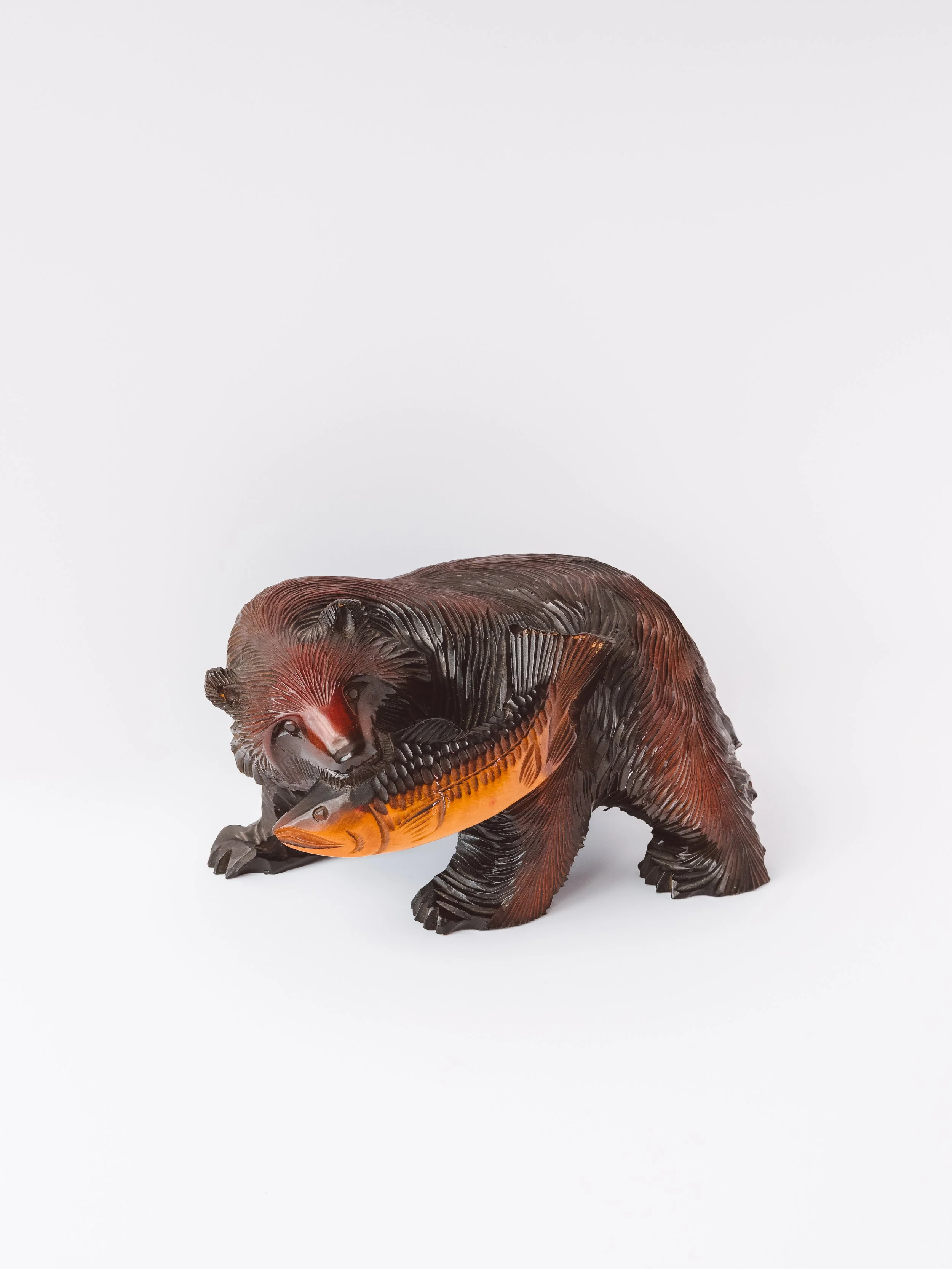 Image 1 of 9
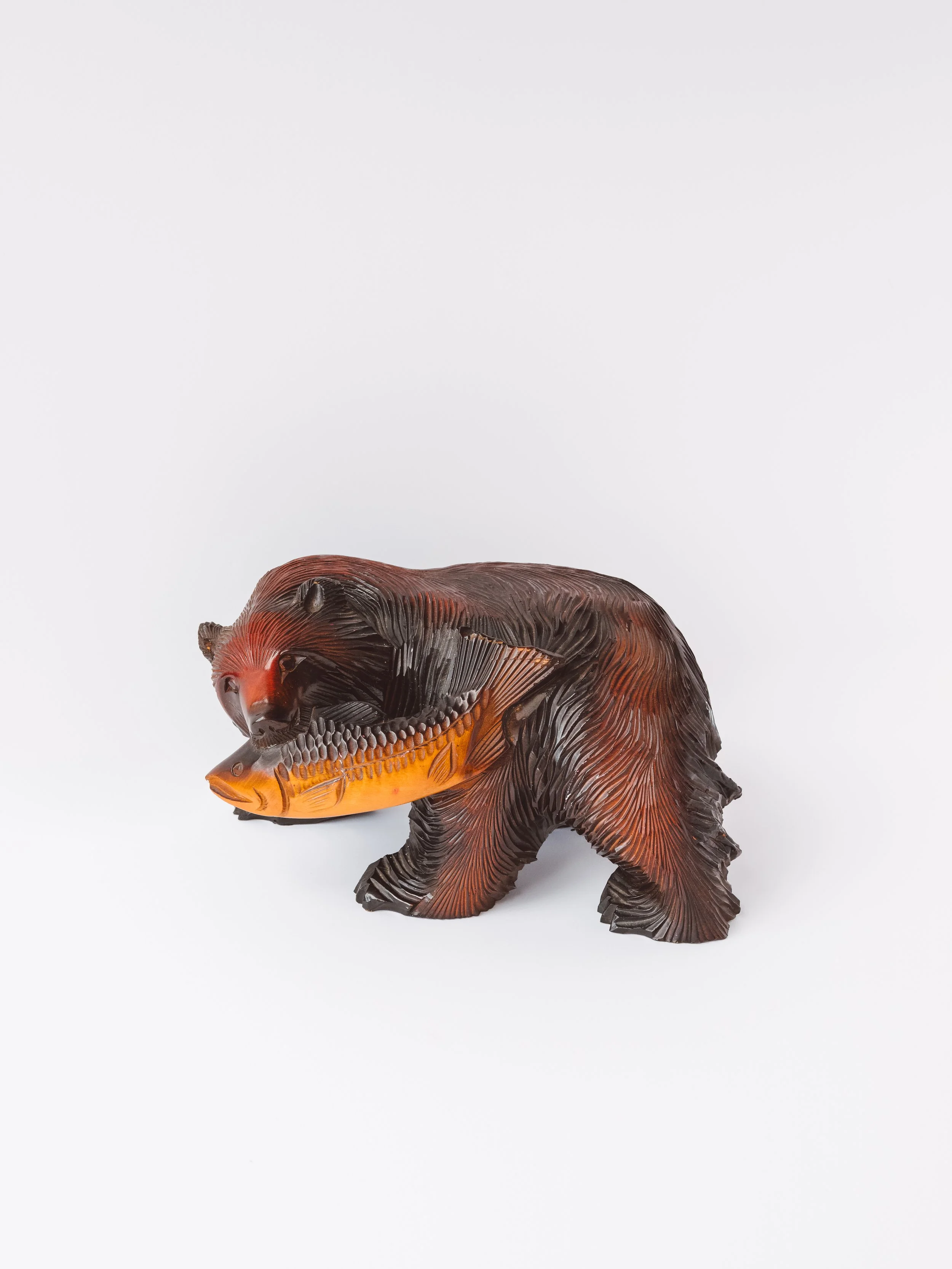 Image 2 of 9
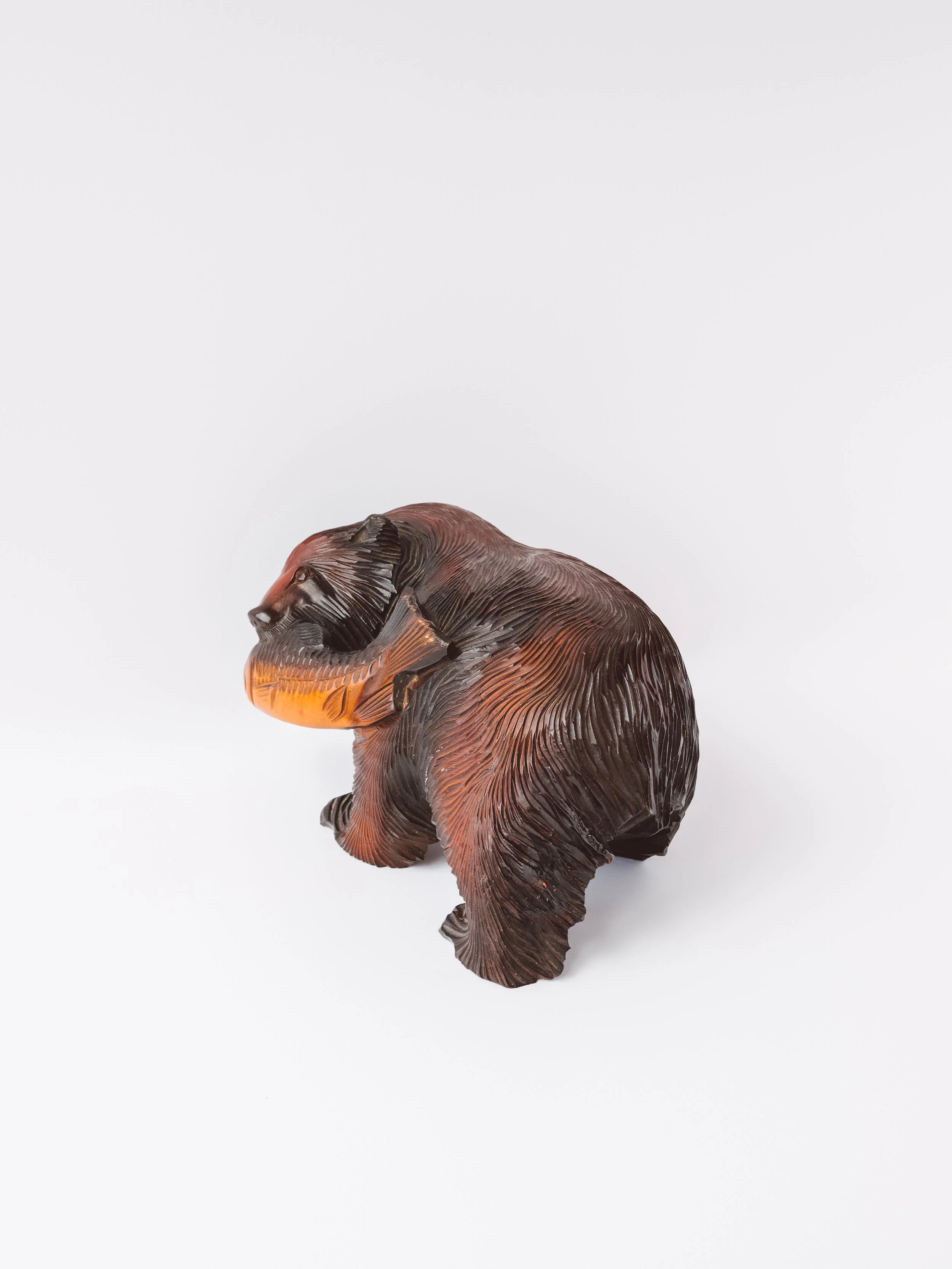 Image 3 of 9
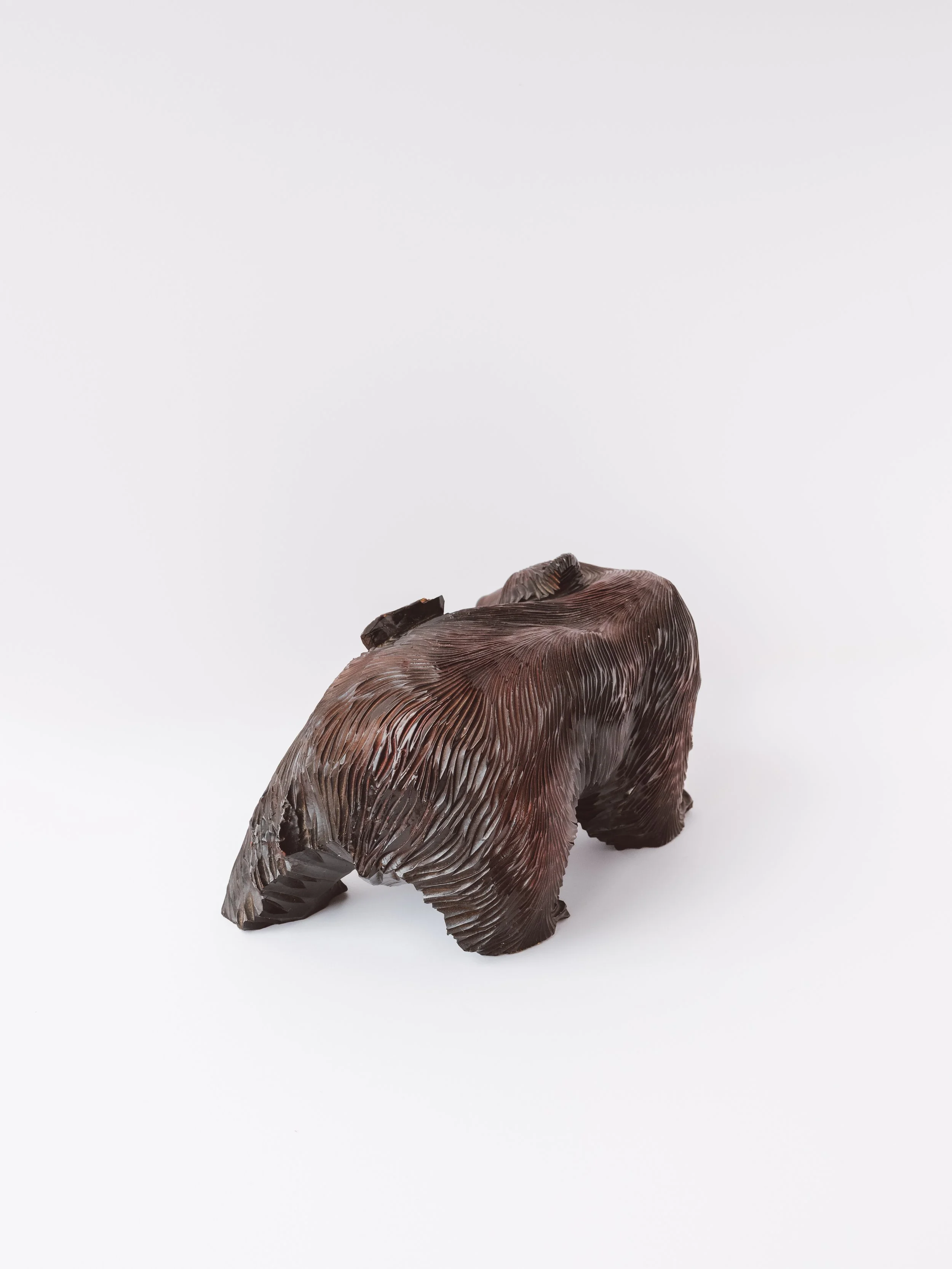 Image 4 of 9
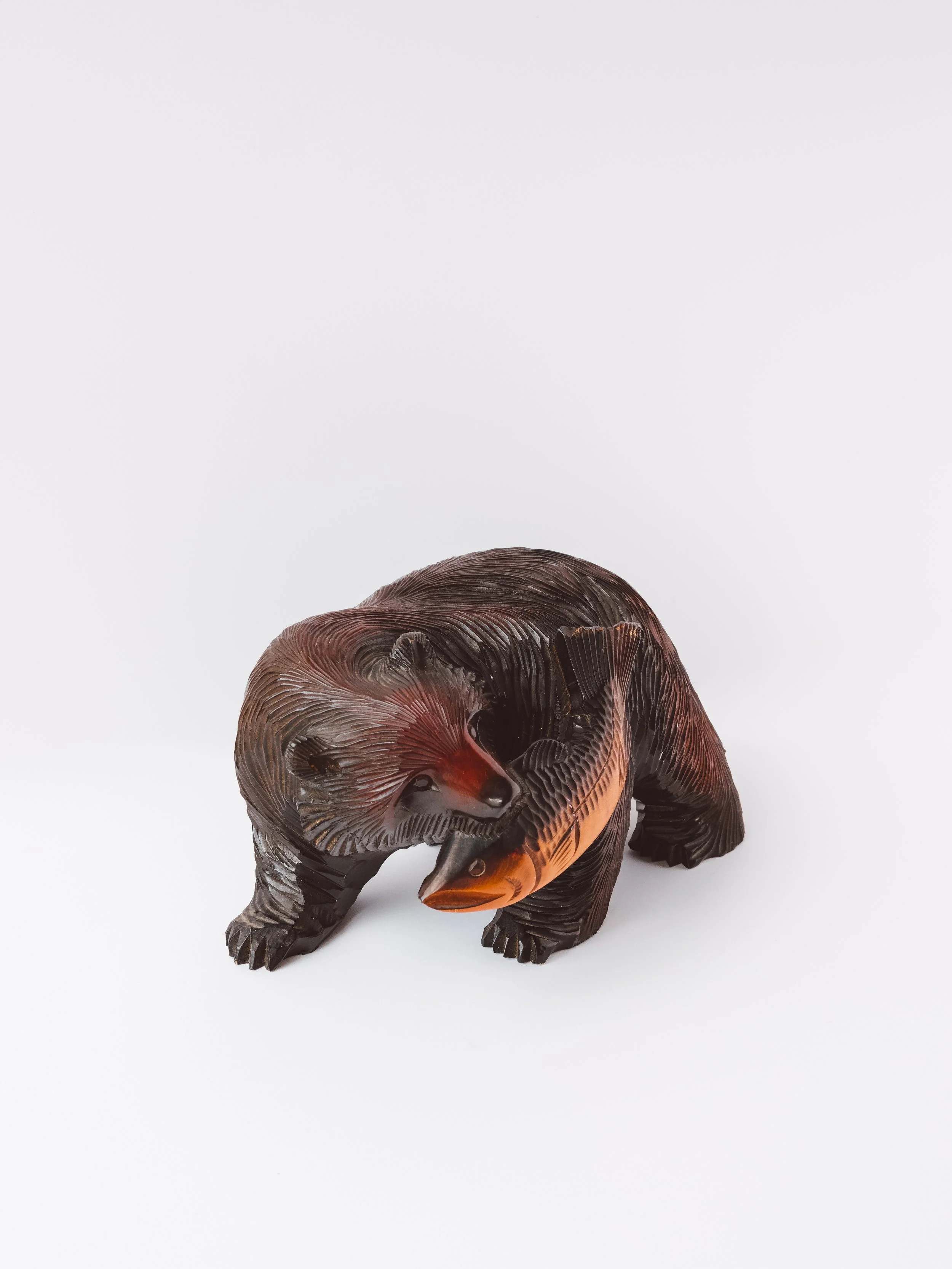 Image 5 of 9
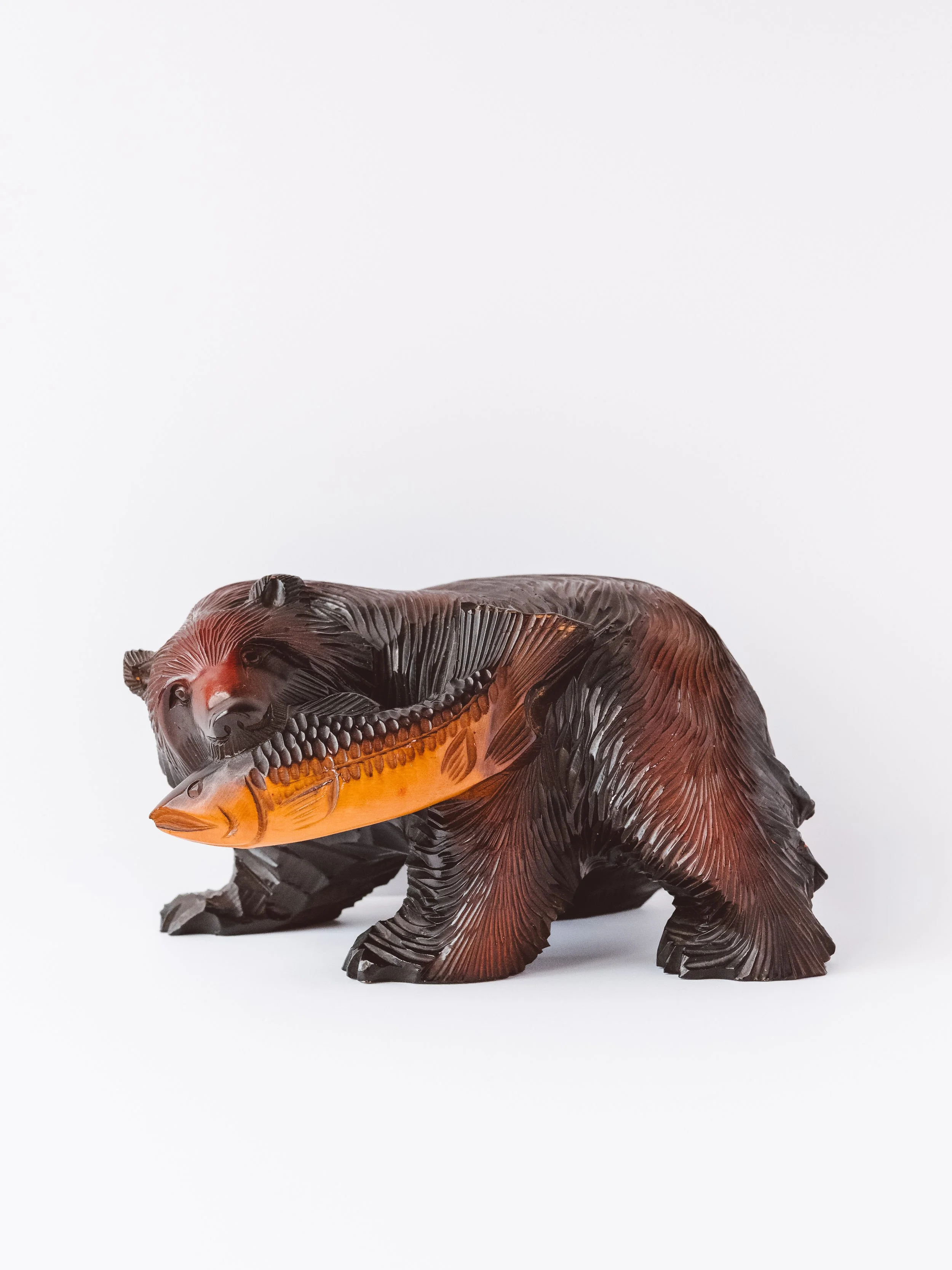 Image 6 of 9
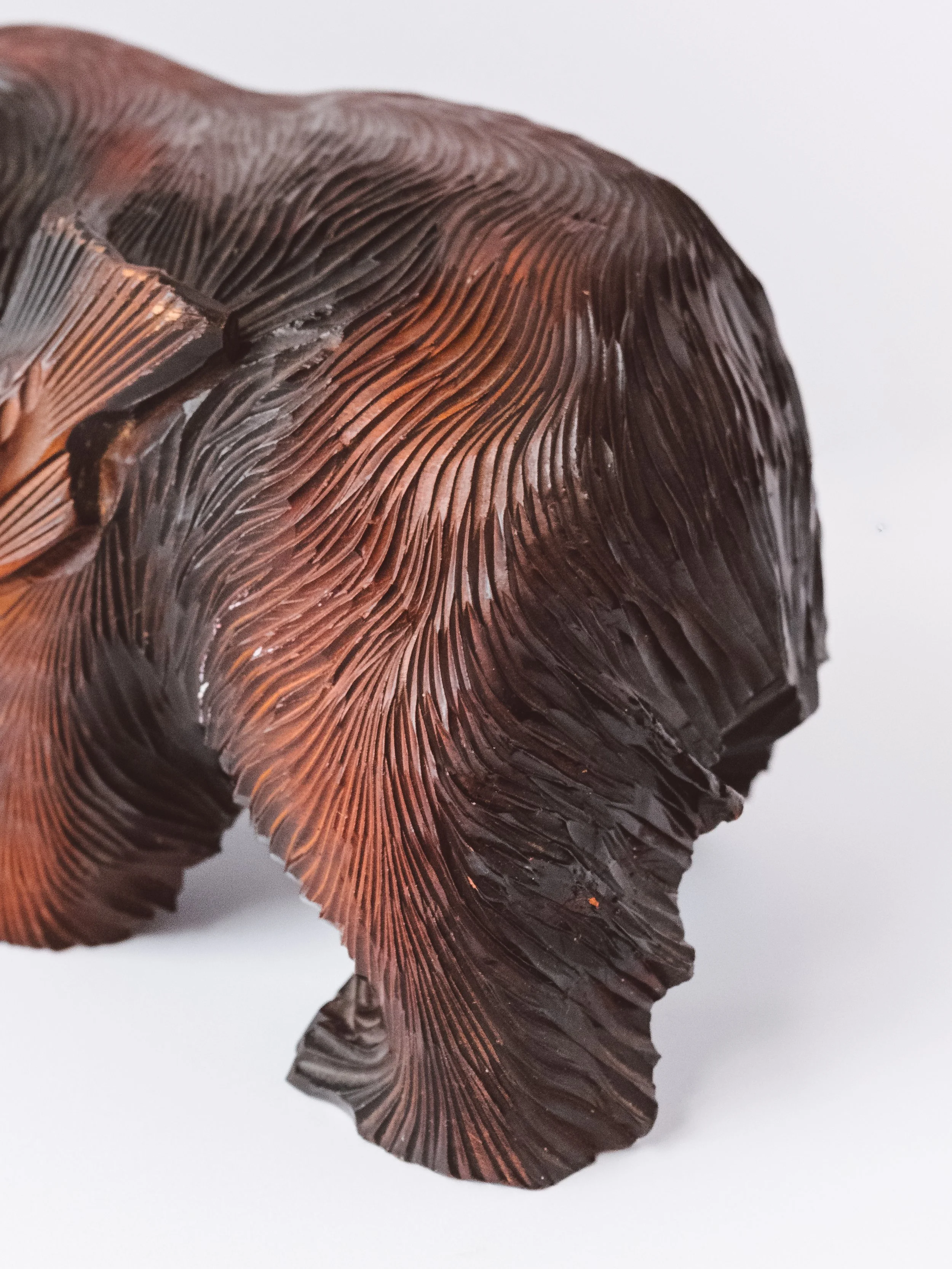 Image 7 of 9
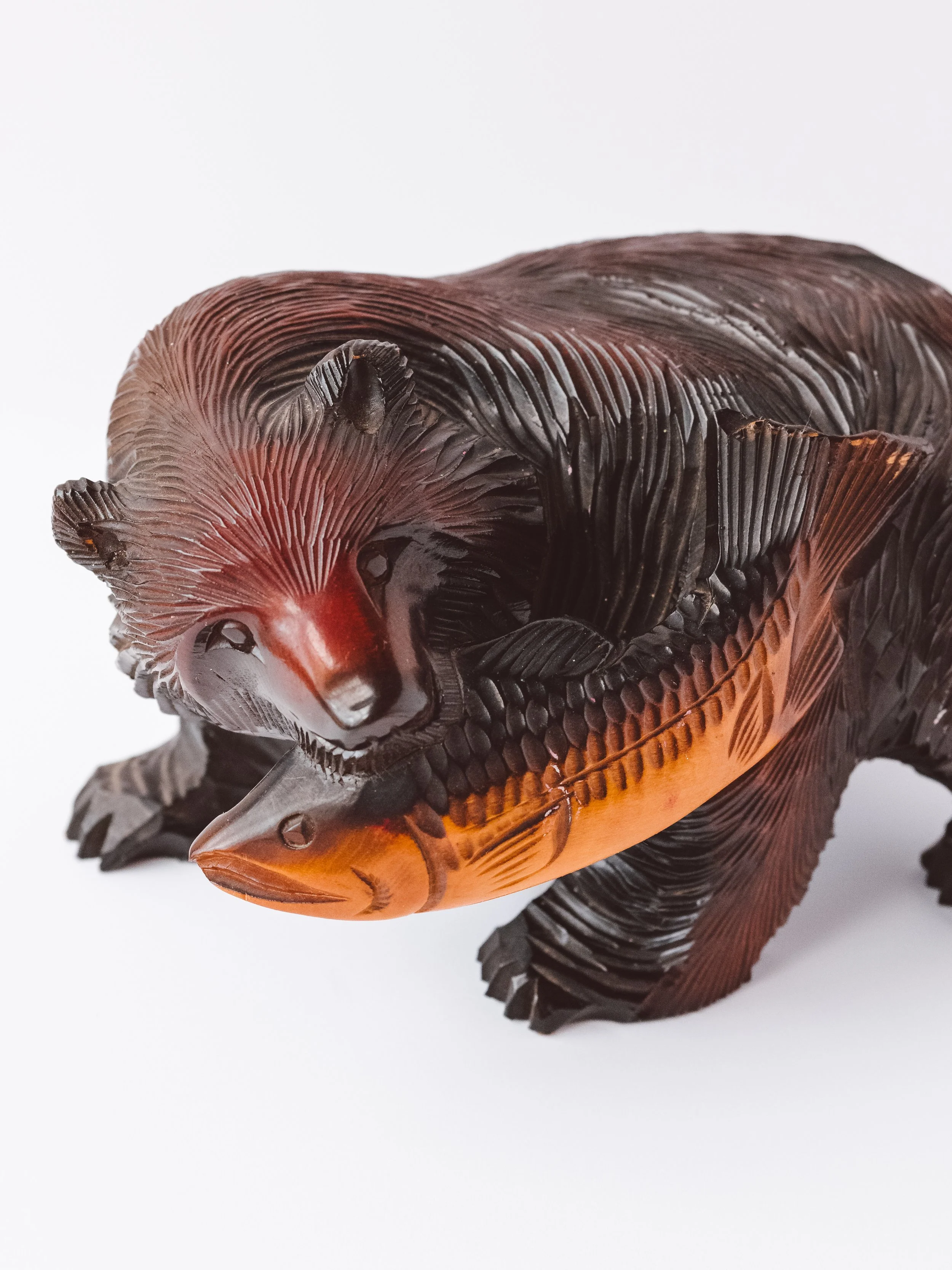 Image 8 of 9
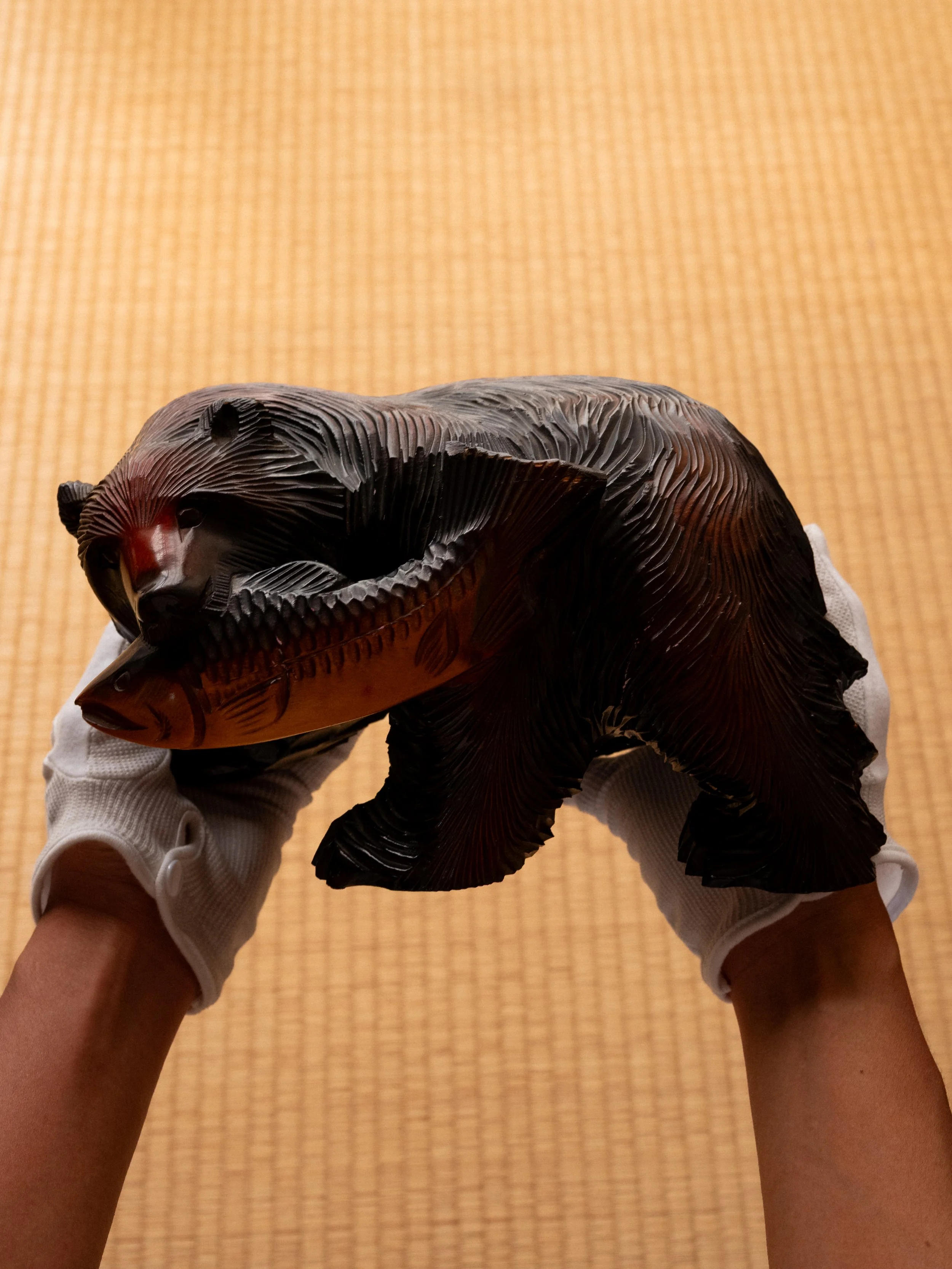 Image 9 of 9