【 The Concept 】
Two rabbits sit up in the same pose on either side of a mortar, working together with a pestle. They mirror one another — both upright, both intent — and the difference is only in the ears: the one gripping the raised pestle holds its ears straight up, alert to the work, while its partner — holding up a single koban, a gold coin, in its paws — has its ears tipped over to one side, a softer, easier note beside the pounder's attention. But look at what fills the mortar and spills around its foot: not rice-cake, but koban — the oval gold coins of old Japan — heaped past the brim and spilling over the rim of the mortar, tumbling down into a drift of coins around its foot: wealth so plentiful it overflows the very vessel meant to hold it. It is a play on the moon-rabbit, the creature the old stories set forever pounding mochi on the face of the full moon, here turned into a charm for wealth: these rabbits pound out not rice but money, an image of riches made and never running out. As a pair the scene gathers still more meaning: cooperation, partnership, a household working as one — which is why two rabbits together are given for weddings and new homes. And the rabbit is a lucky creature all over: it leaps only forward (advancement), it is famously fertile (a thriving family), its long ears rake in good fortune, and it draws down tsuki — the moon, and the luck the same word means. Everything here points one way: prosperity, coming in and multiplying.
【 The Function 】
A substantial ceramic ornament with real weight and presence. Wider than it is tall, it settles firmly on a shelf, a sideboard, an entrance console, or a low table, and rewards viewing from either side — the two animals lean toward each other, so the piece draws the eye into the space between them. It suits the autumn moon-viewing season and the New Year especially, but it is warm and companionable enough to keep out all year. Set it where its pair of faces can be seen turning toward one another.
【 The Texture 】
Rustic Japanese stoneware in a two-tone glaze. Across the upper bodies runs a glossy amber — warm caramel shading to olive — the kind of rich, translucent glaze that pools darker in every incised line, so the finely combed fur of the backs and faces reads with real depth. Lower down, the glaze deepens and darkens to a scorched red-brown, almost chocolate at the base, matte and earthy where the amber above is bright — the look of old wood-fired stoneware, its foot buried in ash. The rabbits' fur is cut in fine lines all over, the eyes touched black and shining, and the mortar between them and the ground at their feet are heaped with oval koban — gold coins piled up in glazed relief. Heavy in the hand, glassy where the light lands, and grounded by that dark, earthen base.
【 Presence 】
Warm, companionable, and quietly cheerful. Where a single figure simply sits, these two are caught mid-task and mid-conversation — a small, absorbing scene of two creatures busy together — and a viewer reads the partnership into them at once. The glossy amber and the deep earthen brown give it the substance and warmth of good old stoneware rather than anything slick, and the subject keeps it gentle and good-humoured. It brings a room the coziness of company and the soft luck of the moon-rabbit — a piece that wishes a household teamwork, long life, and good fortune, and simply looks glad to be at work.
Sourced from a private collection in Japan.
【 The Concept 】
Two rabbits sit up in the same pose on either side of a mortar, working together with a pestle. They mirror one another — both upright, both intent — and the difference is only in the ears: the one gripping the raised pestle holds its ears straight up, alert to the work, while its partner — holding up a single koban, a gold coin, in its paws — has its ears tipped over to one side, a softer, easier note beside the pounder's attention. But look at what fills the mortar and spills around its foot: not rice-cake, but koban — the oval gold coins of old Japan — heaped past the brim and spilling over the rim of the mortar, tumbling down into a drift of coins around its foot: wealth so plentiful it overflows the very vessel meant to hold it. It is a play on the moon-rabbit, the creature the old stories set forever pounding mochi on the face of the full moon, here turned into a charm for wealth: these rabbits pound out not rice but money, an image of riches made and never running out. As a pair the scene gathers still more meaning: cooperation, partnership, a household working as one — which is why two rabbits together are given for weddings and new homes. And the rabbit is a lucky creature all over: it leaps only forward (advancement), it is famously fertile (a thriving family), its long ears rake in good fortune, and it draws down tsuki — the moon, and the luck the same word means. Everything here points one way: prosperity, coming in and multiplying.
【 The Function 】
A substantial ceramic ornament with real weight and presence. Wider than it is tall, it settles firmly on a shelf, a sideboard, an entrance console, or a low table, and rewards viewing from either side — the two animals lean toward each other, so the piece draws the eye into the space between them. It suits the autumn moon-viewing season and the New Year especially, but it is warm and companionable enough to keep out all year. Set it where its pair of faces can be seen turning toward one another.
【 The Texture 】
Rustic Japanese stoneware in a two-tone glaze. Across the upper bodies runs a glossy amber — warm caramel shading to olive — the kind of rich, translucent glaze that pools darker in every incised line, so the finely combed fur of the backs and faces reads with real depth. Lower down, the glaze deepens and darkens to a scorched red-brown, almost chocolate at the base, matte and earthy where the amber above is bright — the look of old wood-fired stoneware, its foot buried in ash. The rabbits' fur is cut in fine lines all over, the eyes touched black and shining, and the mortar between them and the ground at their feet are heaped with oval koban — gold coins piled up in glazed relief. Heavy in the hand, glassy where the light lands, and grounded by that dark, earthen base.
【 Presence 】
Warm, companionable, and quietly cheerful. Where a single figure simply sits, these two are caught mid-task and mid-conversation — a small, absorbing scene of two creatures busy together — and a viewer reads the partnership into them at once. The glossy amber and the deep earthen brown give it the substance and warmth of good old stoneware rather than anything slick, and the subject keeps it gentle and good-humoured. It brings a room the coziness of company and the soft luck of the moon-rabbit — a piece that wishes a household teamwork, long life, and good fortune, and simply looks glad to be at work.
Sourced from a private collection in Japan.


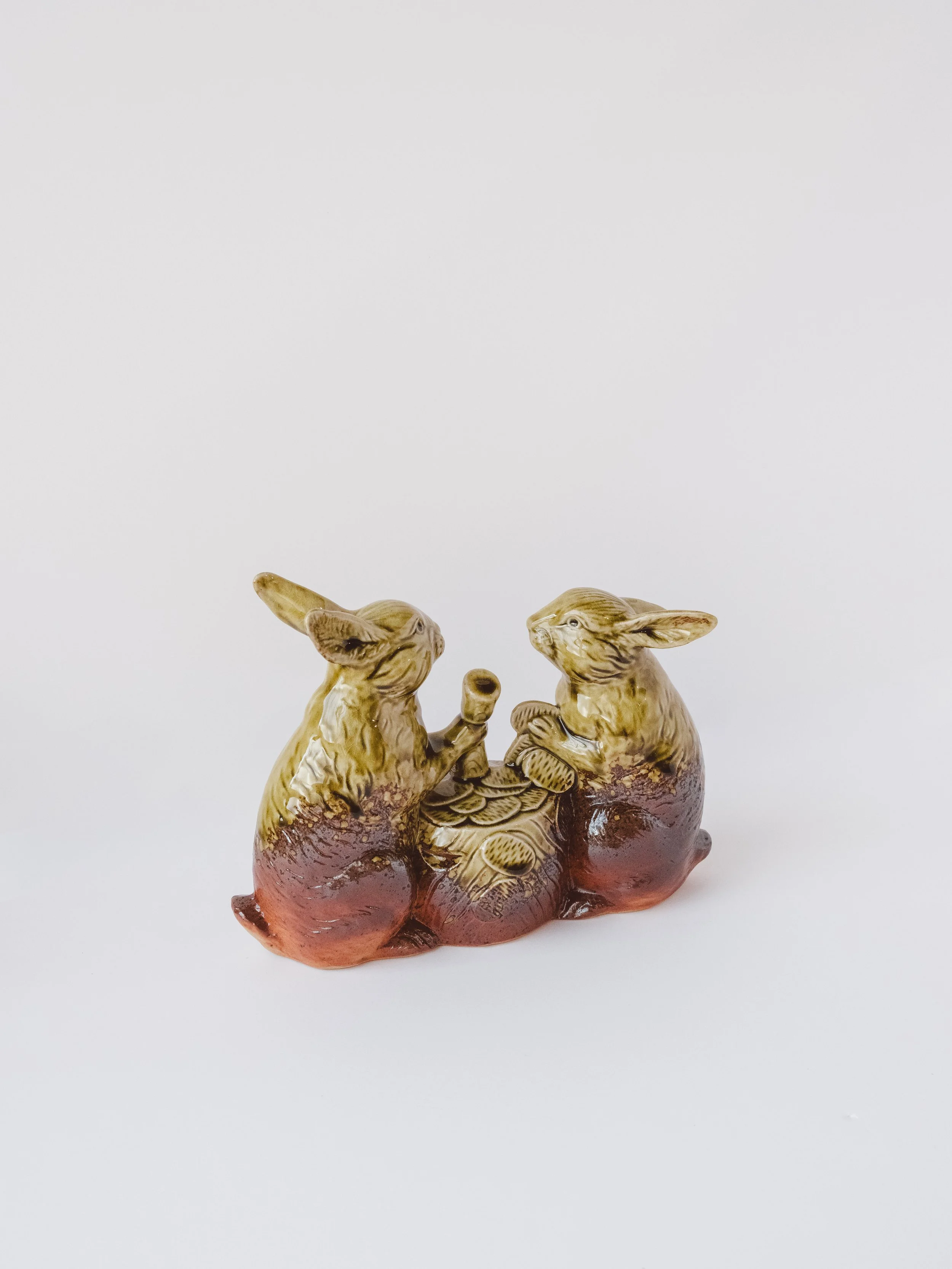 Image 1 of 9
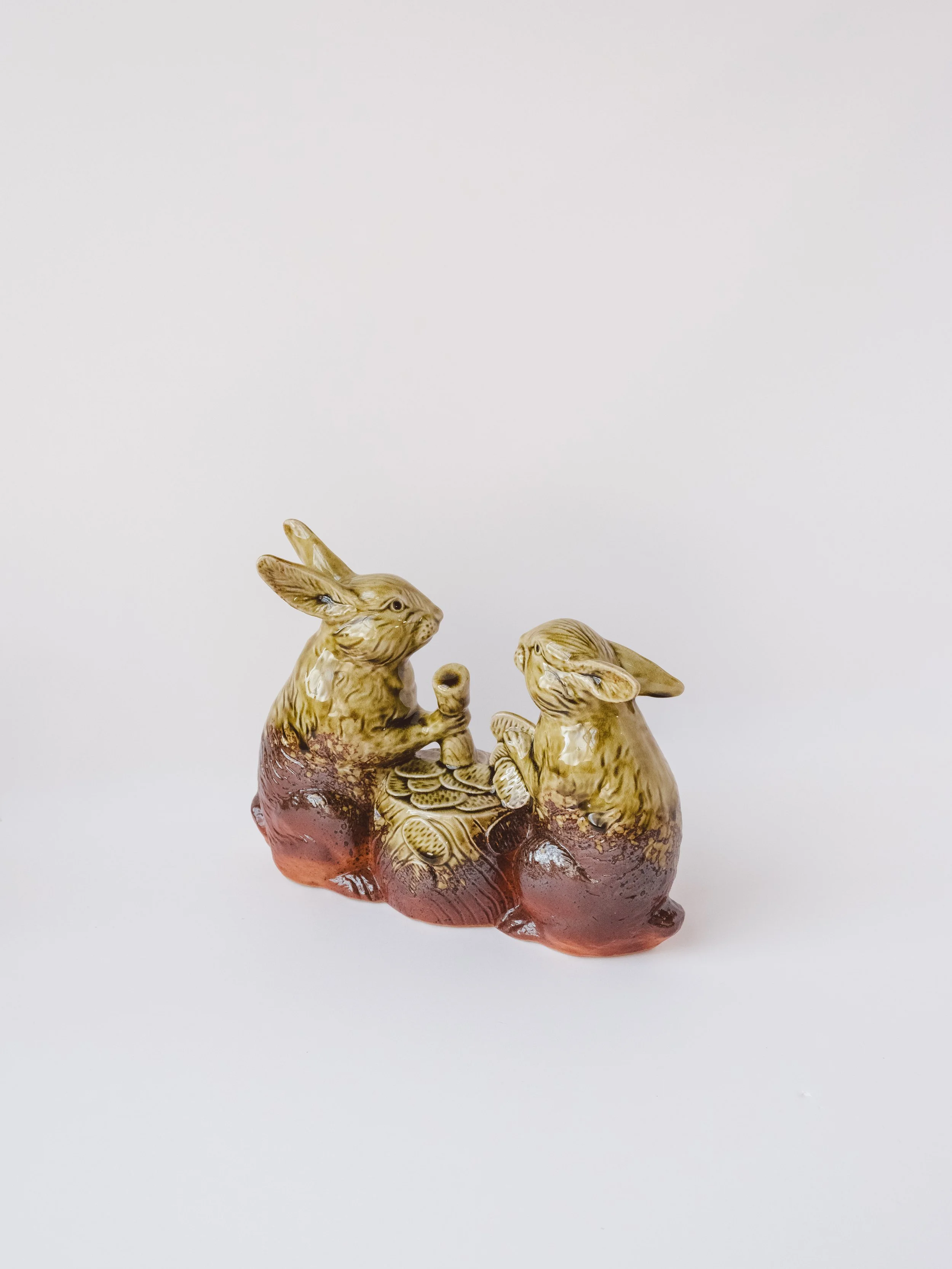 Image 2 of 9
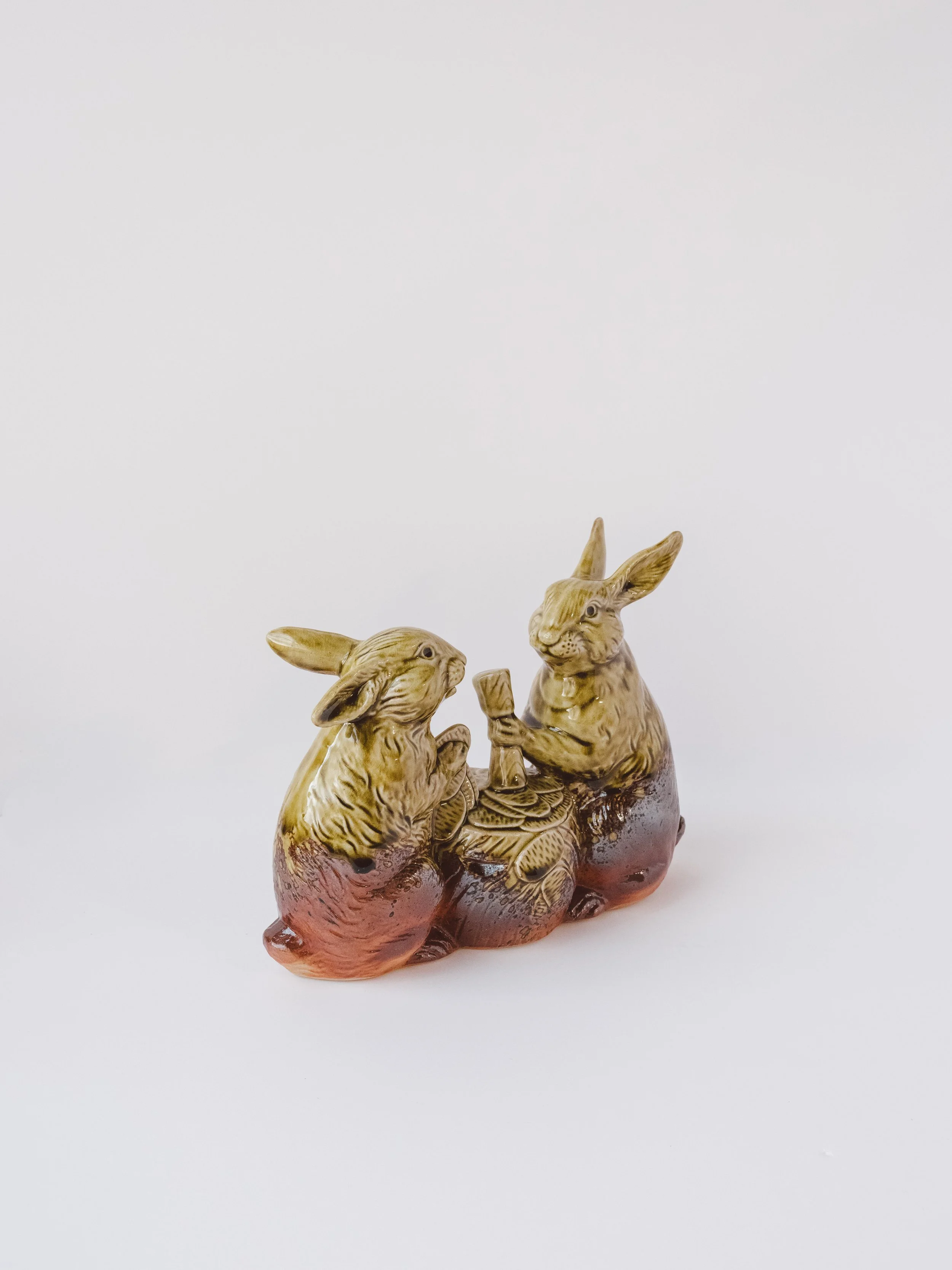 Image 3 of 9
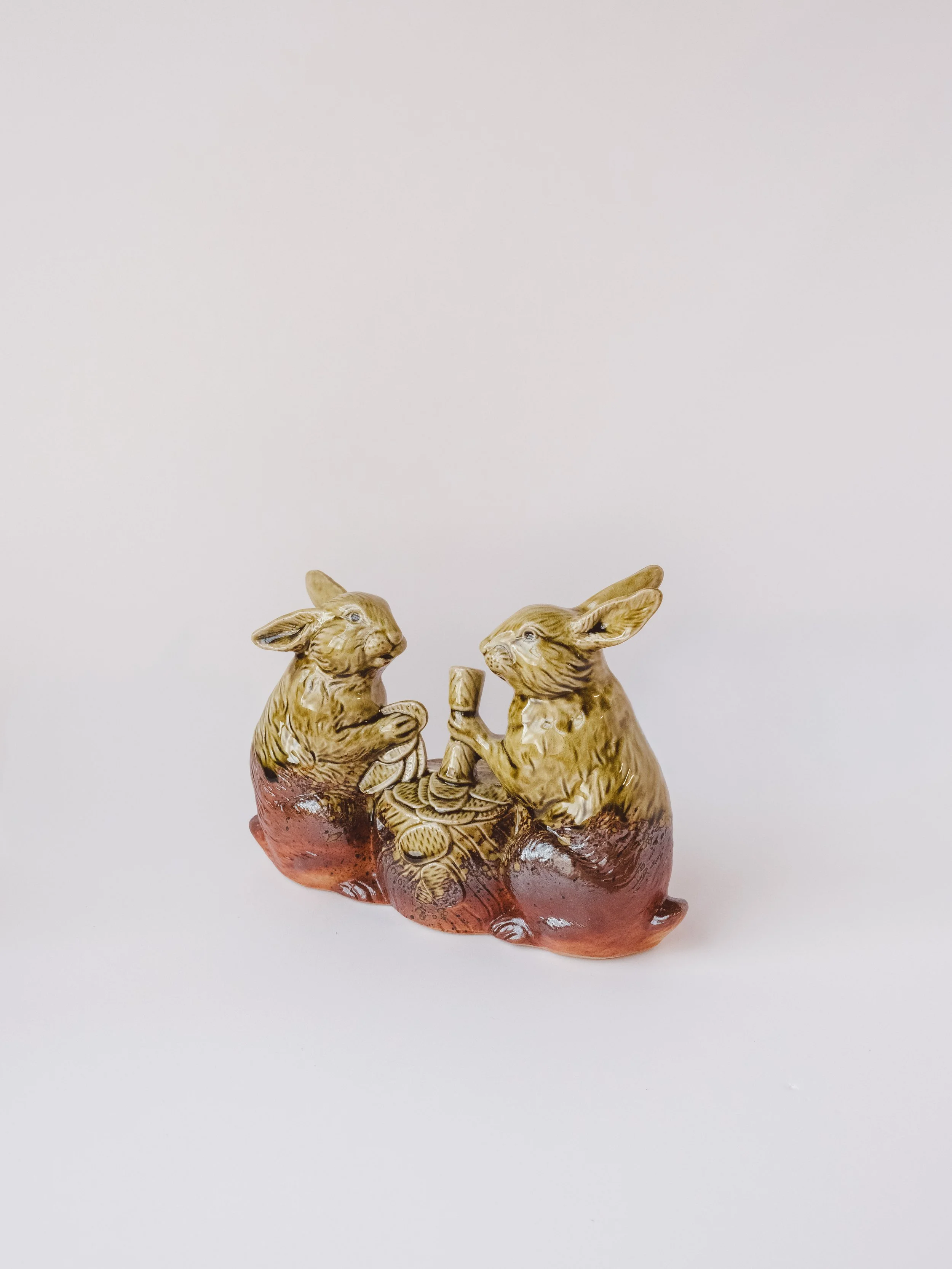 Image 4 of 9
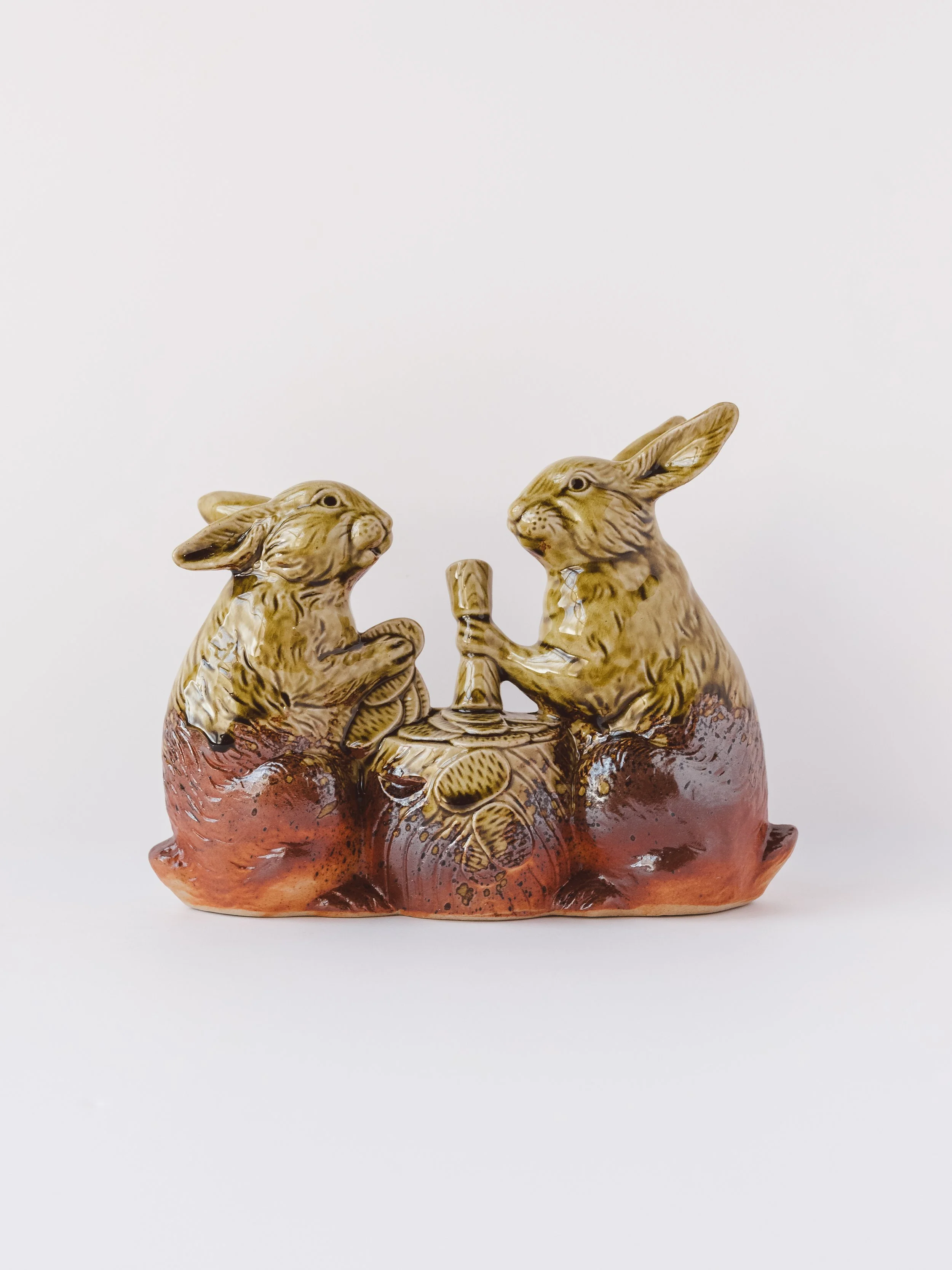 Image 5 of 9
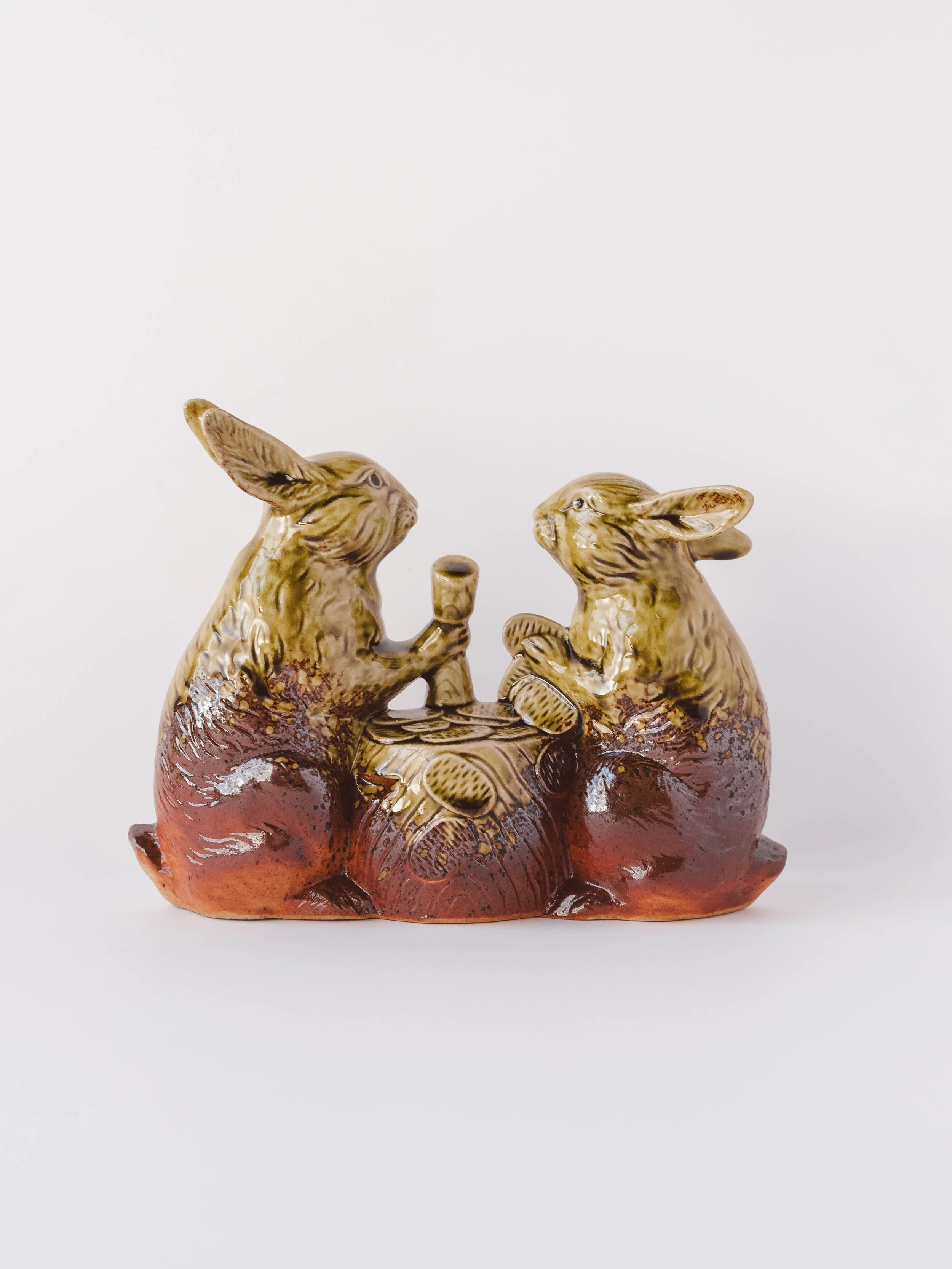 Image 6 of 9
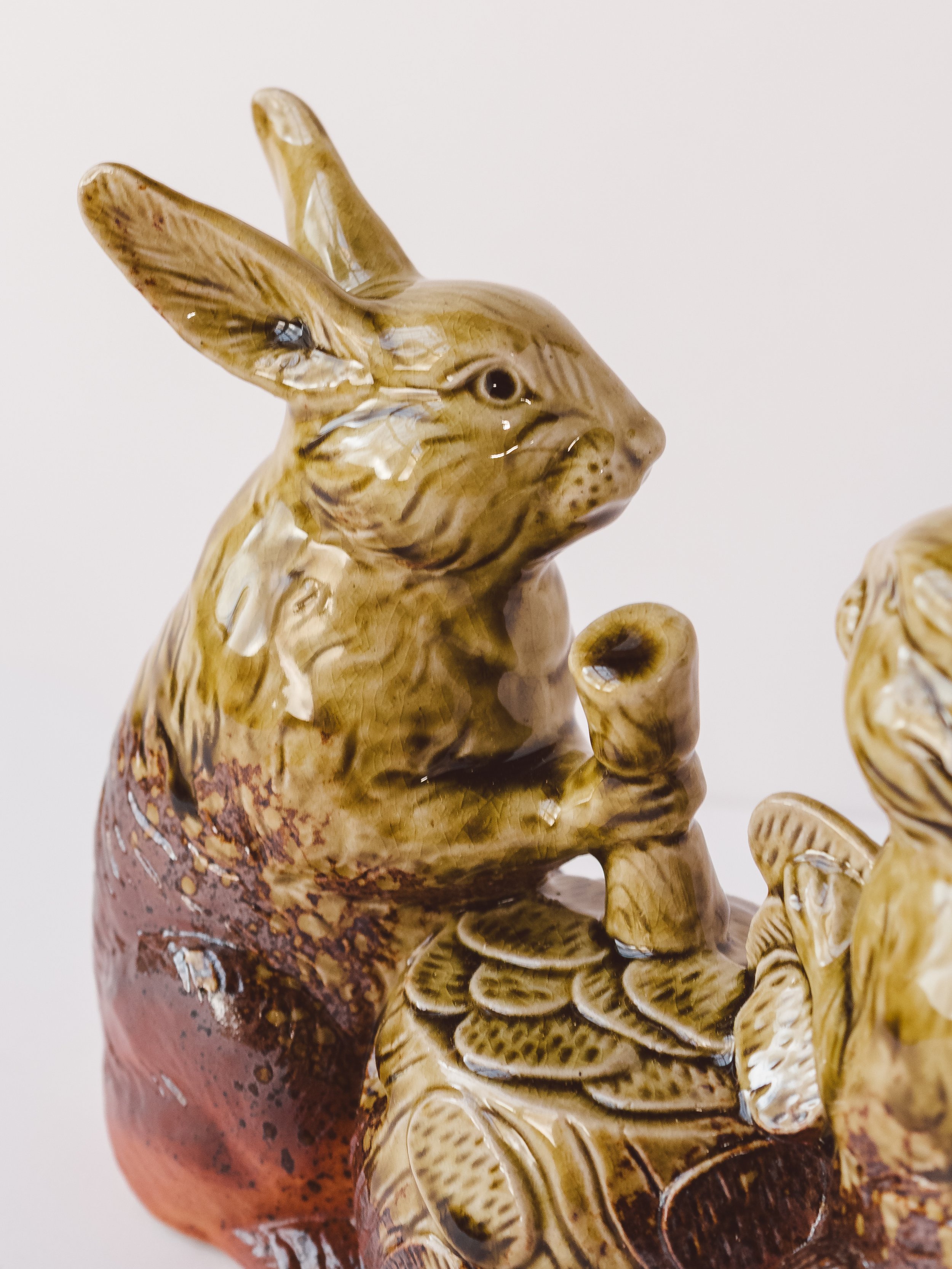 Image 7 of 9
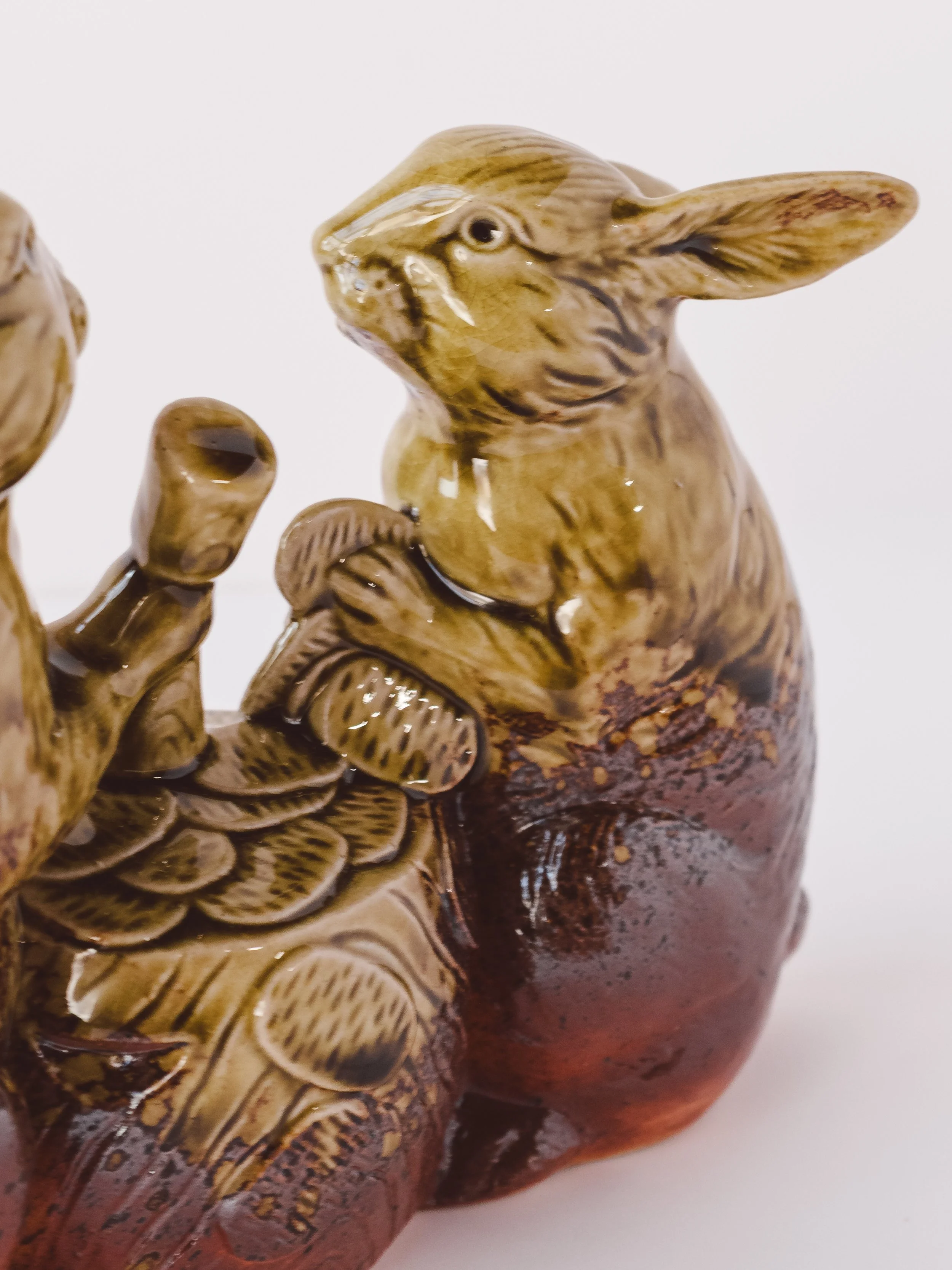 Image 8 of 9
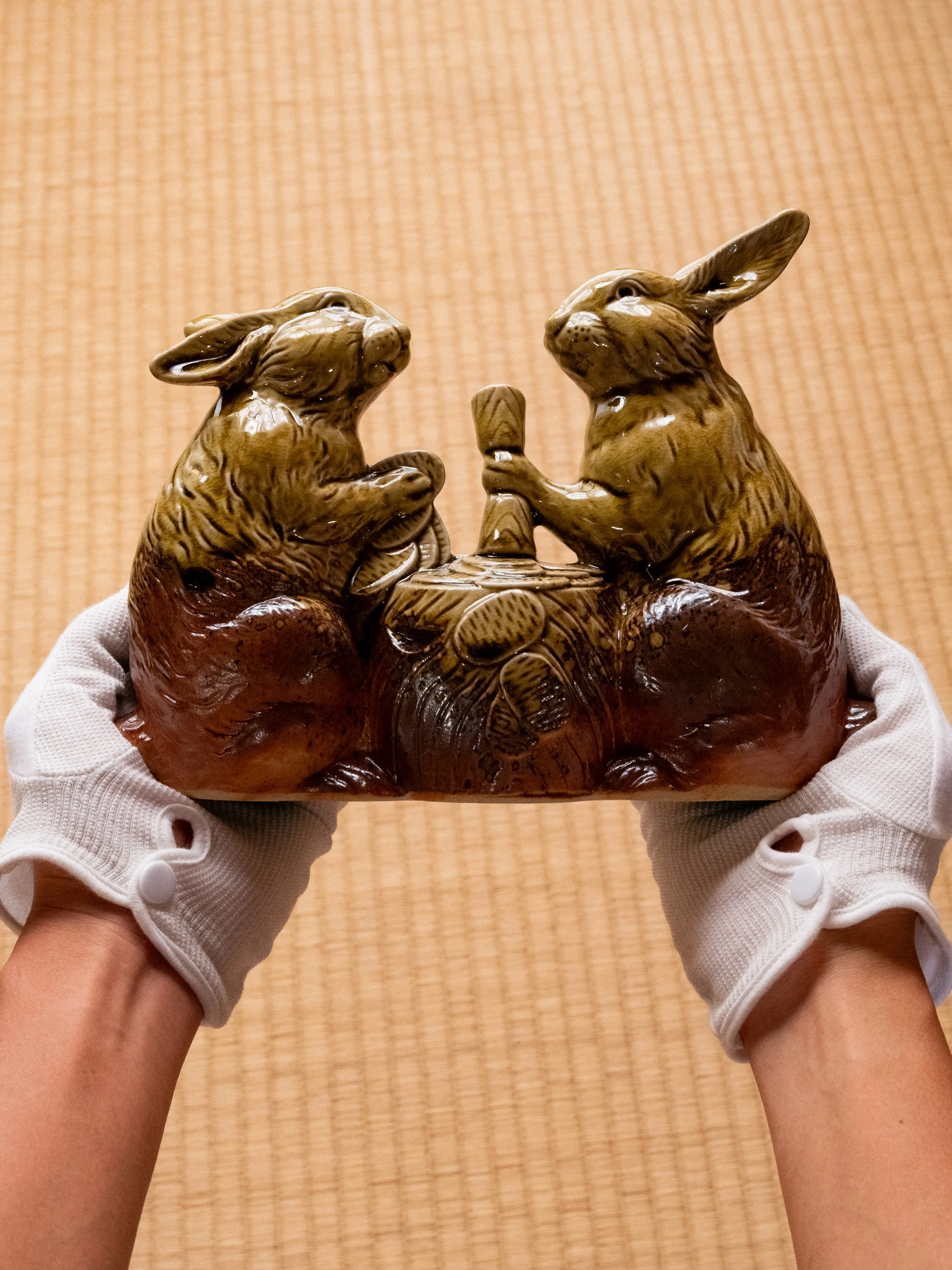 Image 9 of 9