【 The Concept 】
A small round lidded box of hand-hammered copper from Hiroshima, its lid raised with the image of the most famous gate in Japan: the great floating torii of Itsukushima Shrine on Miyajima. The whole surface is covered in hammer marks, small facets that catch the light like scales or ripples on water, and the copper has been coloured a deep, warm reddish brown. On the lid, the torii stands in silvery metal: the sweeping top beam, the tablet at its centre, the crossbeam, and the small roofed posts that brace its legs. Turn the lid over and you can see the gate pressed out from behind, because the design was hammered up through the copper itself. Lift it, and a smooth inner rim holds the lid snugly in place. It is a kogo, a small lidded case of the kind used in Japan for incense, and today just as good for rings, small keepsakes or a few pills. The base bears the stamped mark of its Hiroshima workshop.
【 The Gate That Stands in the Sea 】
Itsukushima Shrine sits on Miyajima, an island in the Seto Inland Sea so sacred that the island itself was long worshipped as a god. The shrine's buildings are raised on posts over the tidal flats, and its great vermilion torii stands about 200 metres out in the water. At high tide the gate, the shrine and its long corridors seem to float on the sea; at low tide you can walk out across the sand and touch the torii's legs. The view has been counted among the Three Views of Japan for centuries, and the shrine was inscribed as a UNESCO World Heritage Site in 1996.
The shrine took its present form in the twelfth century under Taira no Kiyomori, the most powerful warrior of his age, who made Itsukushima the guardian shrine of his clan. A torii marks the boundary between the ordinary world and the sacred one. To pass through it is to step into the presence of the gods, and at Miyajima that threshold stands in the open sea.
【 A Torii That Stands by Its Own Weight 】
The great torii is about 16 metres tall, and its two main pillars are made from whole trunks of camphor trees. The most surprising thing about it is that it is not buried in the seabed at all. It stands by its own weight. The top beam is built as a hollow box and filled with stones, adding several tons to hold the gate steady against wind and waves, and the four smaller roofed posts brace it from the sides. The present gate was raised in 1875. After a major restoration that kept it wrapped in scaffolding from 2019 to 2022, it stands once again in the sea, freshly painted in vermilion.
【 Dōchū: The Copper Bug of Hiroshima 】
This box is an example of Hiroshima's hammered copperwork, known as dōchū (銅蟲), literally "copper bug." The name comes from a story. In 1619, when the Asano clan came to rule Hiroshima, they brought with them a copper craftsman named Sasaki Denbei. He worked so tirelessly, hammering from morning until night, that people said he was like a bug devoted to copper, and the name passed to his craft. The copper is hammered by hand into shape, smoked over burning rice straw to colour it, and then polished, so that the hammer marks shine against the deep brown. Under the Asano lords, dōchū was made into braziers, kettles, tea utensils and gifts, and it is still recognised today as a traditional craft of Hiroshima Prefecture.
【 What Owning This Piece Brings 】
・ A threshold to something sacred. A torii marks the line between the everyday and the holy. A small one on your desk or dressing table is a reminder to pause, and to treat what is inside with care.
・ Protection and good fortune. Shrines and torii are places of blessing and purification in Japan. A box carrying the image of Itsukushima's gate is a gentle charm for safety and good luck.
・ A keeper of small treasures. Its snug lid makes it a natural home for rings, earrings, a lock of hair, a folded note, or a little incense.
・ A memory of Miyajima. For anyone who has stood on the shore watching the torii in the tide, it brings that moment home; for anyone who has not, it is an invitation.
A fitting gift for a wedding or anniversary, for a traveller to Japan, for a lover of metalwork, or as a ring box with a story.
【 Stories of the Sacred Island 】
Miyajima has long been treated as a god in its own right, and old customs kept it pure. For centuries there were no births and no burials on the island: expectant mothers crossed to the mainland to give birth, and the dead were carried across the water. Even today there is no cemetery on Miyajima. Tame deer, regarded as messengers of the gods, wander freely through its streets.
And the island is also said to be the birthplace of the shamoji, the wooden rice paddle. A monk on Miyajima, the story goes, carved the first one, shaped like the lute of the goddess Benzaiten, and gave it to pilgrims as a charm. Because the word for scooping rice also means "to scoop up" victory and good fortune, soldiers and students still bring Miyajima rice paddles home for luck.
【 Where to Place It 】
On a dressing table or bedside table as a ring box; on a desk beside pens and keepsakes; on a tea shelf as an incense case; or on a shelf among other small metal and wooden objects. Place it where light falls across the lid: the hammer marks and the silvery torii come alive in raking light.
【 Care 】
Wipe with a soft, dry cloth. Avoid water, metal polish and abrasive cleaners, which would strip the coloured finish. The copper deepens gently with handling over the years. Store away from humidity.
【 Reading the Object 】
A round box and fitted lid in hand-hammered copper, reddish brown, covered all over in faceted hammer marks. On the lid, the great torii of Itsukushima in raised relief, finished in silvery metal: top beam with upswept ends, central tablet, crossbeam, main pillar and two small roofed bracing posts. The reverse of the lid shows the design pressed out from behind. The body has a smooth inner rim on which the lid sits; the interior is plain copper. A stamped workshop mark in an oval cartouche on the base.
【 Presence 】
Small, warm and quietly radiant. A gate to the sacred, held in the palm of your hand.
Archive Note: The number in the name (1875) marks the year the present great torii of Itsukushima Shrine was raised. NOT the date this piece was made.
Provenance Note: Sourced from a private household in Japan. A hand-hammered copper lidded box in the dōchū tradition of Hiroshima, with a raised torii design on the lid and a stamped workshop mark on the base. Attributed to the dōchū tradition rather than presented as the work of a named maker.


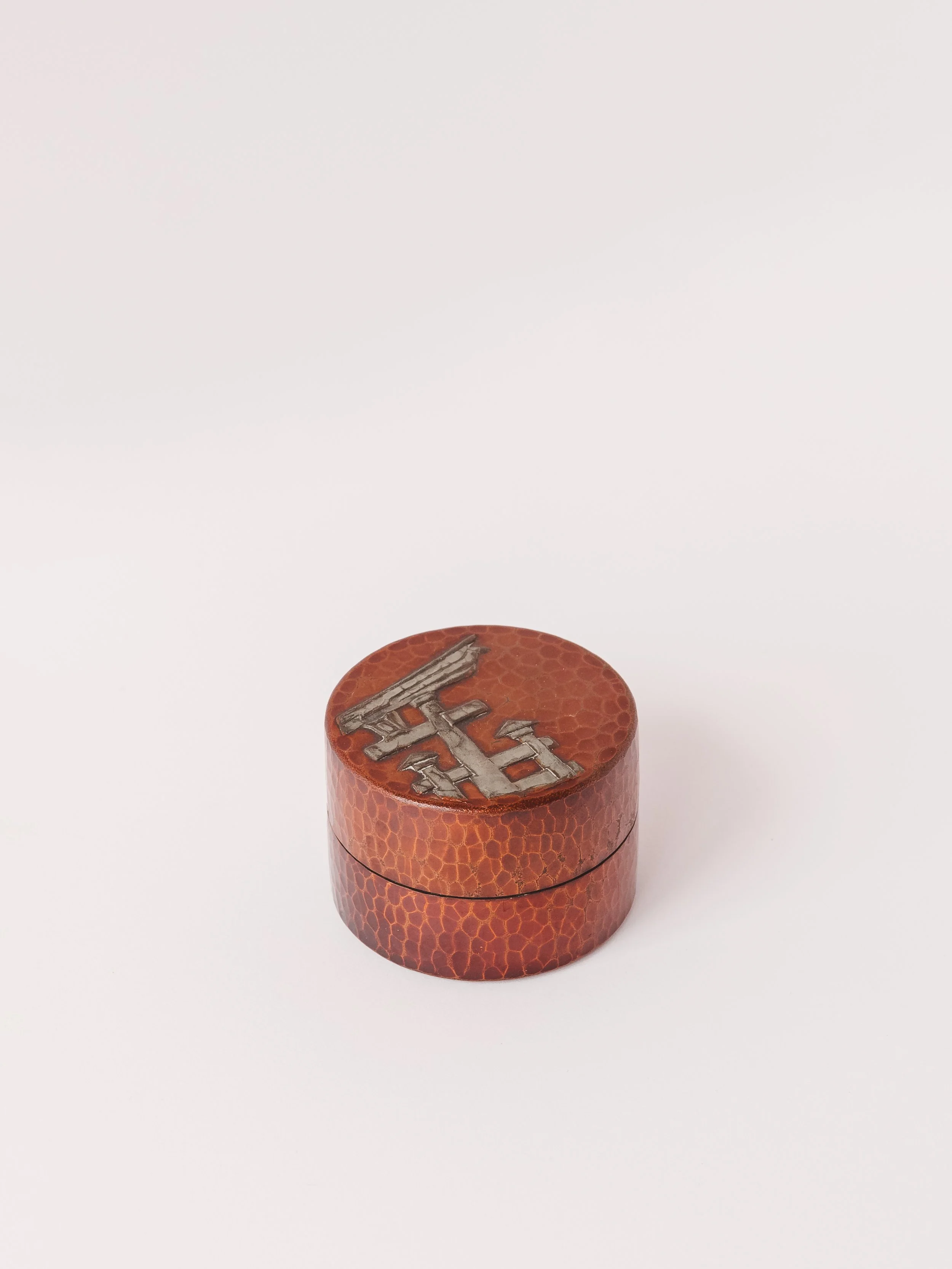 Image 1 of 8
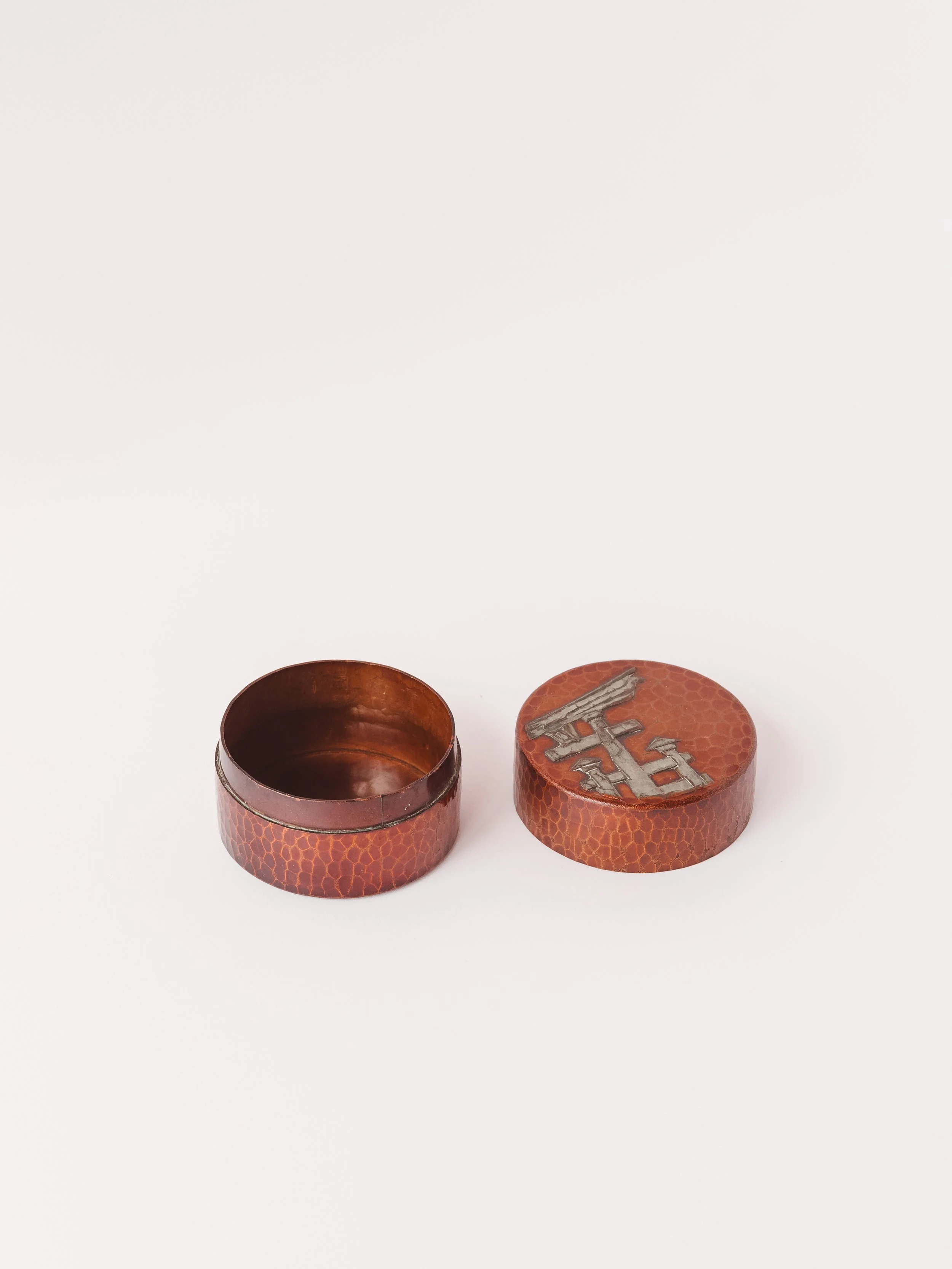 Image 2 of 8
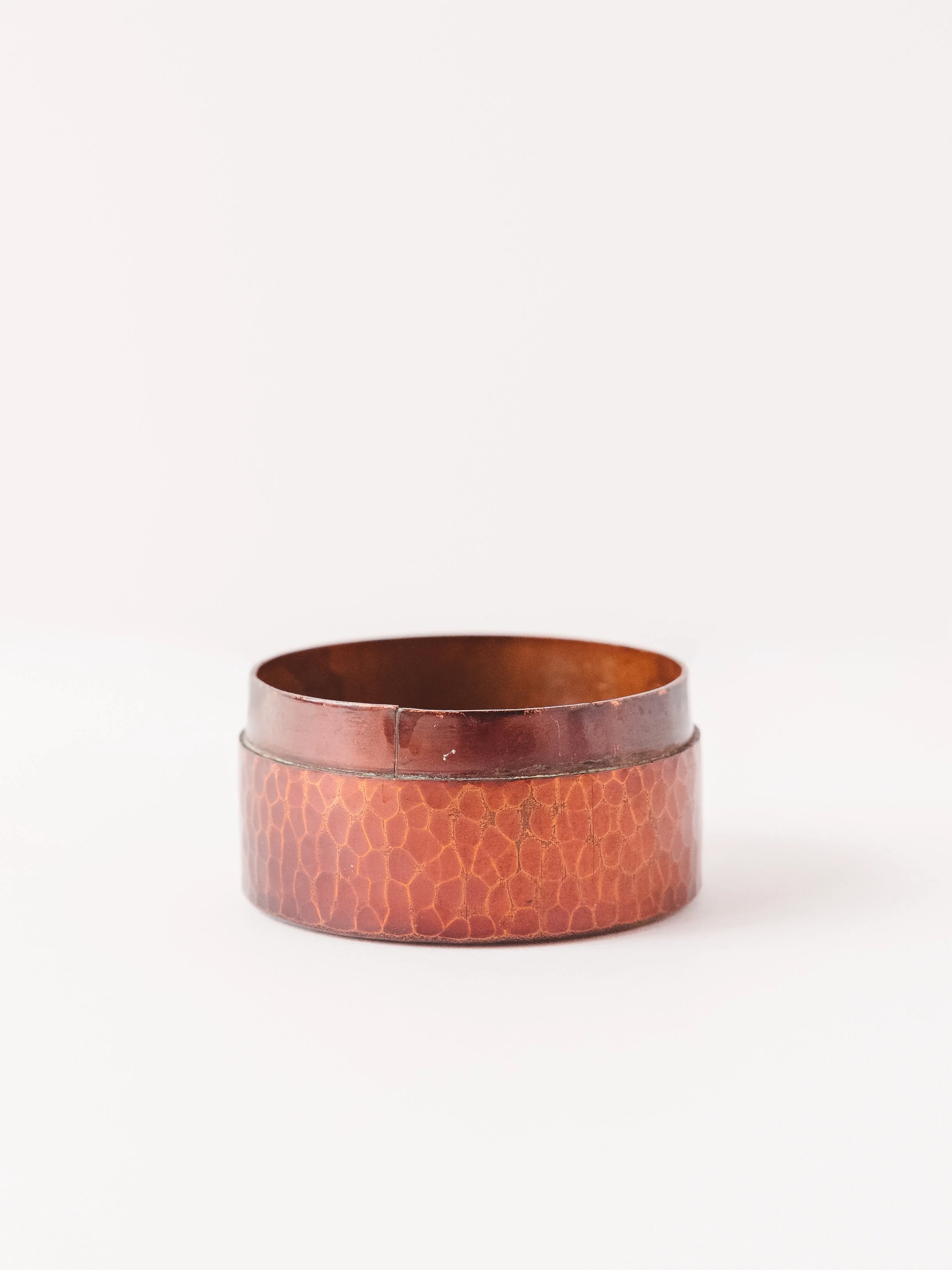 Image 3 of 8
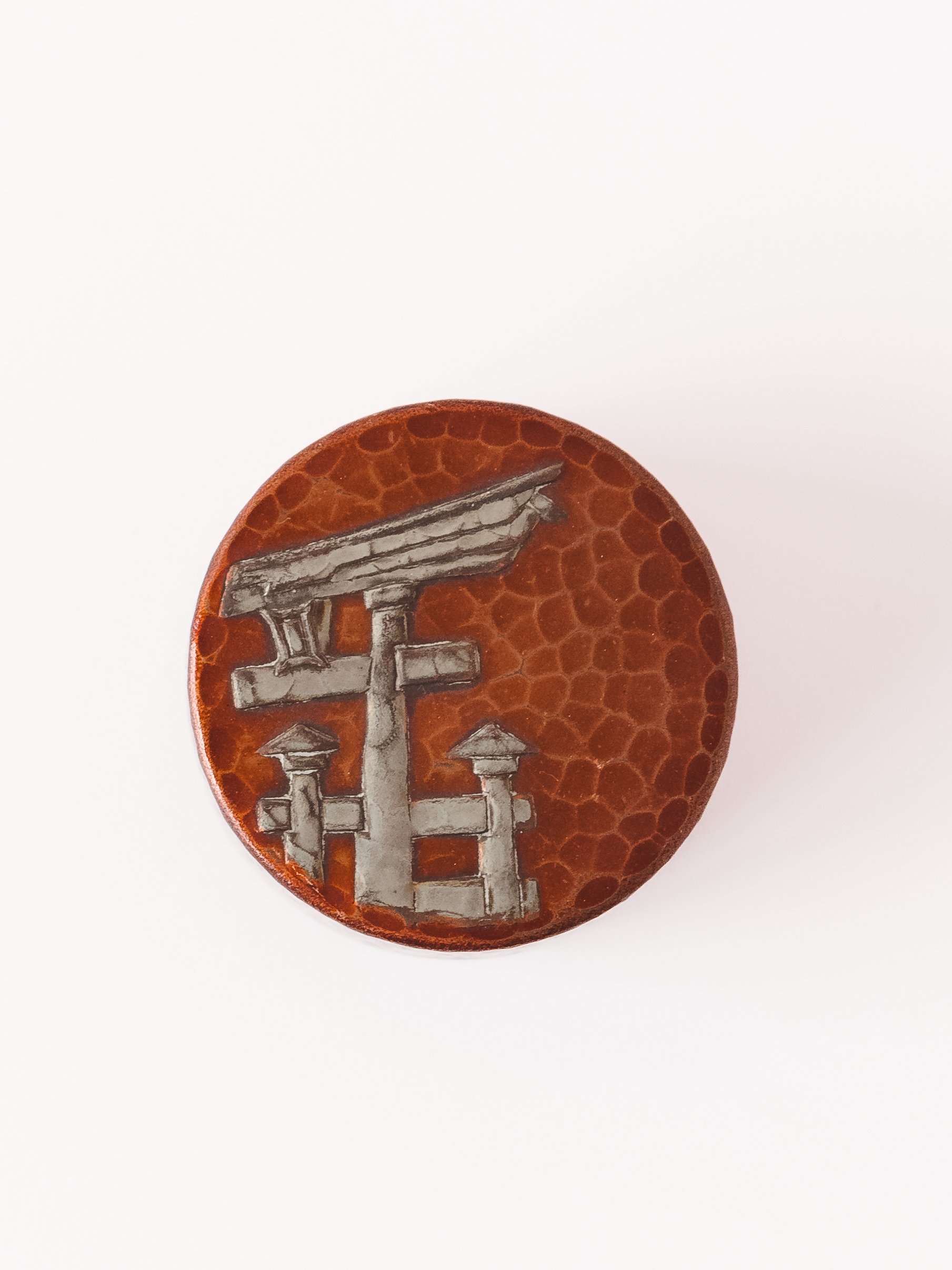 Image 4 of 8
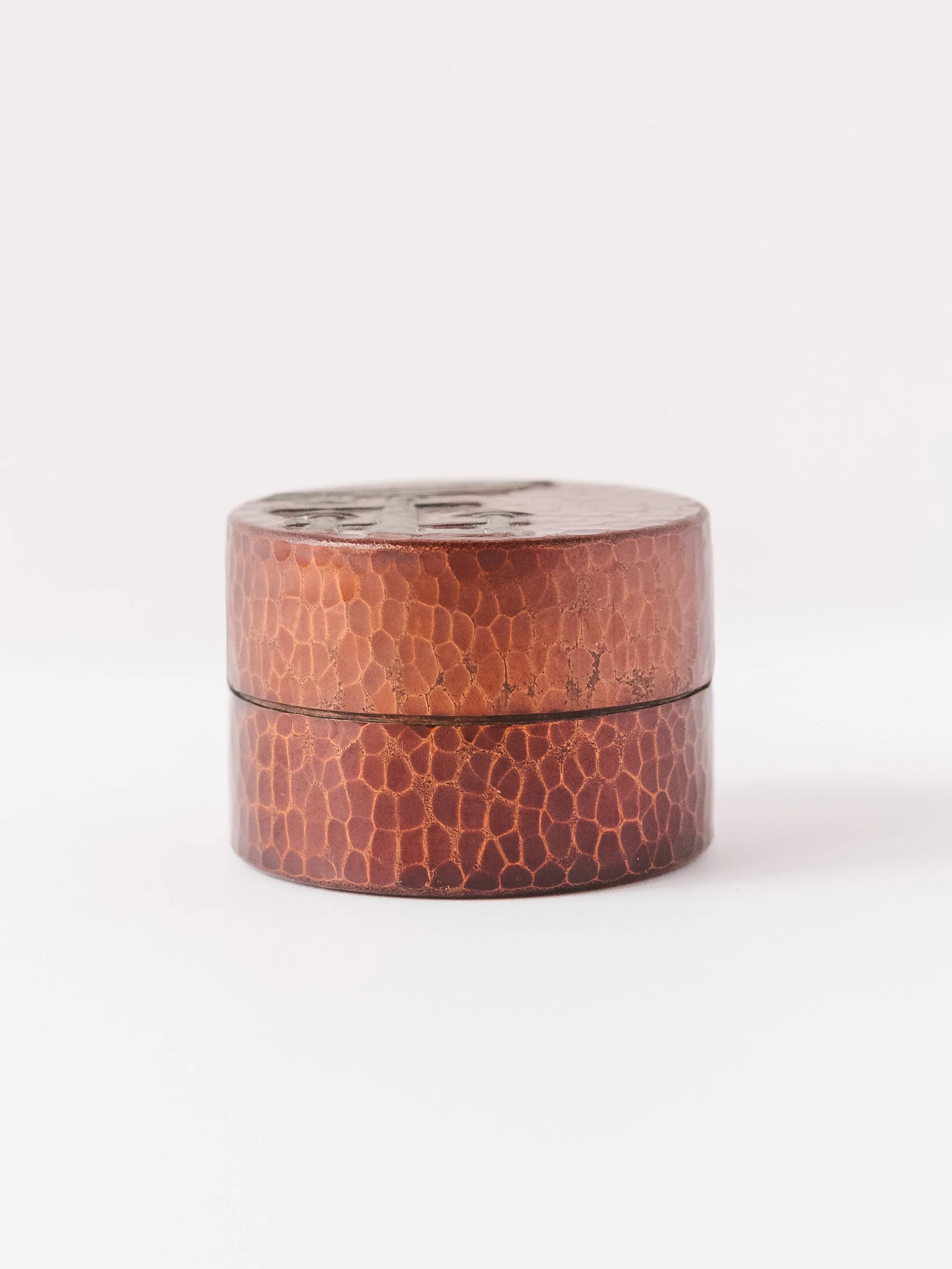 Image 5 of 8
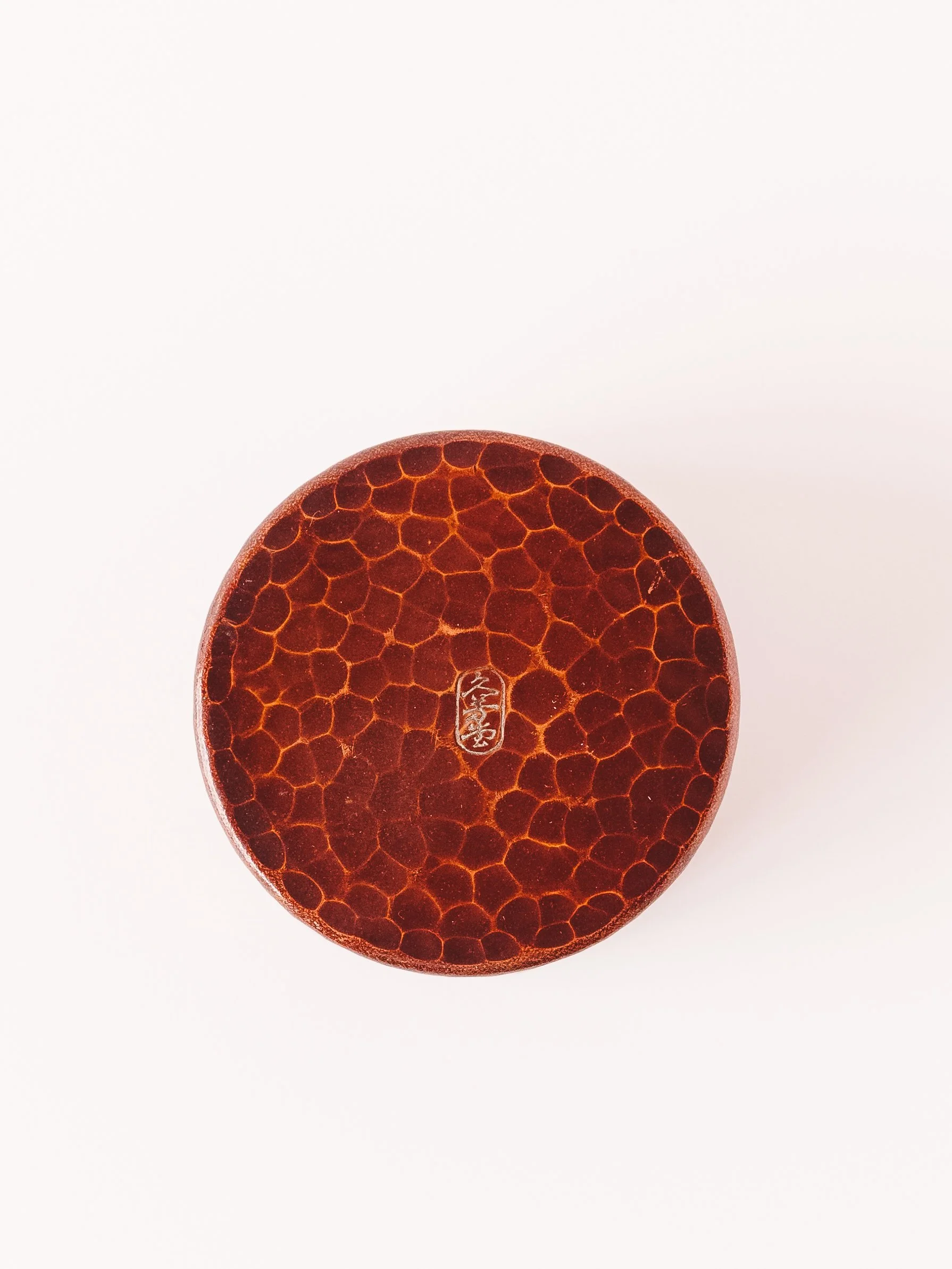 Image 6 of 8
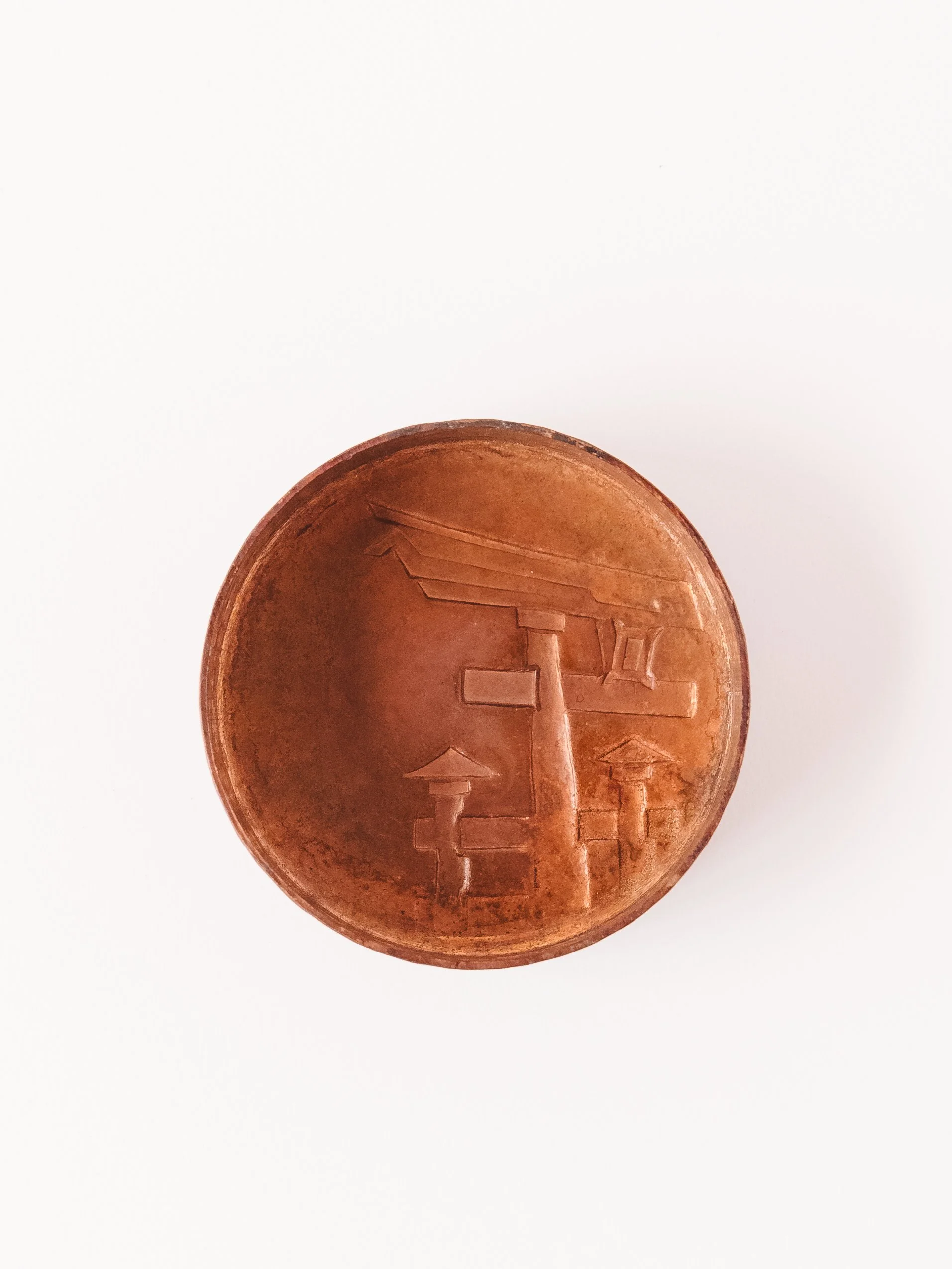 Image 7 of 8
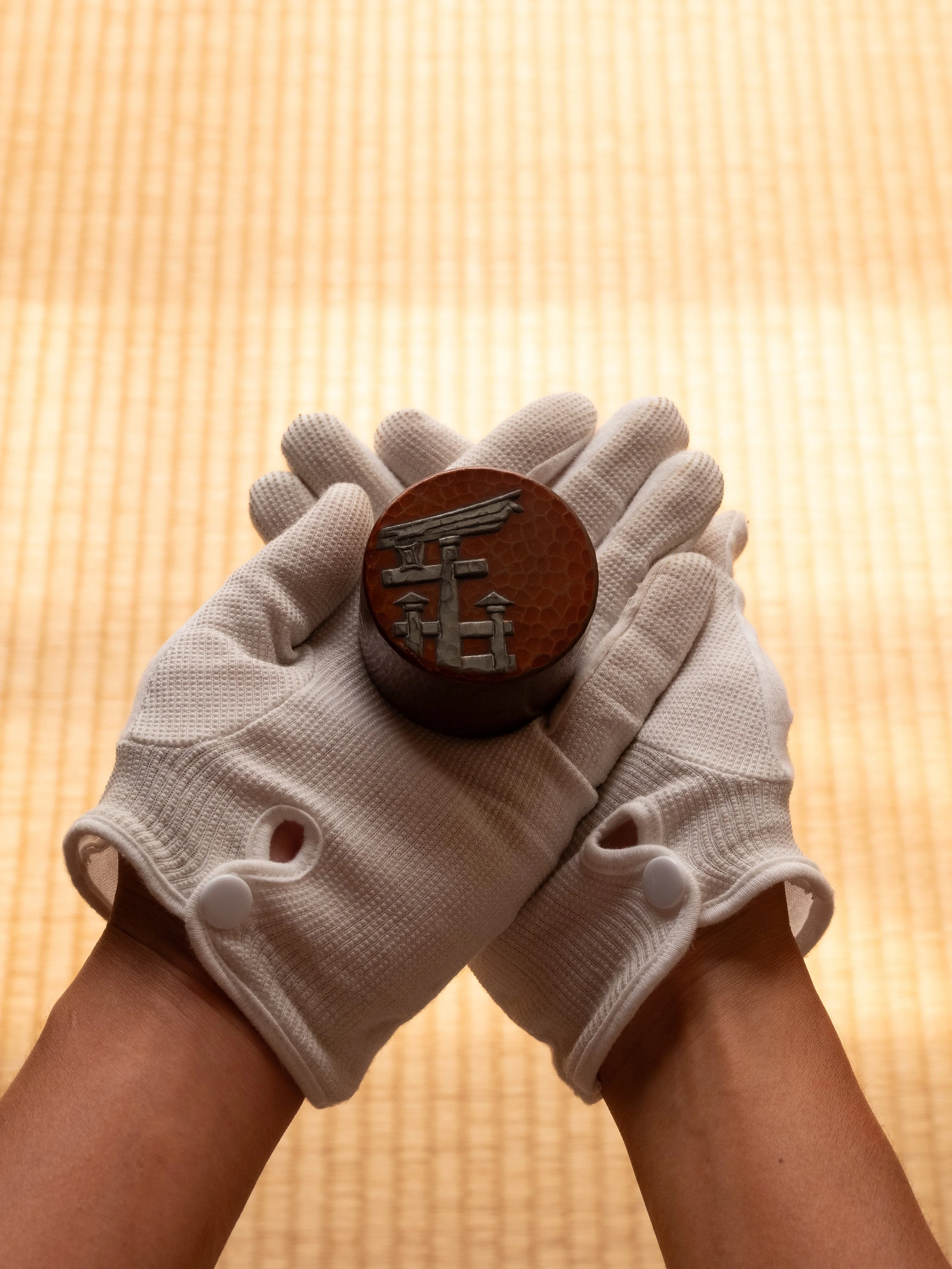 Image 8 of 8