【 The Concept 】
A small, heavy figure cast in Nambu ironware, the traditional cast iron of Iwate in northern Japan, modelled on the most famous face of Japanese prehistory: the Shakōki Dogū, the "goggle-eyed" clay figure of the late Jomon period, about 3,000 years old. Two enormous oval eyes take up almost the whole face, each split by a single horizontal slit and framed by rows of tiny dots. Between them sit a small round knob and a little heart-shaped ornament; above, a crown rises in curls and dots; at the sides, two round knobs stand out like ears. On the stout body, swirling spirals and dotted bands run around the chest and hips, and the patterns continue around the back. Cast in dark iron with a soft silvery sheen, it stands firmly on its own, about the size of a matchbox and surprisingly weighty in the hand. It is a figure the whole world recognises, made in one of Japan's oldest metal crafts.
【 The Goggle-Eyed Figure of Kamegaoka 】
In 1887, at the Kamegaoka site in what is now Tsugaru, Aomori Prefecture, a clay figure was found with a face unlike anything people had seen before. Its huge eyes reminded a Meiji-era anthropologist of the snow goggles worn by Inuit hunters to protect their eyes from the glare of ice, and the name stuck: shakōki, "light-blocking goggles." Today archaeologists think the eyes were never meant to be goggles at all, but an exaggerated, sacred way of showing eyes that see beyond the ordinary world. The original figure, about 34 centimetres tall, is an Important Cultural Property of Japan and is kept at the Tokyo National Museum. Its left leg is missing, as it was when it was found.
Kamegaoka was one of the great centres of late Jomon culture in northern Japan, famous for its elegant pottery and lacquered objects, and in 2021 it became part of the UNESCO World Heritage Site "Jomon Prehistoric Sites in Northern Japan."
【 Why So Many Dogū Were Broken 】
Most dogū are found in pieces, and very often the pieces of a single figure are never found together. One widely held theory is that the figures acted as stand-ins. A person suffering from illness or injury would transfer their pain to the dogū, and the figure would be broken at the same place, so that the suffering left with it. Others see the figures as prayers for birth, harvest and the renewal of life. Either way, a dogū was not an ornament. It was a figure that carried people's hopes and troubles for them.
【 Nambu Ironware: The Iron of the North 】
Nambu tekki is the cast iron of Iwate Prefecture, made in two historic centres: Mizusawa, where iron-casting is said to date back to the twelfth century, and Morioka, where the Nambu clan brought kettle-makers from Kyoto in the seventeenth century to make iron kettles for the tea ceremony. Nambu tekki was among the very first crafts designated as a Traditional Craft of Japan in 1975, and its iron teapots are loved around the world. In Japan, a lump of cast iron in the kettle has long been a kitchen habit, because a little iron dissolves into the water as it boils. Cast-iron figures of this kind are often used the same way: dropped into a kettle or pot, or into the pickling jar to keep aubergines a deep purple.
【 What Owning This Piece Brings 】
・ A small guardian. In the Jomon world the dogū took on illness and trouble on behalf of the people who made it. On a desk or shelf, it is a cheerful little protector.
・ Strength and endurance. Cast iron is the material of things meant to last a lifetime. It brings a sense of steadiness and resilience.
・ A link to the deep past. Few objects connect us so directly to the people who lived in Japan 3,000 years ago, and to their way of seeing the world.
・ A conversation piece. Almost everyone who sees it asks what it is, and the answer, from snow goggles to space suits, is always a good story.
A fitting gift for a lover of archaeology or ancient art, a collector of Japanese ironware, a science-fiction fan, or anyone who needs a solid, friendly paperweight.
【 The Space Alien from 1000 BC 】
In the 1960s, at the height of the space race, photographs of the Shakōki Dogū reached the Soviet science-fiction writer Alexander Kazantsev. He declared that the figure was no goddess but a visitor from another planet, wearing a pressurised space suit, a helmet and goggles. The idea spread around the world through books and television about "ancient astronauts," and the goggle-eyed dogū became the face of the theory. Archaeologists have never accepted it, but the figure's fame has only grown. Its outline helped inspire characters in Japanese anime and games, including a well-known Pokémon. And in Tsugaru, near where the original was found, the front of JR Kizukuri Station was built as a giant dogū about 17 metres tall, designed so that its eyes would light up to welcome the trains.
【 Where to Place It 】
On a desk as a paperweight, on a bookshelf among stones and small treasures, or on a windowsill where the light catches the iron's sheen. Its compact, heavy body makes it pleasant to keep within reach. In the kitchen, it can sit beside the kettle between uses.
【 Care 】
Keep dry and wipe with a soft cloth. If it has been used in water, take it out after use and dry it thoroughly at once to prevent rust. If light rust appears, rinse and scrub it off gently, then dry well; iron rust is harmless. Do not put it in a dishwasher, and handle with tongs when hot.
【 Reading the Object 】
A standing goggle-eyed figure in cast iron. Two large oval eyes, each with a horizontal slit and a border of small dots; a small round knob between them and a heart-shaped ornament above; a crown with curled and dotted decoration; round ear knobs at the sides. Short arms curve toward the body; swirling spirals, raised bands and rows of dots decorate the chest, waist and back. Short legs joined at the base, standing on their own. Dark iron with a soft silvery-grey sheen and the fine granular surface of cast iron.
【 Presence 】
Small, solid and full of character. Three thousand years old in spirit, and still keeping watch.
Archive Note: The number in the name (1887) marks the year the famous Shakōki Dogū was excavated at the Kamegaoka site in Aomori. NOT the date this piece was made.
Provenance Note: Sourced from a private household in Japan. A Nambu ironware (cast iron) figure modelled on the Shakōki Dogū. Attributed to the Nambu ironware tradition rather than to a specific foundry or maker.


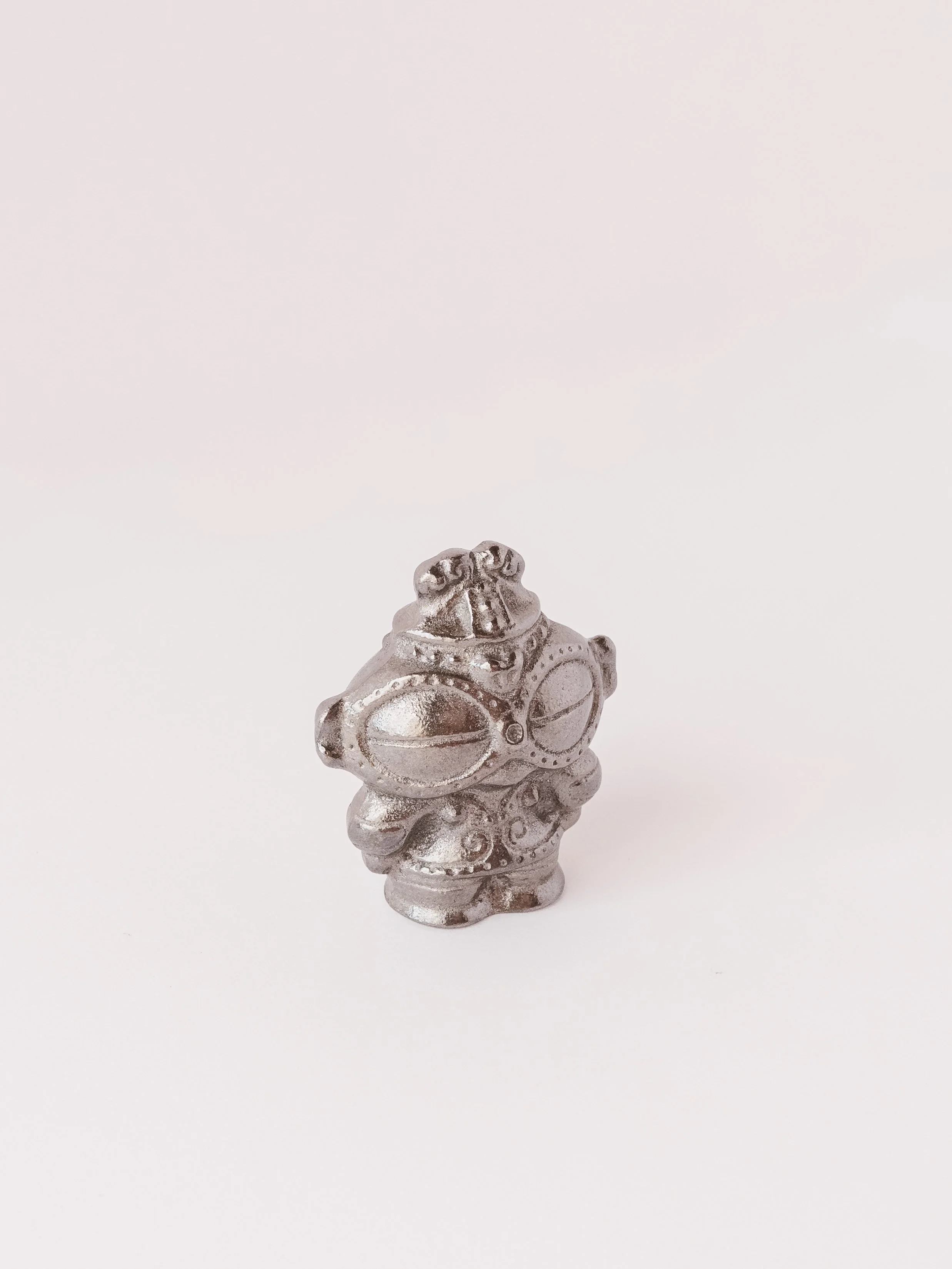 Image 1 of 7
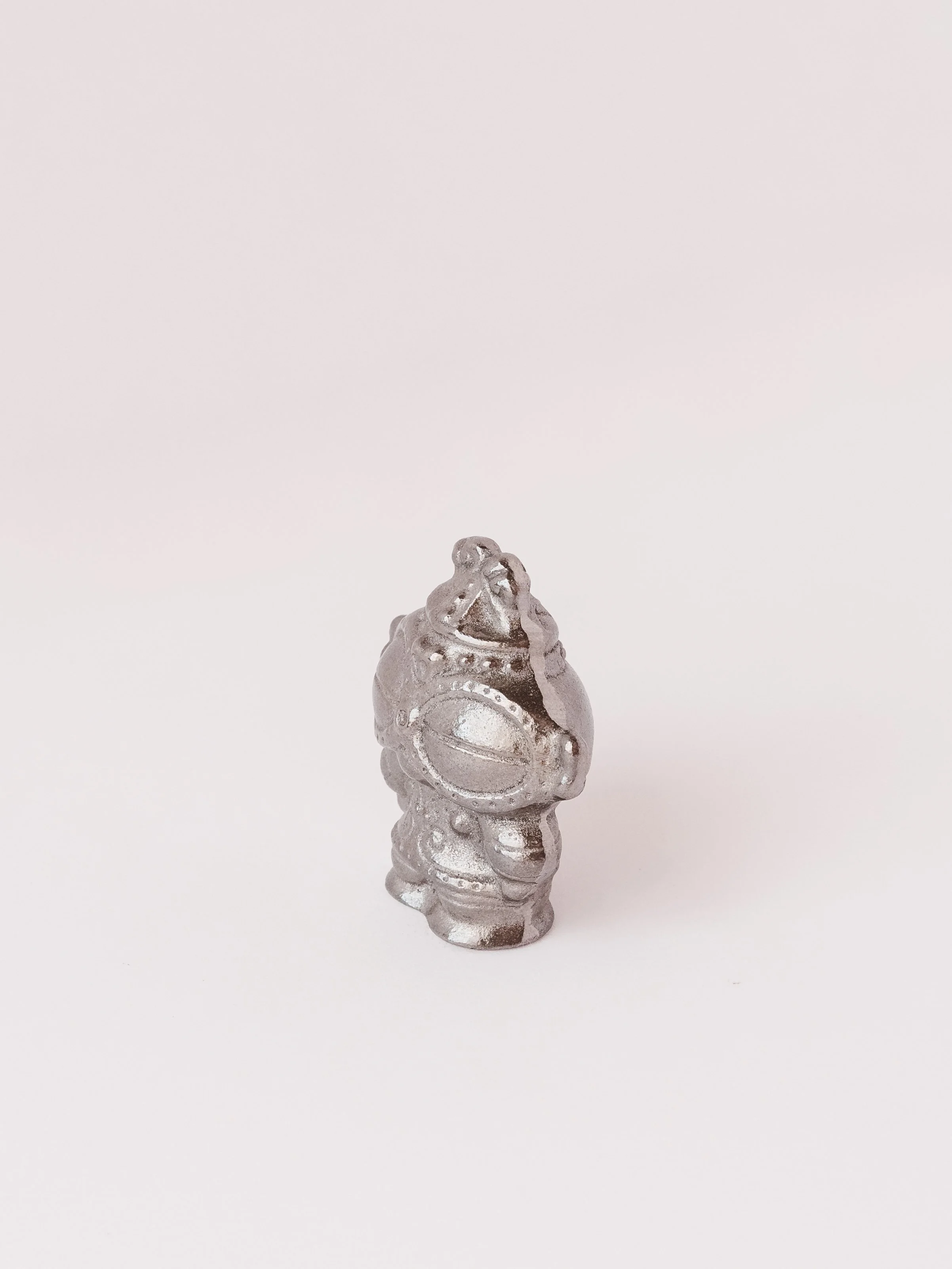 Image 2 of 7
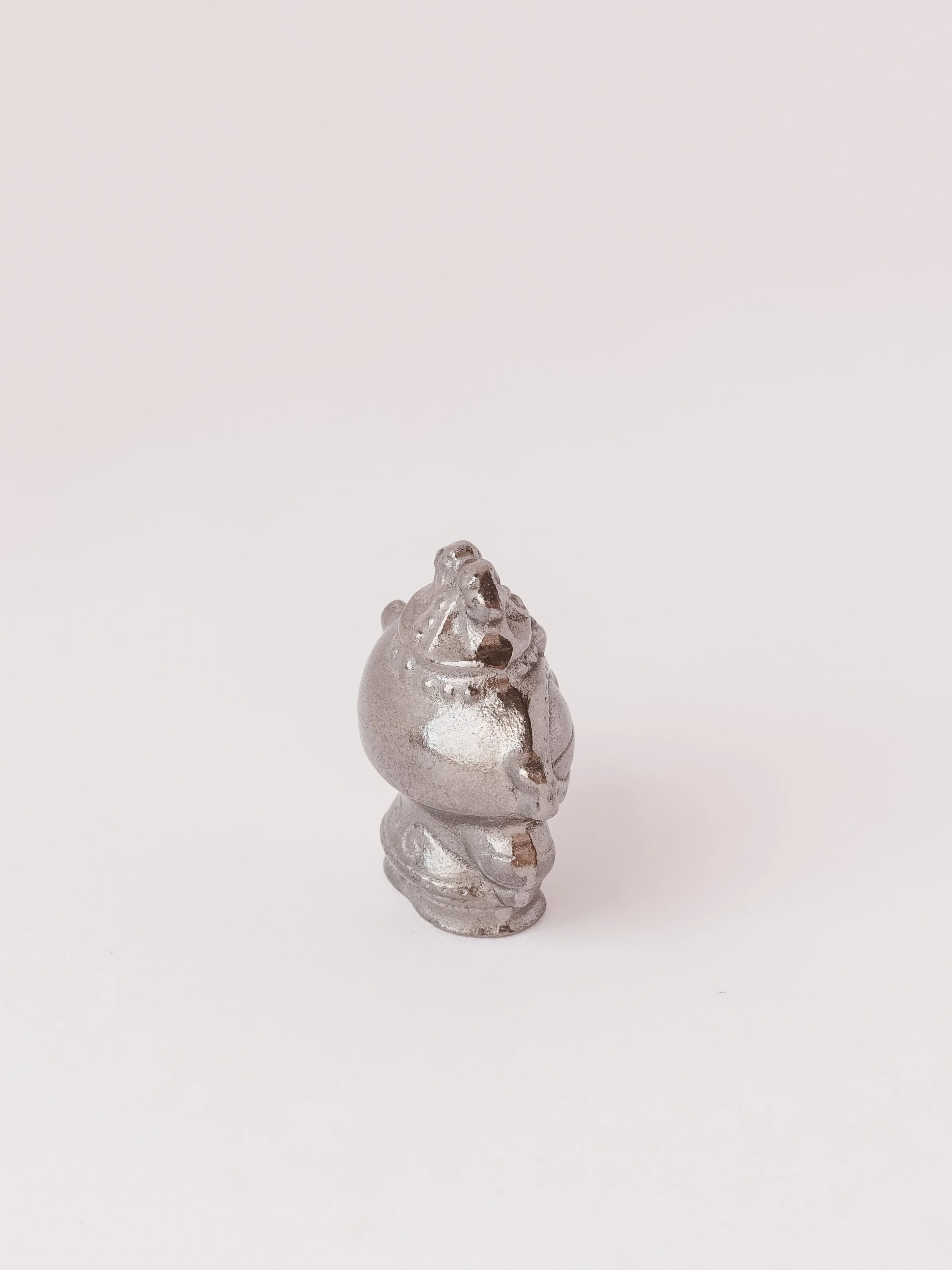 Image 3 of 7
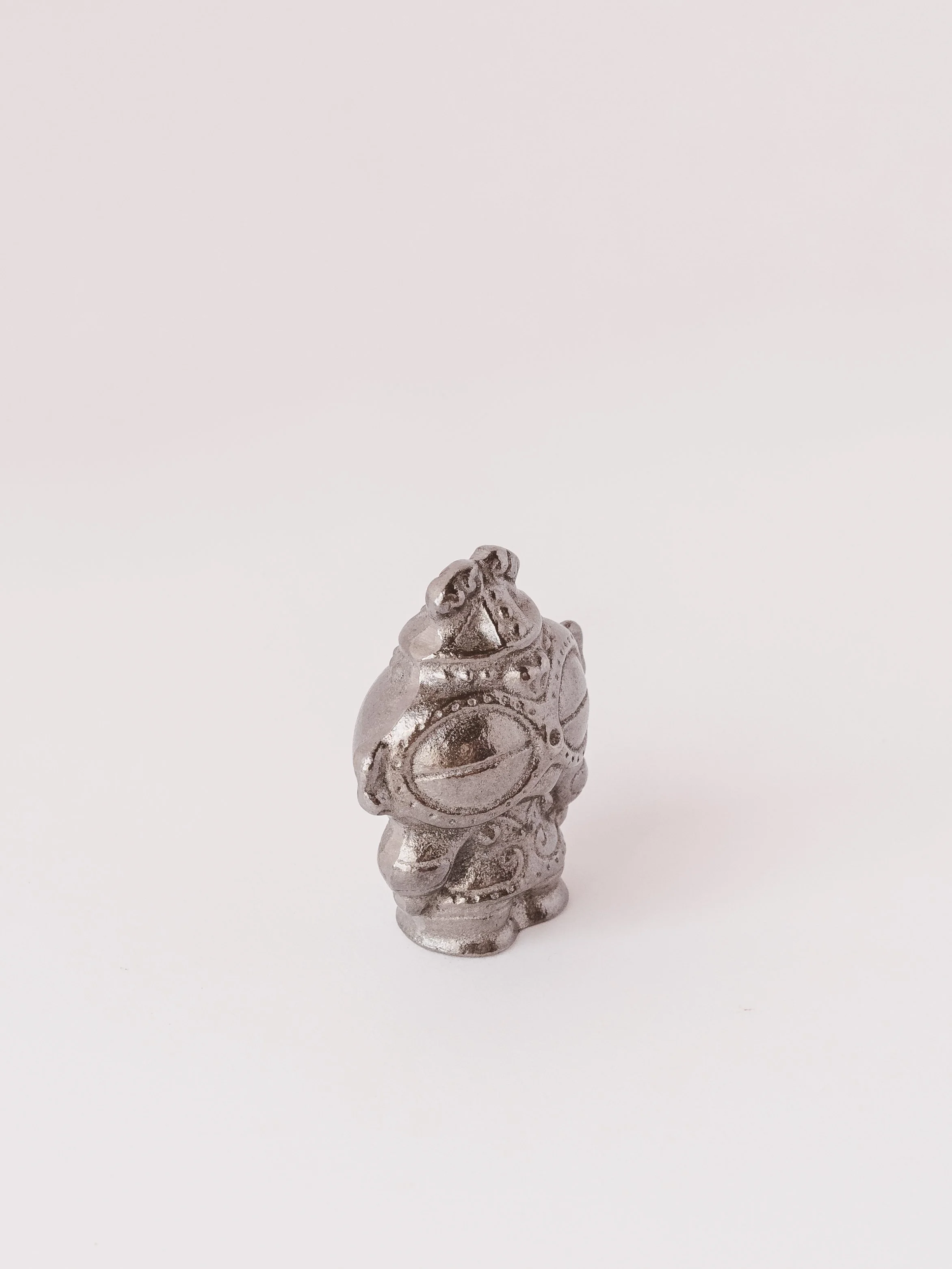 Image 4 of 7
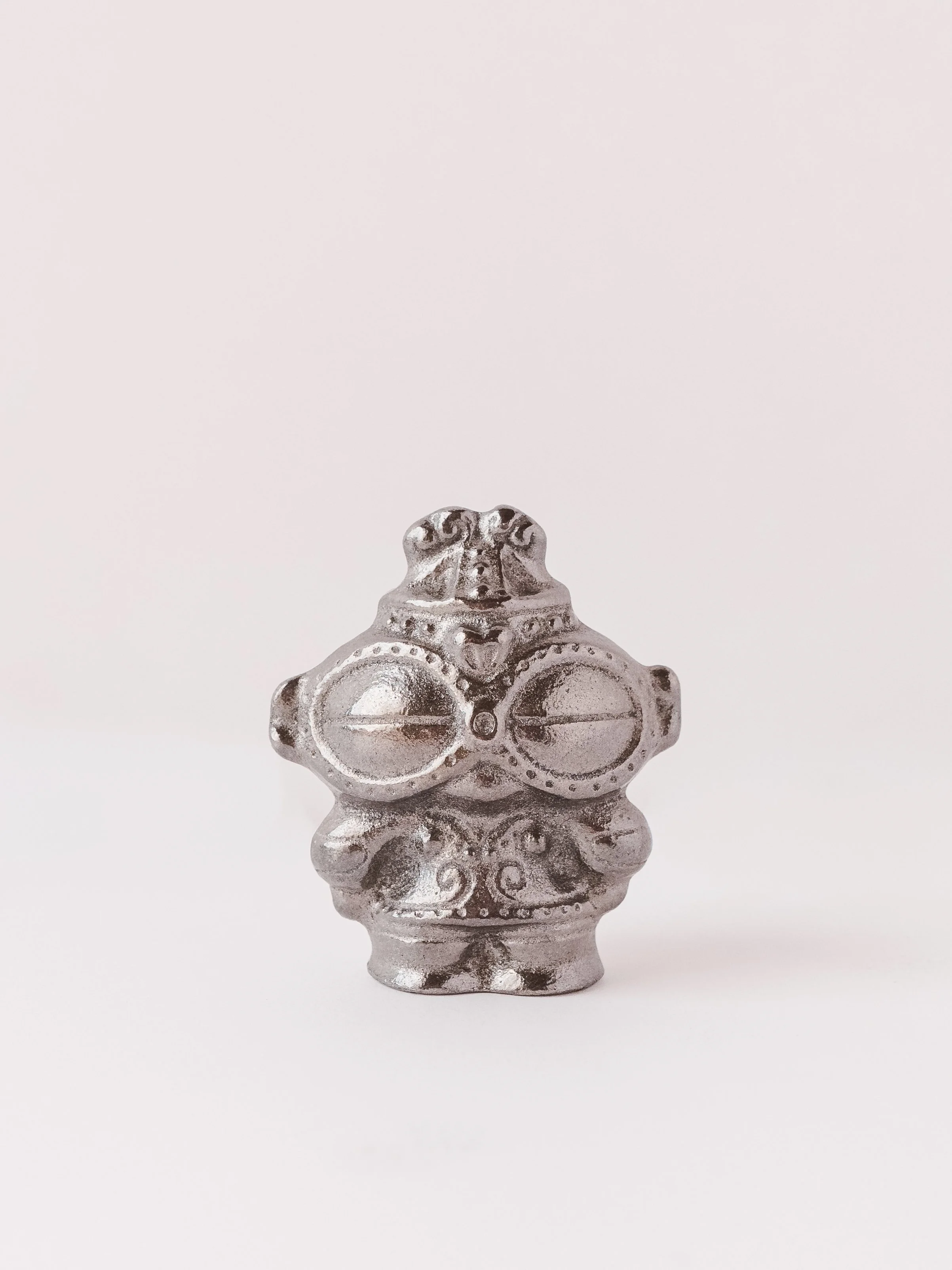 Image 5 of 7
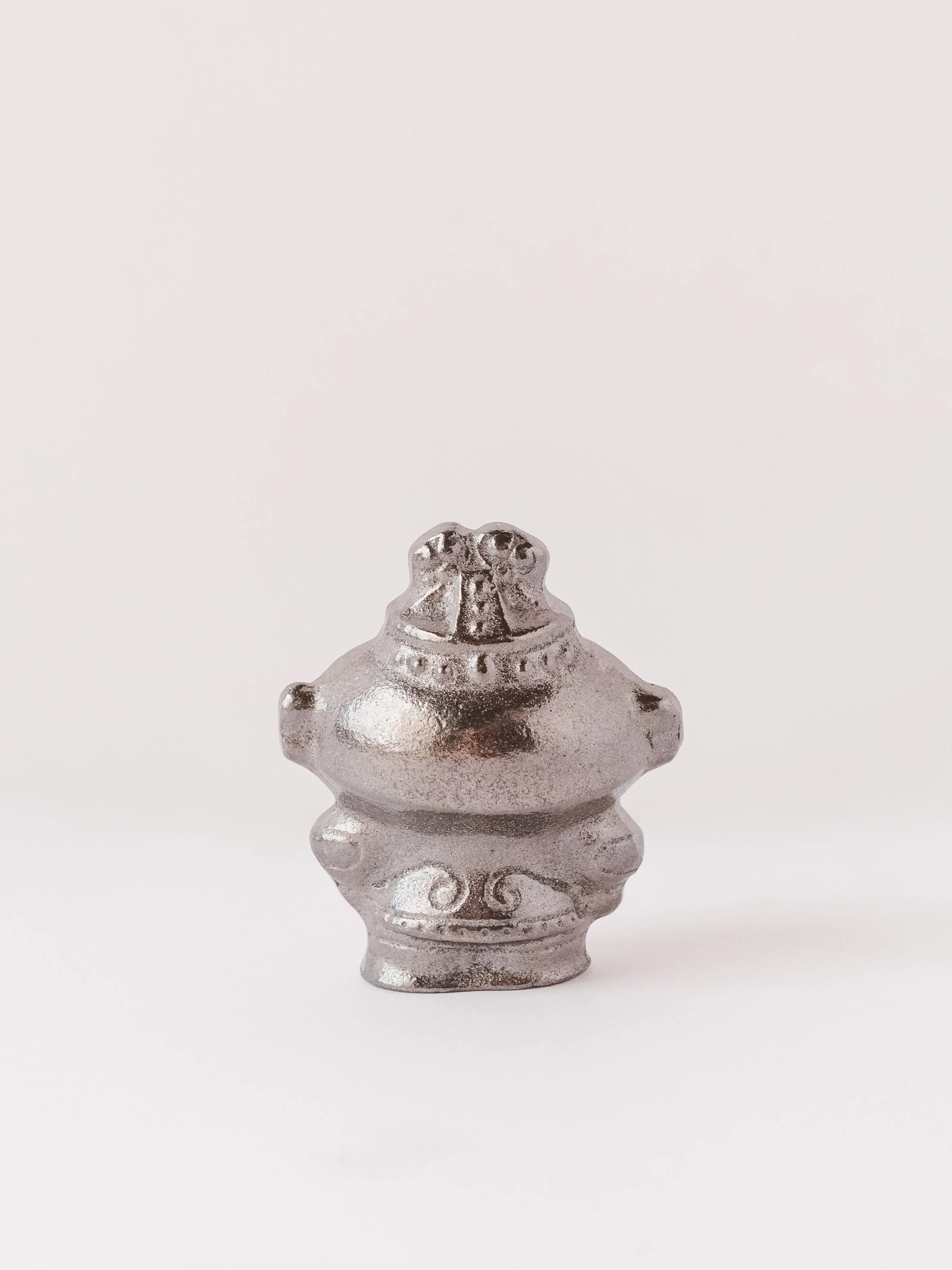 Image 6 of 7
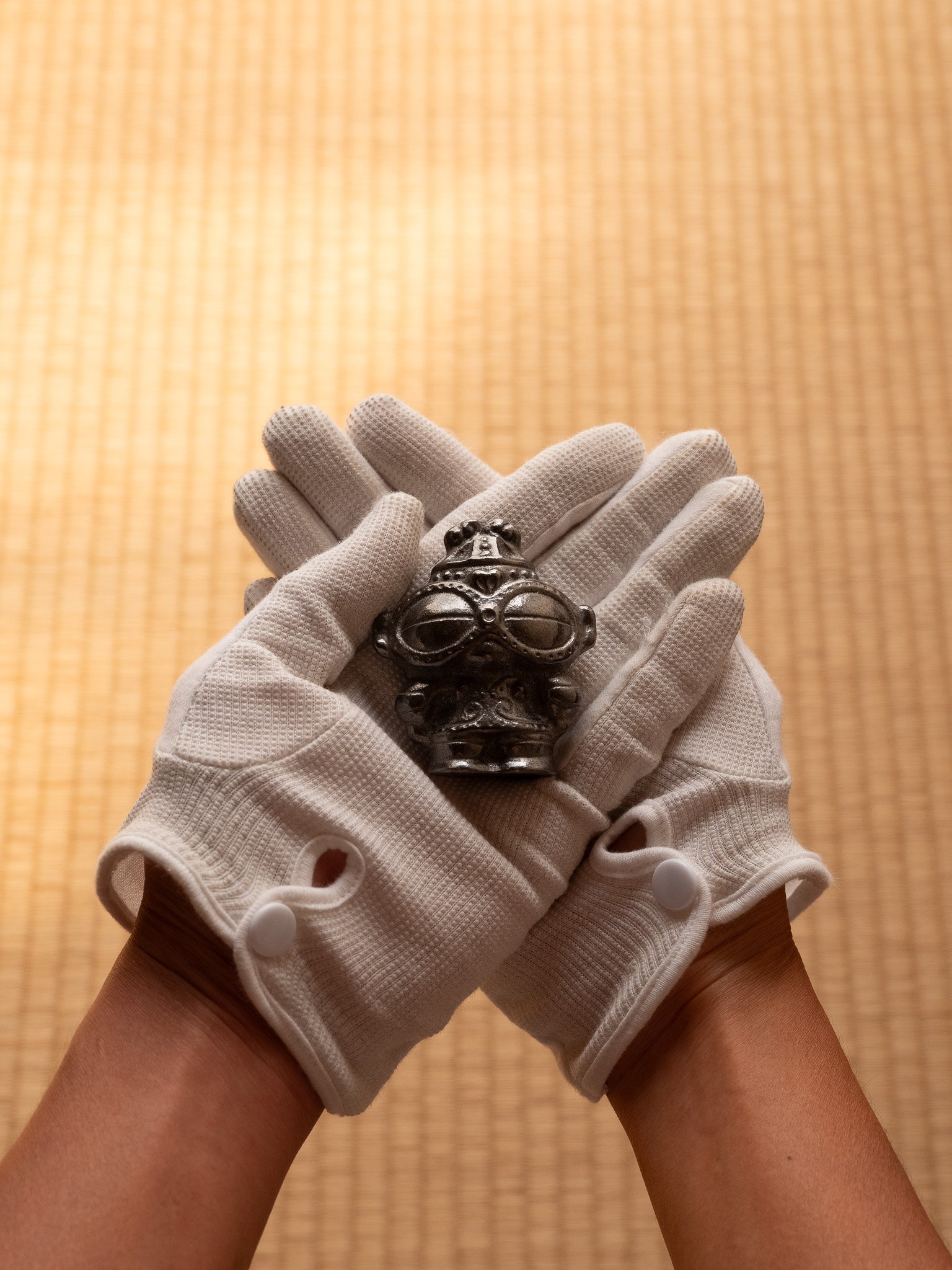 Image 7 of 7