【 The Concept 】
A small figure cast in Nambu ironware, the famous cast iron of Iwate in northern Japan, modelled on one of the most moving figures ever found in Japanese archaeology: the Gasshō Dogū, the "Praying Dogū," a clay figure about 3,500 years old. The figure sits with its knees drawn up, arms wrapped around them, and hands pressed together in front, as if in prayer. Its heart-shaped face has two oval eyes, a strong nose, and a round open mouth ringed with tiny dots, and a small topknot rises from the head. The cheeks, arms and legs are covered in fine incised lines, and a swirling band runs across the back. Cast in dark iron with a soft gunmetal sheen, it is small enough to hold in one hand and heavy enough to feel solid there. It brings together two traditions from the same corner of Japan: the prayers of the Jomon people and the iron-casting of the Nambu region.
【 The Praying Figure from Hachinohe 】
In 1989, archaeologists excavating the Kazahari I site in Hachinohe, Aomori Prefecture, found a clay figure lying in the remains of a Jomon house. It was seated, knees up, hands pressed together in front of its body, a posture never seen so clearly in a dogū before. No one knows exactly what it means. Some see a person in prayer; others see a woman in the squatting position of childbirth, an image of new life. Either way, the feeling is the same: a human being, very still, concentrating on something beyond themselves.
The original figure was designated a National Treasure of Japan in 2009. Only five dogū in the whole country hold that rank, and the Praying Dogū is one of them. It is kept today in Hachinohe, not far from where it was found.
【 What a Dogū Is 】
Dogū are clay figures made during the Jomon period, the long age of hunter-gatherer life in Japan that lasted from around 14,000 to 2,300 years ago. The Jomon people made some of the world's oldest pottery, and their figures are among the most imaginative sculpture of the prehistoric world: wide-eyed goddesses, masked figures, mothers, and strange, almost otherworldly faces. Many dogū were deliberately broken and buried, and one theory says that people transferred an illness or injury to the figure and then broke it, so that the suffering would leave them. Dogū were not toys or portraits. They were prayers given shape.
【 Nambu Ironware: The Iron of the North 】
Nambu tekki is the cast iron of Iwate Prefecture, made in two historic centres. In Mizusawa, iron-casting is said to go back to the twelfth century, when the Fujiwara lords of northern Japan invited casters from the south. In Morioka, the Nambu clan brought kettle-makers from Kyoto in the seventeenth century to make iron kettles for the tea ceremony. The region had everything the craft needed: iron sand, charcoal and good clay for moulds. Nambu tekki was among the very first crafts designated as a Traditional Craft of Japan in 1975, and its iron teapots and kettles are now prized around the world. Here the same technique, molten iron poured into a mould, gives an ancient clay figure a new body that will last for generations.
【 What Owning This Piece Brings 】
・ A small companion in prayer. Whatever you hope for, the Praying Dogū has held that same posture of quiet wishing for 3,500 years.
・ Blessings for new life and family. Because some read its pose as childbirth, the figure is also a gentle charm for expecting parents, new families and safe beginnings.
・ Strength and endurance. Iron is the material of things meant to last. A cast-iron figure carries the meaning of resilience and steady protection.
・ A link to the deep past. Few objects connect us so directly to the earliest people of Japan, and to the feelings we still share with them.
A fitting gift for a lover of archaeology or ancient art, for expecting or new parents, for a collector of Japanese ironware, or as a desk companion and paperweight.
【 A Figure That Was Repaired 】
There is one detail of the original Praying Dogū that surprises almost everyone. When archaeologists examined it, they found that it had been broken at the legs and other places, and that the Jomon people had carefully mended the cracks with natural asphalt, a sticky tar gathered from the earth. In a culture where many dogū were broken on purpose, this one was repaired and kept. Someone, more than three thousand years ago, could not bear to let it go. It is perhaps the oldest evidence in Japan of a person caring for a treasured object, the same instinct that, many centuries later, would give rise to the art of mending broken things with gold.
【 Where to Place It 】
On a desk as a paperweight, on a bookshelf among stones and small treasures, or beside a window where the light catches the iron's sheen. It also sits well on a meditation shelf or near a family altar. Because it is small and heavy, it is pleasant to keep within reach and pick up now and then.
【 Care 】
Keep dry and wipe with a soft cloth. If moisture gets on it, dry it at once to prevent rust. If a little rust appears, it can be rubbed off gently with a dry cloth. Avoid dishwashers and soaking.
【 Reading the Object 】
A seated figure in cast iron, knees drawn up, arms wrapped around them and hands pressed together in front. A heart-shaped face with oval eyes, a raised nose, and a round open mouth surrounded by small dots; a small topknot with a dot on the head. Fine incised lines on the face, arms and legs; a curving relief band across the back. Dark gunmetal finish with a soft metallic sheen; a fine casting seam runs along the sides. It stands upright on its own.
【 Presence 】
Small, heavy and still. An ancient prayer, held in iron.
Archive Note: The number in the name (1989) marks the year the original Gasshō Dogū was excavated at the Kazahari I site in Hachinohe. NOT the date this piece was made.
Provenance Note: Sourced from a private household in Japan. A Nambu ironware (cast iron) figure modelled on the Gasshō Dogū. Attributed to the Nambu ironware tradition rather than to a specific foundry or maker.


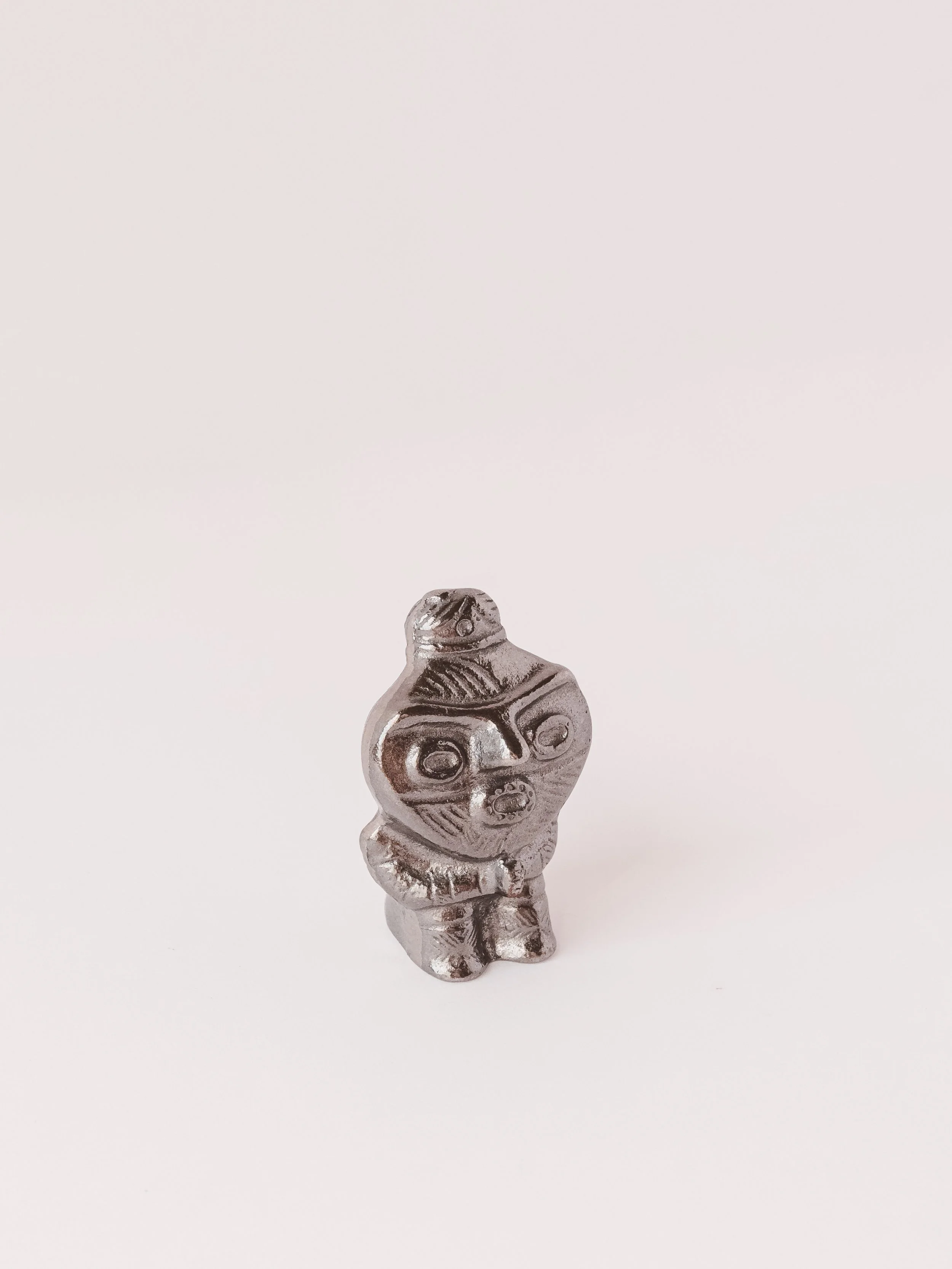 Image 1 of 7
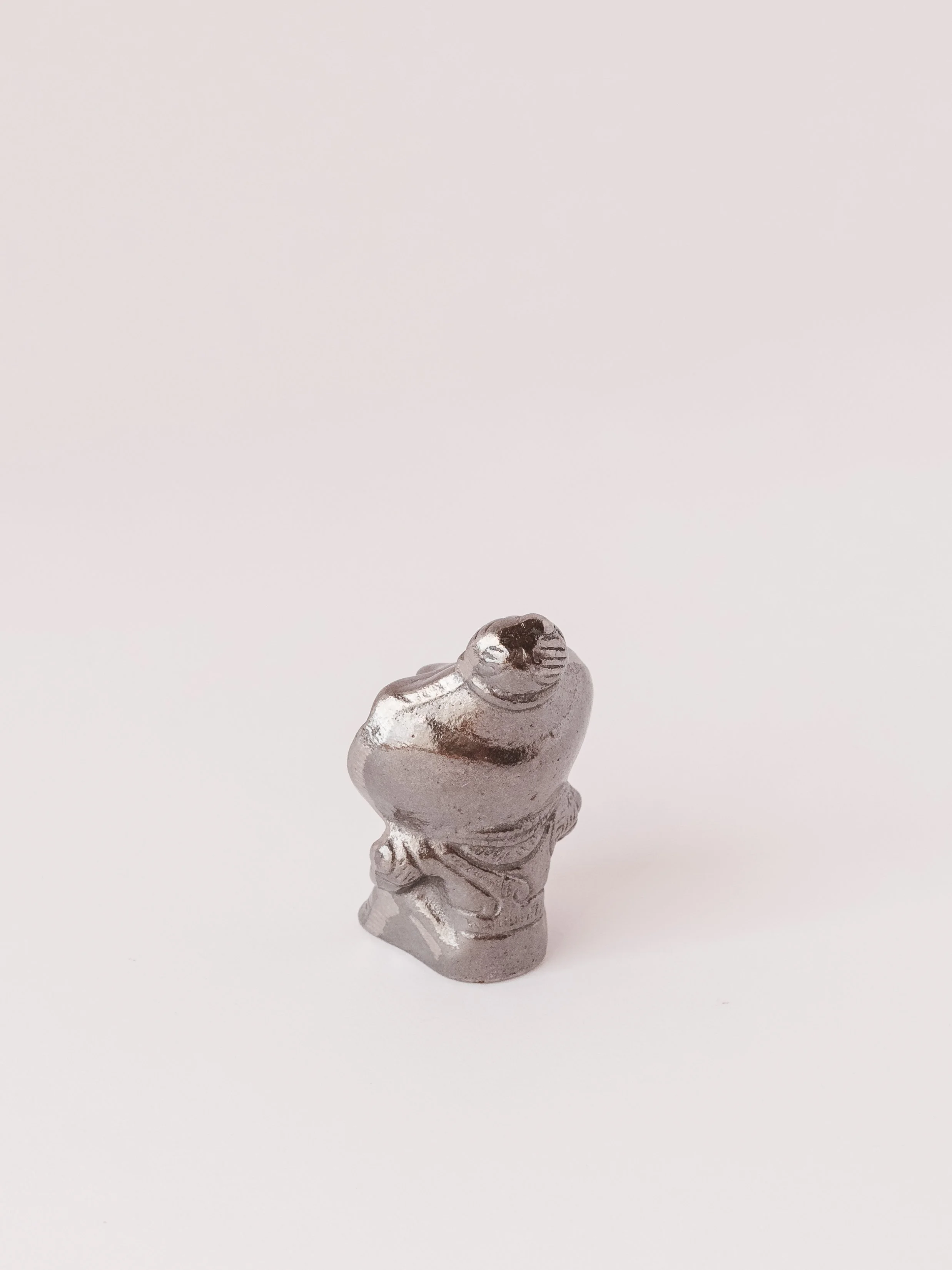 Image 2 of 7
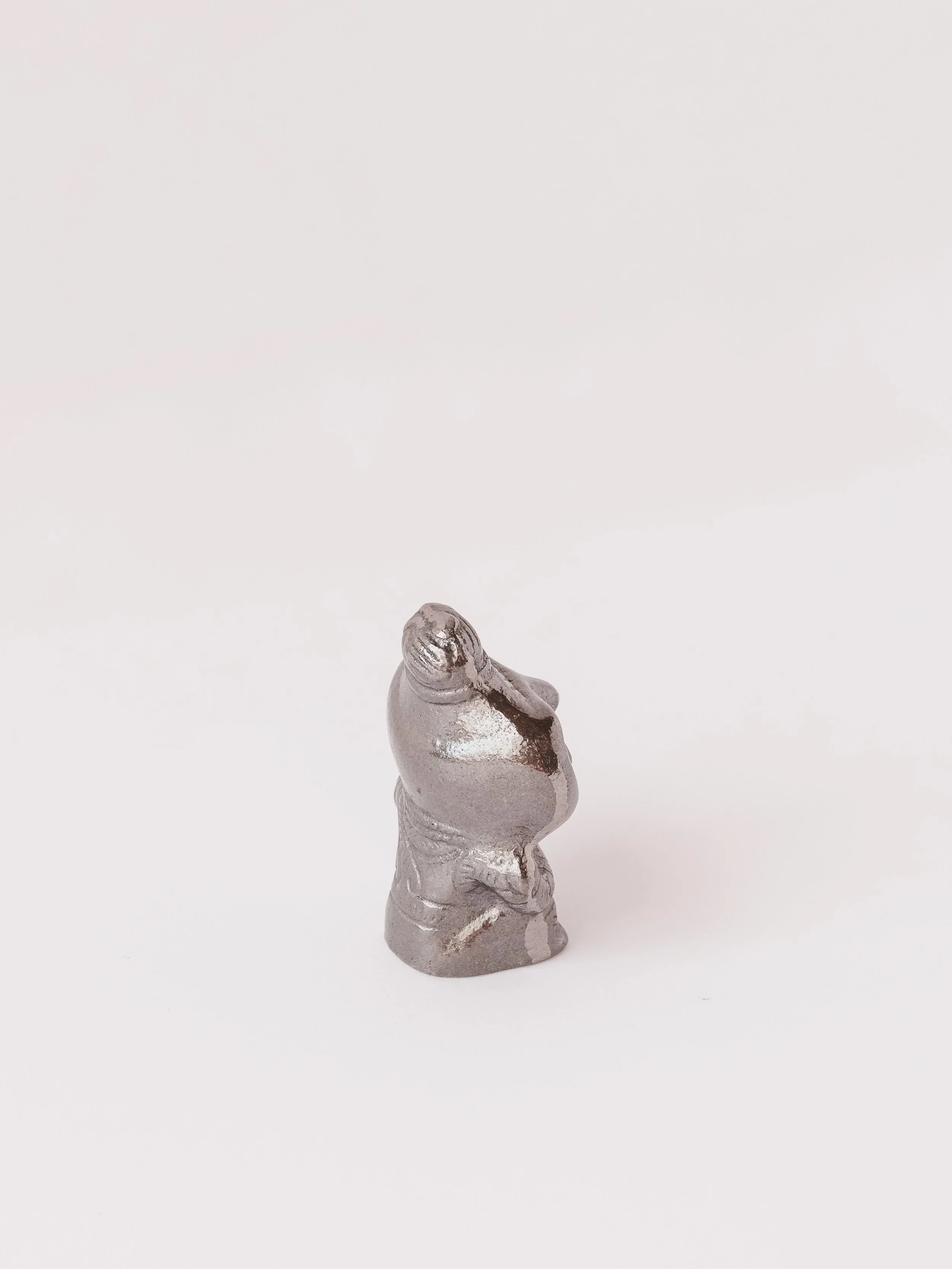 Image 3 of 7
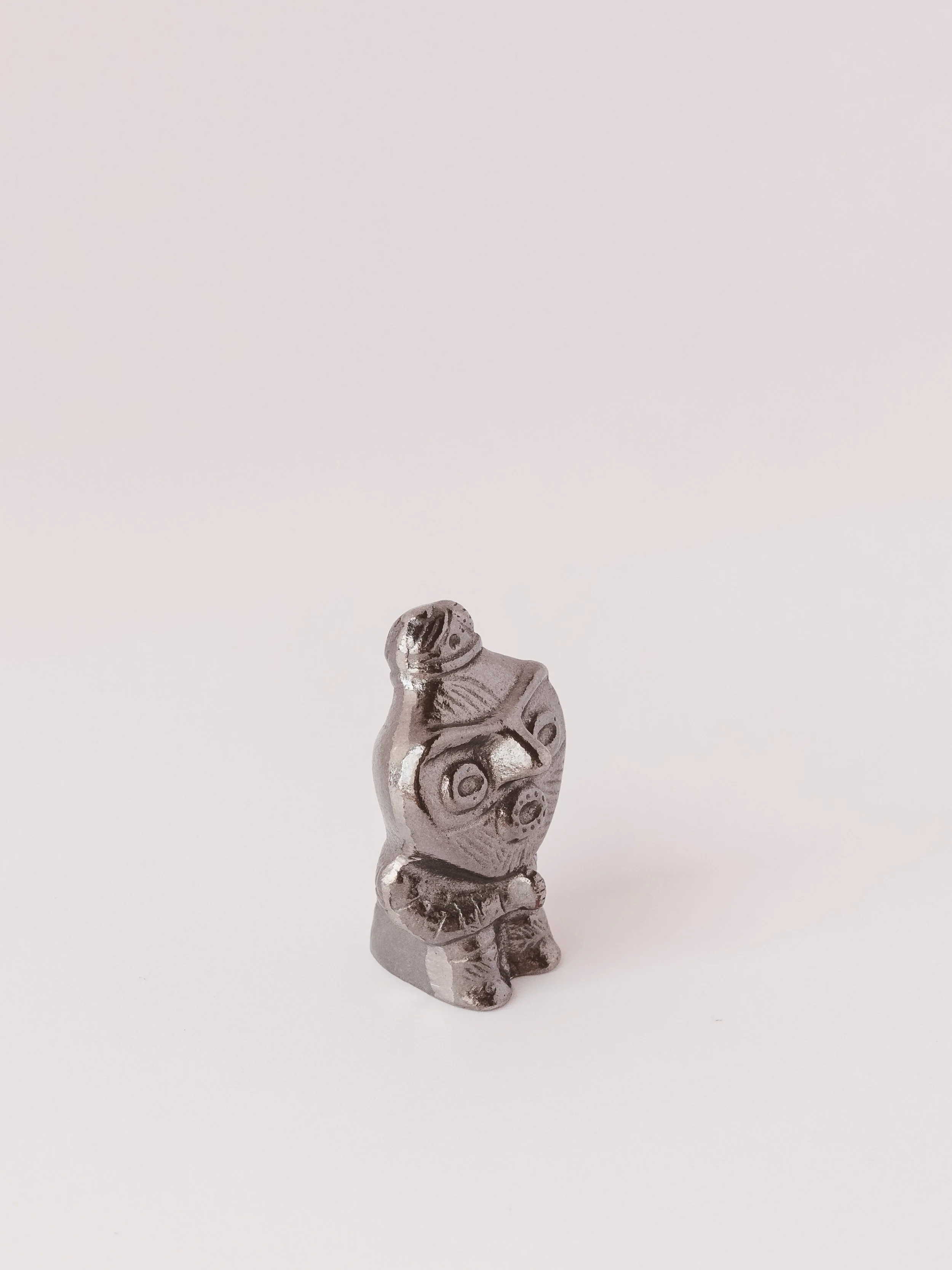 Image 4 of 7
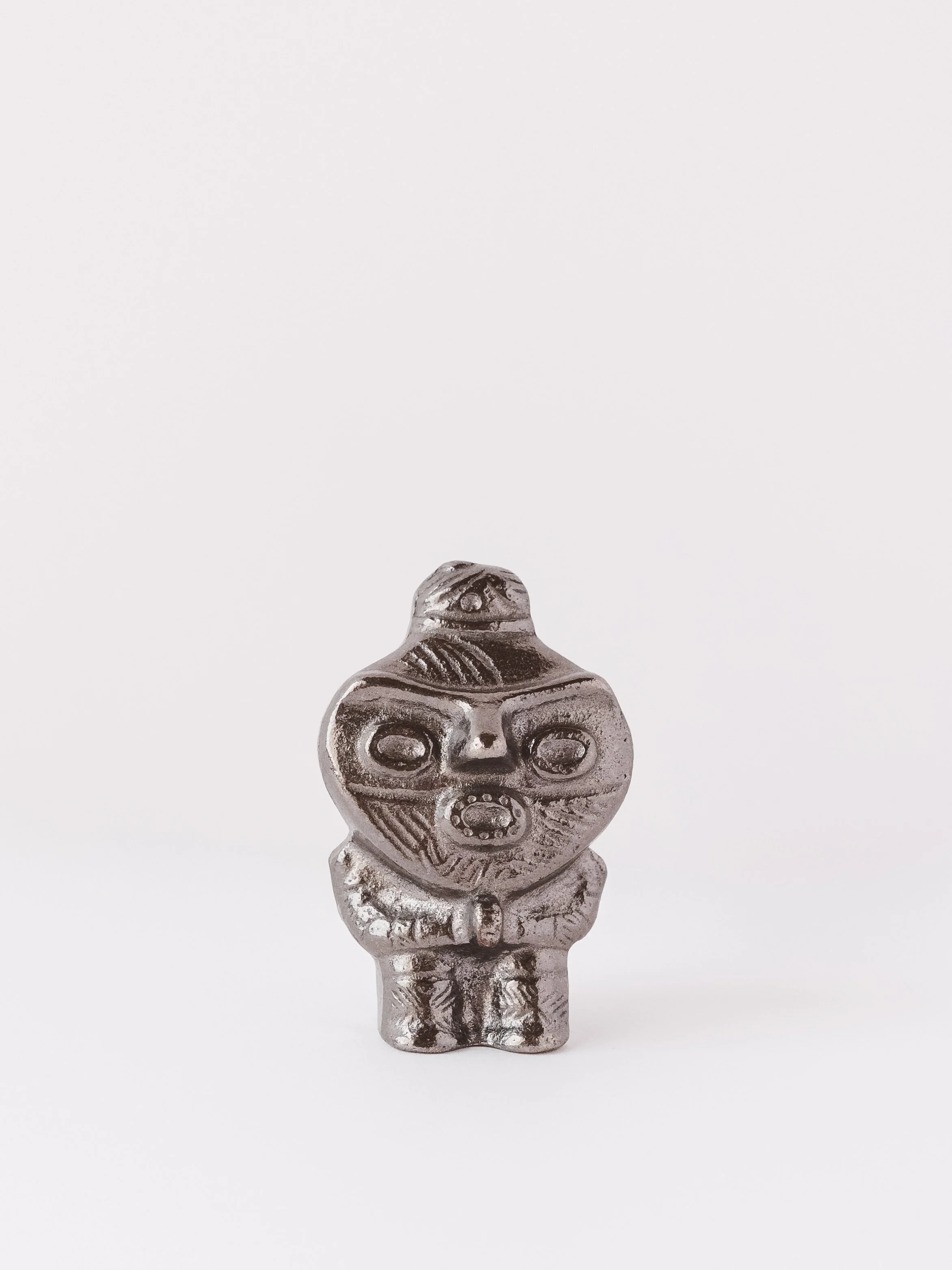 Image 5 of 7
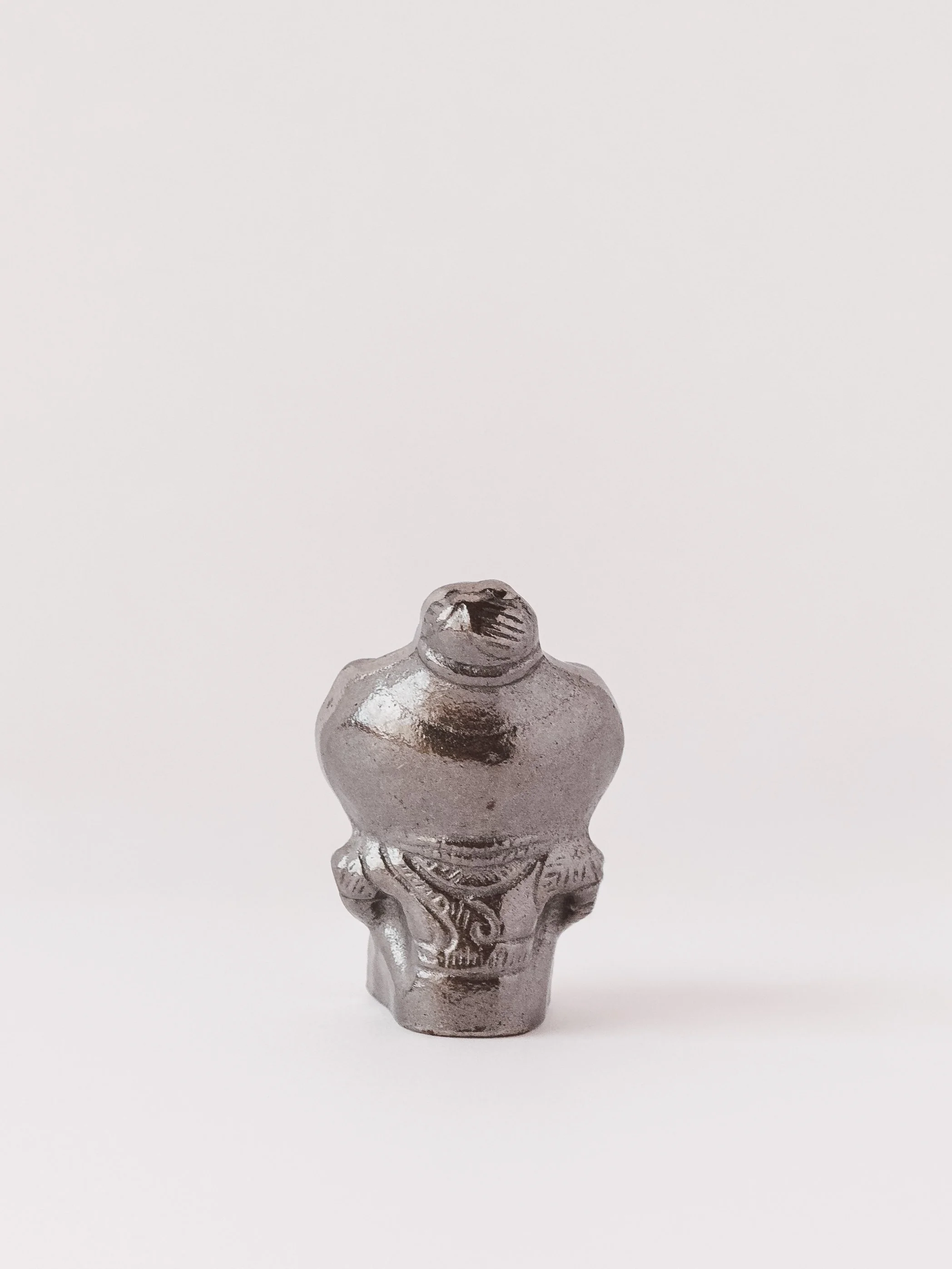 Image 6 of 7
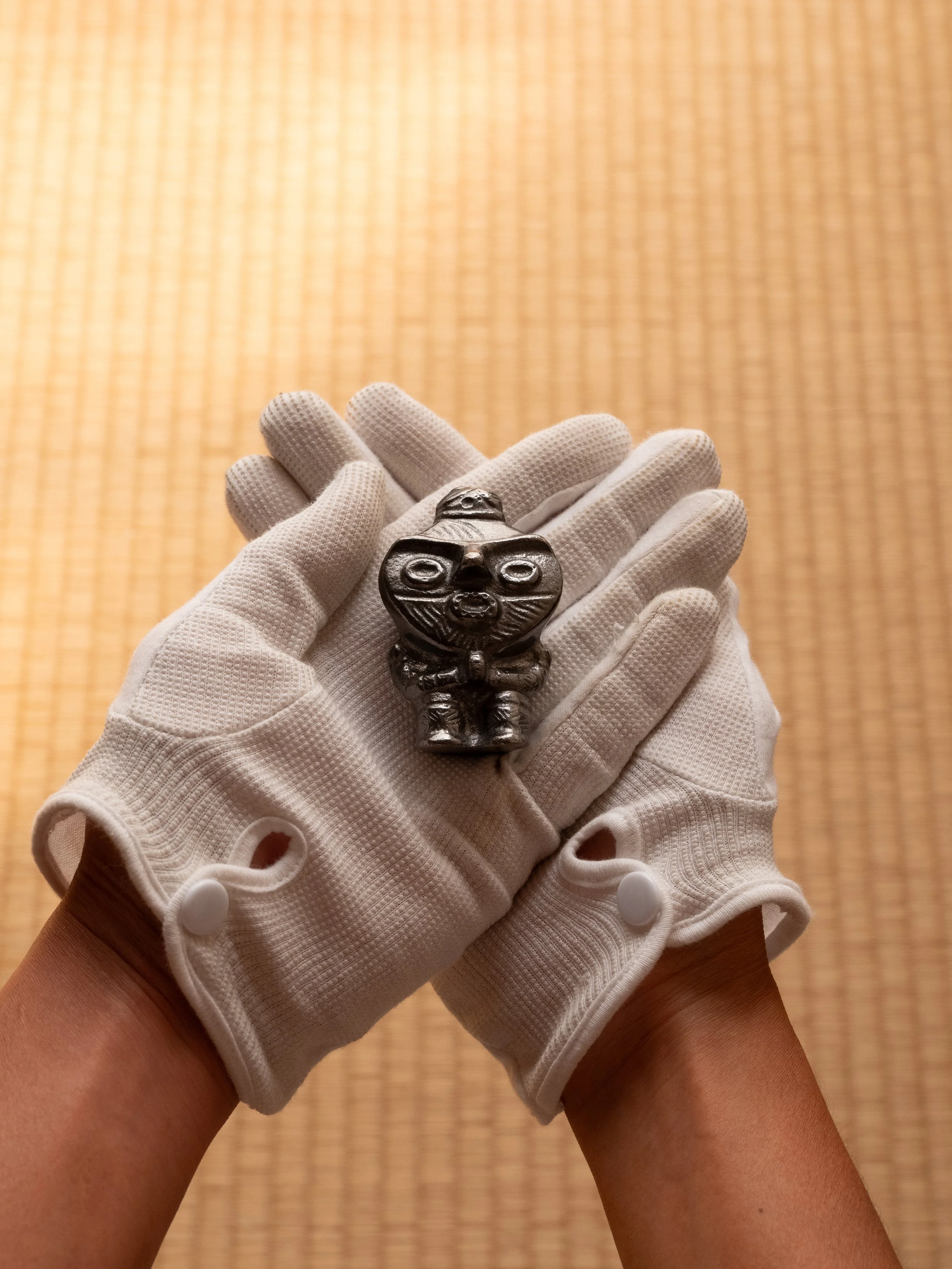 Image 7 of 7