【 The Concept 】
A full-size clay replica of one of the great “goggle-eyed” figures of prehistoric Japan, the shakōki dogū. It stands with its legs planted wide, its shoulders spread like wings, and its head tilted back on a thick neck, as if gazing up at the sky. The face is dominated by two enormous oval eyes, each crossed by a single horizontal slit, so that the figure seems to be wearing a pair of snow goggles. A crown of small knobs rings the head, and openings pierce the top of it. Over the shoulders, chest and broad, skirt-like hips flows a dense pattern of curling cloud-like scrolls, filled with fine cord-marked texture and framed by smooth bands. Small rounded breasts sit beneath a triangular pendant at the throat, and stubby, pointed arms project from the shoulders. The body is hollow, and the legs open underneath, just as in the original. Fired to a warm reddish brown, with darker smoky shadows across the surface, it has the look and weight of something lifted from the earth.
【 The Figure the Typhoon Uncovered 】
The original was found in 1948, in Kitakami town on the coast of Miyagi Prefecture in northeastern Japan. That autumn, Typhoon Ione struck the Ishinomaki region and caused terrible damage; when the wind and rain stripped away the earth of a shell mound, this figure came to light by chance. It is large, finely made and hollow inside, and apart from a small break on the left leg it is almost complete, a rare survival among dogū, most of which are found in pieces. Today it is designated a Tangible Cultural Property of Miyagi Prefecture and kept at the Tohoku History Museum in Tagajō. This replica is made at the same size as the original, and its label names the shell mound in Kitakami where it was found.
【 Why “Goggle-Eyed”? 】
The name shakōki dogū means “light-shielding-goggles figure.” When these figures were first studied, their huge slit eyes reminded scholars of the snow goggles worn by the Inuit of the Arctic to protect their eyes from the glare of sun on snow. Of course, the people of the Jomon period did not wear goggles. Most archaeologists today see the eyes as a deliberate exaggeration, a way of showing a being from beyond the ordinary world, or perhaps a person wearing a ritual mask. The strange, almost otherworldly look of these figures has also fired the popular imagination: some have even wondered whether they show visitors from space, an idea that has no scientific basis but has inspired many science-fiction designs.
【 The Kamegaoka Culture 】
Goggle-eyed figures belong to the Final Jomon period, roughly 3,000 to 2,400 years ago, and are the emblem of the Kamegaoka culture of northeastern Japan, famous for some of the most refined pottery made anywhere in the prehistoric world. Their potters built thin, hollow forms and covered them with flowing cloud-like designs, pressing cords into the clay and then smoothing away the background so that the patterns stand out in relief. Like most dogū, these figures are female: the breasts and wide hips speak of birth, fertility and the renewal of life.
【 Shako-chan of Kizukuri Station 】
The goggle-eyed figure is so loved in northern Japan that it has become a local mascot. At Kizukuri Station in Tsugaru, Aomori Prefecture, near the Kamegaoka site where the most famous of these figures was found, a giant goggle-eyed dogū covers the front of the station building. Locals call it “Shako-chan,” and when a train pulls in, its eyes light up in seven colours, a greeting from the Jomon world to every passenger.
【 What Owning This Piece Brings 】
・ A window onto Japan’s deep past. A museum-scale replica of one of the most striking figures of prehistoric art, at the same size as the original.
・ A symbol of life and renewal. Like the dogū of old, it carries the wish for health, safe birth and abundance.
・ A powerful presence. Twenty-seven centimetres tall and nearly one and a half kilograms, it holds its own on any shelf.
・ A conversation piece. Few objects provoke as many questions as a goggle-eyed figure looking up at the sky.
A fine gift for a lover of archaeology, ancient art, Japanese culture, or science fiction.
【 Where to Place It 】
On a bookshelf, a sideboard, a desk or in a display cabinet, where it can be seen from several sides: the patterns continue all the way around the back. Side lighting brings out the raised scrolls and the cord-marked texture. It looks especially good among books, stones, wood and other natural materials.
【 Care 】
This is fired clay: keep it dry and dust it with a soft, dry brush. Do not wash it. Lift it with both hands, supporting the body from beneath, rather than by the arms or head, and place it on a stable surface.
【 Reading the Object 】
A hollow fired-clay figure in the form of a Final Jomon goggle-eyed dogū, made at full size. Head tilted upward on a thick, smooth neck; large oval eyes, each with a horizontal slit, framed by raised bands with dotted edges; a small nose and mouth; a crown of small knobs around the head, with openings in the top and back of the head. Broad shoulders with short, pointed arms. A triangular pendant at the throat and a beaded collar; small rounded breasts. Shoulders, chest, back and hips covered with cloud-like scroll patterns in raised bands, the spaces filled with fine cord-marked texture, bordered by dotted and notched lines. Skirt-like flared hips; short, thick legs set wide apart, open at the soles. Reddish-brown surface with darker smoky shading and pale clay in the incised lines. A printed paper label beneath the body between the legs reads, in Japanese: “Shakōki dogū (Jomon, Final period), Yakushiyama shell mound, Kitakami town, Miyagi Prefecture (actual size).” It stands on its own.
【 Presence 】
Mysterious, powerful and earthbound, yet looking to the sky. A figure from three thousand years ago, still watching.
Archive Note: The number in the name (1948) marks the year the original figure was uncovered in Kitakami, Miyagi Prefecture, during Typhoon Ione. NOT the date this piece was made.
Provenance Note: Sourced from a private household in Japan. A full-size fired-clay replica of the goggle-eyed dogū from Kitakami, Miyagi Prefecture, with its original descriptive label. A modern replica, not an archaeological original. Maker unidentified.


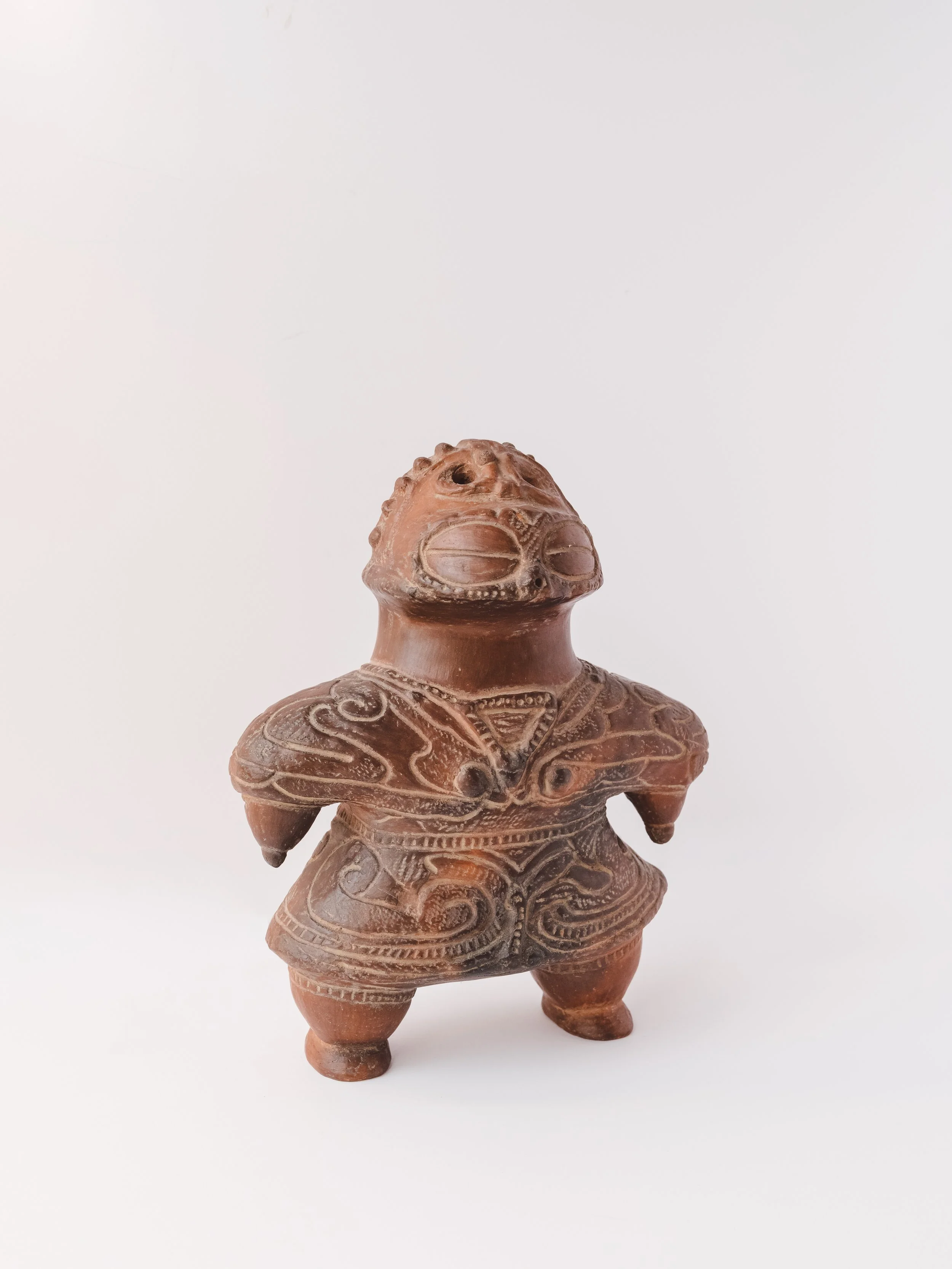 Image 1 of 14
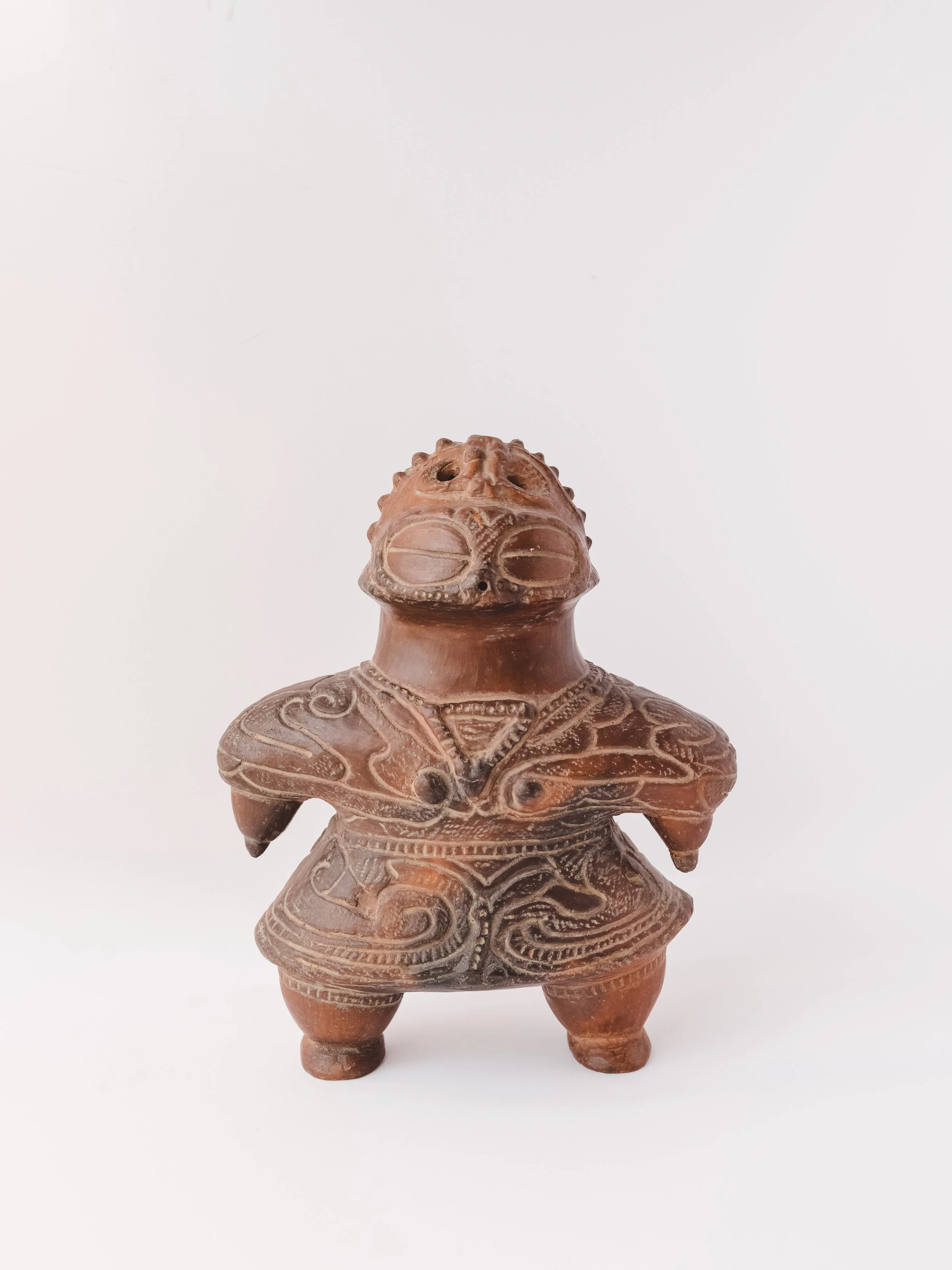 Image 2 of 14
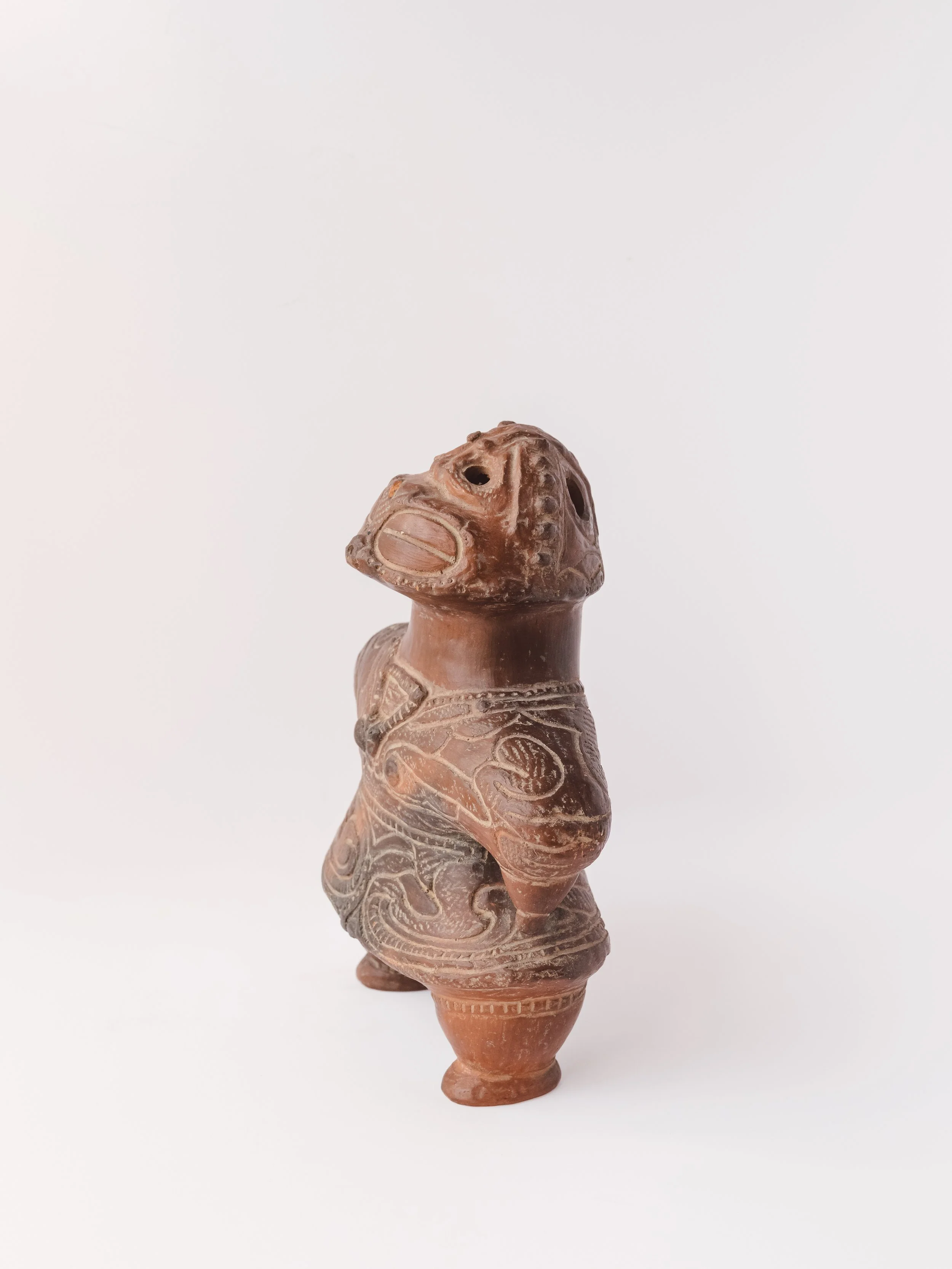 Image 3 of 14
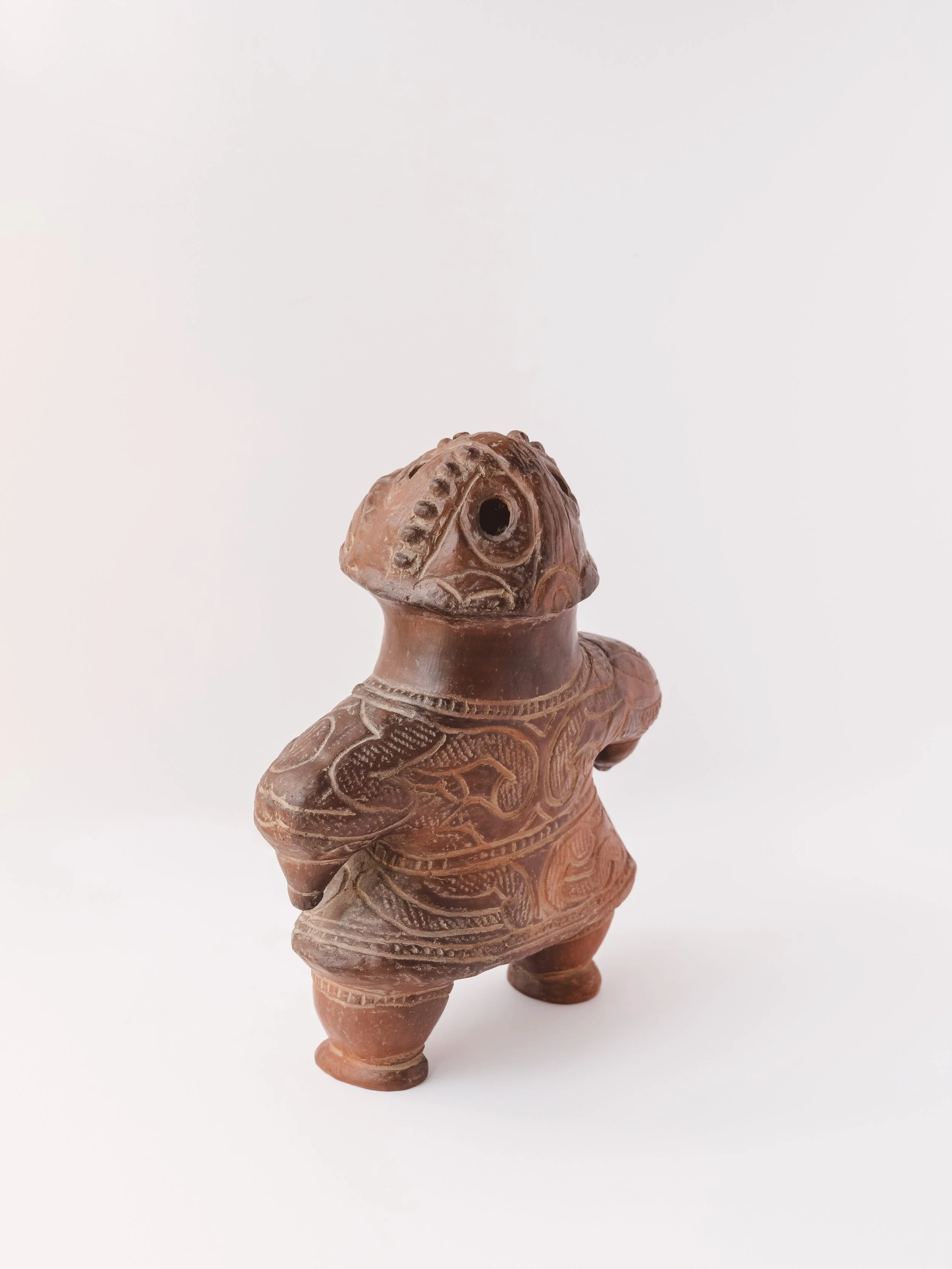 Image 4 of 14
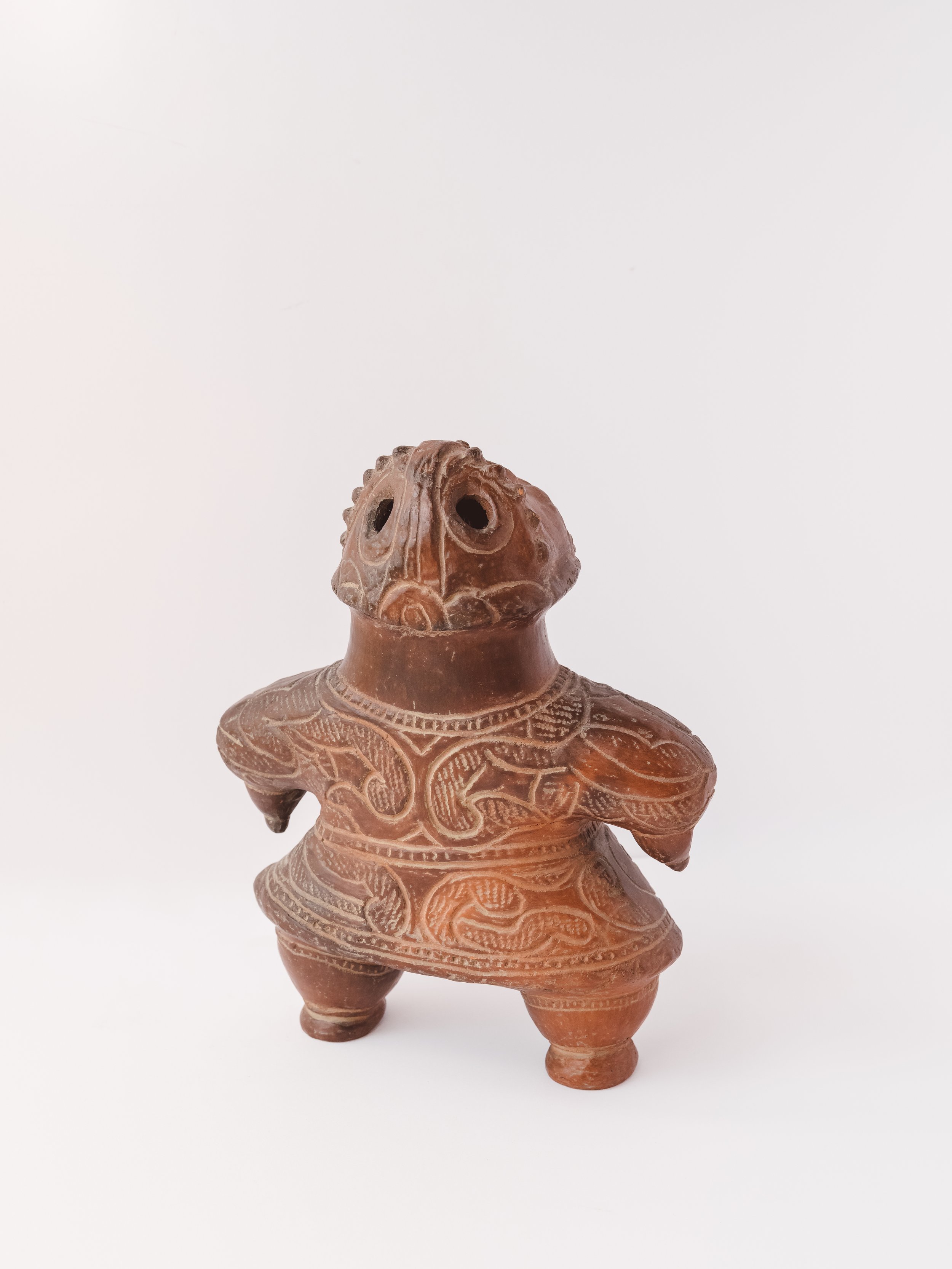 Image 5 of 14
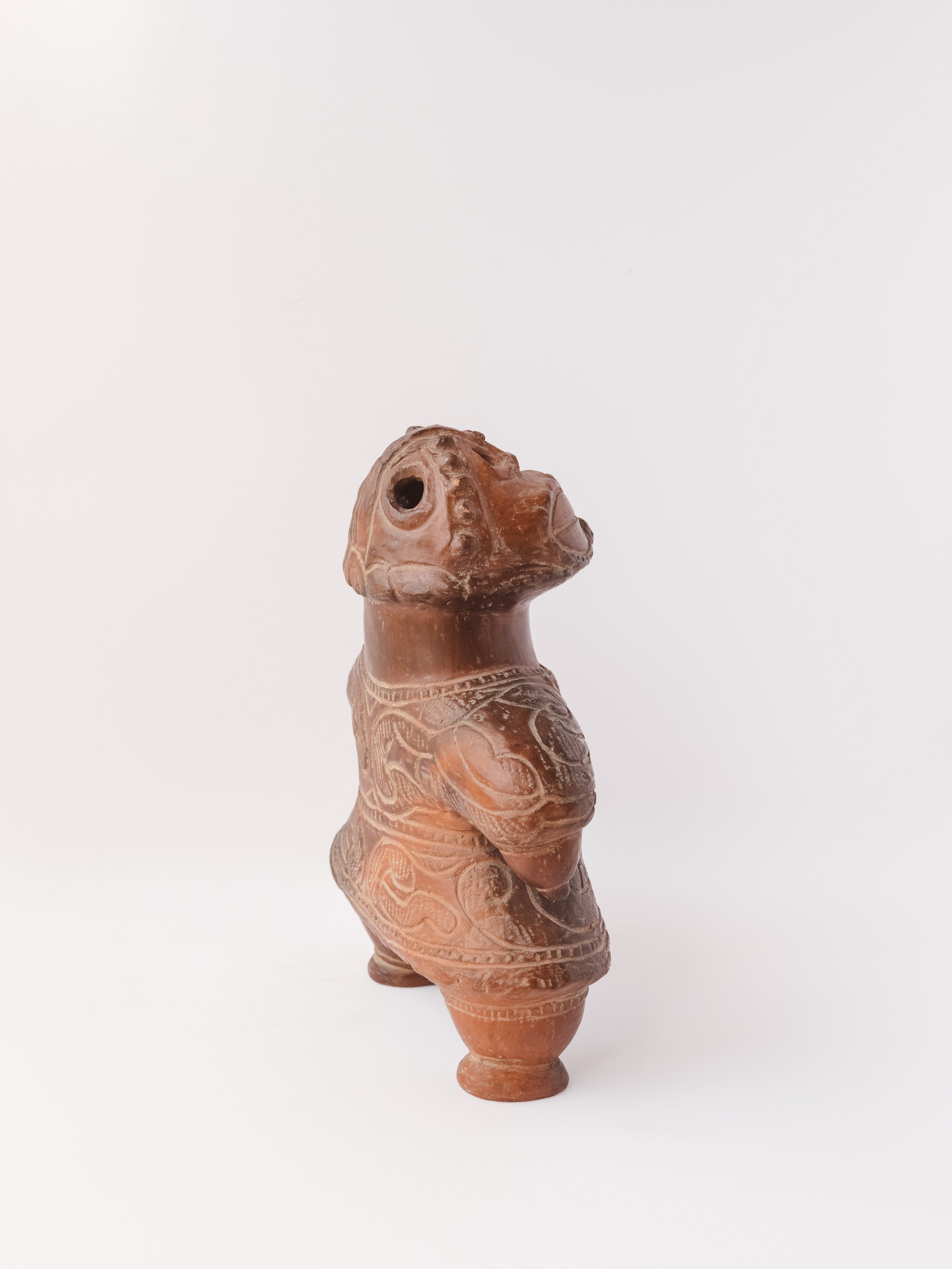 Image 6 of 14
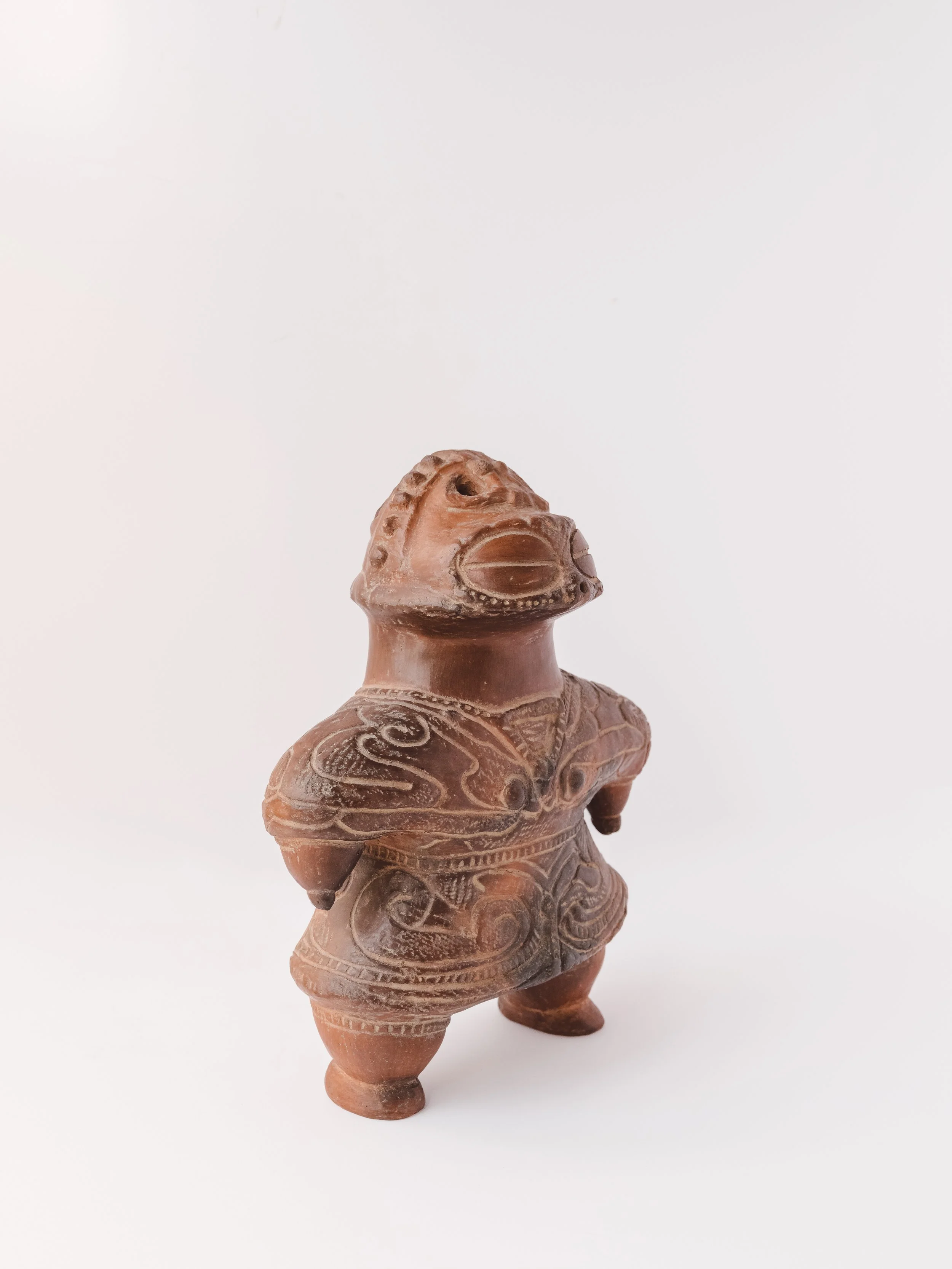 Image 7 of 14
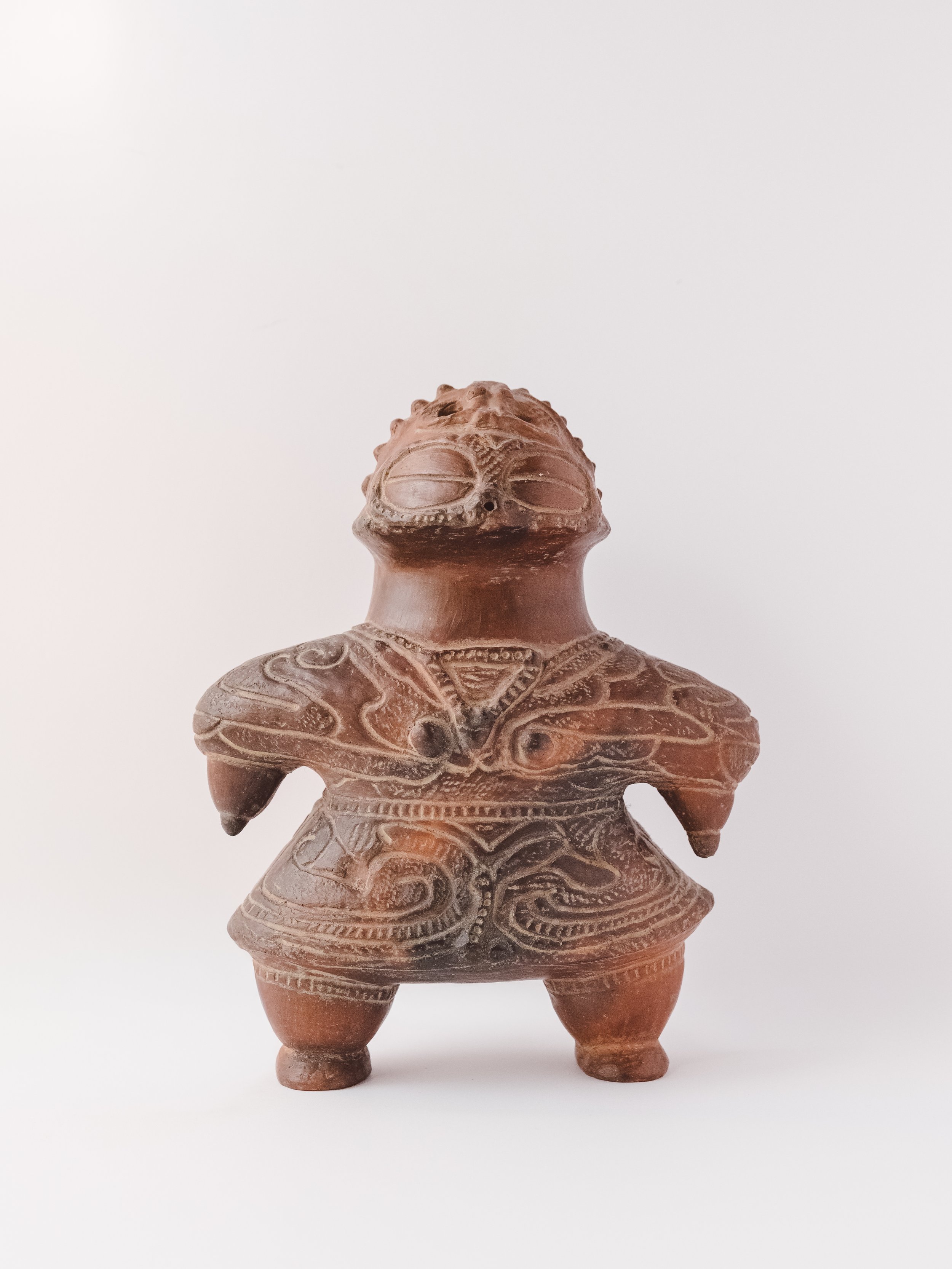 Image 8 of 14
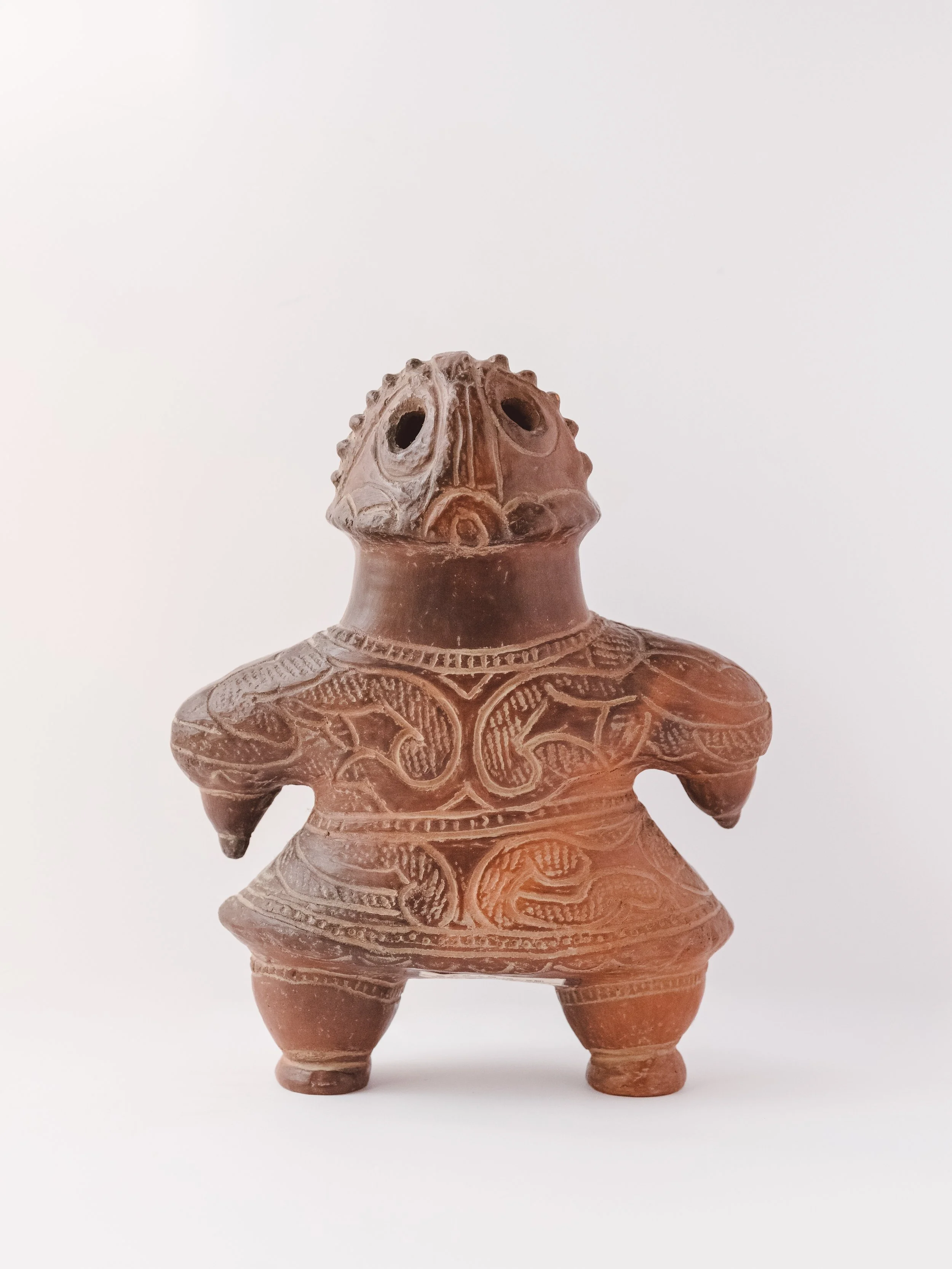 Image 9 of 14
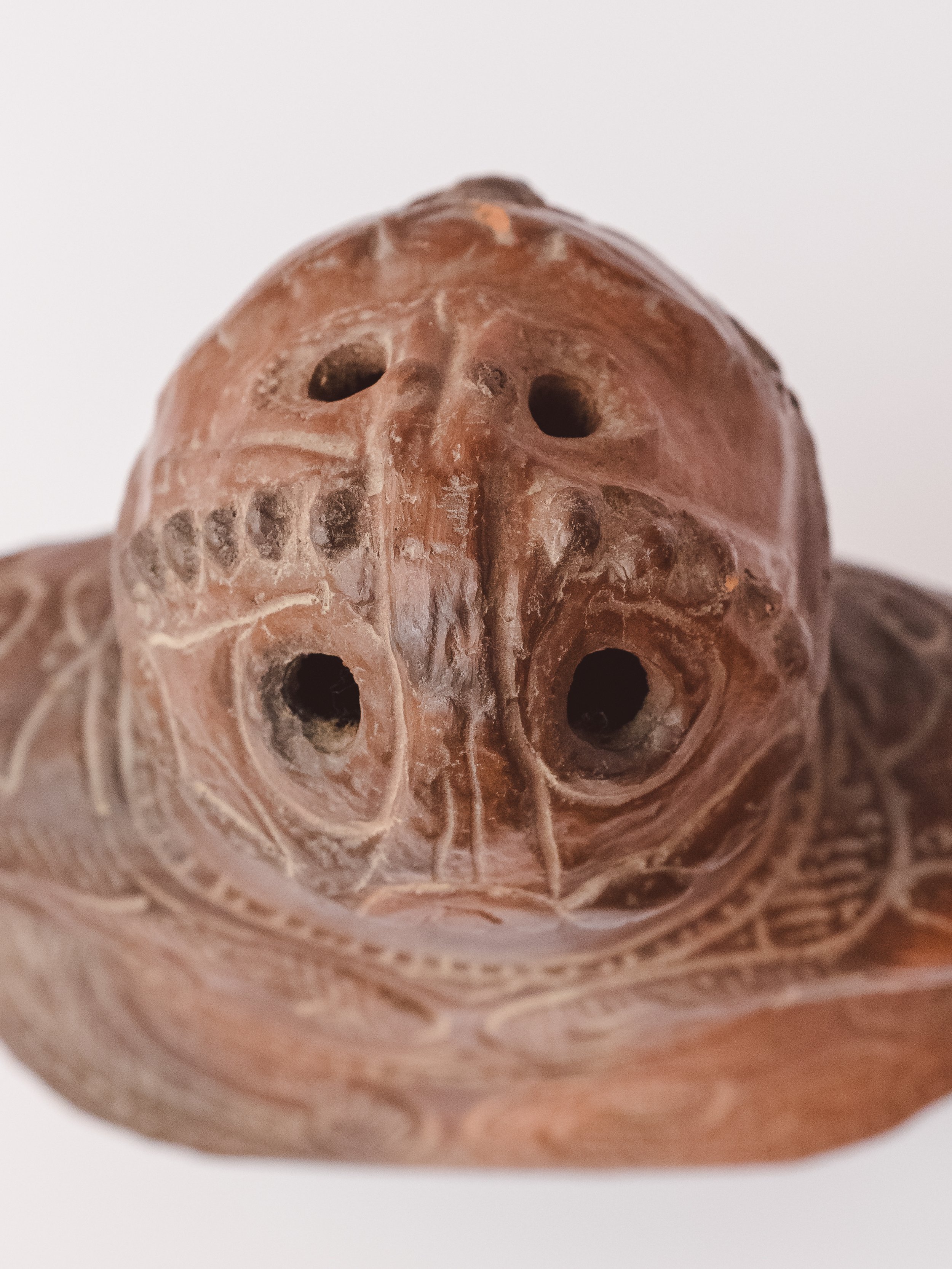 Image 10 of 14
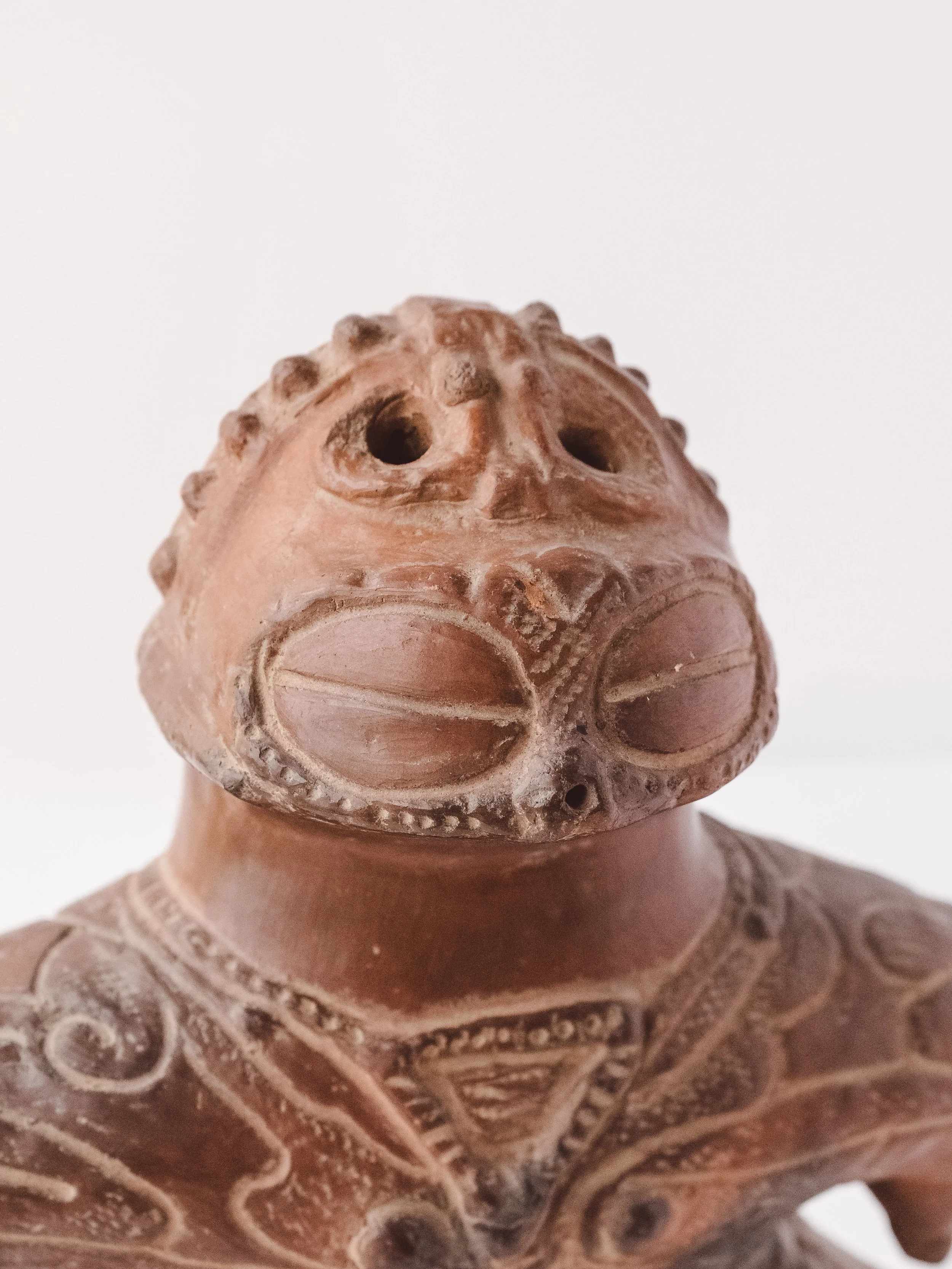 Image 11 of 14
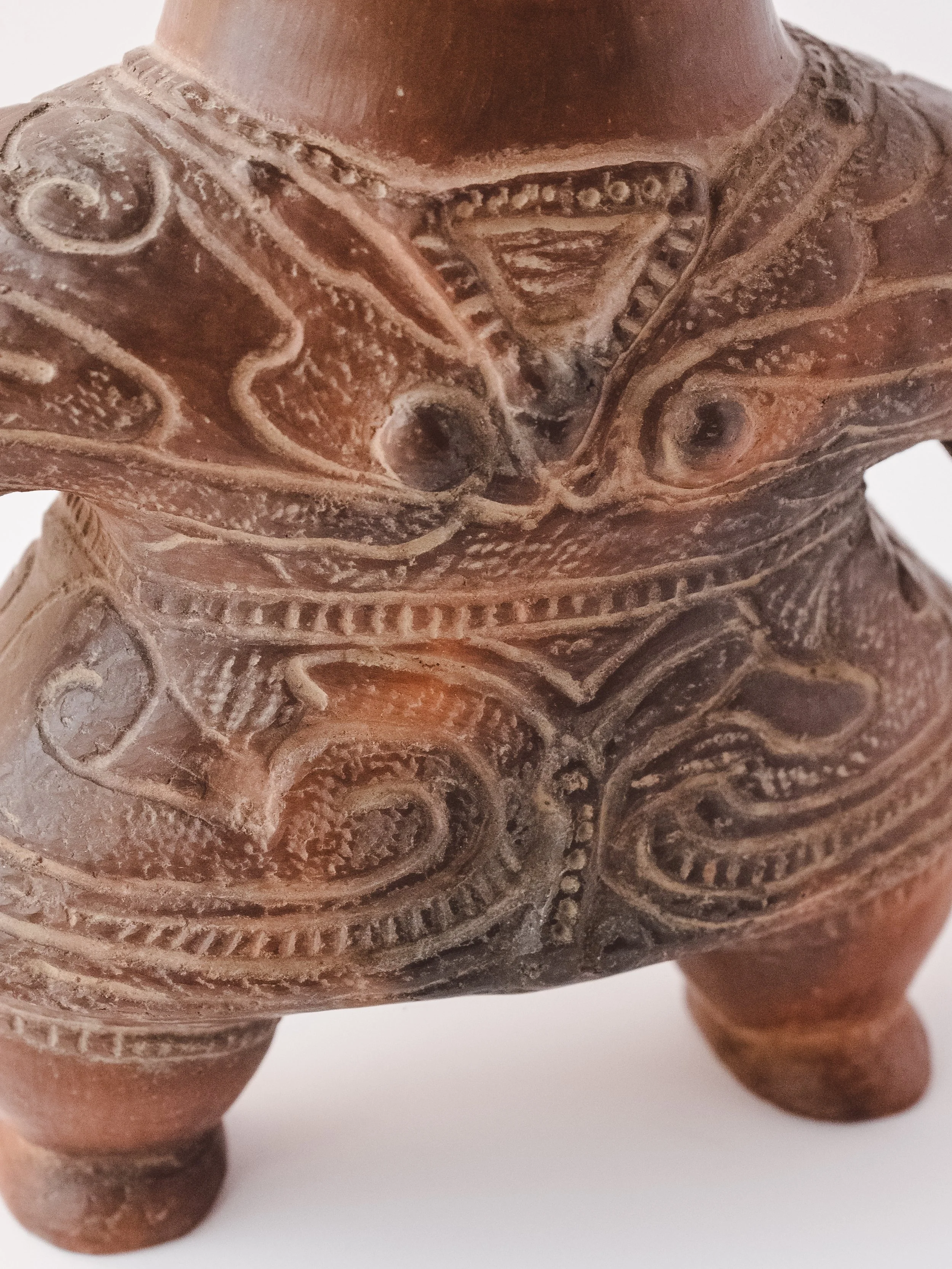 Image 12 of 14
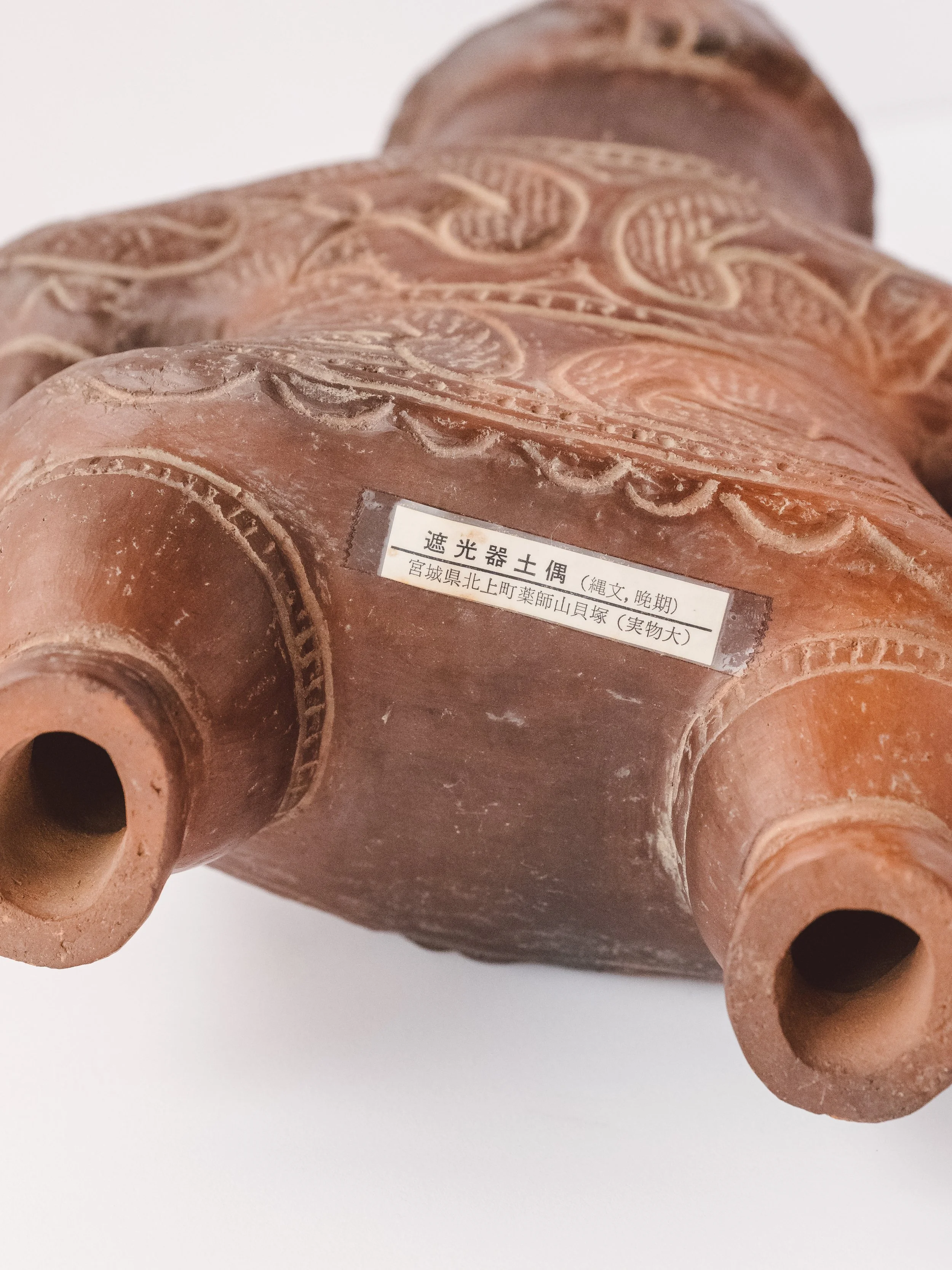 Image 13 of 14
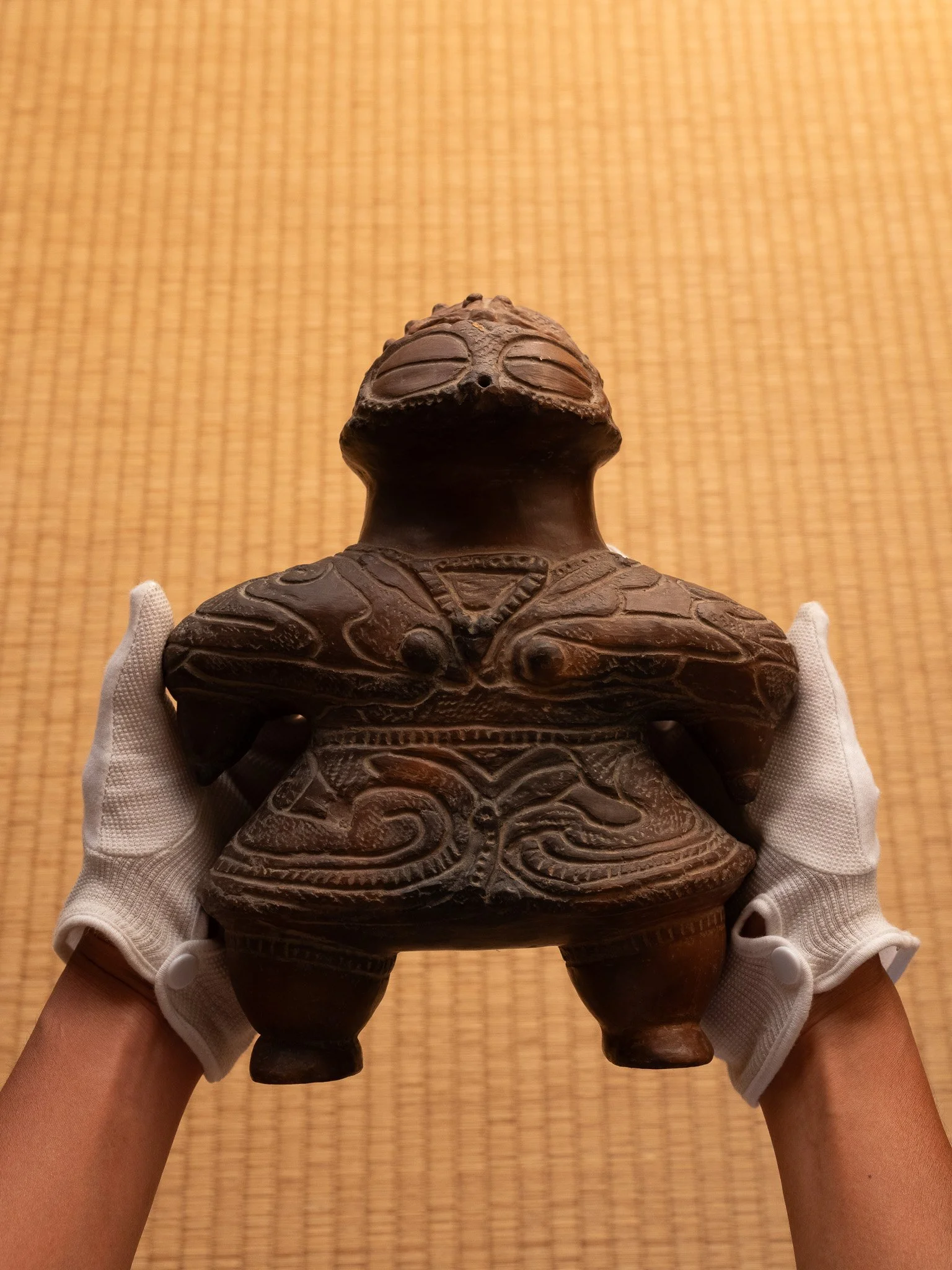 Image 14 of 14