【 The Concept 】
A ship arrives from nowhere — loaded beyond reason. Golden bales rise from its deck in a tight pyramid. Red coral branches frame a pale blue sail bearing a single character: "treasure." In Japan, this vessel has no port of origin and no captain. It exists only as a vehicle for belief — the conviction, held for centuries, that fortune does not grow from within but arrives from across the water, unannounced, carrying everything a household could need. An anonymous craftsman in the early twentieth century translated that belief into fired clay and mineral pigment, compressing an entire mythology of abundance into an object that fits between two open hands.
【 The Function 】
This object was designed to be placed — deliberately, with intention — in the corner of a room where prosperity is invited to enter. In traditional practice, the bow of the ship faces inward, toward the center of the home, so that its cargo flows into the household rather than away from it. It is not a passive ornament. It is a directional instrument, calibrated by centuries of folk logic to channel good fortune through the geometry of its placement.
【 The Texture 】
The surface is unglazed clay finished with hand-applied mineral pigment — matte, porous, and warm to the touch in a way that glazed ceramics never achieve. The blue of the sail has softened from its original intensity to a quiet, chalky tone. The gold of the rice bales has matured into a dignified ochre. The red coral is built up in slight relief, giving the fingers something to discover that the eyes might miss.
This object carries the visible evidence of a century spent in service. Small chips along the upper edge of the sail. Faint discoloration where generations of hands have lifted it from the same spot. Dust that has settled into recesses and become part of the surface. These are not flaws to be overlooked — they are the physical record of an object that was placed on a shelf, believed in, and never discarded. In a market saturated with pristine reproductions, these marks are precisely what cannot be faked. They are the difference between an object that was made and an object that was lived with.
【 Presence 】
At twelve centimeters, this ship does not dominate a shelf. It occupies it with the quiet authority of something that has been placed in the same spot for a hundred years. The sail faces forward. The cargo is stacked high. The message is not subtle — it is a direct, unapologetic request for abundance, encoded in clay and color. Place it on an entryway console, a bookshelf, or beside a window where light enters. Let the bow point inward. The rest is between you and the ship.
Sourced from a private collection in northern Japan.
【 The Concept 】
A ship arrives from nowhere — loaded beyond reason. Golden bales rise from its deck in a tight pyramid. Red coral branches frame a pale blue sail bearing a single character: "treasure." In Japan, this vessel has no port of origin and no captain. It exists only as a vehicle for belief — the conviction, held for centuries, that fortune does not grow from within but arrives from across the water, unannounced, carrying everything a household could need. An anonymous craftsman in the early twentieth century translated that belief into fired clay and mineral pigment, compressing an entire mythology of abundance into an object that fits between two open hands.
【 The Function 】
This object was designed to be placed — deliberately, with intention — in the corner of a room where prosperity is invited to enter. In traditional practice, the bow of the ship faces inward, toward the center of the home, so that its cargo flows into the household rather than away from it. It is not a passive ornament. It is a directional instrument, calibrated by centuries of folk logic to channel good fortune through the geometry of its placement.
【 The Texture 】
The surface is unglazed clay finished with hand-applied mineral pigment — matte, porous, and warm to the touch in a way that glazed ceramics never achieve. The blue of the sail has softened from its original intensity to a quiet, chalky tone. The gold of the rice bales has matured into a dignified ochre. The red coral is built up in slight relief, giving the fingers something to discover that the eyes might miss.
This object carries the visible evidence of a century spent in service. Small chips along the upper edge of the sail. Faint discoloration where generations of hands have lifted it from the same spot. Dust that has settled into recesses and become part of the surface. These are not flaws to be overlooked — they are the physical record of an object that was placed on a shelf, believed in, and never discarded. In a market saturated with pristine reproductions, these marks are precisely what cannot be faked. They are the difference between an object that was made and an object that was lived with.
【 Presence 】
At twelve centimeters, this ship does not dominate a shelf. It occupies it with the quiet authority of something that has been placed in the same spot for a hundred years. The sail faces forward. The cargo is stacked high. The message is not subtle — it is a direct, unapologetic request for abundance, encoded in clay and color. Place it on an entryway console, a bookshelf, or beside a window where light enters. Let the bow point inward. The rest is between you and the ship.
Sourced from a private collection in northern Japan.


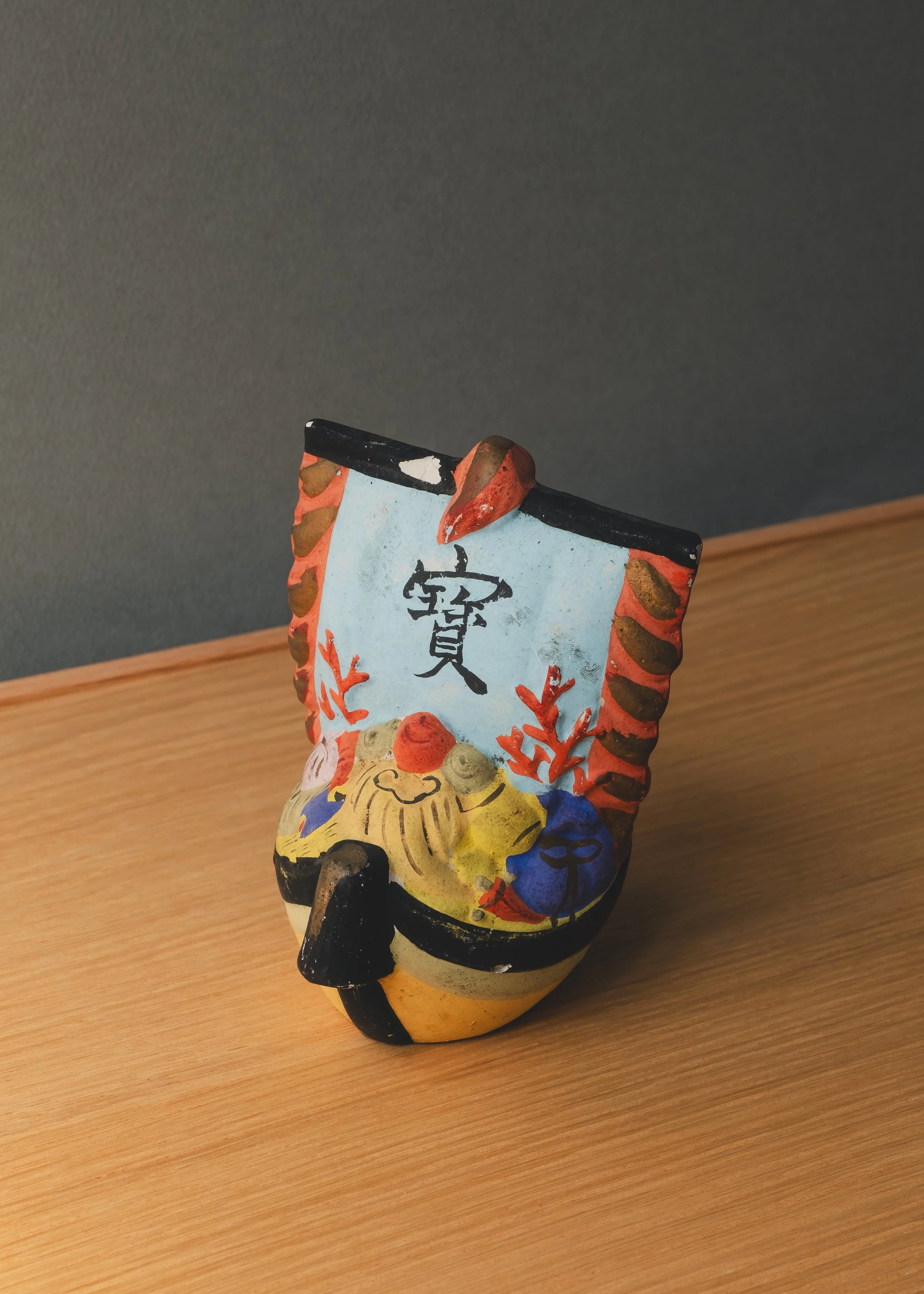 Image 1 of 10
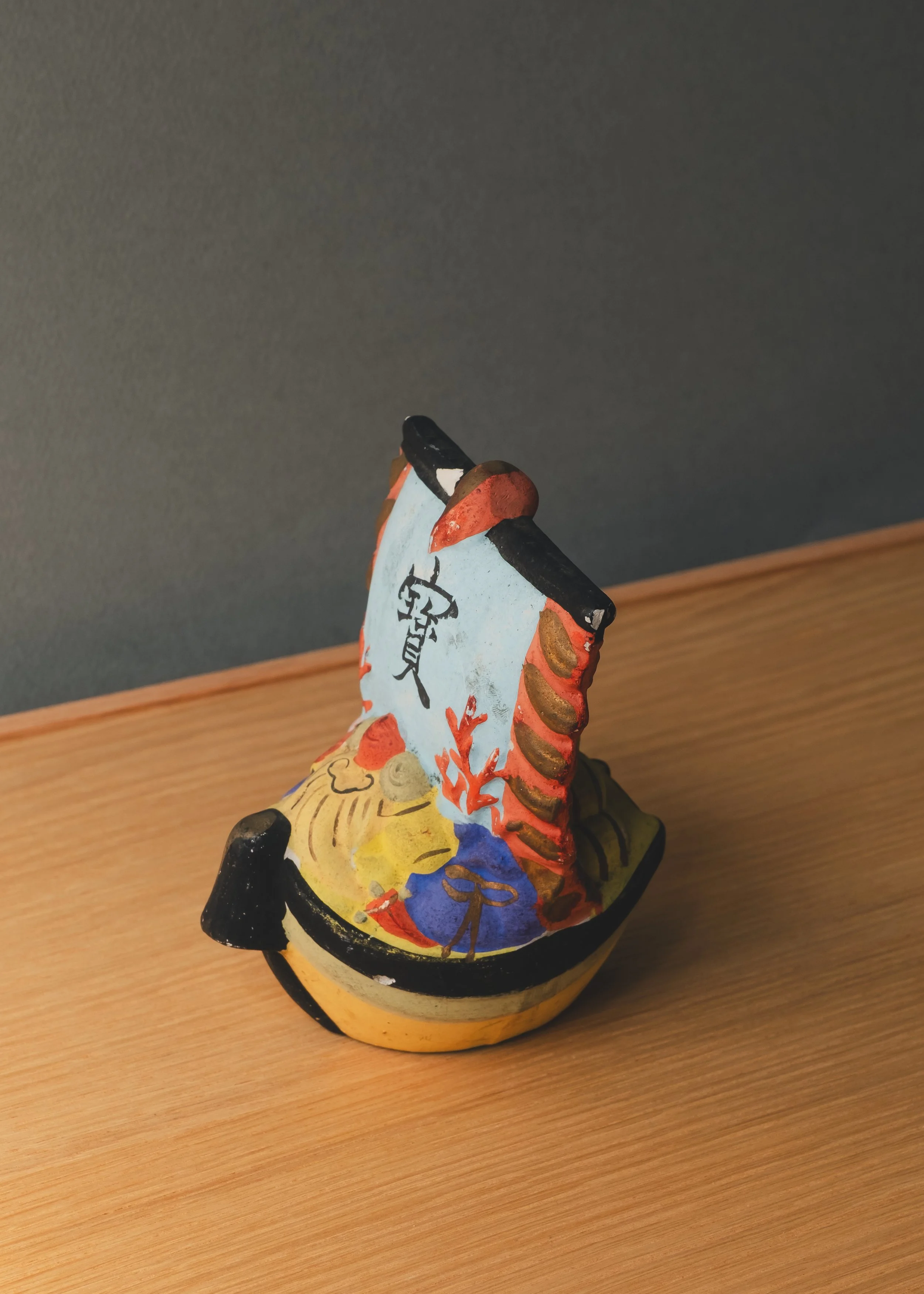 Image 2 of 10
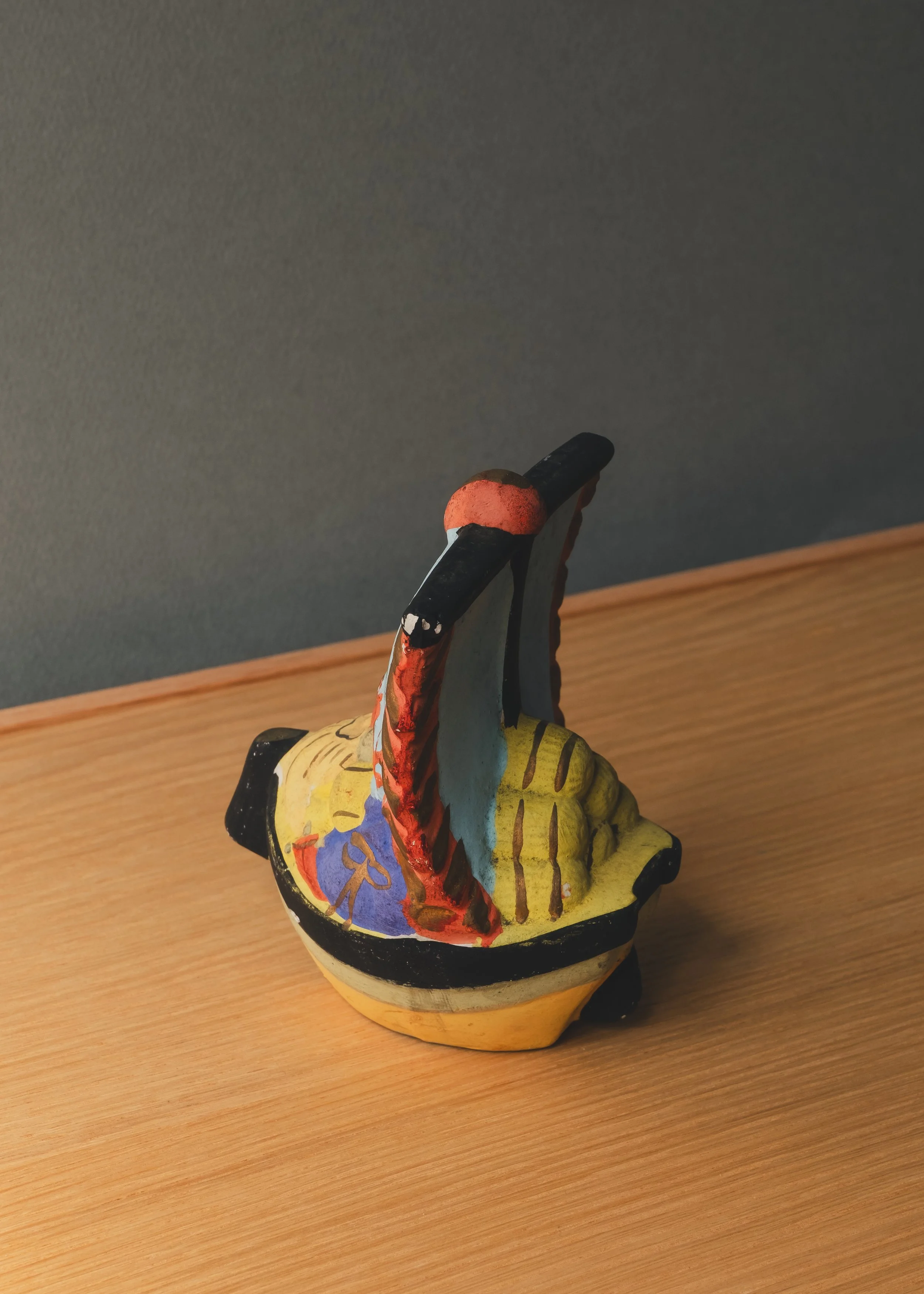 Image 3 of 10
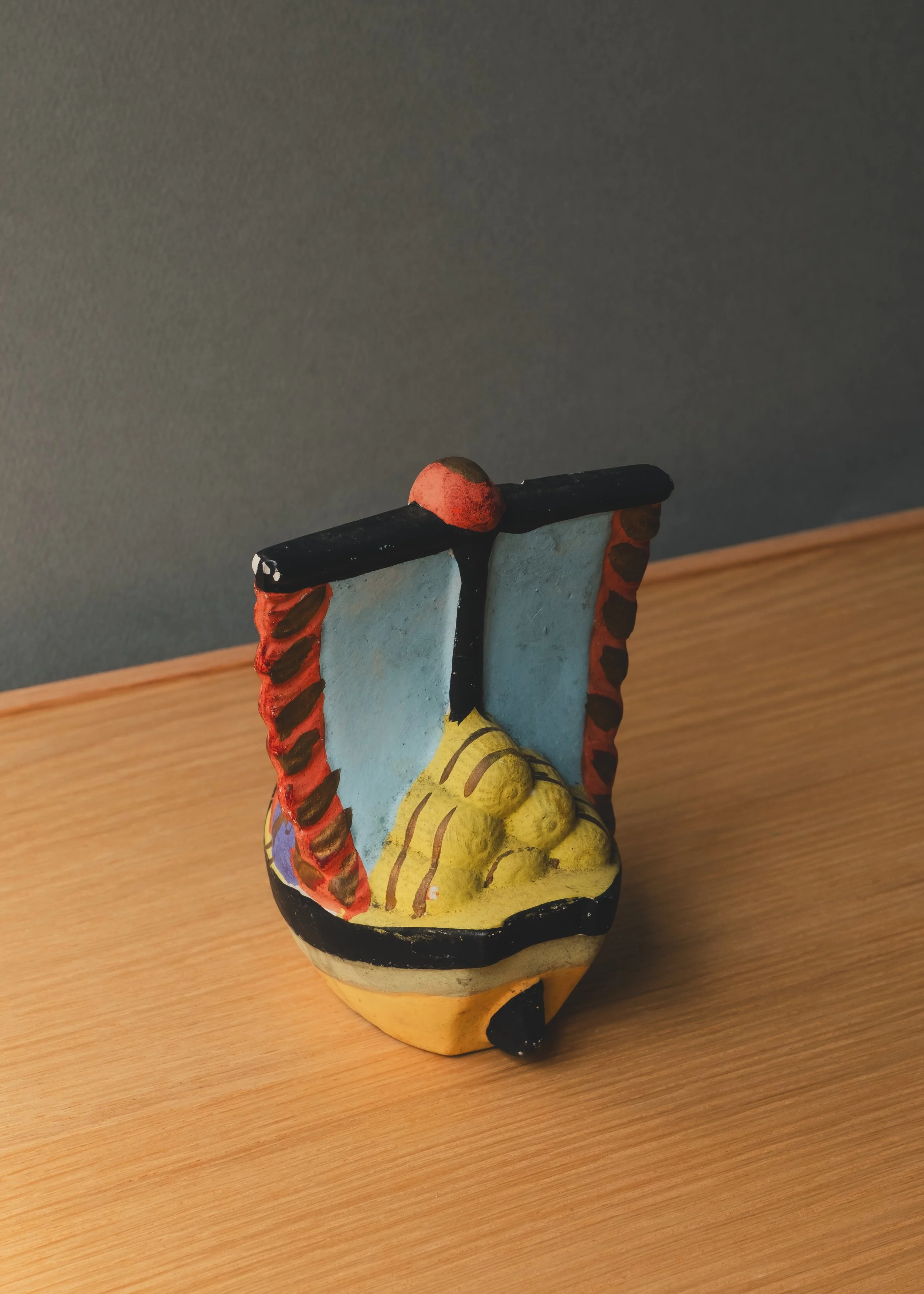 Image 4 of 10
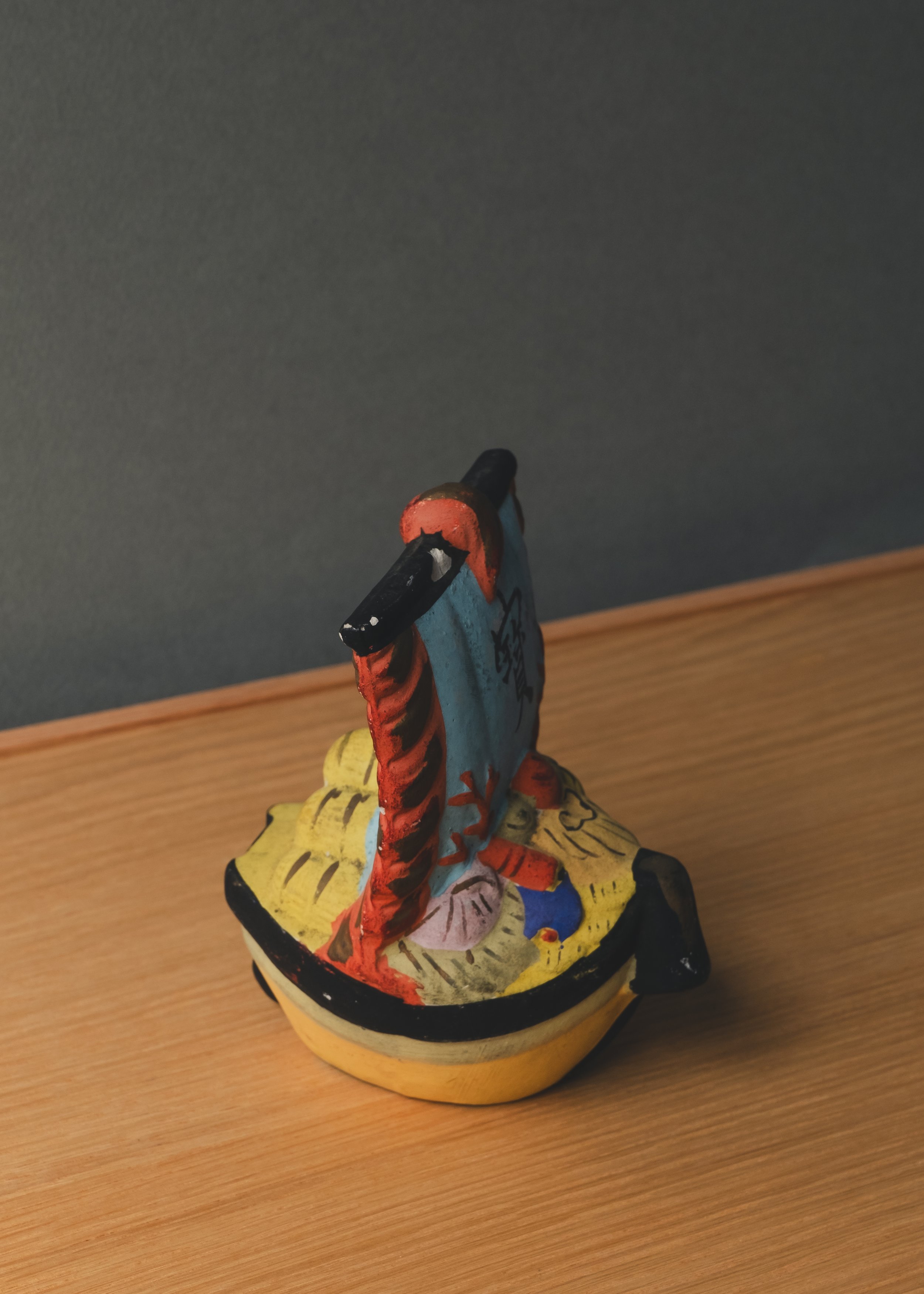 Image 5 of 10
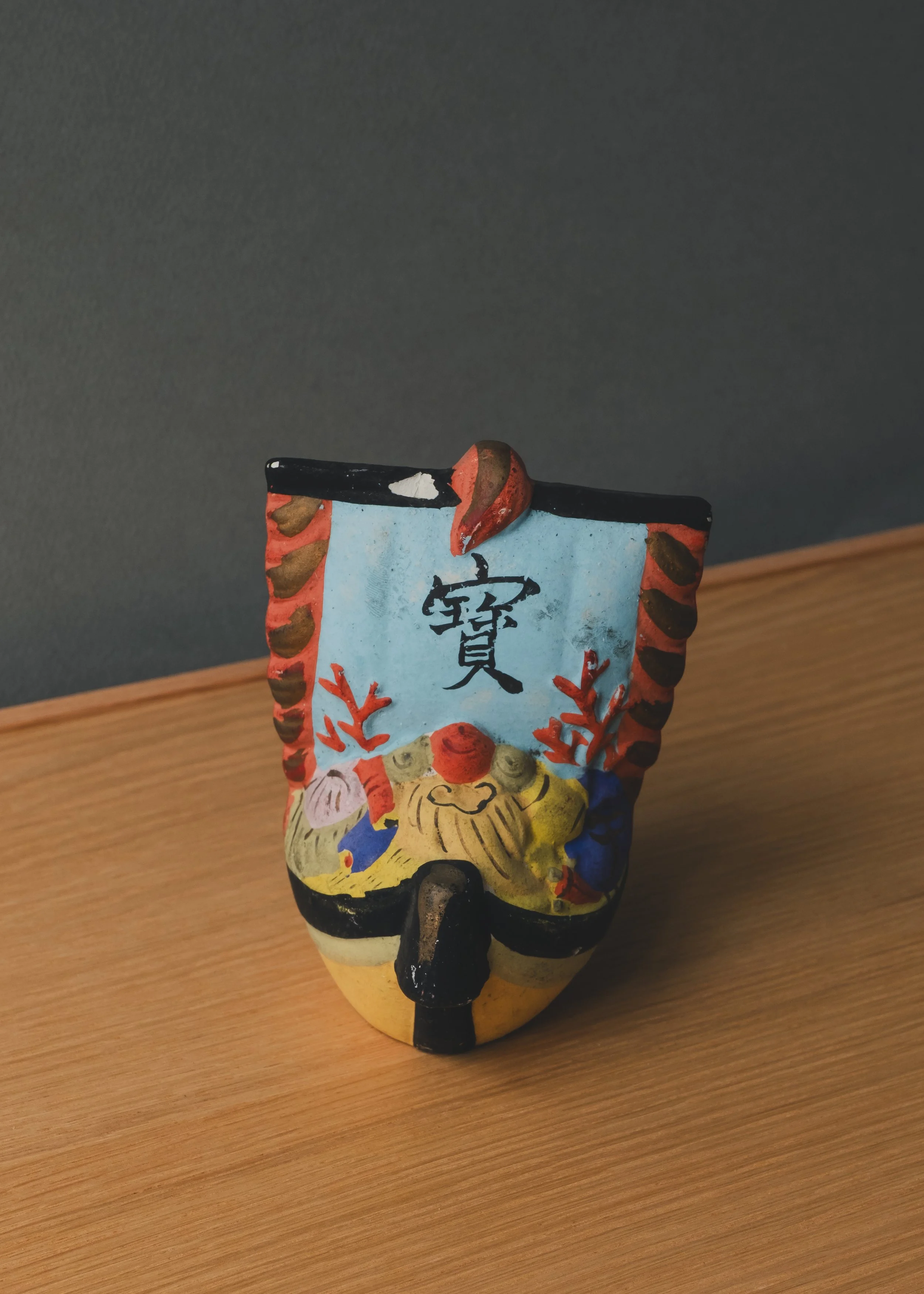 Image 6 of 10
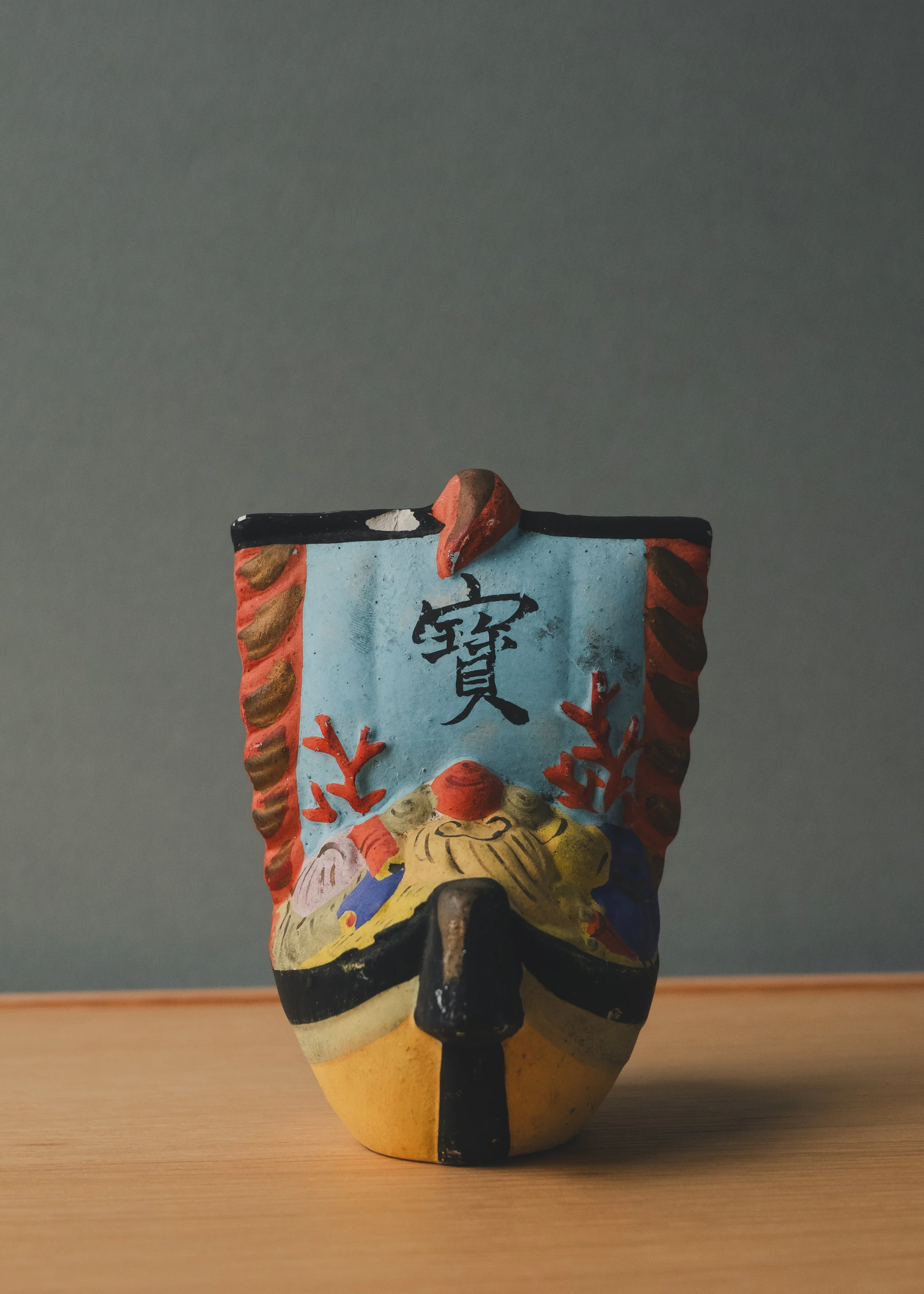 Image 7 of 10
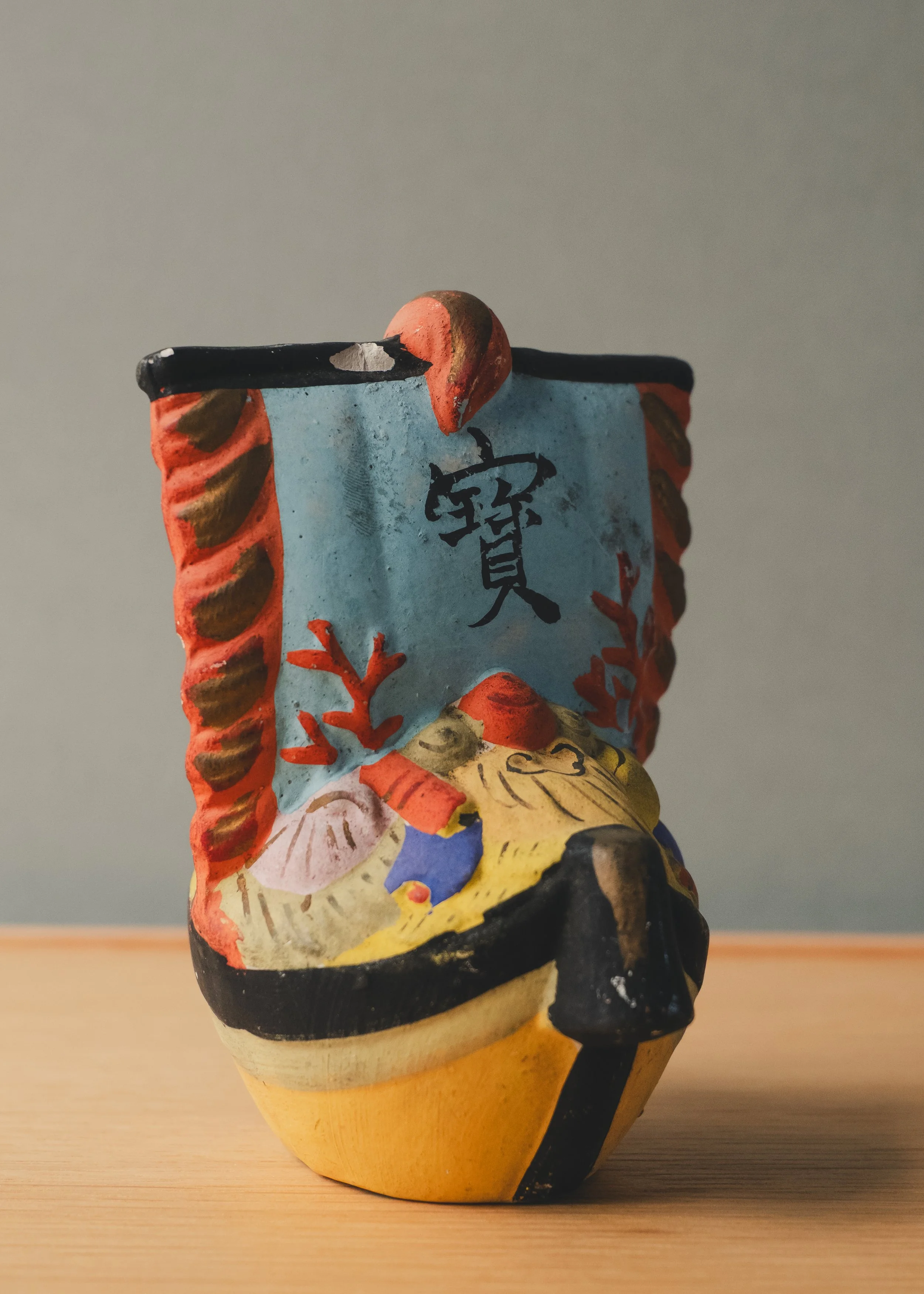 Image 8 of 10
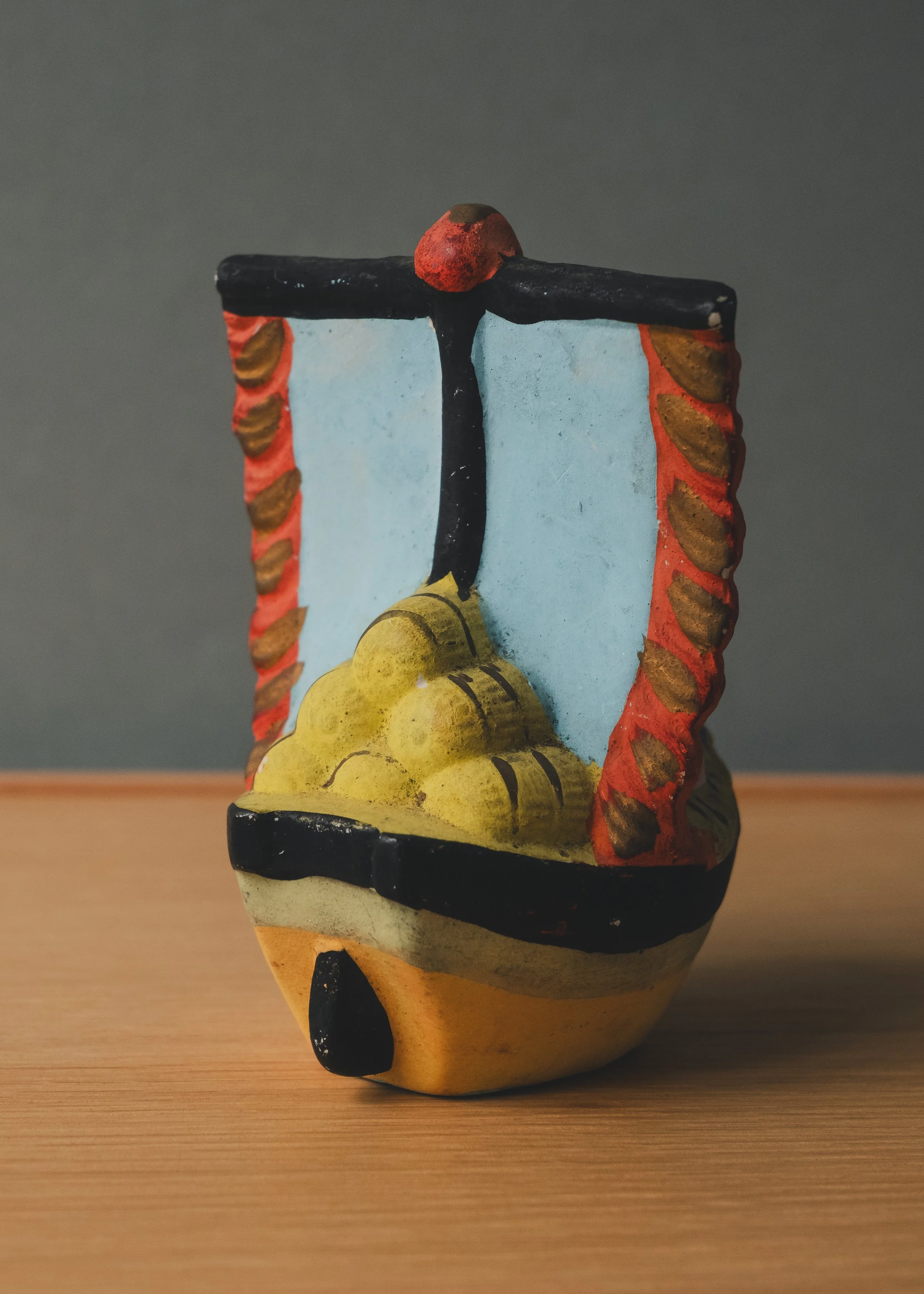 Image 9 of 10
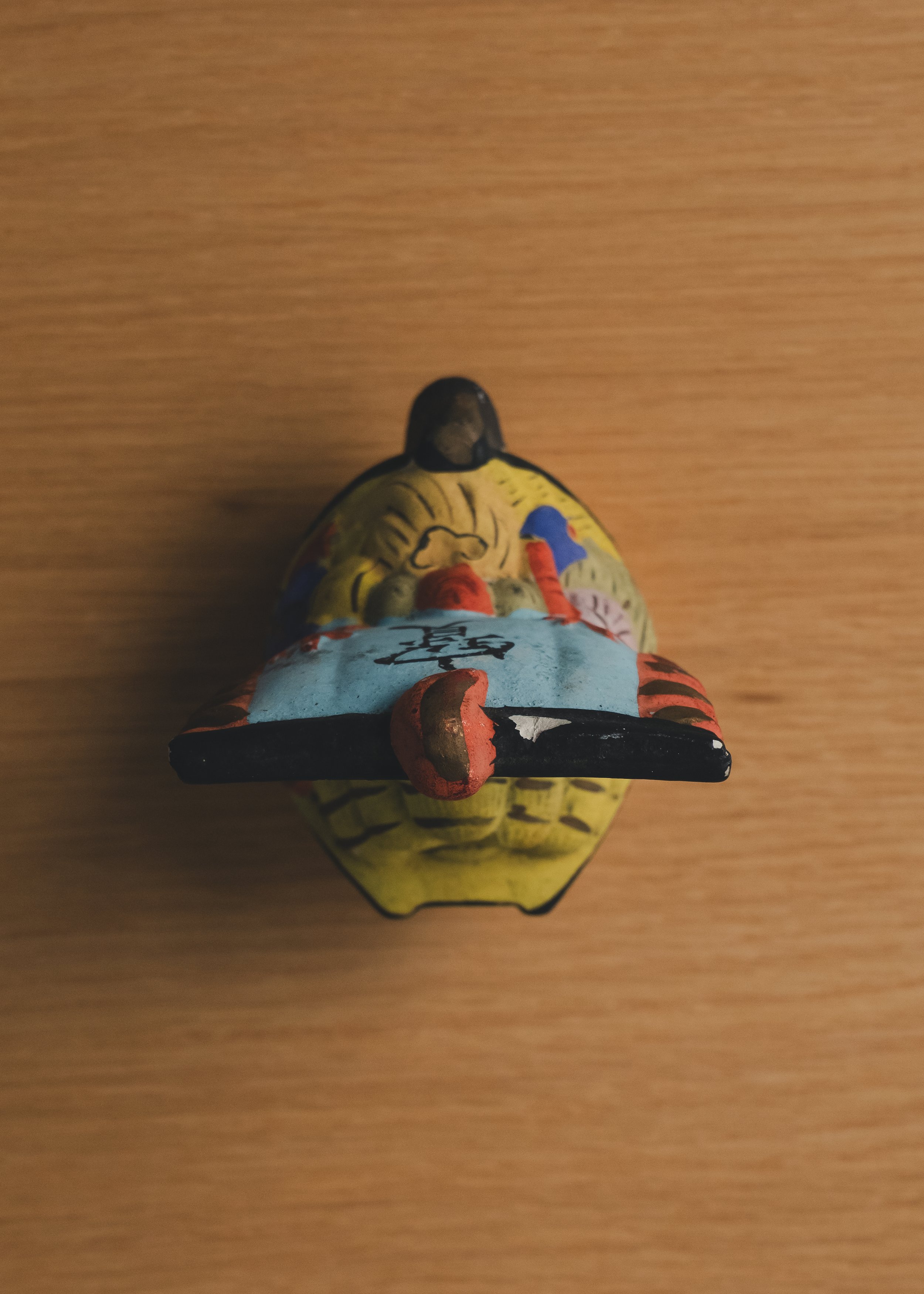 Image 10 of 10