【 The Concept 】
In ancient East Asia, there was a stone more valuable than gold. They called it jade — and for centuries, every attempt to replicate its color in clay ended in failure. Then a potter discovered that iron, starved of oxygen inside a sealed kiln, would turn green. Not painted green. Green from within — the way jade is green from within. The technique became the most coveted in the ceramic world. An anonymous craftsman took that technique and applied it to a form that had nothing to do with vessels or bowls. They made a horse. Not a running horse, not a rearing horse — a standing one, legs straight, head level, facing forward with the plain composure of an animal that has no reason to move. The glaze settled into the carved lines of the saddle, darkened in the grooves of the mane, and caught the light along the ridge of the spine in a way that changes with the hour of the day.
【 The Function 】
A sculptural object. It does not hold anything, pour anything, or open anything. Its function is presence — the act of occupying a shelf, a desk, or a mantelpiece with enough visual weight that nothing else needs to be placed beside it. The saddle carries relief patterns pressed into the clay before firing — geometric motifs that reference textile traditions far older than the glaze itself. These marks are not painted on. They are built into the surface and revealed by the way the glaze settles into them.
【 The Texture 】
The entire body is covered in a single glaze — a grey-green celadon that shifts between sage and seafoam depending on the light. The surface is smooth and luminous, with a glass-like quality that invites touch. Beneath the glaze, the clay is pale and dense. The mane is carved in low relief. The tail curls against the body in a single continuous line. The hooves are planted, the ears are pointed, and the face is simplified to the edge of abstraction — just enough detail to read as a horse, just little enough to read as sculpture.
【 Presence 】
At nineteen centimeters tall, this is not a miniature. It commands a shelf the way a single vase commands a table — by being the only thing that matters. Pick it up and the surprise is immediate: it is lighter than it looks. The body is hollow, a shell of fired clay and glaze with nothing inside but air. That lightness is not a flaw. It is the proof that this object was made to be seen, not to anchor anything down. The celadon surface reflects its surroundings in a soft, distorted way, absorbing the colors of the room and returning them greener, quieter, older. Place it where natural light reaches it in the morning. By afternoon, it will look like a different object.
Sourced from a private collection in Japan.
【 The Concept 】
In ancient East Asia, there was a stone more valuable than gold. They called it jade — and for centuries, every attempt to replicate its color in clay ended in failure. Then a potter discovered that iron, starved of oxygen inside a sealed kiln, would turn green. Not painted green. Green from within — the way jade is green from within. The technique became the most coveted in the ceramic world. An anonymous craftsman took that technique and applied it to a form that had nothing to do with vessels or bowls. They made a horse. Not a running horse, not a rearing horse — a standing one, legs straight, head level, facing forward with the plain composure of an animal that has no reason to move. The glaze settled into the carved lines of the saddle, darkened in the grooves of the mane, and caught the light along the ridge of the spine in a way that changes with the hour of the day.
【 The Function 】
A sculptural object. It does not hold anything, pour anything, or open anything. Its function is presence — the act of occupying a shelf, a desk, or a mantelpiece with enough visual weight that nothing else needs to be placed beside it. The saddle carries relief patterns pressed into the clay before firing — geometric motifs that reference textile traditions far older than the glaze itself. These marks are not painted on. They are built into the surface and revealed by the way the glaze settles into them.
【 The Texture 】
The entire body is covered in a single glaze — a grey-green celadon that shifts between sage and seafoam depending on the light. The surface is smooth and luminous, with a glass-like quality that invites touch. Beneath the glaze, the clay is pale and dense. The mane is carved in low relief. The tail curls against the body in a single continuous line. The hooves are planted, the ears are pointed, and the face is simplified to the edge of abstraction — just enough detail to read as a horse, just little enough to read as sculpture.
【 Presence 】
At nineteen centimeters tall, this is not a miniature. It commands a shelf the way a single vase commands a table — by being the only thing that matters. Pick it up and the surprise is immediate: it is lighter than it looks. The body is hollow, a shell of fired clay and glaze with nothing inside but air. That lightness is not a flaw. It is the proof that this object was made to be seen, not to anchor anything down. The celadon surface reflects its surroundings in a soft, distorted way, absorbing the colors of the room and returning them greener, quieter, older. Place it where natural light reaches it in the morning. By afternoon, it will look like a different object.
Sourced from a private collection in Japan.


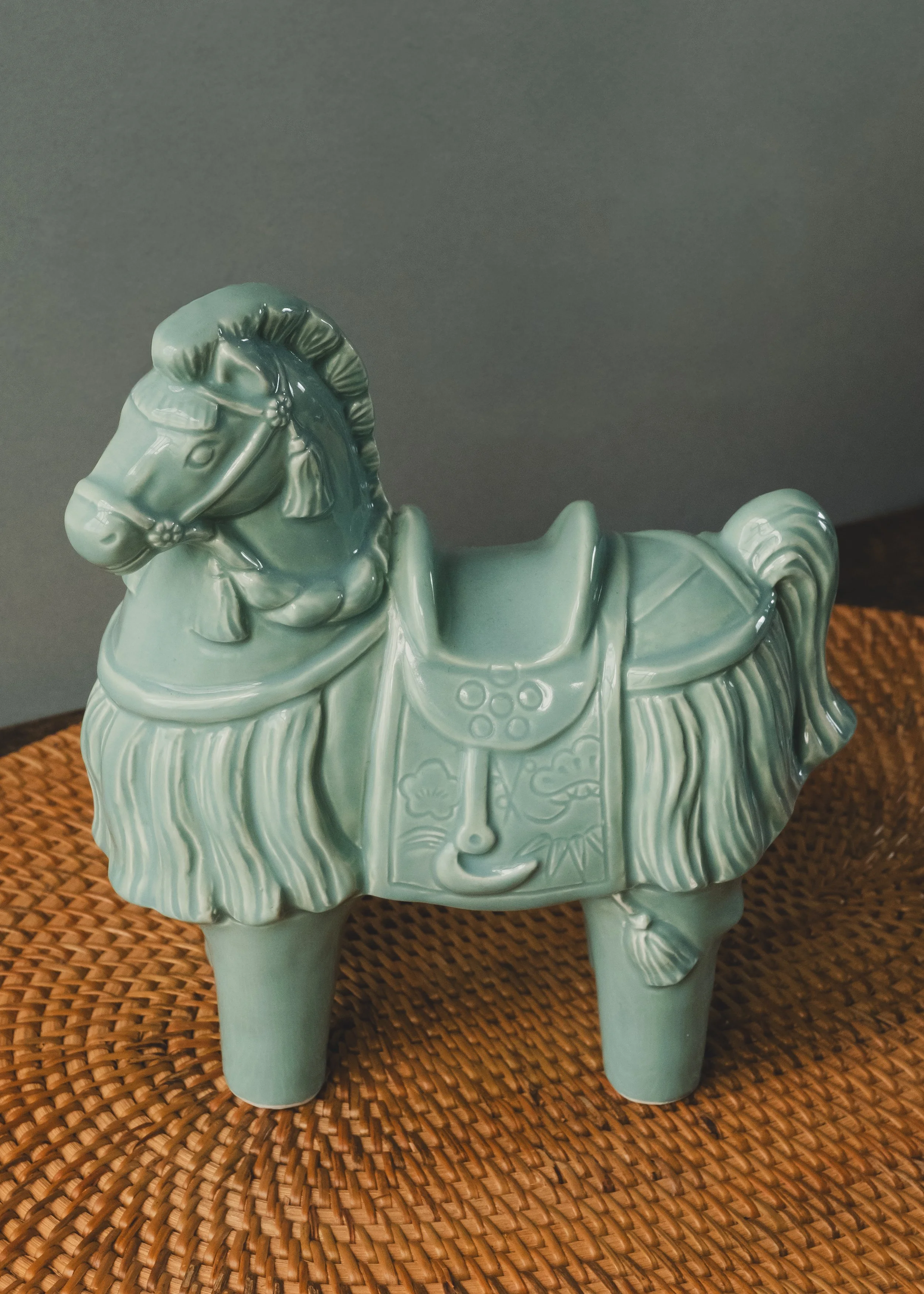 Image 1 of 11
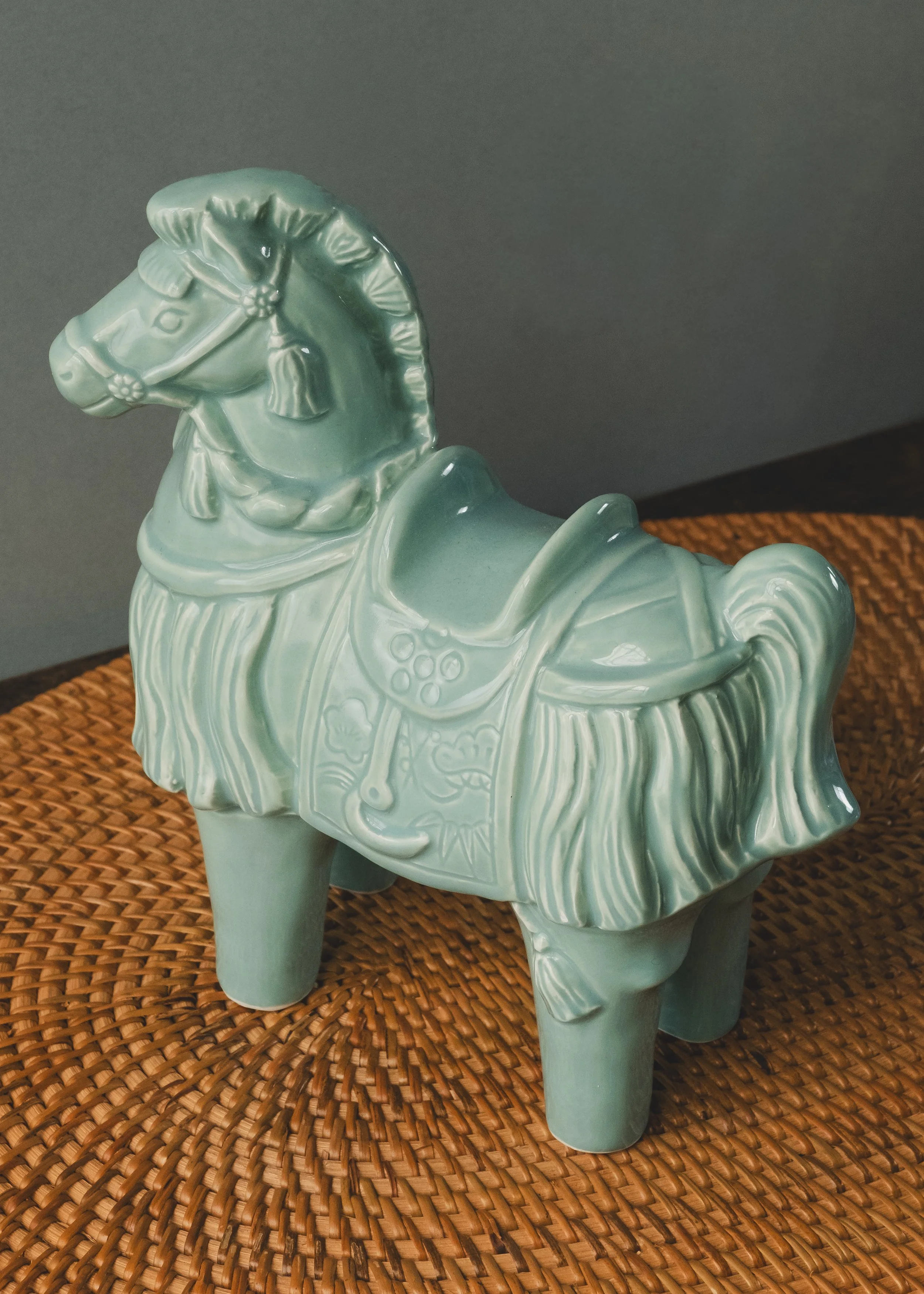 Image 2 of 11
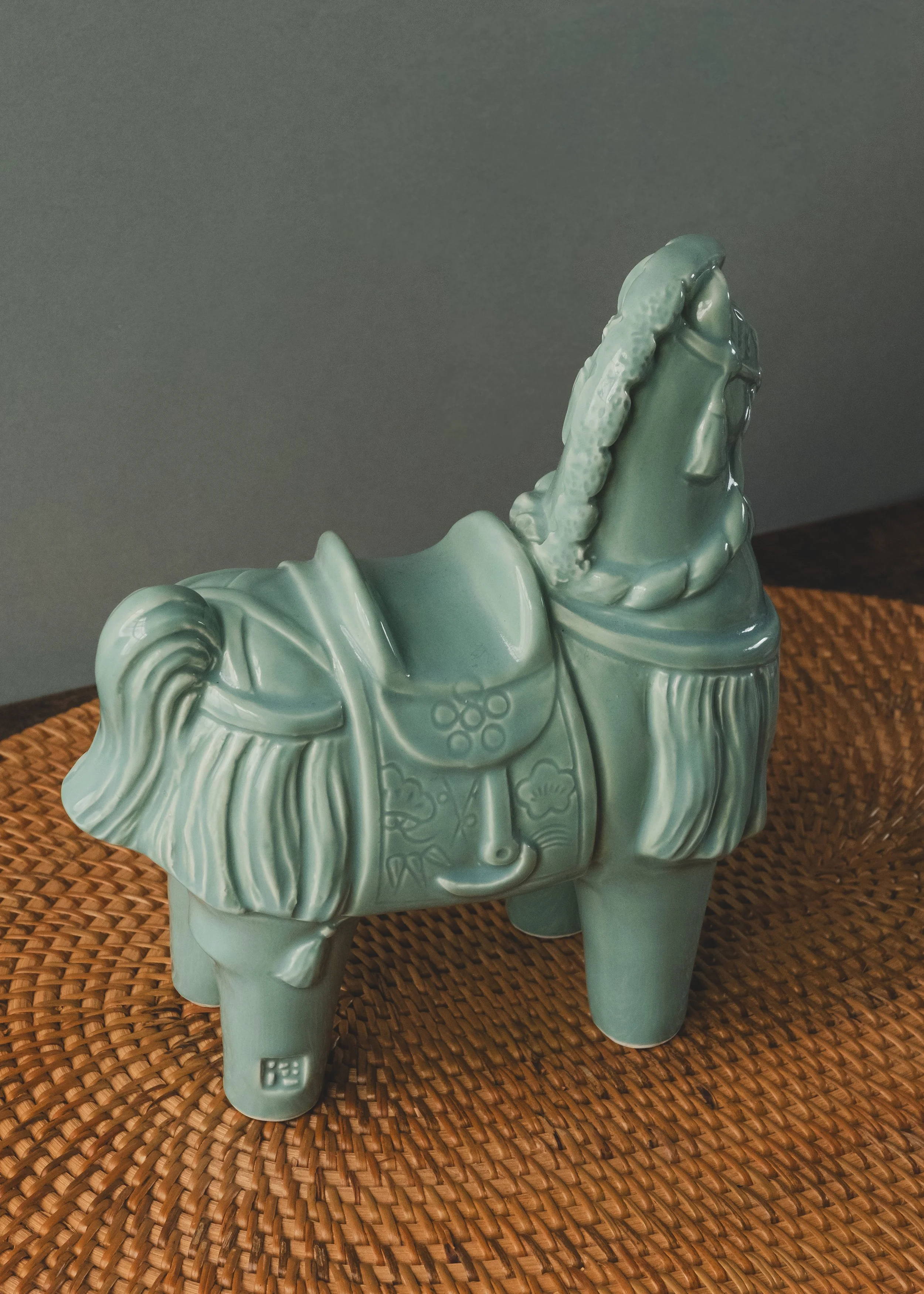 Image 3 of 11
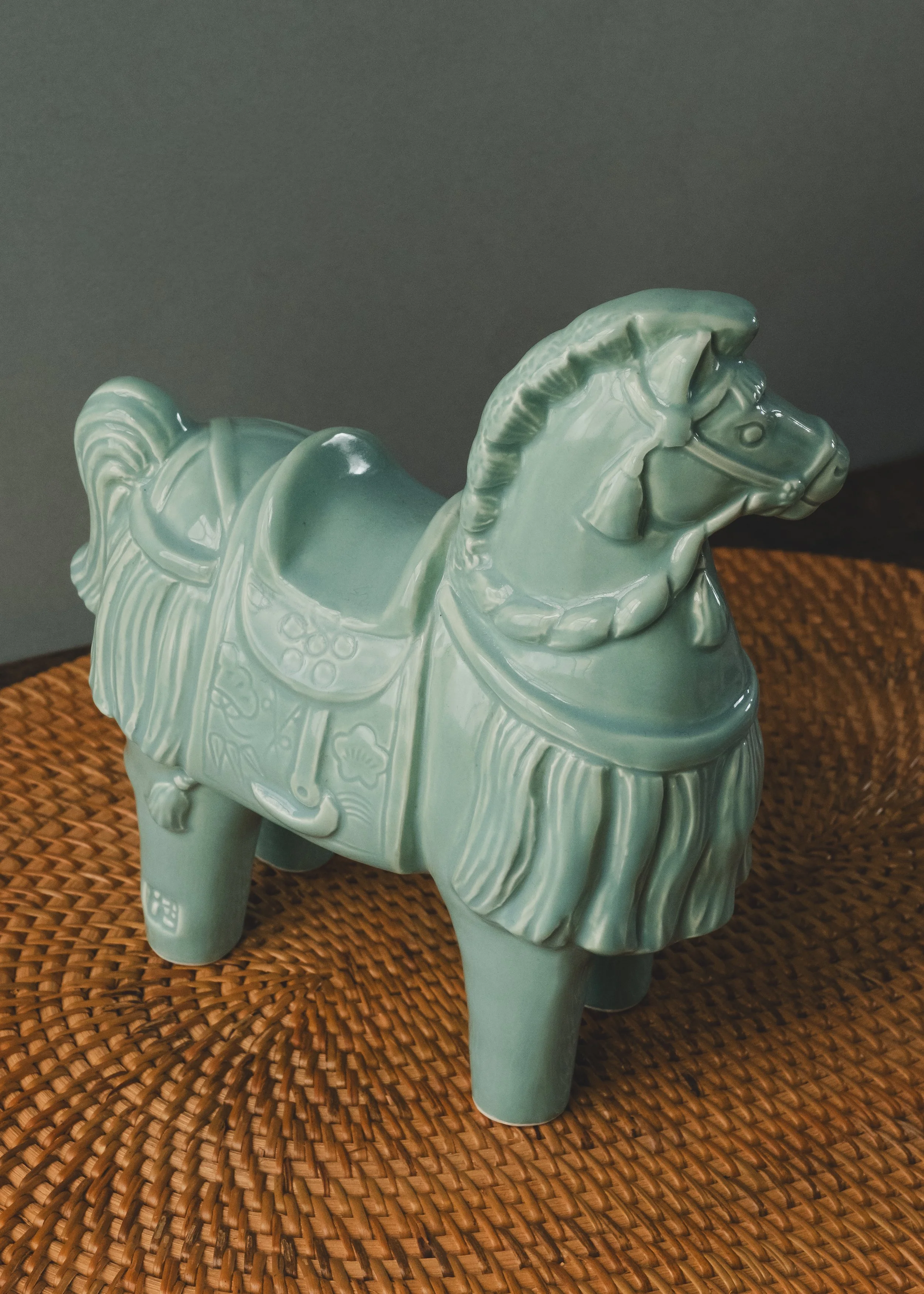 Image 4 of 11
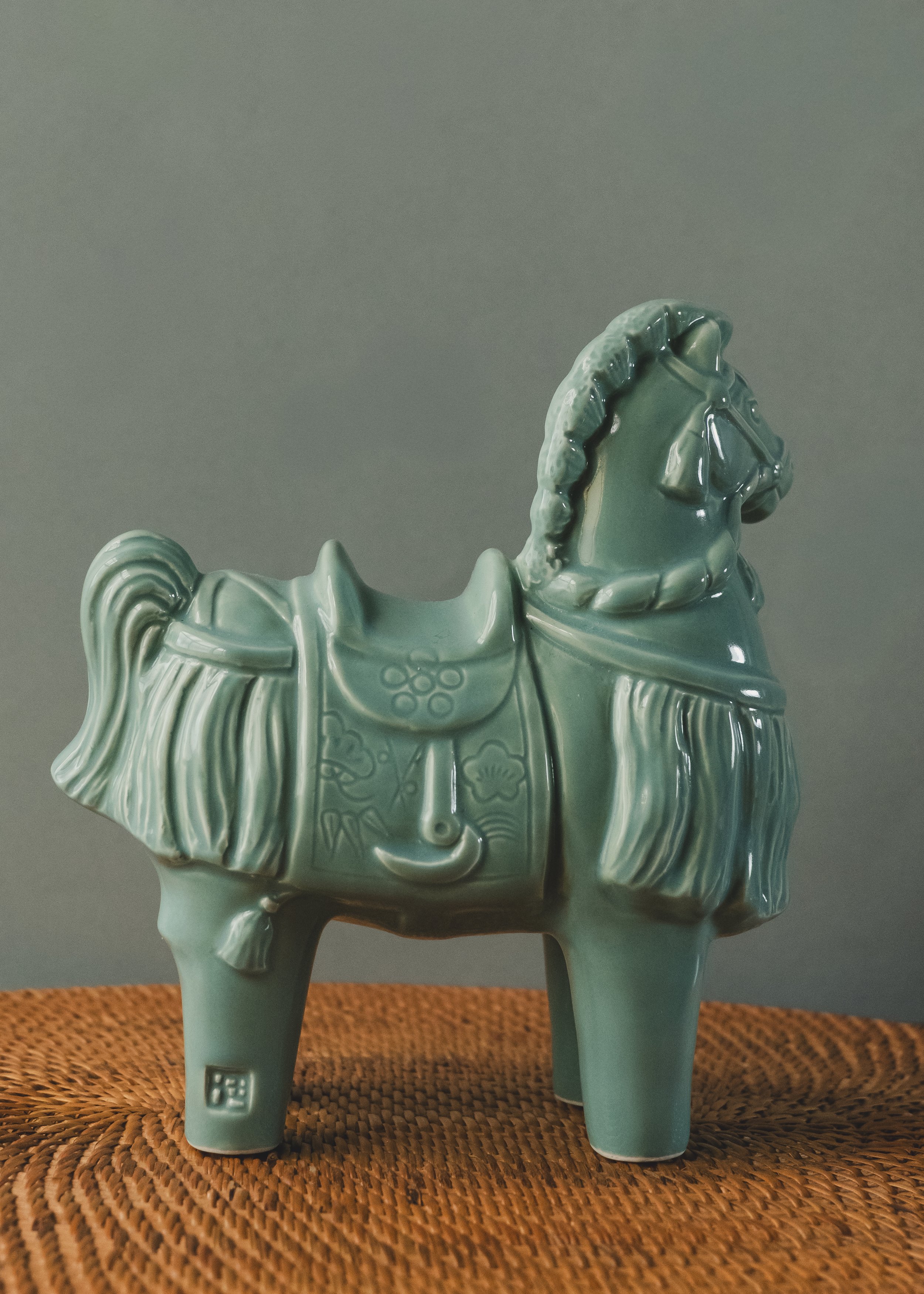 Image 5 of 11
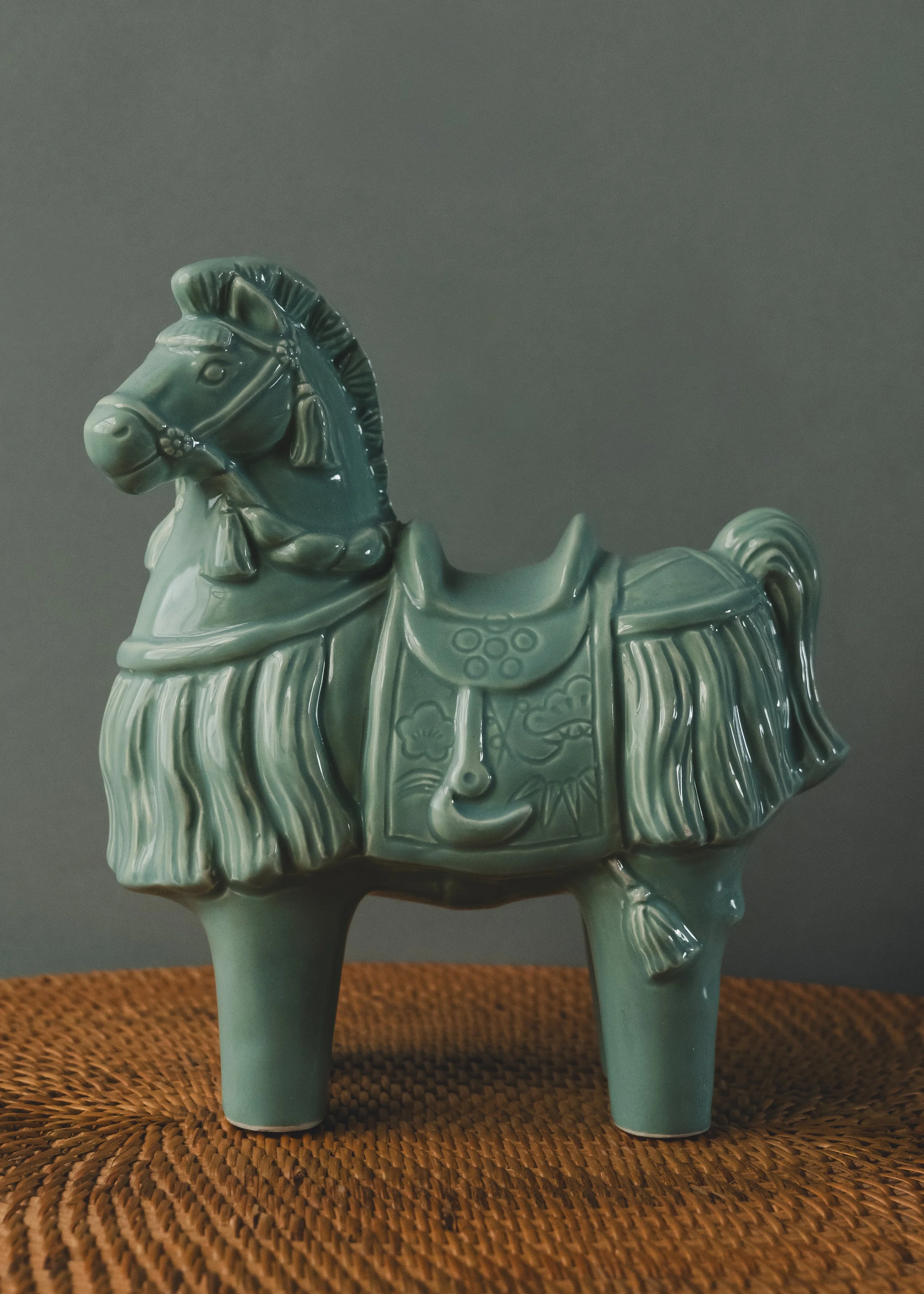 Image 6 of 11
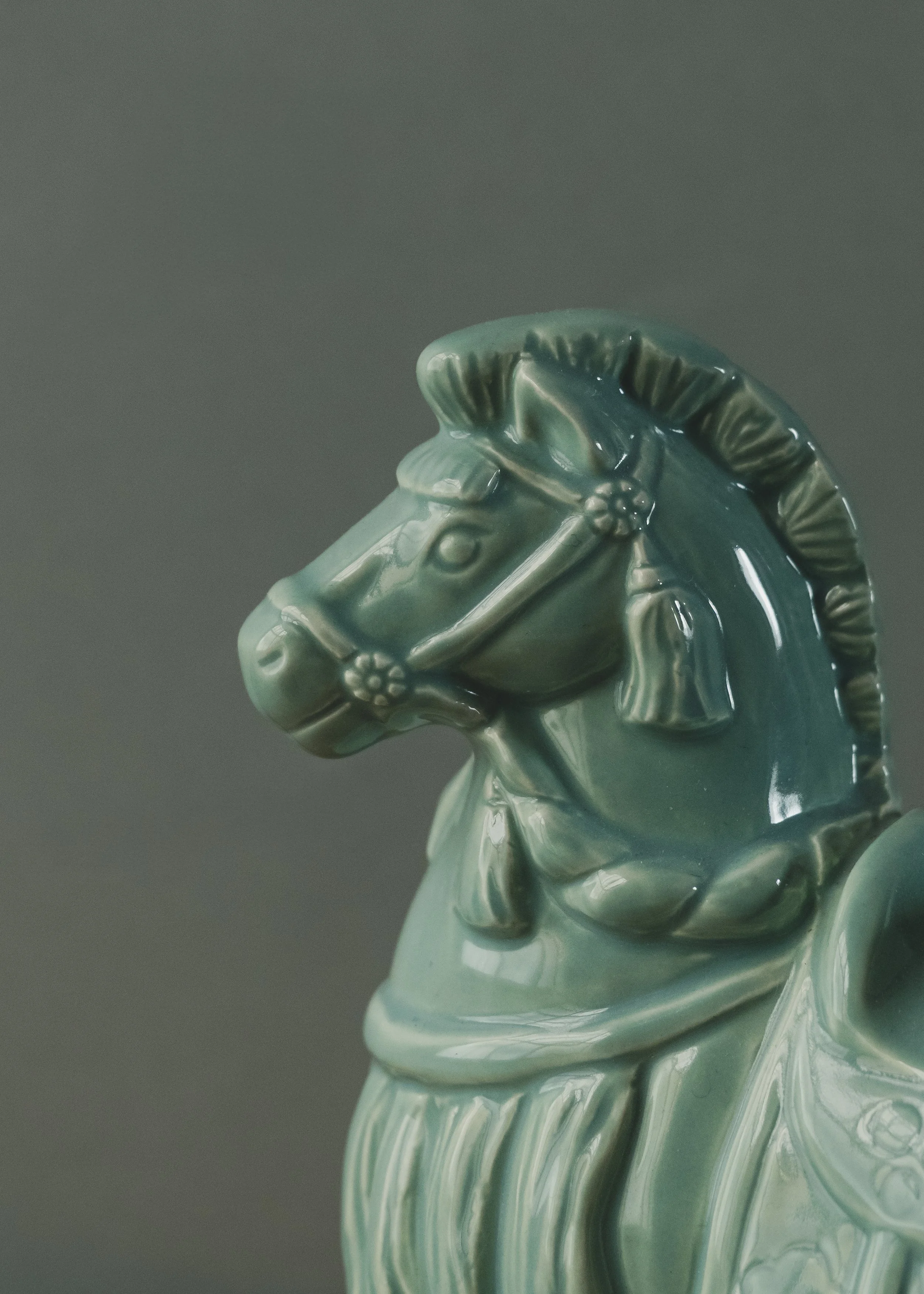 Image 7 of 11
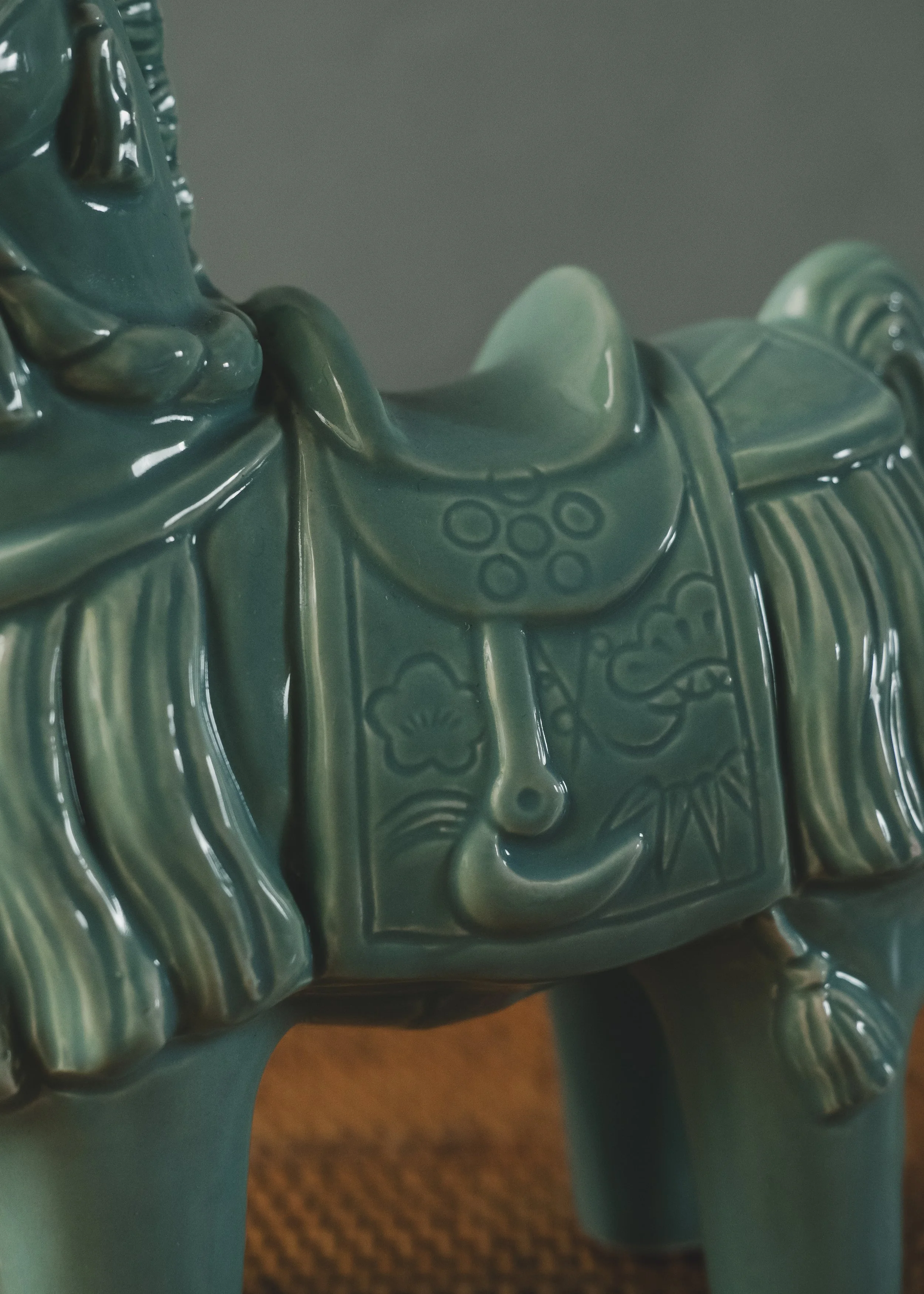 Image 8 of 11
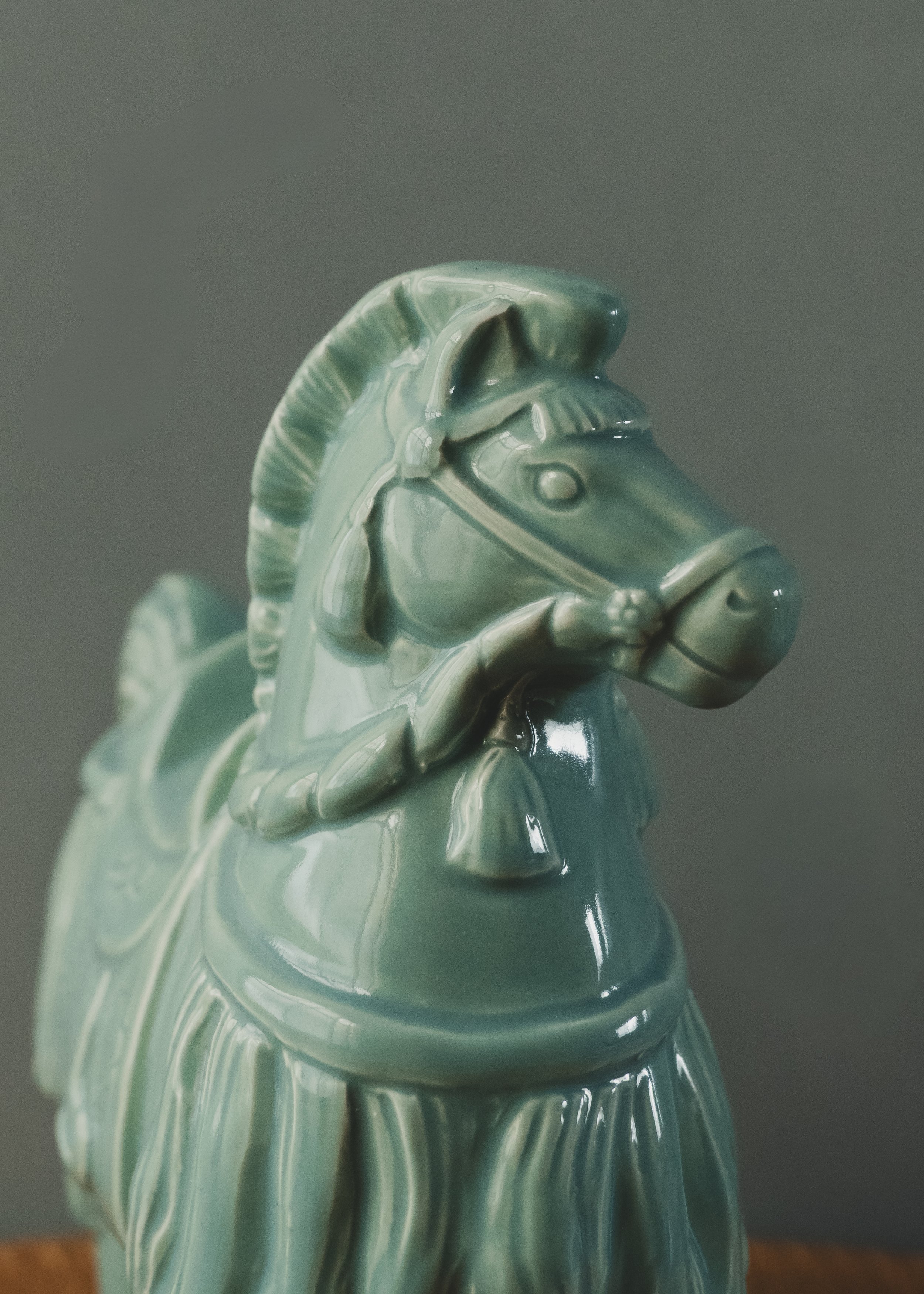 Image 9 of 11
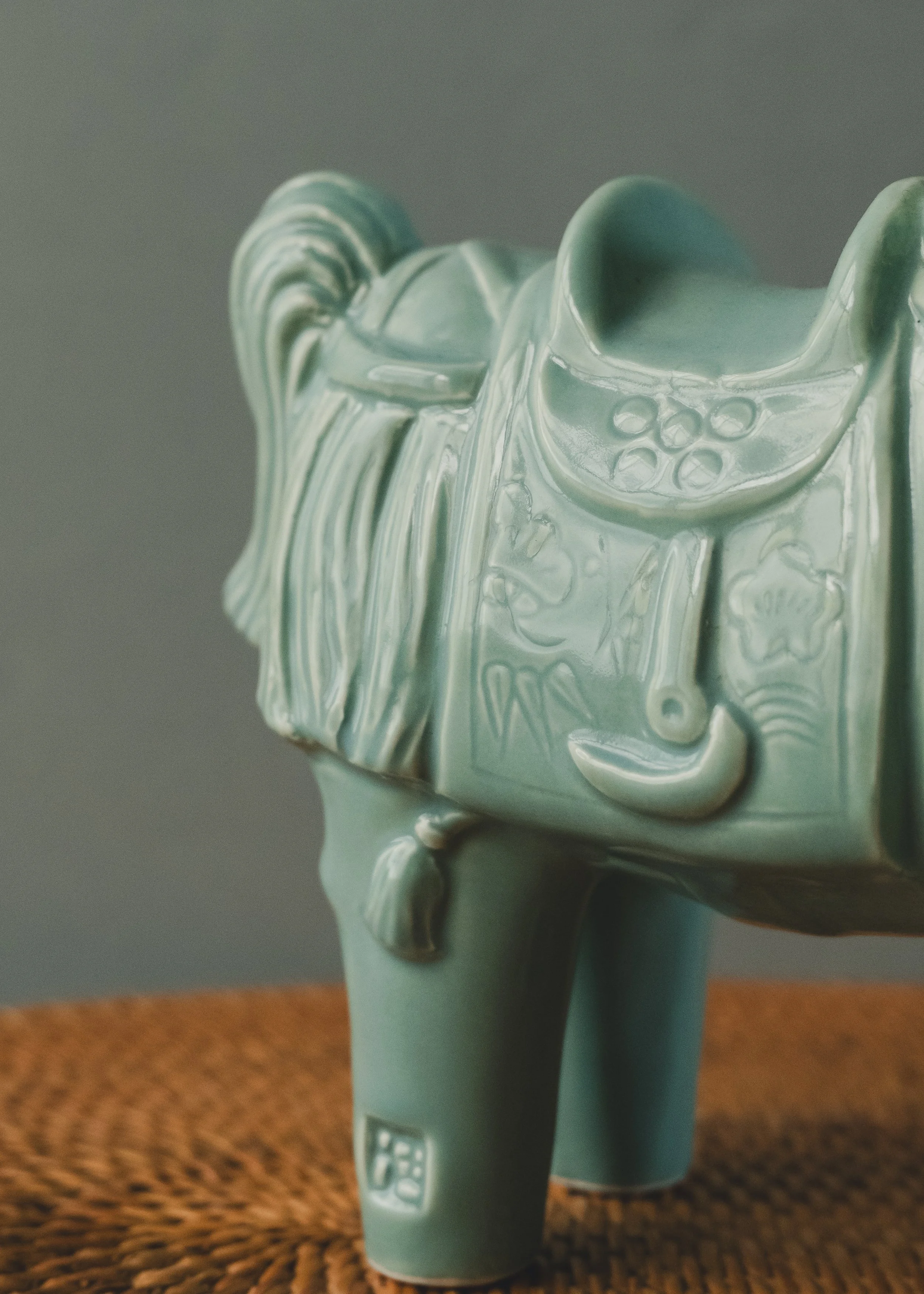 Image 10 of 11
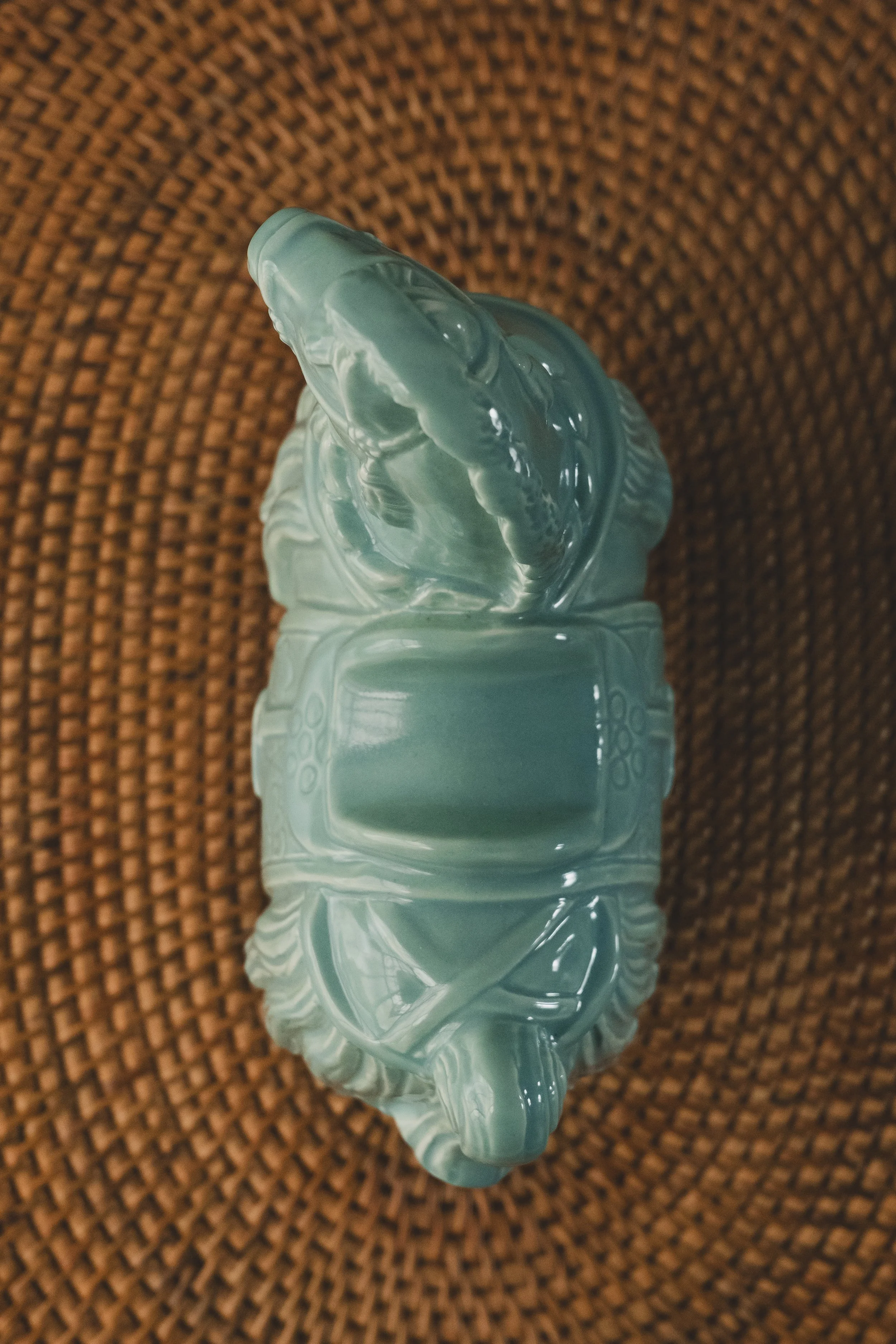 Image 11 of 11