BRONZE HERALD 1968

$285.00
SOLD

【 The Concept 】

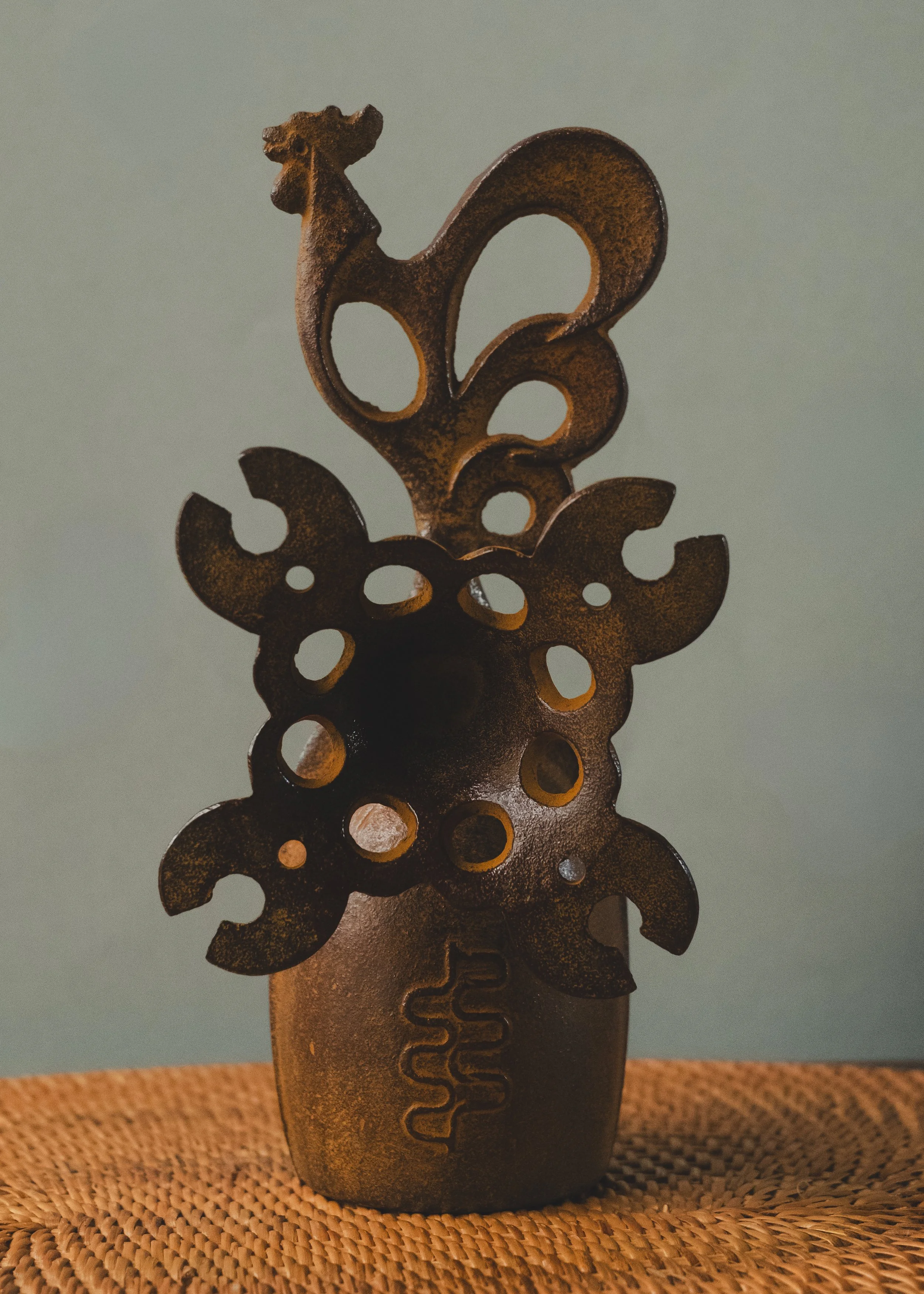
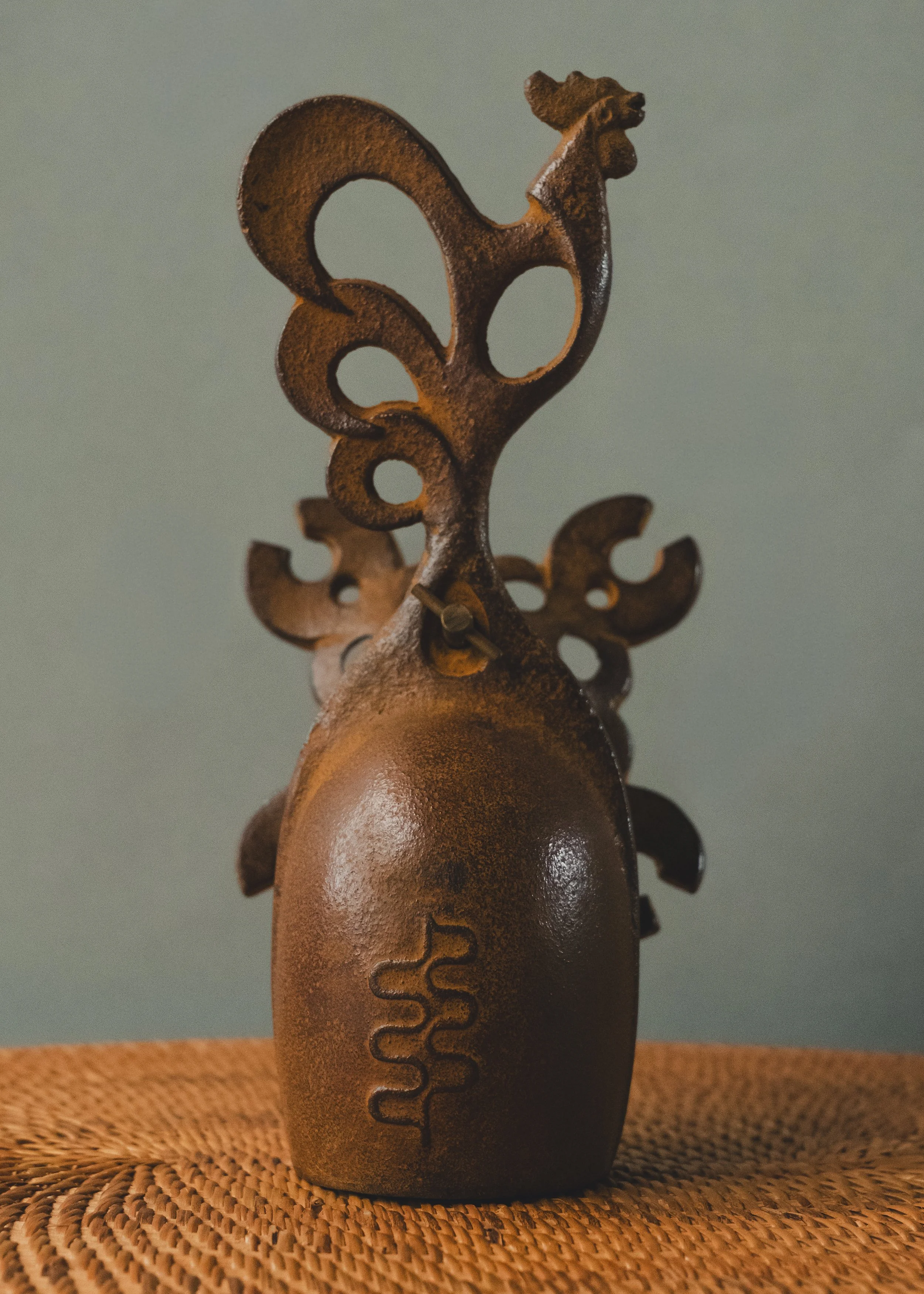
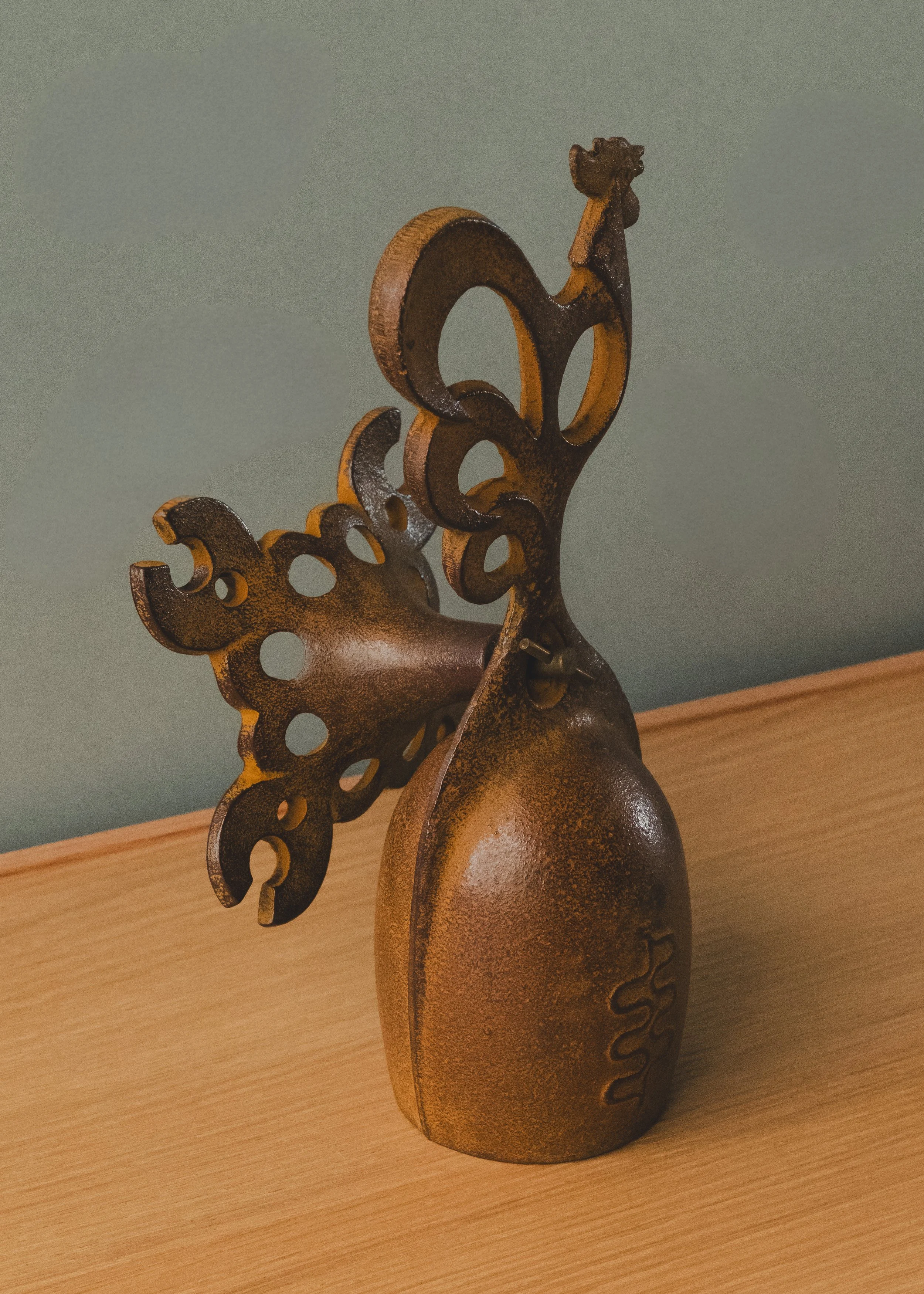
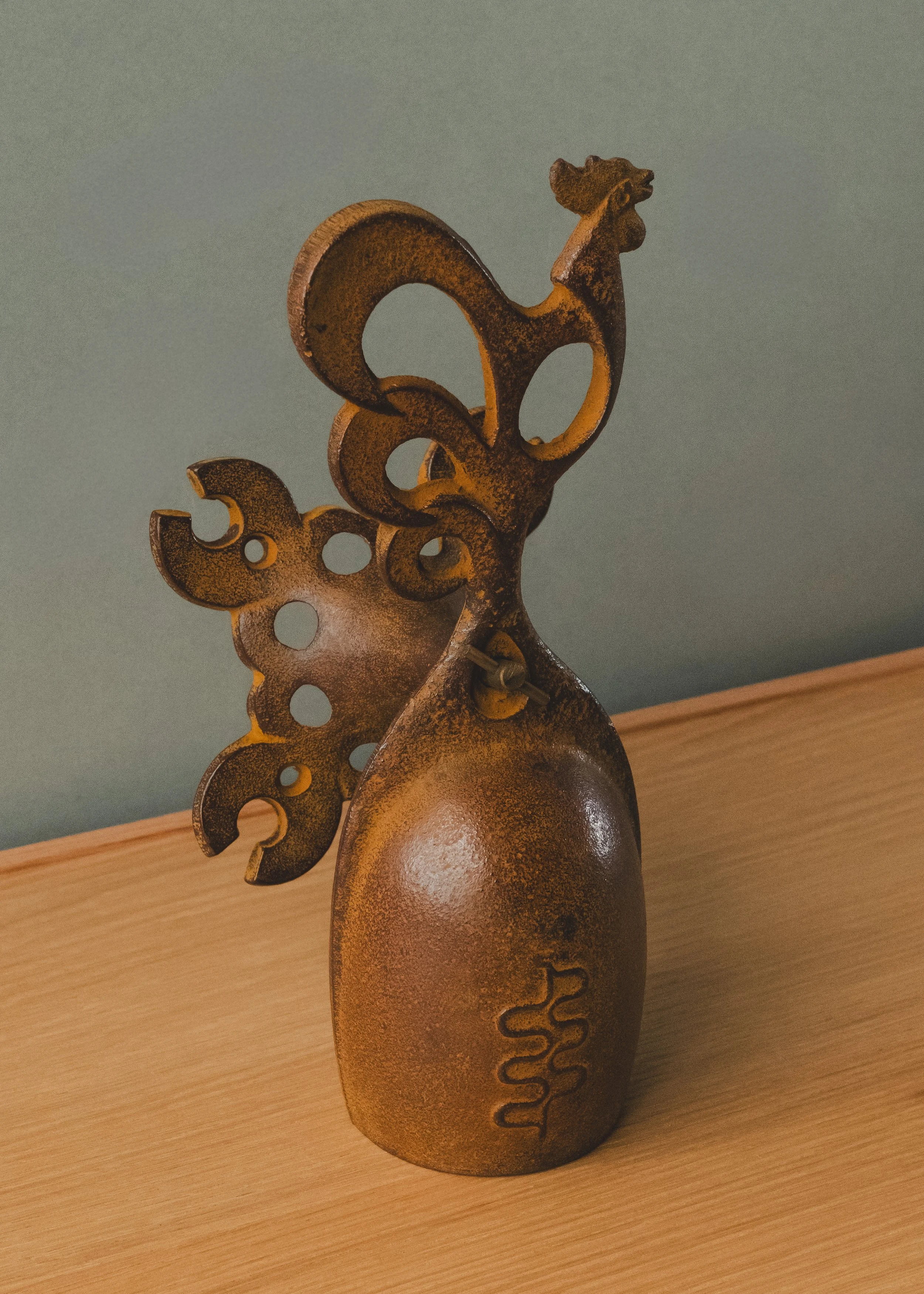
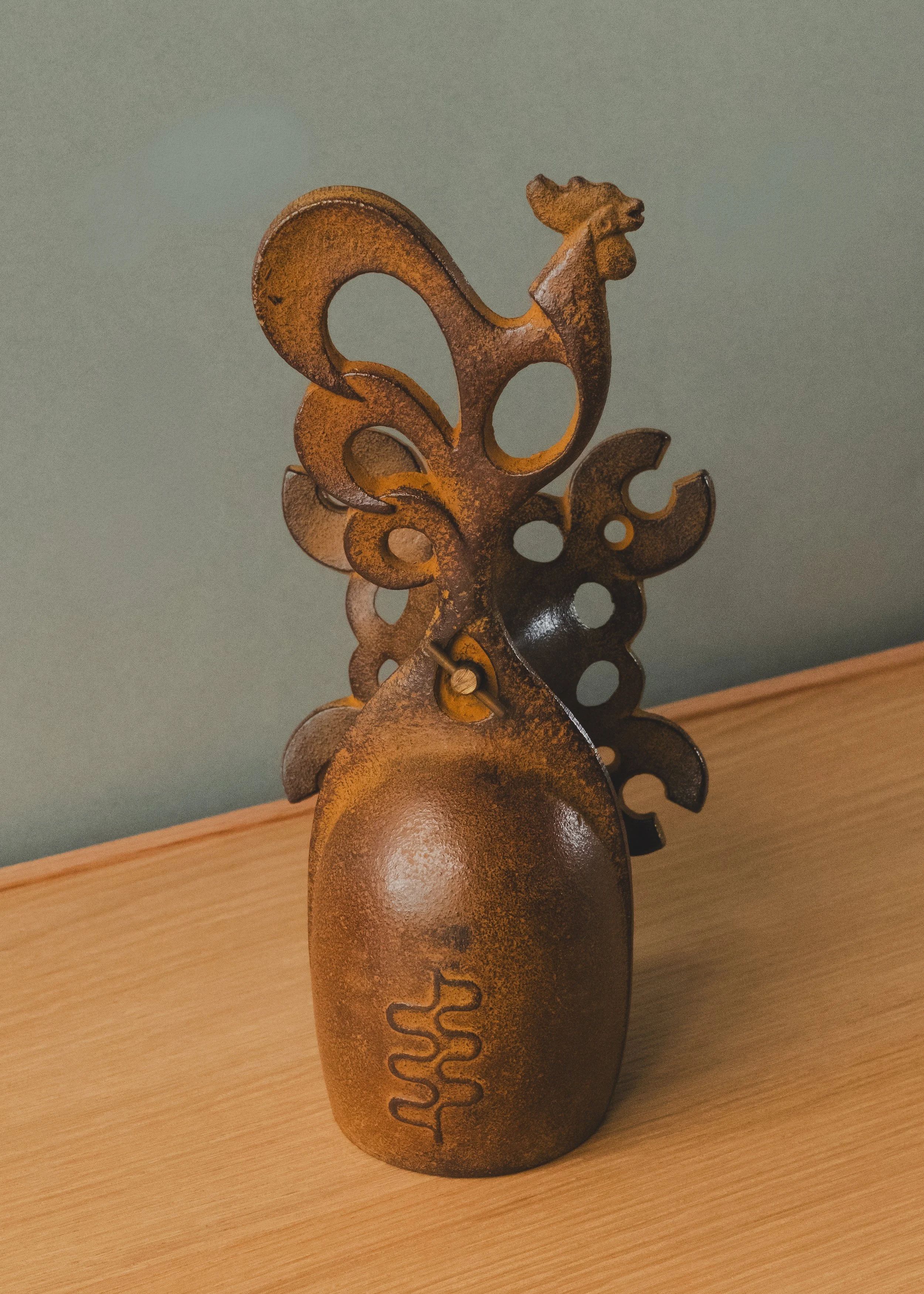
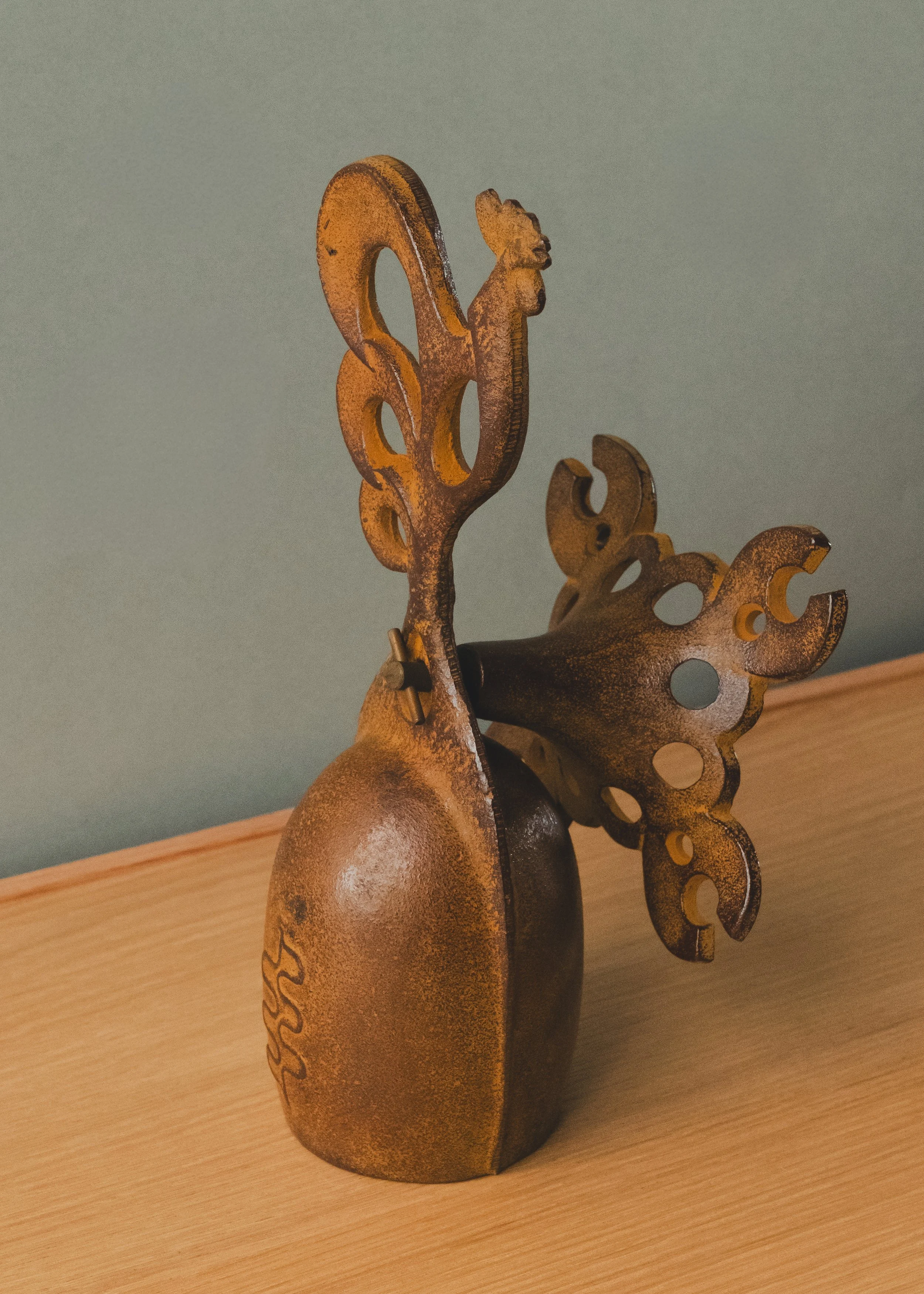
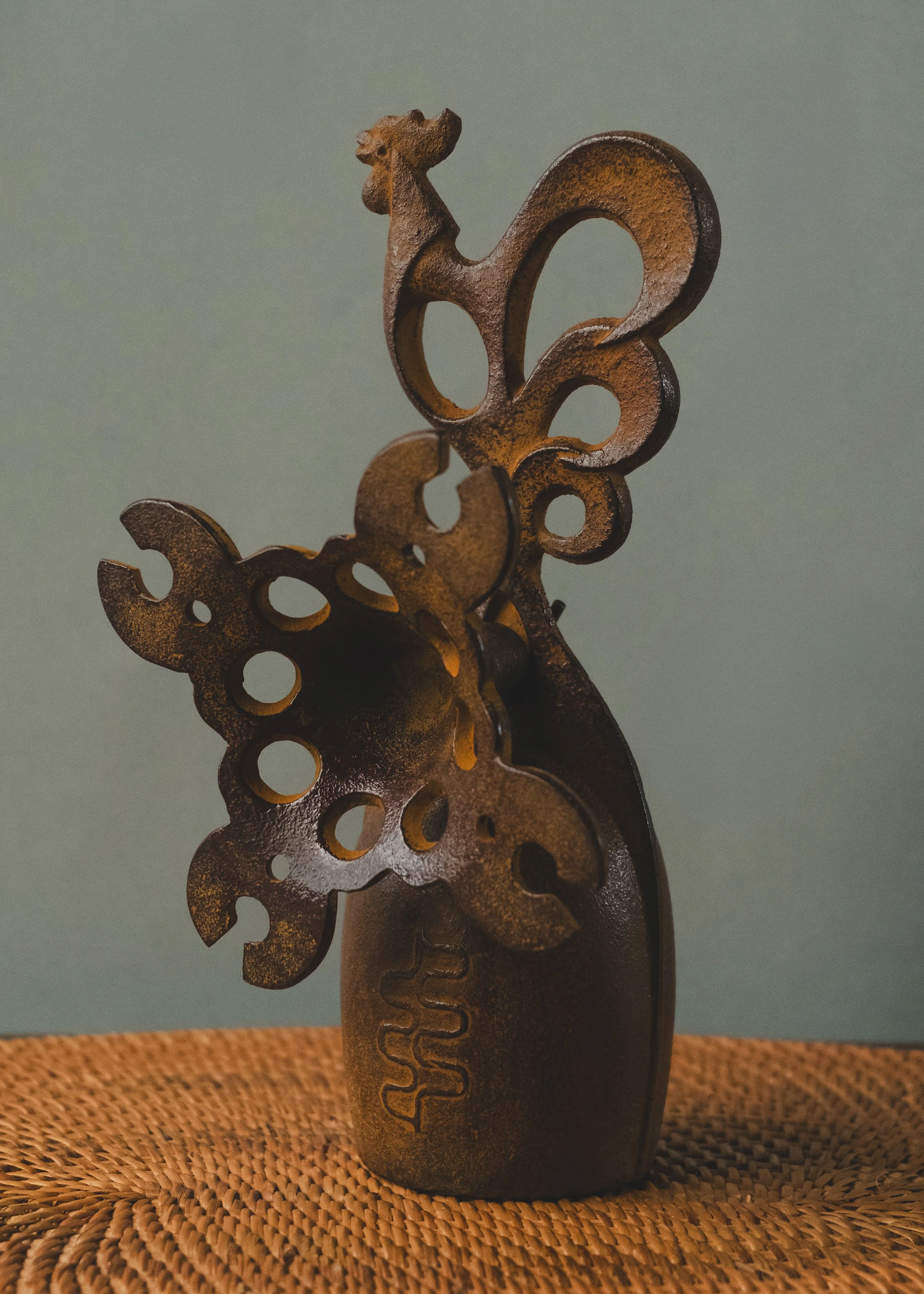
The rooster crows before the sun rises. It does not wait for light to confirm that morning has arrived — it announces it. In Japanese folk tradition, this made the rooster a herald of truth, a creature that divides night from day by sound alone. An anonymous ironworker took this idea and cast it into a bell — not a flat, decorative bird, but a vertical one, rising from a heavy iron body with its tail fanned into open lattice and its head lifted toward whatever ceiling it is placed beneath. The body of the bell is solid and smooth, carrying a wave pattern pressed into the iron before firing. A clapper hangs inside. When the bell moves, it rings. When it does not move, it stands.

【 The Function 】

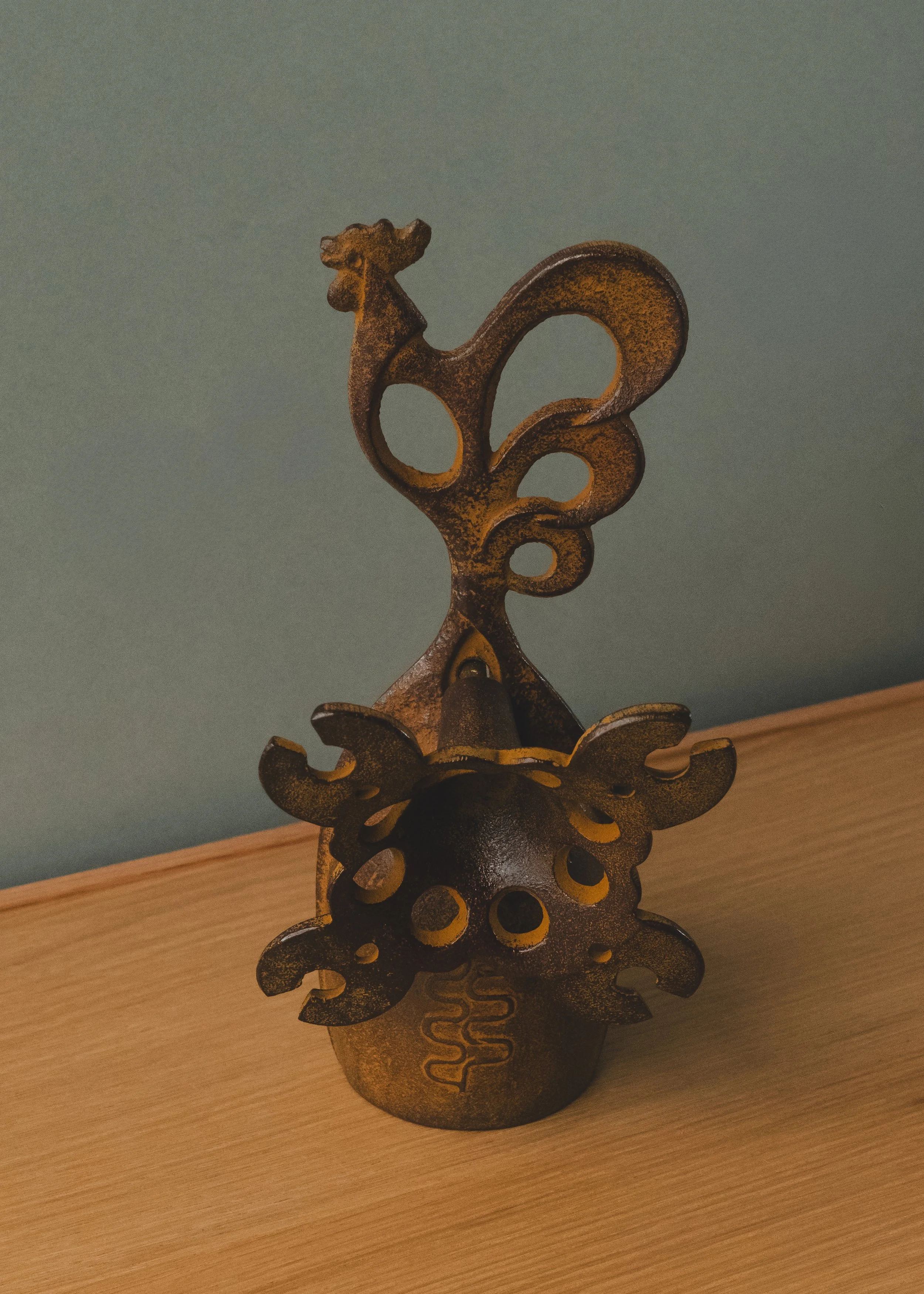
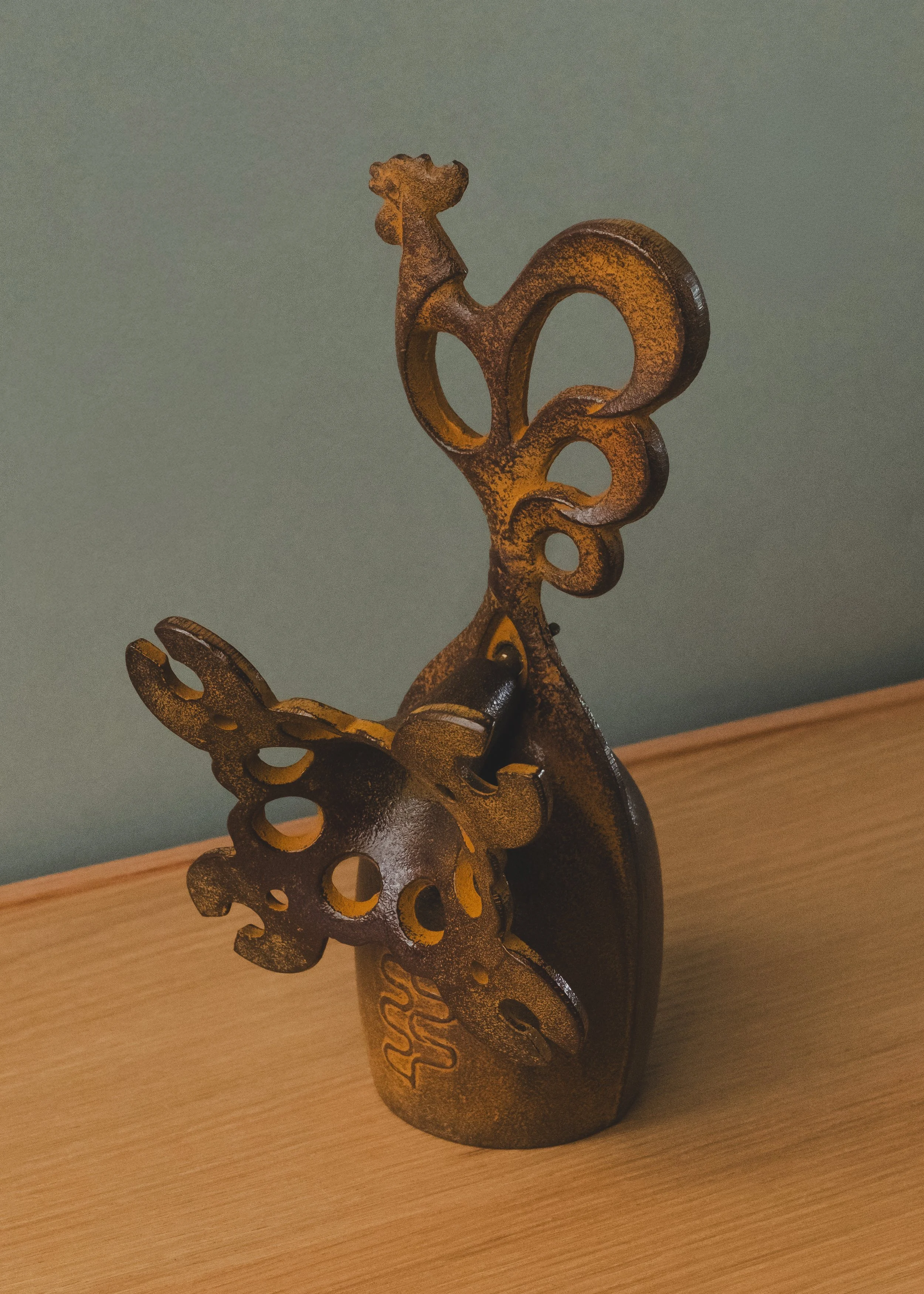
A door bell. An entrance marker. A sculptural object that announces arrival without electricity, without batteries, without any mechanism other than iron striking iron. Hang it from a hook near a doorway and it rings when the door opens. Place it on a shelf and it becomes a vertical sculpture — taller than it is wide, heavier than it looks, impossible to ignore from any angle in the room. The rooster's open tail creates negative space that frames whatever is behind it, making the wall itself part of the composition.

【 The Texture 】

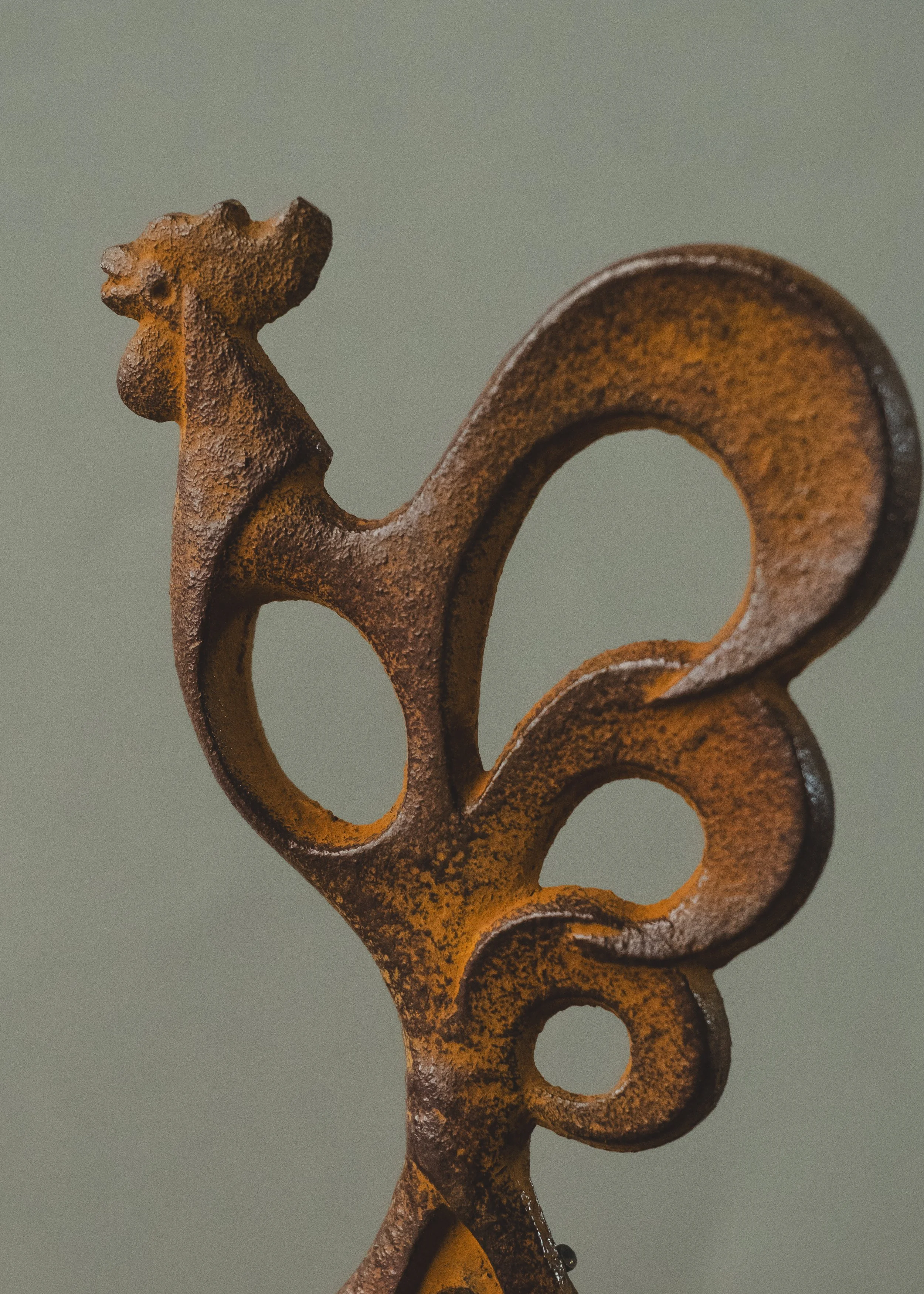
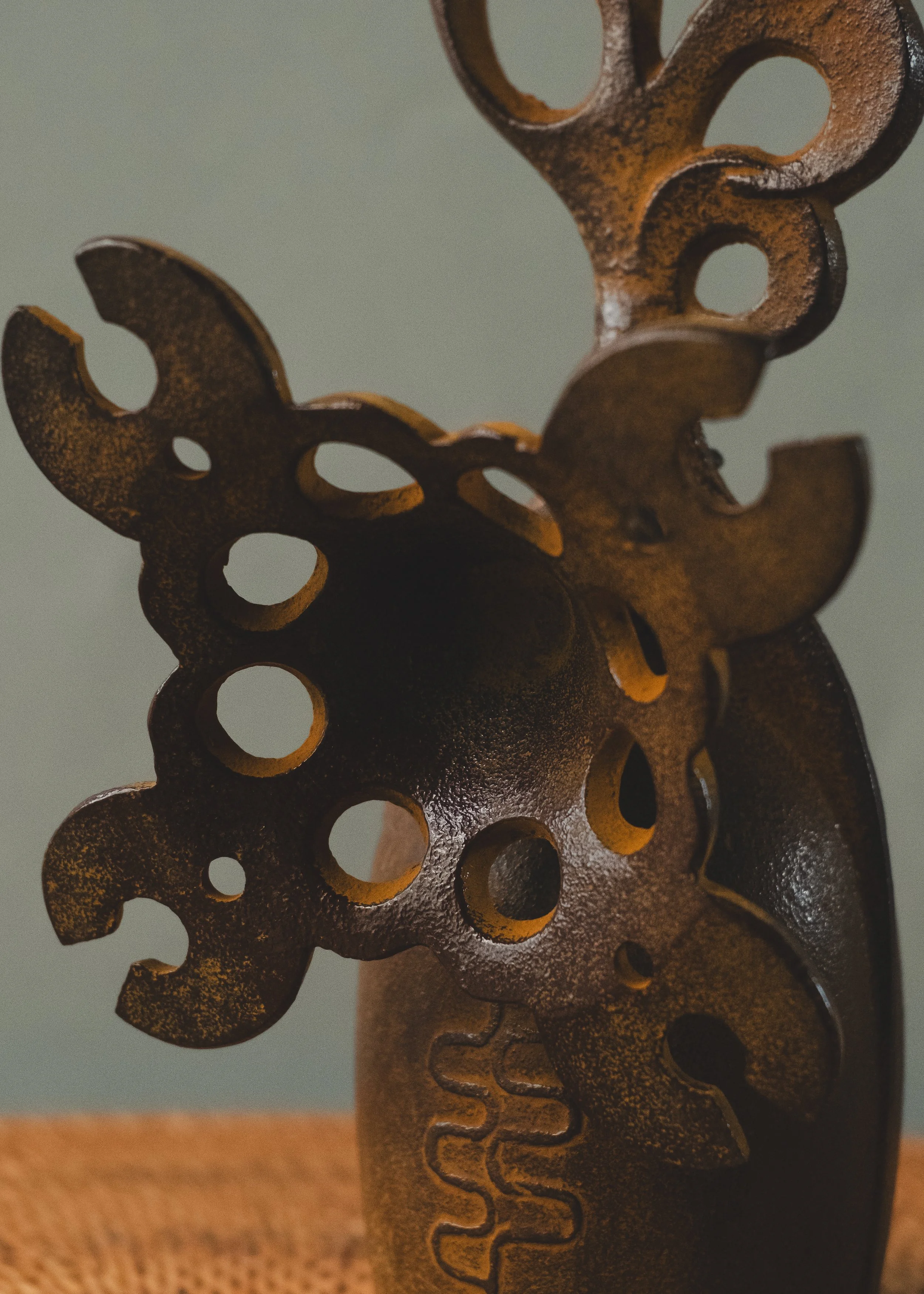
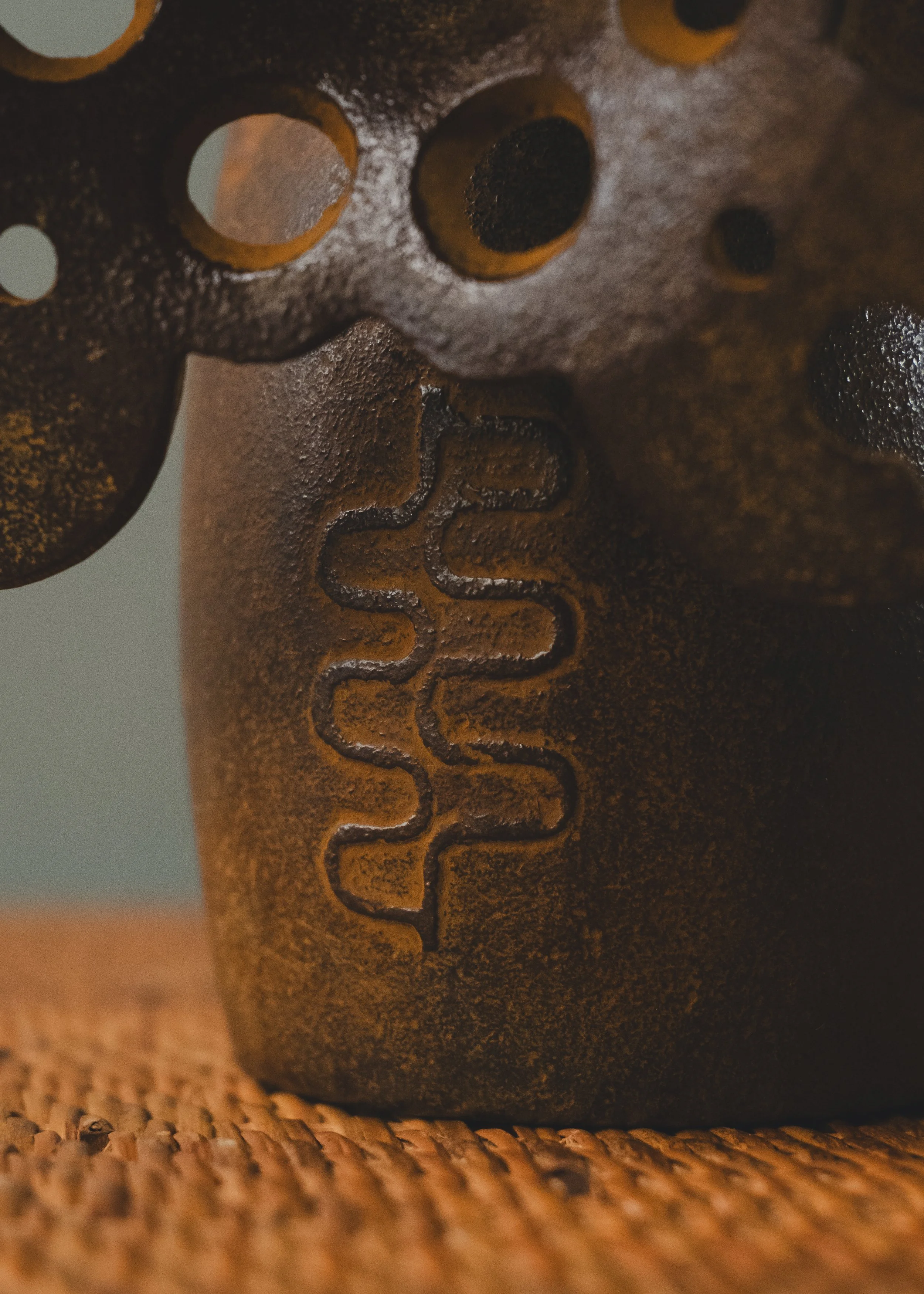
Cast iron with a warm bronze-toned patina that has developed unevenly over decades. The surface is not polished — it carries the grain of the sand mold, a fine roughness that holds warm light and deepens in shadow. The bell body is smooth and egg-shaped. The wave pattern on its surface is raised, not engraved — pressed into the mold before casting so that the iron itself carries the memory of water. The tail is pierced through with circular openings that lighten the silhouette without weakening the structure. The rooster's neck curves upward in a single unbroken line that ends at a crested head.

【 Presence 】

At 905 grams and twenty centimeters tall, this is not a trinket. It is the heaviest object in this archive by a significant margin. The weight is concentrated in the bell body, giving it a low center of gravity that keeps it stable on any surface. The sound it produces is brief, clear, and high — the kind of tone that stops a conversation for exactly one second, which is all a good bell needs. Hang it where guests arrive. The herald will do the rest.

Sourced from a private collection in northern Japan.

【 The Concept 】

The rooster crows before the sun rises. It does not wait for light to confirm that morning has arrived — it announces it. In Japanese folk tradition, this made the rooster a herald of truth, a creature that divides night from day by sound alone. An anonymous ironworker took this idea and cast it into a bell — not a flat, decorative bird, but a vertical one, rising from a heavy iron body with its tail fanned into open lattice and its head lifted toward whatever ceiling it is placed beneath. The body of the bell is solid and smooth, carrying a wave pattern pressed into the iron before firing. A clapper hangs inside. When the bell moves, it rings. When it does not move, it stands.

【 The Function 】

A door bell. An entrance marker. A sculptural object that announces arrival without electricity, without batteries, without any mechanism other than iron striking iron. Hang it from a hook near a doorway and it rings when the door opens. Place it on a shelf and it becomes a vertical sculpture — taller than it is wide, heavier than it looks, impossible to ignore from any angle in the room. The rooster's open tail creates negative space that frames whatever is behind it, making the wall itself part of the composition.

【 The Texture 】

Cast iron with a warm bronze-toned patina that has developed unevenly over decades. The surface is not polished — it carries the grain of the sand mold, a fine roughness that holds warm light and deepens in shadow. The bell body is smooth and egg-shaped. The wave pattern on its surface is raised, not engraved — pressed into the mold before casting so that the iron itself carries the memory of water. The tail is pierced through with circular openings that lighten the silhouette without weakening the structure. The rooster's neck curves upward in a single unbroken line that ends at a crested head.

【 Presence 】

At 905 grams and twenty centimeters tall, this is not a trinket. It is the heaviest object in this archive by a significant margin. The weight is concentrated in the bell body, giving it a low center of gravity that keeps it stable on any surface. The sound it produces is brief, clear, and high — the kind of tone that stops a conversation for exactly one second, which is all a good bell needs. Hang it where guests arrive. The herald will do the rest.

Sourced from a private collection in northern Japan.

【Context】

  • Identity: Anonymous Provincial Ironware / Sculptural Bell.
  • Origin: Northern Province (Historic Ironware Region), Japan.
  • Technique: Sand-Cast Iron with Bronze-Toned Patina.
  • Function: Door Bell / Entrance Marker / Vertical Sculpture.

【 Dimensions (Approx.) 】

  • Height: 20 cm (7.9 in)
  • Width: 9 cm (3.5 in)
  • Weight: 0.905 kg (2.00 lbs)
 

RELATED ARCHIVAL SPECIMENS
SCARLET SENTINELS 1960
$170.00

【 The Concept 】

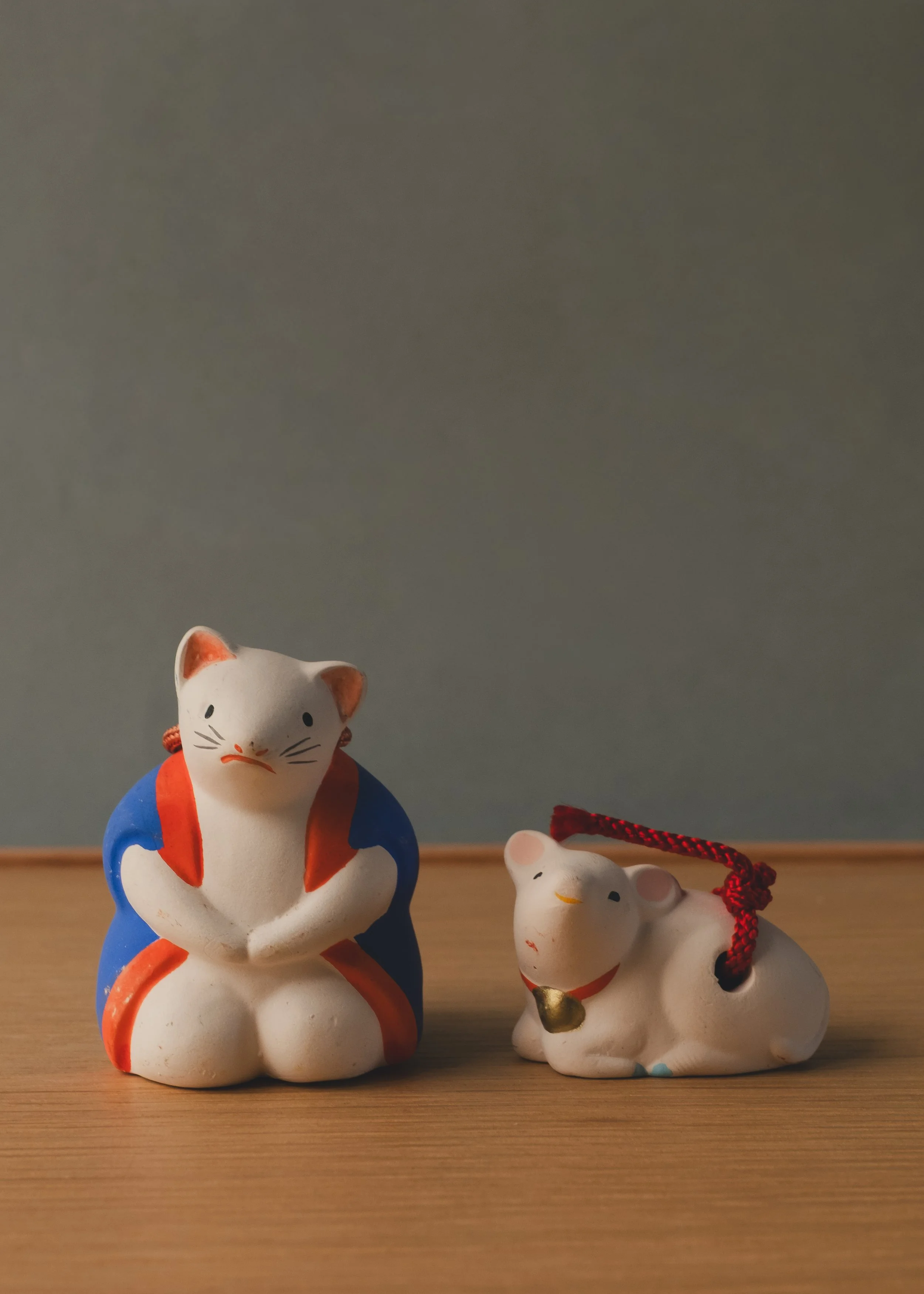
In the Japanese zodiac, the first position belongs to the mouse. Not the dragon, not the tiger — the mouse. The smallest animal in the cycle was given the task of beginning everything. In folk belief, this creature serves a second role: it is the chosen messenger of the god of wealth and harvest. Where the mouse appears, prosperity follows. Where two appear together, the message is twice as certain. An anonymous craftsman in a coastal province understood both roles. They formed two figures from earth — one seated in formal posture, one crouching low as if about to move — dressed them both in red, and placed a clay sphere inside each so that every time they are lifted, a dry rattle sounds from within. The red is not decorative. In Japanese tradition, this color has one purpose: to repel what should not be allowed near.

【 The Function 】

Both figures are dorei — clay bells. Each houses a loose clay sphere that strikes the inner wall when lifted, producing a brief, percussive rattle. In folk practice, this sound served to clear a threshold, a desk, a bedside — any space where misfortune might settle. The larger figure sits upright in ceremonial posture, hands folded. The smaller one crouches forward, alert. Together they create a pair that covers stillness and motion, ceremony and vigilance.

【 The Texture 】

The bodies are white — an unglazed, chalky ground that holds light without reflecting it. Over this, the red garments are painted with a matte mineral pigment that has aged into a warm, uneven tone — darker in the folds, thinner at the edges. The eyes are simple black dots. The whiskers are single brushstrokes. On the back of the larger figure, characters are pressed into the clay before firing — a mark that ties these objects to a specific shrine district in Japan's southern coastal region. The surface is dry, warm, and rough in the way that only unfired earth can be.

【 Presence 】

They are small enough to share a windowsill. The larger one commands attention; the smaller one earns it. Place them together and they become a conversation — one still, one ready. One guarding, one scouting. The rattle is faint, almost private, audible only to the person holding them. That is the point. The protection they offer was never meant to be loud.

Sourced from a private collection in southern coastal Japan.