【 The Concept 】
In Japanese folk belief, there is one animal entrusted with guarding the kitchen. Not the dog, not the cat — the boar. Its association with fire prevention is so old that no one remembers exactly when it started, only that it did. Temples dedicated to fire protection keep boar statues at their gates. Households place boar figures near the hearth. The logic is not symbolic — it is structural: the boar charges through undergrowth, tears up earth, buries flame beneath soil. An anonymous ironworker in a northern foundry province cast this belief into iron, gave it a ridged back and a lifted snout, and shaped it so that it could hold paper flat, rest a brush across its spine, and open a bottle with its tail. Three tasks. One animal. No moving parts.
【 The Function 】
A paperweight. A brush rest. A bottle opener. The mass of cast iron holds documents flat without effort. The curved spine cradles a pen or brush without rolling. The notch at the tail catches a bottle cap and removes it with a single lever motion. Between these tasks, it sits on a desk and does what boars have always done in Japanese tradition — it guards the room from what should not enter.
【 The Texture 】
Cast iron, hand-finished with a lacquer-baked surface that has darkened over decades into a tone between black and deep brown. The back carries a wave-like texture — the casting process leaves a grain across the body that functions as both decoration and grip. The snout lifts upward. The eyes are minimal. The overall form is not a portrait of a boar but an abbreviation of one — everything unnecessary removed, everything essential kept. Pick it up. Two hundred grams in an object that fits in one hand. The density is quiet and immediate.
【 Presence 】
It does not demand attention. It earns it the moment someone picks it up and feels the weight. The boar sits low to the surface, wider than it is tall, built to stay exactly where it is placed. In a culture where this animal was trusted to stand between a family and fire, stillness is not inaction. It is the oldest form of protection.
Sourced from a private collection in northern Japan.
【 The Concept 】
In Japanese folk belief, there is one animal entrusted with guarding the kitchen. Not the dog, not the cat — the boar. Its association with fire prevention is so old that no one remembers exactly when it started, only that it did. Temples dedicated to fire protection keep boar statues at their gates. Households place boar figures near the hearth. The logic is not symbolic — it is structural: the boar charges through undergrowth, tears up earth, buries flame beneath soil. An anonymous ironworker in a northern foundry province cast this belief into iron, gave it a ridged back and a lifted snout, and shaped it so that it could hold paper flat, rest a brush across its spine, and open a bottle with its tail. Three tasks. One animal. No moving parts.
【 The Function 】
A paperweight. A brush rest. A bottle opener. The mass of cast iron holds documents flat without effort. The curved spine cradles a pen or brush without rolling. The notch at the tail catches a bottle cap and removes it with a single lever motion. Between these tasks, it sits on a desk and does what boars have always done in Japanese tradition — it guards the room from what should not enter.
【 The Texture 】
Cast iron, hand-finished with a lacquer-baked surface that has darkened over decades into a tone between black and deep brown. The back carries a wave-like texture — the casting process leaves a grain across the body that functions as both decoration and grip. The snout lifts upward. The eyes are minimal. The overall form is not a portrait of a boar but an abbreviation of one — everything unnecessary removed, everything essential kept. Pick it up. Two hundred grams in an object that fits in one hand. The density is quiet and immediate.
【 Presence 】
It does not demand attention. It earns it the moment someone picks it up and feels the weight. The boar sits low to the surface, wider than it is tall, built to stay exactly where it is placed. In a culture where this animal was trusted to stand between a family and fire, stillness is not inaction. It is the oldest form of protection.
Sourced from a private collection in northern Japan.


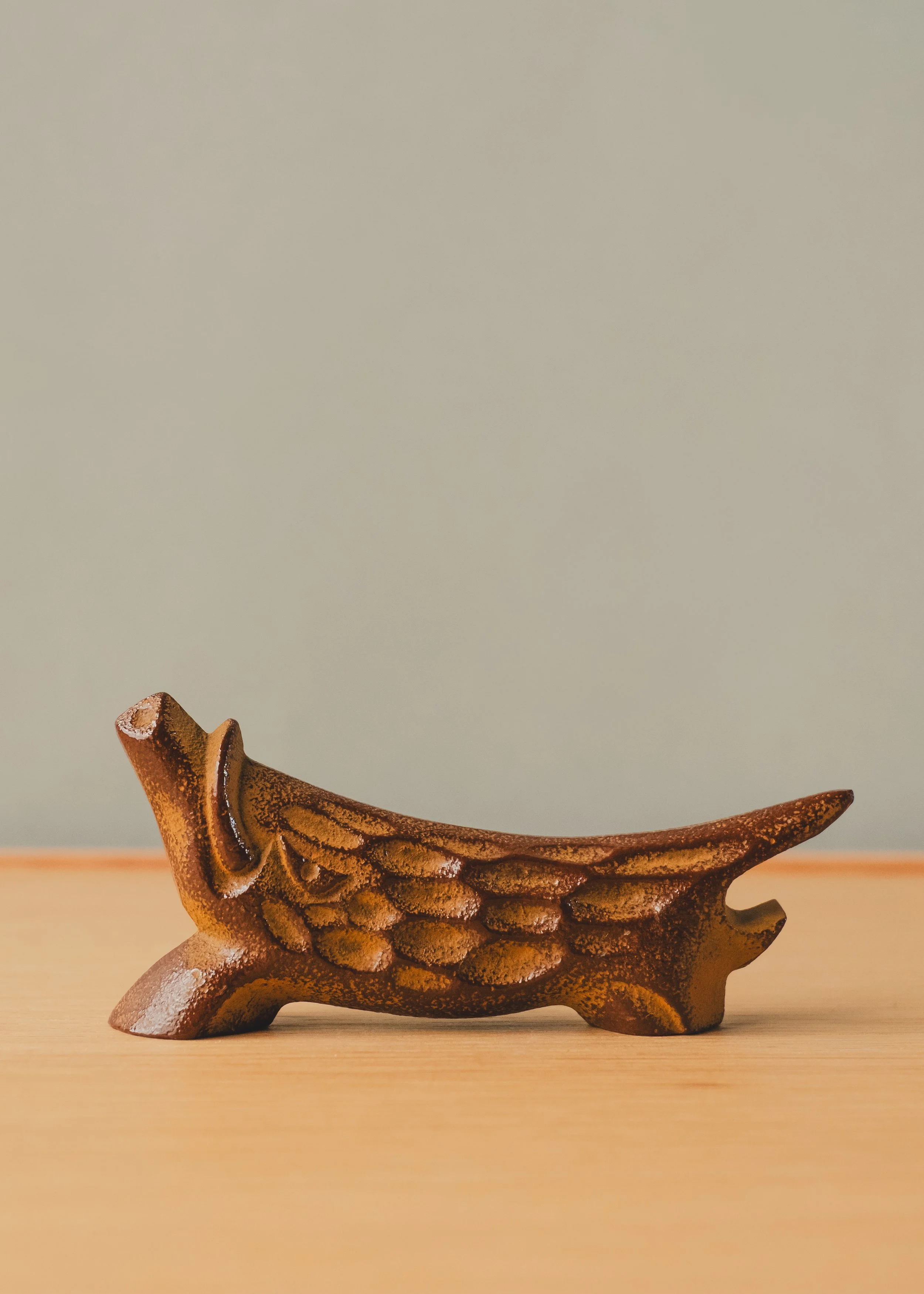 Image 1 of 9
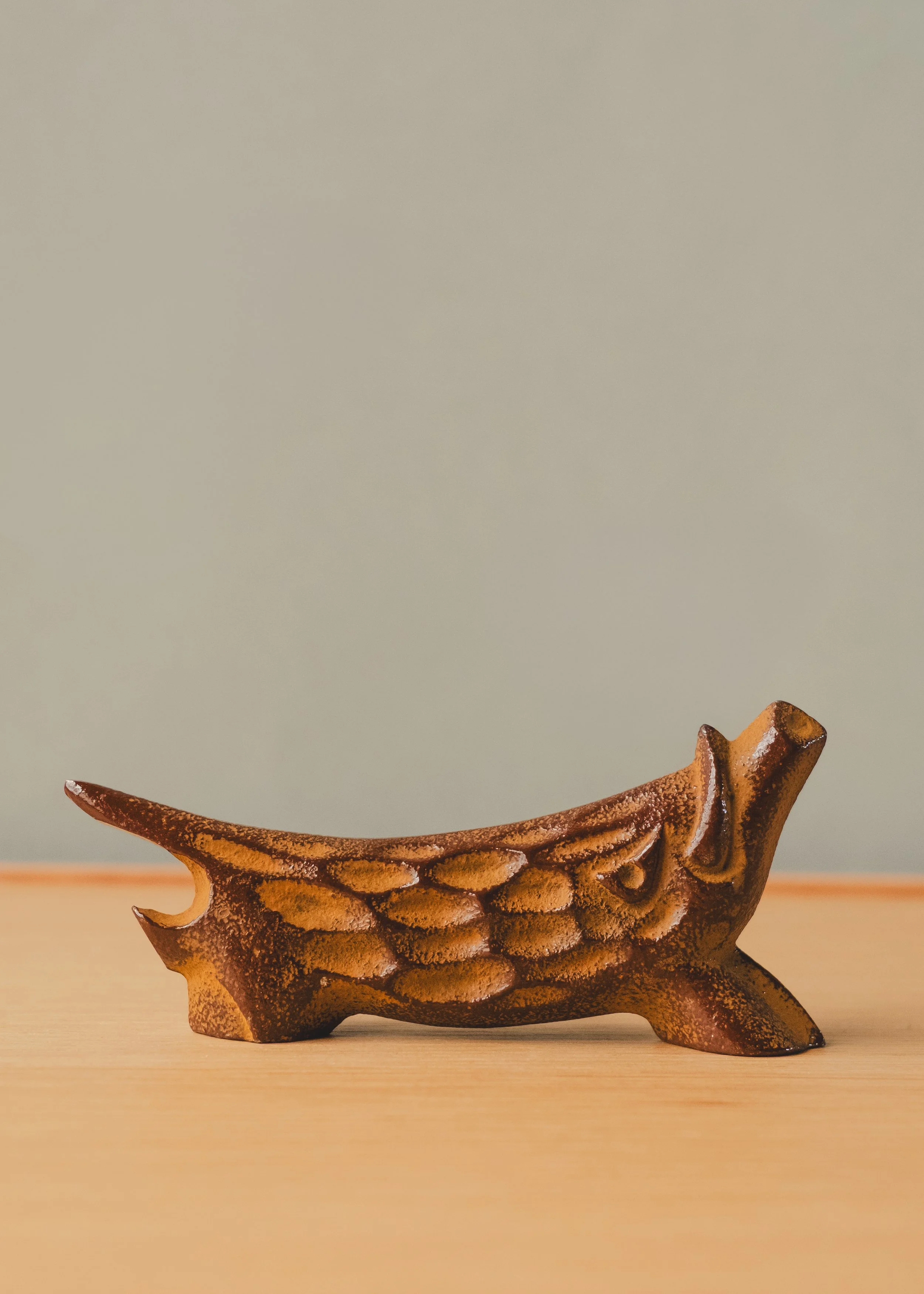 Image 2 of 9
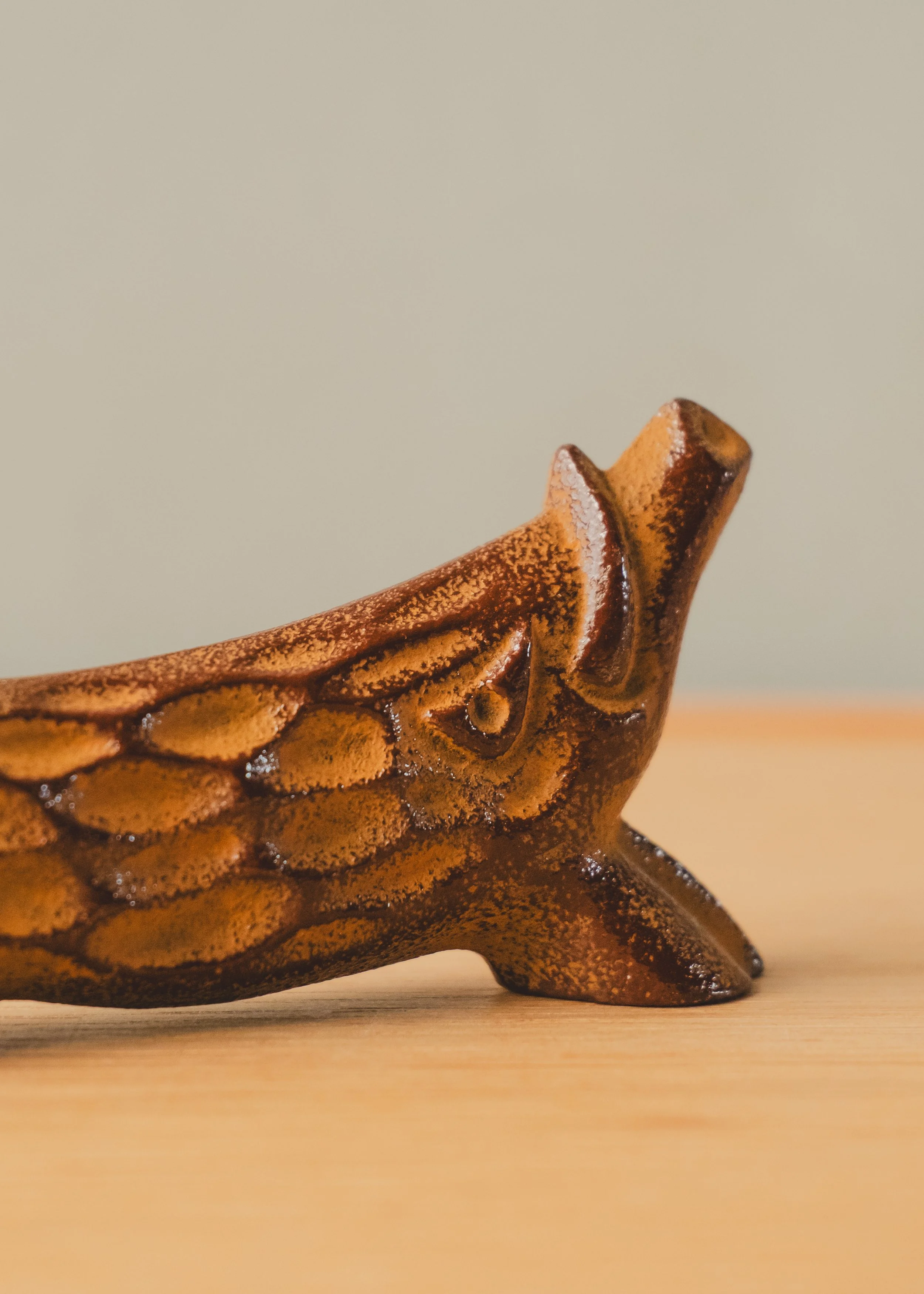 Image 3 of 9
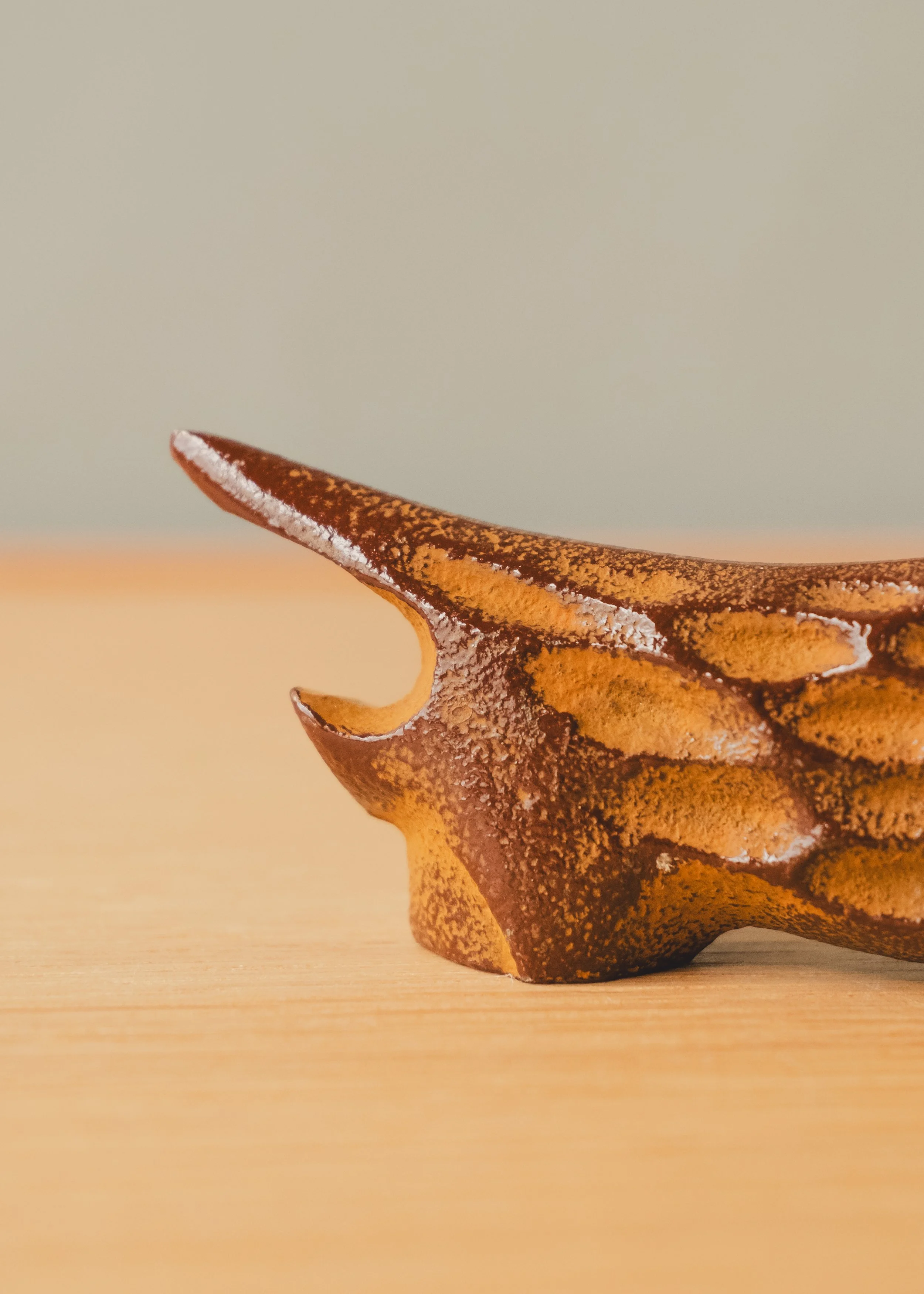 Image 4 of 9
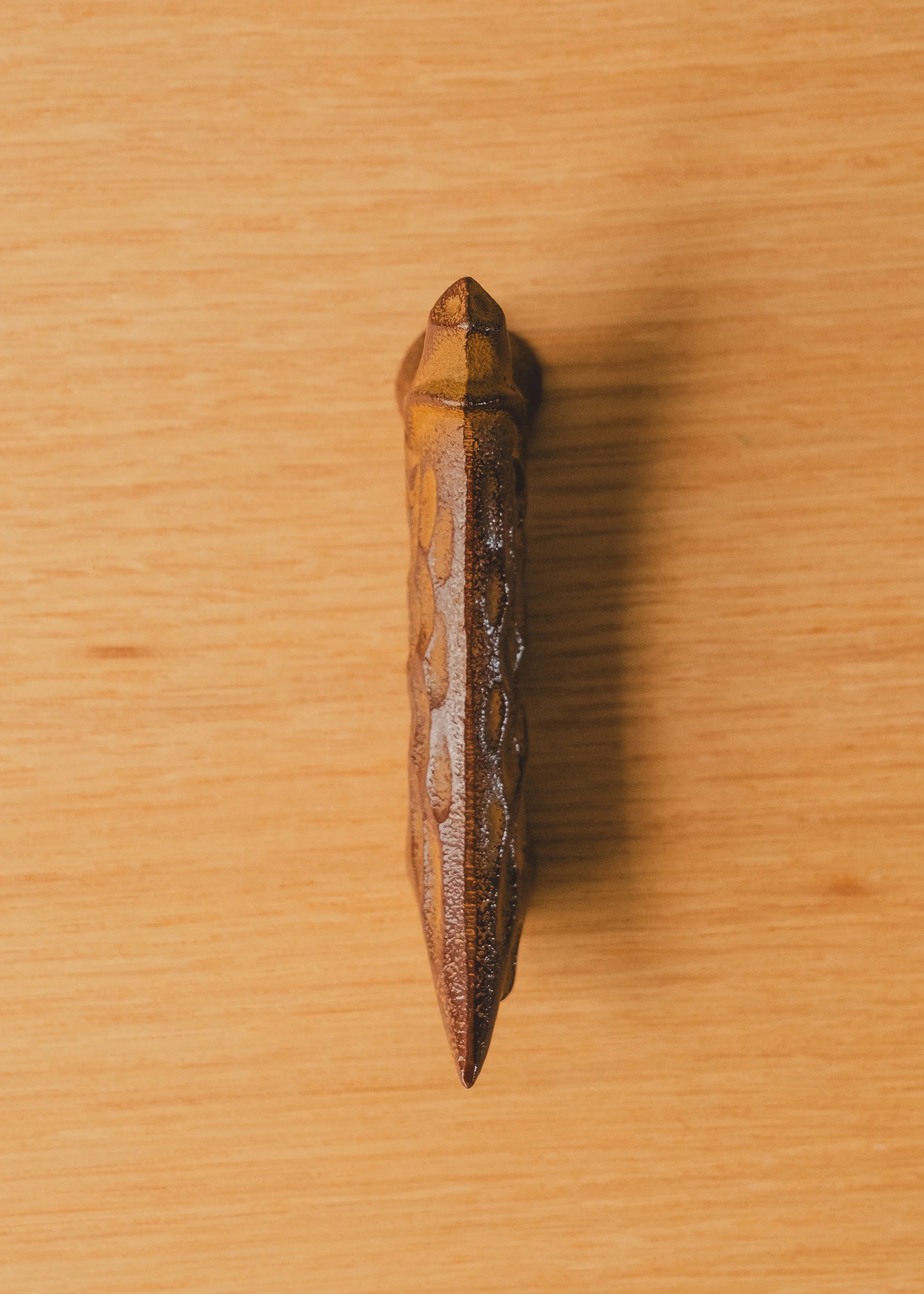 Image 5 of 9
 Image 6 of 9
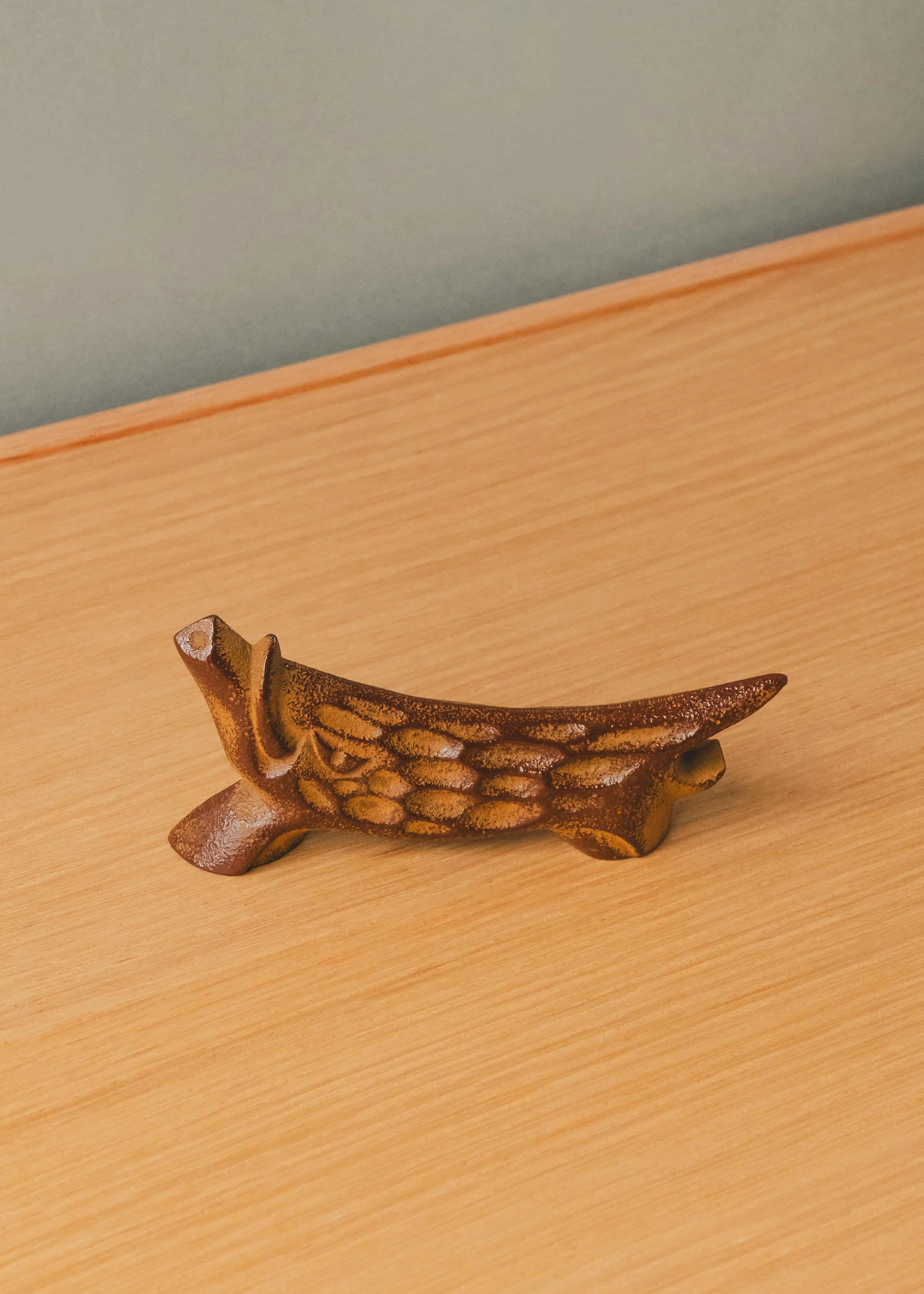 Image 7 of 9
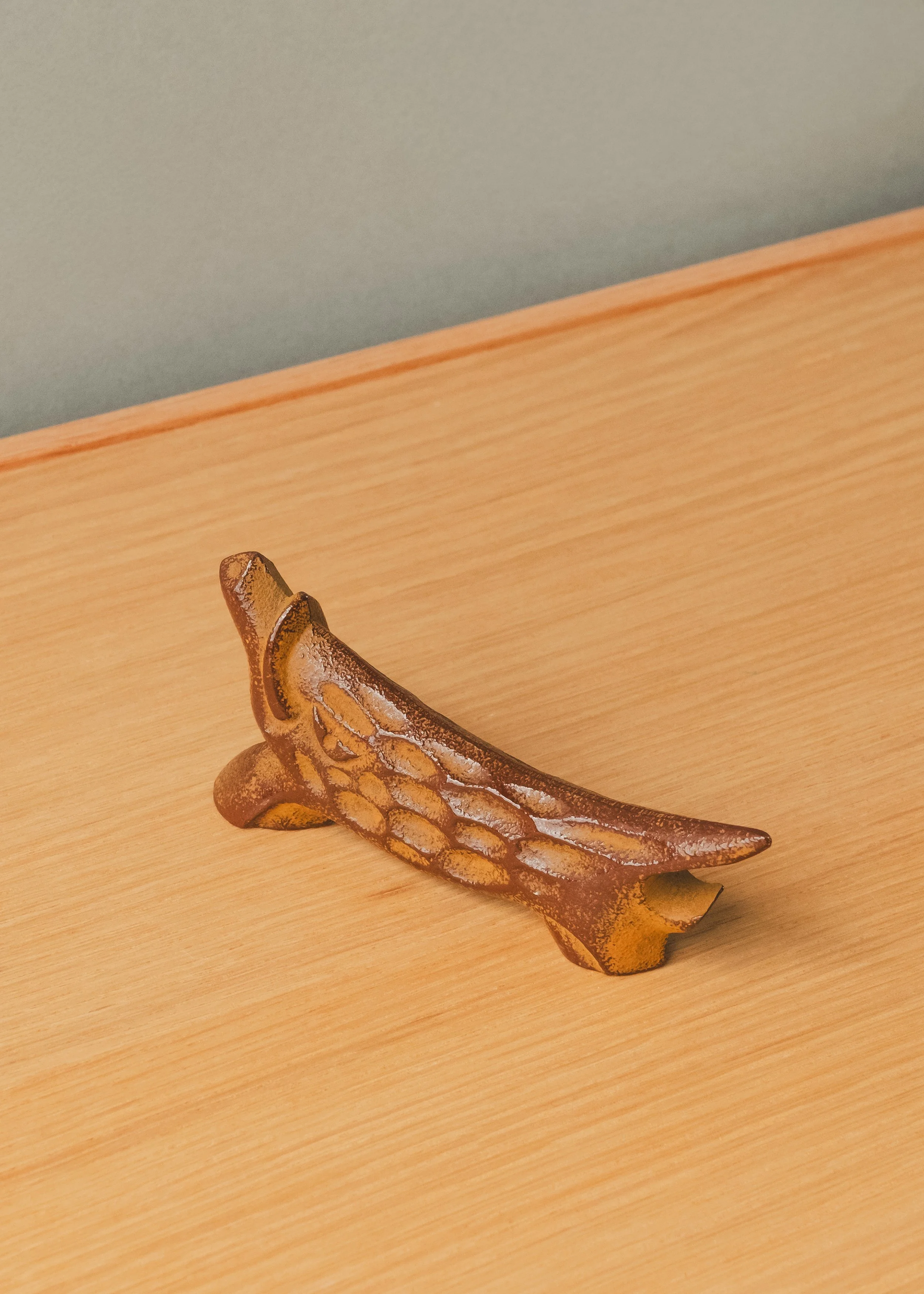 Image 8 of 9
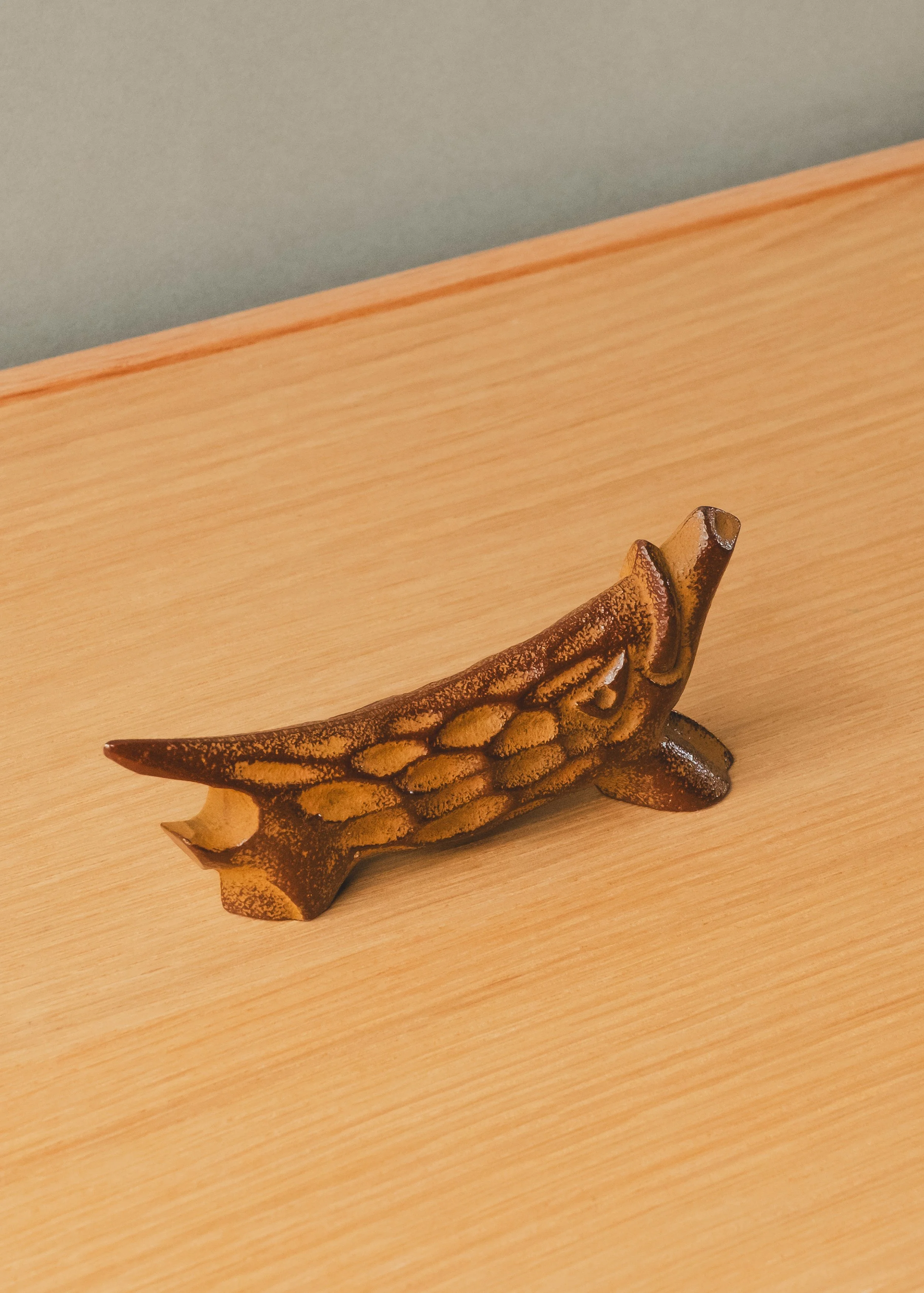 Image 9 of 9