【 The Concept 】
A bull cast in iron, mid-stride, its head lowered and its whole weight leaning into the next step. The ox is the second animal of the zodiac, and of all twelve it is the one that stands for perseverance — not speed or cunning but the plain power to pull a load, break a field, and keep going. Slow, certain, unstoppable: the ox arrives where it is headed because it never stops walking. For that reason it has always been the merchant's and the builder's animal, the emblem of steady work and of success earned one reliable step at a time — a good thing to keep in sight when what you are doing needs patience more than luck.
This one is a walking ox, and the distinction matters. The reclining ox that sits at scholarship shrines is a creature of rest; this bull is caught in motion, four legs mid-step, the power banked in its haunches and shoulders, horns swept forward. It is the ox as forward force — the wish not for stillness but for progress that does not quit. Where the potter's animals in this archive are light and hollow, this one is the opposite: solid iron, nearly three kilos of it, a thing that means to stay exactly where you set it.
【 The Function 】
Unlike a light ornament, this is a piece with real mass — a desk weight, an anchor for a shelf or an alcove, an object you feel when you lift it. It belongs somewhere it will be passed and, now and then, touched: there is an old habit of laying a hand on an iron ox for a little of its steadiness, and iron rewards the habit, darkening and warming where fingers return to it. Set it low and forward-facing, where its lowered head and gathered stride can be read, and it lends a room a quiet, planted sense of resolve.
【 The Texture 】
The first thing the eye takes is the muscle. The iron is finished dark — a deep brown-black that warms to mahogany and old-red along every raised ridge, where the surface catches the light, and sinks to near-black in the hollows — and the modelling is unashamed about power: the heavy shoulder, the folds of the dewlap, the split of each hoof, and above all the hindquarters, where the great muscles of the back legs bunch and drive as if the whole weight of the animal were about to push off the ground. It is not polished but left with the soft matte skin of cast metal, so all of it reads in shadow. And along the spine and neck is the piece's quiet mystery — a scatter of incised marks, radiating whorls and combed lines that read almost like a brand, a crest, or some old sign pressed into the metal. What they are, the piece does not say: the whorls of the animal's own coat, perhaps, or a mark the maker meant to leave, or something older still. Deliberate, and easily missed, it keeps its own counsel and rewards the closer look without quite explaining itself. Being iron, it goes on changing; handled over years, it deepens and gains a slow black shine.
【 Presence 】
Heavy, low and deliberate, it holds a surface the way little else its size can — close to three kilos concentrated into twenty-six centimetres of striding bull — much of it, it seems, banked in the driving muscle of the hind legs. It reads as old and earthen, equally at home in a traditional alcove or squared against pale wood on a modern shelf. It does not ask to be admired so much as to be relied upon: a small, dark, immovable emblem of keeping on.
Sourced from a private collection in Japan.
【 The Concept 】
A bull cast in iron, mid-stride, its head lowered and its whole weight leaning into the next step. The ox is the second animal of the zodiac, and of all twelve it is the one that stands for perseverance — not speed or cunning but the plain power to pull a load, break a field, and keep going. Slow, certain, unstoppable: the ox arrives where it is headed because it never stops walking. For that reason it has always been the merchant's and the builder's animal, the emblem of steady work and of success earned one reliable step at a time — a good thing to keep in sight when what you are doing needs patience more than luck.
This one is a walking ox, and the distinction matters. The reclining ox that sits at scholarship shrines is a creature of rest; this bull is caught in motion, four legs mid-step, the power banked in its haunches and shoulders, horns swept forward. It is the ox as forward force — the wish not for stillness but for progress that does not quit. Where the potter's animals in this archive are light and hollow, this one is the opposite: solid iron, nearly three kilos of it, a thing that means to stay exactly where you set it.
【 The Function 】
Unlike a light ornament, this is a piece with real mass — a desk weight, an anchor for a shelf or an alcove, an object you feel when you lift it. It belongs somewhere it will be passed and, now and then, touched: there is an old habit of laying a hand on an iron ox for a little of its steadiness, and iron rewards the habit, darkening and warming where fingers return to it. Set it low and forward-facing, where its lowered head and gathered stride can be read, and it lends a room a quiet, planted sense of resolve.
【 The Texture 】
The first thing the eye takes is the muscle. The iron is finished dark — a deep brown-black that warms to mahogany and old-red along every raised ridge, where the surface catches the light, and sinks to near-black in the hollows — and the modelling is unashamed about power: the heavy shoulder, the folds of the dewlap, the split of each hoof, and above all the hindquarters, where the great muscles of the back legs bunch and drive as if the whole weight of the animal were about to push off the ground. It is not polished but left with the soft matte skin of cast metal, so all of it reads in shadow. And along the spine and neck is the piece's quiet mystery — a scatter of incised marks, radiating whorls and combed lines that read almost like a brand, a crest, or some old sign pressed into the metal. What they are, the piece does not say: the whorls of the animal's own coat, perhaps, or a mark the maker meant to leave, or something older still. Deliberate, and easily missed, it keeps its own counsel and rewards the closer look without quite explaining itself. Being iron, it goes on changing; handled over years, it deepens and gains a slow black shine.
【 Presence 】
Heavy, low and deliberate, it holds a surface the way little else its size can — close to three kilos concentrated into twenty-six centimetres of striding bull — much of it, it seems, banked in the driving muscle of the hind legs. It reads as old and earthen, equally at home in a traditional alcove or squared against pale wood on a modern shelf. It does not ask to be admired so much as to be relied upon: a small, dark, immovable emblem of keeping on.
Sourced from a private collection in Japan.


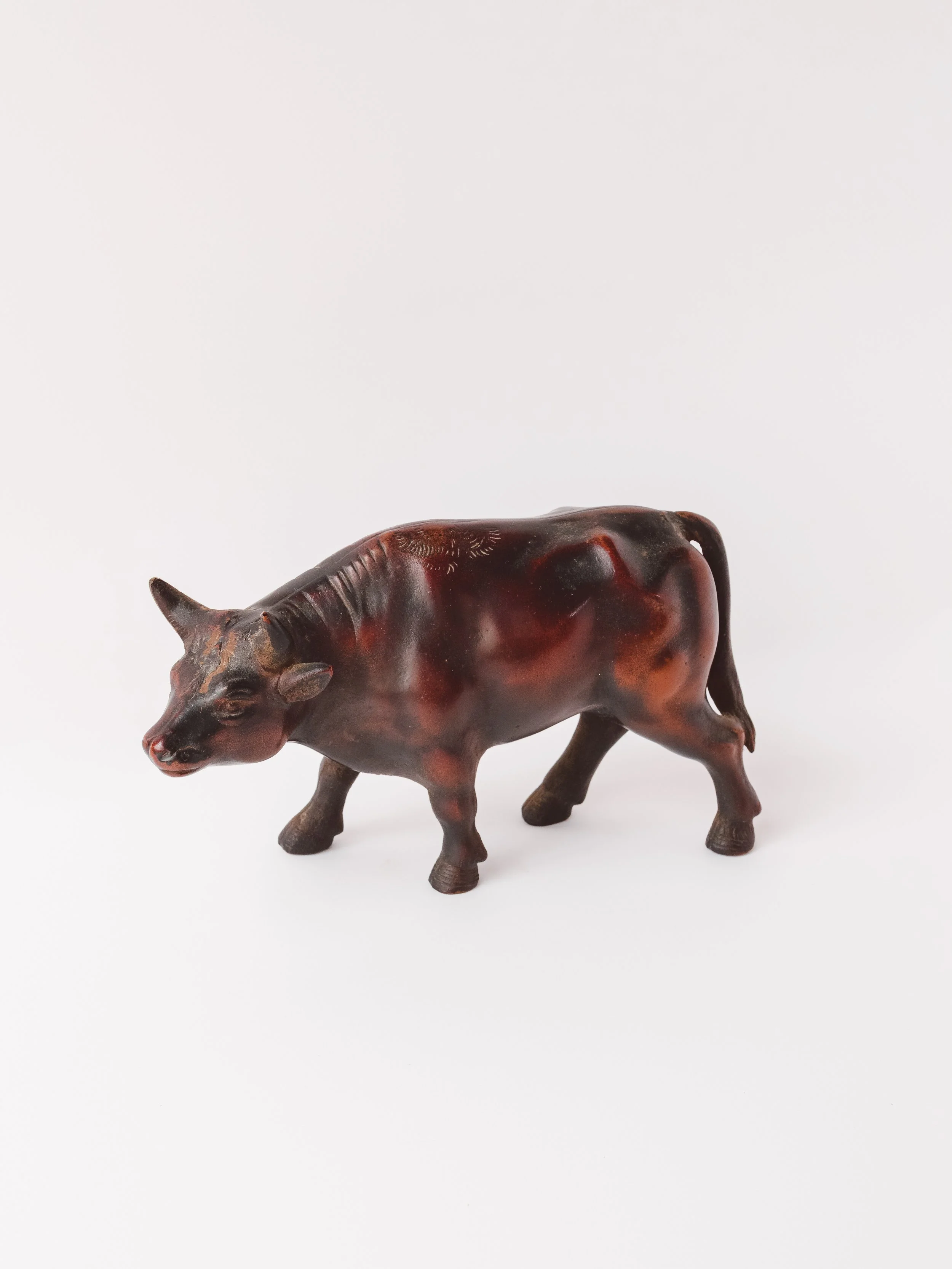 Image 1 of 13
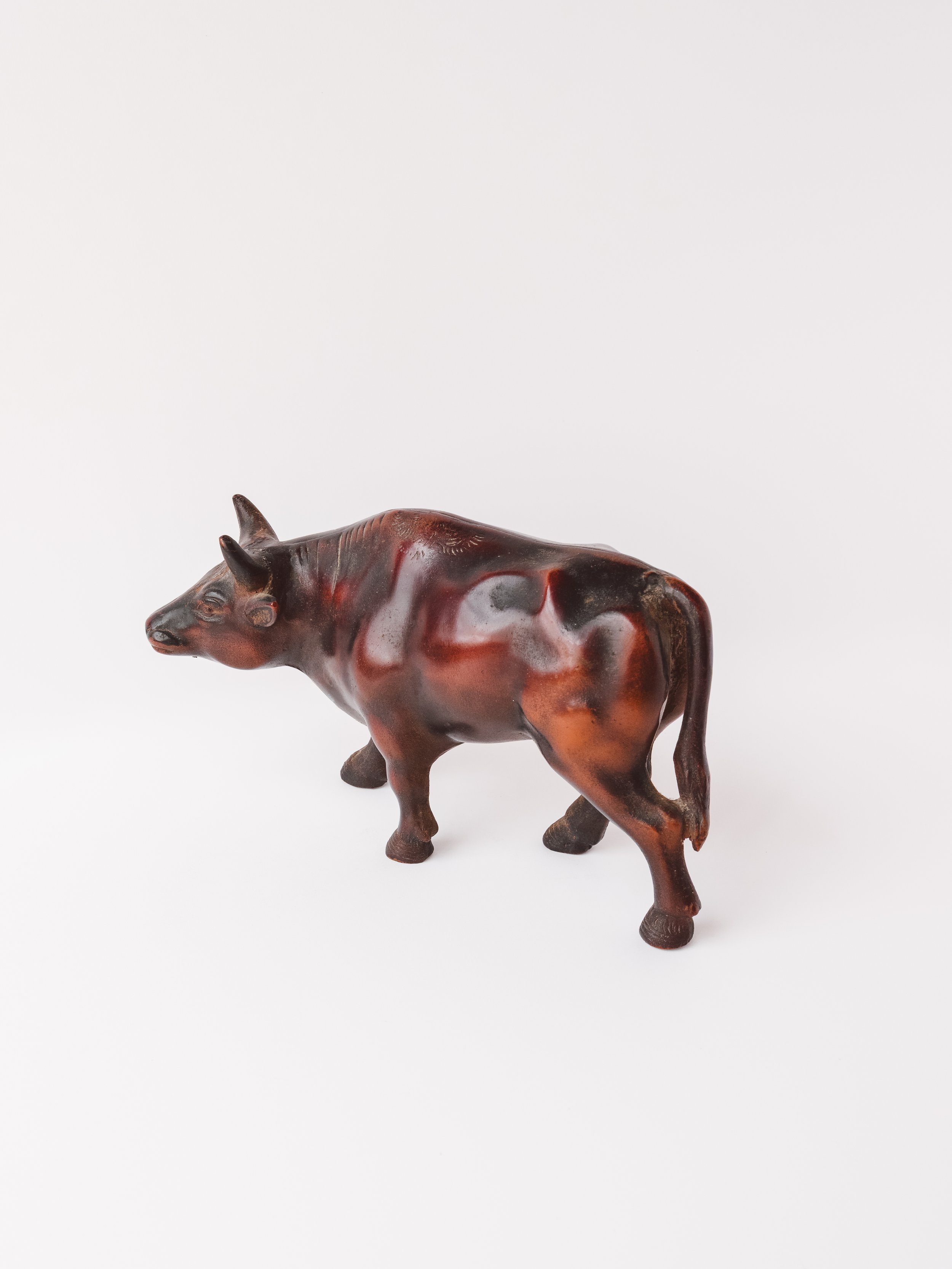 Image 2 of 13
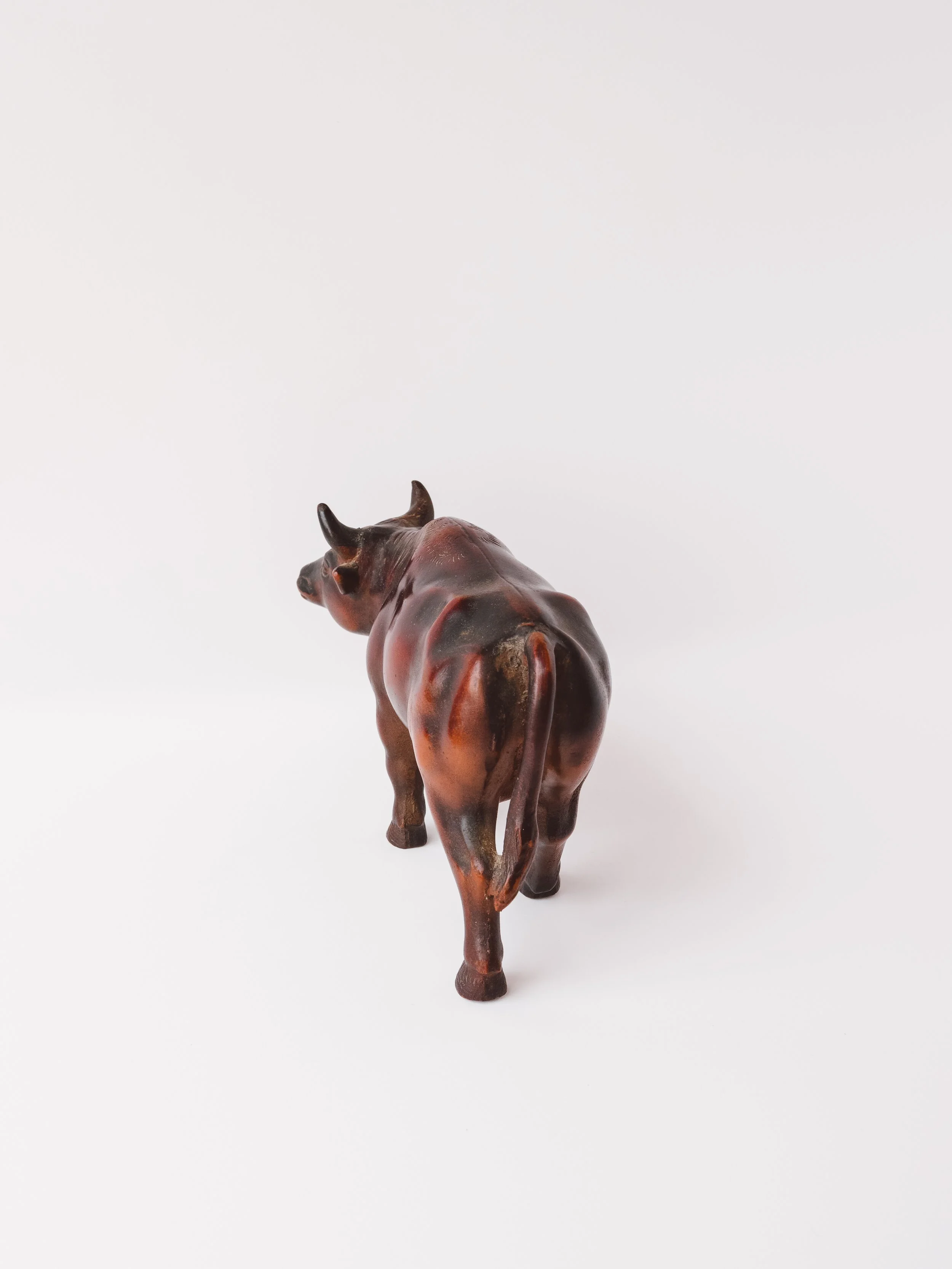 Image 3 of 13
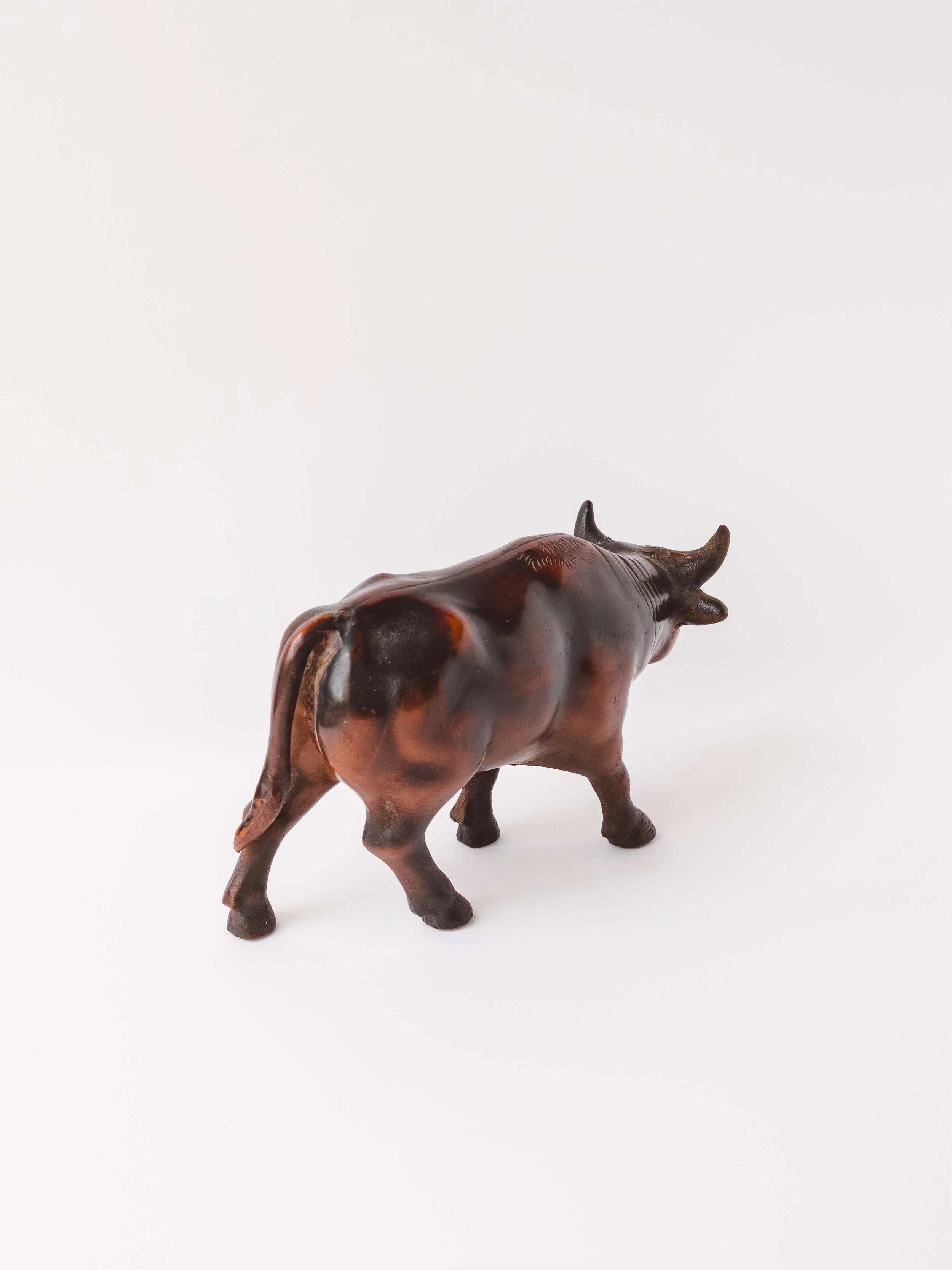 Image 4 of 13
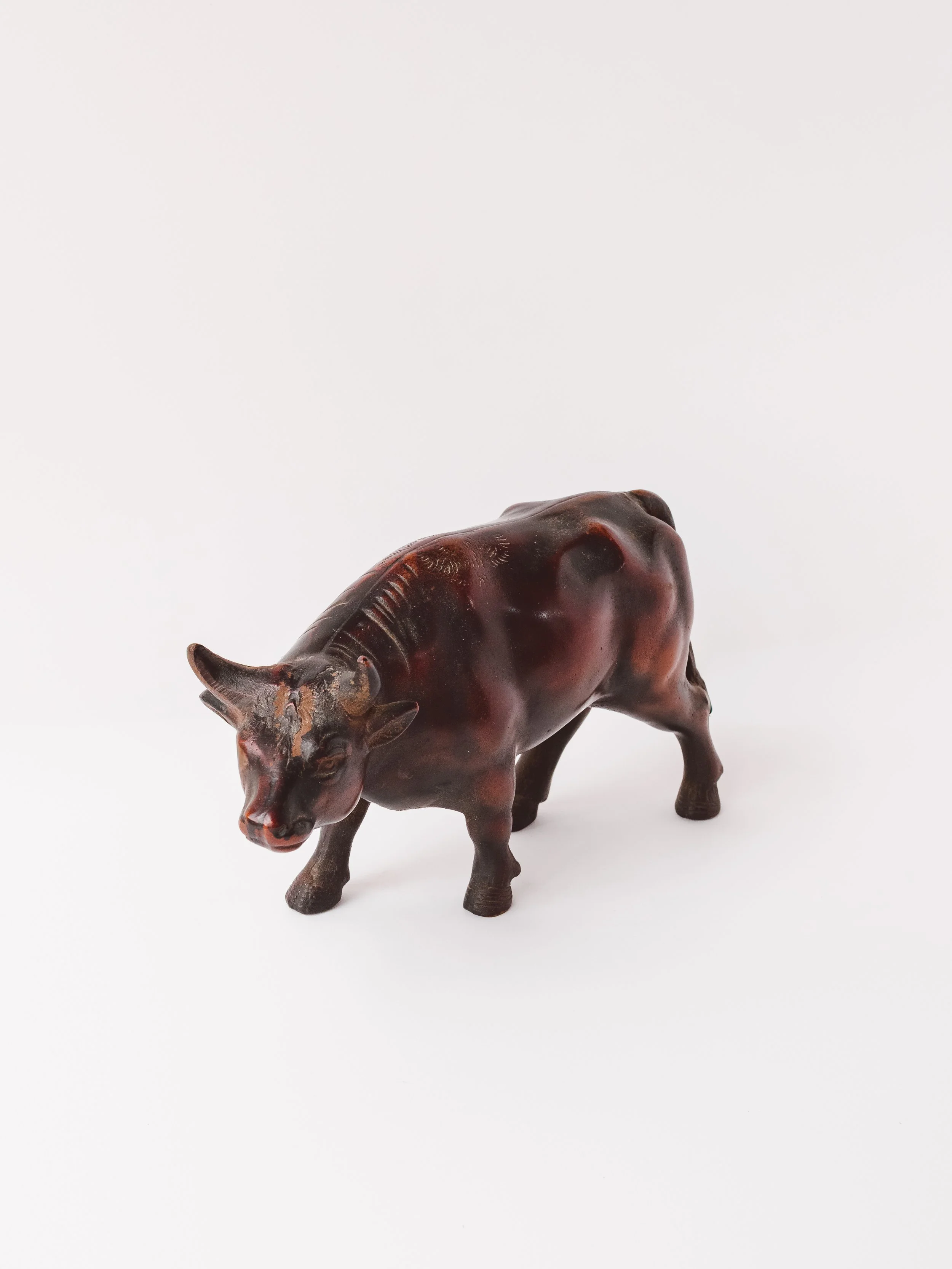 Image 5 of 13
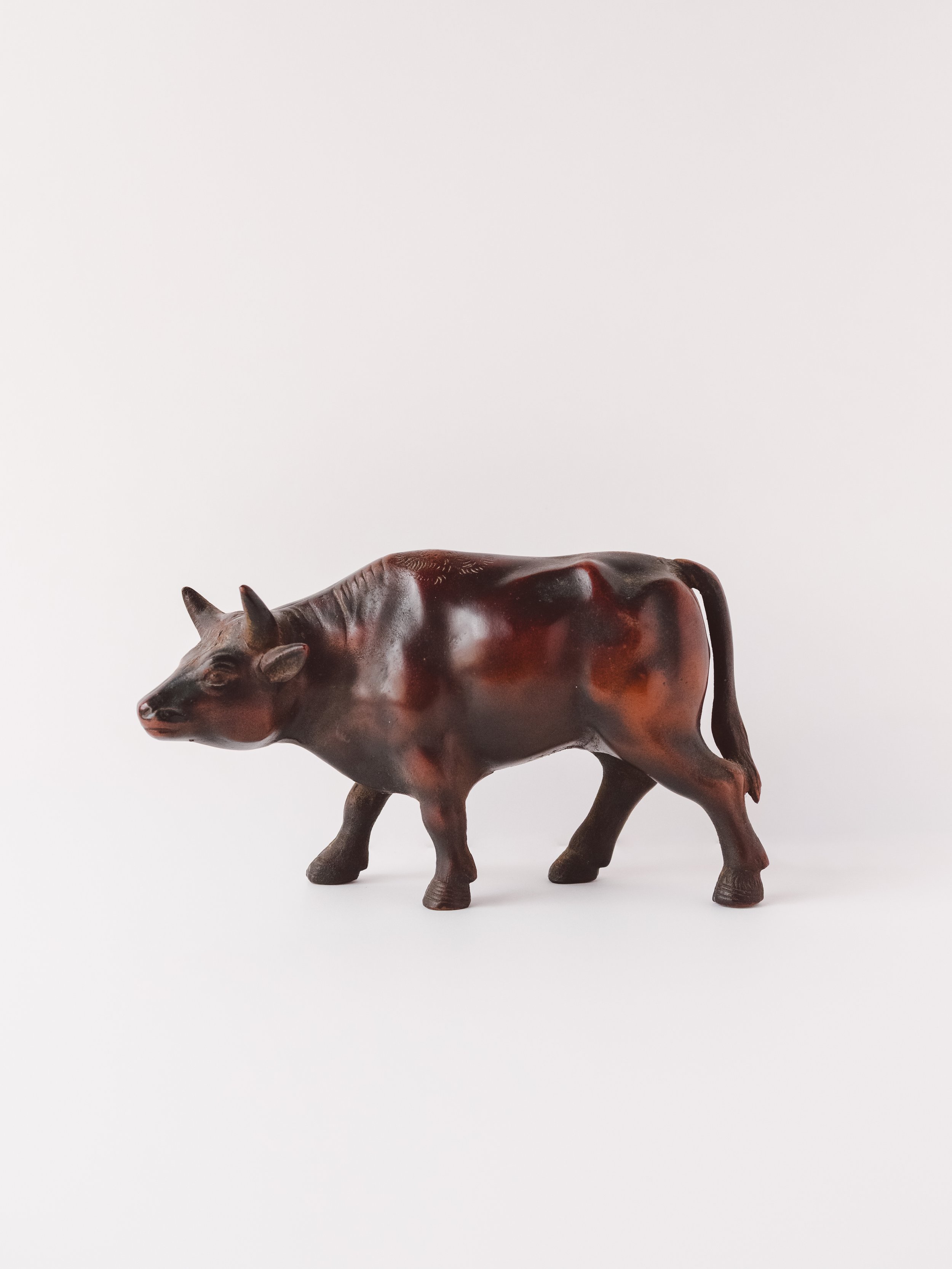 Image 6 of 13
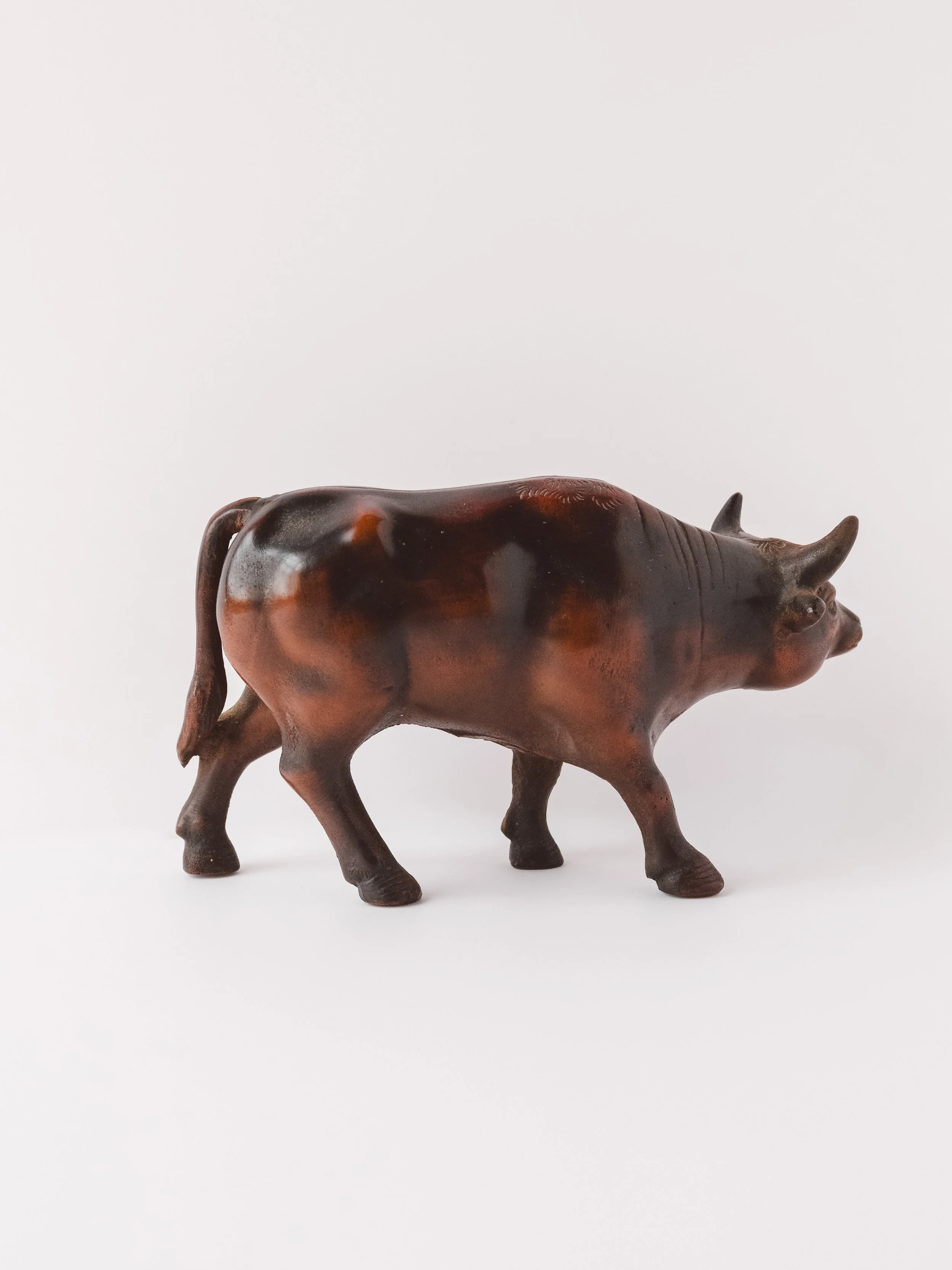 Image 7 of 13
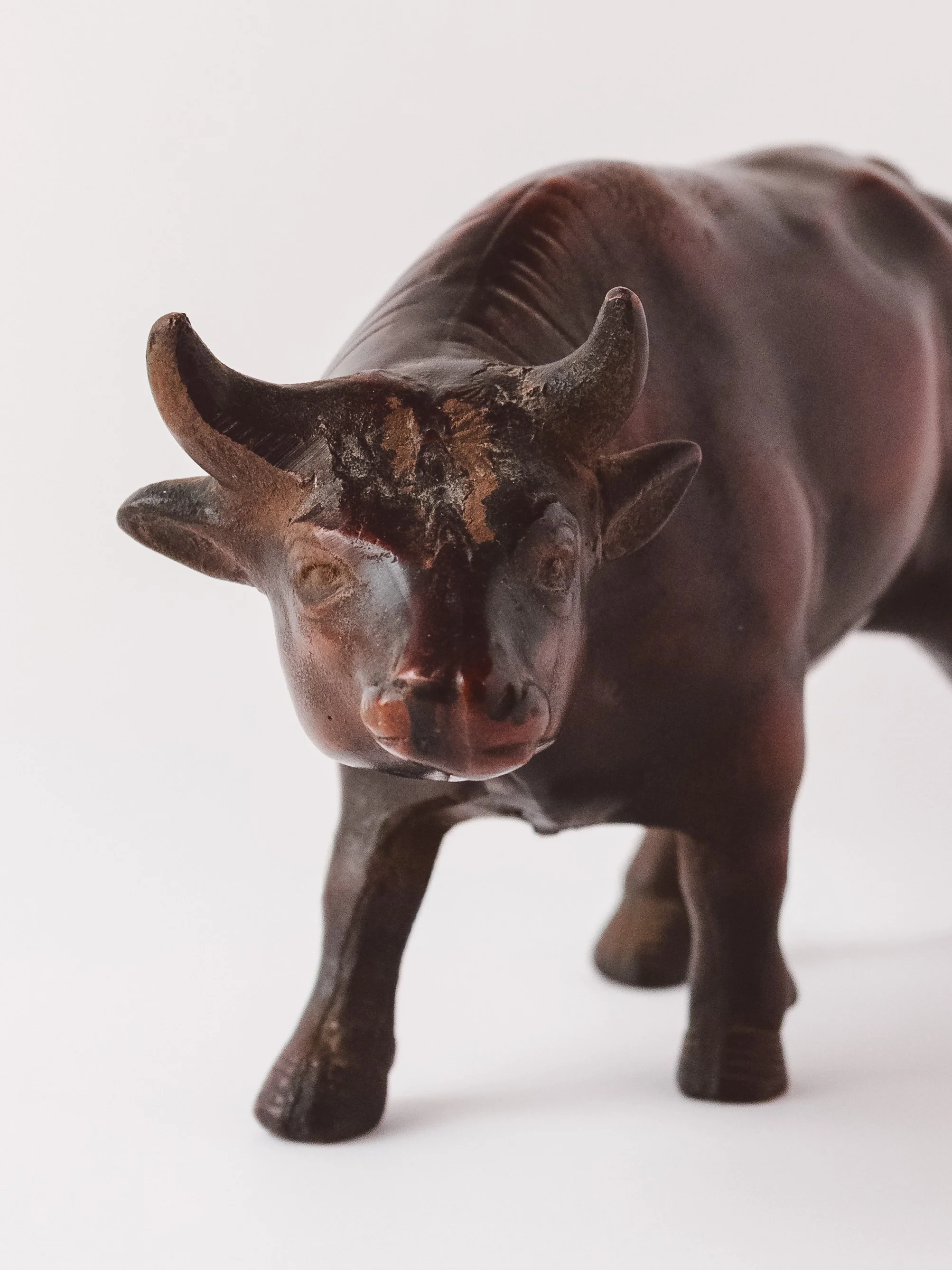 Image 8 of 13
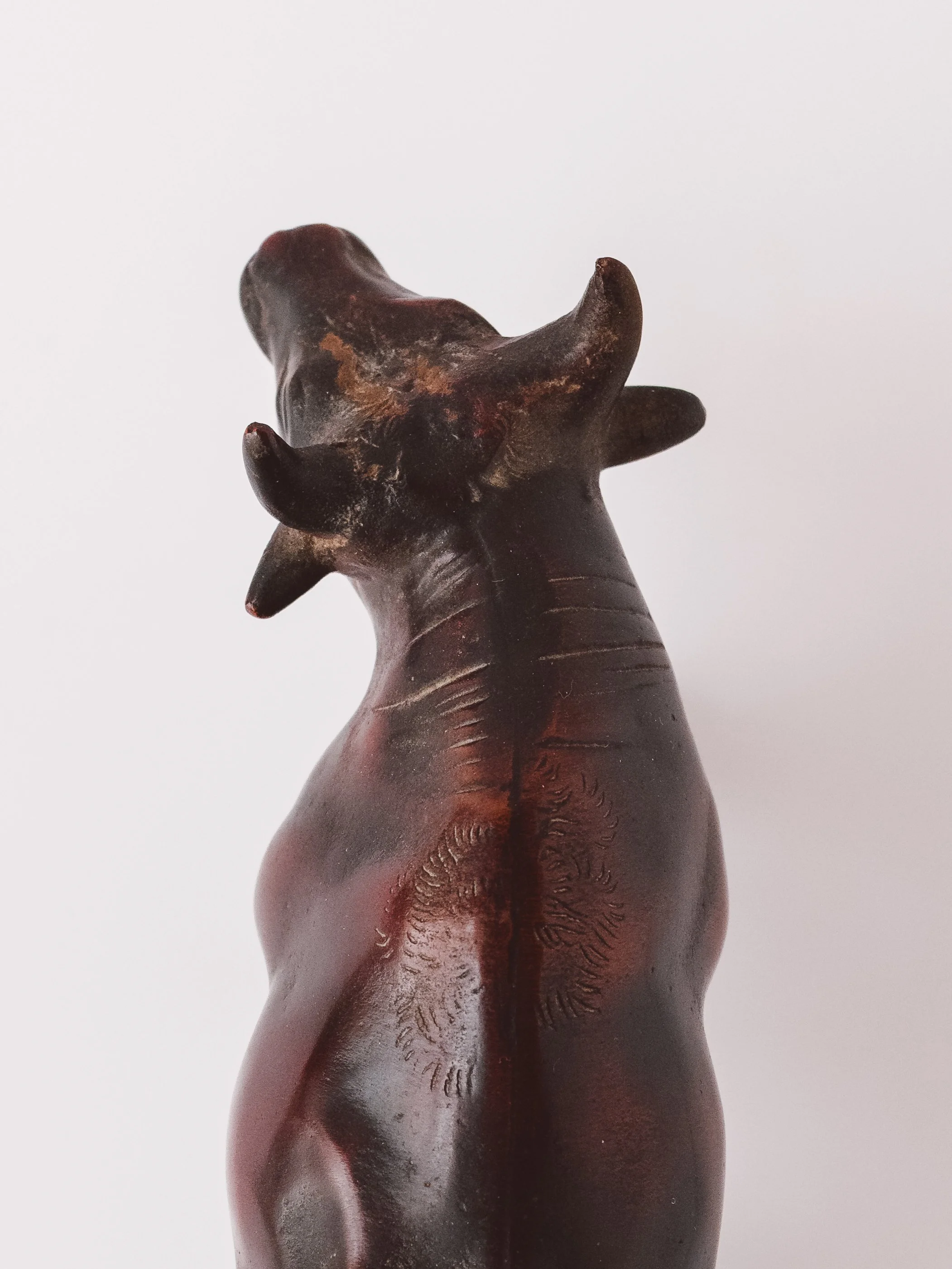 Image 9 of 13
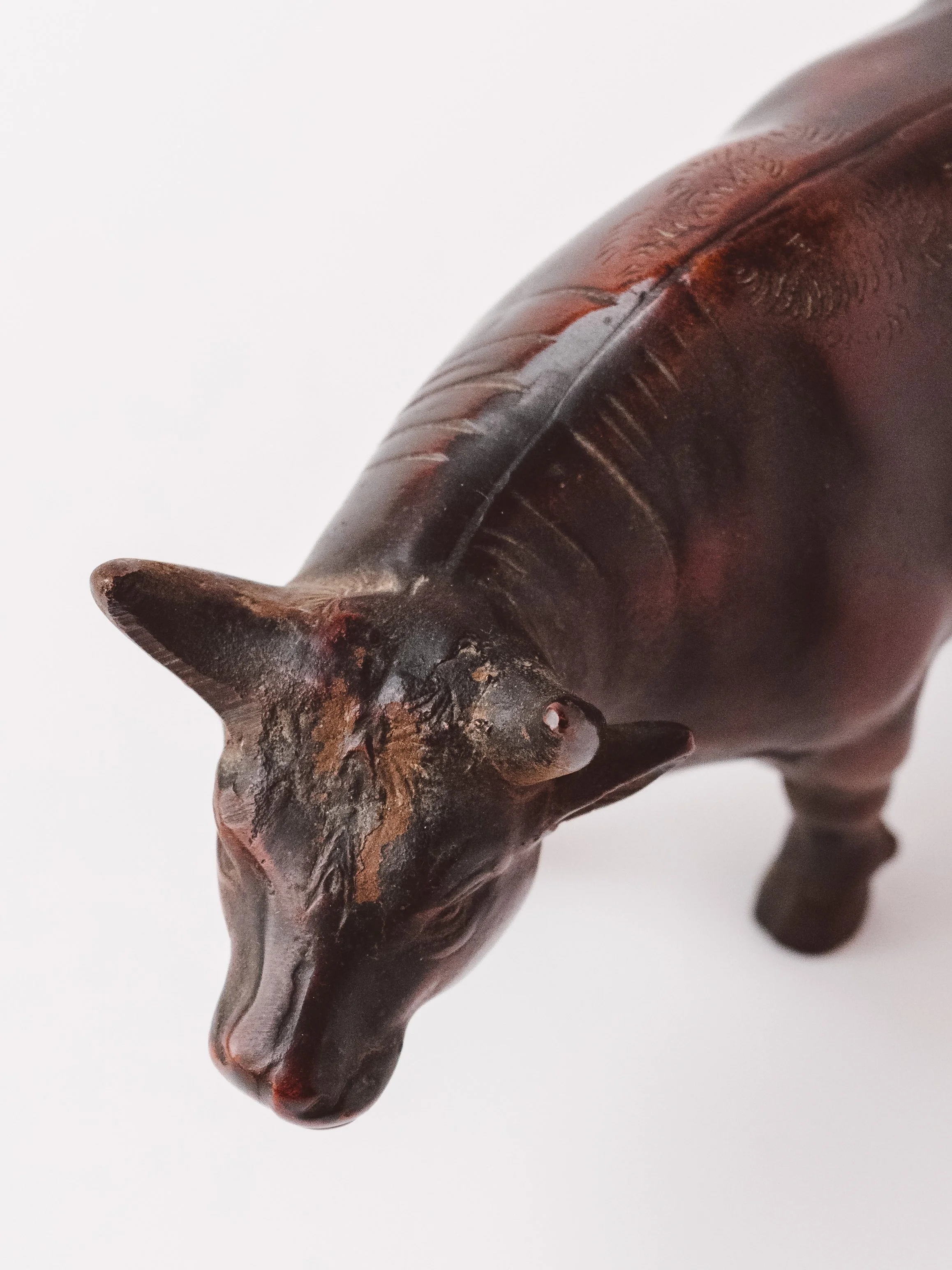 Image 10 of 13
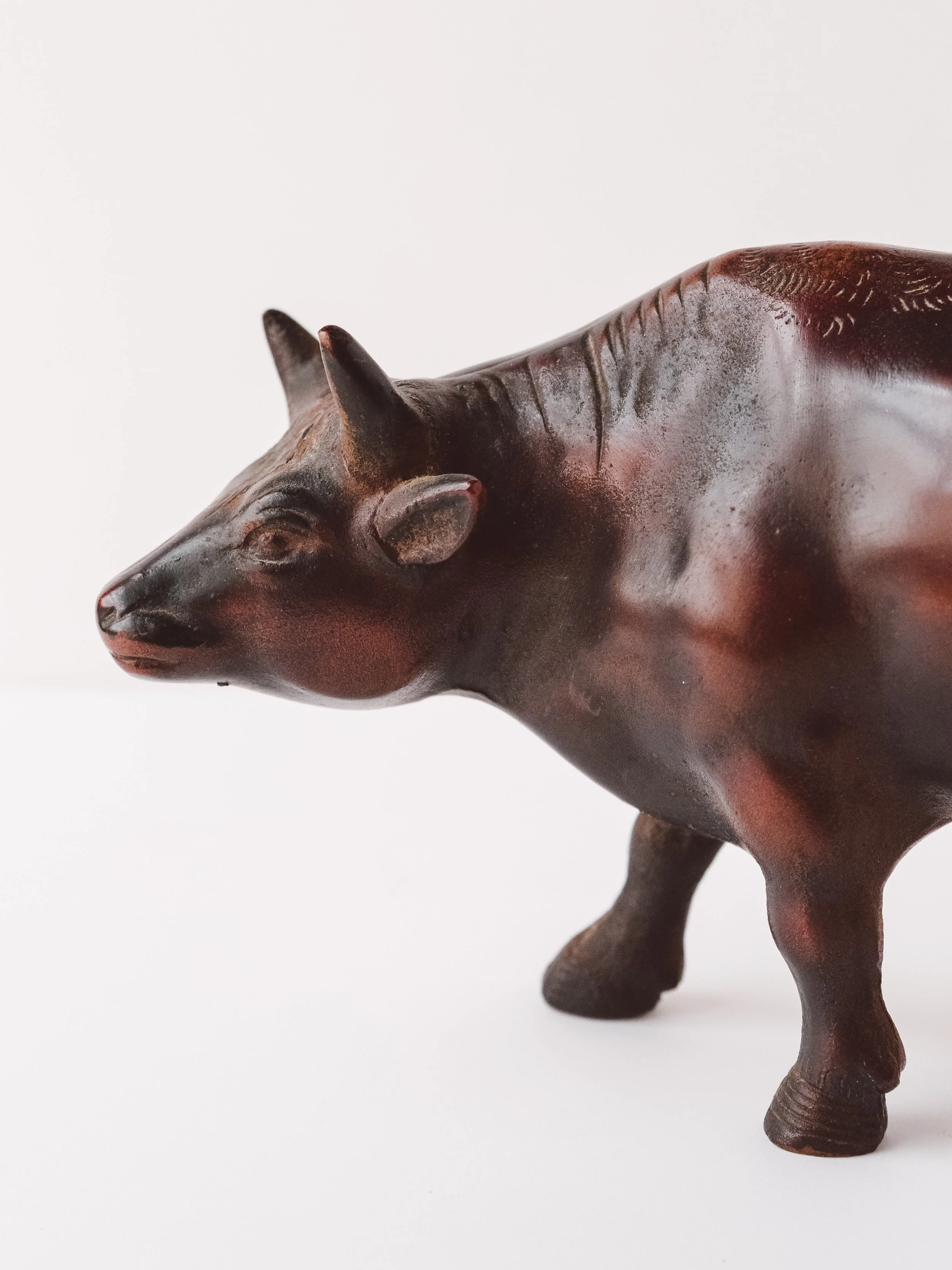 Image 11 of 13
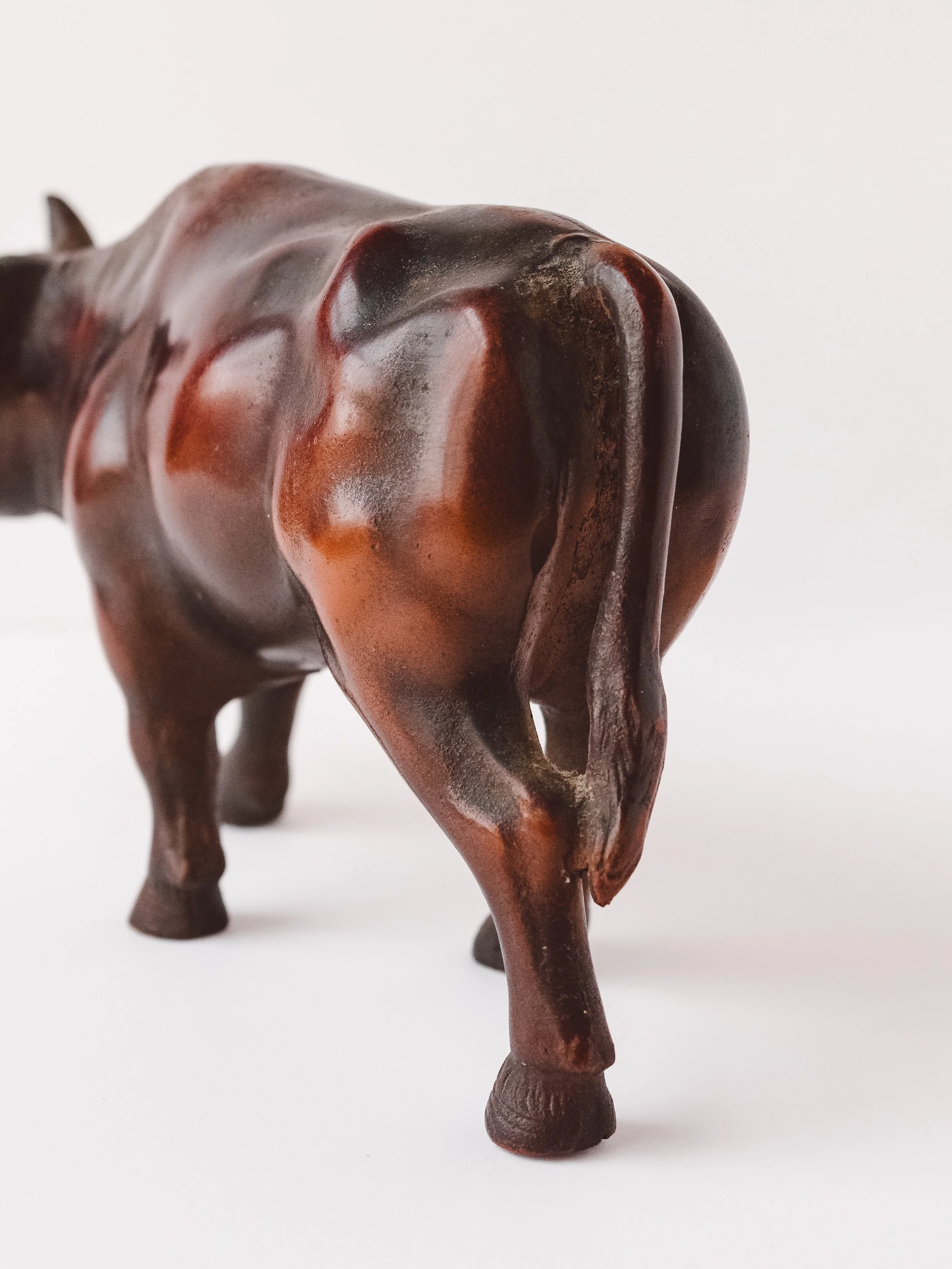 Image 12 of 13
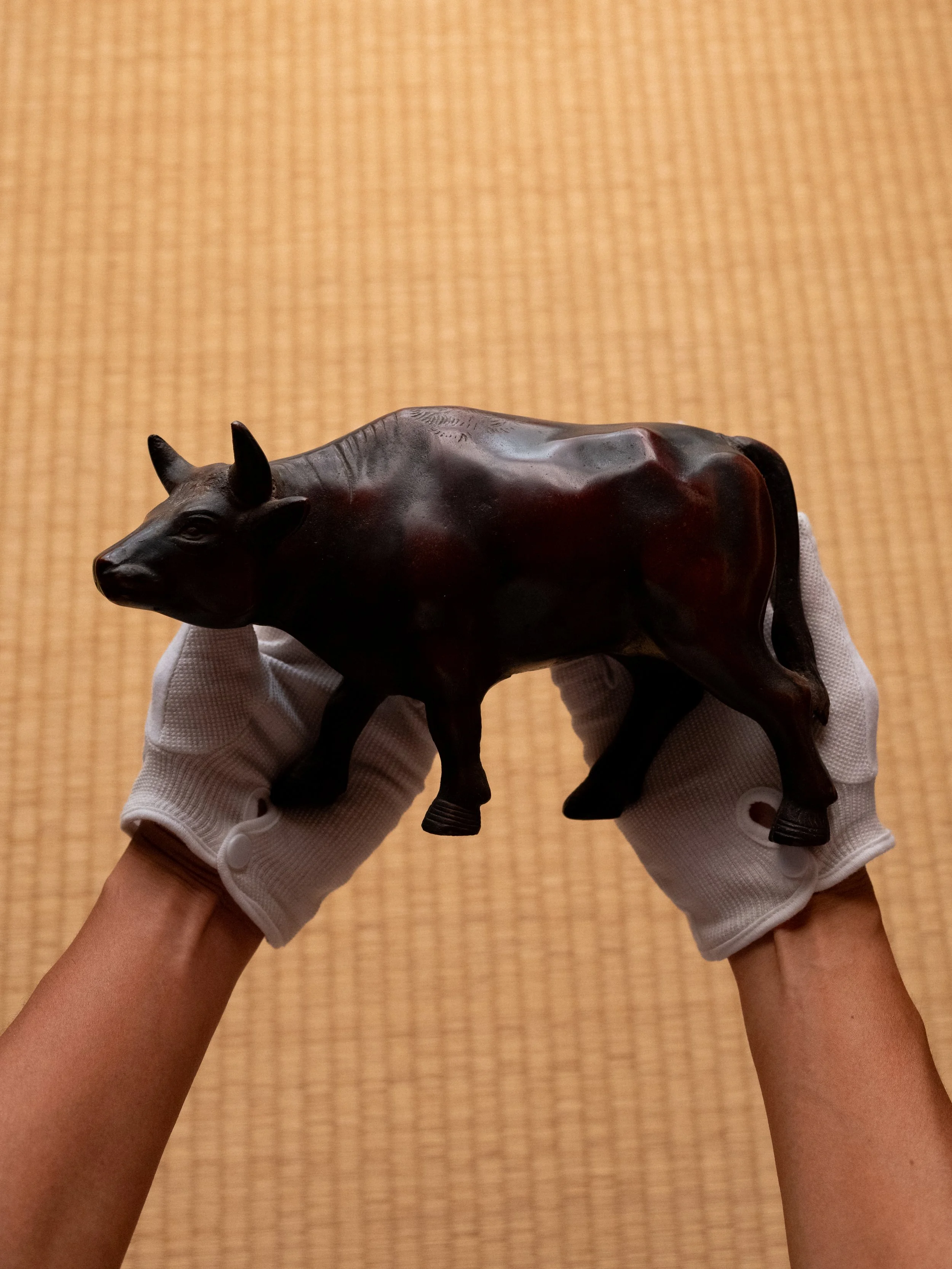 Image 13 of 13