【 The Concept 】
A whole legend carved into one deep cinnabar-red mass. Gathered around a game board sit the Eight Immortals of Daoist myth — a Go match in progress, played on a grid you can count square by square — while pine boughs arch overhead like the roof of a mountain grotto and a churning sea of waves and gnarled roots surges beneath. The whole scene is worked in deep openwork (sukashibori): the eye travels straight through the pierced waves and pine, so a heavy, intricate object seems to float and breathe. Every figure is cut individually, and fierce depth of cut throws the recesses into near-black shadow against the polished cinnabar highlights, giving a single colour enormous richness.
【 Who They Are — the Eight Immortals 】
The Ba Xian (八仙 / Hassen) are the best-loved immortals of Chinese folk Daoism, and their appeal lies in who they are: not remote deities but a cross-section of humanity itself. Between them they span old age and youth, wealth and poverty, nobility and beggary, male and female, the able and the infirm. The teaching is quietly radical — that anyone, of any station, can refine themselves toward the Dao and attain immortality. Each carries a personal attribute, so beloved that the eight objects alone (the an baxian, "hidden immortals") stand in for the whole group as a good-luck emblem:
Li Tieguai — the gourd; a lame beggar who cures illness with the elixir it pours.
Zhongli Quan — the fan that revives the dead.
Lü Dongbin — the sword that cuts through evil and delusion.
Lan Caihe — the flower basket; the free spirit, detached from worldly gain.
Han Xiangzi — the flute, whose music makes all things grow.
He Xiangu — the lotus; the one woman among them, emblem of purity.
Zhang Guolao — the fish-drum; the old sage of longevity who rides his donkey backwards.
Cao Guojiu — the jade tablet; the nobleman who withdrew from rank to seek the Way.
Gathered in one place, these eight powers are held to draw fortune from every quarter — a wish for longevity and comprehensive good luck.
【 The Two Legends Woven Together 】
The board at the centre is no idle detail. It invokes the tale of ranka ("the rotted axe-handle"): a woodcutter pauses to watch immortals at their game, and when he rises his axe-handle has crumbled to dust and a hundred years have passed in the village below. Go became, in the Chinese imagination, the game of the immortals — an absorption so complete that ordinary time dissolves, a figure for enlightenment and life without end.
Beneath, the surging waves recall a second story: the Eight Immortals crossing the sea, each revealing their own power — the origin of the saying that where there is a shared goal, each person crosses by their own gifts rather than leaning on a common boat. (It is this Chinese "immortals crossing the sea" imagery that many hold to be the distant ancestor of Japan's own treasure-ship of the Seven Lucky Gods.) Sheltering it all is the pine — evergreen through the harshest winter, and so, since antiquity, the emblem of long life and unbending constancy.
【 The Idea Behind It 】
The piece quietly stages a Daoist ideal: the union of motion and stillness. All around rage the waves of the world — difficulty, upheaval, the rush of time — yet at the calm centre the immortals bend to their game, utterly unmoved. To keep inner peace and freedom amid outer turmoil is the very shape of enlightenment in Daoist thought, here made visible in three dimensions. The auspicious charge is reinforced by number and colour: eight, in Chinese cosmology, maps to the eight directions and the eight trigrams of the Yijing — wholeness, every quarter covered — while the deep cinnabar red is the colour of vitality and the warding-off of evil.
【 The Aesthetic 】
The deep red, high-polish surface follows the visual language of tsuishu / carved cinnabar lacquer (tīhóng), the courtly art in which layer upon layer of red is built up and then carved in deep relief. Here that look is achieved in moulded resin rather than true lacquer, but the design language is faithful: the strong, near-vertical cuts that turn shadow to black, the sumptuous density, the theatrical framing of pine above and wave below that turns the group into a stage.
【 The Function 】
A substantial statement piece for a shelf, cabinet, console, or scholar's desk. As a subject the Eight Immortals are among the most auspicious in Chinese art, so the piece reads at once as a display sculpture and a bringer of luck. At twenty centimetres long and fourteen tall, it holds a shelf or corner on its own.
【 The Texture 】
Moulded resin finished to resemble carved cinnabar lacquer: a deep, dark red that lifts to a gentle sheen on the raised, polished surfaces and drops to shadowed near-black in the deep cuts. The object itself is solid and firm — nothing about it is soft or yielding to the touch; "soft" here describes only the quality of the light on its surface. Held in the hand, though, it reads clearly as resin rather than stone or lacquer: a touch lighter and warmer than cold stone would feel. Smooth, rounded figures and pine crowns contrast with the crisp, lacy openwork of the waves and roots below.
【 Presence 】
Layered and theatrical, yet centred and calm. For all the surging waves and crowded figures, the immortals bend to their game in complete absorption — motion all around, stillness at the centre. Seen from different sides, different figures and gestures come to the front.
Archive Note: The number in the name (1403) is a catalogue reference echoing the early-Ming era, when carved cinnabar lacquer (which this piece imitates) flourished and the Eight Immortals became a favourite theme. It is NOT the date this piece was made.
Provenance Note: Sourced from a private collection in Japan.
Condition Note: Sold as acquired, in very good condition. A finely pierced openwork piece — the delicate cut-through areas of pine and wave should be handled with care. As a moulded piece it may show faint mould lines or minor casting/handling marks under close inspection; the detail and colour are well preserved. Please see the photographs as part of the description.
【 The Concept 】
A whole legend carved into one deep cinnabar-red mass. Gathered around a game board sit the Eight Immortals of Daoist myth — a Go match in progress, played on a grid you can count square by square — while pine boughs arch overhead like the roof of a mountain grotto and a churning sea of waves and gnarled roots surges beneath. The whole scene is worked in deep openwork (sukashibori): the eye travels straight through the pierced waves and pine, so a heavy, intricate object seems to float and breathe. Every figure is cut individually, and fierce depth of cut throws the recesses into near-black shadow against the polished cinnabar highlights, giving a single colour enormous richness.
【 Who They Are — the Eight Immortals 】
The Ba Xian (八仙 / Hassen) are the best-loved immortals of Chinese folk Daoism, and their appeal lies in who they are: not remote deities but a cross-section of humanity itself. Between them they span old age and youth, wealth and poverty, nobility and beggary, male and female, the able and the infirm. The teaching is quietly radical — that anyone, of any station, can refine themselves toward the Dao and attain immortality. Each carries a personal attribute, so beloved that the eight objects alone (the an baxian, "hidden immortals") stand in for the whole group as a good-luck emblem:
Li Tieguai — the gourd; a lame beggar who cures illness with the elixir it pours.
Zhongli Quan — the fan that revives the dead.
Lü Dongbin — the sword that cuts through evil and delusion.
Lan Caihe — the flower basket; the free spirit, detached from worldly gain.
Han Xiangzi — the flute, whose music makes all things grow.
He Xiangu — the lotus; the one woman among them, emblem of purity.
Zhang Guolao — the fish-drum; the old sage of longevity who rides his donkey backwards.
Cao Guojiu — the jade tablet; the nobleman who withdrew from rank to seek the Way.
Gathered in one place, these eight powers are held to draw fortune from every quarter — a wish for longevity and comprehensive good luck.
【 The Two Legends Woven Together 】
The board at the centre is no idle detail. It invokes the tale of ranka ("the rotted axe-handle"): a woodcutter pauses to watch immortals at their game, and when he rises his axe-handle has crumbled to dust and a hundred years have passed in the village below. Go became, in the Chinese imagination, the game of the immortals — an absorption so complete that ordinary time dissolves, a figure for enlightenment and life without end.
Beneath, the surging waves recall a second story: the Eight Immortals crossing the sea, each revealing their own power — the origin of the saying that where there is a shared goal, each person crosses by their own gifts rather than leaning on a common boat. (It is this Chinese "immortals crossing the sea" imagery that many hold to be the distant ancestor of Japan's own treasure-ship of the Seven Lucky Gods.) Sheltering it all is the pine — evergreen through the harshest winter, and so, since antiquity, the emblem of long life and unbending constancy.
【 The Idea Behind It 】
The piece quietly stages a Daoist ideal: the union of motion and stillness. All around rage the waves of the world — difficulty, upheaval, the rush of time — yet at the calm centre the immortals bend to their game, utterly unmoved. To keep inner peace and freedom amid outer turmoil is the very shape of enlightenment in Daoist thought, here made visible in three dimensions. The auspicious charge is reinforced by number and colour: eight, in Chinese cosmology, maps to the eight directions and the eight trigrams of the Yijing — wholeness, every quarter covered — while the deep cinnabar red is the colour of vitality and the warding-off of evil.
【 The Aesthetic 】
The deep red, high-polish surface follows the visual language of tsuishu / carved cinnabar lacquer (tīhóng), the courtly art in which layer upon layer of red is built up and then carved in deep relief. Here that look is achieved in moulded resin rather than true lacquer, but the design language is faithful: the strong, near-vertical cuts that turn shadow to black, the sumptuous density, the theatrical framing of pine above and wave below that turns the group into a stage.
【 The Function 】
A substantial statement piece for a shelf, cabinet, console, or scholar's desk. As a subject the Eight Immortals are among the most auspicious in Chinese art, so the piece reads at once as a display sculpture and a bringer of luck. At twenty centimetres long and fourteen tall, it holds a shelf or corner on its own.
【 The Texture 】
Moulded resin finished to resemble carved cinnabar lacquer: a deep, dark red that lifts to a gentle sheen on the raised, polished surfaces and drops to shadowed near-black in the deep cuts. The object itself is solid and firm — nothing about it is soft or yielding to the touch; "soft" here describes only the quality of the light on its surface. Held in the hand, though, it reads clearly as resin rather than stone or lacquer: a touch lighter and warmer than cold stone would feel. Smooth, rounded figures and pine crowns contrast with the crisp, lacy openwork of the waves and roots below.
【 Presence 】
Layered and theatrical, yet centred and calm. For all the surging waves and crowded figures, the immortals bend to their game in complete absorption — motion all around, stillness at the centre. Seen from different sides, different figures and gestures come to the front.
Archive Note: The number in the name (1403) is a catalogue reference echoing the early-Ming era, when carved cinnabar lacquer (which this piece imitates) flourished and the Eight Immortals became a favourite theme. It is NOT the date this piece was made.
Provenance Note: Sourced from a private collection in Japan.
Condition Note: Sold as acquired, in very good condition. A finely pierced openwork piece — the delicate cut-through areas of pine and wave should be handled with care. As a moulded piece it may show faint mould lines or minor casting/handling marks under close inspection; the detail and colour are well preserved. Please see the photographs as part of the description.


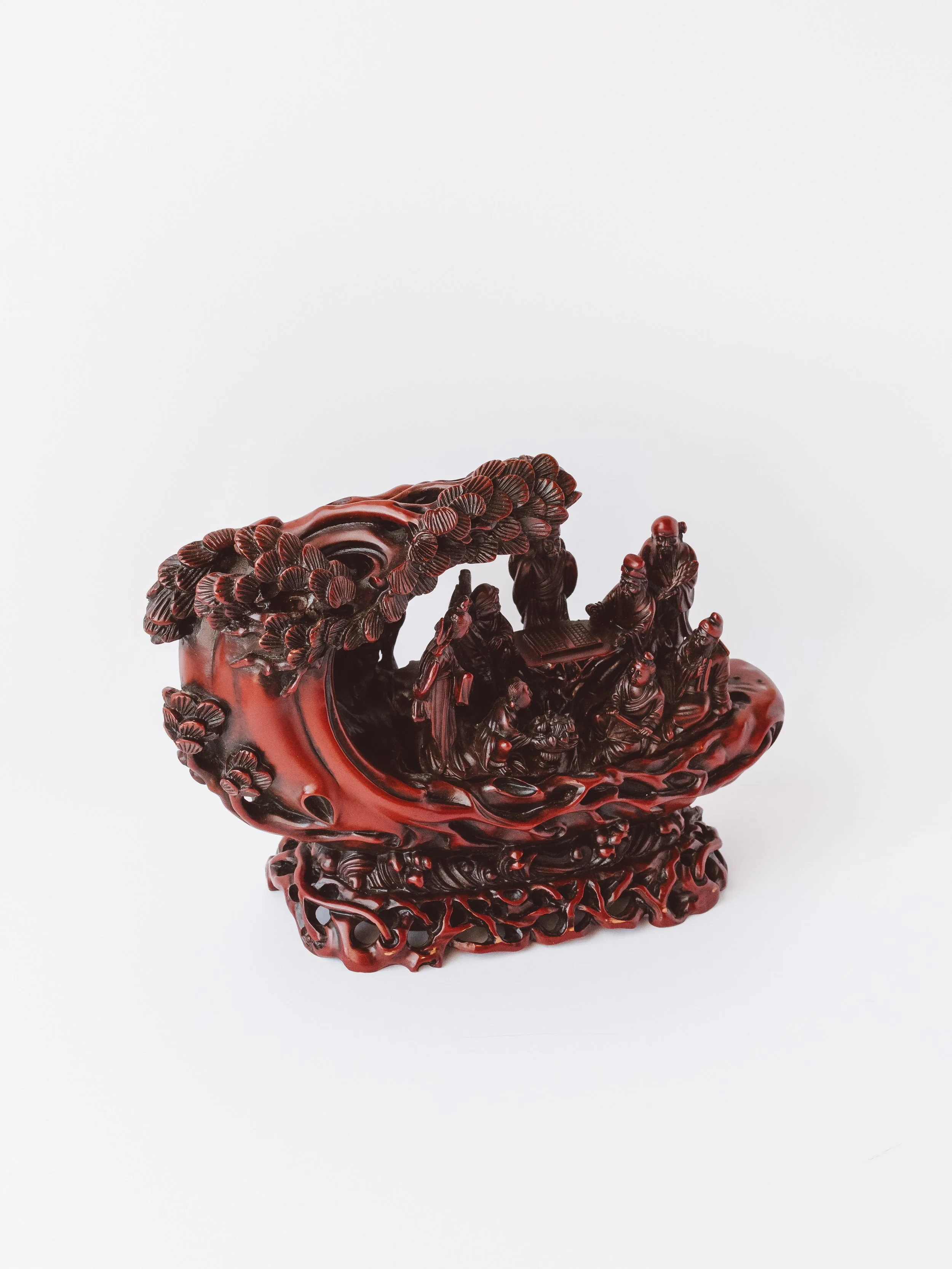 Image 1 of 12
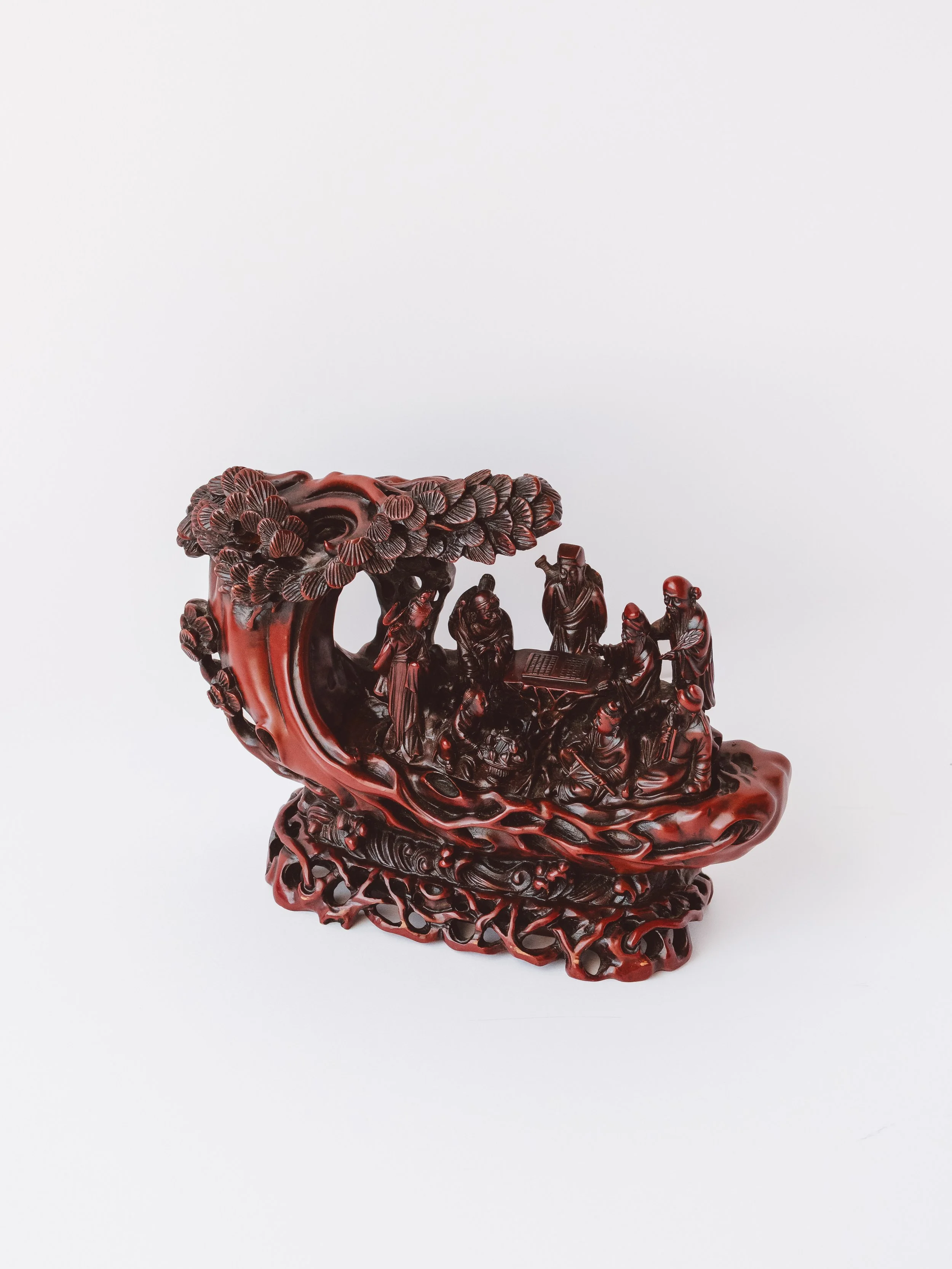 Image 2 of 12
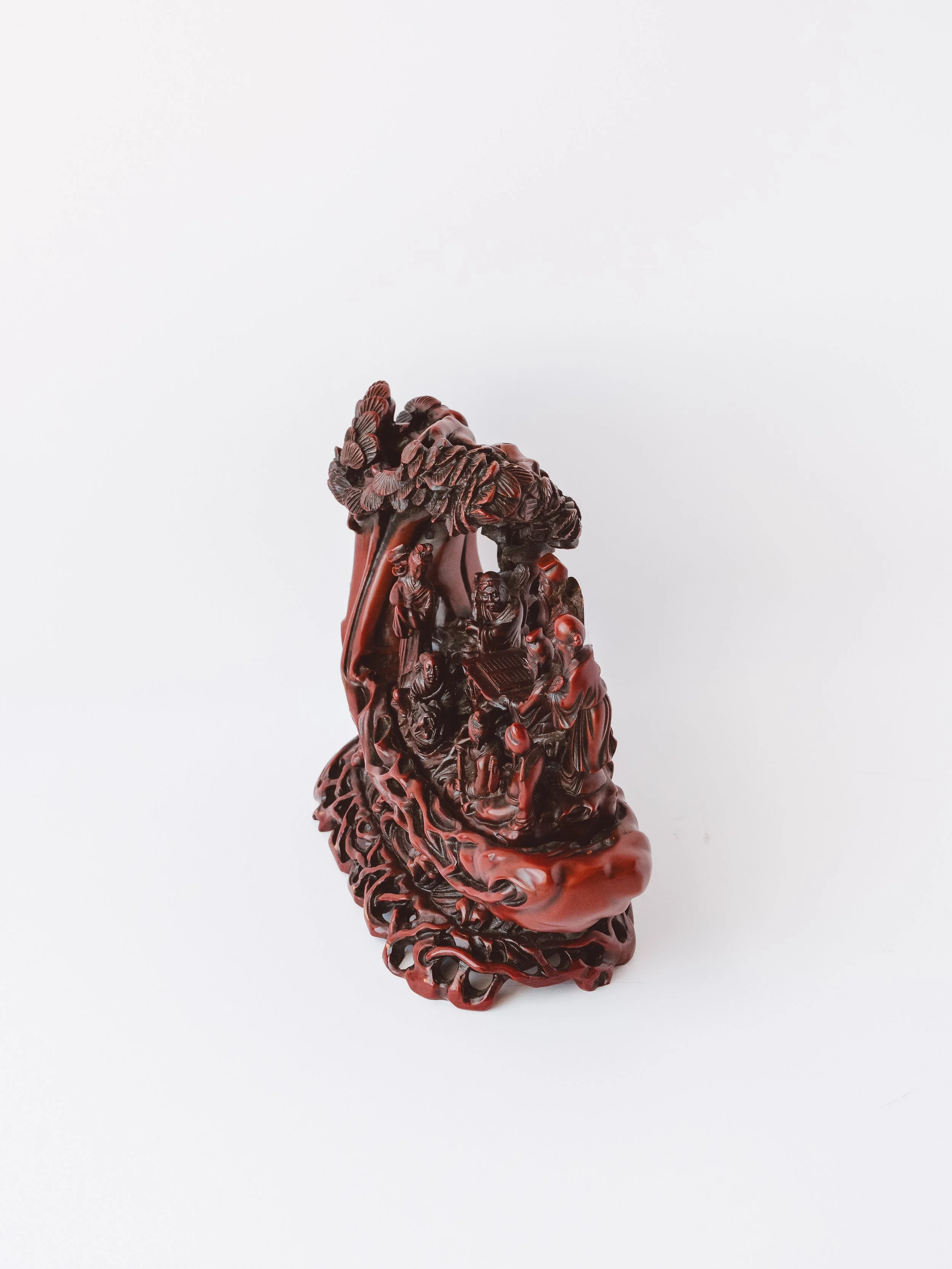 Image 3 of 12
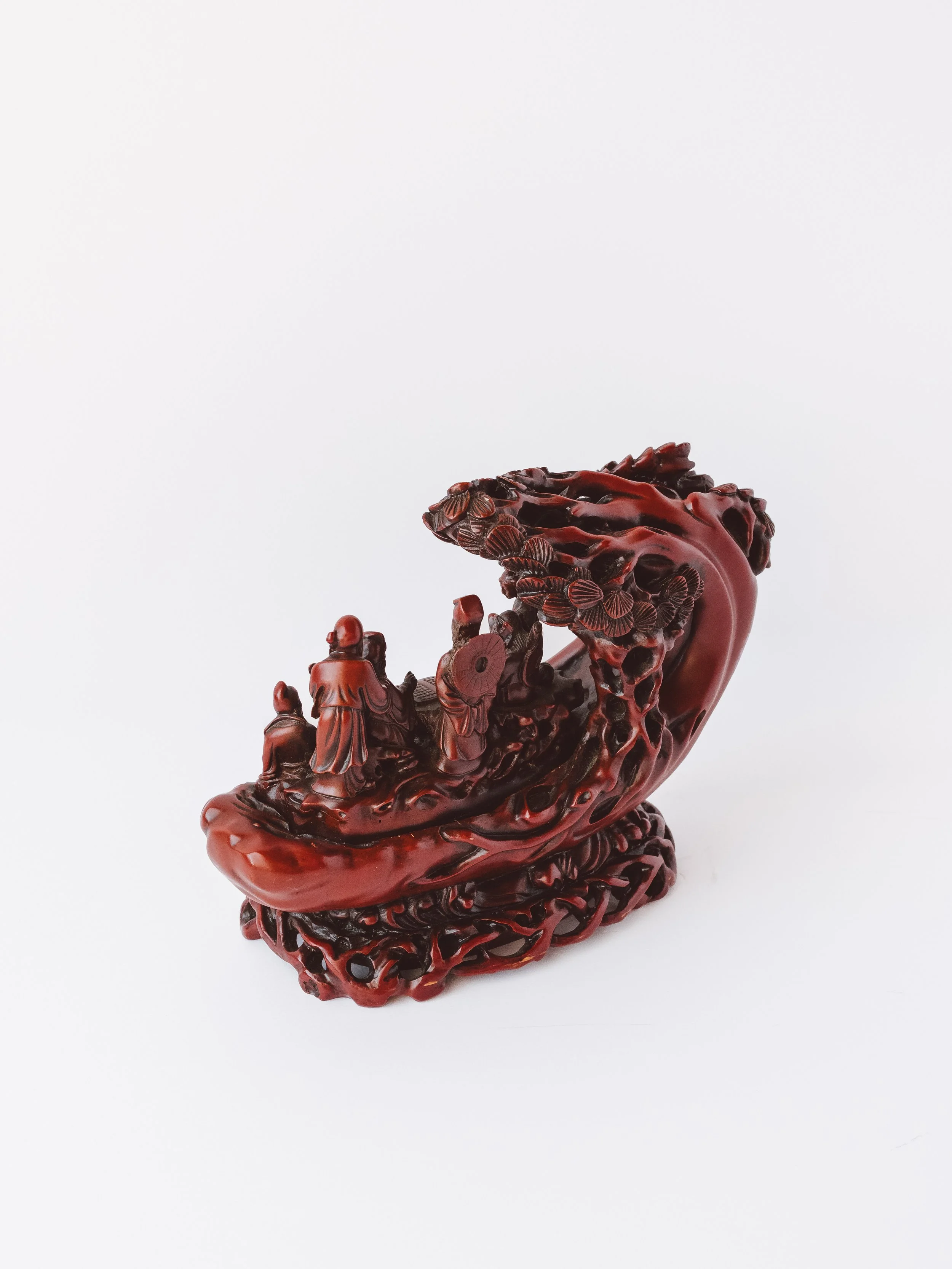 Image 4 of 12
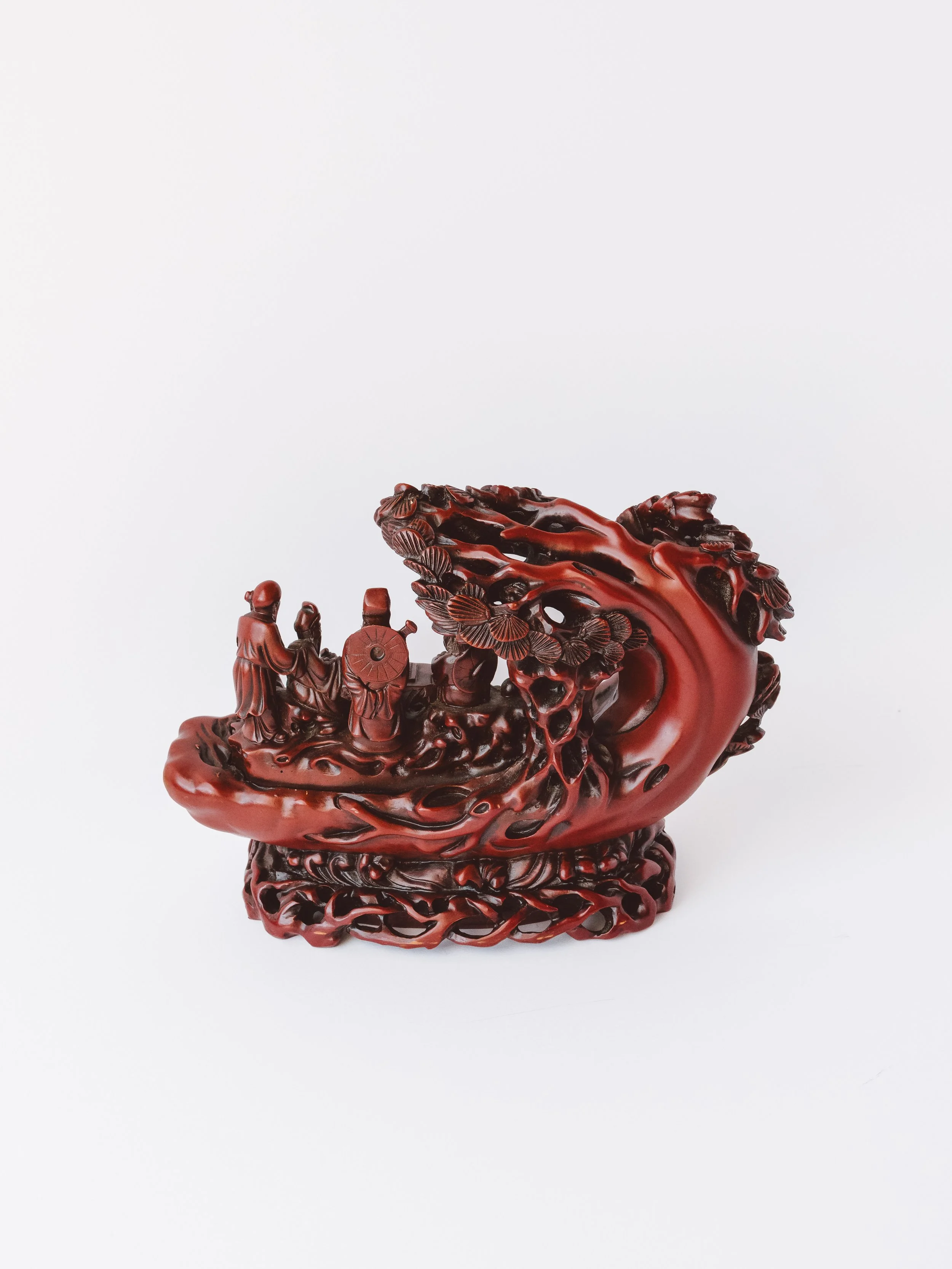 Image 5 of 12
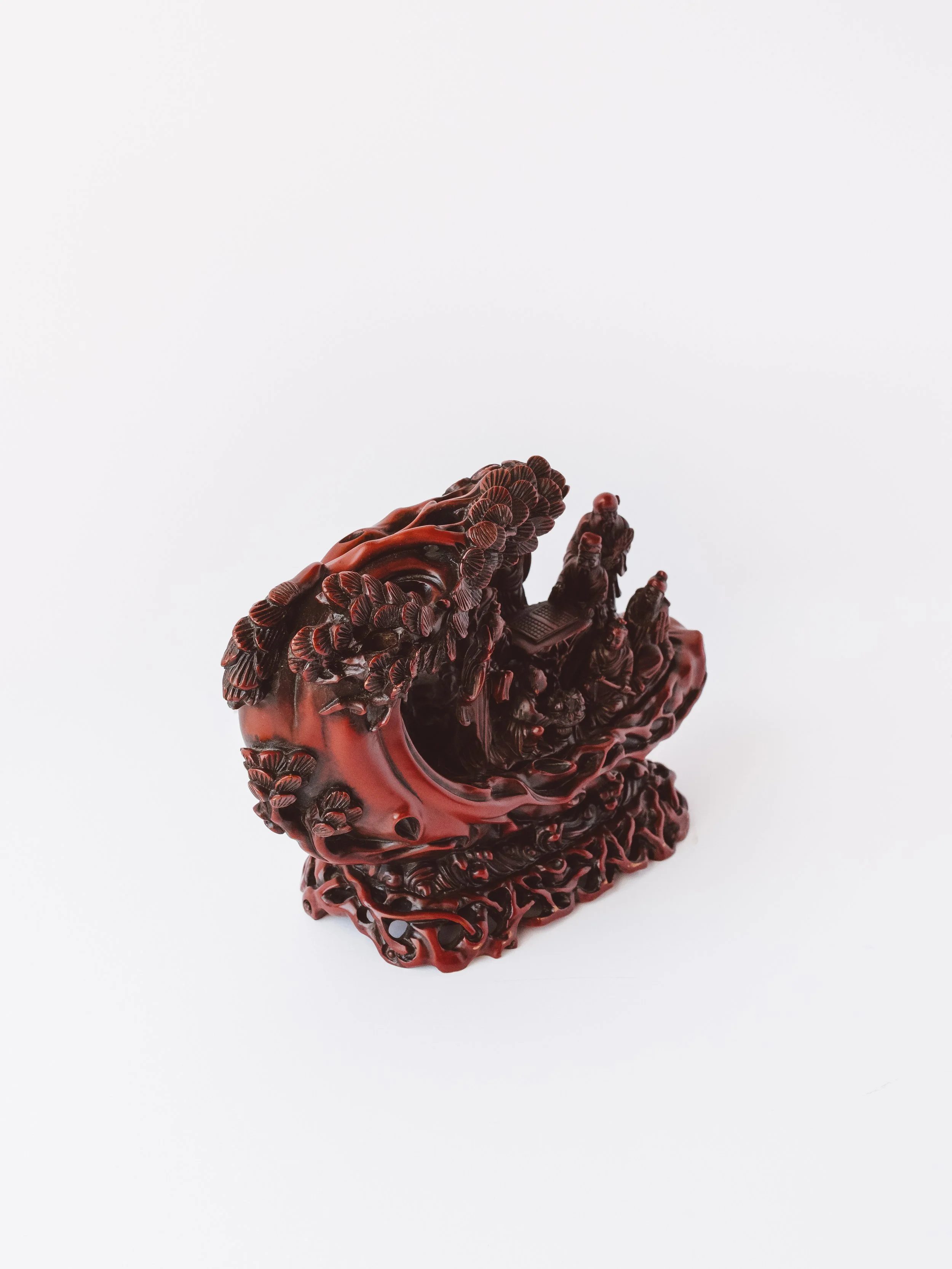 Image 6 of 12
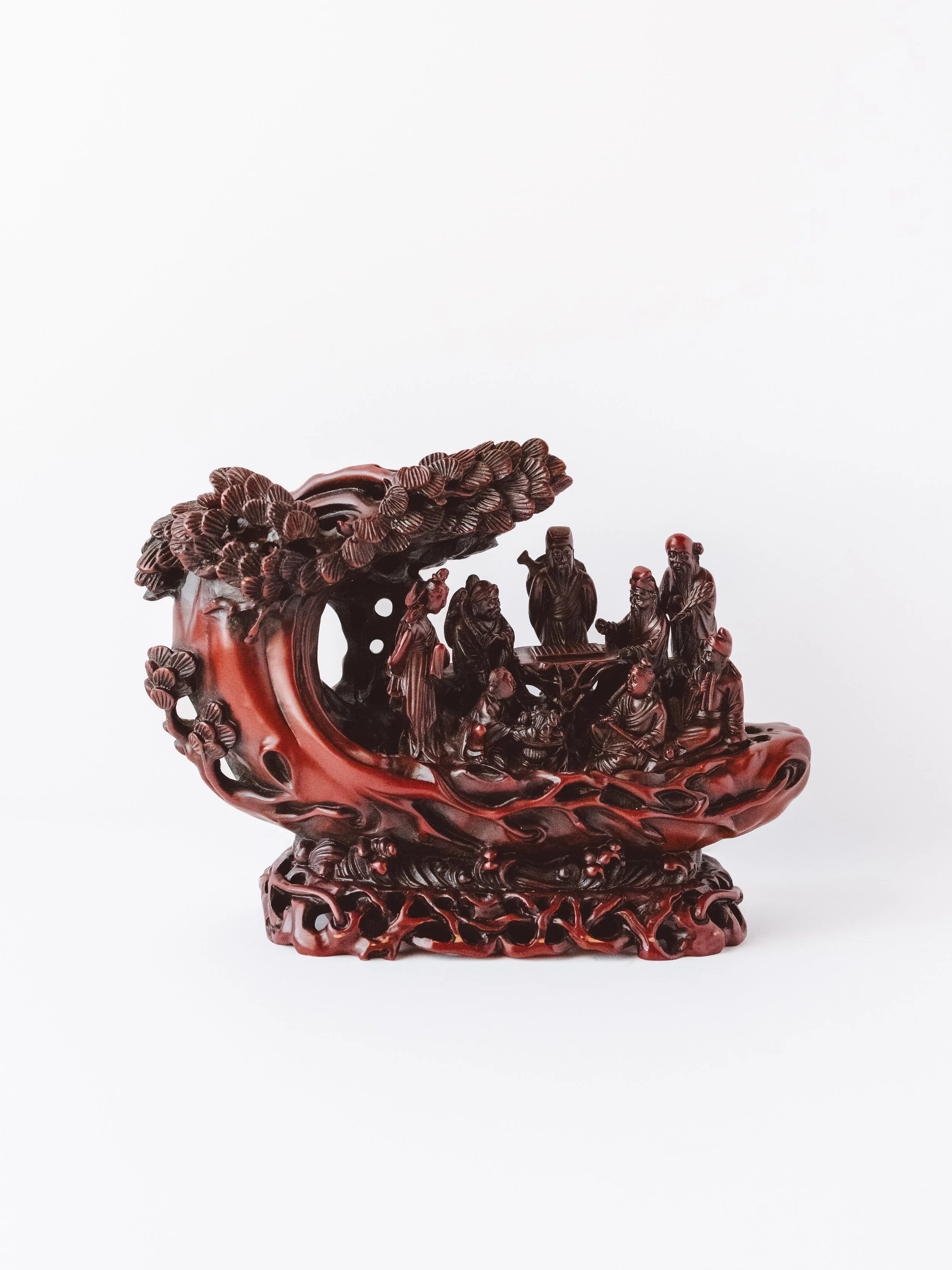 Image 7 of 12
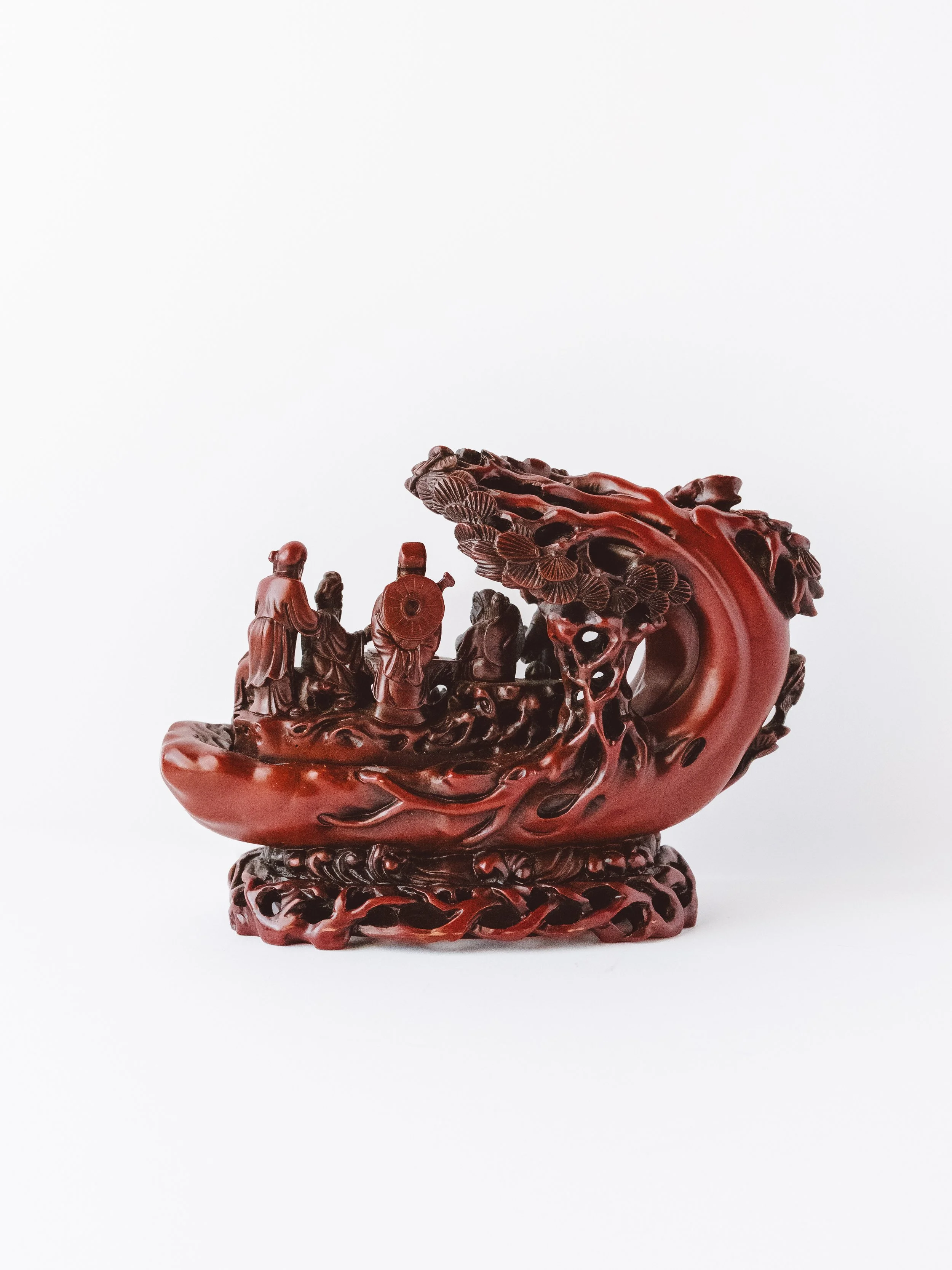 Image 8 of 12
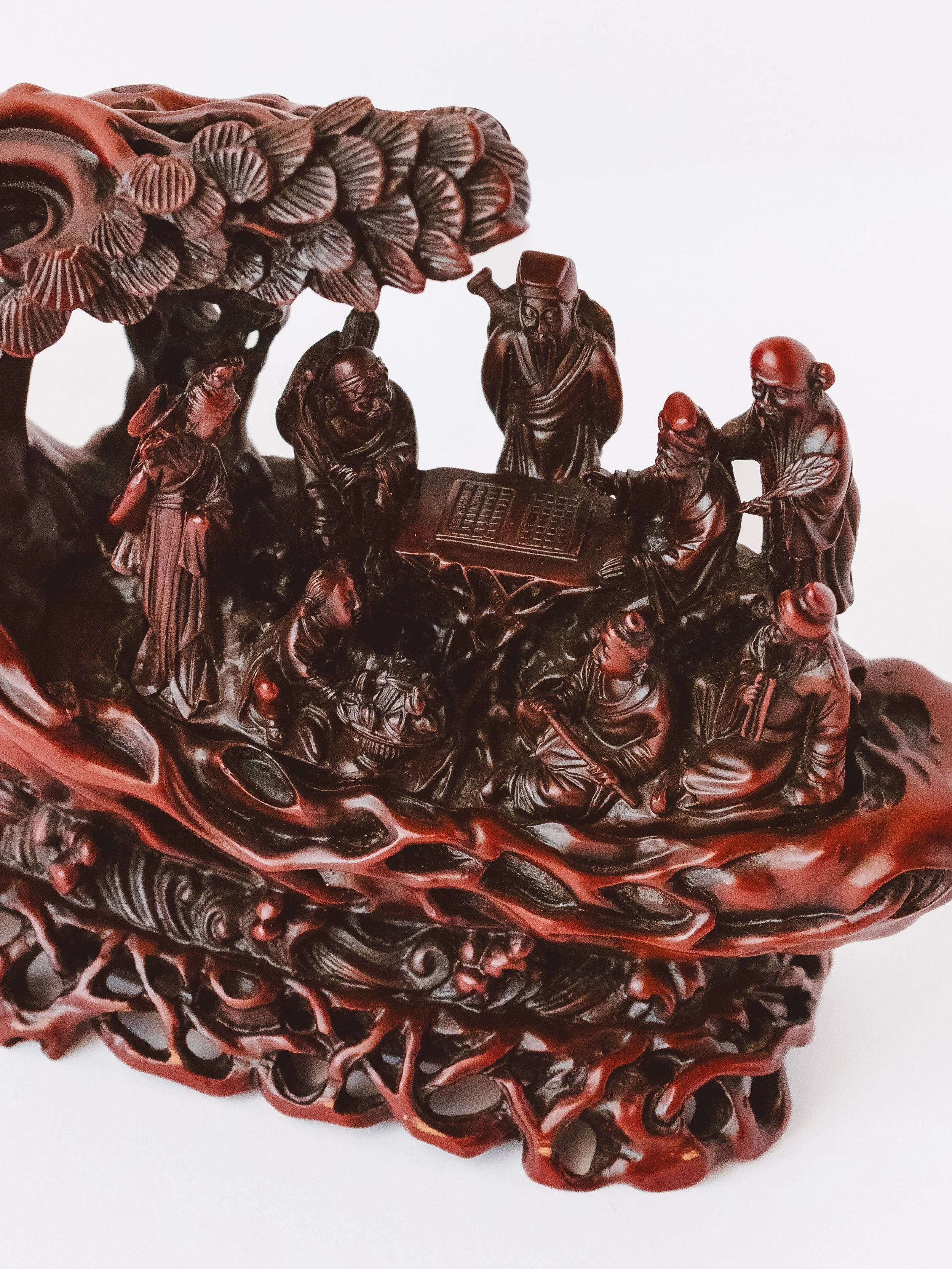 Image 9 of 12
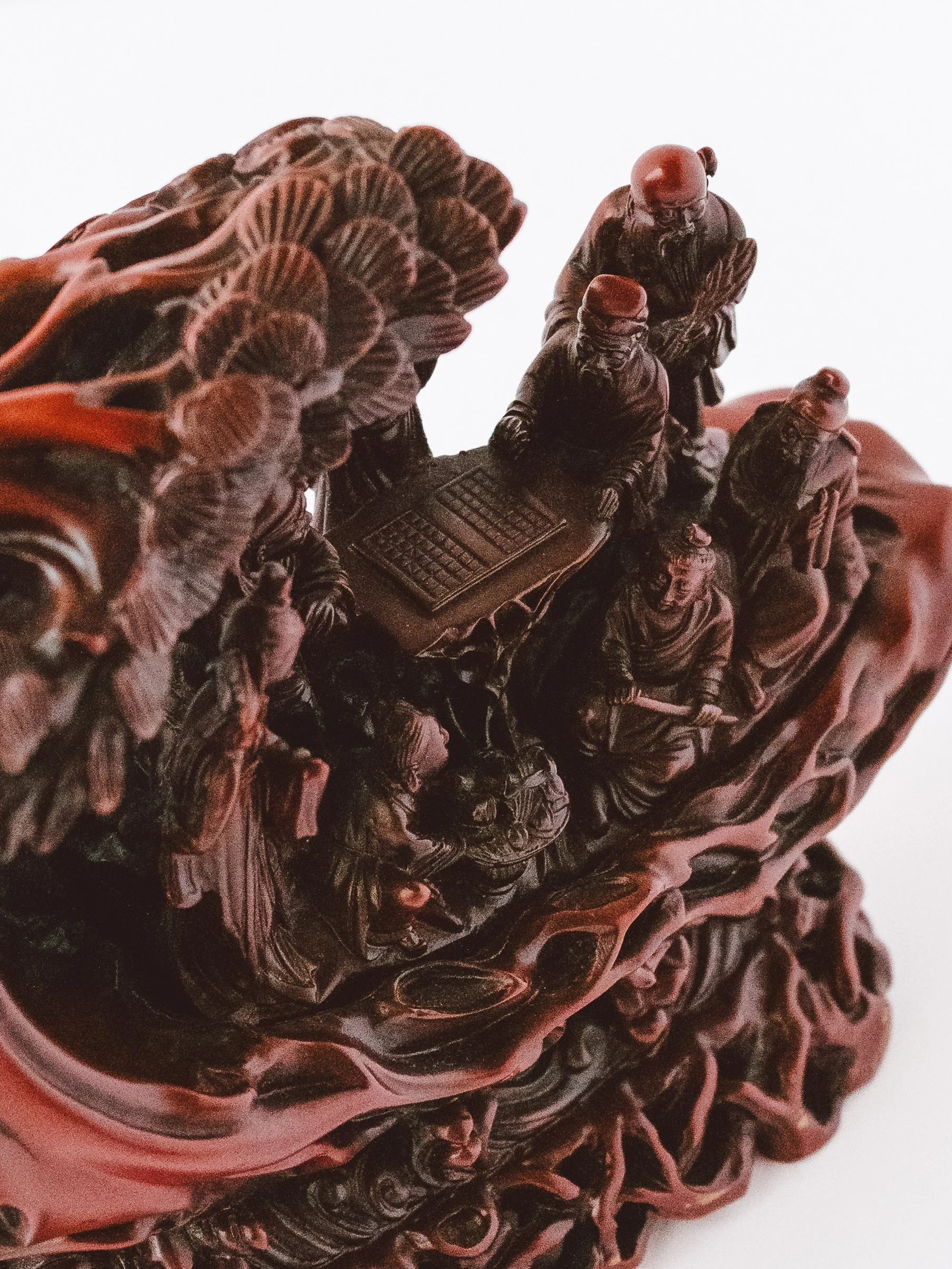 Image 10 of 12
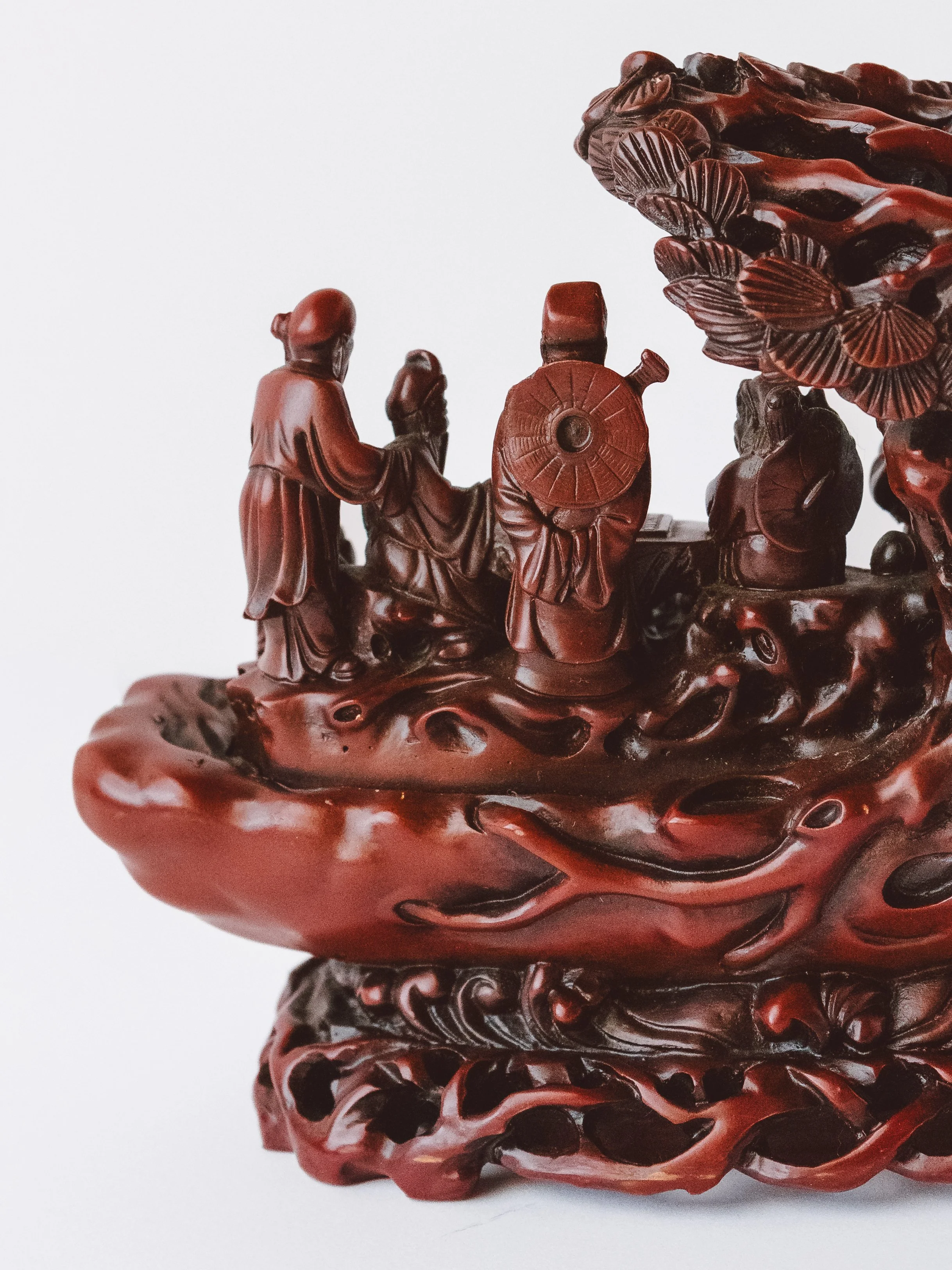 Image 11 of 12
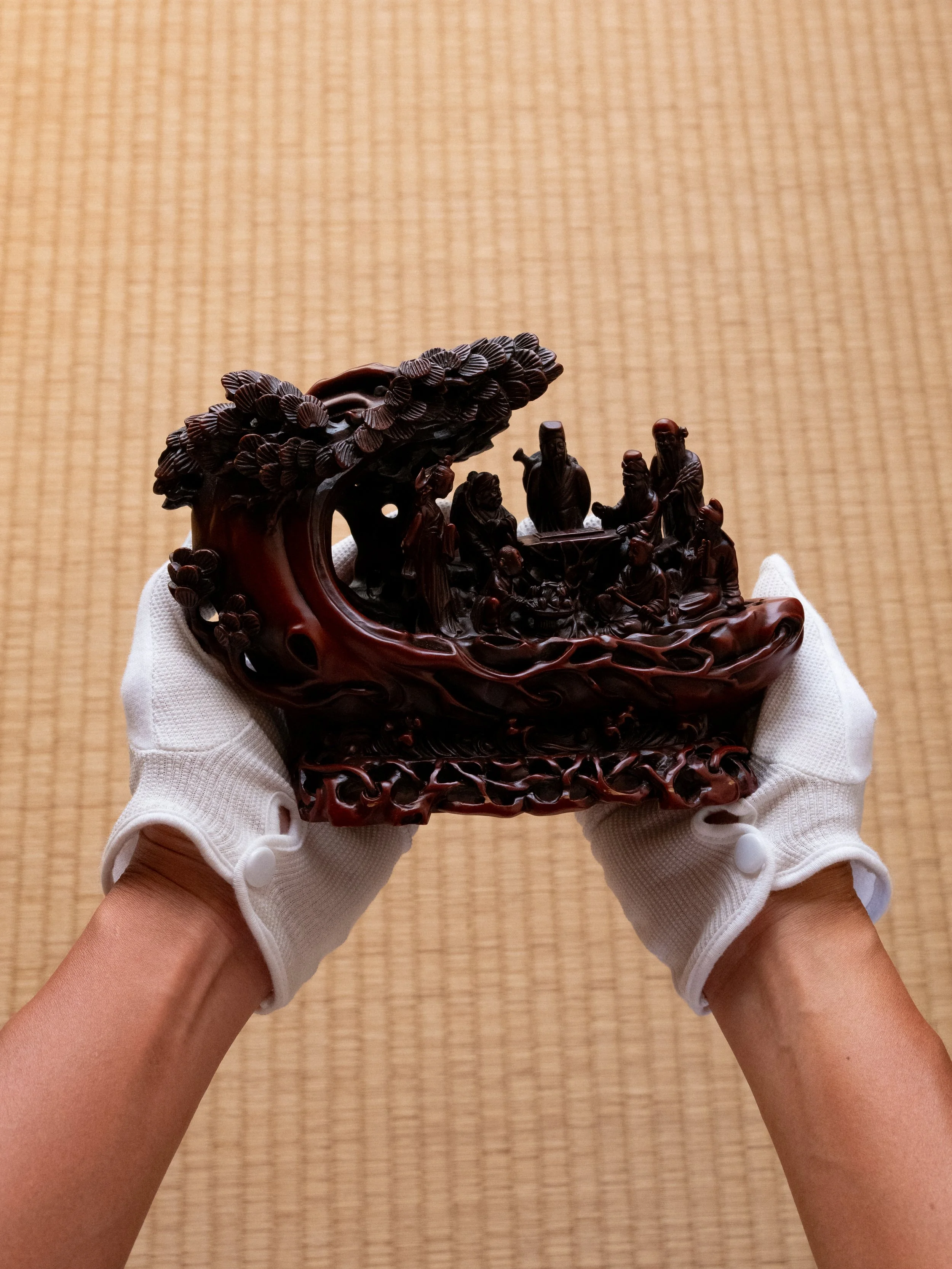 Image 12 of 12