【 The Concept 】
A whole shrine shrunk to the size of a hand. Closed, it is a small gilt column on a black-and-gold base, its two doors worked in relief with a pair of phoenixes among auspicious clouds — the sign, in this tradition, that what lies behind them is not the everyday world but a sacred one. Open the doors and a golden interior appears, and within it Kannon: the bodhisattva of compassion, standing on a lotus, crowned, haloed, a canopy modelled overhead, hands drawn together at the breast. Kannon is the one who "hears the cries of the world" — the figure people have turned to for rescue from fear and misfortune and for simple comfort. Small enough to carry, this is a piece from the long Japanese tradition of the personal devotional shrine: a private Buddha kept close, its doors shut against the ordinary day and opened, by one's own hand, in a moment of prayer. The opening is the whole ritual — a small gold threshold from the everyday into the sacred.
【 The Function 】
A private shrine and a quiet object in one. Closed, it is discreet and self-contained — a small ornamental column that sits without announcing itself on a shelf, a bedside table, a desk, a windowsill. Opened, it becomes a still point: a place to rest the eye, to pause, to keep a moment of quiet in a busy room. It needs almost no space and asks for nothing; it simply waits, shut, until it is wanted. Made small and self-closing on purpose — a shrine that folds away into an object and back again with a touch.
【 The Texture 】
Gilded metal, warm as old gold. Time and handling have worn the gilding thinnest on the raised lid, where it softens to a quiet brown, while the deep recesses of the phoenix relief and the folds of the figure hold their fuller gold — the whole surface reading with the depth and unevenness of something genuinely kept and touched. Inside, sheltered by the doors, the gold stays brighter and warmer, so opening the shrine is a small brightening: a dim, worked exterior giving way to a luminous interior. The base is finished in black with gold scrollwork, in the manner of old lacquer-and-gilt, worn at its edges. It is weighty for its size, and every surface carries the soft, mottled patina of age — the look of an object that has been held, opened, and prayed to over many years.
【 Presence 】
Quiet, intimate, and quietly moving. Where a display piece performs outward, this one holds something in — a small secret behind two doors — and the act of opening it is unexpectedly affecting, a private gesture rather than a public one. The worn gold and chipped black of it carry their years openly, and that age is much of the feeling: this is an object that has plainly meant something to someone. It brings a note of stillness and devotion to a room without demanding belief — a small, warm, human thing to keep close and open when you want a moment of quiet.
Sourced from a private collection in Japan.
【 The Concept 】
A whole shrine shrunk to the size of a hand. Closed, it is a small gilt column on a black-and-gold base, its two doors worked in relief with a pair of phoenixes among auspicious clouds — the sign, in this tradition, that what lies behind them is not the everyday world but a sacred one. Open the doors and a golden interior appears, and within it Kannon: the bodhisattva of compassion, standing on a lotus, crowned, haloed, a canopy modelled overhead, hands drawn together at the breast. Kannon is the one who "hears the cries of the world" — the figure people have turned to for rescue from fear and misfortune and for simple comfort. Small enough to carry, this is a piece from the long Japanese tradition of the personal devotional shrine: a private Buddha kept close, its doors shut against the ordinary day and opened, by one's own hand, in a moment of prayer. The opening is the whole ritual — a small gold threshold from the everyday into the sacred.
【 The Function 】
A private shrine and a quiet object in one. Closed, it is discreet and self-contained — a small ornamental column that sits without announcing itself on a shelf, a bedside table, a desk, a windowsill. Opened, it becomes a still point: a place to rest the eye, to pause, to keep a moment of quiet in a busy room. It needs almost no space and asks for nothing; it simply waits, shut, until it is wanted. Made small and self-closing on purpose — a shrine that folds away into an object and back again with a touch.
【 The Texture 】
Gilded metal, warm as old gold. Time and handling have worn the gilding thinnest on the raised lid, where it softens to a quiet brown, while the deep recesses of the phoenix relief and the folds of the figure hold their fuller gold — the whole surface reading with the depth and unevenness of something genuinely kept and touched. Inside, sheltered by the doors, the gold stays brighter and warmer, so opening the shrine is a small brightening: a dim, worked exterior giving way to a luminous interior. The base is finished in black with gold scrollwork, in the manner of old lacquer-and-gilt, worn at its edges. It is weighty for its size, and every surface carries the soft, mottled patina of age — the look of an object that has been held, opened, and prayed to over many years.
【 Presence 】
Quiet, intimate, and quietly moving. Where a display piece performs outward, this one holds something in — a small secret behind two doors — and the act of opening it is unexpectedly affecting, a private gesture rather than a public one. The worn gold and chipped black of it carry their years openly, and that age is much of the feeling: this is an object that has plainly meant something to someone. It brings a note of stillness and devotion to a room without demanding belief — a small, warm, human thing to keep close and open when you want a moment of quiet.
Sourced from a private collection in Japan.


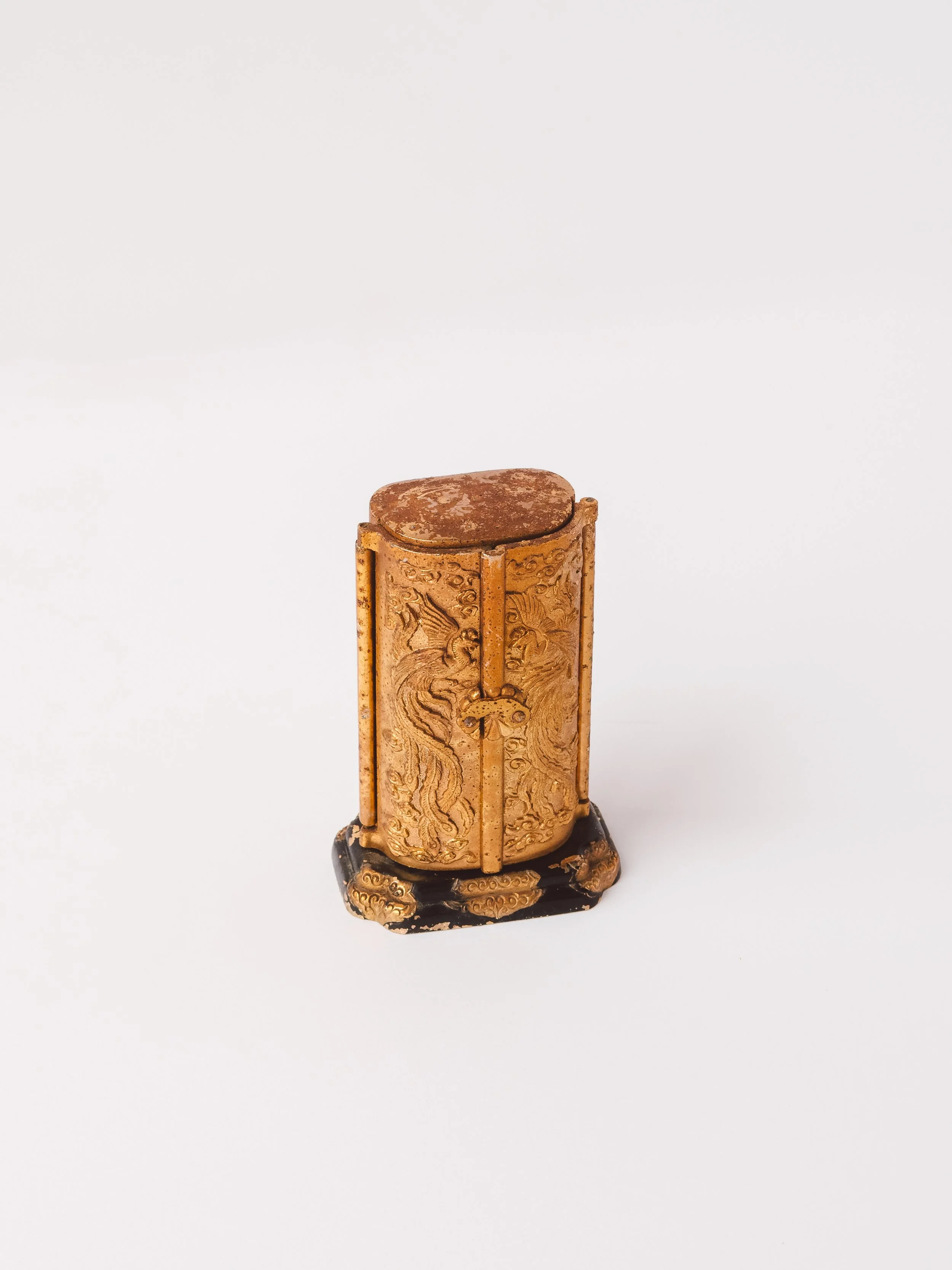 Image 1 of 9
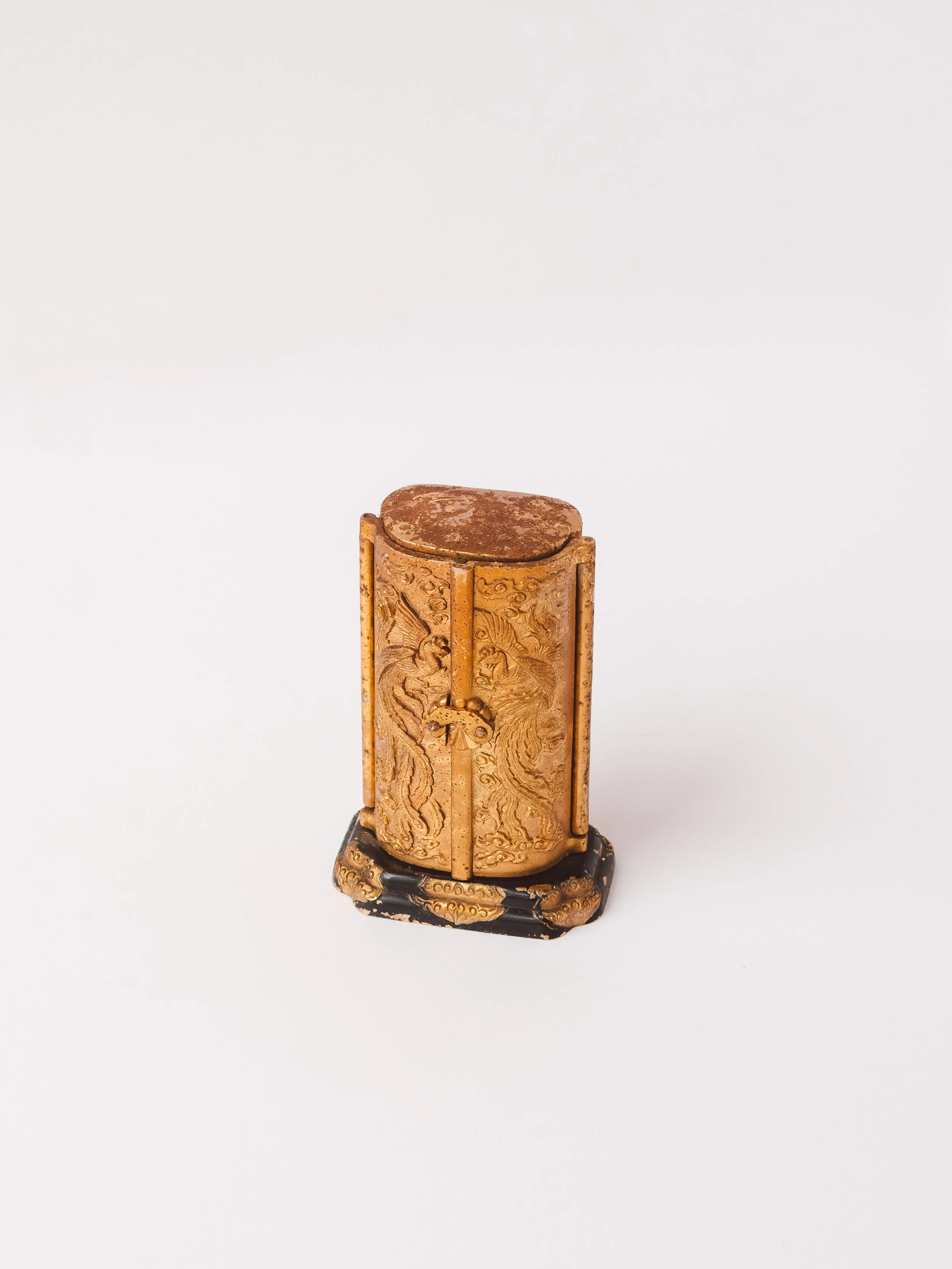 Image 2 of 9
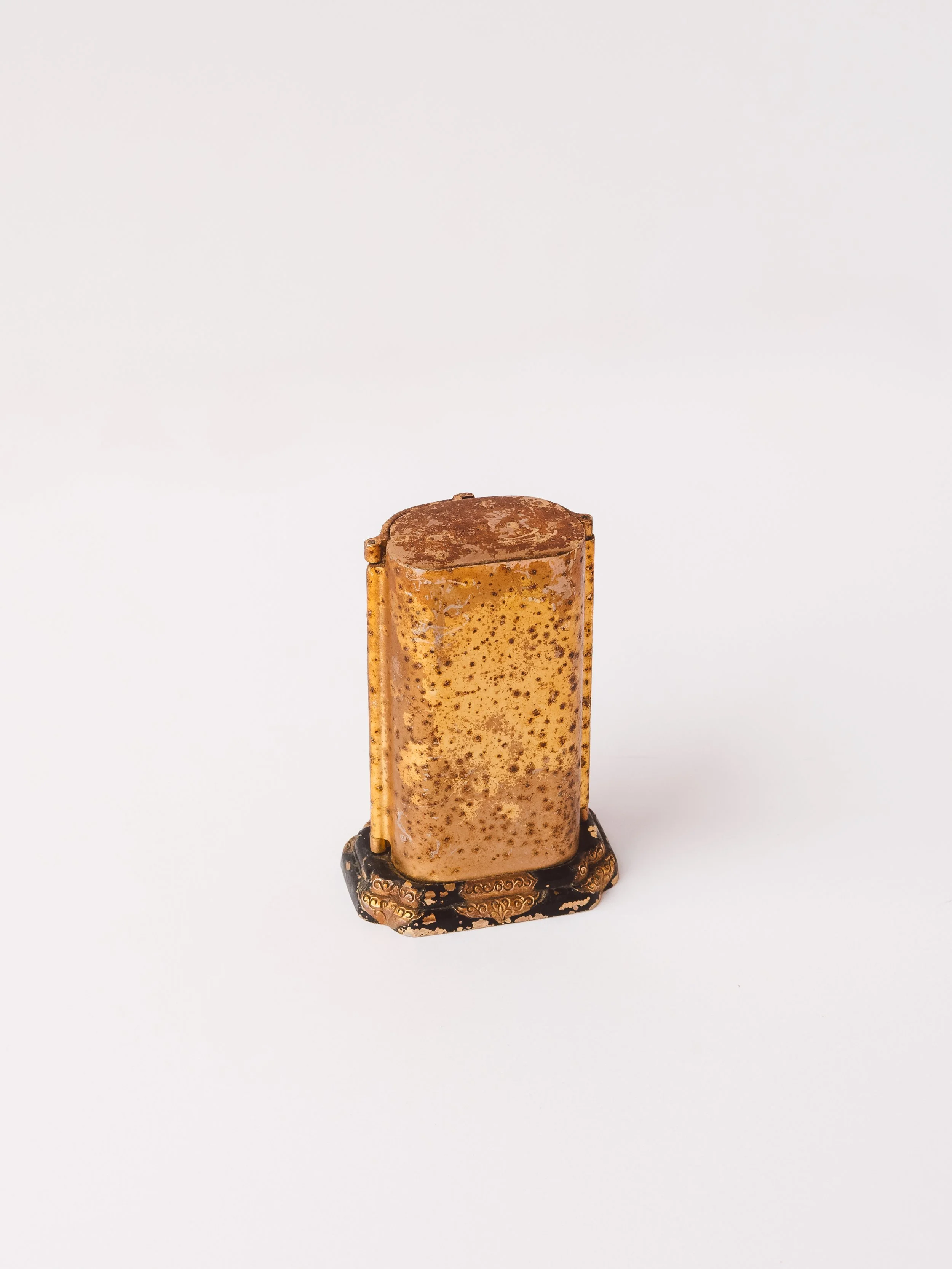 Image 3 of 9
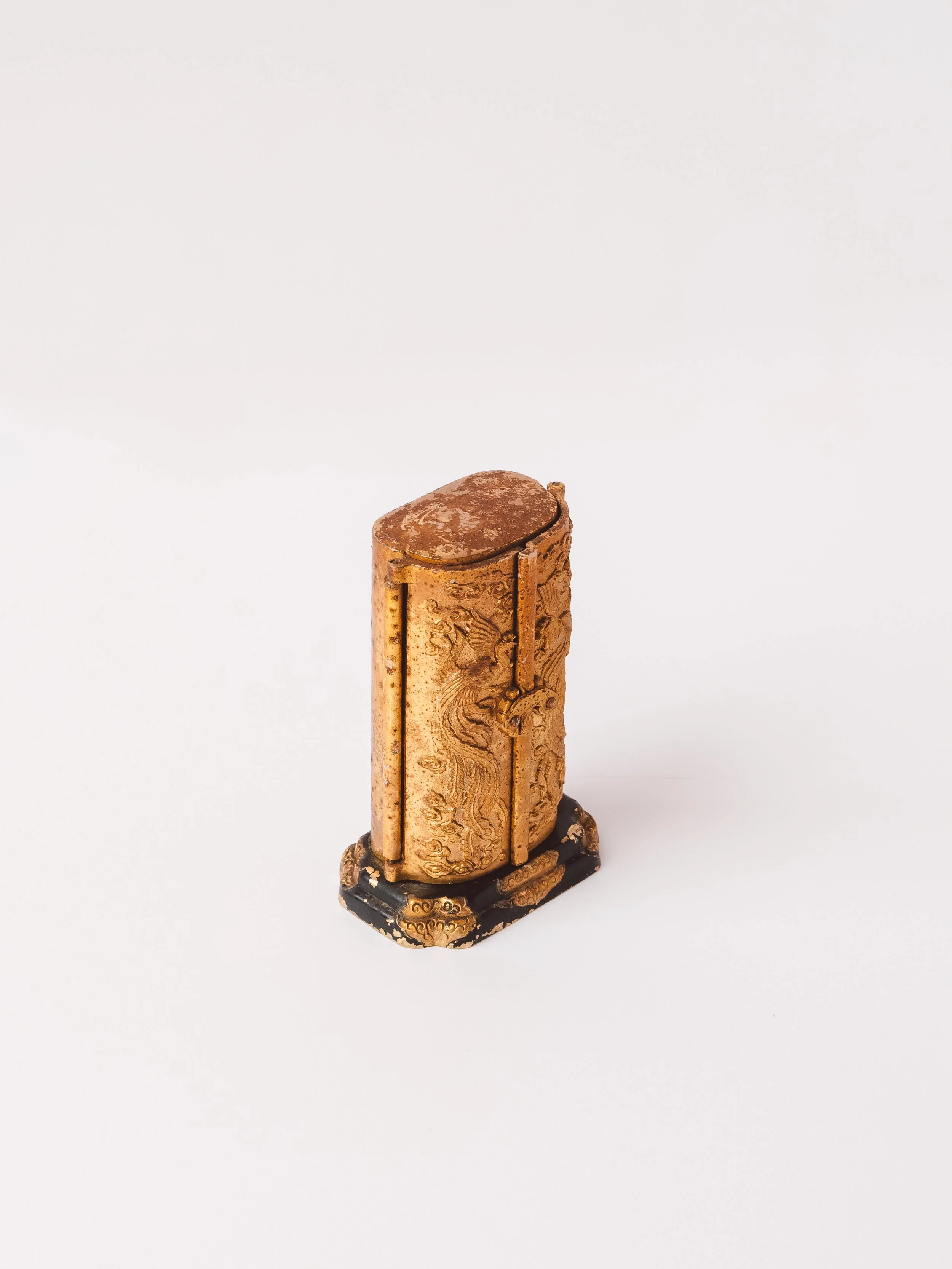 Image 4 of 9
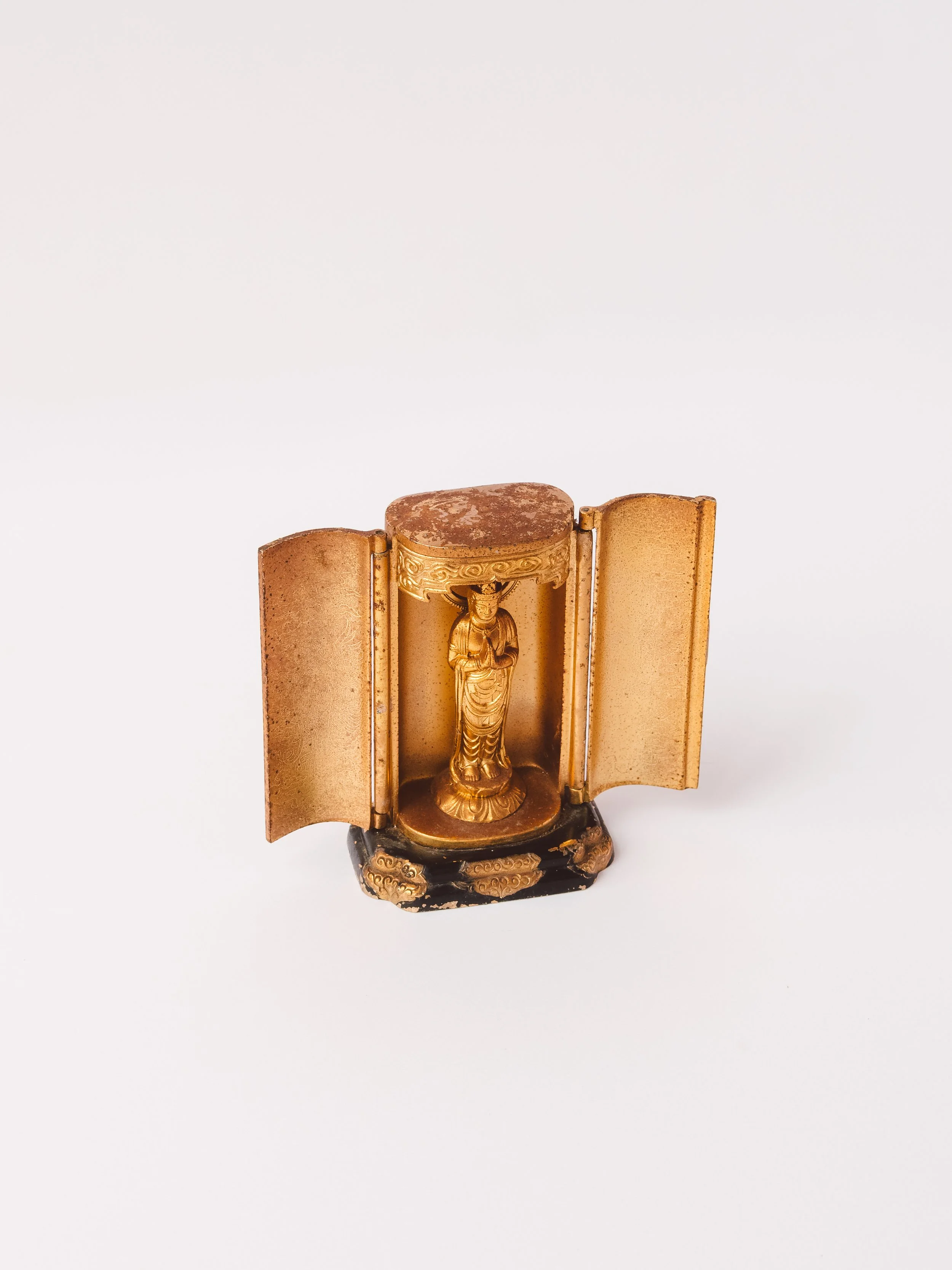 Image 5 of 9
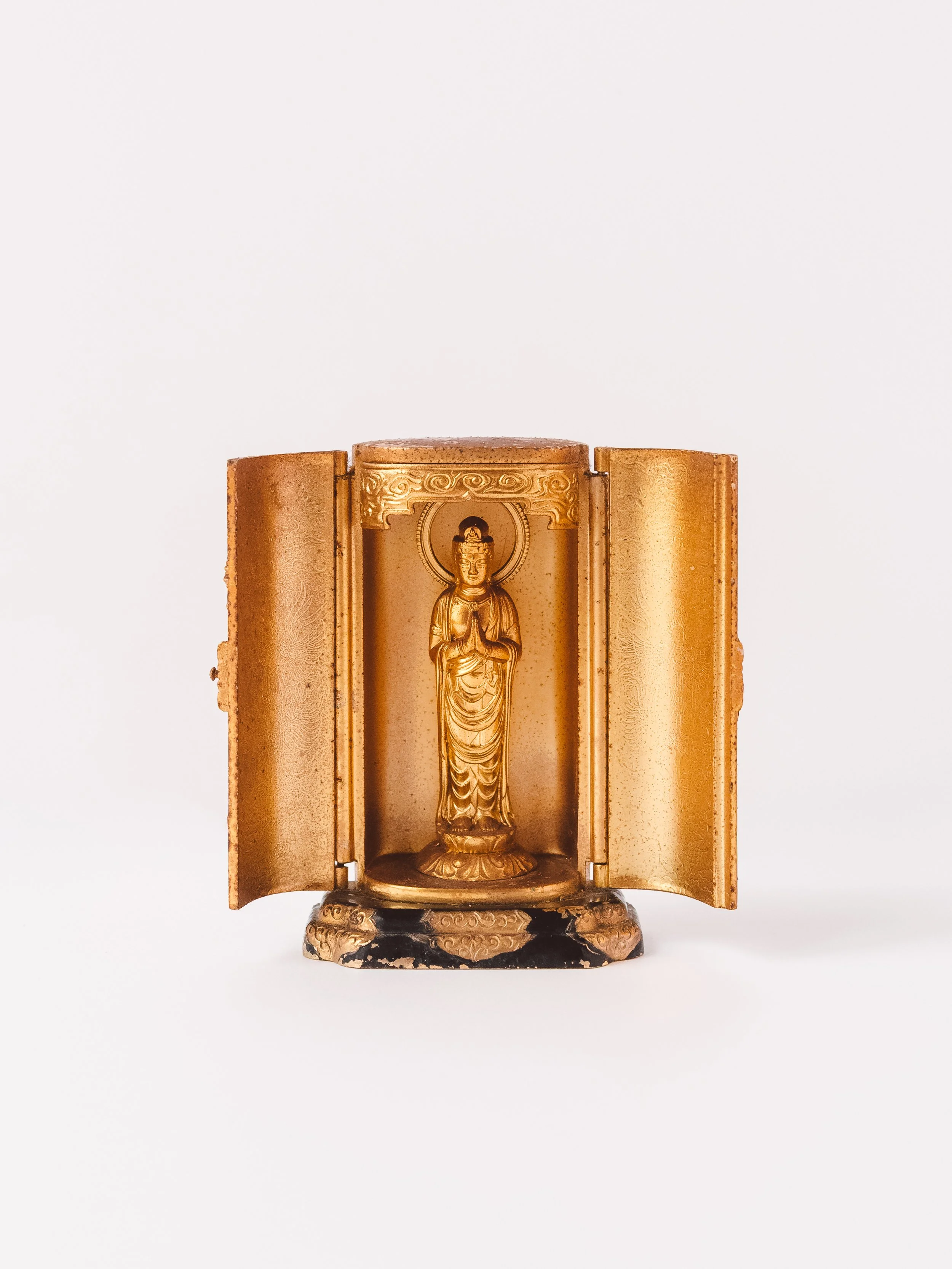 Image 6 of 9
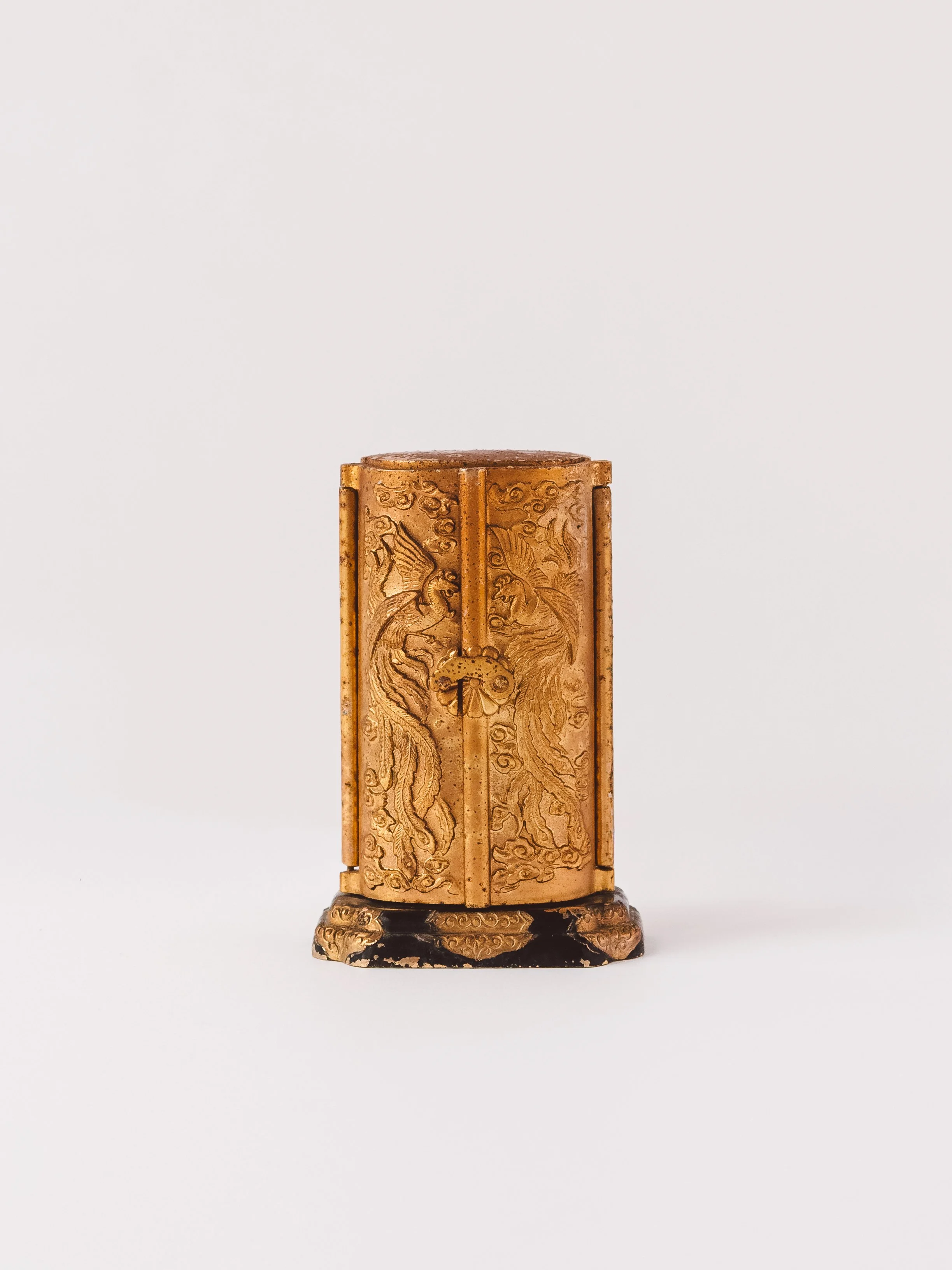 Image 7 of 9
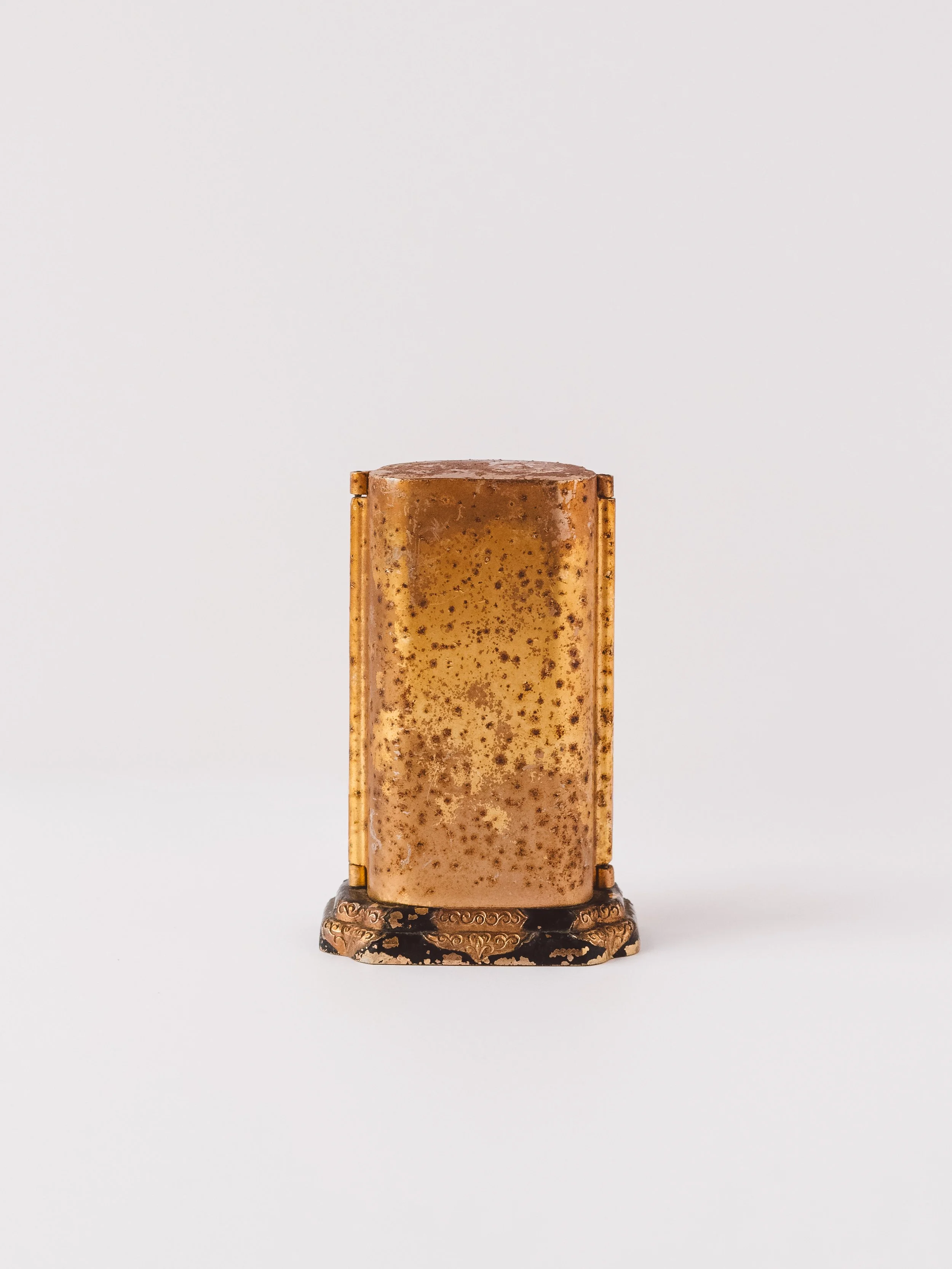 Image 8 of 9
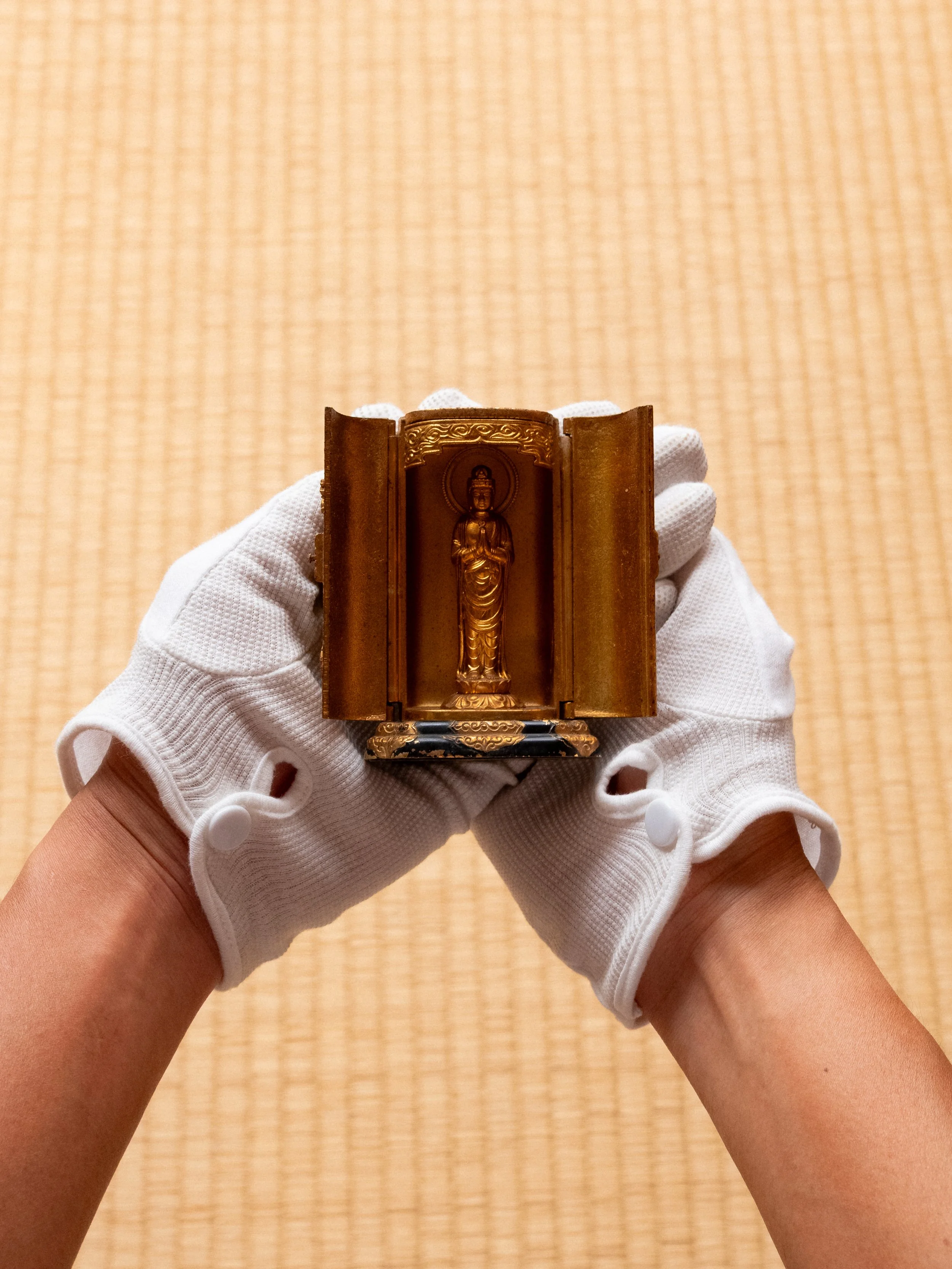 Image 9 of 9