【 The Concept 】
A bear cut from a single block of wood, a salmon locked in its jaws, and behind the pair a whole cosmology. In the old belief of Hokkaido's northern people, the bear was no mere animal but kamuy — a mountain-god who put on a fur cloak to walk in the human world, arriving not empty-handed but bearing gifts: meat, warmth, and above all the salmon, kamuy-cep, "the god-fish," the real food that carried a household through winter. A fat bear coming down from the hills was the divine guest bringing treasure on its back; the salmon in the mouth is that blessing made visible — good fortune met, and gripped, and not let go.
That is the charm of the thing, older than any souvenir stand: hold tight to the good that comes to you. But the deeper pleasure here is in the hand that made it. Where an earlier fashion carved every hair, this bear refuses the fur entirely. It is cut in broad planes — a bear reduced to facets, its bulk and warmth built not from detail but from the honest geometry of the blade. The salmon alone keeps a few fine lines of scale and fin, a small note of the real against the abstraction of the beast; its tail curves up into the bear's foreleg so that hunter and catch read as one unbroken mass.
Where GILDED BOAR renders a wish in gold and CELADON DRAGON renders time in jade, this renders the north in wood and blade.
【 The Function 】
Unlike the polished, hairless souvenir bears once turned out by the thousand, this one is a small piece of sculpture that happens to fit the palm. It asks only for a surface at eye height — a shelf, a windowsill, a stack of books, the edge of a desk — where the low, forward-leaning stance and the gripped salmon can be read at a glance. A quiet talisman of holding on to good fortune, sized for a corner rather than a whole room.
【 The Texture 】
The whole surface is a field of gouge-cuts — hundreds of short, flat facets, each catching the light on a different plane, so the bear seems to shimmer with movement while standing perfectly still. The wood is a deep, warm brown, worked to a soft satin rather than a gloss, and the grain rides up through the cut faces in fine contour lines, marking this as something grown rather than moulded. The high points — the shoulder, the brow, the ridge of the spine — have lightened where hands and years have touched them, while the recesses hold the darker tone. Honest wood, honest tool-marks, honest age.
【 Presence 】
Small and dark and dense, it anchors a shelf the way a paperweight anchors a page. It does not perform; it sits, low and deliberate, and rewards the person who leans in to see how few cuts it took to make a whole animal live. Set it among books or beside paler objects and the deep brown and the faceted skin do the rest — mid-century warmth with none of the kitsch, a folk object that has quietly become a modern one.
Sourced from a private collection in Hokkaido, Japan.
【 The Concept 】
A bear cut from a single block of wood, a salmon locked in its jaws, and behind the pair a whole cosmology. In the old belief of Hokkaido's northern people, the bear was no mere animal but kamuy — a mountain-god who put on a fur cloak to walk in the human world, arriving not empty-handed but bearing gifts: meat, warmth, and above all the salmon, kamuy-cep, "the god-fish," the real food that carried a household through winter. A fat bear coming down from the hills was the divine guest bringing treasure on its back; the salmon in the mouth is that blessing made visible — good fortune met, and gripped, and not let go.
That is the charm of the thing, older than any souvenir stand: hold tight to the good that comes to you. But the deeper pleasure here is in the hand that made it. Where an earlier fashion carved every hair, this bear refuses the fur entirely. It is cut in broad planes — a bear reduced to facets, its bulk and warmth built not from detail but from the honest geometry of the blade. The salmon alone keeps a few fine lines of scale and fin, a small note of the real against the abstraction of the beast; its tail curves up into the bear's foreleg so that hunter and catch read as one unbroken mass.
Where GILDED BOAR renders a wish in gold and CELADON DRAGON renders time in jade, this renders the north in wood and blade.
【 The Function 】
Unlike the polished, hairless souvenir bears once turned out by the thousand, this one is a small piece of sculpture that happens to fit the palm. It asks only for a surface at eye height — a shelf, a windowsill, a stack of books, the edge of a desk — where the low, forward-leaning stance and the gripped salmon can be read at a glance. A quiet talisman of holding on to good fortune, sized for a corner rather than a whole room.
【 The Texture 】
The whole surface is a field of gouge-cuts — hundreds of short, flat facets, each catching the light on a different plane, so the bear seems to shimmer with movement while standing perfectly still. The wood is a deep, warm brown, worked to a soft satin rather than a gloss, and the grain rides up through the cut faces in fine contour lines, marking this as something grown rather than moulded. The high points — the shoulder, the brow, the ridge of the spine — have lightened where hands and years have touched them, while the recesses hold the darker tone. Honest wood, honest tool-marks, honest age.
【 Presence 】
Small and dark and dense, it anchors a shelf the way a paperweight anchors a page. It does not perform; it sits, low and deliberate, and rewards the person who leans in to see how few cuts it took to make a whole animal live. Set it among books or beside paler objects and the deep brown and the faceted skin do the rest — mid-century warmth with none of the kitsch, a folk object that has quietly become a modern one.
Sourced from a private collection in Hokkaido, Japan.


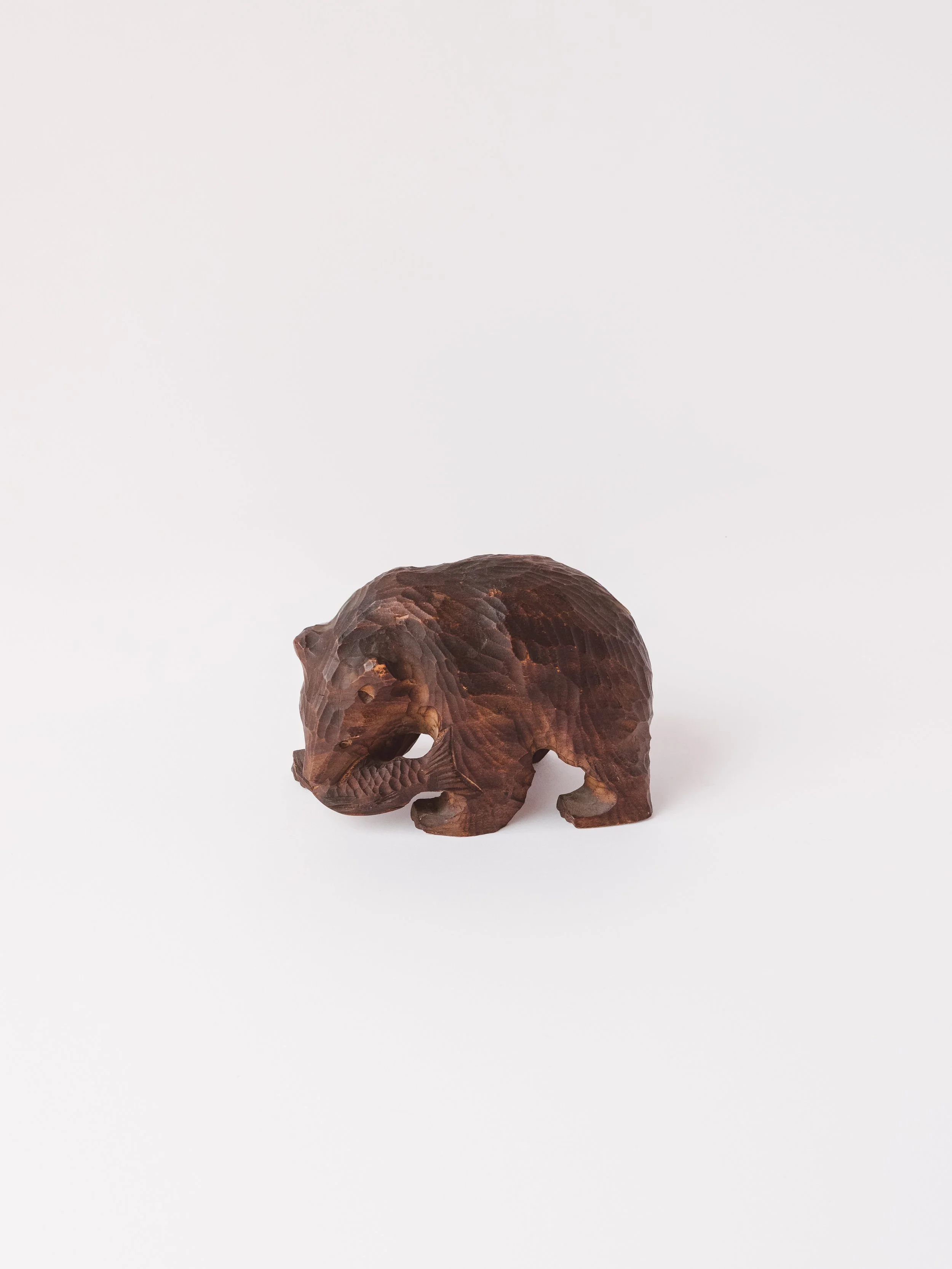 Image 1 of 9
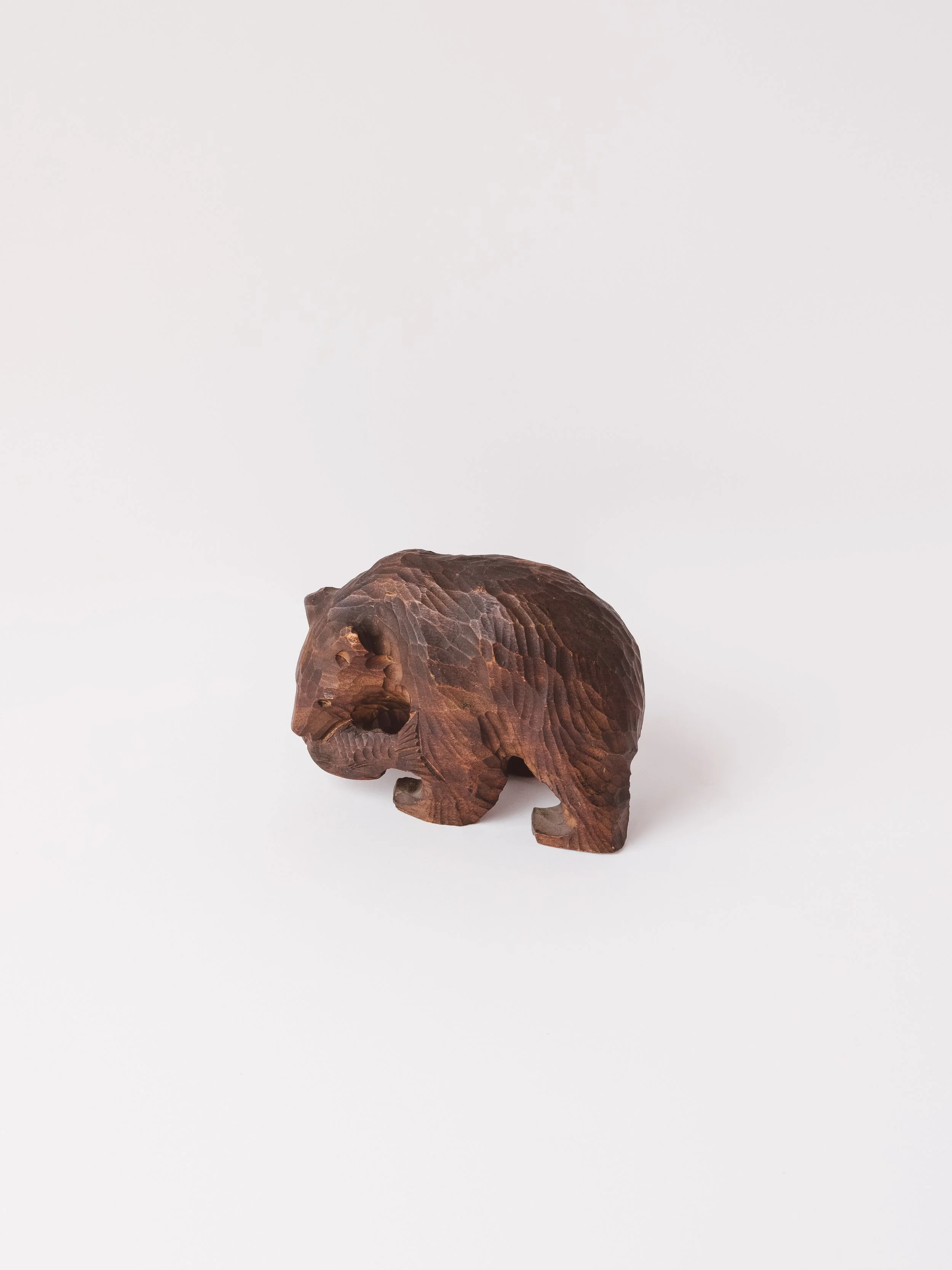 Image 2 of 9
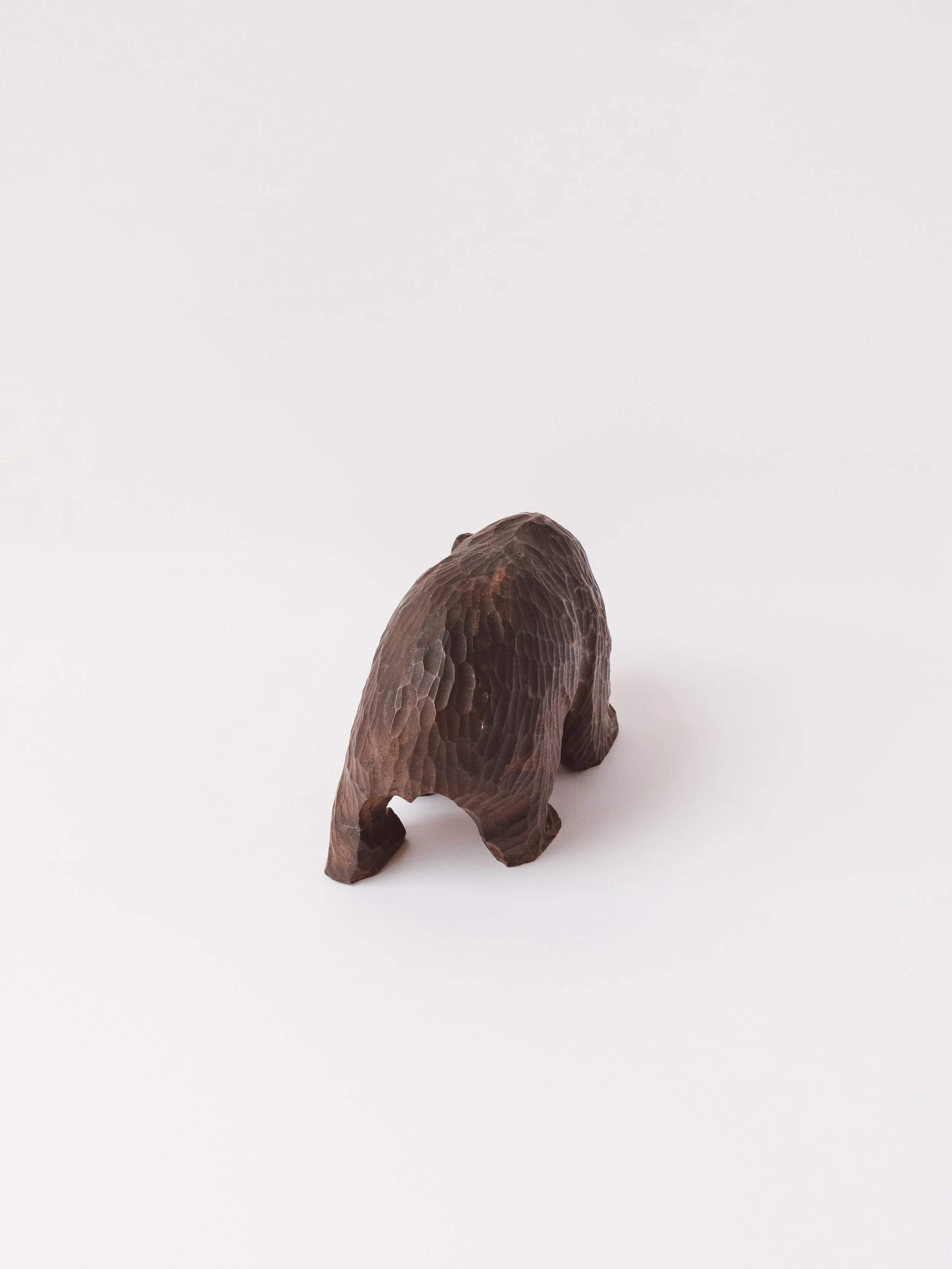 Image 3 of 9
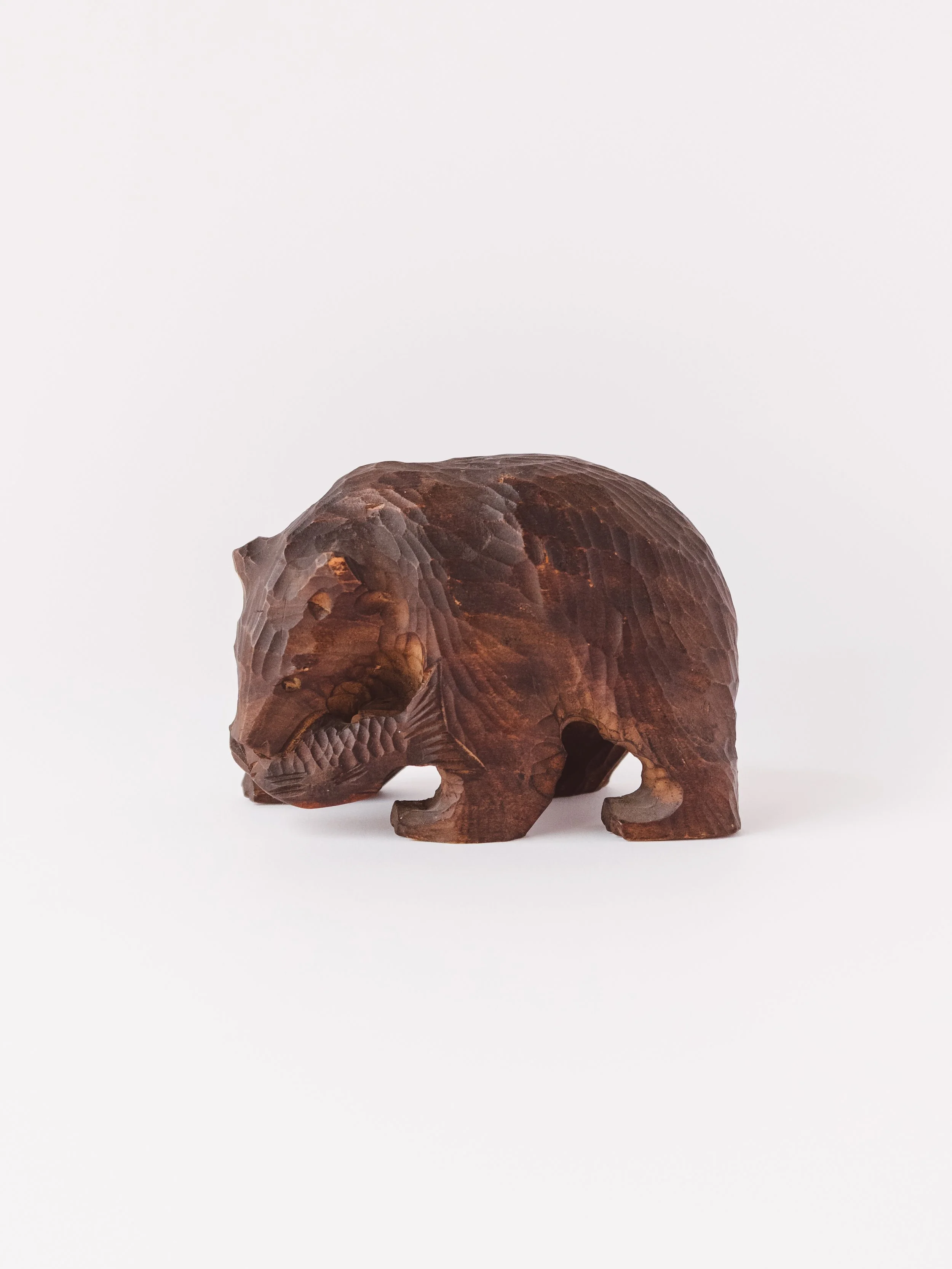 Image 4 of 9
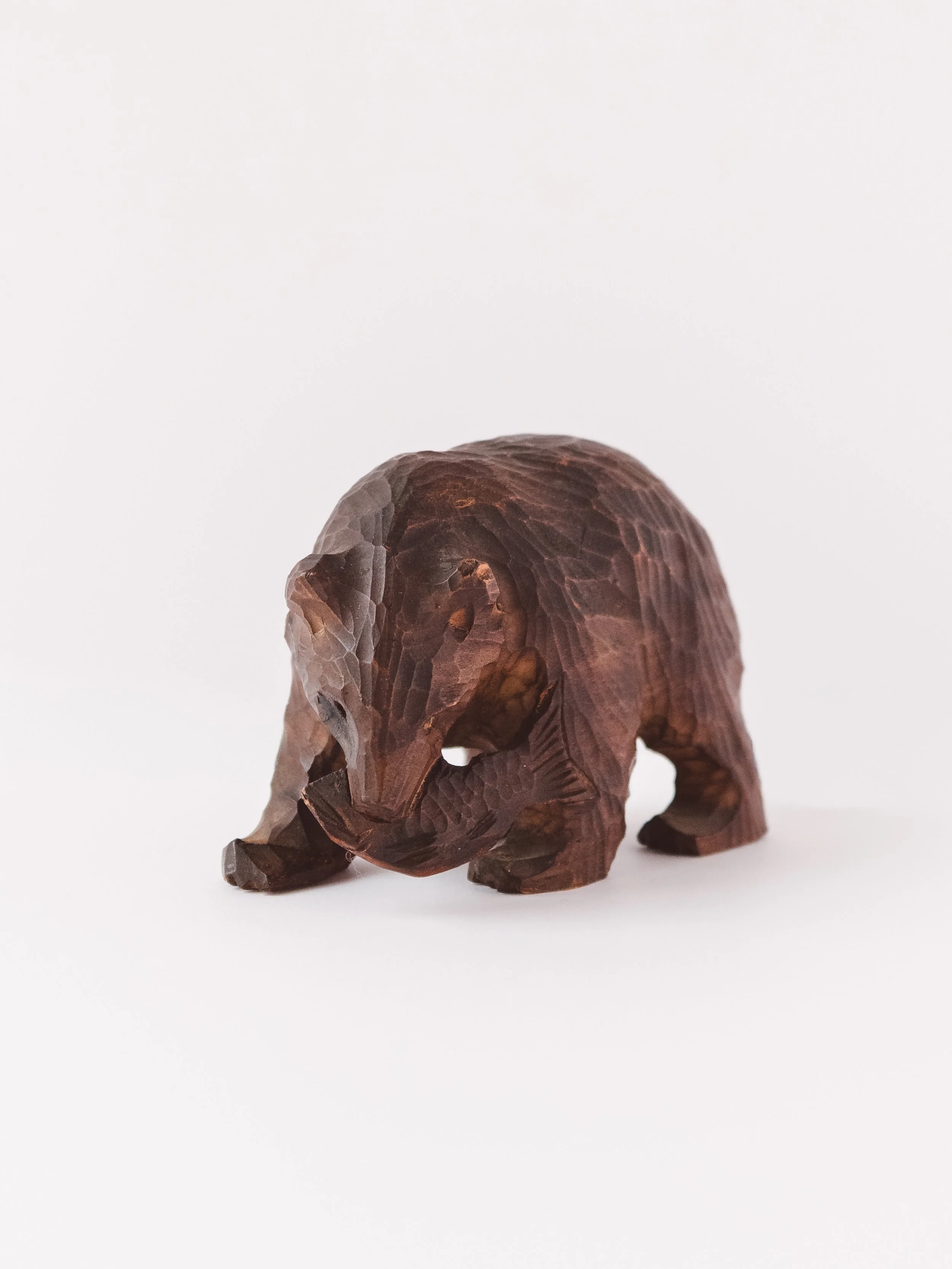 Image 5 of 9
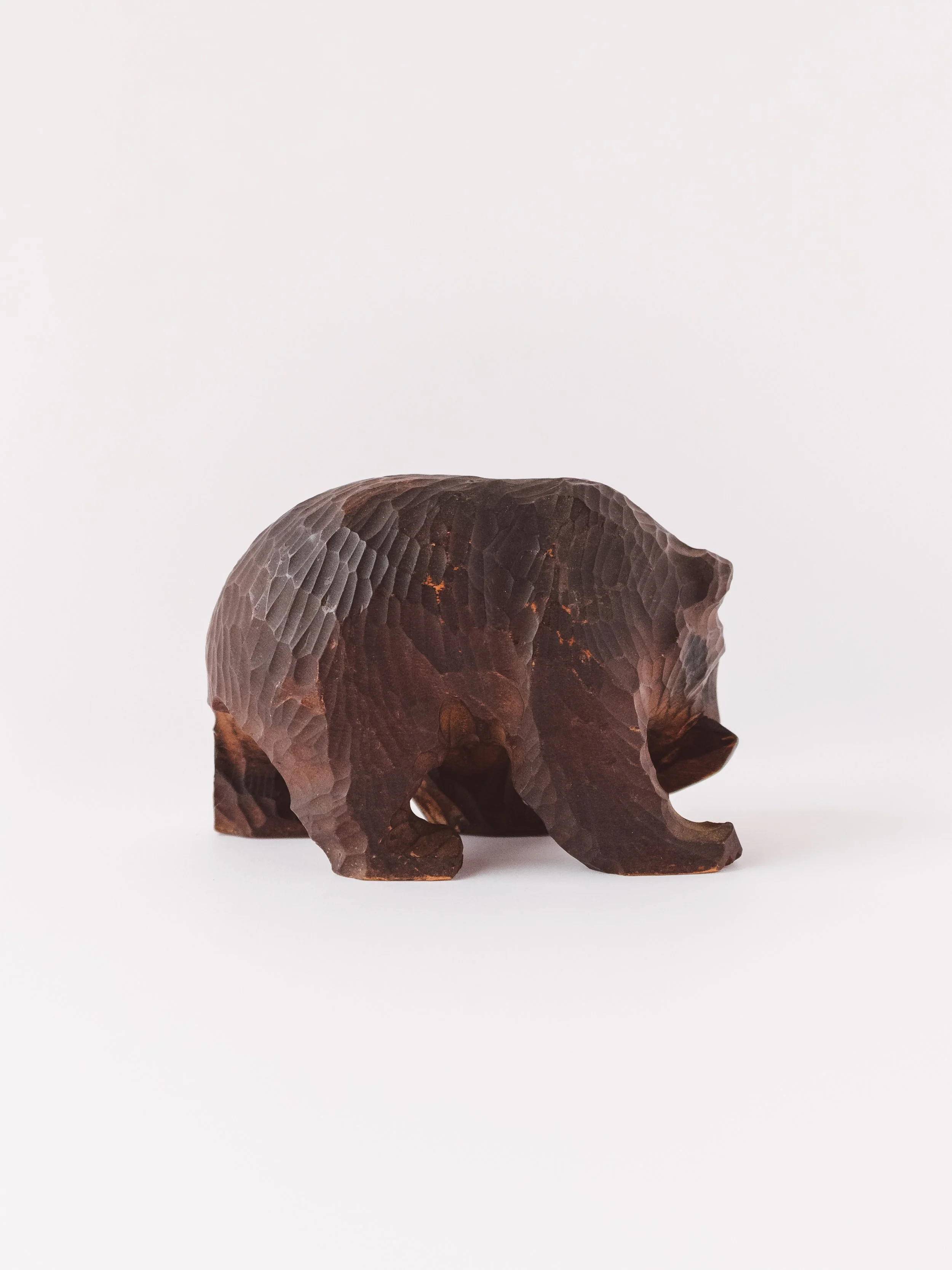 Image 6 of 9
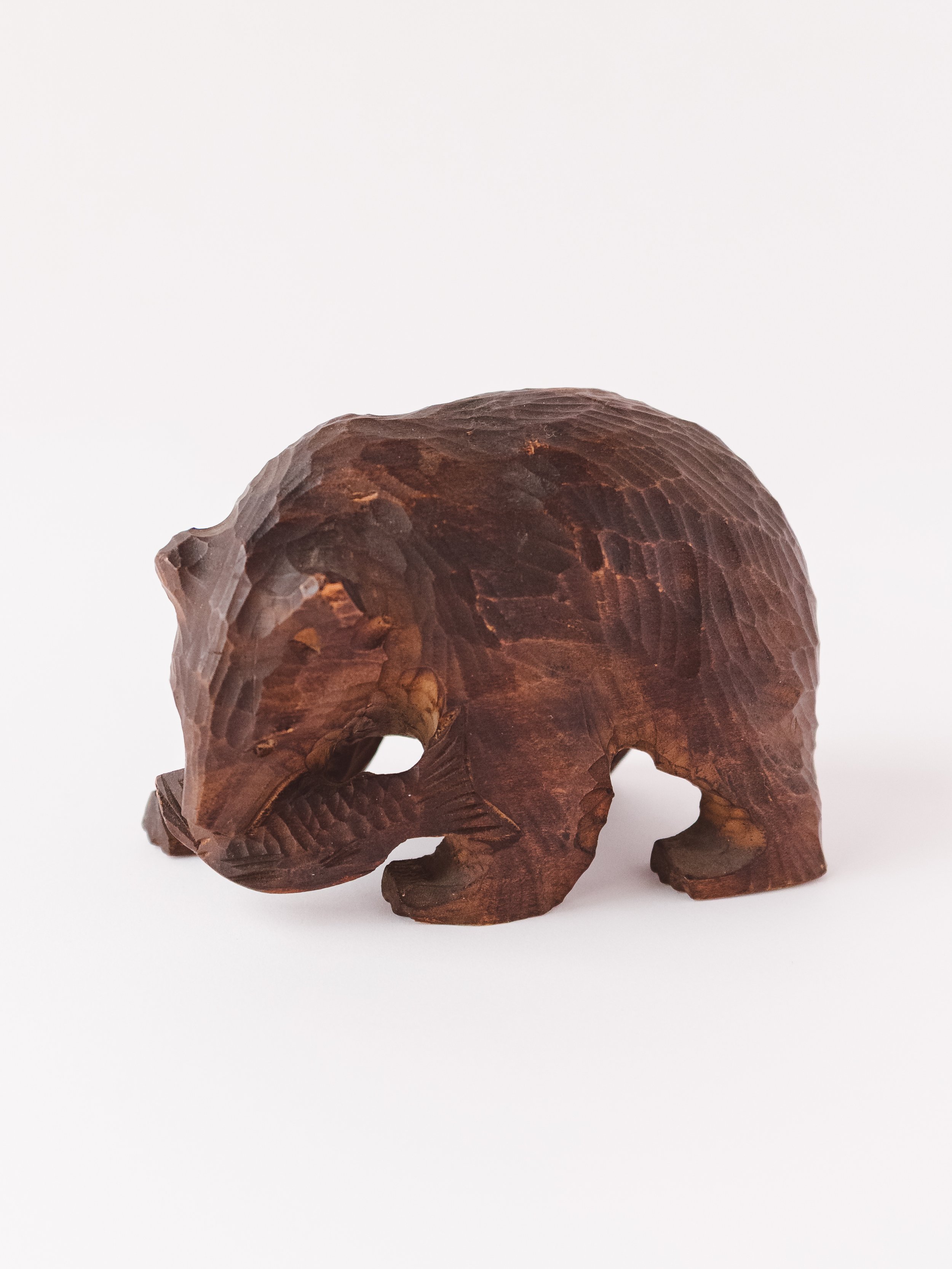 Image 7 of 9
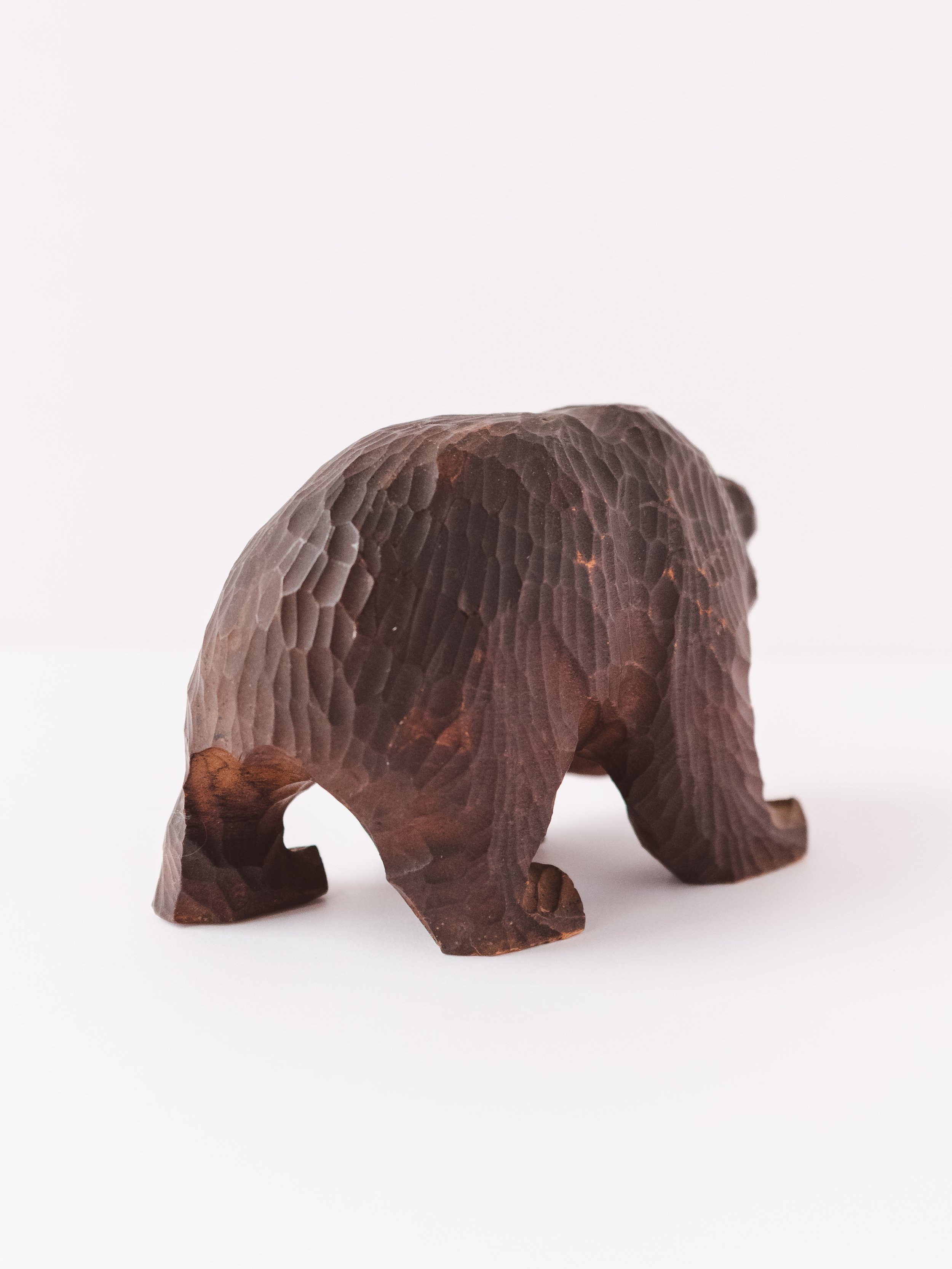 Image 8 of 9
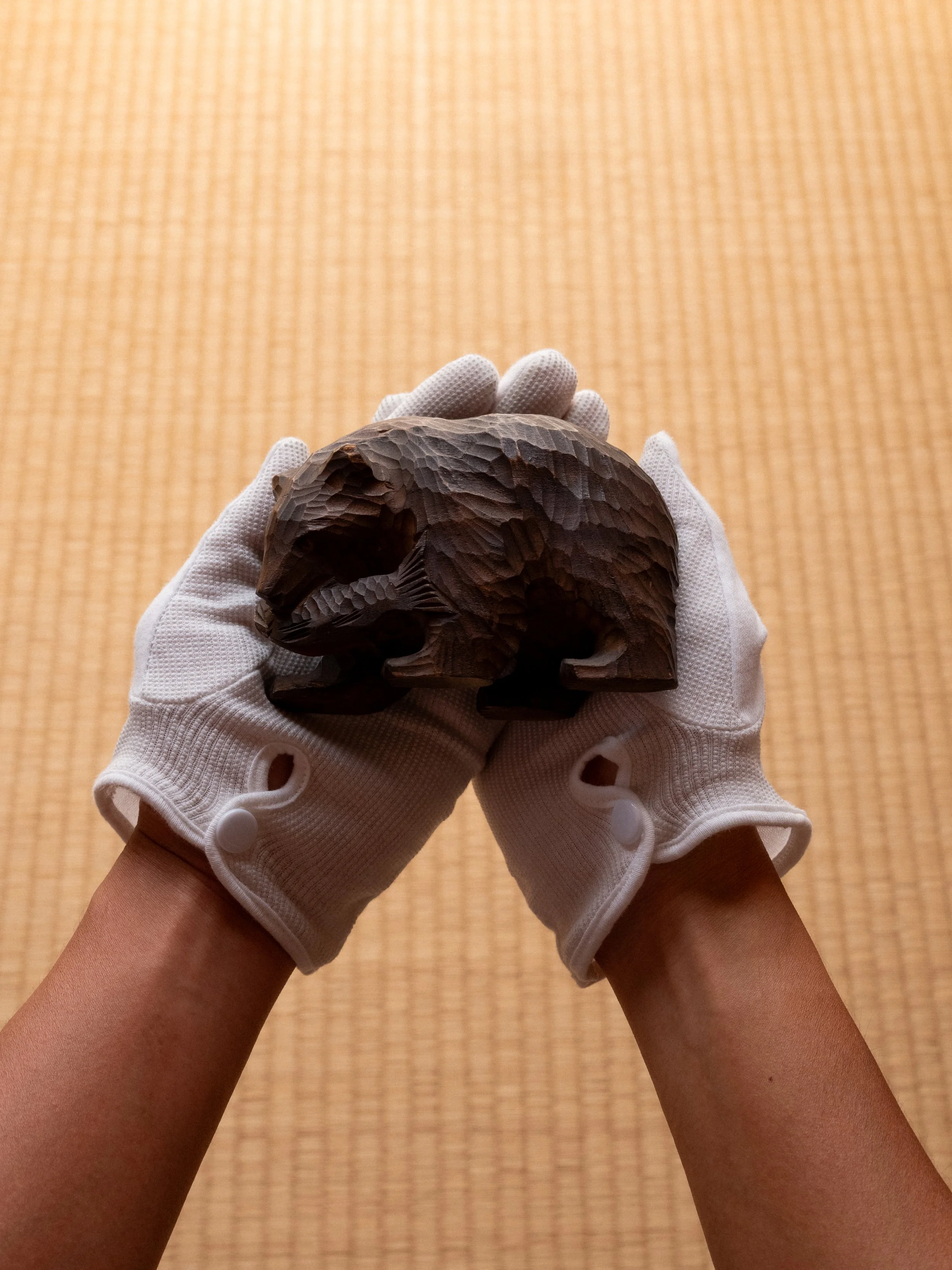 Image 9 of 9