【The Concept】
A small round porcelain kōgō — a lidded incense container from the tea ceremony tradition — dressed in the unmistakable palette of the aote (green-ground) Kutani school. A single five-petal blossom of white and amber sits at the center of the lid, framed by a densely brushed, cross-hatched green field. A five-point star of vermilion and turquoise anchors the flower's core. The straight side wall carries the same green latticework, and a band of small red triangles runs at the join: those on the lid point up, those on the body point down, so that when the lid is closed they meet and become a row of vermilion diamonds encircling the piece — a small piece of design intelligence that only reveals itself when the vessel is whole. Underneath, the white porcelain foot is signed with a hand-painted mark in an amber cartouche. Everything about the piece — the palm-sized scale, the confident brushwork, the restraint of the interior white — belongs to the vocabulary of chanoyu.
【What is a Kōgō】
In the practice of tea, a kōgō (香合) holds the small pieces of aromatic that will be placed on the charcoal fire laid in the hearth. During the winter ro (sunken hearth) season, the kōgō is traditionally made of ceramic and holds a soft, kneaded incense called nerikō — a blend of aromatic woods and resins bound with honey and plum flesh, formed into small dark pellets. The kōgō is not merely a container; it is one of the guest-facing objects of the tea room, displayed on the tana stand or laid beside the fire tools, and chosen with the same care as the tea bowl itself. A piece of this size — seven centimeters across, two centimeters tall — sits exactly within the classical proportions for winter use.
【The Aote Kutani Aesthetic】
The green-ground style seen here traces its inspiration to the very first flowering of Japanese overglaze porcelain in the seventeenth century, when kilns in the Kaga domain developed a bold decorative language dominated by deep transparent green enamel, yellow, indigo blue and aubergine — a family of colors collectively known as aote. The style is defined by its density: the whole surface is filled, the ground worked with lattice, hatching or stippling, so that even the negative spaces sing. The florals are geometric and heraldic rather than naturalistic, closer to a family crest than a botanical study. This piece belongs firmly to that lineage — a small work made in dialogue with the old-Kutani ideal, honoring its palette and its horror of empty ground.
【Notes on Attribution】
By the confidence of the painting, the deep transparent green enamel, and the geometric-floral vocabulary, this piece is almost certainly a work of the Kutani tradition. The base carries a hand-painted signature inside a green-and-amber cartouche, but the characters are not those of the tradition's own name — they read as something else, likely a kiln or a painter's mark, and the cursive brush no longer permits a confident reading. We prefer to leave the signature honestly unread rather than assign it a name it does not carry. What the piece speaks for itself is unambiguous: it is a porcelain kōgō made in the aote / ko-Kutani aesthetic — the green-ground, densely brushed, heraldic-floral vocabulary that has defined one branch of Kutani for four centuries.
【Where to Place It】
On a low shelf where the eye returns to it — a windowsill, a bedside stand, the corner of a writing desk. Because the lid pattern is fully symmetrical when seen from above, the piece rewards being placed slightly below eye level and looked down upon. It also serves beautifully on an open shelf beside a stack of books, or on a small tray with a paperweight and a fountain pen. Off the tea room, it holds equally well a pair of stud earrings, saffron threads, a single spare button, or a folded slip of paper carrying one small thought.
【Care】
Wipe with a soft dry cloth. If any residue accumulates inside, a swift rinse in lukewarm water and thorough drying is sufficient — never soak, and never use the dishwasher. The overglaze enamels are hand-painted and low-fired; abrasive sponges will dull them. Lift the lid straight up rather than sliding it, to protect the rim.
【The Concept】
A small round porcelain kōgō — a lidded incense container from the tea ceremony tradition — dressed in the unmistakable palette of the aote (green-ground) Kutani school. A single five-petal blossom of white and amber sits at the center of the lid, framed by a densely brushed, cross-hatched green field. A five-point star of vermilion and turquoise anchors the flower's core. The straight side wall carries the same green latticework, and a band of small red triangles runs at the join: those on the lid point up, those on the body point down, so that when the lid is closed they meet and become a row of vermilion diamonds encircling the piece — a small piece of design intelligence that only reveals itself when the vessel is whole. Underneath, the white porcelain foot is signed with a hand-painted mark in an amber cartouche. Everything about the piece — the palm-sized scale, the confident brushwork, the restraint of the interior white — belongs to the vocabulary of chanoyu.
【What is a Kōgō】
In the practice of tea, a kōgō (香合) holds the small pieces of aromatic that will be placed on the charcoal fire laid in the hearth. During the winter ro (sunken hearth) season, the kōgō is traditionally made of ceramic and holds a soft, kneaded incense called nerikō — a blend of aromatic woods and resins bound with honey and plum flesh, formed into small dark pellets. The kōgō is not merely a container; it is one of the guest-facing objects of the tea room, displayed on the tana stand or laid beside the fire tools, and chosen with the same care as the tea bowl itself. A piece of this size — seven centimeters across, two centimeters tall — sits exactly within the classical proportions for winter use.
【The Aote Kutani Aesthetic】
The green-ground style seen here traces its inspiration to the very first flowering of Japanese overglaze porcelain in the seventeenth century, when kilns in the Kaga domain developed a bold decorative language dominated by deep transparent green enamel, yellow, indigo blue and aubergine — a family of colors collectively known as aote. The style is defined by its density: the whole surface is filled, the ground worked with lattice, hatching or stippling, so that even the negative spaces sing. The florals are geometric and heraldic rather than naturalistic, closer to a family crest than a botanical study. This piece belongs firmly to that lineage — a small work made in dialogue with the old-Kutani ideal, honoring its palette and its horror of empty ground.
【Notes on Attribution】
By the confidence of the painting, the deep transparent green enamel, and the geometric-floral vocabulary, this piece is almost certainly a work of the Kutani tradition. The base carries a hand-painted signature inside a green-and-amber cartouche, but the characters are not those of the tradition's own name — they read as something else, likely a kiln or a painter's mark, and the cursive brush no longer permits a confident reading. We prefer to leave the signature honestly unread rather than assign it a name it does not carry. What the piece speaks for itself is unambiguous: it is a porcelain kōgō made in the aote / ko-Kutani aesthetic — the green-ground, densely brushed, heraldic-floral vocabulary that has defined one branch of Kutani for four centuries.
【Where to Place It】
On a low shelf where the eye returns to it — a windowsill, a bedside stand, the corner of a writing desk. Because the lid pattern is fully symmetrical when seen from above, the piece rewards being placed slightly below eye level and looked down upon. It also serves beautifully on an open shelf beside a stack of books, or on a small tray with a paperweight and a fountain pen. Off the tea room, it holds equally well a pair of stud earrings, saffron threads, a single spare button, or a folded slip of paper carrying one small thought.
【Care】
Wipe with a soft dry cloth. If any residue accumulates inside, a swift rinse in lukewarm water and thorough drying is sufficient — never soak, and never use the dishwasher. The overglaze enamels are hand-painted and low-fired; abrasive sponges will dull them. Lift the lid straight up rather than sliding it, to protect the rim.


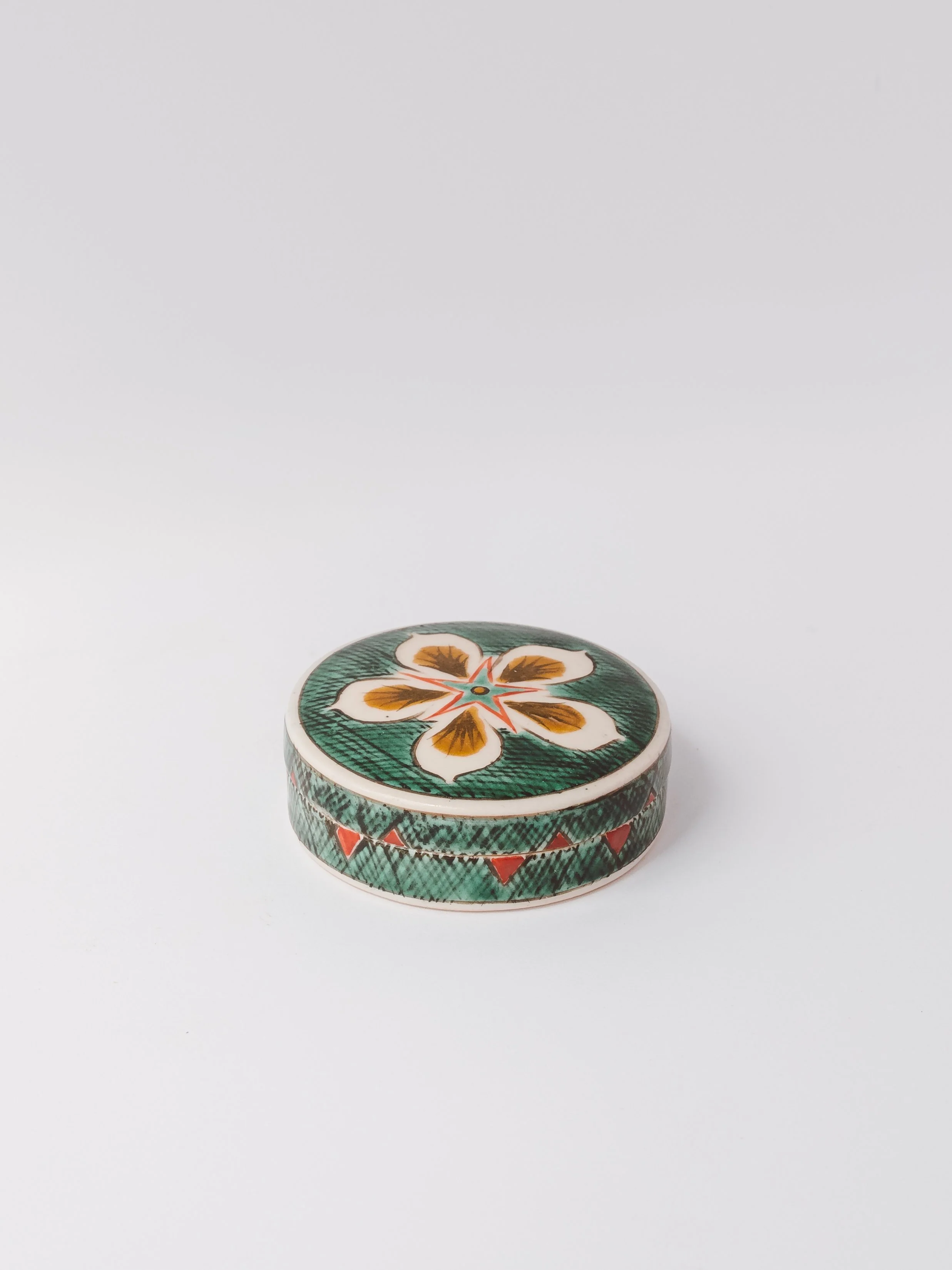 Image 1 of 7
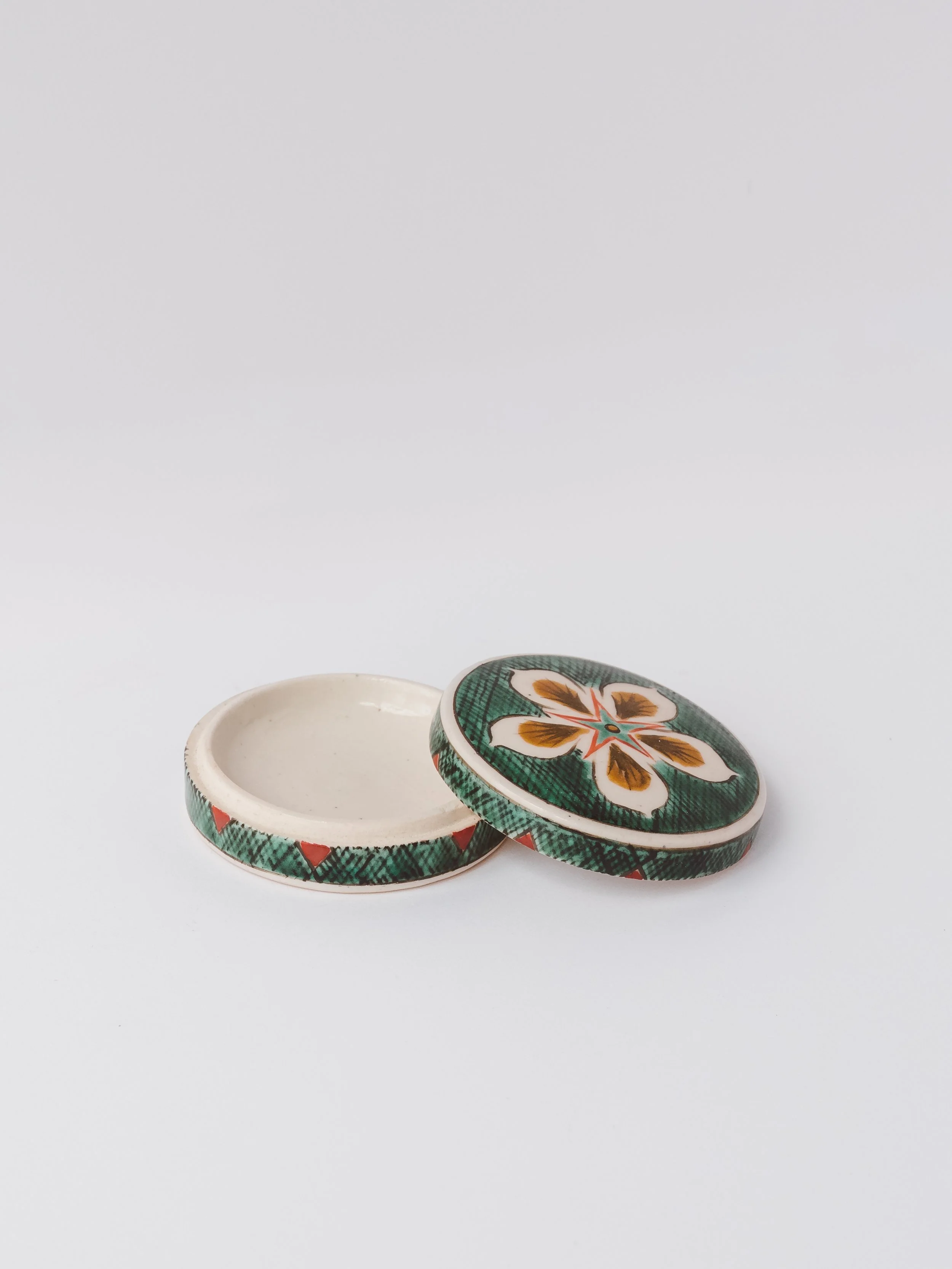 Image 2 of 7
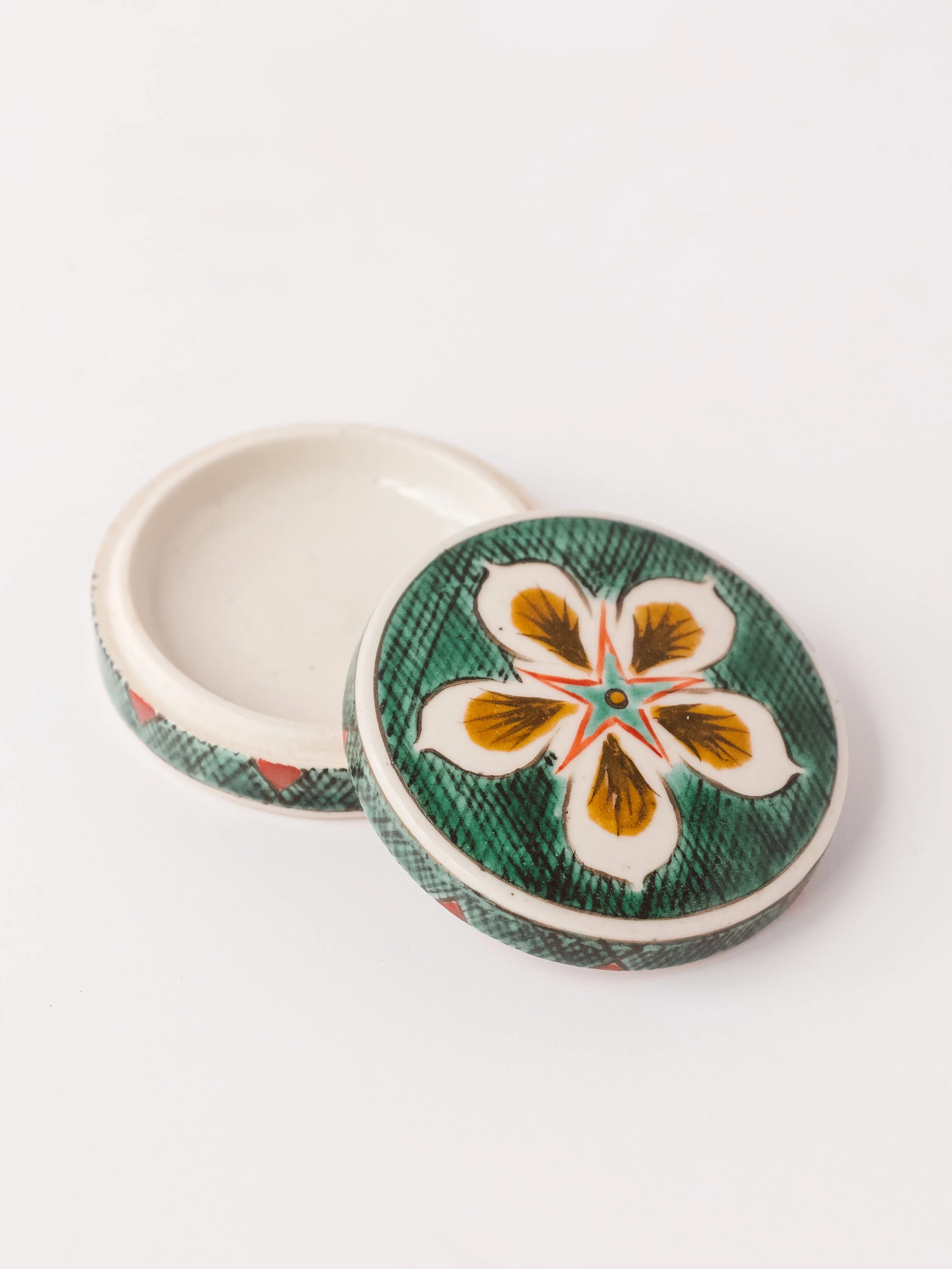 Image 3 of 7
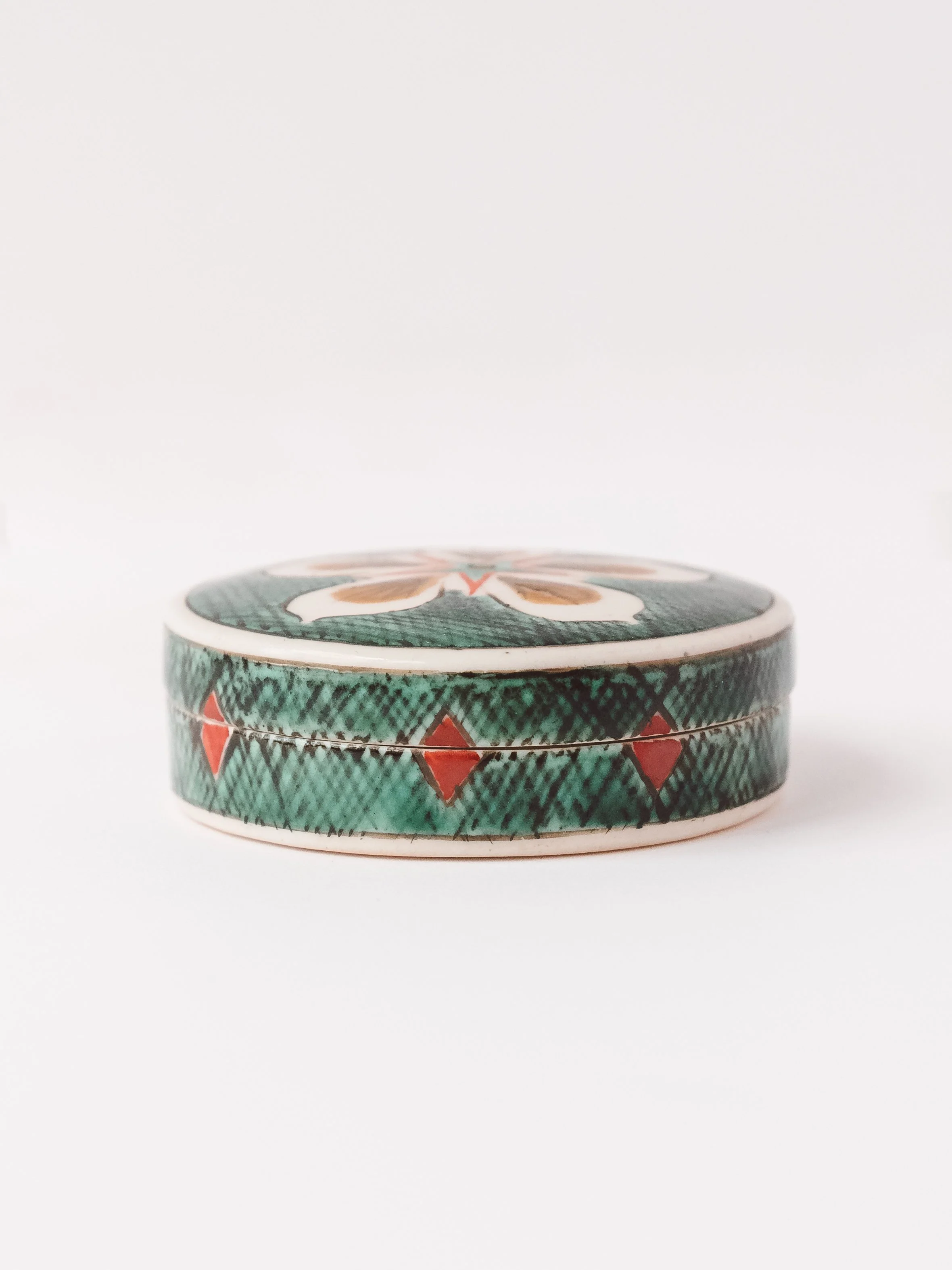 Image 4 of 7
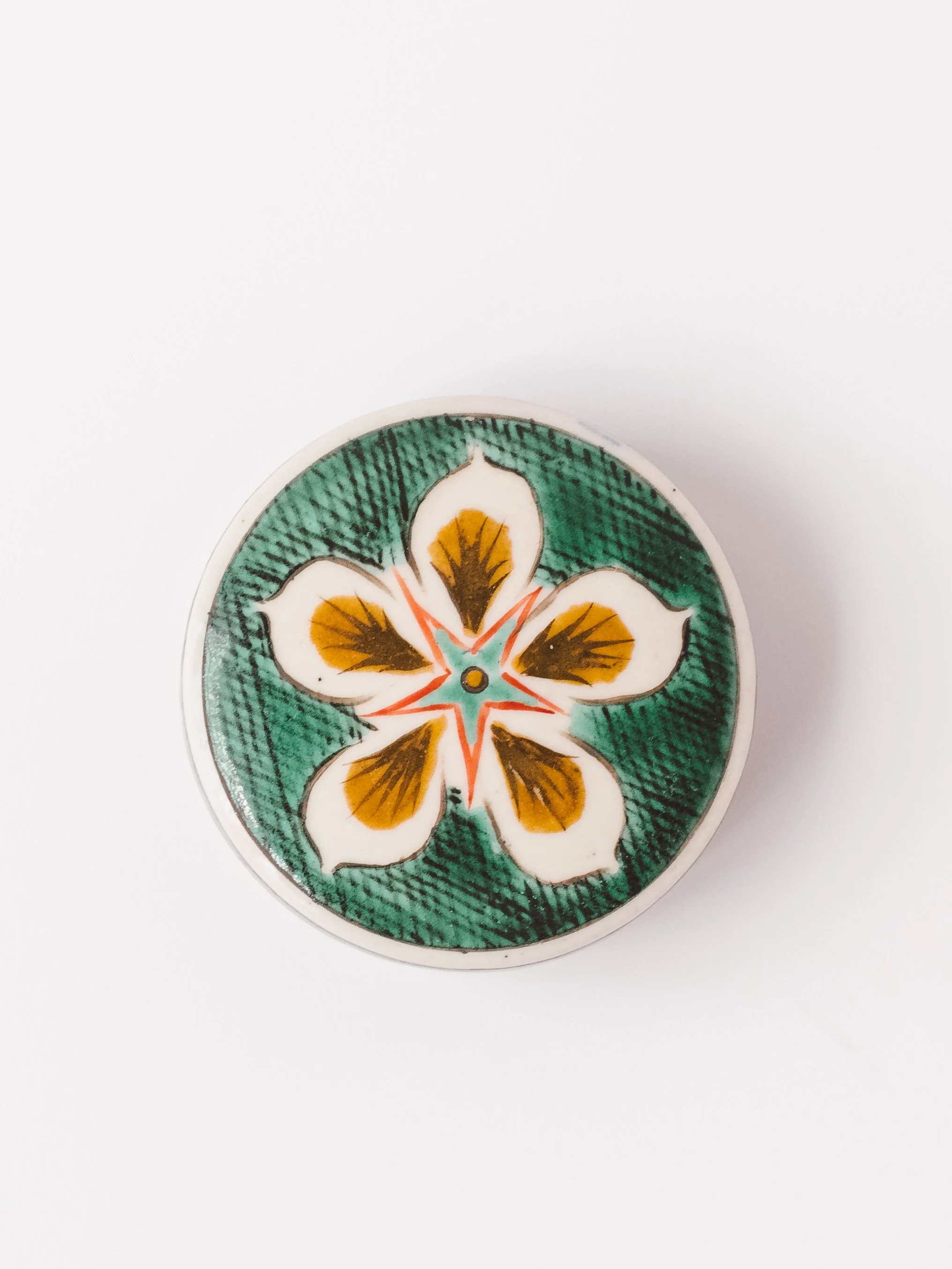 Image 5 of 7
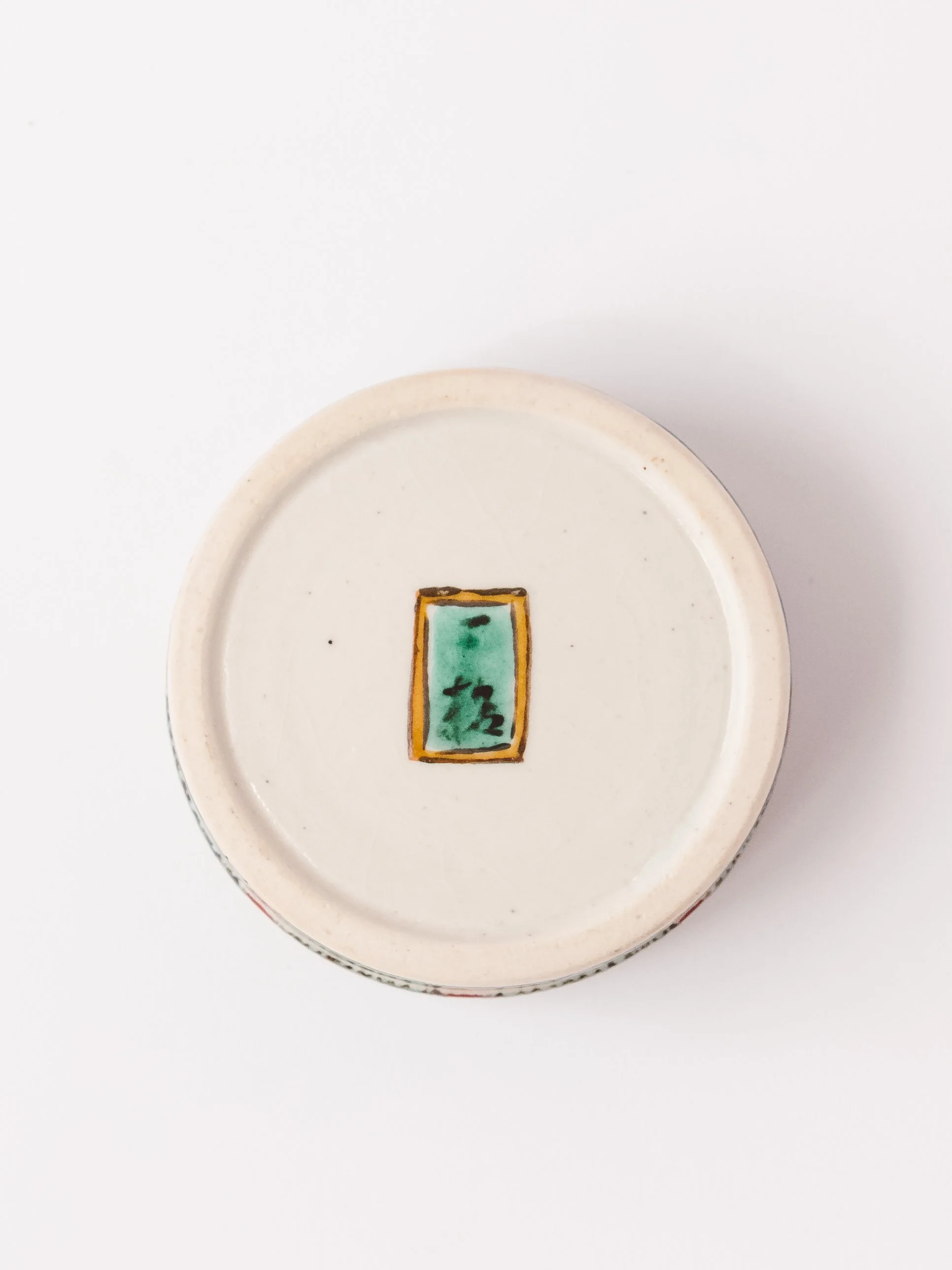 Image 6 of 7
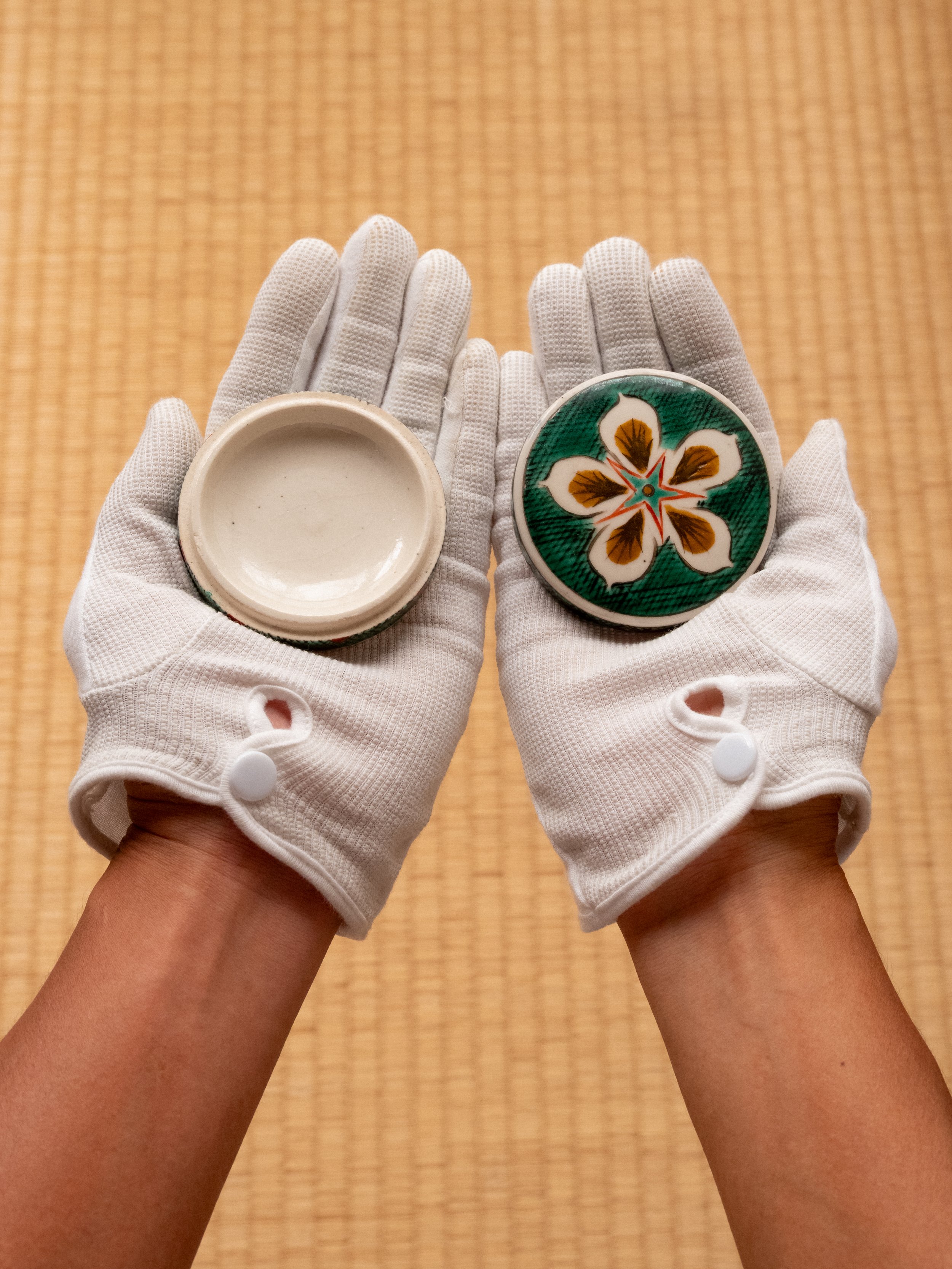 Image 7 of 7