【 The Concept 】
A horse pared back to pure curve — head lifted to the sky, muzzle just parted on the instant of a whinny. Everything anatomical has been let go: no carved eye, no muscle, no hoof, only the swelling barrel of the body, a thick arched neck, and short tapering legs. What remains is the animal's spirit rather than its likeness — stillness holding a charge of movement, the upward throw of the head giving a quiet form the surge of something about to leap. Across its back sits a small saddle-ridge finished with a tied ribbon, the one worldly detail: the mark of an adorned, ceremonial horse rather than a wild one. In this tradition the horse is a sacred creature — the mount on which a god descends, offered at shrines and, when white and pure, believed to drive off ill fortune and carry blessing. It is also the emblem of vitality and forward momentum, of things going well and rising: a horse kept for luck, for advancement, for a life that keeps moving ahead.
【 The Function 】
A sculptural object, made to be looked at rather than used. Its abstraction is its function: reduced to a few clean volumes, it settles as easily onto a modern shelf, a mantel, or a console as into a traditional alcove, and reads cleanly from any angle. Upright and lifted, it draws the eye up — a note of aspiration on a surface — and its cool, quiet colour lets it hold a space without crowding it. Set it where the light can move across the glaze: a shelf, a windowsill, a low table where a glance will catch it.
【 The Texture 】
Blue-white porcelain — the pale, watery blue-green of a qingbai glaze — fired to a hard, glassy shine. On the full, smooth planes the colour thins almost to white and the surface throws clean highlights; in the hollows, where the glaze runs and gathers, it deepens to a distinct shadowy blue — the tuck under the neck, the seams of the legs, the folds of the ribbon holding the strongest colour. That pooling is the whole play of the piece: a single glaze that draws its own soft contour lines, giving a plain white form depth and a cool, wet, jade-like glow. The touch is smooth and cold, closer to glass or ice than to earth.
【 Presence 】
Calm, clean, faintly otherworldly. Where a detailed figure asks to be studied, this one asks to be felt — a pale shape that cools and quiets the space around it, its raised head lending a note of lift and hope. There is a gentle paradox in it: a horse is a creature of fire and motion, yet here it is rendered in a glaze the colour of water and ice, so all that latent energy arrives softened, serene, purifying rather than restless. It leaves room for the eye to rest and for the viewer to read their own wish into its quiet. A piece that raises the tone of a room simply by being so still and so clear.
Sourced from a private collection in Japan.
【 The Concept 】
A horse pared back to pure curve — head lifted to the sky, muzzle just parted on the instant of a whinny. Everything anatomical has been let go: no carved eye, no muscle, no hoof, only the swelling barrel of the body, a thick arched neck, and short tapering legs. What remains is the animal's spirit rather than its likeness — stillness holding a charge of movement, the upward throw of the head giving a quiet form the surge of something about to leap. Across its back sits a small saddle-ridge finished with a tied ribbon, the one worldly detail: the mark of an adorned, ceremonial horse rather than a wild one. In this tradition the horse is a sacred creature — the mount on which a god descends, offered at shrines and, when white and pure, believed to drive off ill fortune and carry blessing. It is also the emblem of vitality and forward momentum, of things going well and rising: a horse kept for luck, for advancement, for a life that keeps moving ahead.
【 The Function 】
A sculptural object, made to be looked at rather than used. Its abstraction is its function: reduced to a few clean volumes, it settles as easily onto a modern shelf, a mantel, or a console as into a traditional alcove, and reads cleanly from any angle. Upright and lifted, it draws the eye up — a note of aspiration on a surface — and its cool, quiet colour lets it hold a space without crowding it. Set it where the light can move across the glaze: a shelf, a windowsill, a low table where a glance will catch it.
【 The Texture 】
Blue-white porcelain — the pale, watery blue-green of a qingbai glaze — fired to a hard, glassy shine. On the full, smooth planes the colour thins almost to white and the surface throws clean highlights; in the hollows, where the glaze runs and gathers, it deepens to a distinct shadowy blue — the tuck under the neck, the seams of the legs, the folds of the ribbon holding the strongest colour. That pooling is the whole play of the piece: a single glaze that draws its own soft contour lines, giving a plain white form depth and a cool, wet, jade-like glow. The touch is smooth and cold, closer to glass or ice than to earth.
【 Presence 】
Calm, clean, faintly otherworldly. Where a detailed figure asks to be studied, this one asks to be felt — a pale shape that cools and quiets the space around it, its raised head lending a note of lift and hope. There is a gentle paradox in it: a horse is a creature of fire and motion, yet here it is rendered in a glaze the colour of water and ice, so all that latent energy arrives softened, serene, purifying rather than restless. It leaves room for the eye to rest and for the viewer to read their own wish into its quiet. A piece that raises the tone of a room simply by being so still and so clear.
Sourced from a private collection in Japan.


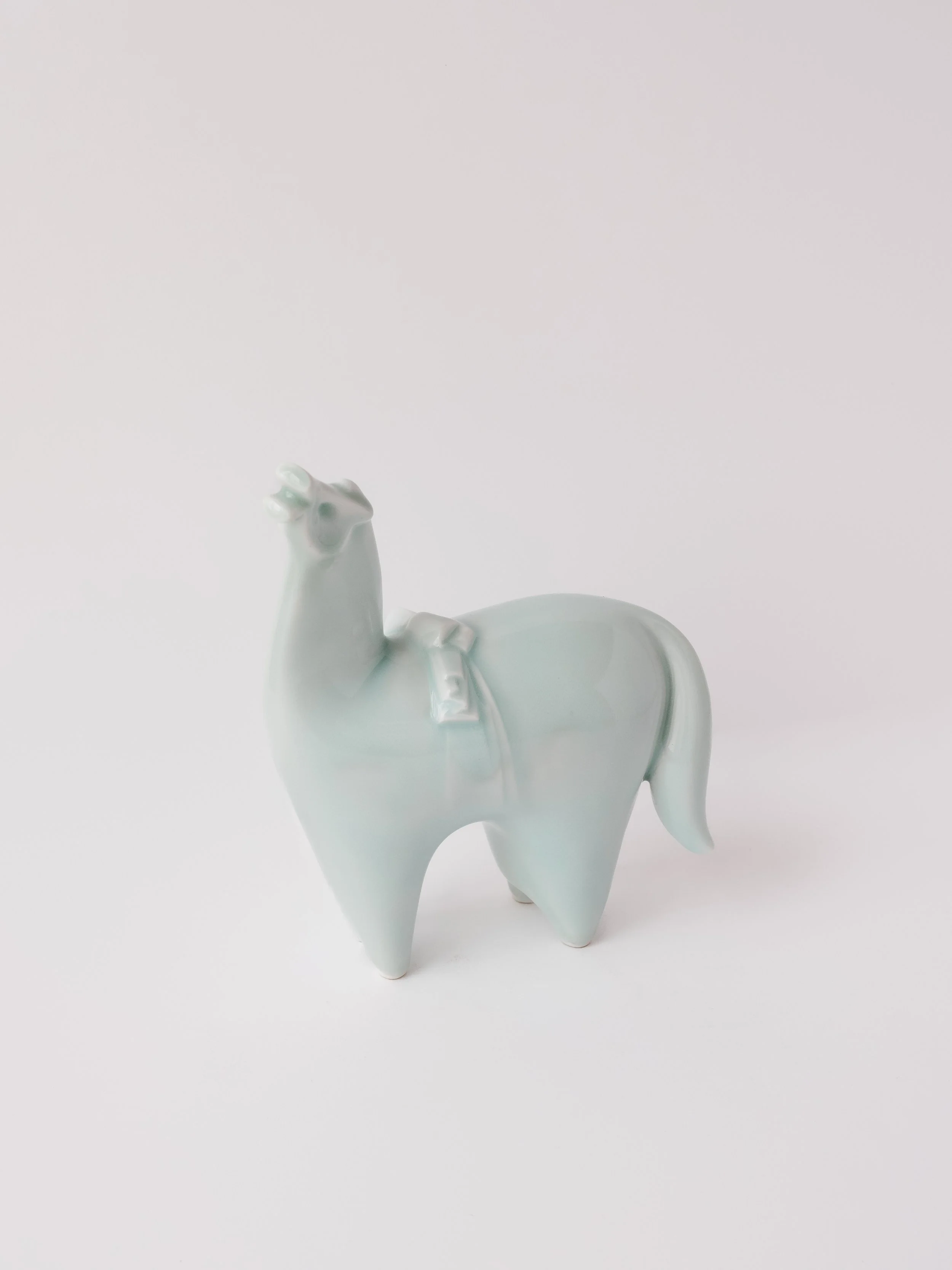 Image 1 of 12
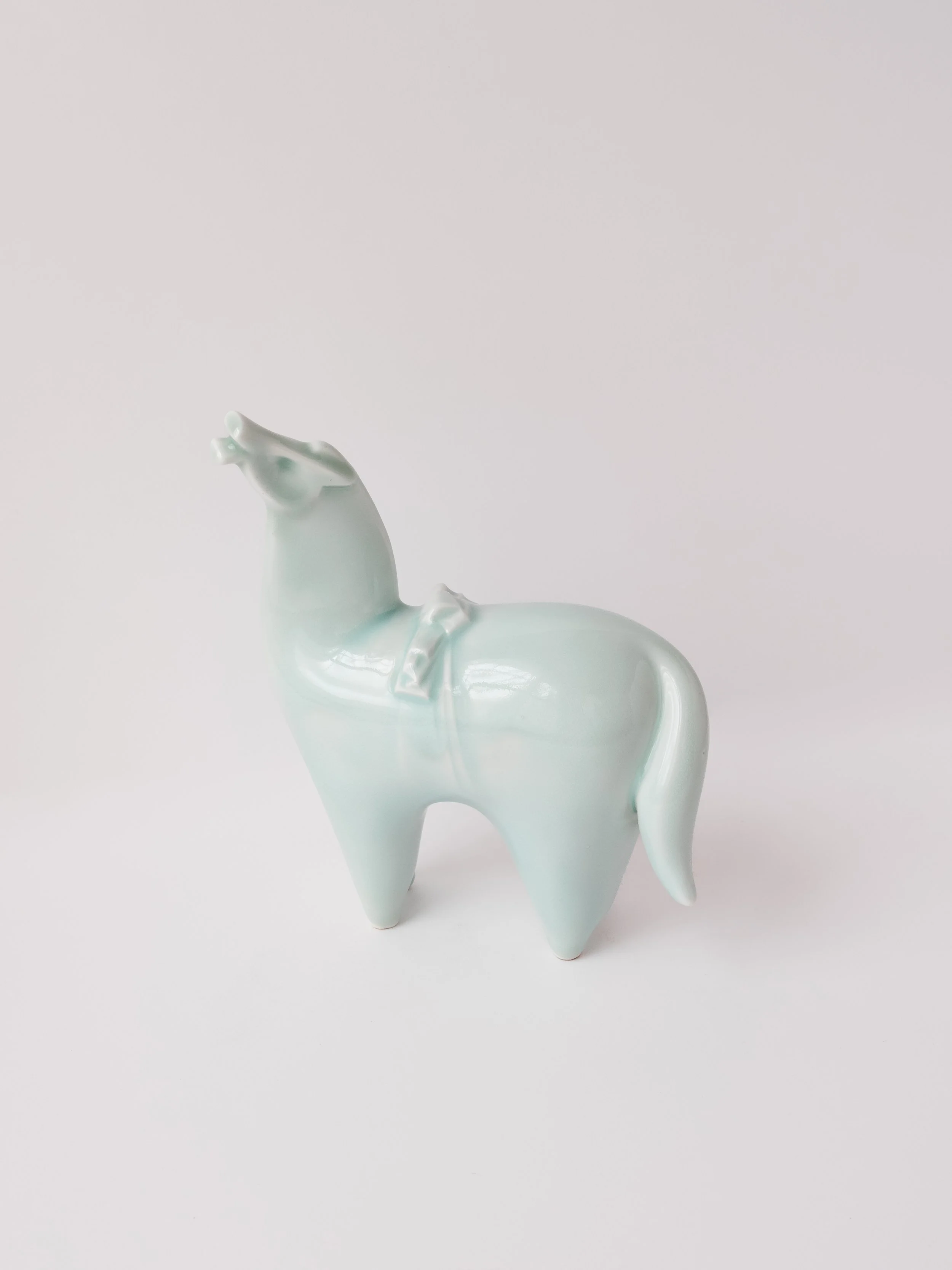 Image 2 of 12
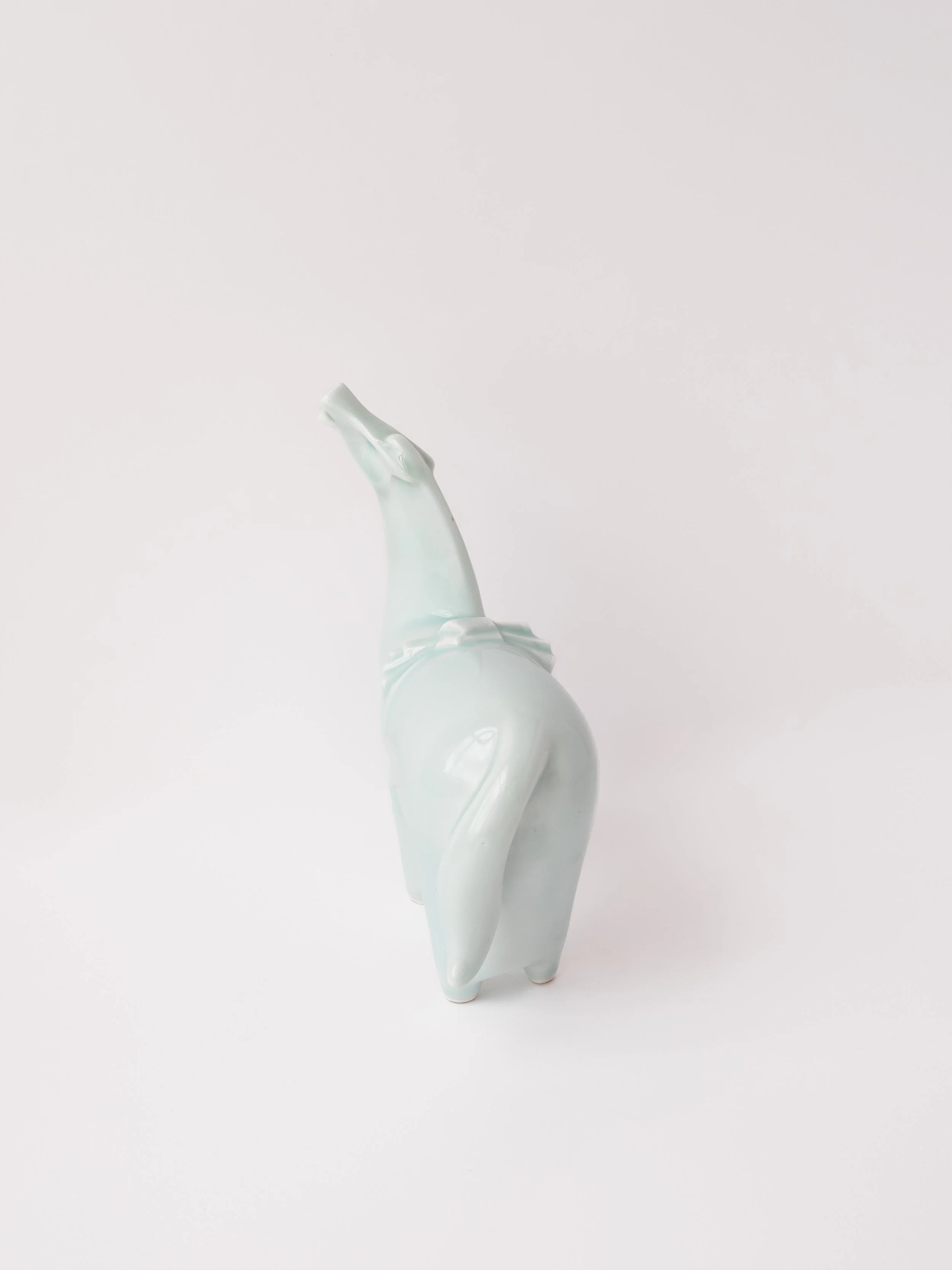 Image 3 of 12
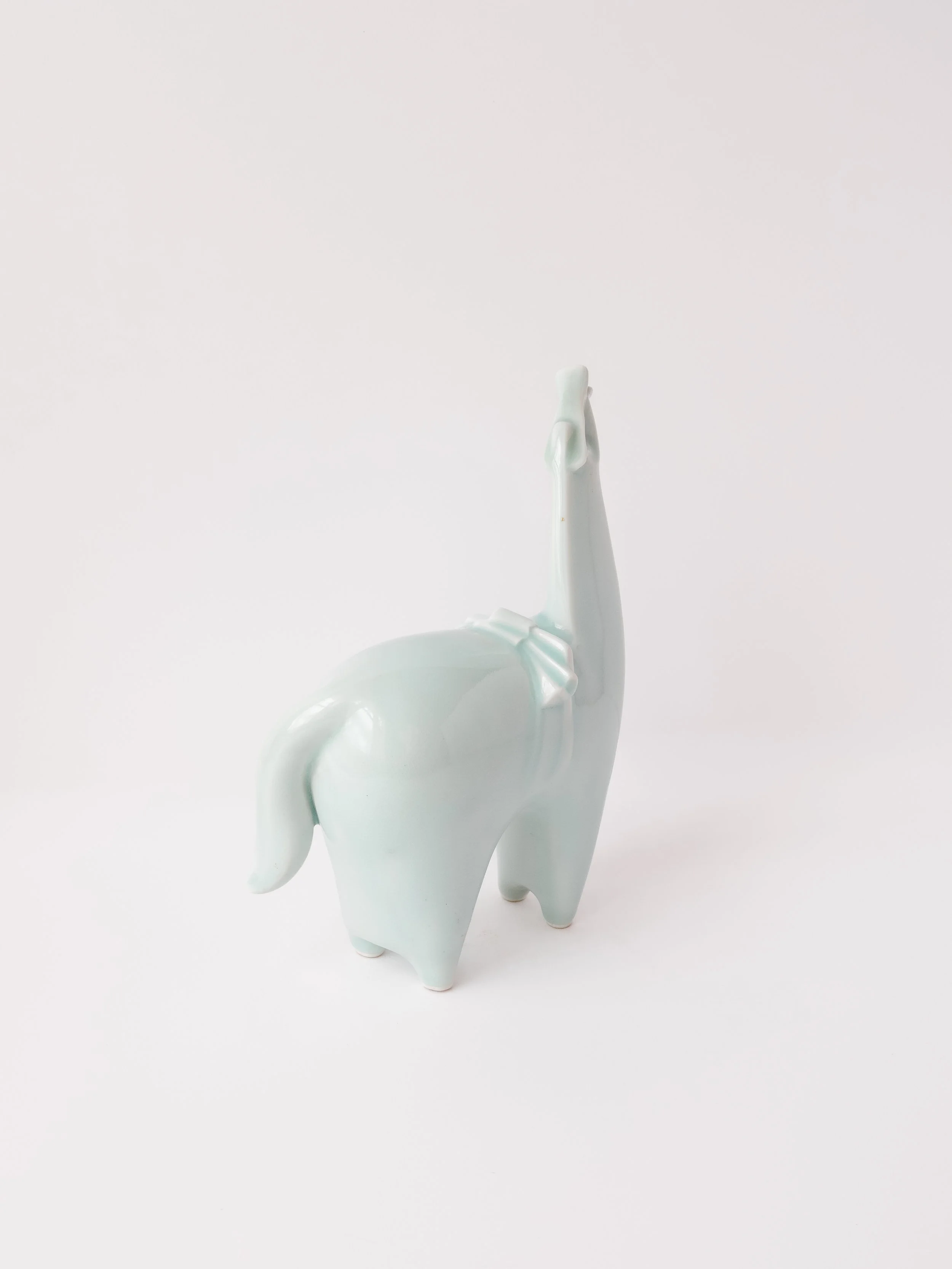 Image 4 of 12
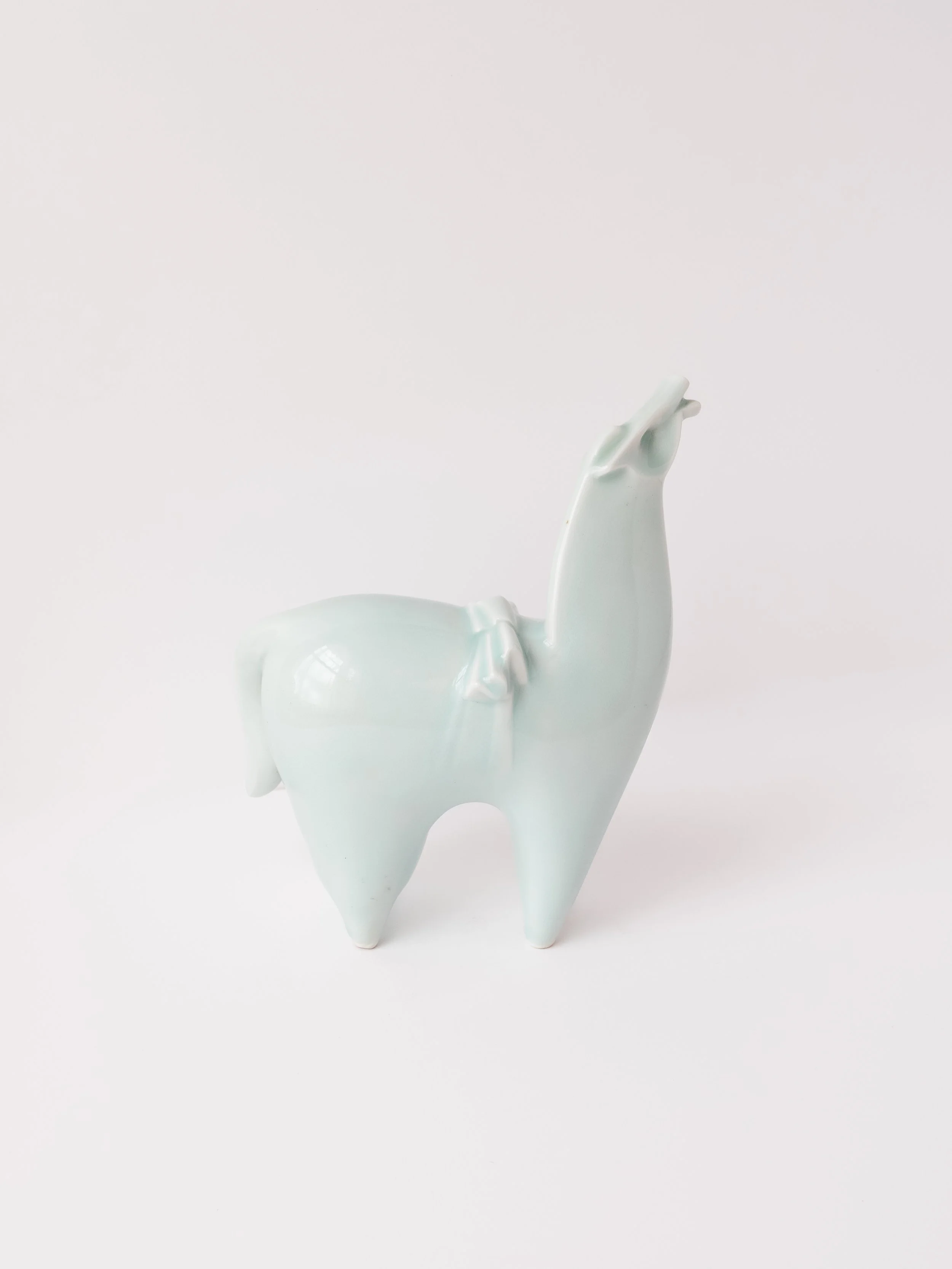 Image 5 of 12
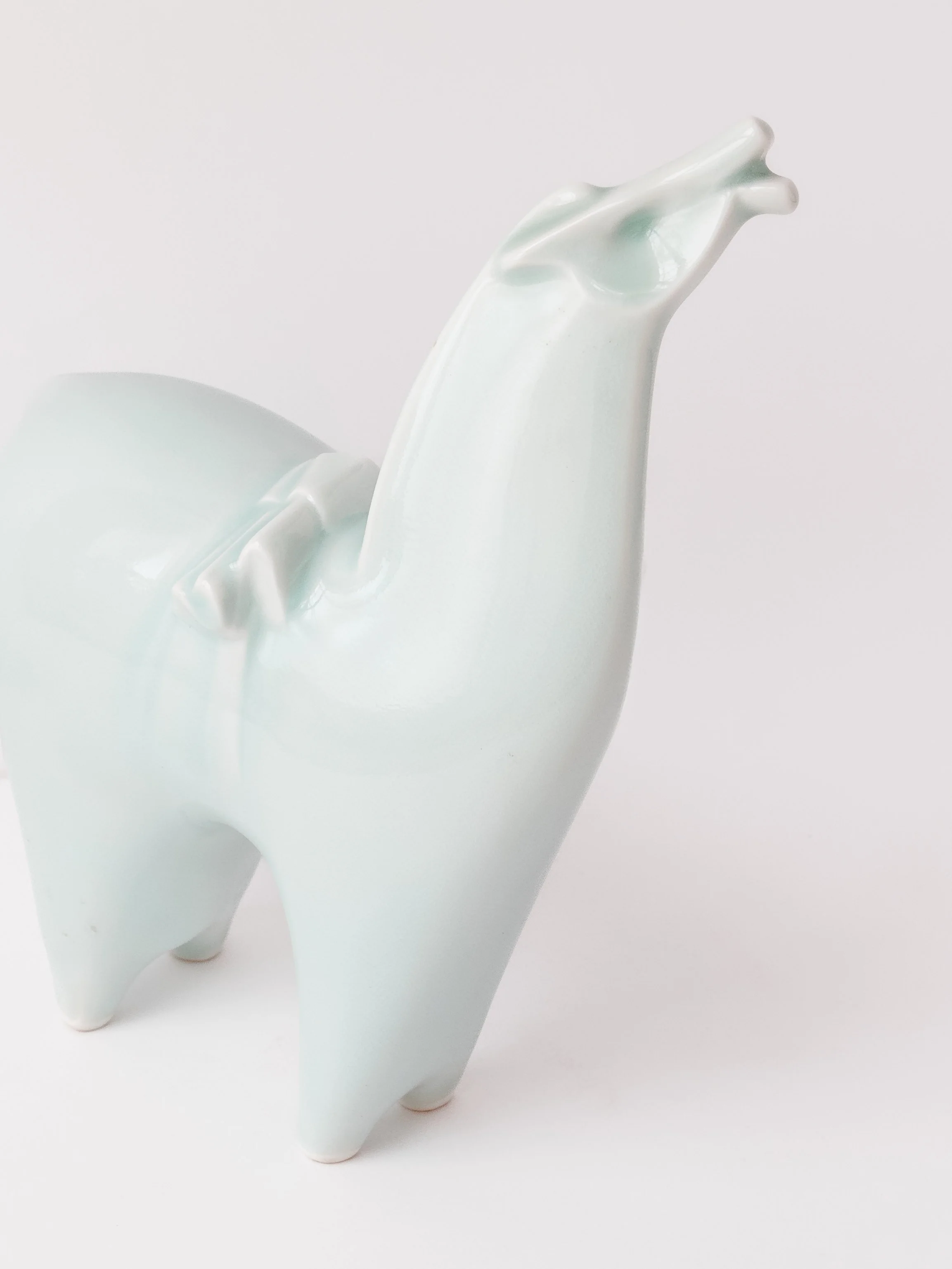 Image 6 of 12
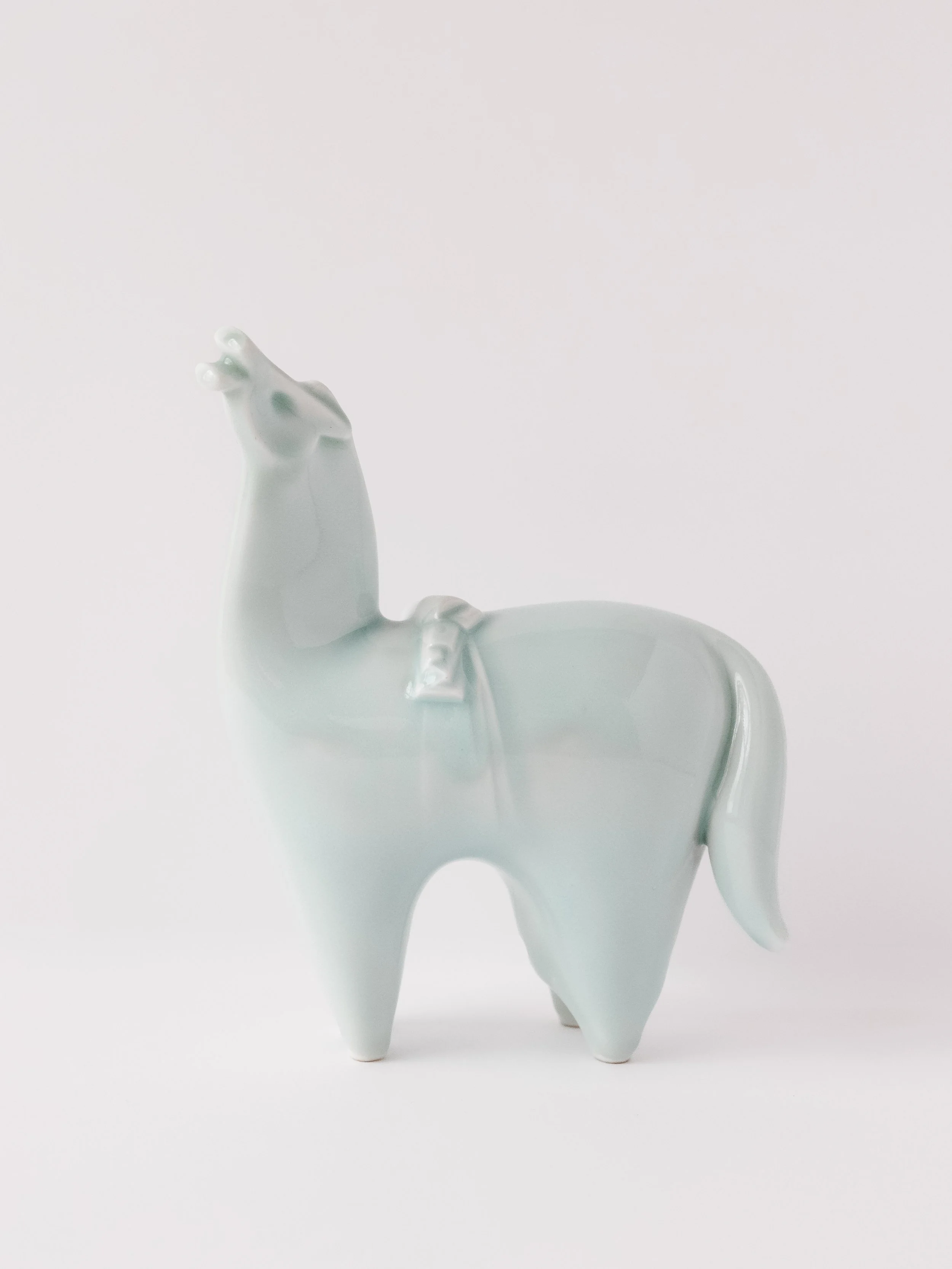 Image 7 of 12
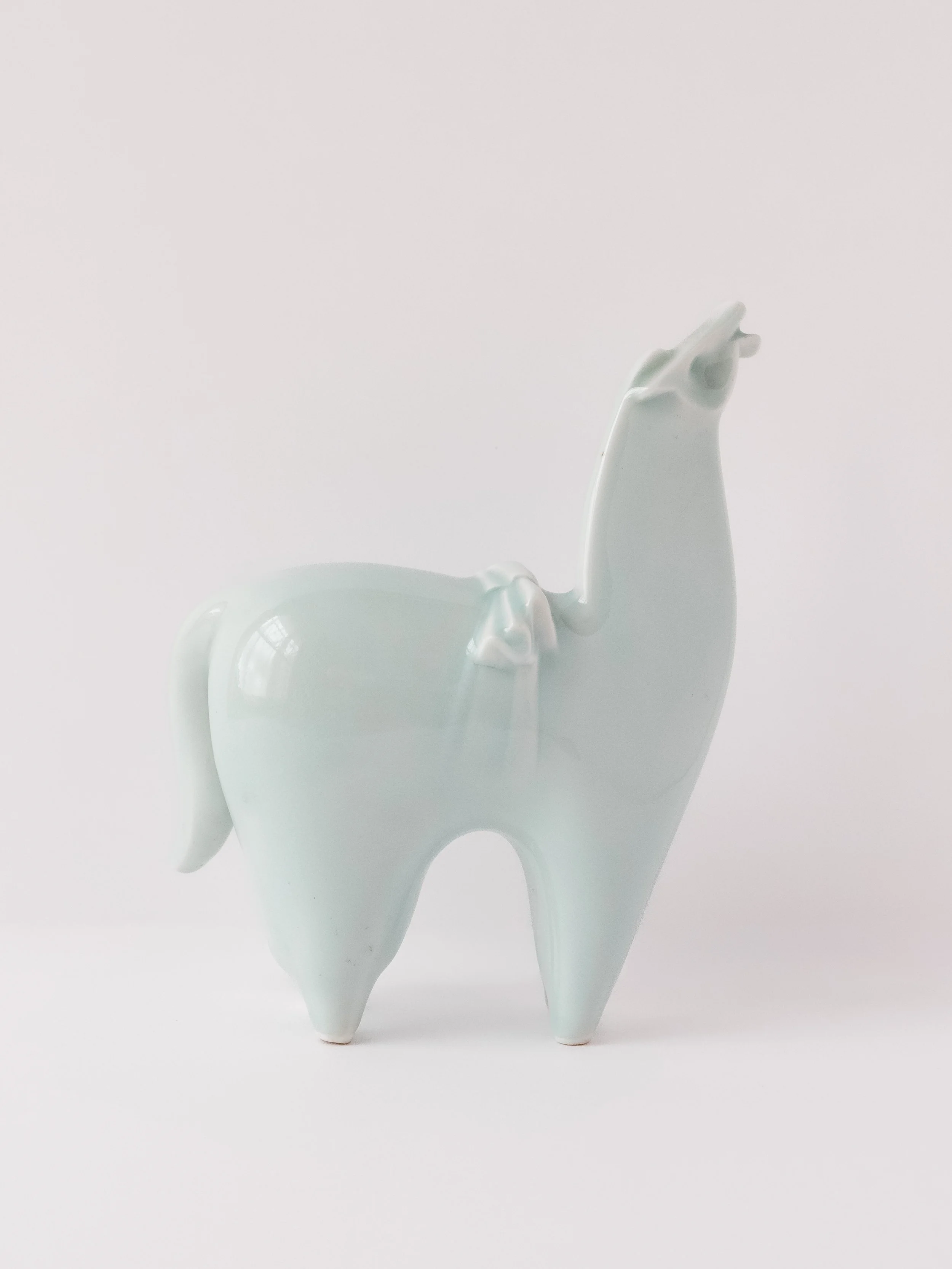 Image 8 of 12
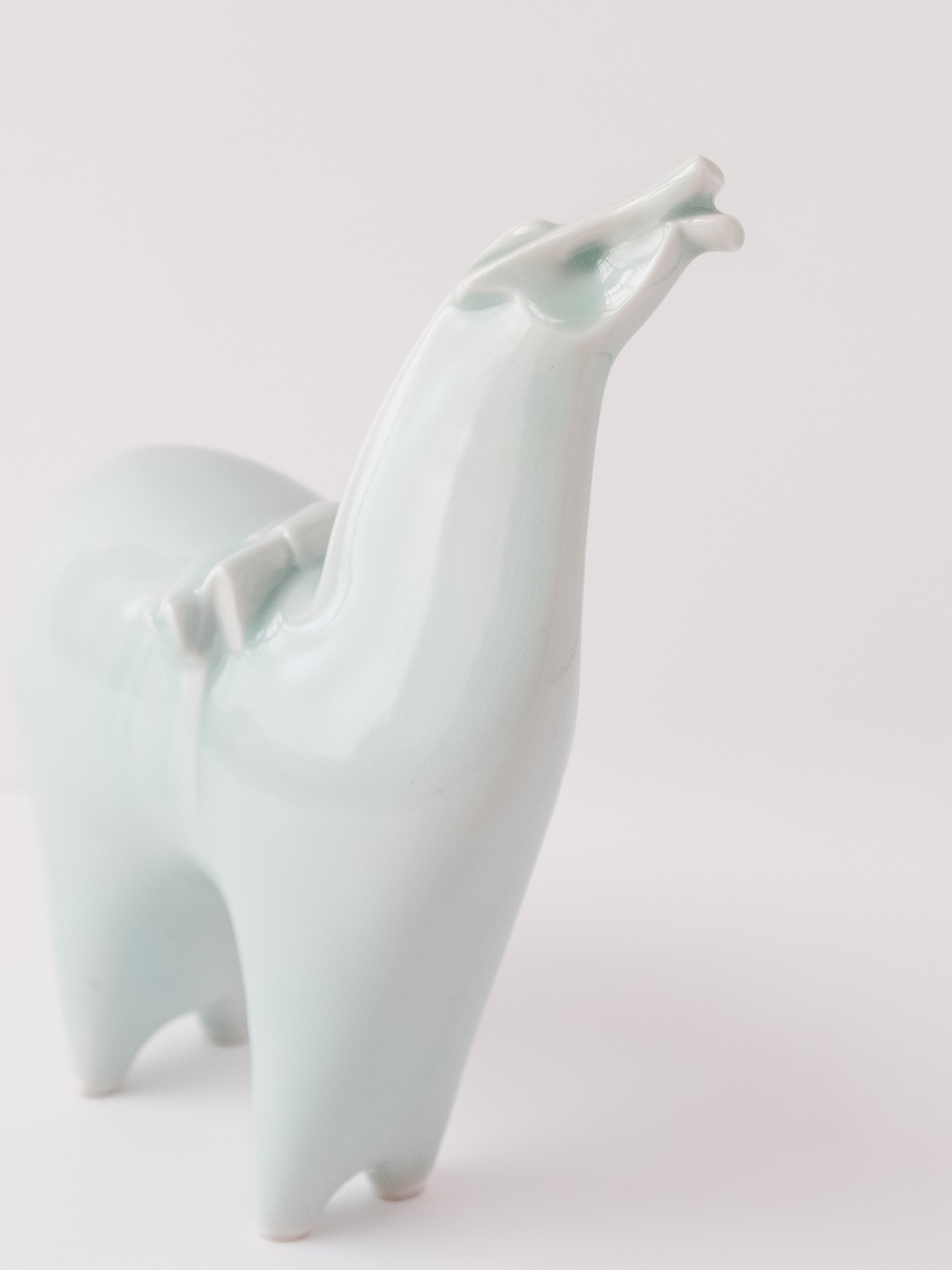 Image 9 of 12
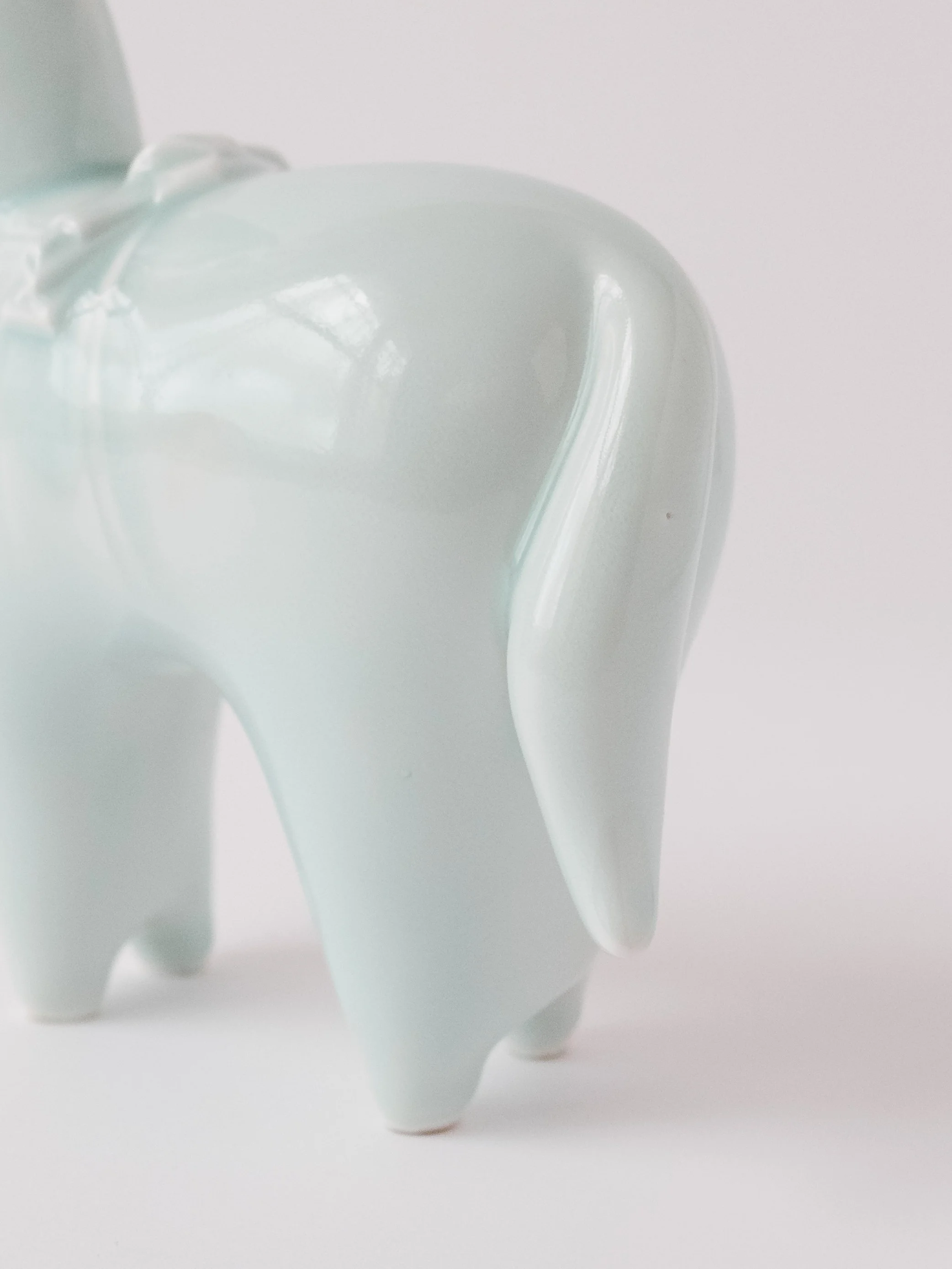 Image 10 of 12
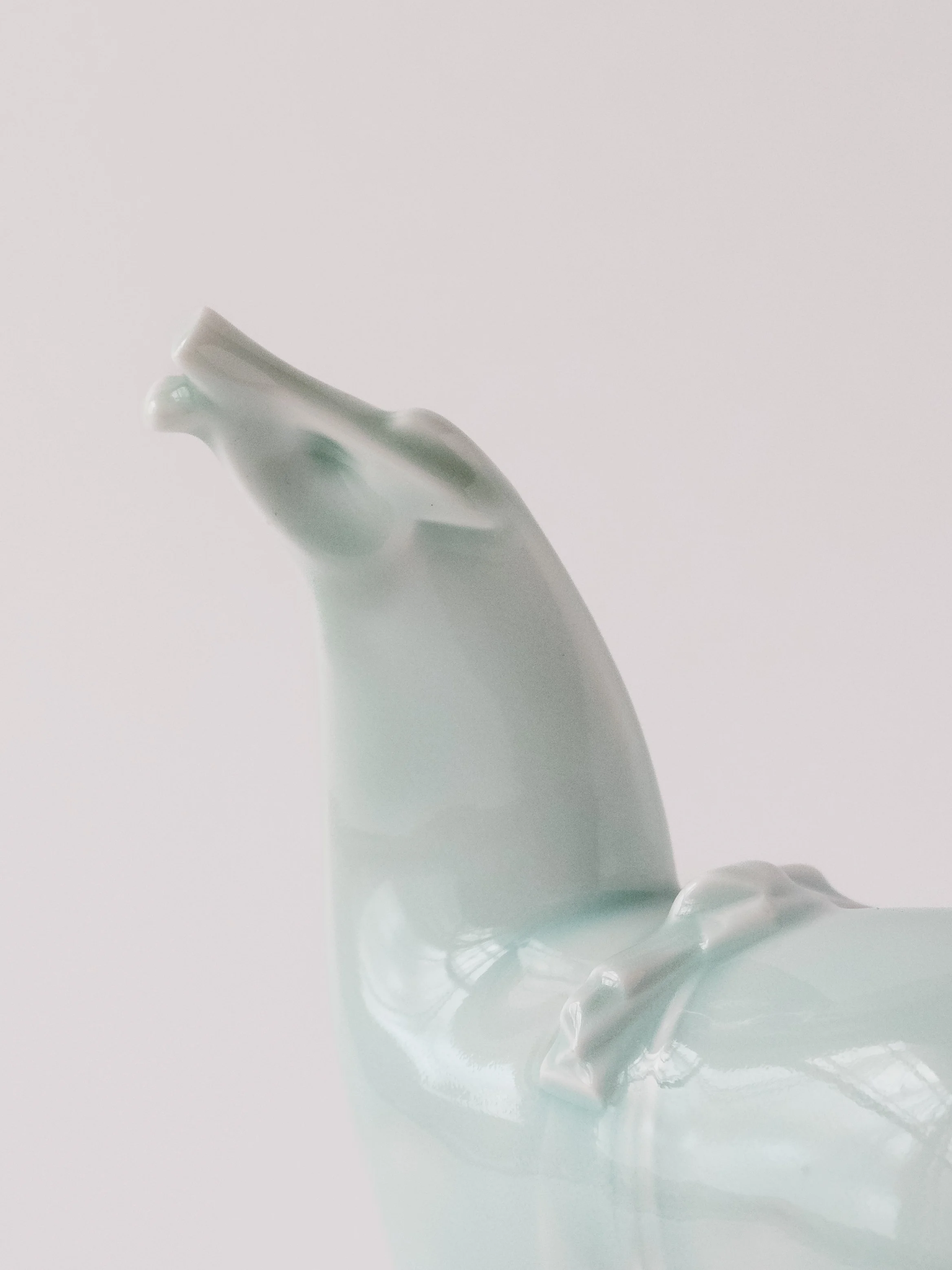 Image 11 of 12
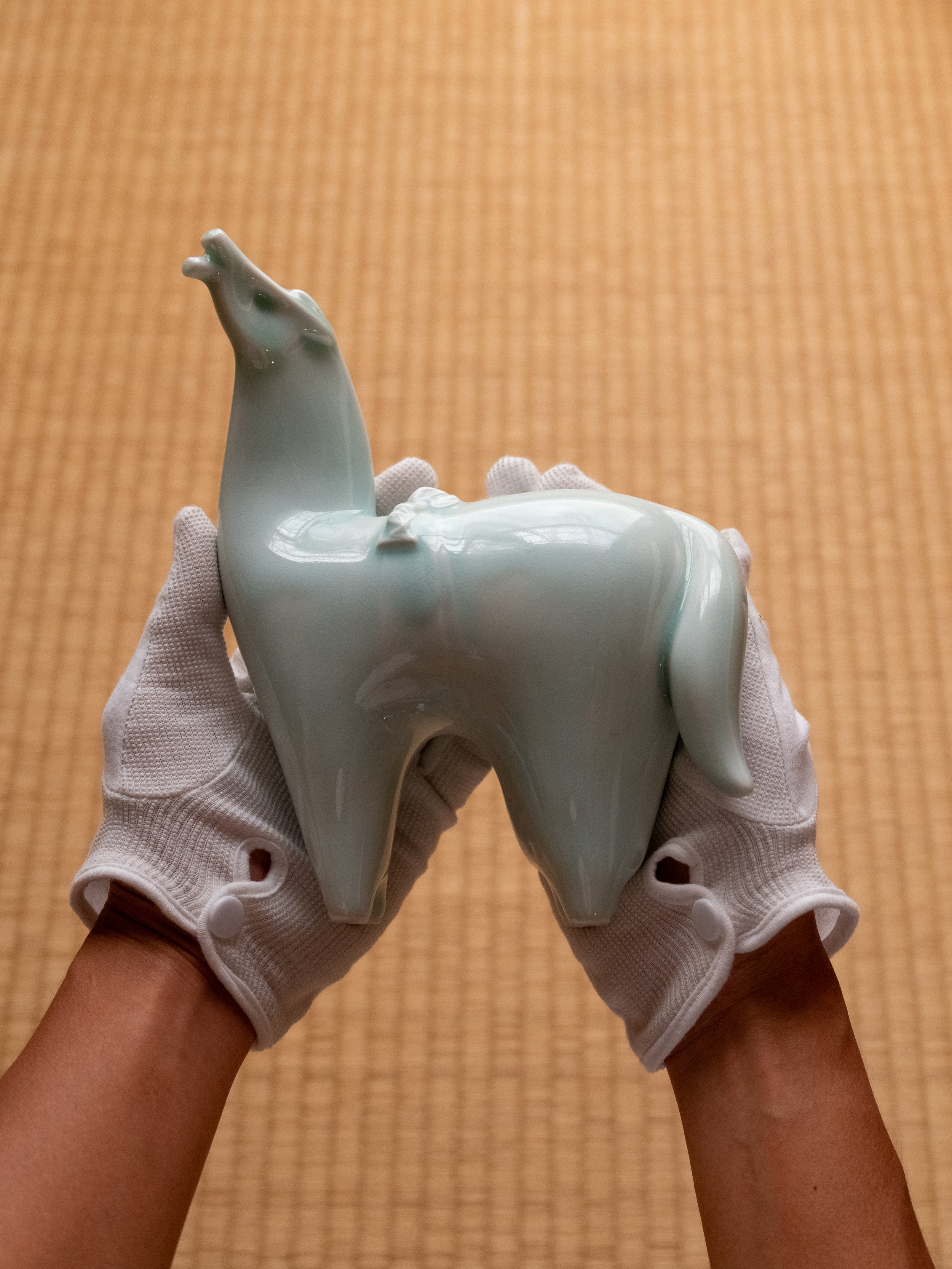 Image 12 of 12