【 The Concept 】
A Japanese monkey curled into a single compact form, as if it had pulled its arms and knees tight against the winter cold. Near the top of the rounded body, only the face looks out: a red mask with two round eyes, a small raised nose and a short, closed mouth, the chin resting on the folded arms below. The rest of the body has been cut into dozens of flat, many-sided facets, like a stone shaped by a chisel, so that light breaks across the surface in small planes of brightness and shadow. It is a modern sculptor’s way of drawing a monkey: no fur, no fingers, no tail, only the weight of a body keeping itself warm and the alert, slightly anxious face of a creature watching the world.
【 The Monkey Who Makes Trouble Leave 】
In Japanese, the word for monkey, saru, sounds exactly like the verb saru, “to leave” or “to go away.” For centuries this simple coincidence has made the monkey a charm for misfortune departing: illness leaving the house, bad luck passing by, trouble walking out the door.
At Hiyoshi Taisha, the great shrine at the foot of Mount Hiei near Kyoto, wild monkeys have lived on the mountain since ancient times, and they came to be honoured as messengers of the mountain’s god. There they are called masaru, the “sacred monkey,” a name heard both as “evil departs” (ma ga saru) and as “to prevail” (masaru). To this day the shrine treasures the monkey as a symbol of protection against evil and a wish for victory.
【 The Guardian of the Palace Corner 】
In Japanese tradition the northeast is the kimon, the “demon gate,” the direction from which misfortune is said to enter. At the northeast corner of the outer wall of the Kyoto Imperial Palace, a small wooden monkey is carved beneath the eaves. It is said to be a messenger of the Hiyoshi Sannō deity, placed there to seal off bad luck coming from the demon’s direction, and the corner is still known as Sarugatsuji, “the Monkey’s Corner.”
The story goes that the monkey used to slip out at night to play tricks and trouble the people of the city. So today it sits behind a wire net: still on guard, but no longer allowed to wander.
【 Huddled Against the Cold 】
The pose recalls something real. In winter, Japanese macaques press their bodies together to keep warm. On Shodoshima Island in the Inland Sea, huddles of more than a hundred monkeys have been observed, a sight known in Japan as saru dango, “monkey dumplings.” This figure is a single monkey doing the same: arms and knees drawn in, the body closed into a ball, only the face open to the air. It is an image of patience, comfort and quiet endurance through a cold season.
【 The Monkey in the Zodiac 】
The monkey is the ninth of the twelve animals of the East Asian zodiac. In Japan, a figure of the year’s animal is traditionally set out at New Year to welcome good fortune, but because of its protective meaning, a monkey is often kept on display all year round. The next Year of the Monkey falls in 2028.
【 What Owning This Piece Brings 】
・ A charm for trouble to leave. Placed near the entrance or on a desk, the monkey carries the old wish that illness, bad luck and worry will go away.
・ A quiet guardian for the home. Like the monkey at the palace corner, it can keep watch over one corner of your house.
・ A wish to prevail. Through the name masaru, the monkey is also a charm for success, in exams, in work, and in any challenge ahead.
・ A heavy, calming object. Nearly one kilogram of cast metal, it doubles as a paperweight and a still point on a busy desk.
A meaningful gift for someone born in a Year of the Monkey (1944, 1956, 1968, 1980, 1992, 2004, 2016), a student facing exams, someone starting a new job or recovering from illness, or a new home.
【 Where to Place It 】
By the entrance, on a desk or a bookshelf, or in a tokonoma alcove. Following the Sarugatsuji tradition, you might set it in the northeast corner of a room. Side light from a window or lamp brings out the facets best, and on a pale surface the red face becomes the focal point.
【 Care 】
Dust with a soft, dry cloth. Keep it away from moisture and do not wash it; if it gets wet, wipe it dry at once. Avoid abrasive cleaners, which may wear away the red colour on the face. As it is heavy, place it on a stable surface away from the edge of a shelf.
【 Reading the Object 】
A cast-metal monkey curled into a rounded, slightly egg-shaped form, broad at the top and narrowing toward the base. The face sits in a shallow recess near the top: a red mask, round domed eyes, a small raised nose with two nostrils, and a short horizontal mouth. Below the chin, a curved ledge suggests the folded arms. The rest of the body, including the back of the head, is cut into irregular five- and six-sided facets, each with a fine, sandy cast texture and, on some, faint parallel tool marks. The grooves between the facets are rubbed pale, outlining the pattern. Silvery grey metal with a soft matt sheen. It stands securely on its own.
【 Presence 】
Compact, weighty and quietly alert. A small guardian with a red face, watching from inside its own armour of light and shadow.
Archive Note: The number in the name (1968) marks a Year of the Monkey in the East Asian zodiac. NOT the date this piece was made.
Provenance Note: Sourced from a private household in Japan. A bijutsu chūgeihin (art casting) designed by a modern Japanese sculptor, in its original paper-covered box. The box label reads “bijutsu chūgeihin” and carries the character for monkey in bold brush calligraphy, with the artist’s printed signature and red seal.


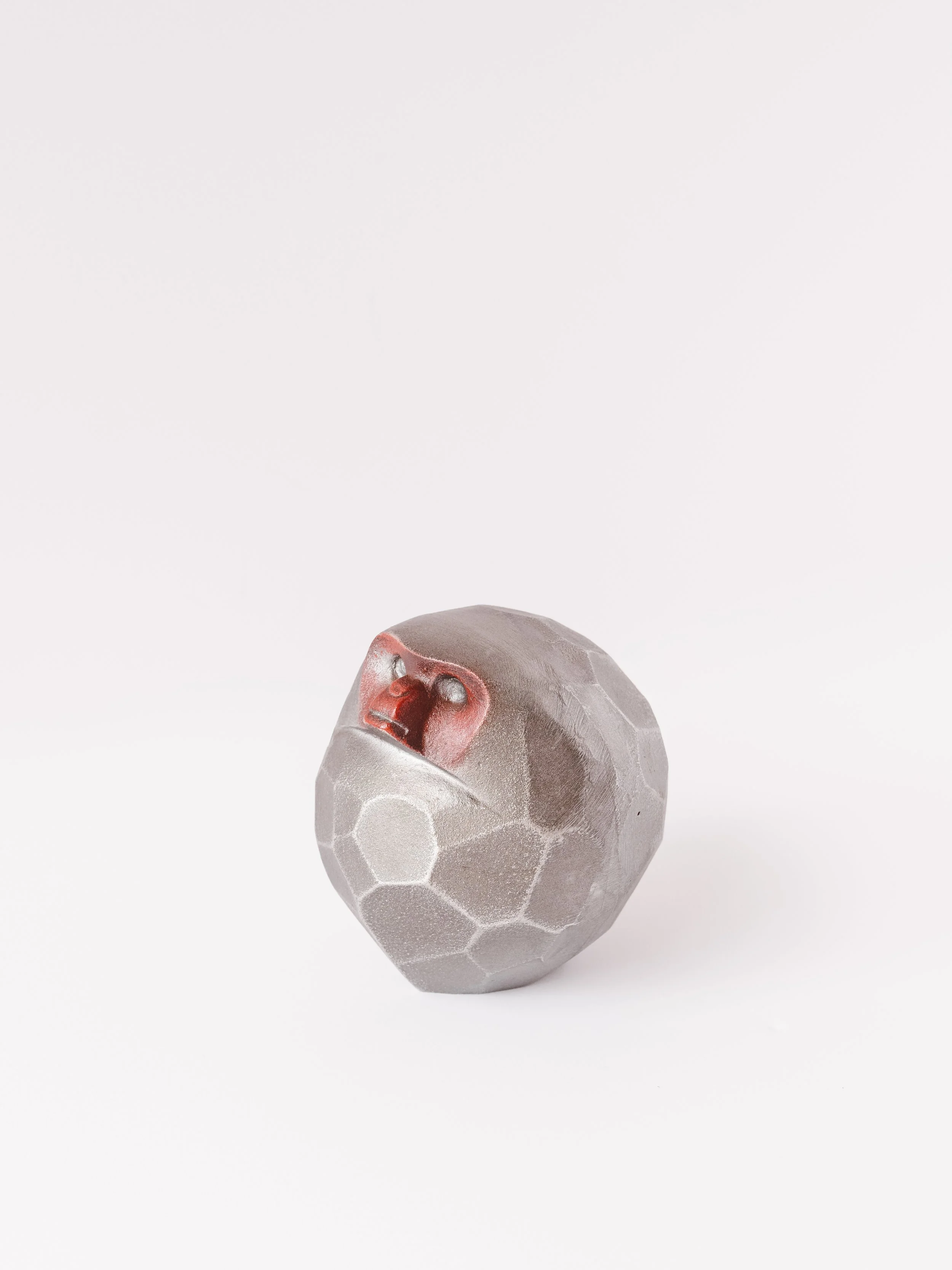 Image 1 of 7
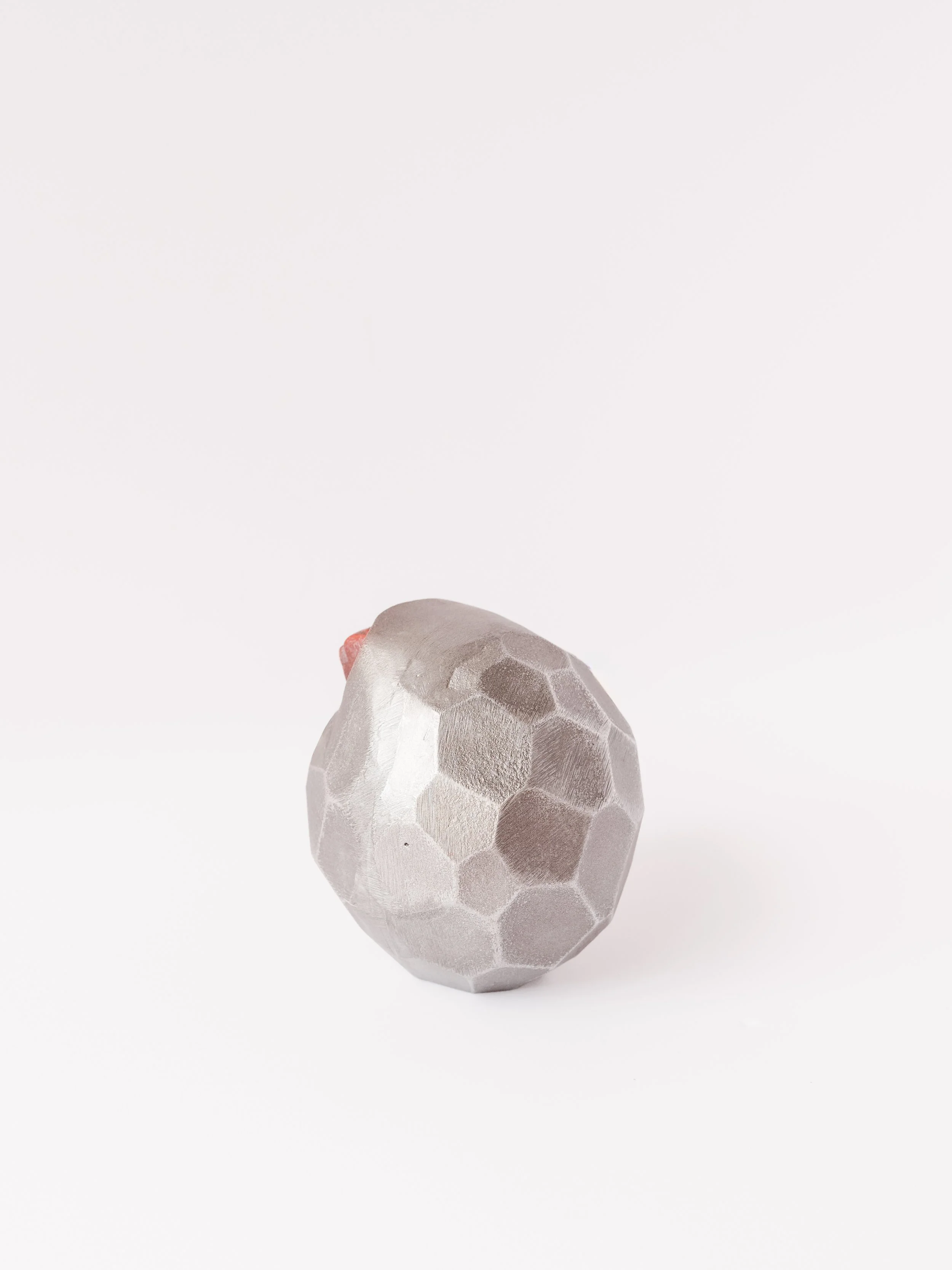 Image 2 of 7
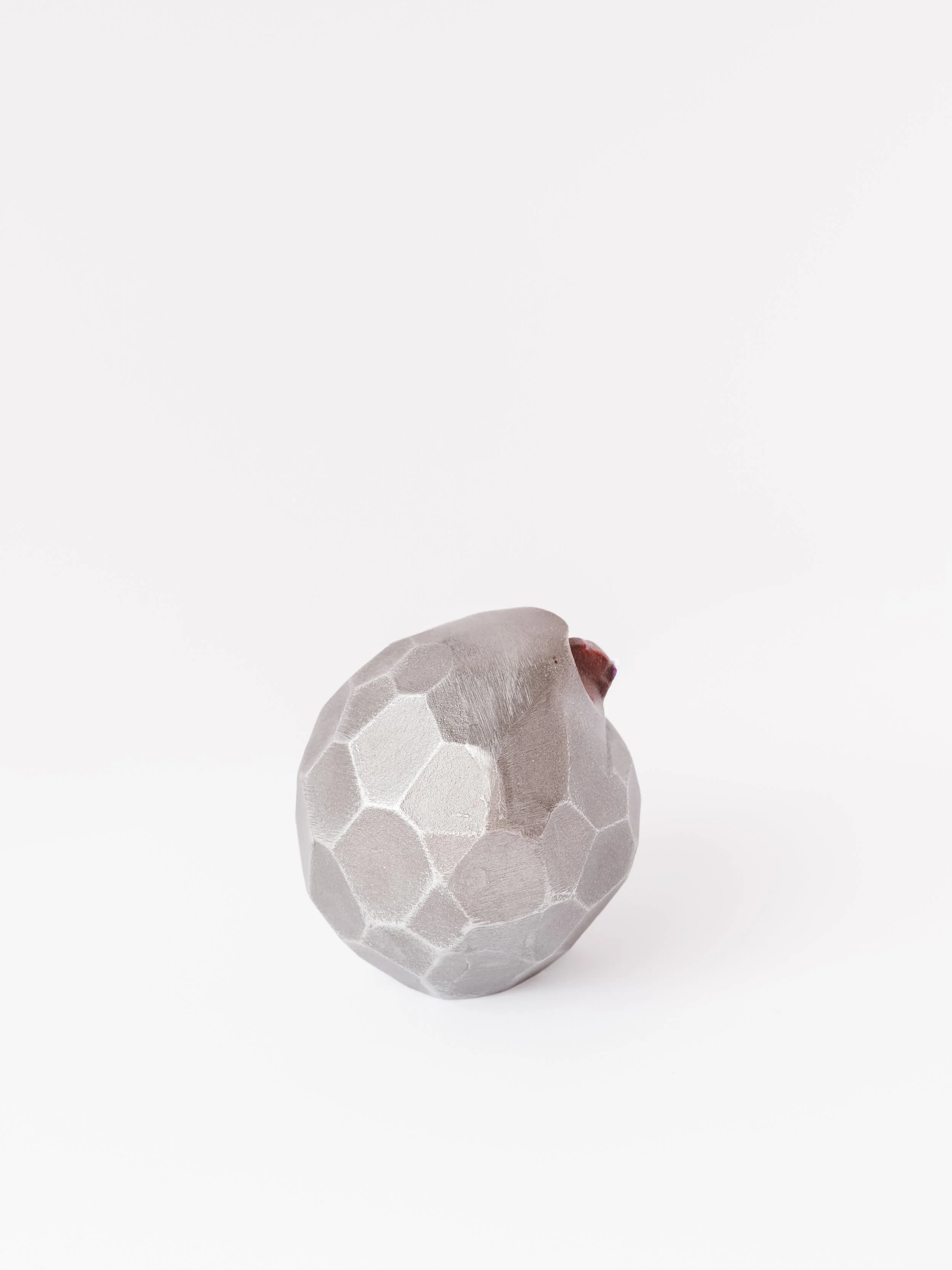 Image 3 of 7
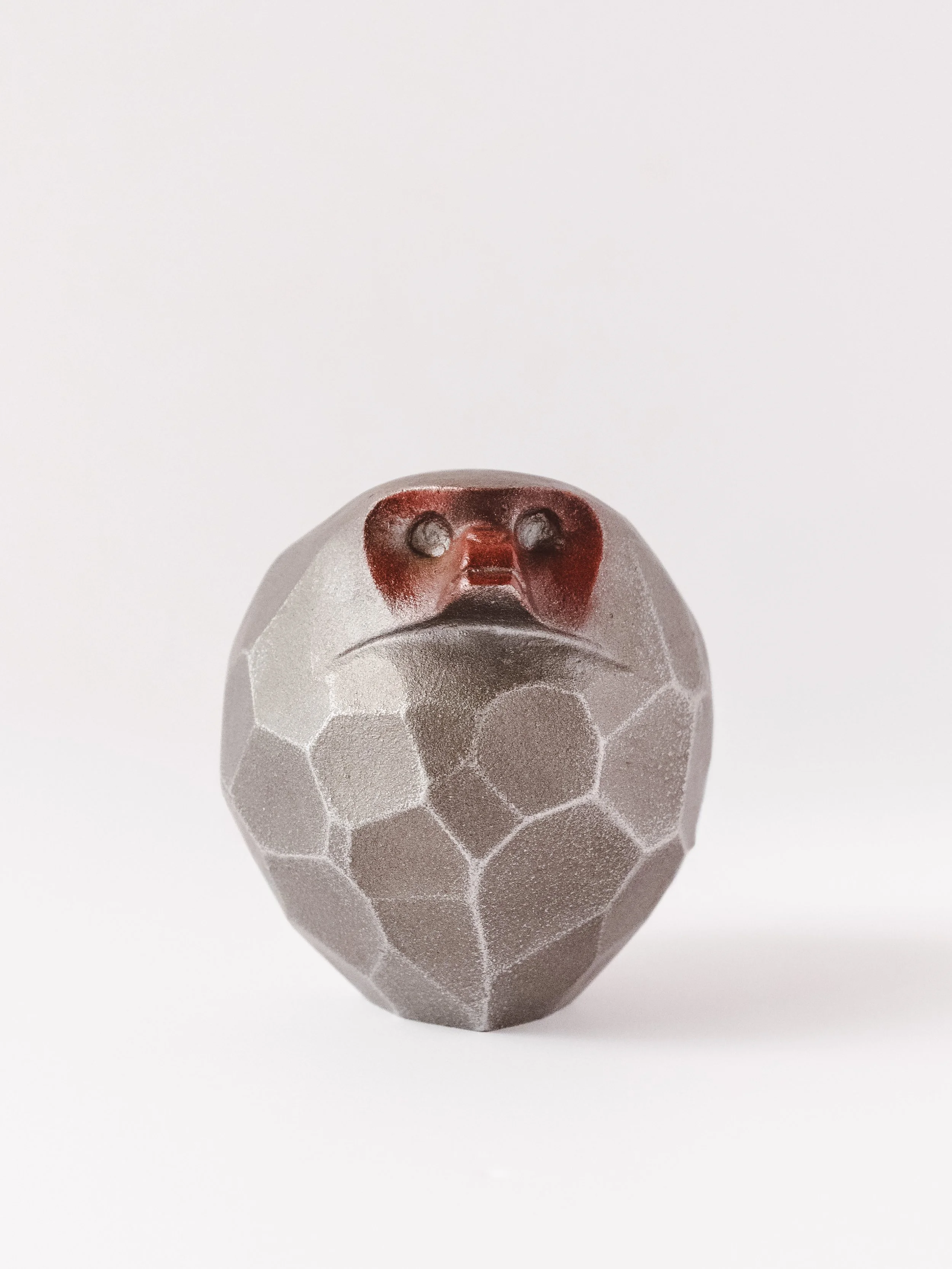 Image 4 of 7
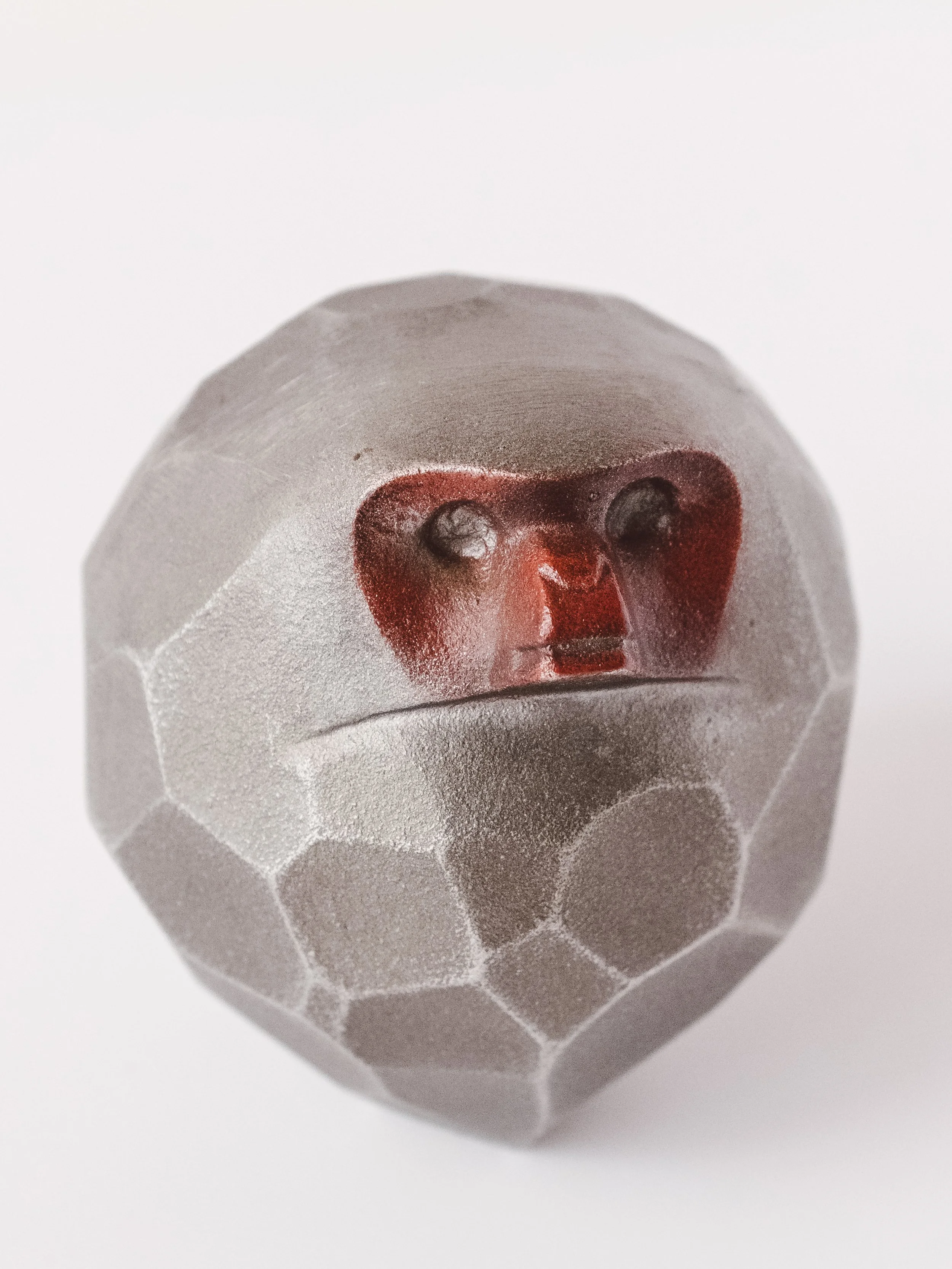 Image 5 of 7
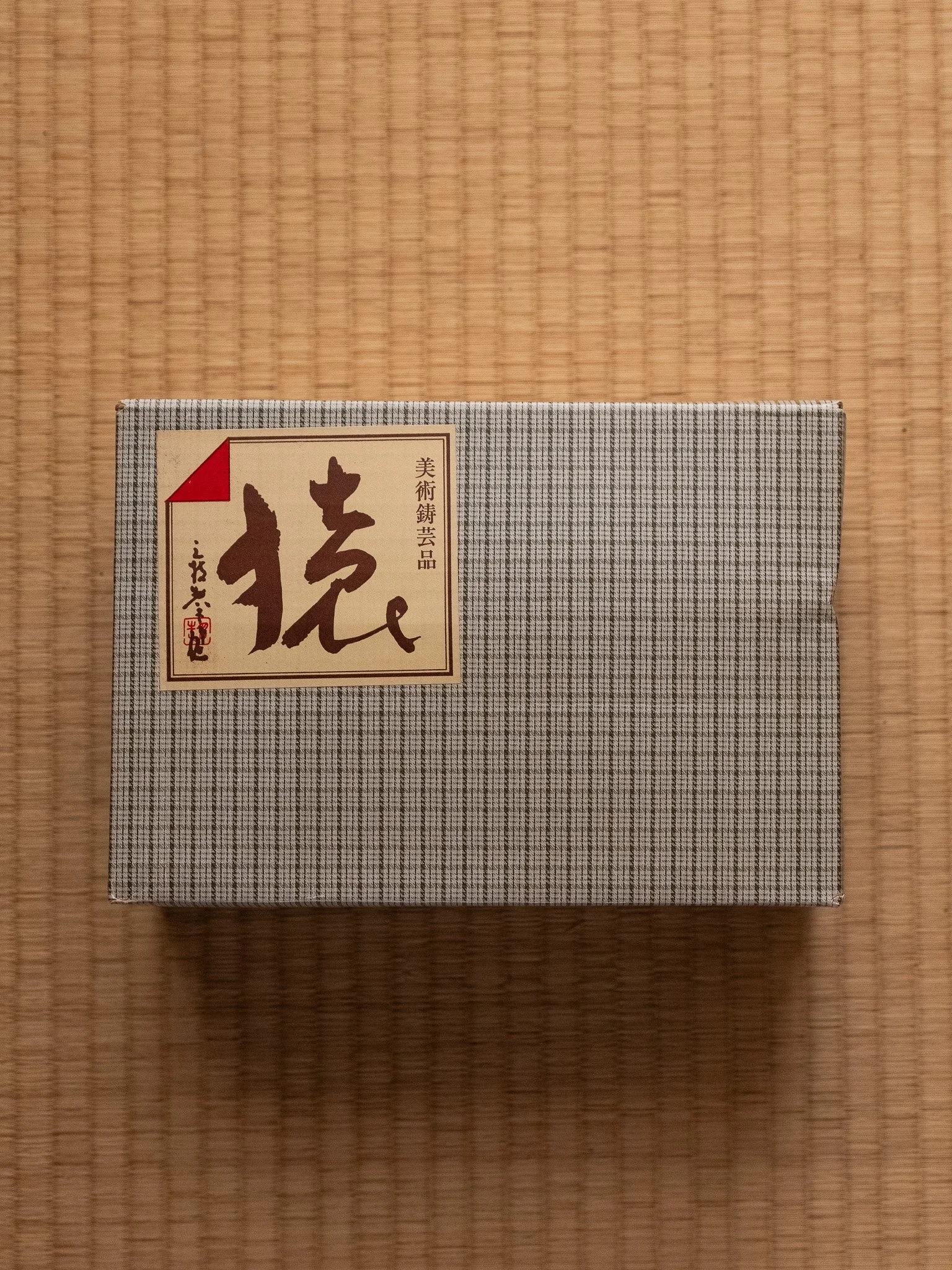 Image 6 of 7
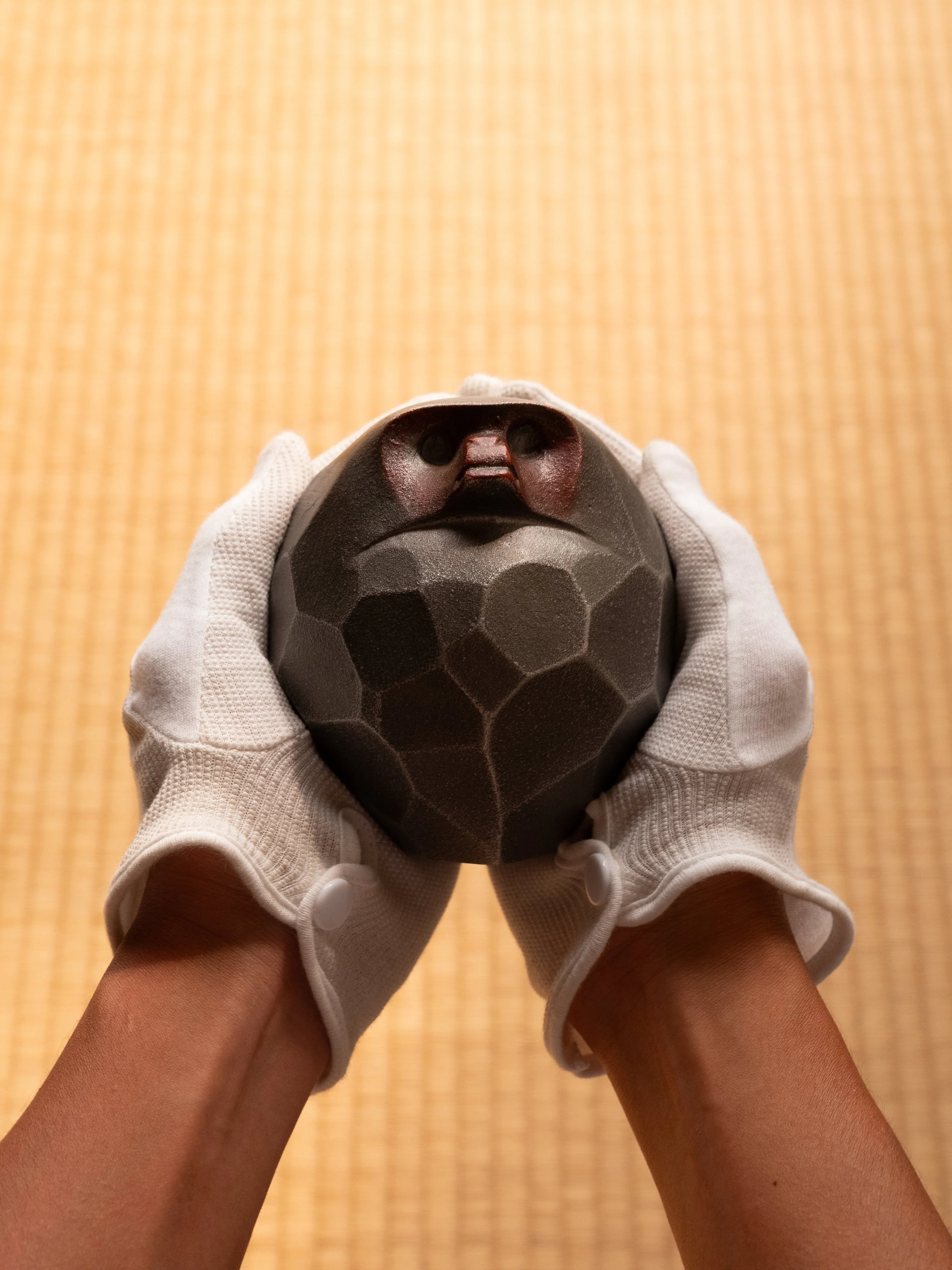 Image 7 of 7