【 The Concept 】
A boar in iron-glazed clay, caught mid-charge, the colour of amber and dark honey. The boar is the last animal of the zodiac, and it carries more than its share of meaning. Its headlong rush — chototsu-mōshin, the charge that picks a line and gives no ground — made it the emblem of nerve and decision, the animal you keep near when a year, or a venture, asks you to commit and not look back. Its meat, once eaten as medicine through hard winters, tied it to health and long life; its famous litters, to children and a family carried on. And as the twelfth and final sign, the boar was said to gather the whole cycle's fortune into itself — twelve years' luck held in one low, powerful body.
But the deeper story here is the glaze. Long before the bright enamel colours that made this region's porcelain famous, an older local tradition worked in iron — a dark "rust glaze" of earth and fire rather than painted colour, prized for exactly the qualities the boar wants: weight, warmth, and an honest, untamed surface. That is the language this piece speaks. Where GILDED BOAR renders the animal in gold, this one returns it to earth and iron — no gilding, no ornament, only clay, a rich amber-brown glaze pooled dark in a thousand incised bristles, and the mottling the kiln itself left behind. It comes, fittingly, in its own signed wood box, tied with braided cord: a piece made to be kept.
【 The Function 】
Unlike a purely decorative figure, this boar was made as a talisman — the object set out at the New Year to greet the year of the boar, and kept through it for the courage, health and increase the animal carries. It asks for a shelf, an alcove, an entryway: somewhere it can stand low and forward and be met at a glance. Hollow-bodied and lighter than its size suggests, it lifts and places easily, and settles wherever it lands with the steadiness of a thing rooted to the ground.
【 The Texture 】
Iron glaze is the whole character of the piece. A warm amber-to-chestnut skin — glossy where it pools, matte where it thins — is mottled all over with darker iron speckles the kiln drew out in the firing, no two areas quite the same. Across the body run countless fine incised lines, the boar's bristling coat, and the dark glaze gathers in each cut so the hide reads as depth rather than drawing. At the snout and the tips of the feet the bare clay shows through, pale and warm, the honest edge of an object made of earth. Nothing about it is uniform, and that is the point: this is a surface the fire helped make.
【 Presence 】
Low, forward-set and solid to the eye, it holds a space with quiet gravity — an animal about to move, frozen in warm brown. The iron glaze reads as old and earthen, at ease in a traditional alcove and just as at home on a plain modern shelf against pale wood. With its signed box beside it, it carries the quiet authority of a kept thing — a zodiac charm that is also, plainly, a piece of studio ceramics.
Sourced from a private collection in Japan. Includes the original signed wood box (tomobako), tied with a traditional braided cord.
【 The Concept 】
A boar in iron-glazed clay, caught mid-charge, the colour of amber and dark honey. The boar is the last animal of the zodiac, and it carries more than its share of meaning. Its headlong rush — chototsu-mōshin, the charge that picks a line and gives no ground — made it the emblem of nerve and decision, the animal you keep near when a year, or a venture, asks you to commit and not look back. Its meat, once eaten as medicine through hard winters, tied it to health and long life; its famous litters, to children and a family carried on. And as the twelfth and final sign, the boar was said to gather the whole cycle's fortune into itself — twelve years' luck held in one low, powerful body.
But the deeper story here is the glaze. Long before the bright enamel colours that made this region's porcelain famous, an older local tradition worked in iron — a dark "rust glaze" of earth and fire rather than painted colour, prized for exactly the qualities the boar wants: weight, warmth, and an honest, untamed surface. That is the language this piece speaks. Where GILDED BOAR renders the animal in gold, this one returns it to earth and iron — no gilding, no ornament, only clay, a rich amber-brown glaze pooled dark in a thousand incised bristles, and the mottling the kiln itself left behind. It comes, fittingly, in its own signed wood box, tied with braided cord: a piece made to be kept.
【 The Function 】
Unlike a purely decorative figure, this boar was made as a talisman — the object set out at the New Year to greet the year of the boar, and kept through it for the courage, health and increase the animal carries. It asks for a shelf, an alcove, an entryway: somewhere it can stand low and forward and be met at a glance. Hollow-bodied and lighter than its size suggests, it lifts and places easily, and settles wherever it lands with the steadiness of a thing rooted to the ground.
【 The Texture 】
Iron glaze is the whole character of the piece. A warm amber-to-chestnut skin — glossy where it pools, matte where it thins — is mottled all over with darker iron speckles the kiln drew out in the firing, no two areas quite the same. Across the body run countless fine incised lines, the boar's bristling coat, and the dark glaze gathers in each cut so the hide reads as depth rather than drawing. At the snout and the tips of the feet the bare clay shows through, pale and warm, the honest edge of an object made of earth. Nothing about it is uniform, and that is the point: this is a surface the fire helped make.
【 Presence 】
Low, forward-set and solid to the eye, it holds a space with quiet gravity — an animal about to move, frozen in warm brown. The iron glaze reads as old and earthen, at ease in a traditional alcove and just as at home on a plain modern shelf against pale wood. With its signed box beside it, it carries the quiet authority of a kept thing — a zodiac charm that is also, plainly, a piece of studio ceramics.
Sourced from a private collection in Japan. Includes the original signed wood box (tomobako), tied with a traditional braided cord.


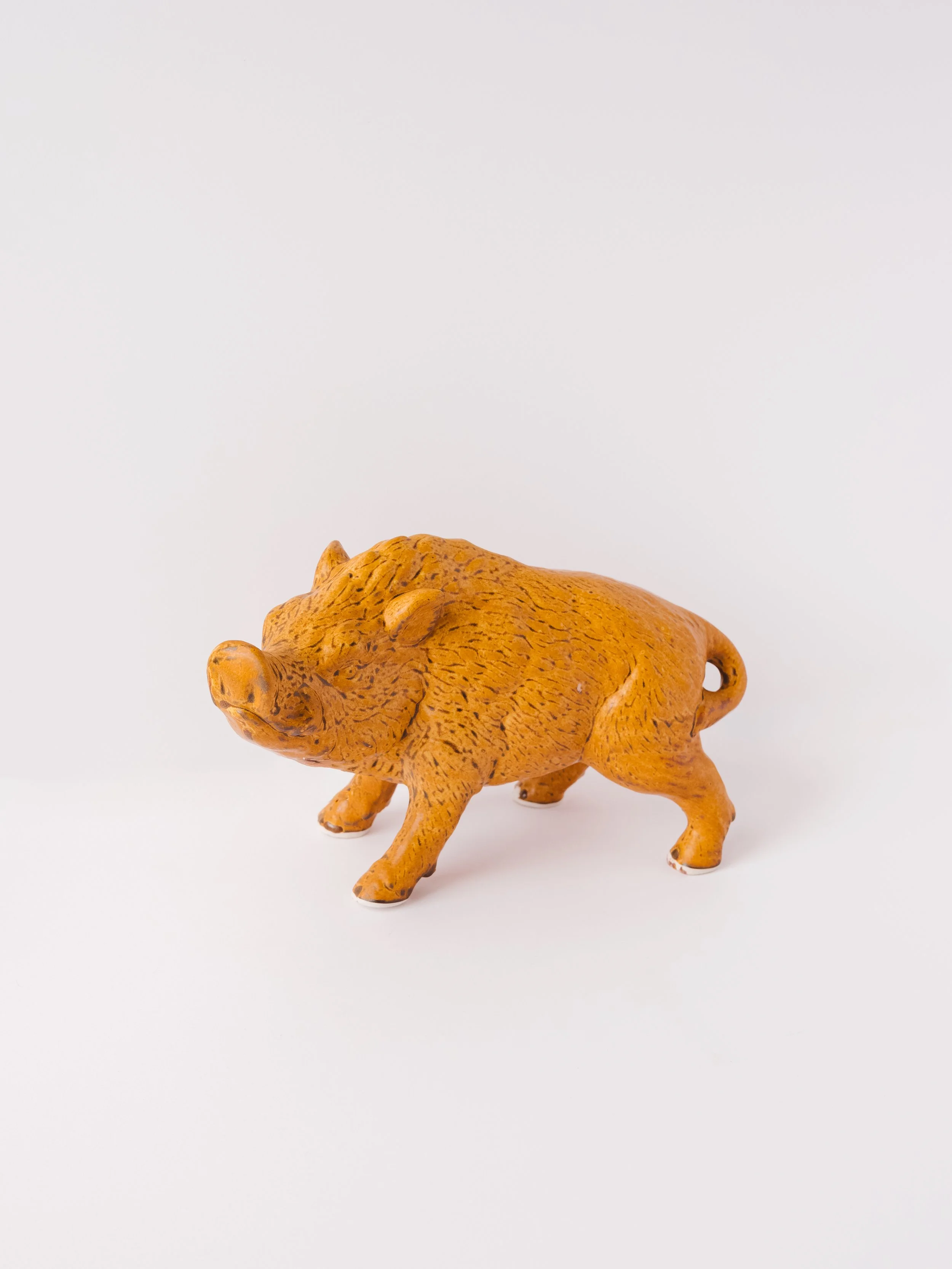 Image 1 of 12
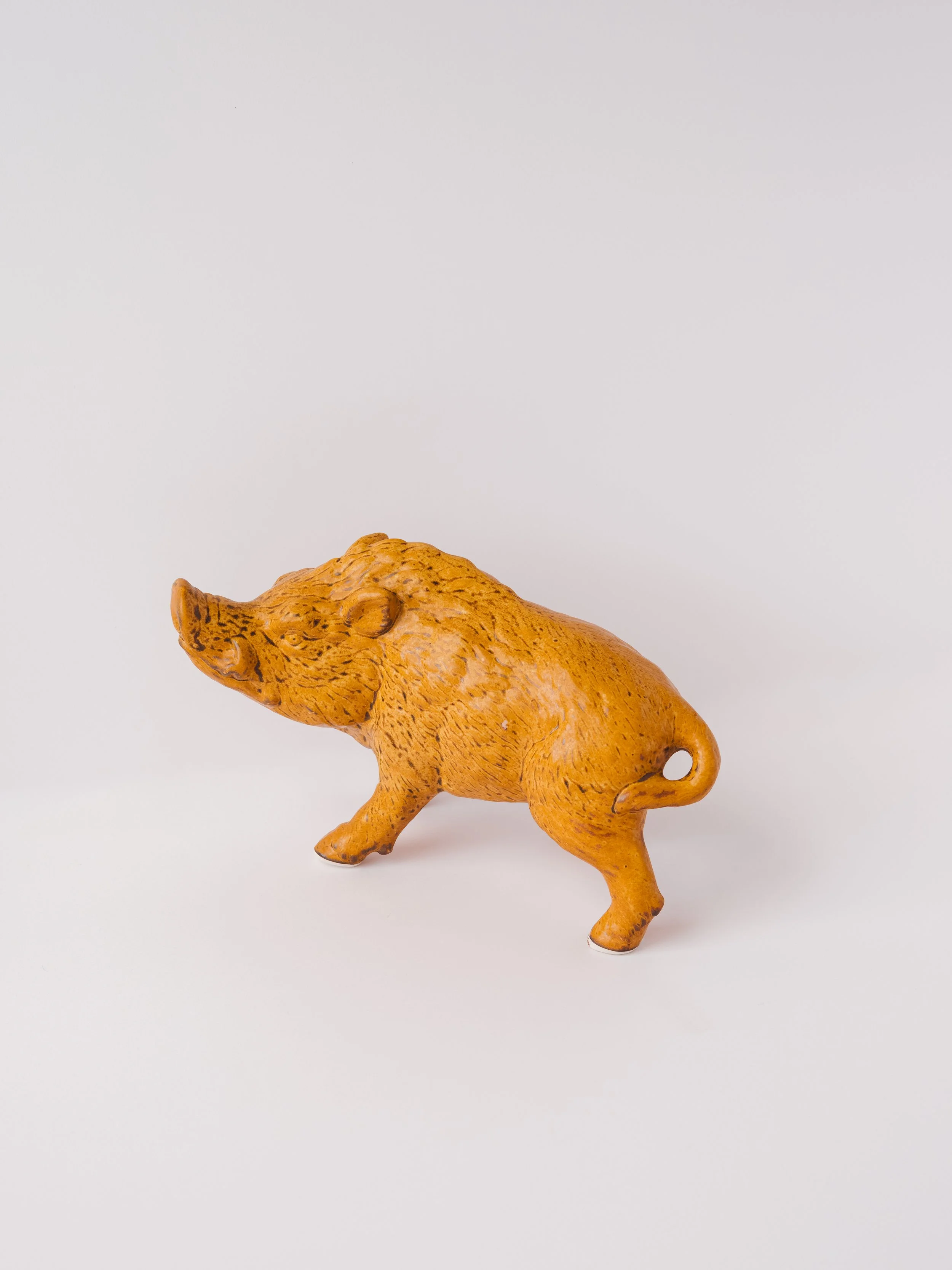 Image 2 of 12
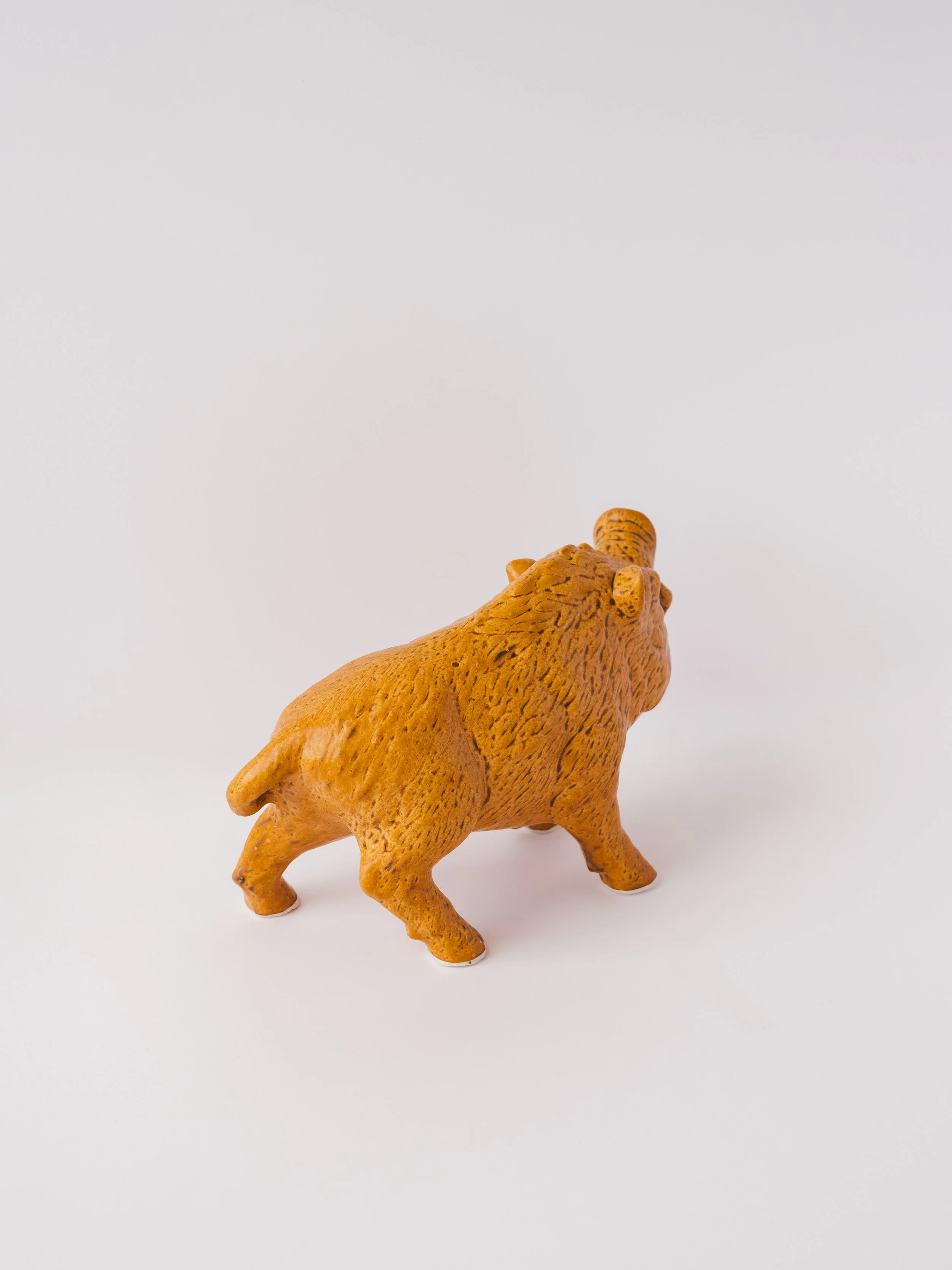 Image 3 of 12
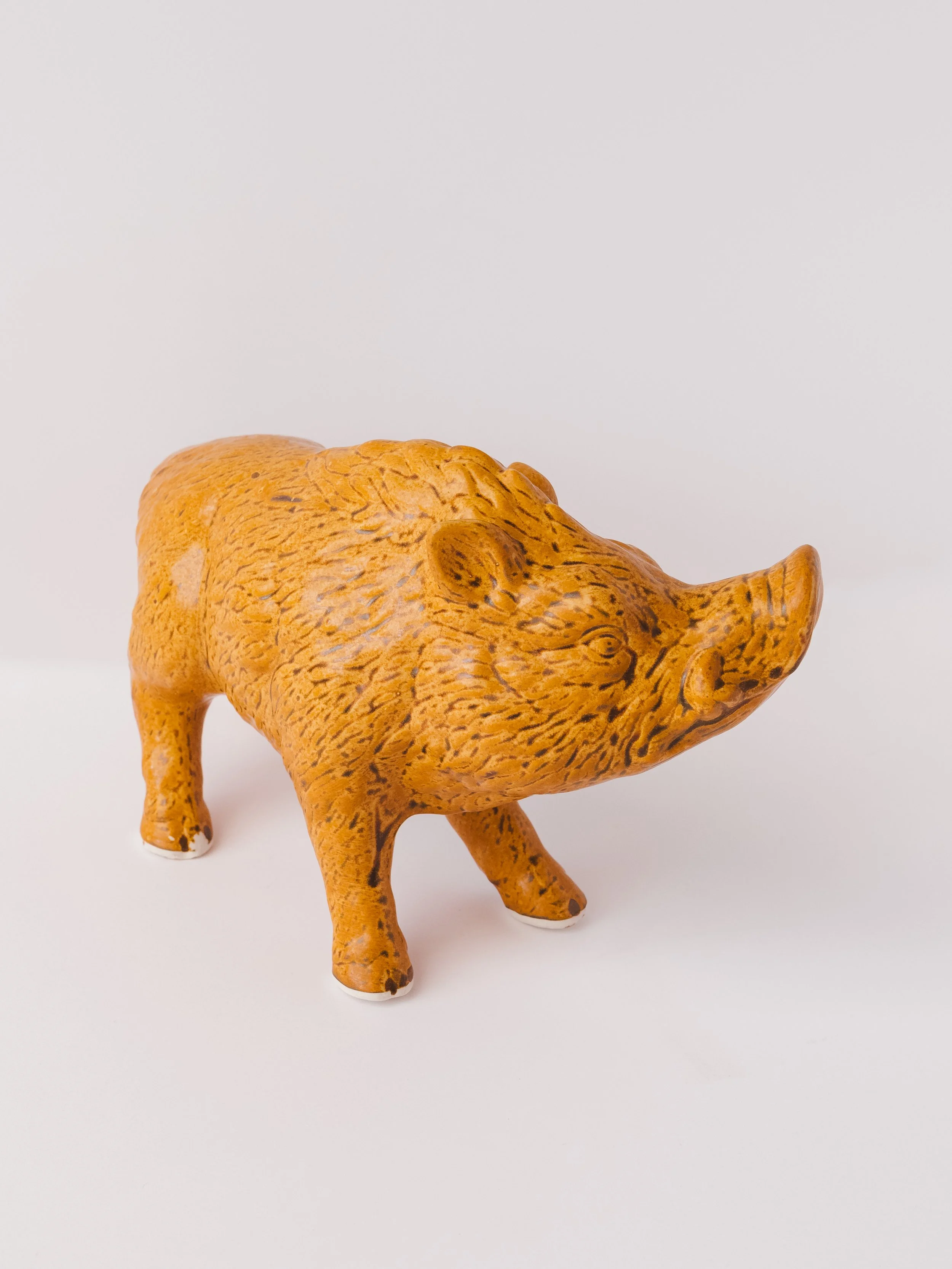 Image 4 of 12
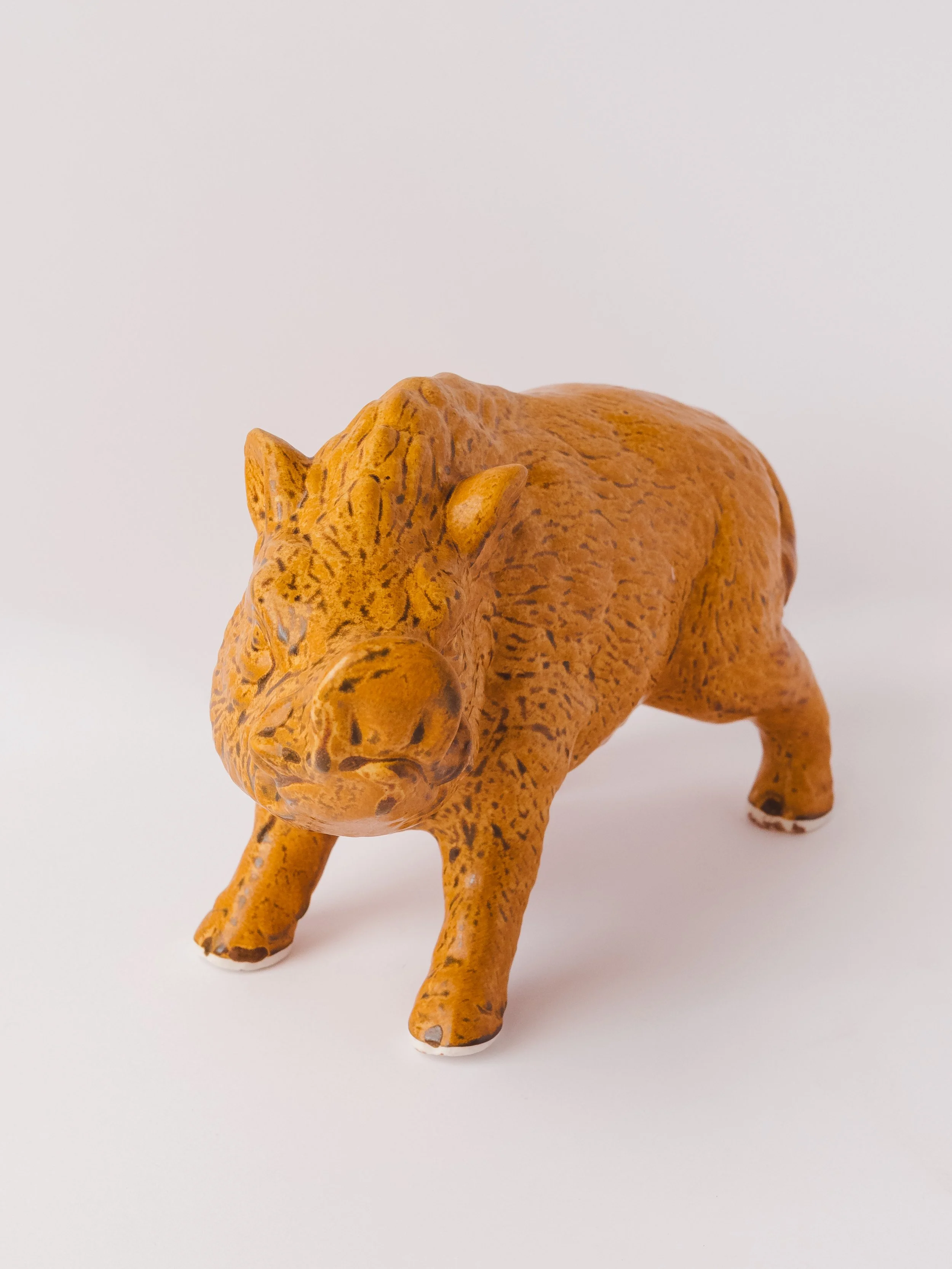 Image 5 of 12
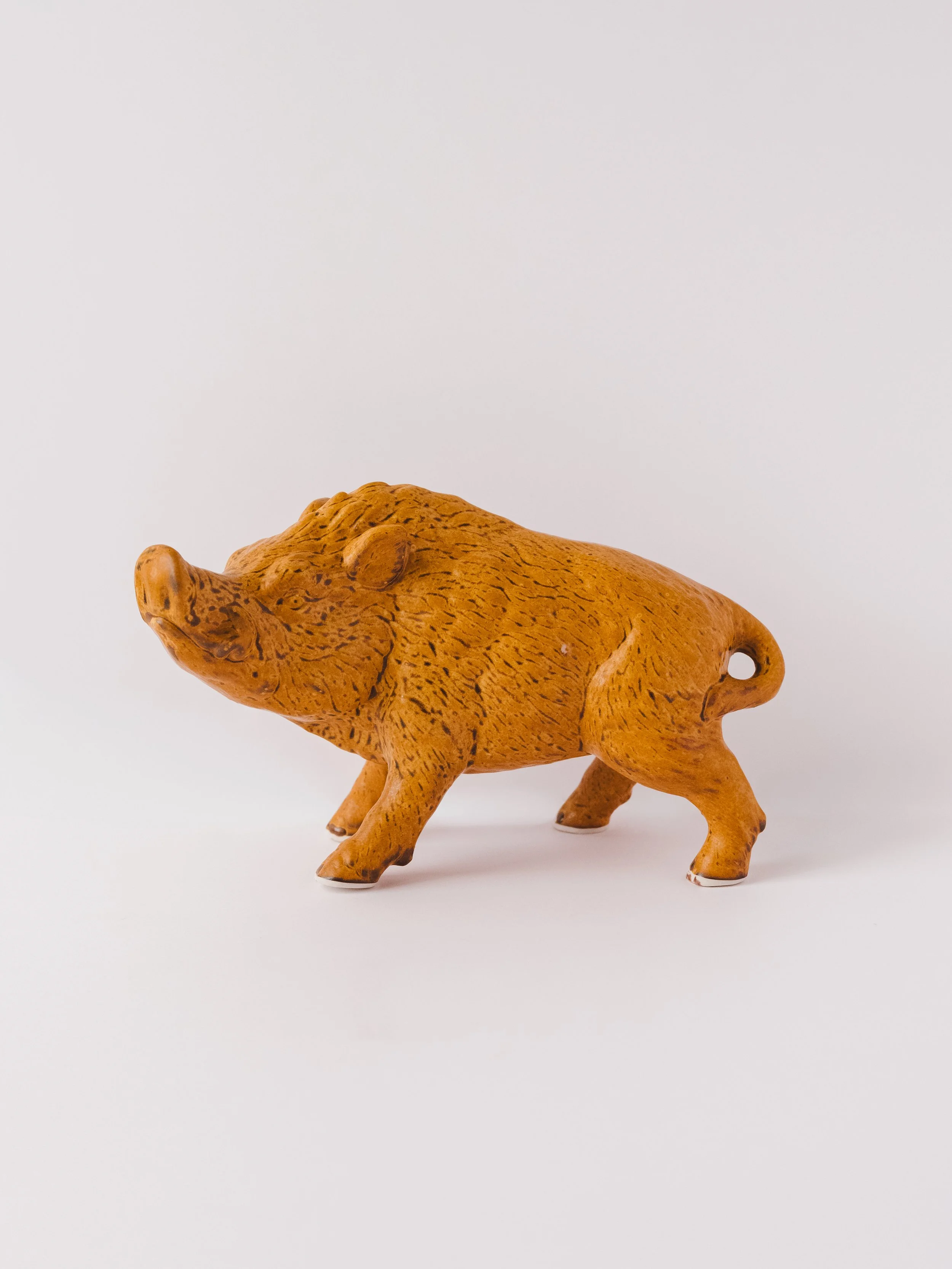 Image 6 of 12
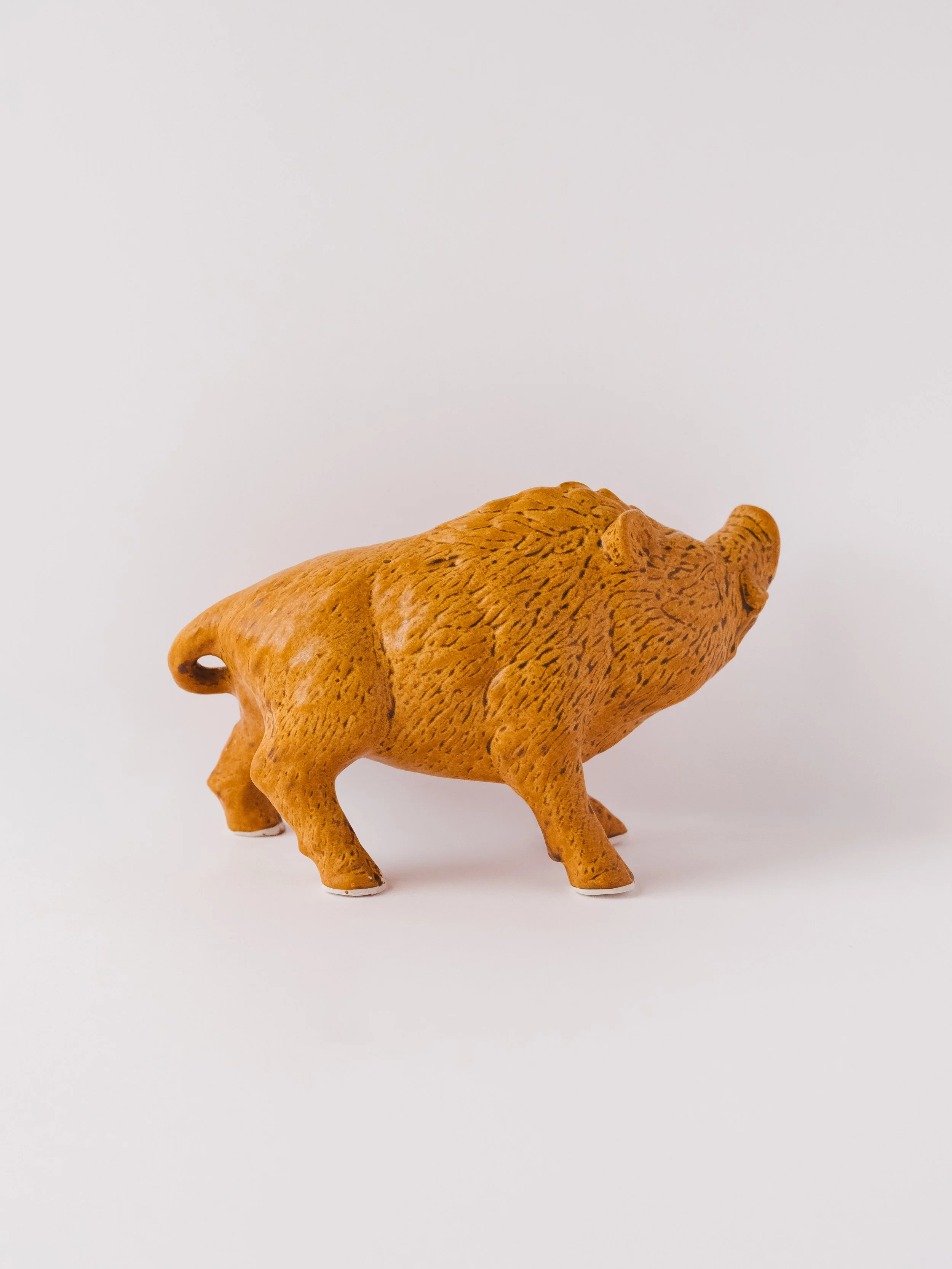 Image 7 of 12
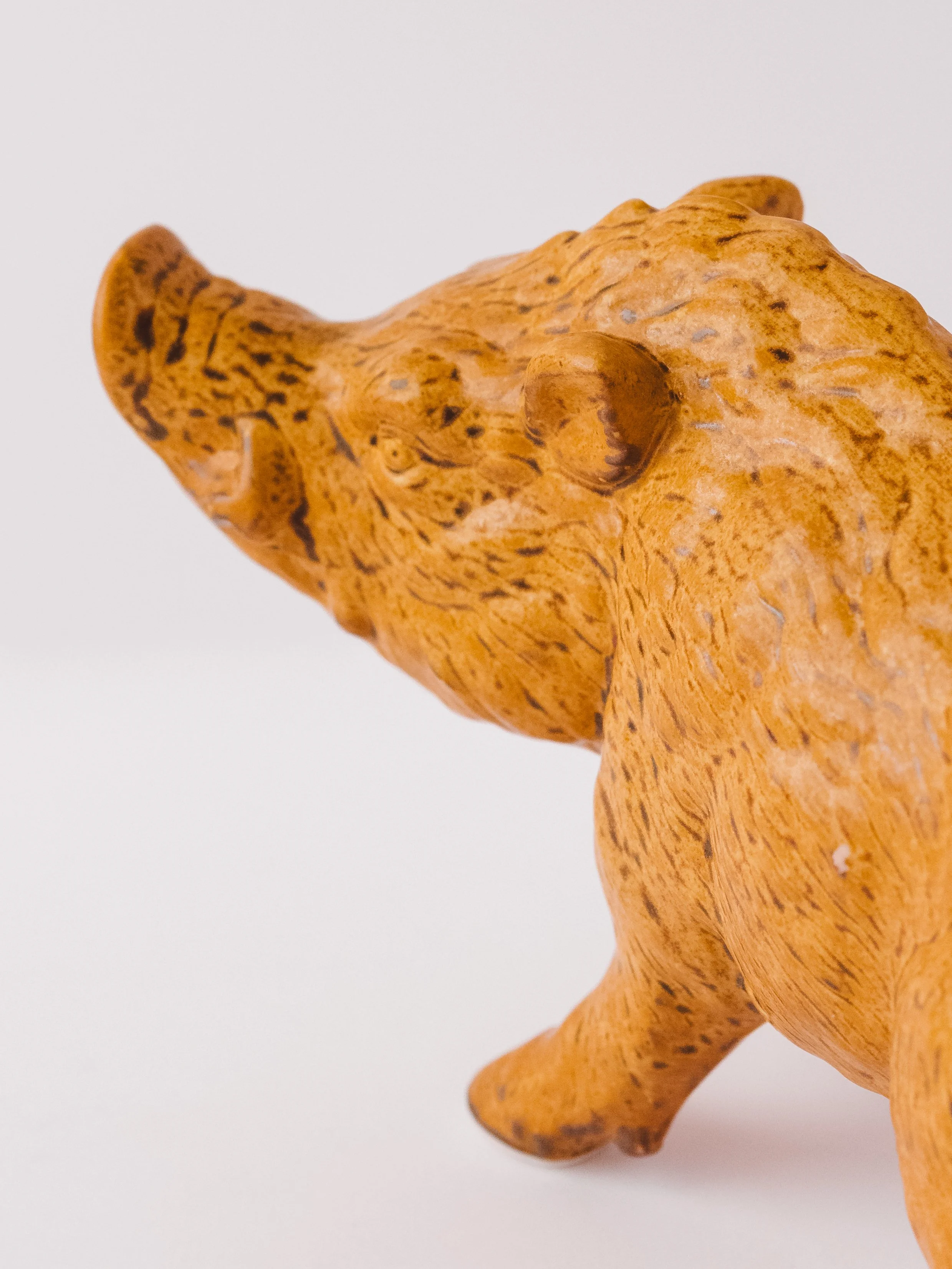 Image 8 of 12
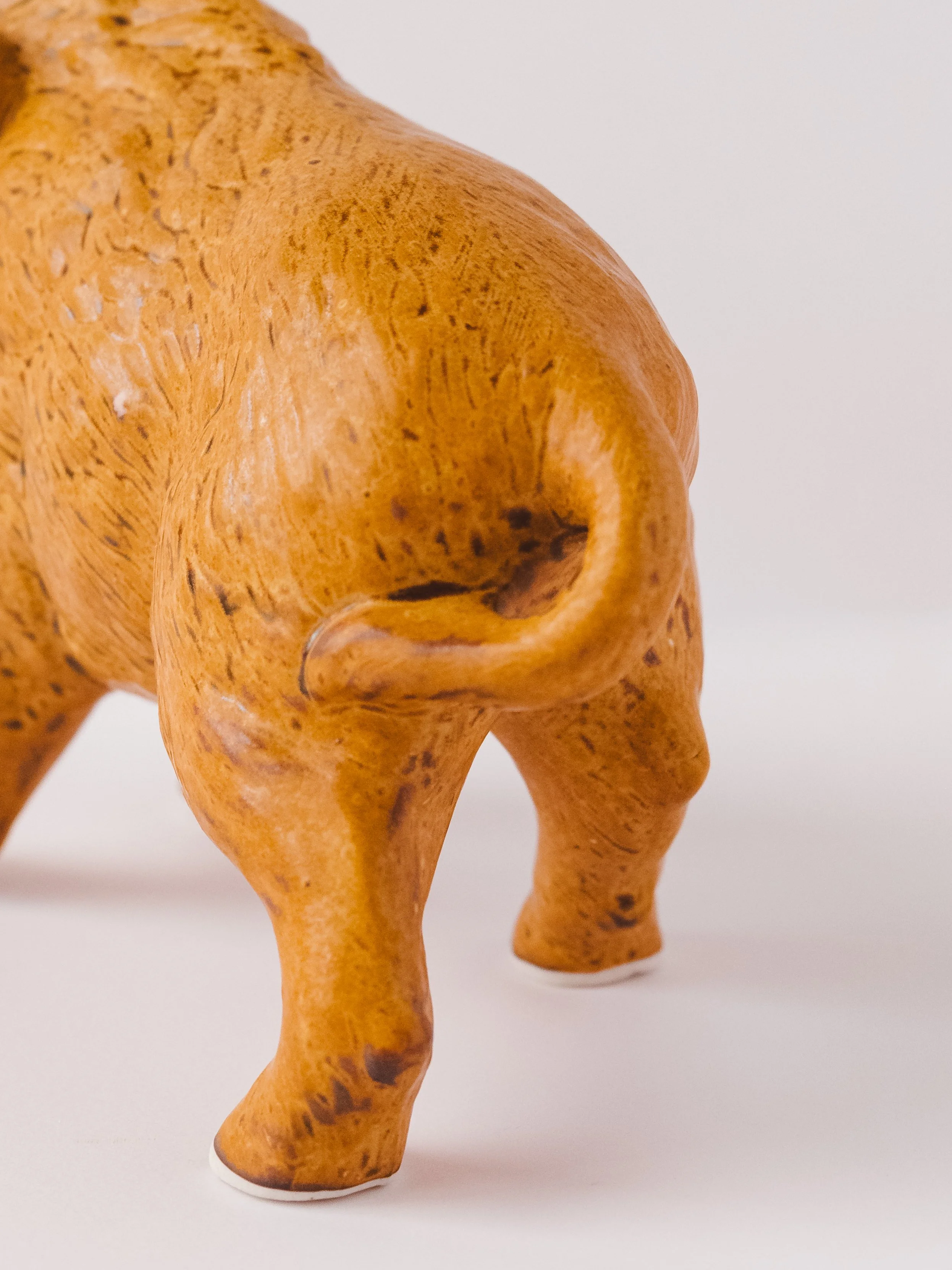 Image 9 of 12
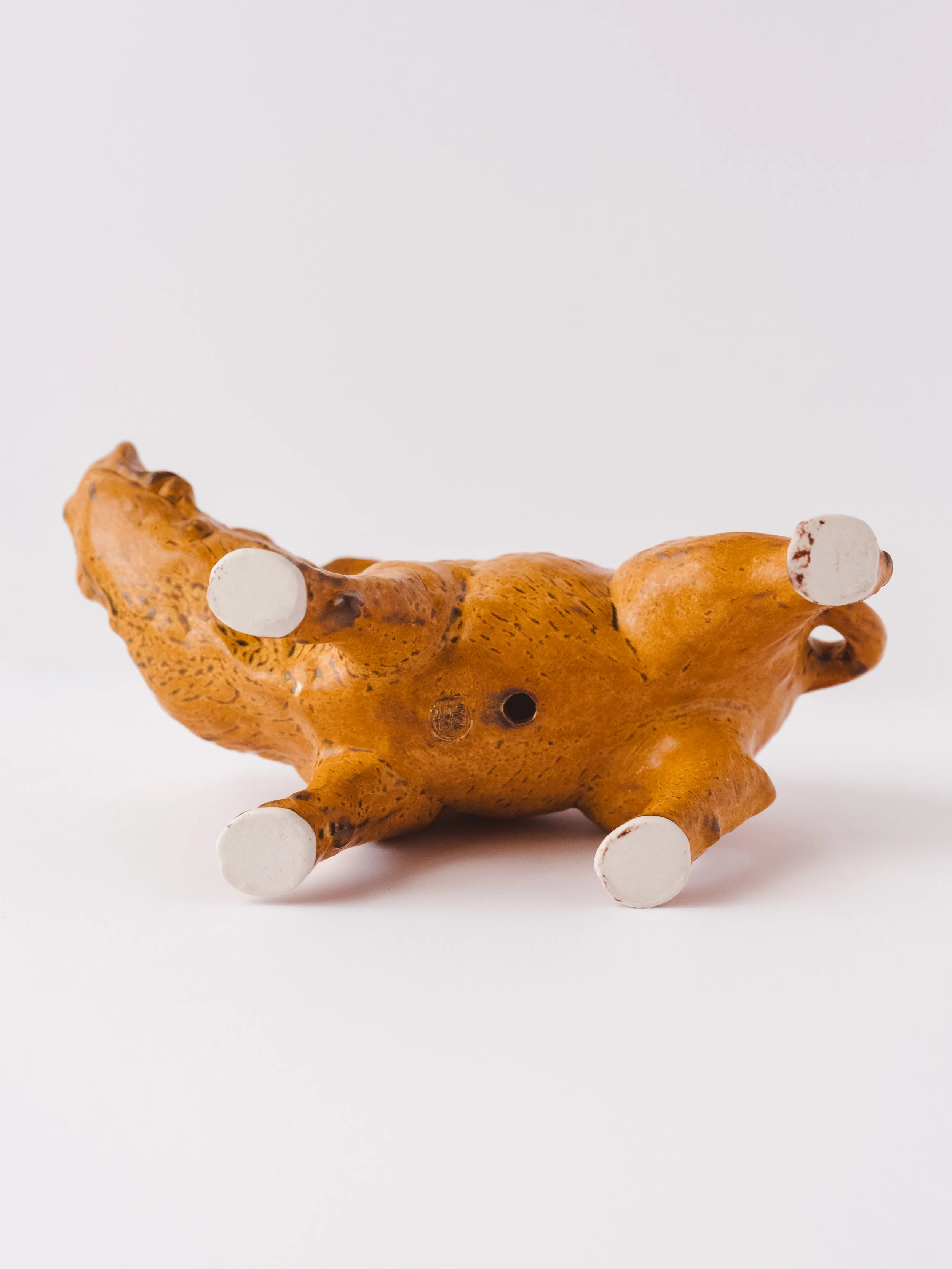 Image 10 of 12
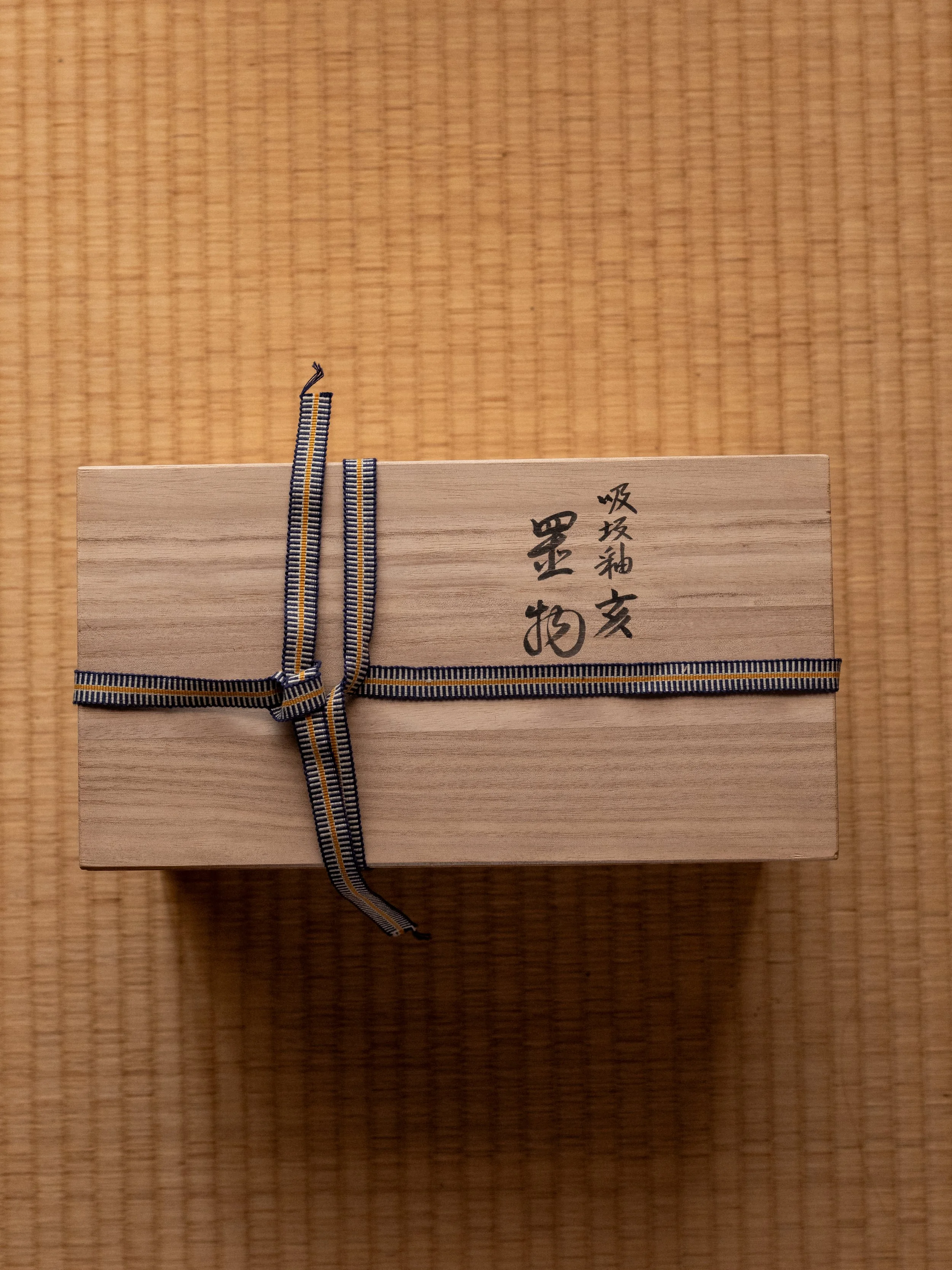 Image 11 of 12
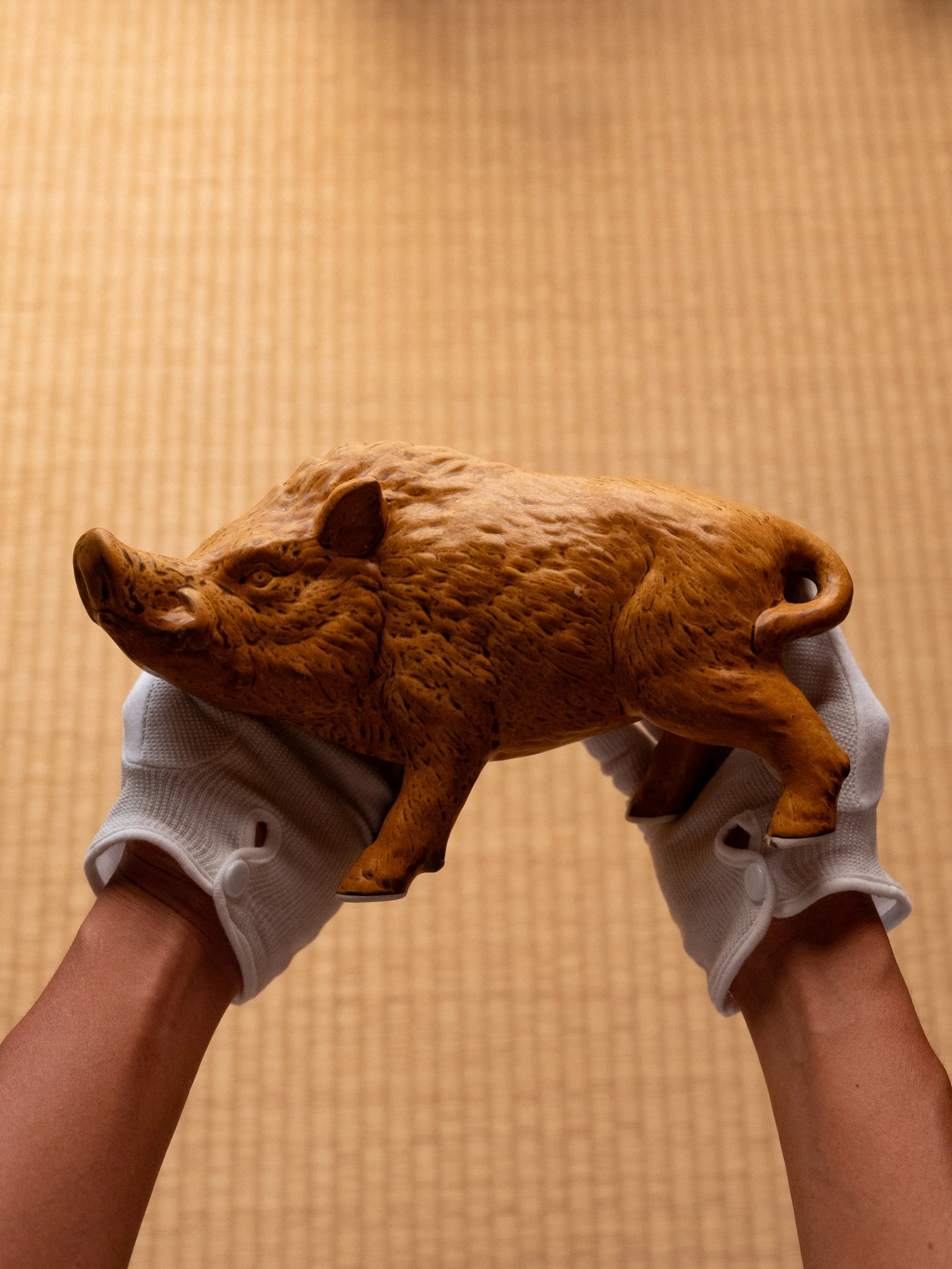 Image 12 of 12