【 The Concept 】
A peacock carved from a single water-buffalo horn. The natural shape of the horn becomes the bird: the narrow tip is drawn out into the raised head and long neck, and the broad, heavy base swells into the body and the sweep of the folded tail. Nothing about the pose fights the material — the animal seems to have been found inside the horn rather than imposed on it, head lifted, beak slightly open, looking upward.
The carving reads in a single amber-to-black gradient that the horn provides on its own. The head, neck, and upper body are a warm, translucent caramel, shot through with the fine natural striations of the horn; toward the base and the wing the material deepens through smoke-grey to near-black, giving the lower body weight and shadow. A tall fan-shaped crest stands up from the crown of the head on a slender stem — a separate, removable piece, its thin translucent horn glowing amber when the light passes through it, like a wafer of spun-sugar candy — and a single red bead is set into each eye, the one bright accent on an otherwise monochrome object.
【 The Function 】
A decorative carving for a shelf, cabinet, or alcove — an auspicious bird in an auspicious material. At twenty-eight centimetres tall on its turned wooden base it has real vertical presence, and the removable crest lets it be packed flat and displayed at full height.
【 The Texture 】
Glass-smooth where the horn is polished, so that light slides across the caramel and pools in the black — and yet not perfectly slick: run a finger along it and you meet a field of fine, vertical, fibre-like grooves running the length of the piece, the natural grain of the horn itself, a faint, ridged texture under the polish that gives the surface its curious, unmistakably organic feel. Against that polish, the plumage is worked in dense, fine incised lines — hair-fine hatching for the soft neck feathers, deeper cuts for the folded wing — and the tail's eye-spots are carved as teardrop outlines and darkened, standing out against the pale ground. The scaled legs and gripping claws are cut in low relief at the front of the body.
【 Presence 】
Upright and elegant. The long S-curve of the neck, the lifted head, and the single vertical crest carry the eye upward, while the dark, heavy base holds it steady. It is a quiet object that turns out to be full of detail — the kind of piece that rewards being picked up and turned under a light.
Provenance Note: Sourced from a private collection in Japan.
Care Note: Natural horn is an organic material. Keep it out of direct sun, strong heat, and very dry air; an occasional wipe with a little oil on a soft cloth keeps the surface from drying. The crest is removable — lift it straight out and store it safely when packing.
【 The Concept 】
A peacock carved from a single water-buffalo horn. The natural shape of the horn becomes the bird: the narrow tip is drawn out into the raised head and long neck, and the broad, heavy base swells into the body and the sweep of the folded tail. Nothing about the pose fights the material — the animal seems to have been found inside the horn rather than imposed on it, head lifted, beak slightly open, looking upward.
The carving reads in a single amber-to-black gradient that the horn provides on its own. The head, neck, and upper body are a warm, translucent caramel, shot through with the fine natural striations of the horn; toward the base and the wing the material deepens through smoke-grey to near-black, giving the lower body weight and shadow. A tall fan-shaped crest stands up from the crown of the head on a slender stem — a separate, removable piece, its thin translucent horn glowing amber when the light passes through it, like a wafer of spun-sugar candy — and a single red bead is set into each eye, the one bright accent on an otherwise monochrome object.
【 The Function 】
A decorative carving for a shelf, cabinet, or alcove — an auspicious bird in an auspicious material. At twenty-eight centimetres tall on its turned wooden base it has real vertical presence, and the removable crest lets it be packed flat and displayed at full height.
【 The Texture 】
Glass-smooth where the horn is polished, so that light slides across the caramel and pools in the black — and yet not perfectly slick: run a finger along it and you meet a field of fine, vertical, fibre-like grooves running the length of the piece, the natural grain of the horn itself, a faint, ridged texture under the polish that gives the surface its curious, unmistakably organic feel. Against that polish, the plumage is worked in dense, fine incised lines — hair-fine hatching for the soft neck feathers, deeper cuts for the folded wing — and the tail's eye-spots are carved as teardrop outlines and darkened, standing out against the pale ground. The scaled legs and gripping claws are cut in low relief at the front of the body.
【 Presence 】
Upright and elegant. The long S-curve of the neck, the lifted head, and the single vertical crest carry the eye upward, while the dark, heavy base holds it steady. It is a quiet object that turns out to be full of detail — the kind of piece that rewards being picked up and turned under a light.
Provenance Note: Sourced from a private collection in Japan.
Care Note: Natural horn is an organic material. Keep it out of direct sun, strong heat, and very dry air; an occasional wipe with a little oil on a soft cloth keeps the surface from drying. The crest is removable — lift it straight out and store it safely when packing.


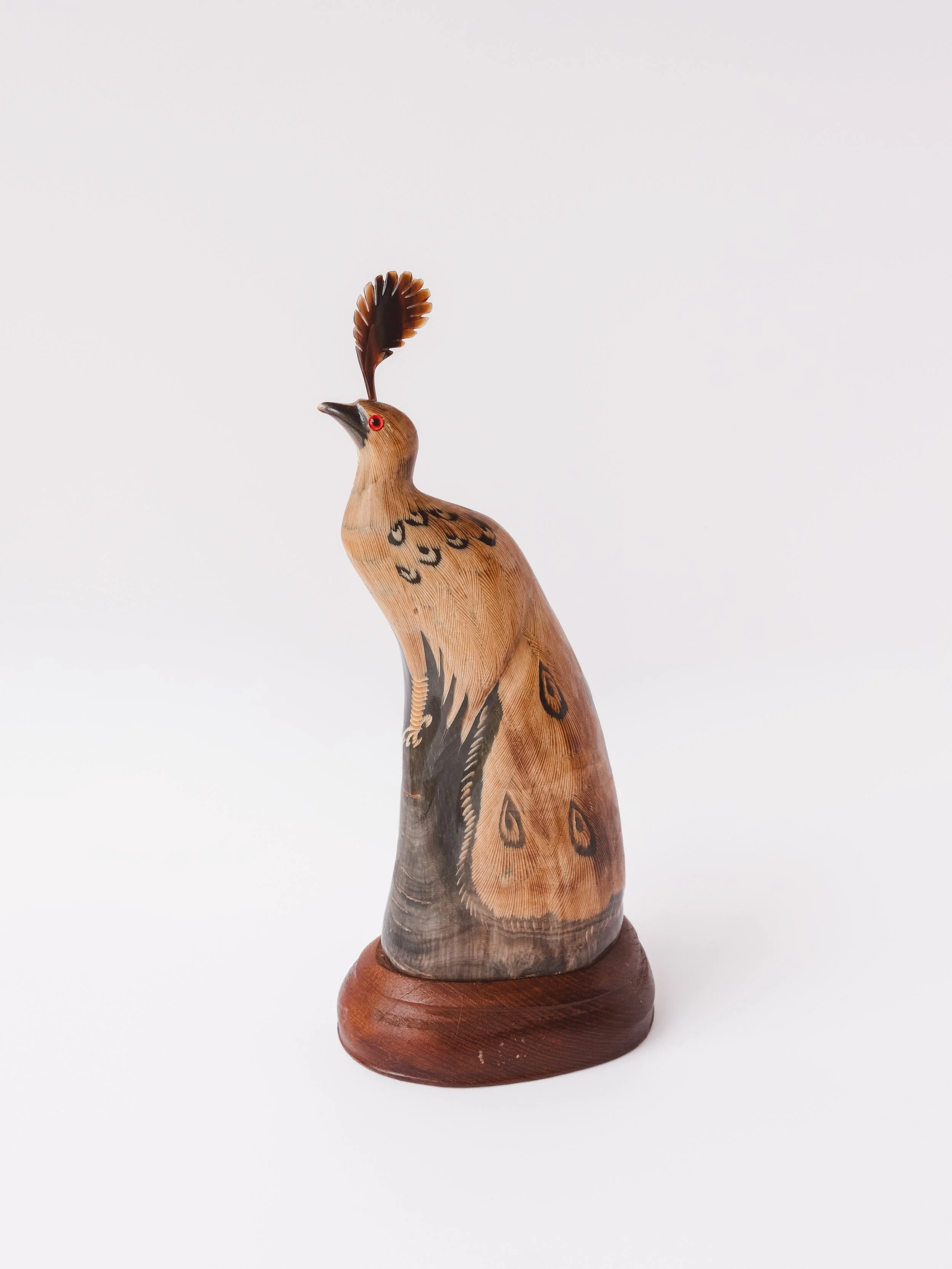 Image 1 of 14
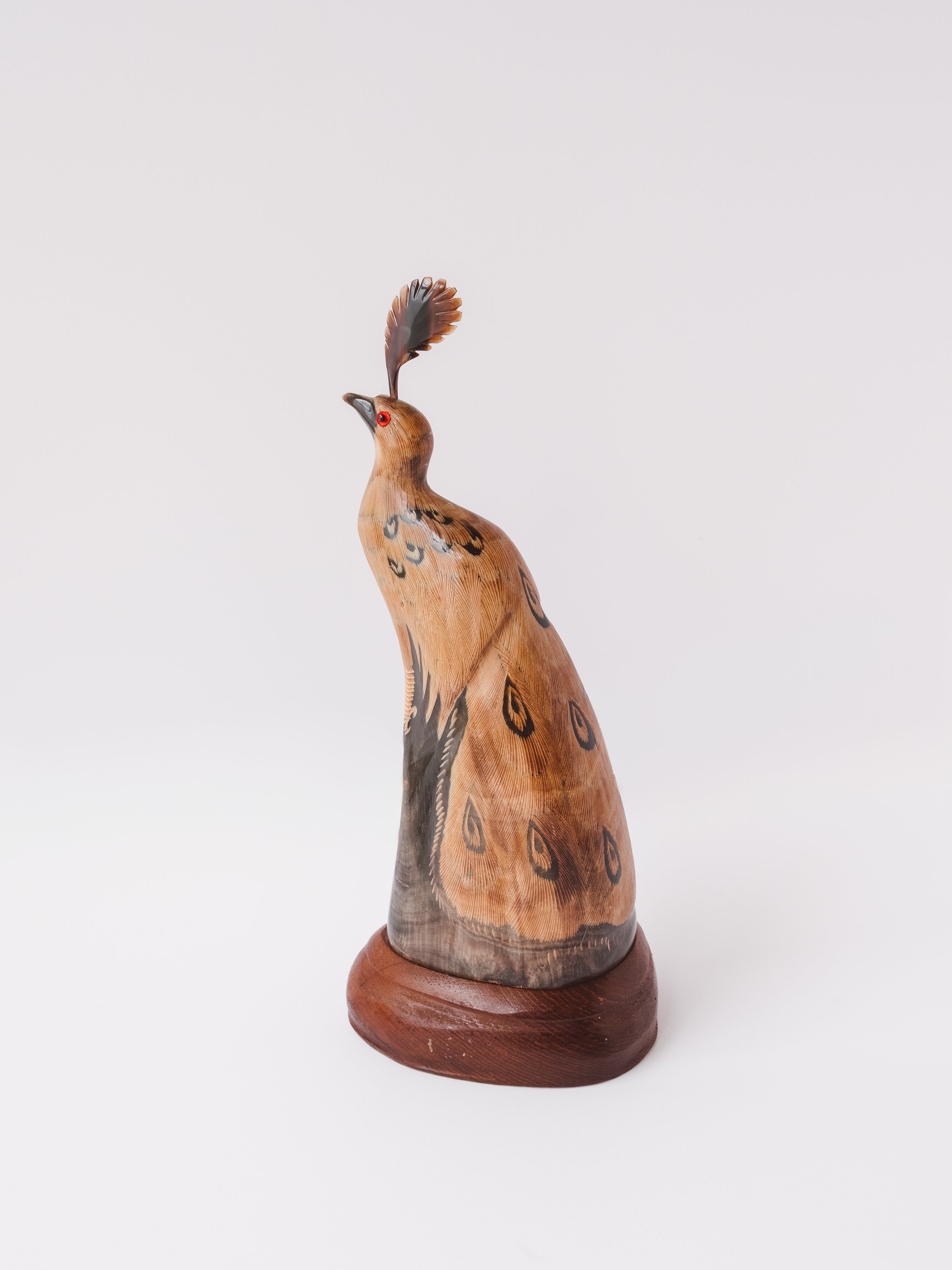 Image 2 of 14
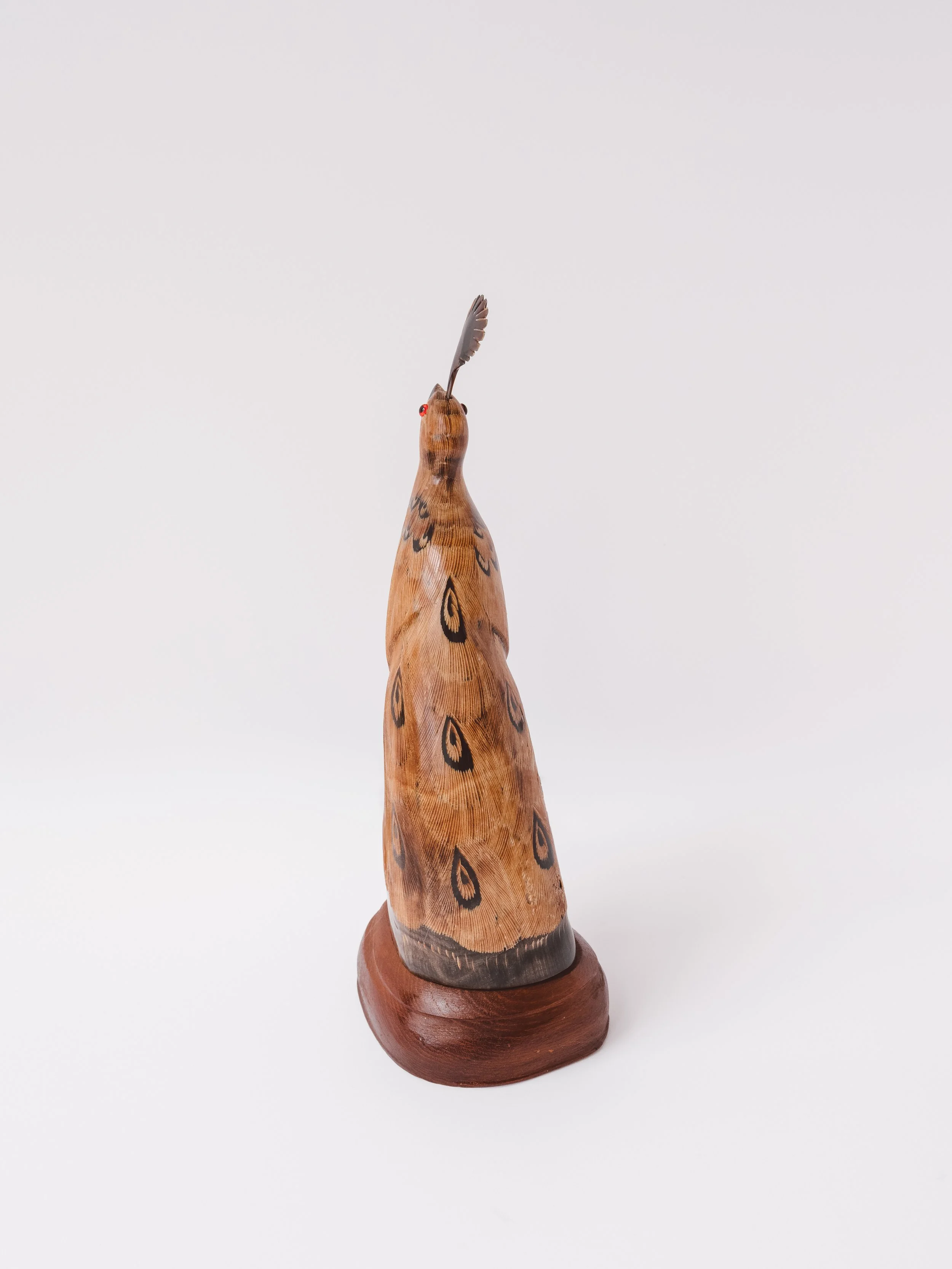 Image 3 of 14
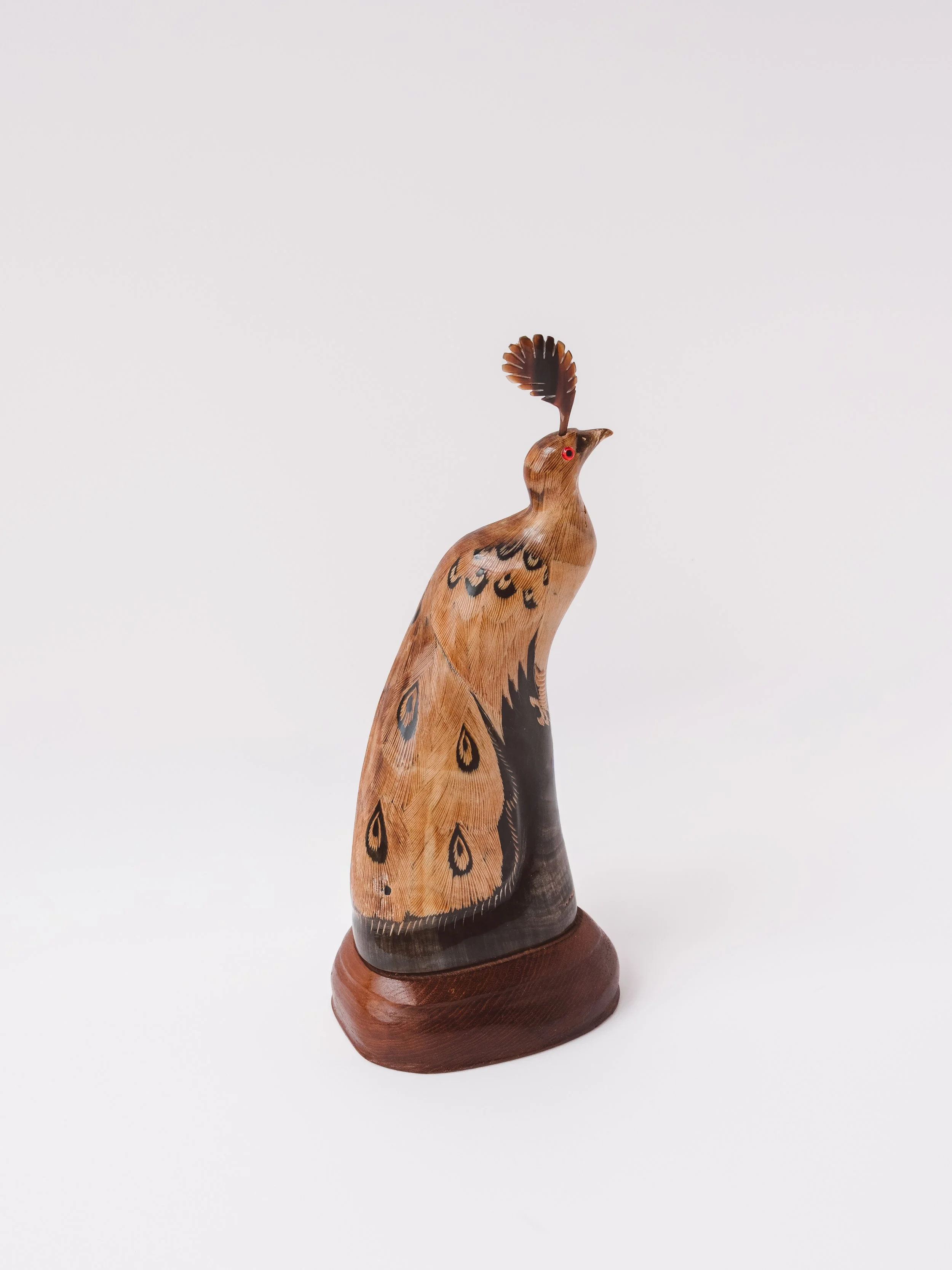 Image 4 of 14
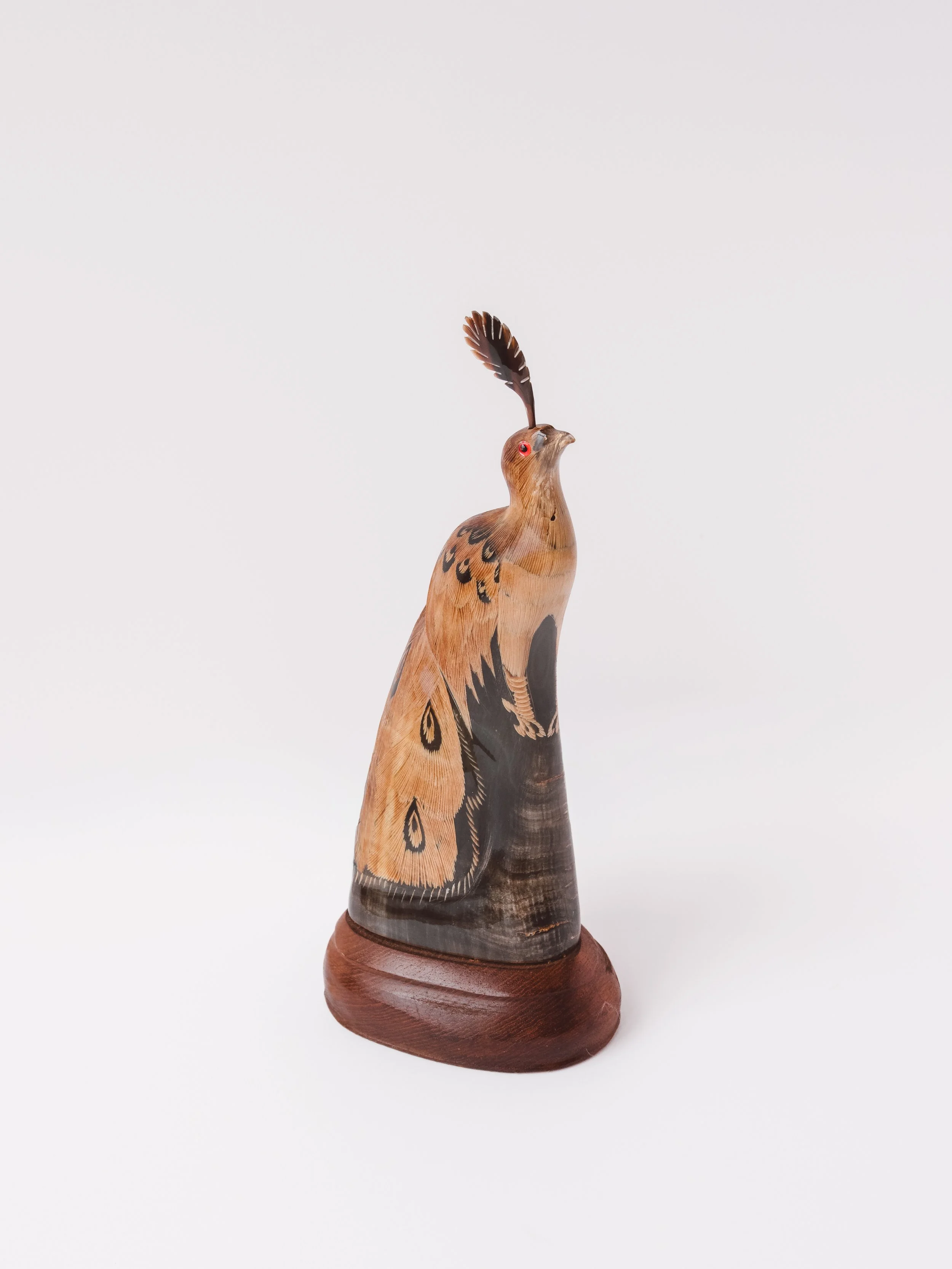 Image 5 of 14
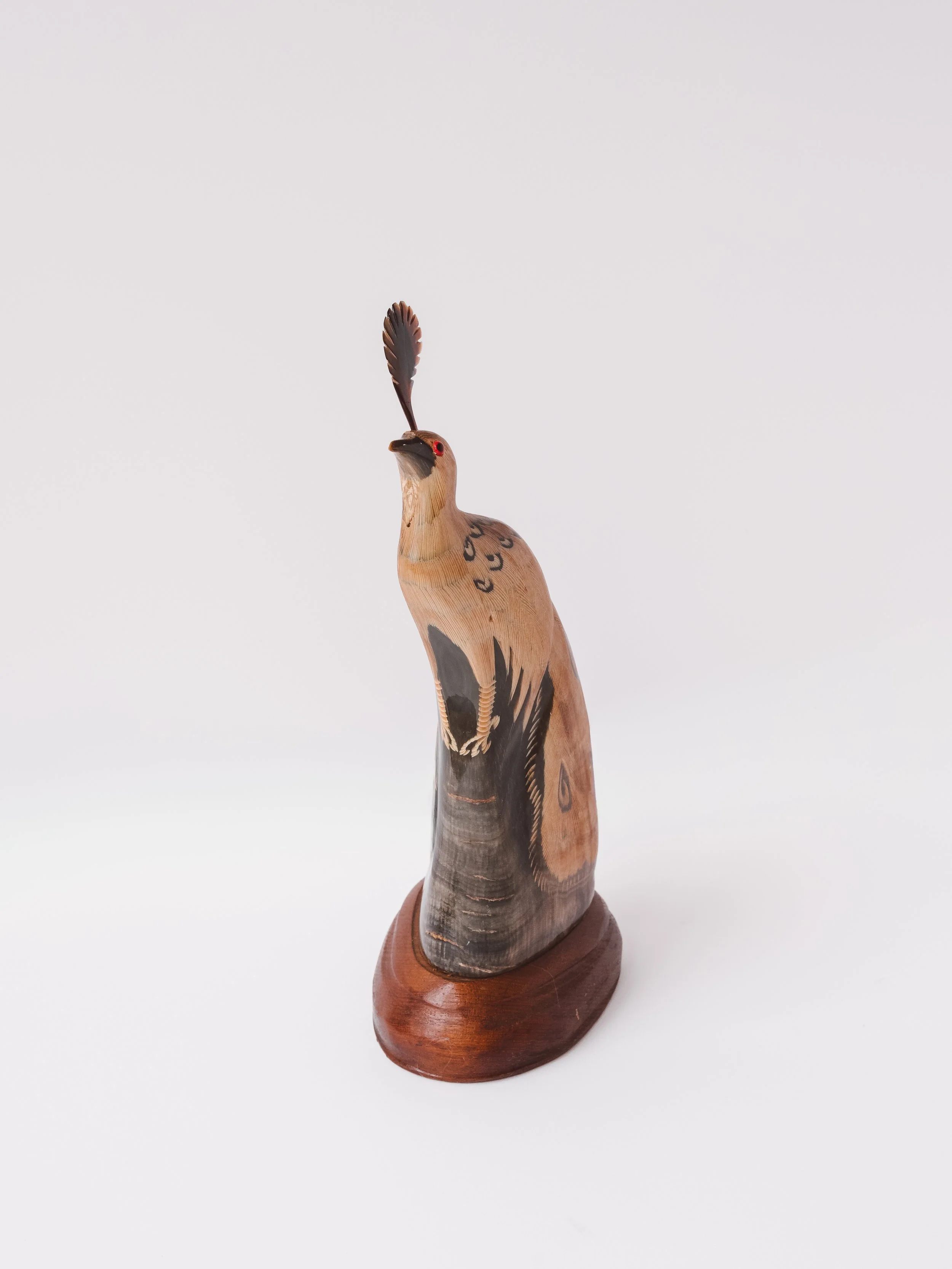 Image 6 of 14
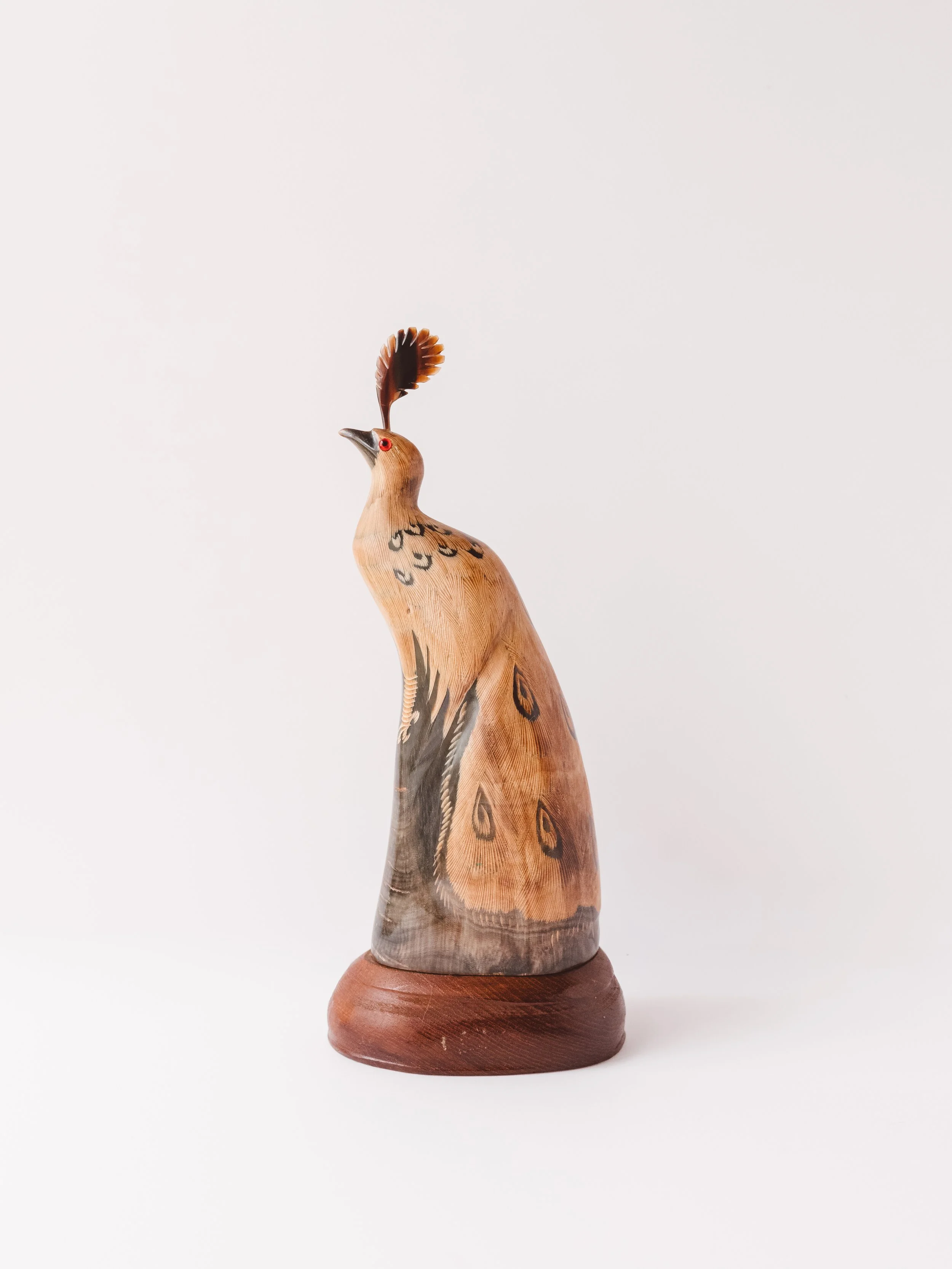 Image 7 of 14
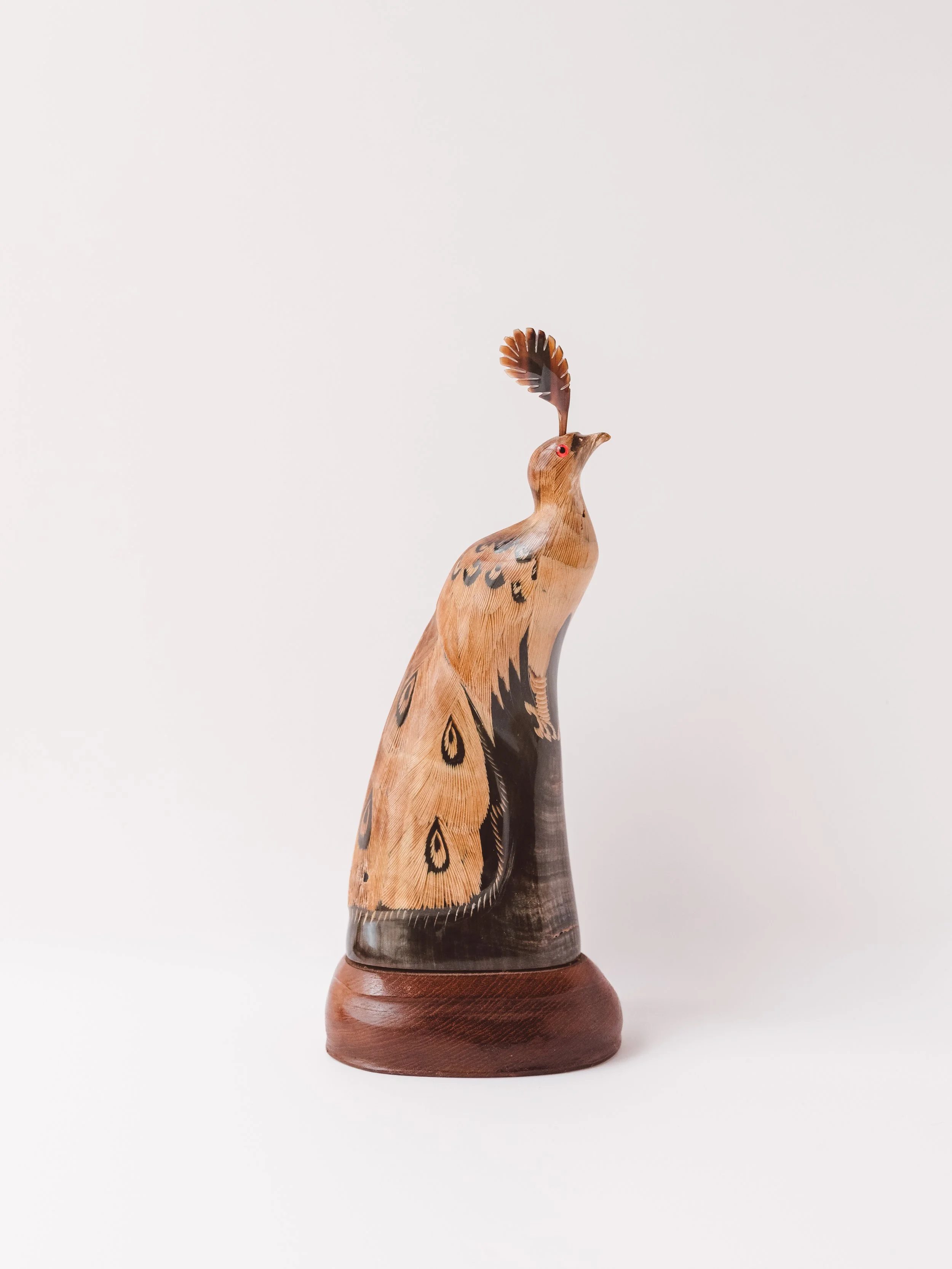 Image 8 of 14
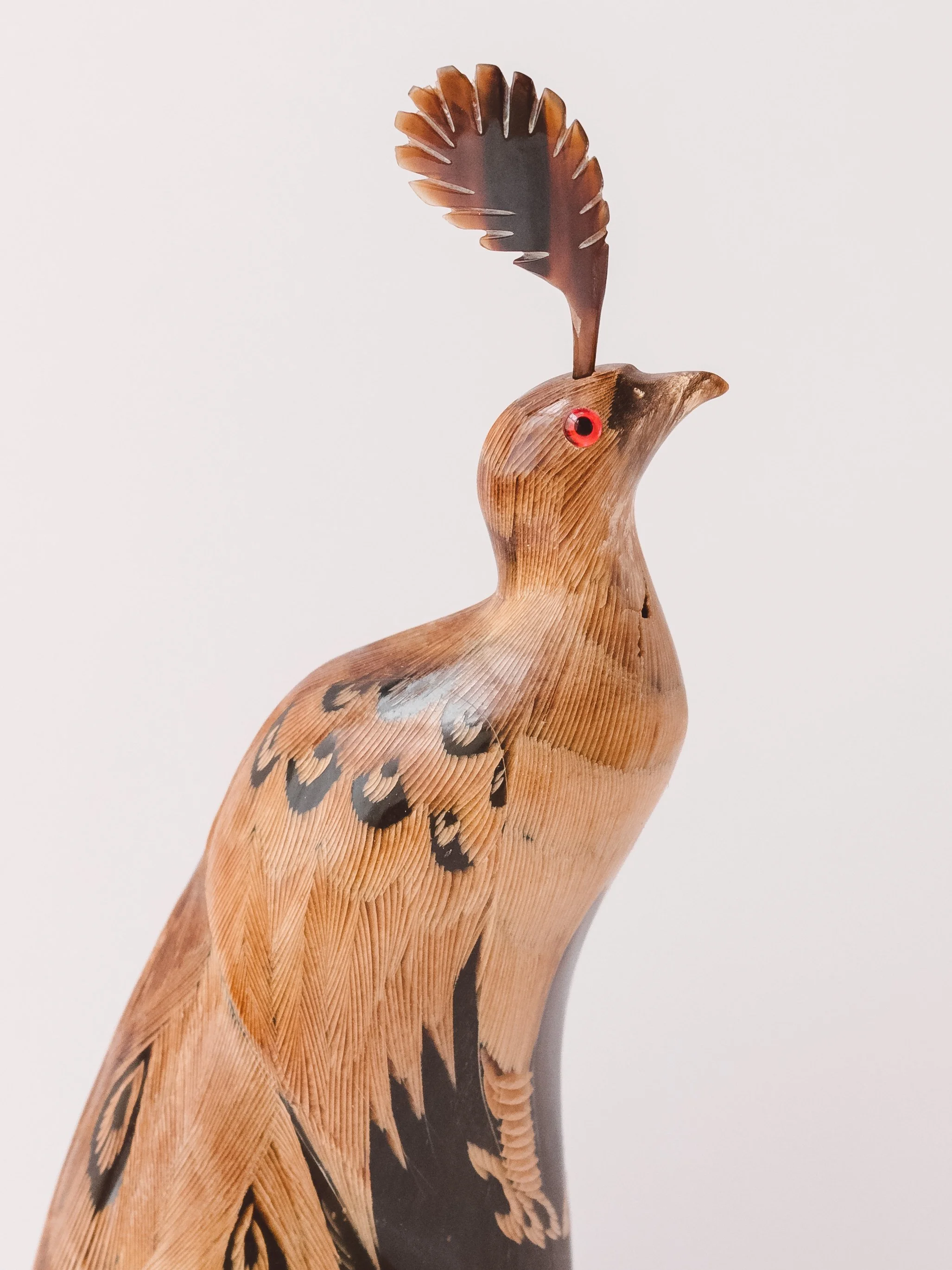 Image 9 of 14
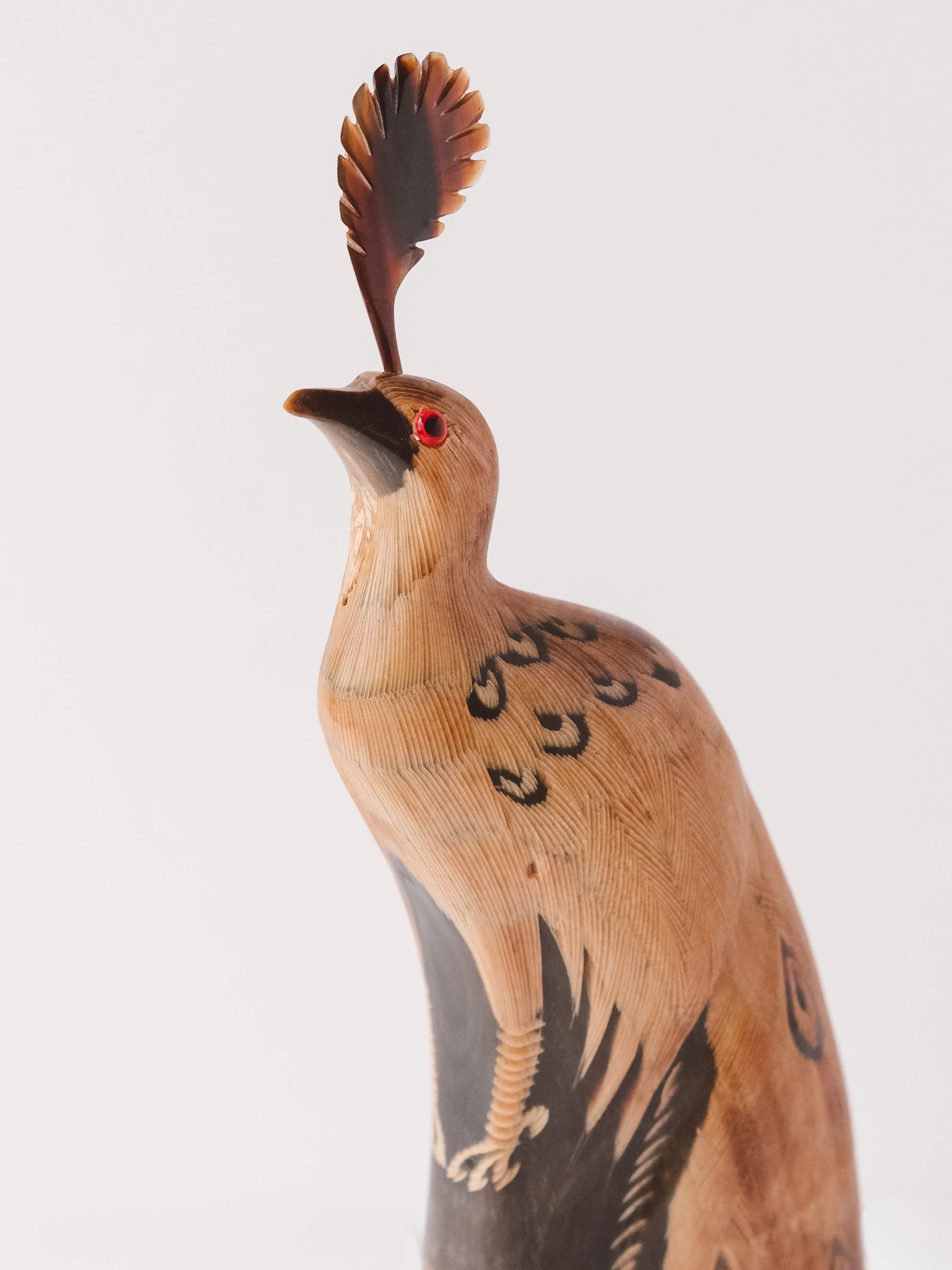 Image 10 of 14
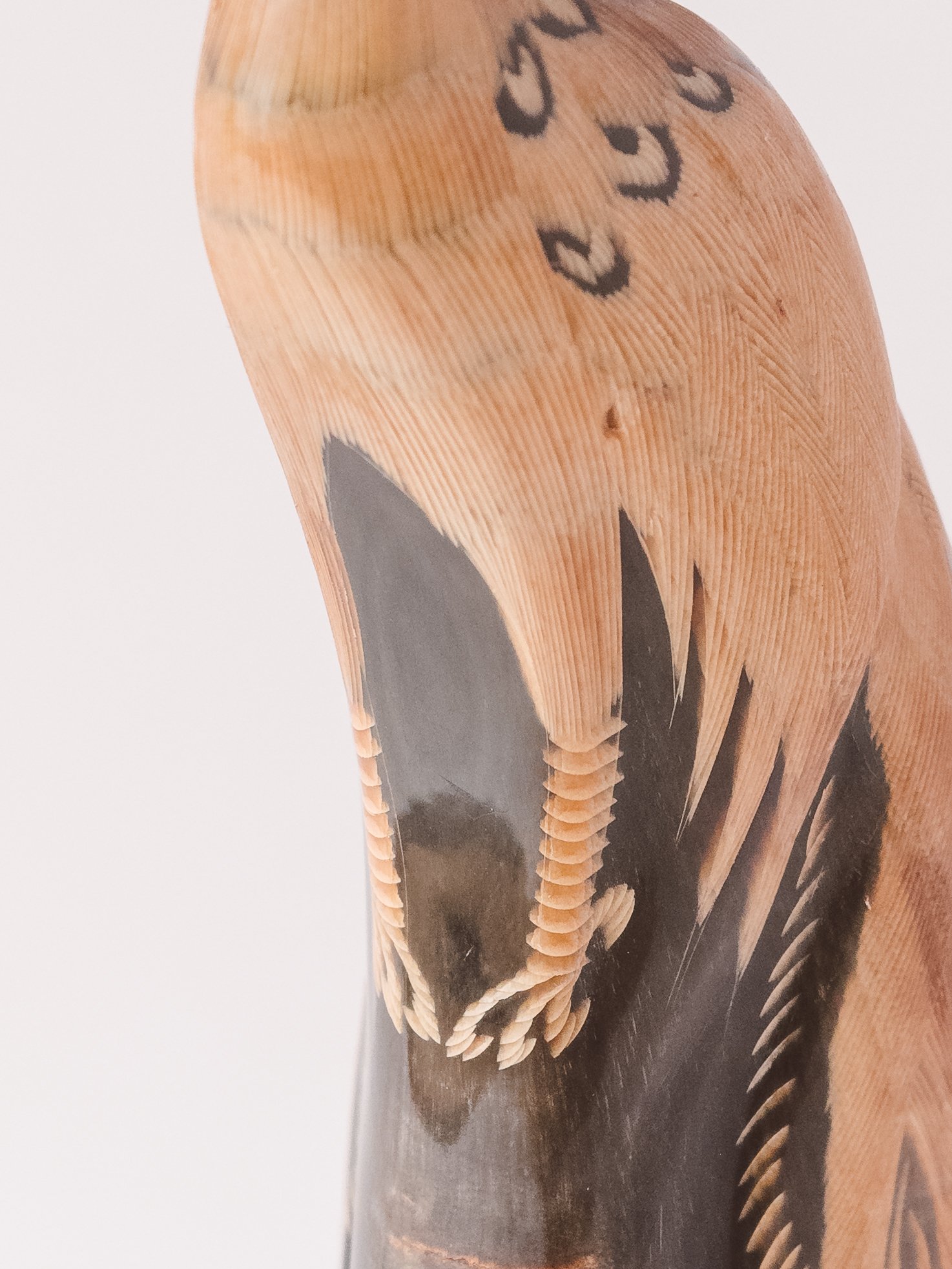 Image 11 of 14
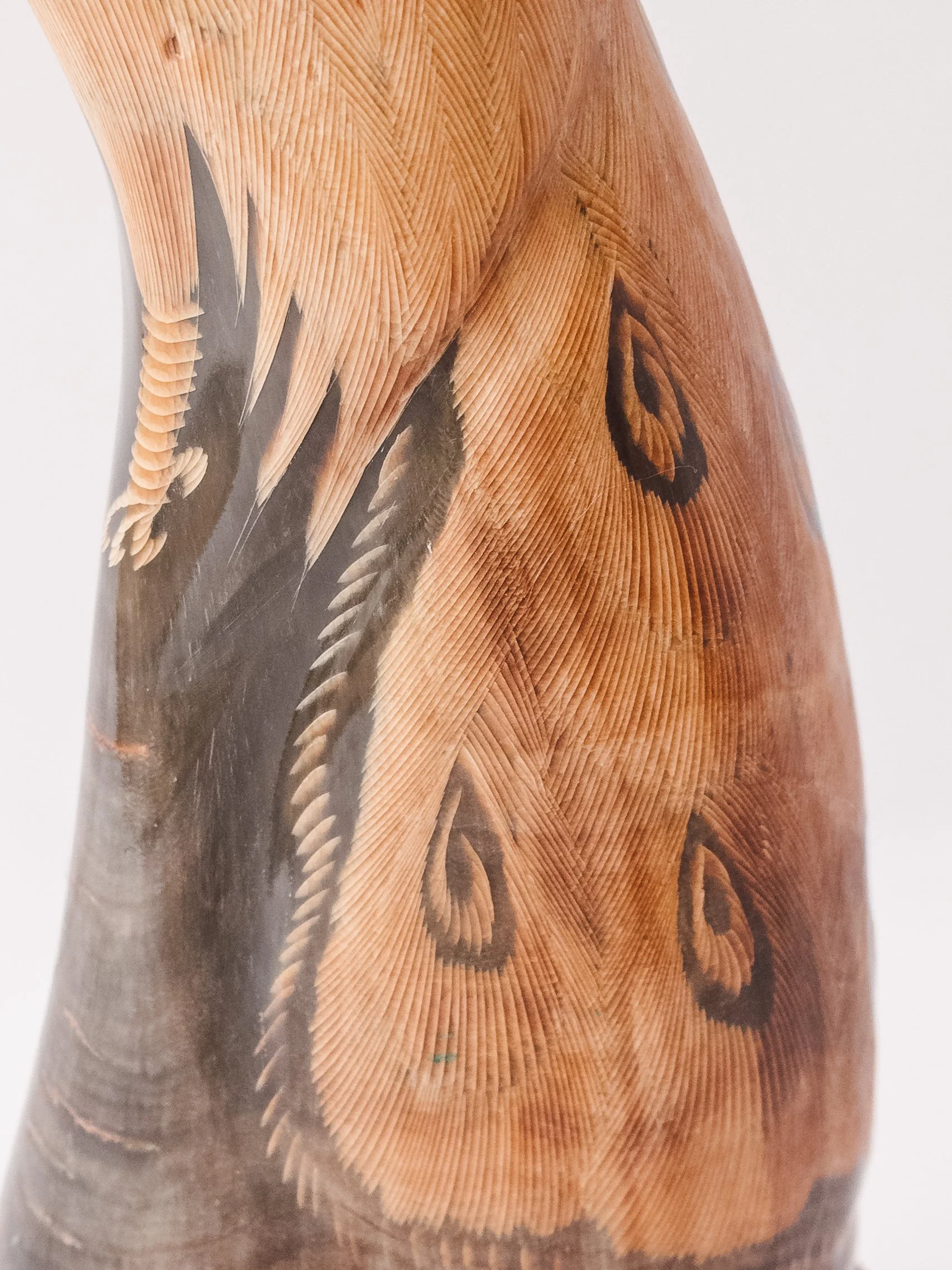 Image 12 of 14
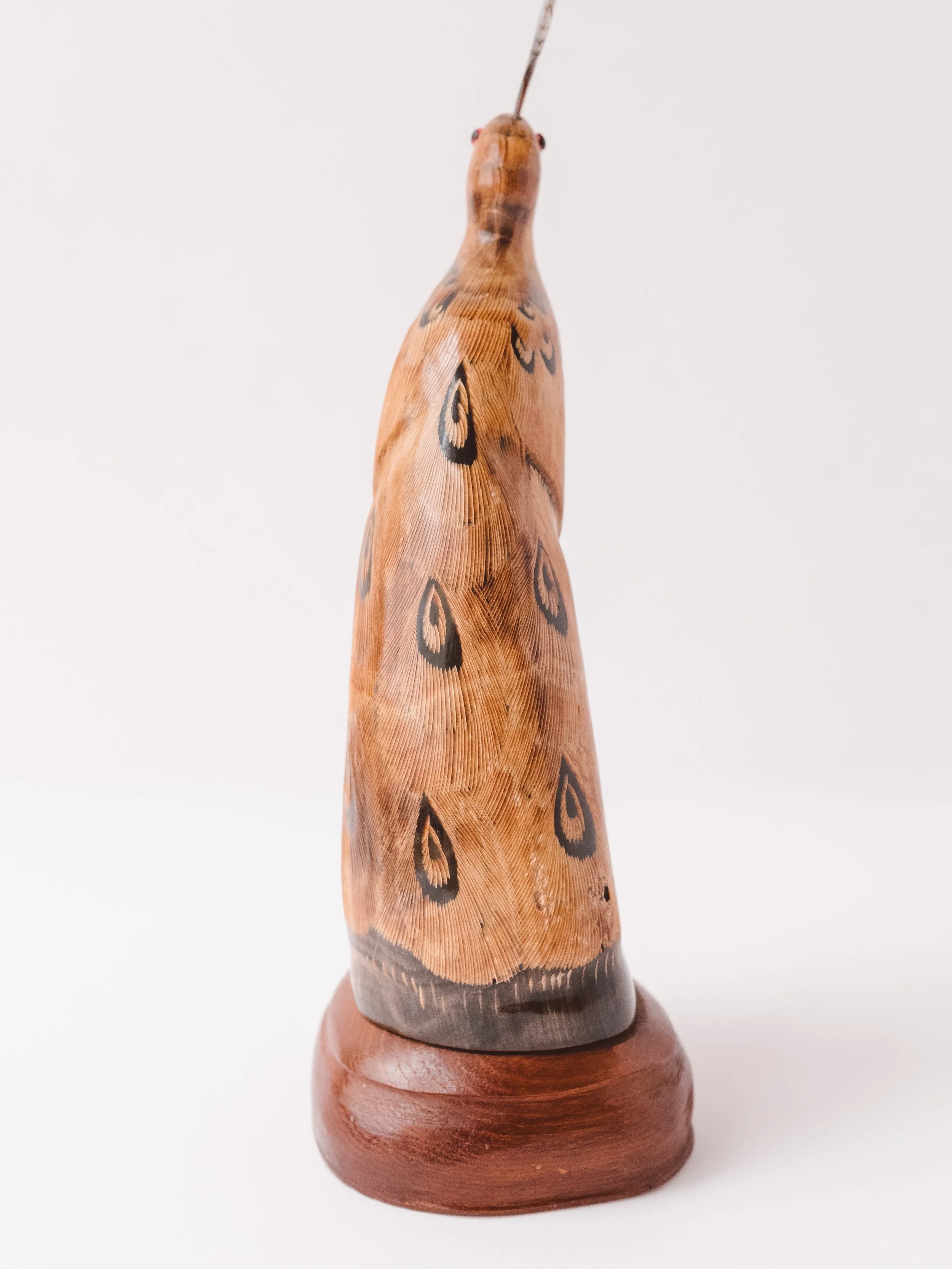 Image 13 of 14
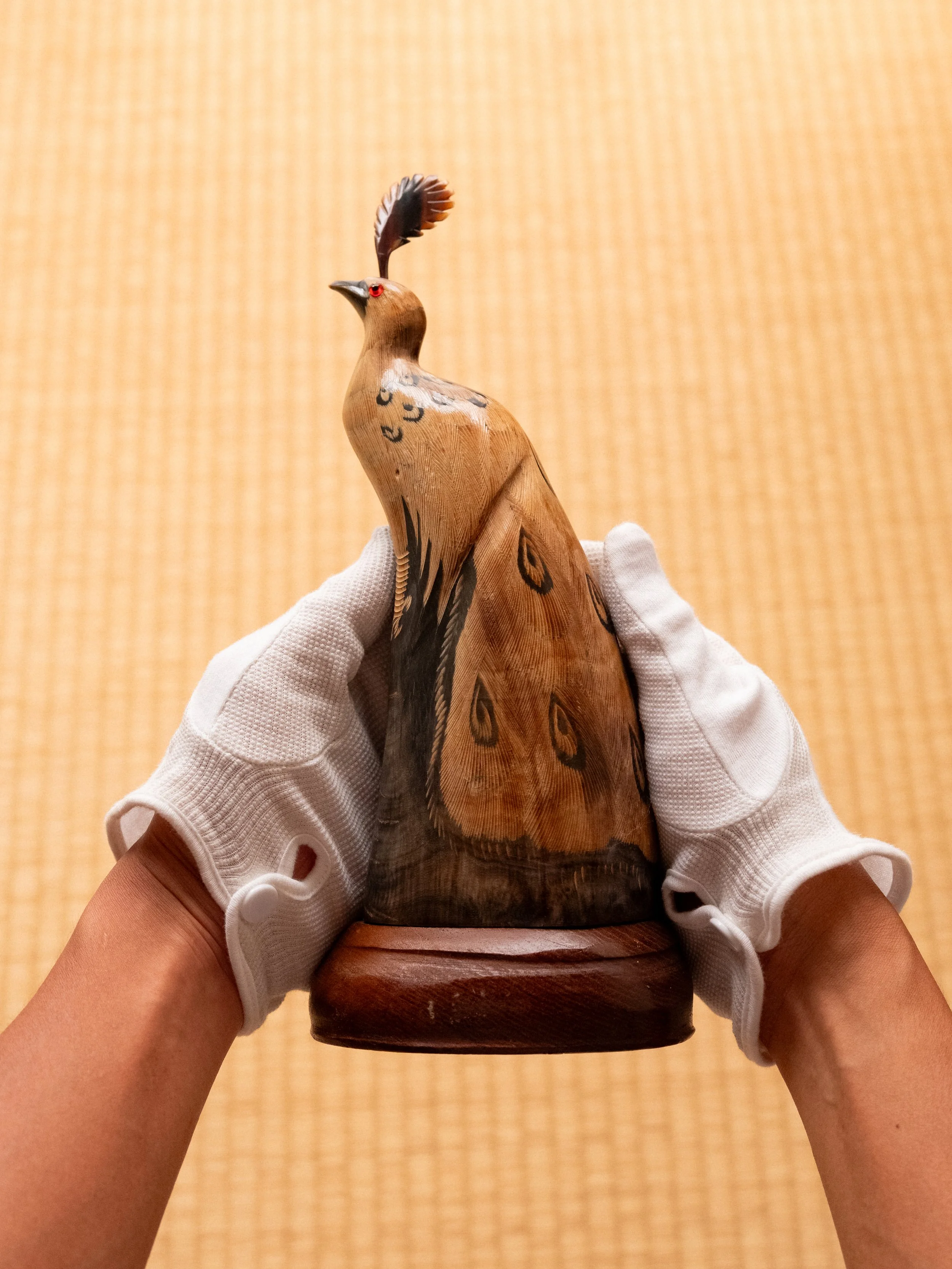 Image 14 of 14