【 The Concept 】
A tiger pared down to its essential geometry and glazed the colour of old ivory, its whole skin a web of fine dark cracks. In the folklore of East Asia the tiger is the great guardian — the apex animal whose roar the unseen fear, set at gates and thresholds to drive off ja-ki, the bad air and ill fortune that try to enter a house. But it guards tenderly too: the tiger was held to love its young fiercely, and the phrase "tiger cub" still names the treasure one will protect at any cost — so the animal stands equally for a family kept close and safe. And it is thought to carry wealth on its back, from the old saying that a tiger "goes a thousand miles and returns a thousand miles": the capital that goes out and comes home again, with more.
There is a second animal implied by this one. In the old compass of beasts the White Tiger of the west is the eternal partner of the Azure Dragon of the east — the two forces, one settling and one rising, that must balance for a space to be whole. Where CELADON DRAGON holds the east in jade, this tiger holds the west in crackled white. The wheel of the zodiac last came to rest on the tiger in 2022, the year this piece takes its name from, and will not return to it until 2034. It is a guardian rendered as pure sculpture — no painted stripe, no bared fang, only mass and edge and the long low line of a body about to move.
【 The Function 】
Unlike a decorative figurine, this piece was made to hold a corner of a room. Long, low and quietly alert, it belongs where a threshold is watched — an entryway, a shelf facing the door, a low console — or, in the old placement, on the western side of a room, where the white tiger stands guard and keeps good fortune from leaking away. Set it opposite something taller and it settles the space; set it alone and it reads as a single clean gesture of protection.
【 The Texture 】
The surface is the whole story. A glossy ivory glaze, warm and near-white, is broken across every plane by kannyu — the fine net of crackle that forms as glaze and clay cool at different rates, a controlled imperfection Japanese ceramics has prized for centuries. The dark lines stand in for the tiger's markings, a web of grey where a painted stripe would be, and they go on slowly deepening over the years as the piece breathes in its surroundings — an object that keeps quietly changing long after it is made. Through it all the form stays crisp: a faceted muzzle, a sharp ridge of spine, the tail swept up and looped back to the haunch in a single taut arc.
【 Presence 】
At thirty centimetres nose to tail it has real length but little height — it lies along a surface rather than rising from it, which makes it read as calm rather than aggressive. Hollow-bodied, it is far lighter than its size suggests, an easy thing to lift and set down. The pale crackled glaze is pure modern restraint; the animal beneath it is ancient. Placed on bare wood or a dark shelf, the web of cracks catches the light and the whole low body seems to hold its breath — a guardian that has quietly become a piece of contemporary sculpture.
Sourced from a private collection in Japan.
【 The Concept 】
A tiger pared down to its essential geometry and glazed the colour of old ivory, its whole skin a web of fine dark cracks. In the folklore of East Asia the tiger is the great guardian — the apex animal whose roar the unseen fear, set at gates and thresholds to drive off ja-ki, the bad air and ill fortune that try to enter a house. But it guards tenderly too: the tiger was held to love its young fiercely, and the phrase "tiger cub" still names the treasure one will protect at any cost — so the animal stands equally for a family kept close and safe. And it is thought to carry wealth on its back, from the old saying that a tiger "goes a thousand miles and returns a thousand miles": the capital that goes out and comes home again, with more.
There is a second animal implied by this one. In the old compass of beasts the White Tiger of the west is the eternal partner of the Azure Dragon of the east — the two forces, one settling and one rising, that must balance for a space to be whole. Where CELADON DRAGON holds the east in jade, this tiger holds the west in crackled white. The wheel of the zodiac last came to rest on the tiger in 2022, the year this piece takes its name from, and will not return to it until 2034. It is a guardian rendered as pure sculpture — no painted stripe, no bared fang, only mass and edge and the long low line of a body about to move.
【 The Function 】
Unlike a decorative figurine, this piece was made to hold a corner of a room. Long, low and quietly alert, it belongs where a threshold is watched — an entryway, a shelf facing the door, a low console — or, in the old placement, on the western side of a room, where the white tiger stands guard and keeps good fortune from leaking away. Set it opposite something taller and it settles the space; set it alone and it reads as a single clean gesture of protection.
【 The Texture 】
The surface is the whole story. A glossy ivory glaze, warm and near-white, is broken across every plane by kannyu — the fine net of crackle that forms as glaze and clay cool at different rates, a controlled imperfection Japanese ceramics has prized for centuries. The dark lines stand in for the tiger's markings, a web of grey where a painted stripe would be, and they go on slowly deepening over the years as the piece breathes in its surroundings — an object that keeps quietly changing long after it is made. Through it all the form stays crisp: a faceted muzzle, a sharp ridge of spine, the tail swept up and looped back to the haunch in a single taut arc.
【 Presence 】
At thirty centimetres nose to tail it has real length but little height — it lies along a surface rather than rising from it, which makes it read as calm rather than aggressive. Hollow-bodied, it is far lighter than its size suggests, an easy thing to lift and set down. The pale crackled glaze is pure modern restraint; the animal beneath it is ancient. Placed on bare wood or a dark shelf, the web of cracks catches the light and the whole low body seems to hold its breath — a guardian that has quietly become a piece of contemporary sculpture.
Sourced from a private collection in Japan.


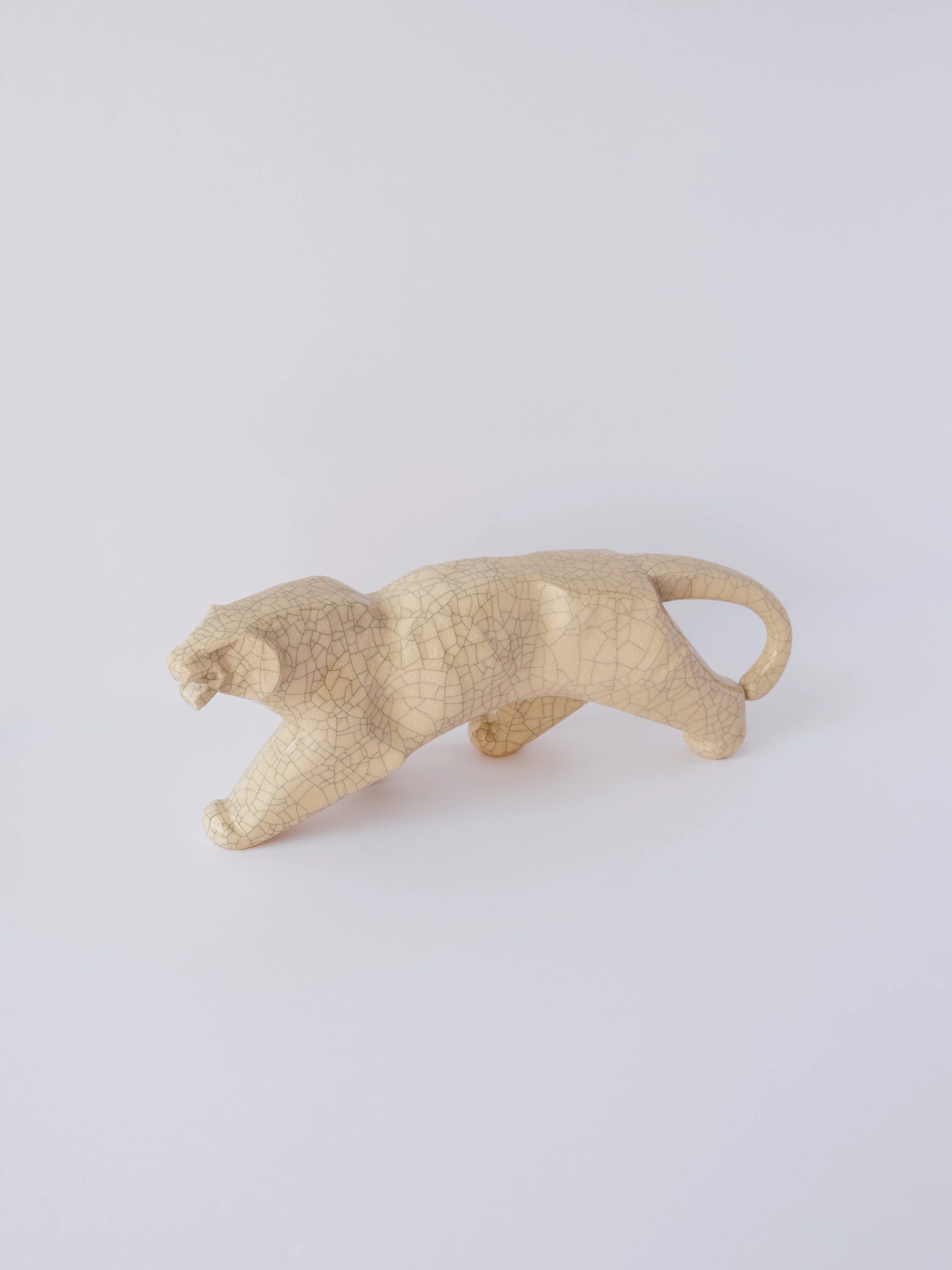 Image 1 of 10
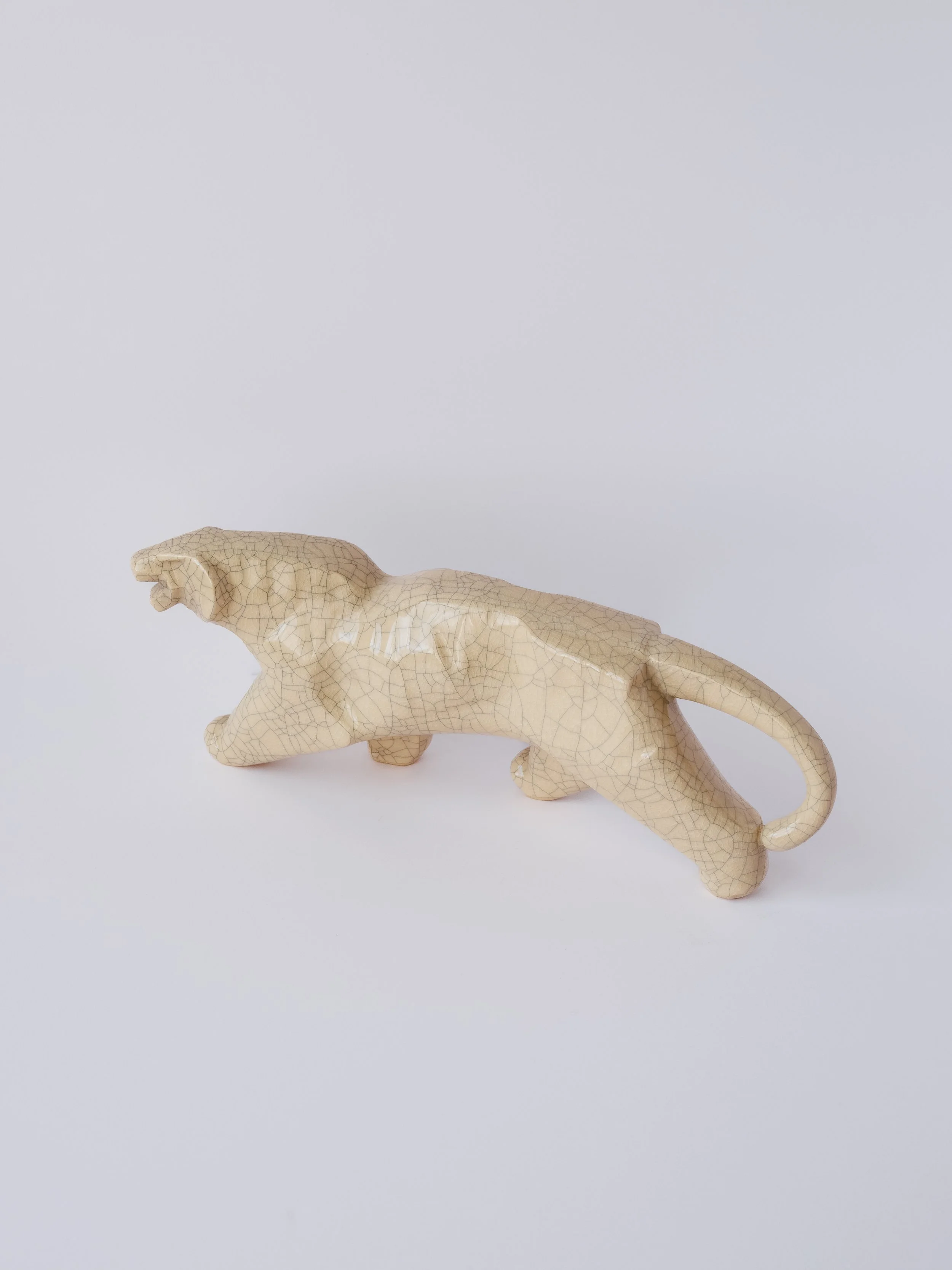 Image 2 of 10
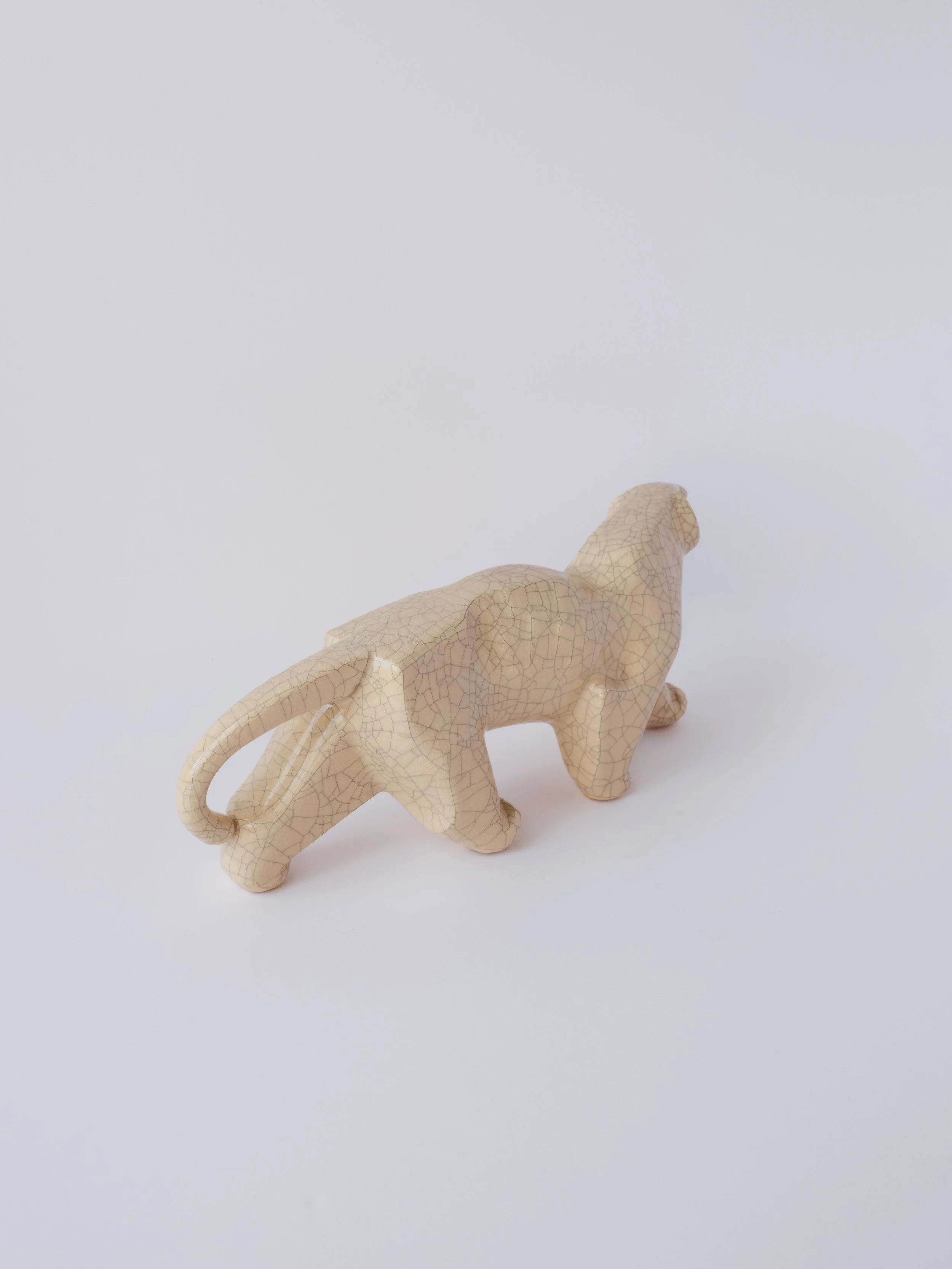 Image 3 of 10
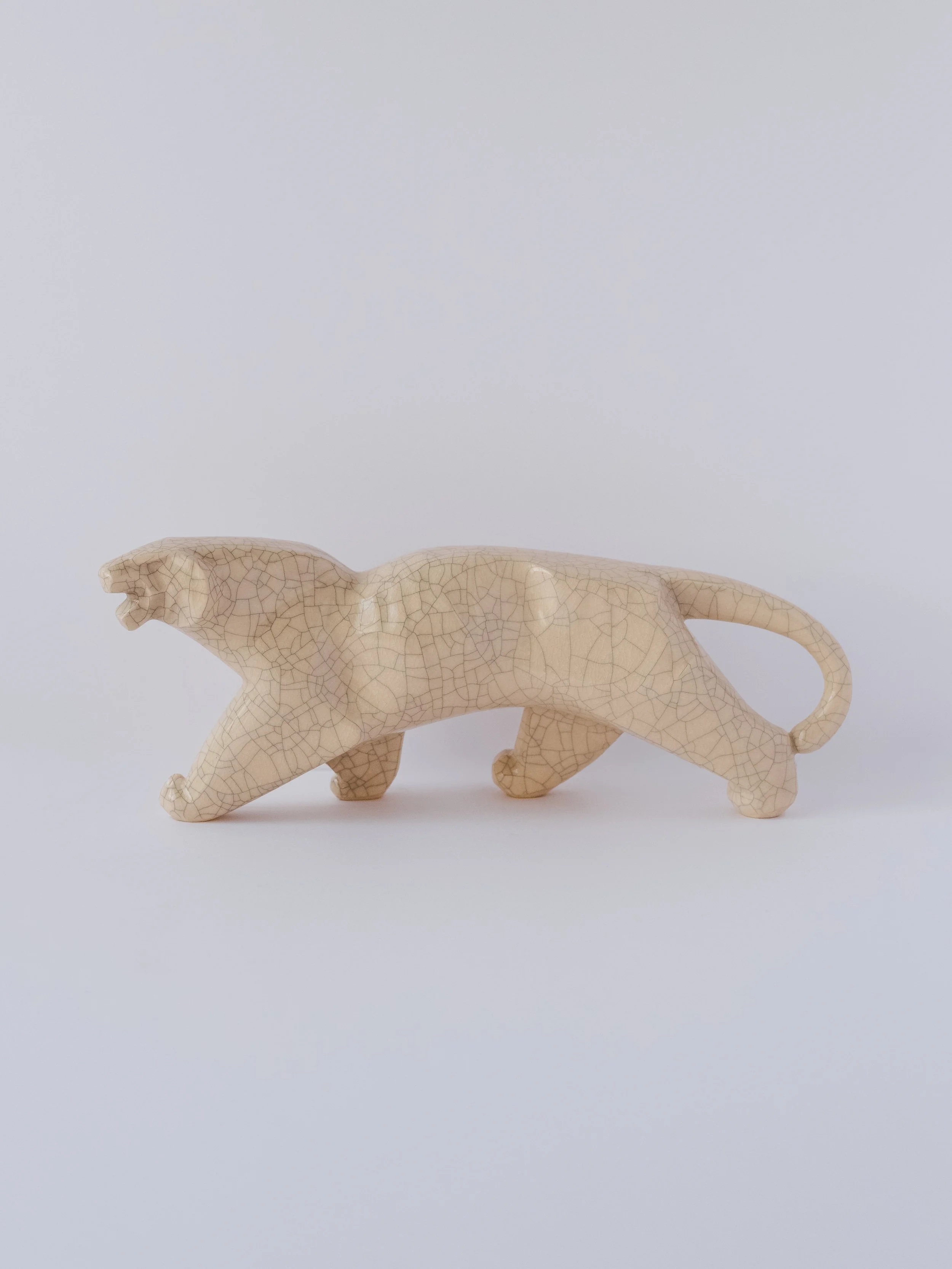 Image 4 of 10
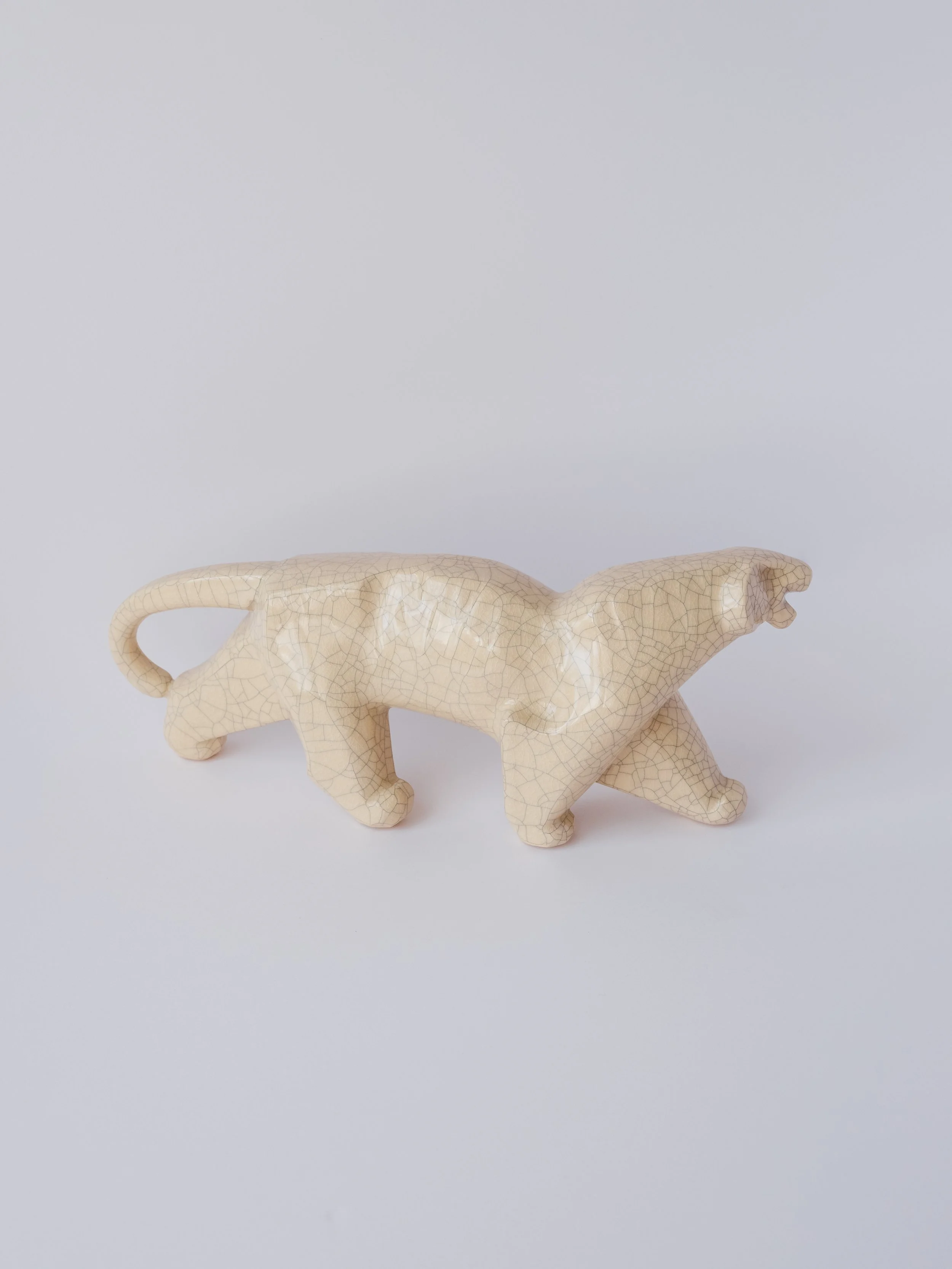 Image 5 of 10
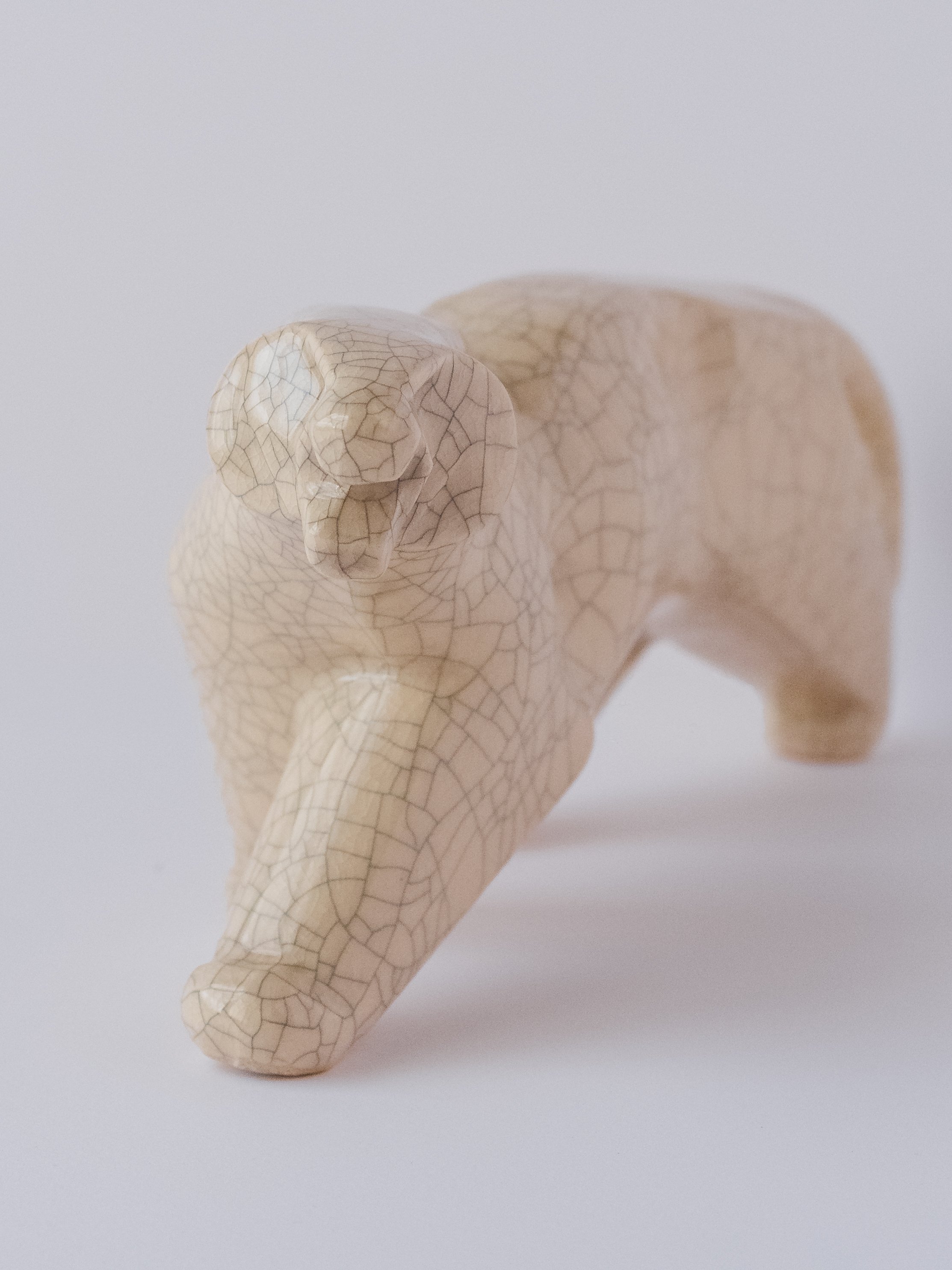 Image 6 of 10
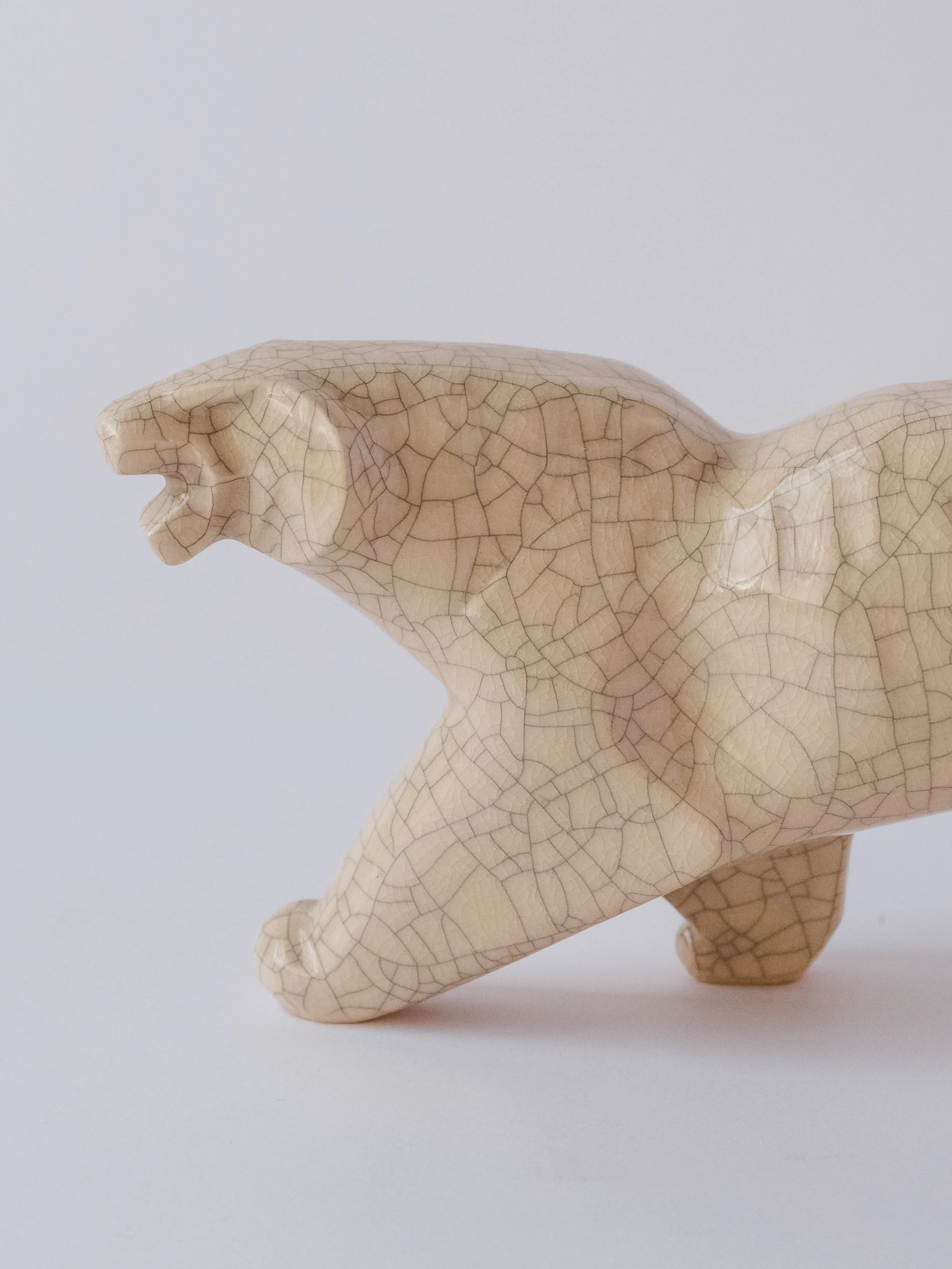 Image 7 of 10
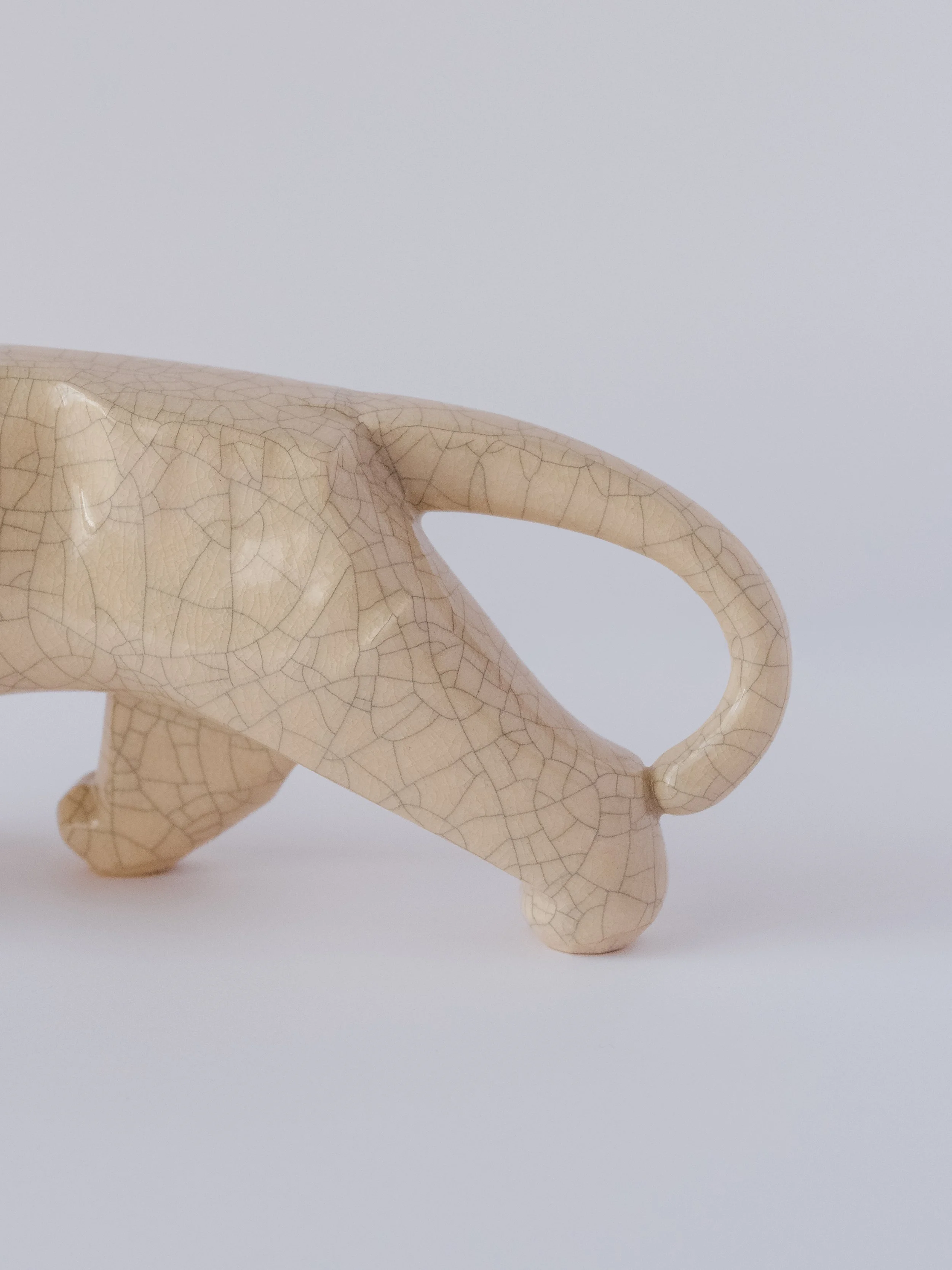 Image 8 of 10
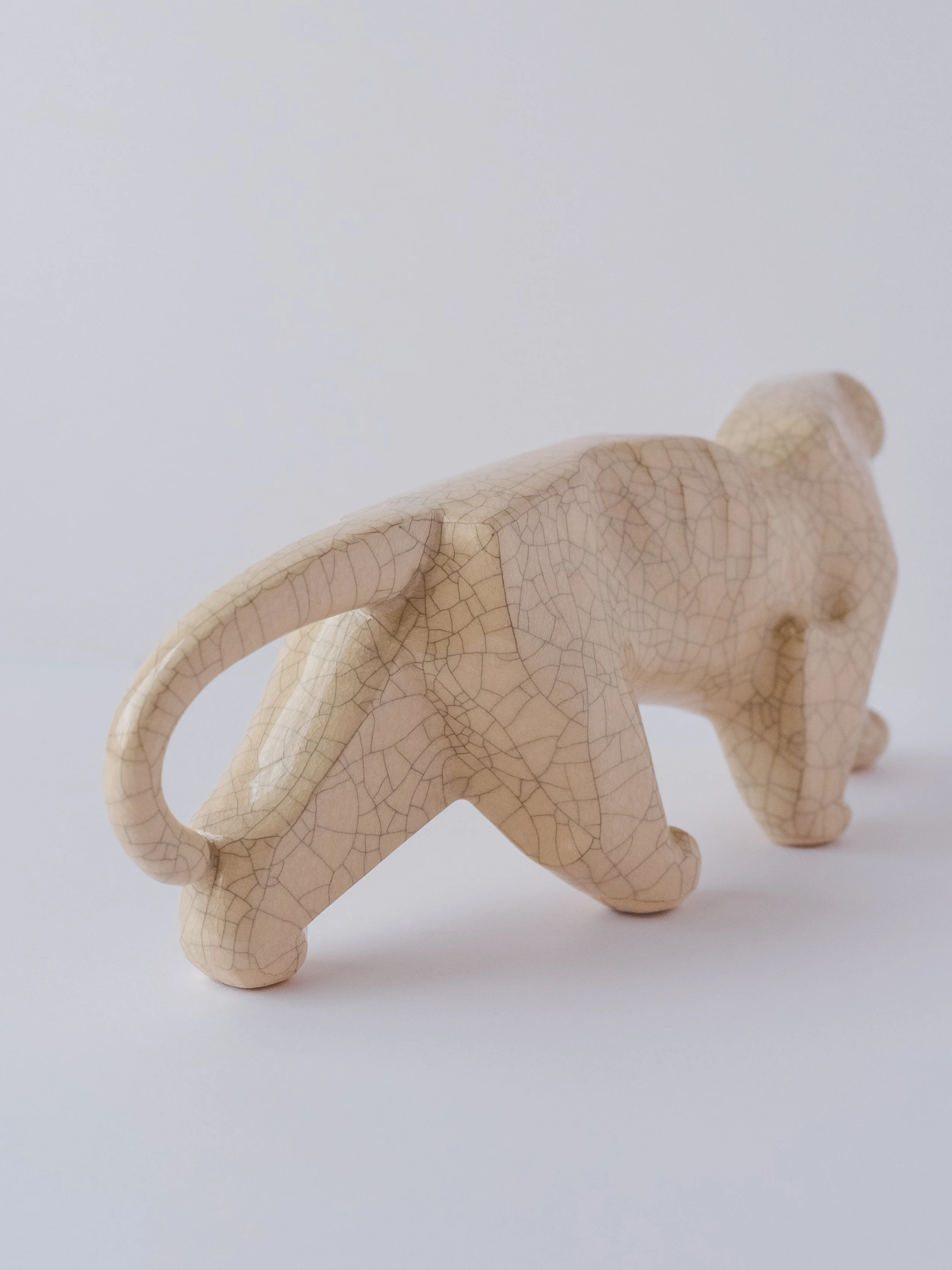 Image 9 of 10
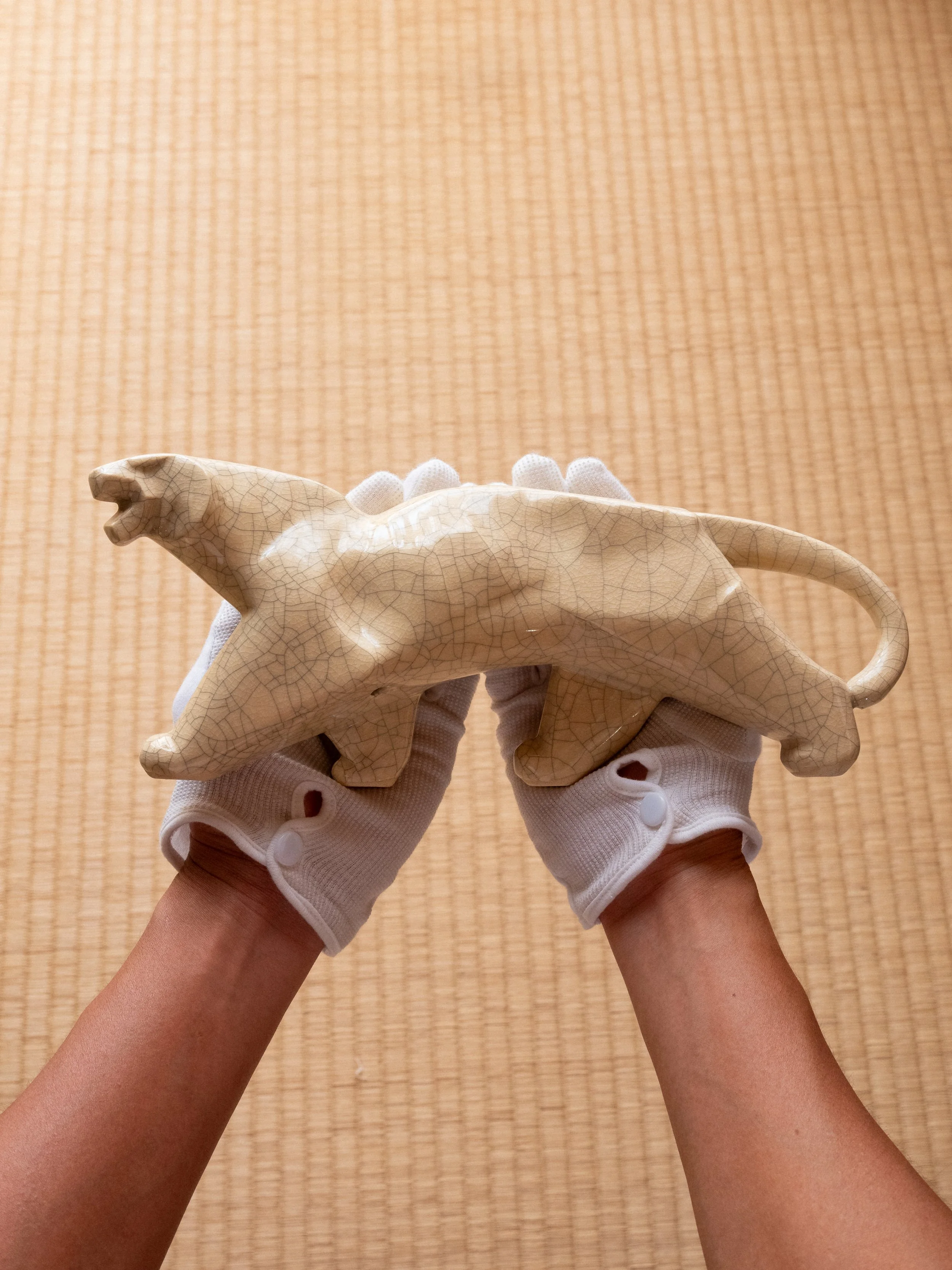 Image 10 of 10