【 The Concept 】
A turtle carved from a single block of reddish hardwood — and a secret. Slide the domed shell sideways on its metal pivot and the turtle opens, revealing a working compass set into a feng shui dial hidden in its body. The shell is inlaid with cream-colored discs: one large medallion at the center and twelve smaller ones ringed evenly around the rim, each engraved with fine black line-work. It is at once an ornament, a talisman, and a small instrument — a whole East Asian view of time and space folded into an object that fits in the palm.
【 The Hidden Compass 】
The single metal screw near the tail is not a fastener but a pivot. Swing the shell open and a round recess appears, cradling a compass: a magnetized needle turning under a clear cover inside a brass-colored bezel, over a printed dial the soft yellow of aged paper. The dial is no ordinary N-E-S-W face. It is a miniature luopan — the compass a feng shui master uses to read a site. Where a Western compass splits the circle into four or sixteen points, the luopan divides it into twenty-four "mountains" of fifteen degrees each, marked not with letters but with Chinese characters: the heavenly stems, the earthly branches, and the four trigrams of the corners. With it, a practitioner aligns to magnetic north and reads which energies a doorway faces — the tool at the heart of the whole art.
【 The Sage at the Center 】
The large central medallion shows a robed figure seated beneath a drooping willow, a long fishing rod in his hands, his line dropped to the water. This is Jiang Ziya — better known as Taigong Wang, the legendary strategist who helped found the Zhou dynasty. The old story says he fished the riverbank with a straight, barbless needle held high above the water. When passersby mocked him, he answered: "I am not fishing for fish. I am waiting for the ruler worthy of heaven's mandate to come to the hook himself." He is placed on the lid of a compass for a reason. Feng shui reads the flow of energy through space and time; the sage's image tells whoever holds the instrument to set aside haste, trust the order of things, and know the right moment and the right place.
【 The Twelve Around the Rim 】
Circling the sage are twelve small inlays, each a simplified animal: the rat, ox, tiger, rabbit, dragon, snake, horse, goat, monkey, rooster, dog, and boar — the twelve zodiac. Far more than a way to count years, this cycle was ancient China's system for dividing time and space alike: the twelve two-hour periods of the day, the twelve months, and the twelve directions of the horizon. Set in an unbroken ring, they stand for the endless turning of the cosmos. If the compass inside measures space, the zodiac on the shell measures time — and the turtle carries both at once.
【 Why a Turtle 】
No animal could hold this better. In East Asia the turtle is no ordinary reptile but a sacred beast that embodies the laws of the universe. It is the emblem of long life — "the crane lives a thousand years, the turtle ten thousand." In the four-guardian system it is the Black Tortoise of the North, ruler of the water element, bringer of saved wealth, stability, and firm foundations. Its very body was read as a model of the world: the ancient Chinese held that "heaven is round, earth is square," and the turtle's domed shell was heaven while its flat belly was the earth — a living miniature of the cosmos. And in the founding myth of divination, a divine turtle rose from the River Luo with a pattern of dots on its shell; rendered as numbers, that pattern became the Luoshu magic square, the root of the trigrams and of feng shui's nine-star schools. A compass hidden inside a turtle's shell re-enacts that myth exactly: the sacred turtle carrying the secret order of the universe on its back.
【 A Thousand-Year Idea 】
Joining a turtle to a compass is older than it looks. Around the year 1088, the Song-dynasty polymath Shen Kuo, in his Dream Pool Essays, gave the world's first clear account of a magnetized-needle compass — and among the methods he recorded was the zhinan gui, the "south-pointing turtle": a wooden turtle with a magnetized needle fixed in its body, balanced on a fine bamboo pin so that, spun with a fingertip, it always came to rest pointing south. This modern piece works differently — the shell slides on a screw rather than pivoting on a pin — but it carries that thousand-year-old idea forward, a wooden turtle that knows which way is north.
【 The Material & Texture 】
Carved from a dense, reddish tropical hardwood with a clear grain, hand-polished to a low, warm sheen. The shell inlays are cream to pale beige — bone, or a bone-like resin — their line drawings incised with a fine blade and rubbed with black pigment so the images stand crisp against the light ground, close kin to the scrimshaw engraving of old sailors. The compass sits in a brass-colored metal bezel over a printed paper dial. The base is smooth and flat, steady on any surface, and carries an aged, yellowed paper label hand-marked in ink — the trace of an earlier collection or dealer.
【 Function & What It Brings 】
Keep it, open it, give it. As an object it is a talisman: the turtle for longevity and the north's protecting, wealth-holding energy; the sage for patience and right timing; the zodiac for the turning of fortune. As a curiosity it actually opens and its needle actually swings — a thing to be handled, not only shelved. Set it on a desk, a study shelf, or an entryway and it works as a quiet emblem of wisdom and steadiness, and as a story you can tell any guest who asks what the turtle is hiding.
【 Presence 】
Grave and a little secretive. Dark wood, pale inlay, the fine black lines of the sage and his willow — it reads as calm and old, and gives nothing away until it is opened.
Archive Note: The number in the name (1088) references the era of Shen Kuo's Dream Pool Essays, the text that first described a turtle-shaped compass. It is NOT the date this piece was made.
Provenance Note: Sourced from a private collection in Japan. The object belongs to the Chinese feng shui tradition; its exact origin and date are not documented and are not claimed here.
Condition Note: Sold as acquired, a genuine vintage piece in good working order. The shell slides open on its metal pivot and the compass needle turns freely. An old paper label on the base and gentle wear to the wood are consistent with age and are part of its character, not damage. Please see the photographs as part of the description.
【 The Concept 】
A turtle carved from a single block of reddish hardwood — and a secret. Slide the domed shell sideways on its metal pivot and the turtle opens, revealing a working compass set into a feng shui dial hidden in its body. The shell is inlaid with cream-colored discs: one large medallion at the center and twelve smaller ones ringed evenly around the rim, each engraved with fine black line-work. It is at once an ornament, a talisman, and a small instrument — a whole East Asian view of time and space folded into an object that fits in the palm.
【 The Hidden Compass 】
The single metal screw near the tail is not a fastener but a pivot. Swing the shell open and a round recess appears, cradling a compass: a magnetized needle turning under a clear cover inside a brass-colored bezel, over a printed dial the soft yellow of aged paper. The dial is no ordinary N-E-S-W face. It is a miniature luopan — the compass a feng shui master uses to read a site. Where a Western compass splits the circle into four or sixteen points, the luopan divides it into twenty-four "mountains" of fifteen degrees each, marked not with letters but with Chinese characters: the heavenly stems, the earthly branches, and the four trigrams of the corners. With it, a practitioner aligns to magnetic north and reads which energies a doorway faces — the tool at the heart of the whole art.
【 The Sage at the Center 】
The large central medallion shows a robed figure seated beneath a drooping willow, a long fishing rod in his hands, his line dropped to the water. This is Jiang Ziya — better known as Taigong Wang, the legendary strategist who helped found the Zhou dynasty. The old story says he fished the riverbank with a straight, barbless needle held high above the water. When passersby mocked him, he answered: "I am not fishing for fish. I am waiting for the ruler worthy of heaven's mandate to come to the hook himself." He is placed on the lid of a compass for a reason. Feng shui reads the flow of energy through space and time; the sage's image tells whoever holds the instrument to set aside haste, trust the order of things, and know the right moment and the right place.
【 The Twelve Around the Rim 】
Circling the sage are twelve small inlays, each a simplified animal: the rat, ox, tiger, rabbit, dragon, snake, horse, goat, monkey, rooster, dog, and boar — the twelve zodiac. Far more than a way to count years, this cycle was ancient China's system for dividing time and space alike: the twelve two-hour periods of the day, the twelve months, and the twelve directions of the horizon. Set in an unbroken ring, they stand for the endless turning of the cosmos. If the compass inside measures space, the zodiac on the shell measures time — and the turtle carries both at once.
【 Why a Turtle 】
No animal could hold this better. In East Asia the turtle is no ordinary reptile but a sacred beast that embodies the laws of the universe. It is the emblem of long life — "the crane lives a thousand years, the turtle ten thousand." In the four-guardian system it is the Black Tortoise of the North, ruler of the water element, bringer of saved wealth, stability, and firm foundations. Its very body was read as a model of the world: the ancient Chinese held that "heaven is round, earth is square," and the turtle's domed shell was heaven while its flat belly was the earth — a living miniature of the cosmos. And in the founding myth of divination, a divine turtle rose from the River Luo with a pattern of dots on its shell; rendered as numbers, that pattern became the Luoshu magic square, the root of the trigrams and of feng shui's nine-star schools. A compass hidden inside a turtle's shell re-enacts that myth exactly: the sacred turtle carrying the secret order of the universe on its back.
【 A Thousand-Year Idea 】
Joining a turtle to a compass is older than it looks. Around the year 1088, the Song-dynasty polymath Shen Kuo, in his Dream Pool Essays, gave the world's first clear account of a magnetized-needle compass — and among the methods he recorded was the zhinan gui, the "south-pointing turtle": a wooden turtle with a magnetized needle fixed in its body, balanced on a fine bamboo pin so that, spun with a fingertip, it always came to rest pointing south. This modern piece works differently — the shell slides on a screw rather than pivoting on a pin — but it carries that thousand-year-old idea forward, a wooden turtle that knows which way is north.
【 The Material & Texture 】
Carved from a dense, reddish tropical hardwood with a clear grain, hand-polished to a low, warm sheen. The shell inlays are cream to pale beige — bone, or a bone-like resin — their line drawings incised with a fine blade and rubbed with black pigment so the images stand crisp against the light ground, close kin to the scrimshaw engraving of old sailors. The compass sits in a brass-colored metal bezel over a printed paper dial. The base is smooth and flat, steady on any surface, and carries an aged, yellowed paper label hand-marked in ink — the trace of an earlier collection or dealer.
【 Function & What It Brings 】
Keep it, open it, give it. As an object it is a talisman: the turtle for longevity and the north's protecting, wealth-holding energy; the sage for patience and right timing; the zodiac for the turning of fortune. As a curiosity it actually opens and its needle actually swings — a thing to be handled, not only shelved. Set it on a desk, a study shelf, or an entryway and it works as a quiet emblem of wisdom and steadiness, and as a story you can tell any guest who asks what the turtle is hiding.
【 Presence 】
Grave and a little secretive. Dark wood, pale inlay, the fine black lines of the sage and his willow — it reads as calm and old, and gives nothing away until it is opened.
Archive Note: The number in the name (1088) references the era of Shen Kuo's Dream Pool Essays, the text that first described a turtle-shaped compass. It is NOT the date this piece was made.
Provenance Note: Sourced from a private collection in Japan. The object belongs to the Chinese feng shui tradition; its exact origin and date are not documented and are not claimed here.
Condition Note: Sold as acquired, a genuine vintage piece in good working order. The shell slides open on its metal pivot and the compass needle turns freely. An old paper label on the base and gentle wear to the wood are consistent with age and are part of its character, not damage. Please see the photographs as part of the description.


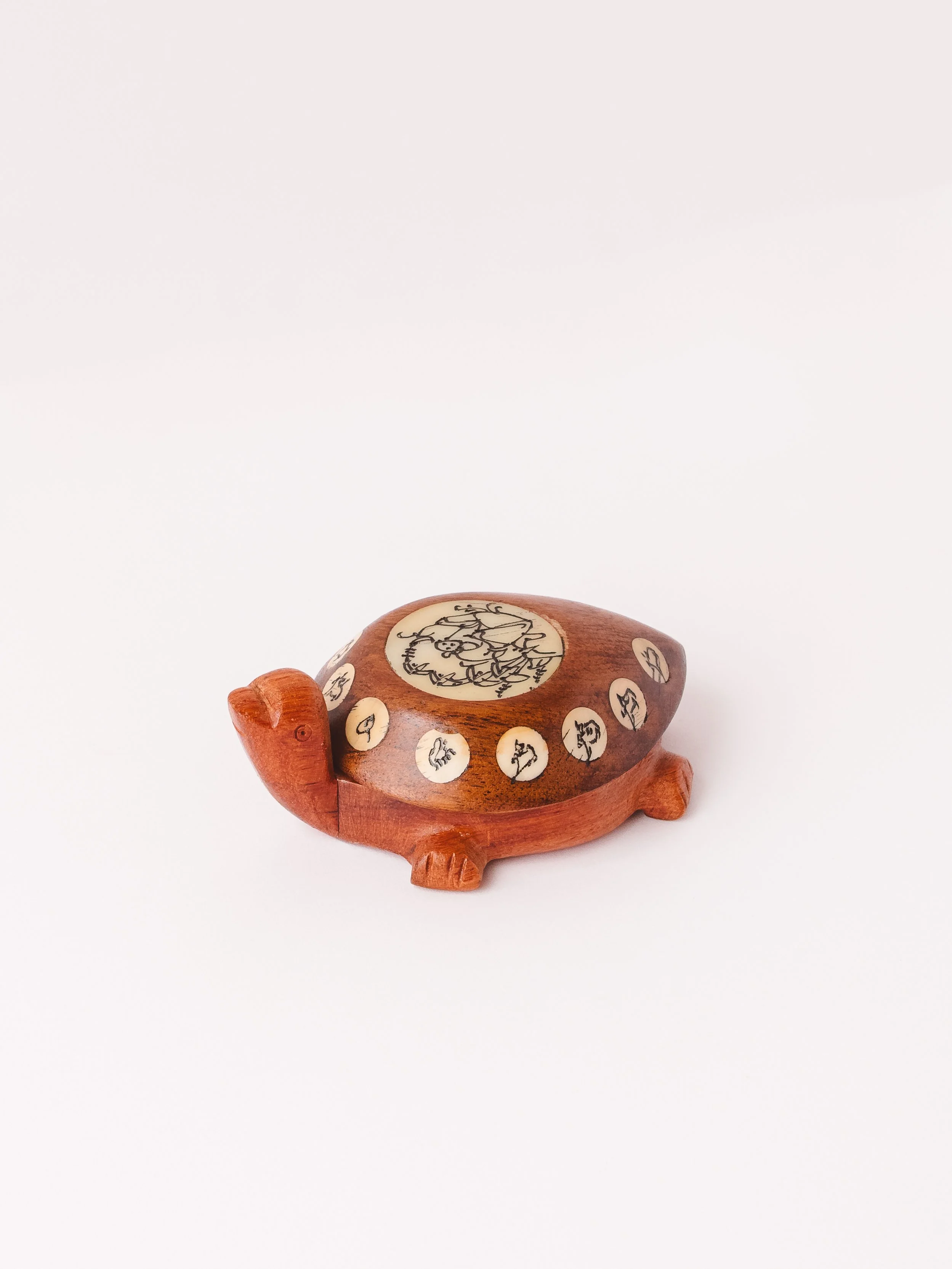 Image 1 of 13
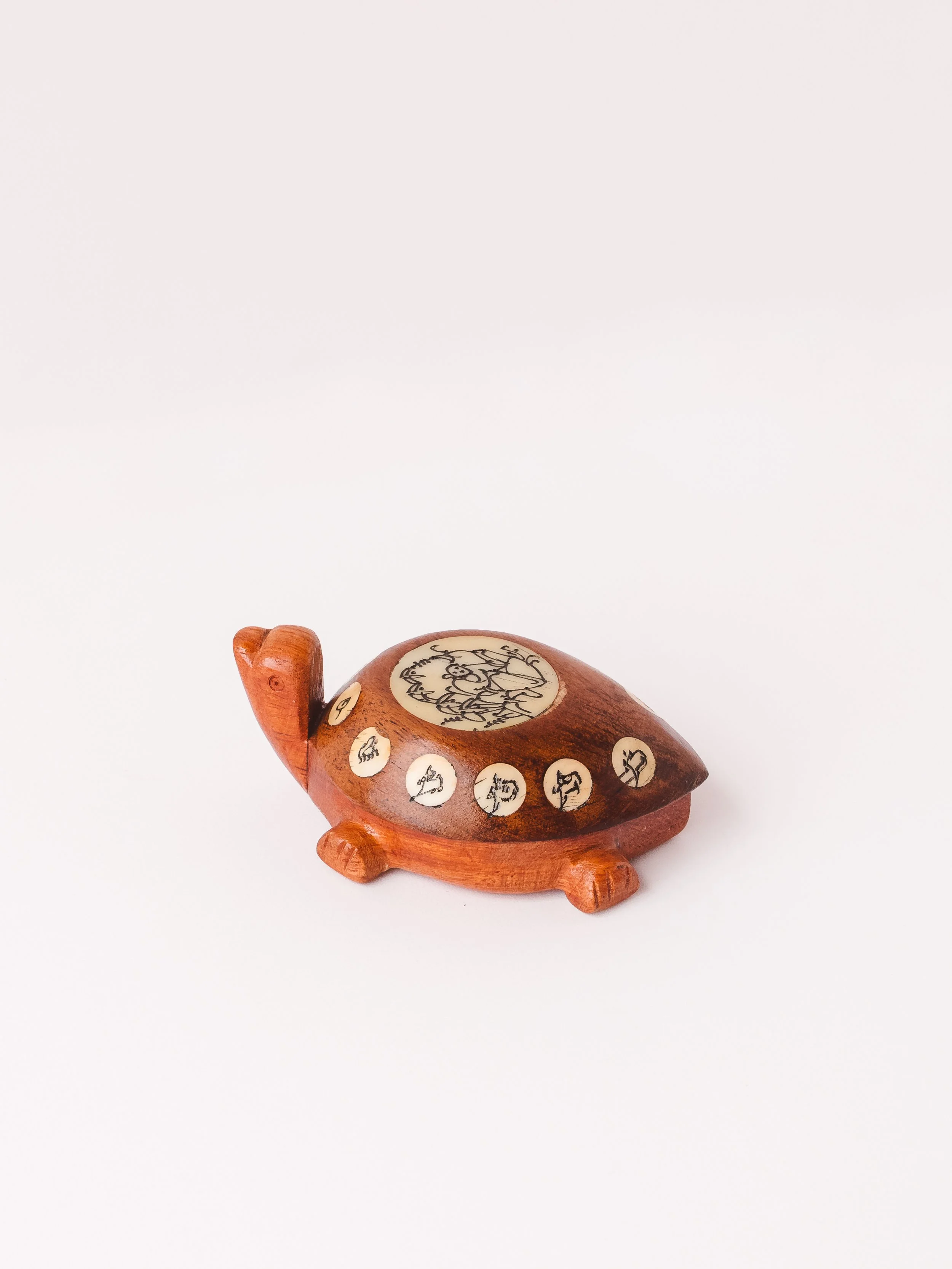 Image 2 of 13
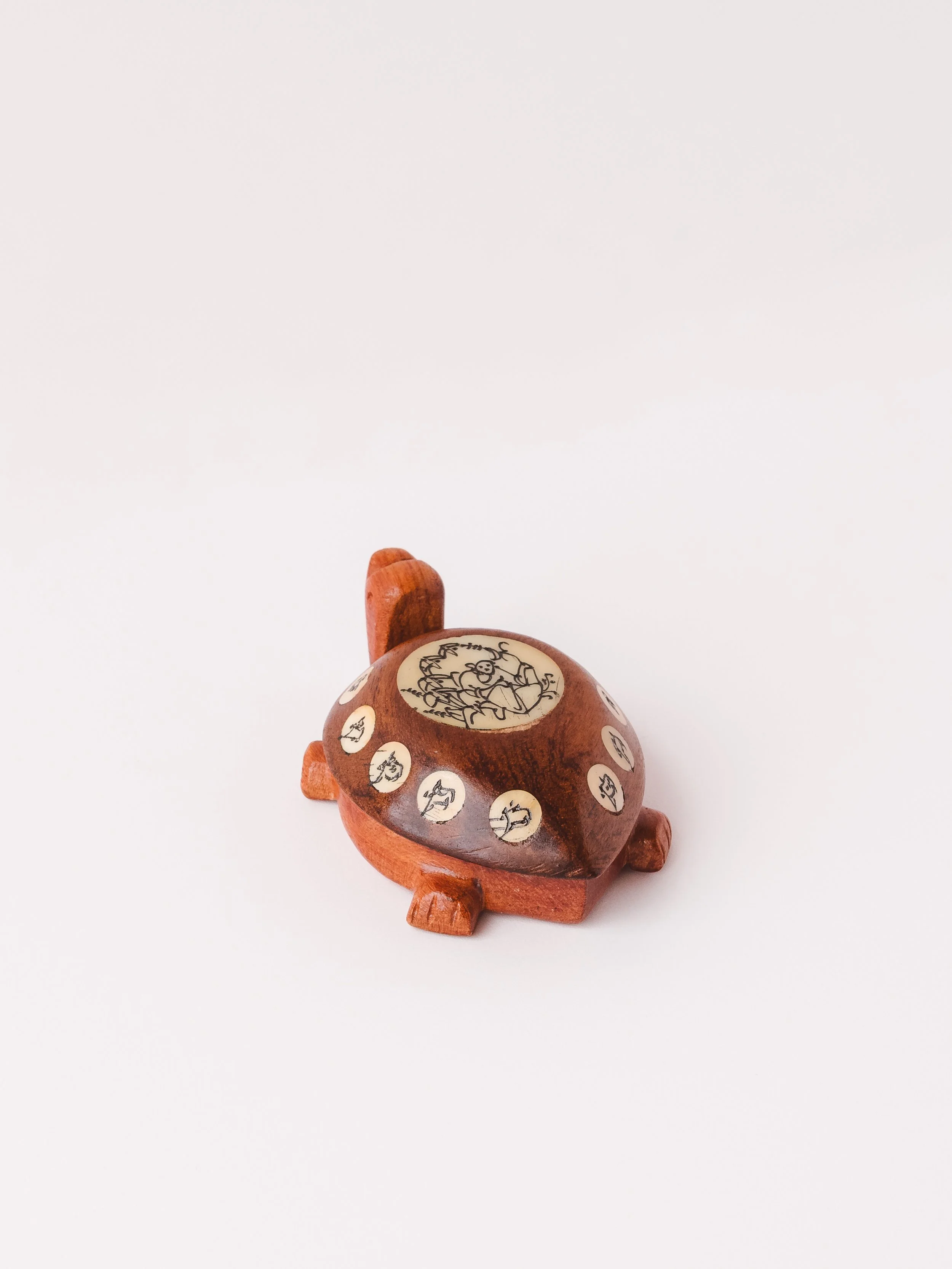 Image 3 of 13
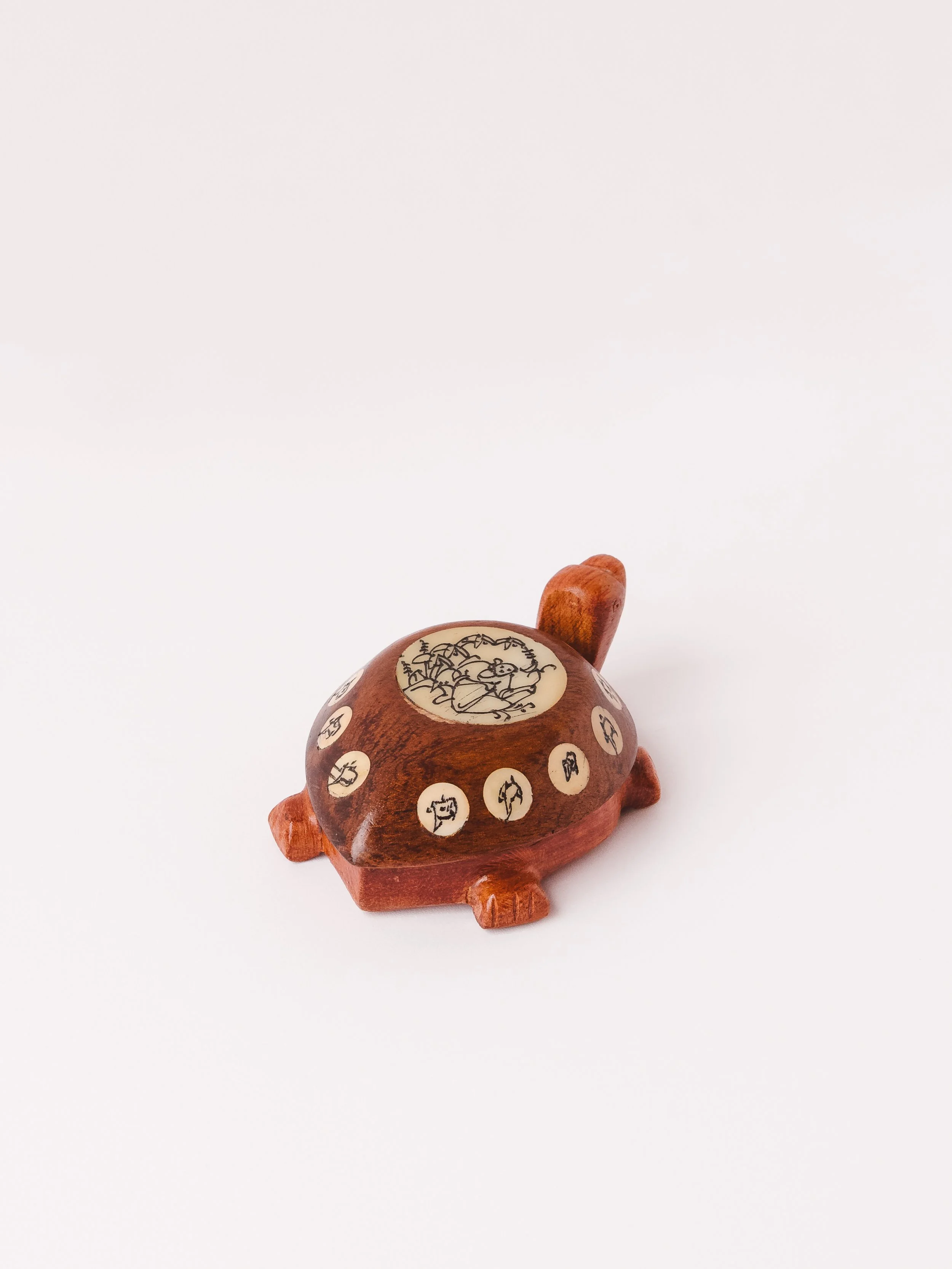 Image 4 of 13
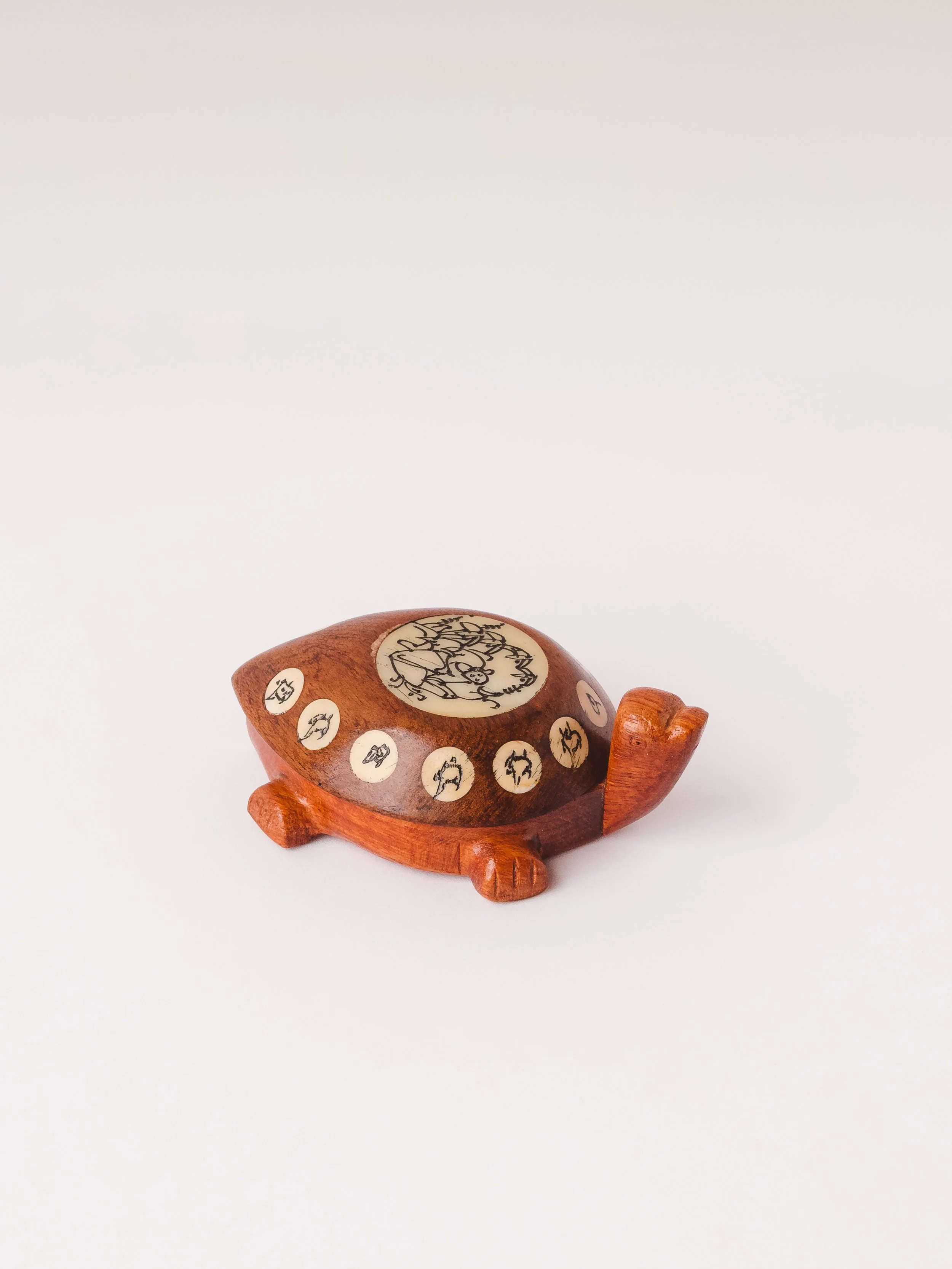 Image 5 of 13
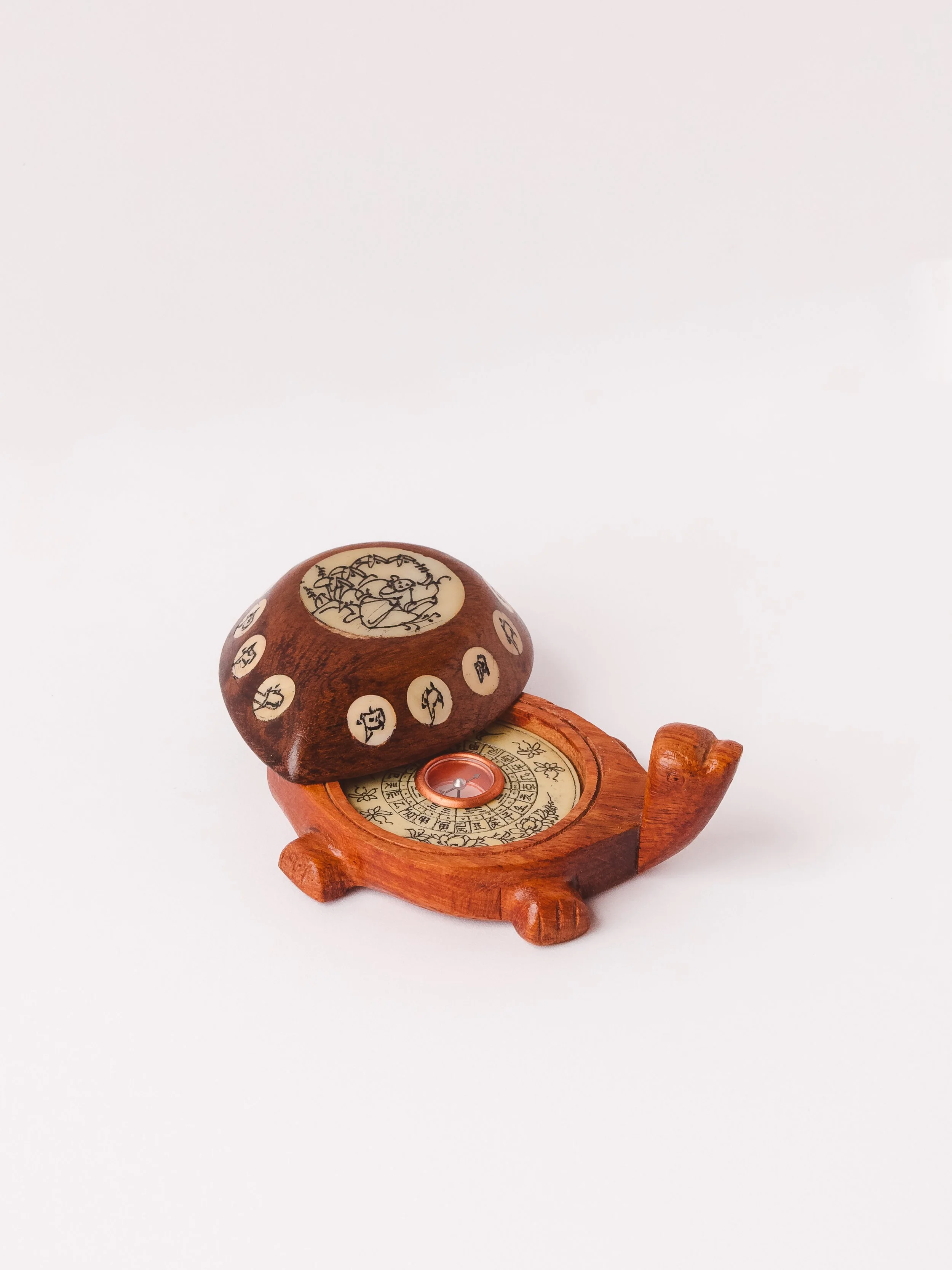 Image 6 of 13
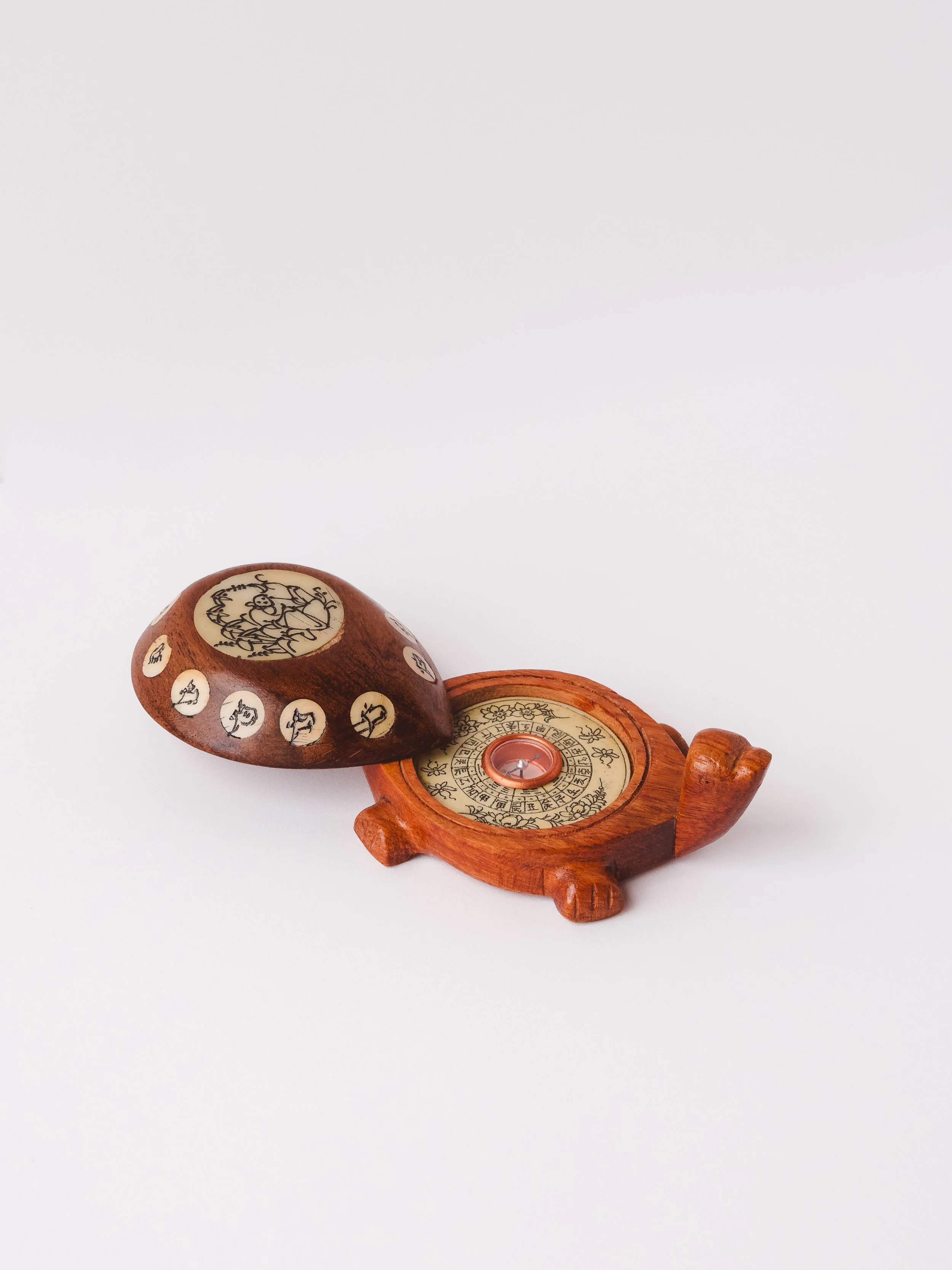 Image 7 of 13
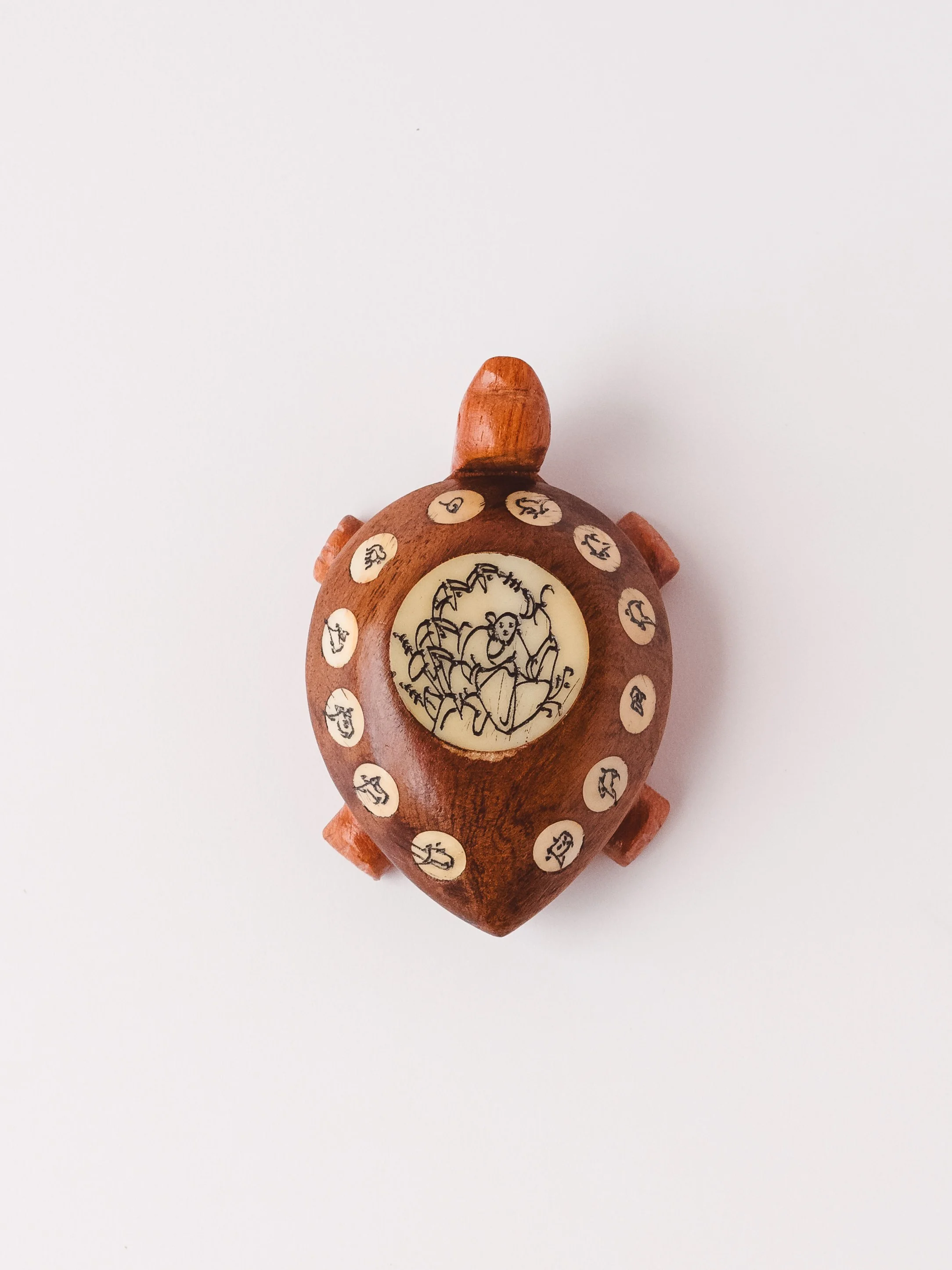 Image 8 of 13
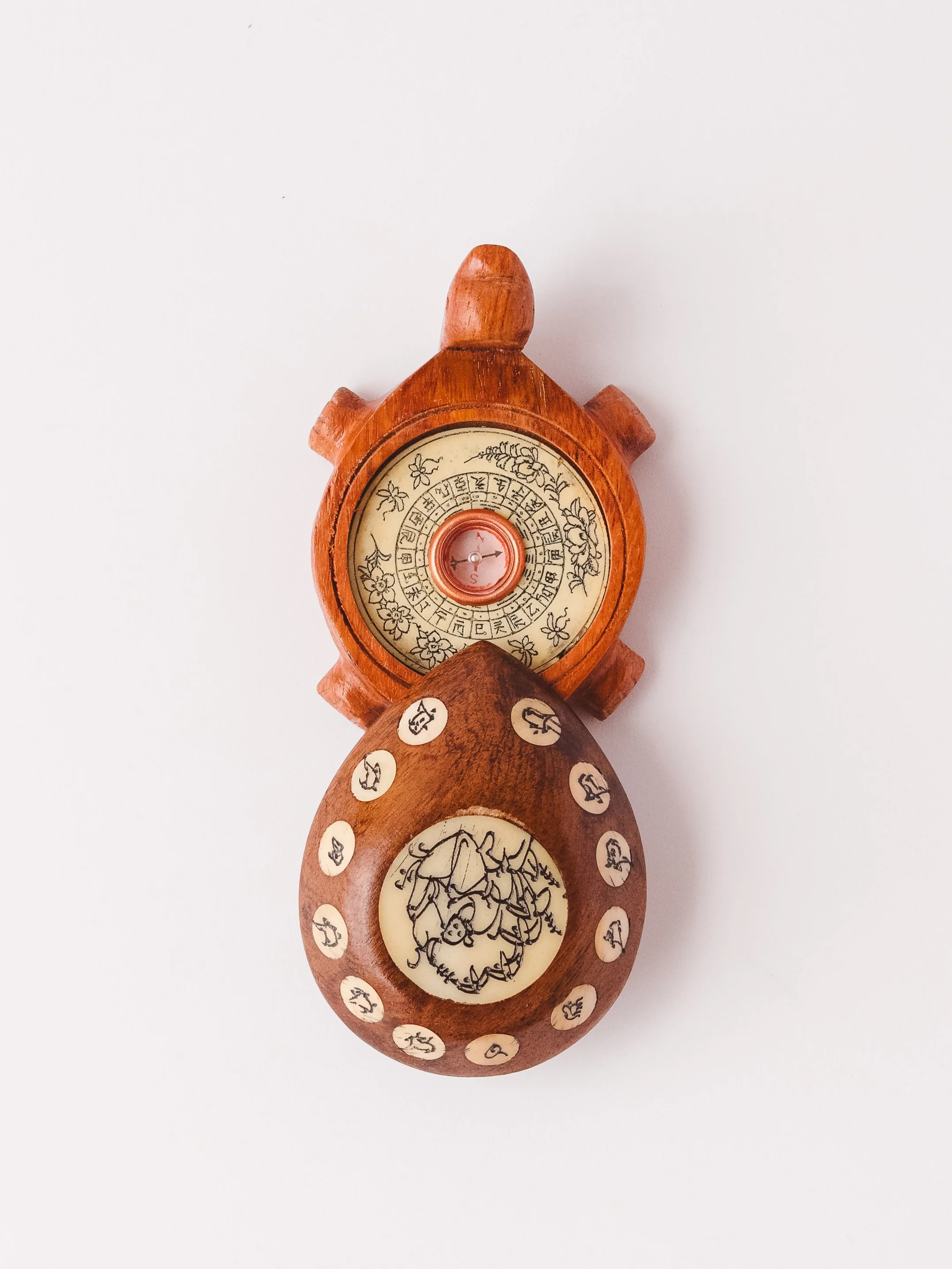 Image 9 of 13
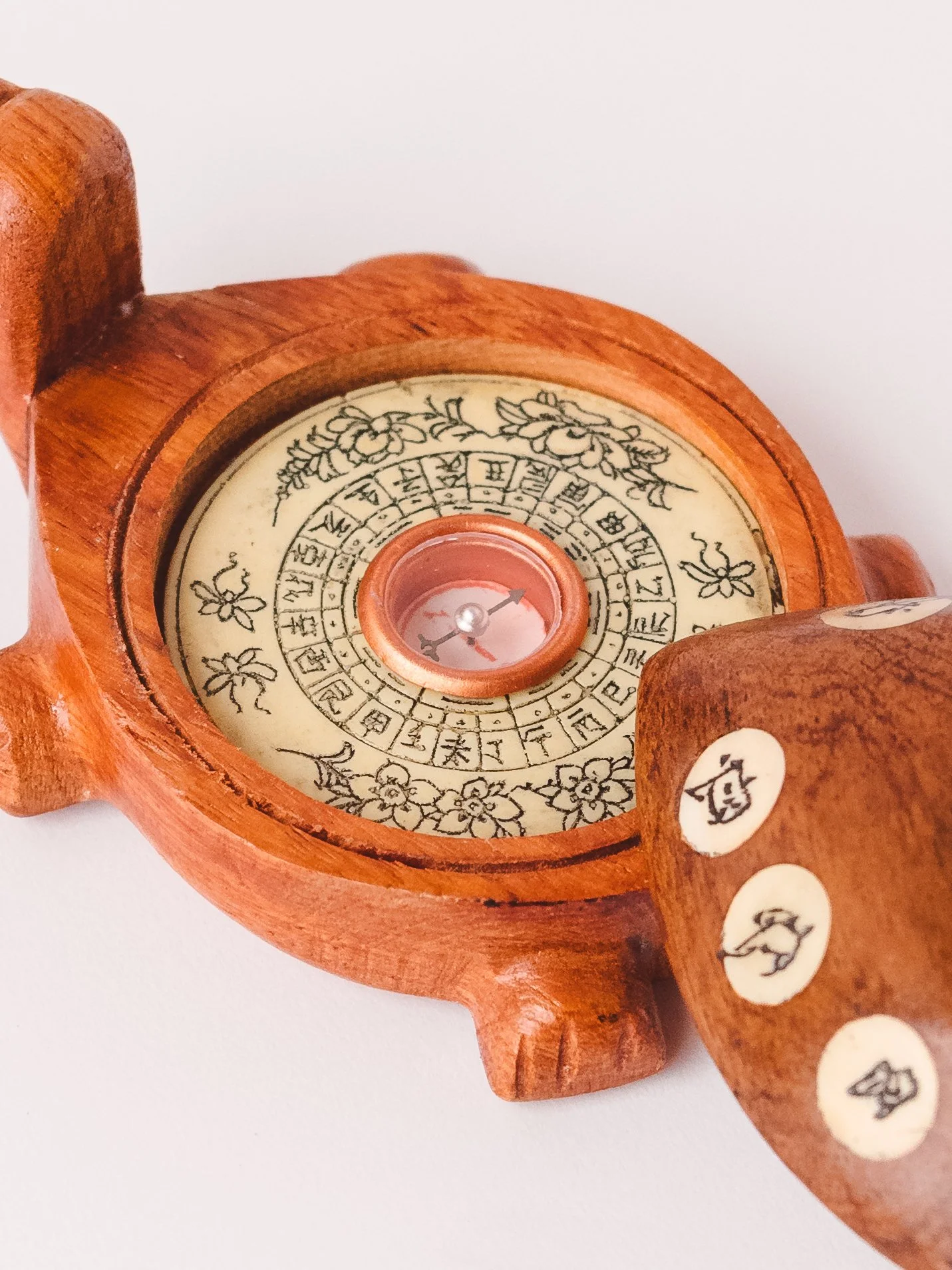 Image 10 of 13
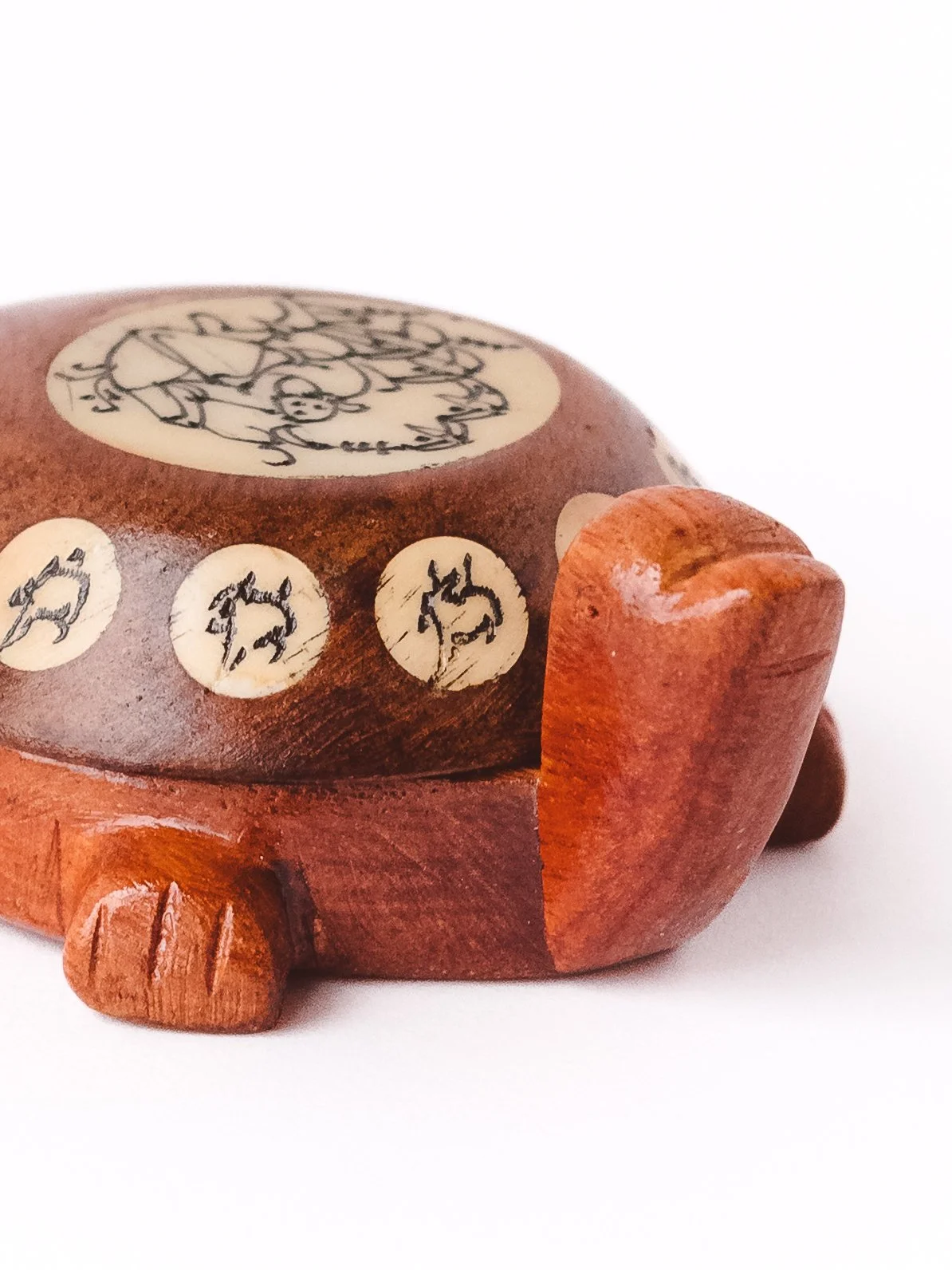 Image 11 of 13
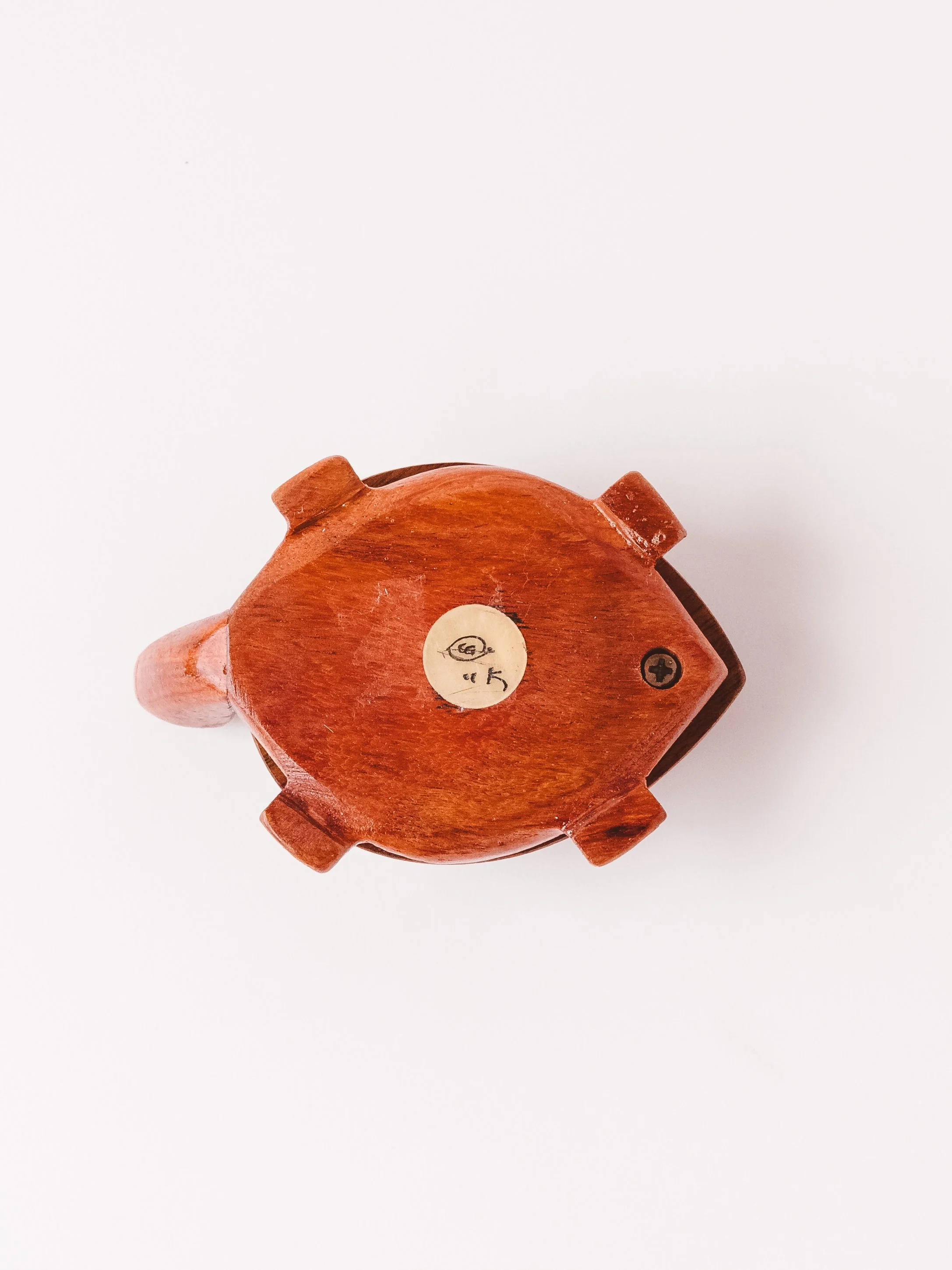 Image 12 of 13
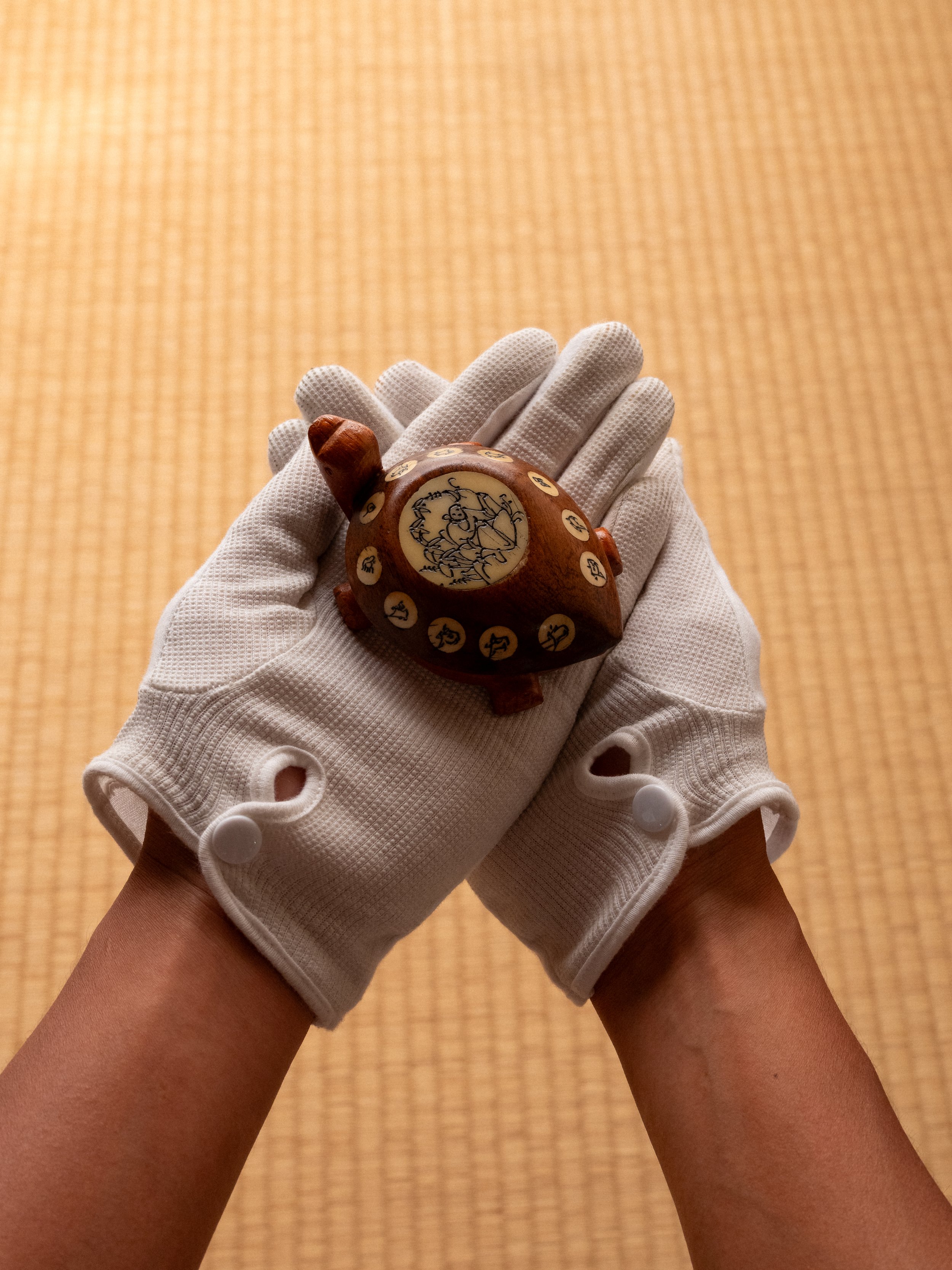 Image 13 of 13