【 The Concept 】
A snake, abstracted almost to the point of pure form. A ribbon of flat clay coils into a compact spiral; from that spiral the neck lifts in a sudden arched curve, the flat spatulate head raised and looking out; the long tail runs straight backward along the ground. There is almost nothing decorative here — no painted scales, no fangs, only a pair of small softly-domed eyes modelled directly into the head. Only the essential motions of a serpent: coil, rise, stretch. The surface is a warm speckled olive-and-amber that catches the light in a way no flat paint could — a crystalline iron glaze in which countless tiny gold-brown specks are actually fired into the glaze. This is a piece of Japanese mid-century studio pottery, made in the years when Japan's ceramic tradition met modernism head-on and produced sculptures like this — quiet, sculptural, unmistakably northern in composition and yet unmistakably Japanese in the earth it is made from.
【 What You Are Looking At 】
This is a modernist take on a serpent form that Japan has known for thousands of years. Read the composition from the ground up. The tail — a long, low horizontal — anchors the piece and gives it that strong sideways gesture the eye reads first. The coil — the compact spiral in the middle — is a snake at rest, gathered on itself, a shape Japanese folklore calls toguro, "coiled": in Japan a snake coiled up is not menace but stillness, saved energy, wealth held in reserve. The neck and head — the sudden vertical arch — are the moment the snake wakes: the kamakubi, the "sickle neck" of the striking serpent, drawn here not violently but as a single elegant curve. Coil, gather, rise: the whole life of the animal in one figure.
【 The Snake in Japan 】
In Japan the snake is not the tempter of Eden. It is a water god and a rice god, a creature the old farming villages watched for at the paddy's edge because it meant the fields would drink. From that came its role as messenger of Benzaiten, the goddess of water, music, and — above all — wealth: the white snake at her shrine is the reason Japanese wallets and shrines still receive offerings of eggs on the day of the snake (mi no hi), and the reason a shed snakeskin is kept in a wallet for luck. Because a snake sheds its skin whole and steps out new, it is one of the oldest emblems of rebirth and continuous renewal in the culture — the closest Japanese counterpart to the Western ouroboros, the serpent forever biting its own tail. This piece is that snake: not Eden's, but the one that brings water to the field and money to the purse.
【 A Northern Composition, a Japanese Earth 】
The abstraction of this figure — the horizontal weight, the reduction to essential curves, the way a whole animal is compressed into a single sculptural gesture — is the language of mid-century modern design, the same language that produced the wooden animals of Kay Bojesen or the ceramic beasts of Lisa Larson and Gunnar Nylund in Scandinavia. What sets this piece apart is that the vocabulary is northern but the earth is Japanese: a white stoneware body from a Japanese kiln, and above all a Japanese glaze — the story of which is the story of the piece itself. In this abstract line the modern reader can also hear a much older Japanese voice: the snake ornaments of the Jōmon period, more than four thousand years ago, in which the sacred serpent was already being pulled from realism into rhythm and pure form. The same instinct, in another century's hand.
【 The Glaze: Tea Dust 】
The color and speckle here have a name and a long pedigree. This is tea-dust glaze — in Japanese soba-yū, in Chinese chá-yè-mò ("tea leaf powder"), an iron-crystalline glaze first fired in the Tang dynasty and refined ever since. What looks like a green ground scattered with fine gold flecks is in fact a single glaze doing something almost alchemical: dissolved iron in the melt slowly precipitates out as microscopic crystals as the kiln cools, blooming into that endless dust of specks. Nothing was sprayed, nothing was painted. The whole surface is the honest record of iron finding its own form in fire. Along the raised edges — the belly line of the coil, the ridge of the neck — the glaze runs thin and the crystals cluster into a pale, silvery highlight, exactly the "landscape" (keshiki) the Japanese ceramic tradition prizes most. It is a glaze that rewards touch as well as sight: matte to a fingertip, granular where the crystals sit, glassy where the glaze pooled deep.
【 The Object 】
A compact, hand-scale sculpture — small enough to hold in one hand, calm and self-contained. The white base beneath, glimpsed at the very foot, is the light stoneware body; the coloured skin is the crystalline glaze. Simple, complete, without noise.
【 Where to Place It 】
Anywhere the eye can catch its horizontal line — a low bookshelf, a desk, a bedside, an entrance console, next to a small vase or a ceramic bowl of the same warm earth tones. It reads beautifully alongside mid-century modern furniture, Scandinavian wood, and other Japanese studio pottery. As a snake, its place in the home is where you would like to gather and keep something — near the front door for welcome and protection, near where money passes or is saved, or on a workspace as an emblem of shed skin, renewal, and quiet accumulation.
【 Care 】
Dust with a soft dry cloth; the crystalline surface is glazed and stable, but avoid scouring or abrasives. Lift, do not slide, when moving. The color is fired into the glaze and will not fade.
【 Function & What It Brings 】
Keep it, place it, or give it. As a talisman a snake in Japanese tradition brings wealth, protection, renewal, and the water that makes things grow — an ideal gift for a housewarming, a new business, a milestone, or anyone born in a Year of the Snake. As an object it is a small quiet joy of modernist ceramic sculpture, the kind of piece that composes a shelf rather than crowds it, and rewards the viewer who bothers to look closely at the glaze.
【 The Texture 】
Glazed white stoneware. Warm speckled olive to amber, matte-satin to the touch, granular where the iron crystals sit, glassy where the glaze pooled between the coils; the small area of the unglazed foot is light stoneware. Compact, dense, satisfyingly weighted in the hand.
【 Presence 】
Calm, still, quietly awake. The low horizontal weight and the raised head hold a beautiful tension — an animal at rest, and yet ready. On a shelf it composes the space around it rather than demands it.
Archive Note: The number in the name (1948) references the year Japan's postwar avant-garde ceramic movement Sōdeisha was founded — the beginning of the modernist Japanese studio pottery that pieces like this belong to. It is NOT the date this piece was made.
Provenance Note: Sourced from a private collection in Japan. A Japanese mid-century studio ceramic in the iron-crystalline glaze tradition; attributed by style and finish, the maker is not identified here.
Condition Note: Sold as acquired, in very good vintage condition. The fine gold-brown speckling and the pale-edged crystalline highlights on the raised curves are the intended landscape of a tea-dust iron crystalline glaze, not damage. Please see the photographs as part of the description.
【 The Concept 】
A snake, abstracted almost to the point of pure form. A ribbon of flat clay coils into a compact spiral; from that spiral the neck lifts in a sudden arched curve, the flat spatulate head raised and looking out; the long tail runs straight backward along the ground. There is almost nothing decorative here — no painted scales, no fangs, only a pair of small softly-domed eyes modelled directly into the head. Only the essential motions of a serpent: coil, rise, stretch. The surface is a warm speckled olive-and-amber that catches the light in a way no flat paint could — a crystalline iron glaze in which countless tiny gold-brown specks are actually fired into the glaze. This is a piece of Japanese mid-century studio pottery, made in the years when Japan's ceramic tradition met modernism head-on and produced sculptures like this — quiet, sculptural, unmistakably northern in composition and yet unmistakably Japanese in the earth it is made from.
【 What You Are Looking At 】
This is a modernist take on a serpent form that Japan has known for thousands of years. Read the composition from the ground up. The tail — a long, low horizontal — anchors the piece and gives it that strong sideways gesture the eye reads first. The coil — the compact spiral in the middle — is a snake at rest, gathered on itself, a shape Japanese folklore calls toguro, "coiled": in Japan a snake coiled up is not menace but stillness, saved energy, wealth held in reserve. The neck and head — the sudden vertical arch — are the moment the snake wakes: the kamakubi, the "sickle neck" of the striking serpent, drawn here not violently but as a single elegant curve. Coil, gather, rise: the whole life of the animal in one figure.
【 The Snake in Japan 】
In Japan the snake is not the tempter of Eden. It is a water god and a rice god, a creature the old farming villages watched for at the paddy's edge because it meant the fields would drink. From that came its role as messenger of Benzaiten, the goddess of water, music, and — above all — wealth: the white snake at her shrine is the reason Japanese wallets and shrines still receive offerings of eggs on the day of the snake (mi no hi), and the reason a shed snakeskin is kept in a wallet for luck. Because a snake sheds its skin whole and steps out new, it is one of the oldest emblems of rebirth and continuous renewal in the culture — the closest Japanese counterpart to the Western ouroboros, the serpent forever biting its own tail. This piece is that snake: not Eden's, but the one that brings water to the field and money to the purse.
【 A Northern Composition, a Japanese Earth 】
The abstraction of this figure — the horizontal weight, the reduction to essential curves, the way a whole animal is compressed into a single sculptural gesture — is the language of mid-century modern design, the same language that produced the wooden animals of Kay Bojesen or the ceramic beasts of Lisa Larson and Gunnar Nylund in Scandinavia. What sets this piece apart is that the vocabulary is northern but the earth is Japanese: a white stoneware body from a Japanese kiln, and above all a Japanese glaze — the story of which is the story of the piece itself. In this abstract line the modern reader can also hear a much older Japanese voice: the snake ornaments of the Jōmon period, more than four thousand years ago, in which the sacred serpent was already being pulled from realism into rhythm and pure form. The same instinct, in another century's hand.
【 The Glaze: Tea Dust 】
The color and speckle here have a name and a long pedigree. This is tea-dust glaze — in Japanese soba-yū, in Chinese chá-yè-mò ("tea leaf powder"), an iron-crystalline glaze first fired in the Tang dynasty and refined ever since. What looks like a green ground scattered with fine gold flecks is in fact a single glaze doing something almost alchemical: dissolved iron in the melt slowly precipitates out as microscopic crystals as the kiln cools, blooming into that endless dust of specks. Nothing was sprayed, nothing was painted. The whole surface is the honest record of iron finding its own form in fire. Along the raised edges — the belly line of the coil, the ridge of the neck — the glaze runs thin and the crystals cluster into a pale, silvery highlight, exactly the "landscape" (keshiki) the Japanese ceramic tradition prizes most. It is a glaze that rewards touch as well as sight: matte to a fingertip, granular where the crystals sit, glassy where the glaze pooled deep.
【 The Object 】
A compact, hand-scale sculpture — small enough to hold in one hand, calm and self-contained. The white base beneath, glimpsed at the very foot, is the light stoneware body; the coloured skin is the crystalline glaze. Simple, complete, without noise.
【 Where to Place It 】
Anywhere the eye can catch its horizontal line — a low bookshelf, a desk, a bedside, an entrance console, next to a small vase or a ceramic bowl of the same warm earth tones. It reads beautifully alongside mid-century modern furniture, Scandinavian wood, and other Japanese studio pottery. As a snake, its place in the home is where you would like to gather and keep something — near the front door for welcome and protection, near where money passes or is saved, or on a workspace as an emblem of shed skin, renewal, and quiet accumulation.
【 Care 】
Dust with a soft dry cloth; the crystalline surface is glazed and stable, but avoid scouring or abrasives. Lift, do not slide, when moving. The color is fired into the glaze and will not fade.
【 Function & What It Brings 】
Keep it, place it, or give it. As a talisman a snake in Japanese tradition brings wealth, protection, renewal, and the water that makes things grow — an ideal gift for a housewarming, a new business, a milestone, or anyone born in a Year of the Snake. As an object it is a small quiet joy of modernist ceramic sculpture, the kind of piece that composes a shelf rather than crowds it, and rewards the viewer who bothers to look closely at the glaze.
【 The Texture 】
Glazed white stoneware. Warm speckled olive to amber, matte-satin to the touch, granular where the iron crystals sit, glassy where the glaze pooled between the coils; the small area of the unglazed foot is light stoneware. Compact, dense, satisfyingly weighted in the hand.
【 Presence 】
Calm, still, quietly awake. The low horizontal weight and the raised head hold a beautiful tension — an animal at rest, and yet ready. On a shelf it composes the space around it rather than demands it.
Archive Note: The number in the name (1948) references the year Japan's postwar avant-garde ceramic movement Sōdeisha was founded — the beginning of the modernist Japanese studio pottery that pieces like this belong to. It is NOT the date this piece was made.
Provenance Note: Sourced from a private collection in Japan. A Japanese mid-century studio ceramic in the iron-crystalline glaze tradition; attributed by style and finish, the maker is not identified here.
Condition Note: Sold as acquired, in very good vintage condition. The fine gold-brown speckling and the pale-edged crystalline highlights on the raised curves are the intended landscape of a tea-dust iron crystalline glaze, not damage. Please see the photographs as part of the description.


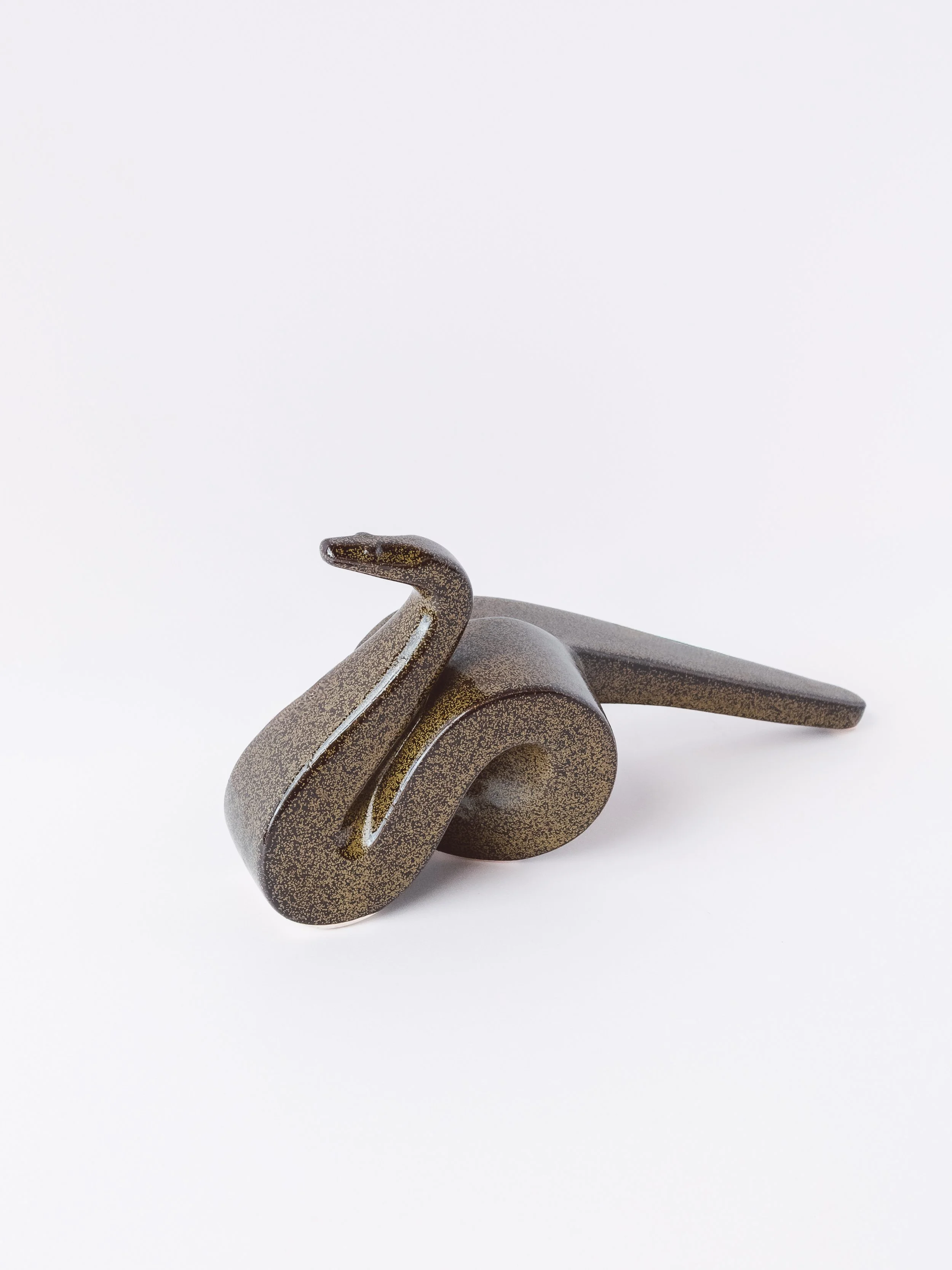 Image 1 of 11
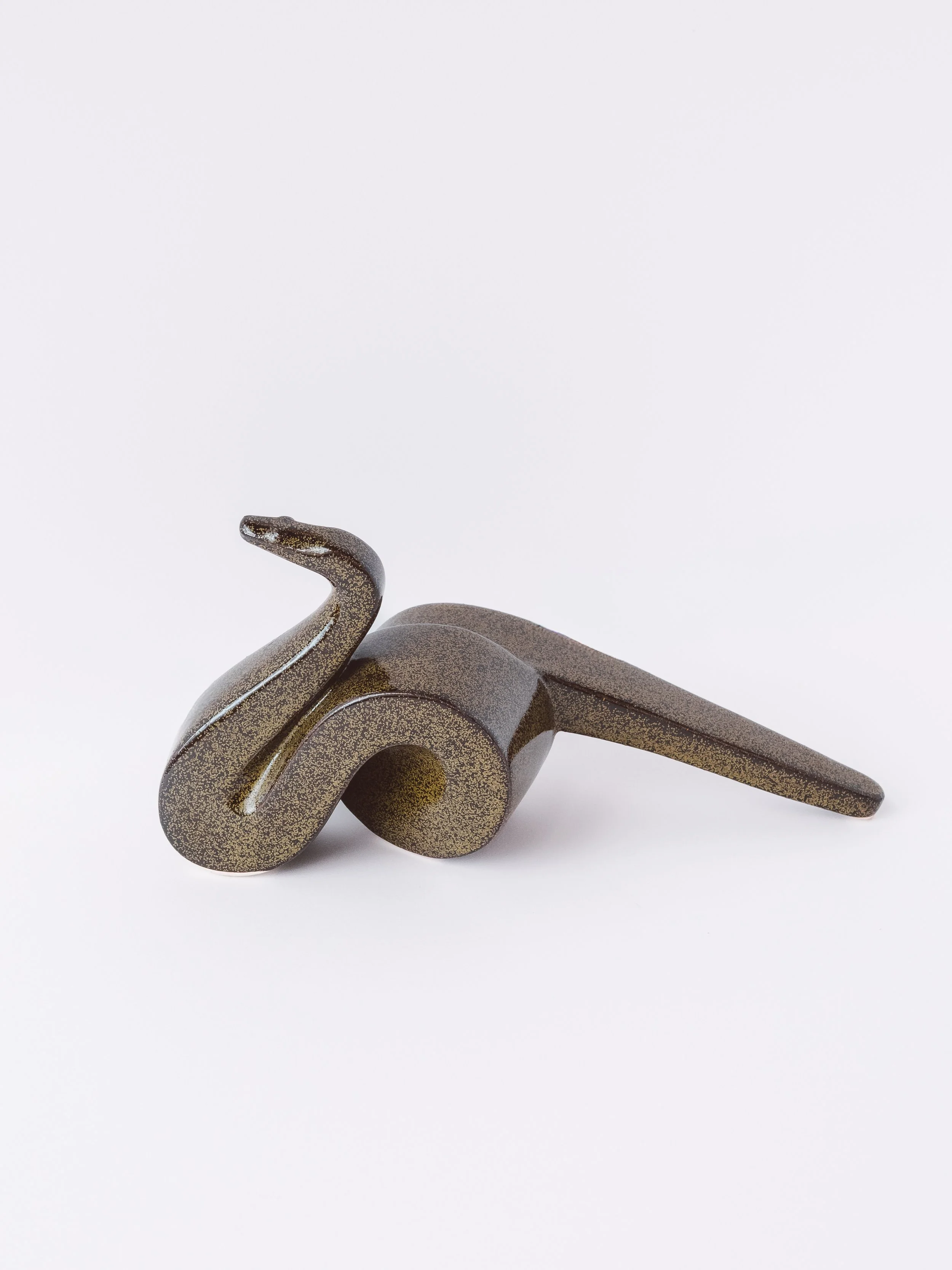 Image 2 of 11
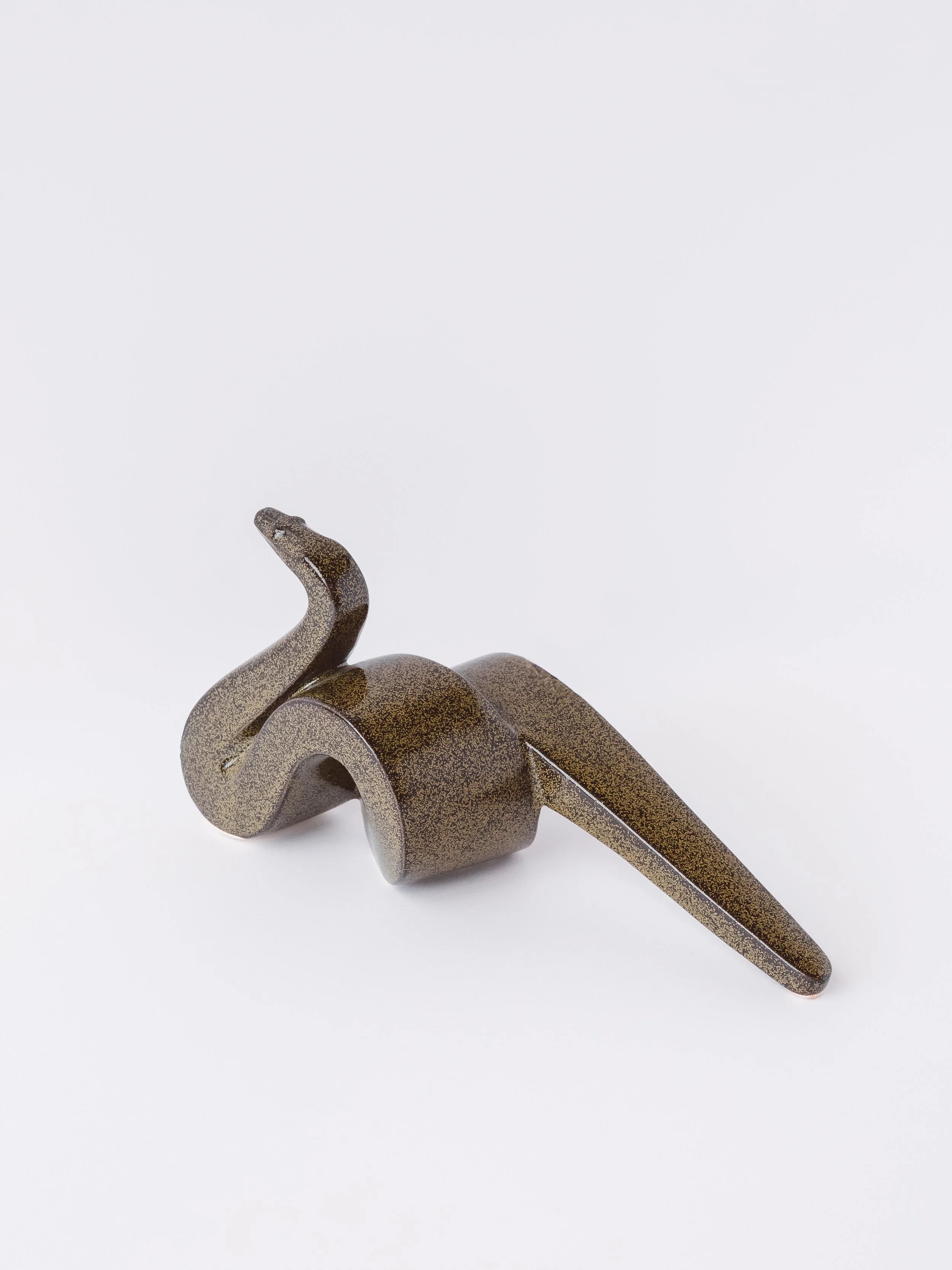 Image 3 of 11
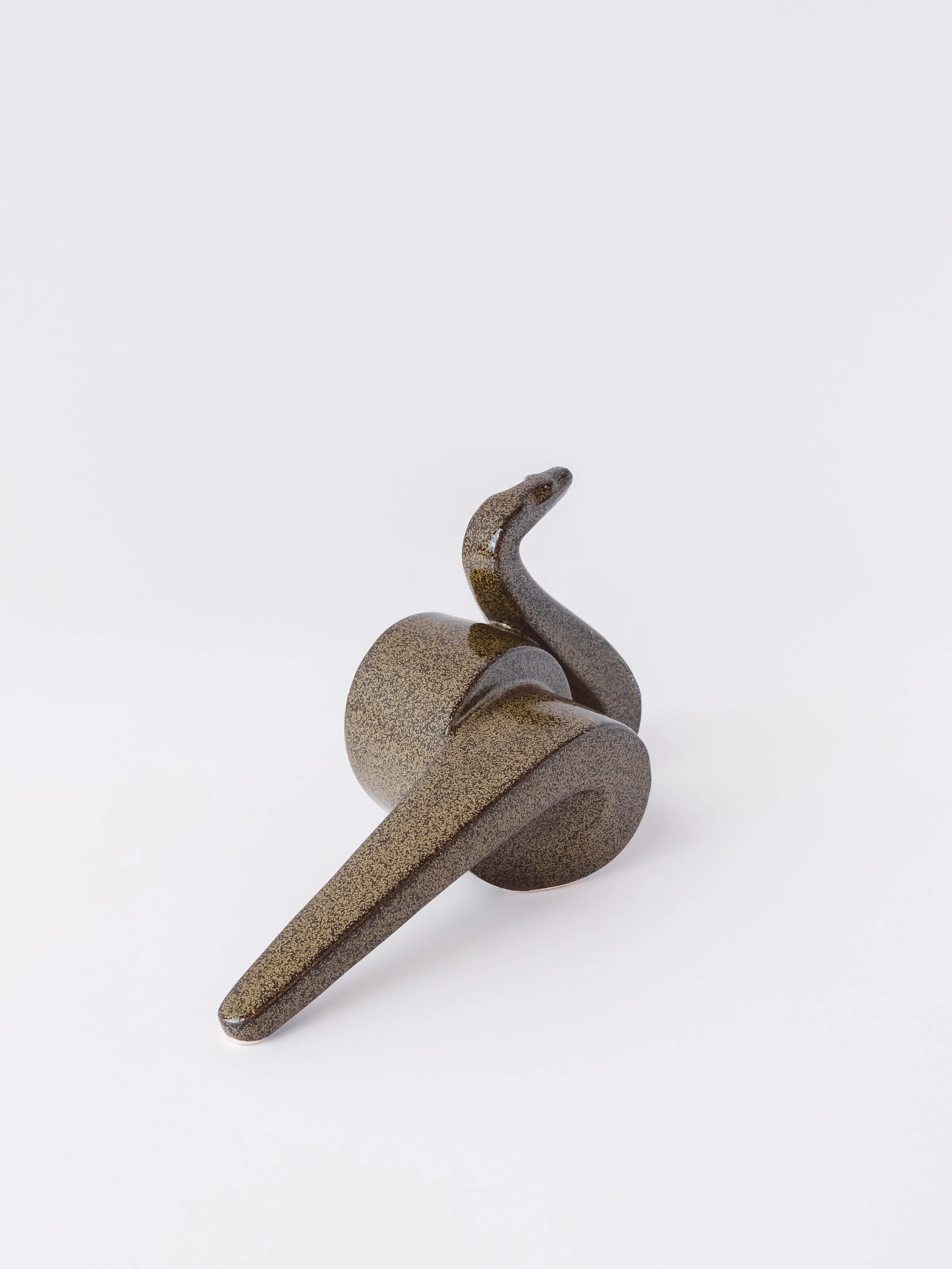 Image 4 of 11
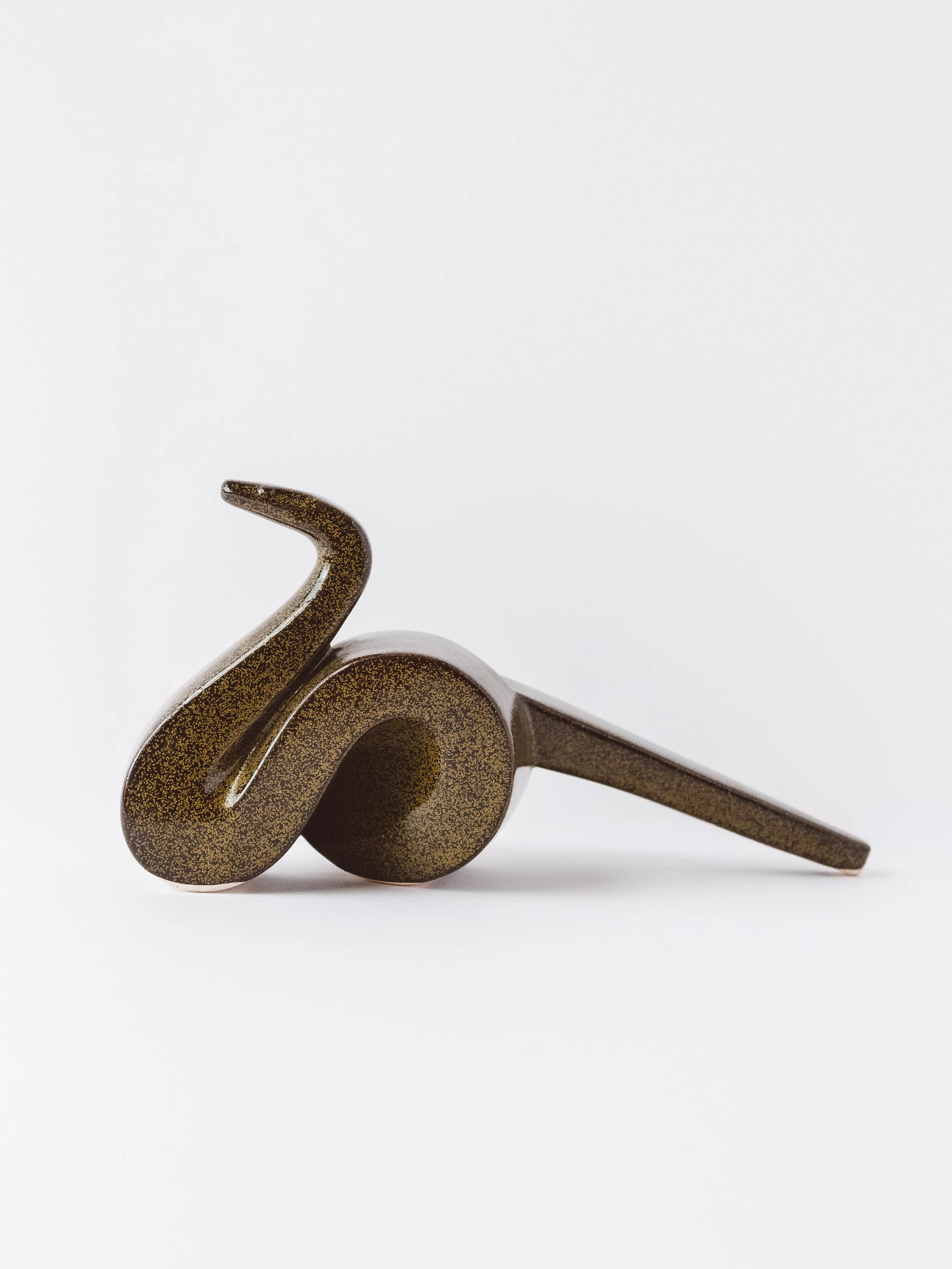 Image 5 of 11
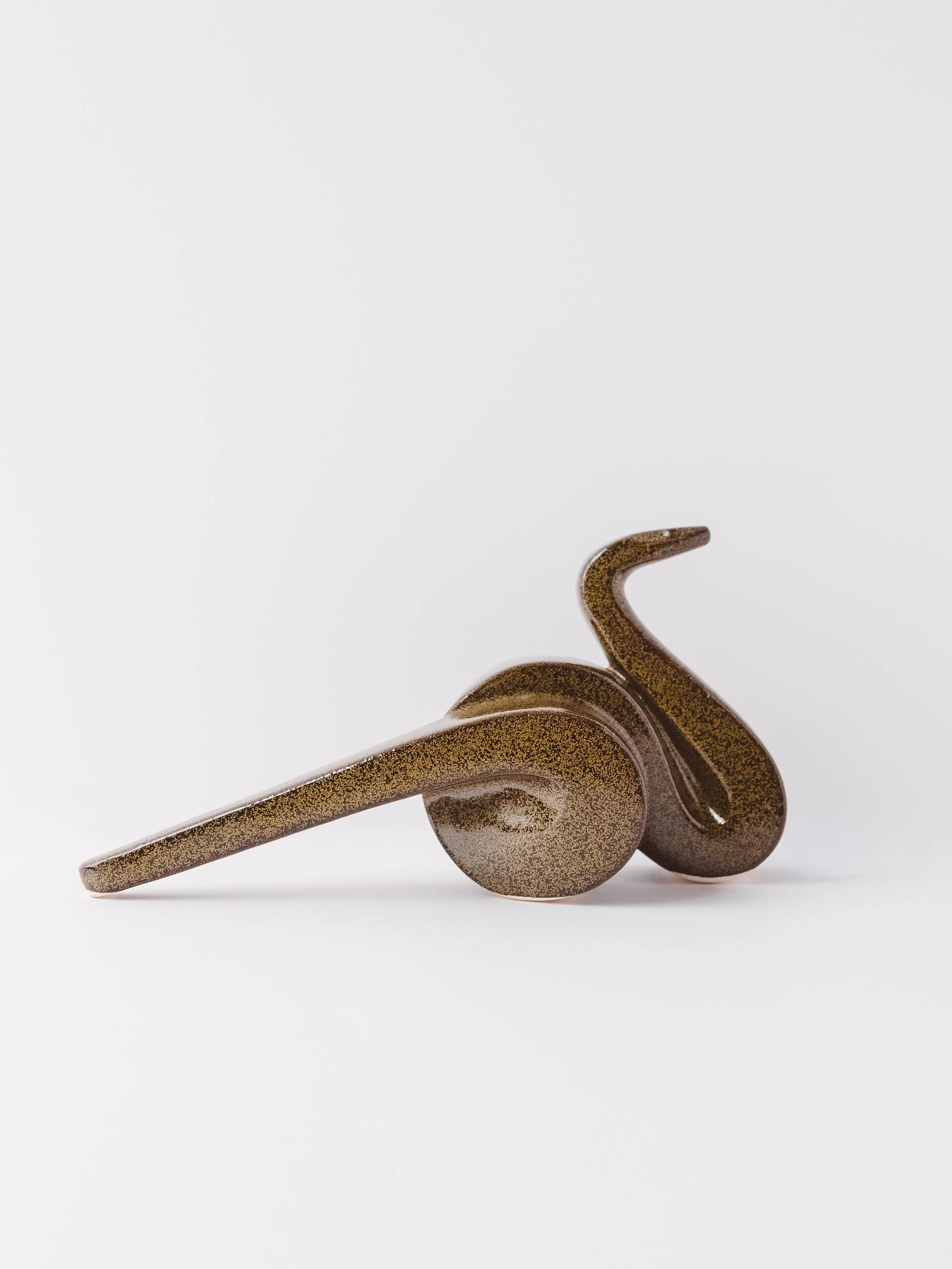 Image 6 of 11
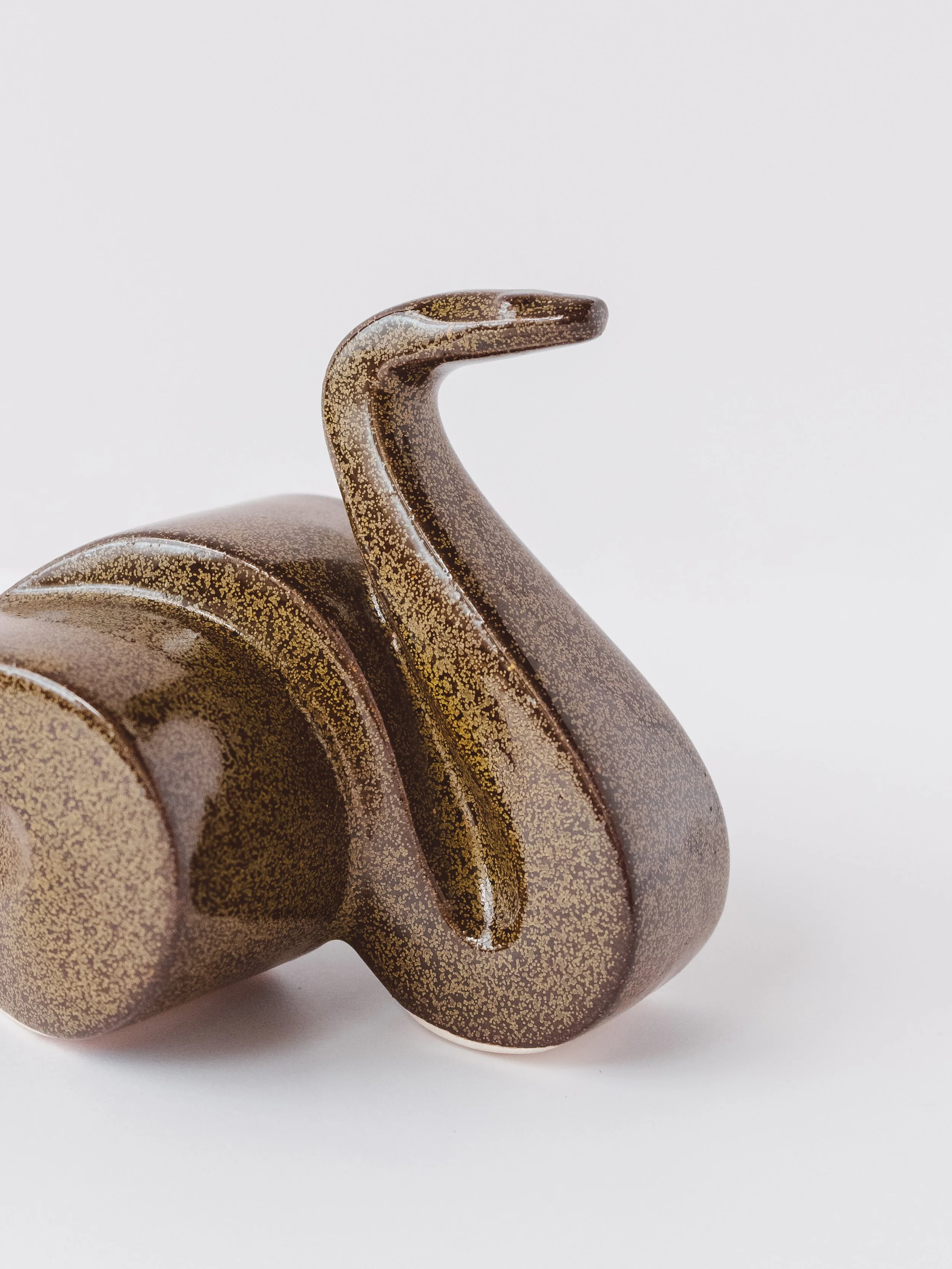 Image 7 of 11
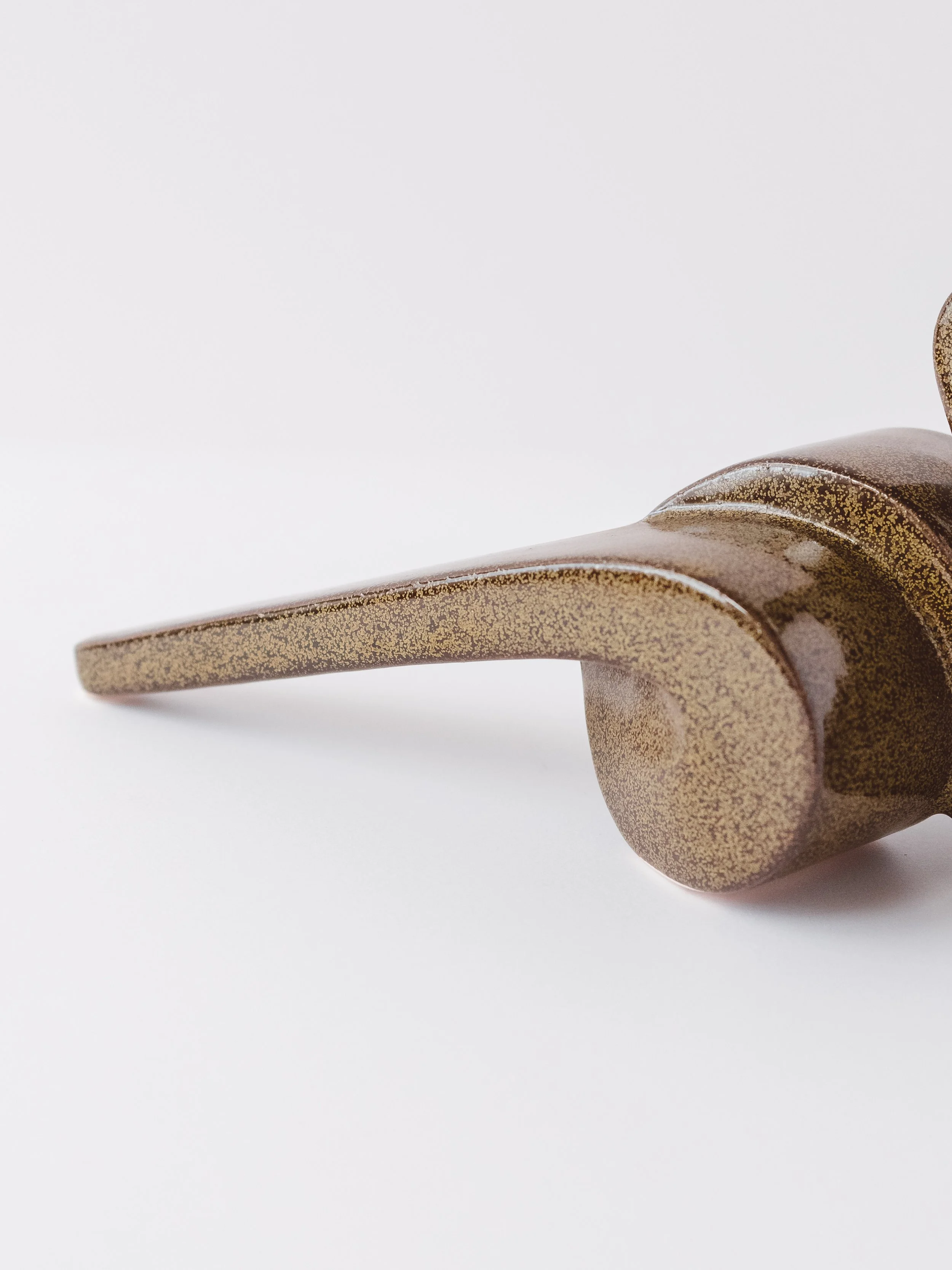 Image 8 of 11
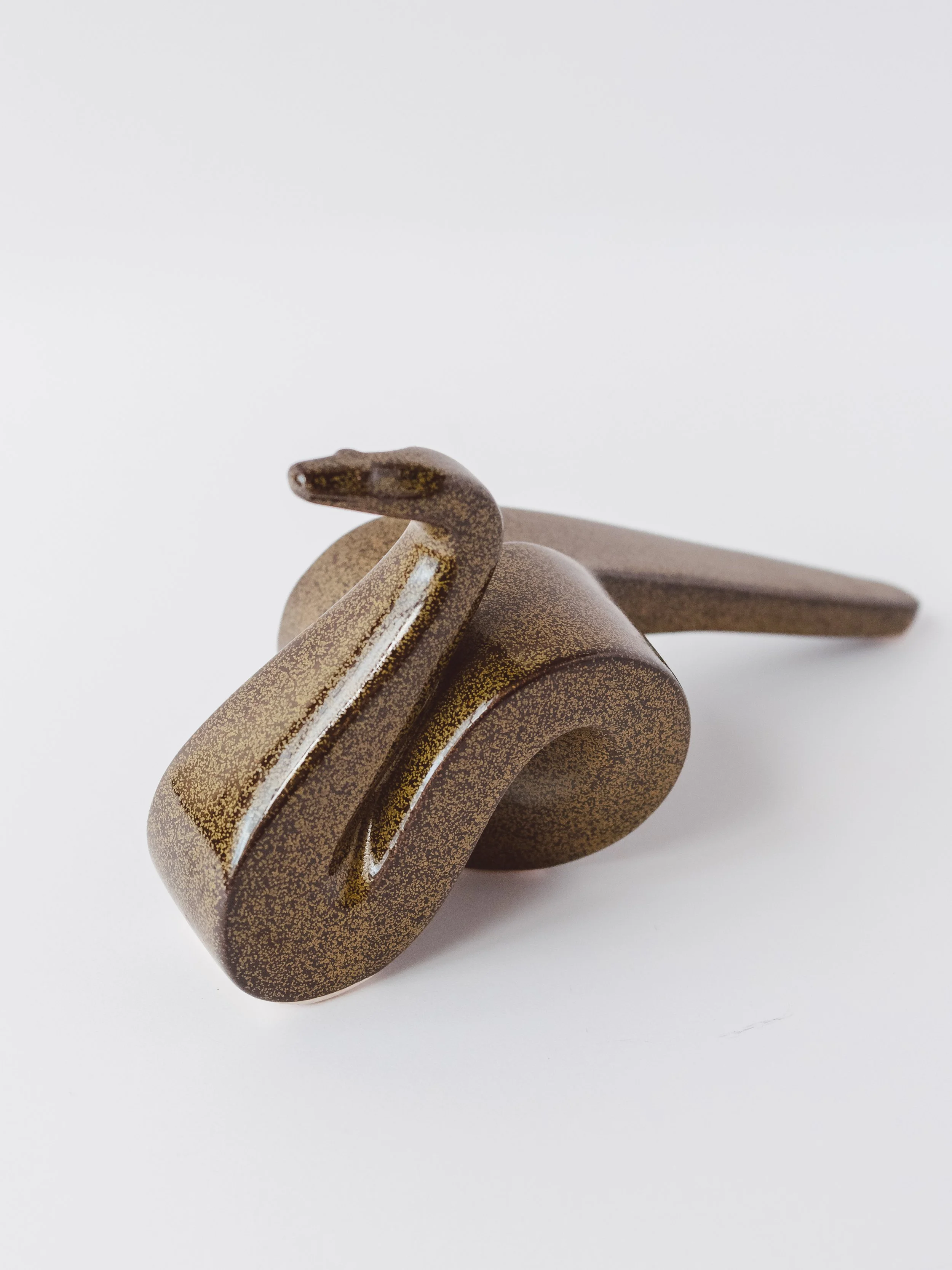 Image 9 of 11
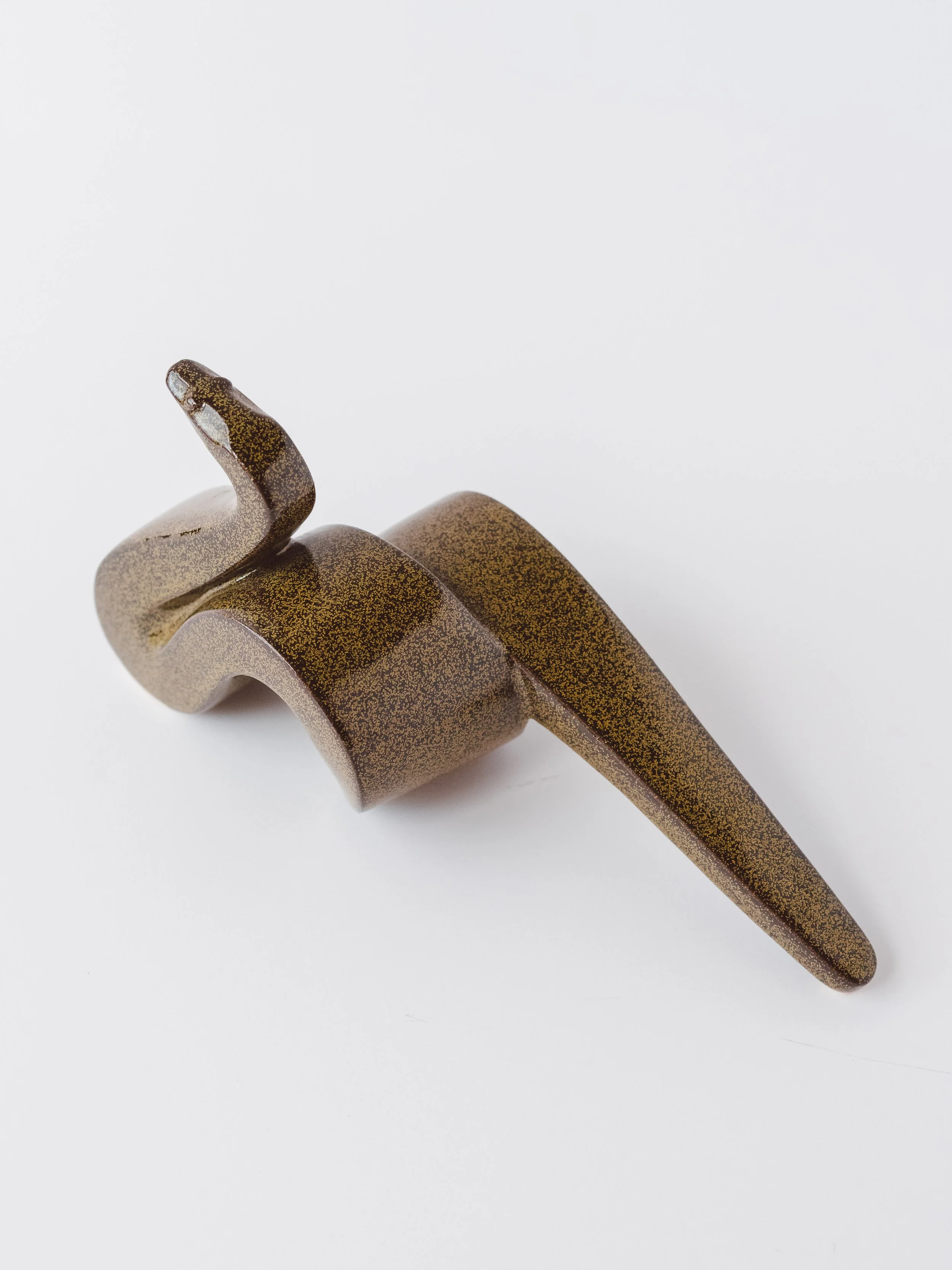 Image 10 of 11
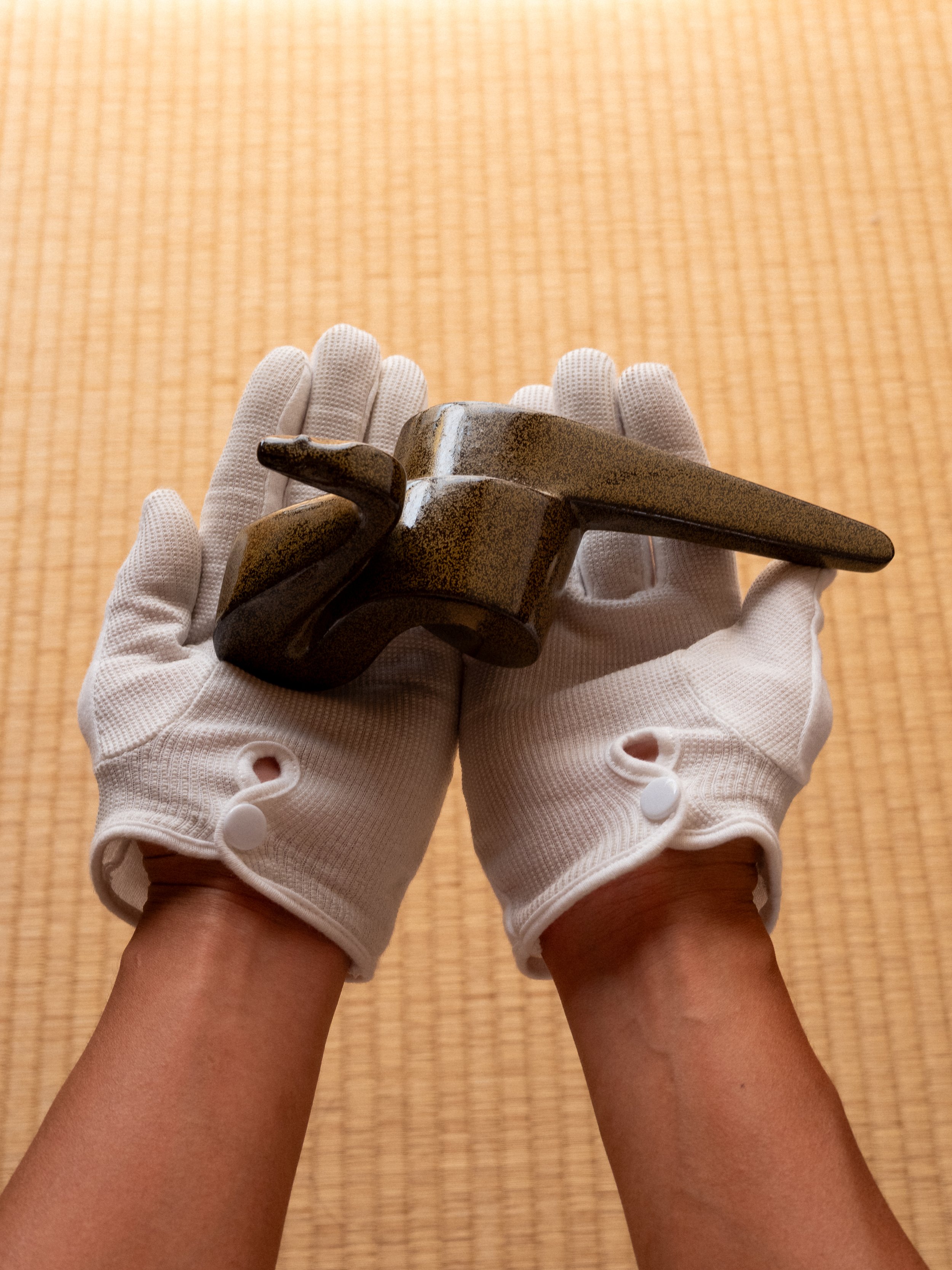 Image 11 of 11