【 The Concept 】
A horse springs upward from a curl of cloud. Front legs lifted, mane and tail flying, hoofs kicked into golden points — it is caught at the moment of leaving the earth, riding a swell of blue-and-white cloud into the sky. This is a Japanese zodiac figure for the Year of the Horse (uma), made in the porcelain tradition of Kutani in Ishikawa, but finished in a way most Kutani pieces are not: not with the famous five painted colors, but with a deep, glassy amber-iron glaze on the horse and cool cobalt cloud below. Small, hand-scale, and quietly commanding — a talisman for good fortune, ambition, and a clear rise ahead.
【 The Horse in Japan 】
Of all the zodiac animals, the horse (uma) is the one associated with the very peak of the sun. It rules the seventh sign, the hour of noon, and the direction of due south, and in the five-element system it belongs to fire — the element of vitality, courage, and full flourishing. In Japanese life the horse has always been a companion of action: the beast that pulled the plow, carried the warrior, and moved the messenger. From that came its meanings as an emblem — health and energy, forward motion, success and rising rank, "backing the winning horse." And in Shinto tradition the horse is more than an animal: it is the shinme, the sacred mount on which the gods descend, and the very origin of the ema — the wooden votive tablets, literally "picture-horse," on which Japanese people still write their prayers so that a horse may carry them to heaven.
【 On a Cloud: The Heavenly Steed 】
That the horse here stands not on the earth but on a cloud is the whole point. In Chinese myth carried into Japan, the tenma or "heavenly horse" is the mount of the celestial emperor, a divine steed with no wings that nevertheless flies through the sky — sovereign, free, unstoppable. From it comes the four-character phrase tenma-kūkō, "a heavenly horse crossing the sky," used of a person or an enterprise so free and inspired that no obstacle can hold it back. The swirling cloud beneath it is a zuiun or shōun, an "auspicious cloud," the very sign that trails a sage descending to earth or a virtuous reign taking hold; because its curls resemble the reishi fungus of immortality, it is also read as long life without end. A horse of fire riding on the water-blue cloud of good fortune, then — power lifted, and lifted rightly.
【 Fire on Water: A Balance 】
The color choice is not decoration only. In the five-element scheme the horse's element is fire, and the cloud's blue is water. Fire alone burns out; water alone stands still; the two together move — energy channeled, ambition tempered, ascent that lasts. That is what this small figure quietly holds: the heat of a leaping horse steadied by the cool current of the sky it rides.
【 The Craft: Kutani in Iron Amber 】
Kutani porcelain, made in Ishikawa for some three and a half centuries, is best known for its five brilliant overglaze colors and bold painting. Here the maker has gone the other way. The horse is finished in amejū — an "amber glaze" colored by iron — a traditional Japanese color glaze that turns glassy and deep in the fire, pooling darkest in the carved crevices (the mane, the muscle folds, the twist of the tail) and thinning to a warm reddish glow across the raised surfaces. It is a single glaze doing the work of five, letting the sculpture itself carry the drama. The cloud is finished in cobalt blue, the crests left pale where the color washes thin and the valleys pooled dark, and the tips of the hoofs are picked out in a bright golden iron accent — the traditional touch that marks the horse as sacred, the point at which a divine steed strikes the world.
【 Where to Place It 】
Small enough for a shelf, a study, an entrance console, or a desk. In Japanese practice a horse figure is placed with its face turned into the room, not out the door — a horse turned outward is read as carrying fortune away, while a horse turned in brings it home. The horse rules the south (its natural direction and its element of fire) and works well in the east (for new starts and rising energy); keep it on a clean, stable surface above the floor.
【 Care 】
Glazed porcelain is simple to keep — dust with a soft dry cloth and lift, do not slide, when moving. Avoid knocks against hard surfaces. The color and gloss are fused into the fired glaze and will not fade with the years.
【 Function & What It Brings 】
Keep it, place it, or give it. As a talisman it is aimed at forward motion — success, promotion, health, and a clear, obstacle-free rise — and belongs equally at home, in a shop, or on a working desk. As a gift it is well suited to a Year of the Horse, a New Year, a promotion, a new venture, or anyone whose year is about to begin its climb. As an object it is a small quiet delight: the drama of horse-and-cloud pressed into a piece the hand can lift.
【 The Texture 】
Glazed porcelain, glass-smooth and cool. The horse deep amber-brown, glossy where the glaze pools, warmly translucent where it thins over the raised carving. The cloud pale and blue with darker cobalt in the incised swirls; the hoofs a small bright gold. Solid, substantial for its size.
【 Presence 】
Spirited and elegant. The reared pose and the curling tail give it real animation, while the deep amber glaze and the quiet blue base keep it composed and serious — a modern, sculptural take on a very old auspicious image.
Archive Note: The number in the name (2014) is a catalogue reference echoing a Year of the Horse in the twelve-year zodiac cycle, to which this figure belongs. It is NOT the date this piece was made.
Provenance Note: Sourced from a private collection in Japan. A figure in the Kutani (Kutani-yaki) porcelain tradition; attributed by style and finish, the workshop is not identified here.
Condition Note: Sold as acquired, in very good condition. The glaze is bright and intact throughout; the fine pooling and thinning of the amber glaze over the modelled surface are natural features of an iron color glaze, not damage. Please see the photographs as part of the description.
【 The Concept 】
A horse springs upward from a curl of cloud. Front legs lifted, mane and tail flying, hoofs kicked into golden points — it is caught at the moment of leaving the earth, riding a swell of blue-and-white cloud into the sky. This is a Japanese zodiac figure for the Year of the Horse (uma), made in the porcelain tradition of Kutani in Ishikawa, but finished in a way most Kutani pieces are not: not with the famous five painted colors, but with a deep, glassy amber-iron glaze on the horse and cool cobalt cloud below. Small, hand-scale, and quietly commanding — a talisman for good fortune, ambition, and a clear rise ahead.
【 The Horse in Japan 】
Of all the zodiac animals, the horse (uma) is the one associated with the very peak of the sun. It rules the seventh sign, the hour of noon, and the direction of due south, and in the five-element system it belongs to fire — the element of vitality, courage, and full flourishing. In Japanese life the horse has always been a companion of action: the beast that pulled the plow, carried the warrior, and moved the messenger. From that came its meanings as an emblem — health and energy, forward motion, success and rising rank, "backing the winning horse." And in Shinto tradition the horse is more than an animal: it is the shinme, the sacred mount on which the gods descend, and the very origin of the ema — the wooden votive tablets, literally "picture-horse," on which Japanese people still write their prayers so that a horse may carry them to heaven.
【 On a Cloud: The Heavenly Steed 】
That the horse here stands not on the earth but on a cloud is the whole point. In Chinese myth carried into Japan, the tenma or "heavenly horse" is the mount of the celestial emperor, a divine steed with no wings that nevertheless flies through the sky — sovereign, free, unstoppable. From it comes the four-character phrase tenma-kūkō, "a heavenly horse crossing the sky," used of a person or an enterprise so free and inspired that no obstacle can hold it back. The swirling cloud beneath it is a zuiun or shōun, an "auspicious cloud," the very sign that trails a sage descending to earth or a virtuous reign taking hold; because its curls resemble the reishi fungus of immortality, it is also read as long life without end. A horse of fire riding on the water-blue cloud of good fortune, then — power lifted, and lifted rightly.
【 Fire on Water: A Balance 】
The color choice is not decoration only. In the five-element scheme the horse's element is fire, and the cloud's blue is water. Fire alone burns out; water alone stands still; the two together move — energy channeled, ambition tempered, ascent that lasts. That is what this small figure quietly holds: the heat of a leaping horse steadied by the cool current of the sky it rides.
【 The Craft: Kutani in Iron Amber 】
Kutani porcelain, made in Ishikawa for some three and a half centuries, is best known for its five brilliant overglaze colors and bold painting. Here the maker has gone the other way. The horse is finished in amejū — an "amber glaze" colored by iron — a traditional Japanese color glaze that turns glassy and deep in the fire, pooling darkest in the carved crevices (the mane, the muscle folds, the twist of the tail) and thinning to a warm reddish glow across the raised surfaces. It is a single glaze doing the work of five, letting the sculpture itself carry the drama. The cloud is finished in cobalt blue, the crests left pale where the color washes thin and the valleys pooled dark, and the tips of the hoofs are picked out in a bright golden iron accent — the traditional touch that marks the horse as sacred, the point at which a divine steed strikes the world.
【 Where to Place It 】
Small enough for a shelf, a study, an entrance console, or a desk. In Japanese practice a horse figure is placed with its face turned into the room, not out the door — a horse turned outward is read as carrying fortune away, while a horse turned in brings it home. The horse rules the south (its natural direction and its element of fire) and works well in the east (for new starts and rising energy); keep it on a clean, stable surface above the floor.
【 Care 】
Glazed porcelain is simple to keep — dust with a soft dry cloth and lift, do not slide, when moving. Avoid knocks against hard surfaces. The color and gloss are fused into the fired glaze and will not fade with the years.
【 Function & What It Brings 】
Keep it, place it, or give it. As a talisman it is aimed at forward motion — success, promotion, health, and a clear, obstacle-free rise — and belongs equally at home, in a shop, or on a working desk. As a gift it is well suited to a Year of the Horse, a New Year, a promotion, a new venture, or anyone whose year is about to begin its climb. As an object it is a small quiet delight: the drama of horse-and-cloud pressed into a piece the hand can lift.
【 The Texture 】
Glazed porcelain, glass-smooth and cool. The horse deep amber-brown, glossy where the glaze pools, warmly translucent where it thins over the raised carving. The cloud pale and blue with darker cobalt in the incised swirls; the hoofs a small bright gold. Solid, substantial for its size.
【 Presence 】
Spirited and elegant. The reared pose and the curling tail give it real animation, while the deep amber glaze and the quiet blue base keep it composed and serious — a modern, sculptural take on a very old auspicious image.
Archive Note: The number in the name (2014) is a catalogue reference echoing a Year of the Horse in the twelve-year zodiac cycle, to which this figure belongs. It is NOT the date this piece was made.
Provenance Note: Sourced from a private collection in Japan. A figure in the Kutani (Kutani-yaki) porcelain tradition; attributed by style and finish, the workshop is not identified here.
Condition Note: Sold as acquired, in very good condition. The glaze is bright and intact throughout; the fine pooling and thinning of the amber glaze over the modelled surface are natural features of an iron color glaze, not damage. Please see the photographs as part of the description.


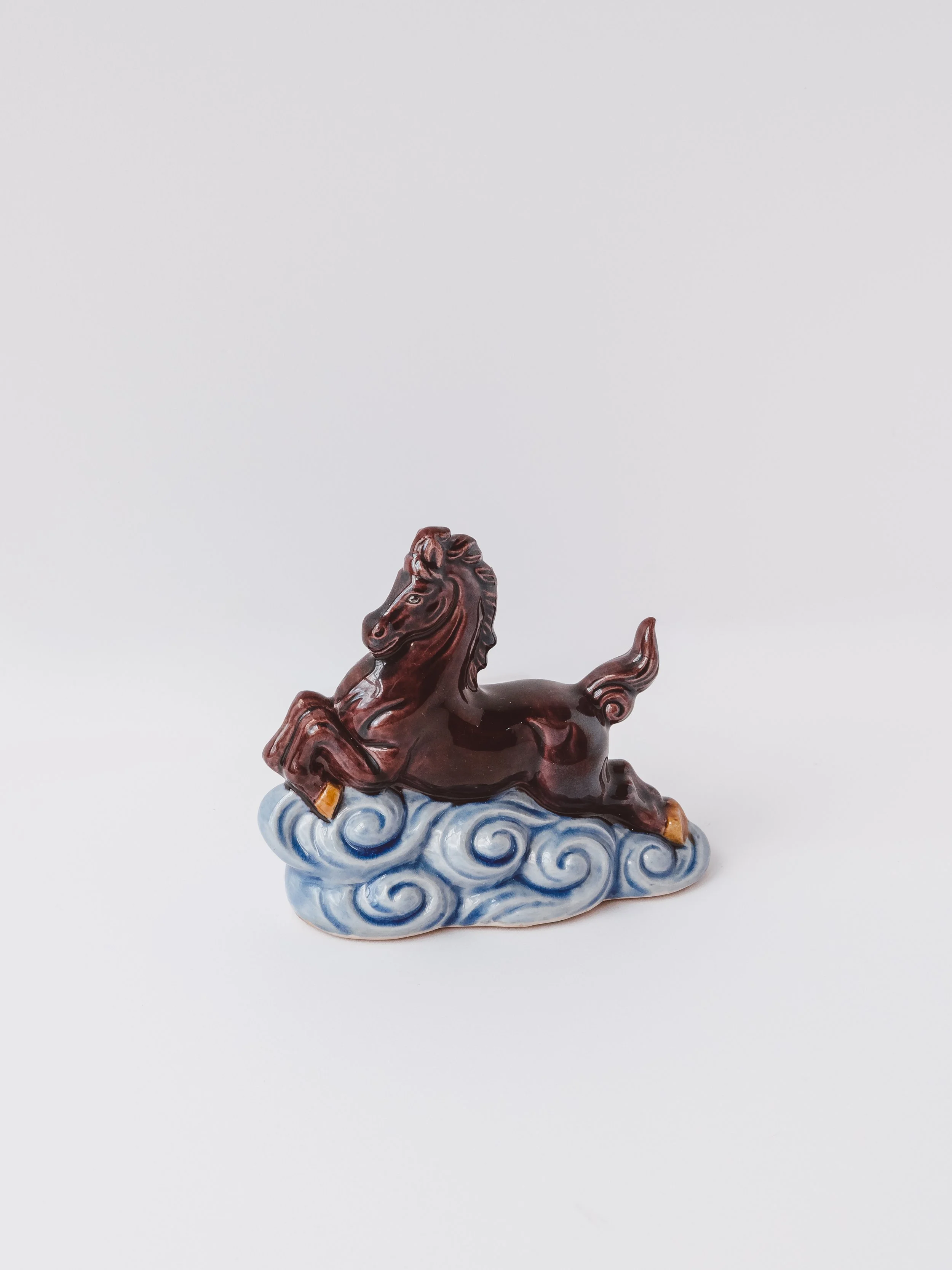 Image 1 of 10
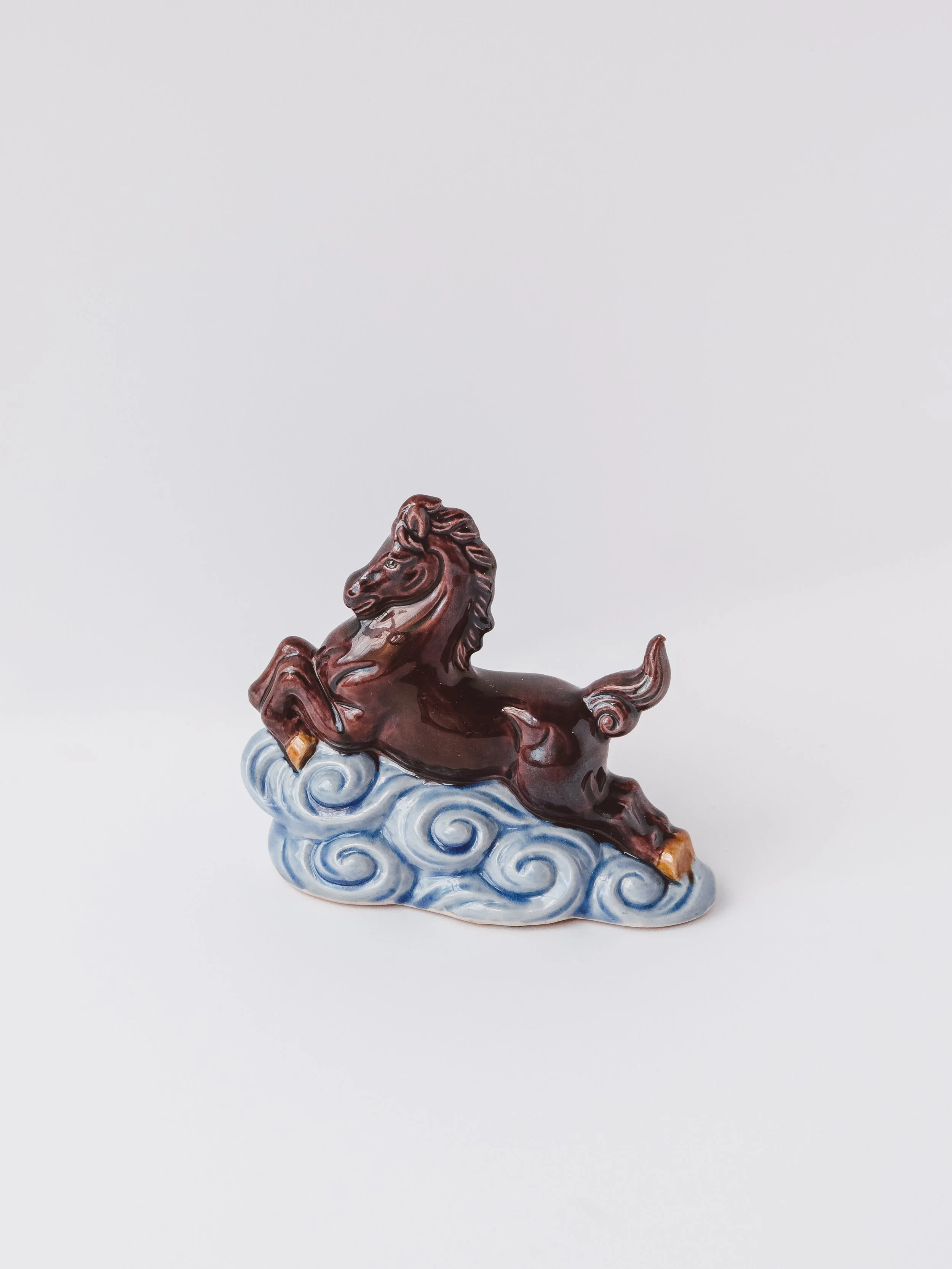 Image 2 of 10
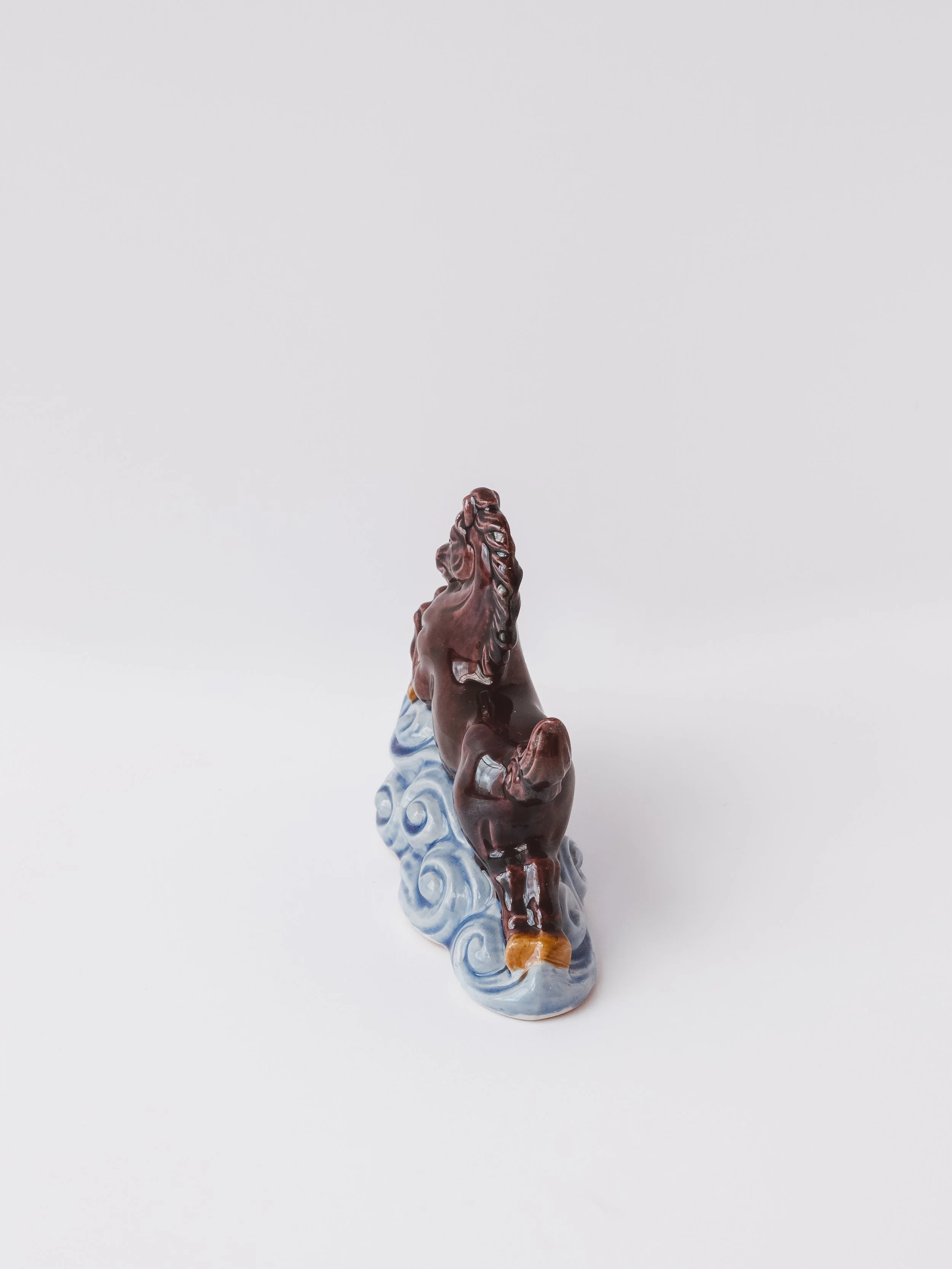 Image 3 of 10
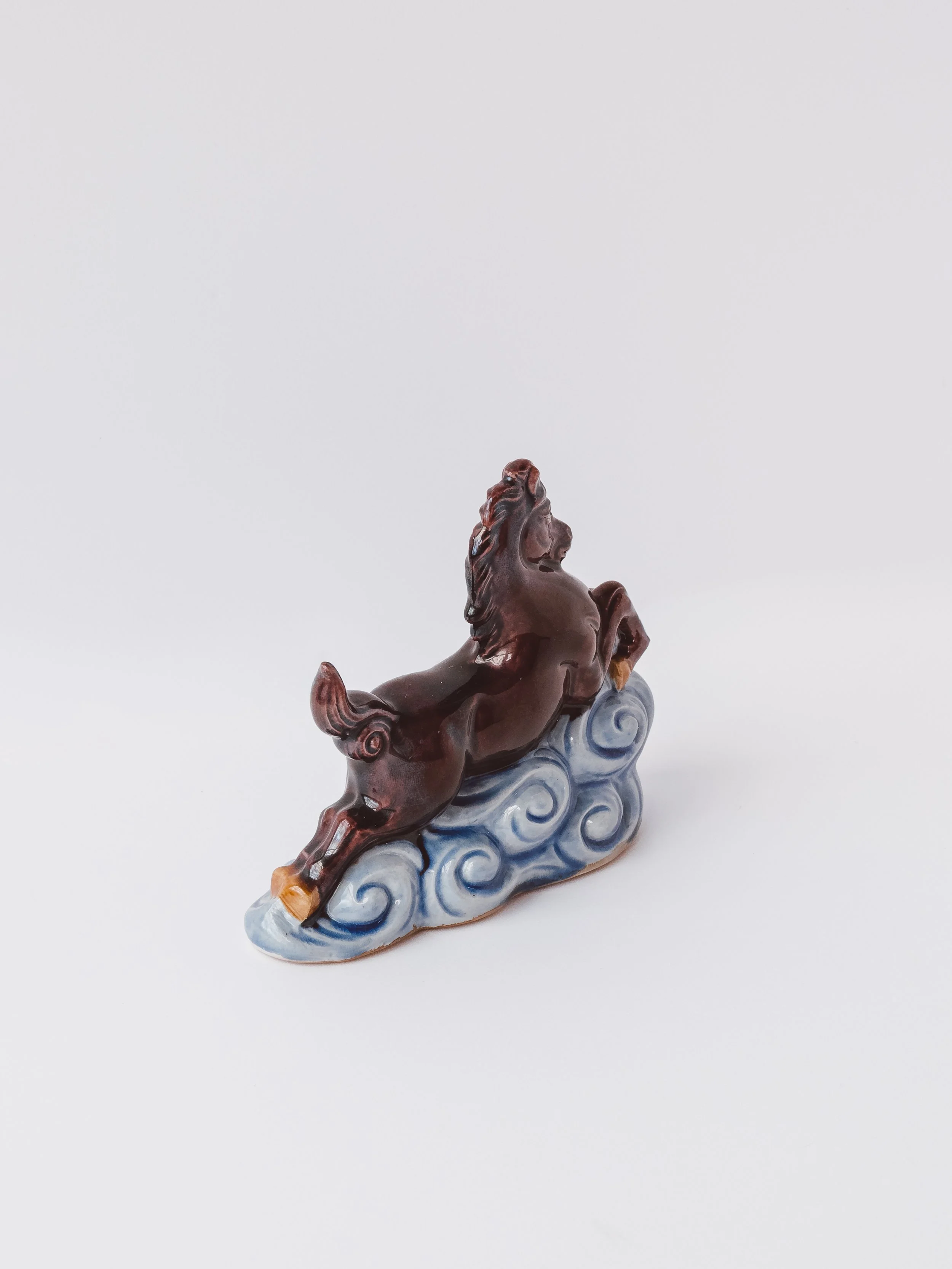 Image 4 of 10
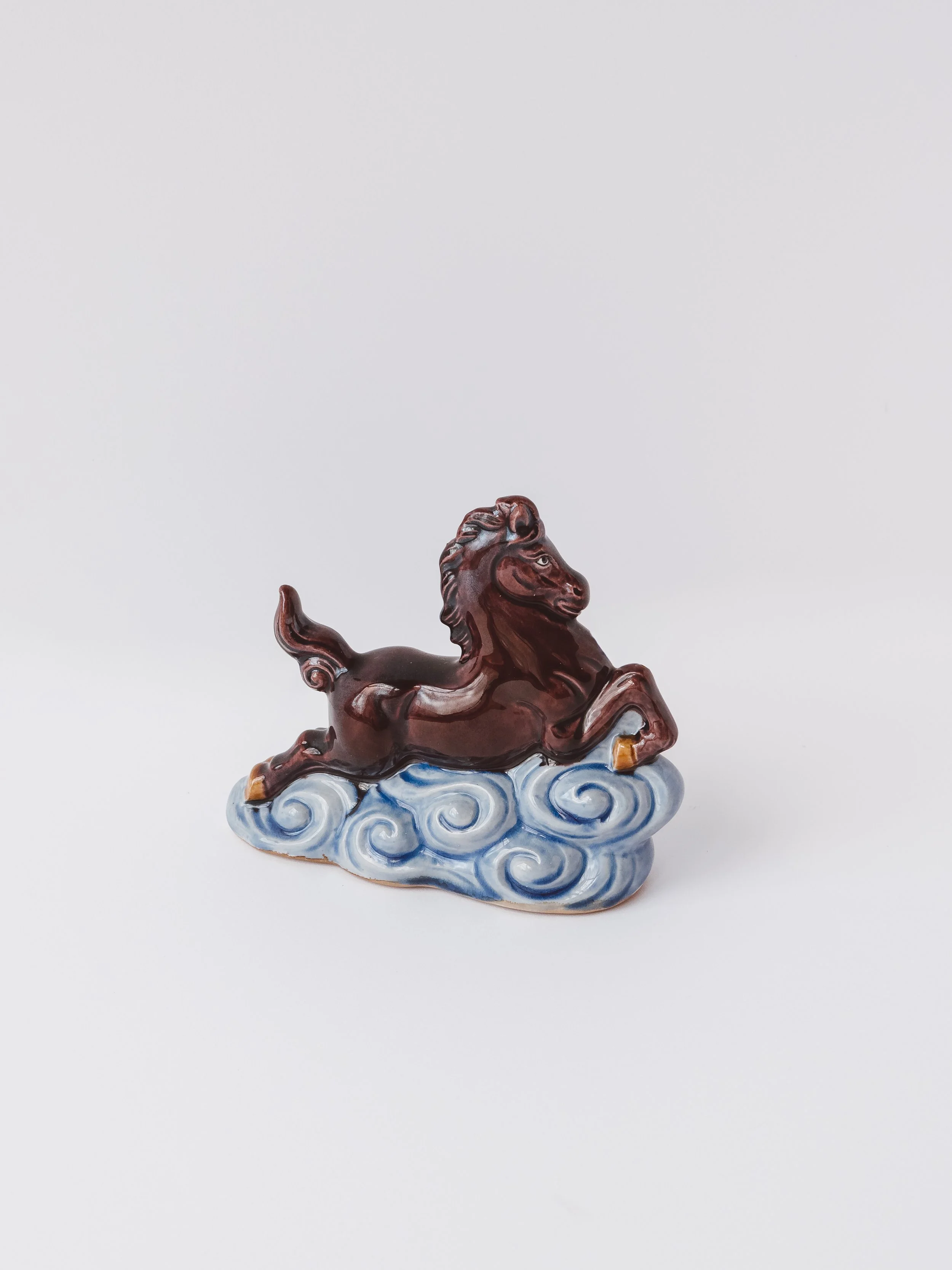 Image 5 of 10
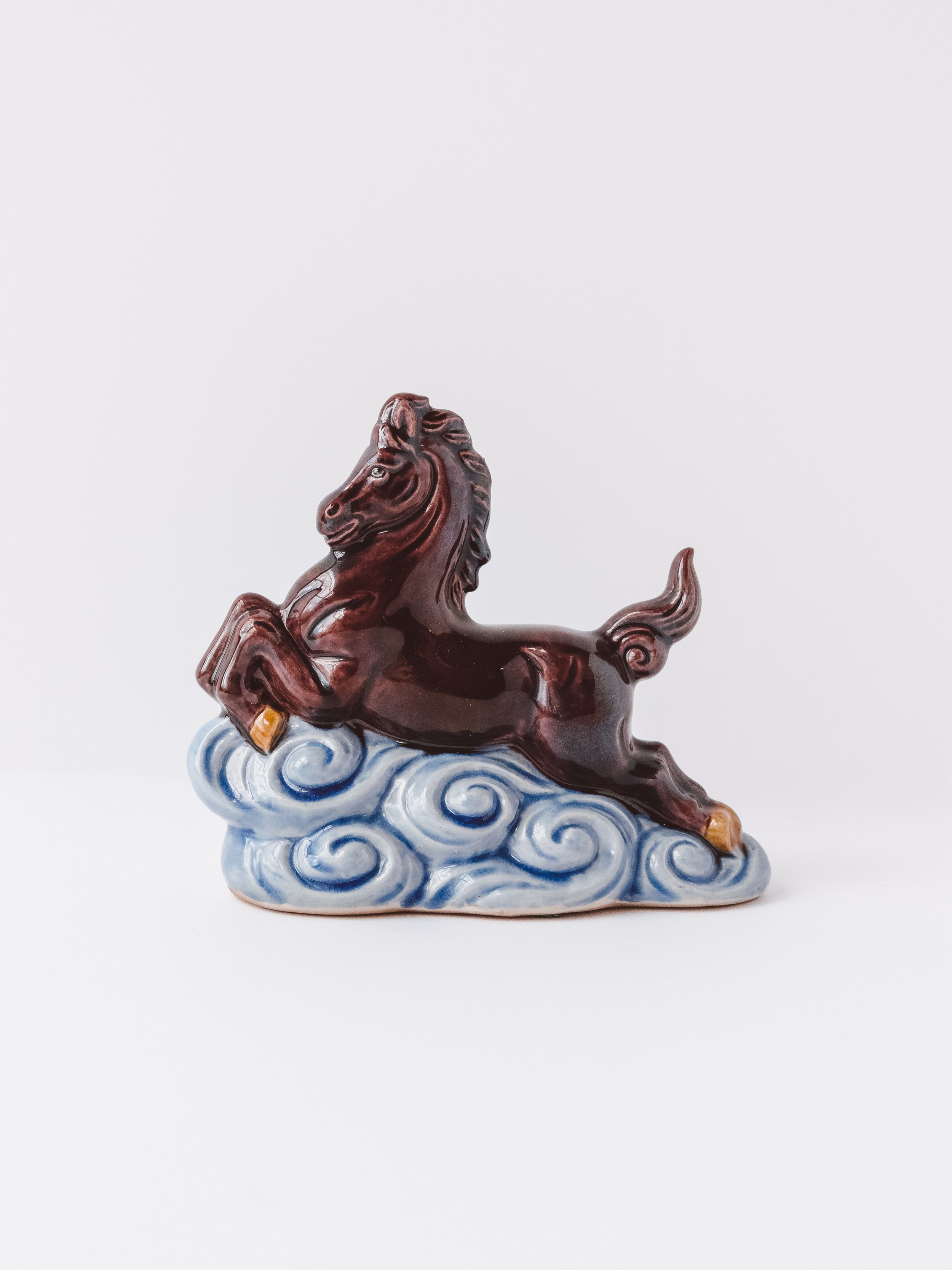 Image 6 of 10
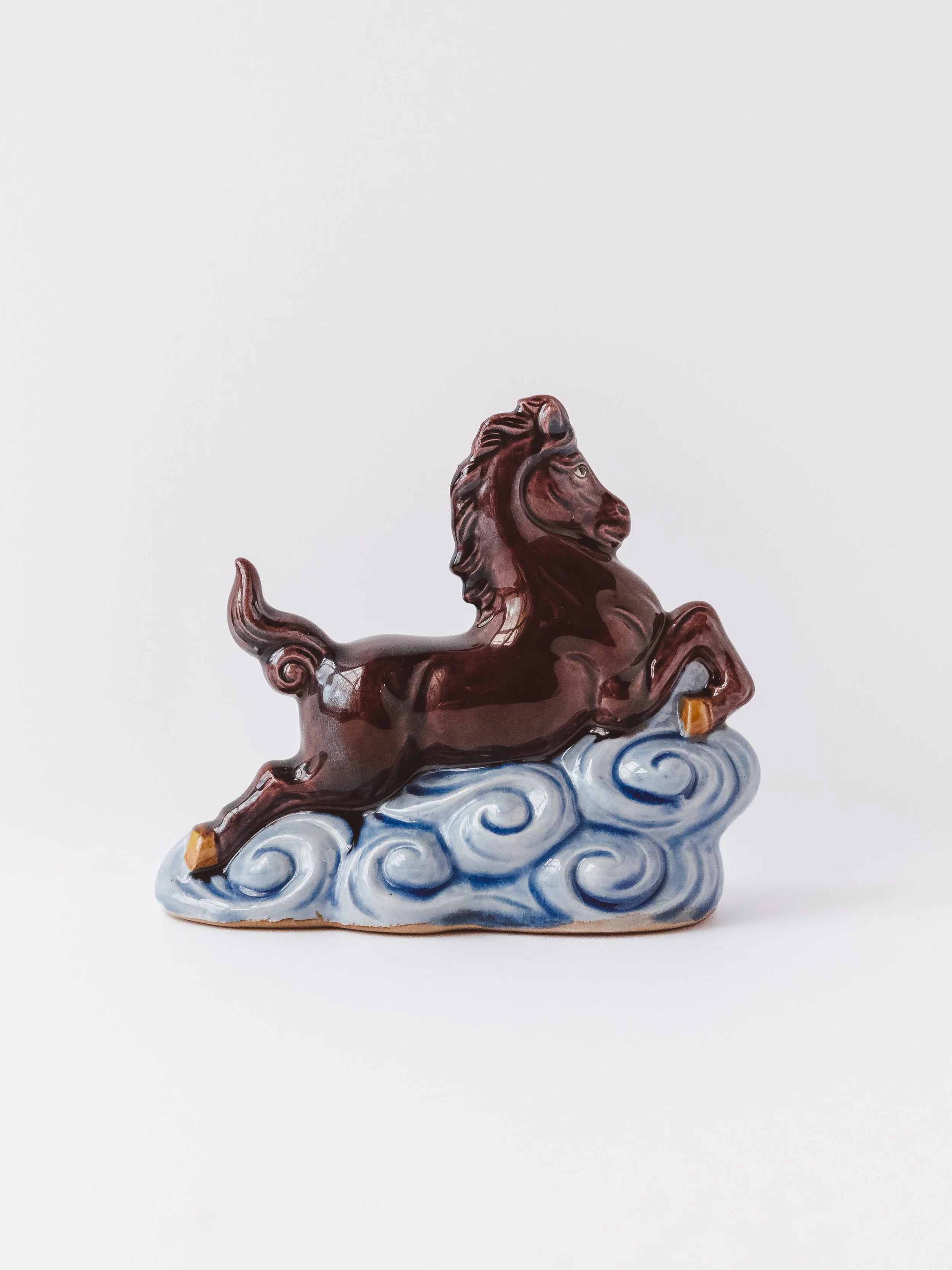 Image 7 of 10
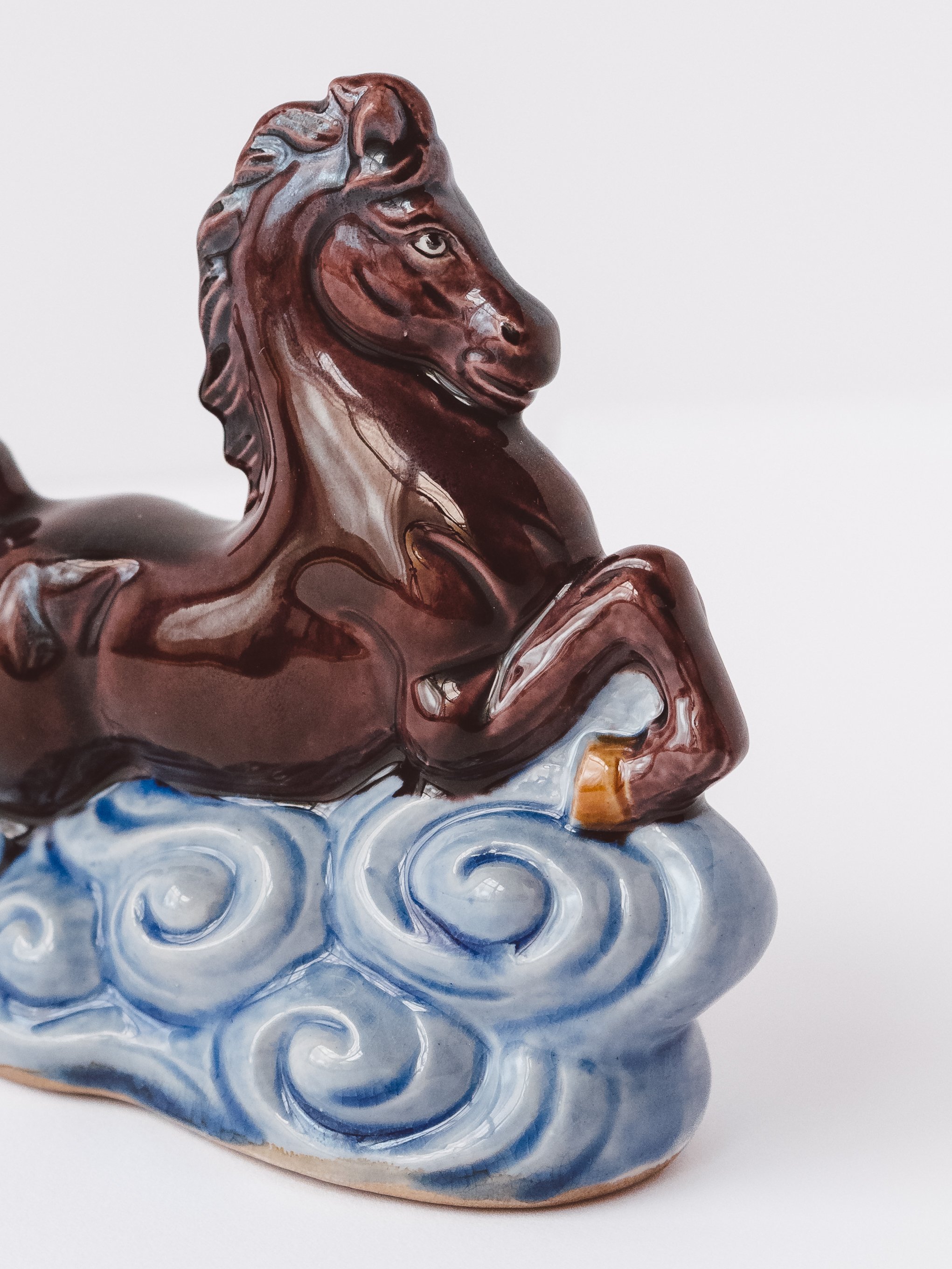 Image 8 of 10
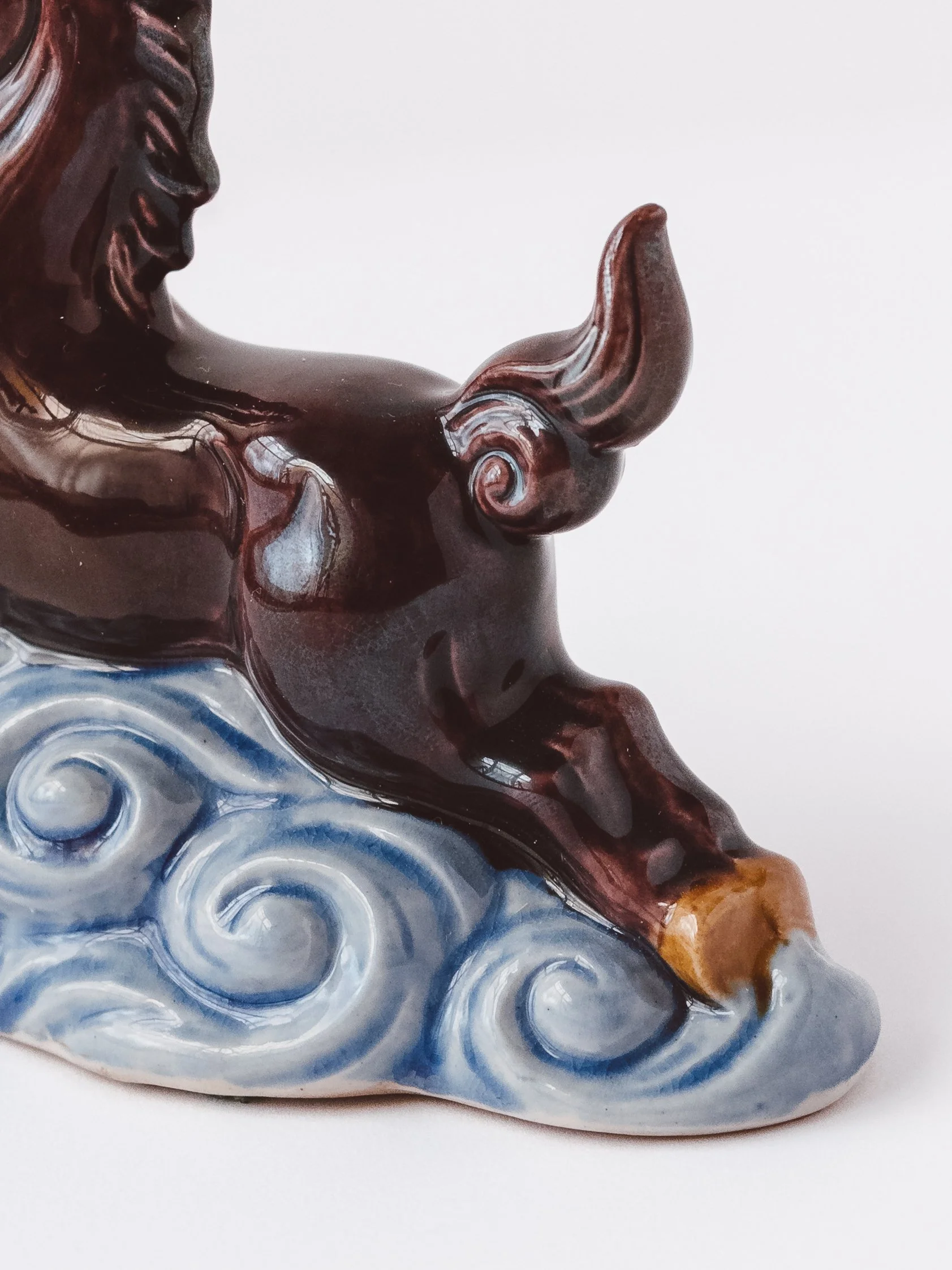 Image 9 of 10
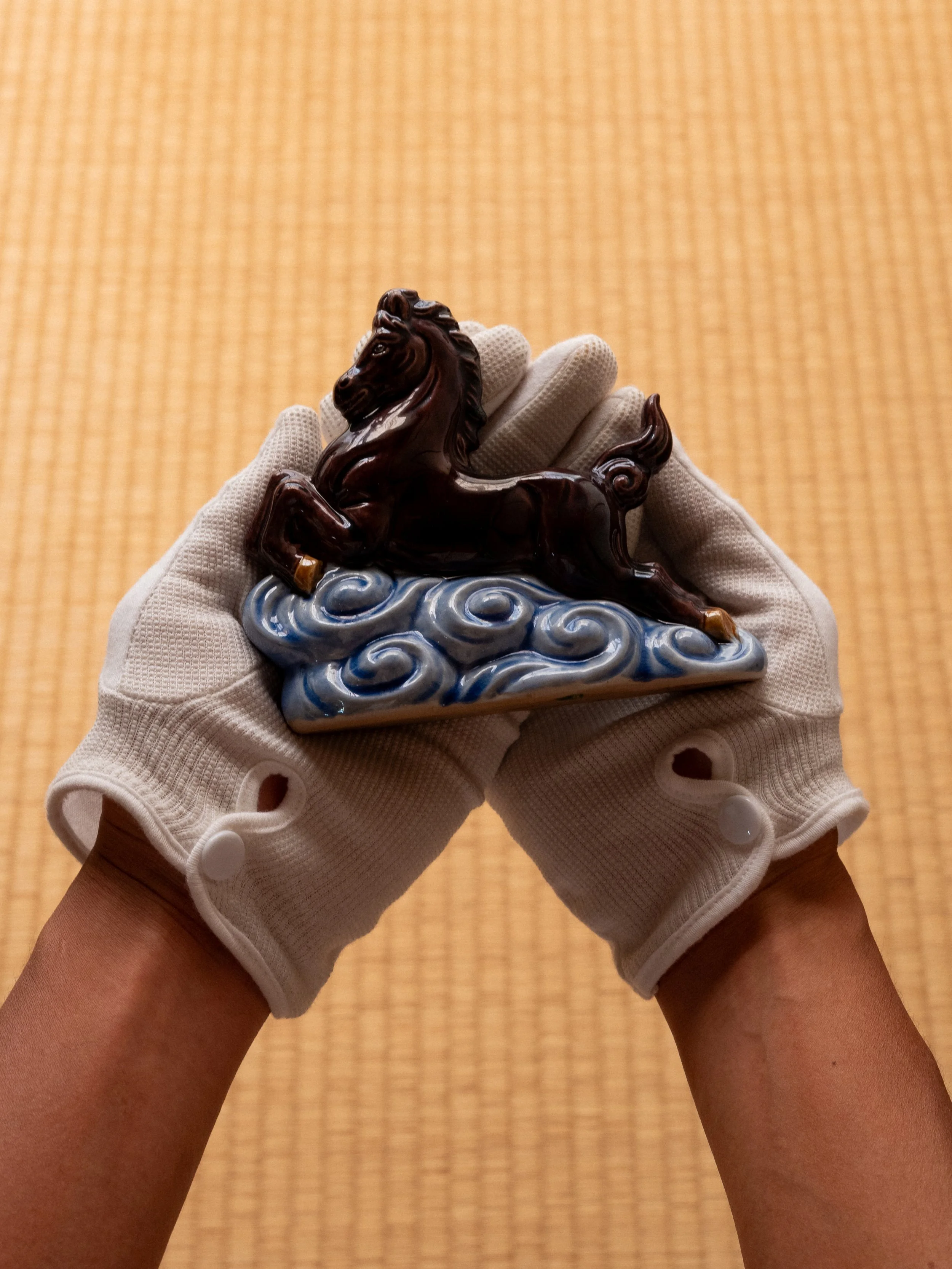 Image 10 of 10