

 Image 1 of 11
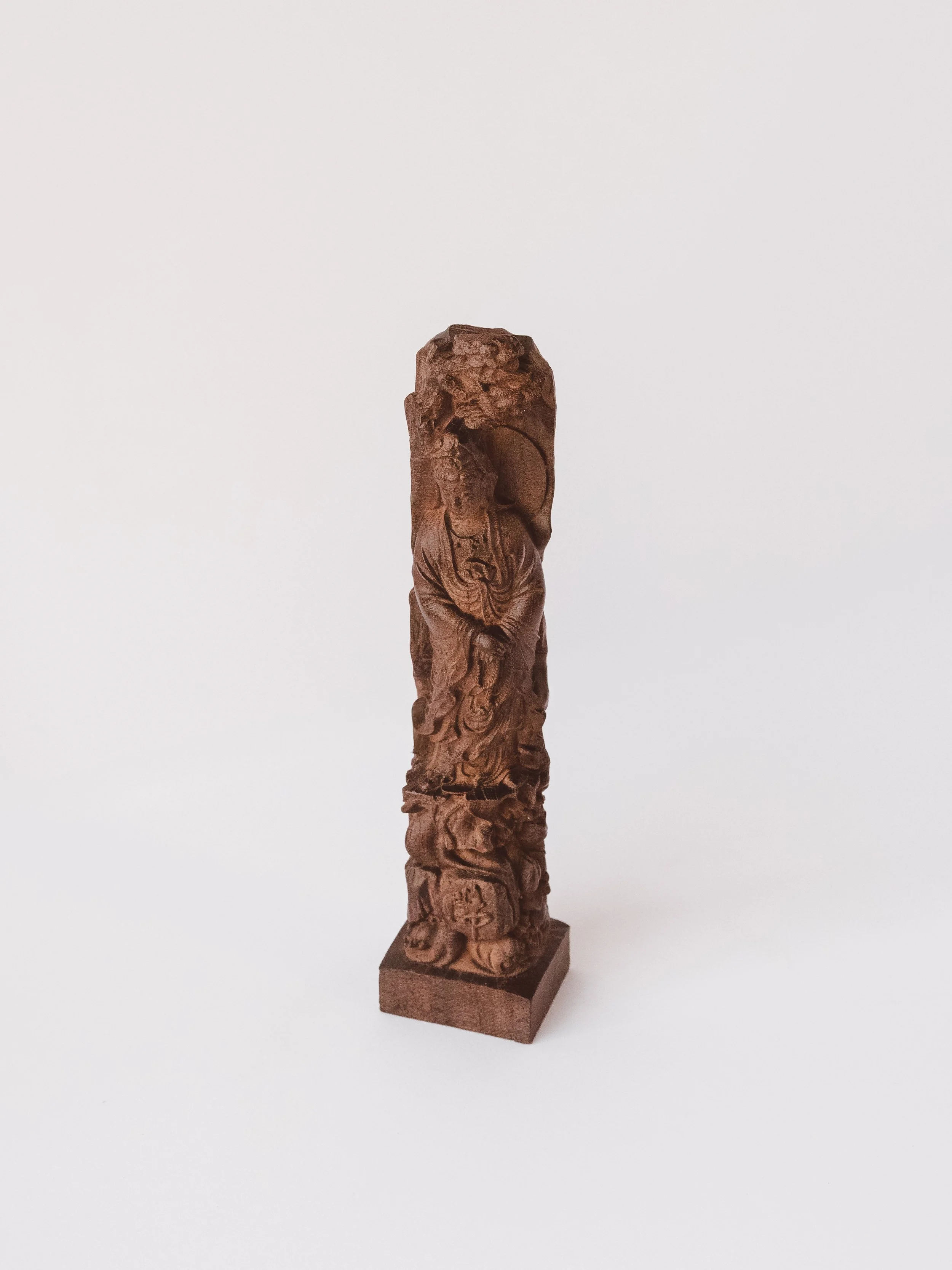 Image 2 of 11
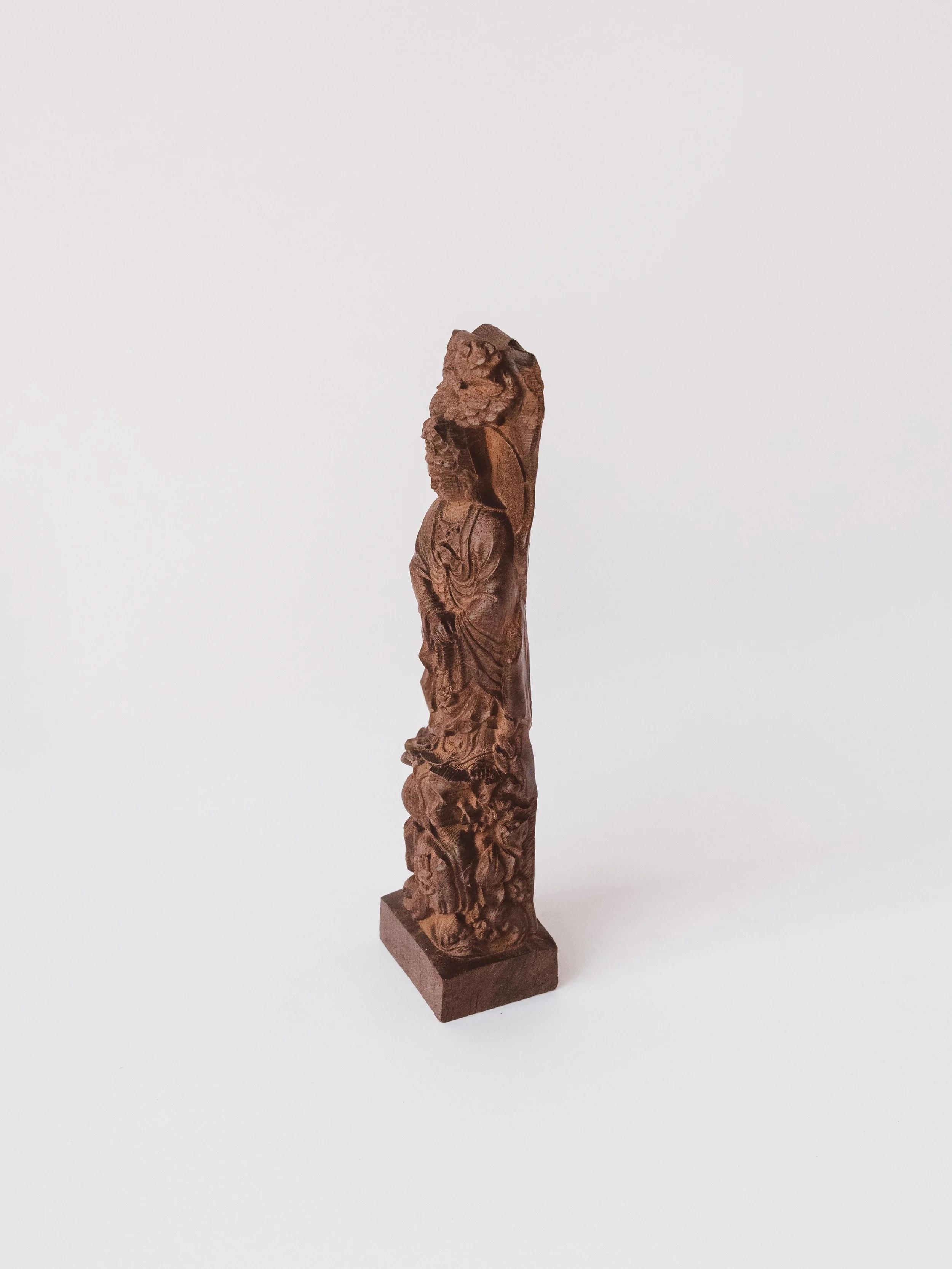 Image 3 of 11
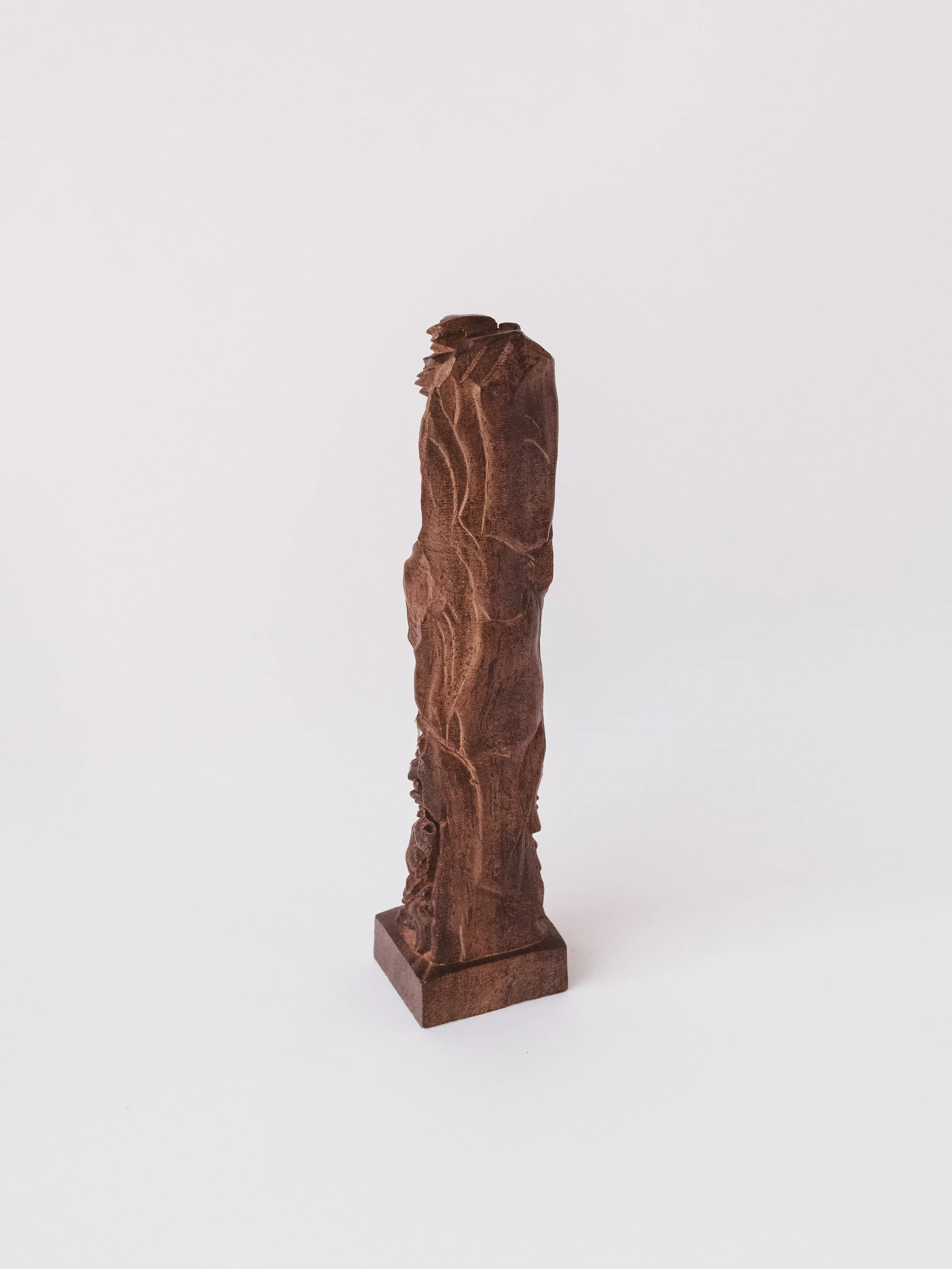 Image 4 of 11
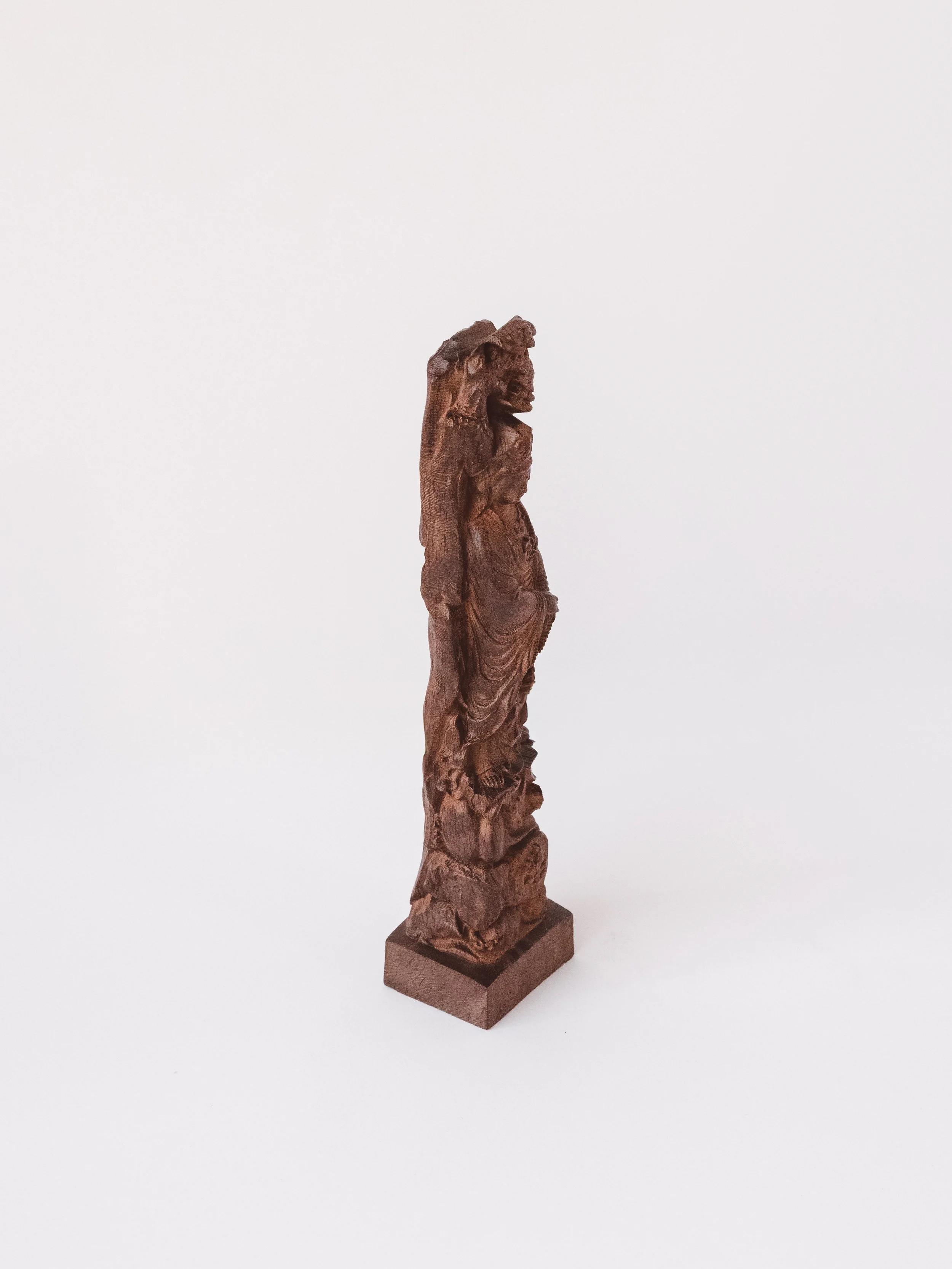 Image 5 of 11
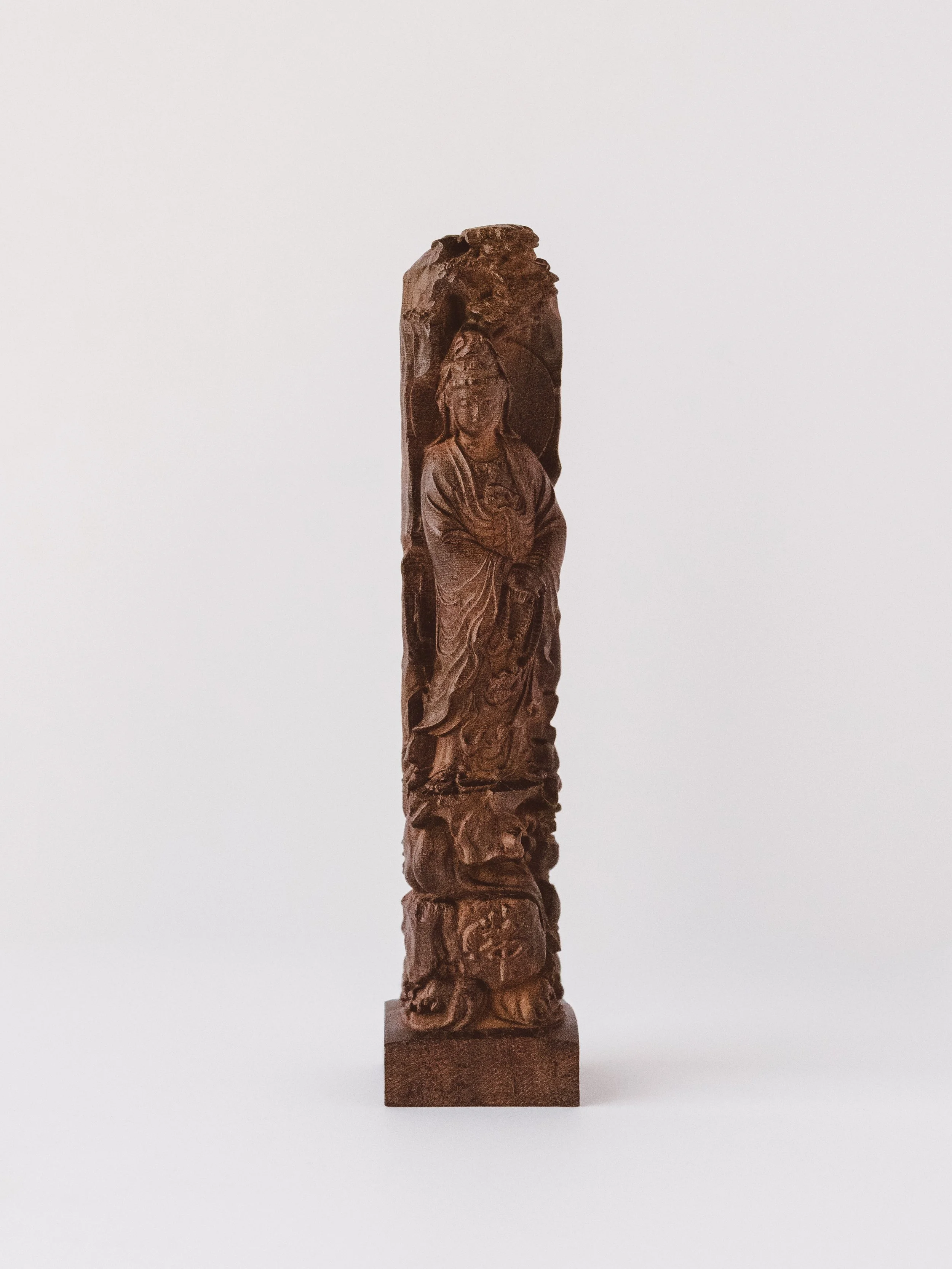 Image 6 of 11
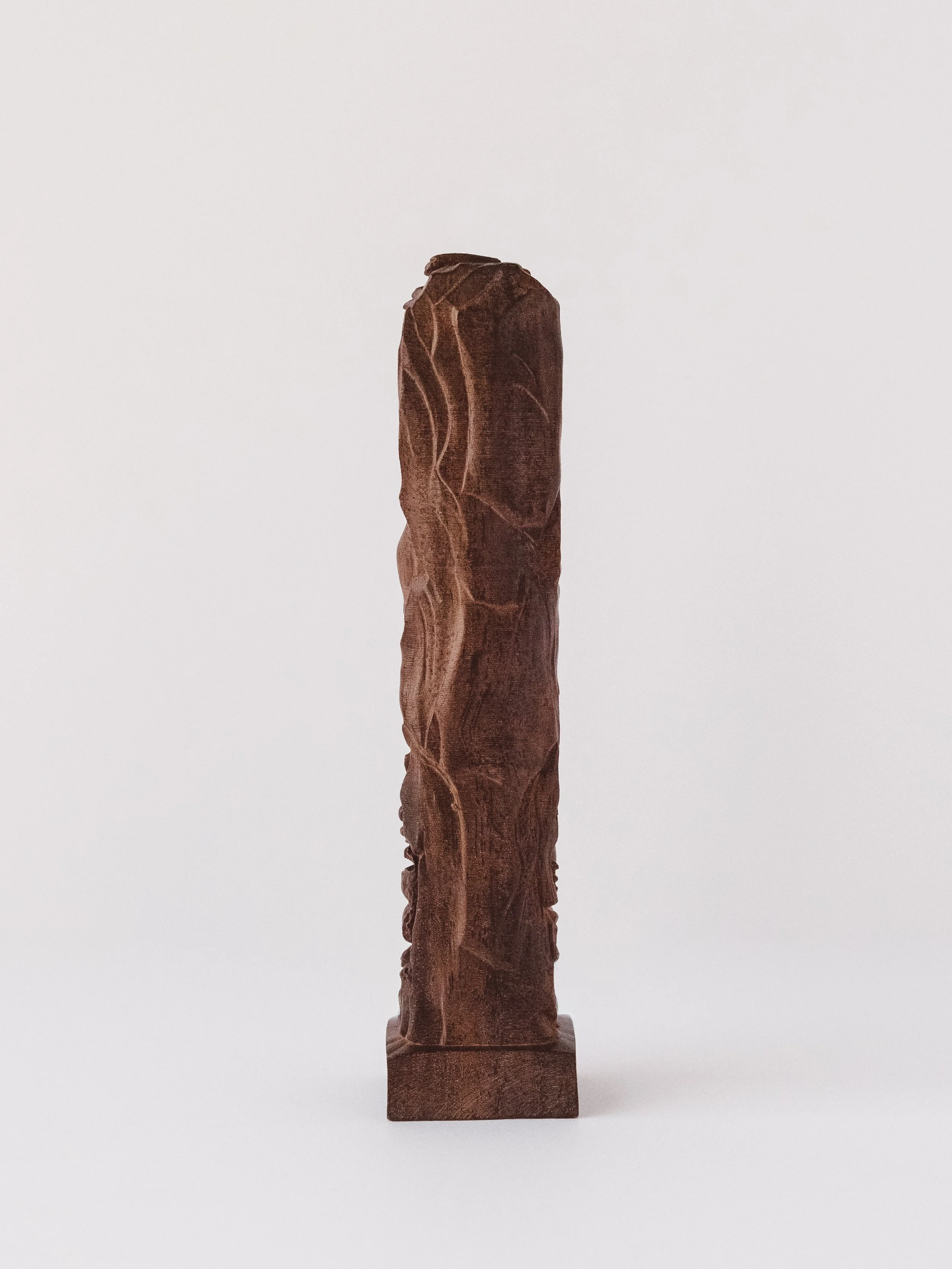 Image 7 of 11
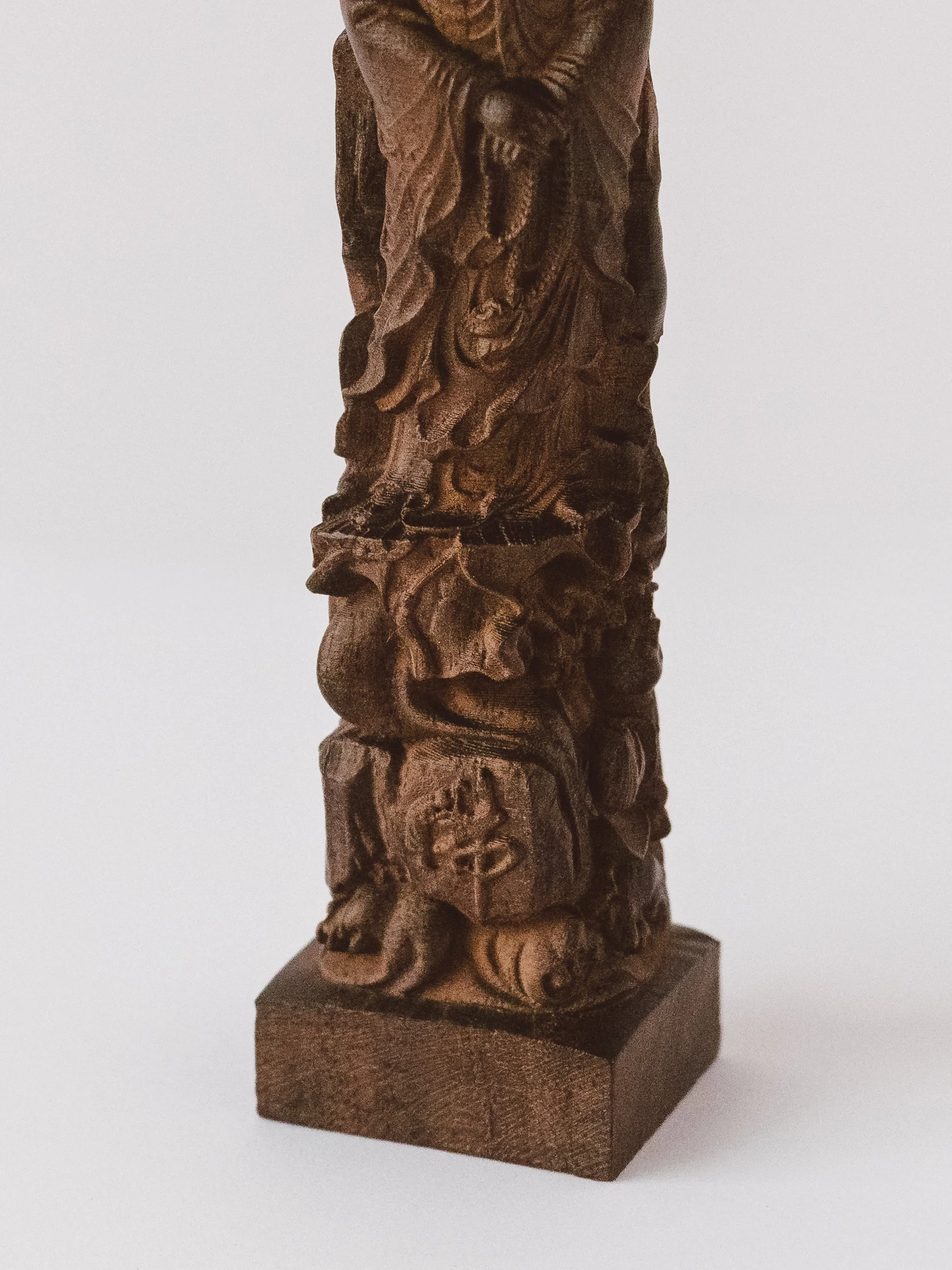 Image 8 of 11
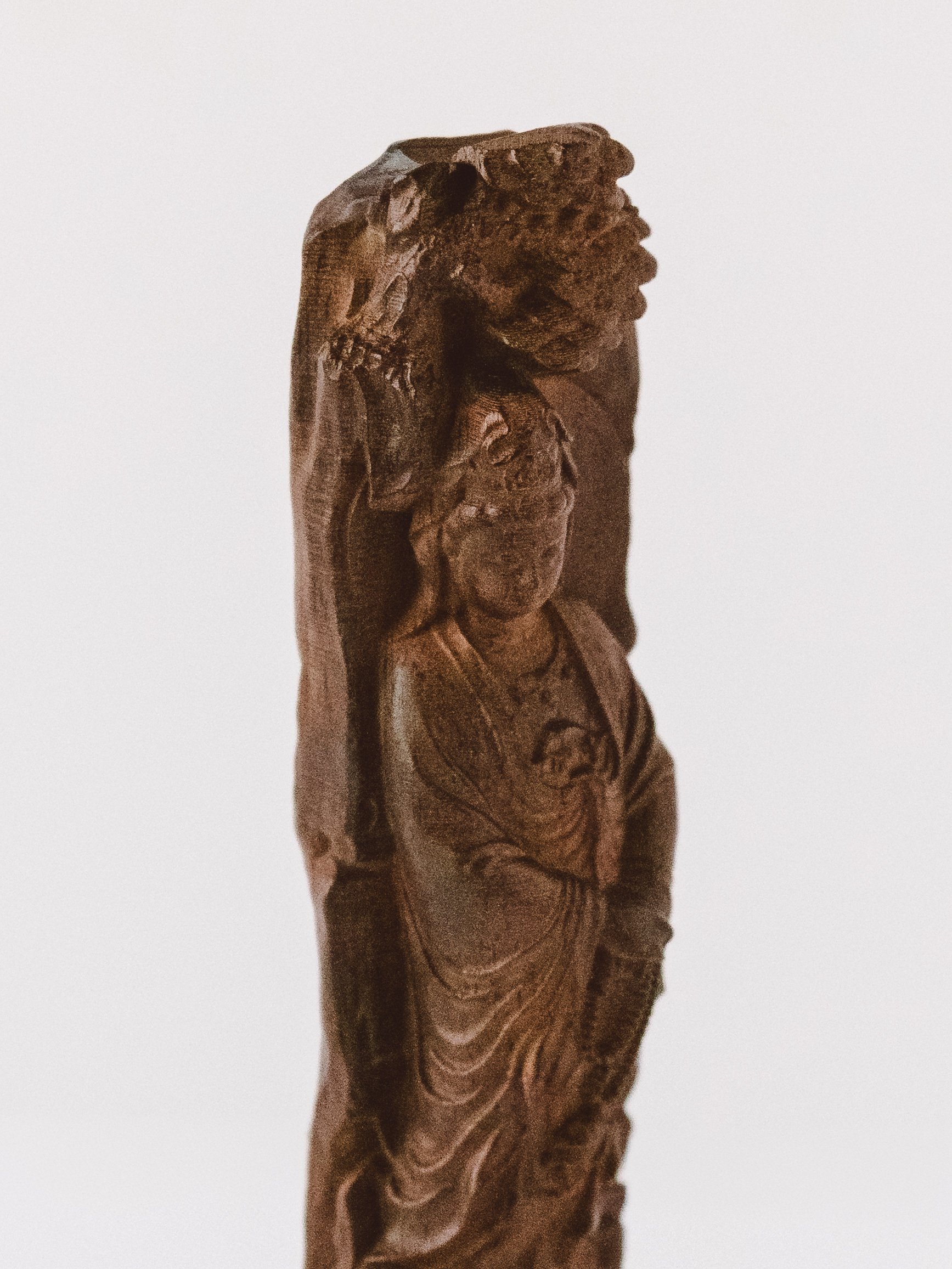 Image 9 of 11
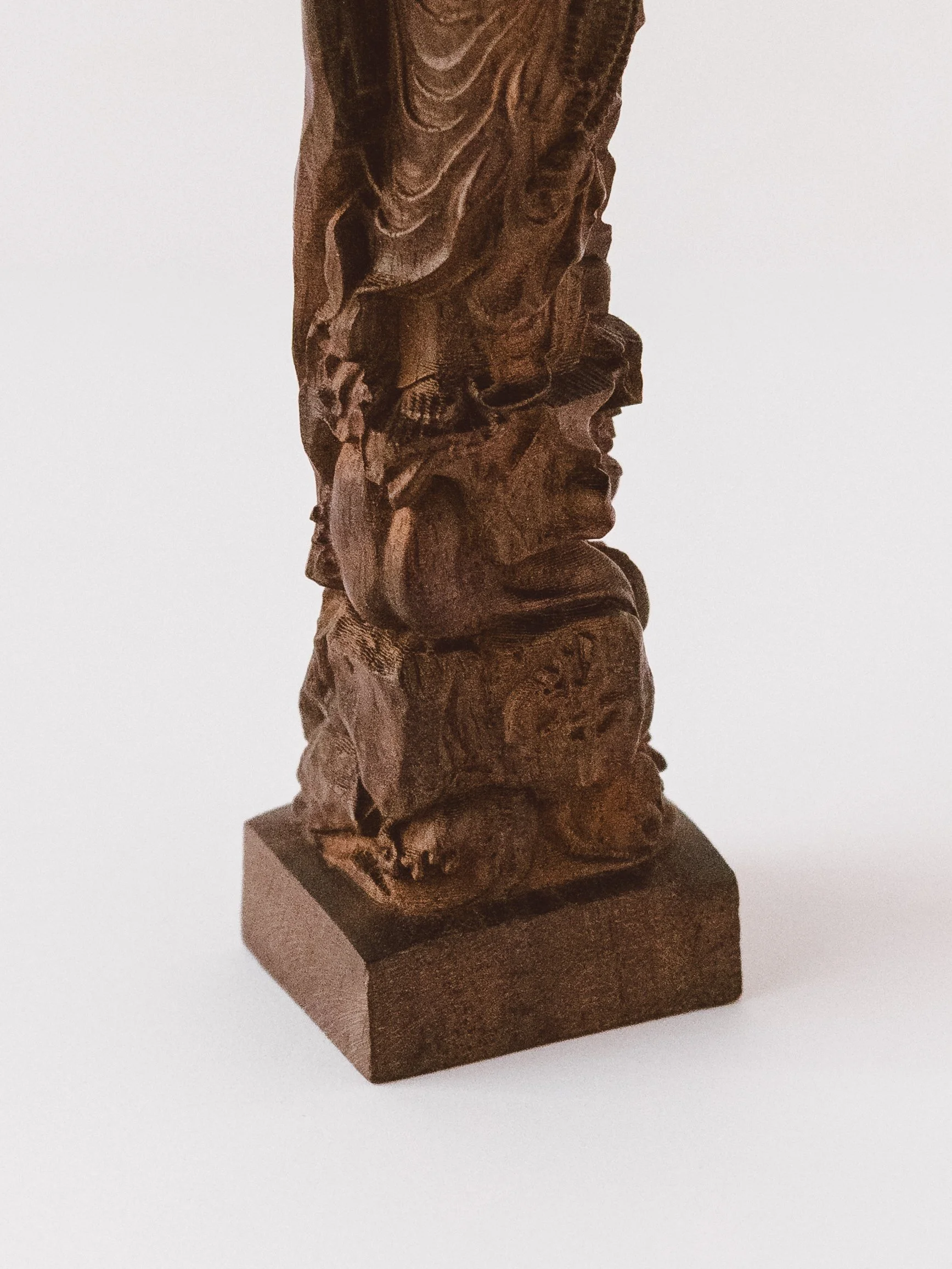 Image 10 of 11
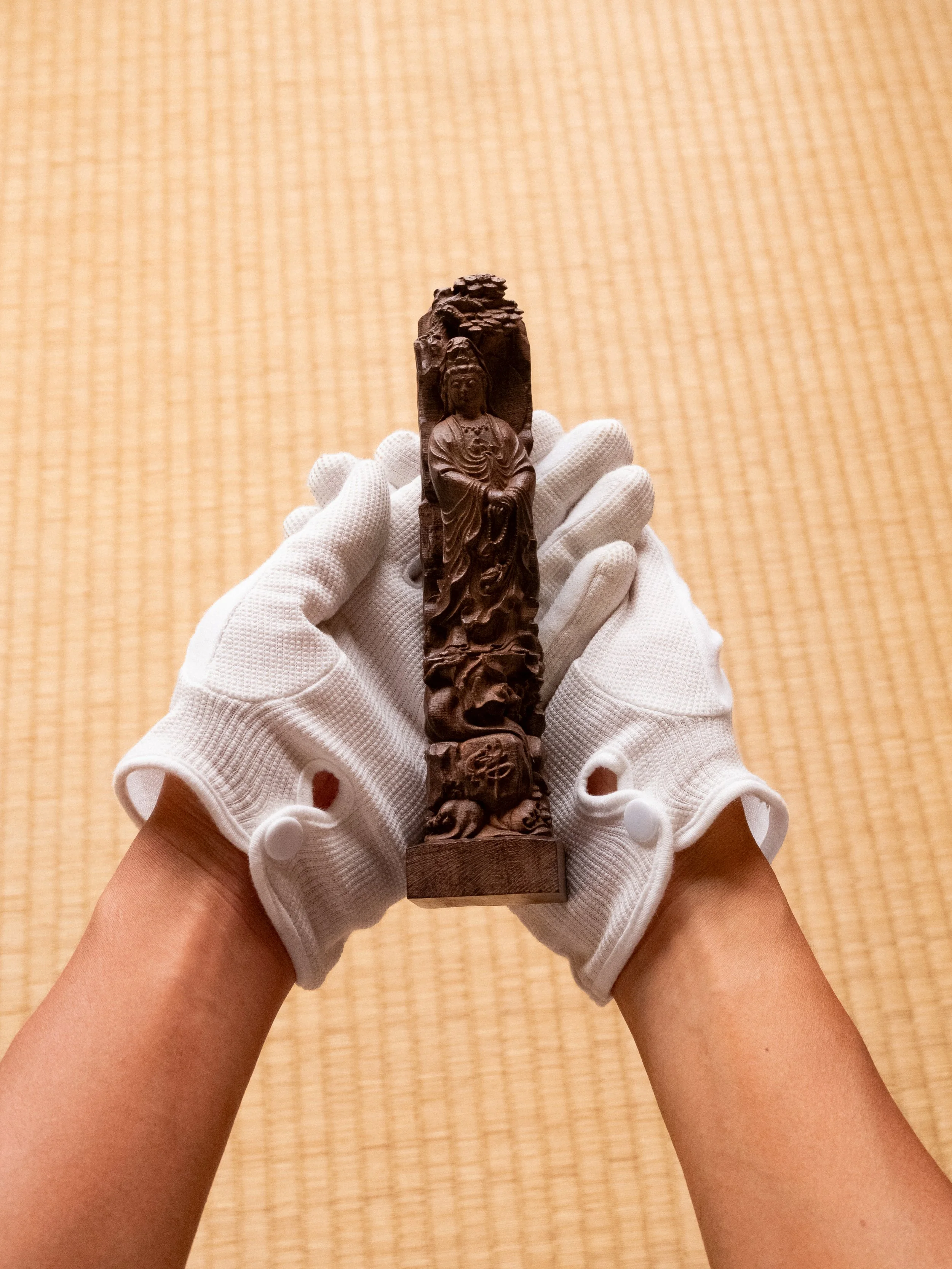 Image 11 of 11
【Context】
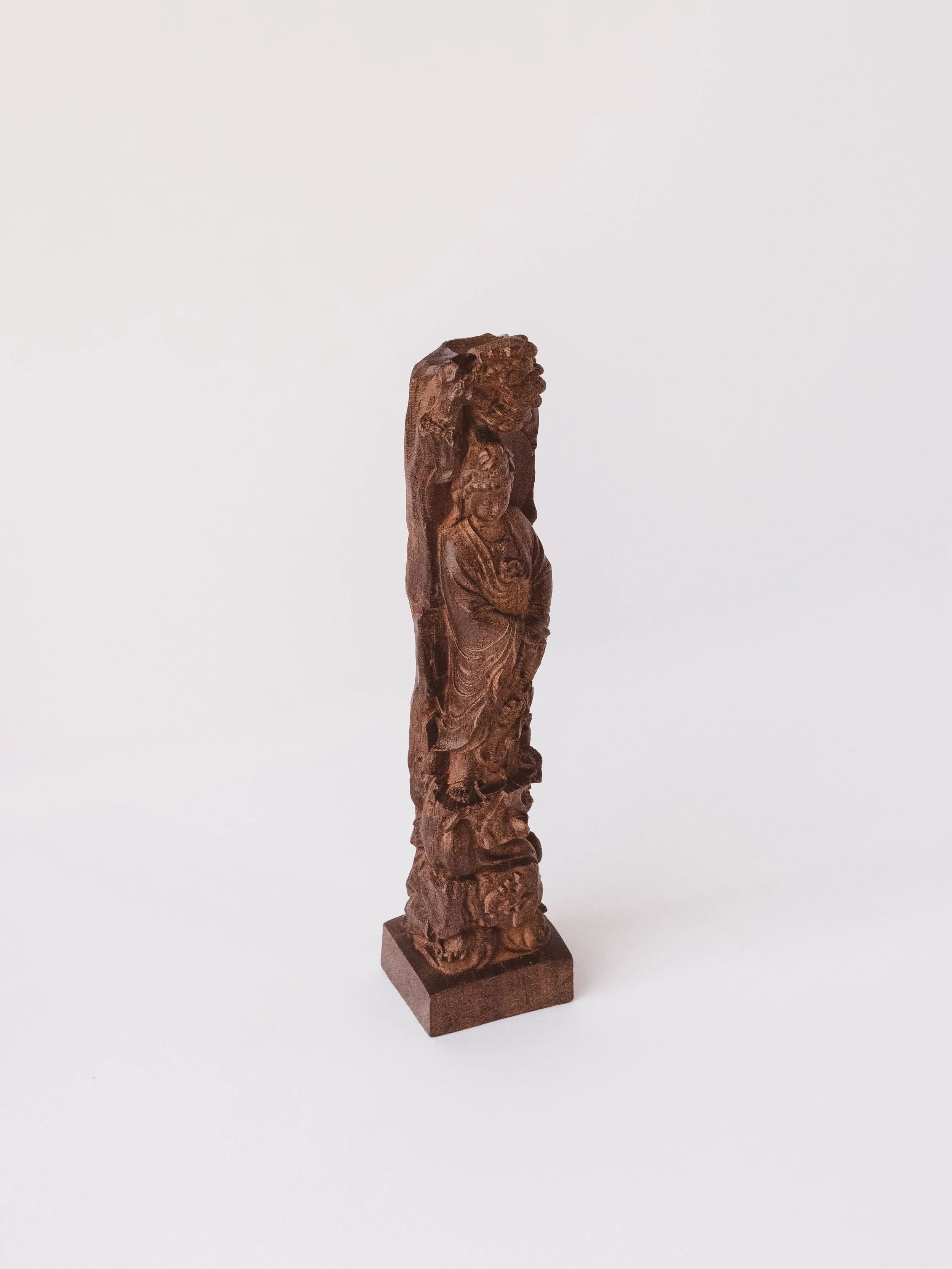
Identity: A carved figure of Kannon (Avalokiteśvara), the bodhisattva of compassion. In Japan, Kannon is venerated in many aspects — popularly grouped as the Sanjūsan Kannon (三十三観音), the thirty-three manifestations the bodhisattva assumes to reach beings in every circumstance. Here the figure stands upon a swirling pedestal of cloud and wave, the elements through which Kannon is imagined descending into the world; a beast emerges from the turbulence at the base, its form stylized and not identified here.Origin: Japanese.Technique: Relief carving from a single block (一木造 / ichiboku-zukuri) — one of the oldest methods of Japanese Buddhist sculpture, dominant in the Heian period before the joined-block technique (寄木造 / yosegi-zukuri) was refined. A single block was prized because it kept the image whole and, by tradition, preserved the spirit of the tree it was cut from; later itinerant carver-monks such as Enkū and Mokujiki deliberately left tool marks and raw wood exposed as an offering to the material. This piece belongs to that sensibility: the natural outer face of the timber is retained as an integral backdrop rather than cut away.Material: Ebony (黒檀 / kokutan) — a dense tropical hardwood counted among the karaki (唐木), the prized imported woods long used in Japan for the finest cabinetry, Buddhist ritual implements, and prayer beads. Valued for its near-black color, its weight, and a grain fine enough to take a stone-like polish, it was also associated with warding and permanence.Motif: Cloud and wave signify the bodhisattva appearing amid the elements — a figure of protection and safe passage. The prayer beads (念珠 / nenju) at the hand mark the figure's devotional character.Construction: One continuous piece of wood — figure, beast, cloud-and-wave, and integral backdrop — set on a squared wooden plinth.
【 Dimensions (Approx.) 】
Height: 19 cm (7.5 in)Width: 4.5 cm (1.8 in)Weight: 0.177 kg (0.39 lb)