【 The Concept 】
A wild boar climbs a mountain of treasure. Front hooves planted on a heap of gold and good-luck charms, head lifted and gaze raised, it is caught mid-surge — the very image of chototsu-mōshin, the boar's fearless charge straight ahead. It is a Japanese zodiac figure for the Year of the Boar (i), made in the brilliant overglaze colors and raised-dot enamelwork of Kutani porcelain. The animal is painted with real feeling — fine bristle strokes, a pink snout, gilded tusks — while beneath it the base blazes with red, green, yellow, and gold. This is not a shelf ornament. It is a talisman built to charge through obstacles and pile fortune, health, and protection into a home.
【 The Boar in Japan 】
Of all the zodiac animals the boar (inoshishi) may carry the most meanings. In esoteric Buddhism it is the sacred mount of Marishiten, goddess born of light and the shimmering heat-haze — a thing you can see but never catch or wound — so she became the deity of invincibility, of escaping danger and winning through, worshipped fervently by samurai who carried her image, riding her boars, into battle. In Japan's own history the boar saved the loyal official Wake-no-Kiyomaro: lamed by an enemy and sent into exile, he was guarded on his road by a herd of three hundred boars, and his injured legs were healed by the time they left — which is why his shrine is flanked by "guardian boars" instead of guardian dogs, and prayed to for integrity, for warding off injustice, and for the health of one's legs and back. And in the five-element system the boar belongs to water, so it quells fire: the boar is a charm against house fires, and the tea year's first hearth is opened on the boar day of the boar month. Fearless drive, protection, healing, and — because a sow bears many young — fertility and a family line that never ends: all of it rides on this one animal.
【 The Mountain of Treasure 】
The base is a takara-zukushi, a "collection of treasures," Japan's massed good-luck still-life, and every piece can be read. The blue mallet lettered with 福 (fuku, "fortune") is the uchide-no-kozuchi, the magic mallet that strikes wealth into being and beats misfortune away. The golden woven bale is a kome-dawara of rice — the harvest, and stored, unshakeable wealth. The green pouch with its red cord is the takara-bukuro, the treasure bag of inexhaustible riches. Gold koban coins are scattered throughout for money luck, beside a black-and-gold lacquer box; and the red ground is strewn with shō-chiku-bai — pine, bamboo, and plum, the three great emblems of endurance and renewal. The design is deliberate: a dynamic boar that charges out and seizes fortune, set upon a static heap that keeps it — the full cycle of prosperity, won and then held.
【 The Craft: Kutani & Raised Enamel 】
Kutani is one of Japan's celebrated porcelains, made in Ishikawa for some three and a half centuries and known for bold overglaze painting in the "five Kutani colors" — red, yellow, green, purple, and deep blue — here lit further with gold. Look closely at the base and you will see rows of tiny raised dots, like piped icing, in white, blue, and red: this is mori (or deco-mori) work, in which thick enamel is squeezed out one drop at a time through a fine paper cone and fired so it stands up from the surface in relief. The technique was perfected in the Meiji era for the dazzling export wares the West knew as "Japan Kutani," and because it is slow, exacting, and increasingly rarely practiced, a piece worked this densely in raised enamel is a genuinely scarce thing today.
【 Where to Place It 】
The boar's direction is north-northwest, and an entrance — the mouth through which fortune enters a home — is its natural place; set toward the left of an entryway (the wealth side) it suits a piece so laden with treasure. Keep it on a clean surface above the floor, never directly on the ground. Turn it to face into the room to hold fortune and family safe inside, or outward to stand guard, drawing luck in and, with Marishiten's protective power, warding trouble away.
【 Care 】
Overglaze color and gold sit on top of the glaze, so treat the surface gently: dust with a soft dry cloth or brush, avoid rubbing, scouring, and dishwashers, and keep it from knocks. Kept clean and bright — dust is thought to dull a charm's luck as well as its color — the enamels and gilding will stay vivid for generations.
【 Function & What It Brings 】
Keep it, place it, or give it. As a talisman it gathers an unusually complete set of wishes — wealth won and stored, protection and fearless momentum, health, and a thriving family — which makes it a strong New Year and Year-of-the-Boar piece, and a generous gift for a new business, a new home, or family good fortune. As an object it is a small jewel: a hand-painted porcelain sculpture, dense with color, gold, and relief, that rewards being looked at closely.
【 The Texture 】
Glazed porcelain, glass-smooth and cool. The boar is matte-soft in look from its fine painted bristles; the base is glossy and jewel-bright, raised here and there into little beads of enamel and burnished gold. Solid and substantial for its size.
【 Presence 】
Spirited and rich at once. The lifted head and climbing stance give the boar real animation and nerve, while the treasure mound below glows like a lacquer box of jewels — folk energy and courtly splendor in a single piece.
Archive Note: The number in the name (1995) is a catalogue reference echoing a Year of the Boar in the twelve-year zodiac cycle, to which this figure belongs. It is NOT the date this piece was made.
Provenance Note: Sourced from a private collection in Japan. A figure in the Kutani (Kutani-yaki) porcelain tradition; not maker-marked and attributed by style.
Condition Note: Sold as acquired, in very good condition. The five-color enamels, the gold, and the raised mori dots are bright and intact. Please see the photographs as part of the description.
【 The Concept 】
A wild boar climbs a mountain of treasure. Front hooves planted on a heap of gold and good-luck charms, head lifted and gaze raised, it is caught mid-surge — the very image of chototsu-mōshin, the boar's fearless charge straight ahead. It is a Japanese zodiac figure for the Year of the Boar (i), made in the brilliant overglaze colors and raised-dot enamelwork of Kutani porcelain. The animal is painted with real feeling — fine bristle strokes, a pink snout, gilded tusks — while beneath it the base blazes with red, green, yellow, and gold. This is not a shelf ornament. It is a talisman built to charge through obstacles and pile fortune, health, and protection into a home.
【 The Boar in Japan 】
Of all the zodiac animals the boar (inoshishi) may carry the most meanings. In esoteric Buddhism it is the sacred mount of Marishiten, goddess born of light and the shimmering heat-haze — a thing you can see but never catch or wound — so she became the deity of invincibility, of escaping danger and winning through, worshipped fervently by samurai who carried her image, riding her boars, into battle. In Japan's own history the boar saved the loyal official Wake-no-Kiyomaro: lamed by an enemy and sent into exile, he was guarded on his road by a herd of three hundred boars, and his injured legs were healed by the time they left — which is why his shrine is flanked by "guardian boars" instead of guardian dogs, and prayed to for integrity, for warding off injustice, and for the health of one's legs and back. And in the five-element system the boar belongs to water, so it quells fire: the boar is a charm against house fires, and the tea year's first hearth is opened on the boar day of the boar month. Fearless drive, protection, healing, and — because a sow bears many young — fertility and a family line that never ends: all of it rides on this one animal.
【 The Mountain of Treasure 】
The base is a takara-zukushi, a "collection of treasures," Japan's massed good-luck still-life, and every piece can be read. The blue mallet lettered with 福 (fuku, "fortune") is the uchide-no-kozuchi, the magic mallet that strikes wealth into being and beats misfortune away. The golden woven bale is a kome-dawara of rice — the harvest, and stored, unshakeable wealth. The green pouch with its red cord is the takara-bukuro, the treasure bag of inexhaustible riches. Gold koban coins are scattered throughout for money luck, beside a black-and-gold lacquer box; and the red ground is strewn with shō-chiku-bai — pine, bamboo, and plum, the three great emblems of endurance and renewal. The design is deliberate: a dynamic boar that charges out and seizes fortune, set upon a static heap that keeps it — the full cycle of prosperity, won and then held.
【 The Craft: Kutani & Raised Enamel 】
Kutani is one of Japan's celebrated porcelains, made in Ishikawa for some three and a half centuries and known for bold overglaze painting in the "five Kutani colors" — red, yellow, green, purple, and deep blue — here lit further with gold. Look closely at the base and you will see rows of tiny raised dots, like piped icing, in white, blue, and red: this is mori (or deco-mori) work, in which thick enamel is squeezed out one drop at a time through a fine paper cone and fired so it stands up from the surface in relief. The technique was perfected in the Meiji era for the dazzling export wares the West knew as "Japan Kutani," and because it is slow, exacting, and increasingly rarely practiced, a piece worked this densely in raised enamel is a genuinely scarce thing today.
【 Where to Place It 】
The boar's direction is north-northwest, and an entrance — the mouth through which fortune enters a home — is its natural place; set toward the left of an entryway (the wealth side) it suits a piece so laden with treasure. Keep it on a clean surface above the floor, never directly on the ground. Turn it to face into the room to hold fortune and family safe inside, or outward to stand guard, drawing luck in and, with Marishiten's protective power, warding trouble away.
【 Care 】
Overglaze color and gold sit on top of the glaze, so treat the surface gently: dust with a soft dry cloth or brush, avoid rubbing, scouring, and dishwashers, and keep it from knocks. Kept clean and bright — dust is thought to dull a charm's luck as well as its color — the enamels and gilding will stay vivid for generations.
【 Function & What It Brings 】
Keep it, place it, or give it. As a talisman it gathers an unusually complete set of wishes — wealth won and stored, protection and fearless momentum, health, and a thriving family — which makes it a strong New Year and Year-of-the-Boar piece, and a generous gift for a new business, a new home, or family good fortune. As an object it is a small jewel: a hand-painted porcelain sculpture, dense with color, gold, and relief, that rewards being looked at closely.
【 The Texture 】
Glazed porcelain, glass-smooth and cool. The boar is matte-soft in look from its fine painted bristles; the base is glossy and jewel-bright, raised here and there into little beads of enamel and burnished gold. Solid and substantial for its size.
【 Presence 】
Spirited and rich at once. The lifted head and climbing stance give the boar real animation and nerve, while the treasure mound below glows like a lacquer box of jewels — folk energy and courtly splendor in a single piece.
Archive Note: The number in the name (1995) is a catalogue reference echoing a Year of the Boar in the twelve-year zodiac cycle, to which this figure belongs. It is NOT the date this piece was made.
Provenance Note: Sourced from a private collection in Japan. A figure in the Kutani (Kutani-yaki) porcelain tradition; not maker-marked and attributed by style.
Condition Note: Sold as acquired, in very good condition. The five-color enamels, the gold, and the raised mori dots are bright and intact. Please see the photographs as part of the description.


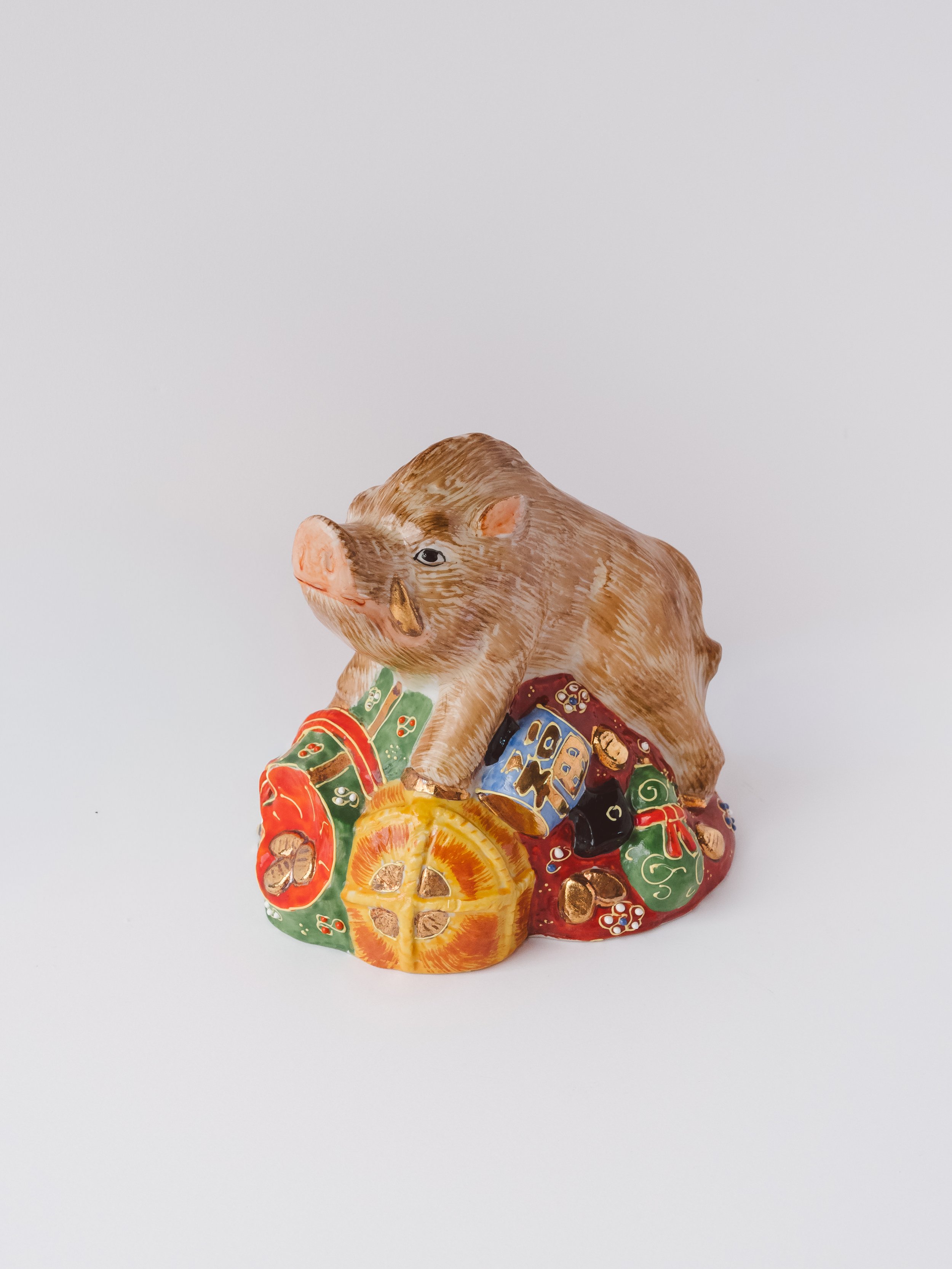 Image 1 of 15
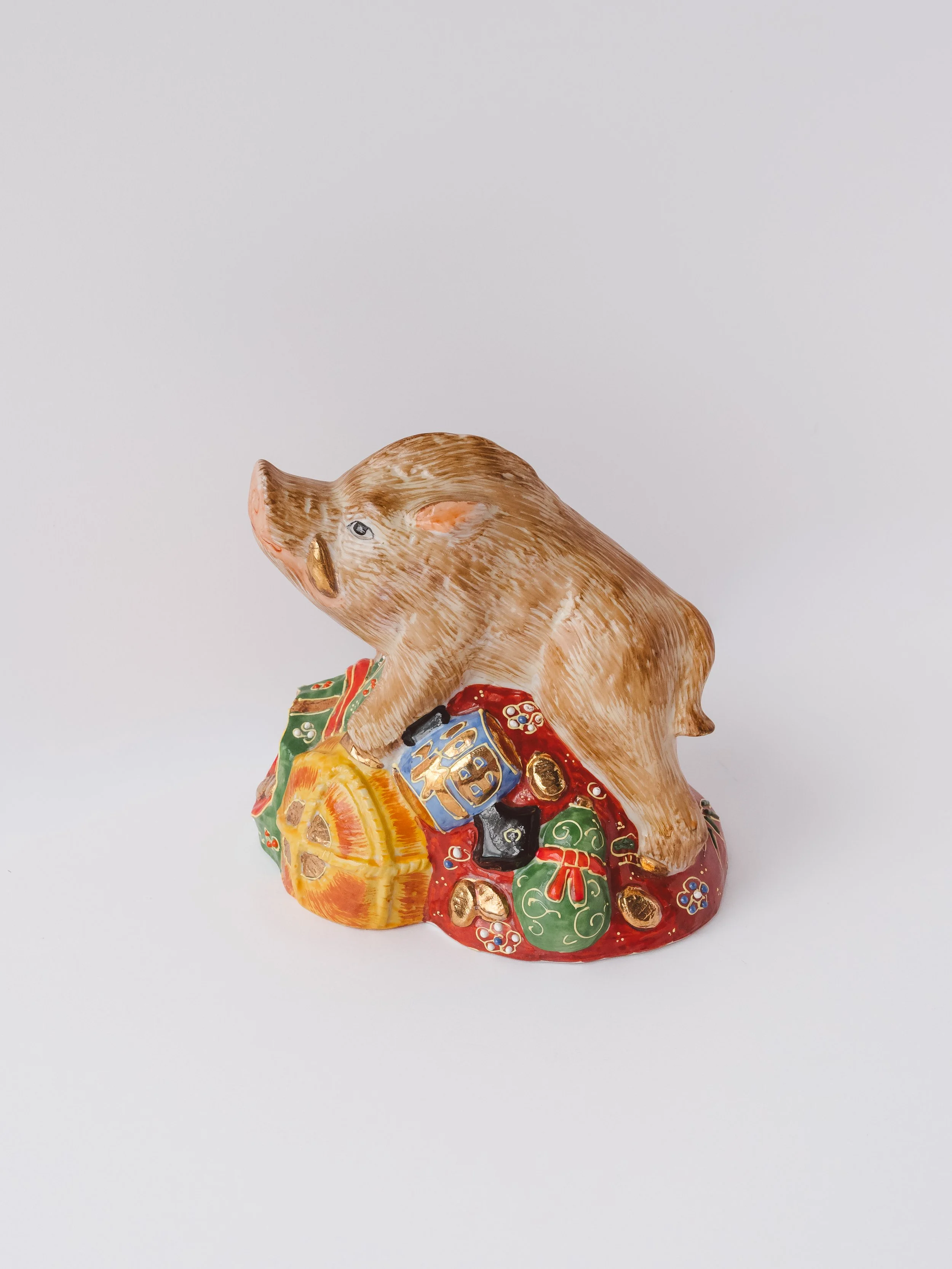 Image 2 of 15
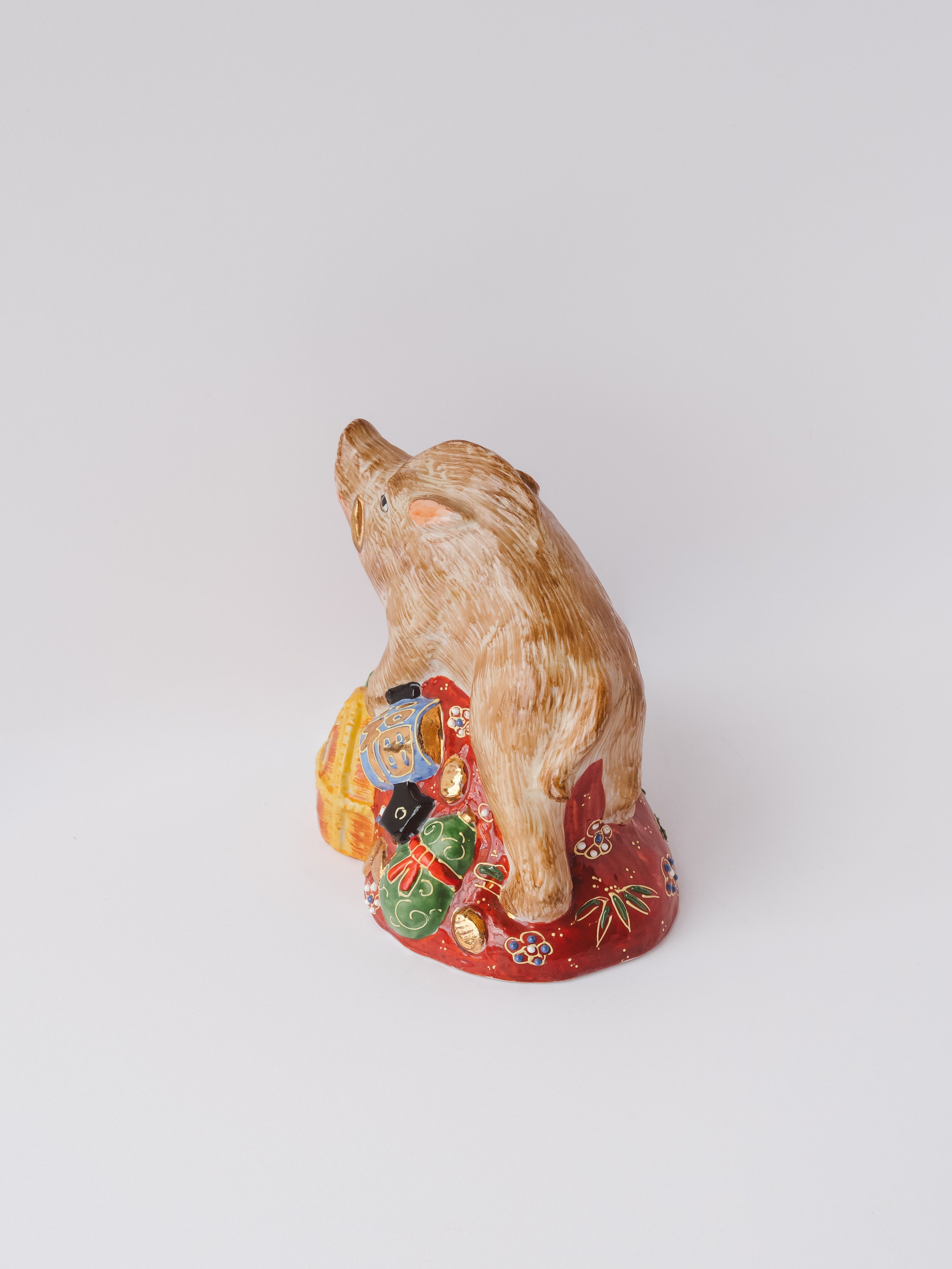 Image 3 of 15
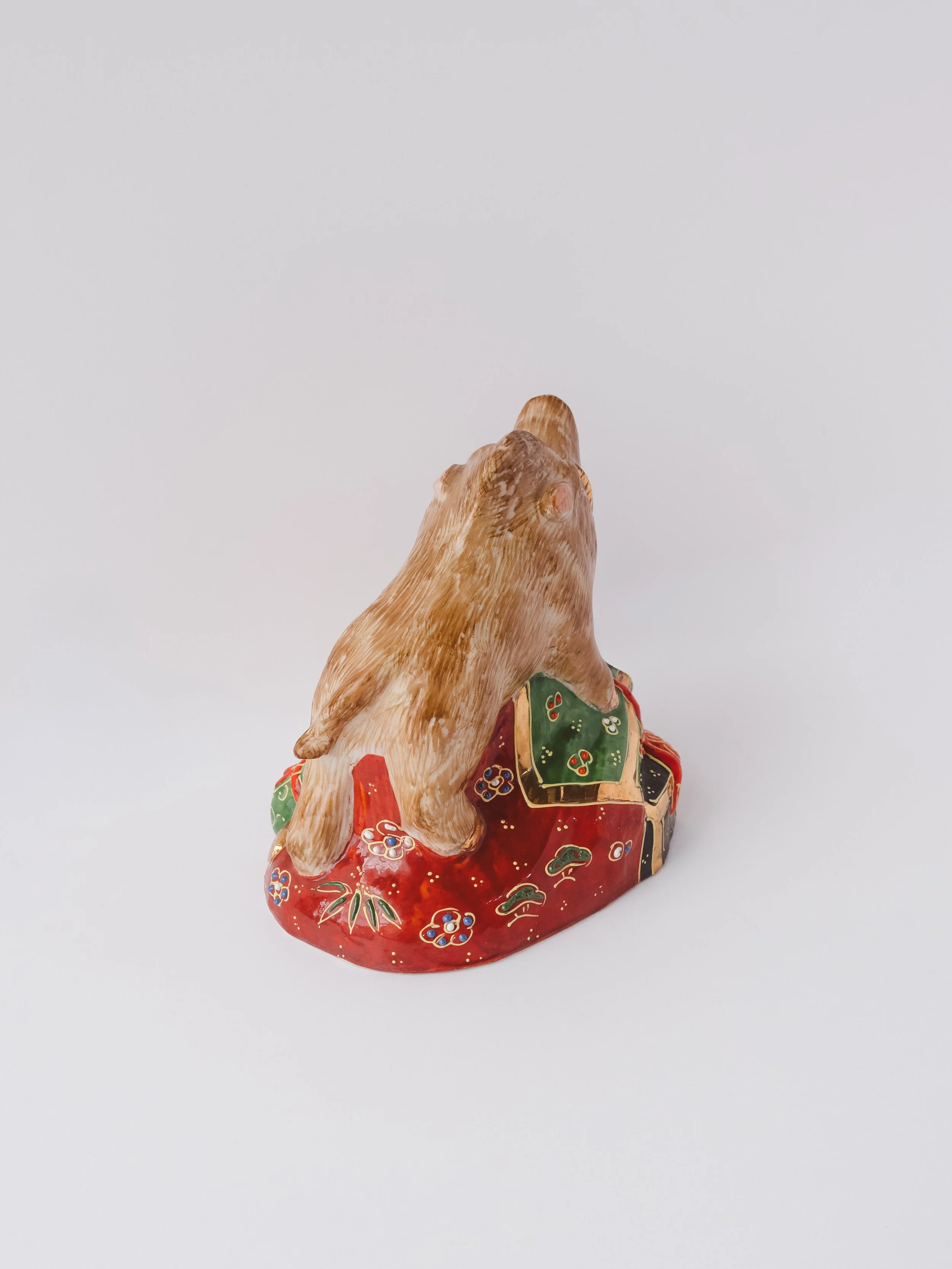 Image 4 of 15
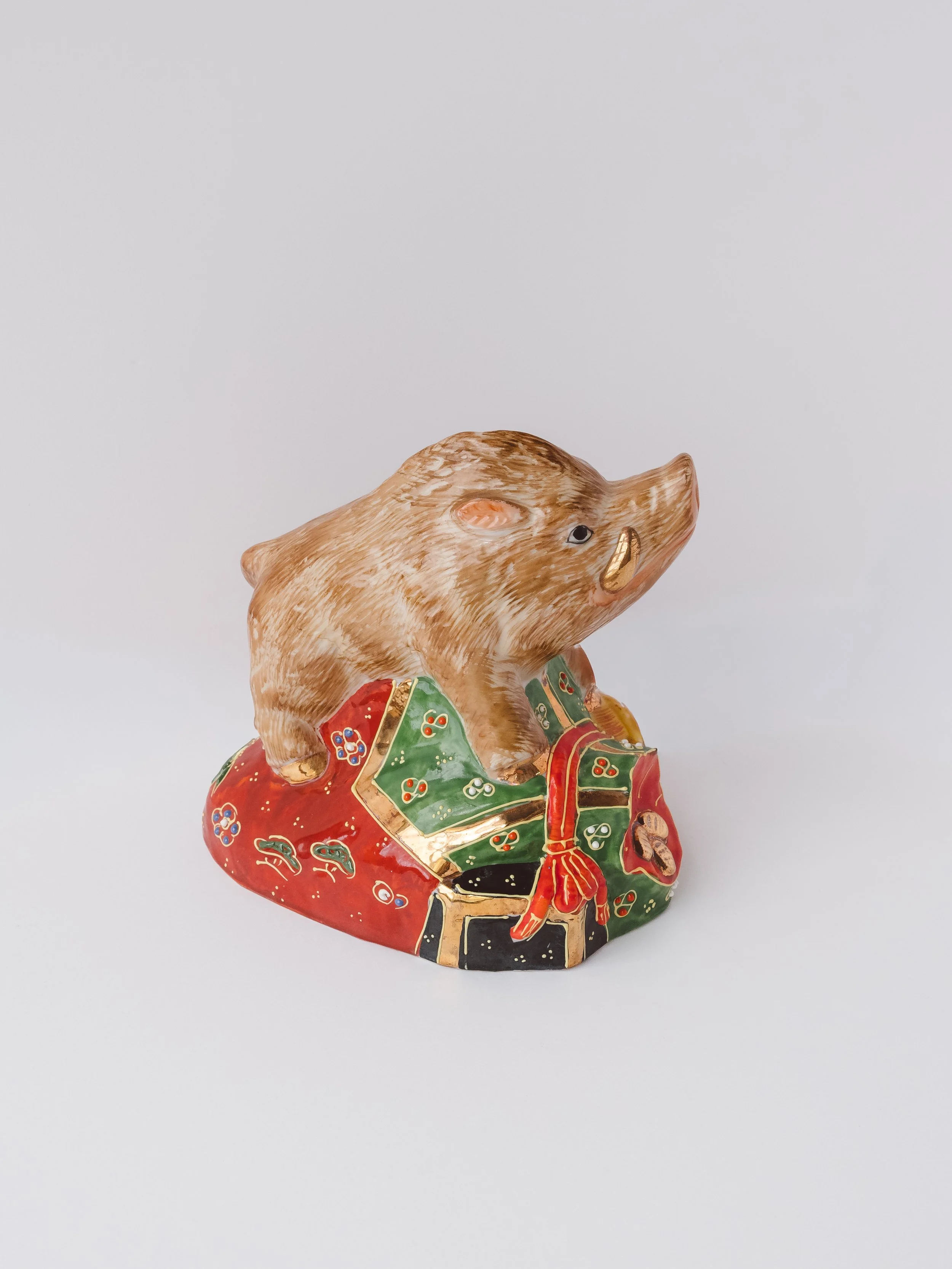 Image 5 of 15
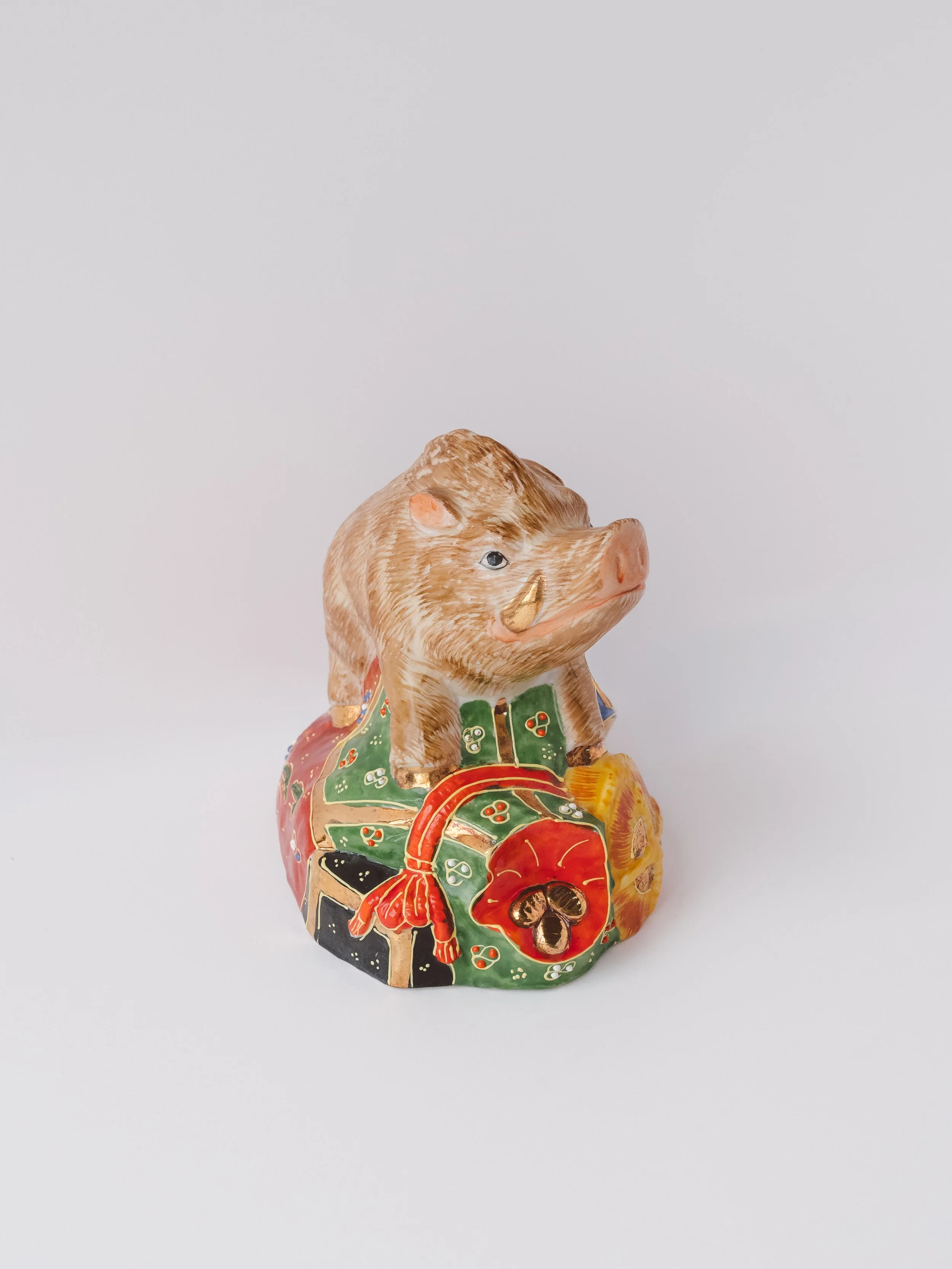 Image 6 of 15
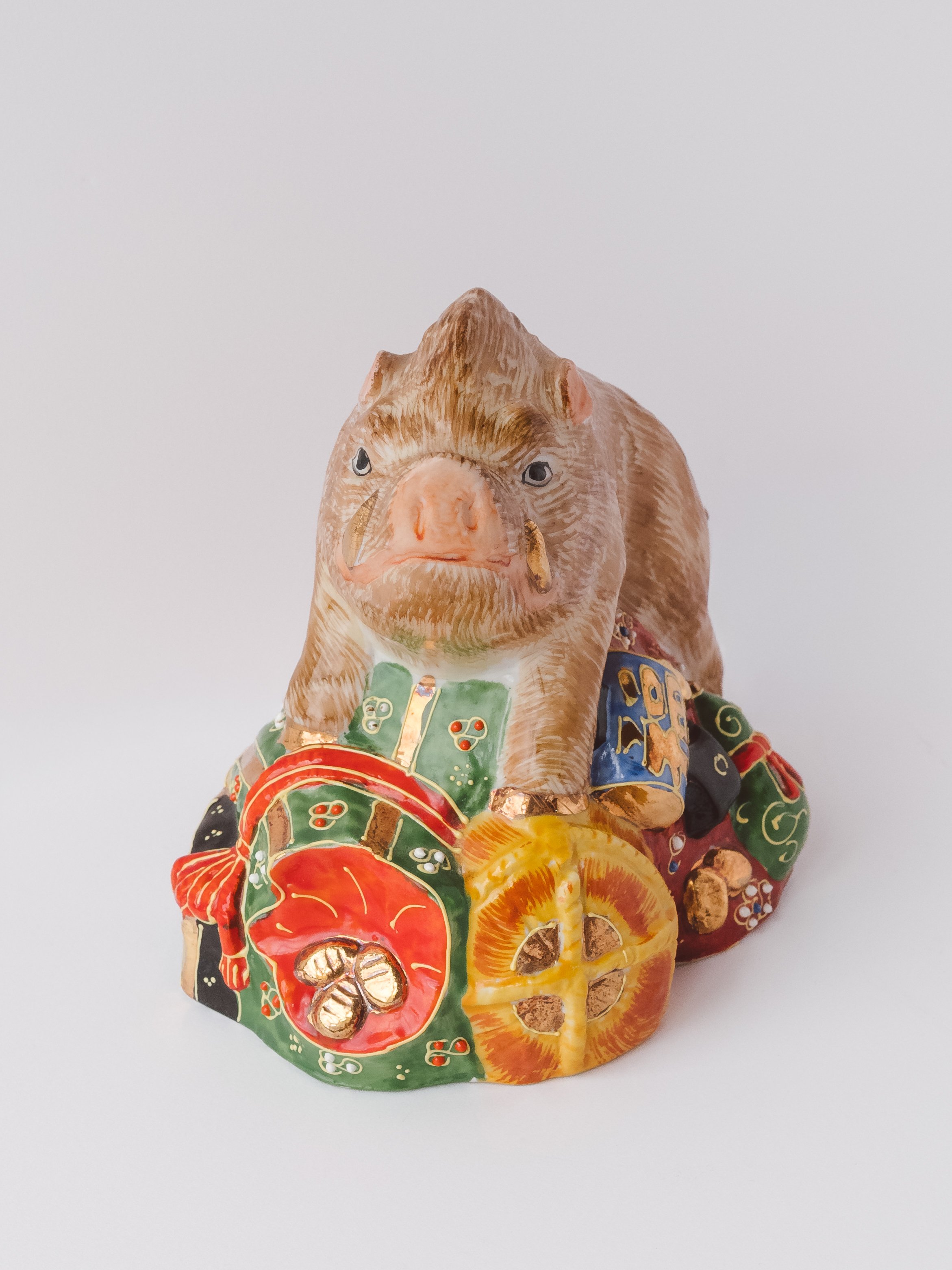 Image 7 of 15
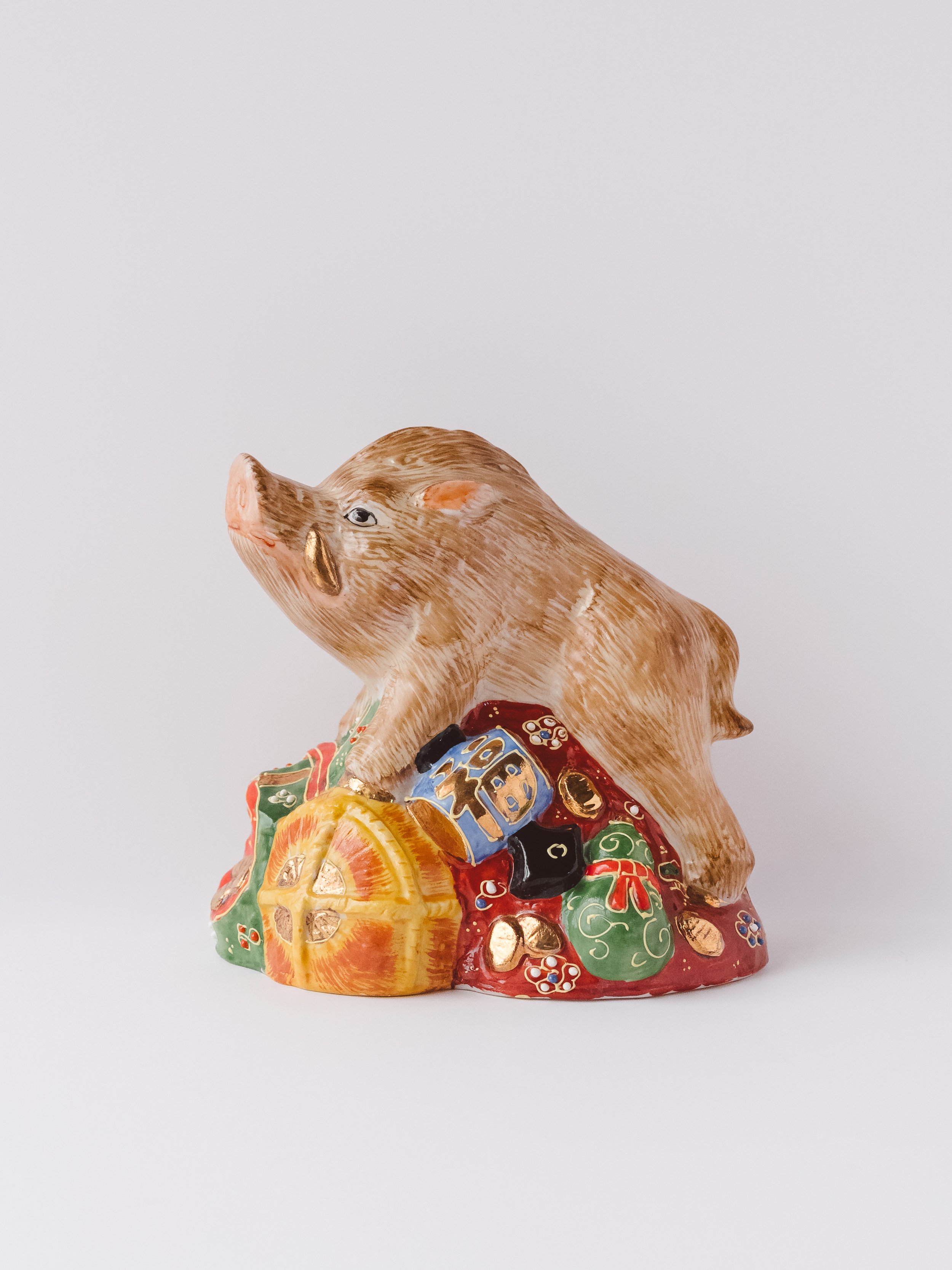 Image 8 of 15
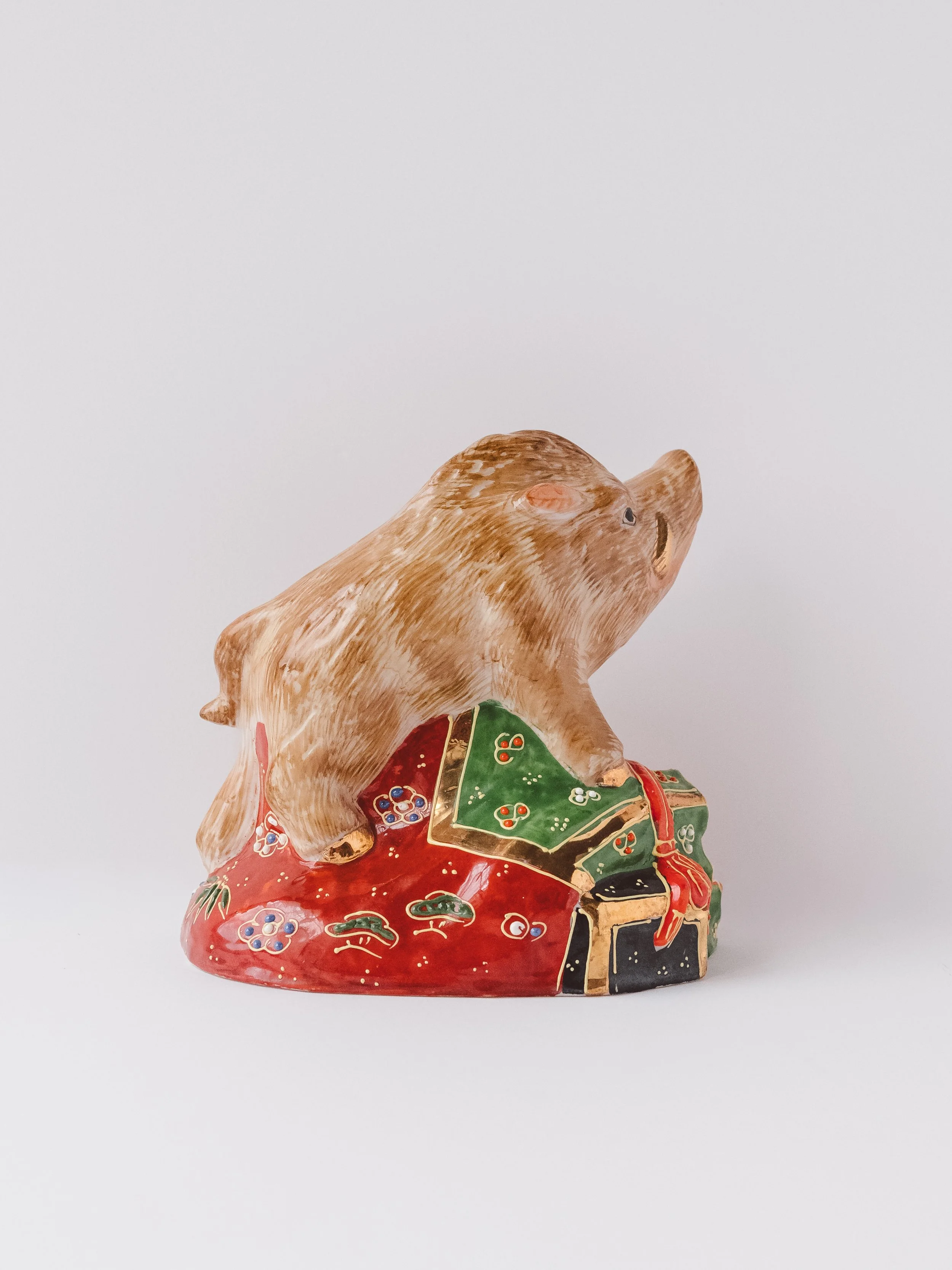 Image 9 of 15
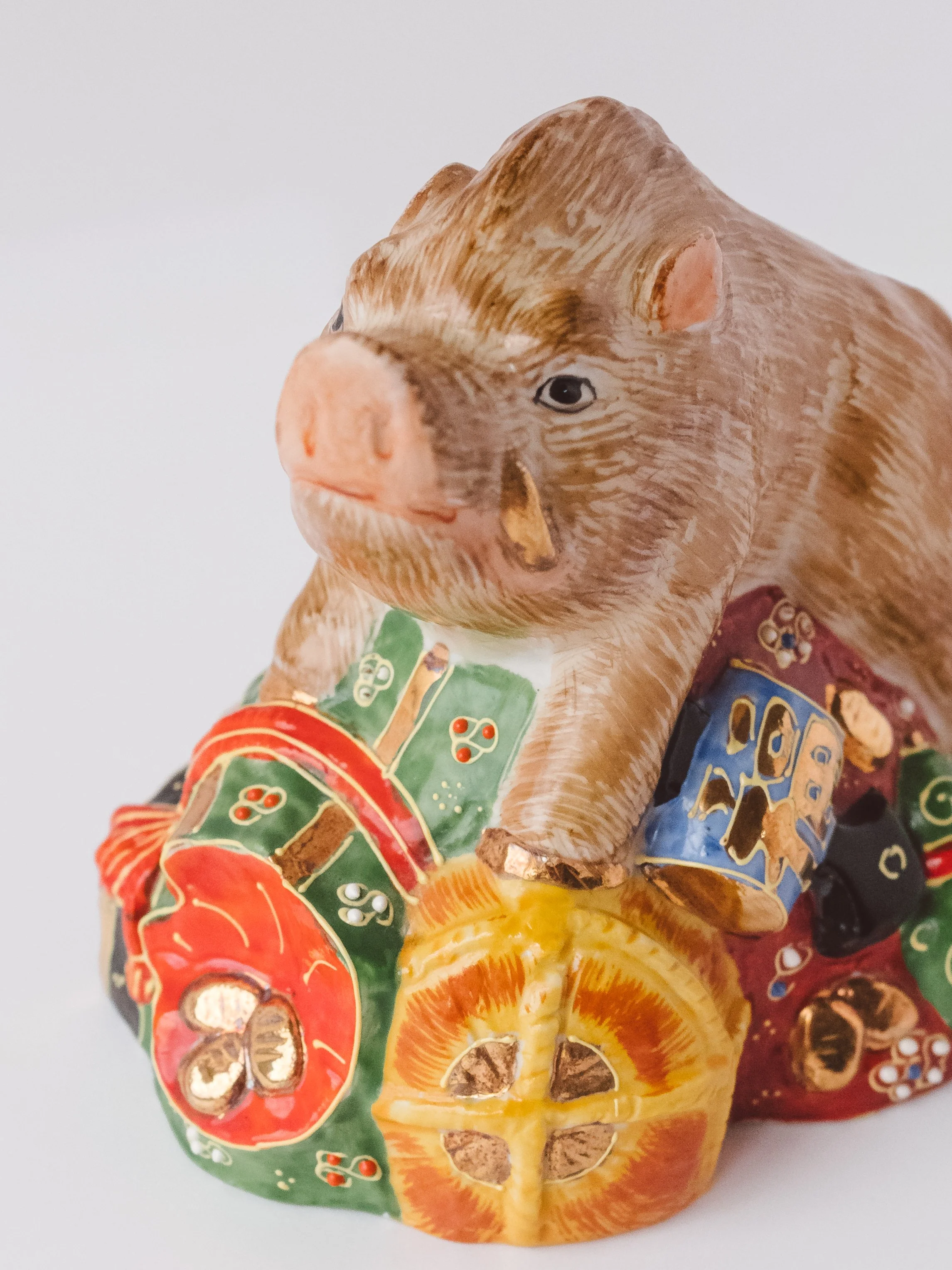 Image 10 of 15
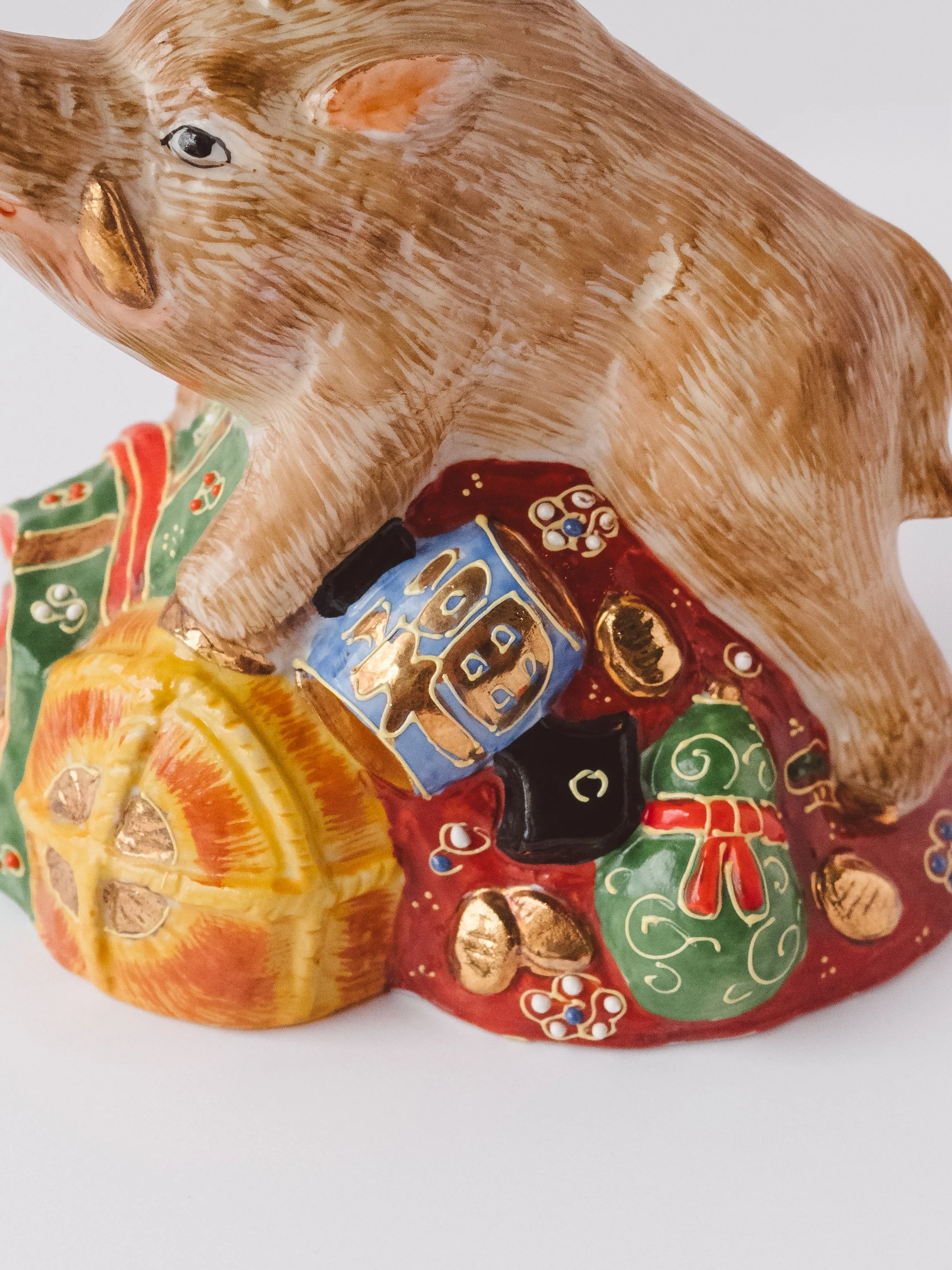 Image 11 of 15
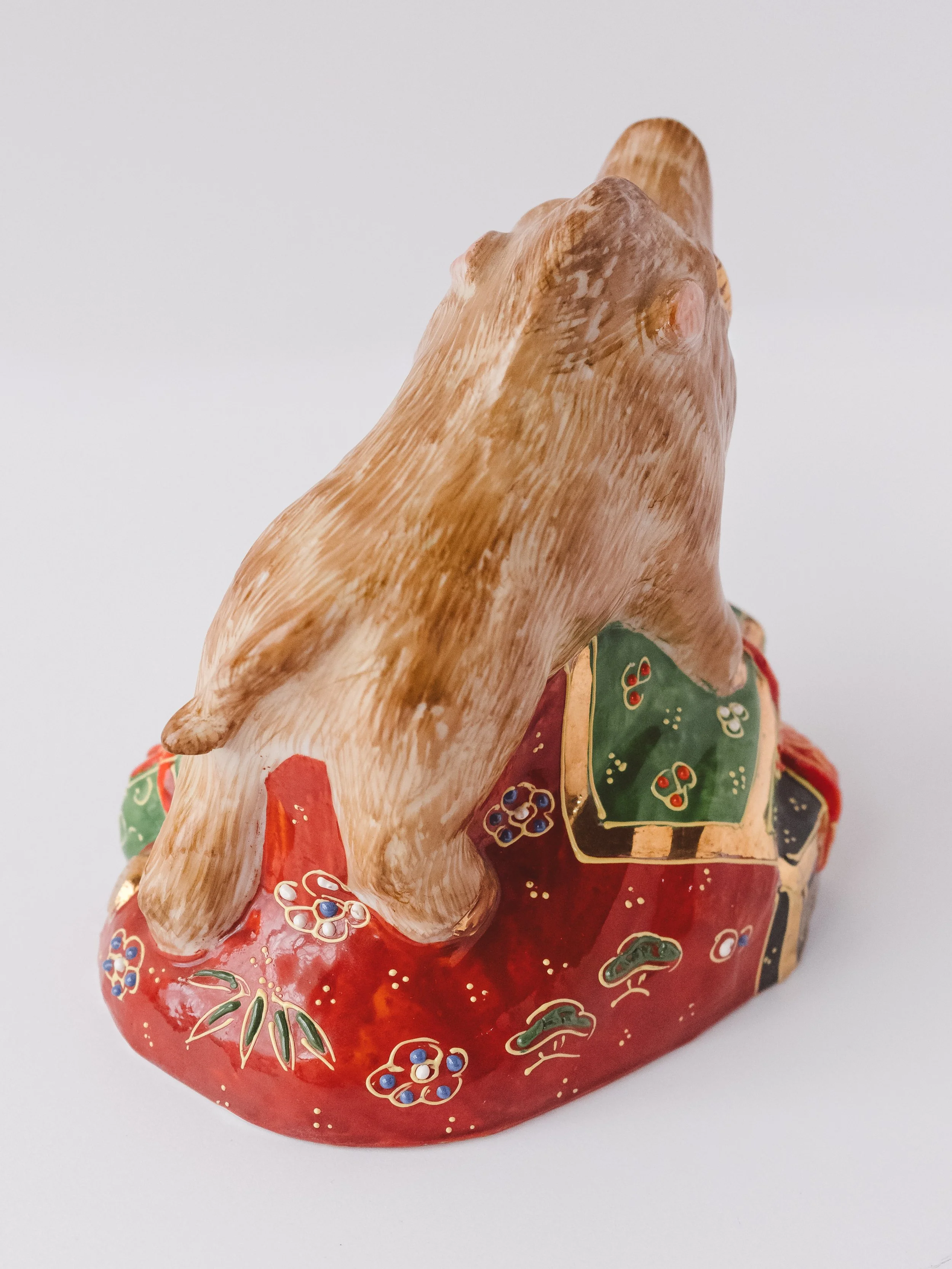 Image 12 of 15
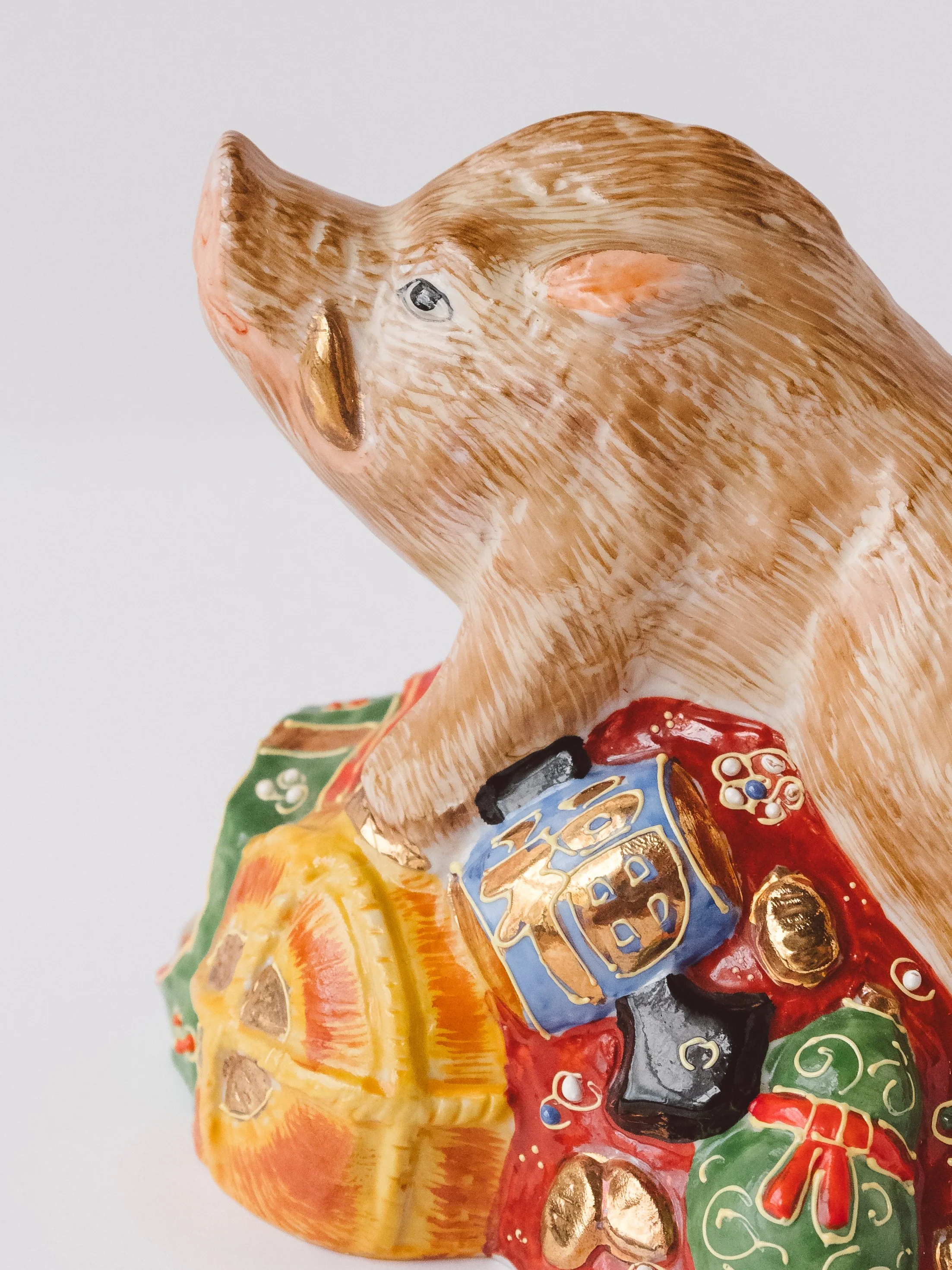 Image 13 of 15
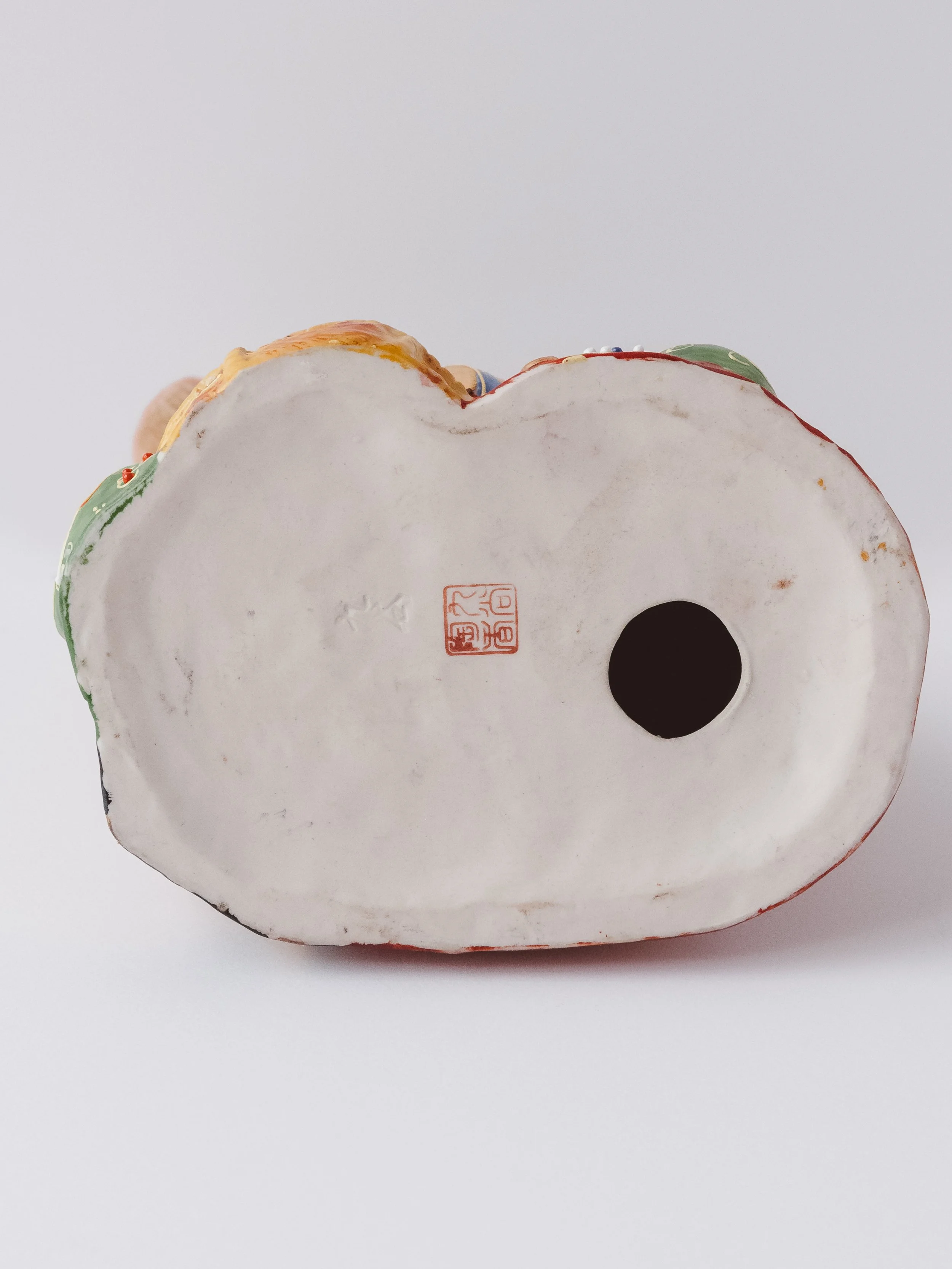 Image 14 of 15
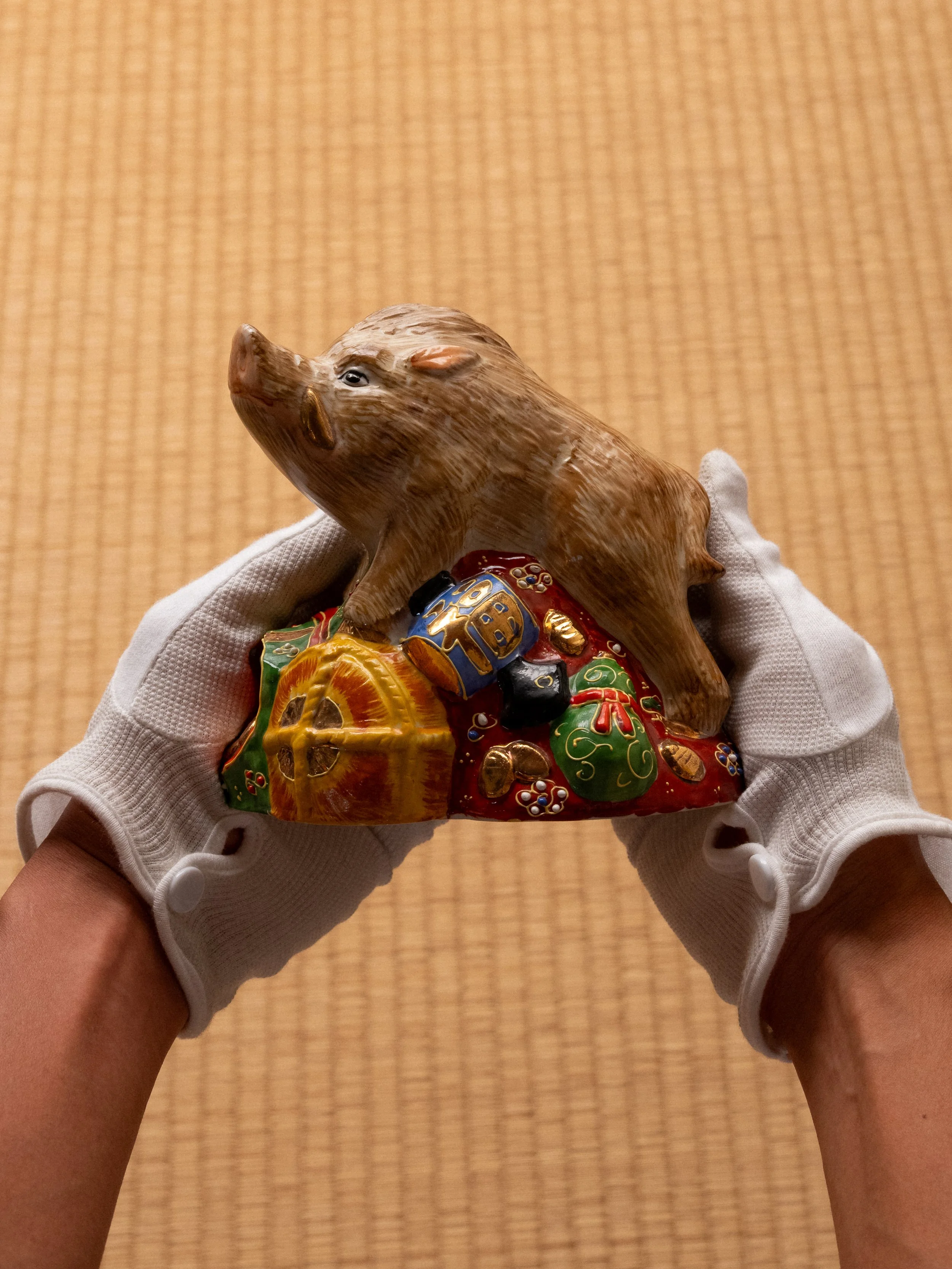 Image 15 of 15