【 The Concept 】
A tiger caught mid-stride, mouth open in a roar. The body is low and prowling — one foreleg reaching, the weight carried forward — and the long tail sweeps up and curls into a closed ring against the left hind leg, a single strong loop that finishes the line of the animal. In Japan the tiger was a beast known almost entirely from imported pictures rather than life, and so it comes down to us a little mythic: fierce, but with the frank, characterful face of a creature drawn from imagination. It has long stood for courage and authority, and, set at a threshold with its mouth open, for protection — a guardian that roars bad fortune back out the door before it can enter. There is a money side to it, too: an old saying has the tiger travel a thousand miles and return a thousand — read, in trade, as wealth that always comes home again. A tiger like this was kept to guard a house and to keep its fortunes coming back.
【 The Function 】
An object for a threshold. It is happiest where it can face outward — the shelf by an entrance, the top of a cabinet, the sill of a window that looks onto the street — set so its roar meets whatever comes toward the house. Traditionally the tiger is placed to the right of a doorway (seen from inside), facing the door, to turn away ill will; pair it with a dragon set a little higher and to the other side and you have the old balance of the two great beasts. Low, long, and weighty for its size, it also simply anchors a surface — a piece with enough presence to hold a corner on its own.
【 The Texture 】
Warm sand-coloured ceramic, close to camel or dry ochre, in a soft matte with a fine speckle through it — a surface that reads as earth rather than glass. Over it the stripes are brushed on in black by hand: quick, tapering strokes that bite in thick where the brush lands and drag off to a fine point, no two quite alike, so the coat has the movement of real painting rather than print. The face is worked in relief and then drawn — the open jaw with its modelled teeth and tongue, the folded muzzle, the ringed eyes and the fine markings of the brow — giving the roar its force. The pale clay shows warm and bare at the underside where the glaze steps away.
【 Presence 】
Small in footprint but loud in character. Where a calmer piece recedes, this one holds the eye — the open roar, the reaching stride, the graphic black-on-sand of the stripes reading clearly from across a room. It brings a note of nerve and old-fashioned bravado to a shelf, and a warmth that its fierceness never quite cancels: an animal drawn with obvious affection, guarding its corner. Set it at a doorway and it does a job; set it anywhere and it gives a room a little courage.
Sourced from a private collection in Japan.
【 The Concept 】
A tiger caught mid-stride, mouth open in a roar. The body is low and prowling — one foreleg reaching, the weight carried forward — and the long tail sweeps up and curls into a closed ring against the left hind leg, a single strong loop that finishes the line of the animal. In Japan the tiger was a beast known almost entirely from imported pictures rather than life, and so it comes down to us a little mythic: fierce, but with the frank, characterful face of a creature drawn from imagination. It has long stood for courage and authority, and, set at a threshold with its mouth open, for protection — a guardian that roars bad fortune back out the door before it can enter. There is a money side to it, too: an old saying has the tiger travel a thousand miles and return a thousand — read, in trade, as wealth that always comes home again. A tiger like this was kept to guard a house and to keep its fortunes coming back.
【 The Function 】
An object for a threshold. It is happiest where it can face outward — the shelf by an entrance, the top of a cabinet, the sill of a window that looks onto the street — set so its roar meets whatever comes toward the house. Traditionally the tiger is placed to the right of a doorway (seen from inside), facing the door, to turn away ill will; pair it with a dragon set a little higher and to the other side and you have the old balance of the two great beasts. Low, long, and weighty for its size, it also simply anchors a surface — a piece with enough presence to hold a corner on its own.
【 The Texture 】
Warm sand-coloured ceramic, close to camel or dry ochre, in a soft matte with a fine speckle through it — a surface that reads as earth rather than glass. Over it the stripes are brushed on in black by hand: quick, tapering strokes that bite in thick where the brush lands and drag off to a fine point, no two quite alike, so the coat has the movement of real painting rather than print. The face is worked in relief and then drawn — the open jaw with its modelled teeth and tongue, the folded muzzle, the ringed eyes and the fine markings of the brow — giving the roar its force. The pale clay shows warm and bare at the underside where the glaze steps away.
【 Presence 】
Small in footprint but loud in character. Where a calmer piece recedes, this one holds the eye — the open roar, the reaching stride, the graphic black-on-sand of the stripes reading clearly from across a room. It brings a note of nerve and old-fashioned bravado to a shelf, and a warmth that its fierceness never quite cancels: an animal drawn with obvious affection, guarding its corner. Set it at a doorway and it does a job; set it anywhere and it gives a room a little courage.
Sourced from a private collection in Japan.


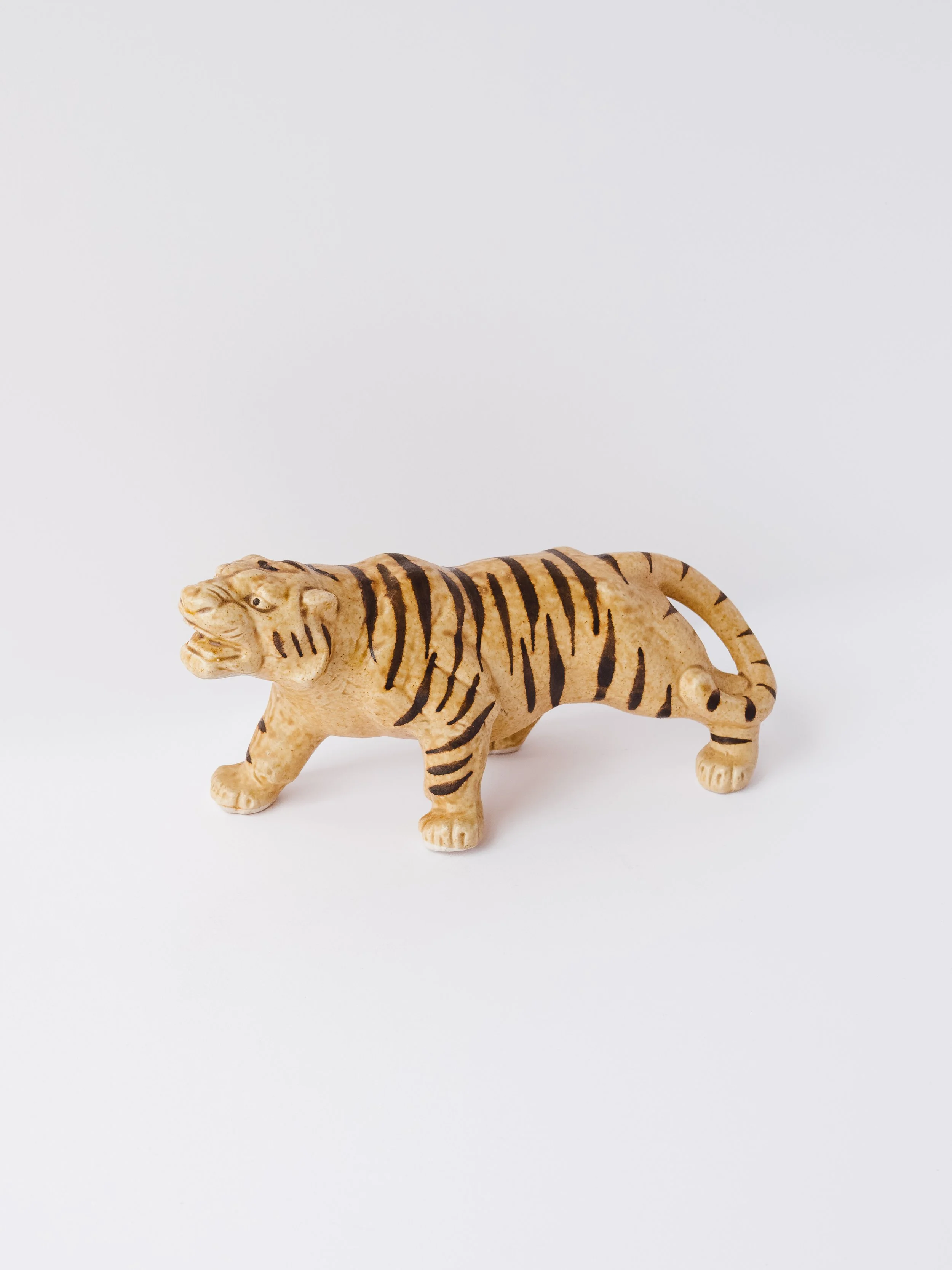 Image 1 of 9
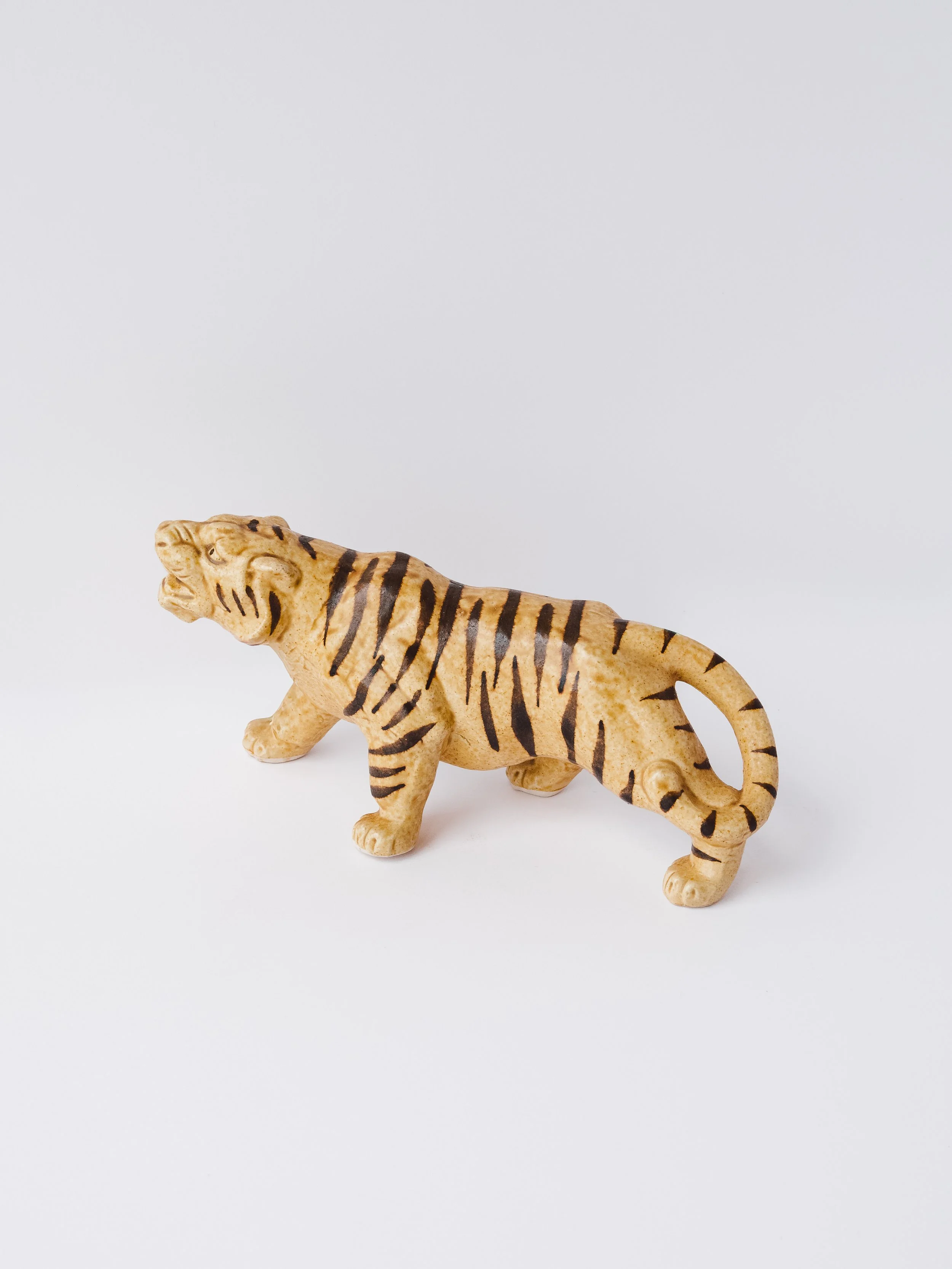 Image 2 of 9
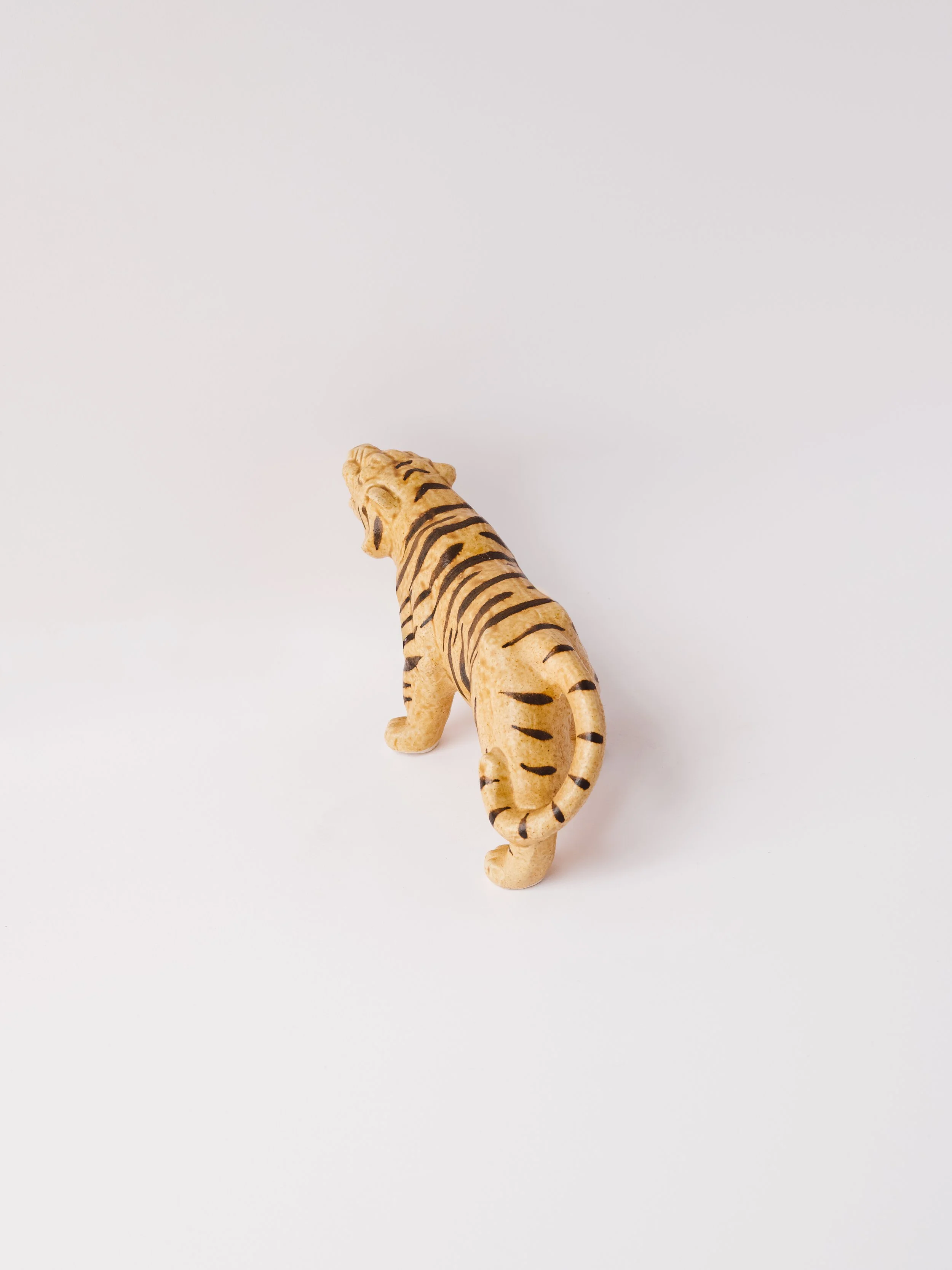 Image 3 of 9
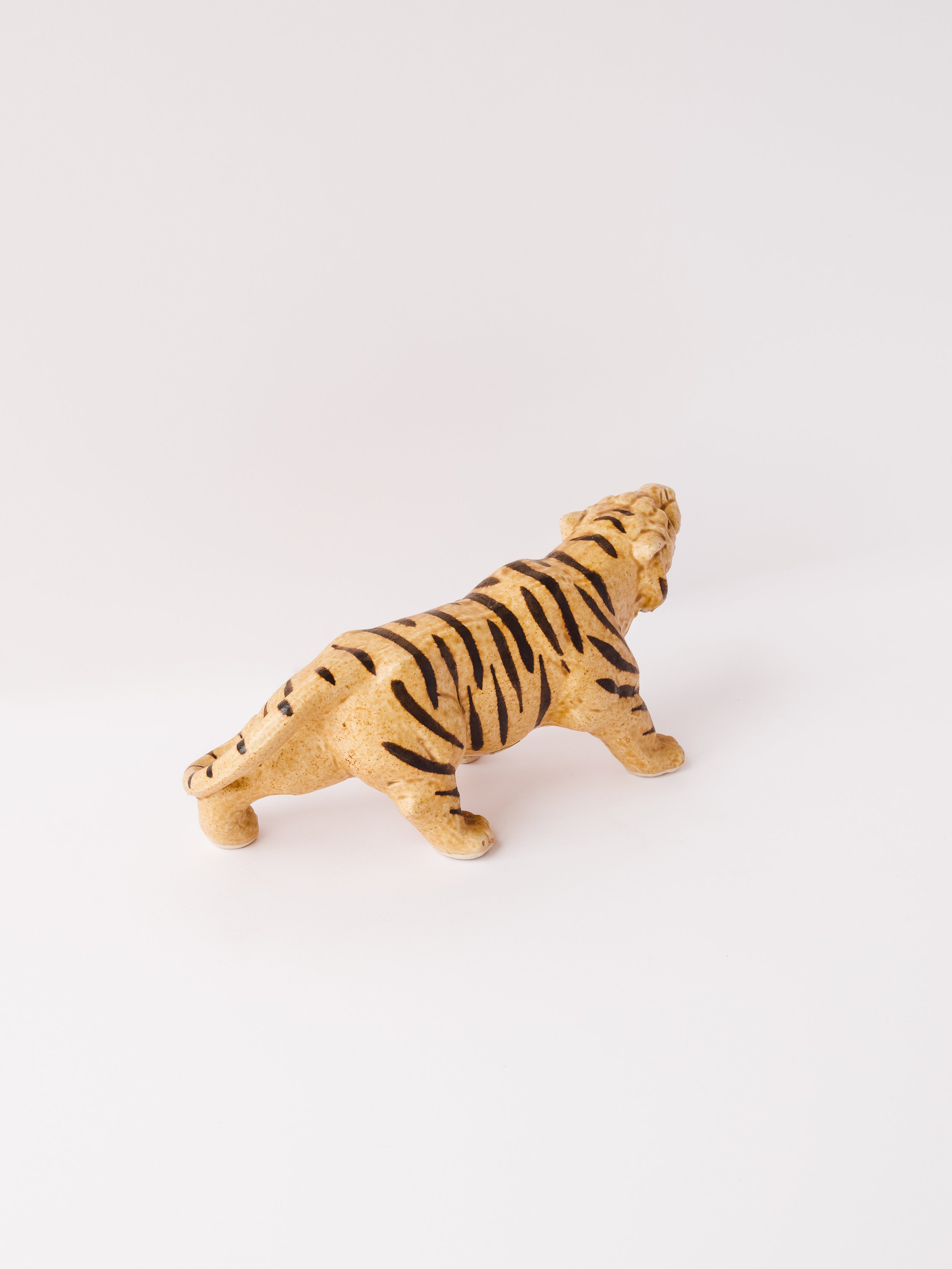 Image 4 of 9
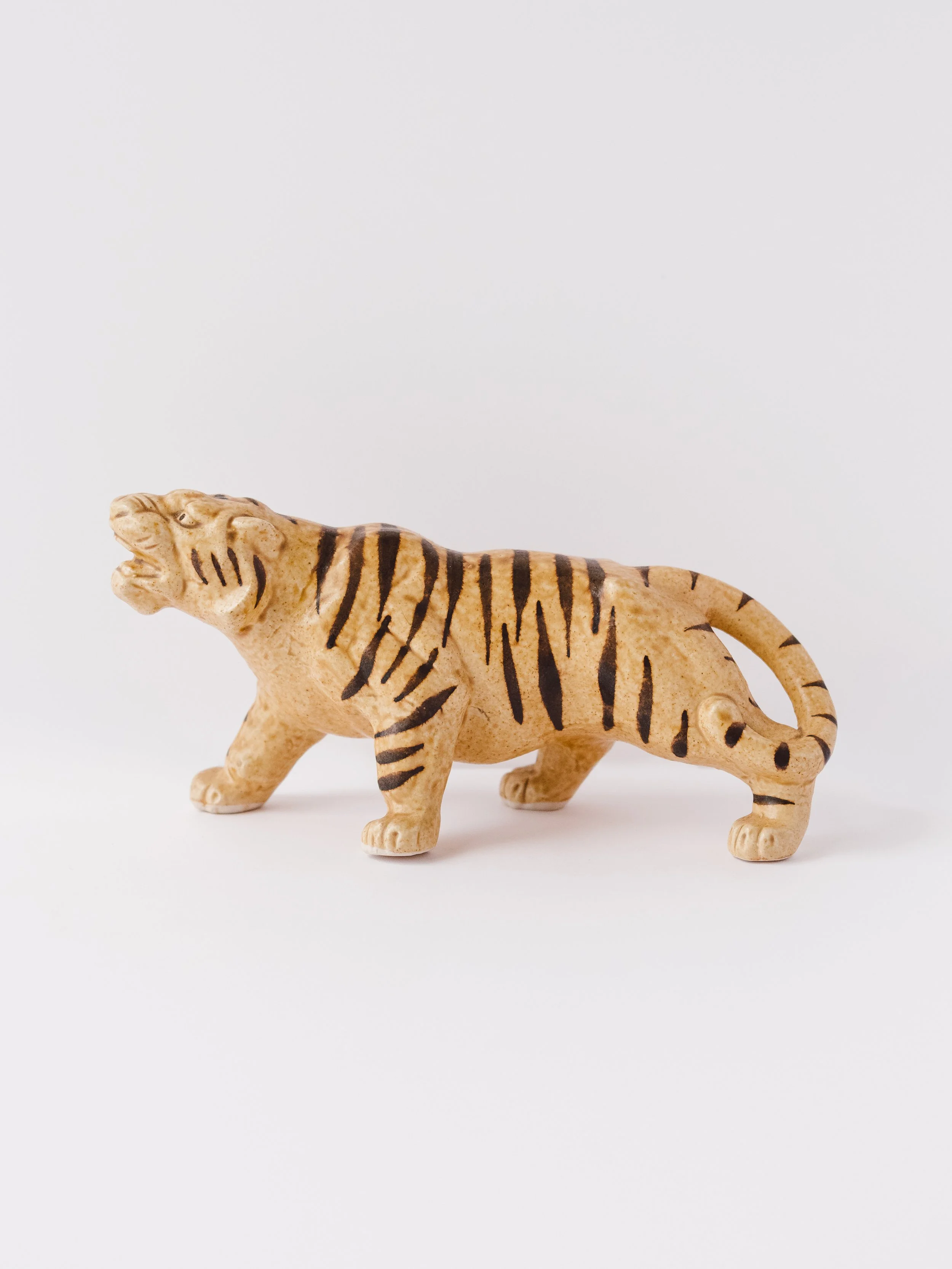 Image 5 of 9
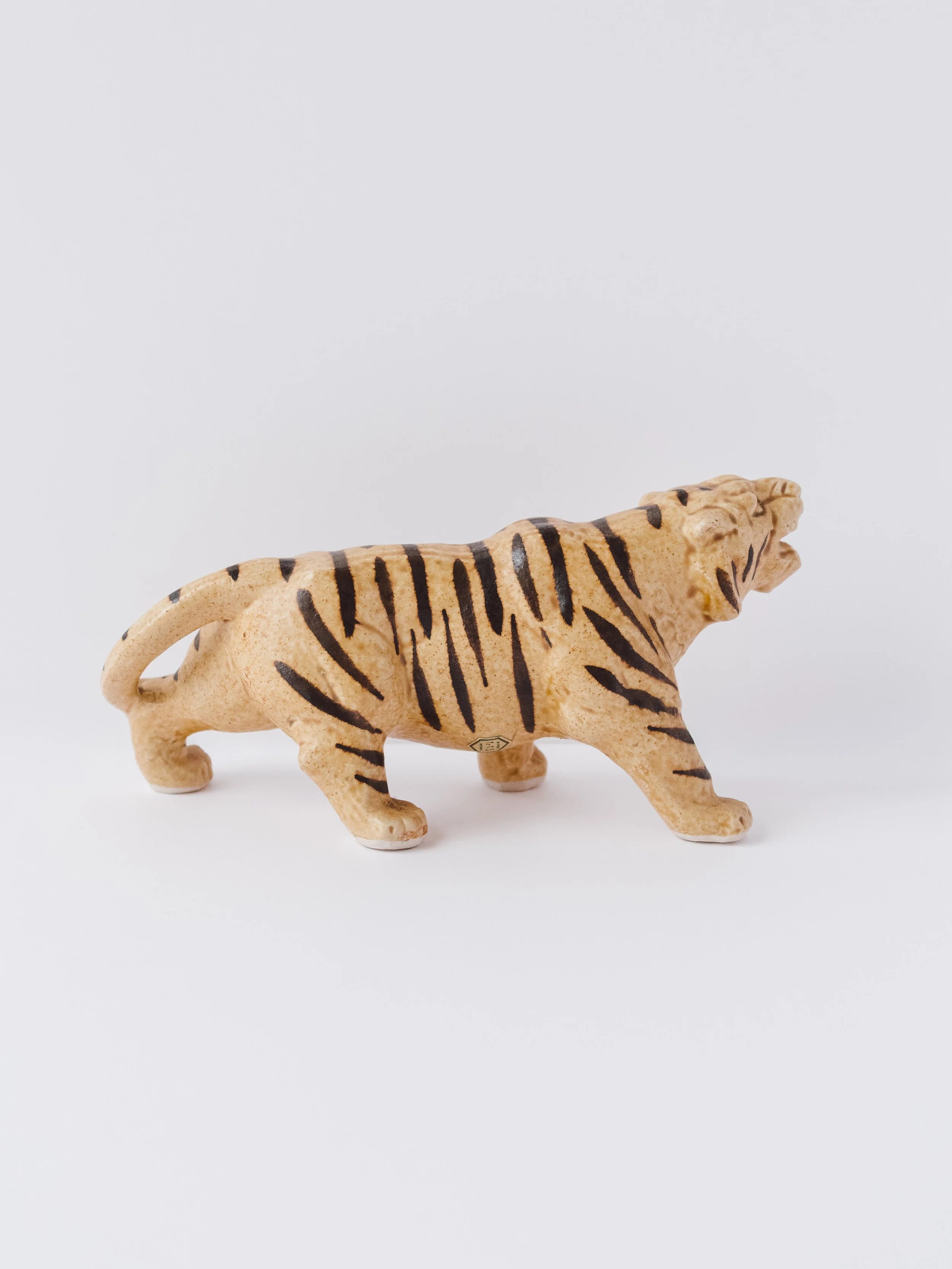 Image 6 of 9
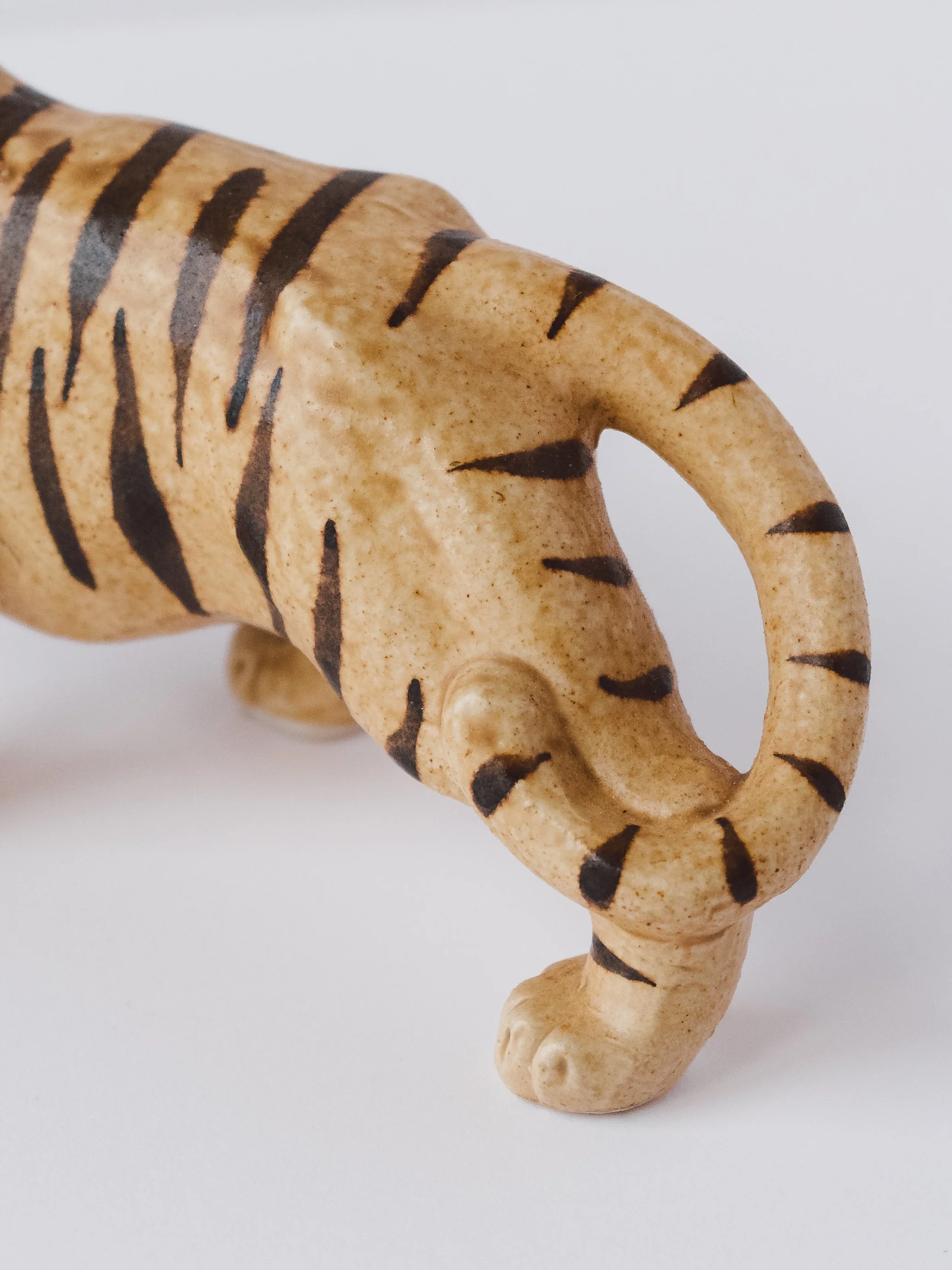 Image 7 of 9
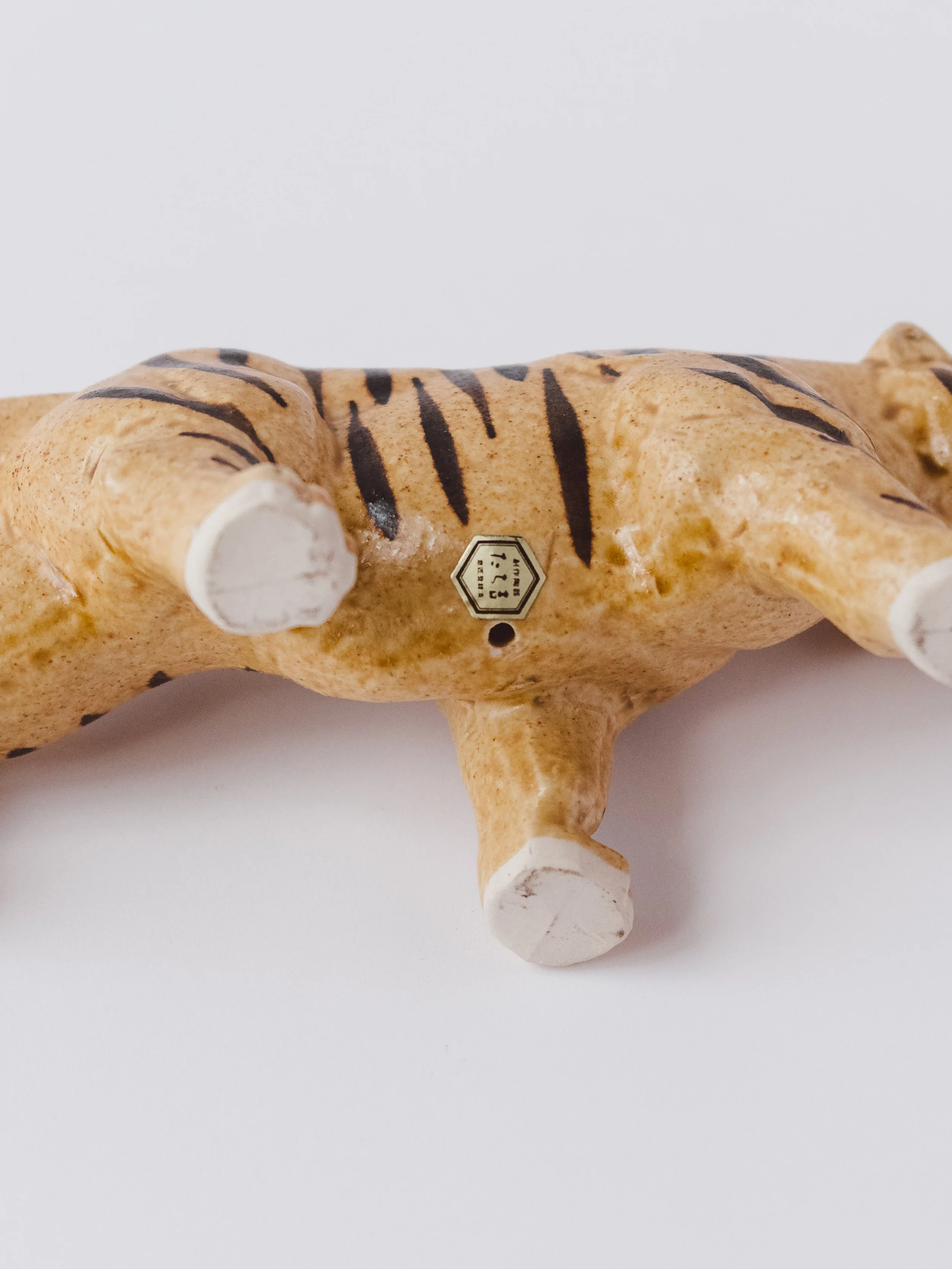 Image 8 of 9
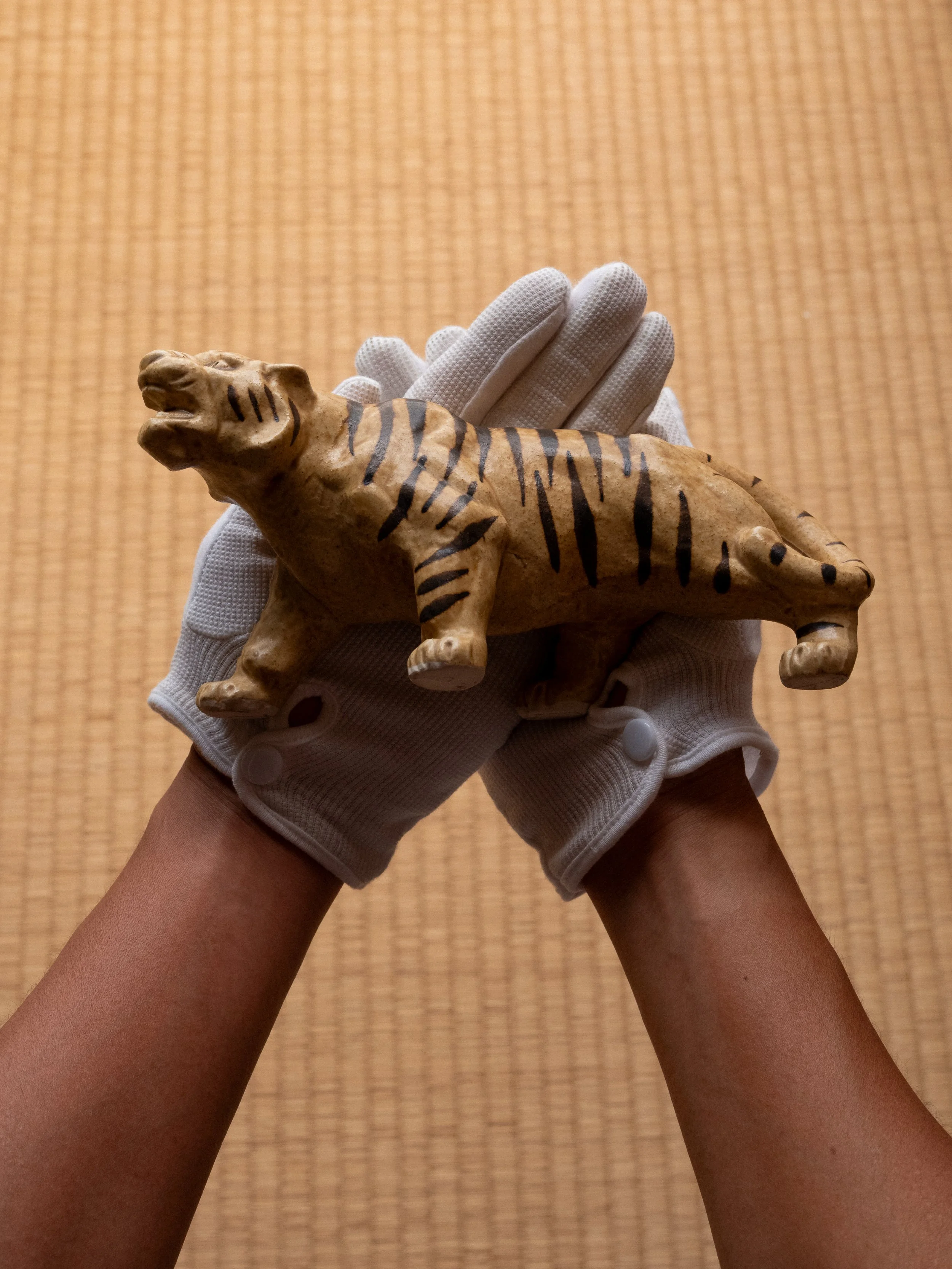 Image 9 of 9