【 The Concept 】
Two small crabs in glossy amber-caramel porcelain, one a little larger, one a little smaller — a pair that reads at once as a family, though each is complete in itself. The larger crab lifts its left claw high; the smaller lifts its right — mirror gestures, so that when they are set side by side they naturally face each other. Between them the eye writes a little story: parent and child, or two neighbours meeting on the same stretch of shoreline. Each is only a few centimetres across, but the deep amber glaze and the strong sideways gesture of the legs give them real presence — a piece of the tideline, in porcelain, small enough to hold two at once in one hand.
【 The Craft: Arita Porcelain 】
These are figures in the tradition of Arita porcelain (Arita-yaki) — Japan's oldest porcelain, first fired in the town of Arita in northern Kyūshū in the early seventeenth century after porcelain stone was discovered on the nearby Izumiyama mountain. From those kilns porcelain quickly became not only Japan's finest tableware but a major export to Europe, where it became famous under the name "Imari." Alongside its cups and bowls, Arita has for centuries also worked in small animal figures — a genre in which the industry's technical mastery of white porcelain is put to a simpler, purely sculptural task.
The construction of these two crabs shows that inheritance directly. Each is cast in a mould from liquid porcelain slip — the standard Arita method for a form as complex as a crab, with eight splayed legs and two raised claws. Turn the larger one over and you can see the honest evidence: the belly is left unglazed and a round opening in the underside — the point at which the mould drained — reveals the pure white porcelain body inside. That white body, fired above 1,300 °C into a dense, non-porous stone, is what Arita is: a strong, ringing porcelain, a world away from softer earthenware.
【 The Glaze 】
Over that white body sits a warm, glossy iron-brown glaze that moves from honey through caramel to a rich chocolate-amber. It pools darker where it gathered in the joints of the legs and at the seam between shell and body, and thins to a lighter gold along the raised ridges — a small, honest landscape that a plain paint could never make. The whole surface is high-gloss and mirror-like, catching light on every curve of shell and claw.
【 What You Are Looking At 】
The design is a knowing balance between realism and quiet stylization. The essentials of "crab" are all here — the rounded shell, the two raised claws, the eight sideways-splayed legs — but the details have been smoothed away. There are no incised spines, no fine granulation of the shell, no drawn eyes. The animal is reduced to its most memorable gestures: shell, claws, sideways line of legs. Read side by side, the two are a mirrored pair: the larger lifts its left claw and spreads its legs wide, the smaller lifts its right and stands lower and more compact, so that when placed together they naturally turn toward one another. Neither is a copy of the other; each has its own posture and its own weight, but the mirrored raised claws close the composition into a small, deliberate dialogue — motion answering motion, in the same warm skin.
【 The Crab in Japanese Art 】
The crab is a familiar creature in Japan's art and its kitchen alike. It has been drawn and painted for centuries; Hokusai himself made a beautiful surimono (poetry print) of a crab and rice plant that hangs today in the Metropolitan Museum of Art. In modern Japanese ceramics the crab is a favourite subject in relief — a whole rice-bowl once made by Miyagawa Kōzan in the 1880s, with two lifelike crabs modelled onto a brown-glazed dish, is registered as an Important Cultural Property of Japan. This little pair belongs to that long affection for the crab as a small, sideways-moving, endlessly watchable creature. Seasonally, the crab has always been read as a sign of the water's edge and the coming of summer — a piece to bring out when the days grow warmer.
【 The Object 】
Two small hand-scale sculptures, each carved with a strong horizontal presence far greater than its tiny weight. The white porcelain body glimpsed at the underside makes them light and dense at once; the amber glaze makes them glow.
【 Where to Place It 】
Together on a low shelf, on a bathroom windowsill, on a writing desk, on a bookcase near a bowl of the same warm earth tone; in an entrance, on a genkan tray, or in a tokonoma alcove as a small seasonal moment for late spring and summer. They read especially well in pairs — parent and child, senior and junior — but each is also complete on its own, and they can be set apart across a shelf if you prefer them to hold two corners of a room. Small enough for a jewellery tray, sturdy enough to keep on a working desk.
【 Care 】
Glazed porcelain — dust with a soft dry cloth or brush; wipe with a barely-damp cloth if needed and dry immediately. Handle by the body, not by the raised claws or legs. Not for a dishwasher and not for hard knocks. The color is fired into the glaze and will not fade.
【 Function & What It Brings 】
Keep them, place them, or give them. As objects they are a small quiet pleasure — a pair of hand-glazed porcelain animals with real craft under a modest scale, the kind of piece that composes a shelf rather than crowds it. As a gift they are ideal for anyone who loves the sea, small creatures, Japanese porcelain, or the pleasure of a pair — and they slip easily into any wrap thanks to their little weight. Perfect for a housewarming, a summer greeting, or as a paired keepsake given between two people.
【 The Texture 】
Glazed white porcelain. Warm, glossy amber to caramel, mirror-smooth over the shell and claws, pooling darker in the seams. The undersides are unglazed pure-white porcelain, with a small round opening at the centre; the leg tips show tiny unglazed white points. Light in the hand, cool and dense to the touch.
【 Presence 】
Quiet and animated at once. The pair are small enough to feel intimate — a private, hand-scale detail of a shelf rather than a statement — but the amber glaze and the outstretched legs give them a real, watchable moment. On a shelf they compose the space around them; picked up they feel like small pebbles from a very good beach.
Archive Note: The number in the name (1616) references the traditional date at which porcelain was first fired in Arita, the beginning of the Japanese porcelain tradition to which these pieces belong. It is NOT the date these pieces were made.
Provenance Note: Sourced from a private collection in Japan, where they had been kept for years in the tea-utensil box of a grandmother who practised sencha-dō — the Japanese way of steeped-leaf tea. In sencha display it is traditional to set a small figurative object (tsumami-mono, "picked-up piece") beside the tea tray to catch the season, and it is very likely that this pair — a summer creature of the water's edge — lived in that quiet role on her tea board. A pair of small Arita-porcelain (Arita-yaki) animal figures; the workshop is not identified here.
Condition Note: Sold as acquired, in very good condition. The gentle pooling and thinning of the amber iron glaze over the modelled surface, and the small unglazed white round opening at the centre of each underside, are the honest signatures of a slip-cast Arita porcelain, not damage. Please see the photographs as part of the description.
【 The Concept 】
Two small crabs in glossy amber-caramel porcelain, one a little larger, one a little smaller — a pair that reads at once as a family, though each is complete in itself. The larger crab lifts its left claw high; the smaller lifts its right — mirror gestures, so that when they are set side by side they naturally face each other. Between them the eye writes a little story: parent and child, or two neighbours meeting on the same stretch of shoreline. Each is only a few centimetres across, but the deep amber glaze and the strong sideways gesture of the legs give them real presence — a piece of the tideline, in porcelain, small enough to hold two at once in one hand.
【 The Craft: Arita Porcelain 】
These are figures in the tradition of Arita porcelain (Arita-yaki) — Japan's oldest porcelain, first fired in the town of Arita in northern Kyūshū in the early seventeenth century after porcelain stone was discovered on the nearby Izumiyama mountain. From those kilns porcelain quickly became not only Japan's finest tableware but a major export to Europe, where it became famous under the name "Imari." Alongside its cups and bowls, Arita has for centuries also worked in small animal figures — a genre in which the industry's technical mastery of white porcelain is put to a simpler, purely sculptural task.
The construction of these two crabs shows that inheritance directly. Each is cast in a mould from liquid porcelain slip — the standard Arita method for a form as complex as a crab, with eight splayed legs and two raised claws. Turn the larger one over and you can see the honest evidence: the belly is left unglazed and a round opening in the underside — the point at which the mould drained — reveals the pure white porcelain body inside. That white body, fired above 1,300 °C into a dense, non-porous stone, is what Arita is: a strong, ringing porcelain, a world away from softer earthenware.
【 The Glaze 】
Over that white body sits a warm, glossy iron-brown glaze that moves from honey through caramel to a rich chocolate-amber. It pools darker where it gathered in the joints of the legs and at the seam between shell and body, and thins to a lighter gold along the raised ridges — a small, honest landscape that a plain paint could never make. The whole surface is high-gloss and mirror-like, catching light on every curve of shell and claw.
【 What You Are Looking At 】
The design is a knowing balance between realism and quiet stylization. The essentials of "crab" are all here — the rounded shell, the two raised claws, the eight sideways-splayed legs — but the details have been smoothed away. There are no incised spines, no fine granulation of the shell, no drawn eyes. The animal is reduced to its most memorable gestures: shell, claws, sideways line of legs. Read side by side, the two are a mirrored pair: the larger lifts its left claw and spreads its legs wide, the smaller lifts its right and stands lower and more compact, so that when placed together they naturally turn toward one another. Neither is a copy of the other; each has its own posture and its own weight, but the mirrored raised claws close the composition into a small, deliberate dialogue — motion answering motion, in the same warm skin.
【 The Crab in Japanese Art 】
The crab is a familiar creature in Japan's art and its kitchen alike. It has been drawn and painted for centuries; Hokusai himself made a beautiful surimono (poetry print) of a crab and rice plant that hangs today in the Metropolitan Museum of Art. In modern Japanese ceramics the crab is a favourite subject in relief — a whole rice-bowl once made by Miyagawa Kōzan in the 1880s, with two lifelike crabs modelled onto a brown-glazed dish, is registered as an Important Cultural Property of Japan. This little pair belongs to that long affection for the crab as a small, sideways-moving, endlessly watchable creature. Seasonally, the crab has always been read as a sign of the water's edge and the coming of summer — a piece to bring out when the days grow warmer.
【 The Object 】
Two small hand-scale sculptures, each carved with a strong horizontal presence far greater than its tiny weight. The white porcelain body glimpsed at the underside makes them light and dense at once; the amber glaze makes them glow.
【 Where to Place It 】
Together on a low shelf, on a bathroom windowsill, on a writing desk, on a bookcase near a bowl of the same warm earth tone; in an entrance, on a genkan tray, or in a tokonoma alcove as a small seasonal moment for late spring and summer. They read especially well in pairs — parent and child, senior and junior — but each is also complete on its own, and they can be set apart across a shelf if you prefer them to hold two corners of a room. Small enough for a jewellery tray, sturdy enough to keep on a working desk.
【 Care 】
Glazed porcelain — dust with a soft dry cloth or brush; wipe with a barely-damp cloth if needed and dry immediately. Handle by the body, not by the raised claws or legs. Not for a dishwasher and not for hard knocks. The color is fired into the glaze and will not fade.
【 Function & What It Brings 】
Keep them, place them, or give them. As objects they are a small quiet pleasure — a pair of hand-glazed porcelain animals with real craft under a modest scale, the kind of piece that composes a shelf rather than crowds it. As a gift they are ideal for anyone who loves the sea, small creatures, Japanese porcelain, or the pleasure of a pair — and they slip easily into any wrap thanks to their little weight. Perfect for a housewarming, a summer greeting, or as a paired keepsake given between two people.
【 The Texture 】
Glazed white porcelain. Warm, glossy amber to caramel, mirror-smooth over the shell and claws, pooling darker in the seams. The undersides are unglazed pure-white porcelain, with a small round opening at the centre; the leg tips show tiny unglazed white points. Light in the hand, cool and dense to the touch.
【 Presence 】
Quiet and animated at once. The pair are small enough to feel intimate — a private, hand-scale detail of a shelf rather than a statement — but the amber glaze and the outstretched legs give them a real, watchable moment. On a shelf they compose the space around them; picked up they feel like small pebbles from a very good beach.
Archive Note: The number in the name (1616) references the traditional date at which porcelain was first fired in Arita, the beginning of the Japanese porcelain tradition to which these pieces belong. It is NOT the date these pieces were made.
Provenance Note: Sourced from a private collection in Japan, where they had been kept for years in the tea-utensil box of a grandmother who practised sencha-dō — the Japanese way of steeped-leaf tea. In sencha display it is traditional to set a small figurative object (tsumami-mono, "picked-up piece") beside the tea tray to catch the season, and it is very likely that this pair — a summer creature of the water's edge — lived in that quiet role on her tea board. A pair of small Arita-porcelain (Arita-yaki) animal figures; the workshop is not identified here.
Condition Note: Sold as acquired, in very good condition. The gentle pooling and thinning of the amber iron glaze over the modelled surface, and the small unglazed white round opening at the centre of each underside, are the honest signatures of a slip-cast Arita porcelain, not damage. Please see the photographs as part of the description.


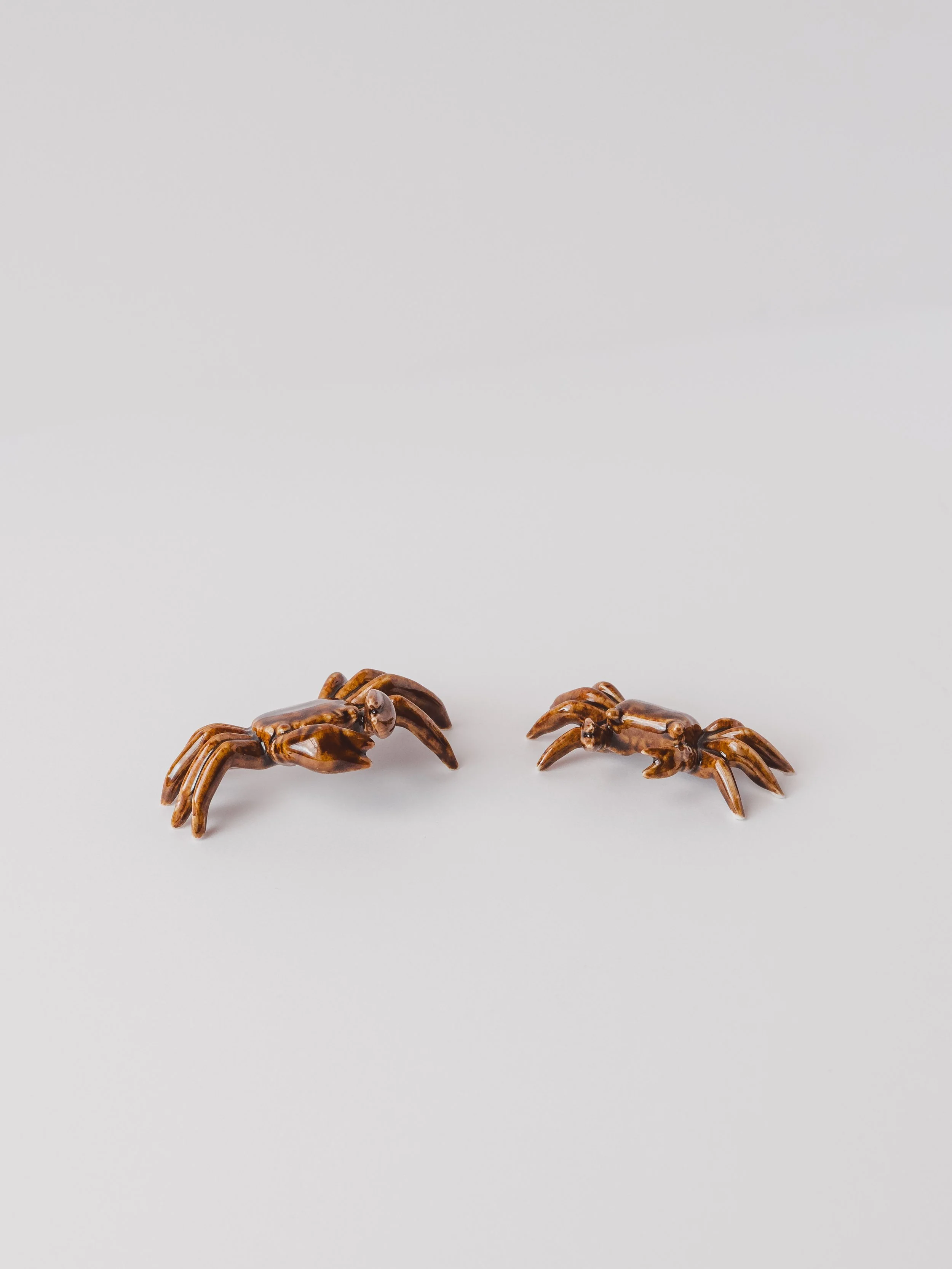 Image 1 of 17
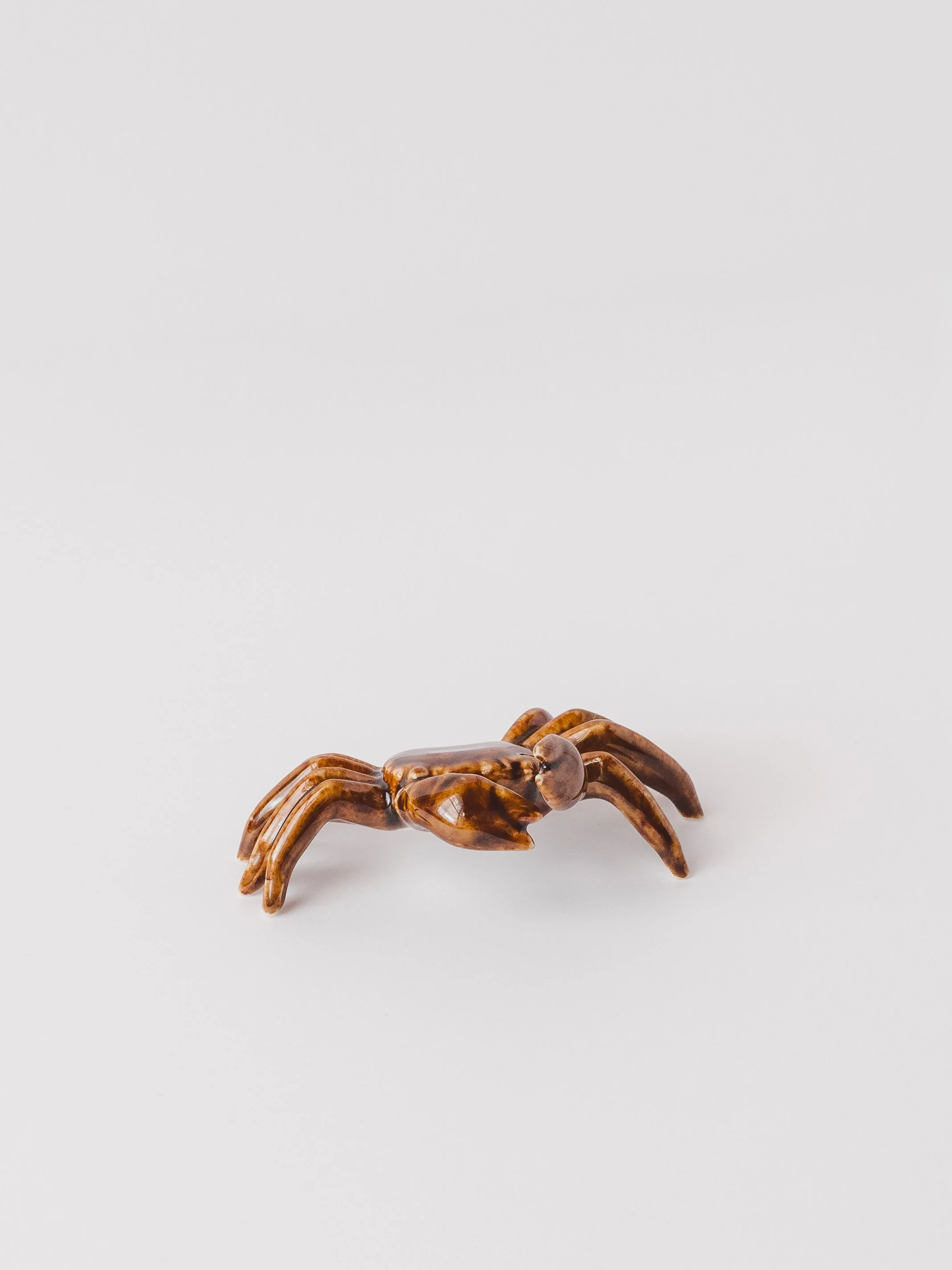 Image 2 of 17
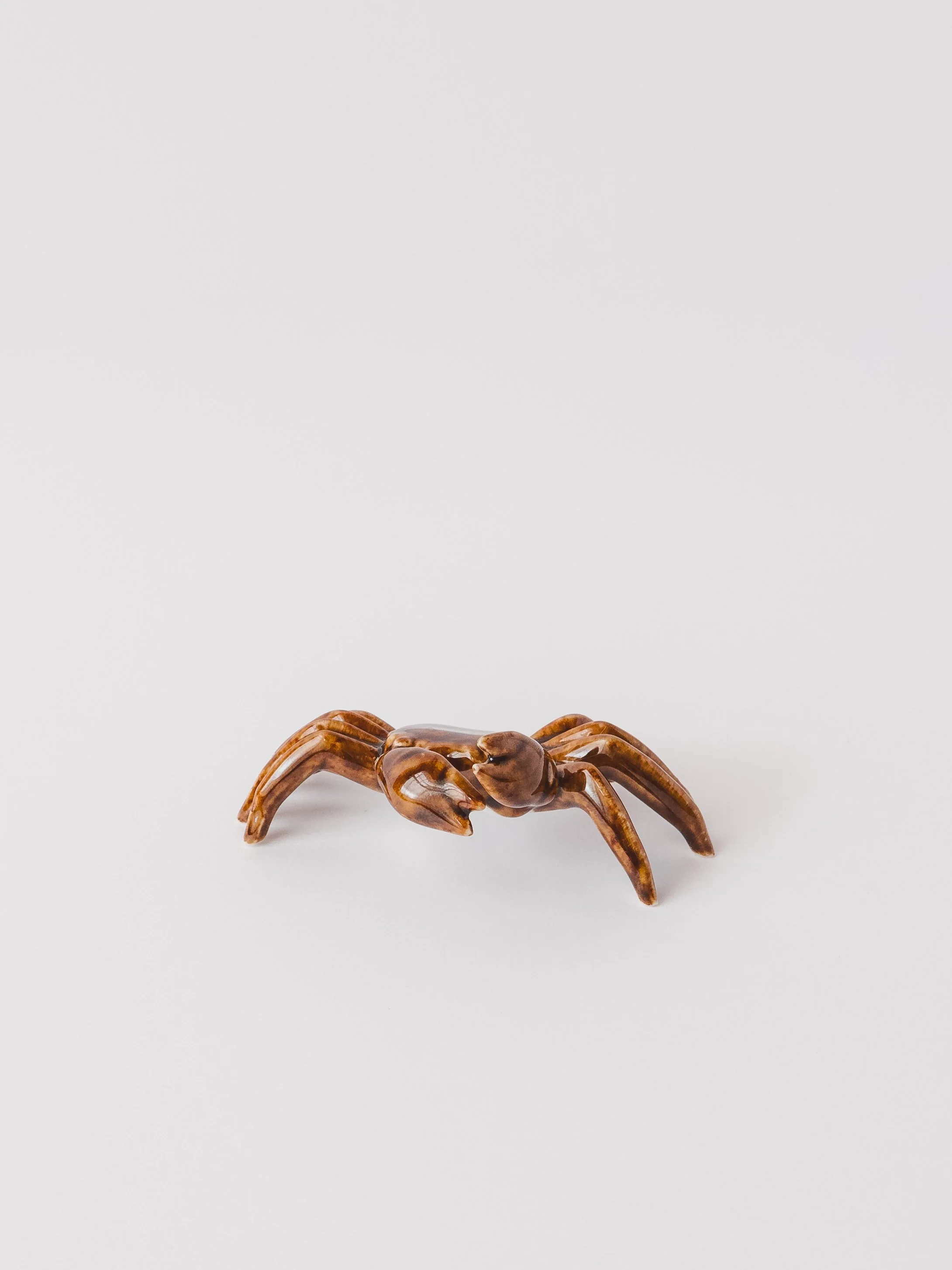 Image 3 of 17
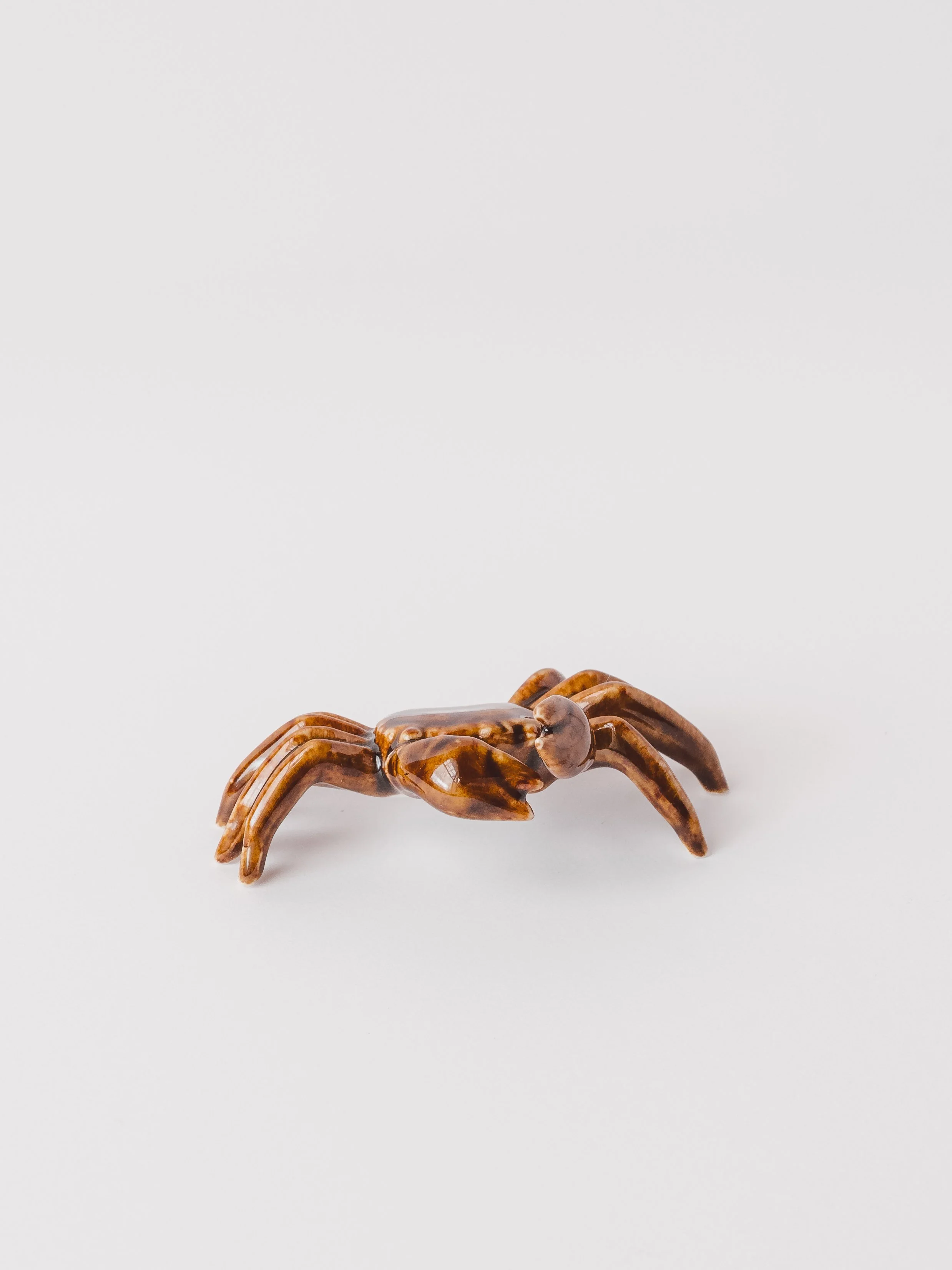 Image 4 of 17
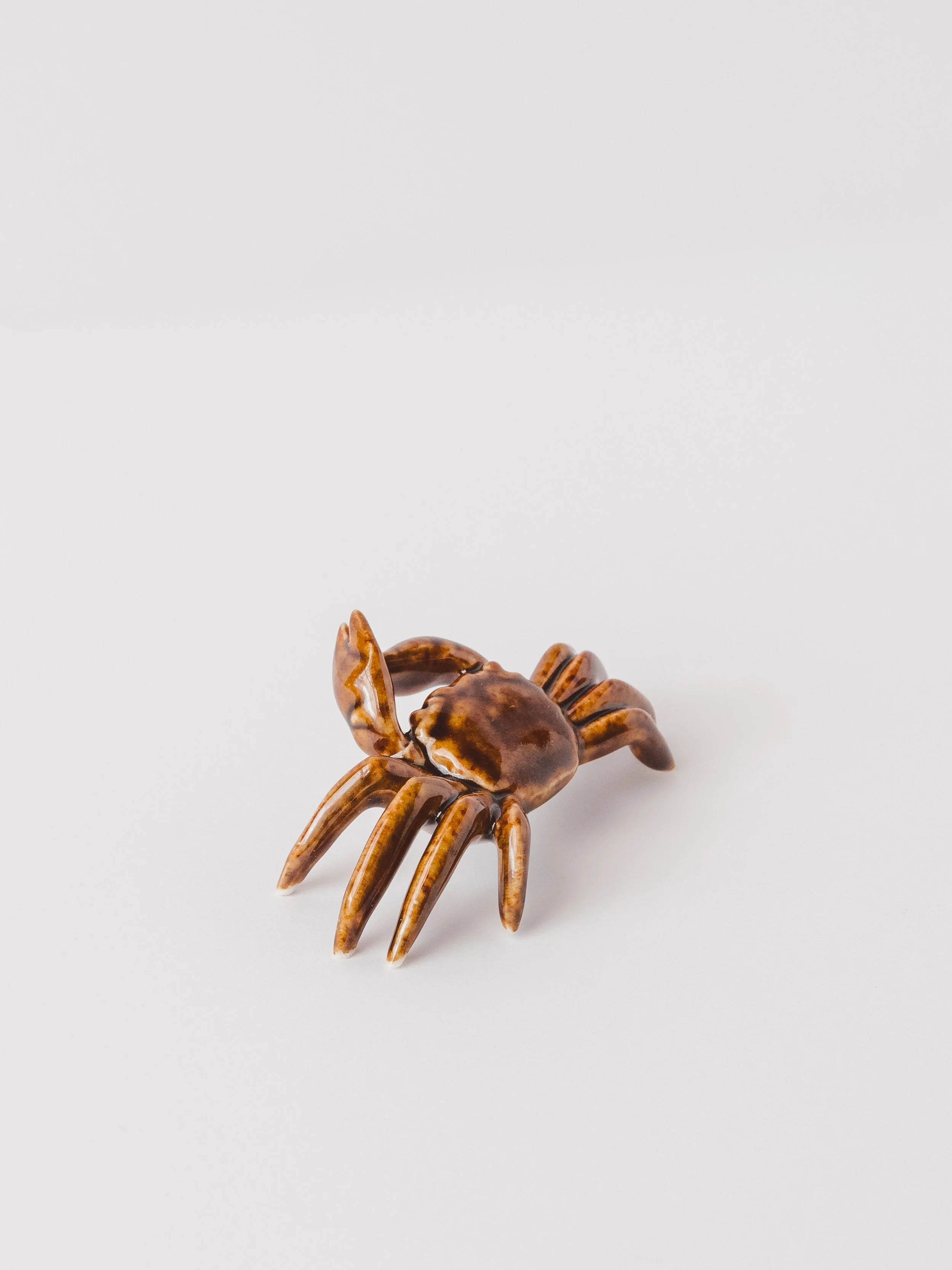 Image 5 of 17
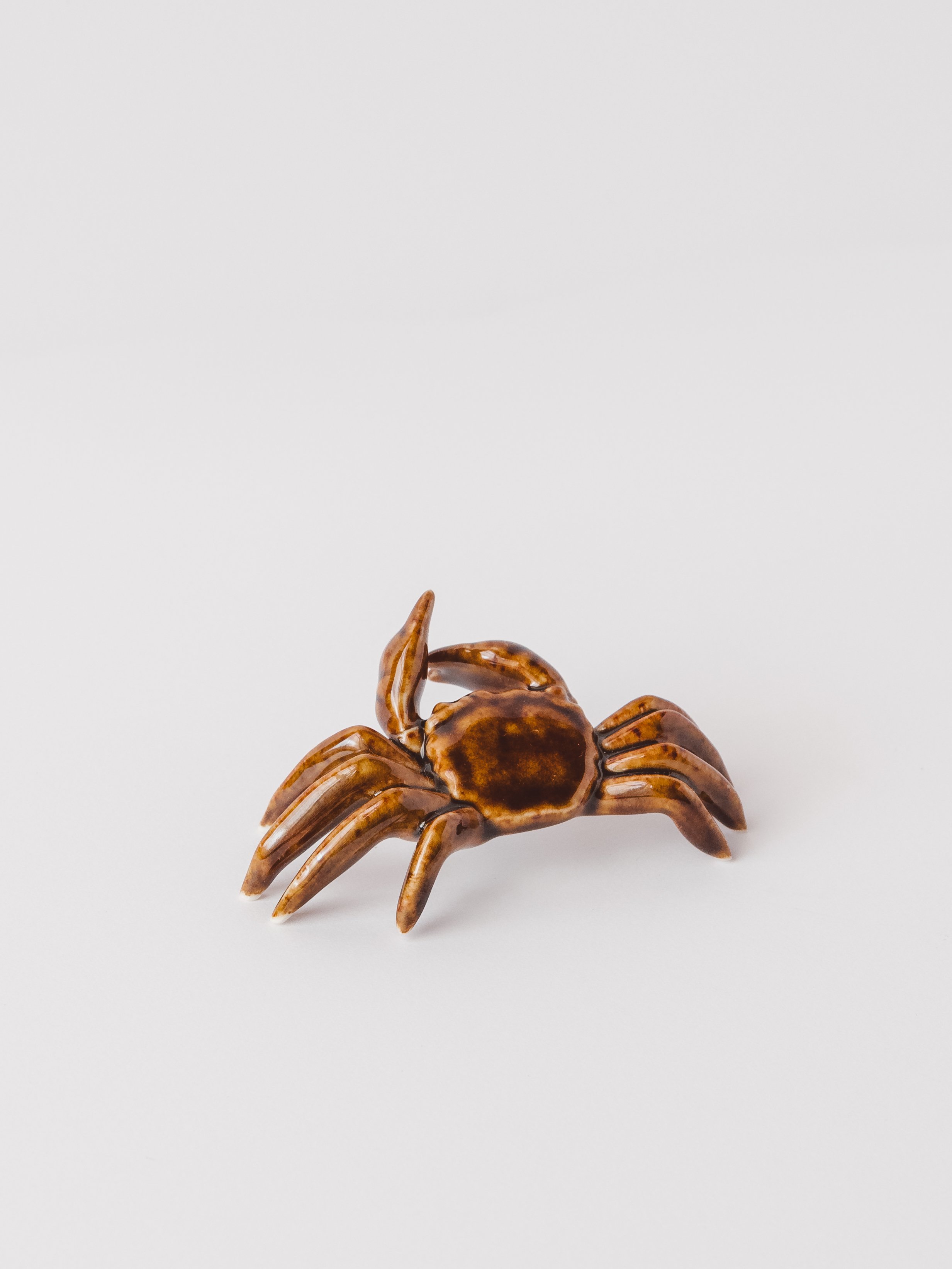 Image 6 of 17
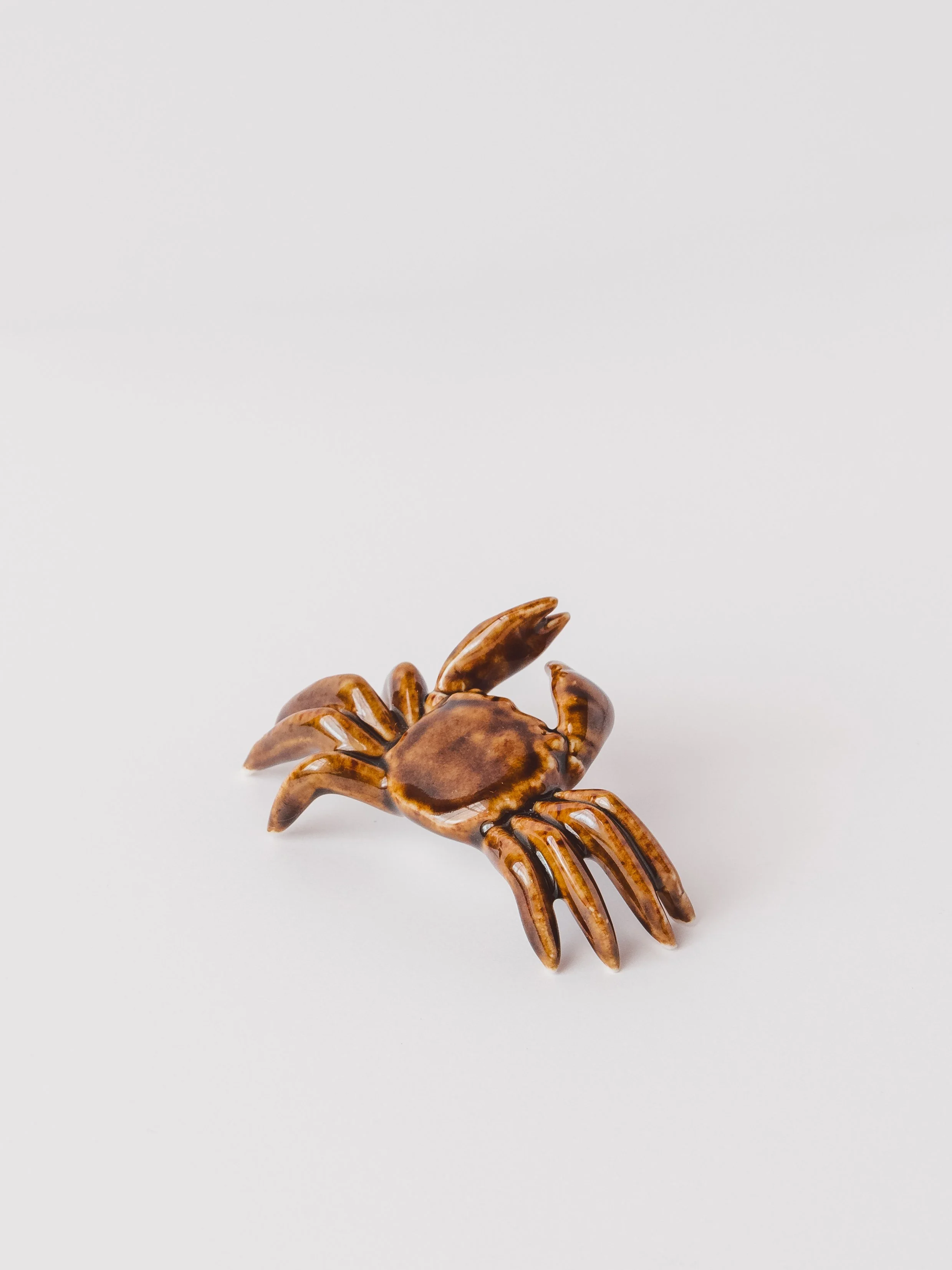 Image 7 of 17
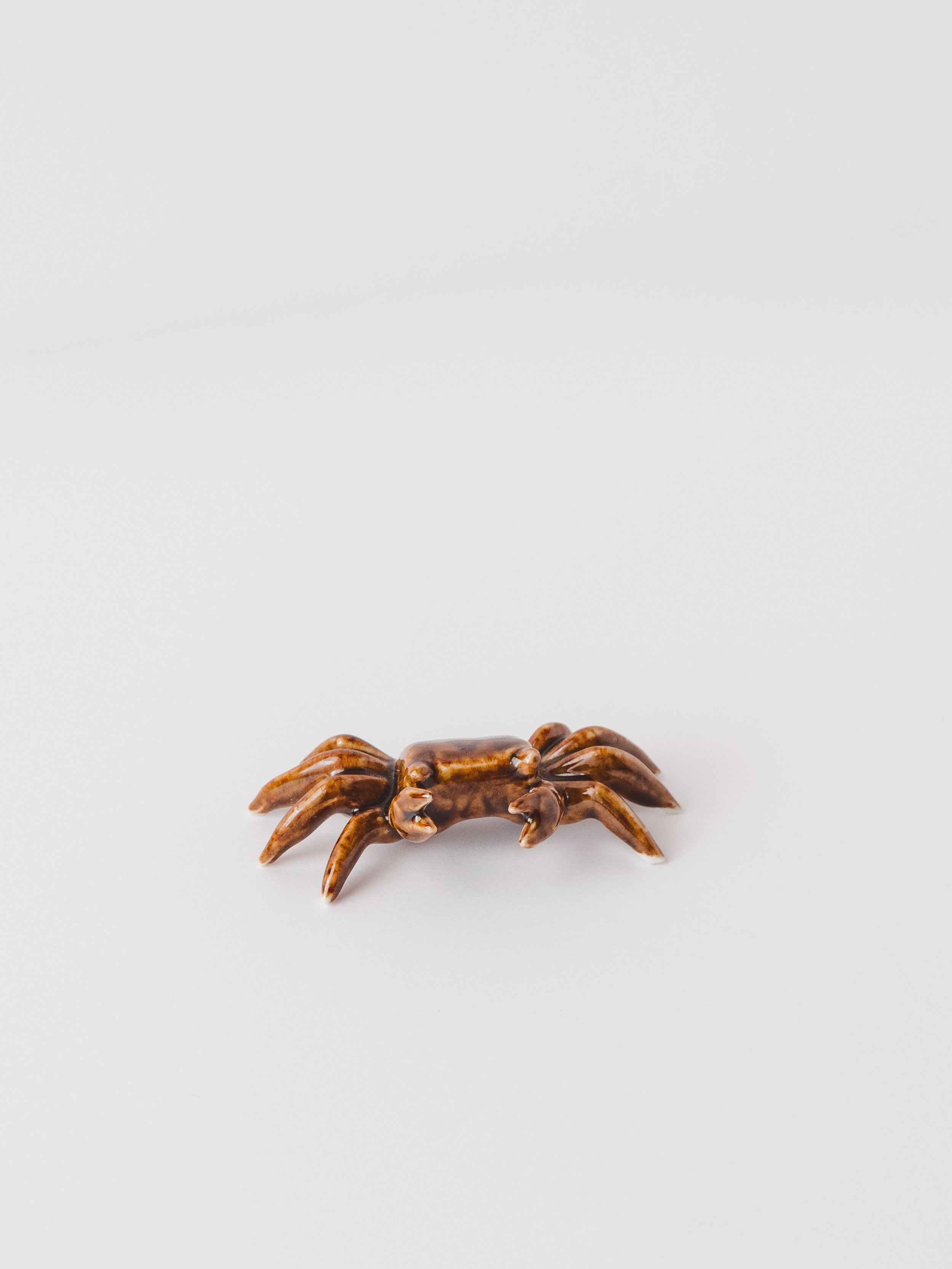 Image 8 of 17
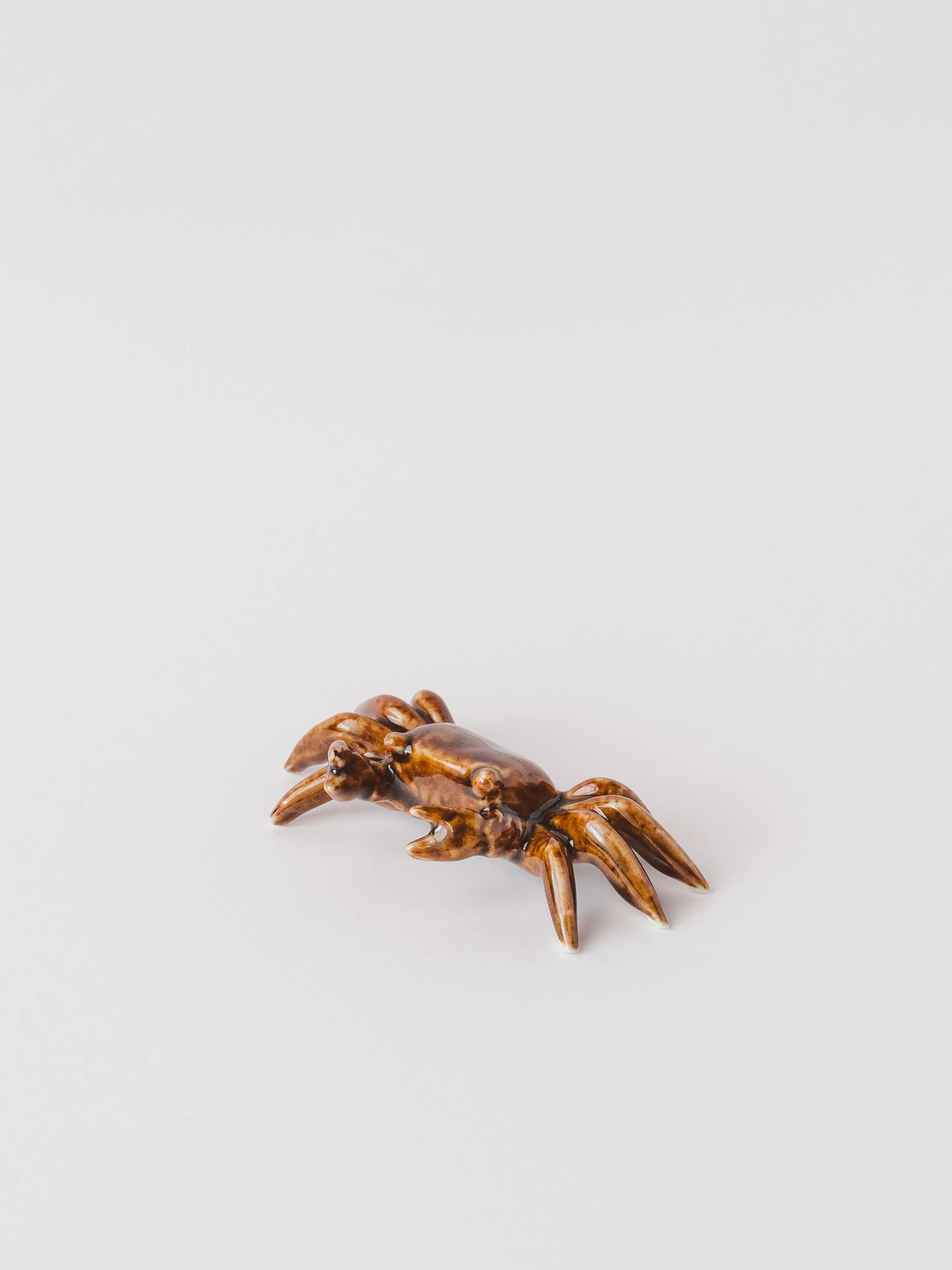 Image 9 of 17
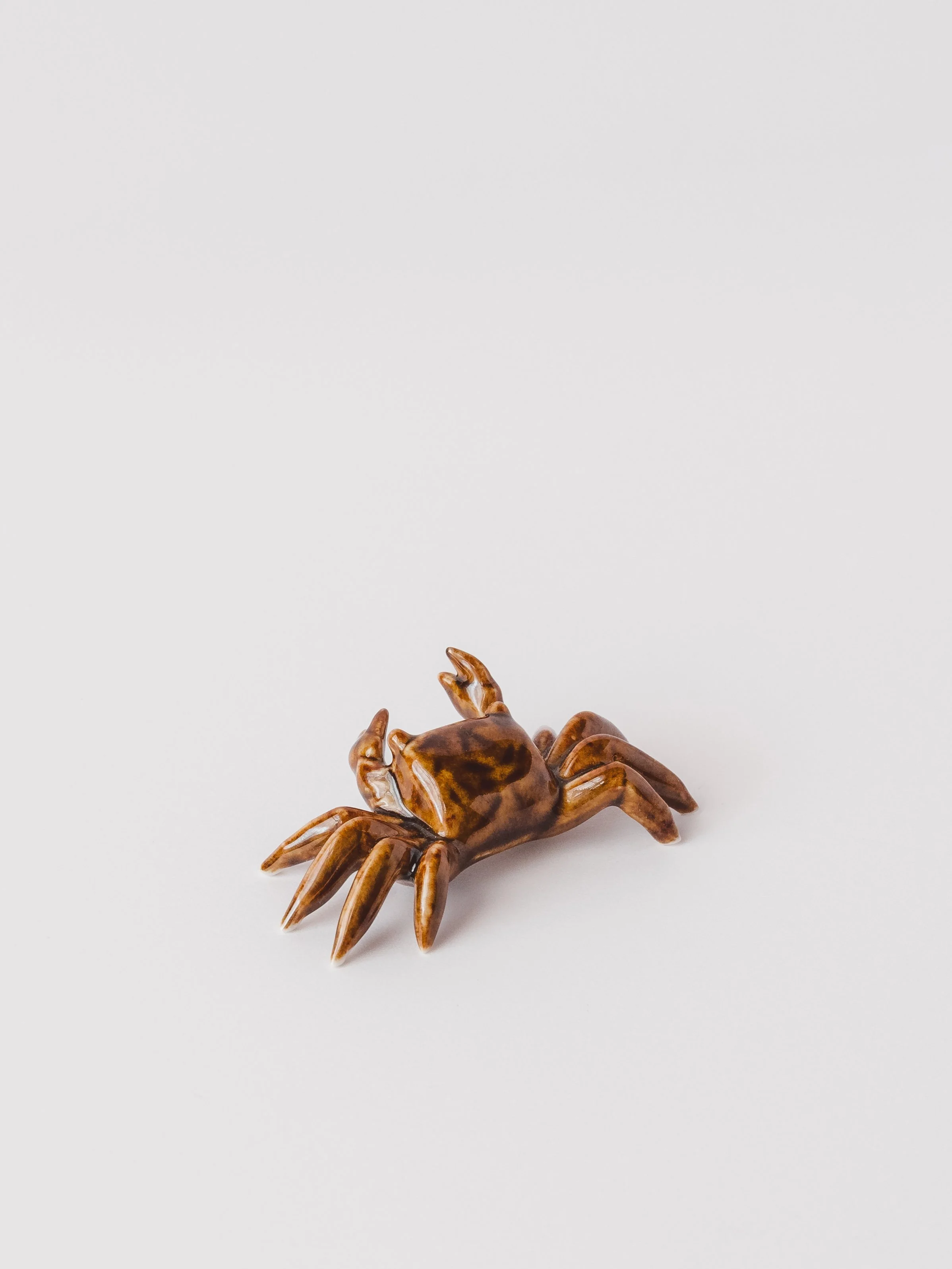 Image 10 of 17
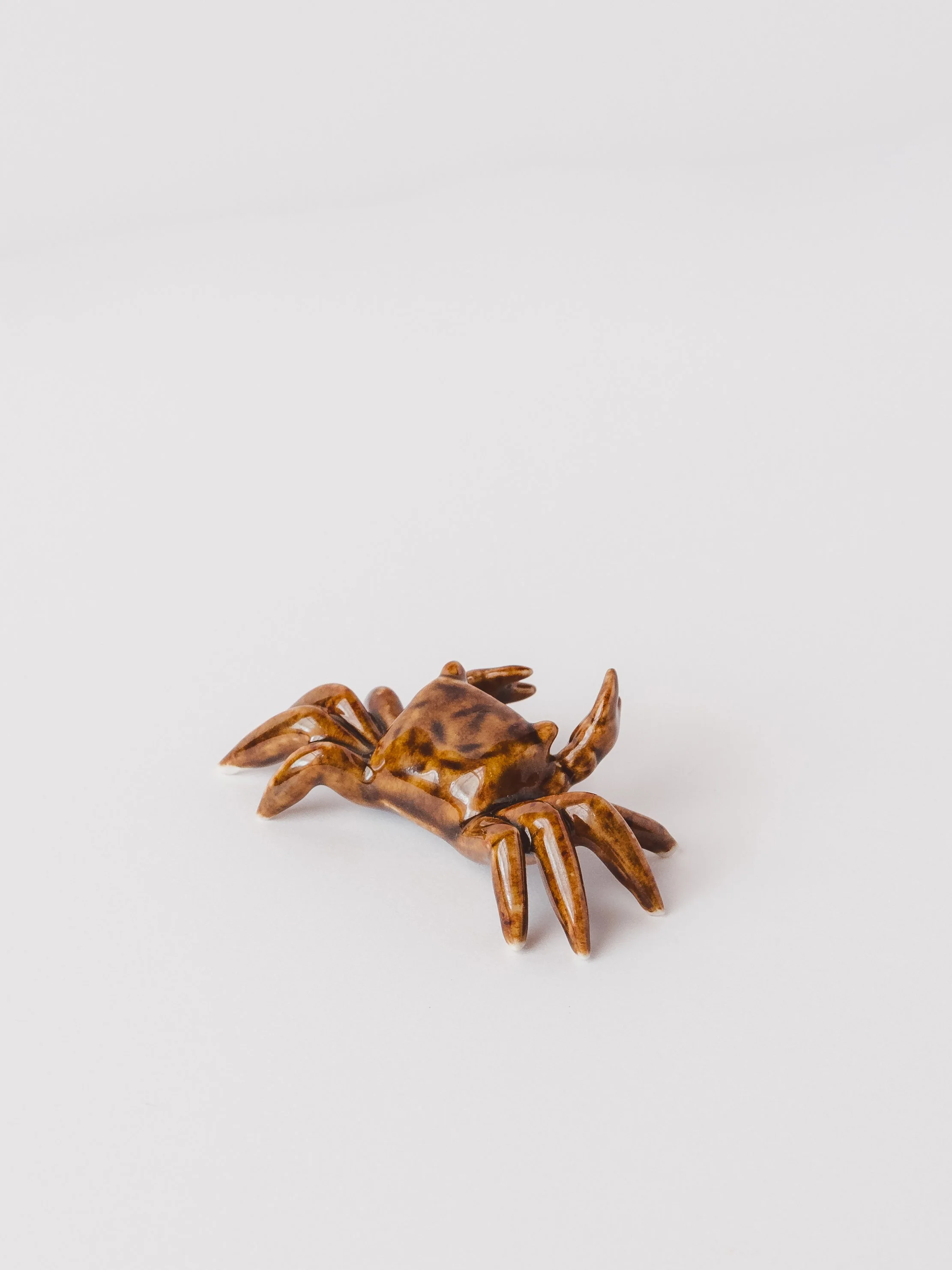 Image 11 of 17
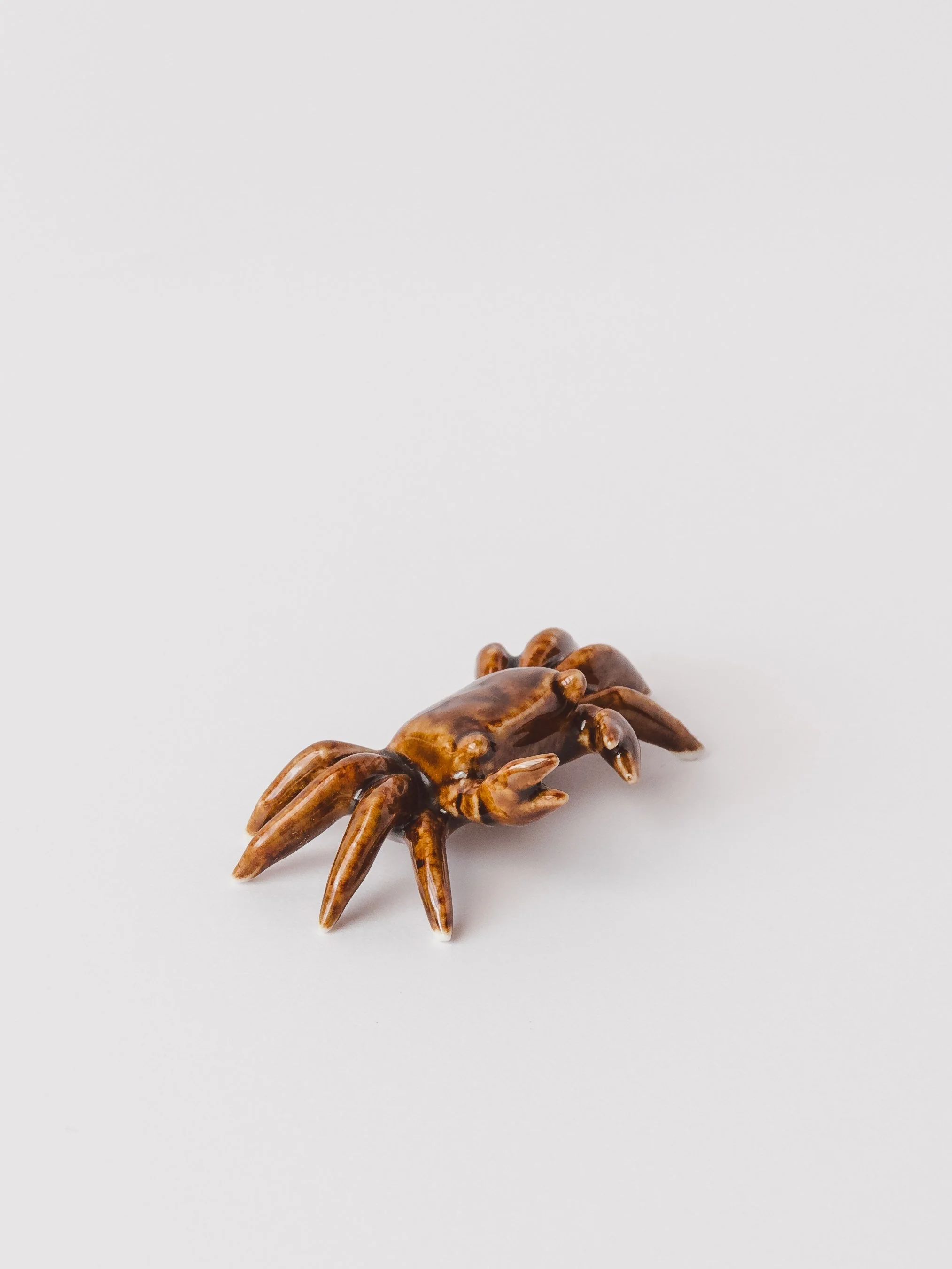 Image 12 of 17
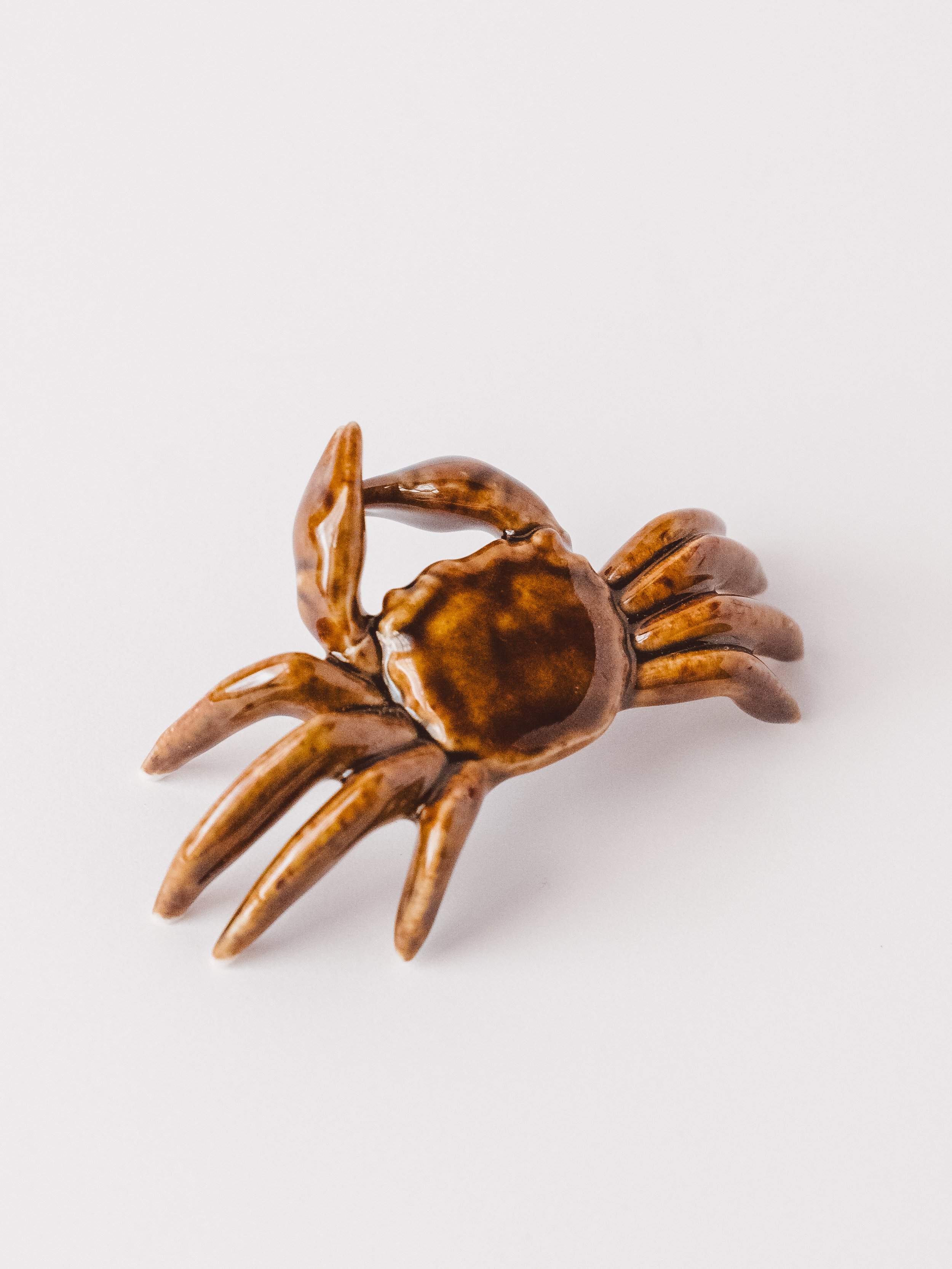 Image 13 of 17
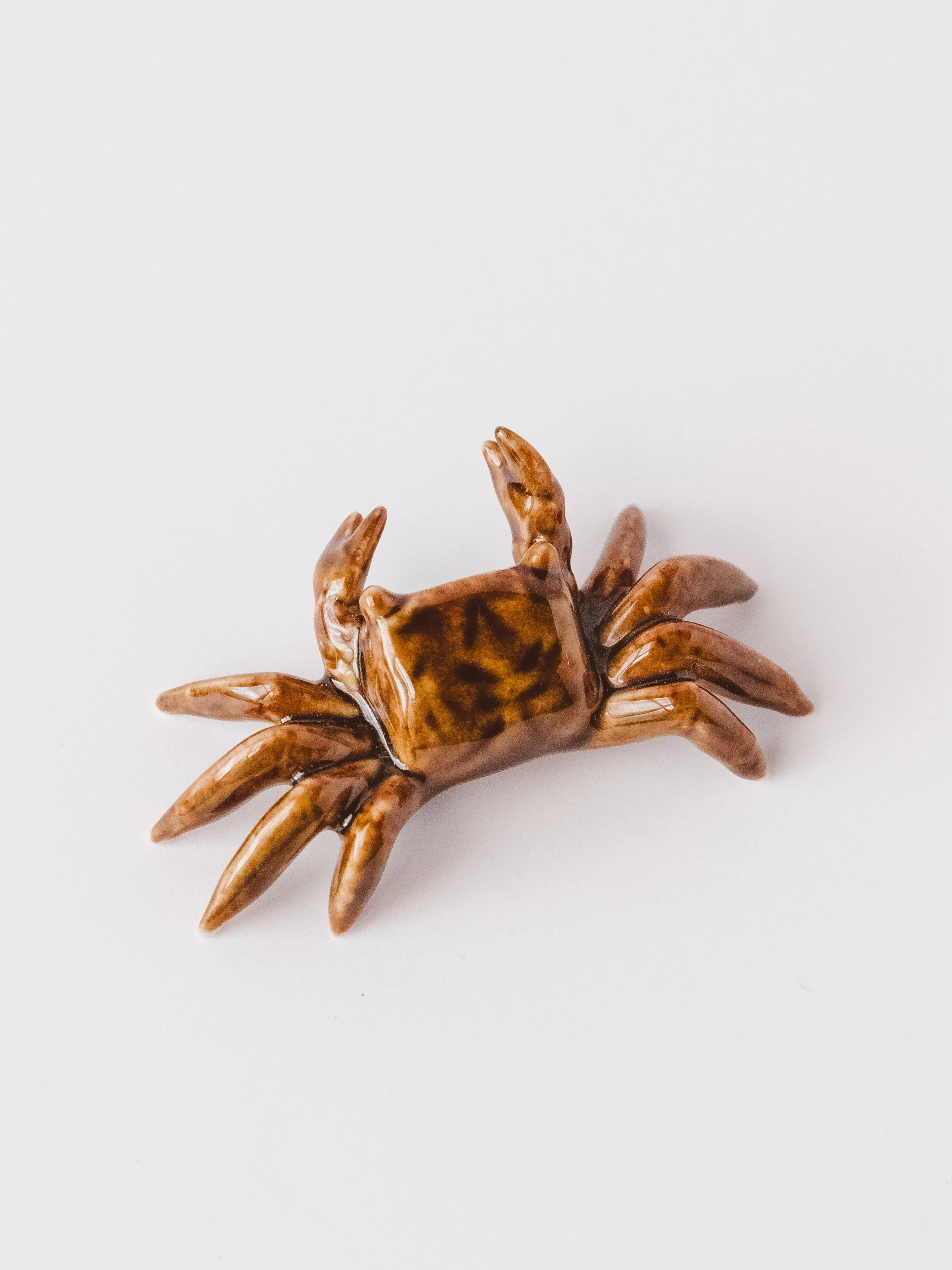 Image 14 of 17
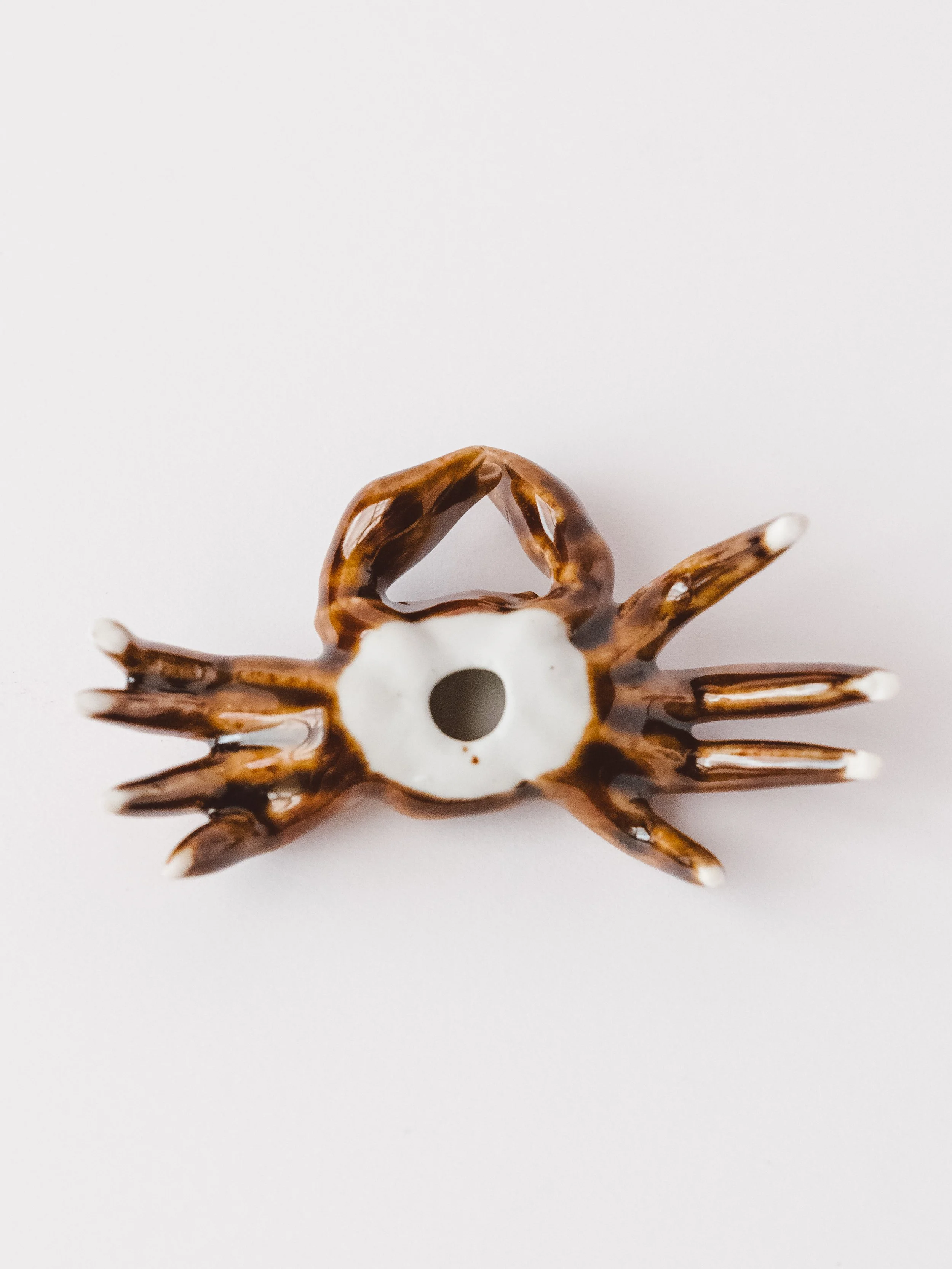 Image 15 of 17
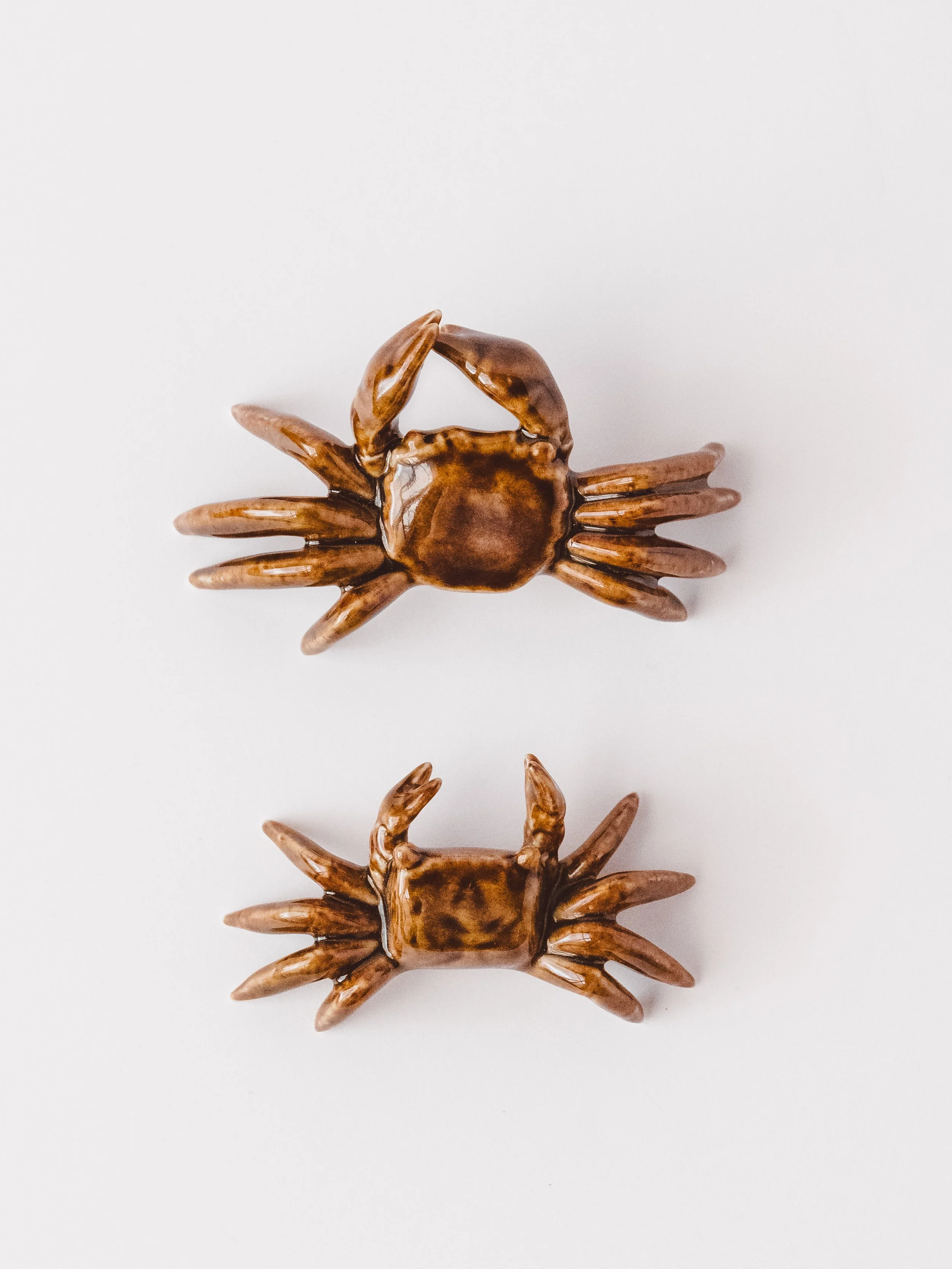 Image 16 of 17
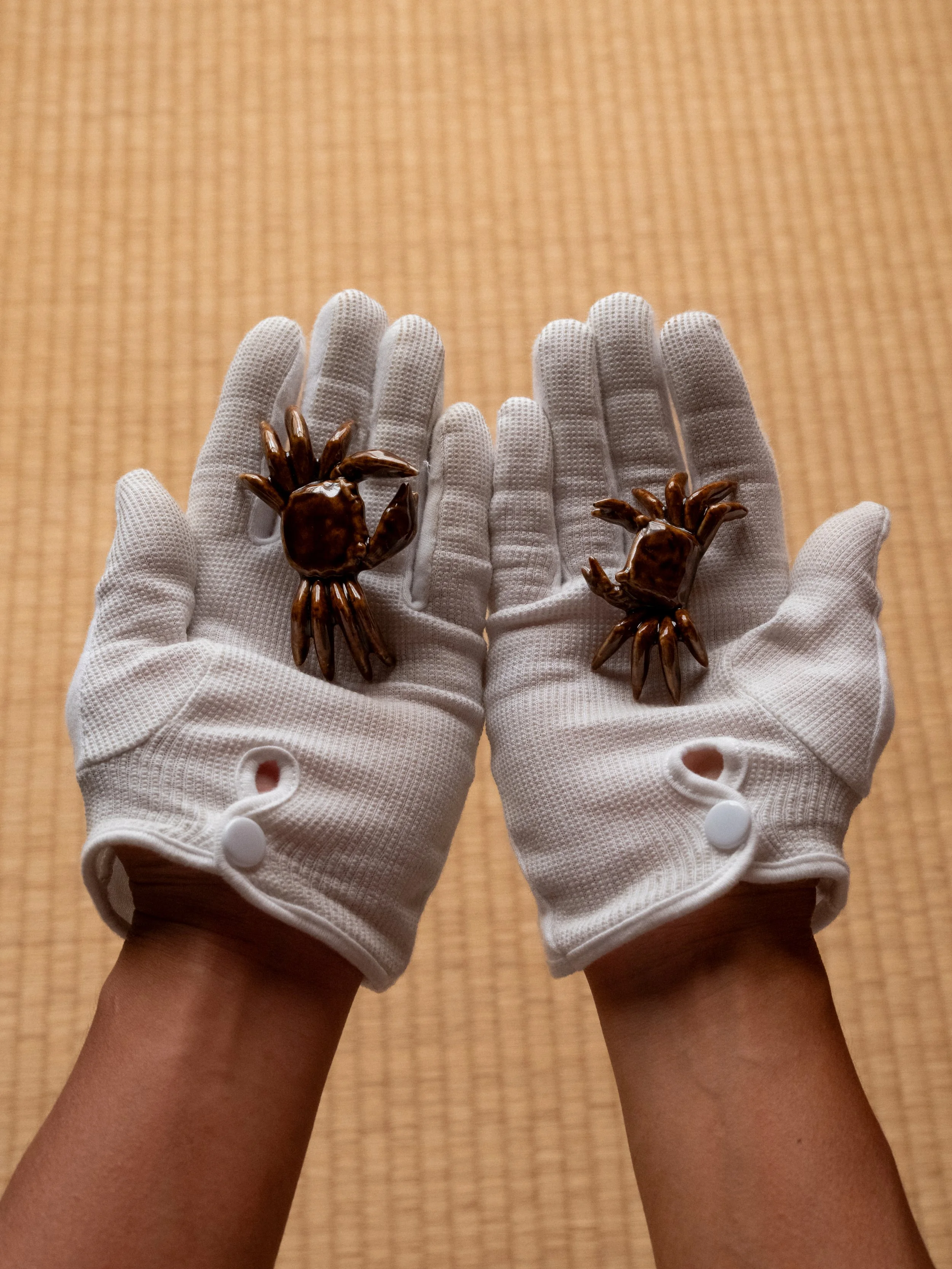 Image 17 of 17