【 The Concept 】
An Anchor of Decisive Intellect.
This iron artifact, representing the Tiger (寅 - Tora) of the East Asian zodiac, is a specimen of mid-Showa industrial poetry. In the cosmology of ancient Japan, the tiger was not merely a terrestrial predator; it was believed to be an earthly manifestation of the stars. The stripes upon its body were seen as reflections of celestial constellations descending into the physical realm.
Created during the 1974 Zodiac cycle, this anonymous design captures the animal in a state of "latent tension"—crouched and ready for leap, yet profoundly silent. It is a symbol of Saichi (intellectual wit) and decisiveness. By choosing the uncompromising density of iron over the common lightweight Hari-ko (papier-mâché), the designer elevated this symbol from a folk toy to a stabilizing weight for the modern thinker.
【 The Function 】
An Industrial Trinity of Force.
Consistent with the Mingei tradition of Mitate (finding multi-purpose utility in a single form), this tiger serves as a three-dimensional nexus of kinetic actions:
The Weight (Bunchin): Forged as a solid block of high-density cast iron, it acts as a gravitational anchor for sensitive papers or antique scrolls.
The Resting Ridge (Fude-oki): The rhythmic ridges of its spine provide an organic cradle for fountain pens or calligraphy brushes, inviting a moment of pause in the act of creation.
The Mechanical Leverage (Sen-nuki): In a masterful stroke of ergonomic wit, the tail loops forward to form a rigid structural void. This hidden lever is engineered to engage bottle caps, transforming the ritual of hostelry into a display of industrial grace.
【 Material & Craft 】
Forged from Volcanic Lineage.
The object is a product of the 400-year Nambu Tekki lineage of Oshu and Morioka, a region abundant in sand-iron and timber for charcoal since the 17th century. It is created through the traditional sand-mold technique, where molten iron heated to 1,500 degrees Celsius is hand-poured into a transient vessel of compressed sand.
Uniquely, this specimen is finished in a rare "Red Iron-Amber" lacquer. While most Nambu ironware is charcoal black, this tiger underwent a traditional "Urushi-yakitsuke" (lacquer-baking) process infused with specific pigments, resulting in a deep, vitrified reddish-brown luster. This skin is not mere decoration; it is a defensive layer that breathes, absorbing the oils of the human hand to develop an irreplaceable Patina over the decades.
【 Presence 】
A Counter-weight to Digital Noise.
In a modern world characterized by the weightless flickering of screens, the 300-gram presence of this iron tiger offers a physical "Realism." Unlike the unstable papier-mâché tiger, which signifies mere bravado through its bobbing head, this iron spirit signifies "Grounded Strength."
Whether placed upon a blackened steel desk or a vintage teak sideboard, its presence stabilizes the room. It thrives in the proximity of leather-bound books and raw materials. It serves as a personal guardian for the Cultural Investor—a quiet reminder that true authority does not need to roar; it simply needs to be present.
【 The Concept 】
An Anchor of Decisive Intellect.
This iron artifact, representing the Tiger (寅 - Tora) of the East Asian zodiac, is a specimen of mid-Showa industrial poetry. In the cosmology of ancient Japan, the tiger was not merely a terrestrial predator; it was believed to be an earthly manifestation of the stars. The stripes upon its body were seen as reflections of celestial constellations descending into the physical realm.
Created during the 1974 Zodiac cycle, this anonymous design captures the animal in a state of "latent tension"—crouched and ready for leap, yet profoundly silent. It is a symbol of Saichi (intellectual wit) and decisiveness. By choosing the uncompromising density of iron over the common lightweight Hari-ko (papier-mâché), the designer elevated this symbol from a folk toy to a stabilizing weight for the modern thinker.
【 The Function 】
An Industrial Trinity of Force.
Consistent with the Mingei tradition of Mitate (finding multi-purpose utility in a single form), this tiger serves as a three-dimensional nexus of kinetic actions:
The Weight (Bunchin): Forged as a solid block of high-density cast iron, it acts as a gravitational anchor for sensitive papers or antique scrolls.
The Resting Ridge (Fude-oki): The rhythmic ridges of its spine provide an organic cradle for fountain pens or calligraphy brushes, inviting a moment of pause in the act of creation.
The Mechanical Leverage (Sen-nuki): In a masterful stroke of ergonomic wit, the tail loops forward to form a rigid structural void. This hidden lever is engineered to engage bottle caps, transforming the ritual of hostelry into a display of industrial grace.
【 Material & Craft 】
Forged from Volcanic Lineage.
The object is a product of the 400-year Nambu Tekki lineage of Oshu and Morioka, a region abundant in sand-iron and timber for charcoal since the 17th century. It is created through the traditional sand-mold technique, where molten iron heated to 1,500 degrees Celsius is hand-poured into a transient vessel of compressed sand.
Uniquely, this specimen is finished in a rare "Red Iron-Amber" lacquer. While most Nambu ironware is charcoal black, this tiger underwent a traditional "Urushi-yakitsuke" (lacquer-baking) process infused with specific pigments, resulting in a deep, vitrified reddish-brown luster. This skin is not mere decoration; it is a defensive layer that breathes, absorbing the oils of the human hand to develop an irreplaceable Patina over the decades.
【 Presence 】
A Counter-weight to Digital Noise.
In a modern world characterized by the weightless flickering of screens, the 300-gram presence of this iron tiger offers a physical "Realism." Unlike the unstable papier-mâché tiger, which signifies mere bravado through its bobbing head, this iron spirit signifies "Grounded Strength."
Whether placed upon a blackened steel desk or a vintage teak sideboard, its presence stabilizes the room. It thrives in the proximity of leather-bound books and raw materials. It serves as a personal guardian for the Cultural Investor—a quiet reminder that true authority does not need to roar; it simply needs to be present.


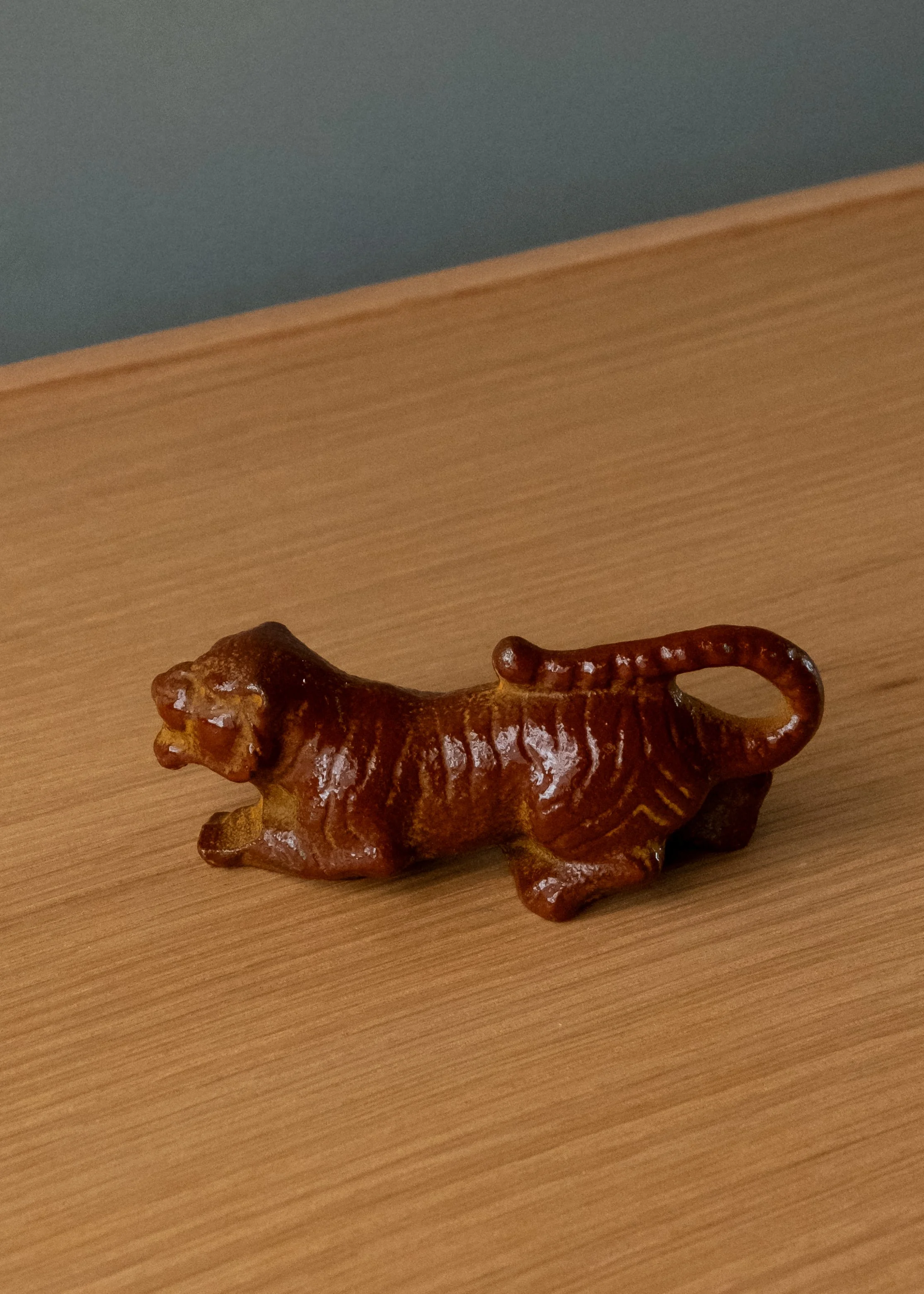 Image 1 of 10
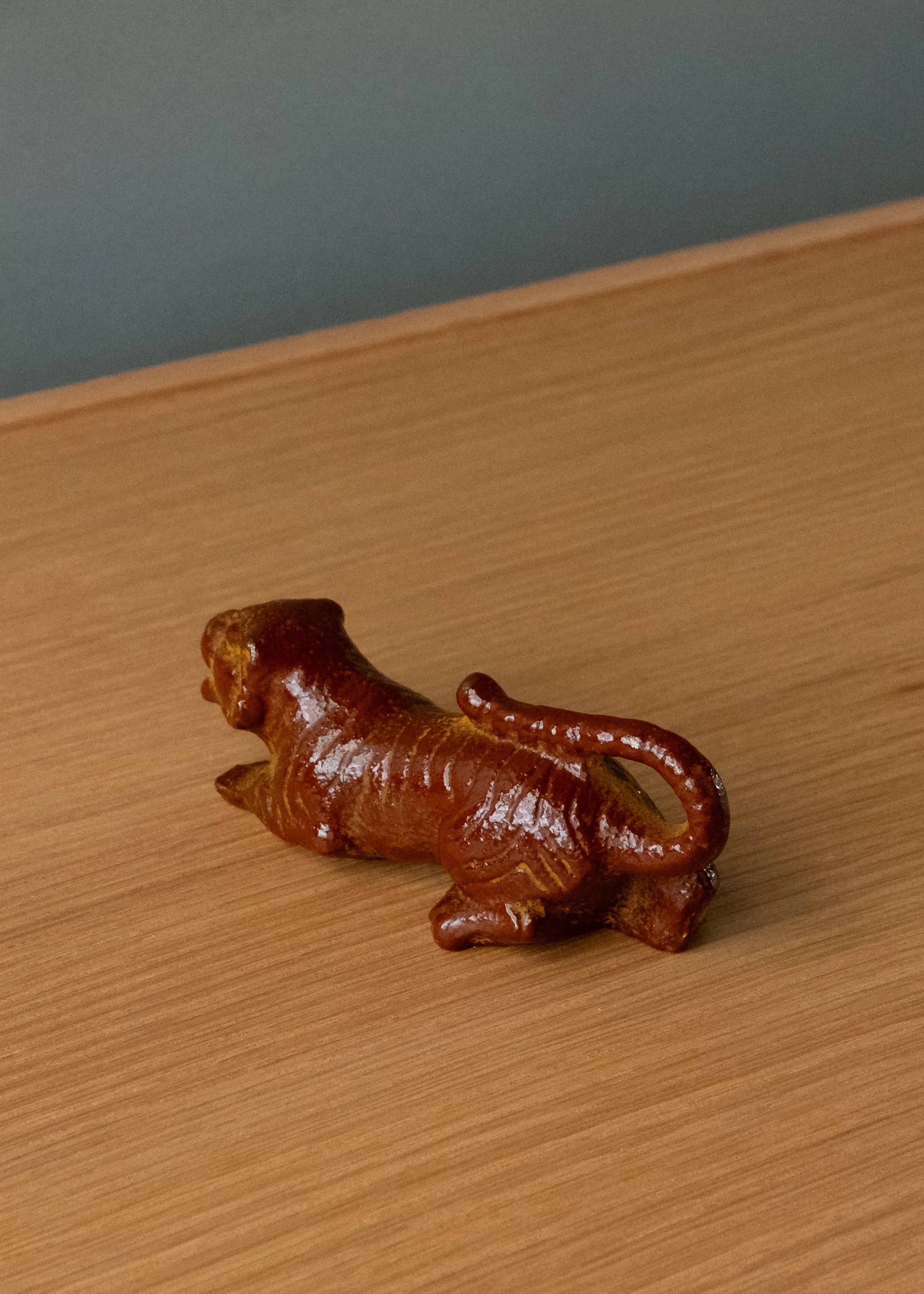 Image 2 of 10
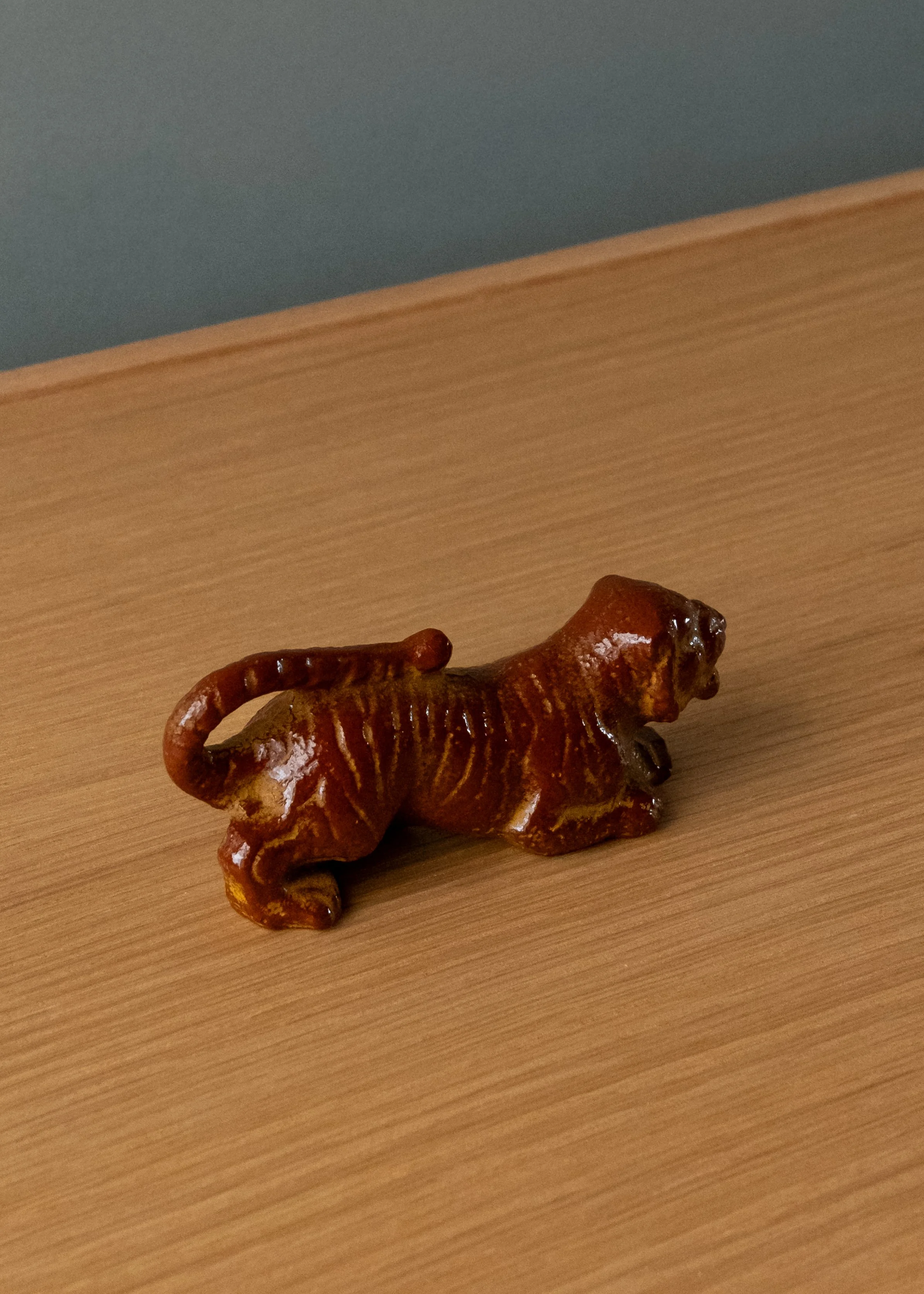 Image 3 of 10
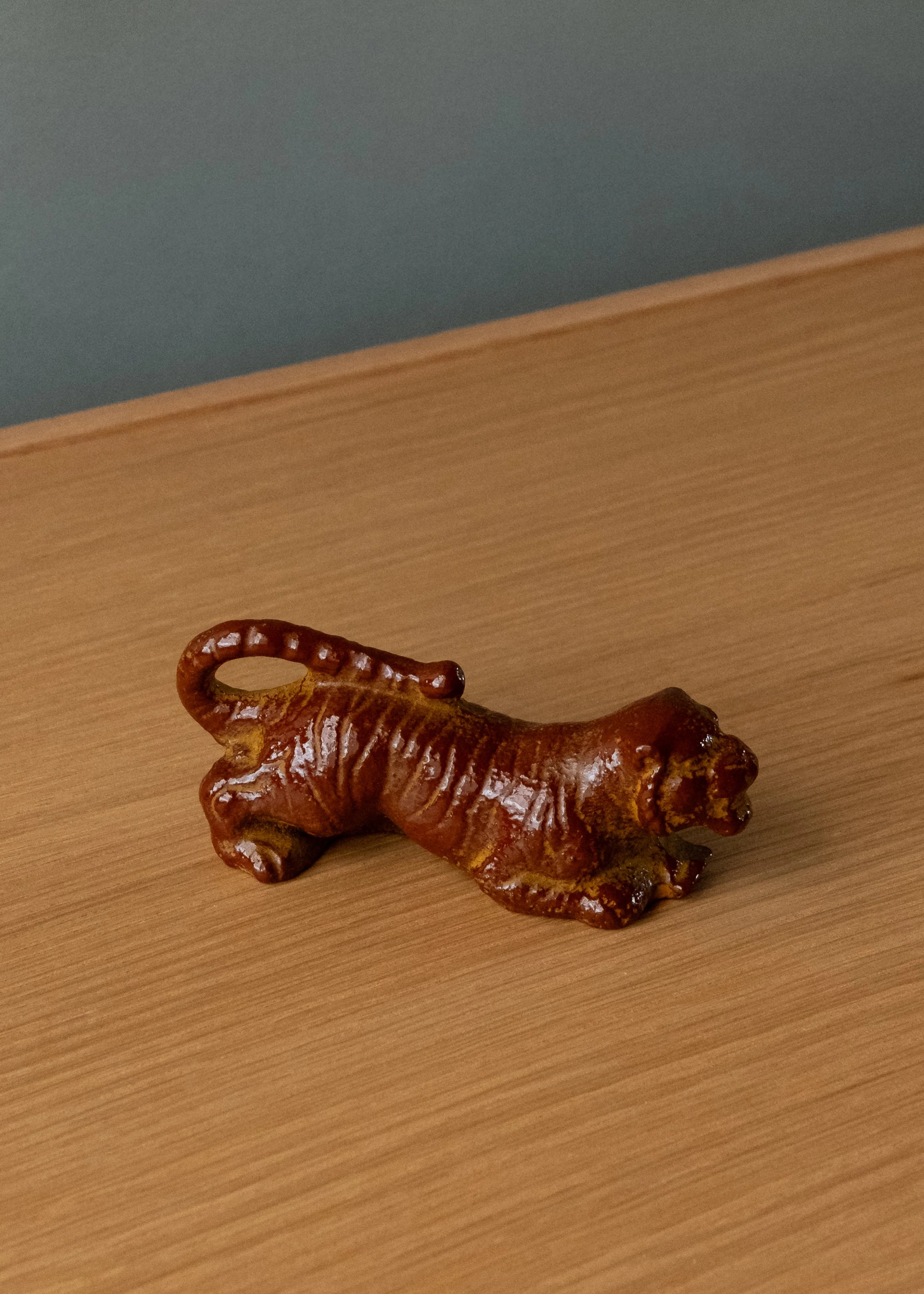 Image 4 of 10
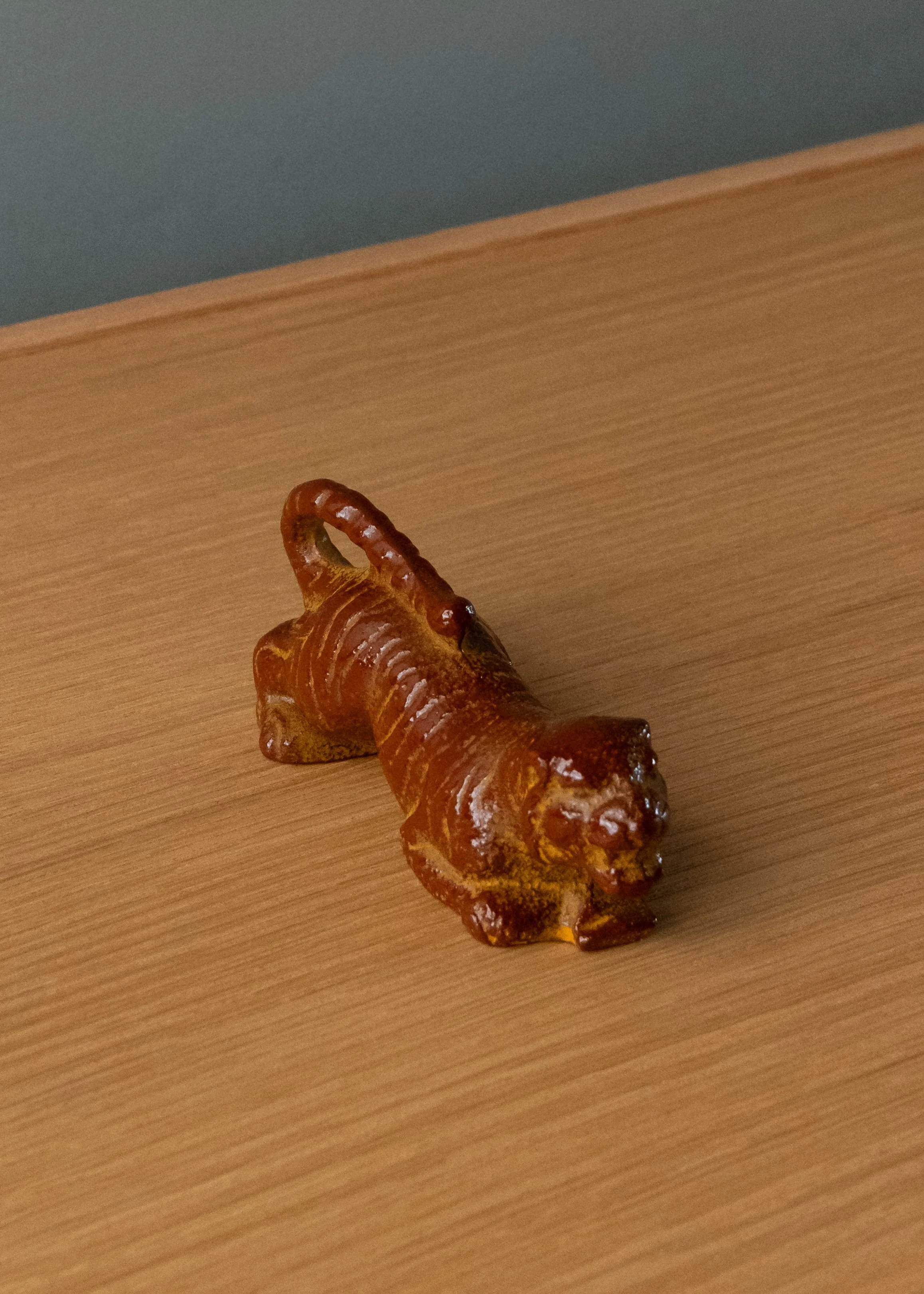 Image 5 of 10
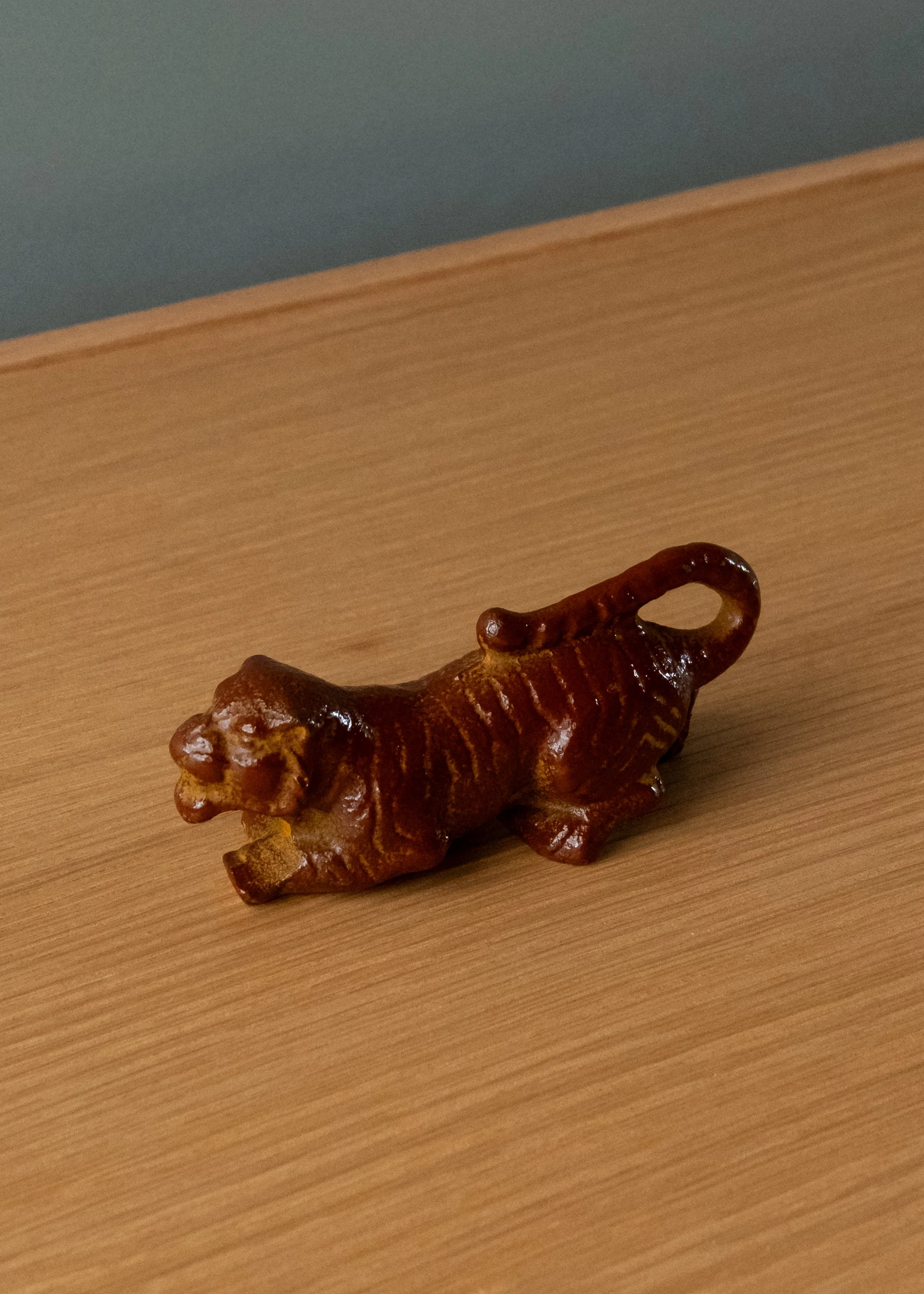 Image 6 of 10
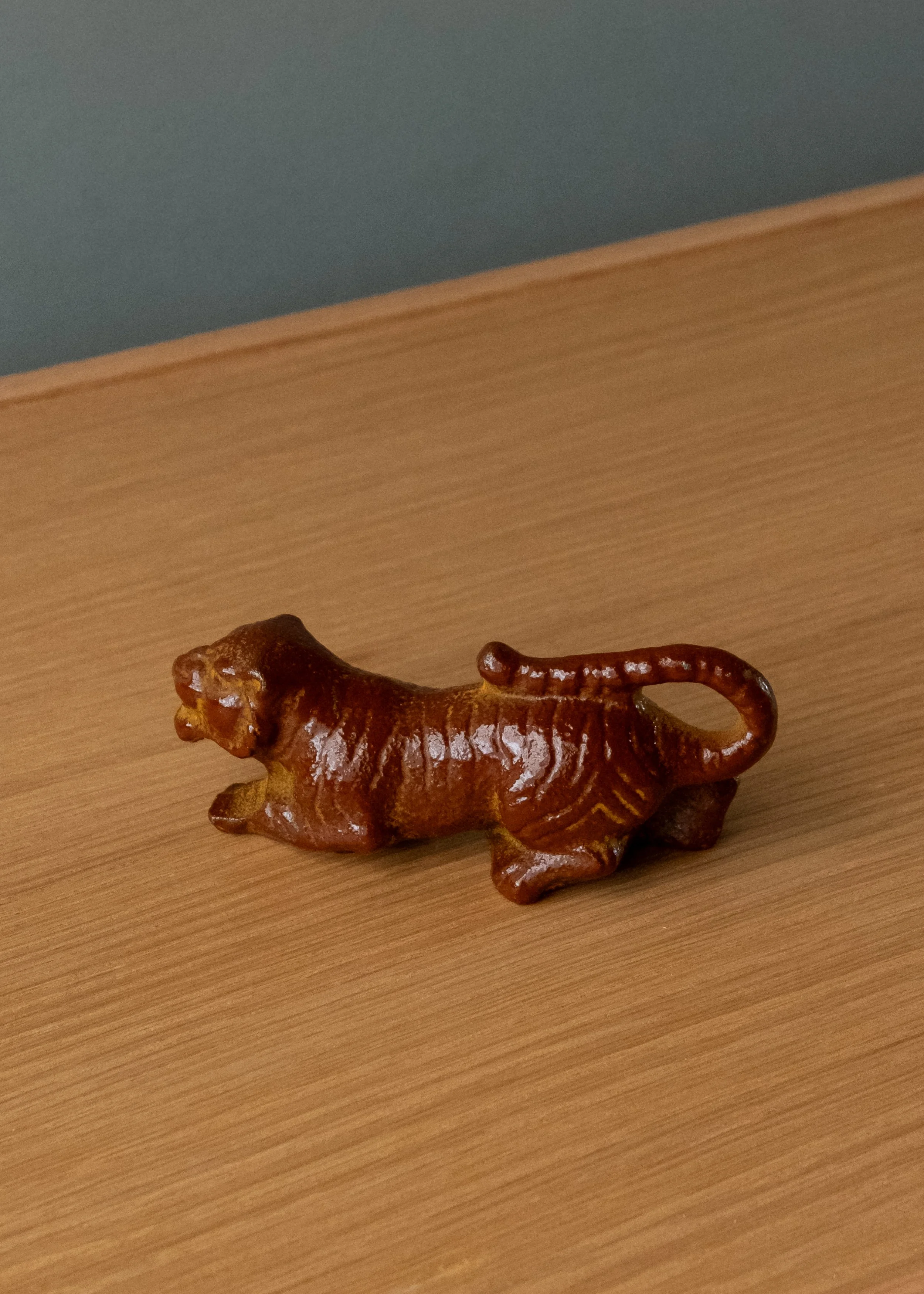 Image 7 of 10
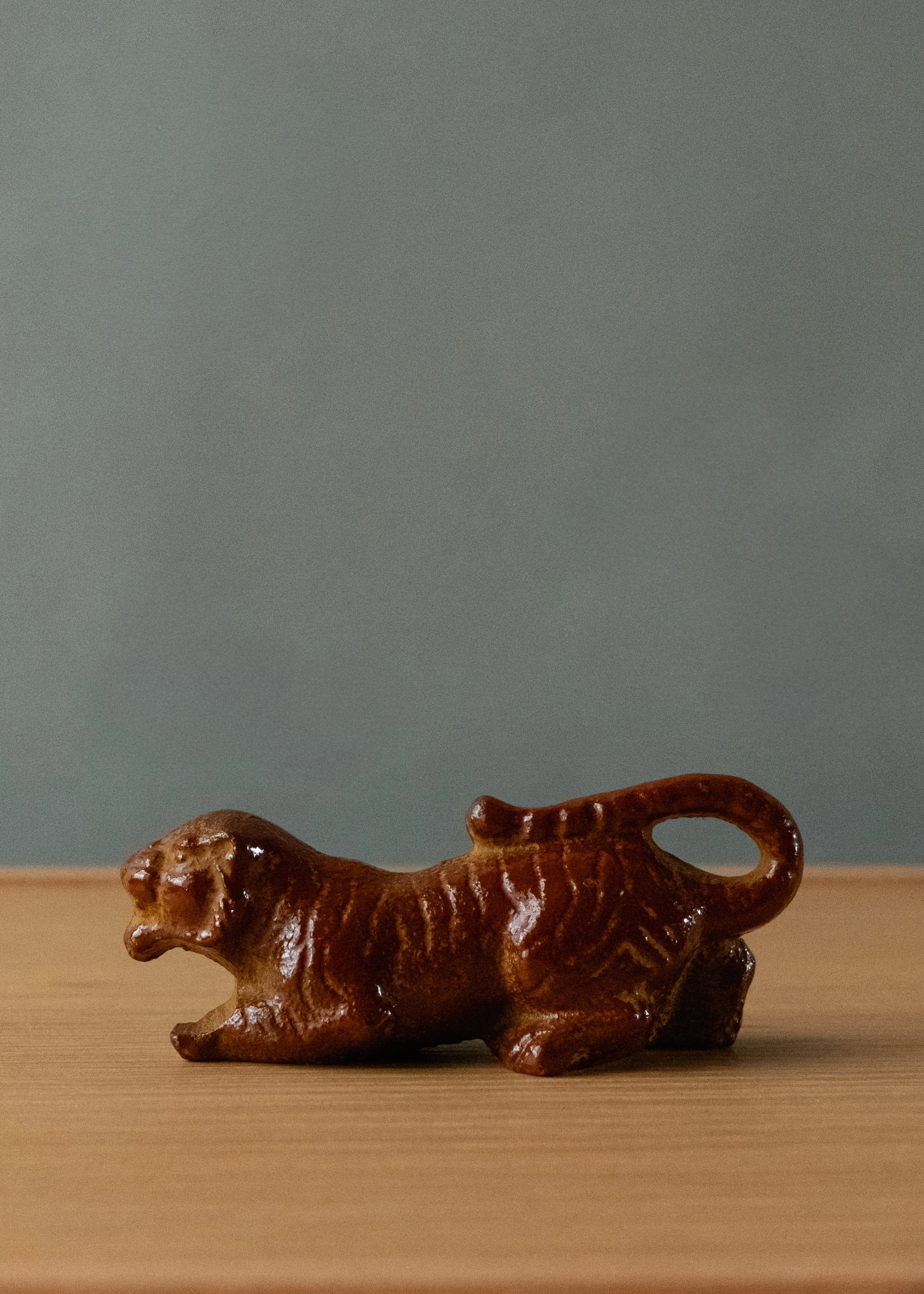 Image 8 of 10
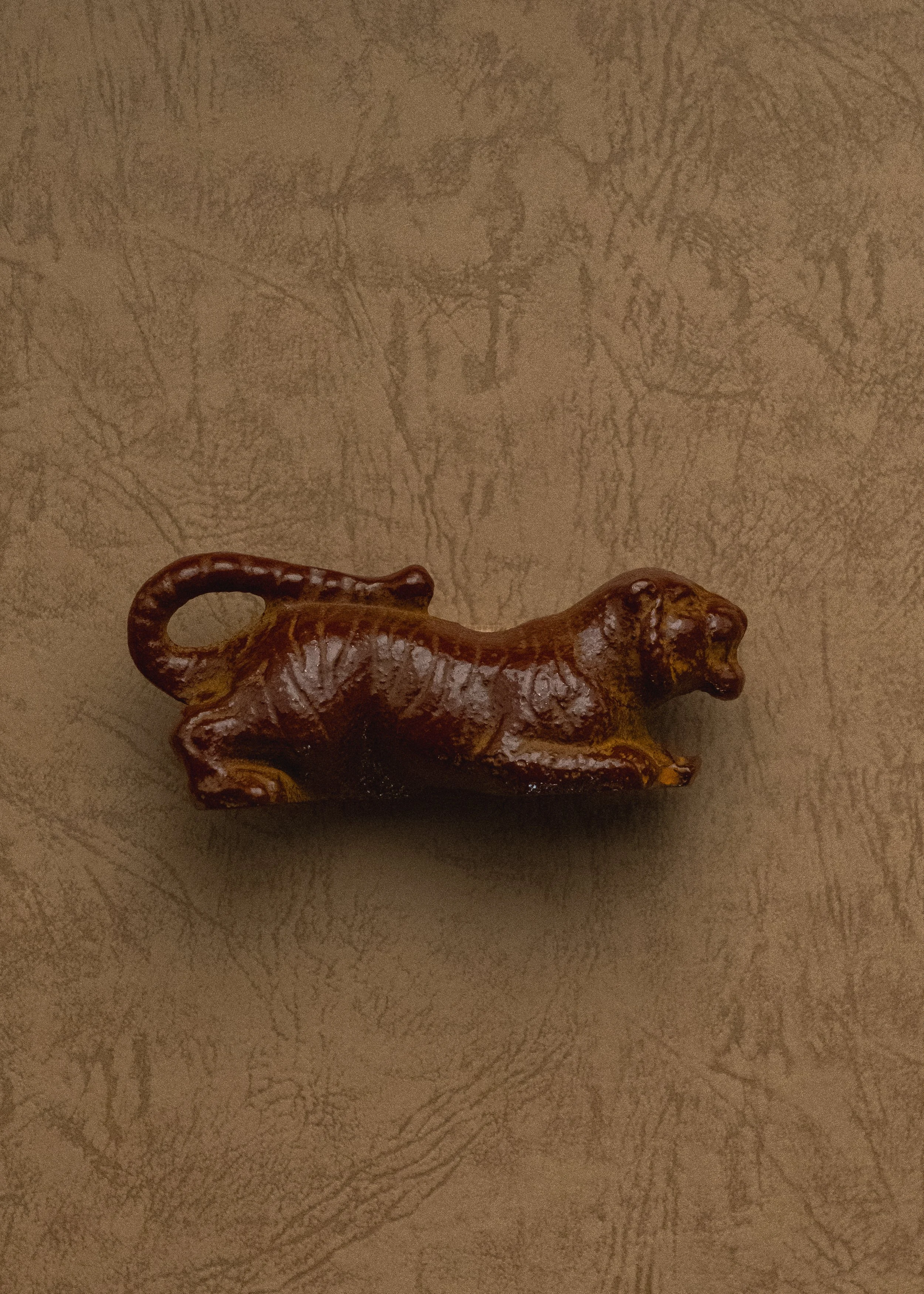 Image 9 of 10
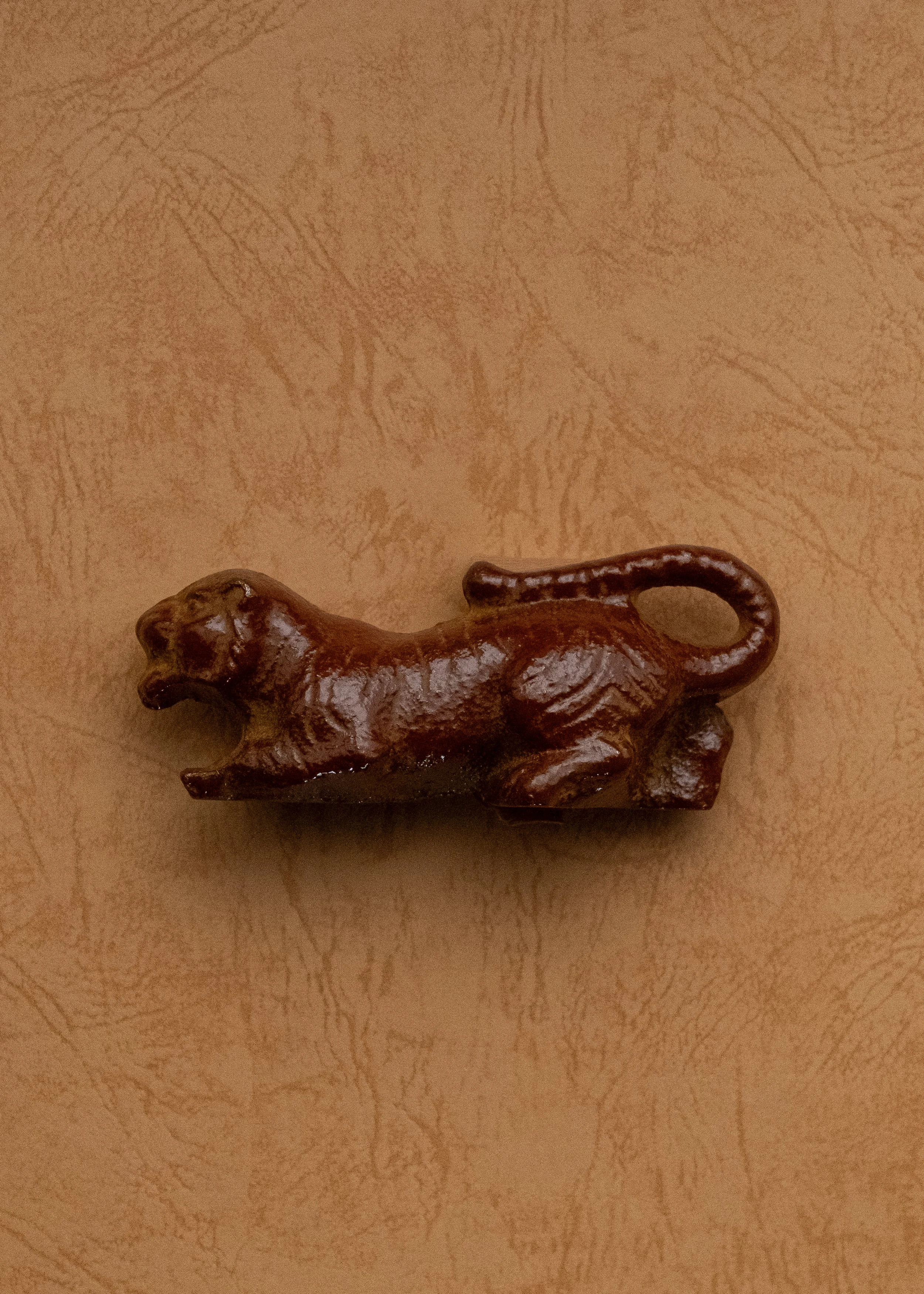 Image 10 of 10