【 The Concept 】
It makes a sound.
Lift this figure and shake it gently — the sand sealed inside its hollow body has been there for over half a century, shifting against fired clay in a rhythm no factory could replicate. This is not decoration. This is a talisman that was meant to be held.
The monkey wears a golden eboshi crown and raises a Hinomaru fan — the costume of Sanbasō, a ritual dance performed since the Edo period to drive out evil and summon the harvest. That a monkey performs this role is not coincidence. In Japanese, saru (猿, monkey) sounds identical to saru (去る, to depart) — meaning misfortune leaves when the monkey dances. Two layers of protection. One object.
【 The Function 】
Unlike stationary decor, this piece operates as a kinetic spiritual utility. The sand sealed within its hollow core is not ornamental — it was the mechanism by which malevolence was commanded to depart. Shake it and the figure speaks: a dry, shifting rattle that was once pressed into the hands of children at the start of winter, hung in stables to protect horses, and placed beside cradles to guard sleep. Modern collectors adopt it as a desk sentinel — a silent instrument for clearing the room of stagnation before serious work begins.
【 The Texture 】
The tactile weight of earth and time. Dense and warm in the hand, the body carries an unexpected solidity relative to its palm-sized footprint. The surface holds a distinctively matte, bone-like finish — slightly rough at the base where the washi seal meets unglazed clay. The verdant green robe, adorned with hand-painted plum blossoms, has mellowed with age — pigment stable, contours intact, the slight softening of colour confirming its quiet journey through the mid-century.
【 Presence 】
A grounding force in the minimal interior. Where most objects in a Japandi or concrete-and-oak environment recede into quietness, this figure does not ask permission. The gold of the crown does not gleam — it glows, the way old pigment glows when applied with a brush and time rather than a machine. Place it on a raw shelf, beside a monitor, or at the centre of a low table. Its sharp gaze functions as a silent interlocutor — inviting those who notice it into a conversation about what it means to protect something worth protecting.
【 The Concept 】
It makes a sound.
Lift this figure and shake it gently — the sand sealed inside its hollow body has been there for over half a century, shifting against fired clay in a rhythm no factory could replicate. This is not decoration. This is a talisman that was meant to be held.
The monkey wears a golden eboshi crown and raises a Hinomaru fan — the costume of Sanbasō, a ritual dance performed since the Edo period to drive out evil and summon the harvest. That a monkey performs this role is not coincidence. In Japanese, saru (猿, monkey) sounds identical to saru (去る, to depart) — meaning misfortune leaves when the monkey dances. Two layers of protection. One object.
【 The Function 】
Unlike stationary decor, this piece operates as a kinetic spiritual utility. The sand sealed within its hollow core is not ornamental — it was the mechanism by which malevolence was commanded to depart. Shake it and the figure speaks: a dry, shifting rattle that was once pressed into the hands of children at the start of winter, hung in stables to protect horses, and placed beside cradles to guard sleep. Modern collectors adopt it as a desk sentinel — a silent instrument for clearing the room of stagnation before serious work begins.
【 The Texture 】
The tactile weight of earth and time. Dense and warm in the hand, the body carries an unexpected solidity relative to its palm-sized footprint. The surface holds a distinctively matte, bone-like finish — slightly rough at the base where the washi seal meets unglazed clay. The verdant green robe, adorned with hand-painted plum blossoms, has mellowed with age — pigment stable, contours intact, the slight softening of colour confirming its quiet journey through the mid-century.
【 Presence 】
A grounding force in the minimal interior. Where most objects in a Japandi or concrete-and-oak environment recede into quietness, this figure does not ask permission. The gold of the crown does not gleam — it glows, the way old pigment glows when applied with a brush and time rather than a machine. Place it on a raw shelf, beside a monitor, or at the centre of a low table. Its sharp gaze functions as a silent interlocutor — inviting those who notice it into a conversation about what it means to protect something worth protecting.


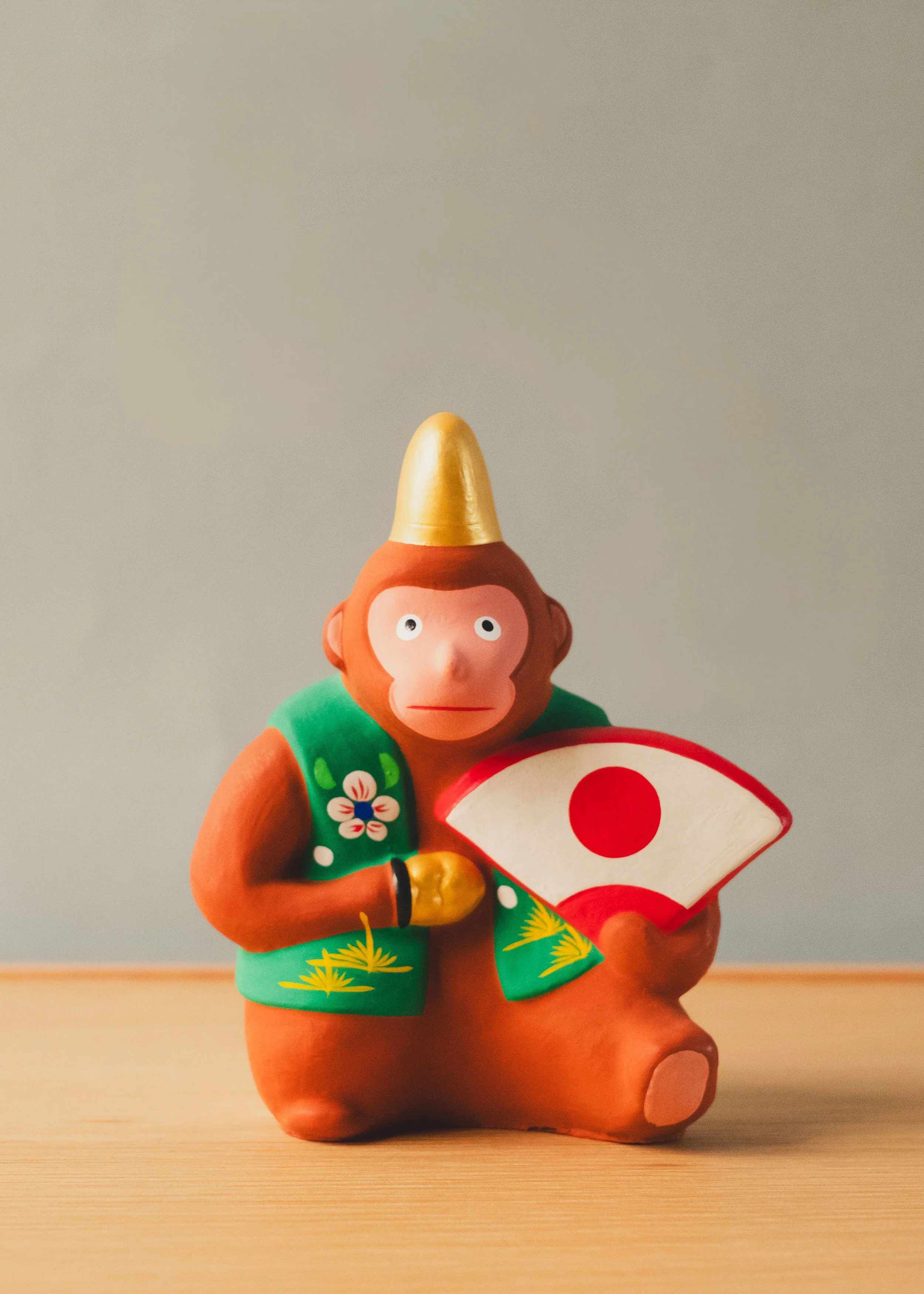 Image 1 of 10
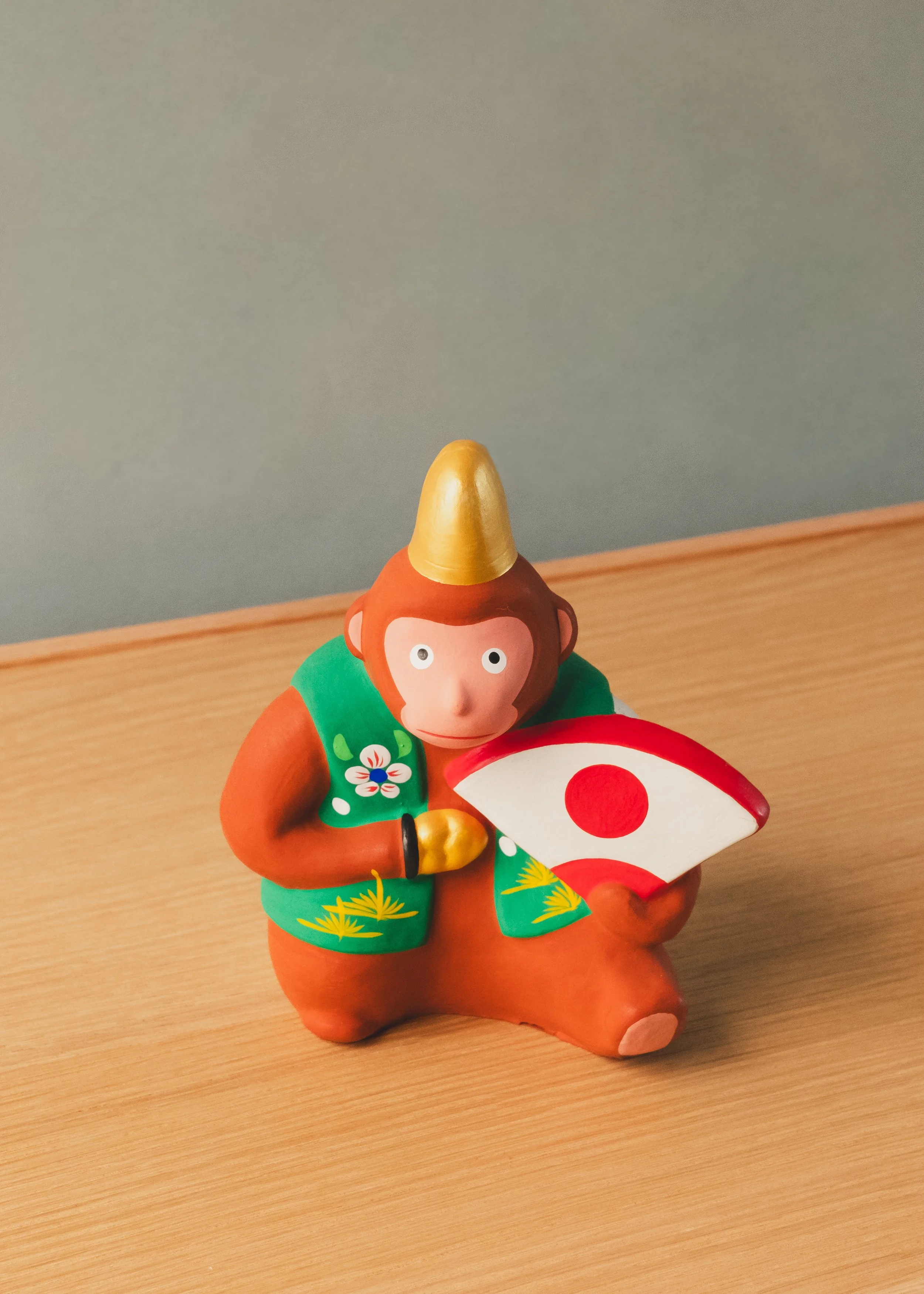 Image 2 of 10
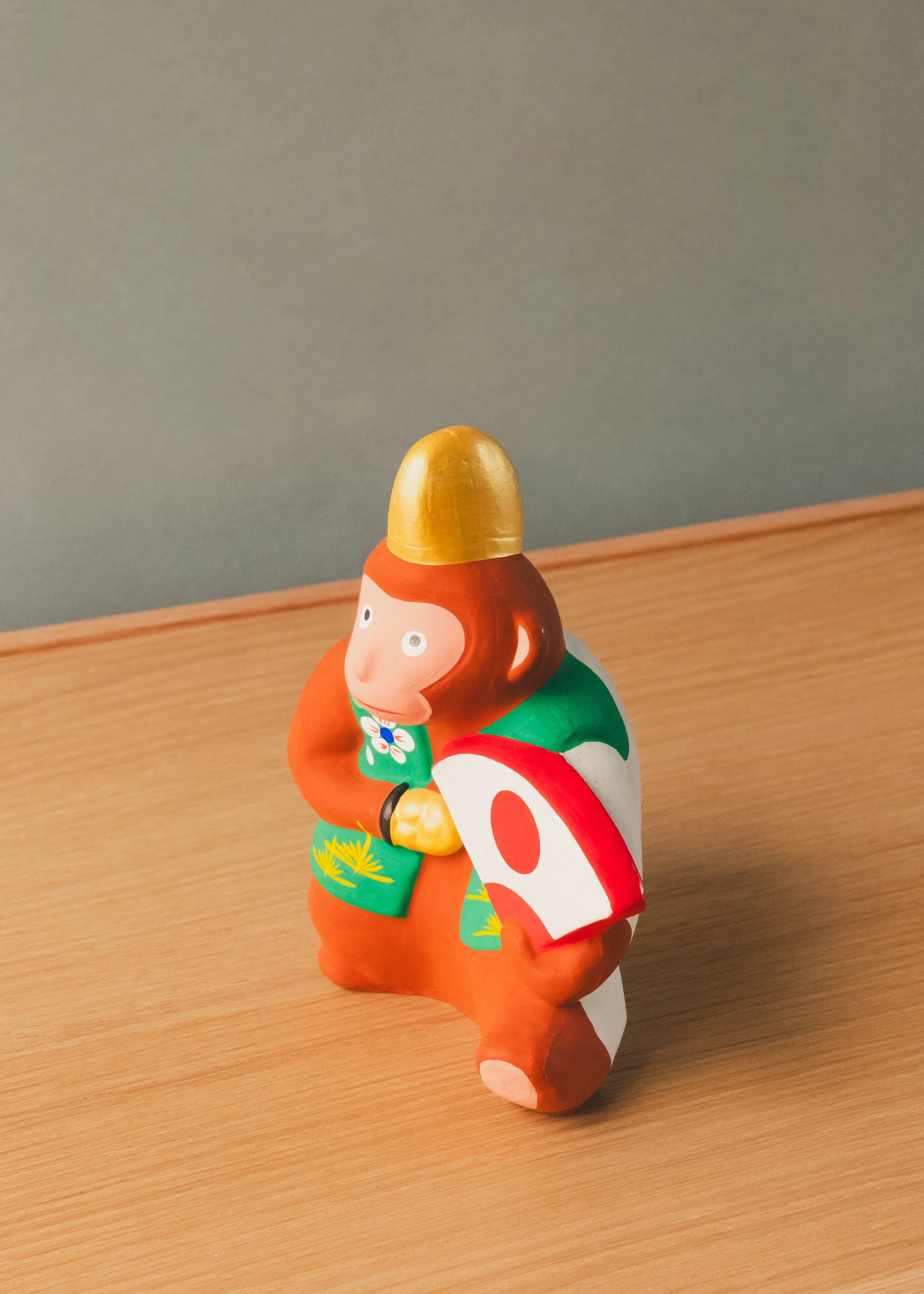 Image 3 of 10
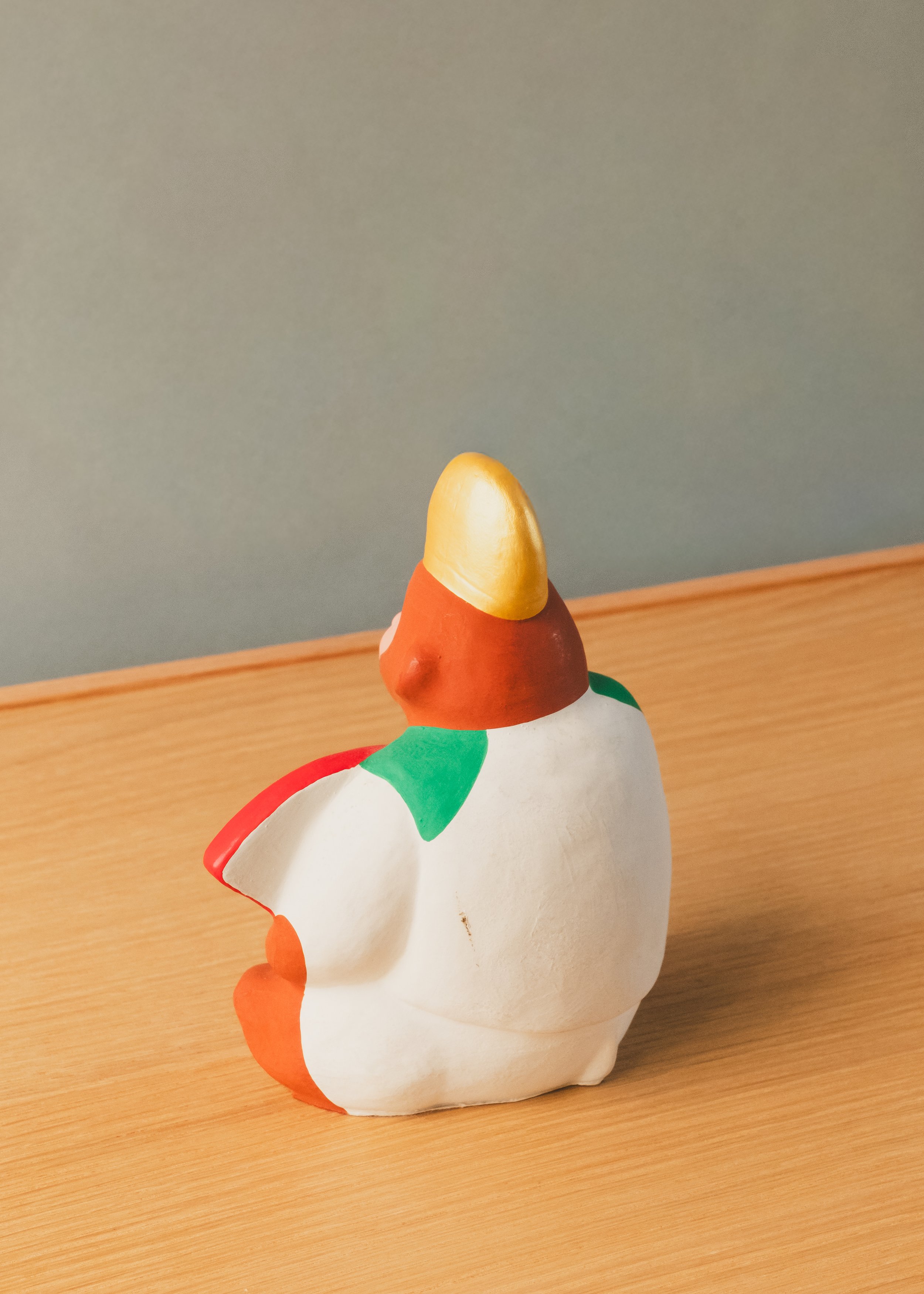 Image 4 of 10
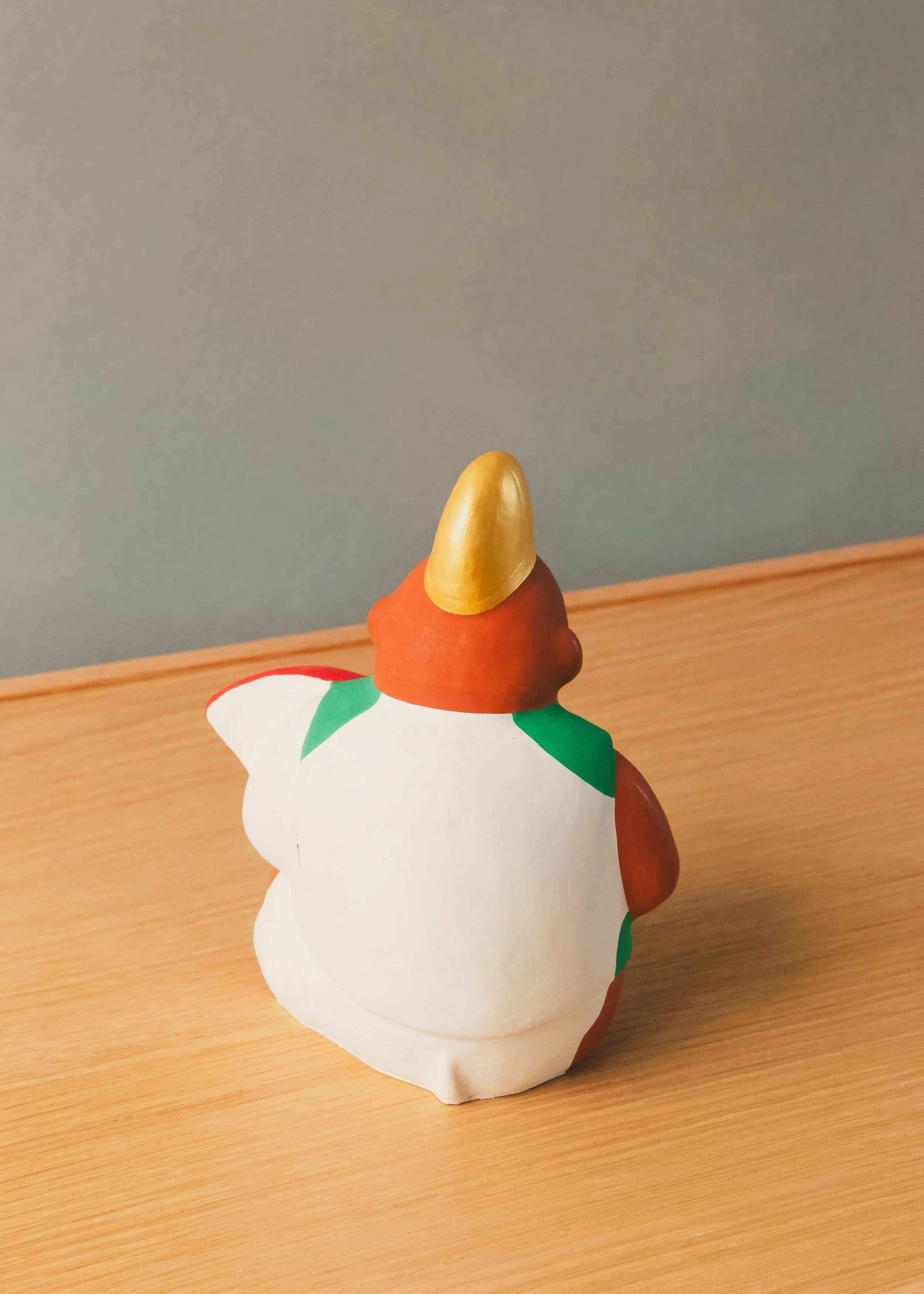 Image 5 of 10
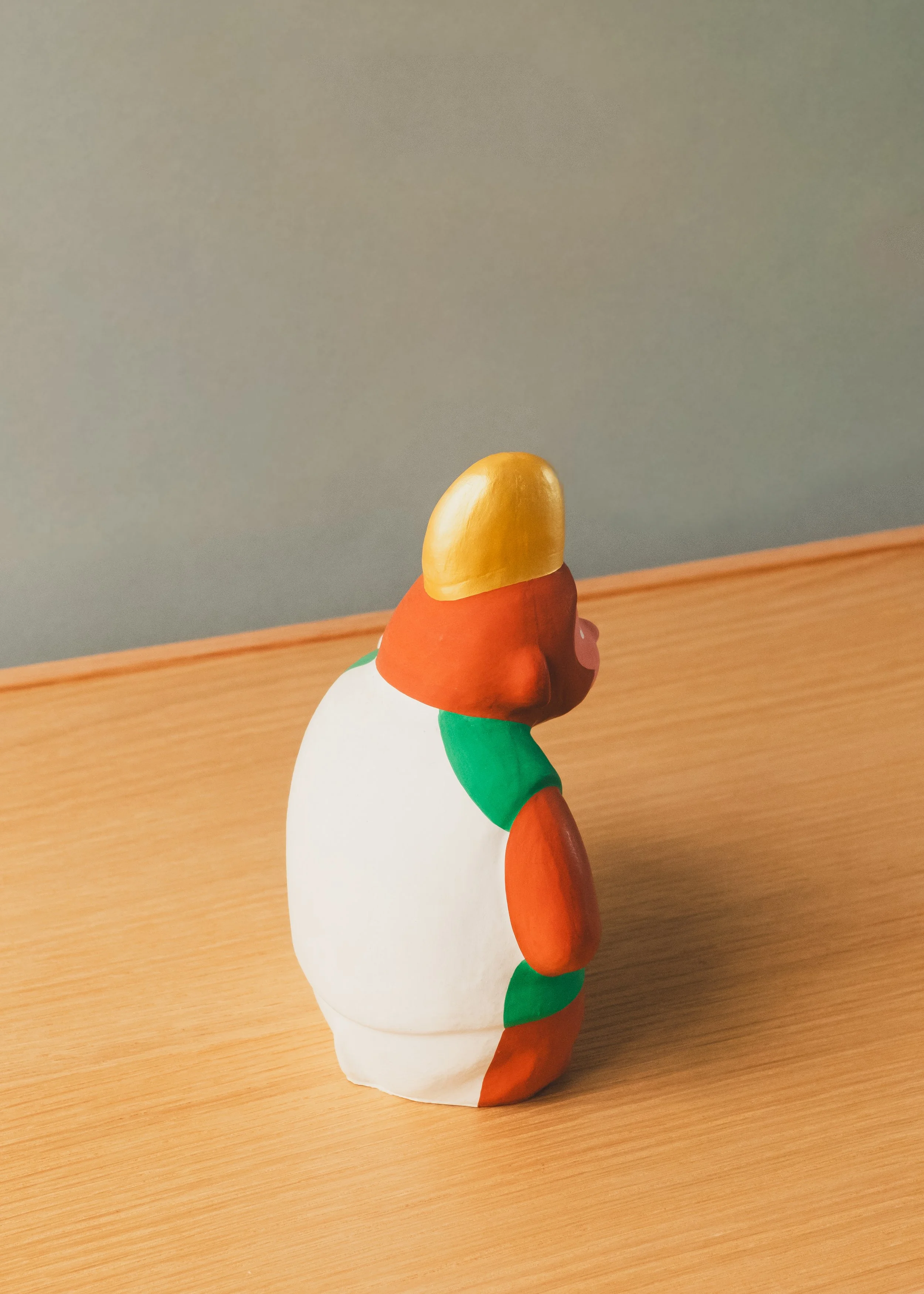 Image 6 of 10
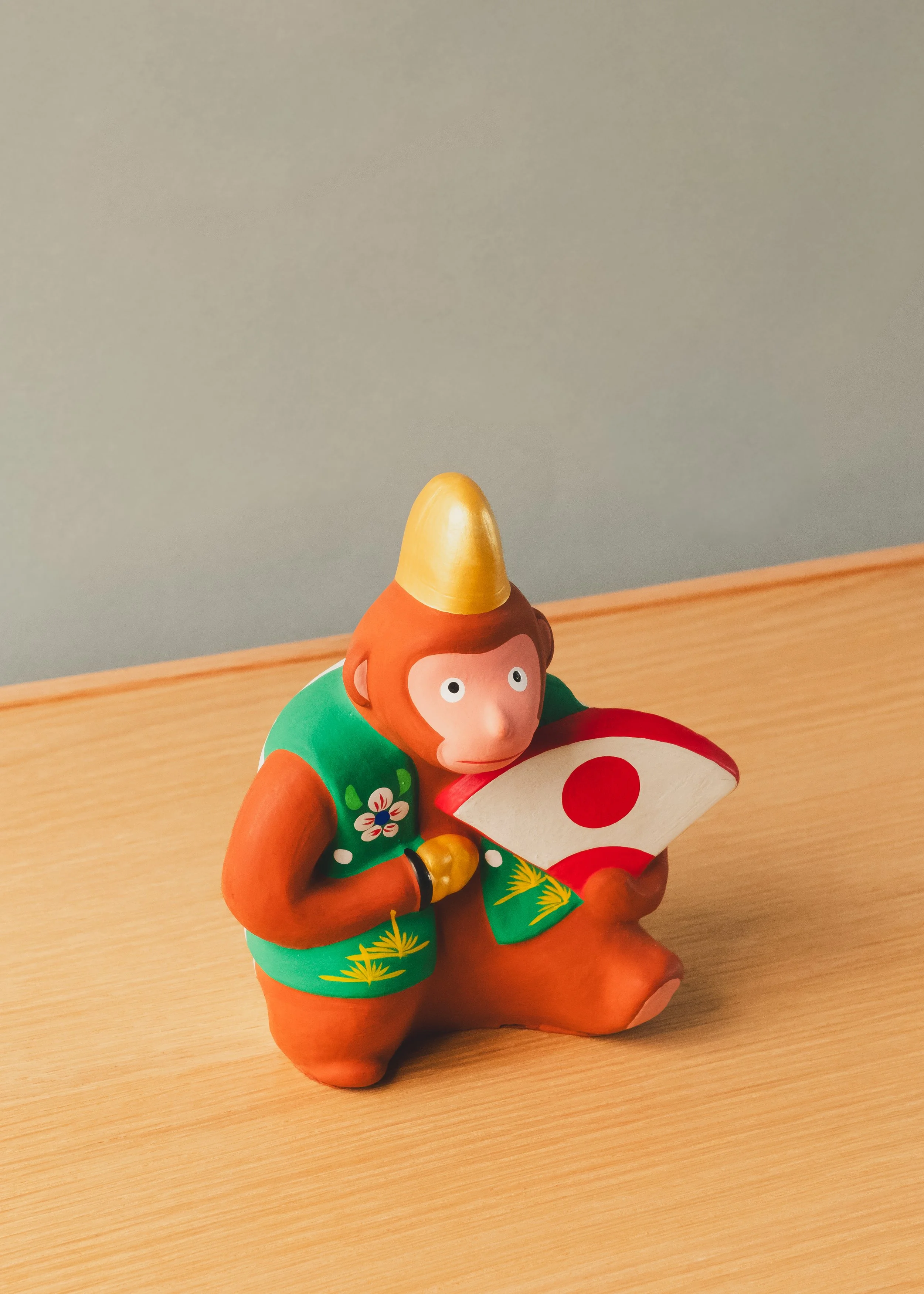 Image 7 of 10
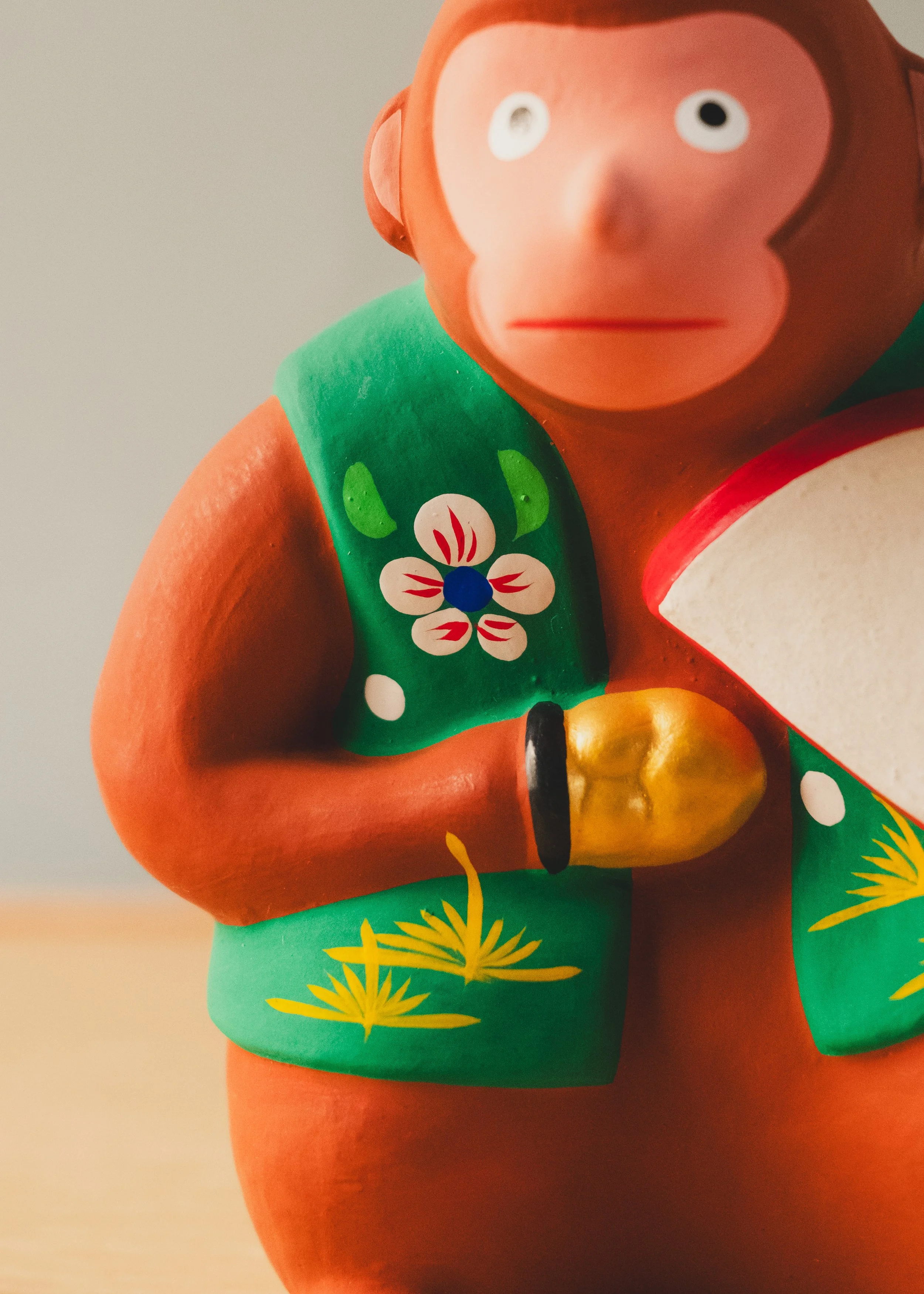 Image 8 of 10
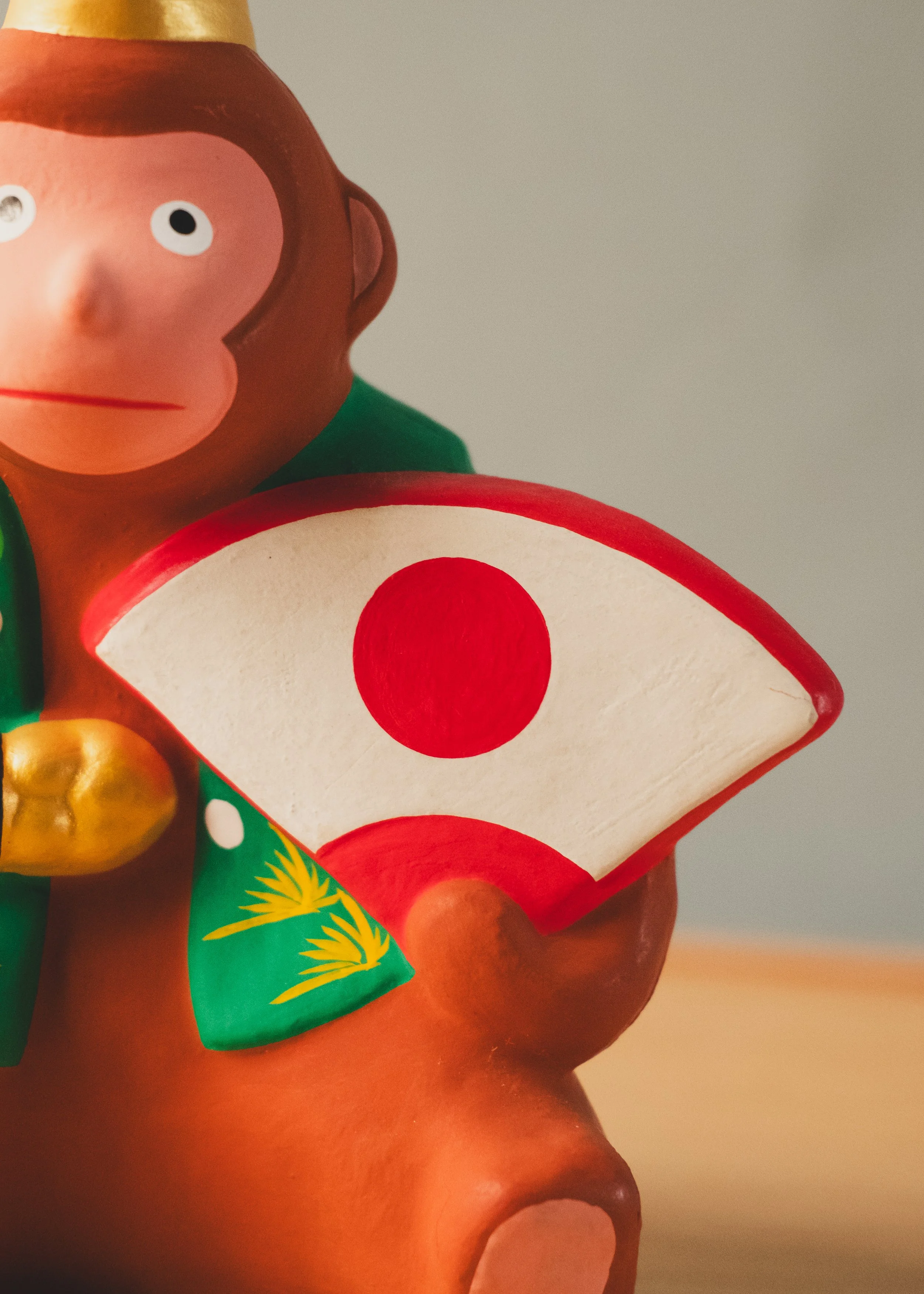 Image 9 of 10
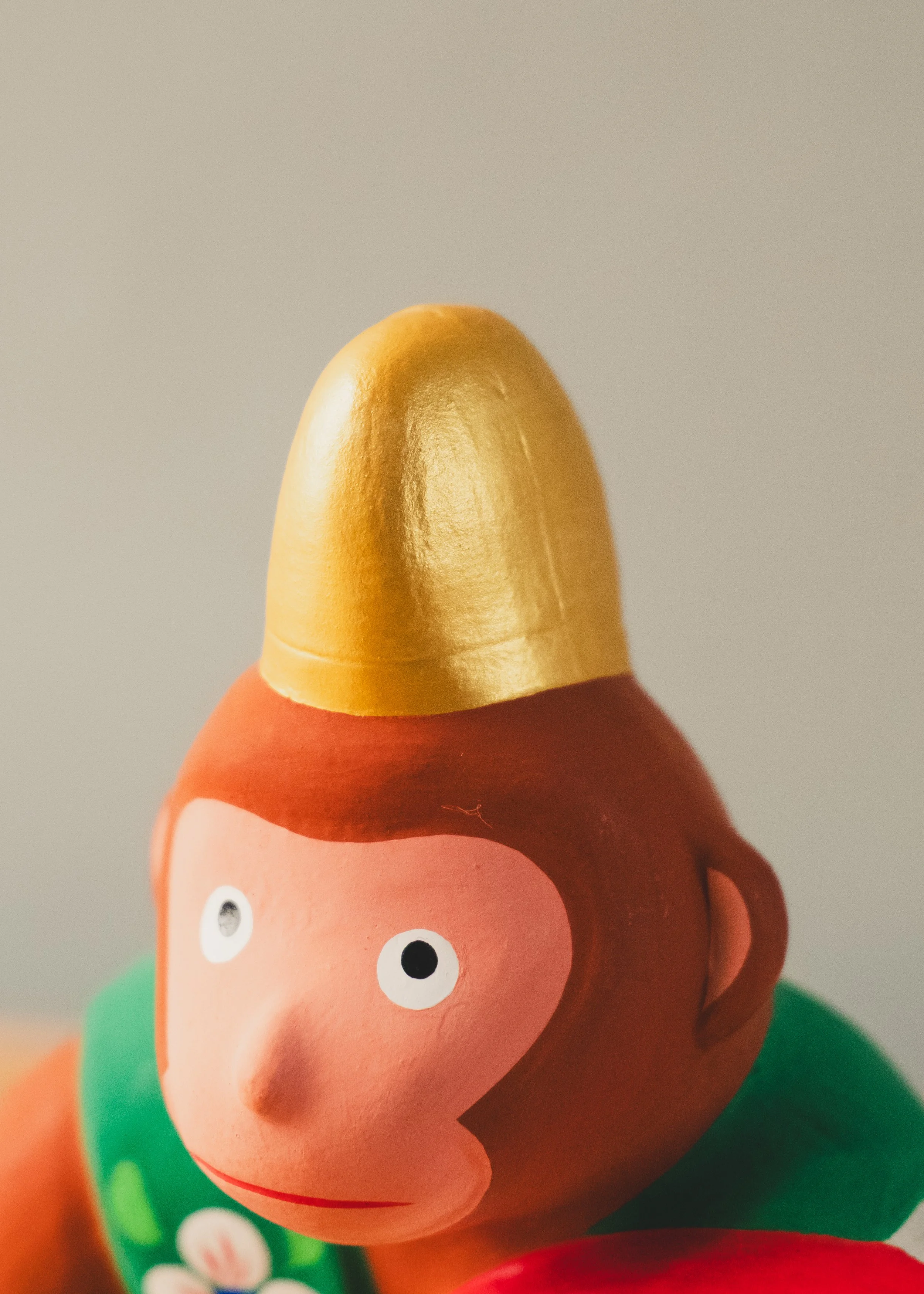 Image 10 of 10