【 The Concept 】
The "One Cry" that Commands the Void.
This avian artifact is a masterpiece of Japanese acoustic symbology. In the East Asian tradition, the Crane (鶴 - Tsuru) is a "Bird of Passage" between the earthly and the celestial, a symbol of longevity, peace, and absolute authority. There is a Japanese idiom, "Tsuru no Hitokoe" (One cry of the Crane), which refers to the definitive voice that cuts through chaos and decides the course of destiny.
Created in the mid-Showa era, this anonymous specimen translates the organic grace of the standing crane into the brutalist weight of Nambu iron. It is not merely a household tool; it is a sonic monument to the power of a single, clear intention.
【 The Function 】
A Kinetic Purifier of the Living Space.
While rooted in the tradition of the "Butler’s Bell" from the Western domestic hierarchy, this Japanese reinterpretation serves a more spiritual function: the purification of space through vibration.
The unique "External Clapper" system—a cast-iron sphere suspended by a delicate brass chain—is a study in Japanese ergonomics. Unlike a handbell that requires a large shaking gesture, this Taku-Rin (Table-top Bell) rewards the minimalist movement. A subtle flick of the finger sends a shock through the bell's architecture, generating a high-frequency pulse that instantly shifts the room's atmosphere from stagnant to awakened.
【 Material & Craft 】
The 900-Year Heritage of Volcanic Silence.
Forged in the Iwate Prefecture, the historic heartland of Nambu Tekki, this bell is the result of an intense elemental transformation. Nambu ironware originated in the 17th century under the patronage of the Nambu samurai lords, merging high-art tea-ceremony aesthetics with industrial-grade durability.
The casting process involves pouring 1,500-degree Celsius molten iron into traditional sand molds. Each bell undergoes the "Kama-yaki" treatment, where the iron is baked at 900 degrees to create a natural charcoal-colored oxide film. This high-density metallic body is what gives the bell its distinctive acoustic profile: a crystalline ring that possesses a "1/f1/f fluctuation"—a rhythm found in the sounds of waves and wind that provides a profound neurological calm (the "Coolness" of Japanese Zen) despite its industrial origins.
【 Presence 】
A Guardian of Ritual and Hospitality.
This Crane Bell does not hide in the kitchen. It is designed to sit on a primary desk, a minimalist sideboard, or at the center of a dining gathering. It functions as the conductor of a household ritual—be it signaling the start of a communal meal or a personal moment of meditation.
As a gift, the crane signifies "fidelity" and "longevity," making it an archetypal offering for those celebrating milestones of time or the union of lives. Place this black silhouette against a white wall or on a heavy oak surface; its shadow is as striking as its sound.
【 The Concept 】
The "One Cry" that Commands the Void.
This avian artifact is a masterpiece of Japanese acoustic symbology. In the East Asian tradition, the Crane (鶴 - Tsuru) is a "Bird of Passage" between the earthly and the celestial, a symbol of longevity, peace, and absolute authority. There is a Japanese idiom, "Tsuru no Hitokoe" (One cry of the Crane), which refers to the definitive voice that cuts through chaos and decides the course of destiny.
Created in the mid-Showa era, this anonymous specimen translates the organic grace of the standing crane into the brutalist weight of Nambu iron. It is not merely a household tool; it is a sonic monument to the power of a single, clear intention.
【 The Function 】
A Kinetic Purifier of the Living Space.
While rooted in the tradition of the "Butler’s Bell" from the Western domestic hierarchy, this Japanese reinterpretation serves a more spiritual function: the purification of space through vibration.
The unique "External Clapper" system—a cast-iron sphere suspended by a delicate brass chain—is a study in Japanese ergonomics. Unlike a handbell that requires a large shaking gesture, this Taku-Rin (Table-top Bell) rewards the minimalist movement. A subtle flick of the finger sends a shock through the bell's architecture, generating a high-frequency pulse that instantly shifts the room's atmosphere from stagnant to awakened.
【 Material & Craft 】
The 900-Year Heritage of Volcanic Silence.
Forged in the Iwate Prefecture, the historic heartland of Nambu Tekki, this bell is the result of an intense elemental transformation. Nambu ironware originated in the 17th century under the patronage of the Nambu samurai lords, merging high-art tea-ceremony aesthetics with industrial-grade durability.
The casting process involves pouring 1,500-degree Celsius molten iron into traditional sand molds. Each bell undergoes the "Kama-yaki" treatment, where the iron is baked at 900 degrees to create a natural charcoal-colored oxide film. This high-density metallic body is what gives the bell its distinctive acoustic profile: a crystalline ring that possesses a "1/f1/f fluctuation"—a rhythm found in the sounds of waves and wind that provides a profound neurological calm (the "Coolness" of Japanese Zen) despite its industrial origins.
【 Presence 】
A Guardian of Ritual and Hospitality.
This Crane Bell does not hide in the kitchen. It is designed to sit on a primary desk, a minimalist sideboard, or at the center of a dining gathering. It functions as the conductor of a household ritual—be it signaling the start of a communal meal or a personal moment of meditation.
As a gift, the crane signifies "fidelity" and "longevity," making it an archetypal offering for those celebrating milestones of time or the union of lives. Place this black silhouette against a white wall or on a heavy oak surface; its shadow is as striking as its sound.


 Image 1 of 8
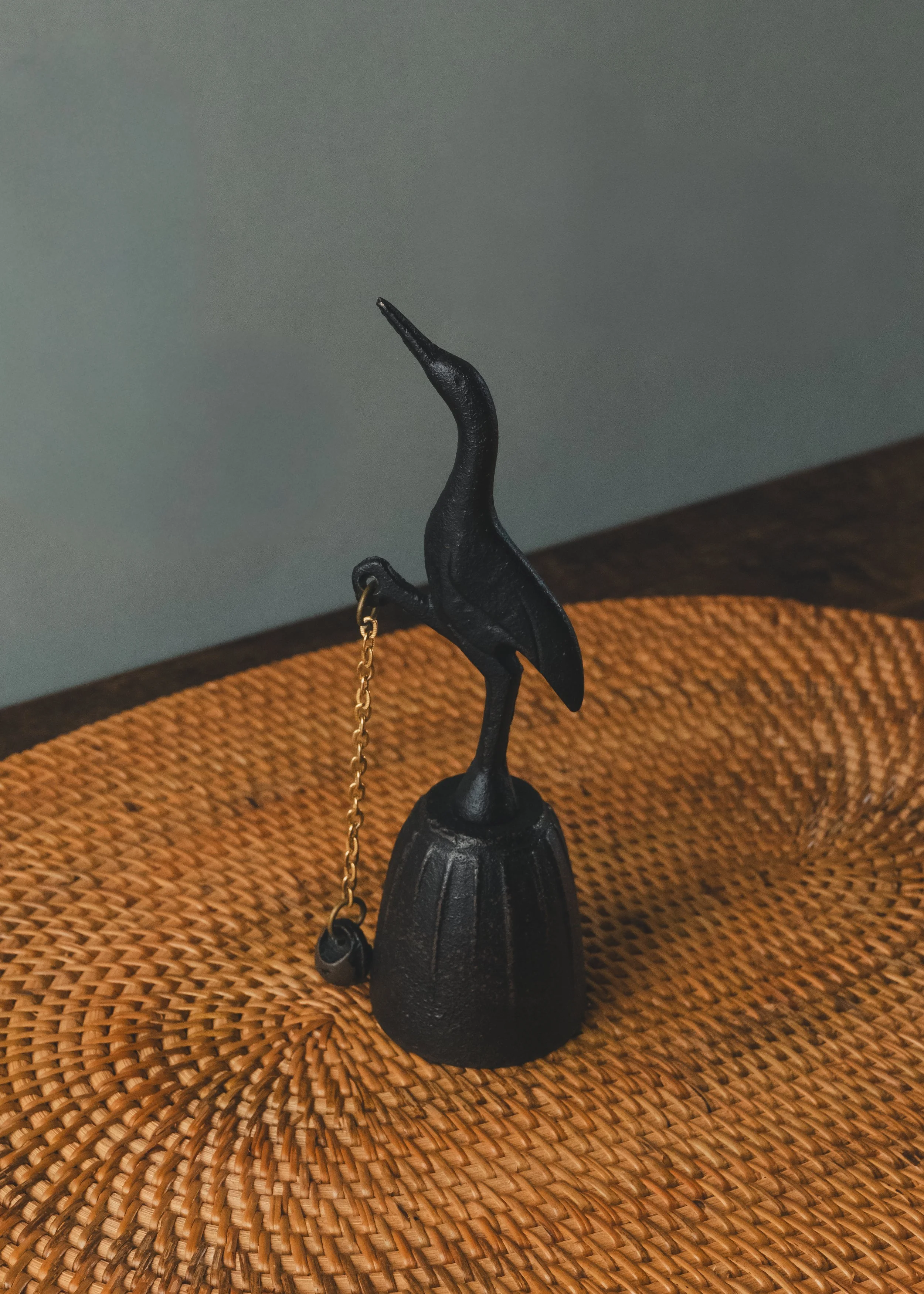 Image 2 of 8
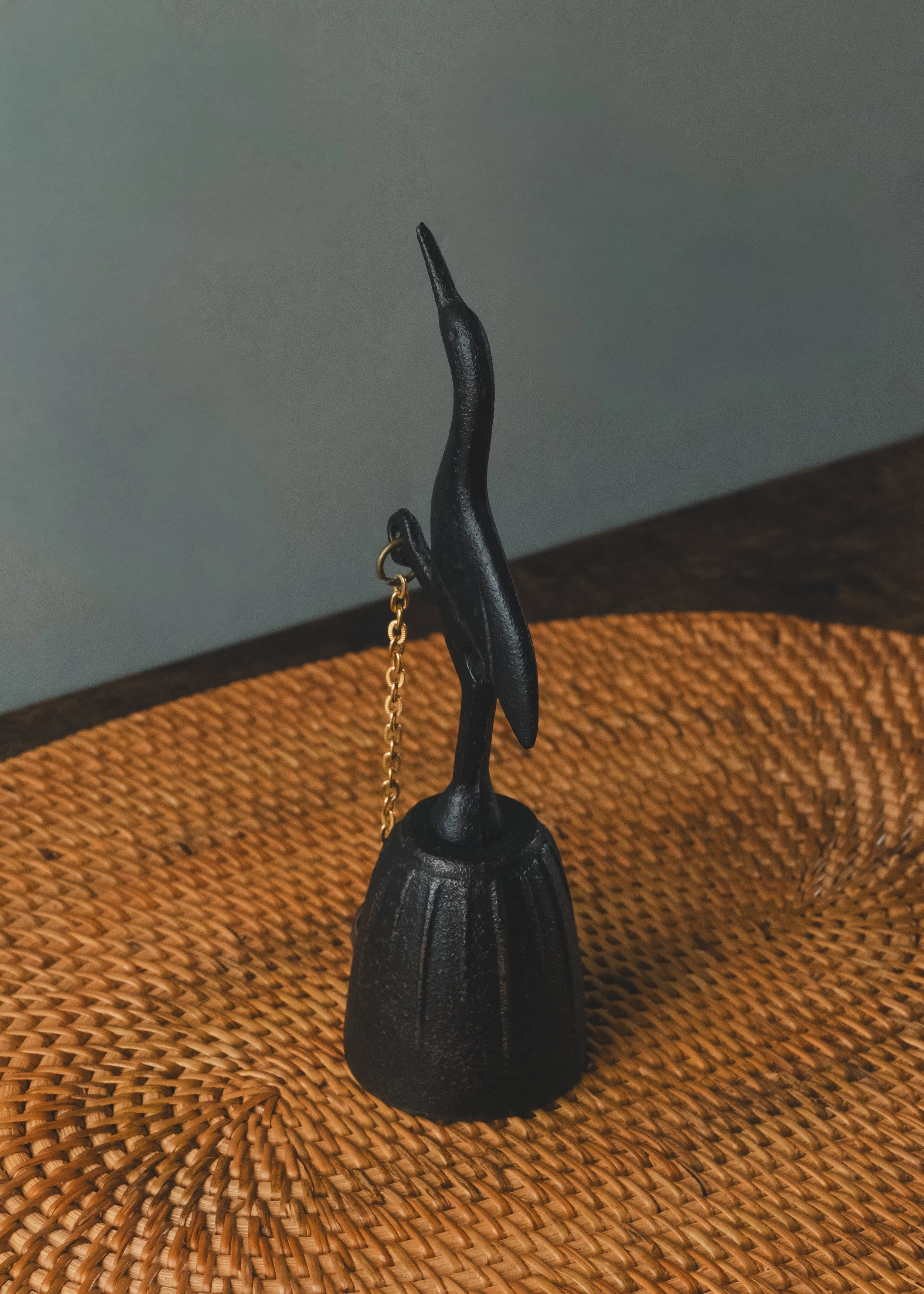 Image 3 of 8
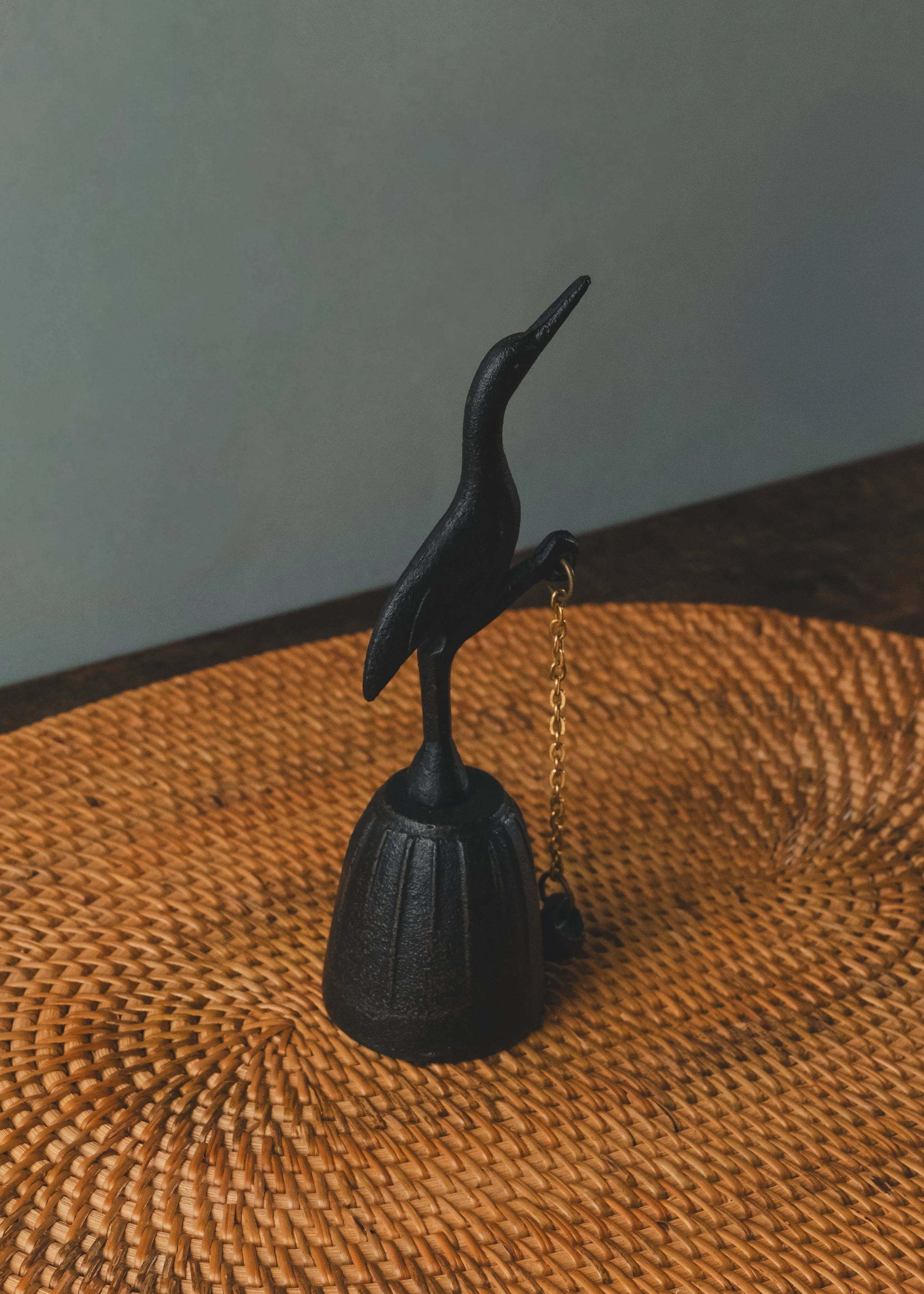 Image 4 of 8
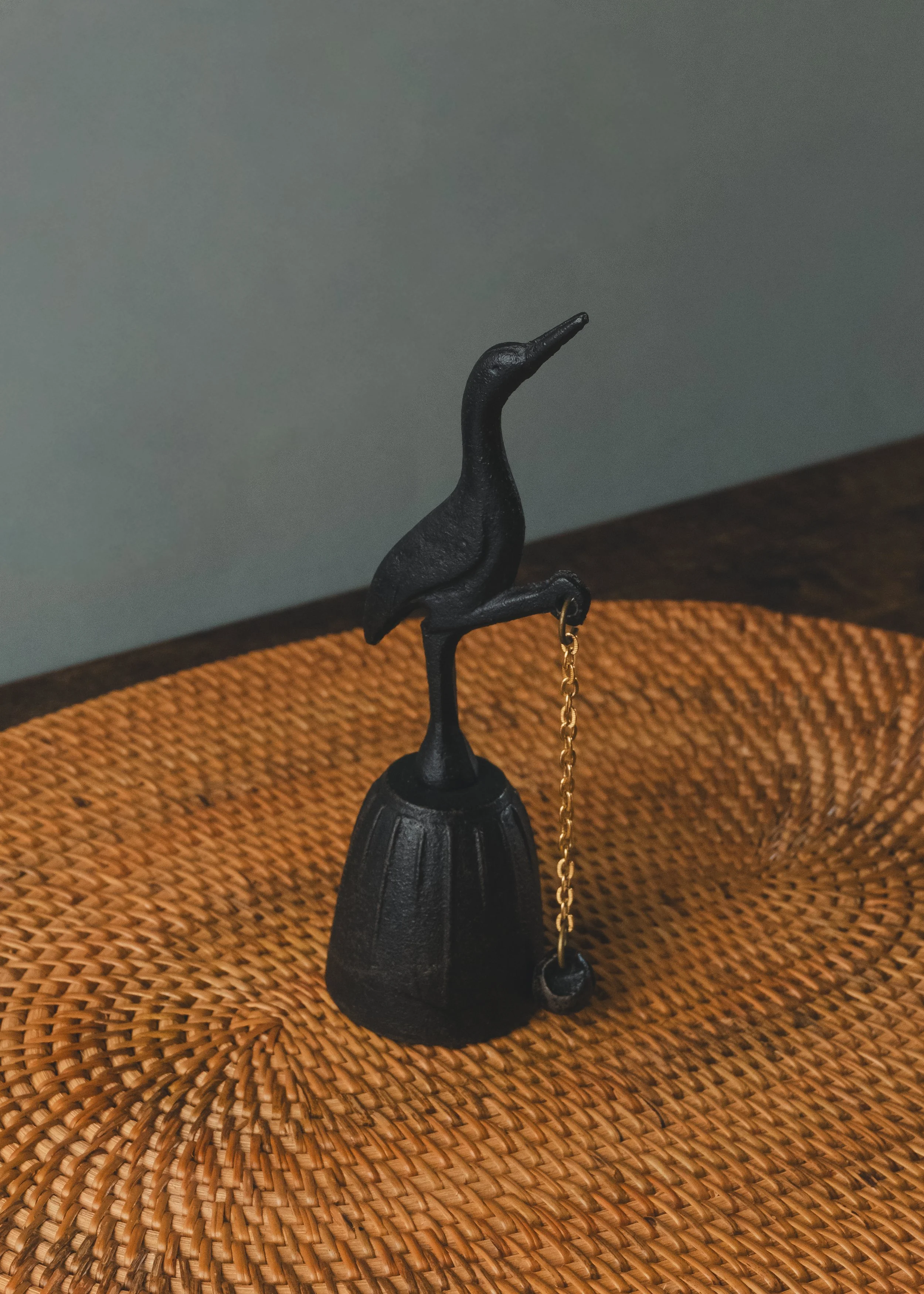 Image 5 of 8
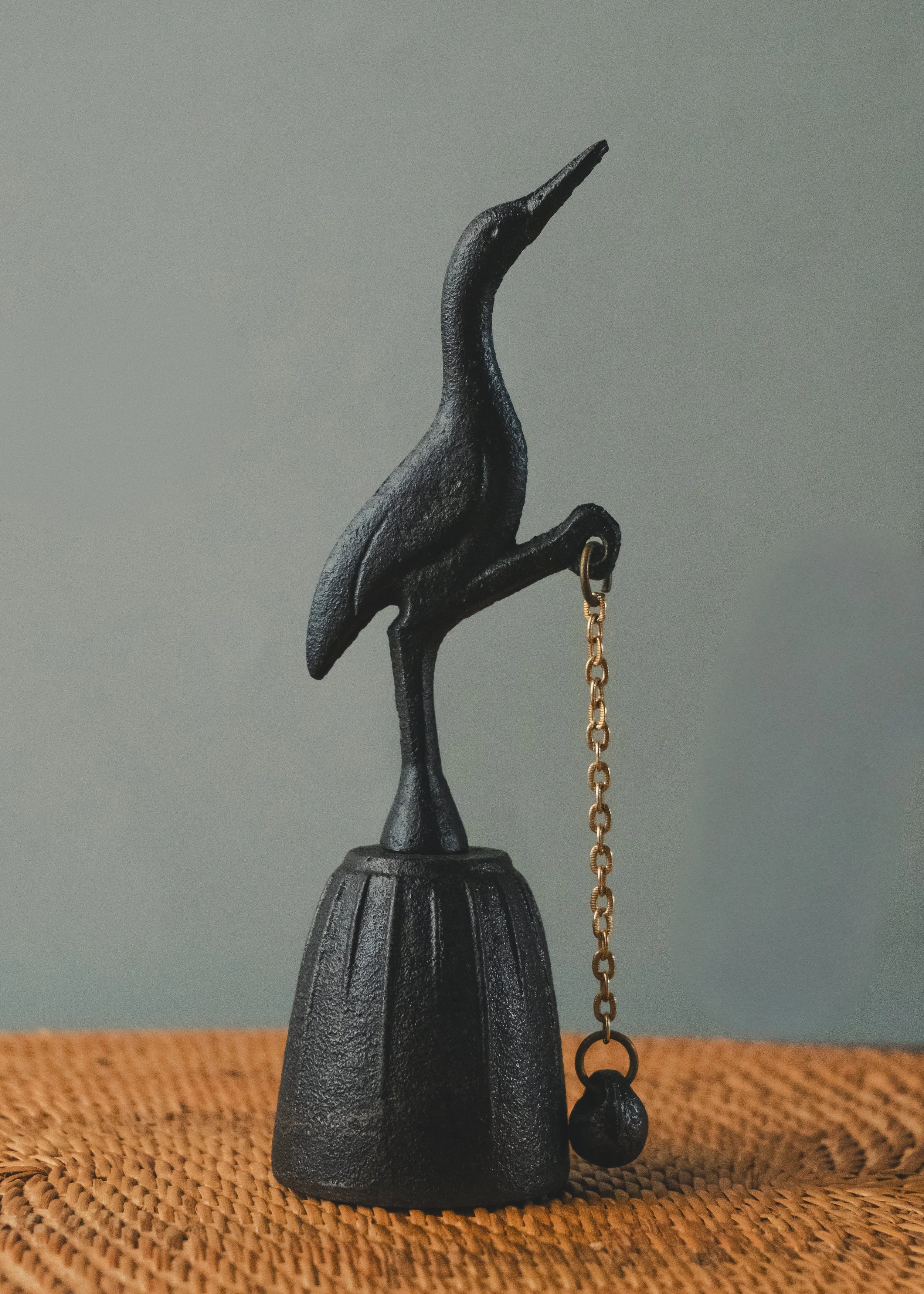 Image 6 of 8
 Image 7 of 8
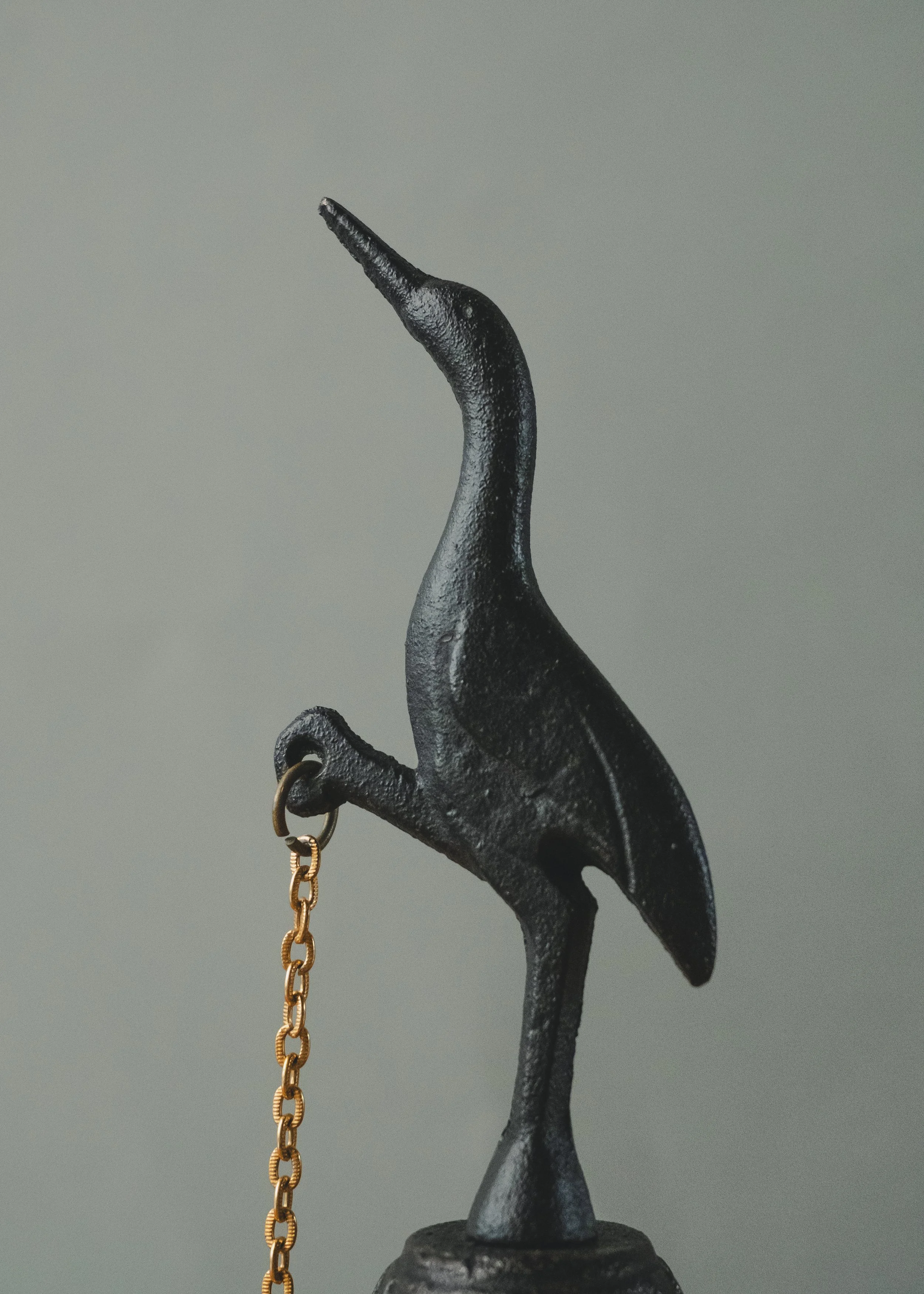 Image 8 of 8