【The Concept】
This is not decoration. This is geology.
The surface of this tray is the result of over forty layers of lacquer, applied, dried, and carved by hand — a process that took months to complete in a single workshop in the Tsugaru region of northern Japan. What appears to be a pattern is, in fact, a cross-section of time itself: each layer exposed by the final grinding reveals a stratum of red, black, and amber that no two craftsmen could ever replicate twice.
【The Function】
Designed as a serving tray, this object carried tea, sake, and seasonal offerings across generations of a Japanese household. It was used. It was trusted. The lacquer surface — impervious to moisture, heat, and decay — was engineered for daily life, not for display. That it has survived intact, box and all, is not luck. It is a testimony to the integrity of the material.
【Material & Craft】
Tsugaru-nuri (津軽塗) is one of Japan's designated traditional crafts, formally recognized by the government in 1975. The technique known as Kara-nuri — the most demanding of its four variants — involves pressing a spatula loaded with wet lacquer against the surface in rhythmic, deliberate strokes. The resulting cellular topography is then buried under subsequent coats and revealed only through final hand-polishing with charcoal and deer antler powder.
The base is Japanese cypress (hinoki). The lacquer is urushi — the sap of Toxicodendron vernicifluum, harvested over decades from trees that produce only 200 grams per year. The red pigment is iron oxide. The black, carbon. Nothing synthetic. Nothing approximated.
【Presence】
Placed on a concrete desk or a pale oak surface, this tray does not blend. It anchors. The diameter commands a pause — the eye follows the circuitry of its pattern inward and finds no resolution, no center, no exit. It is the visual equivalent of a long breath. Architects and designers who encounter it do not ask what it is. They ask where it has been.
【The Concept】
This is not decoration. This is geology.
The surface of this tray is the result of over forty layers of lacquer, applied, dried, and carved by hand — a process that took months to complete in a single workshop in the Tsugaru region of northern Japan. What appears to be a pattern is, in fact, a cross-section of time itself: each layer exposed by the final grinding reveals a stratum of red, black, and amber that no two craftsmen could ever replicate twice.
【The Function】
Designed as a serving tray, this object carried tea, sake, and seasonal offerings across generations of a Japanese household. It was used. It was trusted. The lacquer surface — impervious to moisture, heat, and decay — was engineered for daily life, not for display. That it has survived intact, box and all, is not luck. It is a testimony to the integrity of the material.
【Material & Craft】
Tsugaru-nuri (津軽塗) is one of Japan's designated traditional crafts, formally recognized by the government in 1975. The technique known as Kara-nuri — the most demanding of its four variants — involves pressing a spatula loaded with wet lacquer against the surface in rhythmic, deliberate strokes. The resulting cellular topography is then buried under subsequent coats and revealed only through final hand-polishing with charcoal and deer antler powder.
The base is Japanese cypress (hinoki). The lacquer is urushi — the sap of Toxicodendron vernicifluum, harvested over decades from trees that produce only 200 grams per year. The red pigment is iron oxide. The black, carbon. Nothing synthetic. Nothing approximated.
【Presence】
Placed on a concrete desk or a pale oak surface, this tray does not blend. It anchors. The diameter commands a pause — the eye follows the circuitry of its pattern inward and finds no resolution, no center, no exit. It is the visual equivalent of a long breath. Architects and designers who encounter it do not ask what it is. They ask where it has been.


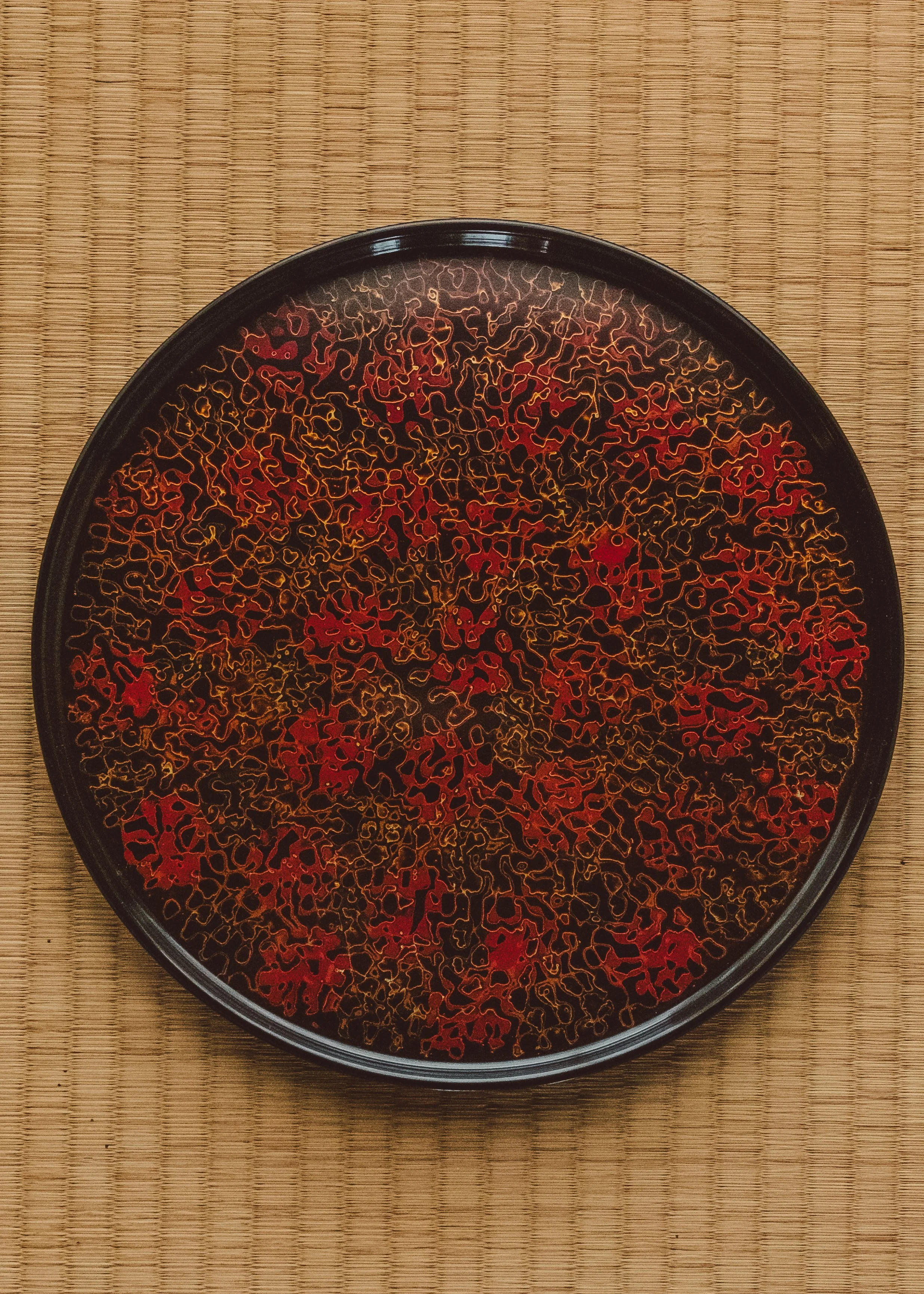 Image 1 of 5
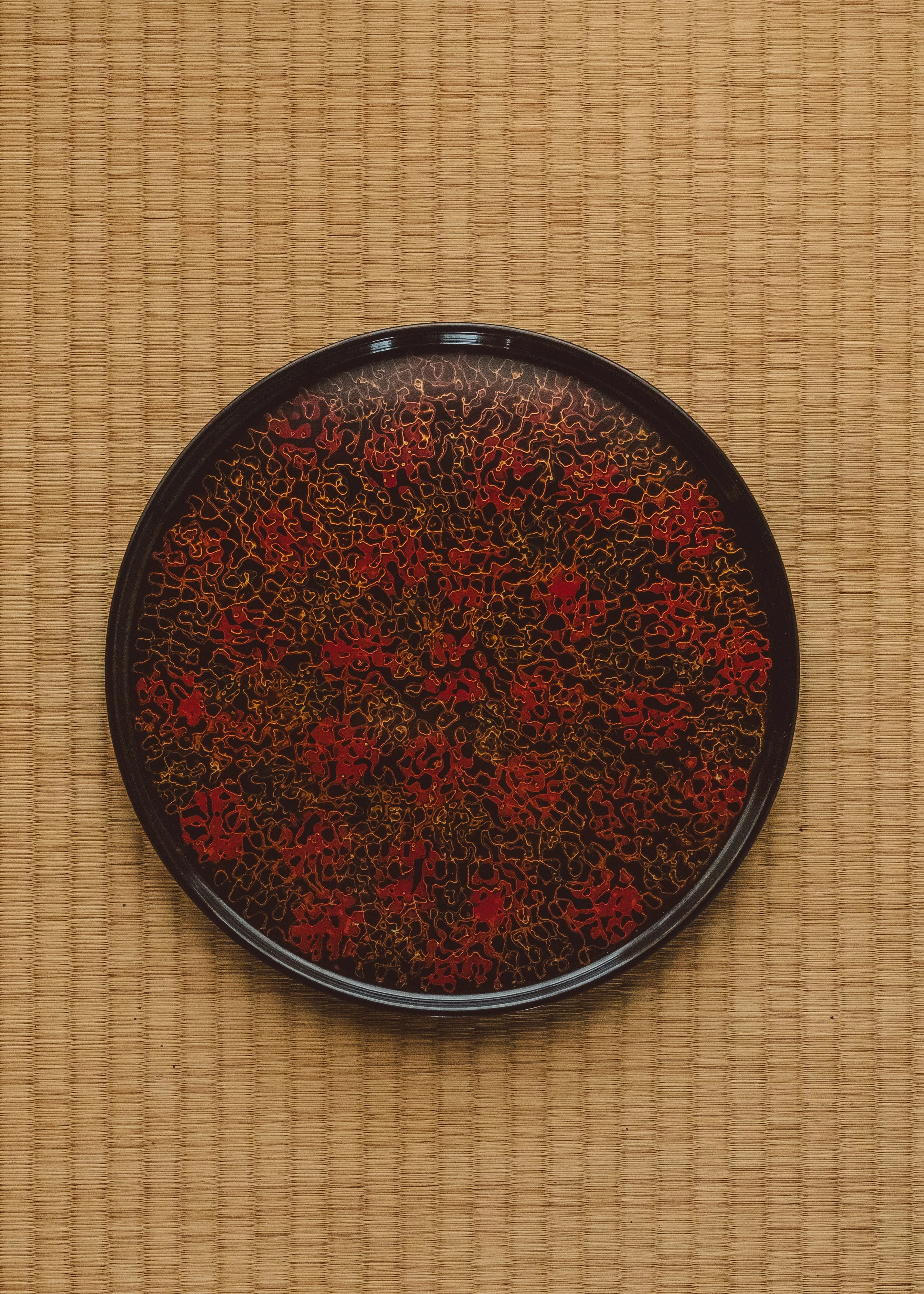 Image 2 of 5
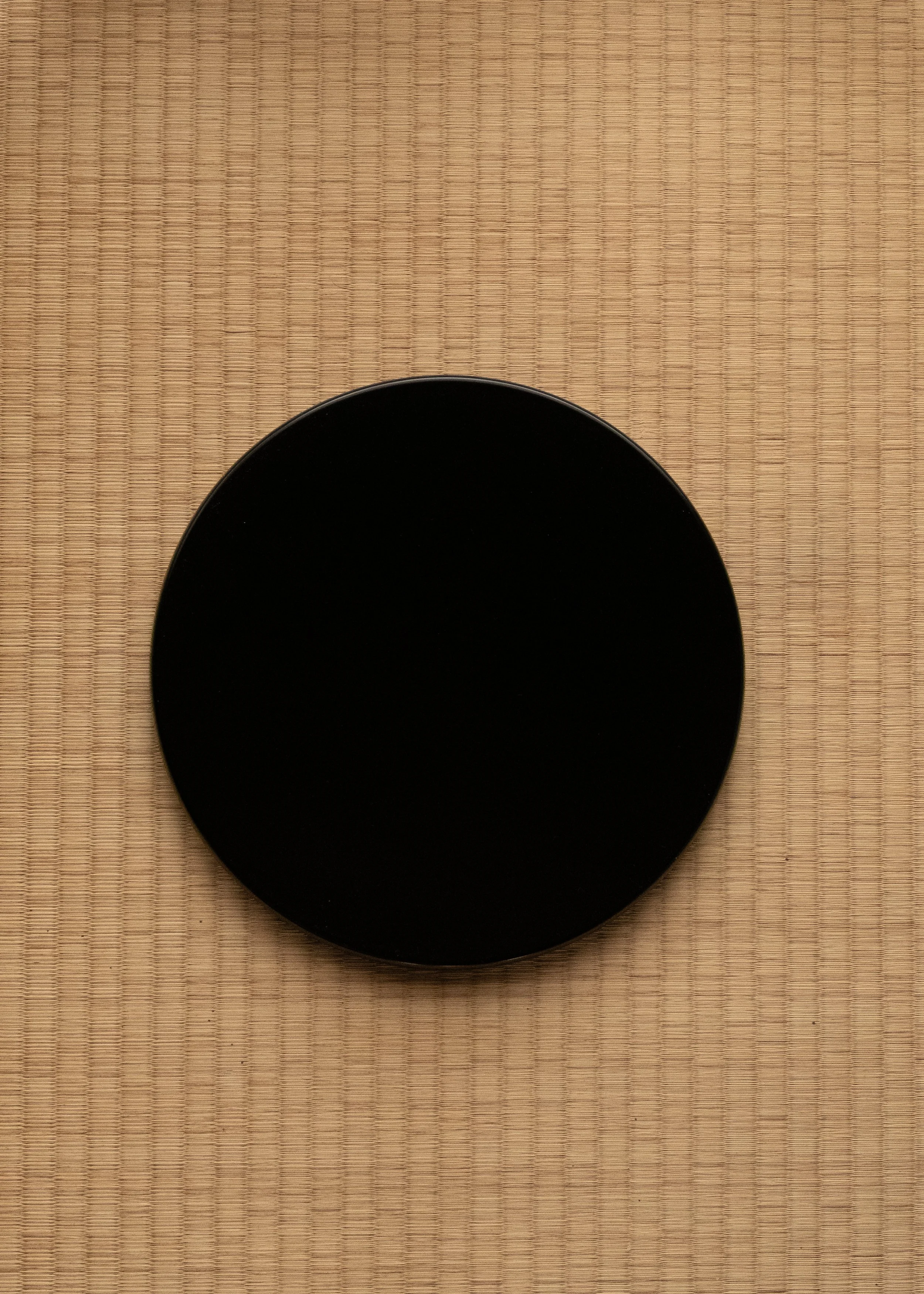 Image 3 of 5
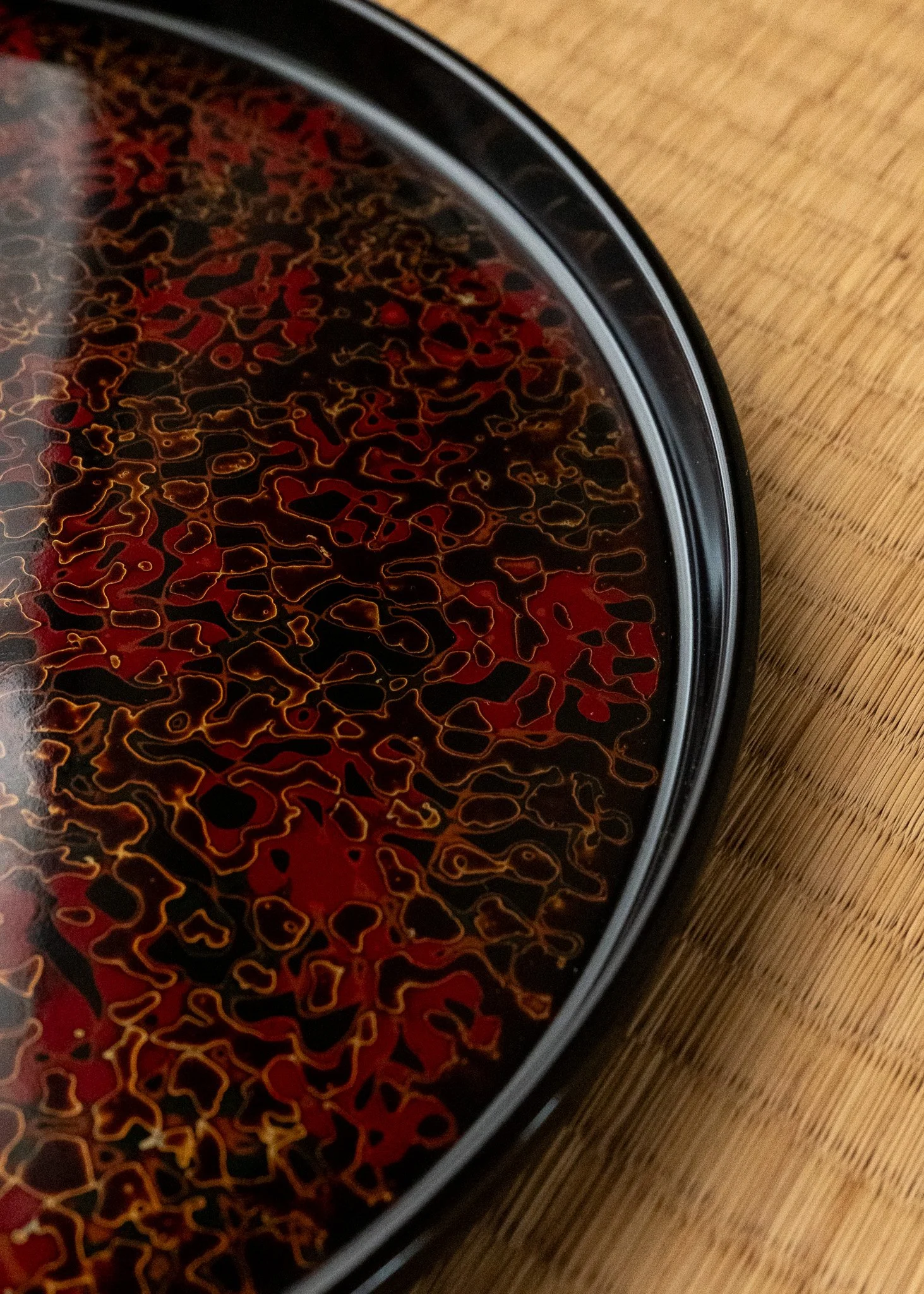 Image 4 of 5
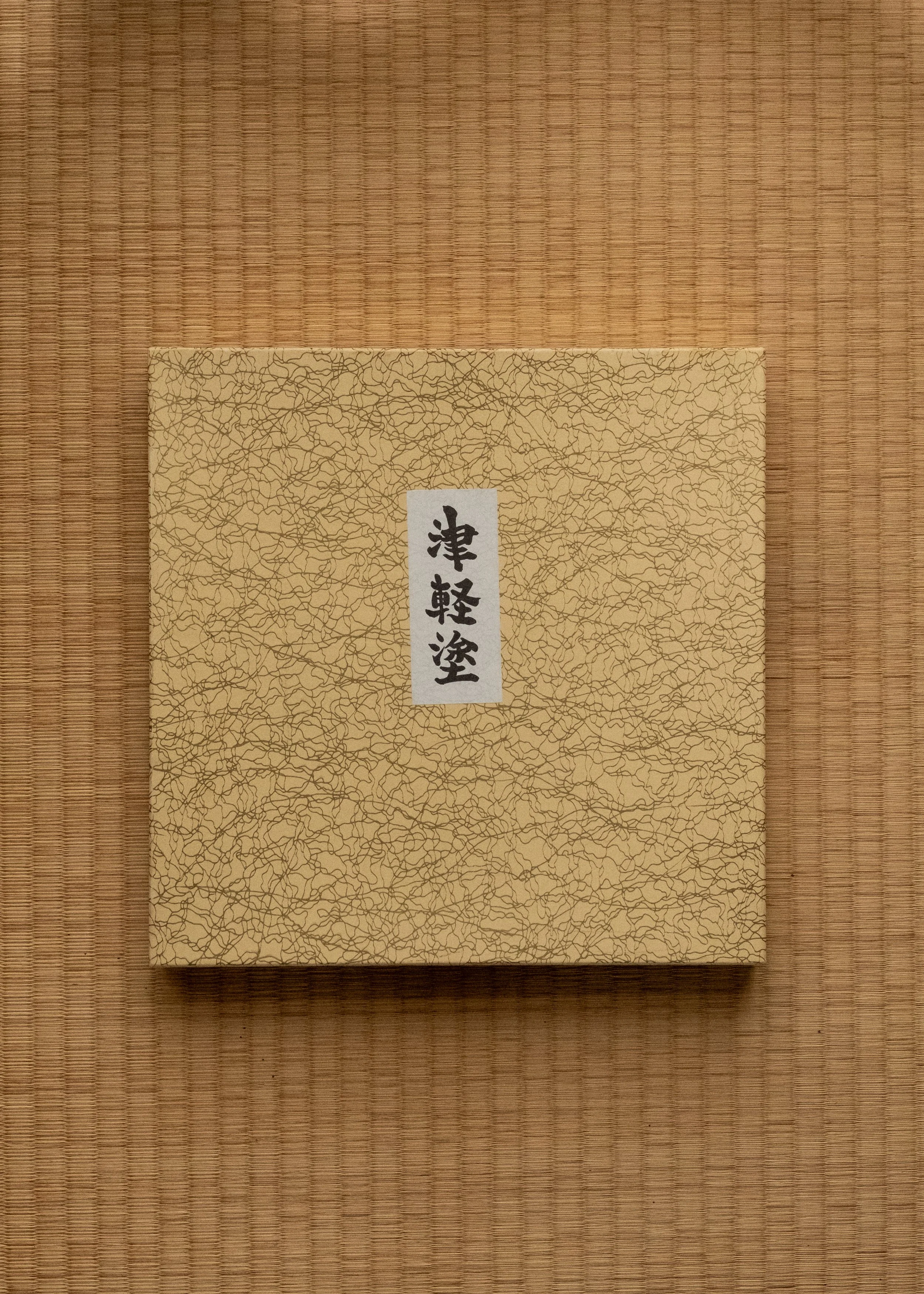 Image 5 of 5