

 Image 1 of 12
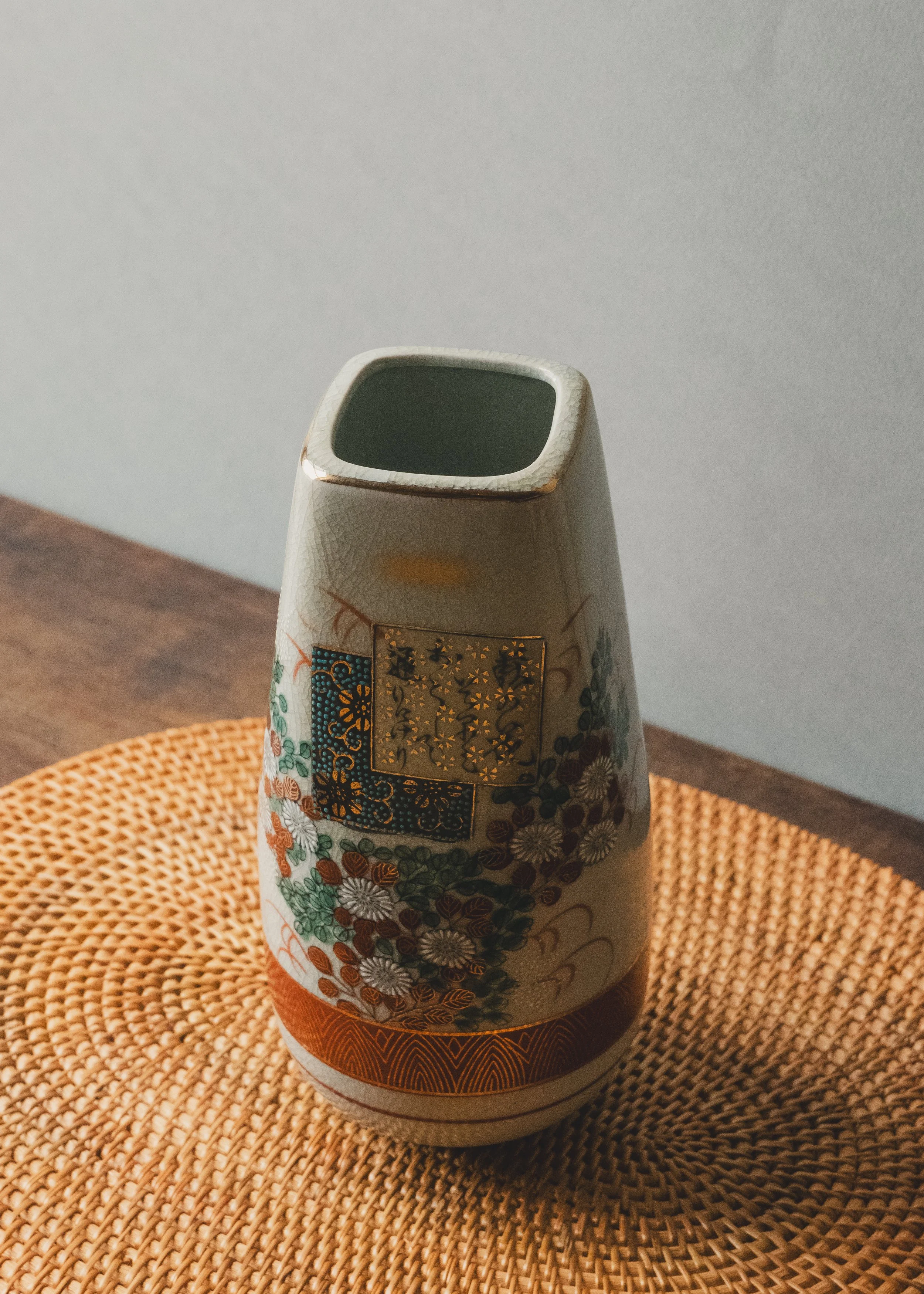 Image 2 of 12
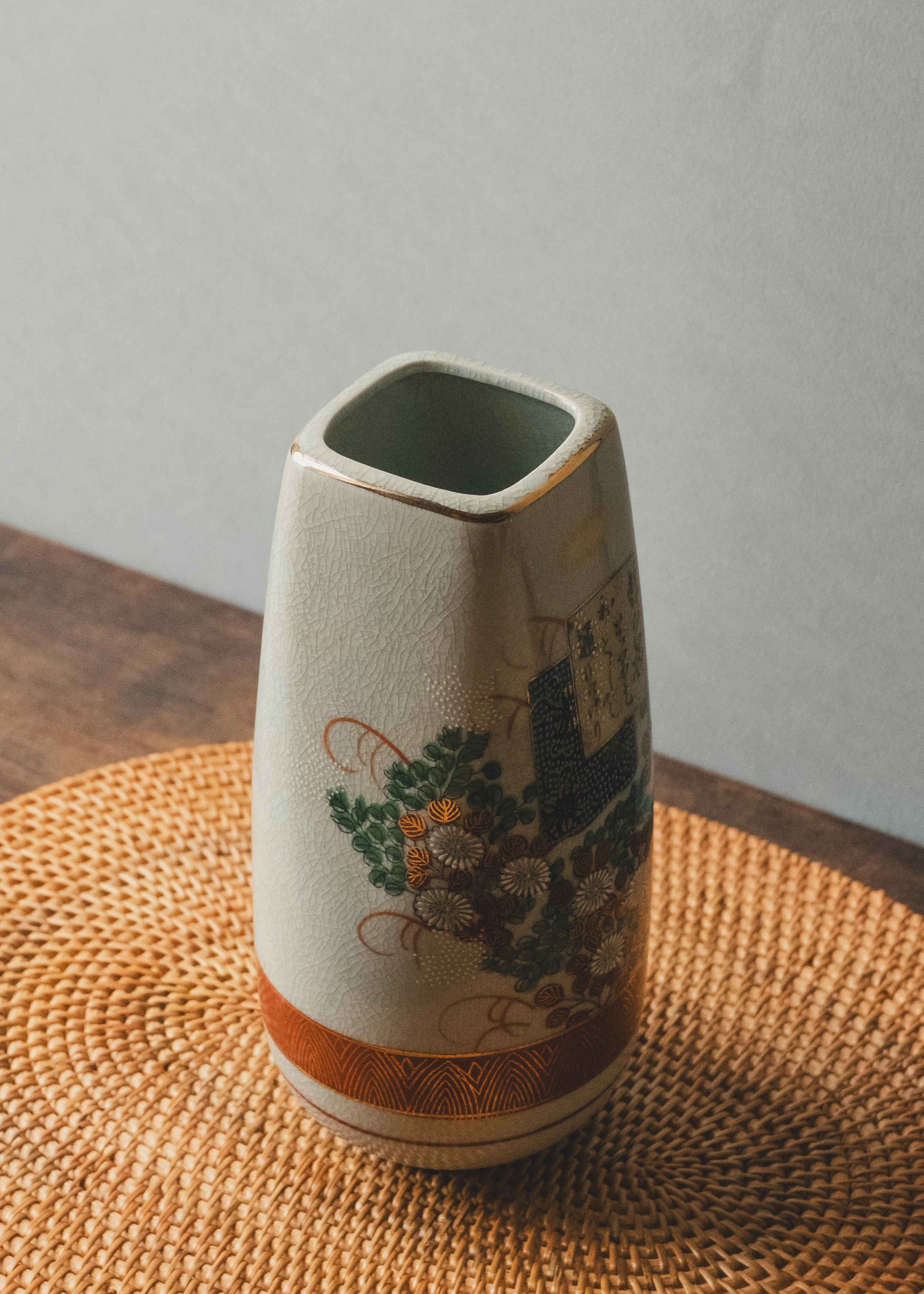 Image 3 of 12
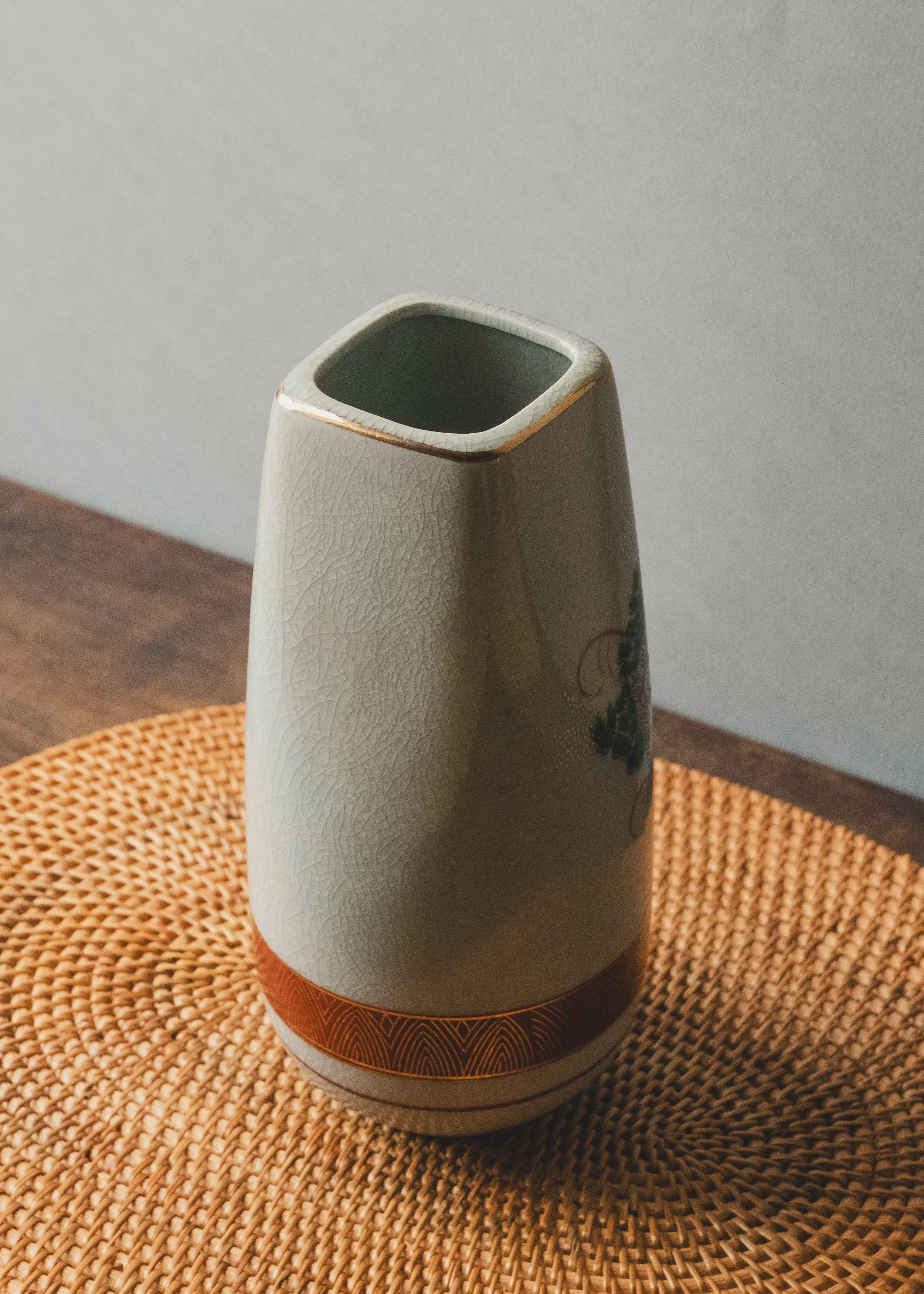 Image 4 of 12
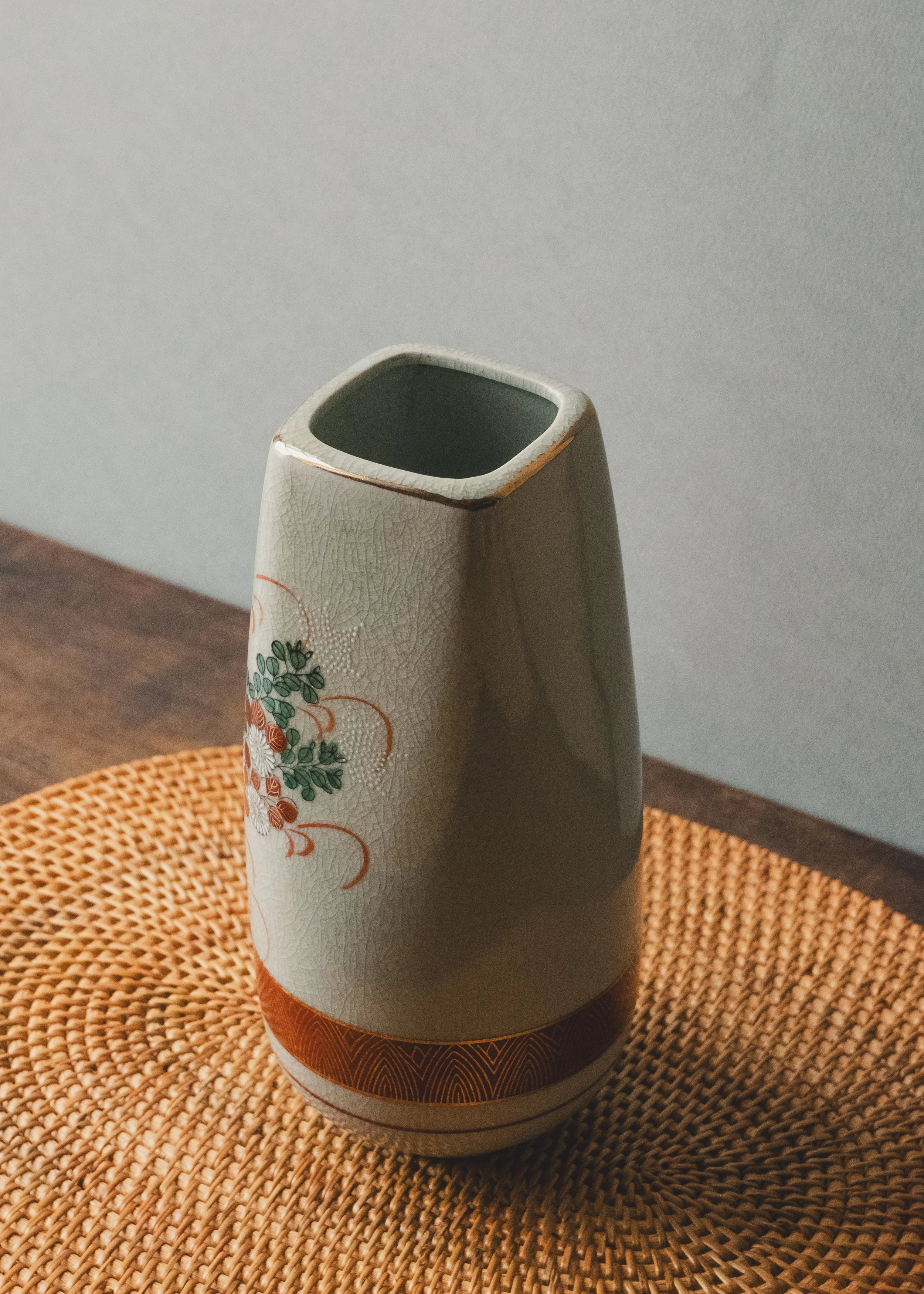 Image 5 of 12
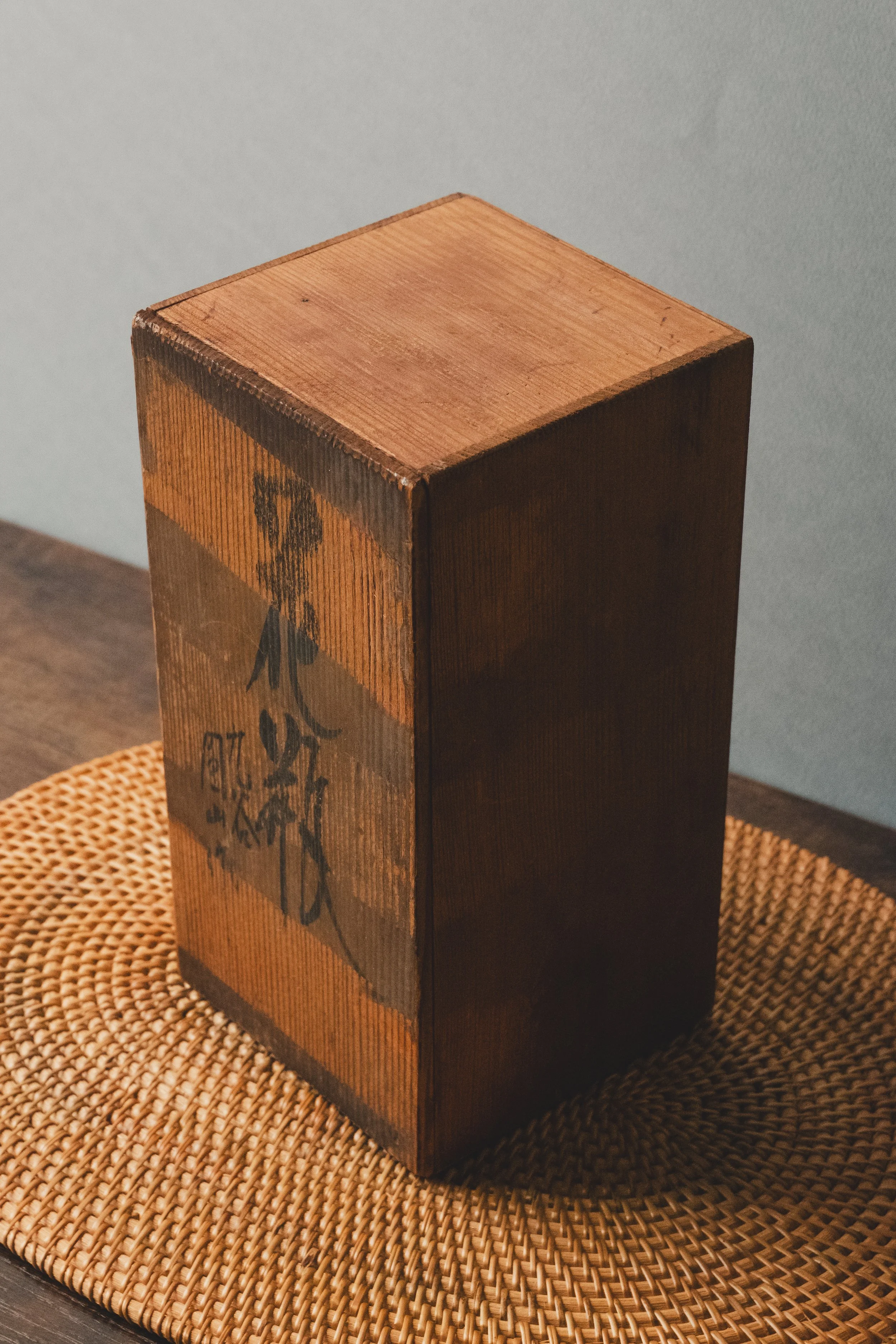 Image 6 of 12
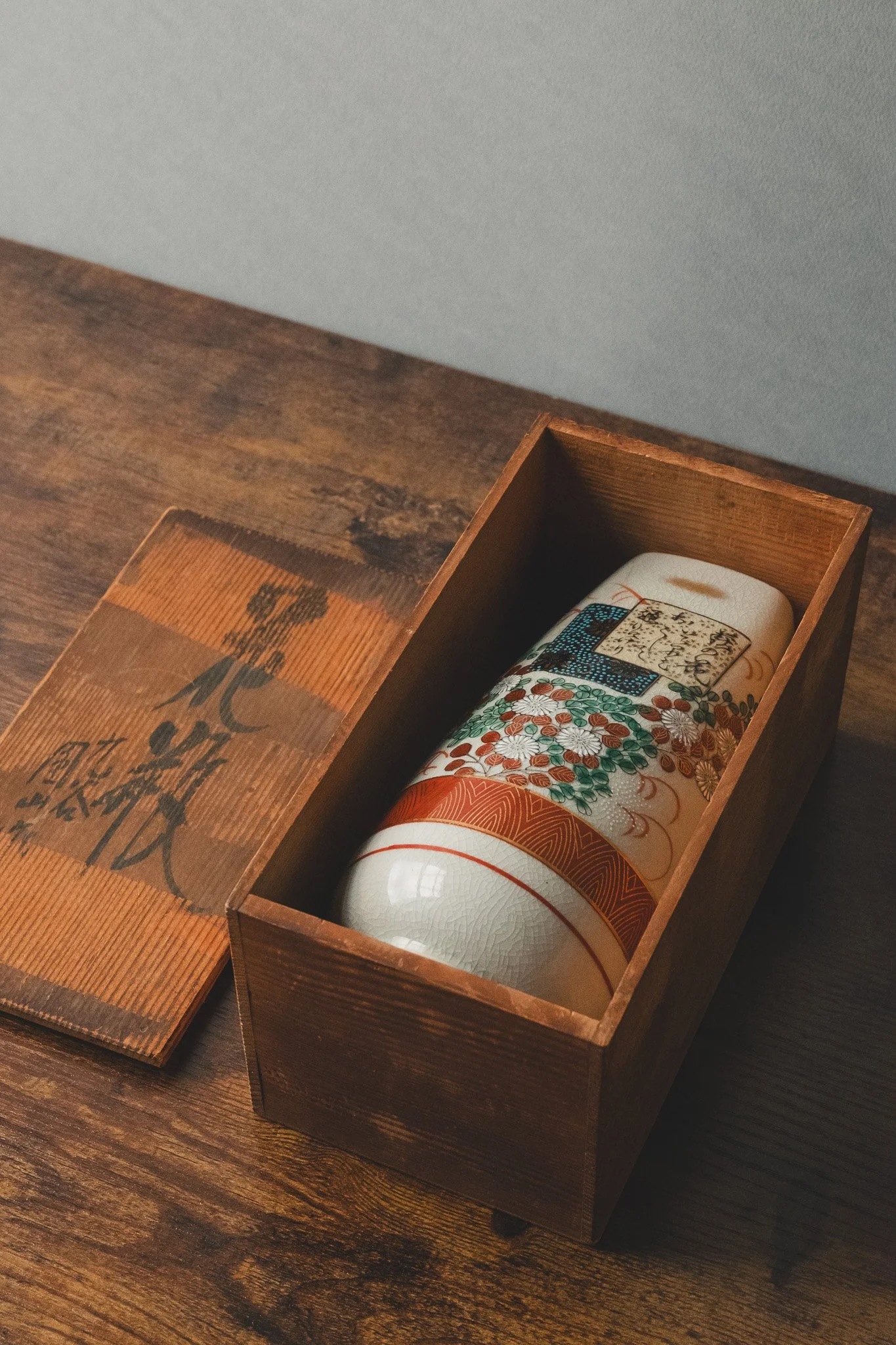 Image 7 of 12
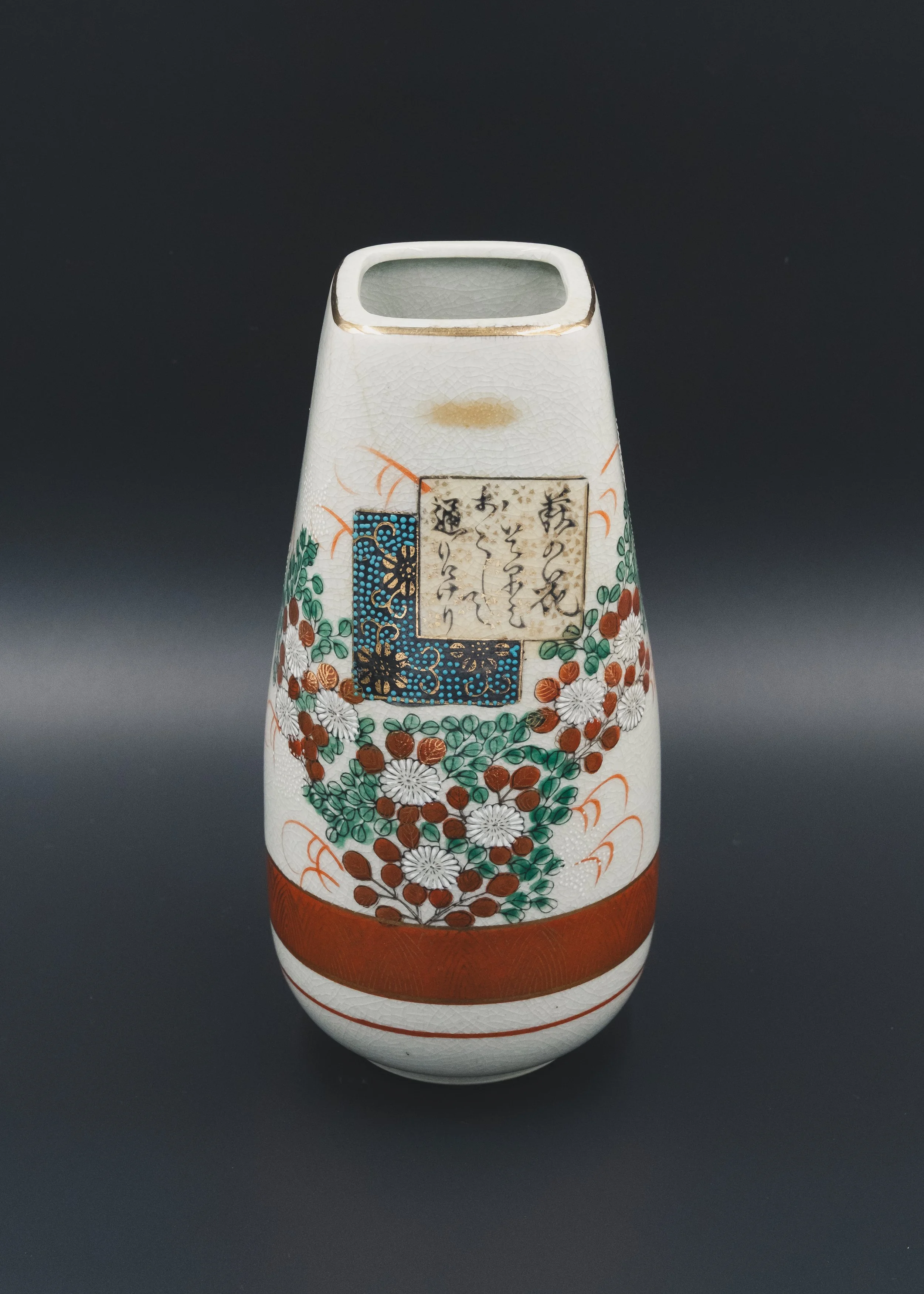 Image 8 of 12
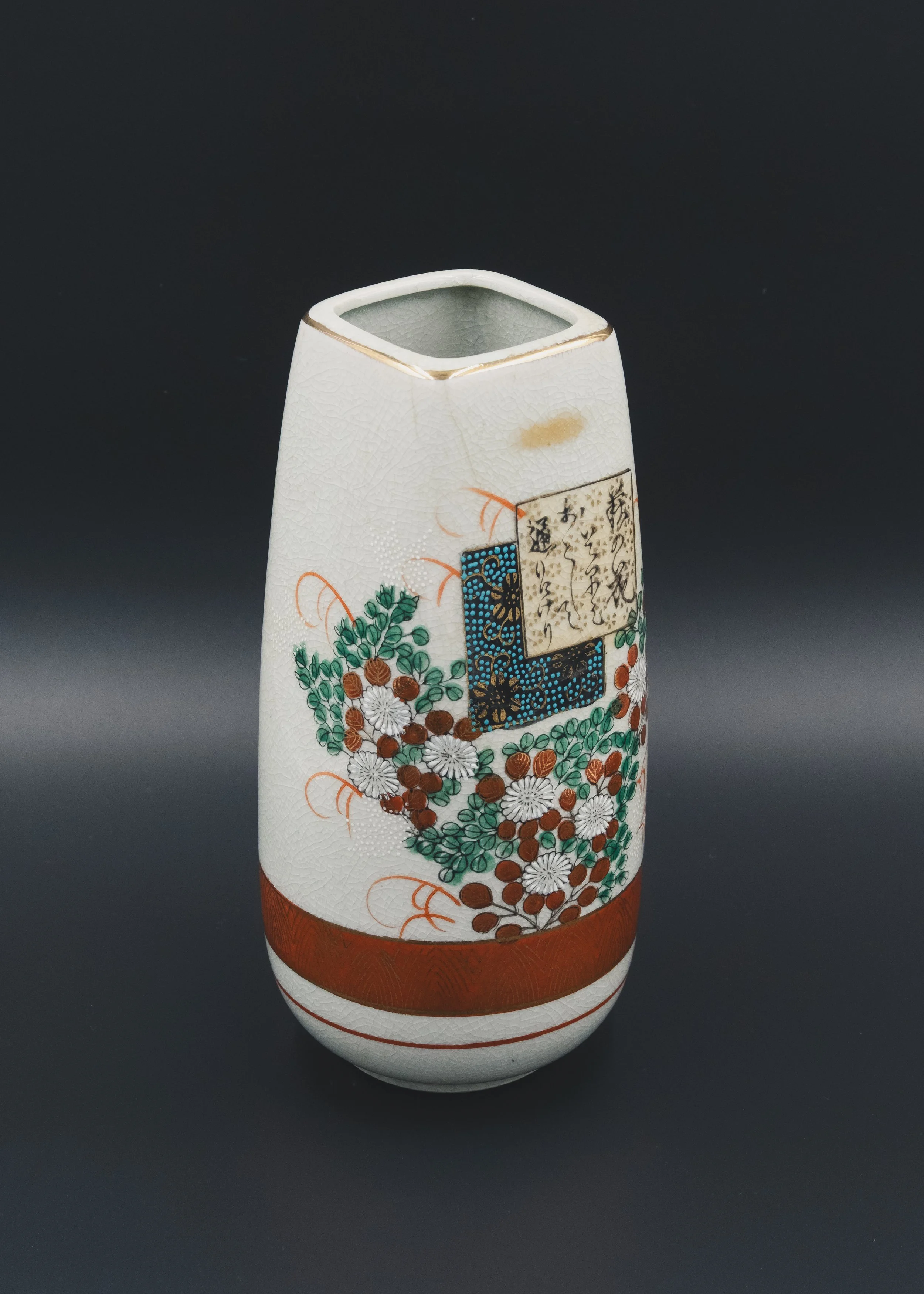 Image 9 of 12
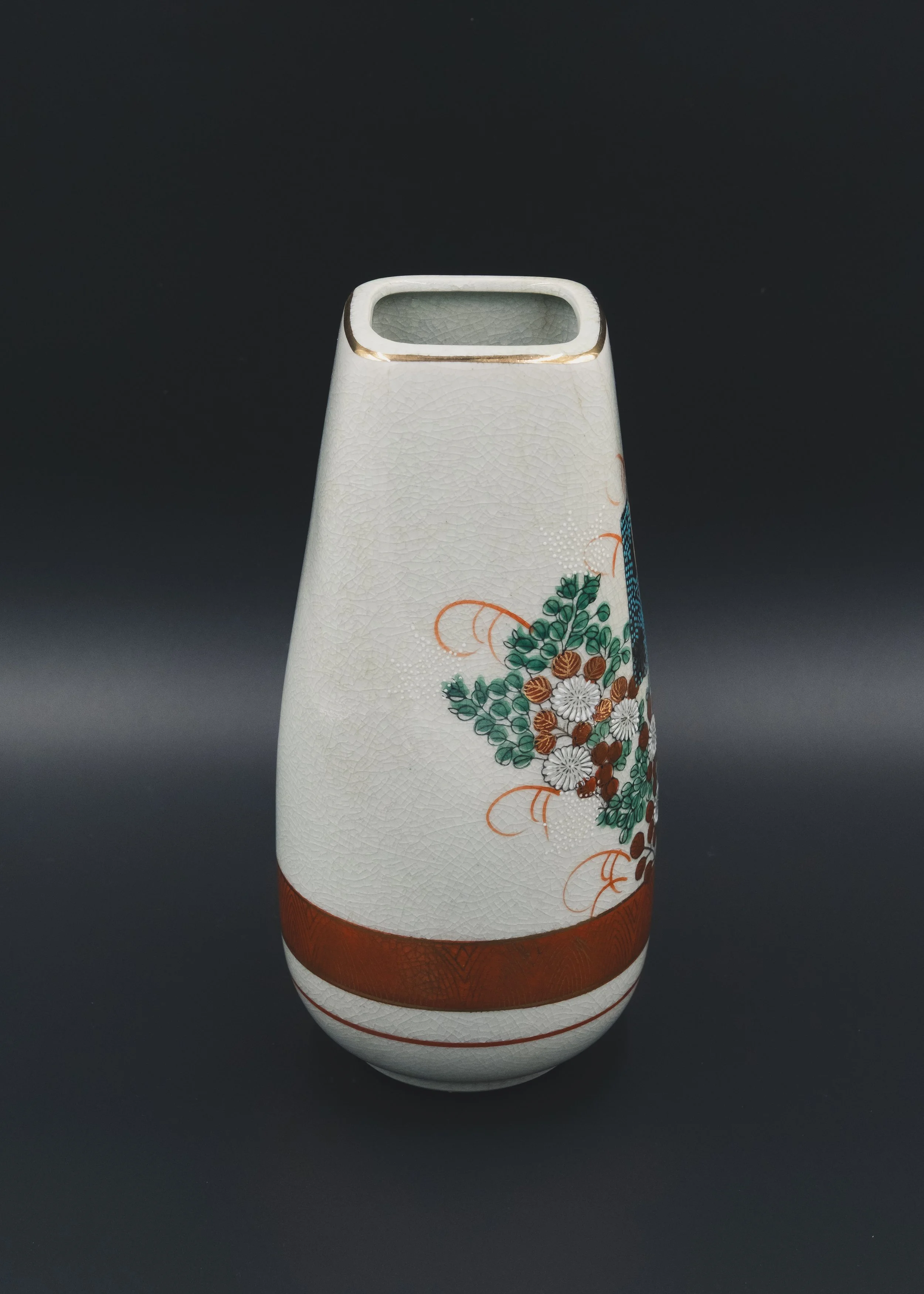 Image 10 of 12
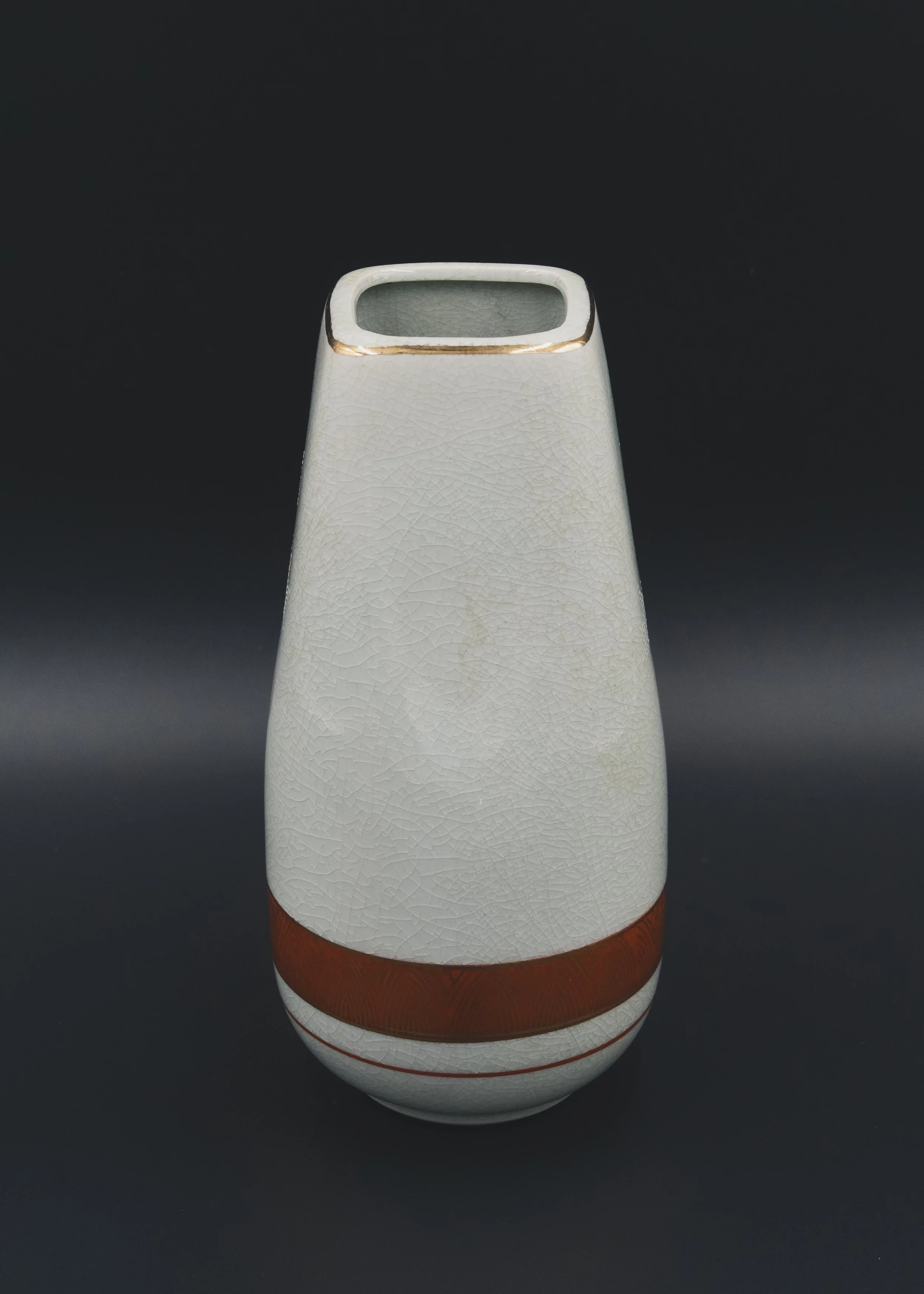 Image 11 of 12
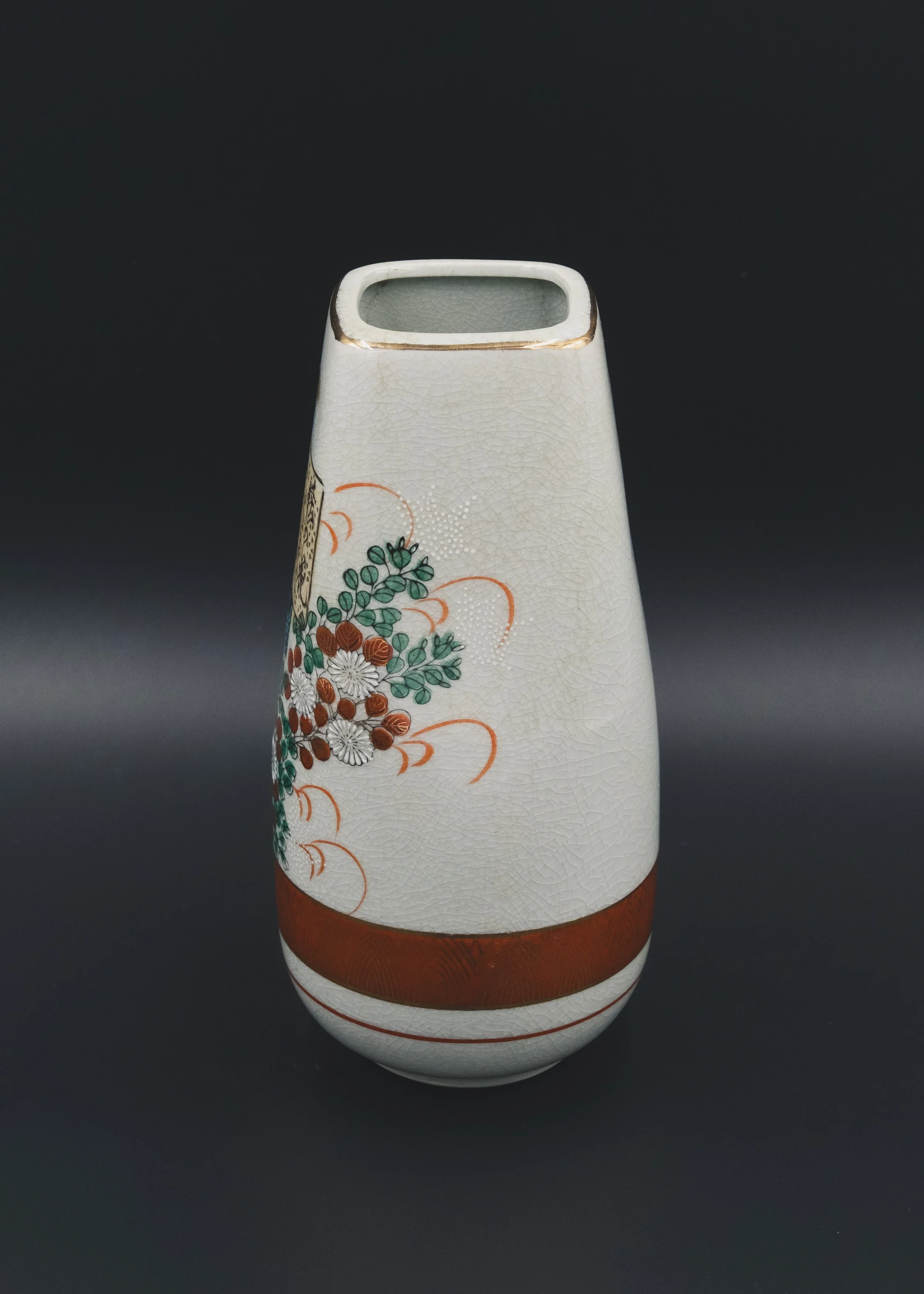 Image 12 of 12
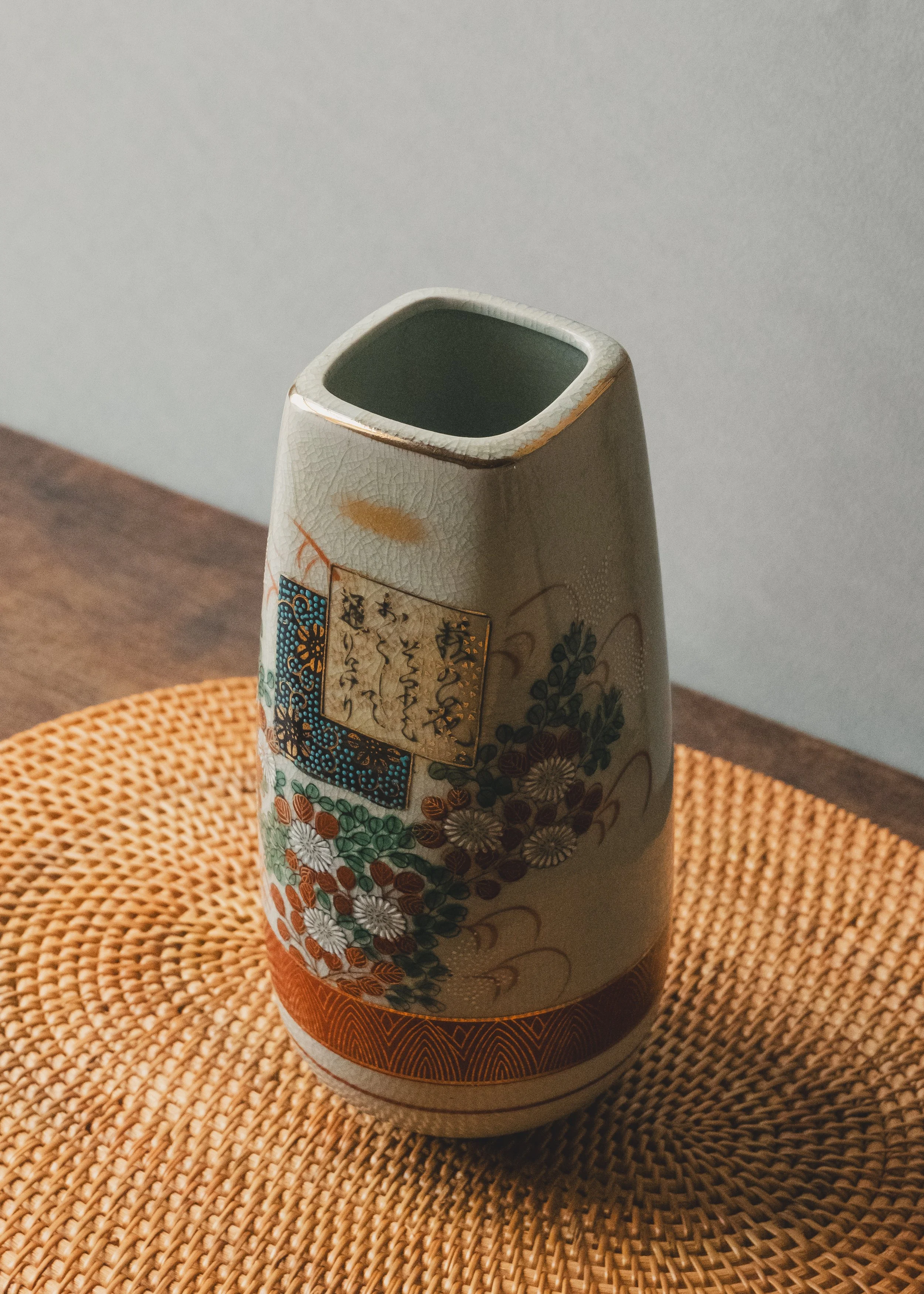
【Context】
Origin: Bizen, JapanTechnique: High-fire Gold KinsaiEra: Mid-to-late 20th CenturyProvenance: Artisan-signed "Tomobako" includedCondition: Pristine Gallery standard
【Dimensions (Approx.)】
Height: 23 cm (9.1 in)Width (Quadrilateral Mouth): 8 cm (3.1 in)Circumference: 24 cm (9.4 in)Weight (Object): 0.69 kg (1.5 lbs)Weight (With Original Wooden Box): 1.02 kg (2.2 lbs)
RELATED ARCHIVAL SPECIMENS
【The Concept】
A collision of ritual sound and celebration.
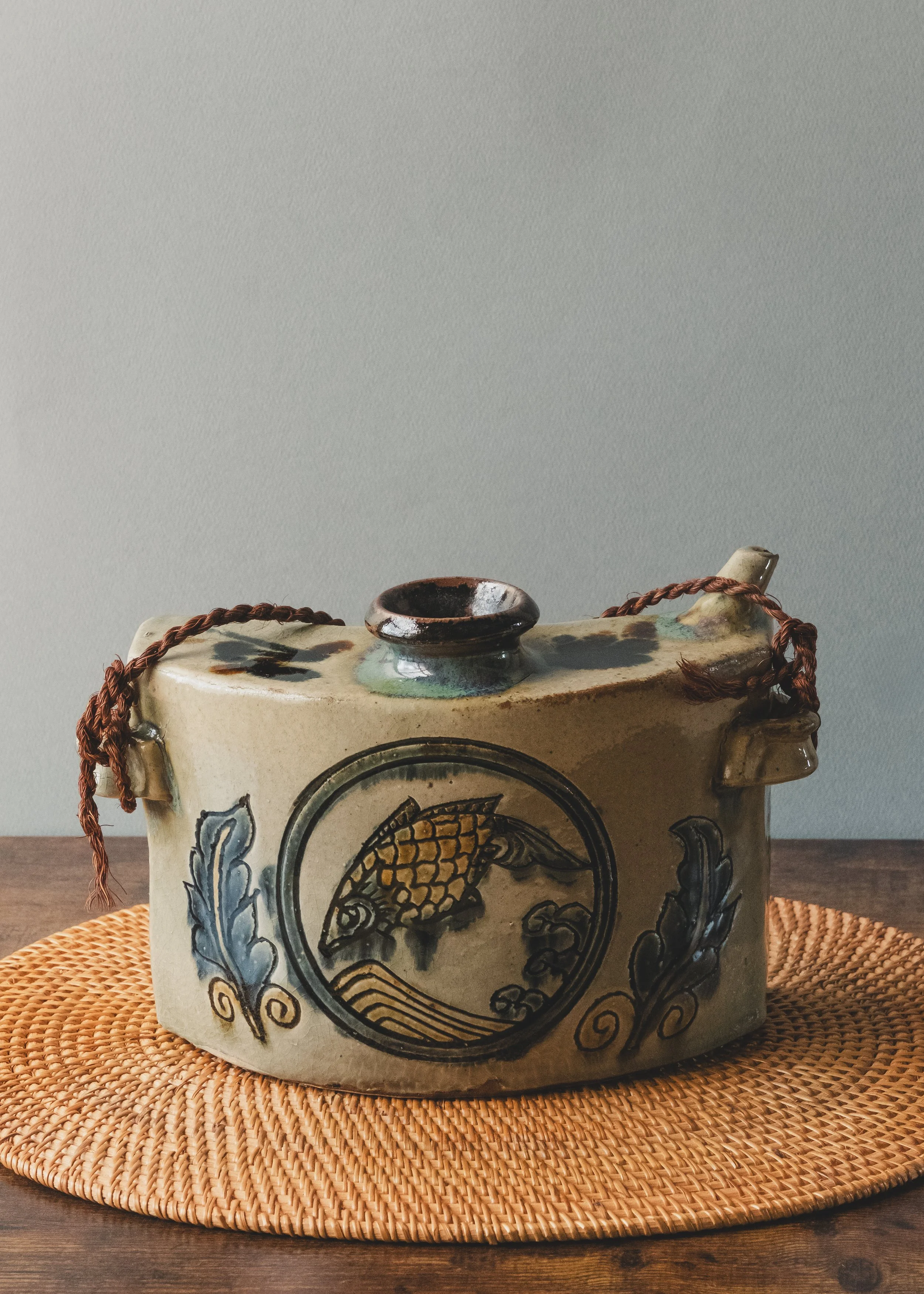
This specimen represents a fascinating metamorphosis of Okinawan culture. While its silhouette mimics the "Dachibin"—a traditional, ergonomically curved portable flask for Awamori (Okinawan liquor)—its interior serves a completely different function: a Tsuchi-rei, or sacred clay bell.
In this object, the mundane joy of sharing spirits (liquor) is combined with the ancestral belief in the purifying power of sound. To own this piece is to hold a "Sanctuary for the Ears," designed not for hydration, but to ward off silence and bring prosperity through its deep, earthy resonance.
【The Architecture】
The Geometry of the Hip and the Moon.
Standing at an impressive length of 25cm, this artifact faithfully reproduces the crescent-moon shape essential to original 18th-century Ryukyu craftsmanship. This curve was not merely aesthetic; it was an ergonomic necessity, designed to sit flush against the carrier's body while working in the fields or traveling on horseback.
The specimen features "Mimi" (sturdy side loops) through which a thick, dark brown cord is threaded, further reinforcing its identity as a vessel meant for a life in motion. The asymmetry of the spouts—a large trumpet-like opening for filling and a narrow spout for pouring—is executed with obsessive detail, transforming what could be a simple bell into a profound document of ergonomic history.
【Iconography: The Laughing Fish】
The resilience of Mingei and the fertility of the Sea.
Dominated by the "Gyomon" (Fish Motif), the face of this sentinel captures the heart of Tsuboya-yaki (pottery). These fish, incised with swift, unhesitating strokes known as Senbori, represent fertility, prosperity, and the life-giving ocean surrounding Okinawa.
Following the artistic lineage established by the "Tsuboya Trio"—legendary anonymous masters including the first National Living Treasure of the region—these fish possess a distinctively human-like, almost laughing expression. This "Laughing Fish" represents a visual resilience, the ability of a culture to maintain its warmth and humor even after surviving profound historical hardships.
【Material Integrity】
The "Sancai" Palette of Okinawa.
The surface of the archive entry is a laboratory of elemental interaction. The glaze work utilizes a traditional "Sancai" (three-color) system:
Amber (Ameyu): The iron-rich, earthy brown adorning the rims.
Emerald Green (Ryokuyu): A vibrant splash representing the coastal waters of Saga and Okinawa.
Cobalt Blue (Gosu): The indigo rhythm etched into the rhythmic wave patterns.
The contrast produced by the Senbori (incised lines) allows the glazes to pool in the grooves, creating a tactile depth that changes as light shifts across its surface. It is the raw logic of Mingei—where the beauty of the glaze is governed by the scars in the clay.
【Presence】
A grounded guardian for the home.
Due to its large scale, this is not a personal amulet to be carried, but a "Ceramic Sentinel" meant for the focus of a sacred space—a bookshelf, an altar, or the center of a contemporary gathering table. Its sound is profound and grounding, intended to be rung only on special occasions to purify the home's air and recall the lush, humid wind of a subtropical landscape. It serves as an immovable bridge between the physical celebration of liquor and the spiritual celebration of protection.
【 The Concept 】
Ancestral prayer translated into modern ceramic.
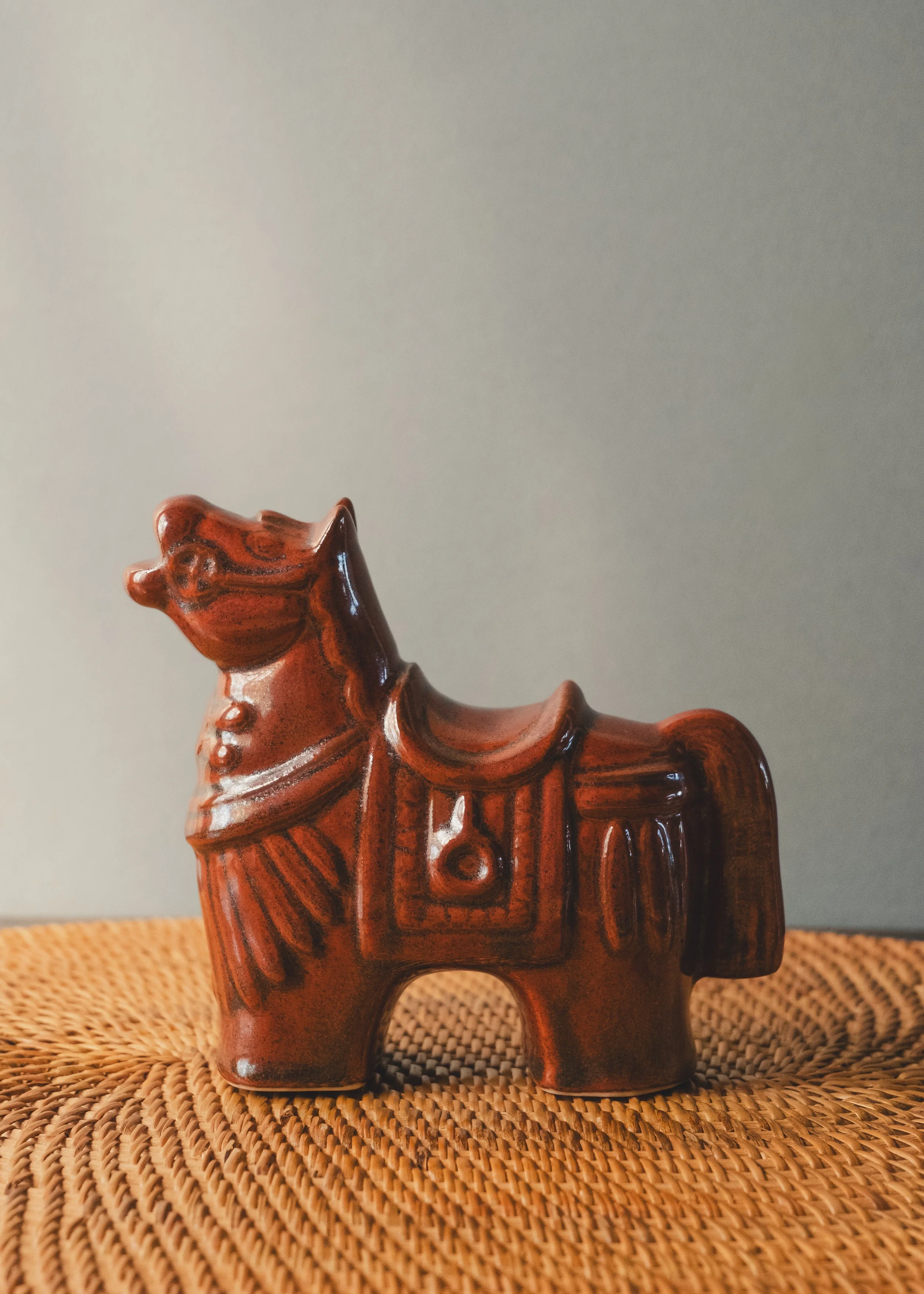
This object captures a specific moment in Japanese design history—the "Showa Modern" era of the 1970s. While it takes the form of a horse, it is not a realistic depiction of an animal. It is a sculptural translation of Japan's ancient "Miharukoma" (wooden votive horses) and "Haniwa" (burial clay figures), re-imagined through the lens of mid-century pottery techniques.
Coated in a deep, lustrous "Ameyu" (Amber Glaze), this anonymous work does not scream for attention. Instead, it offers a warm, rounded silence that serves as a nostalgic bridge between the folklore of the past and the modern living space.
【 Material Integrity 】
The alchemy of Iron and Kiln.
The visual gravity of this piece comes from its glaze. "Ameyu," a traditional Japanese caramel-colored glaze rich in iron oxide, is fired in an oxygen-rich kiln to produce this distinct, glossy warmth. Note the accumulation of darker glaze in the grooves of the saddle and mane. These "pools" of color create a natural contrast, highlighting the depth of the sculpture without the need for artificial painting.
Despite its solid, grounded appearance, the object is surprisingly light (208g). This is due to the "Slip Casting" (Deisho-ikomi) technique—a specialized method developed in the historic kilns of Seto (Aichi Prefecture), where liquid clay is poured into molds to create a hollow, durable shell. It is a testament to the industrial craft of post-war Japan.
【 The Architecture 】
Primitive geometry.
The silhouette rejects sharp realism in favor of a primitive, geometric charm. The legs are thick pillars, providing unwavering stability. The mouth is slightly open, and the head is tilted upward—a posture known in Feng Shui and Japanese symbolism to represent "rising fortune" and "forward momentum."
The detailed relief of the saddle and the decorative bands across the chest (Munagai) and rump (Shirigai) serve as historical footprints, tracing back to the ceremonial decorations used on sacred horses in Shinto rituals.
【 Presence 】
A warm anchor for the cold desk.
This Amber Nomad is designed for the focused home archive.
Standing at 15cm, it possesses the perfect scale to sit on a stack of books, a mid-century sideboard, or next to a computer monitor. The amber color harmonizes beautifully with vintage teak or walnut furniture, typical of the Japandi style.
While originally intended as a talisman for protection and family prosperity, today it functions as a "Guardians of Solitude," watching over your workspace with a quiet, optimistic gaze.