TWO HANDS, ONE PLANT
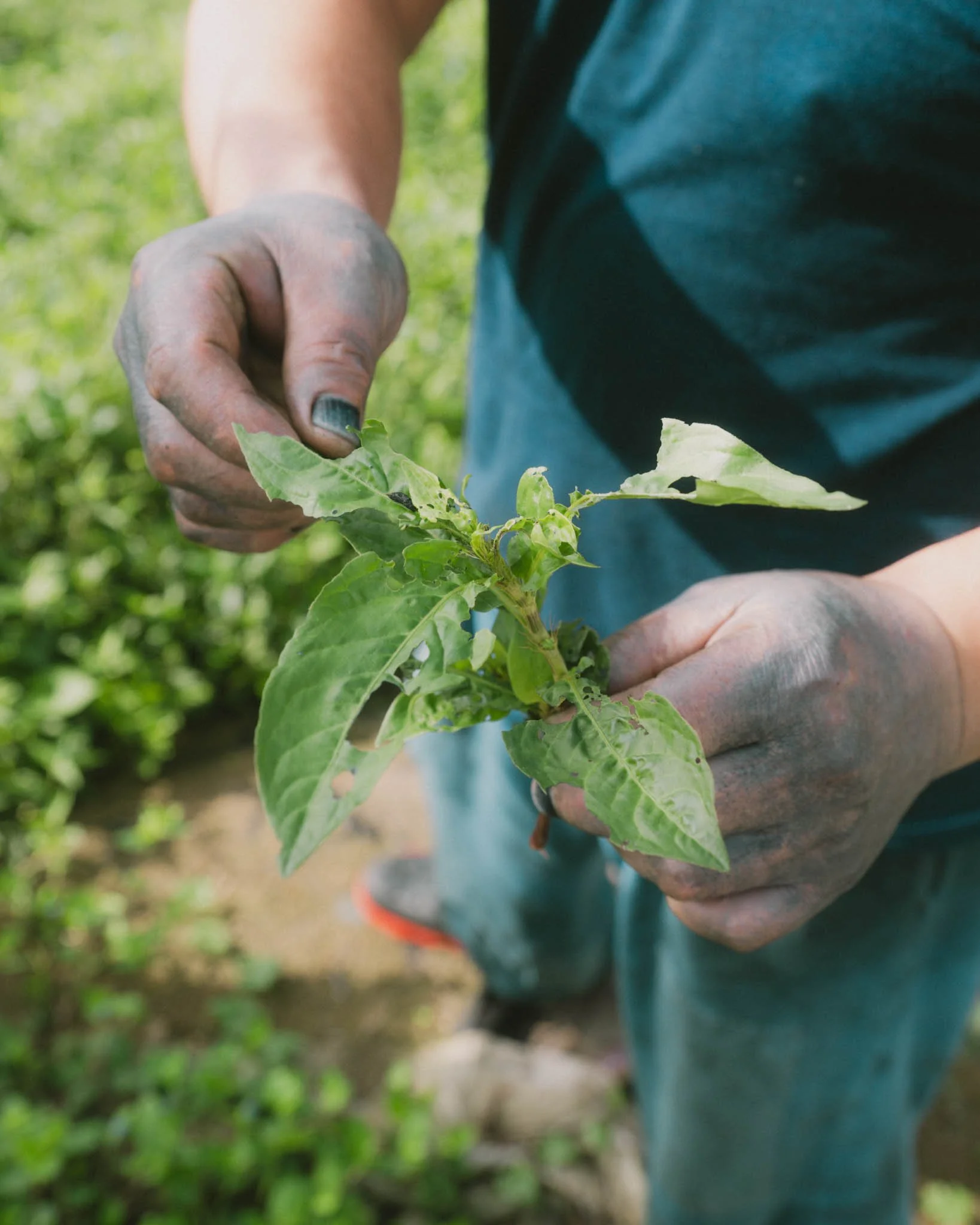
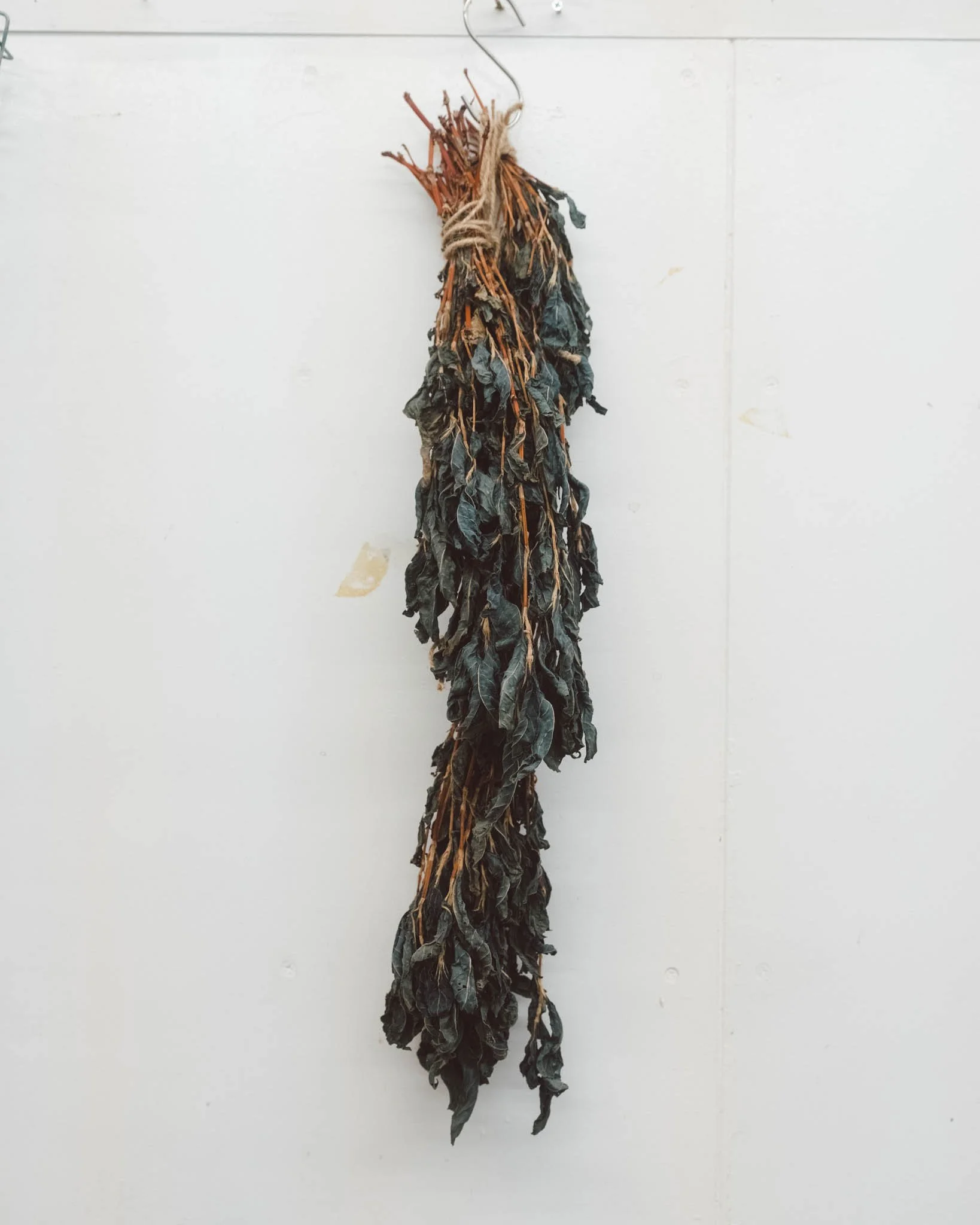
To understand what happens at this workshop, you have to start with the plant.
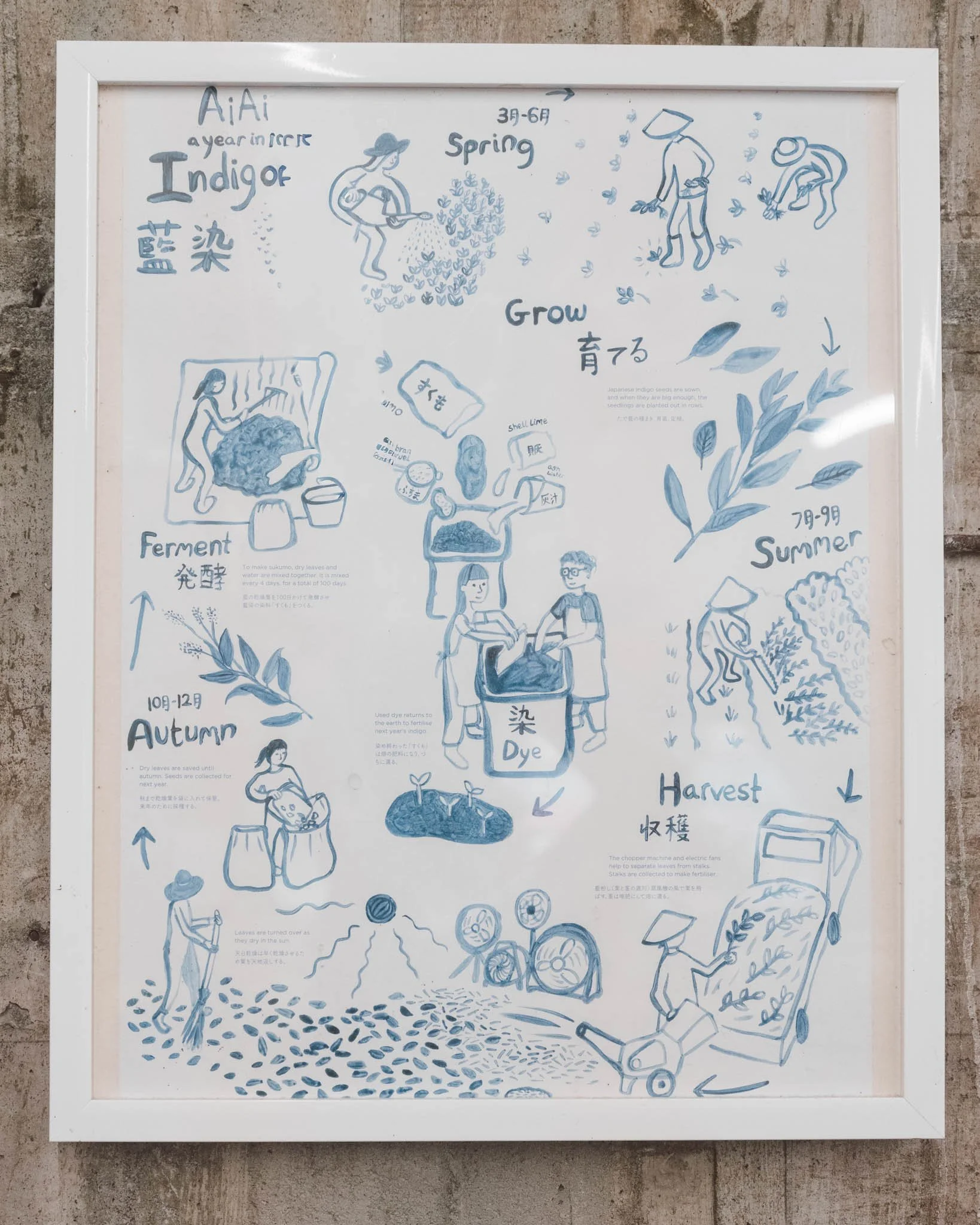
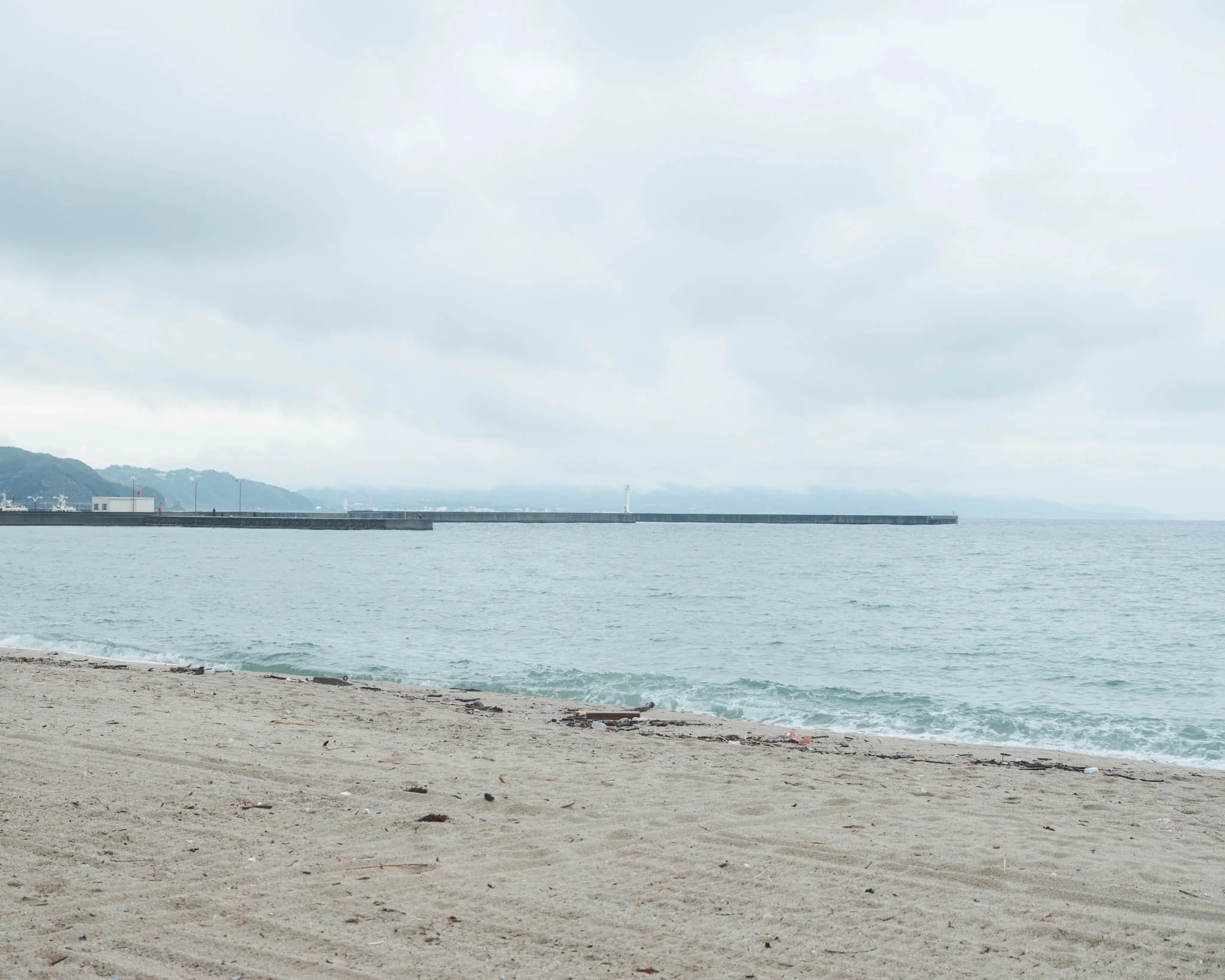
It is grown here on Awaji, a small island in the Seto Inland Sea. Seedlings go in each spring, tended through the summer, cut in late summer when the leaves are heavy with the compound that turns blue only in air. Nothing about this is symbolic. The plant is the whole business. From the same field, in the same year, will come both the dyed cloth hanging in one room, and the paintings hanging on the wall of the room across the yard. Two hands, one plant. That is the arrangement of the whole place.
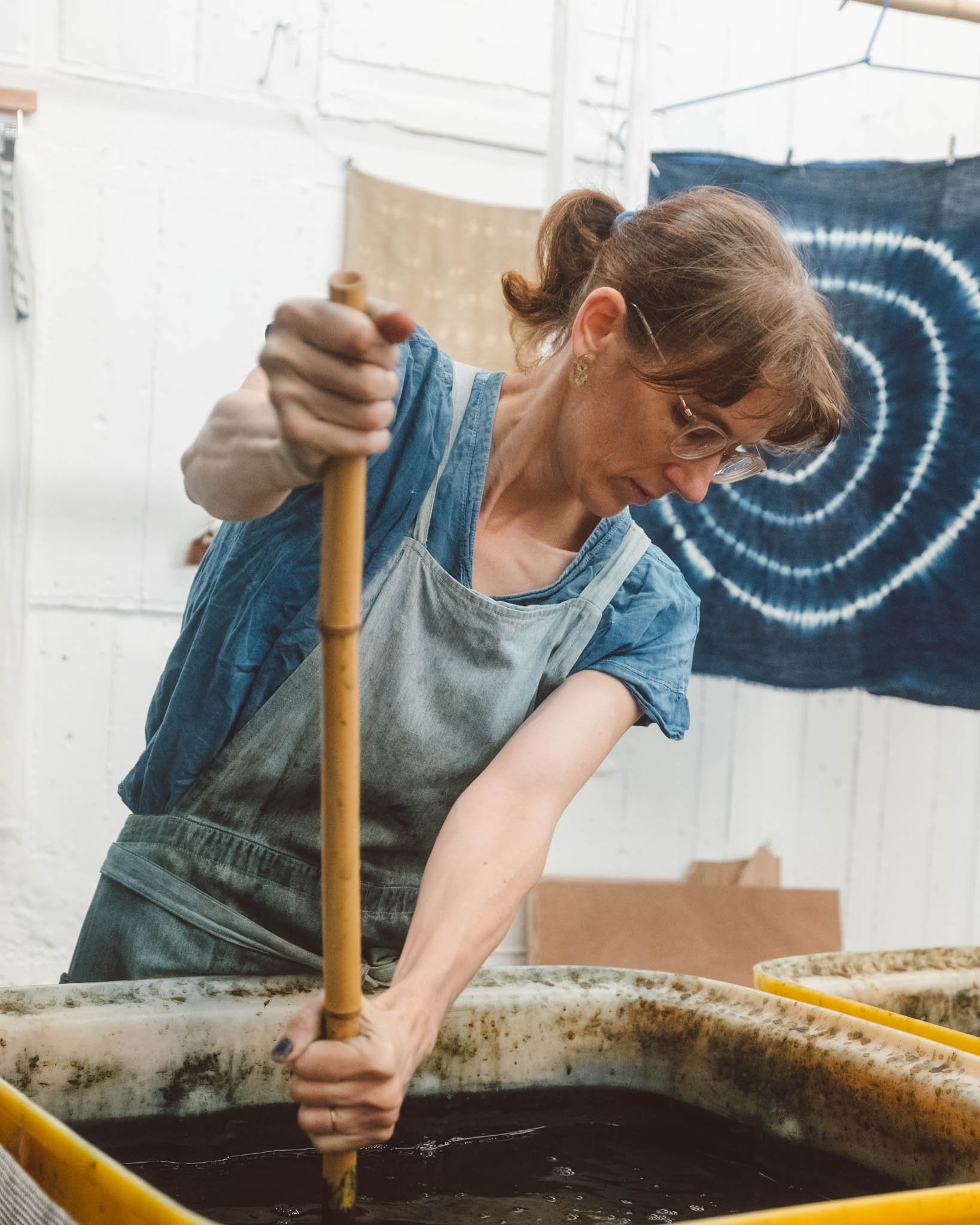
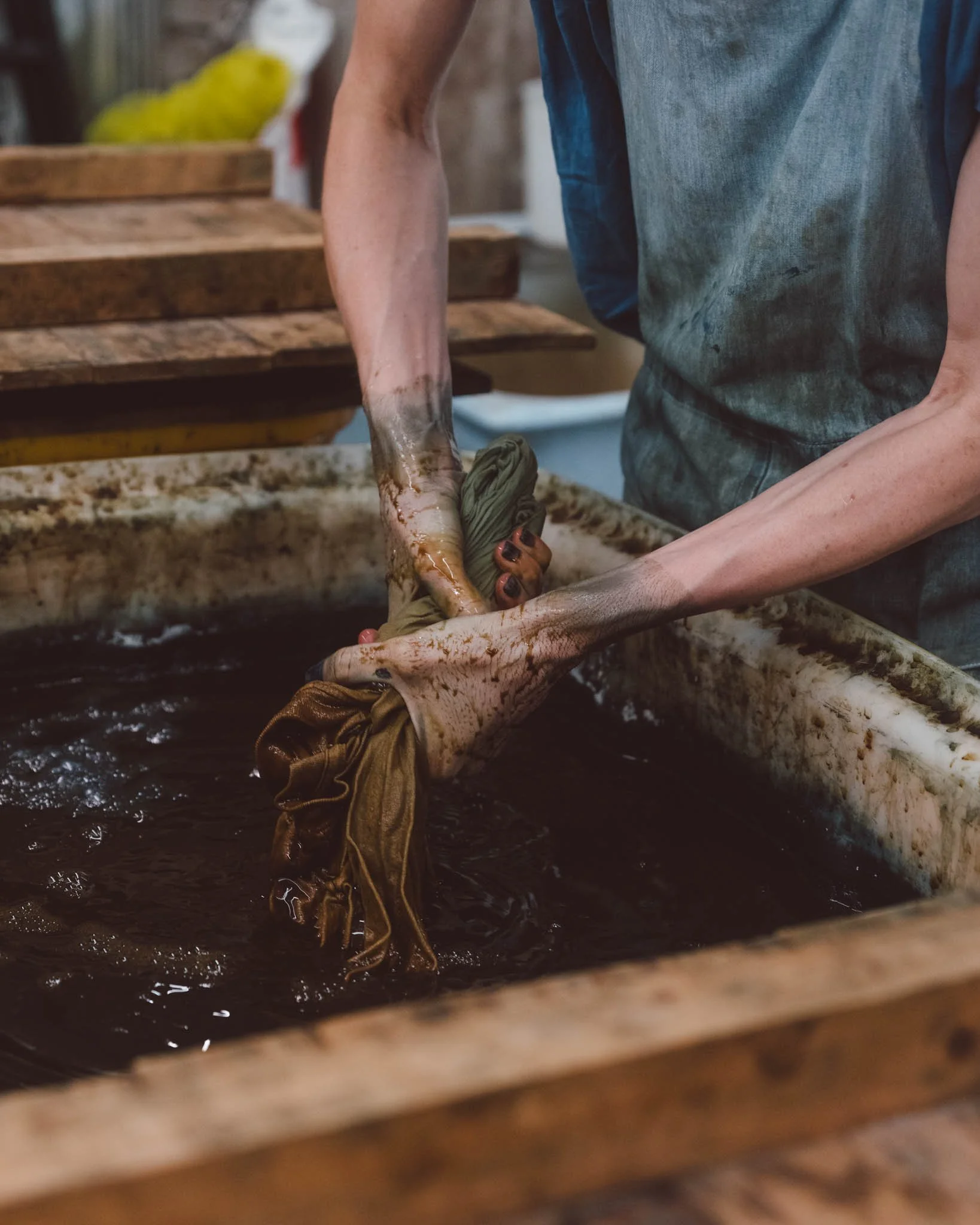
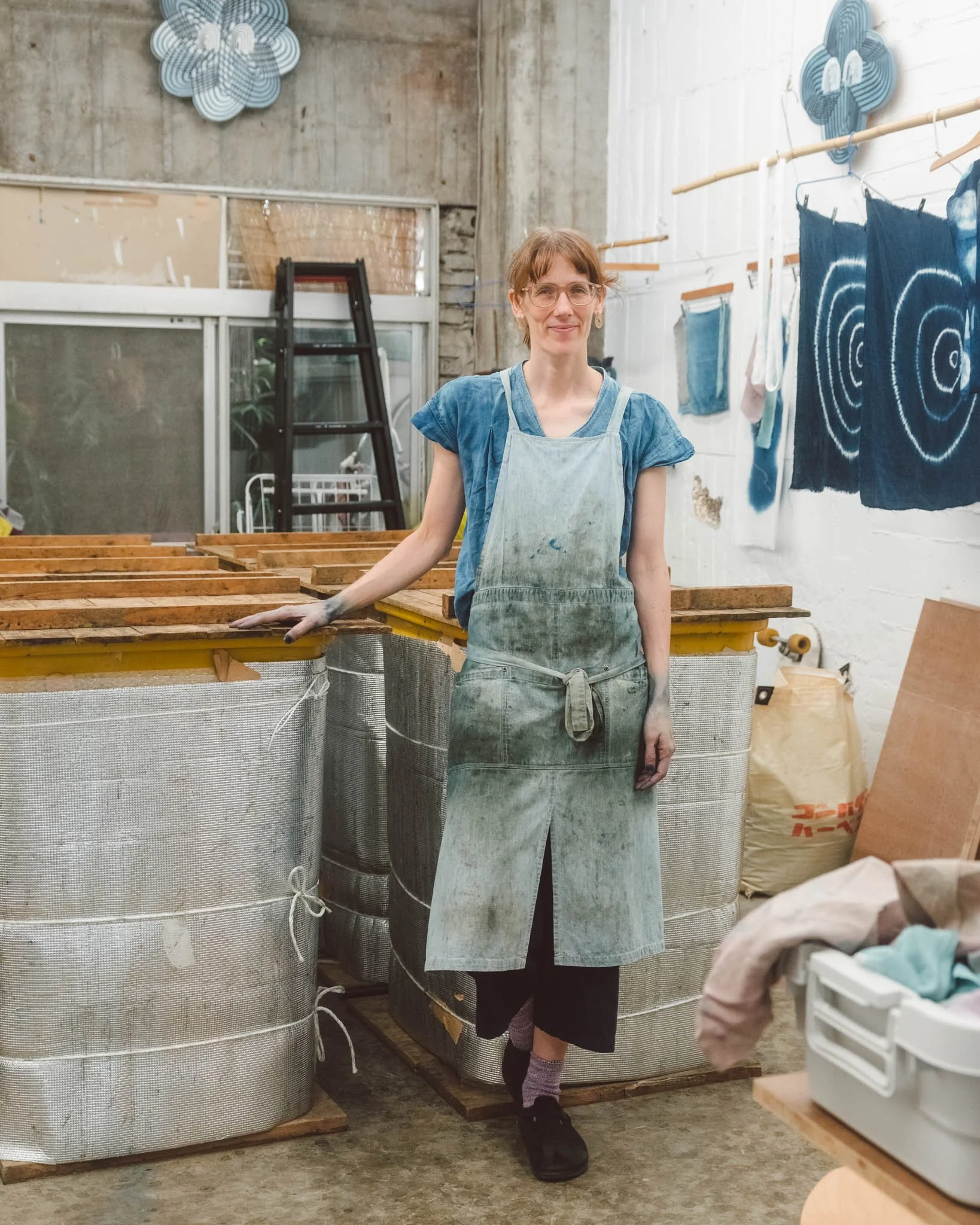
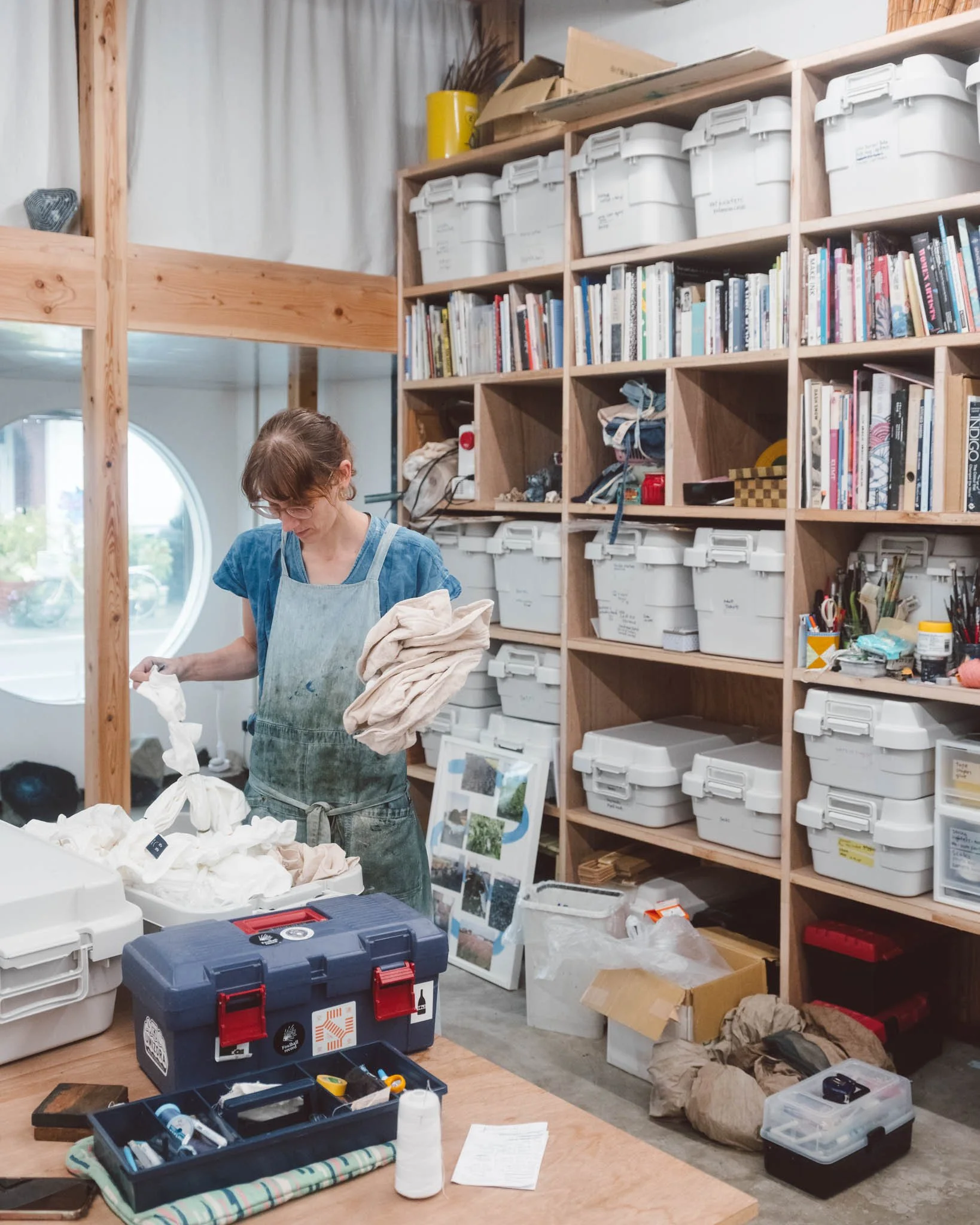
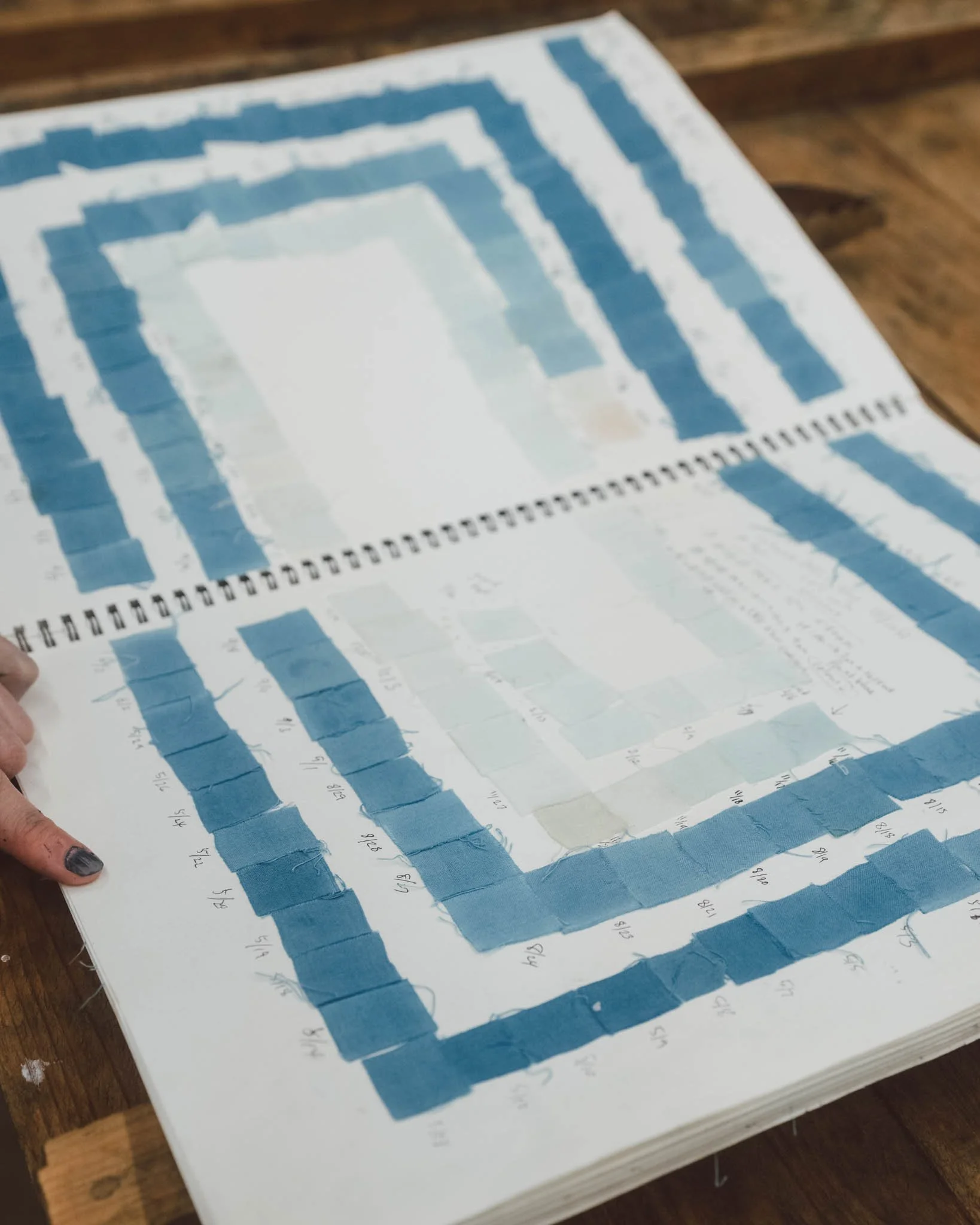
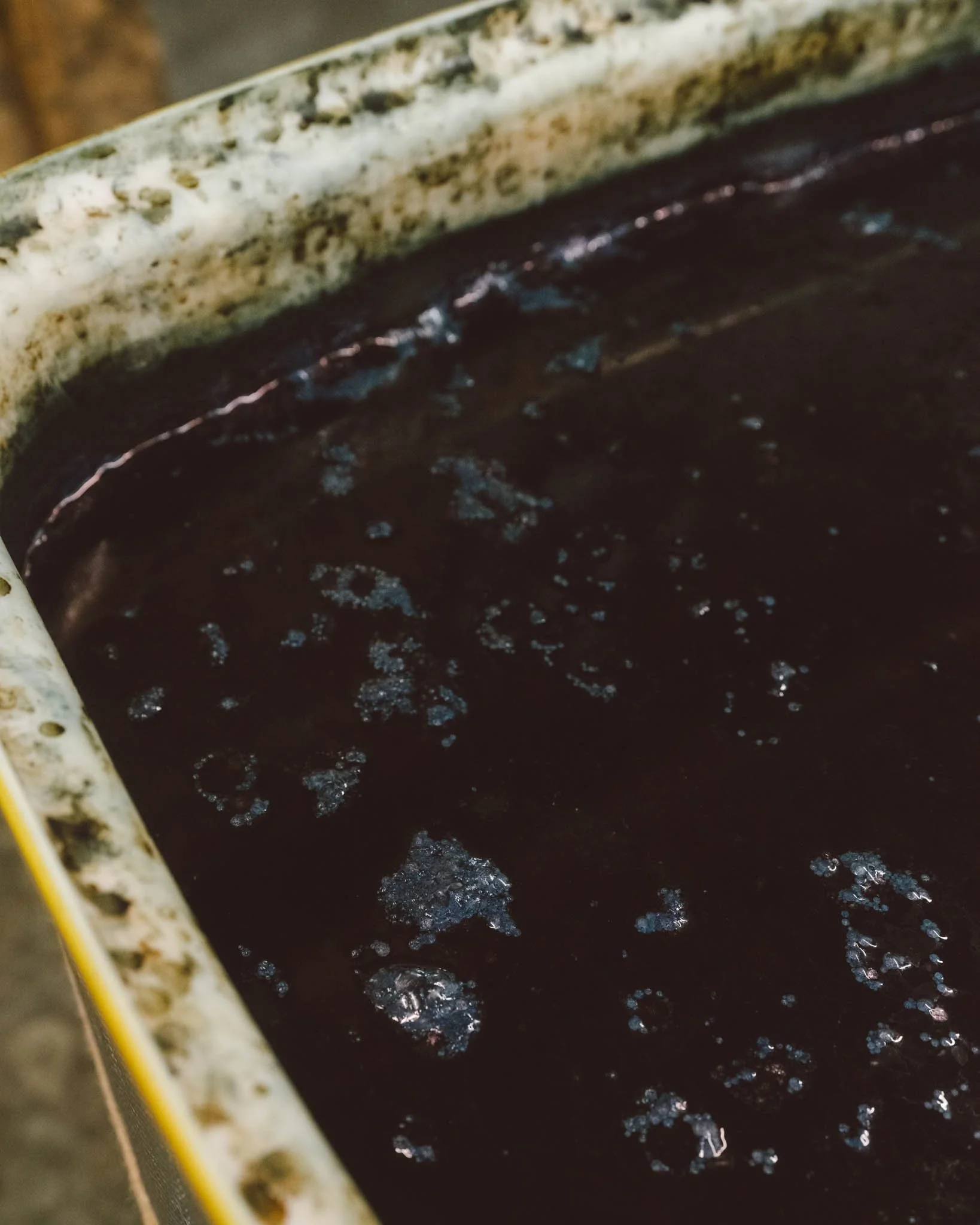
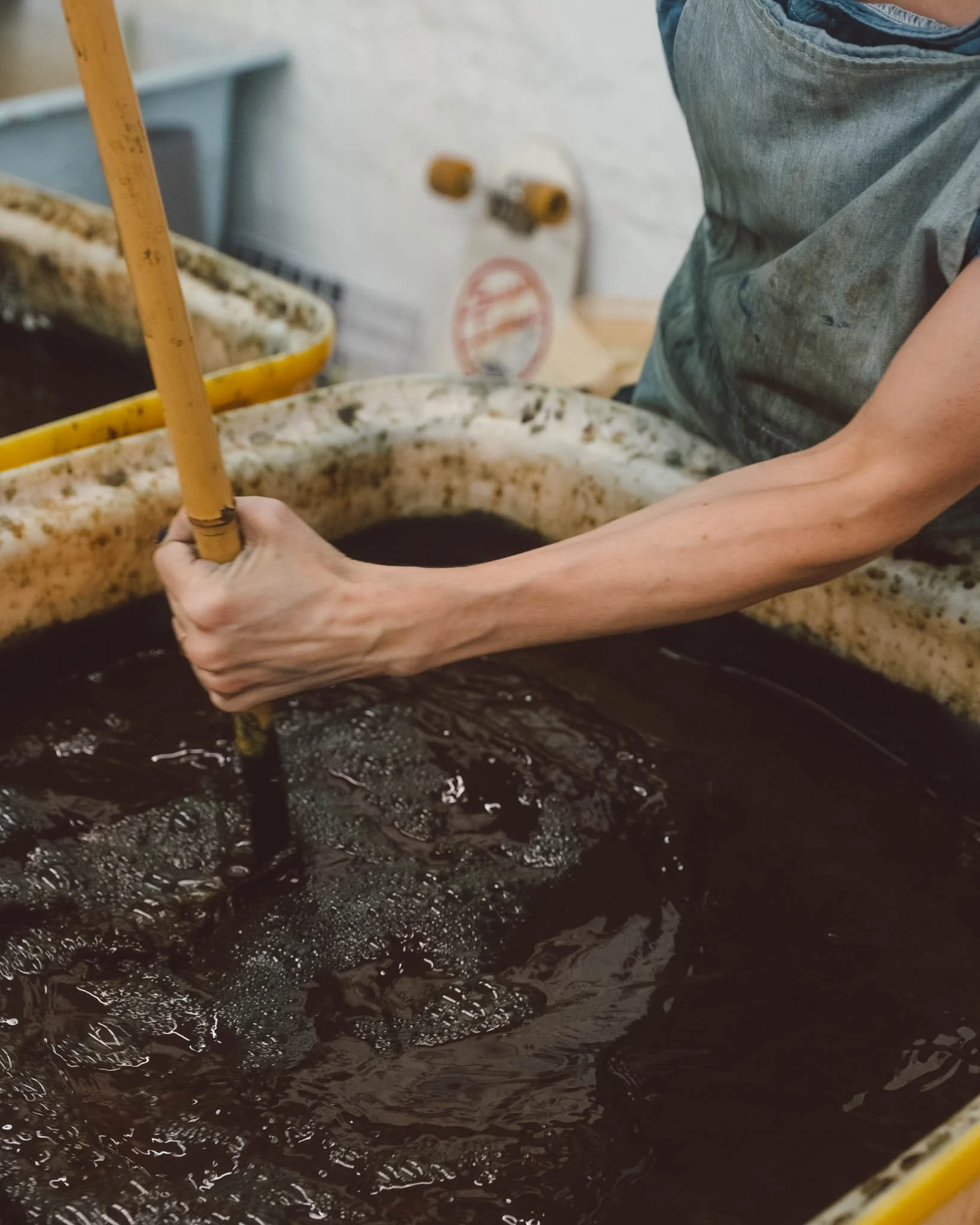
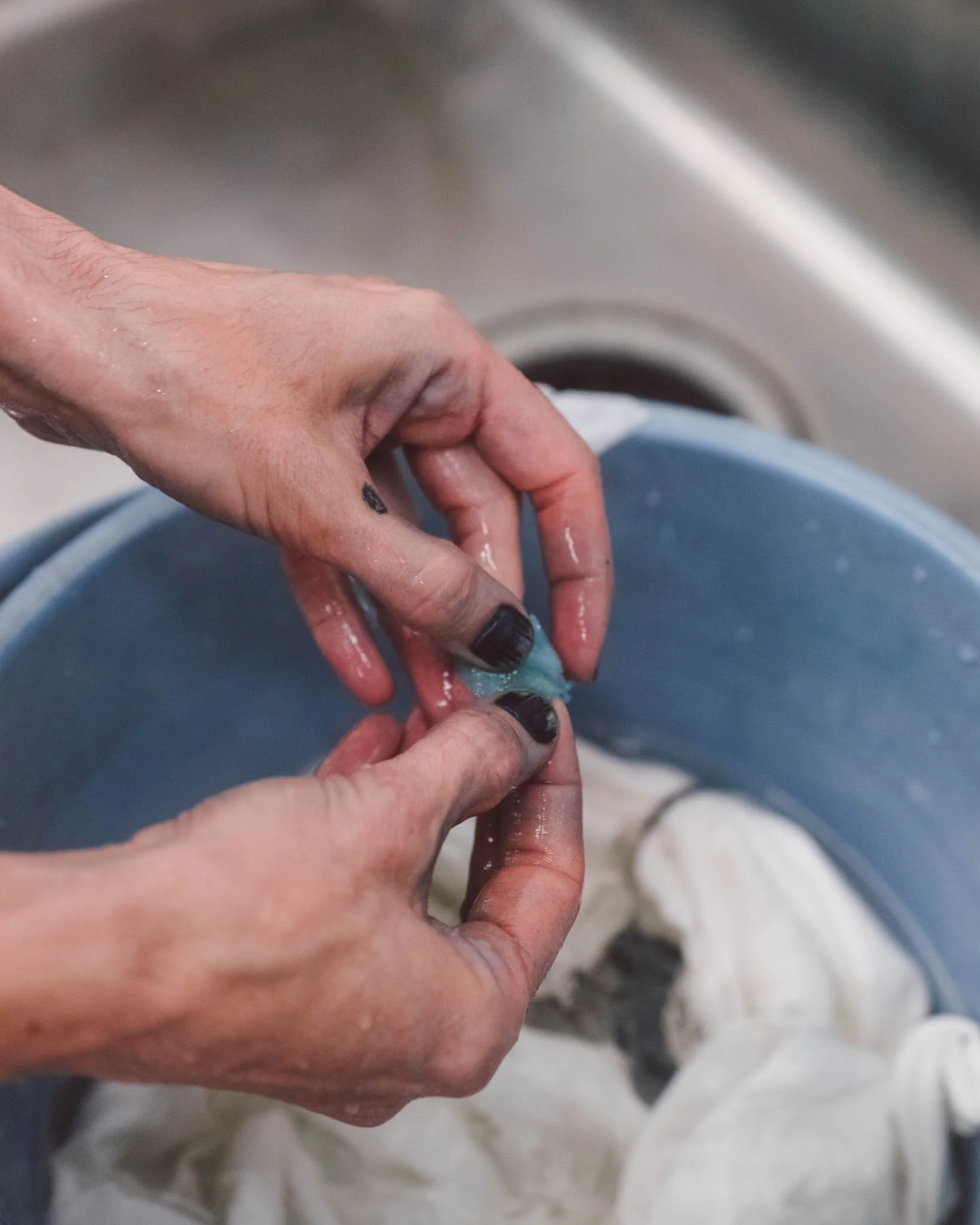
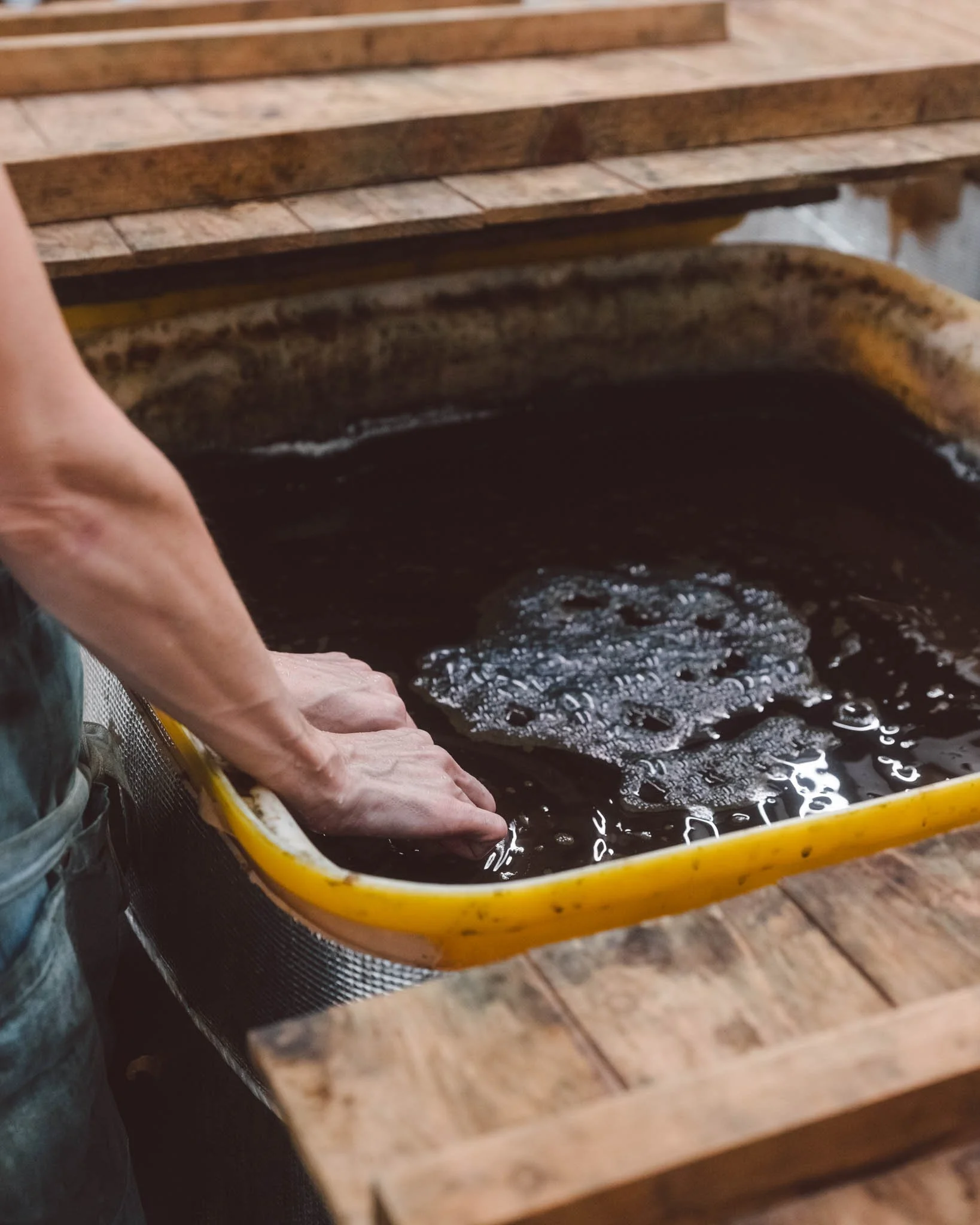
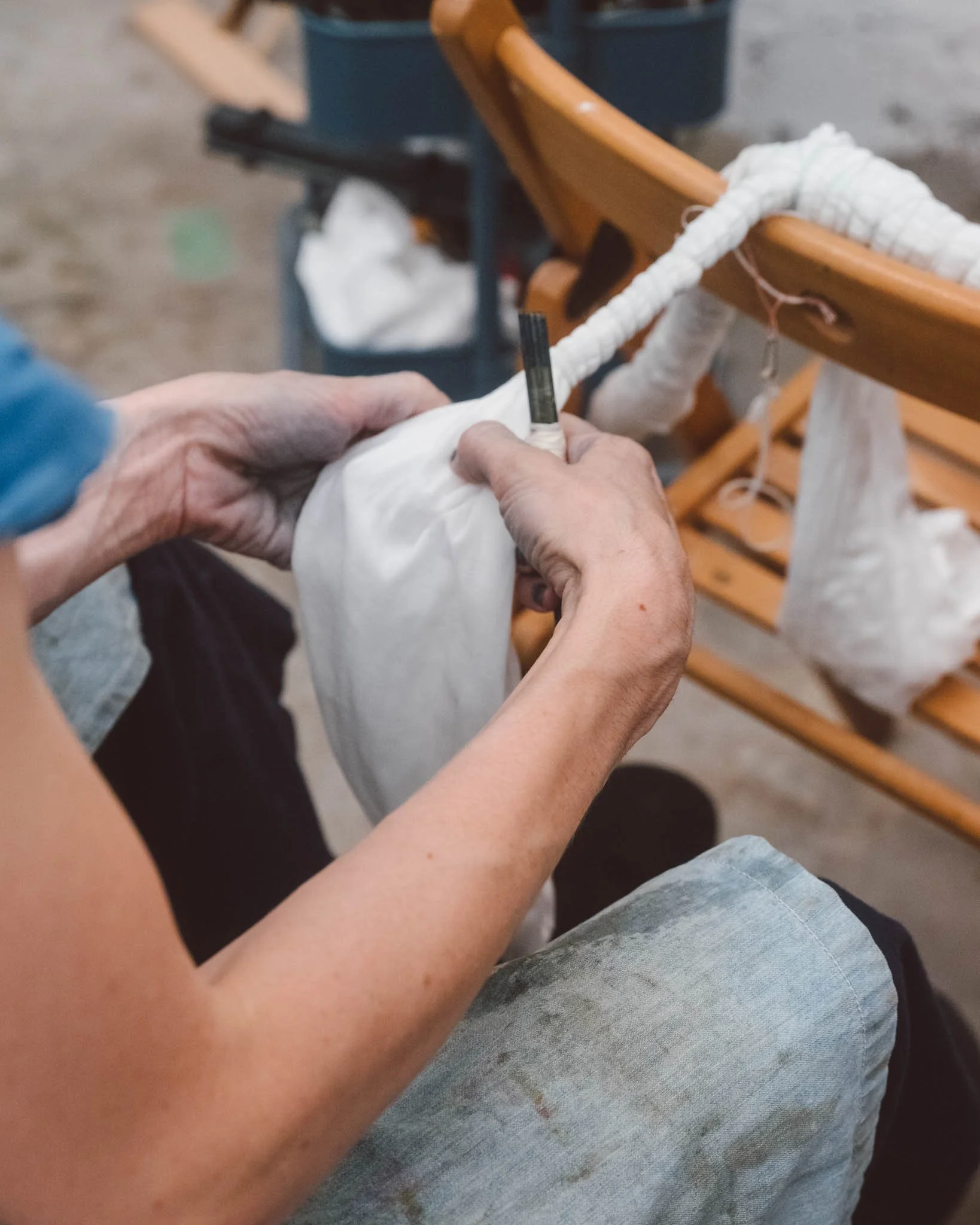
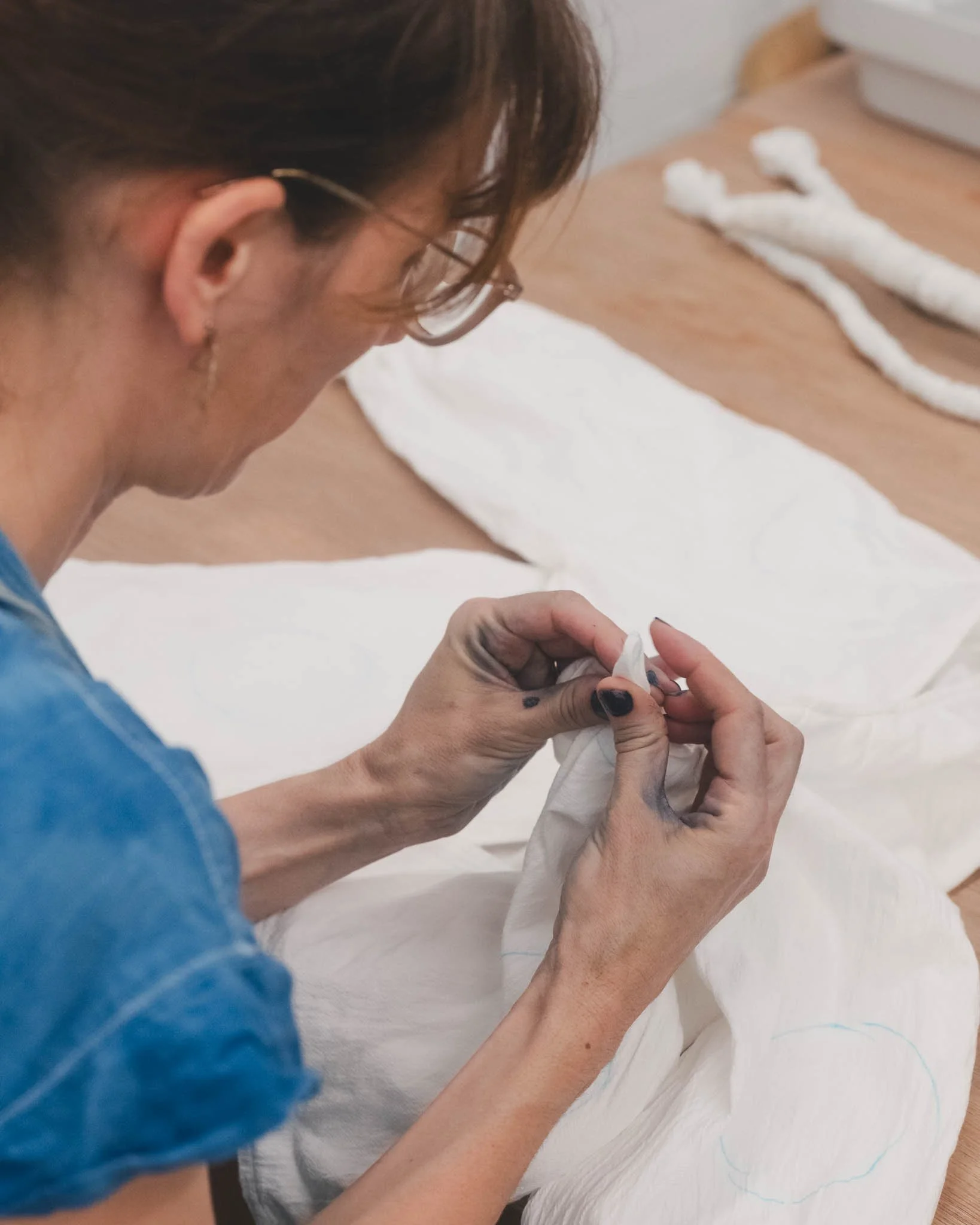
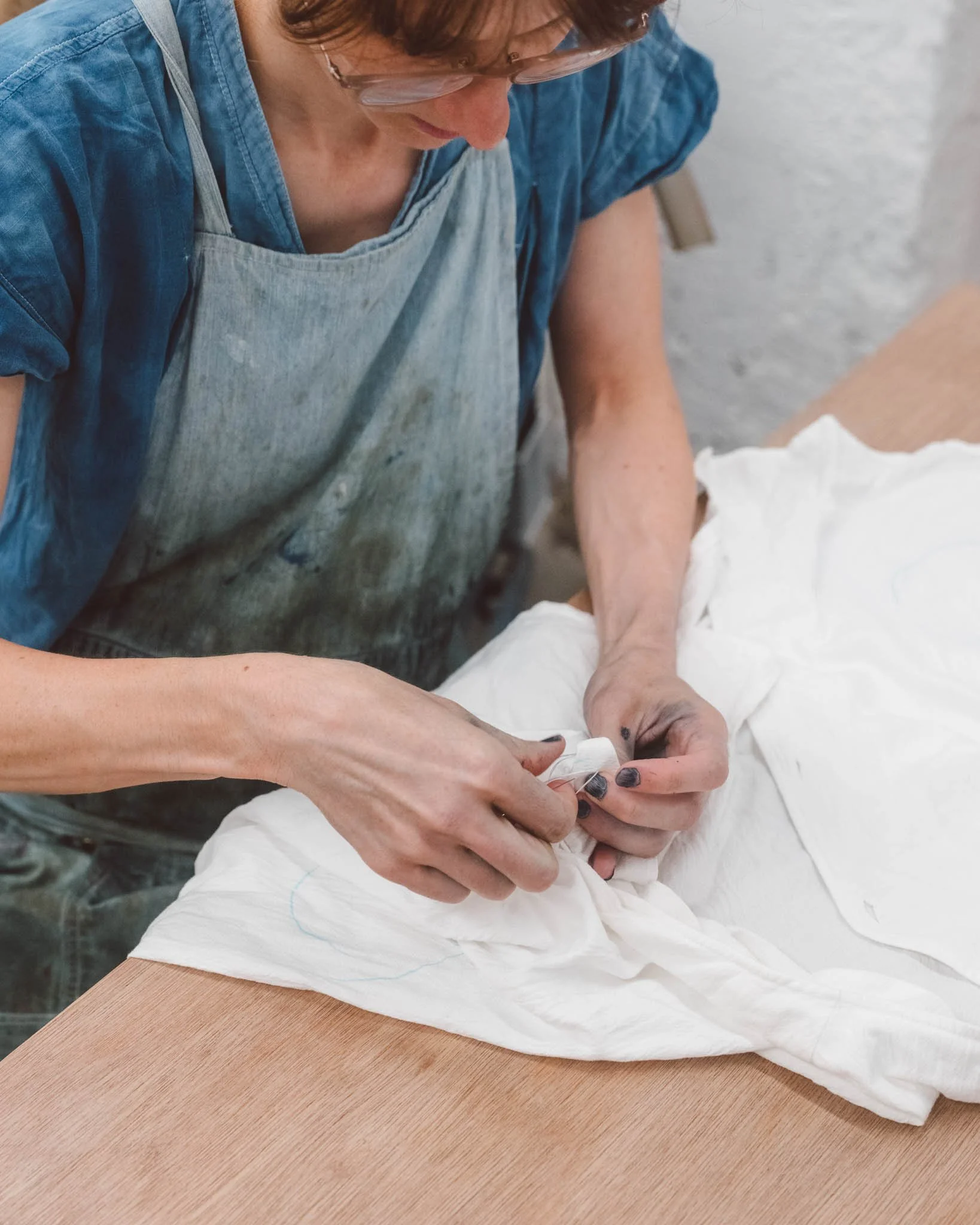
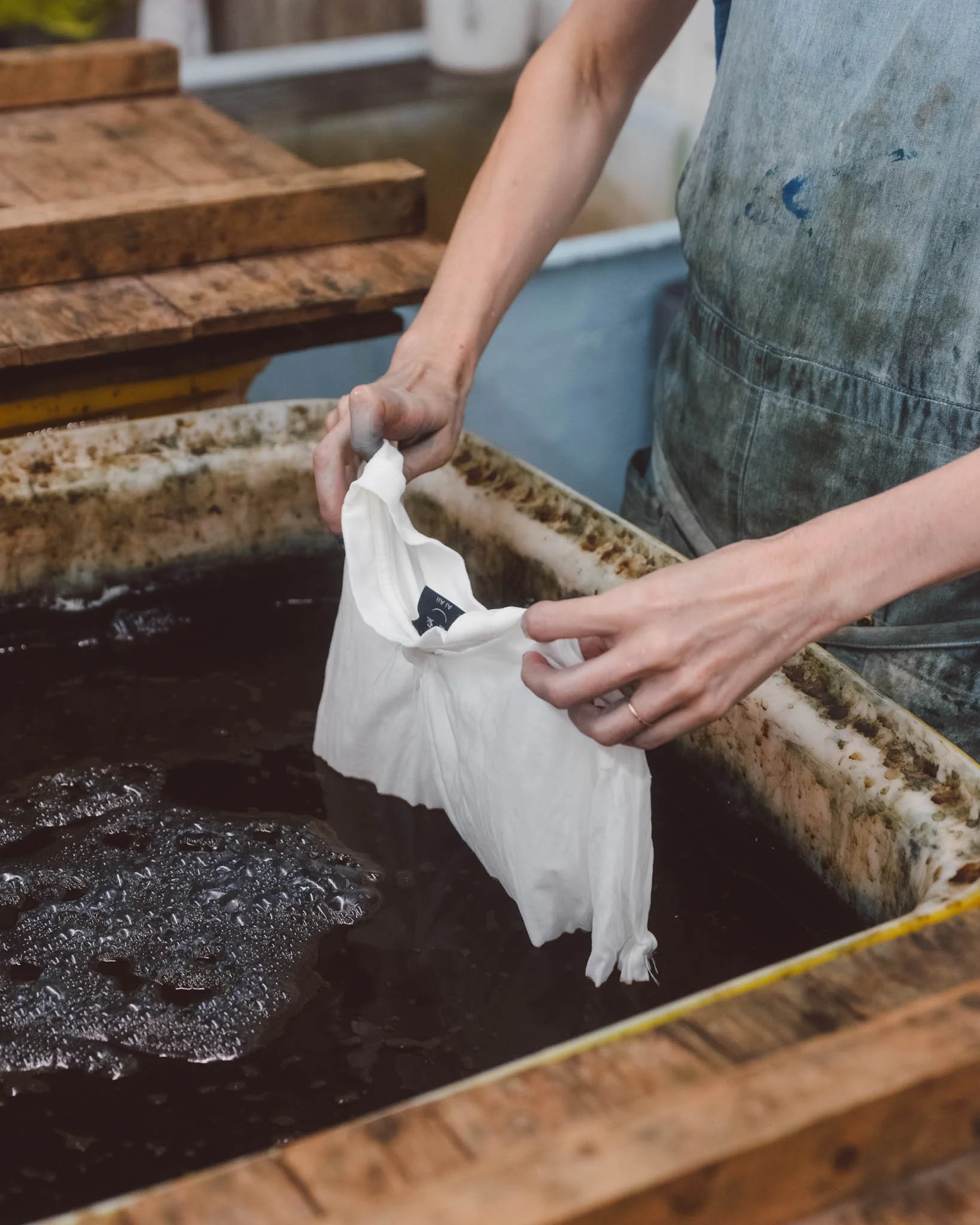
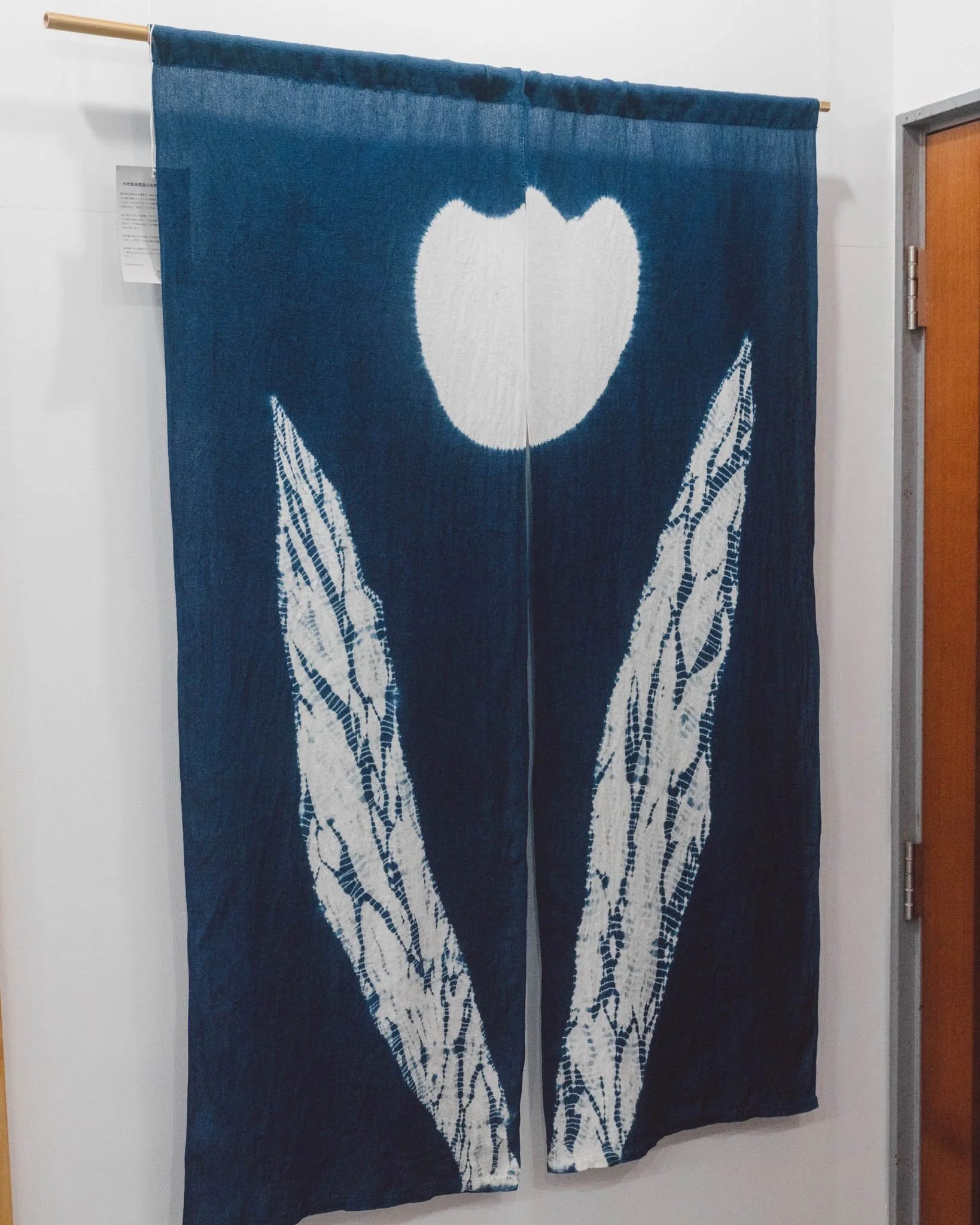
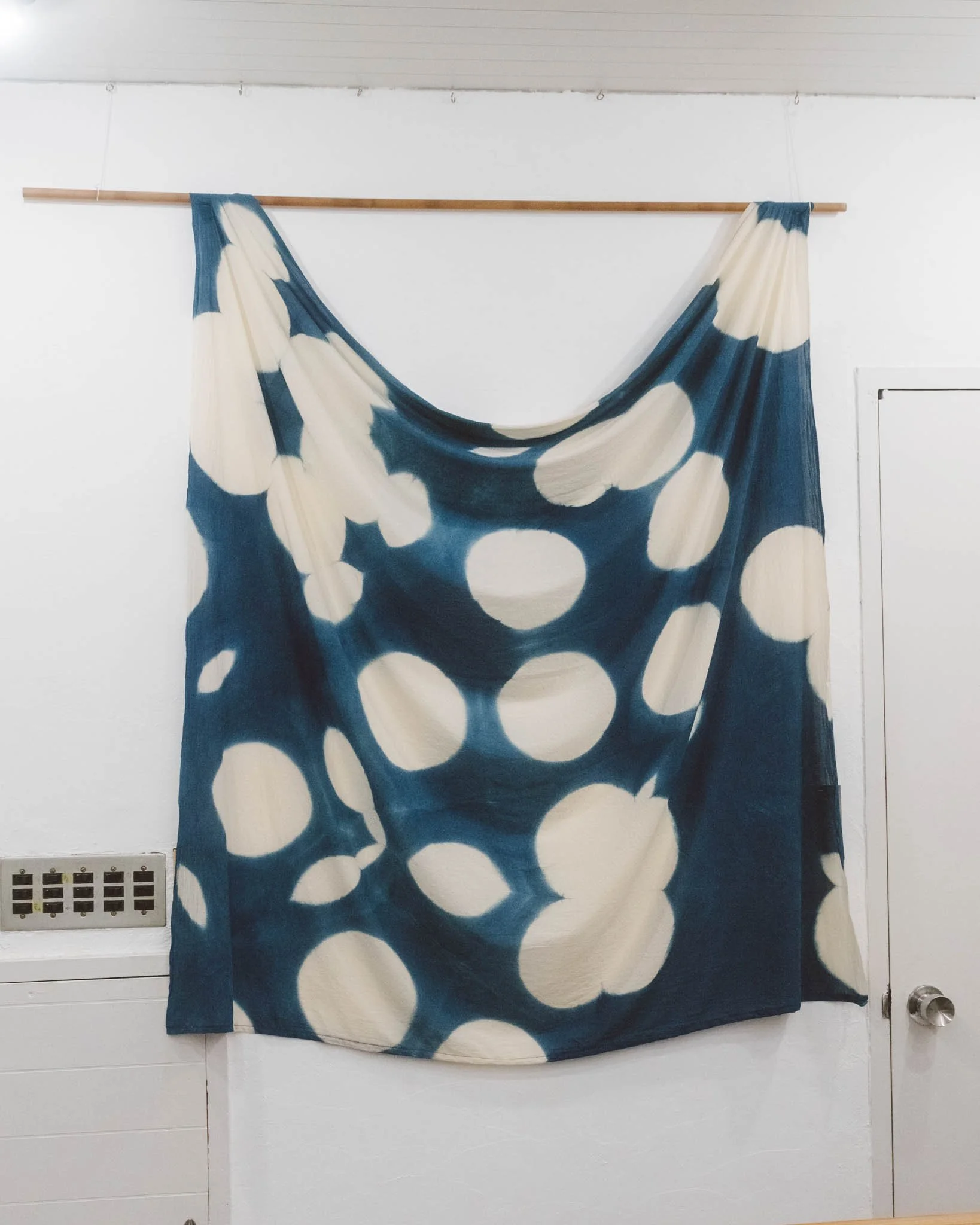
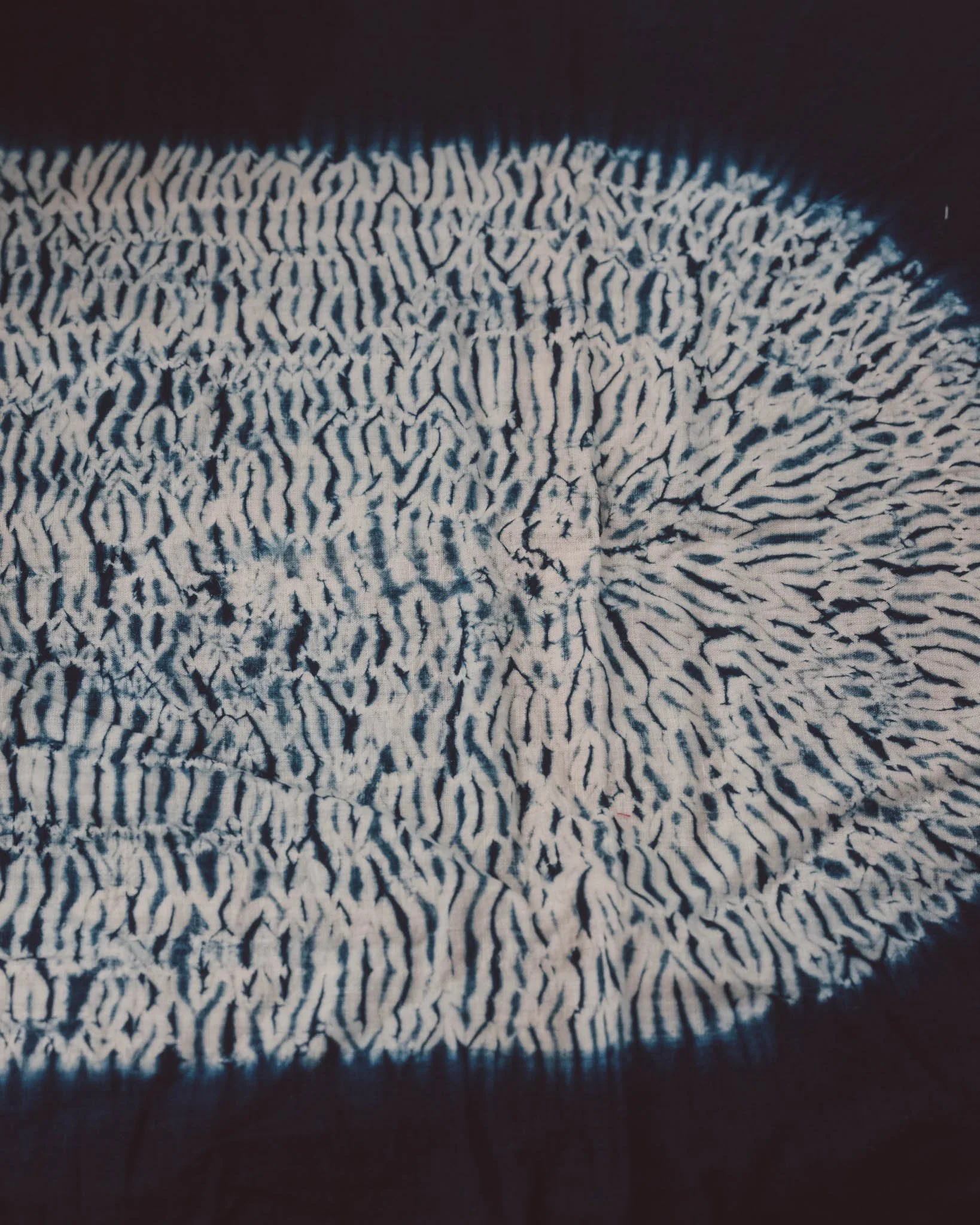
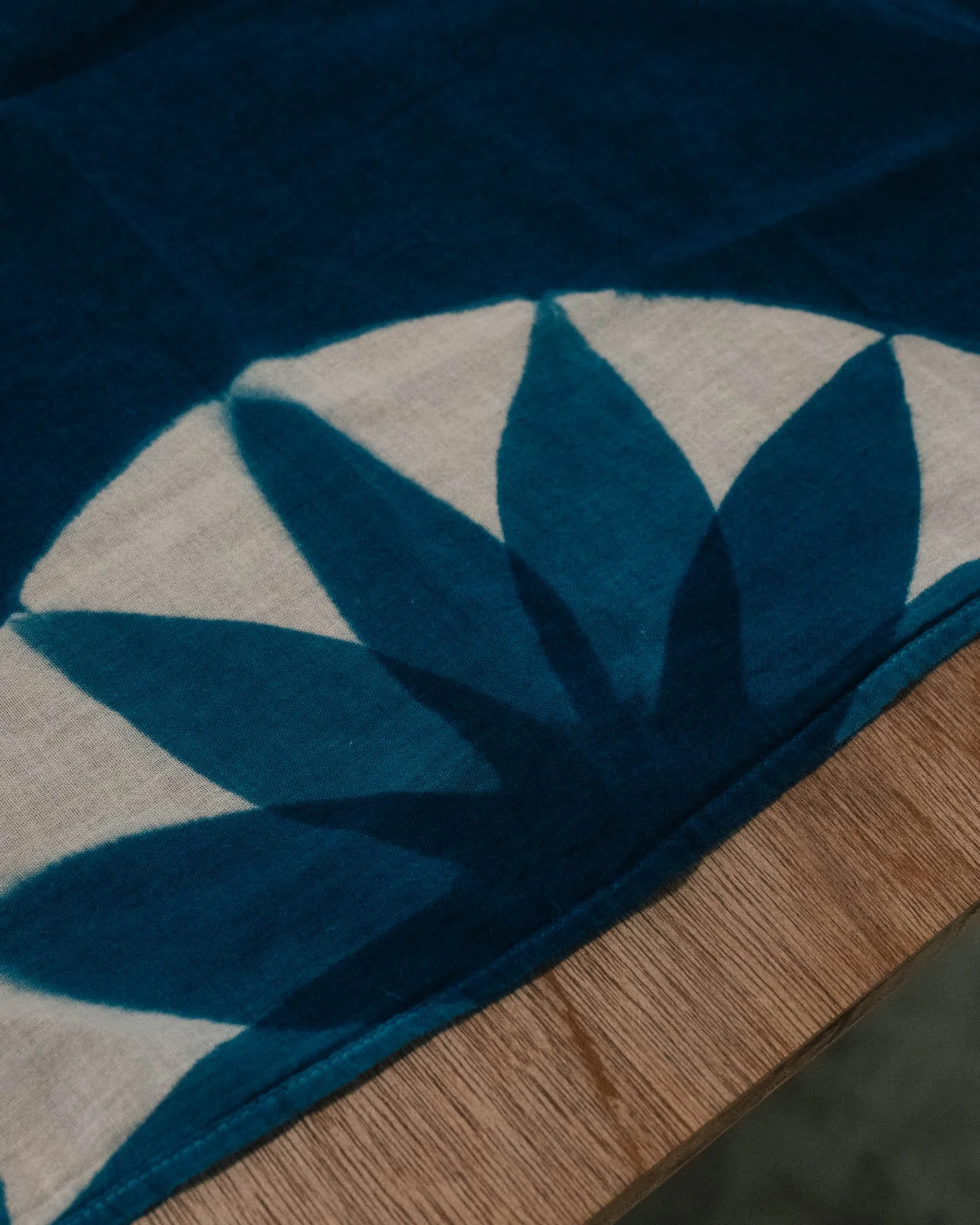
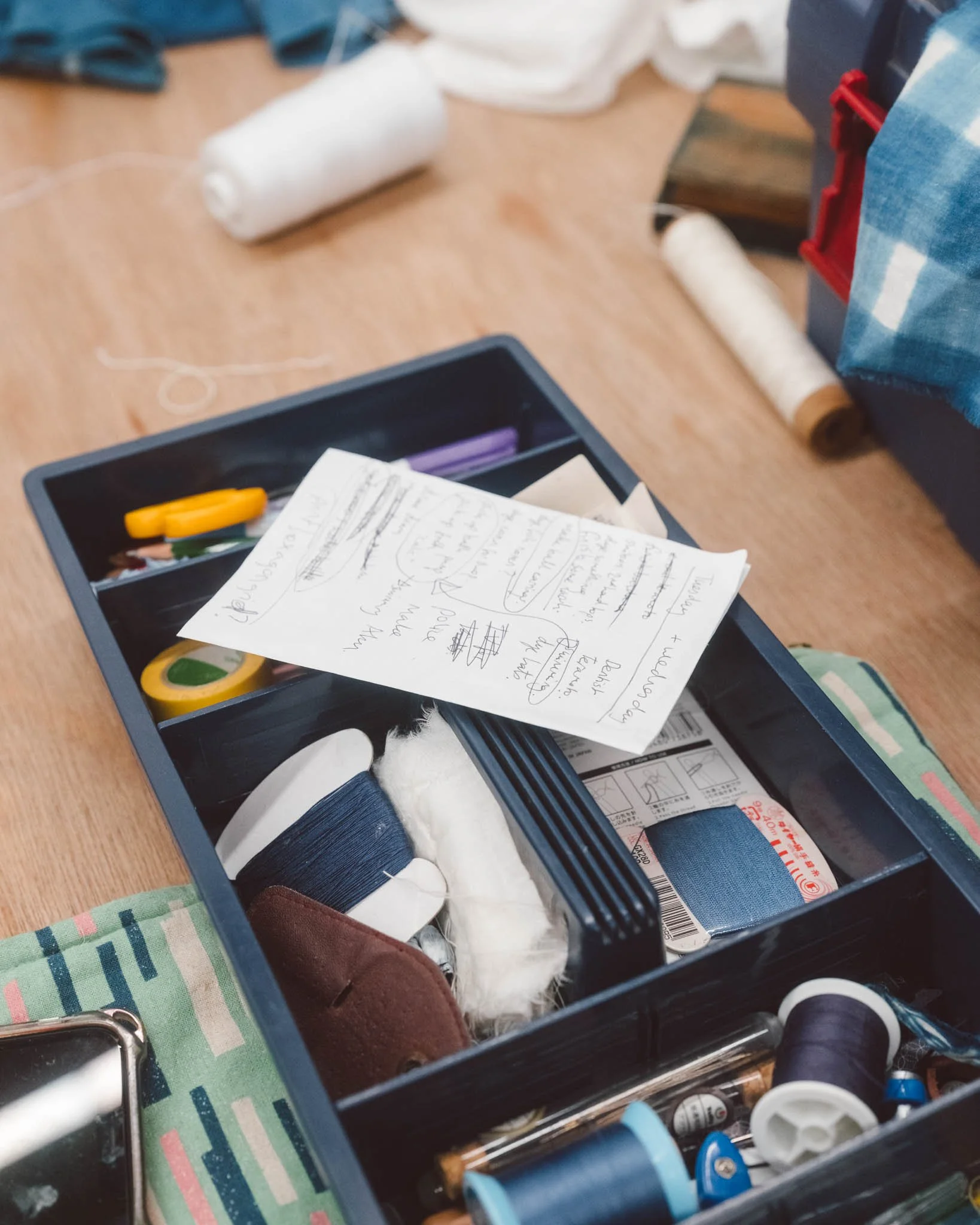
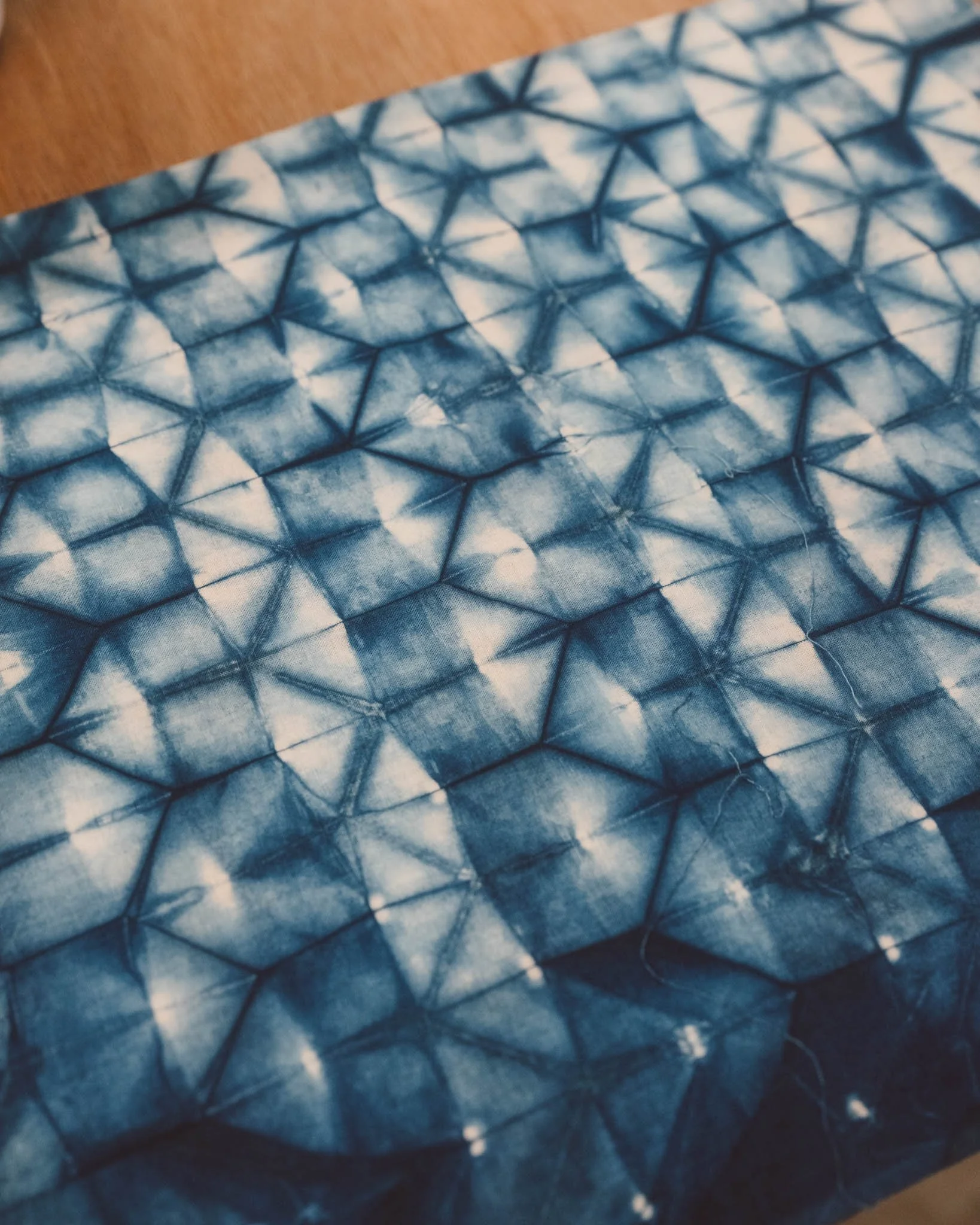
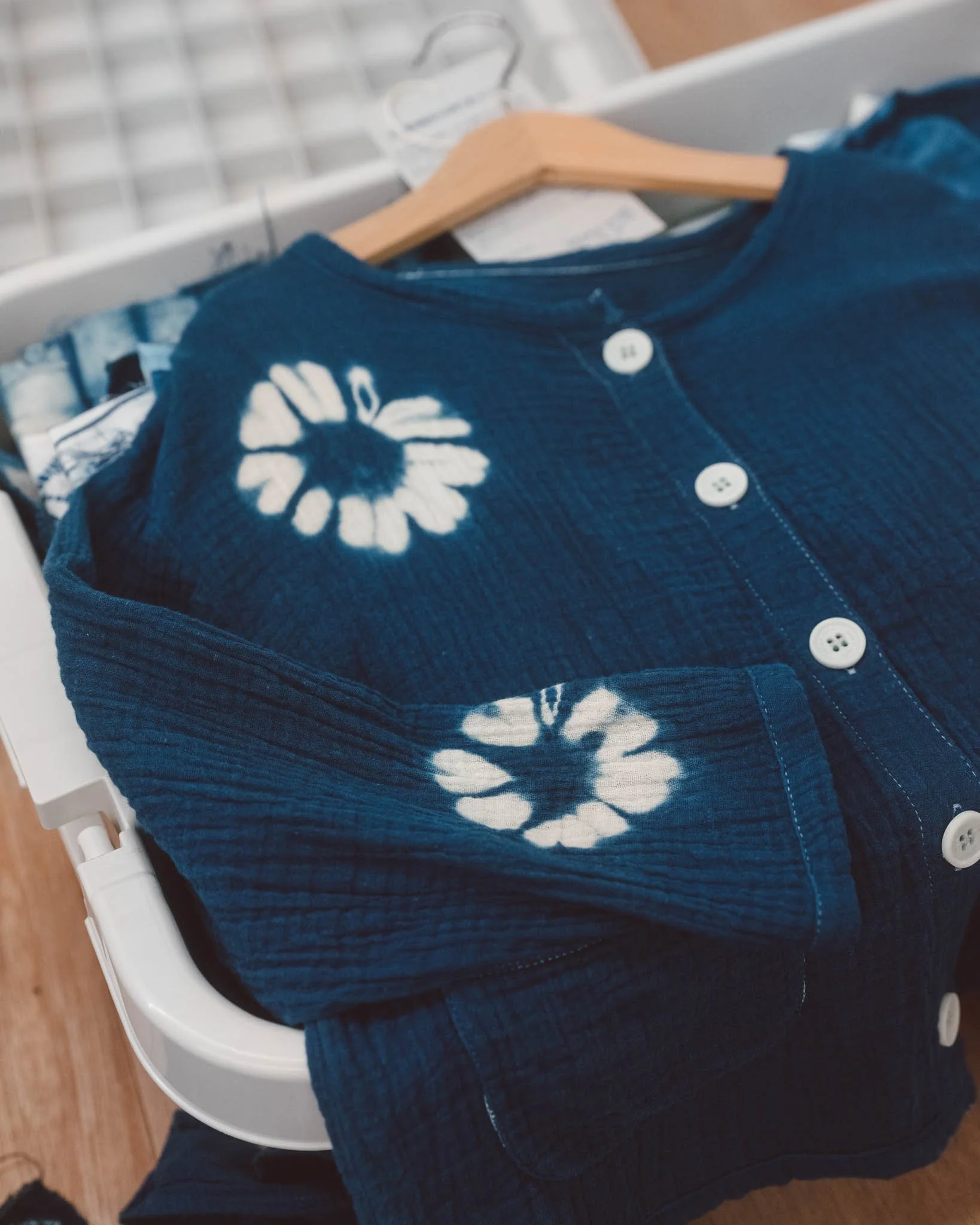
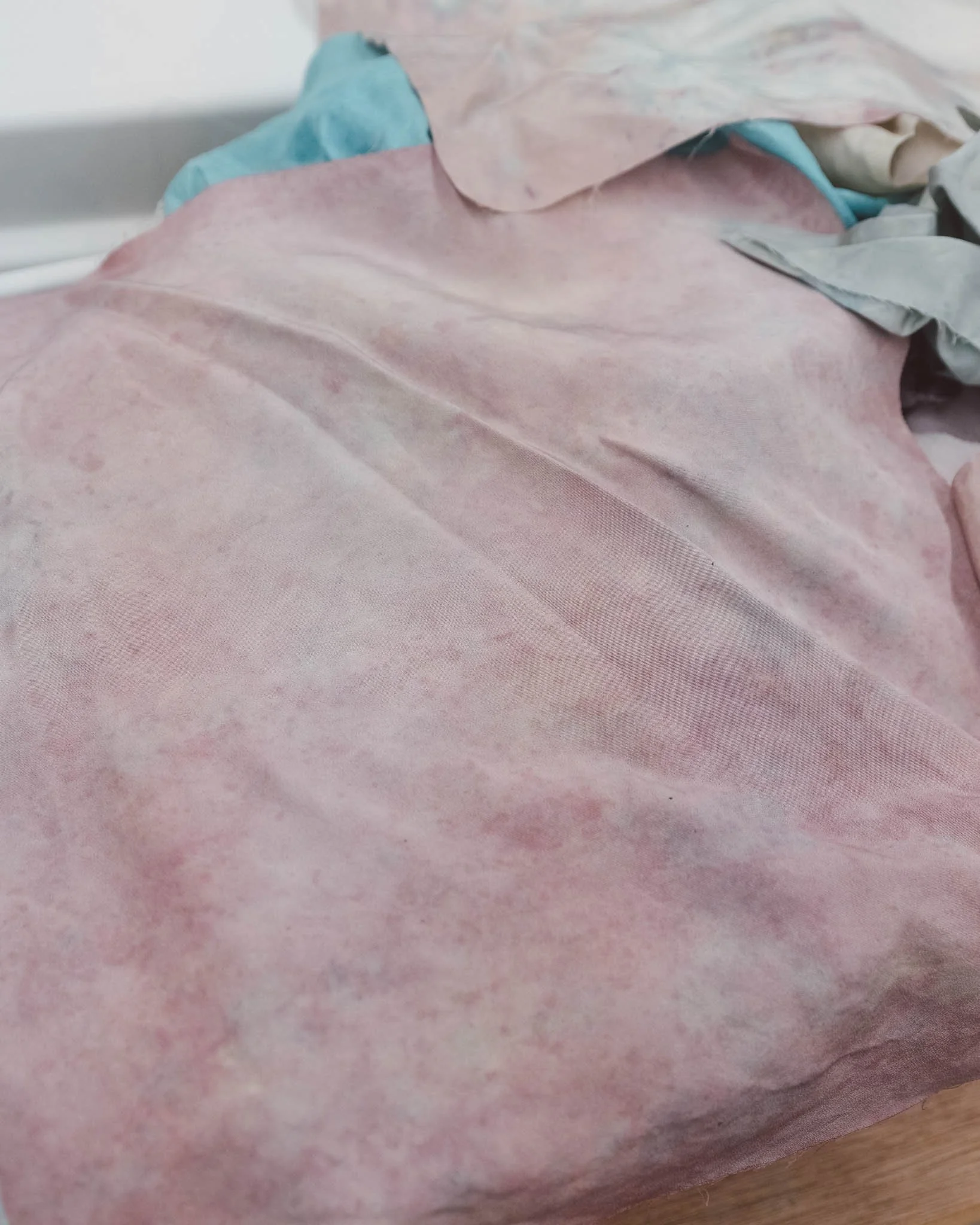
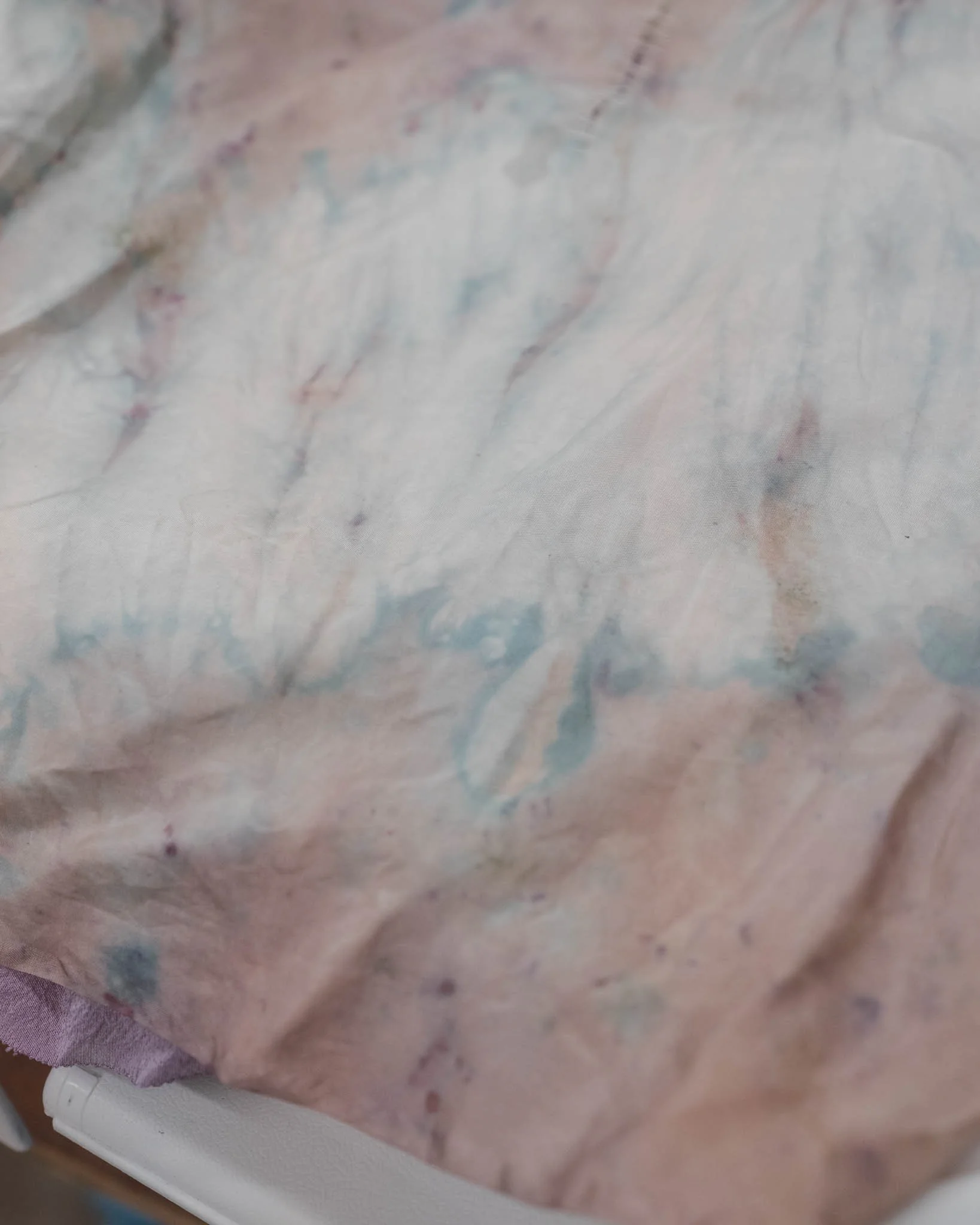
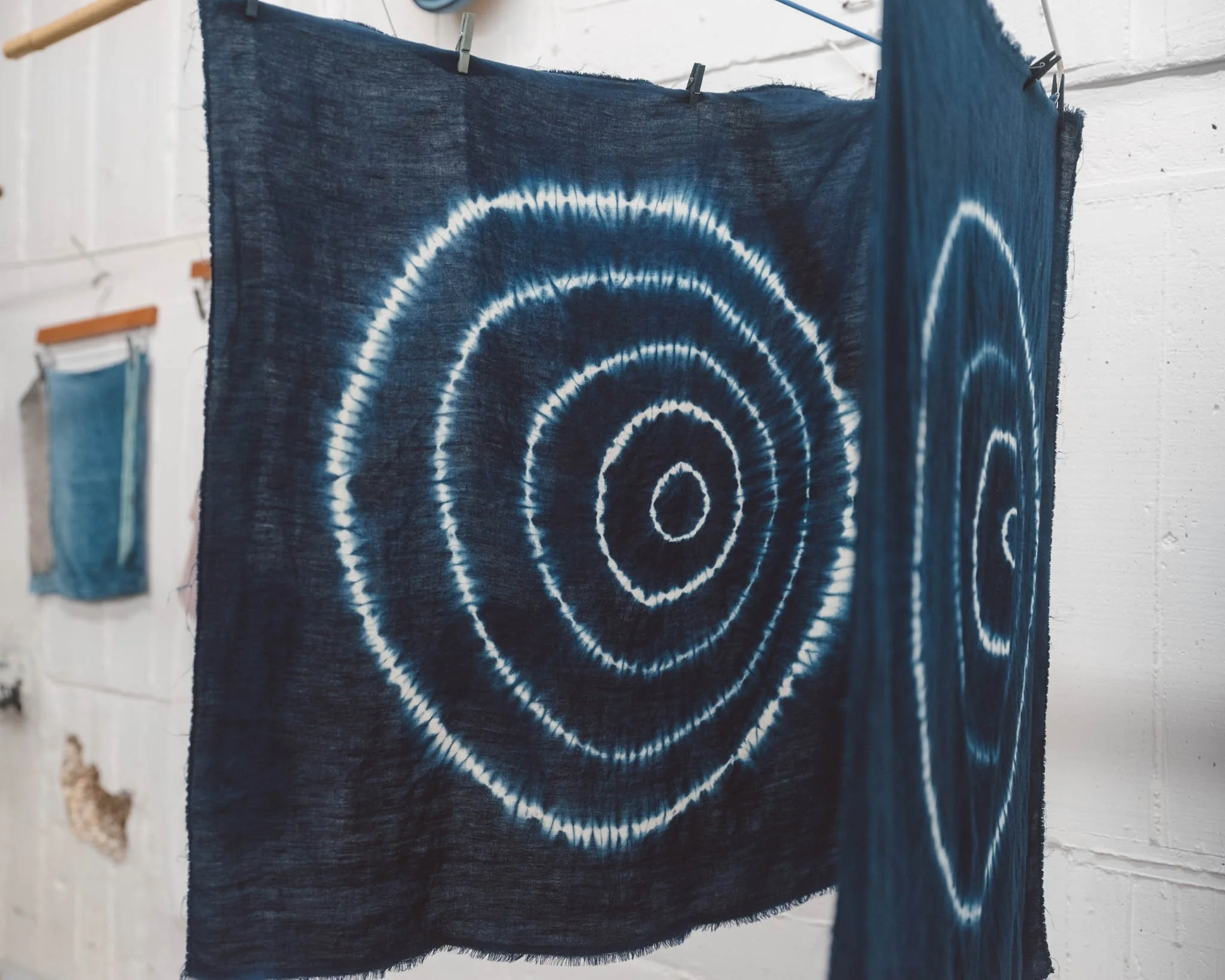
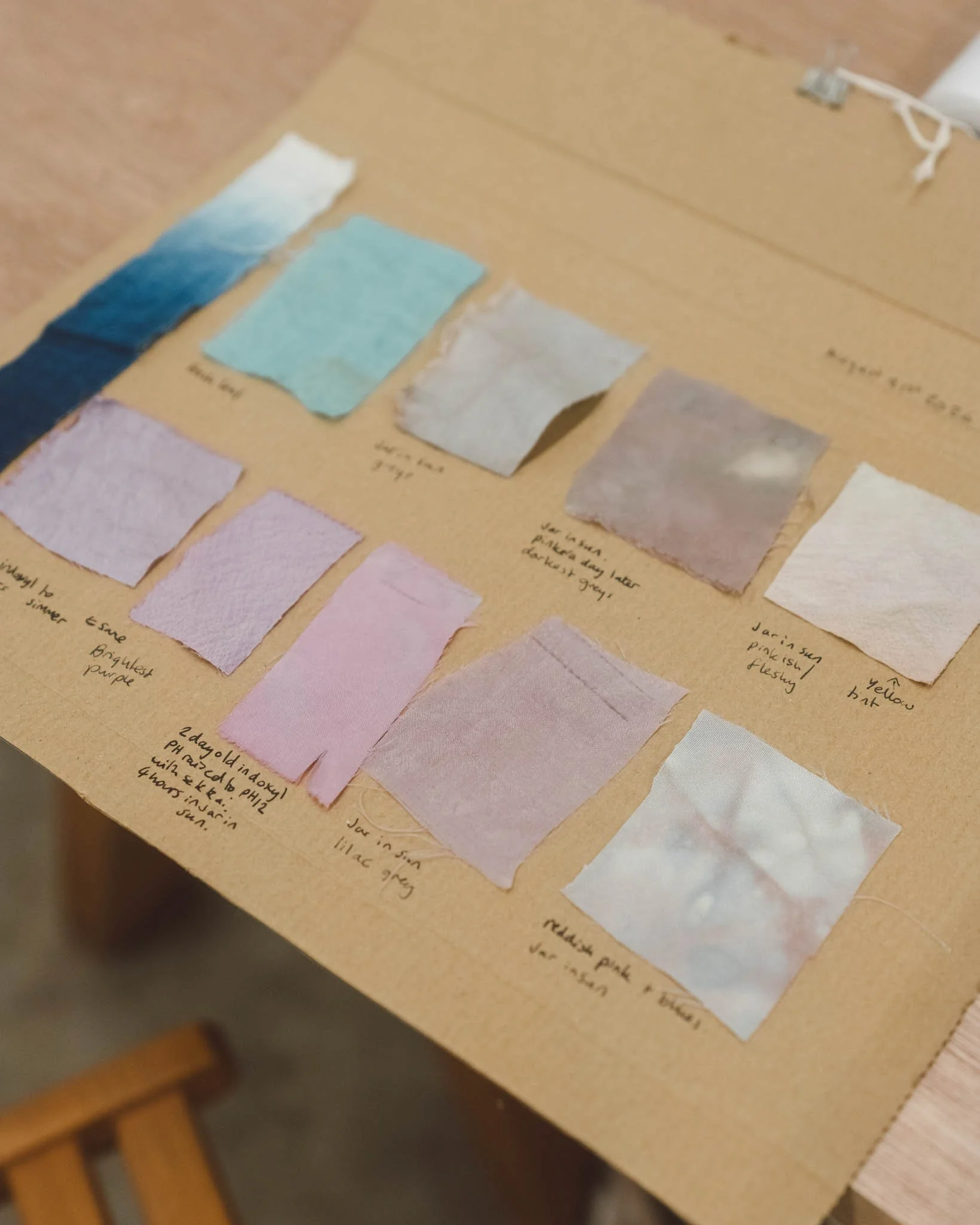
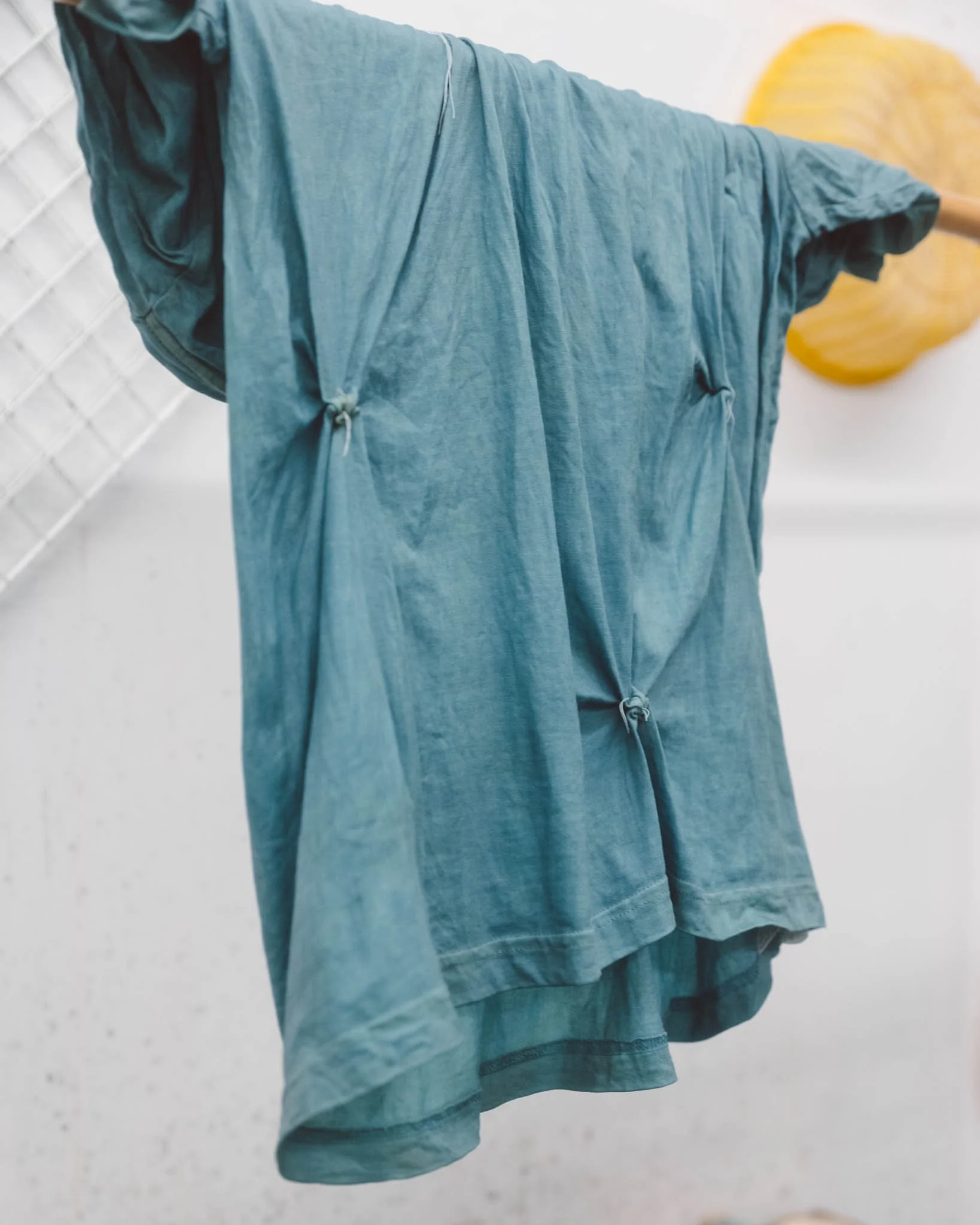
She dyes. She came to Japan for this, learned it here, and stayed to build a workshop around it. Her vat is a live fermentation, and lives only if she reaches into it every morning and turns it. Real Japanese indigo is not a dye you mix. It is a colony you feed. The colour on the cloth is not applied — it is what emerges when the cloth is dipped, drawn out into the air, and left to think for a moment. Green first, then blue. What she keeps steady is the vat, and the vat does the rest.
He paints. He came to painting by an unusual road — three years in New York in his twenties, where the street art and the pop art of that decade set something loose in him he could not put down. He worked as a web designer for years. Then the couple opened this workshop, and he learned to dye alongside her. A few years later he began to do something no one had asked him to do. He started extracting pigment from the same indigo leaves the workshop grew for the vats, grinding and settling the sediment, and making a paint from it. The same plant that gave her cloth was now giving him a colour to draw with.
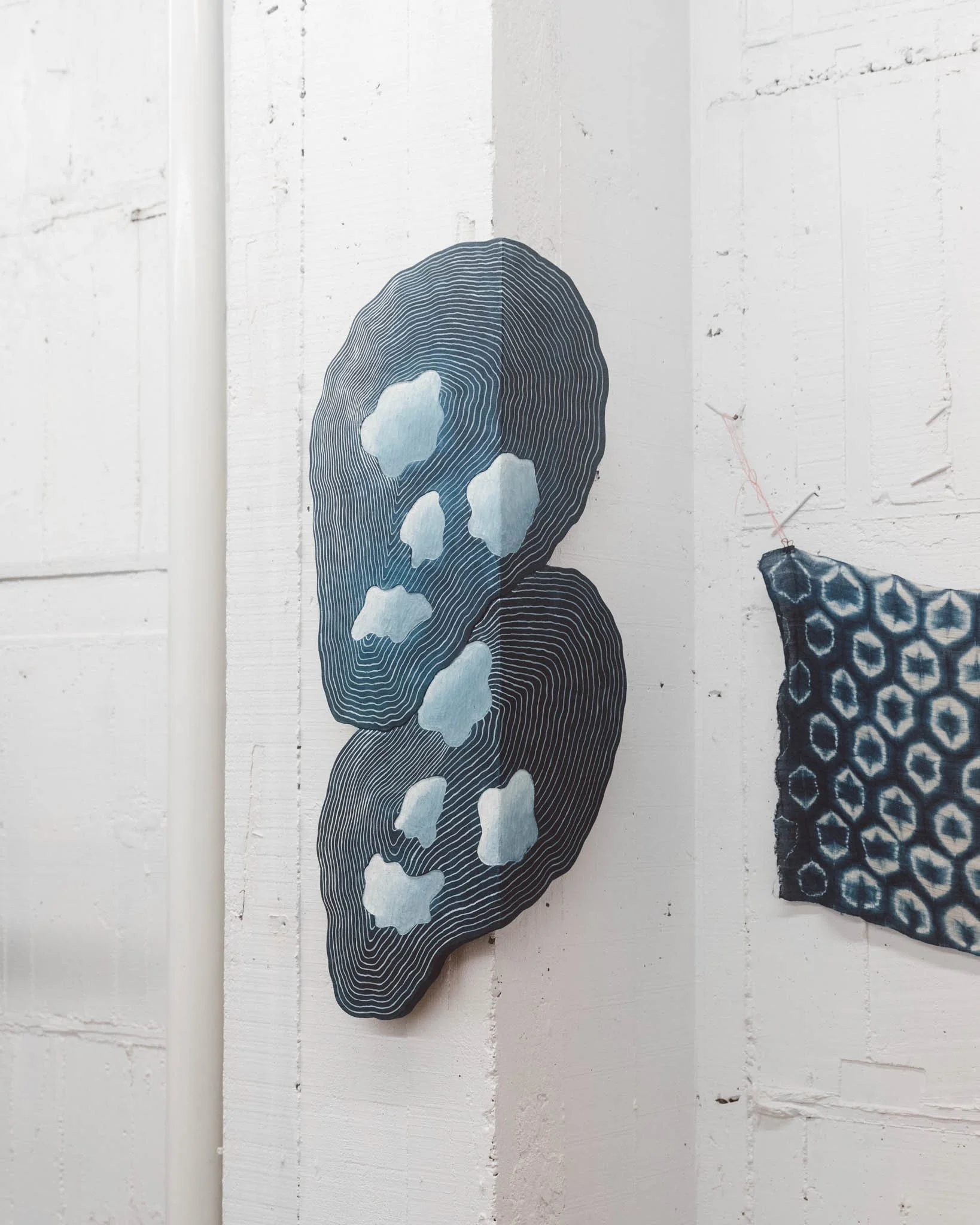
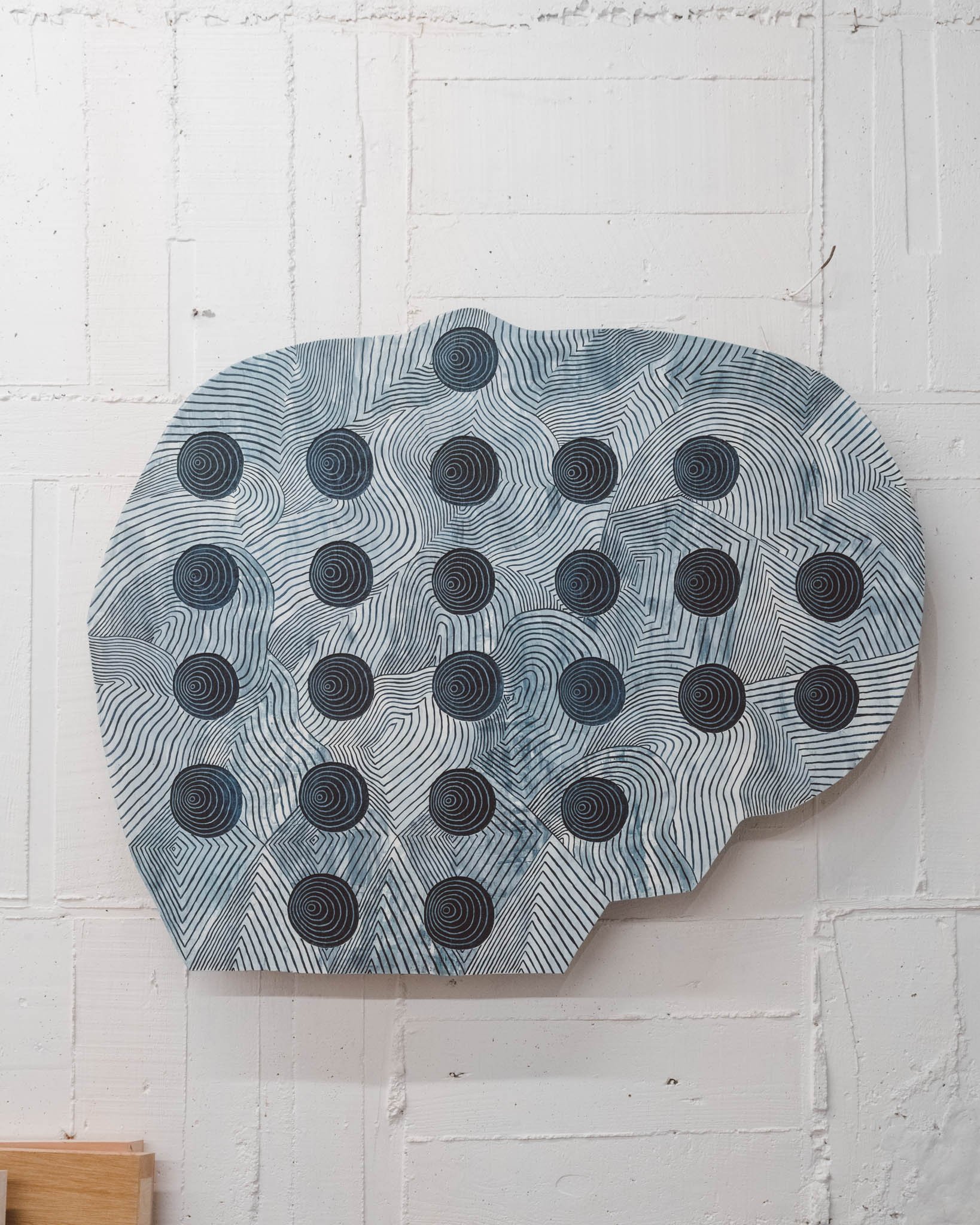
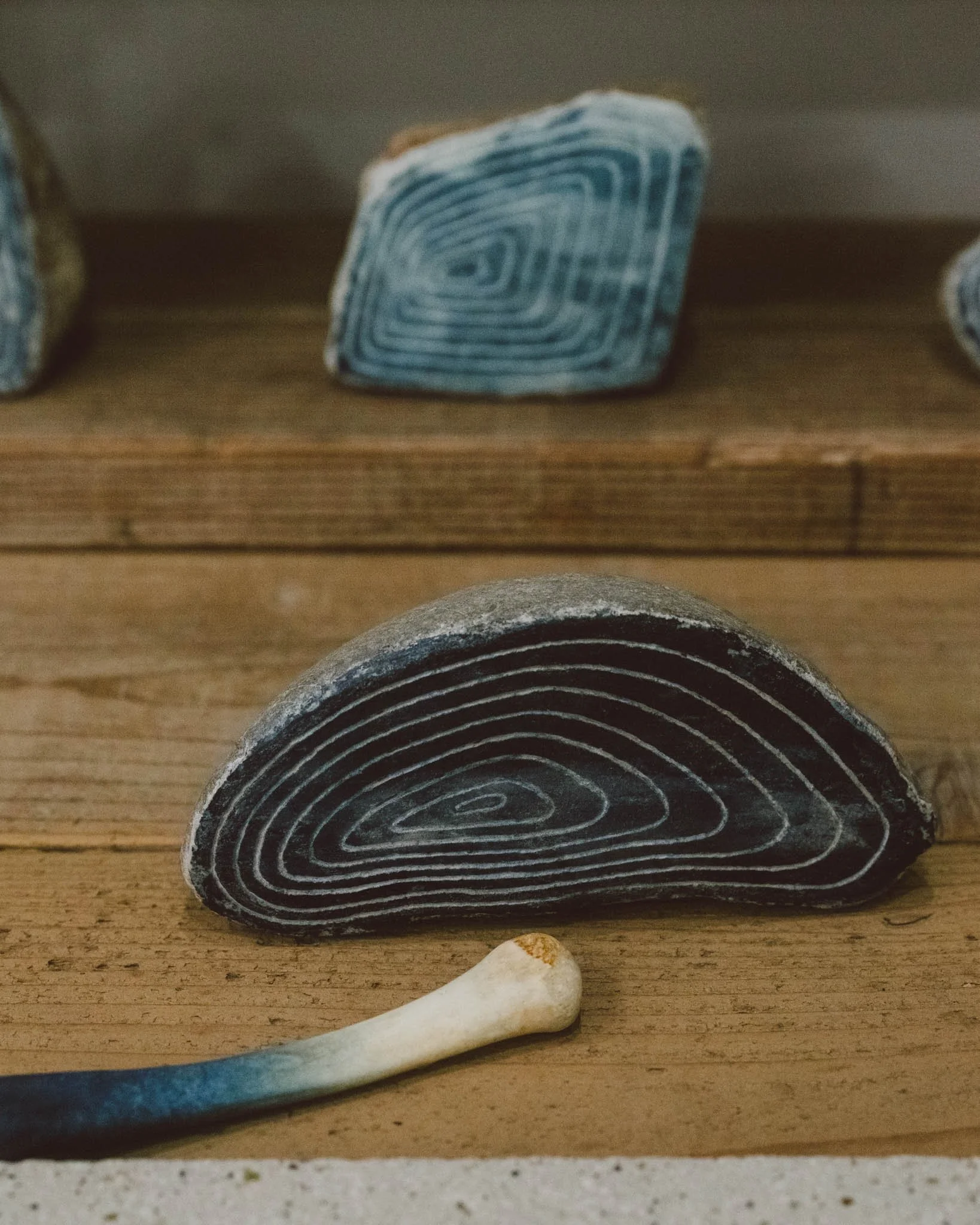
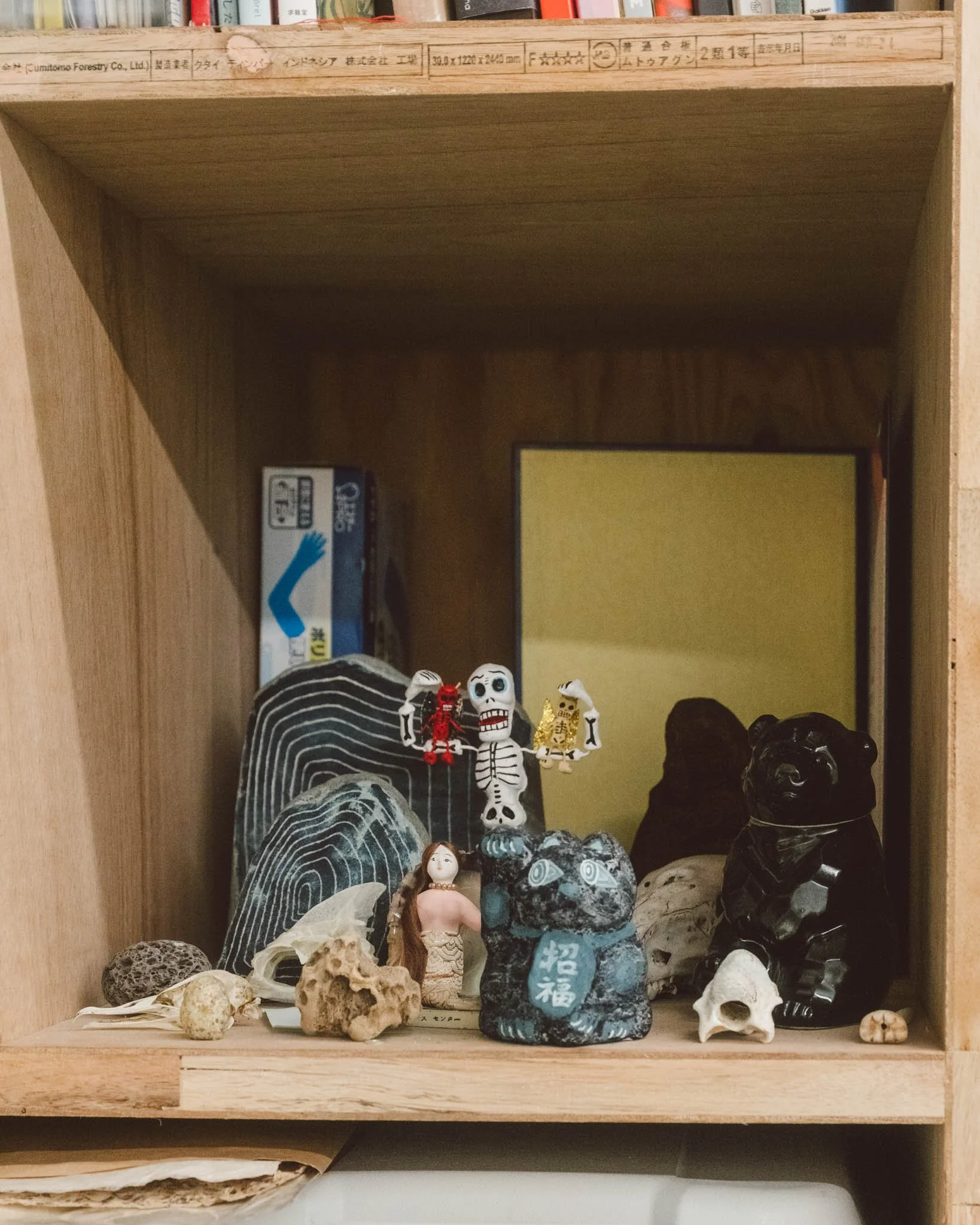
Nothing here is exhibited under glass. The cloth hangs on a line where the air can move around it. The paintings lean against the wall of the room, or hang on nails driven into old timber. If you carry a piece away — and pieces do leave, quietly, from both of them — you carry it home the way you would carry any other honest thing that was made by a person you have met. He will have a solo show soon; the paintings are moving out into the world. But the plant will still be in the field next spring, and she will still be turning her vat in the morning, and the whole cycle will start again. The colour, in the end, is the only permanent worker on the property.
We think about this place the way we think about everything we keep in this archive. Somebody grew it, somebody made it, and somebody chose to spend a life doing so. The old crafts survive because a person, somewhere, reached into the vat again this morning, or picked up a brush loaded with a colour they made themselves. Choose one, and you are choosing a little of that.