【 The Concept 】
A two-storey pagoda in stoneware, its two roofs sweeping upward at every corner, a ringed spire rising from the top. The roofs are a deep olive brown streaked with pale blue, and the walls below glow in warm tan and rust. Lift the upper roof and the pagoda opens: it is an incense burner. Small windows in the upper storey let the smoke drift out, as if mist were gathering around a mountain temple.
It comes in a wooden box with a brushed ink inscription and a seal.
【 From Stupa to Pagoda 】
Every pagoda begins with a grave. In India, the stupa marked the resting place of the Buddha, and stupas date back to at least the 3rd century BCE. It is said that when the Buddha died, his relics were divided among ten places, and that the emperor Ashoka later gathered and redistributed them, building stupas across his realm.
As Buddhism traveled east, the simple earthen mound grew upward. In Japan it became the three-storey and five-storey pagoda, and from the Heian period the two-storey tahōtō. The pagoda is, at heart, a monument to the Buddha himself.
【 The Spire and Its Rings 】
The spire at the top of a pagoda, the sōrin, is the stupa in miniature. Each part of it echoes the Indian original, and its stacked rings, the kurin or “nine rings,” grew from the ceremonial parasols that once shaded the stupa as a sign of honor. On this piece the ringed spire doubles as the handle of the lid.
【 Incense Before the Buddha 】
Burning incense began in India as a way to clear the air of unpleasant smells and became one of the ways of honoring the Buddha. Incense burners came to Japan together with Buddhism, traditionally dated to 538. Before an altar, the incense burner, the flower vase and the candlestand form the three basic offerings, and by the Muromachi period these were also admired as objects in their own right. In a tea room, an incense burner may be displayed in the alcove.
A burner shaped like a pagoda brings these two ideas together: the monument of the Buddha, and the fragrance offered to him.
【 What Owning This Piece Brings 】
・A working incense burner in the form of a Buddhist pagoda
・Smoke that rises through the windows, like mist around a temple in the hills
・A calm focal point for meditation, reading or a quiet corner
・A boxed piece, well suited to giving
A thoughtful gift for anyone drawn to Buddhism, Japanese architecture, incense or meditation.
【 How to Use It 】
Place a small incense cone or a short piece of stick incense on a heat-safe base inside the upper storey, then set the roof back on. Use it on a stable, heat-resistant surface, away from curtains, and never leave burning incense unattended. Unlit, it stands on a shelf or in an alcove as a small architectural sculpture.
【 Care 】
Let it cool completely before lifting the roof. Brush out ash once cold, and wipe the outside with a soft, dry cloth. Lift the lid by the spire gently, and store it in its wooden box.
【 Reading the Object 】
・Form: a square two-storey pagoda on a low square base
・Roofs: two tiers with upturned corners, olive brown with pale blue streaks
・Spire: a tall ringed spire, which also serves as the lid handle
・Upper storey: small rectangular windows on each side, framed by a railing
・Lid: the upper roof and spire lift off as one piece
・Walls and base: speckled tan to rust brown
・Box: wooden box with an ink inscription and seal
【 Presence 】
Small, steady and quiet, like a temple seen from far across a valley.
Archive Note
The year 538 refers to the traditional date when Buddhism, and with it the incense burner, came to Japan. It is not the production date of this piece.
Provenance Note
Sourced in Japan, with its wooden box. Production date unknown.


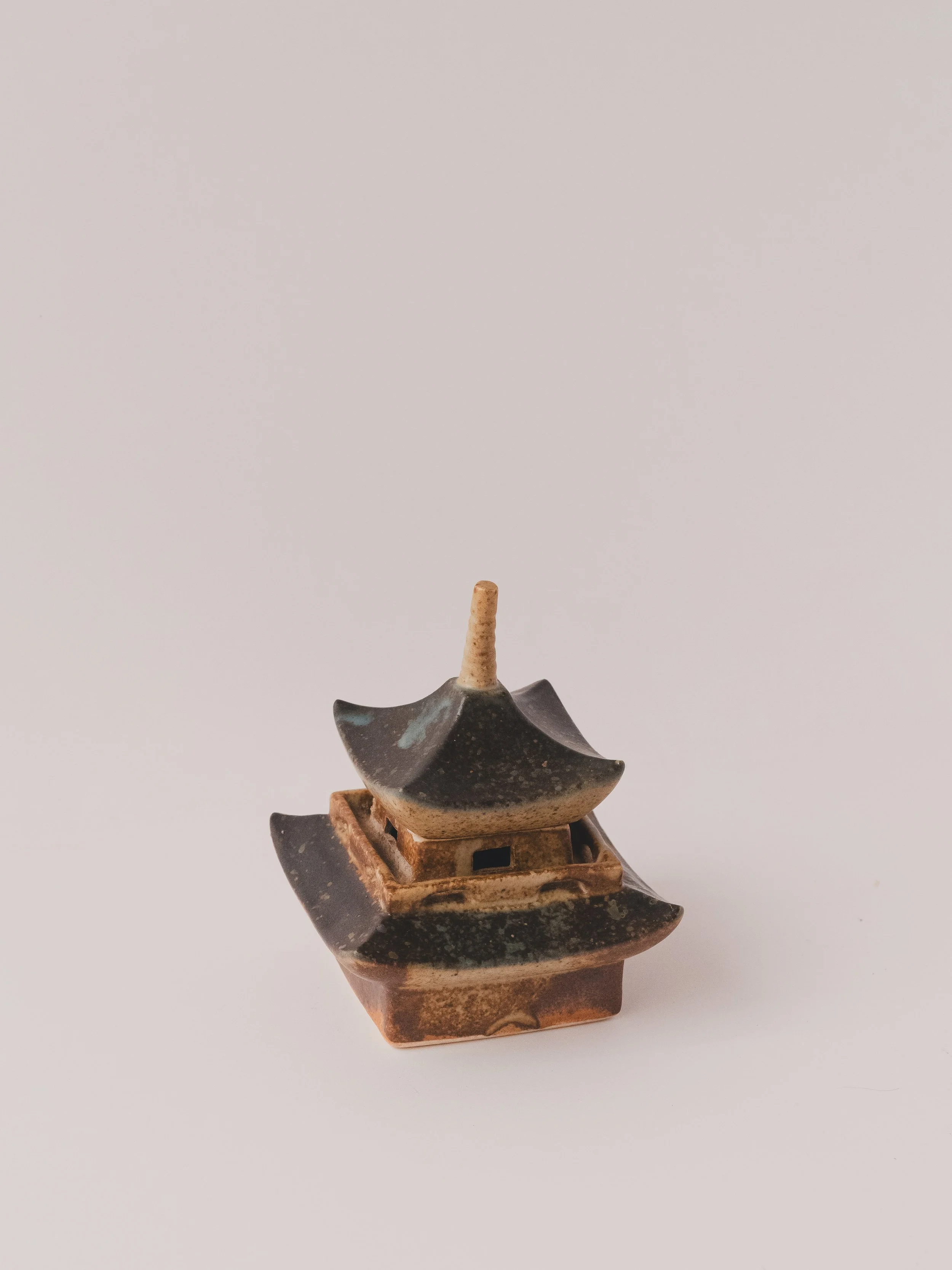 Image 1 of 8
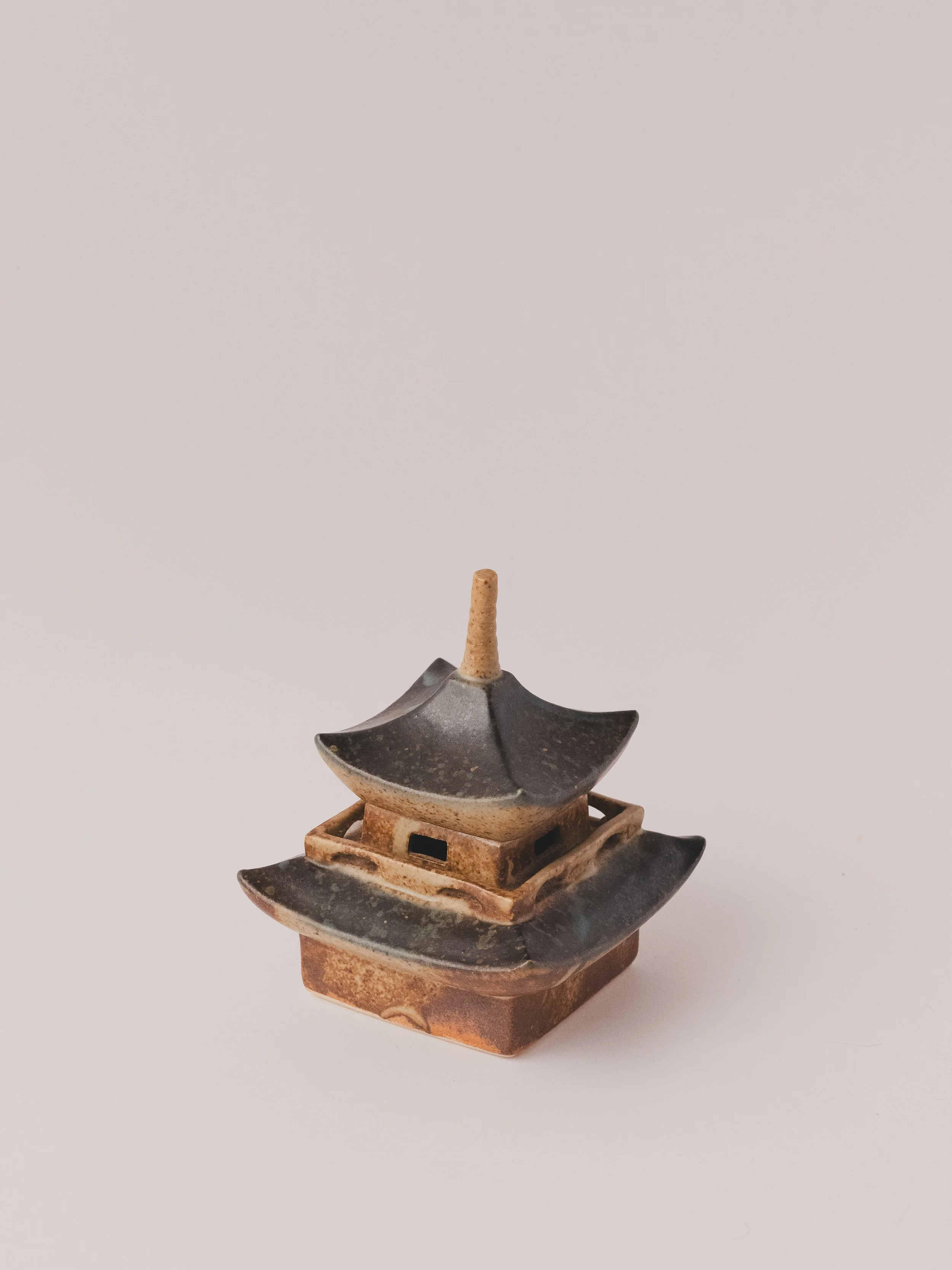 Image 2 of 8
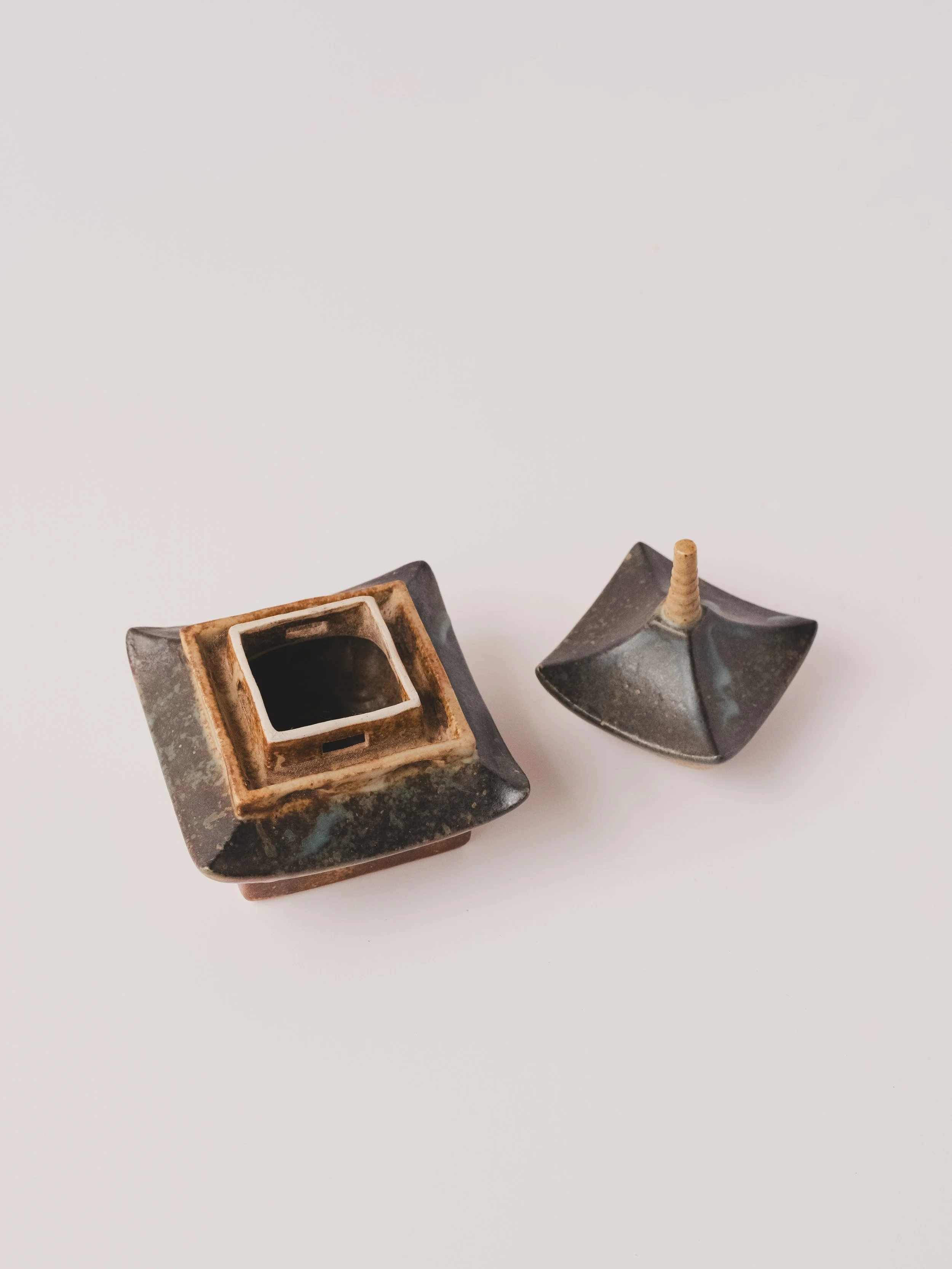 Image 3 of 8
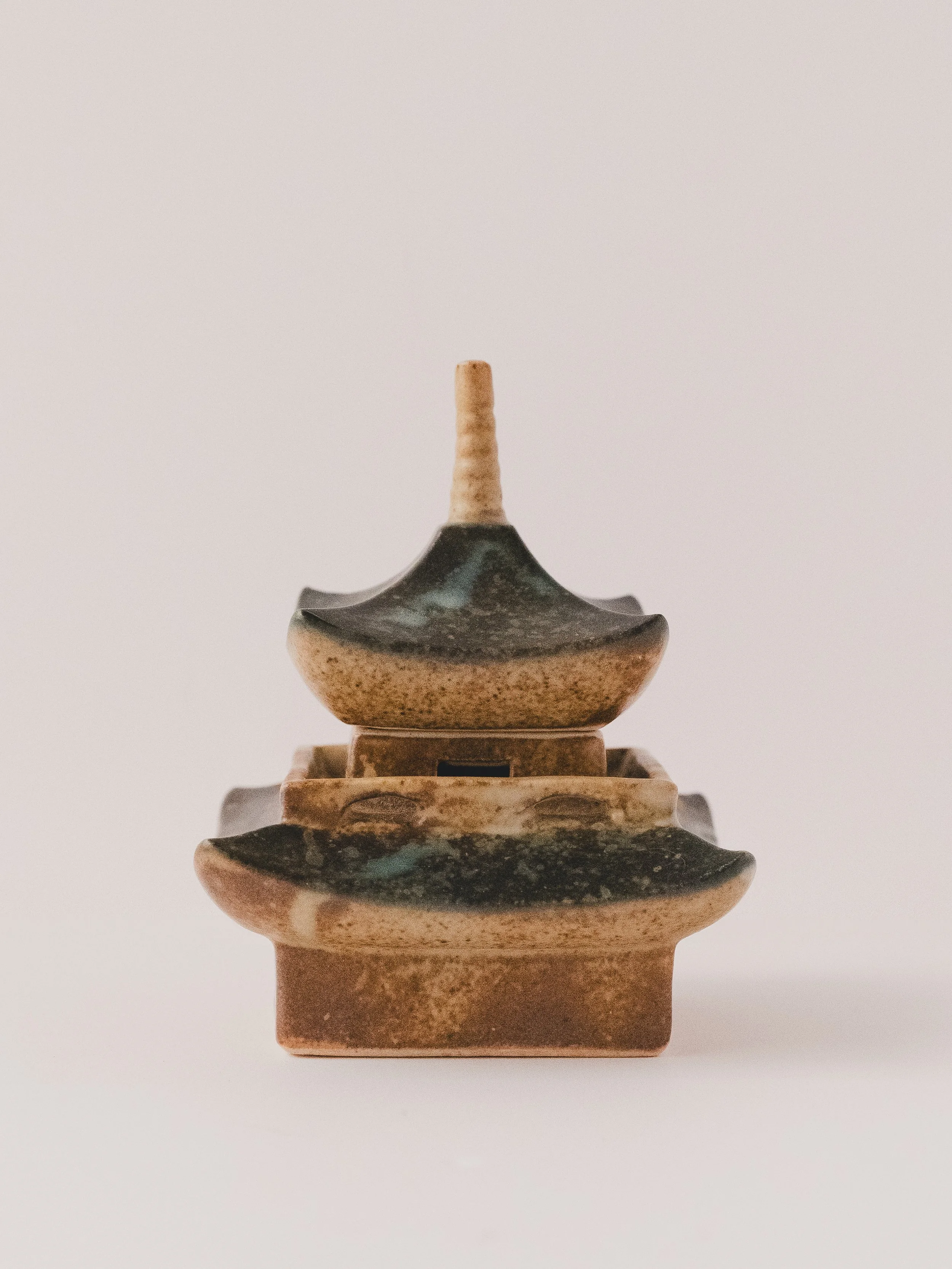 Image 4 of 8
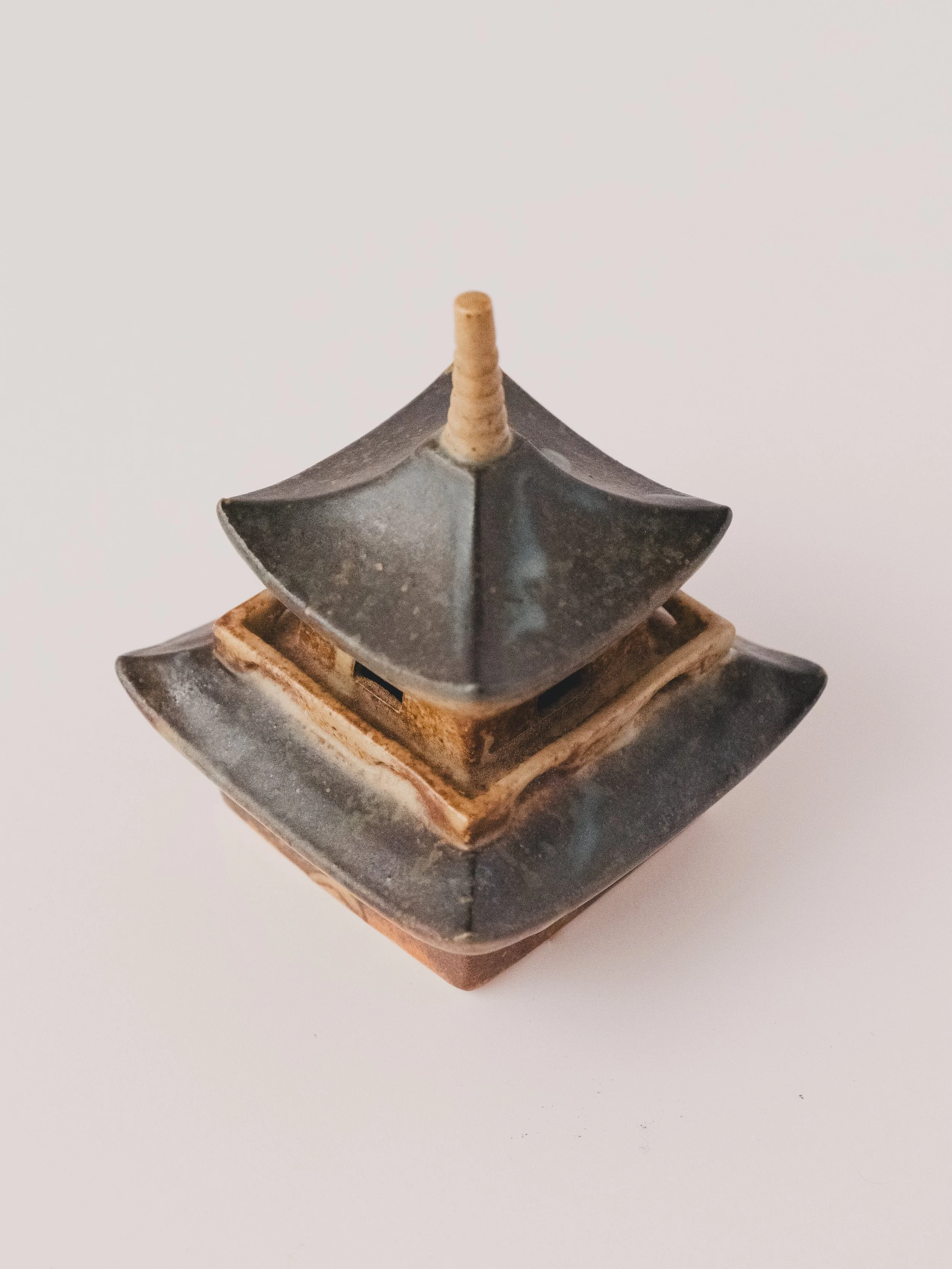 Image 5 of 8
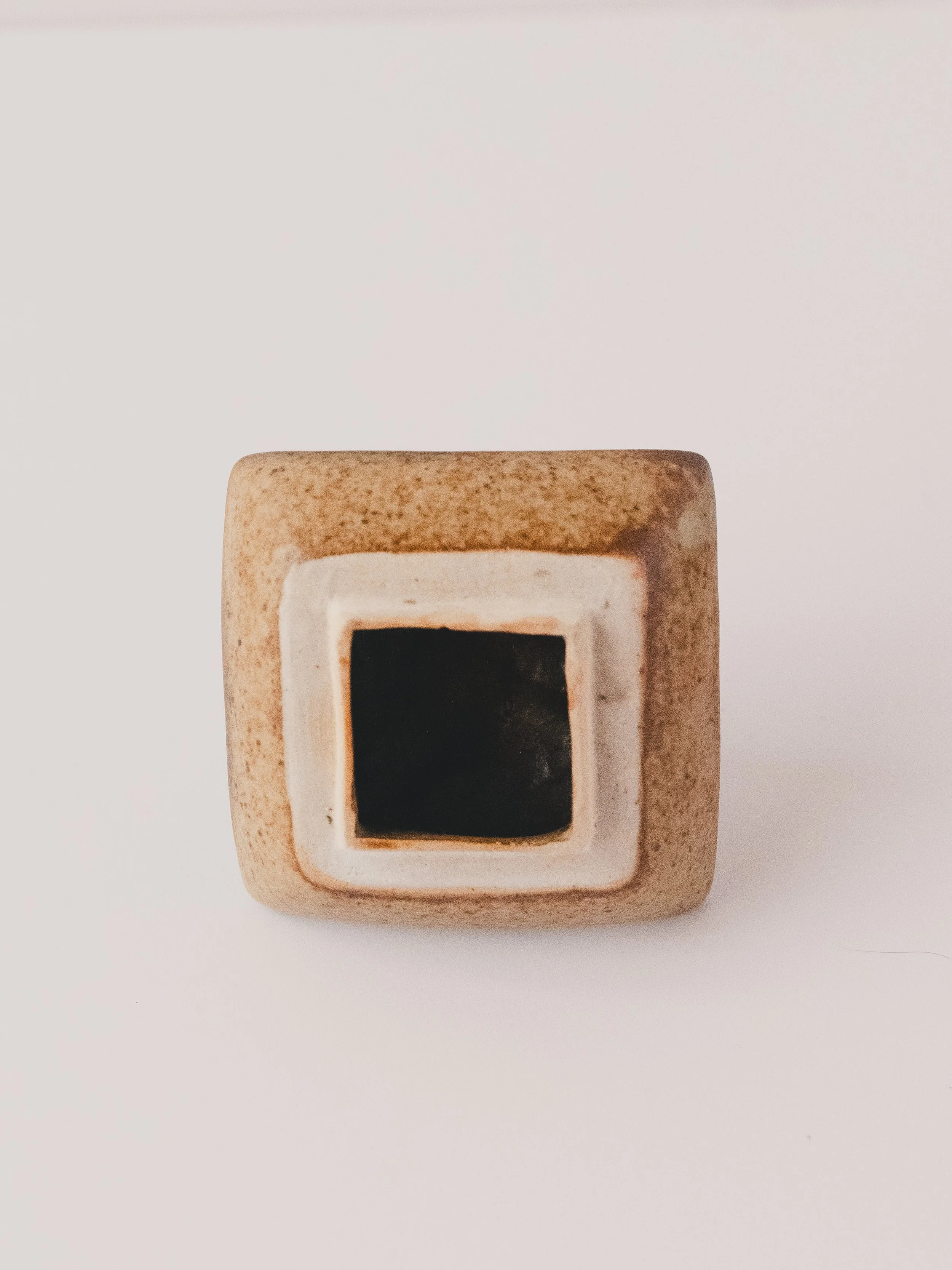 Image 6 of 8
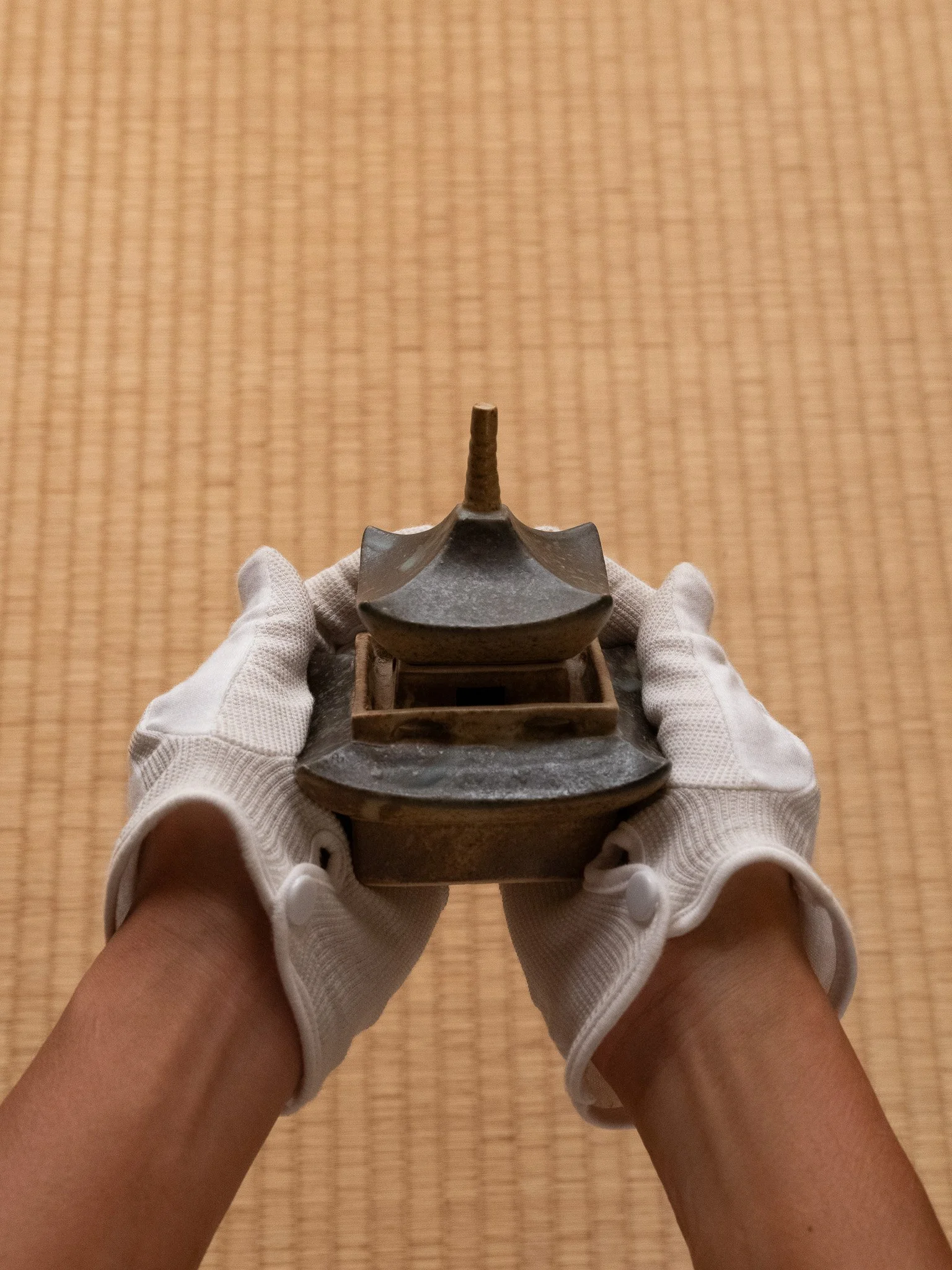 Image 7 of 8
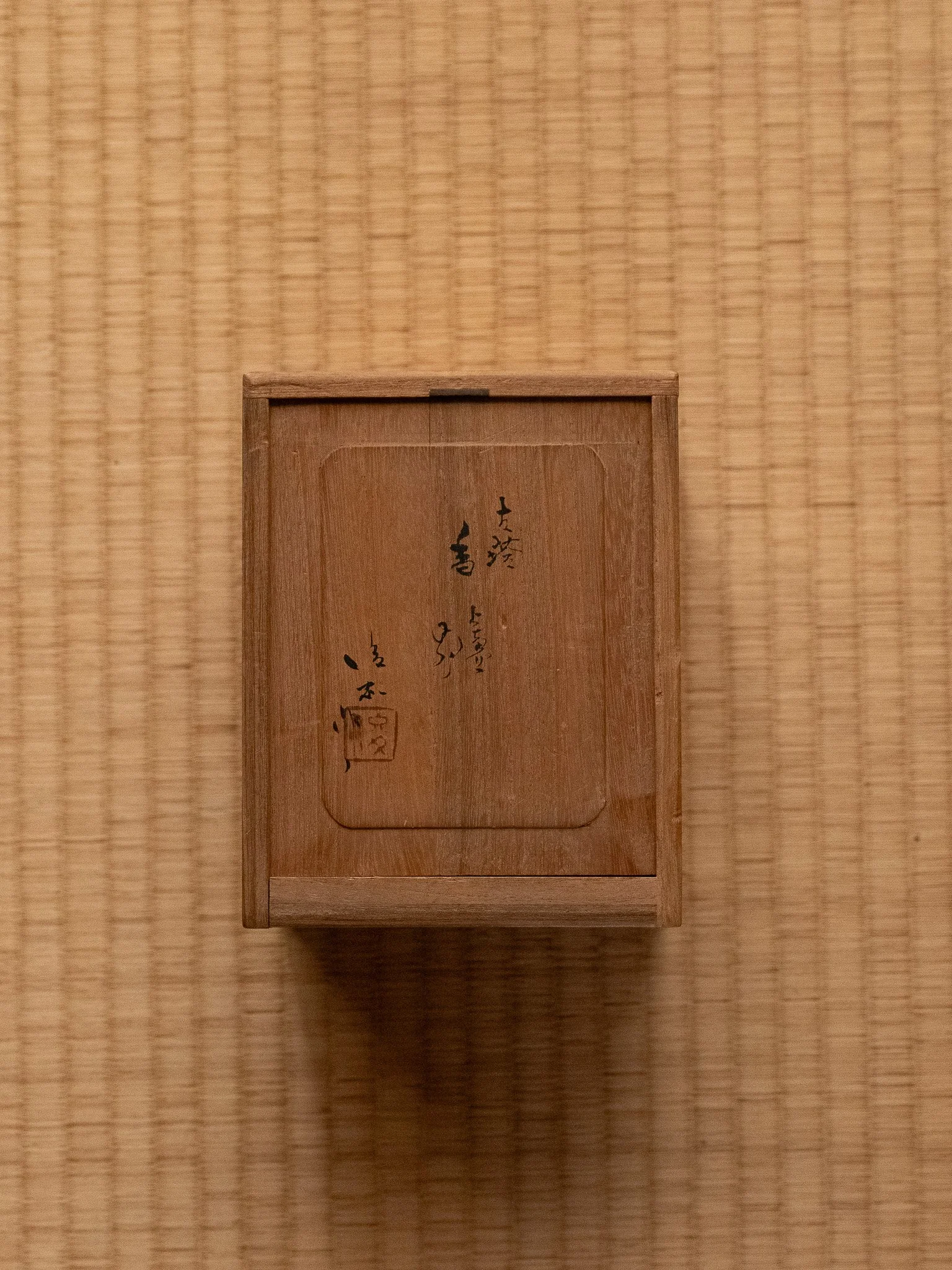 Image 8 of 8