【 The Concept 】
A seated figure of Daruma, the Zen master Bodhidharma, wrapped in a heavy monk’s robe that covers his head like a hood and falls over his shoulders, arms and knees. He sits cross-legged, low and broad, knees spread wide, arms folded away inside the robe, his shoulders hunched and his head pushed slightly forward. The face is the face of an old man who has been sitting for a very long time: heavy, drooping brows, deep lines across the forehead, a short, broad nose, a mouth pulled down at the corners and a rough stubble of beard over the chin and cheeks. The pupils of his eyes are pierced through, so that the eyes seem to hold a small spark of darkness, and he looks out with a weary, stubborn, utterly unshaken stare. The robe is carved in a few strong, flowing folds, and the whole figure is fired a deep, almost black brown, with a lighter, warm brown showing along the hem and the base, where the clay body comes through. It has the weight and quiet of an old bronze, though it is made of clay.
【 The Prince Who Became a Monk 】
According to the tradition kept at the Shorinzan Daruma-ji temple in Japan, Bodhidharma was born the third prince of Kanchipuram in southern India. He left the palace to become a monk under the master Prajnatara, and later travelled to China to carry the Buddha’s teaching of meditation. There he met Emperor Wu of Liang, a great patron of Buddhism, but the two could not understand each other, and Bodhidharma went on his way. He crossed the Yangtze River and settled near the Shaolin temple, where he sat facing a wall in meditation for nine years, until a seeker named Shenguang came and became his disciple Huike. Bodhidharma is honoured as the first patriarch of Zen.
【 Across the River on a Reed 】
One of the best-loved images of Bodhidharma shows what happened after his meeting with the emperor: he broke off a single reed, stood upon it and crossed the great Yangtze River, then walked on to the Shaolin temple on Mount Song. Painters in China and Japan returned to this scene again and again, the lone monk in his robe, carrying nothing, floating calmly across the water. It is an image of travelling light: no possessions, no attachments, only the will to go on.
【 From the Seated Master to the Lucky Doll 】
The round, red Daruma doll known all over Japan grew out of figures like this one. At Shorinzan Daruma-ji in Takasaki, the story goes that in 1783 the eruption of Mount Asama and other disasters brought a terrible famine. To help the starving farmers of the area, the ninth abbot, Tōgaku, carved a wooden mould based on a painting of Daruma seated in meditation, drawn with a single brushstroke by the temple’s founder, Shin’etsu, and taught a villager, Yamagata Tomogorō, how to make papier-mâché Daruma. Sold at the temple’s New Year festival, they became the first good-luck Daruma of Takasaki. Even today, the faces of these dolls hide a blessing: the eyebrows are drawn as two cranes facing each other, and the moustache and beard as two turtles, the cranes and turtles of long life.
This figure shows Daruma as he was before he became a doll: a man in meditation, hands and feet tucked away inside his robe, sitting as still as the mountain.
【 What Owning This Piece Brings 】
・ Steadfastness. Daruma is the image of not moving, not giving up, and not being shaken.
・ Focus. That unwavering stare is a reminder to stay with what matters until it is done.
・ Calm and simplicity. A monk who crossed a river on a reed, carrying nothing, invites a lighter, quieter way of living.
・ Character. With its weary, stubborn face, this is a Daruma full of personality, more an old friend than an ornament.
A meaningful gift for someone facing a long effort, a student or a founder, a practitioner of meditation or martial arts, or anyone drawn to Zen.
【 Where to Place It 】
On a desk, a bookshelf, beside a meditation space or in a tokonoma alcove. A light from one side brings out the folds of the robe and the deep lines of the face. It looks especially good with wood, stone and other natural materials.
【 Care 】
This is unglazed fired clay: keep it dry and dust it with a soft, dry brush. Do not wash it or use cleaning products. Lift it with both hands, supporting it from beneath, and place it on a stable surface.
【 Reading the Object 】
A seated figure of Bodhidharma in fired clay. The robe is drawn over the head as a hood and wraps the whole body; the arms are folded inside it, with the robe gathered at the chest and falling in a broad central panel over the lap. He sits cross-legged with the knees spread wide, and the hem of the robe forms a gently wavy base. The face is finely modelled: heavy brows, lined forehead, deep-set eyes with pierced pupils, a short broad nose, a down-turned mouth and textured stubble on the chin and cheeks. The back is smooth and simple, with one small hole in the upper back. The figure is hollow and open underneath. Deep blackish-brown surface with a soft sheen; a lighter, warm brown clay body shows along the hem, the base and the inside. No visible mark. It stands securely on its own.
【 Presence 】
Silent, heavy and unshakable. An old Zen master who has been sitting a very long time, and has no intention of moving.
Archive Note: The number in the name (1783) marks the year of the great eruption of Mount Asama and the famine that, according to Shorinzan Daruma-ji, led to the creation of the good-luck Daruma of Takasaki. NOT the date this piece was made.
Provenance Note: Sourced from a private household in Japan. A vintage Japanese fired-clay figure of Daruma (Bodhidharma) seated in meditation. Maker unidentified, no mark.


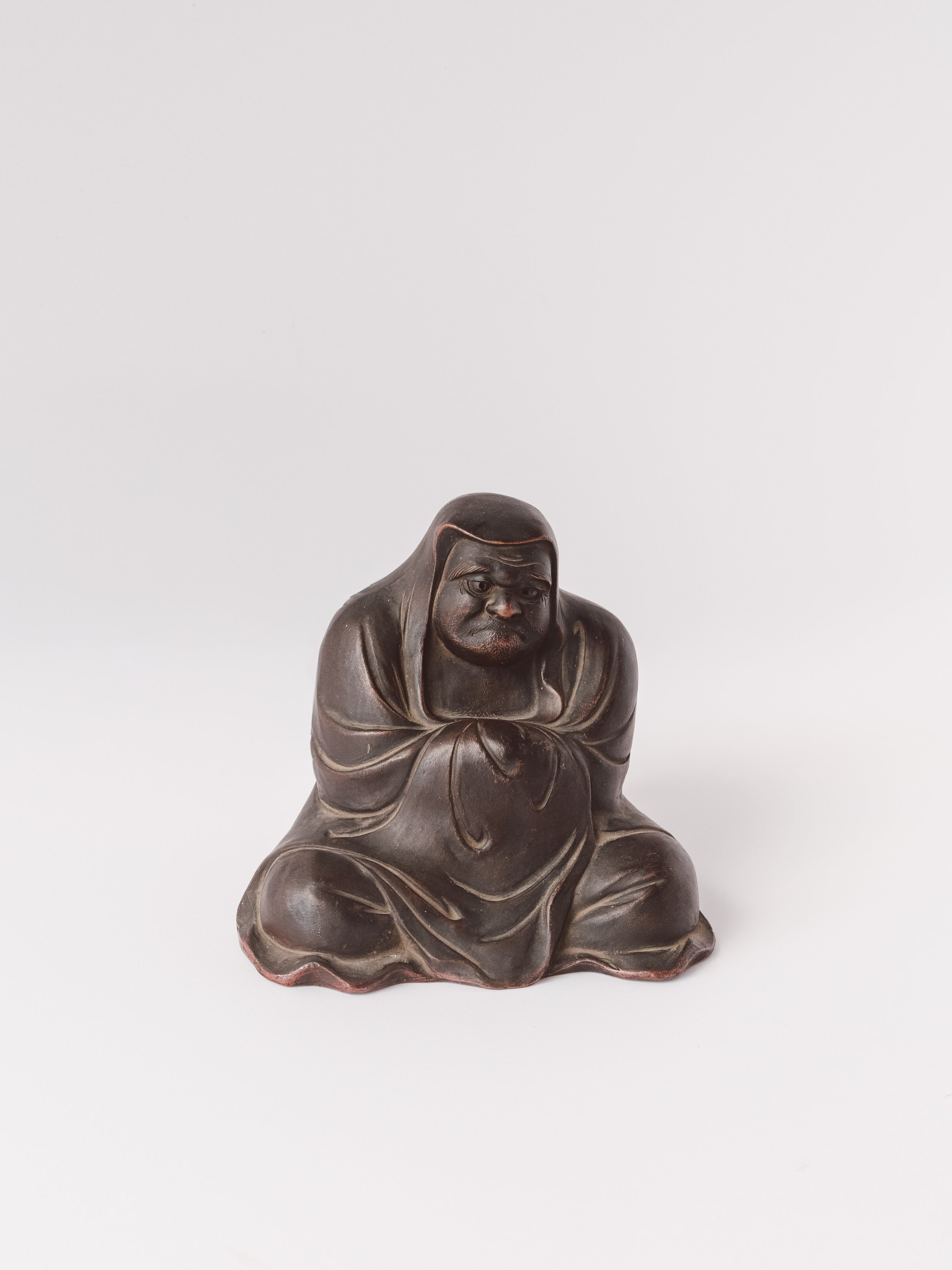 Image 1 of 9
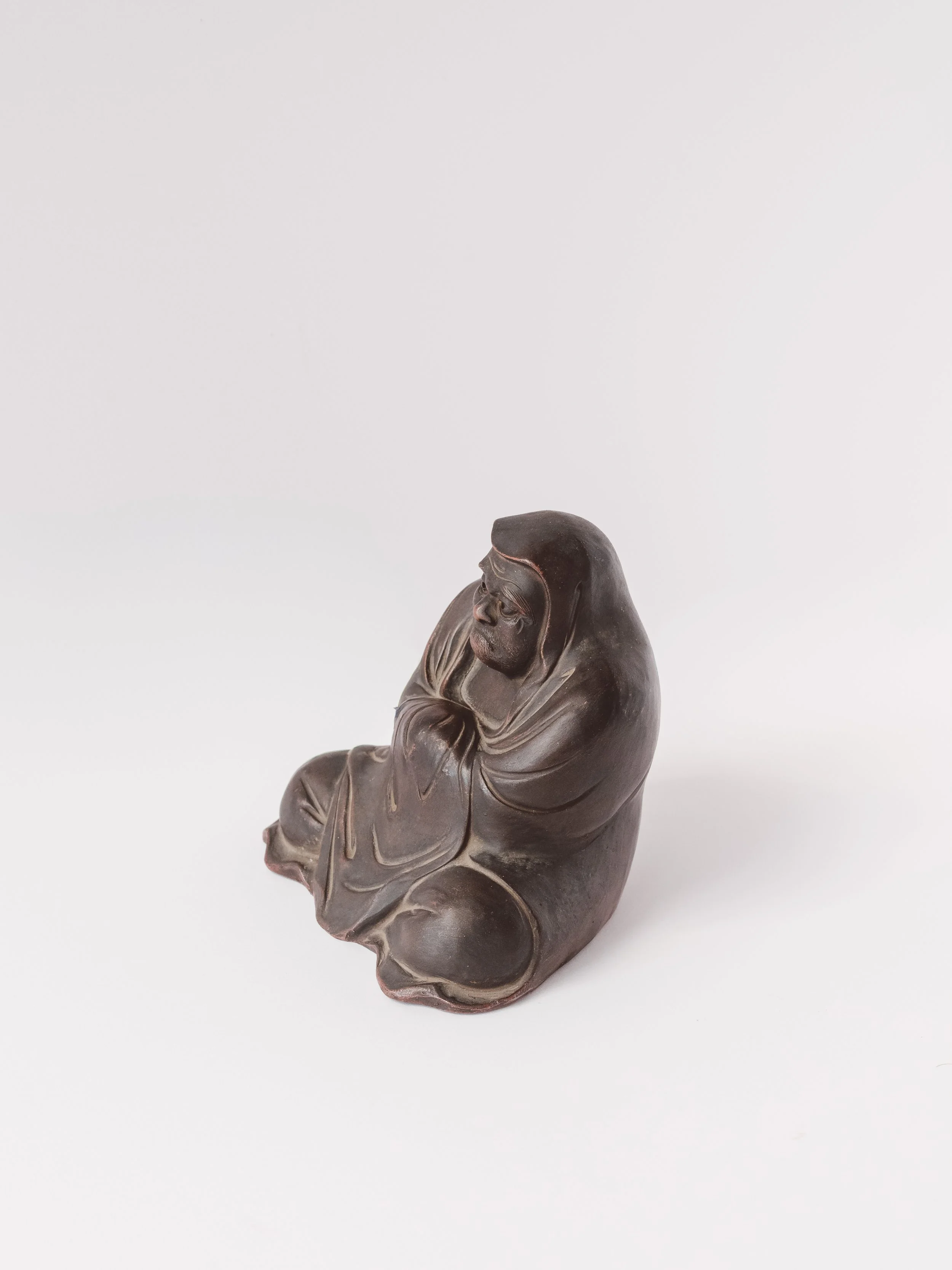 Image 2 of 9
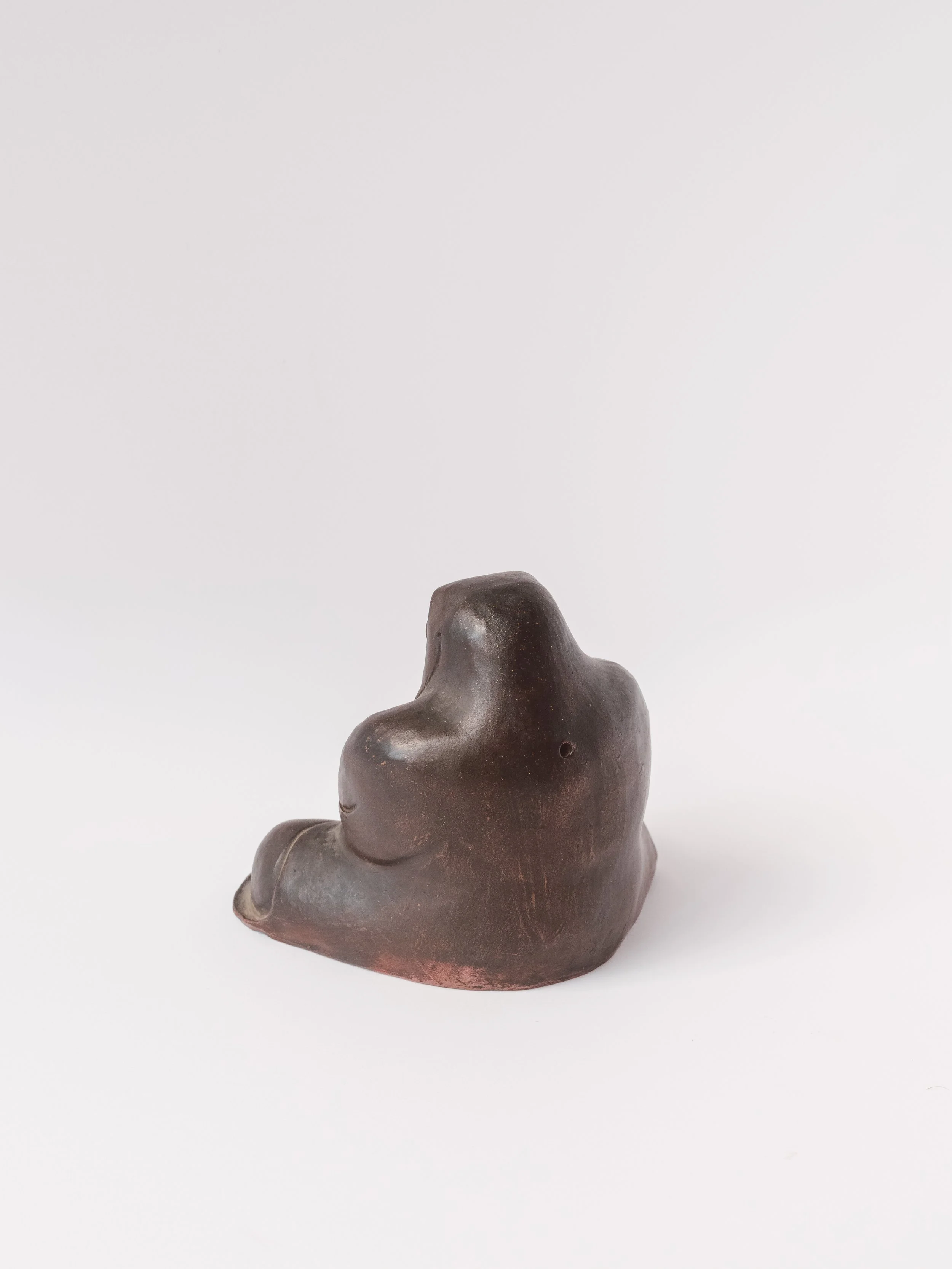 Image 3 of 9
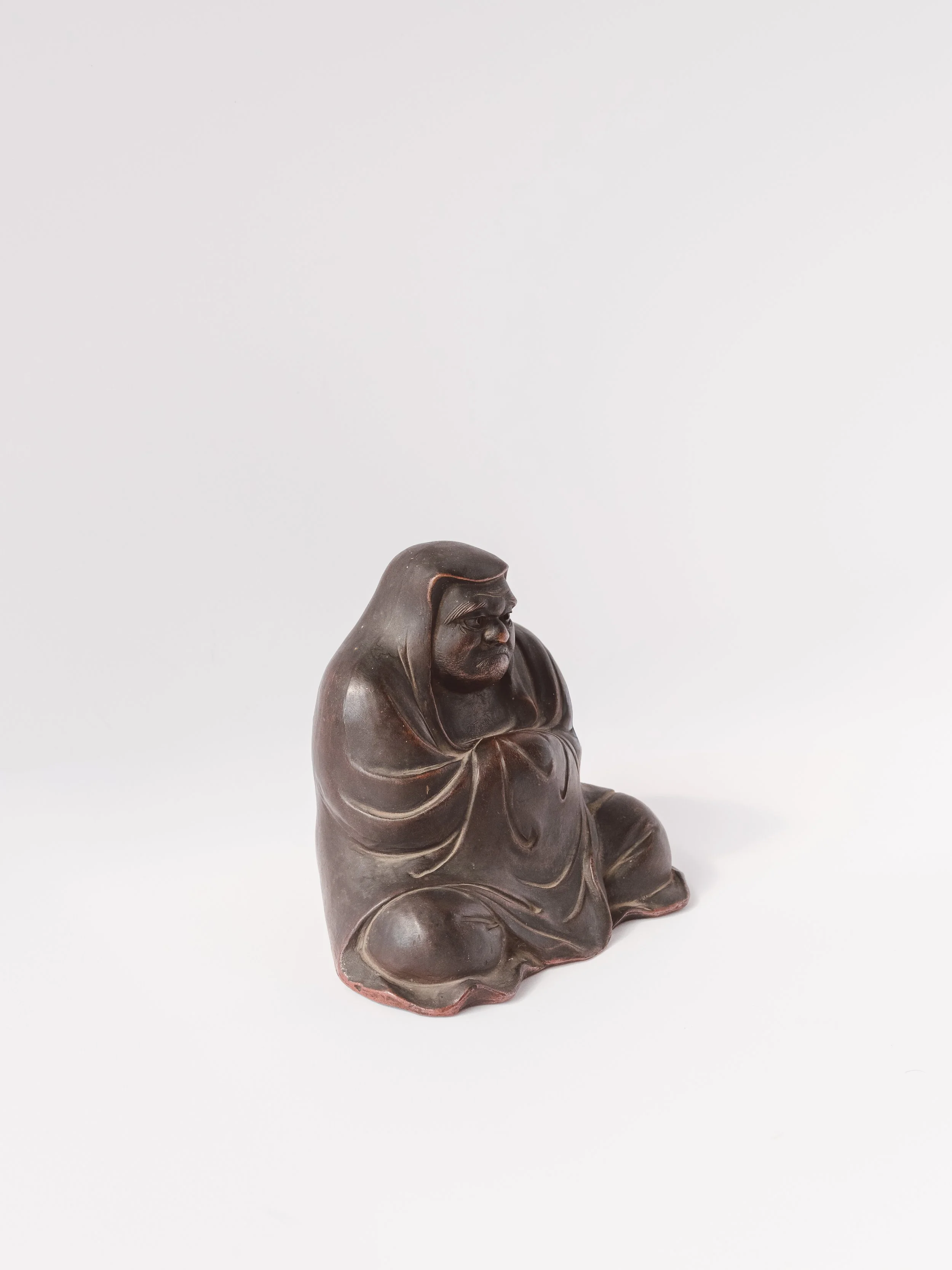 Image 4 of 9
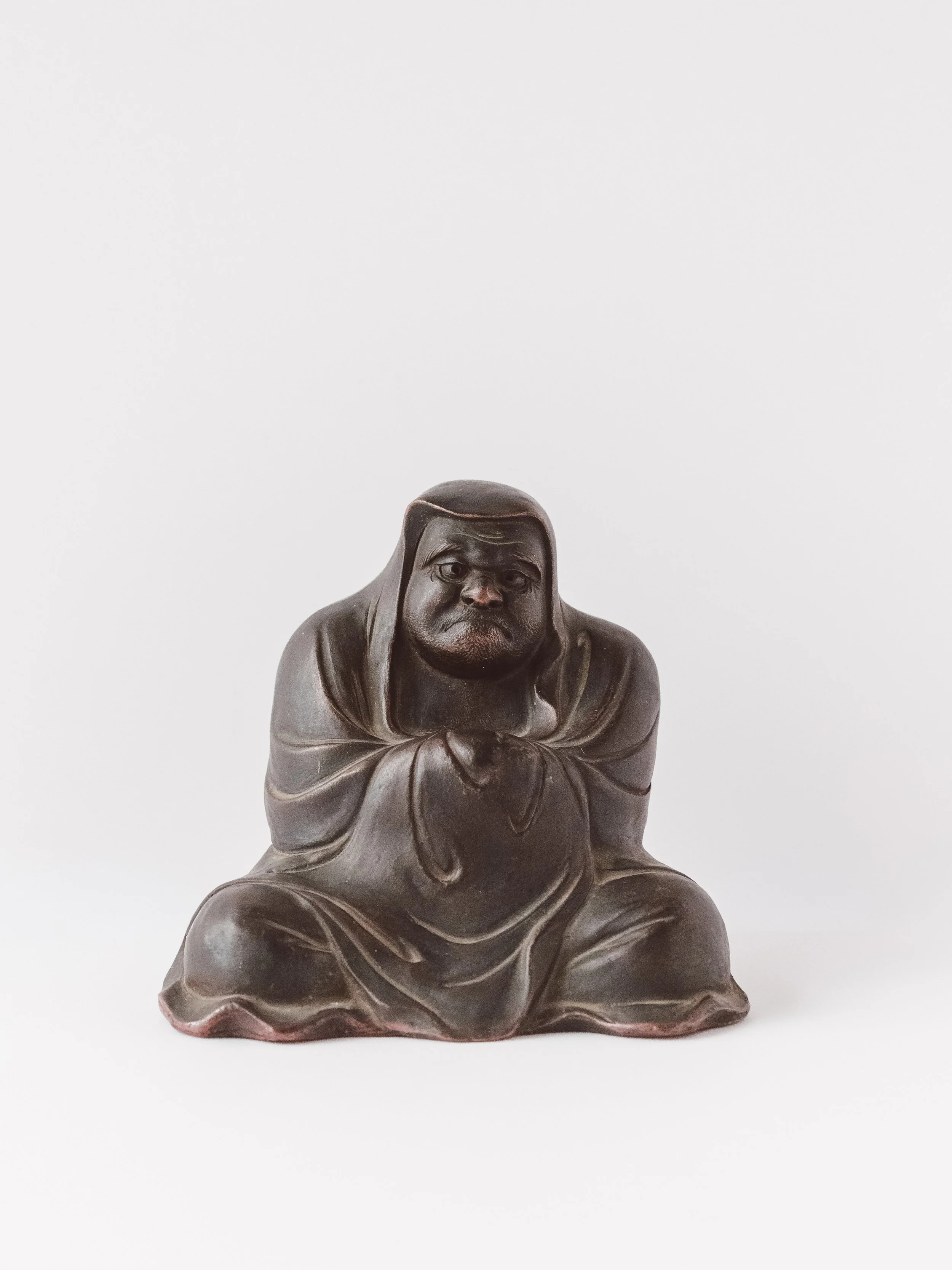 Image 5 of 9
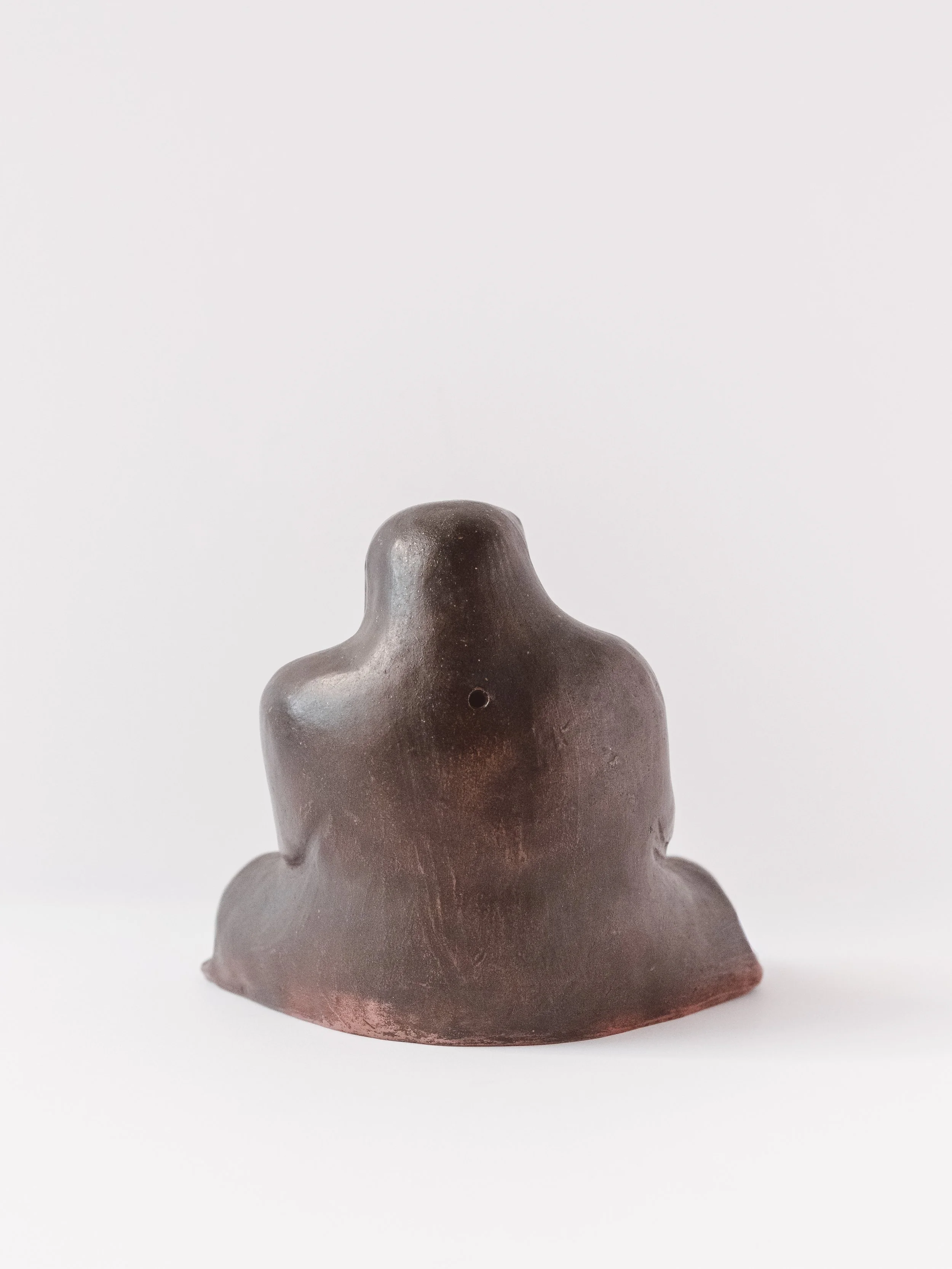 Image 6 of 9
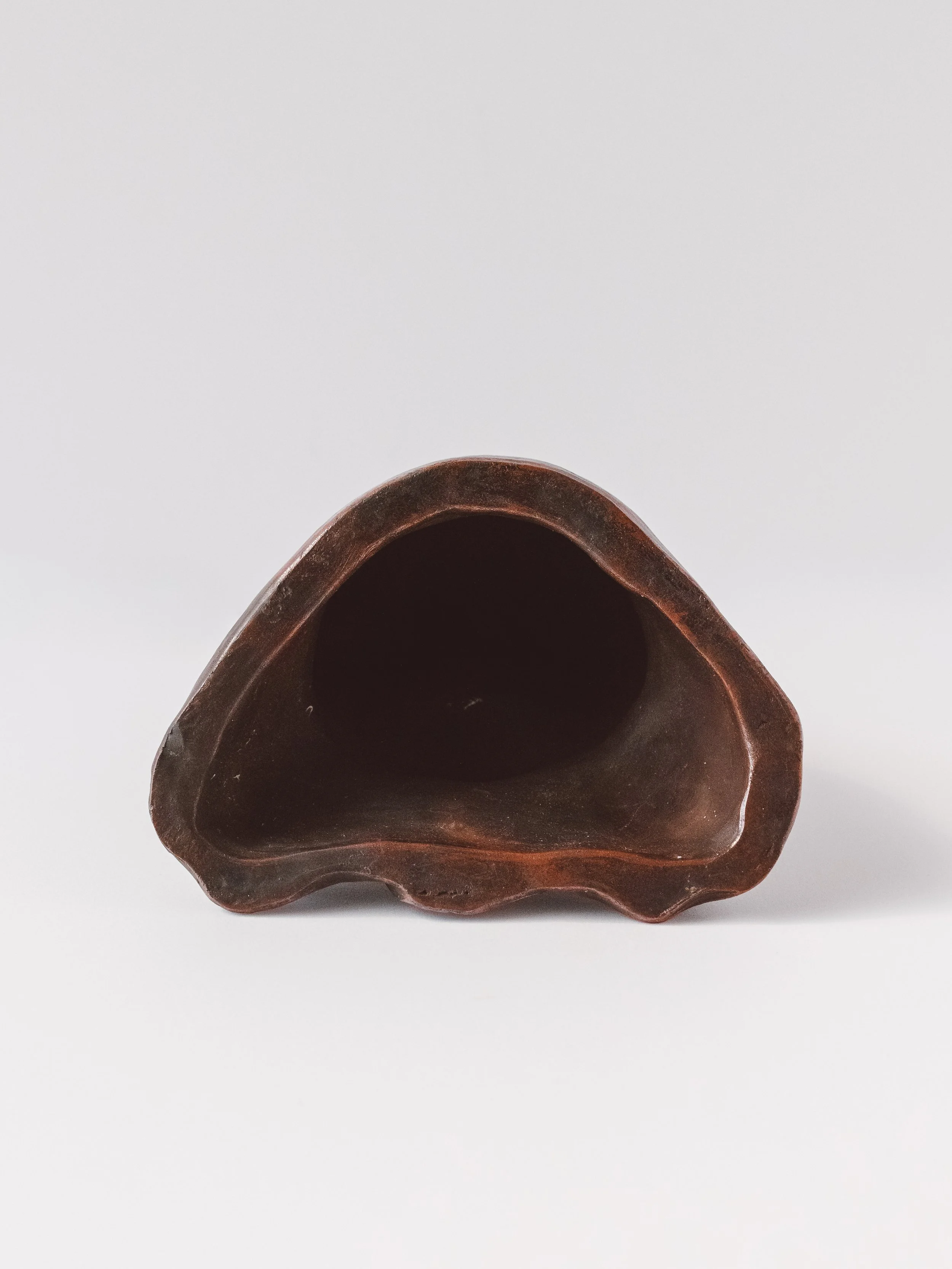 Image 7 of 9
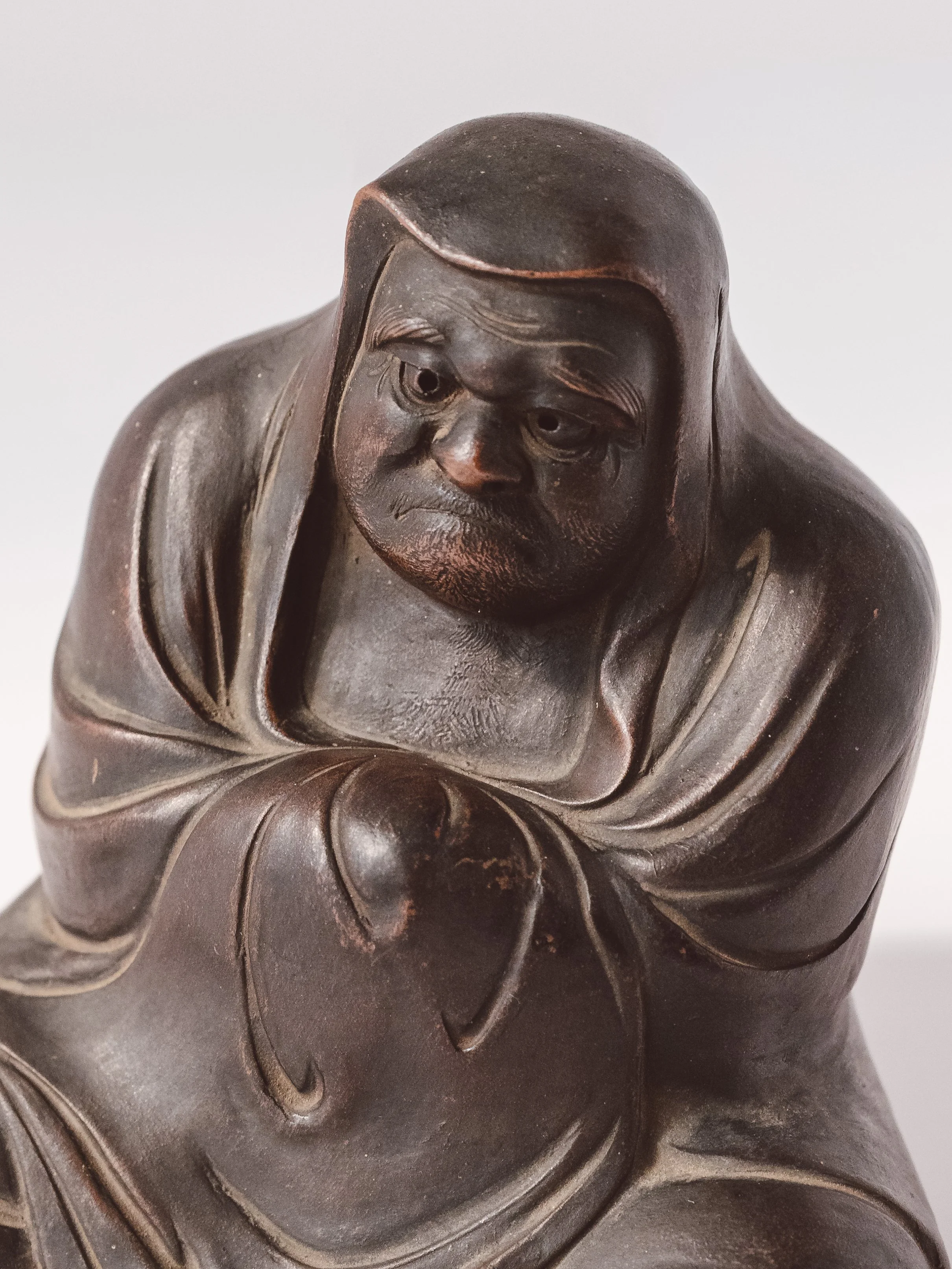 Image 8 of 9
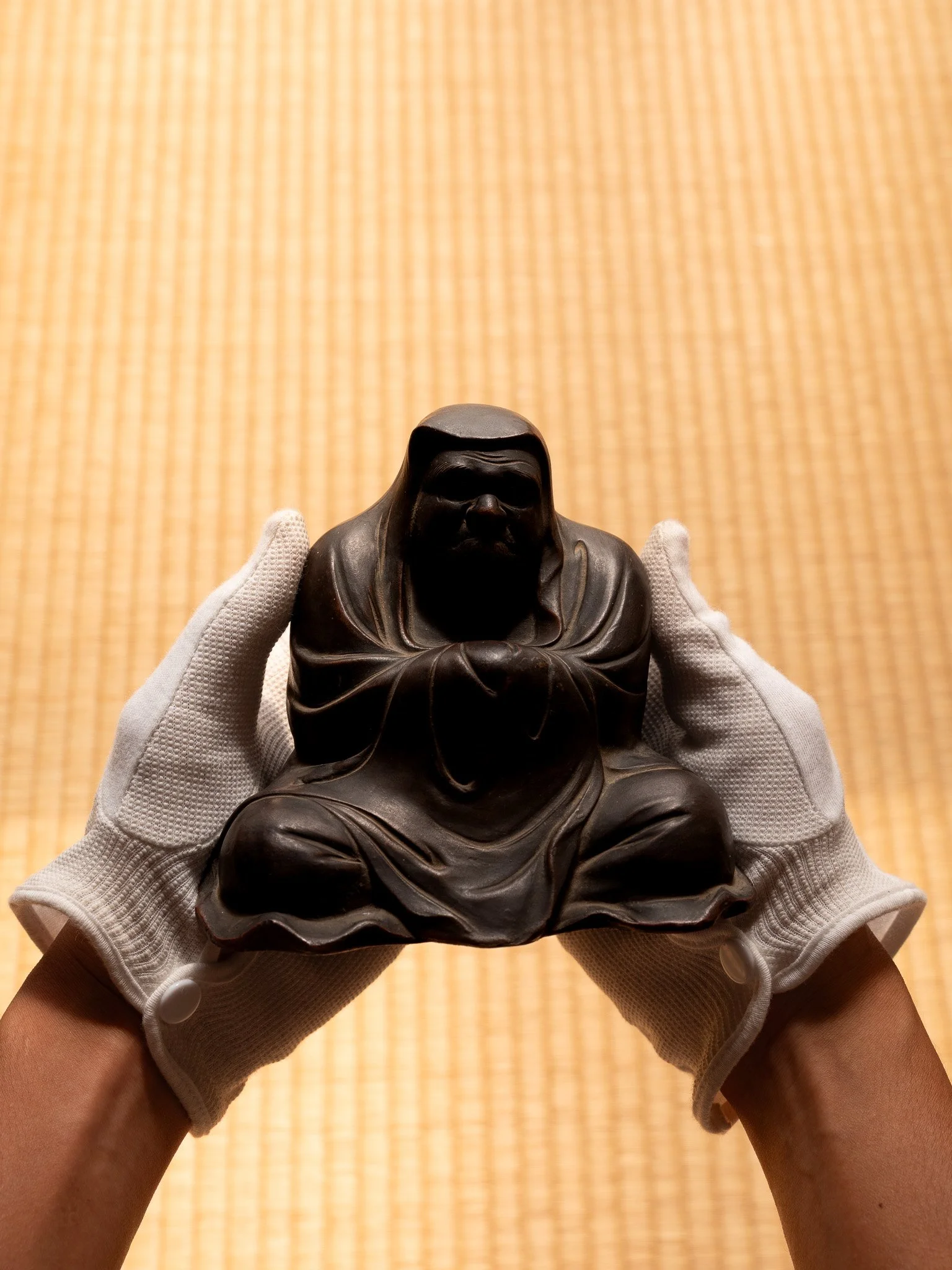 Image 9 of 9