【 The Concept 】
A quiet face rises from the domed top of a small pedestal vessel. The eyes are closed, the lips gently set, and over the brow a tangle of coiled clay gathers like a crown. Turn it around and the back opens into a wide, round mouth. It is a vessel that is also a head, and a head that is also a vessel.
This hand-built clay piece is a replica of one of the rarer forms known from Japan’s Jomon period: the “incense-burner-shaped vessel with a face” (kōro-gata ganmen-tsuki doki) excavated at the Yoshifumi Shell Mound in Chiba Prefecture.
【 When the Sea Came Inland 】
Thousands of years ago, a warming climate raised sea levels, and seawater flowed far up the lower reaches of the Tone River in eastern Japan. People living on the terraces above this inland water gathered shellfish, and over generations the discarded shells grew into great mounds.
The Yoshifumi Shell Mound in Katori, Chiba, is one of these. Its shell layers, made up mainly of sea shells, built up from the Middle Jomon to the beginning of the Final Jomon period, and it is among the largest shell mounds in the lower Tone basin. Within them lay pottery, clay objects, pumice objects, unfinished shell bracelets, animal bones and human remains: everyday life preserved in layers.
【 A Village That Kept Its Treasure 】
Excavations at Yoshifumi began as early as the Meiji era. In 1929, volunteers from the local hamlet formed their own Shell Mound Preservation Society, and that year the site was excavated by Ōyama Kashiwa and the Institute for Prehistoric Research. Ōyama, the second son of General Ōyama Iwao, was an army officer turned prehistorian who had set up a research room for prehistory in his own home in 1924.
The local effort paid off. In 1930 Yoshifumi became the first shell mound in Chiba Prefecture to be designated a National Historic Site of Japan. And instead of sending its finds away, the hamlet kept them. Nearly a century later, the excavated objects are still cared for by the people who live there.
【 A Vessel With a Face 】
Among those finds was the original of this piece: a Late Jomon vessel with a human face. “Kōro-gata” means “incense-burner-shaped,” a name given because the form, a domed body on a flared foot with a large opening, recalls a later incense burner.
Vessels of this shape are known from the end of the Jomon period, and what they were used for is still not known. Some show no trace of burning inside, which has led researchers to suggest they were special ritual objects rather than everyday containers. One that also carries a face is rarer still. The Yoshifumi vessel has few parallels anywhere in Japan, and it was designated a Tangible Cultural Property of Chiba Prefecture in 1959.
【 One Day a Year 】
The original is still held by the local Shell Mound Preservation Society, and once a year, on November 3, Japan’s Culture Day, the society brings it out for public viewing at Toyotamahime Shrine. The shrine is named for Toyotama-hime, a princess of the sea in Japanese myth; for a village built on the shells of an ancient sea, it is a fitting place for the face to appear.
For the rest of the year the original is not on view, which is why replicas like this one are how most people come to meet its face.
【 What Owning This Piece Brings 】
・A rare Jomon form that most people only know from photographs
・A face that changes with the light: calm from the front, open and sculptural from behind
・Hand-built texture, with coiled ropes of clay, pressed seams and a softly polished dark surface
・A conversation piece with real archaeology behind it
A thoughtful gift for anyone drawn to archaeology, ancient Japan or sculptural ceramics.
【 Where to Place It 】
On a bookshelf beside books on art or history. On a desk, where its closed eyes keep quiet company. In a small niche or alcove, lit from one side so the coiled crown throws soft shadows. Turn it now and then; both sides deserve to face the room.
【 Care 】
Intended for display. Not food-safe, and we recommend not using it with fire or liquids. Dust with a soft, dry brush and avoid water. Lift it with both hands, supporting the foot; the applied coils on top are the most delicate part.
【 Reading the Object 】
・Front: an oval face with closed, almond-shaped eyes, a straight nose and full lips
・Crown: coils and knots of clay gathered over the top of the head, including a small ring with a central hole
・Sides: ear-like lugs of curled clay
・Back: a large round opening framed by a thick rolled rim
・Waist: a raised horizontal band where the dome meets the body
・Foot: a flared, hollow pedestal
・Surface: unglazed dark brown to near-black clay with warmer brown flashes
【 Presence 】
Small enough to hold in two hands, yet it holds a shelf the way a portrait does: ancient, closed-eyed and patient.
Archive Note
The year 1929 refers to the excavation of the original vessel at the Yoshifumi Shell Mound. It is not the production date of this piece. This is a later replica; its maker and production date are unknown.
Provenance Note
Sourced in Japan. This is a reproduction made for display, not an archaeological artifact and not the original cultural property.


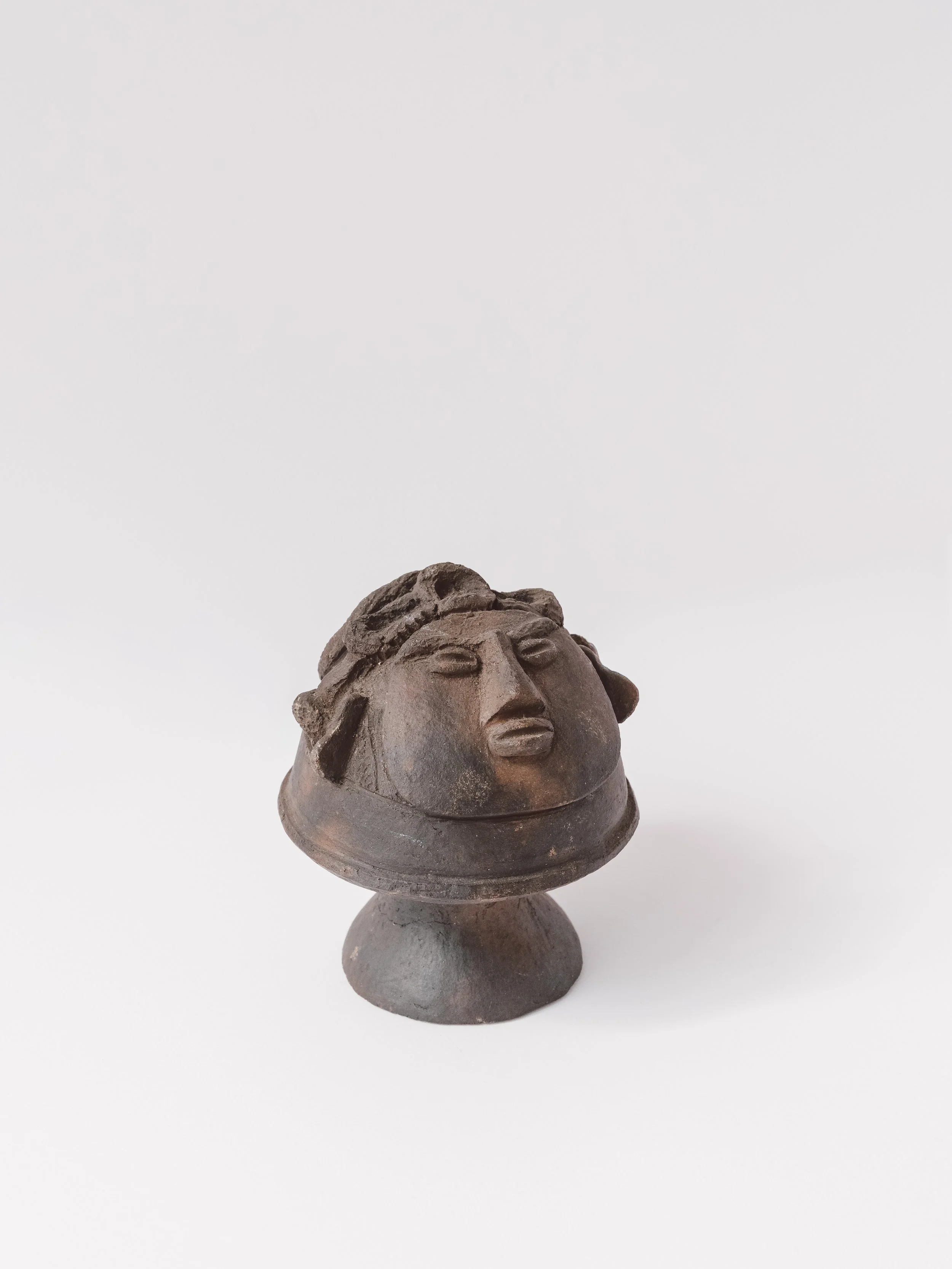 Image 1 of 13
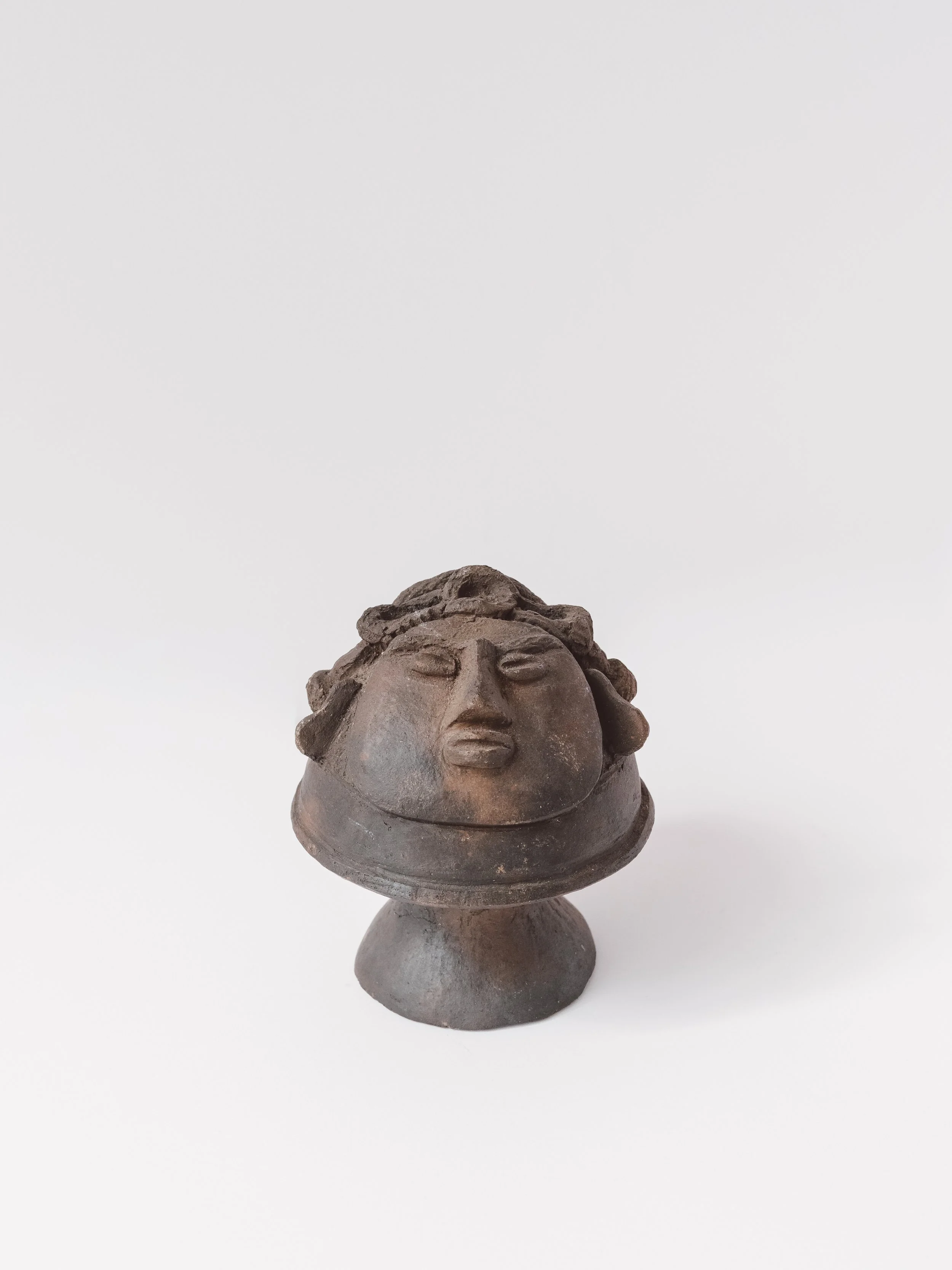 Image 2 of 13
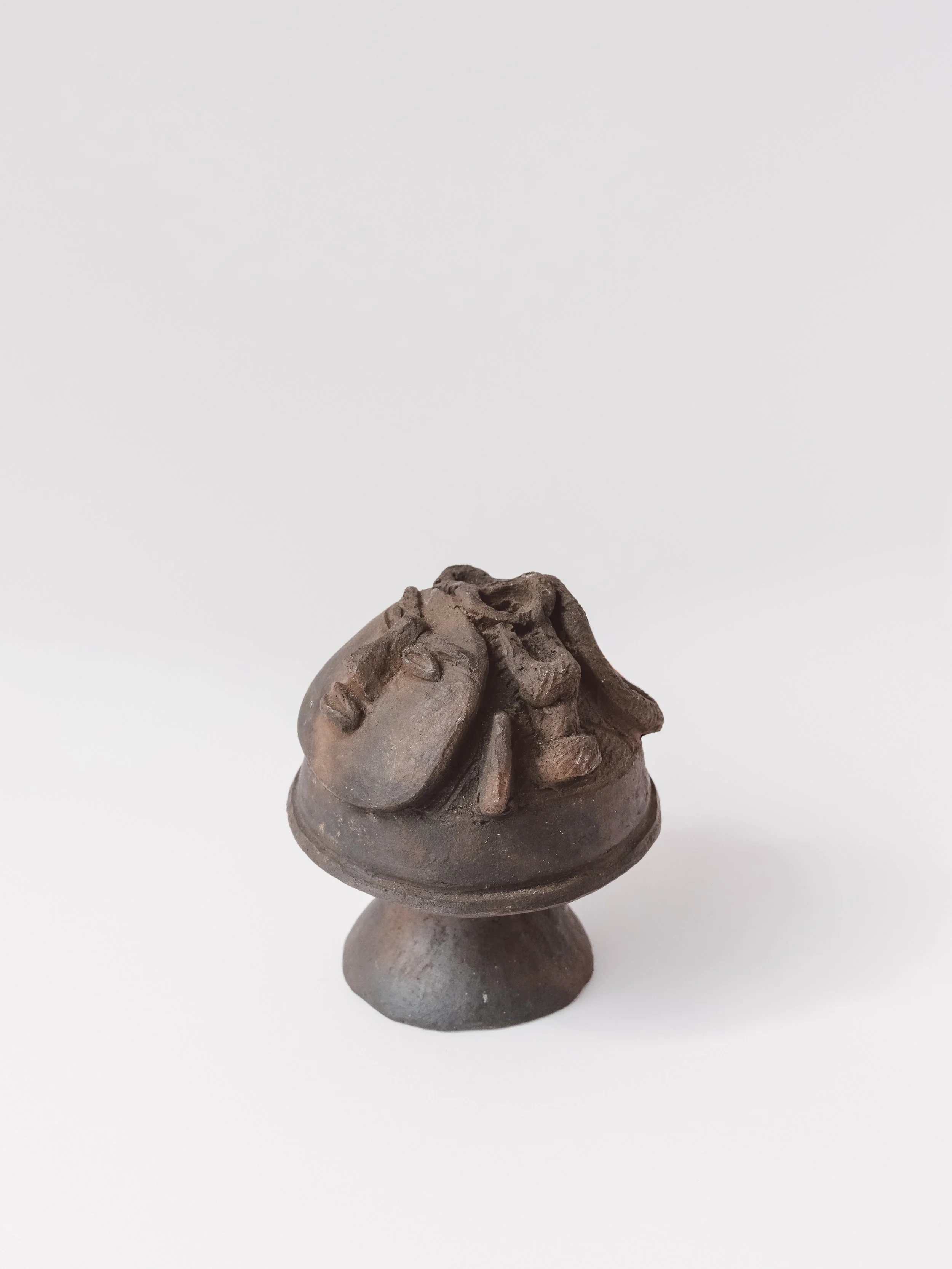 Image 3 of 13
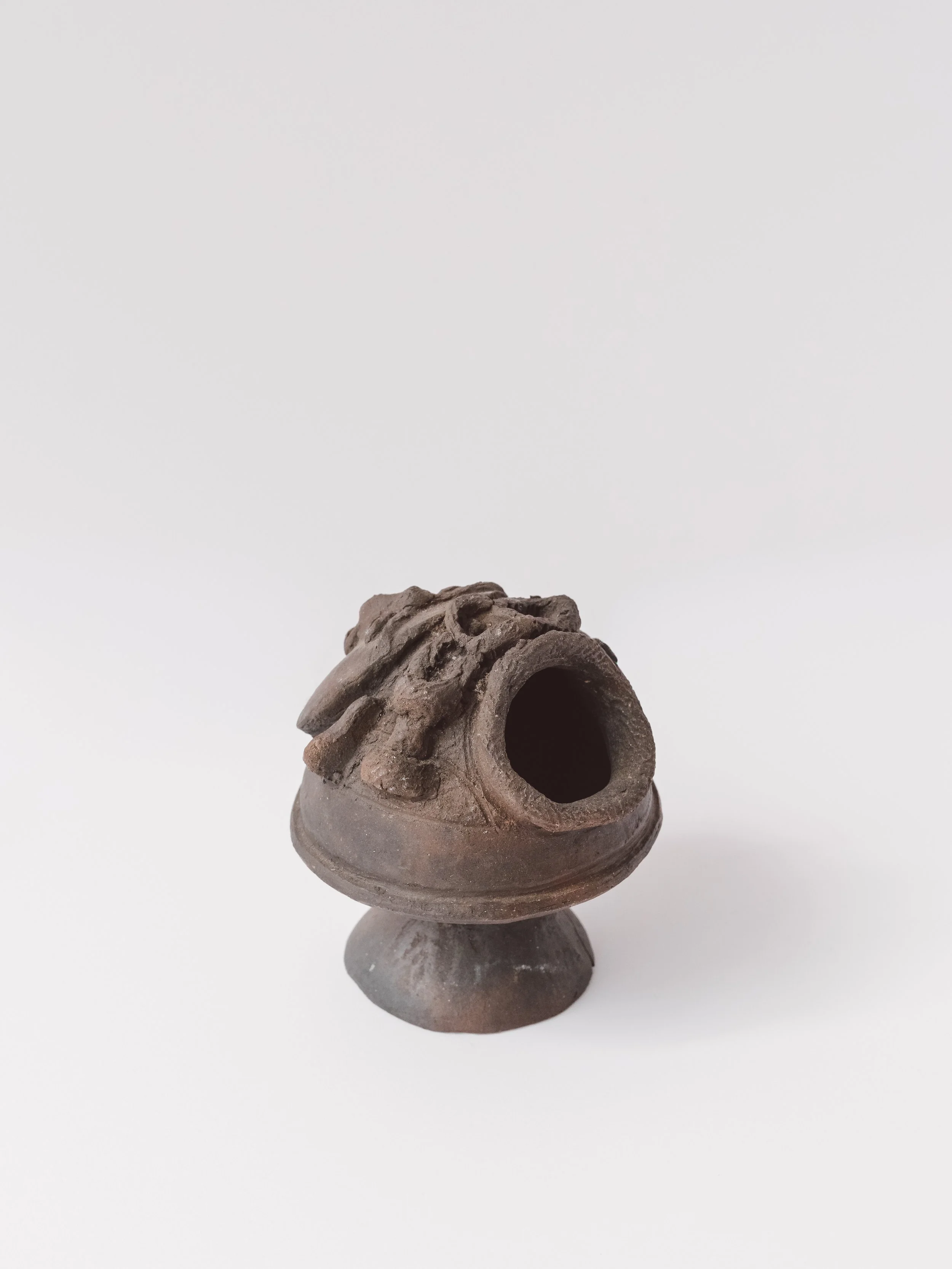 Image 4 of 13
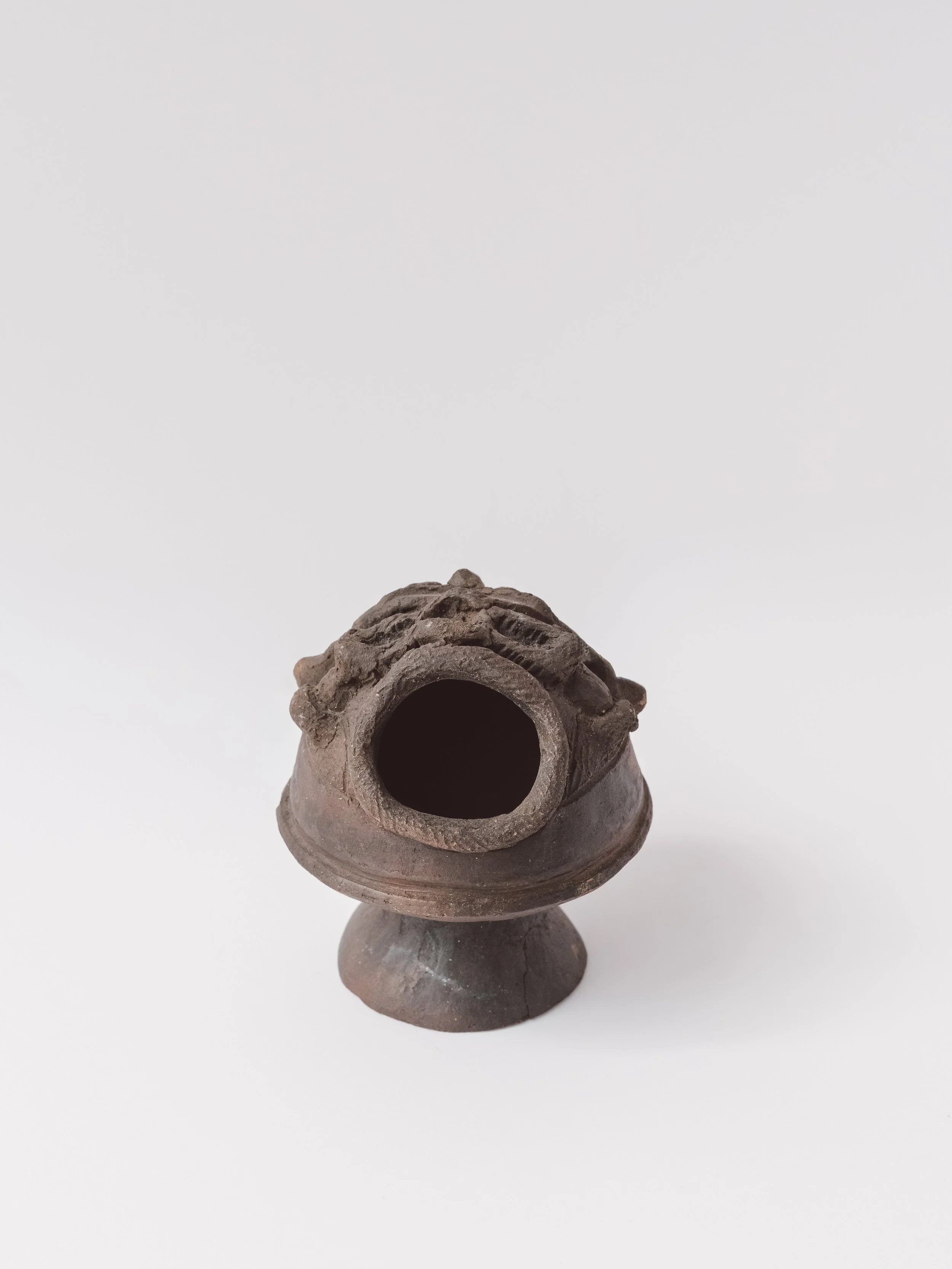 Image 5 of 13
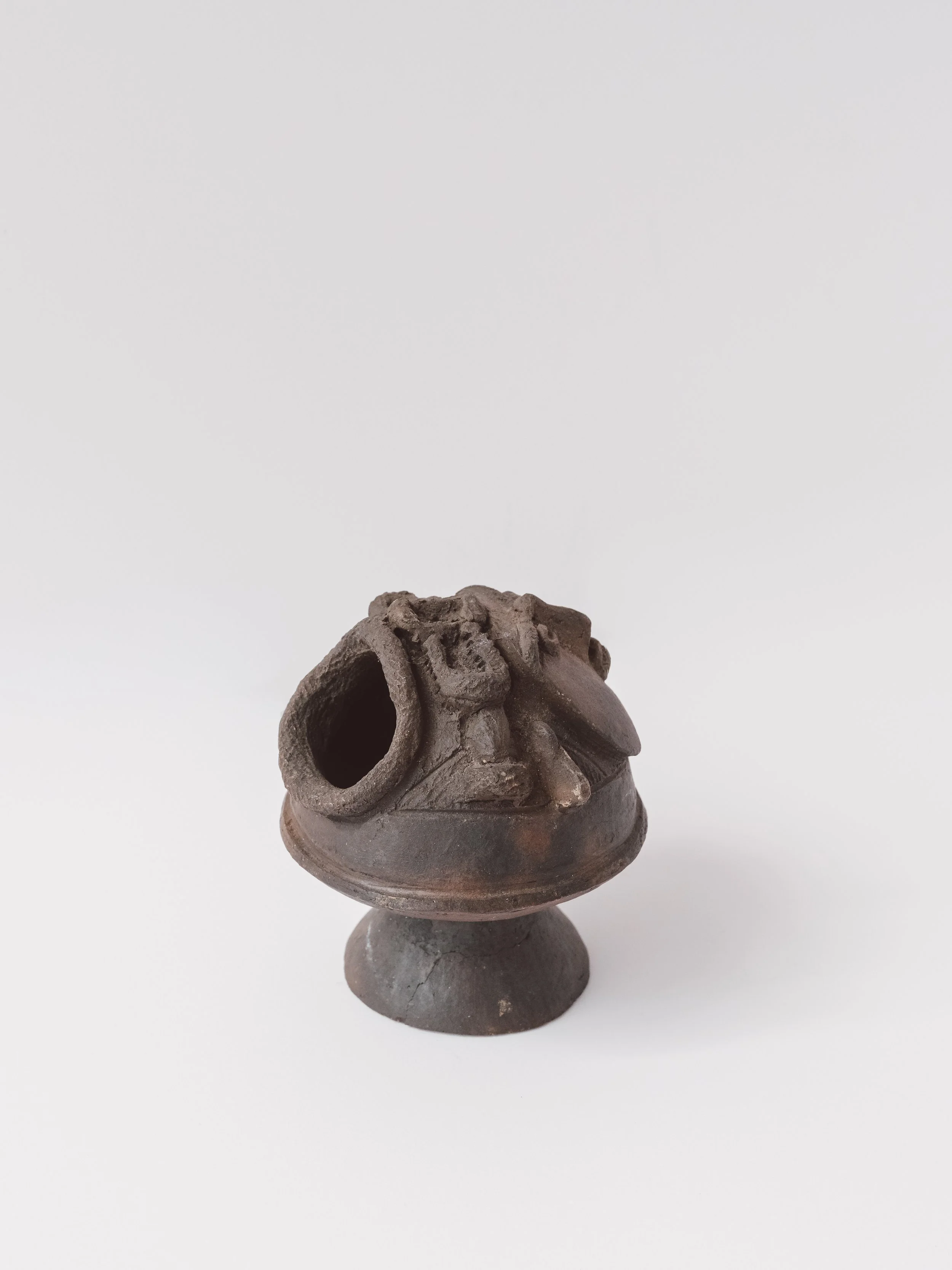 Image 6 of 13
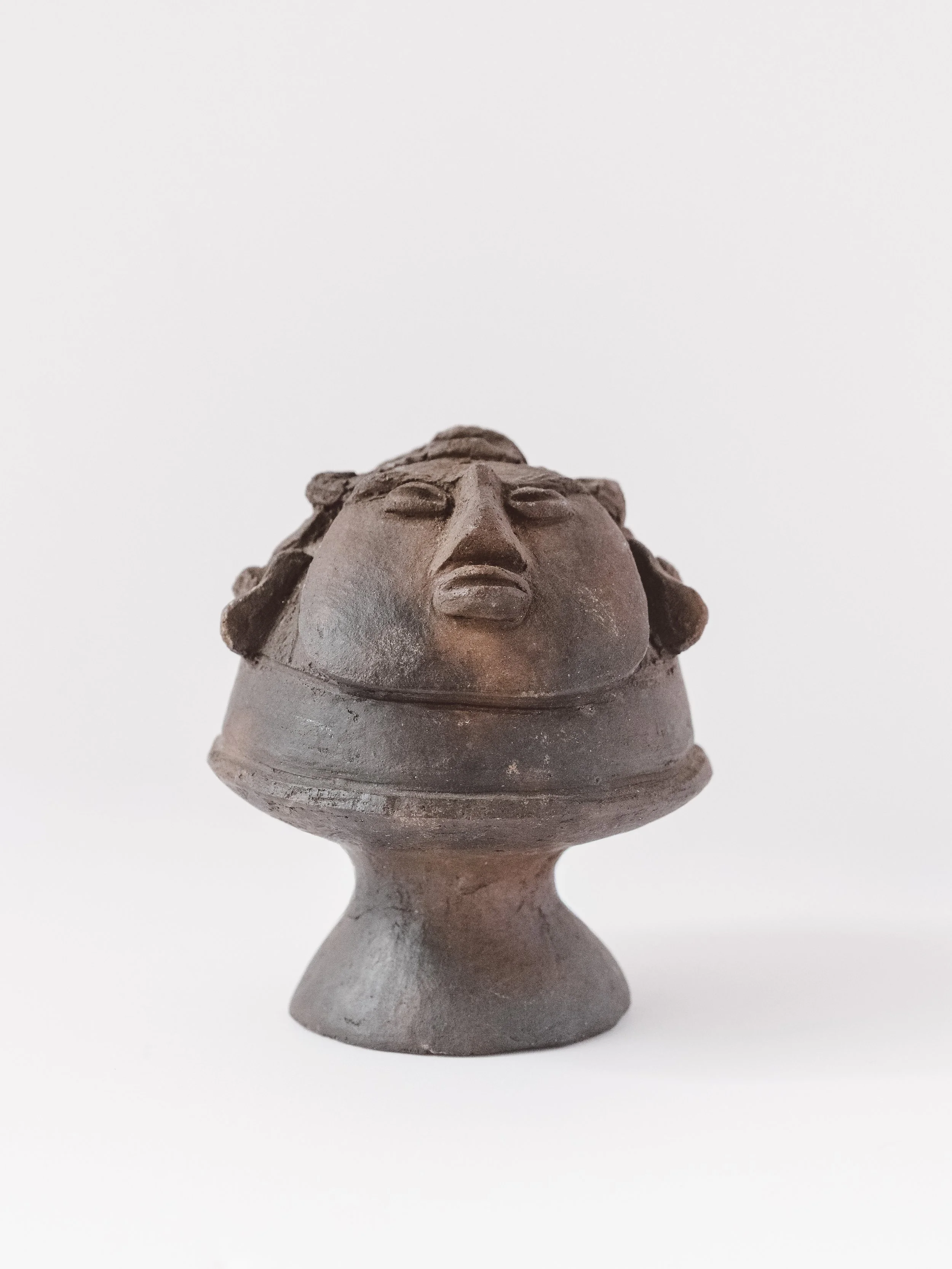 Image 7 of 13
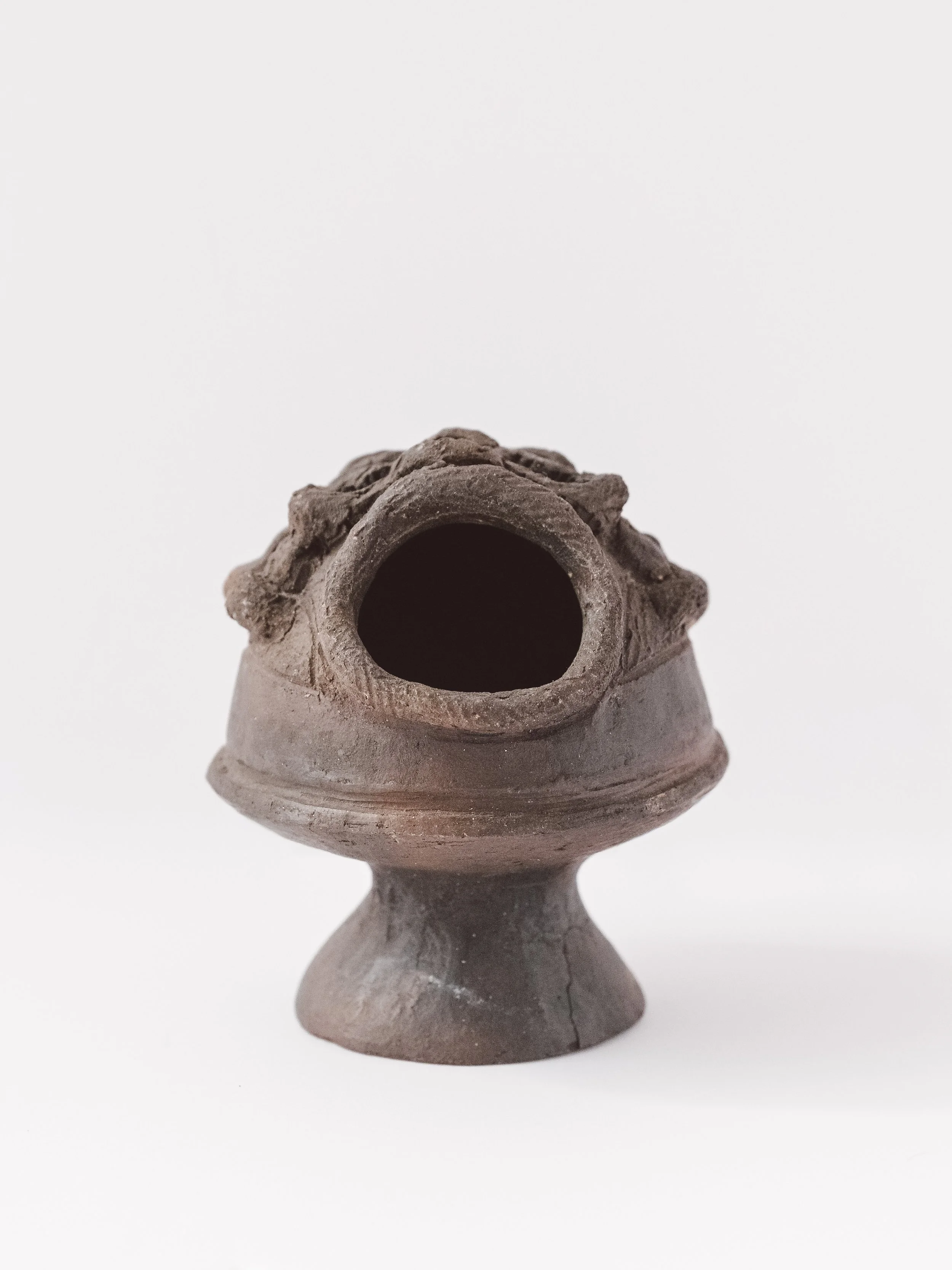 Image 8 of 13
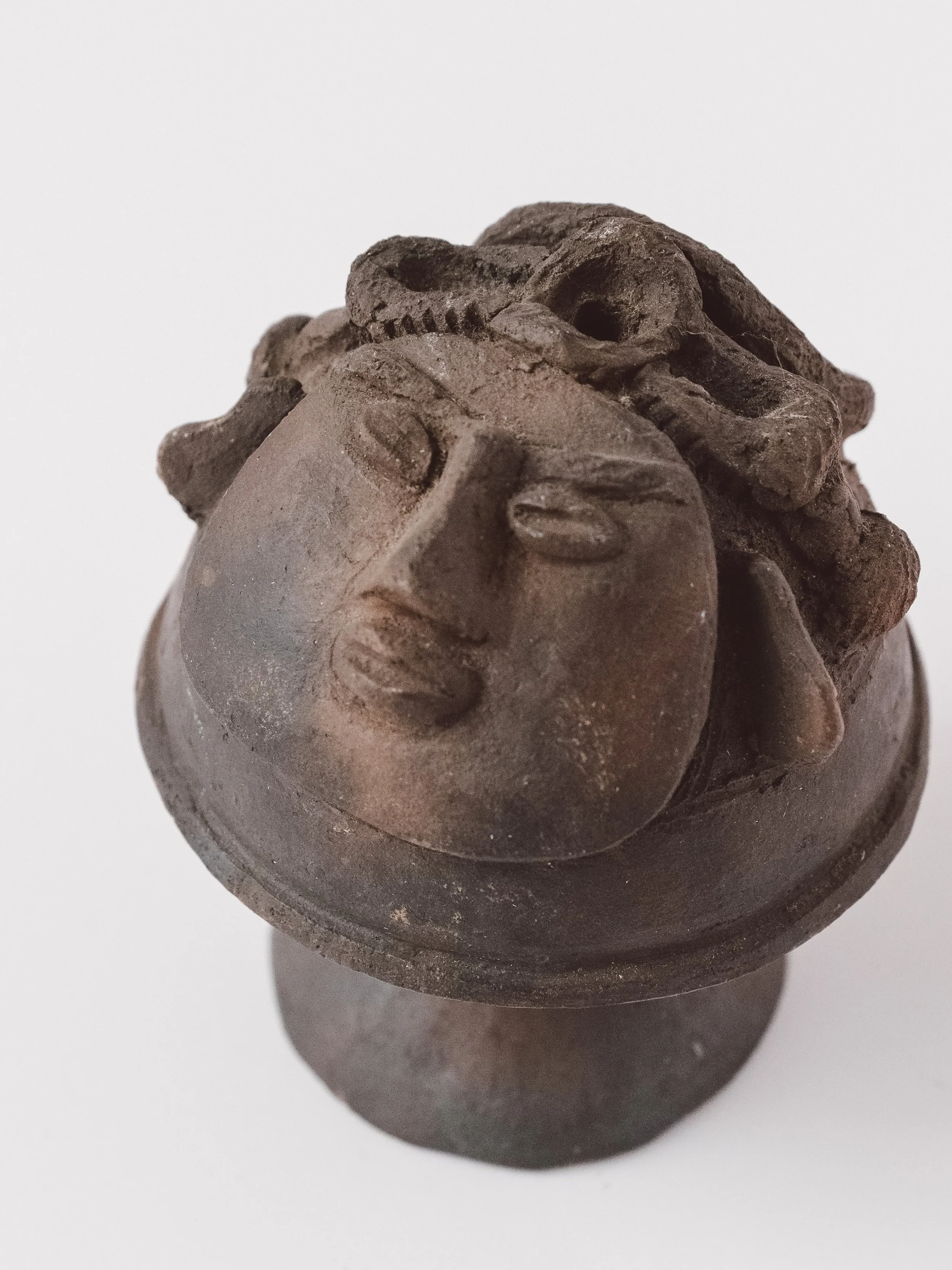 Image 9 of 13
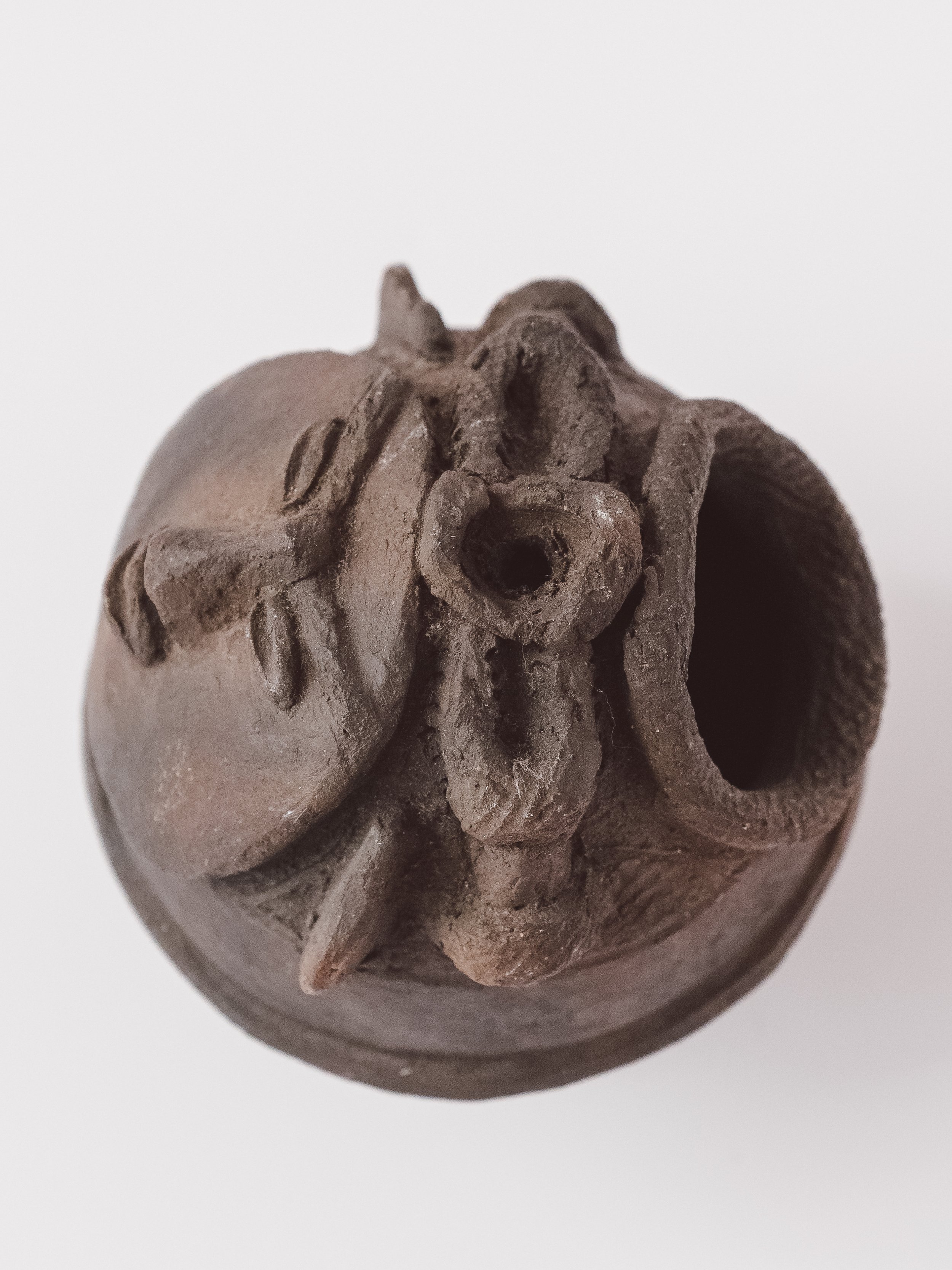 Image 10 of 13
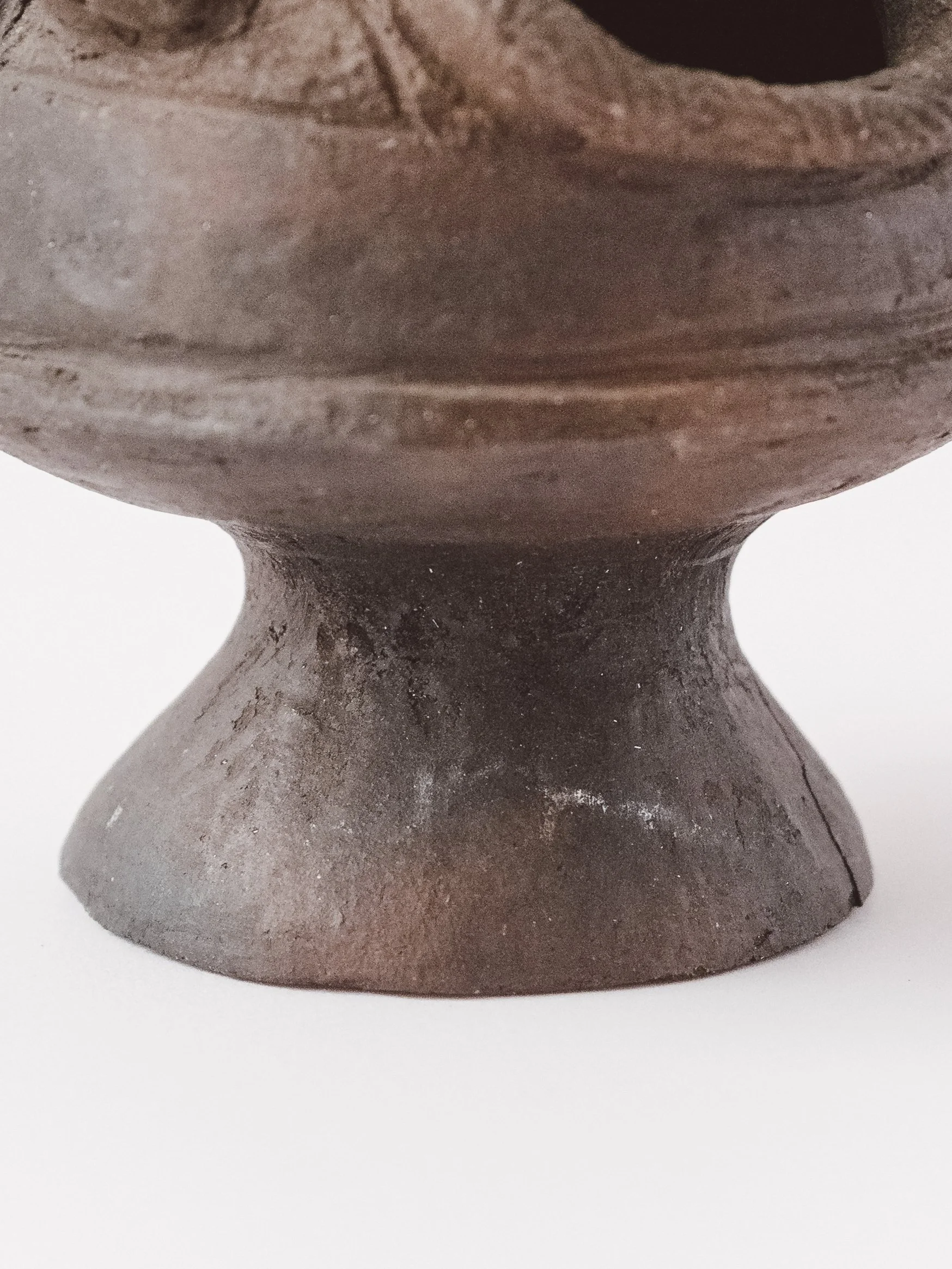 Image 11 of 13
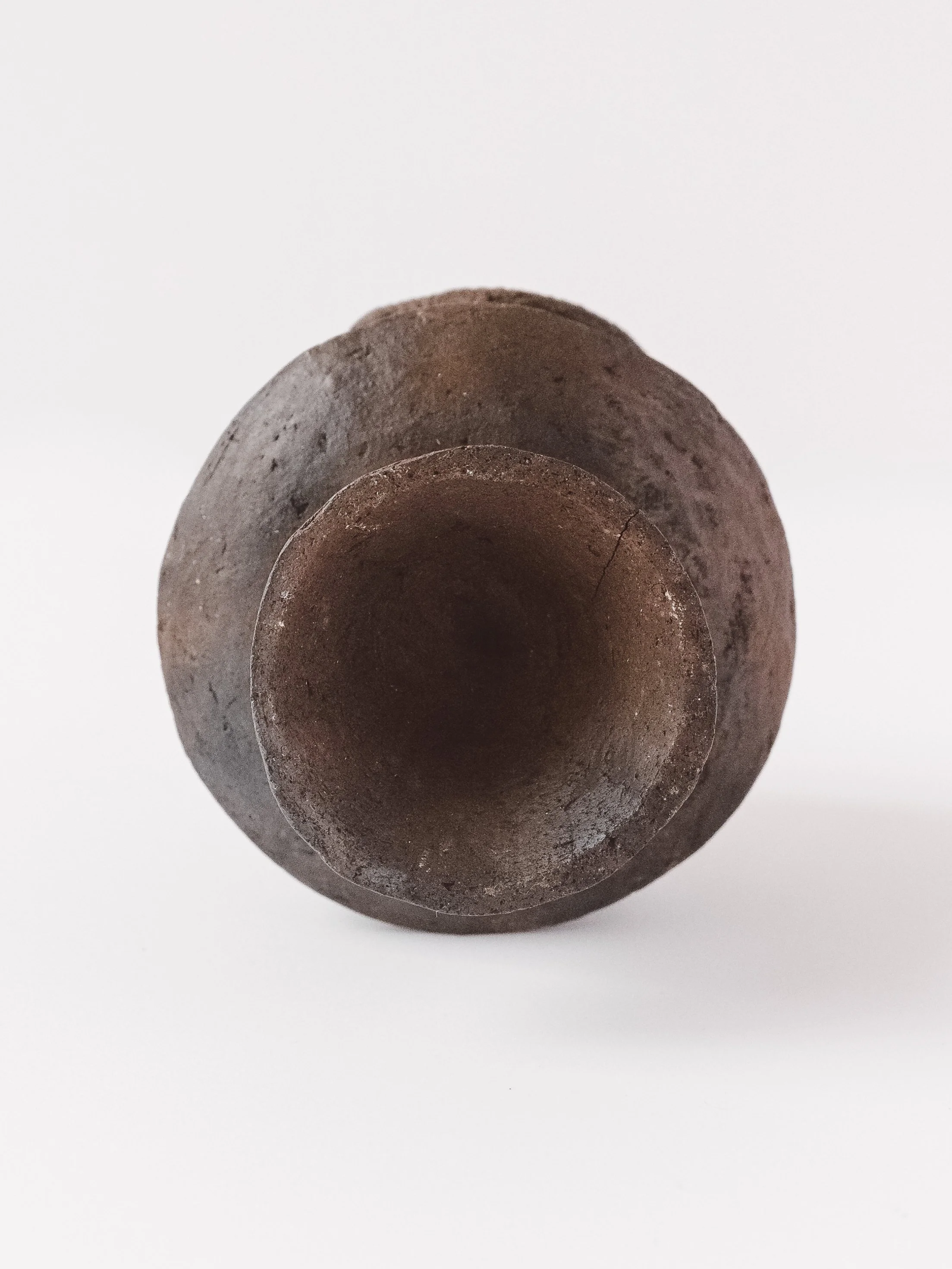 Image 12 of 13
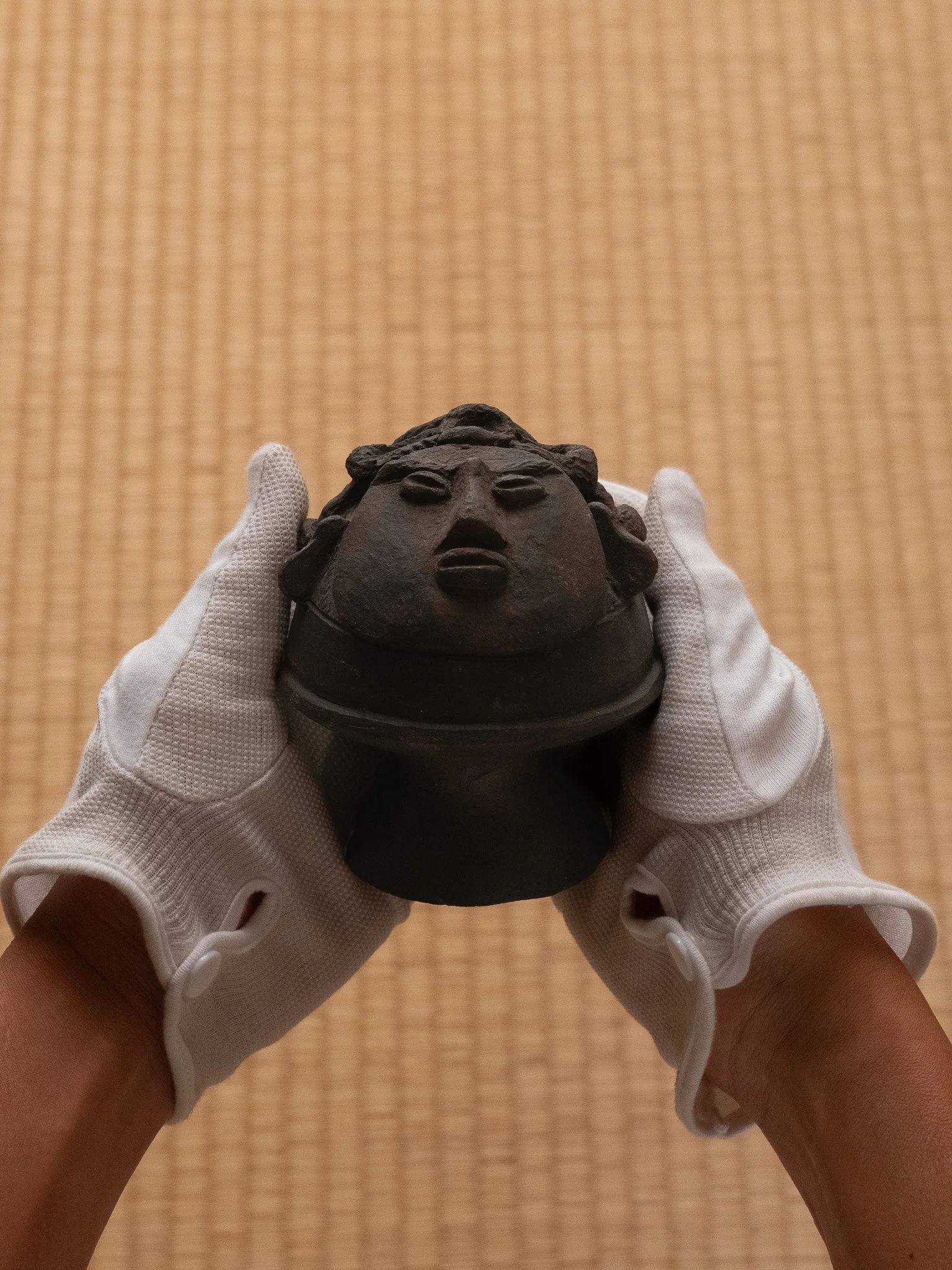 Image 13 of 13