【 The Concept 】
A pair of woven rings, a large and a small, made to stand between a hot pot and the table it would otherwise scorch. Each is a thick torus of coiled plant fibre — a core bundle bound round and round with finer twisted cord, wound so tight the ring holds its shape under any weight set on it. The open centre is not decoration but function: a round-bottomed pot or an old rice kettle settles its curve down into the hole, and the raised ring takes the load evenly all the way around.
This is the archive's second working tool, and it answers the first. Where BOUND BESOM stands the grass up into a fan and sweeps, TWINED REST lays the grass down into a circle and holds; one is the tool of clearing, the other the tool of setting down. Both come from the same world — the hearth and the harvest, straw put to use in the months when the fields are quiet — and both earn their place here on use alone.
There is no picture in it, nothing represented. Like the broom, it is simply itself: a thing wound from field-grass to do one plain job, and handsome for doing it without a wasted motion.
【 The Function 】
The pair is light and dense at once — the larger ring 21 centimetres across at 119 grams, the smaller 18 at 83 — each a solid coil that gives a little under a heavy pot and springs back. The two sizes answer two vessels: the large ring for a deep pot or kettle, the small for a teapot or a single bowl. The plant fibre is a natural insulator, a wound wall of dead-air pockets that holds the heat of a pot off the wood beneath it, which is the whole reason the thing exists. And at the outer edge of each, a small braided loop is worked into the coil — not added afterward but part of the binding — so the trivet hangs on a nail by the stove between meals, its own quiet ring on the wall.
【 The Texture 】
The colour is pale field-grass — straw and faint green going to a soft grey where the light falls flat — and the whole surface is rhythm: the fine cord crosses the fat core in close, even diagonals, so the ring reads as a continuous run of ridges, a spiral of small shadows around the circle. Nothing is dyed; the tone is the grass's own, mottled slightly from stalk to stalk the way a natural fibre always is.
Run a thumb around it and it is firm, faintly waxy, warm to the touch in the way only plant fibre is. The two rings do not quite match — the larger a touch greyer, the binding a hair wider here than there, the loop on one tied a little differently from the loop on the other. That is the honest unevenness of two things wound by hand rather than turned out of a mould, and it is the reason the pair sits together as kin rather than copies.
【 Presence 】
Much of the archive is made to be looked at. This pair, like the broom before it, is made to be used — and, like the broom, it holds the wall well when it is not: two pale grass circles hung by the stove, quiet, matter-of-fact, ready. Set them on the table under a steaming pot and they disappear into the work; lift the pot away and they are simply two well-made rings, warm-coloured and plain.
It is among the humblest things in the collection, and it keeps the collection's oldest promise — that a thing wound from field-grass to do one honest job is worth setting down beside the gold and the glaze, and keeping.
Sourced from a private collection in the Shikoku region, Japan.
【 The Concept 】
A pair of woven rings, a large and a small, made to stand between a hot pot and the table it would otherwise scorch. Each is a thick torus of coiled plant fibre — a core bundle bound round and round with finer twisted cord, wound so tight the ring holds its shape under any weight set on it. The open centre is not decoration but function: a round-bottomed pot or an old rice kettle settles its curve down into the hole, and the raised ring takes the load evenly all the way around.
This is the archive's second working tool, and it answers the first. Where BOUND BESOM stands the grass up into a fan and sweeps, TWINED REST lays the grass down into a circle and holds; one is the tool of clearing, the other the tool of setting down. Both come from the same world — the hearth and the harvest, straw put to use in the months when the fields are quiet — and both earn their place here on use alone.
There is no picture in it, nothing represented. Like the broom, it is simply itself: a thing wound from field-grass to do one plain job, and handsome for doing it without a wasted motion.
【 The Function 】
The pair is light and dense at once — the larger ring 21 centimetres across at 119 grams, the smaller 18 at 83 — each a solid coil that gives a little under a heavy pot and springs back. The two sizes answer two vessels: the large ring for a deep pot or kettle, the small for a teapot or a single bowl. The plant fibre is a natural insulator, a wound wall of dead-air pockets that holds the heat of a pot off the wood beneath it, which is the whole reason the thing exists. And at the outer edge of each, a small braided loop is worked into the coil — not added afterward but part of the binding — so the trivet hangs on a nail by the stove between meals, its own quiet ring on the wall.
【 The Texture 】
The colour is pale field-grass — straw and faint green going to a soft grey where the light falls flat — and the whole surface is rhythm: the fine cord crosses the fat core in close, even diagonals, so the ring reads as a continuous run of ridges, a spiral of small shadows around the circle. Nothing is dyed; the tone is the grass's own, mottled slightly from stalk to stalk the way a natural fibre always is.
Run a thumb around it and it is firm, faintly waxy, warm to the touch in the way only plant fibre is. The two rings do not quite match — the larger a touch greyer, the binding a hair wider here than there, the loop on one tied a little differently from the loop on the other. That is the honest unevenness of two things wound by hand rather than turned out of a mould, and it is the reason the pair sits together as kin rather than copies.
【 Presence 】
Much of the archive is made to be looked at. This pair, like the broom before it, is made to be used — and, like the broom, it holds the wall well when it is not: two pale grass circles hung by the stove, quiet, matter-of-fact, ready. Set them on the table under a steaming pot and they disappear into the work; lift the pot away and they are simply two well-made rings, warm-coloured and plain.
It is among the humblest things in the collection, and it keeps the collection's oldest promise — that a thing wound from field-grass to do one honest job is worth setting down beside the gold and the glaze, and keeping.
Sourced from a private collection in the Shikoku region, Japan.


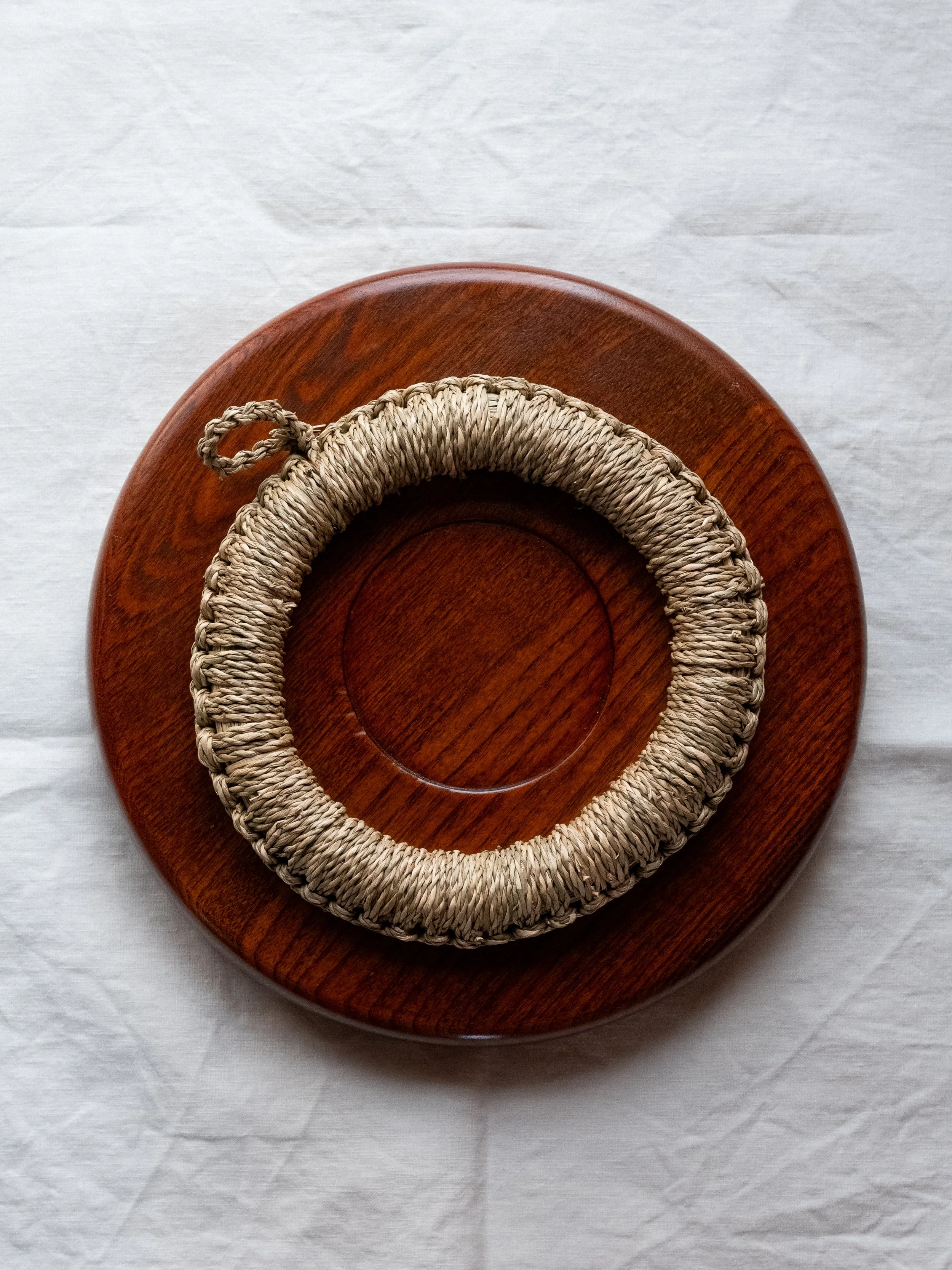 Image 1 of 5
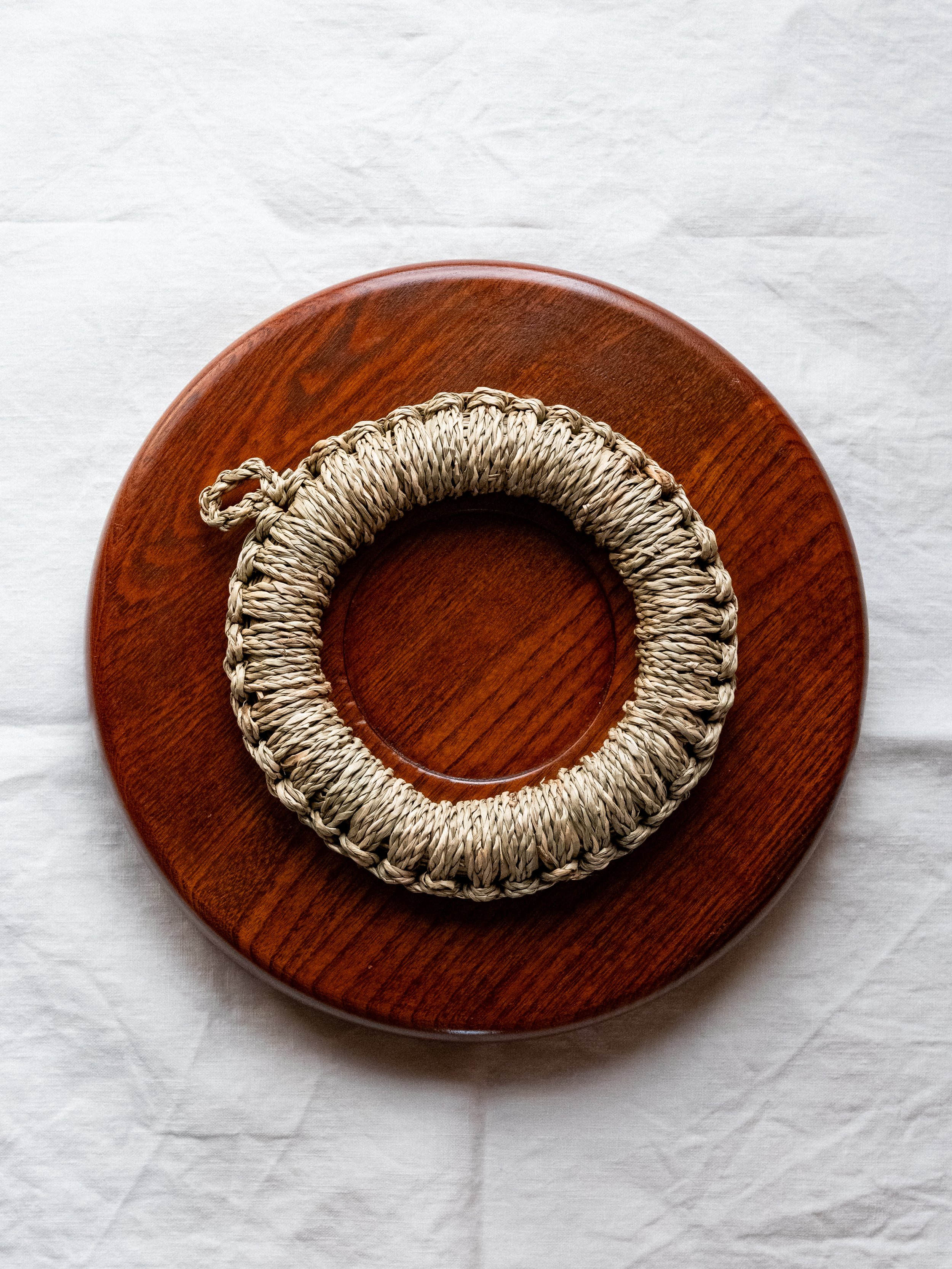 Image 2 of 5
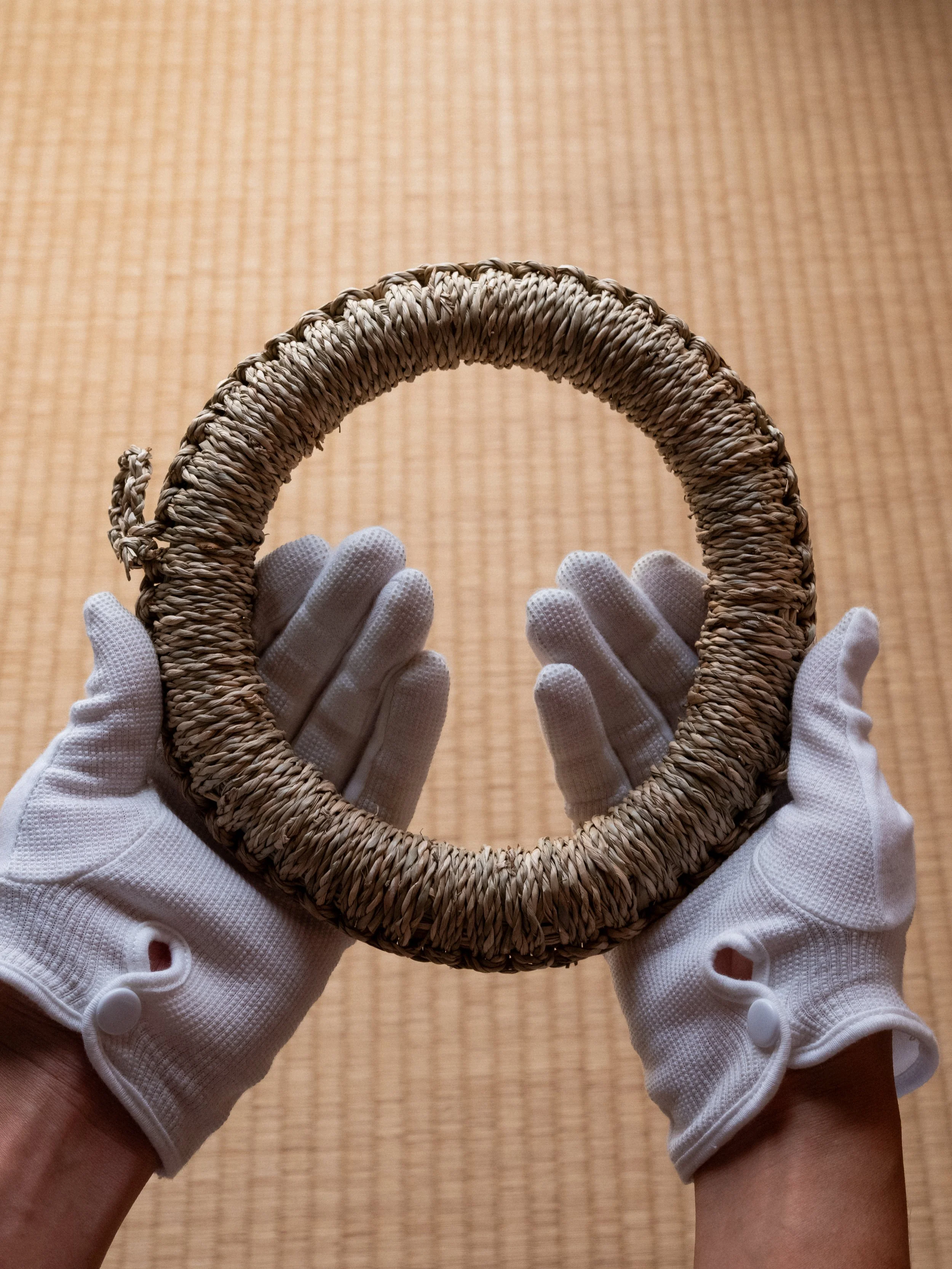 Image 3 of 5
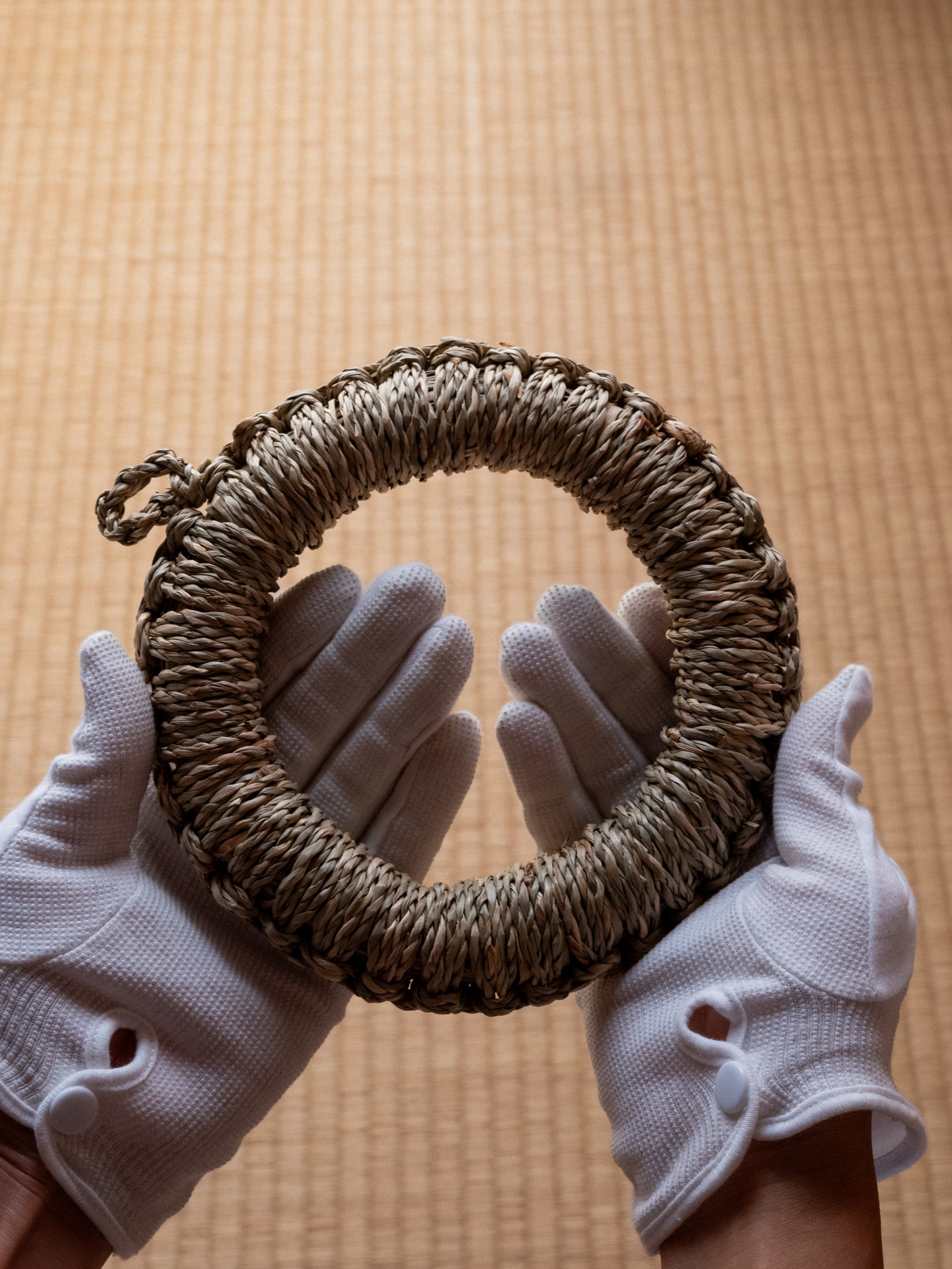 Image 4 of 5
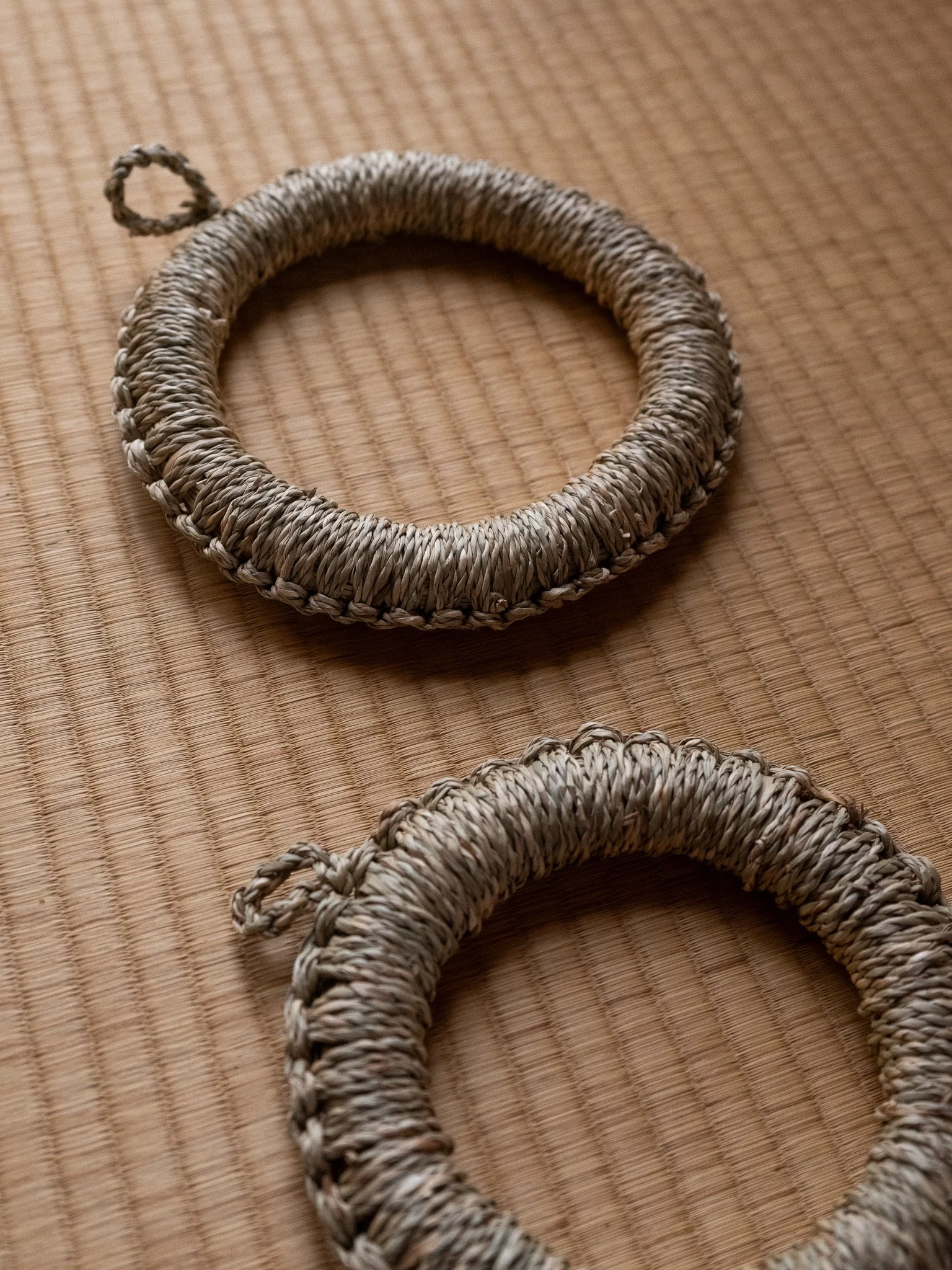 Image 5 of 5