【 The Concept 】
Two laughing gods, carved as a matched pair — the complete cycle of good fortune held in a single set. On one side stands Daikoku, god of the harvest, wealth, and the household: a broad flat hood pulled low, a great treasure sack slung behind the shoulder, the uchide-no-kozuchi (the "magic mallet" that strikes out riches) raised in one hand, and beneath him the woven rice bales that signal a full storehouse. On the other side sits Ebisu, god of the sea, of honest labour and thriving trade, in a folded court cap with a large sea bream (tai) tucked under one arm — the fish that means medetai, "auspicious."
Together they are the classic nifukujin pairing of Japanese folk belief: Daikoku the keeper of what is stored and grown, Ebisu the bringer of what is caught and traded. One guards the home and the harvest; the other blesses the shop and the sea. Owned as a pair, they were meant to cover every side of prosperity at once.
Both figures share the same warm amber wood, the same round, blocky silhouette, and the same broad, crinkle-eyed smile — the unmistakable ebisu-gao, the "lucky face" of folk carving. Detail is left deliberately bold: strong tool-cut ridges on the robes, the mane of the sack, the scales of the fish, and a serrated, leaf-like band around each base. The back of each figure carries an incised radiating motif — a folk auspicious mark rather than mere decoration.
【 The Function 】
A pair of engimono (auspicious good-luck figures) for a shelf, an entrance console, a cabinet top, a tokonoma alcove, or a shop counter. Displayed side by side they make a warm, characterful centrepiece; each stands low and stable on a flat base. A traditional, lived-in emblem of household security and thriving business.
【 The Texture 】
Solid wood with a soft amber sheen and a clearly visible straight grain. Smooth, rounded volumes across the bodies contrast with crisp chisel cuts in the robes, the sack, the fish scales, and the serrated bases. The surface has the mellow, hand-worn feel of a piece that has been kept and handled for years.
【 Presence 】
Warm, jovial, benevolent. Nothing solemn here — these are the smiling, approachable gods of everyday luck, carved with folk humour and an easy roundness that invites a second look.
Archive Note: The number in the name (1450) is a catalogue reference echoing the Muromachi era, when the tradition of pairing Ebisu and Daikoku took hold. It is NOT the date this piece was made.
Provenance Note: Sourced from a private collection in Japan.
Condition Note: A vintage pair sold as acquired. Both figures show light surface wear and some rubbing to the finish (most visible on the belly of the Daikoku figure), minor nicks, and the natural darkening and patina of aged wood. Fine grain lines inherent to the wood may be present. No significant structural damage was observed. Please see the photographs as part of the description.
【 The Concept 】
Two laughing gods, carved as a matched pair — the complete cycle of good fortune held in a single set. On one side stands Daikoku, god of the harvest, wealth, and the household: a broad flat hood pulled low, a great treasure sack slung behind the shoulder, the uchide-no-kozuchi (the "magic mallet" that strikes out riches) raised in one hand, and beneath him the woven rice bales that signal a full storehouse. On the other side sits Ebisu, god of the sea, of honest labour and thriving trade, in a folded court cap with a large sea bream (tai) tucked under one arm — the fish that means medetai, "auspicious."
Together they are the classic nifukujin pairing of Japanese folk belief: Daikoku the keeper of what is stored and grown, Ebisu the bringer of what is caught and traded. One guards the home and the harvest; the other blesses the shop and the sea. Owned as a pair, they were meant to cover every side of prosperity at once.
Both figures share the same warm amber wood, the same round, blocky silhouette, and the same broad, crinkle-eyed smile — the unmistakable ebisu-gao, the "lucky face" of folk carving. Detail is left deliberately bold: strong tool-cut ridges on the robes, the mane of the sack, the scales of the fish, and a serrated, leaf-like band around each base. The back of each figure carries an incised radiating motif — a folk auspicious mark rather than mere decoration.
【 The Function 】
A pair of engimono (auspicious good-luck figures) for a shelf, an entrance console, a cabinet top, a tokonoma alcove, or a shop counter. Displayed side by side they make a warm, characterful centrepiece; each stands low and stable on a flat base. A traditional, lived-in emblem of household security and thriving business.
【 The Texture 】
Solid wood with a soft amber sheen and a clearly visible straight grain. Smooth, rounded volumes across the bodies contrast with crisp chisel cuts in the robes, the sack, the fish scales, and the serrated bases. The surface has the mellow, hand-worn feel of a piece that has been kept and handled for years.
【 Presence 】
Warm, jovial, benevolent. Nothing solemn here — these are the smiling, approachable gods of everyday luck, carved with folk humour and an easy roundness that invites a second look.
Archive Note: The number in the name (1450) is a catalogue reference echoing the Muromachi era, when the tradition of pairing Ebisu and Daikoku took hold. It is NOT the date this piece was made.
Provenance Note: Sourced from a private collection in Japan.
Condition Note: A vintage pair sold as acquired. Both figures show light surface wear and some rubbing to the finish (most visible on the belly of the Daikoku figure), minor nicks, and the natural darkening and patina of aged wood. Fine grain lines inherent to the wood may be present. No significant structural damage was observed. Please see the photographs as part of the description.


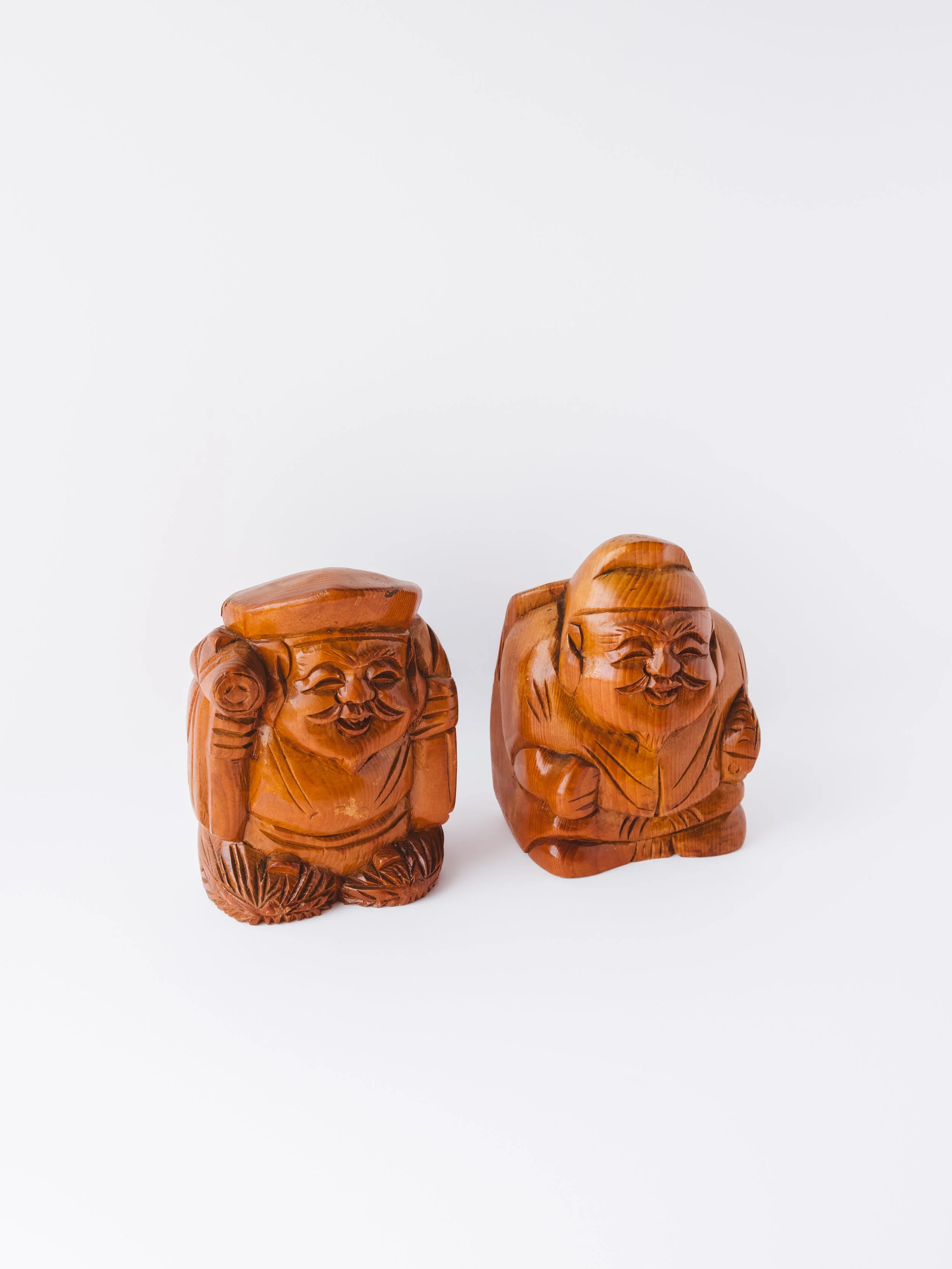 Image 1 of 15
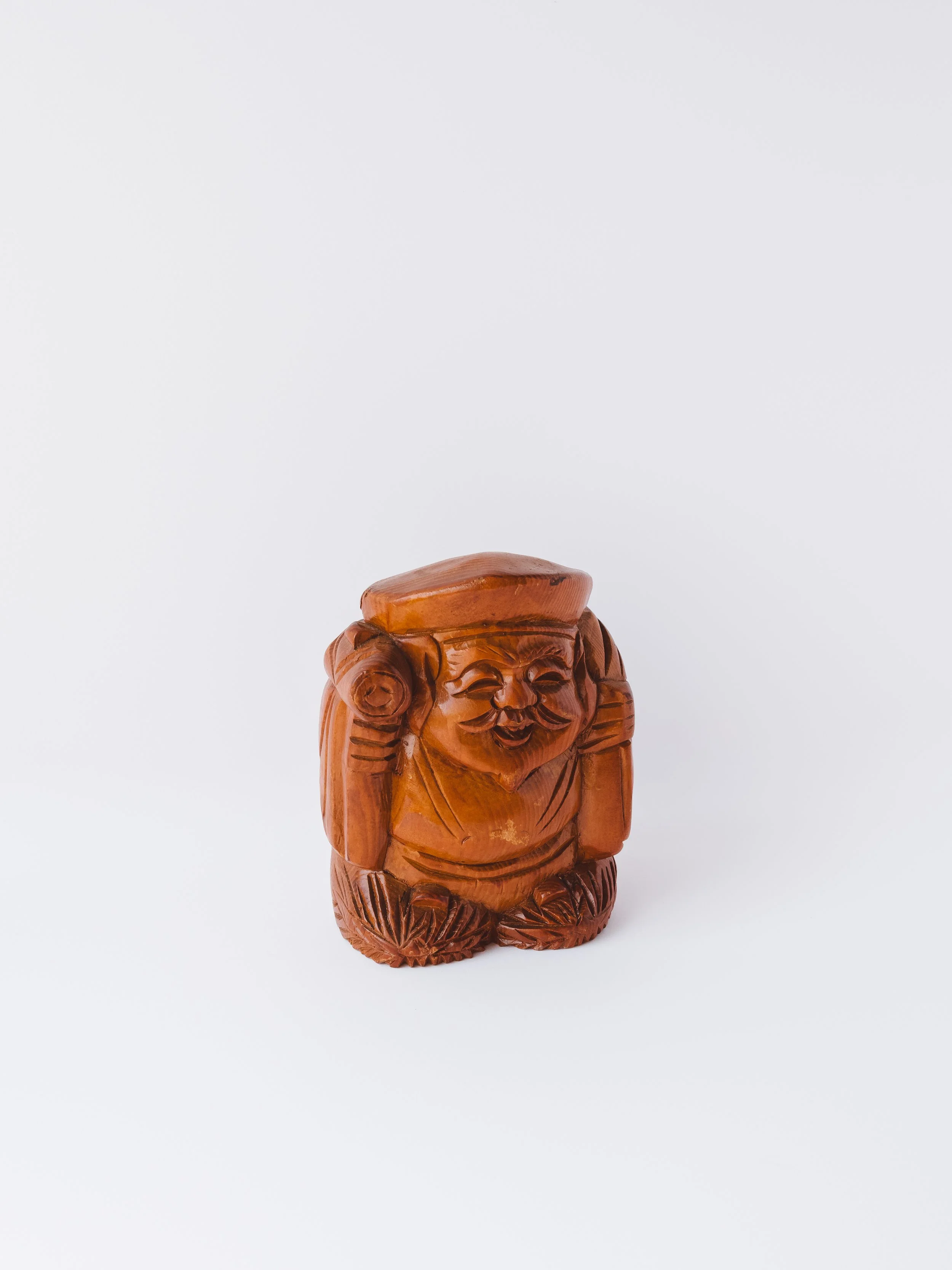 Image 2 of 15
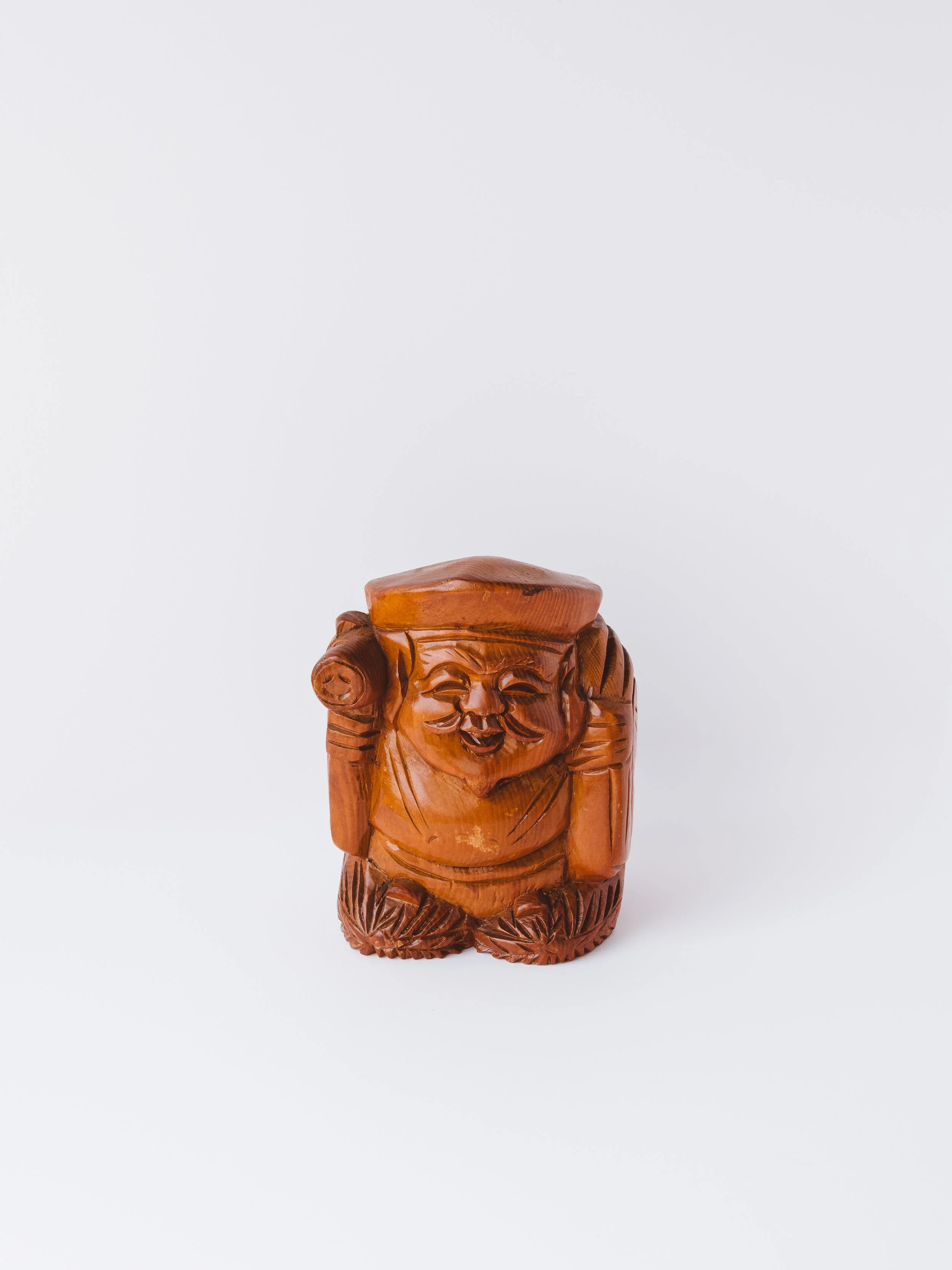 Image 3 of 15
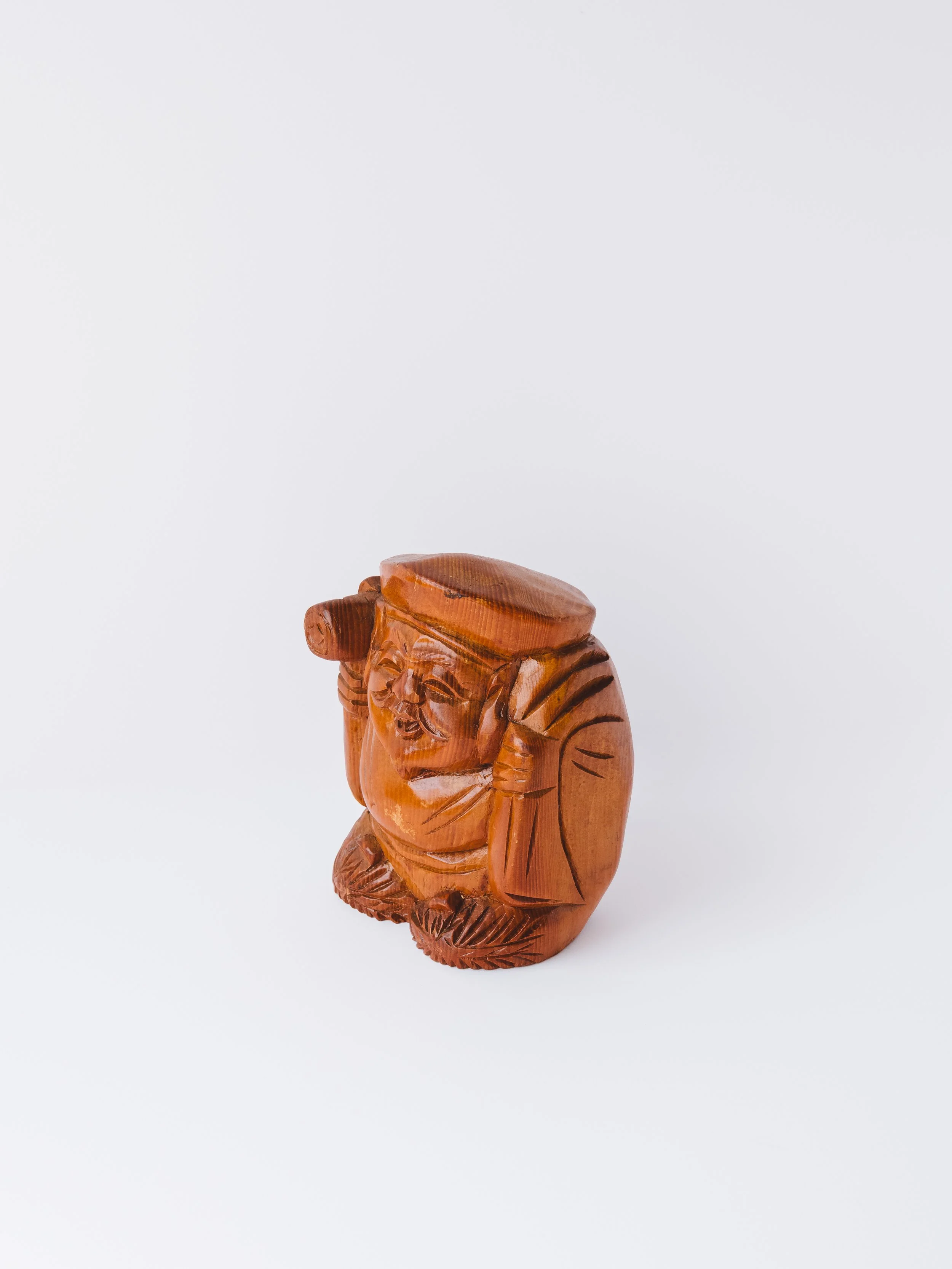 Image 4 of 15
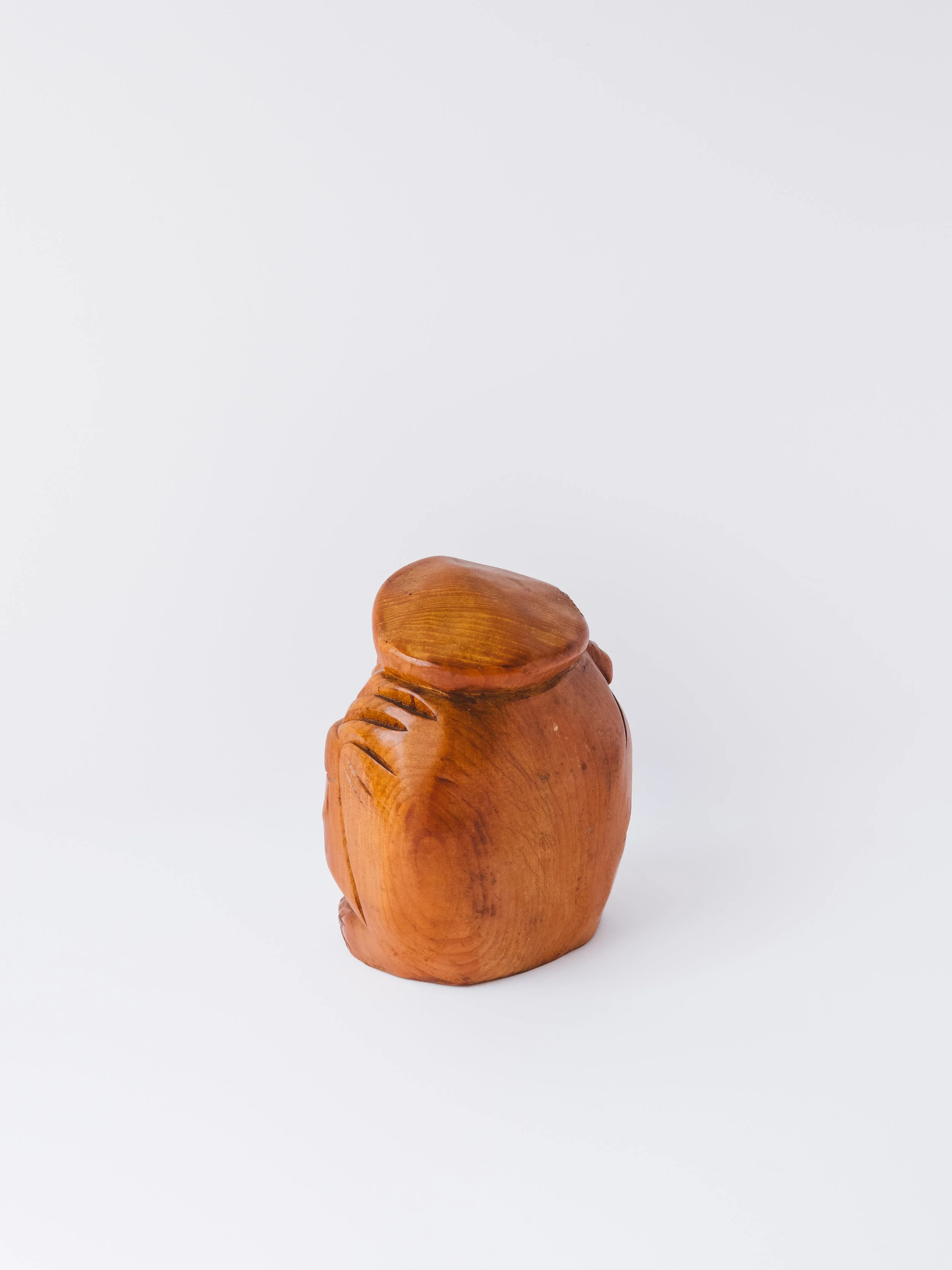 Image 5 of 15
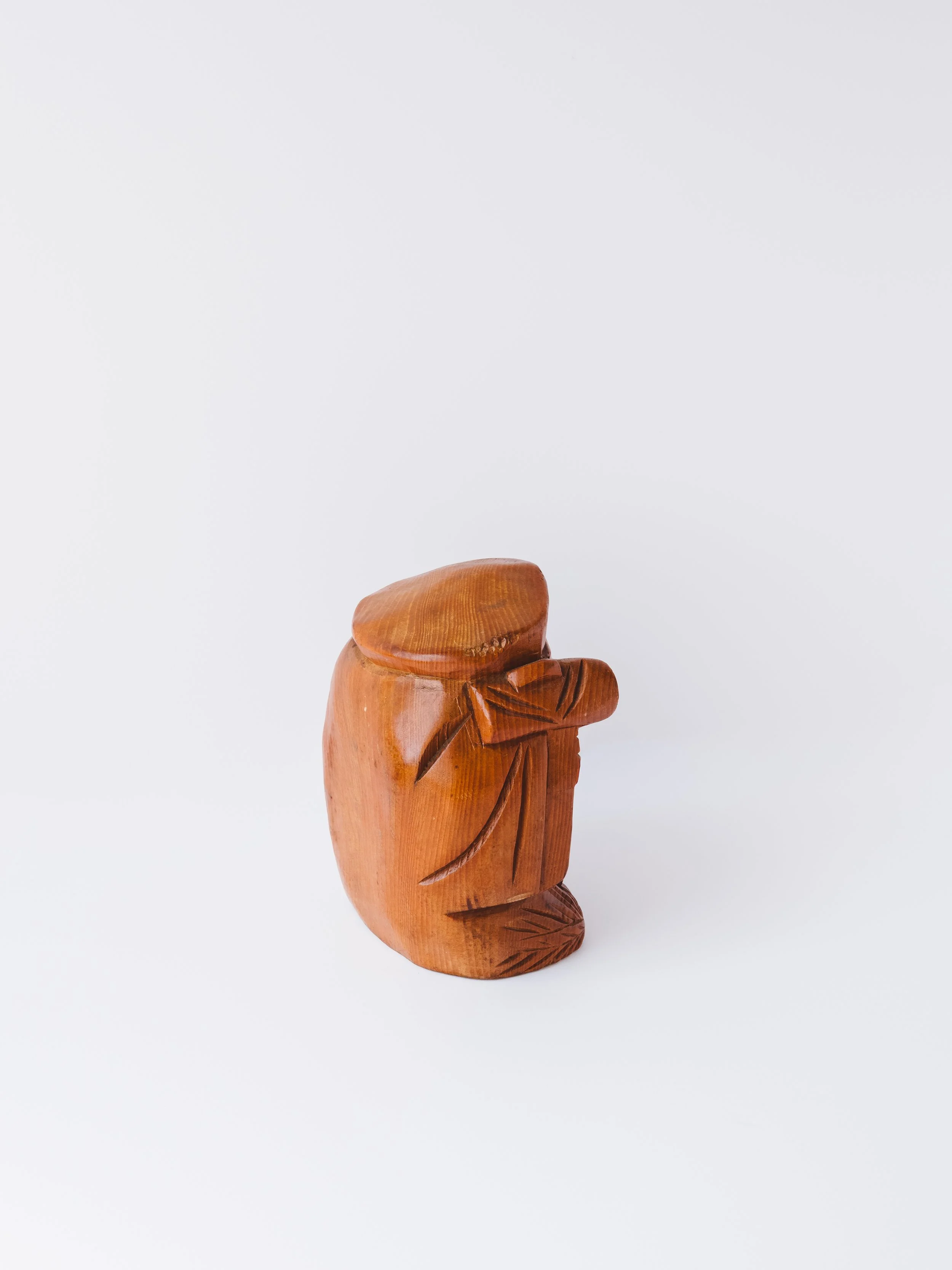 Image 6 of 15
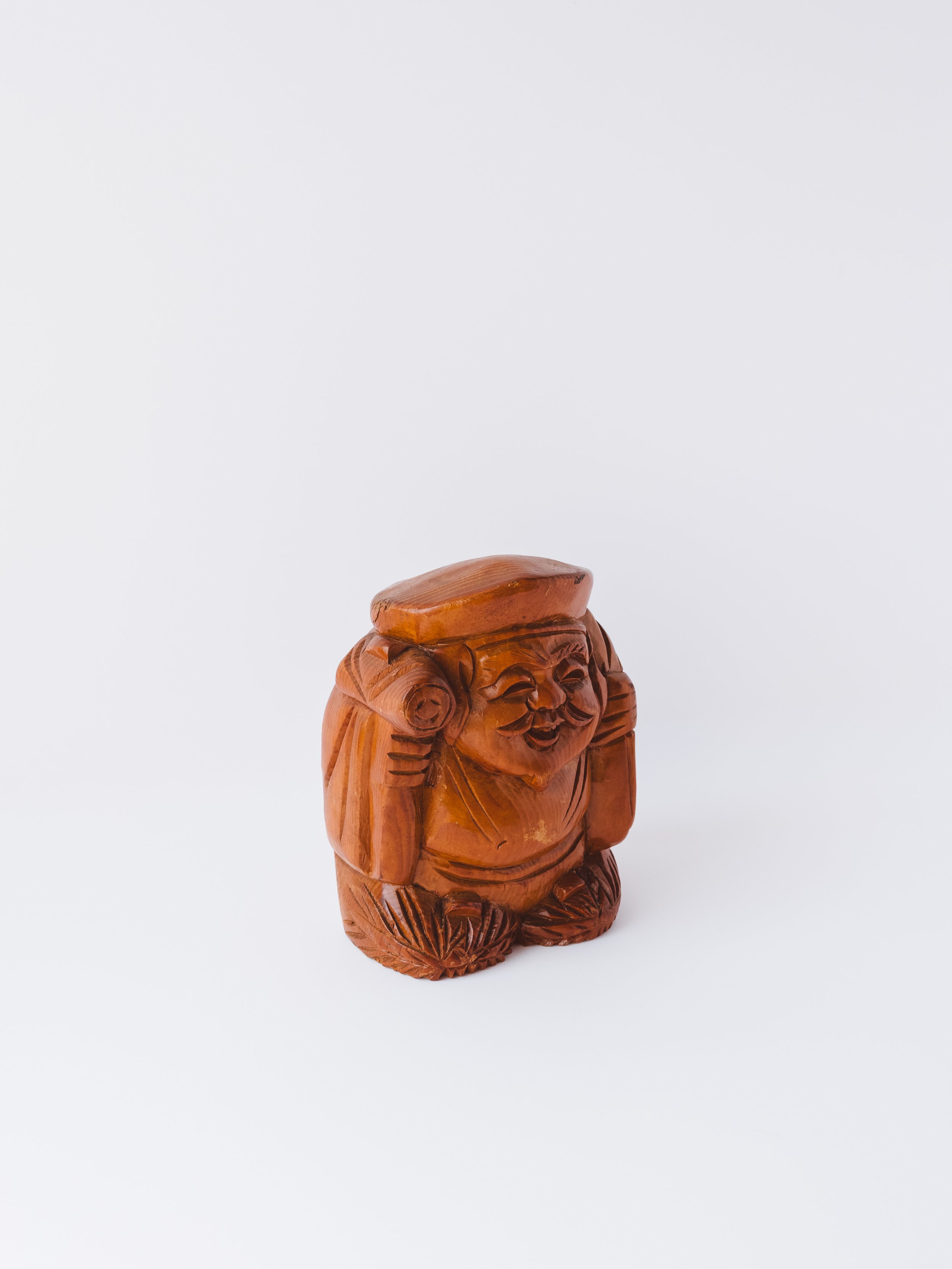 Image 7 of 15
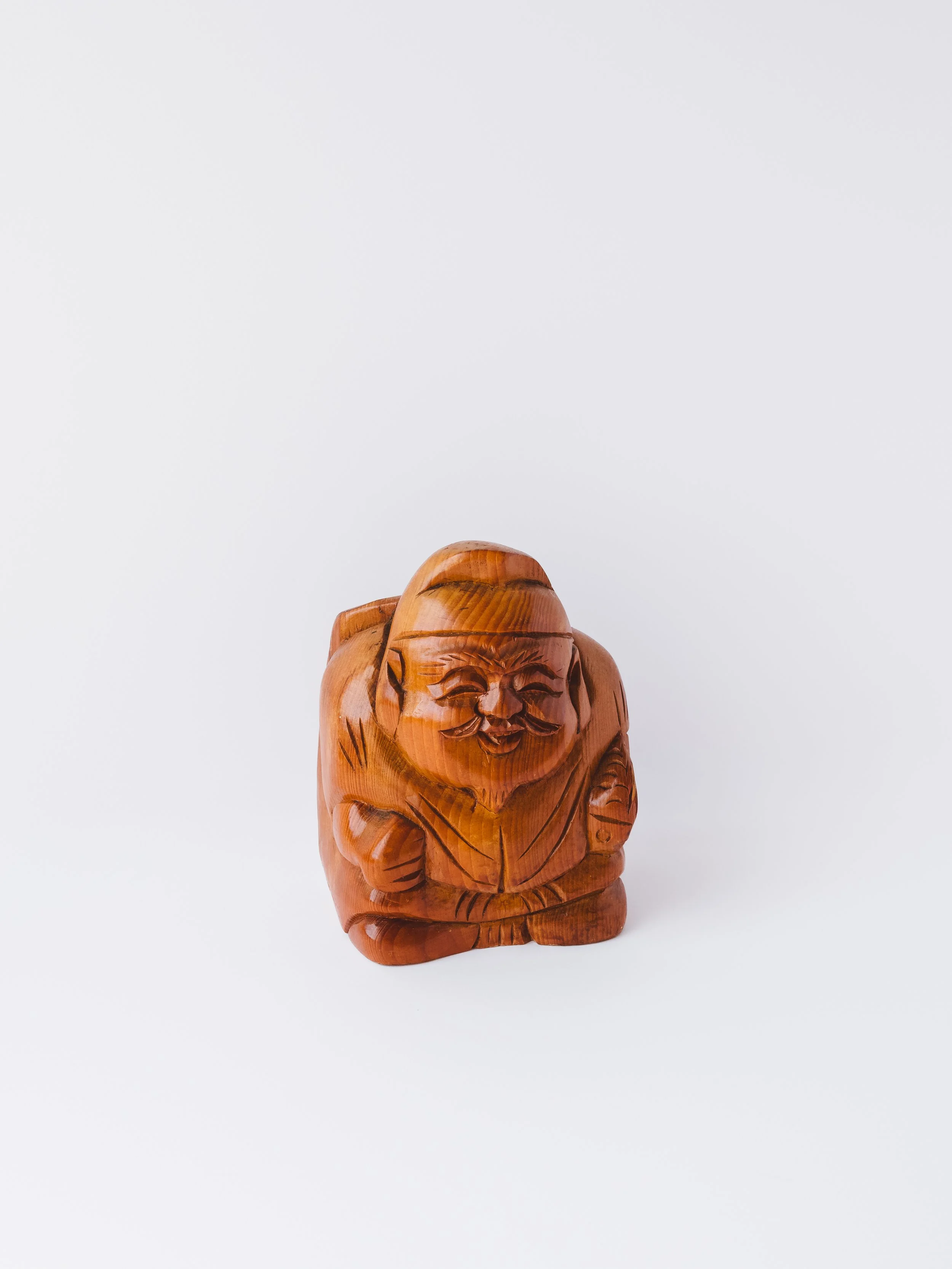 Image 8 of 15
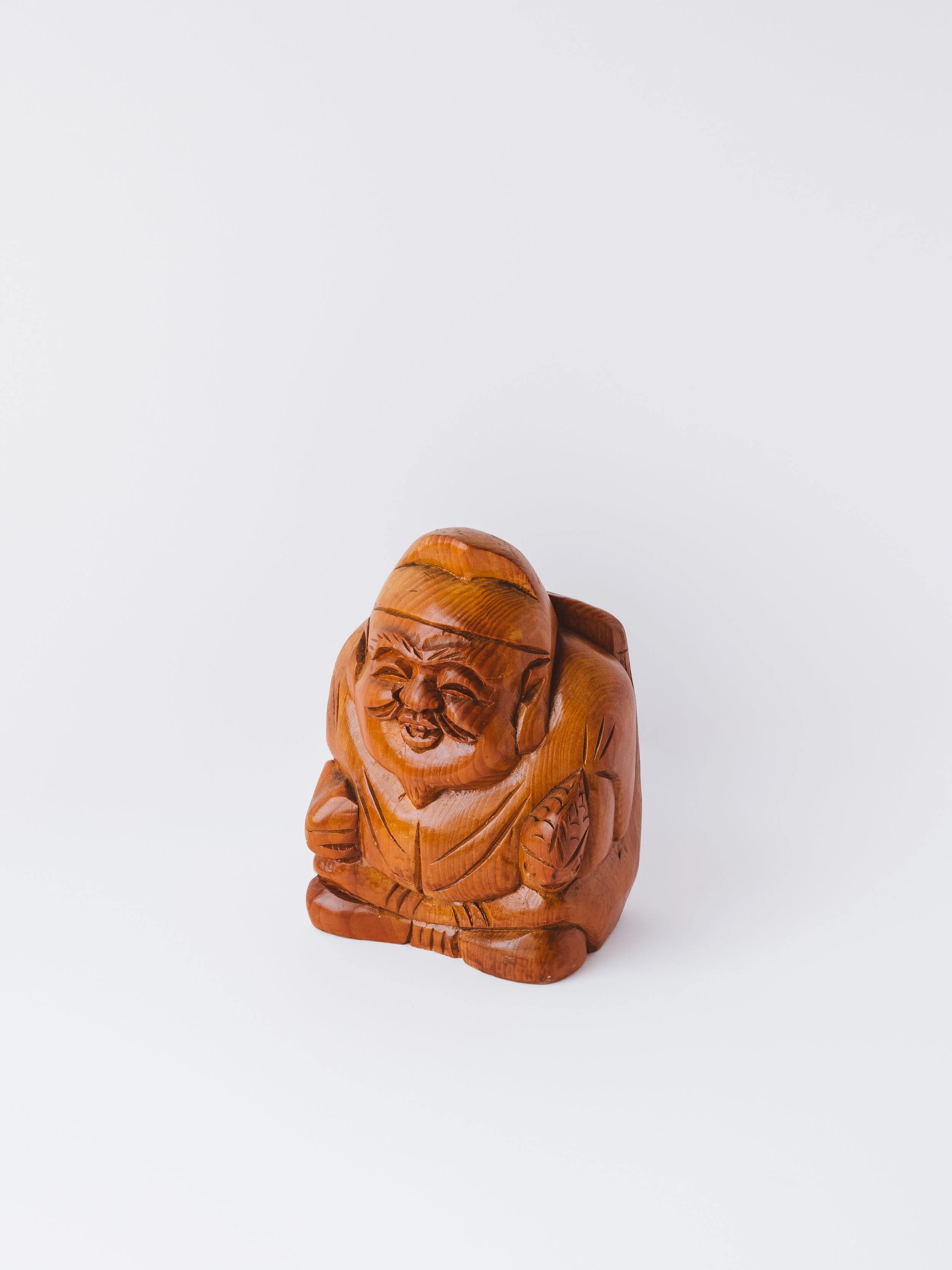 Image 9 of 15
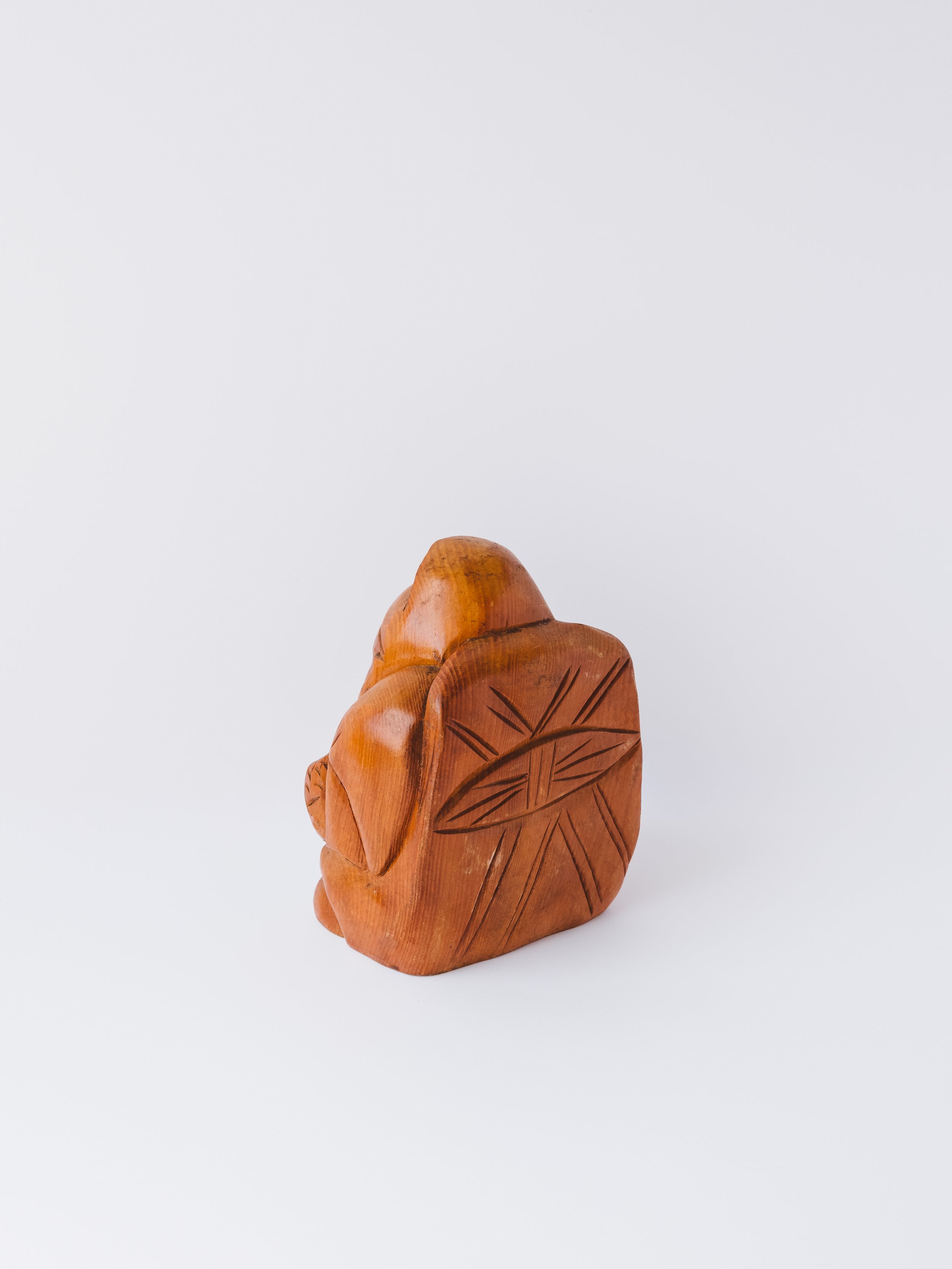 Image 10 of 15
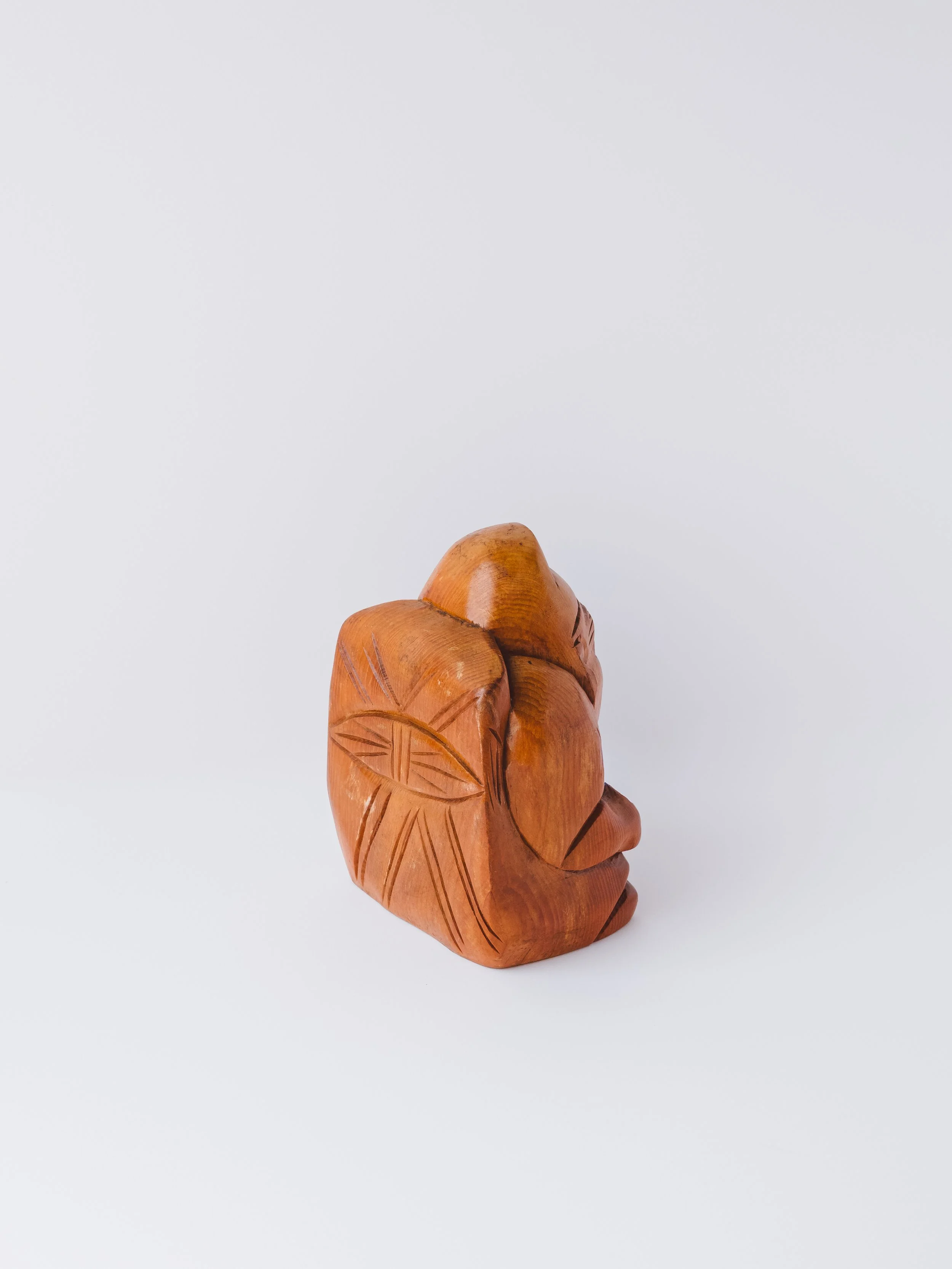 Image 11 of 15
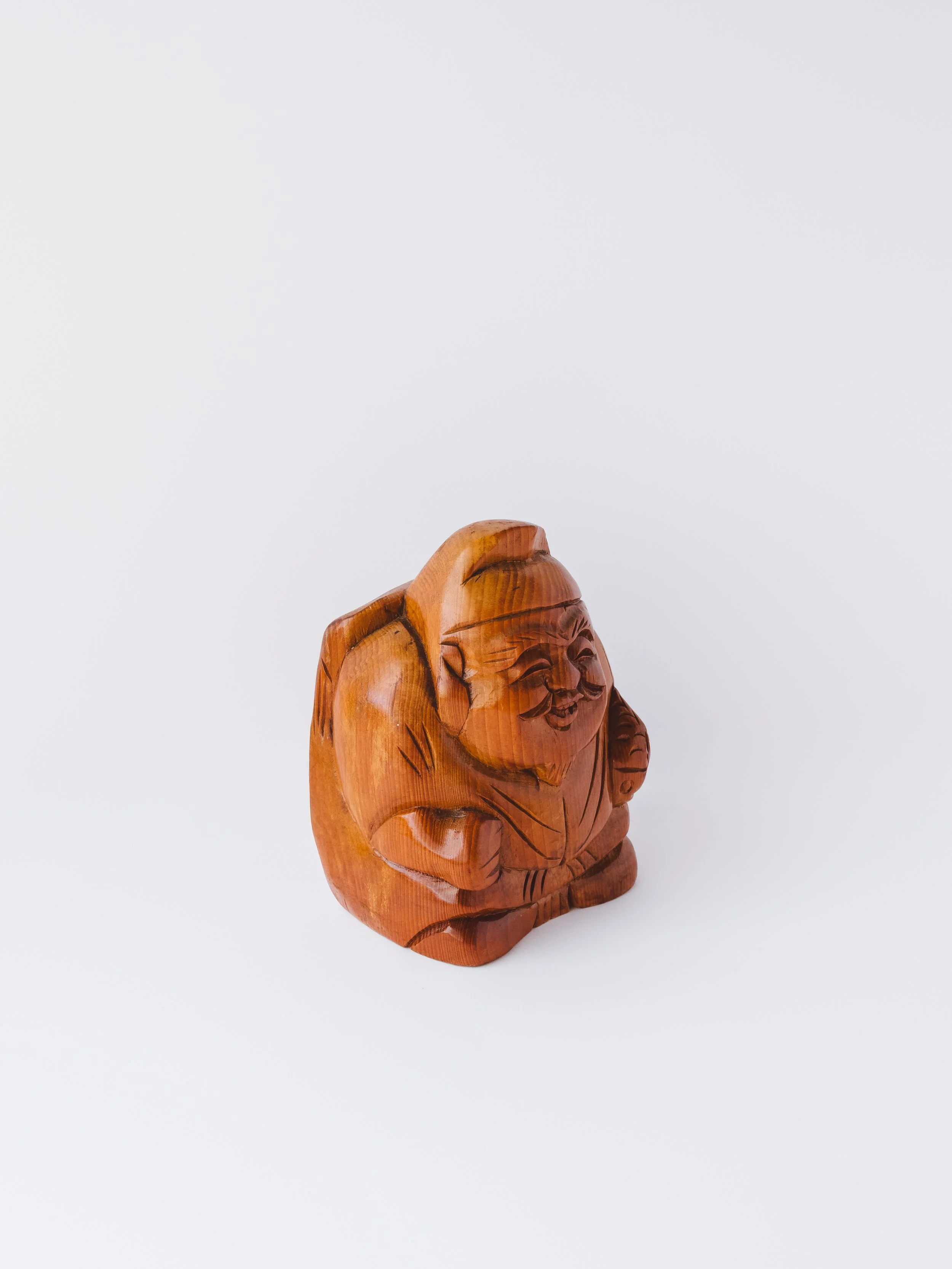 Image 12 of 15
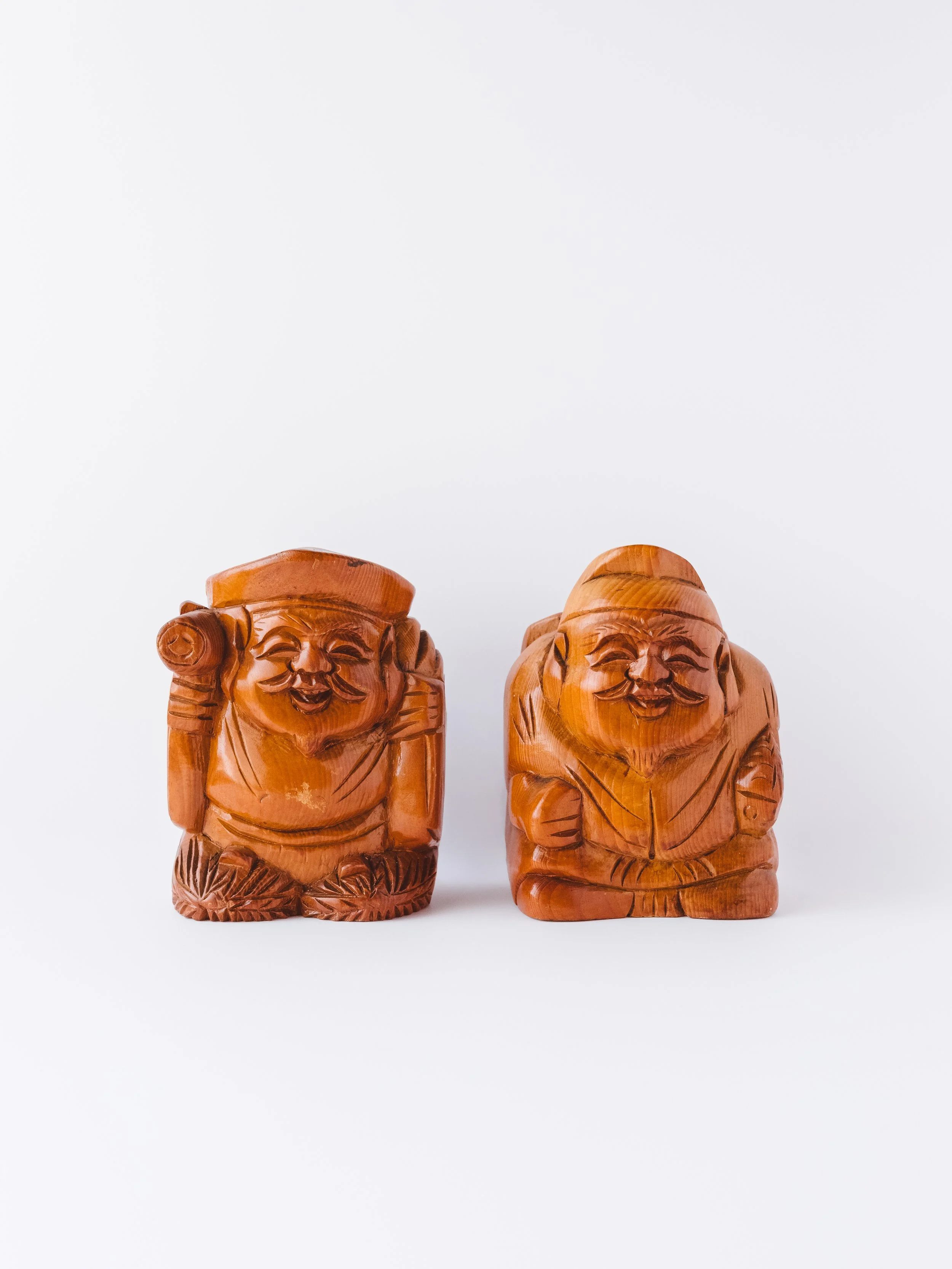 Image 13 of 15
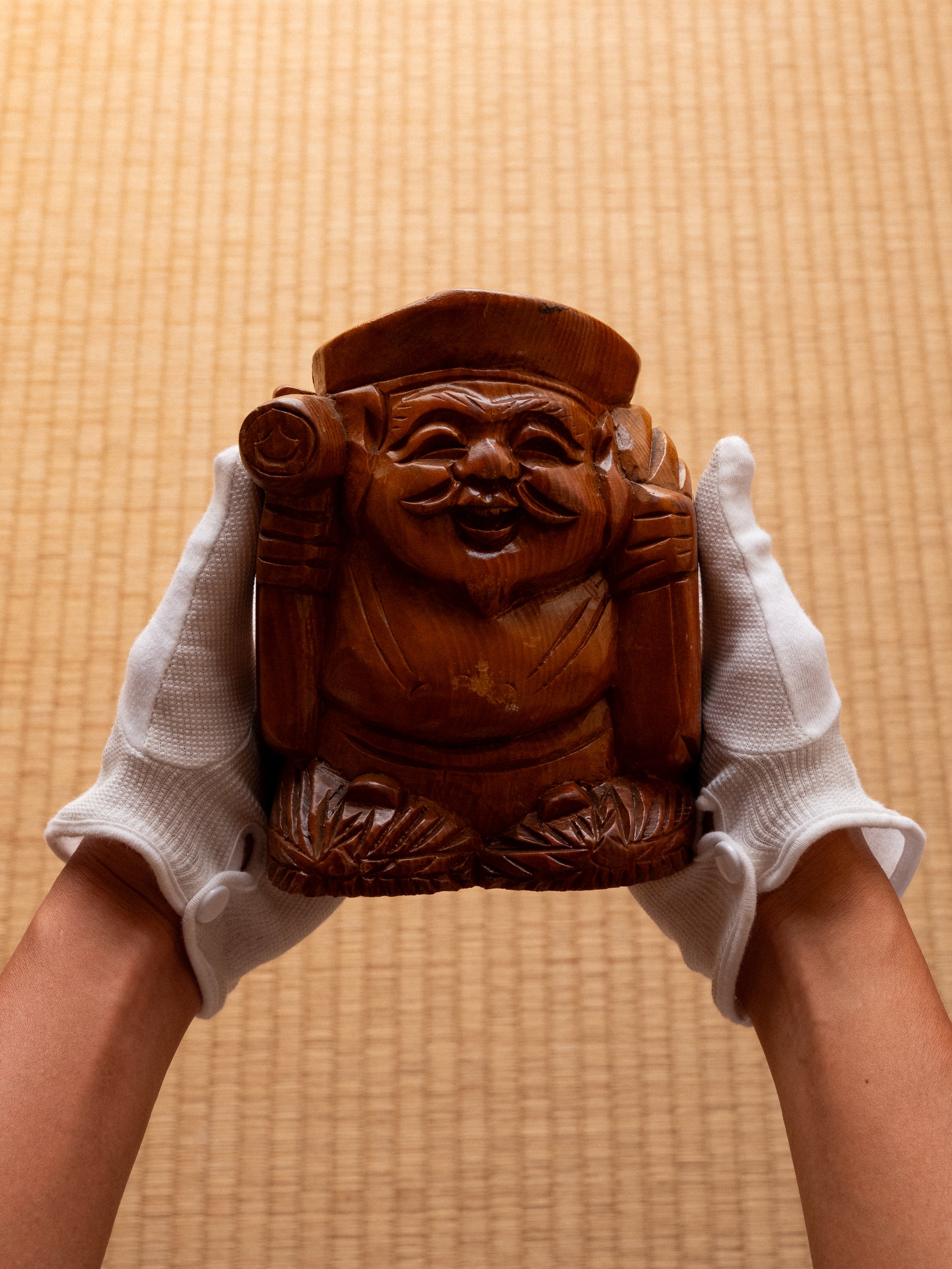 Image 14 of 15
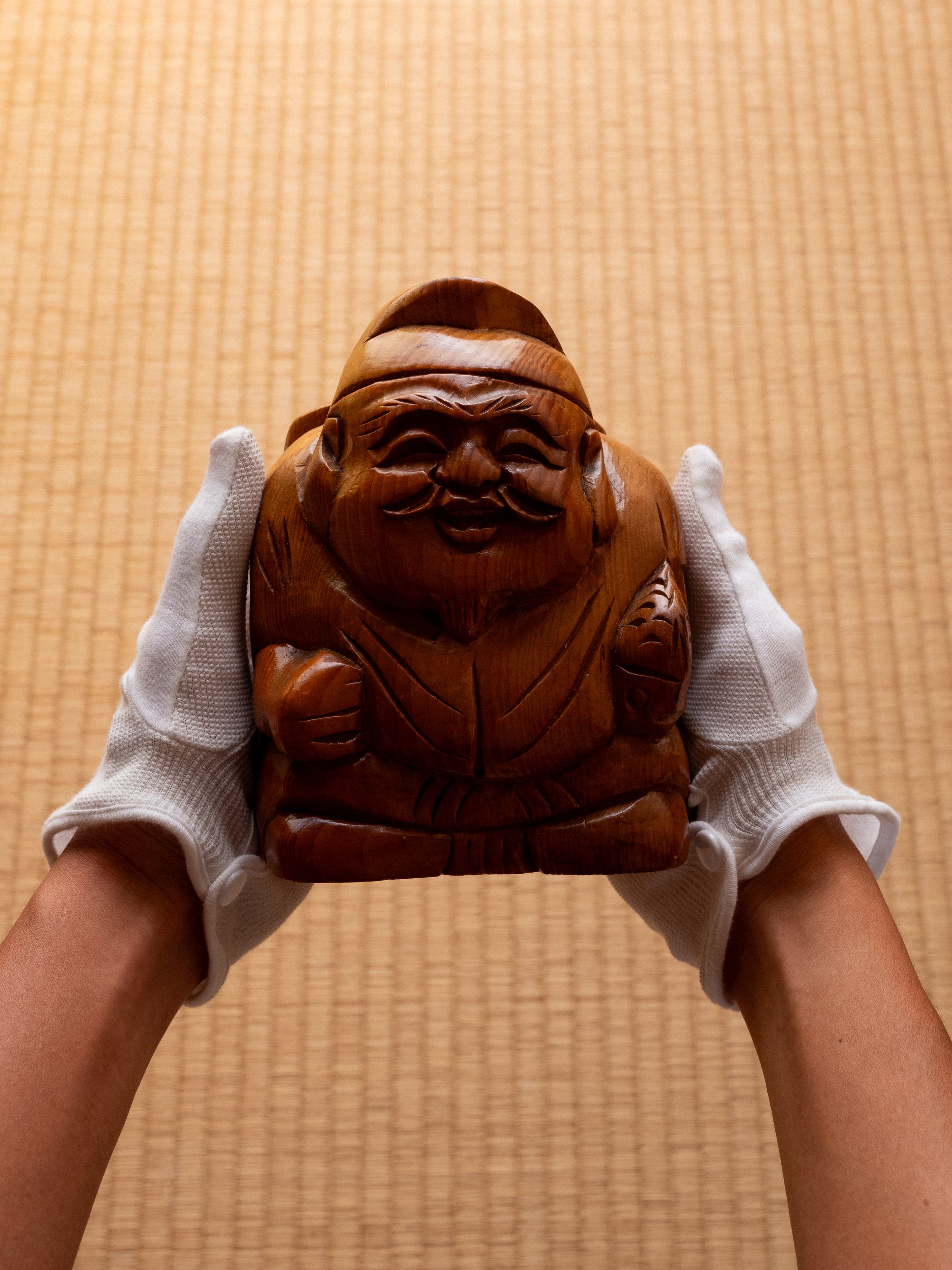 Image 15 of 15