【 The Concept 】
Two gods of fortune, seated together and both laughing out loud, carved in deep, smoke-blackened pottery. At the back sits Daikokuten in his soft round cap, perched on a stack of rice bales, holding out a winnowing basket heaped with gold coins. Beside him, lower and to the front, sits Ebisu in his folded courtier's cap, hugging a treasure sack nearly as big as himself. This is a nifukujin — a "two-fortune-gods" pair, the wealth-and-commerce duo at the very heart of Japanese luck. And rather than the bright colors these figures usually wear, it is finished in a grave, matte black that lifts every fold of the robes into relief — folk joy given the dignity of dark, fired earth.
【 Daikokuten — the God of the Household's Wealth 】
The god at the back is Daikokuten, and his story is a thousand-year journey. He begins as Mahākāla, a fierce dark form of the Hindu god Shiva, is taken into Buddhism, and is carried to Japan by Saichō, founder of the Tendai school, who set him in the monastery kitchen — which made him, first of all, the guardian of the kitchen and the larder. Then his name collided with a native god: written differently, "Daikoku" reads the same as "Ōkuni," and so he merged with Ōkuninushi, the great land-building, harvest-giving god of Japanese myth. The fierce Mahākāla melted away, and what remained is the beaming figure we know: seated on rice bales, keeper of the household's stored wealth and the harvest. Here he grips those bales with his toes and offers up a mi, a winnowing basket, filled with gold koban.
【 Ebisu — the God of Trade and the Catch 】
The god at the front is Ebisu, and he is the one native member of Japan's luck-gods — no Indian or Chinese origin, but born of the sea here. In one telling he is Hiruko, the "leech-child" set adrift on the water who returns as a blessing-bearing god from beyond the waves; in another he is Kotoshironushi, the fisher-son of Ōkuninushi. He began as the god of fishermen and the good catch, and as markets and money grew he became the god of commerce and thriving trade, the patron every Japanese shop still keeps. He usually holds a fishing rod and a sea bream; here, instead, he embraces a great treasure bag of inexhaustible riches.
【 Why the Two Are Paired 】
Long before the Seven Lucky Gods were fixed, these two were worshipped together as the nifukujin, and the pairing is no accident. Read one way they are father and son — Ōkuninushi and Kotoshironushi. Read another, they divide all of prosperity cleanly between them: Daikokuten rules production, the harvest, the kitchen, and wealth stored safely inside the home; Ebisu rules the market, the deal, and wealth won outside through trade and trust. One keeps what you have; the other brings more in. Together they cover the whole of economic life, which is why farmers and merchants alike prized them as the strongest of teams.
【 What They Hold 】
This figure trades the usual mallet and sea bream for symbols of wealth even more direct. The mi, the winnowing basket, was a farm tool for tossing grain to let the chaff blow away and keep the good rice — so as a charm it "scoops fortune up and never lets it escape," and sifts true profit from loss, a merchant's creed in an object; Daikokuten has filled it with koban gold, farm-wealth turned to money. The rice bales beneath him are the harvest and unshakeable stored wealth. Ebisu's treasure bag holds riches without end. It is the same auspicious heap that worshippers tie to their lucky bamboo at the great Ebisu market fairs — here fixed forever in fired clay.
【 The Black 】
The color is not paint or glaze but the clay itself, transformed by fire. In carbon (smoke) firing, the piece is sealed in the kiln with charcoal and rice husks that burn without enough air; the starved flames flood the chamber with smoke, and carbon soaks into the porous body until the earth itself turns from grey to deep black. It is a black no pigment can imitate — warm, matte, faintly lustrous on the raised edges where a hand has passed, and it deepens and smooths with the years. Against it, the carved robe patterns — wave crests, key-fret borders, fans — read with unusual clarity.
【 Where to Place Them 】
Treat a pair of gods as more than décor. Set them where the family or customers gather — a bright, clean living room, a shop counter, an entryway shelf — never on the floor, and ideally facing south (fullness and prosperity) or east (growth and rising energy). The gods are said to favor lively, spotless places and to withdraw their blessing from dust and neglect, so the simple act of keeping them clean is itself the prayer. By tradition Daikokuten sits to the right and Ebisu to the left, exactly as they are modelled here.
【 Care 】
The smoke-fired body is unglazed and porous, so keep it dry and simply dust it with a soft dry cloth or brush; avoid soaking it or scrubbing the surface. Handled and dusted over the years, the black only grows deeper and more softly lustrous.
【 Function & What It Brings 】
Keep them, place them, or give them. As a talisman the pair covers the whole of good fortune in business and home — wealth earned and wealth kept, the harvest and the market — which makes them a natural piece for a shop, an office, or an entrance, and a strong gift for opening a business or for the New Year. As an object the piece is quietly imposing: a heavy, hand-finished sculpture whose sober black is a grown-up alternative to the usual gilded, gaudy luck-gods.
【 The Texture 】
Unglazed smoke-fired pottery, matte and dark, with a soft sheen on the raised folds and the polished tops of the bales. Dense and heavy in the hands, cool to the touch, crisply carved throughout.
【 Presence 】
Warm and grave at once. The two broad laughing faces give the piece real good humor, while the deep black earth and the weight of it give it the seriousness of an heirloom rather than a trinket.
Archive Note: The number in the name (1873) references the Vienna World's Fair, the event that launched the golden age of Japanese export ceramic figures to which pieces like this belong. It is NOT the date this piece was made.
Provenance Note: Sourced from a private collection in Japan. A smoke-fired (carbon-blackened) Japanese pottery figure; the workshop is not identified.
Condition Note: Sold as acquired, in very good condition for its age. Light sheen and minor surface wear on the raised, most-handled edges are natural to unglazed smoke-fired pottery, not damage. Please see the photographs as part of the description.
【 The Concept 】
Two gods of fortune, seated together and both laughing out loud, carved in deep, smoke-blackened pottery. At the back sits Daikokuten in his soft round cap, perched on a stack of rice bales, holding out a winnowing basket heaped with gold coins. Beside him, lower and to the front, sits Ebisu in his folded courtier's cap, hugging a treasure sack nearly as big as himself. This is a nifukujin — a "two-fortune-gods" pair, the wealth-and-commerce duo at the very heart of Japanese luck. And rather than the bright colors these figures usually wear, it is finished in a grave, matte black that lifts every fold of the robes into relief — folk joy given the dignity of dark, fired earth.
【 Daikokuten — the God of the Household's Wealth 】
The god at the back is Daikokuten, and his story is a thousand-year journey. He begins as Mahākāla, a fierce dark form of the Hindu god Shiva, is taken into Buddhism, and is carried to Japan by Saichō, founder of the Tendai school, who set him in the monastery kitchen — which made him, first of all, the guardian of the kitchen and the larder. Then his name collided with a native god: written differently, "Daikoku" reads the same as "Ōkuni," and so he merged with Ōkuninushi, the great land-building, harvest-giving god of Japanese myth. The fierce Mahākāla melted away, and what remained is the beaming figure we know: seated on rice bales, keeper of the household's stored wealth and the harvest. Here he grips those bales with his toes and offers up a mi, a winnowing basket, filled with gold koban.
【 Ebisu — the God of Trade and the Catch 】
The god at the front is Ebisu, and he is the one native member of Japan's luck-gods — no Indian or Chinese origin, but born of the sea here. In one telling he is Hiruko, the "leech-child" set adrift on the water who returns as a blessing-bearing god from beyond the waves; in another he is Kotoshironushi, the fisher-son of Ōkuninushi. He began as the god of fishermen and the good catch, and as markets and money grew he became the god of commerce and thriving trade, the patron every Japanese shop still keeps. He usually holds a fishing rod and a sea bream; here, instead, he embraces a great treasure bag of inexhaustible riches.
【 Why the Two Are Paired 】
Long before the Seven Lucky Gods were fixed, these two were worshipped together as the nifukujin, and the pairing is no accident. Read one way they are father and son — Ōkuninushi and Kotoshironushi. Read another, they divide all of prosperity cleanly between them: Daikokuten rules production, the harvest, the kitchen, and wealth stored safely inside the home; Ebisu rules the market, the deal, and wealth won outside through trade and trust. One keeps what you have; the other brings more in. Together they cover the whole of economic life, which is why farmers and merchants alike prized them as the strongest of teams.
【 What They Hold 】
This figure trades the usual mallet and sea bream for symbols of wealth even more direct. The mi, the winnowing basket, was a farm tool for tossing grain to let the chaff blow away and keep the good rice — so as a charm it "scoops fortune up and never lets it escape," and sifts true profit from loss, a merchant's creed in an object; Daikokuten has filled it with koban gold, farm-wealth turned to money. The rice bales beneath him are the harvest and unshakeable stored wealth. Ebisu's treasure bag holds riches without end. It is the same auspicious heap that worshippers tie to their lucky bamboo at the great Ebisu market fairs — here fixed forever in fired clay.
【 The Black 】
The color is not paint or glaze but the clay itself, transformed by fire. In carbon (smoke) firing, the piece is sealed in the kiln with charcoal and rice husks that burn without enough air; the starved flames flood the chamber with smoke, and carbon soaks into the porous body until the earth itself turns from grey to deep black. It is a black no pigment can imitate — warm, matte, faintly lustrous on the raised edges where a hand has passed, and it deepens and smooths with the years. Against it, the carved robe patterns — wave crests, key-fret borders, fans — read with unusual clarity.
【 Where to Place Them 】
Treat a pair of gods as more than décor. Set them where the family or customers gather — a bright, clean living room, a shop counter, an entryway shelf — never on the floor, and ideally facing south (fullness and prosperity) or east (growth and rising energy). The gods are said to favor lively, spotless places and to withdraw their blessing from dust and neglect, so the simple act of keeping them clean is itself the prayer. By tradition Daikokuten sits to the right and Ebisu to the left, exactly as they are modelled here.
【 Care 】
The smoke-fired body is unglazed and porous, so keep it dry and simply dust it with a soft dry cloth or brush; avoid soaking it or scrubbing the surface. Handled and dusted over the years, the black only grows deeper and more softly lustrous.
【 Function & What It Brings 】
Keep them, place them, or give them. As a talisman the pair covers the whole of good fortune in business and home — wealth earned and wealth kept, the harvest and the market — which makes them a natural piece for a shop, an office, or an entrance, and a strong gift for opening a business or for the New Year. As an object the piece is quietly imposing: a heavy, hand-finished sculpture whose sober black is a grown-up alternative to the usual gilded, gaudy luck-gods.
【 The Texture 】
Unglazed smoke-fired pottery, matte and dark, with a soft sheen on the raised folds and the polished tops of the bales. Dense and heavy in the hands, cool to the touch, crisply carved throughout.
【 Presence 】
Warm and grave at once. The two broad laughing faces give the piece real good humor, while the deep black earth and the weight of it give it the seriousness of an heirloom rather than a trinket.
Archive Note: The number in the name (1873) references the Vienna World's Fair, the event that launched the golden age of Japanese export ceramic figures to which pieces like this belong. It is NOT the date this piece was made.
Provenance Note: Sourced from a private collection in Japan. A smoke-fired (carbon-blackened) Japanese pottery figure; the workshop is not identified.
Condition Note: Sold as acquired, in very good condition for its age. Light sheen and minor surface wear on the raised, most-handled edges are natural to unglazed smoke-fired pottery, not damage. Please see the photographs as part of the description.


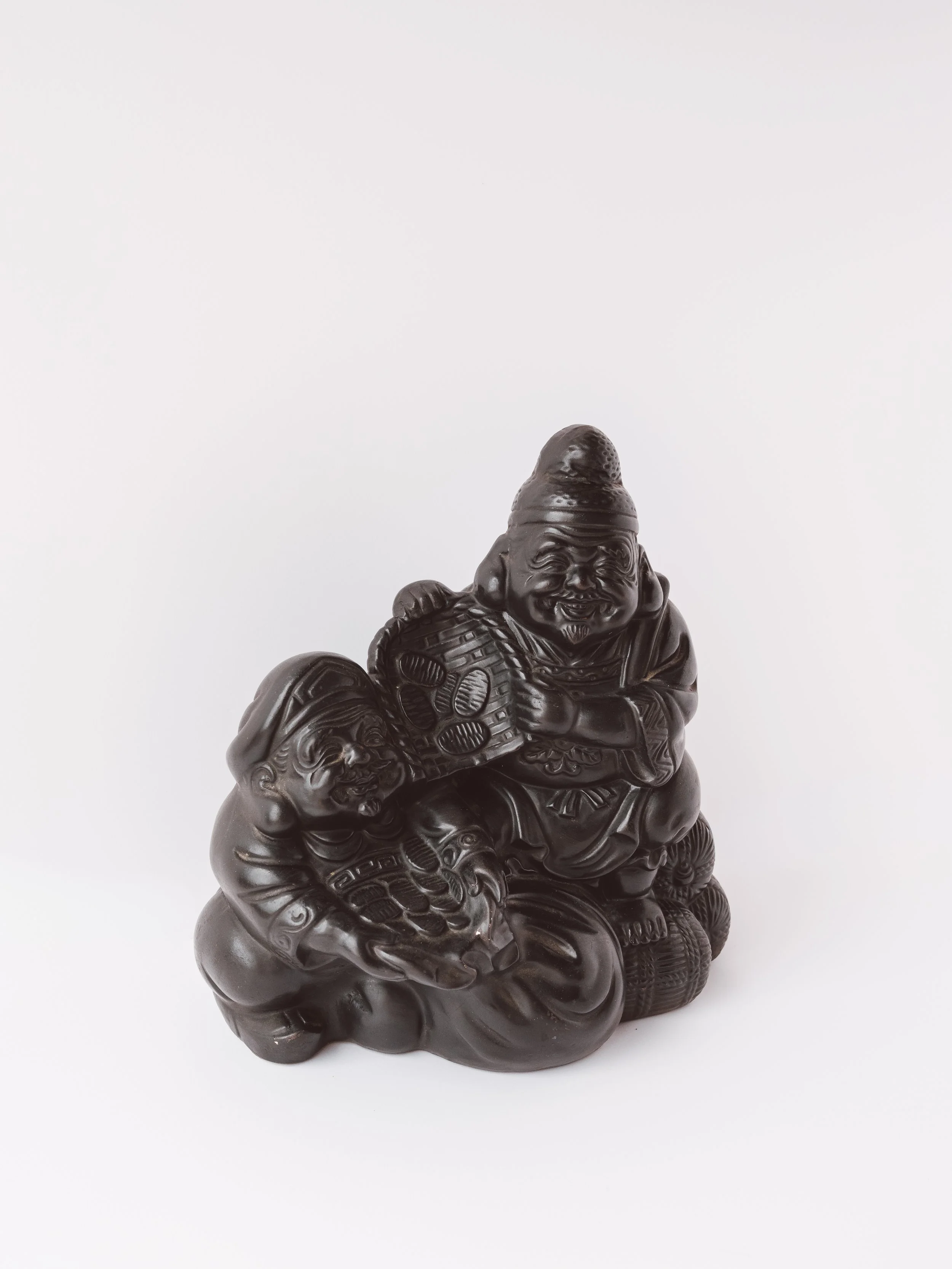 Image 1 of 10
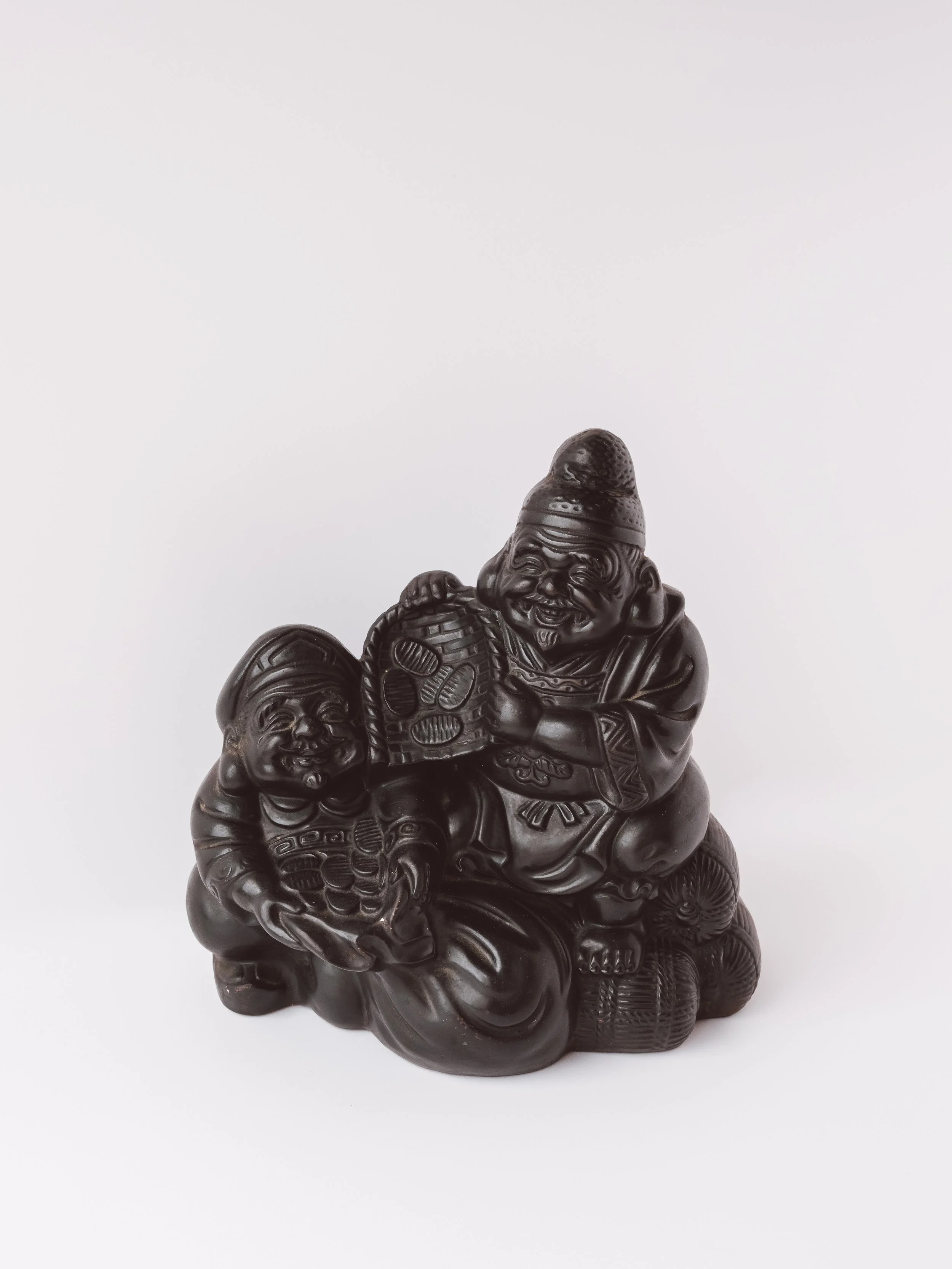 Image 2 of 10
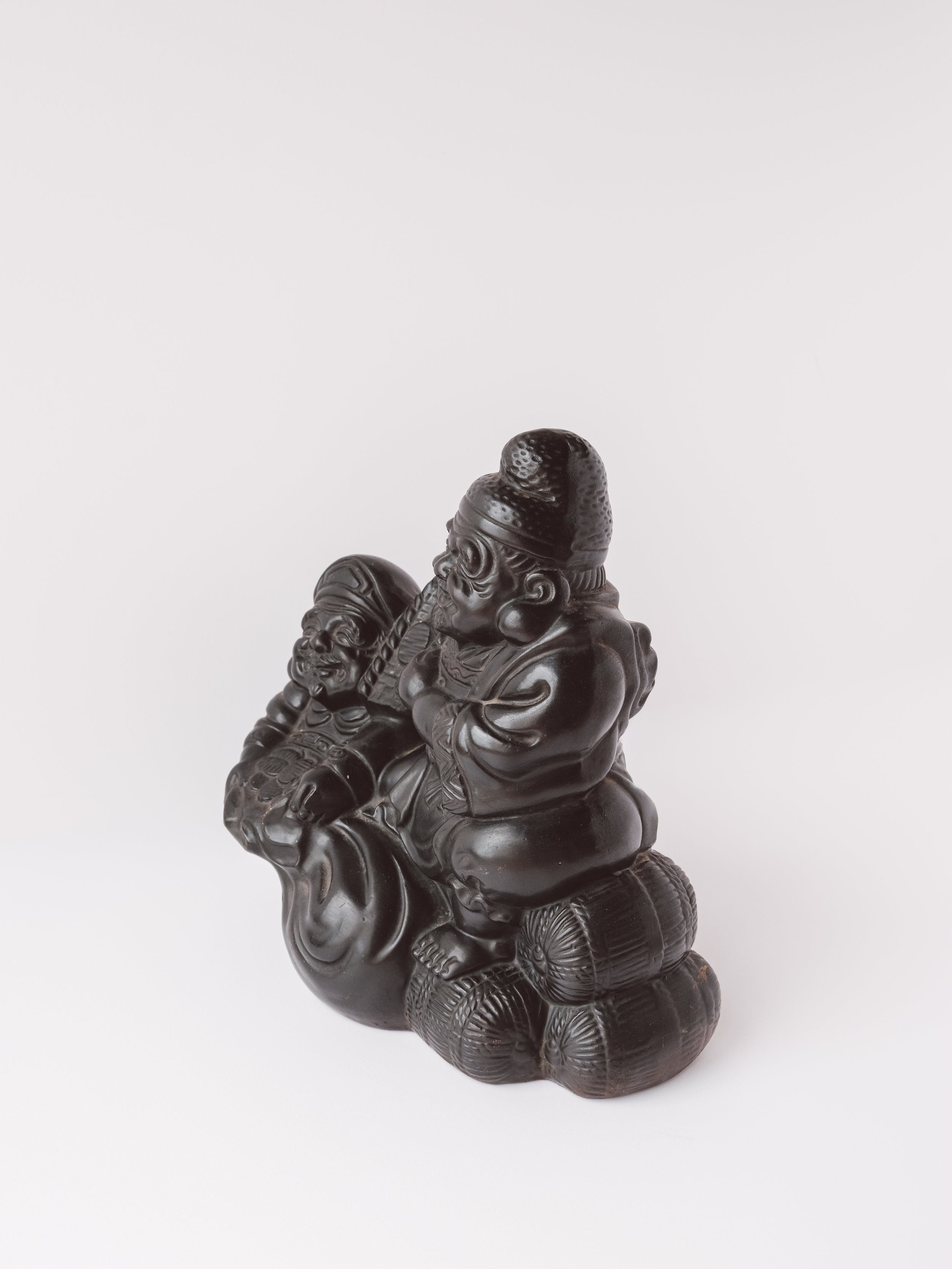 Image 3 of 10
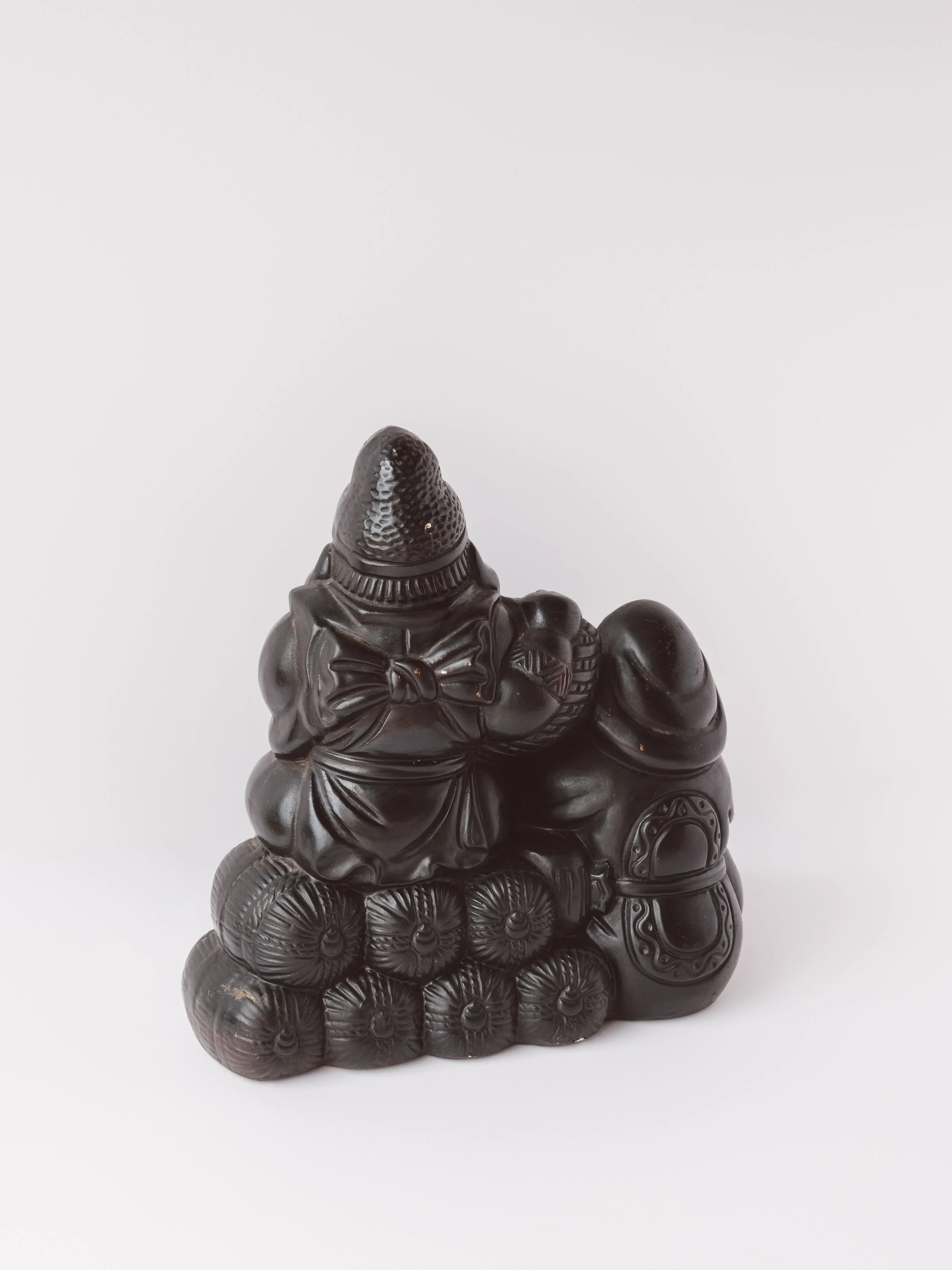 Image 4 of 10
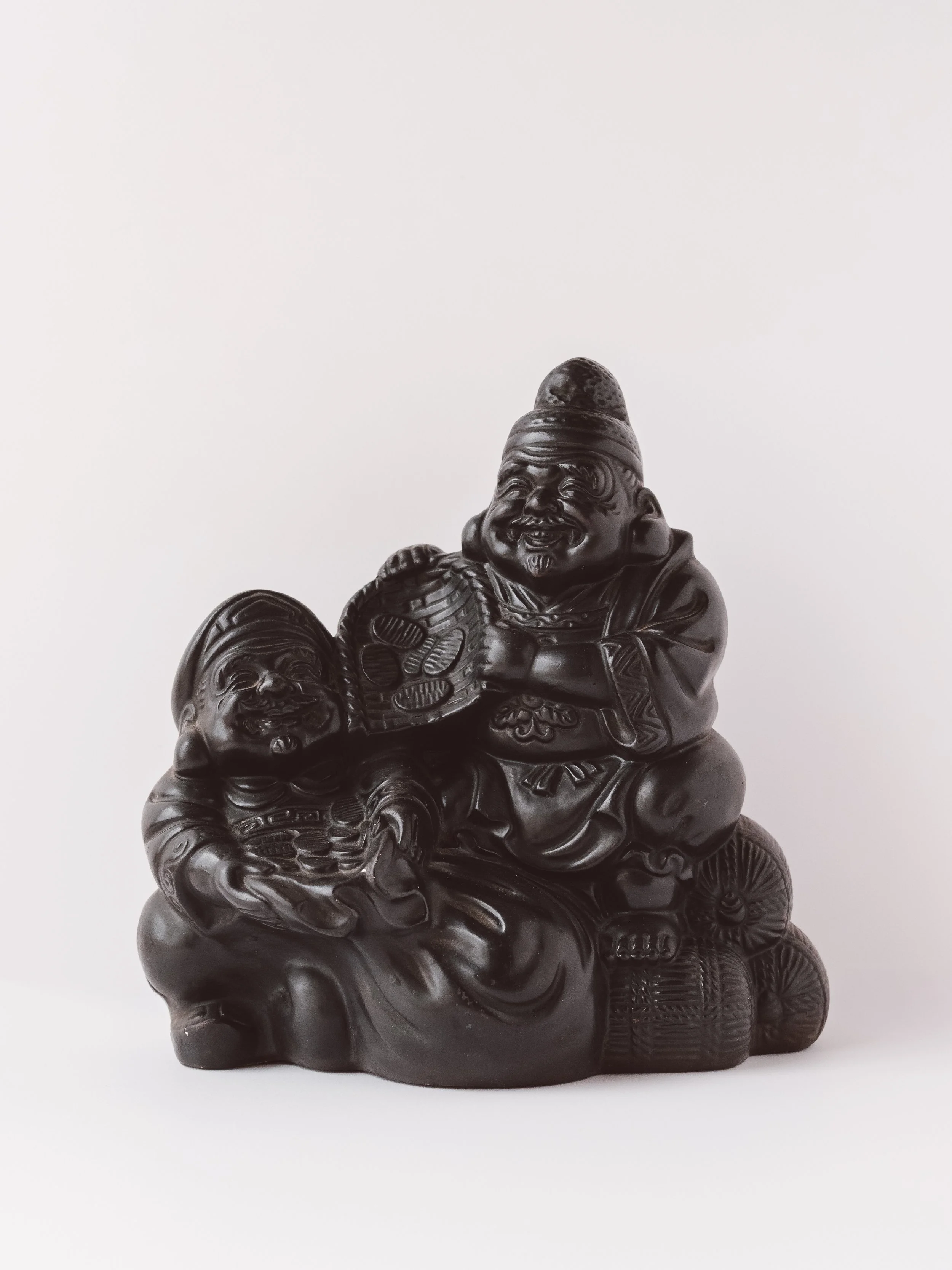 Image 5 of 10
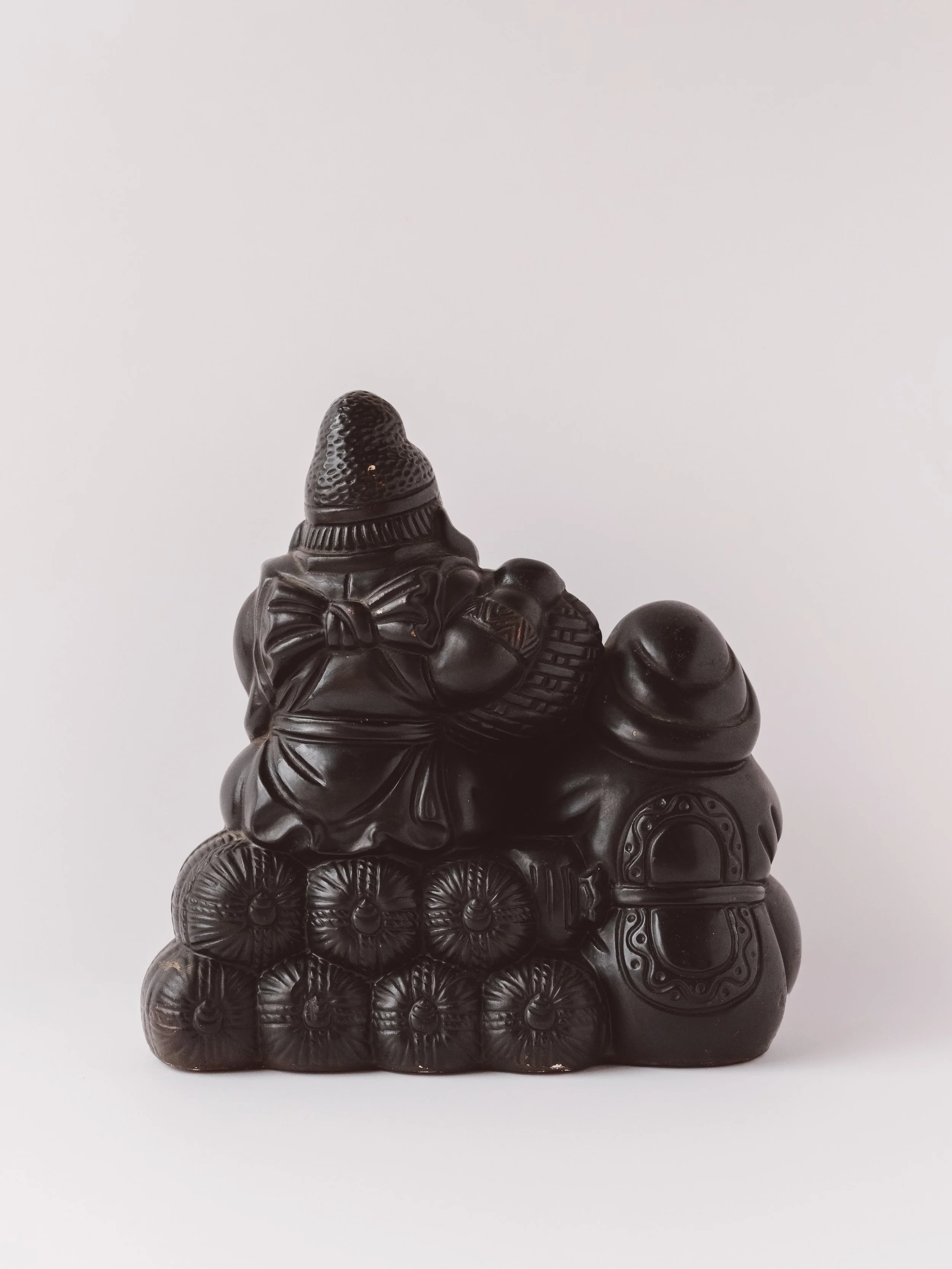 Image 6 of 10
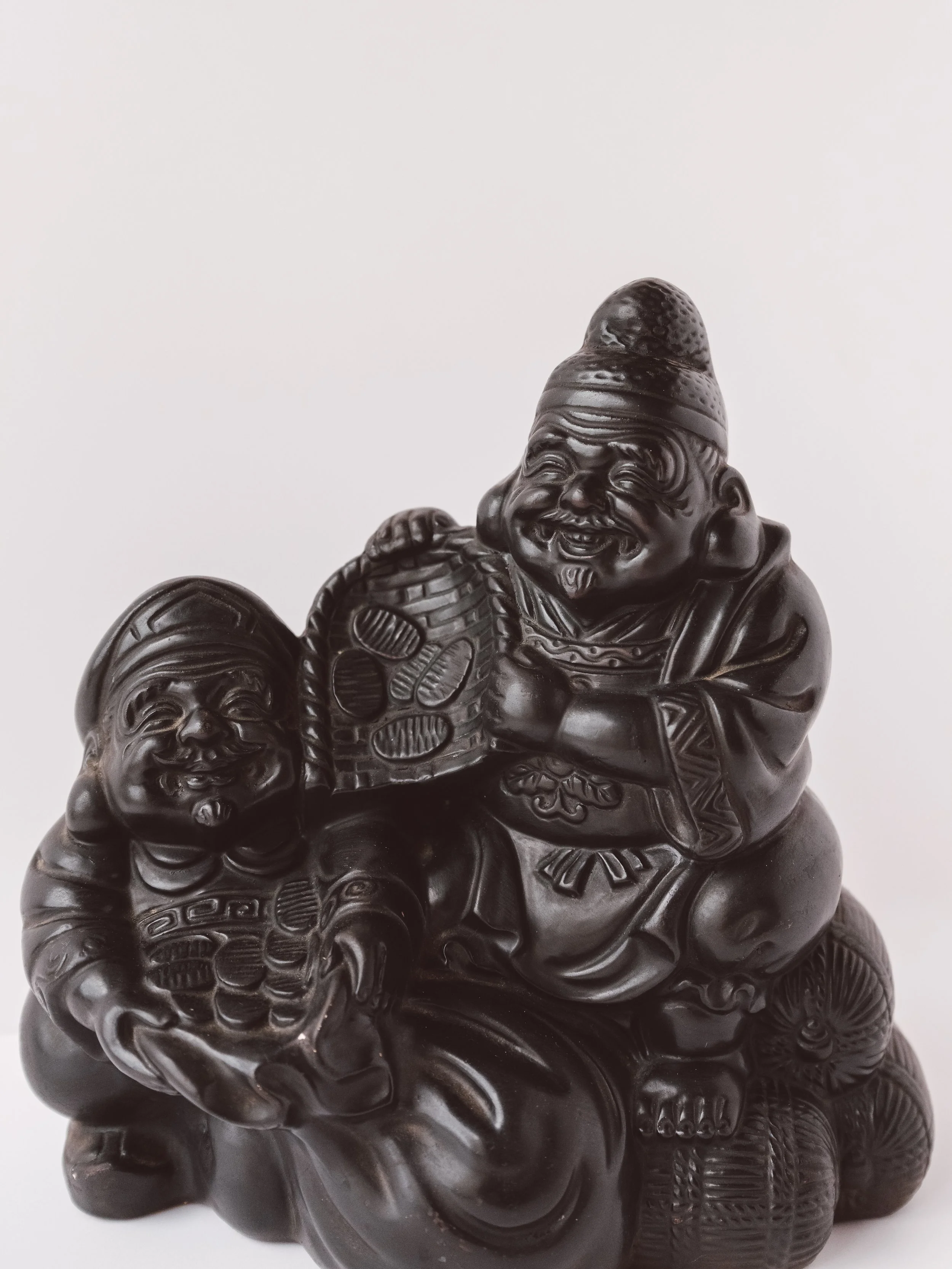 Image 7 of 10
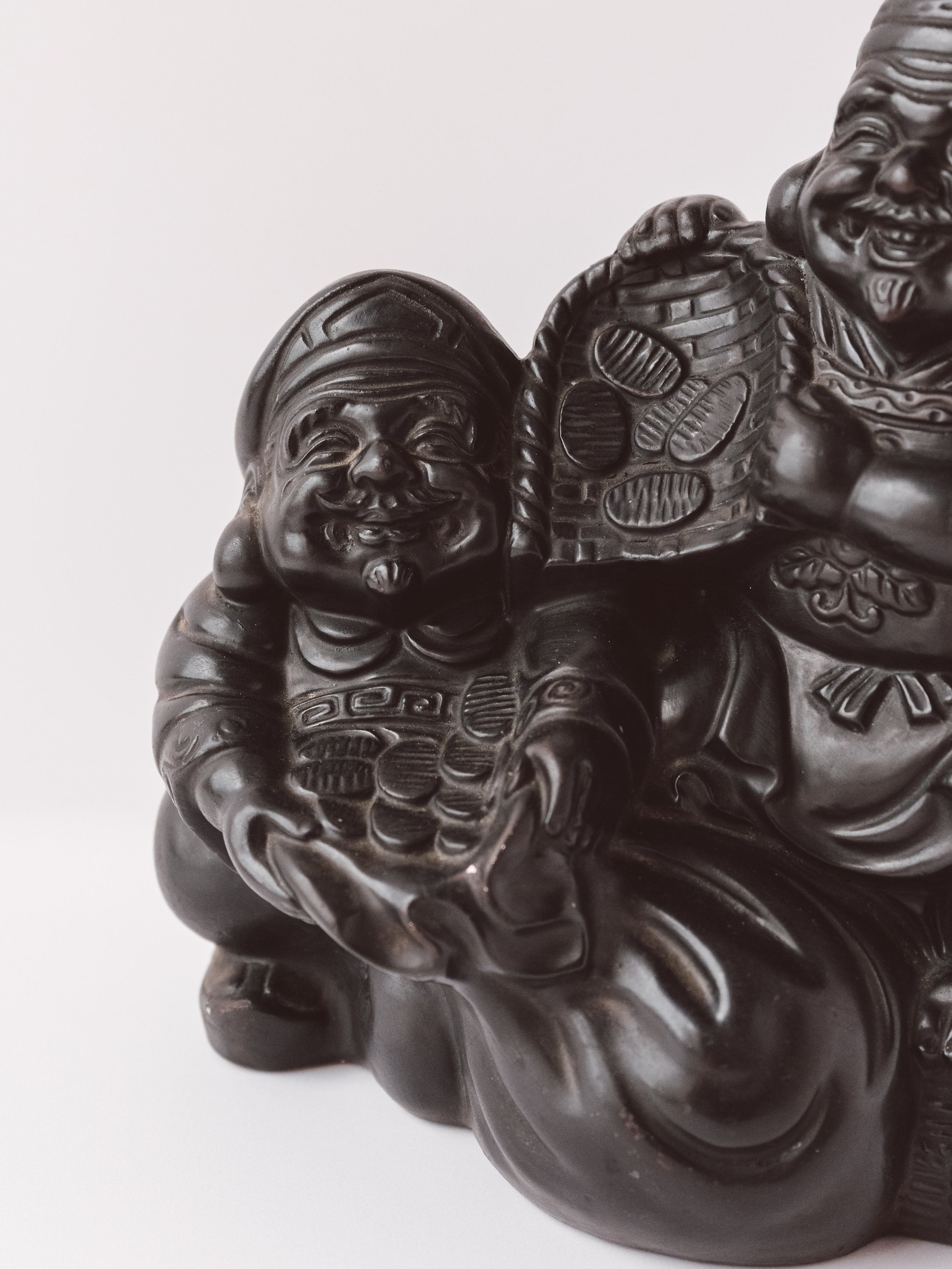 Image 8 of 10
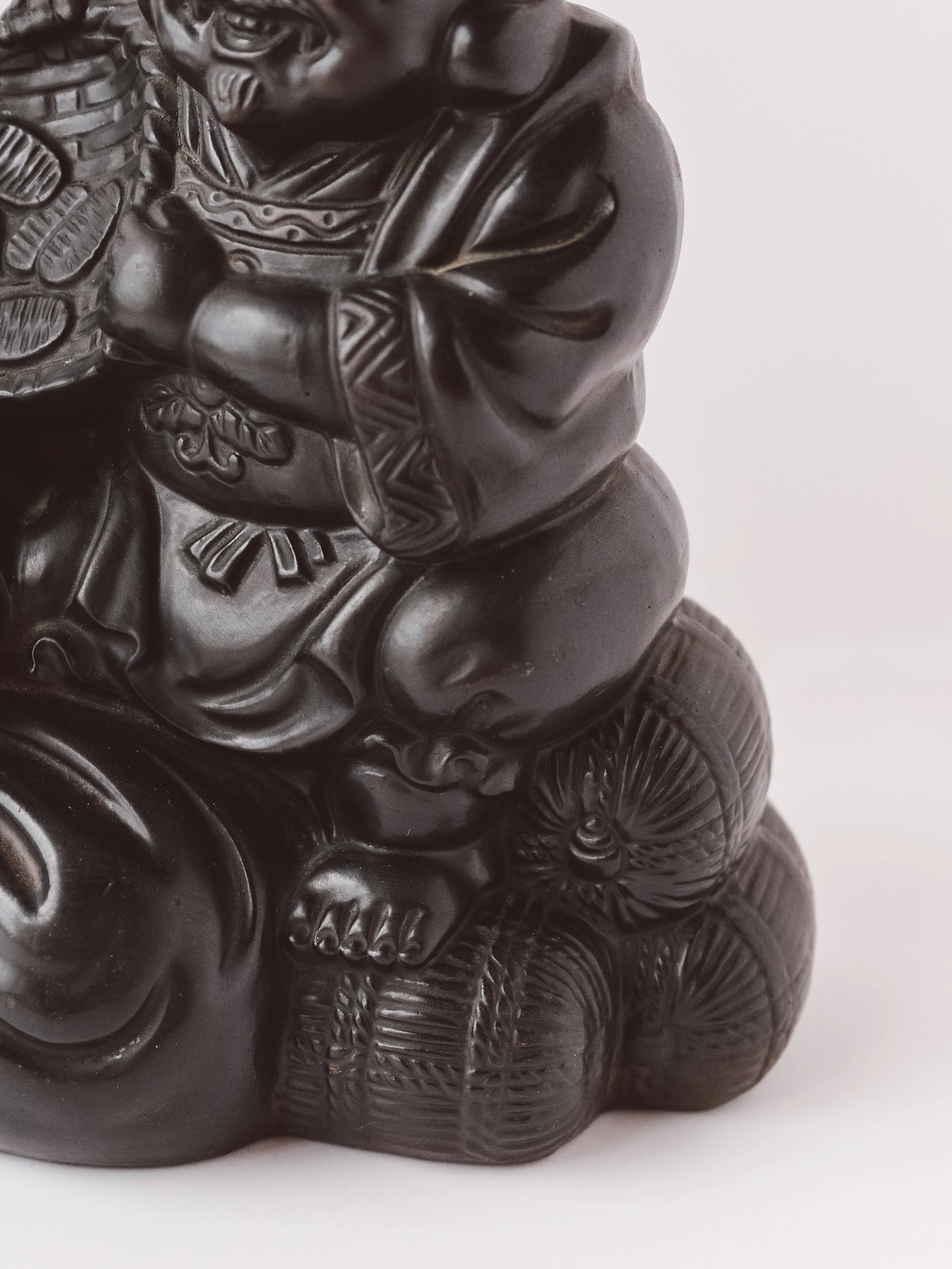 Image 9 of 10
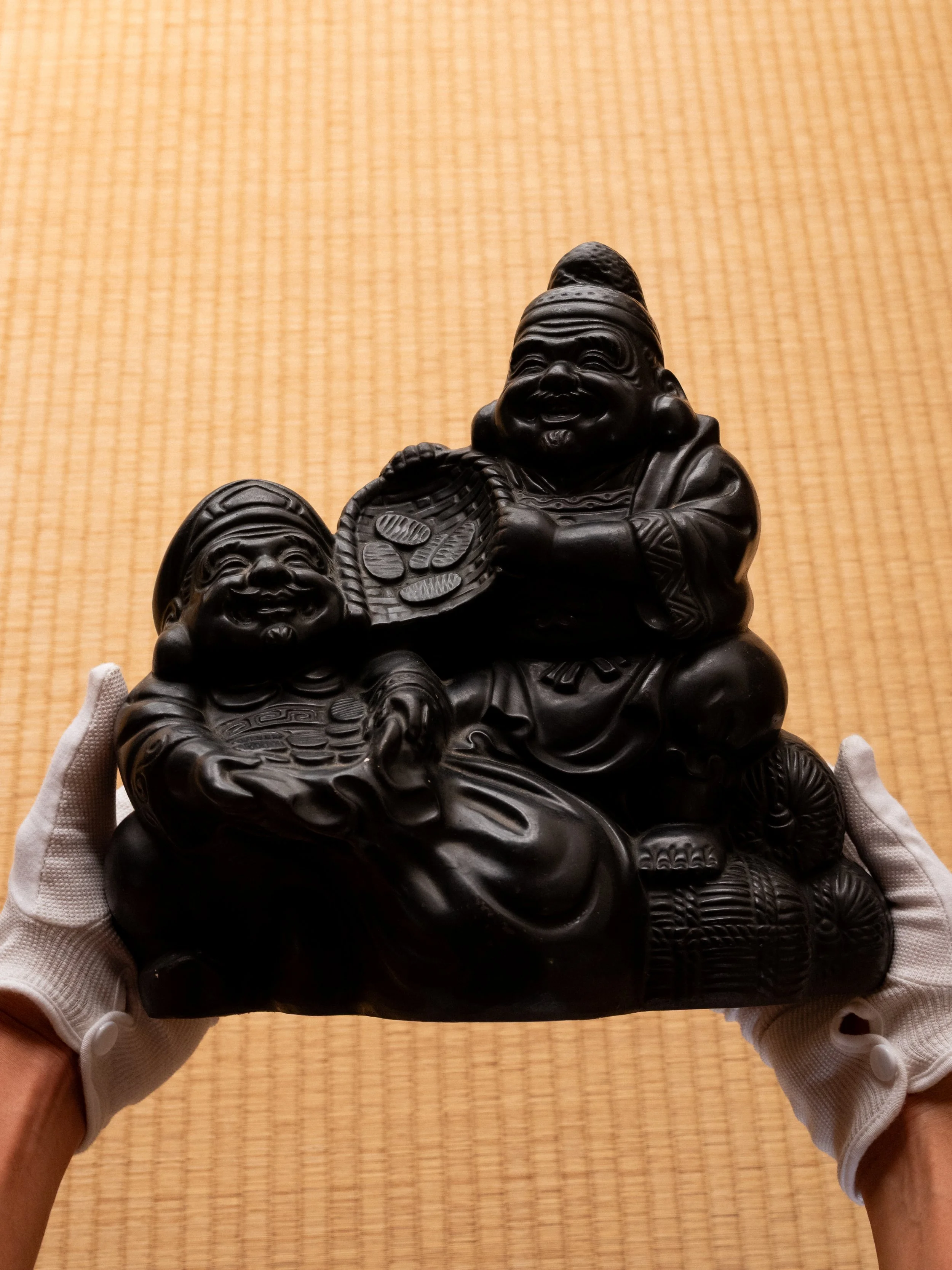 Image 10 of 10