【 The Concept 】
A whole boatload of luck, gathered into one small object. It is a takarabune — the treasure ship of Japanese folklore, the vessel that sails in from the far shore of the gods bearing fortune into the house — and its cargo here is a crew of eight red daruma. Daruma, the round, limbless figure of the monk who sat nine years in meditation, is the great emblem of resilience: nana-korobi ya-oki, "seven falls, eight rises," the spirit that gets up every time it is knocked down. There are eight of them for a reason — eight is the lucky number of suehirogari, fortune that widens outward like the character's spreading strokes, ever-increasing into the future — and eight is the final "rise" of the saying made whole. Their bright red is the old colour of warding: the vermilion that turns away illness and ill luck. Above them a sail carries a chrysanthemum pattern — the flower of long life — and, in a round window at its centre, the single character takara, "treasure." It is a piece built to stack blessing on blessing: resilience, expanding fortune, wealth, long life, and protection, all sailing in together.
【 The Function 】
A small auspicious ornament, made to be set out and enjoyed. It takes up almost no room — a shelf, a cabinet, an entrance, a New-Year display — and gives back a cheerful crowd of little faces glaring good-naturedly out at the room. Light and self-contained, it is easy to bring out for the New Year and keep out all year if you like, and it reads from across a room as clearly as it rewards a close look at the eight hand-painted faces. Set it where it can greet the room and everyone who enters.
【 The Texture 】
A study in three materials. The hull is natural split bamboo — warm honey-tan, the nodes and grain left bare, the lengths lashed together into the upswept shape of a boat, light and springy and faintly rustic. Against it, the deck and mast are lacquered black, crisp and glossy, with a small vermilion ball at the masthead and pale silk-like tassels swinging from the yard. The sail is cloth: a dark ground printed with gold-brown chrysanthemums and a round cartouche holding the red takara character. And the crew is brightest of all — eight daruma in matte vermilion, each with a gold face and bold black sumi brows and beard swept on by hand, both eyes wide open, a stroke of red at the mouth. Being hand-painted and small, no two of the eight wear quite the same expression.
【 Presence 】
Cheerful, busy, and warmly auspicious. Where a solemn piece hushes a room, this one brings it a small burst of good humour — eight round red figures with fierce, friendly faces, riding in on a bamboo ship under a treasure sail. It carries all the optimism of the folk-charm it is: the wish to get back up, to prosper, to be protected, to live long, made concrete and set sailing across a shelf. A piece with the nostalgia of an old souvenir and the plain, hopeful cheer of a New-Year charm — something to make a corner of a room a little luckier and a little brighter.
Sourced from a private collection in Japan.
【 The Concept 】
A whole boatload of luck, gathered into one small object. It is a takarabune — the treasure ship of Japanese folklore, the vessel that sails in from the far shore of the gods bearing fortune into the house — and its cargo here is a crew of eight red daruma. Daruma, the round, limbless figure of the monk who sat nine years in meditation, is the great emblem of resilience: nana-korobi ya-oki, "seven falls, eight rises," the spirit that gets up every time it is knocked down. There are eight of them for a reason — eight is the lucky number of suehirogari, fortune that widens outward like the character's spreading strokes, ever-increasing into the future — and eight is the final "rise" of the saying made whole. Their bright red is the old colour of warding: the vermilion that turns away illness and ill luck. Above them a sail carries a chrysanthemum pattern — the flower of long life — and, in a round window at its centre, the single character takara, "treasure." It is a piece built to stack blessing on blessing: resilience, expanding fortune, wealth, long life, and protection, all sailing in together.
【 The Function 】
A small auspicious ornament, made to be set out and enjoyed. It takes up almost no room — a shelf, a cabinet, an entrance, a New-Year display — and gives back a cheerful crowd of little faces glaring good-naturedly out at the room. Light and self-contained, it is easy to bring out for the New Year and keep out all year if you like, and it reads from across a room as clearly as it rewards a close look at the eight hand-painted faces. Set it where it can greet the room and everyone who enters.
【 The Texture 】
A study in three materials. The hull is natural split bamboo — warm honey-tan, the nodes and grain left bare, the lengths lashed together into the upswept shape of a boat, light and springy and faintly rustic. Against it, the deck and mast are lacquered black, crisp and glossy, with a small vermilion ball at the masthead and pale silk-like tassels swinging from the yard. The sail is cloth: a dark ground printed with gold-brown chrysanthemums and a round cartouche holding the red takara character. And the crew is brightest of all — eight daruma in matte vermilion, each with a gold face and bold black sumi brows and beard swept on by hand, both eyes wide open, a stroke of red at the mouth. Being hand-painted and small, no two of the eight wear quite the same expression.
【 Presence 】
Cheerful, busy, and warmly auspicious. Where a solemn piece hushes a room, this one brings it a small burst of good humour — eight round red figures with fierce, friendly faces, riding in on a bamboo ship under a treasure sail. It carries all the optimism of the folk-charm it is: the wish to get back up, to prosper, to be protected, to live long, made concrete and set sailing across a shelf. A piece with the nostalgia of an old souvenir and the plain, hopeful cheer of a New-Year charm — something to make a corner of a room a little luckier and a little brighter.
Sourced from a private collection in Japan.


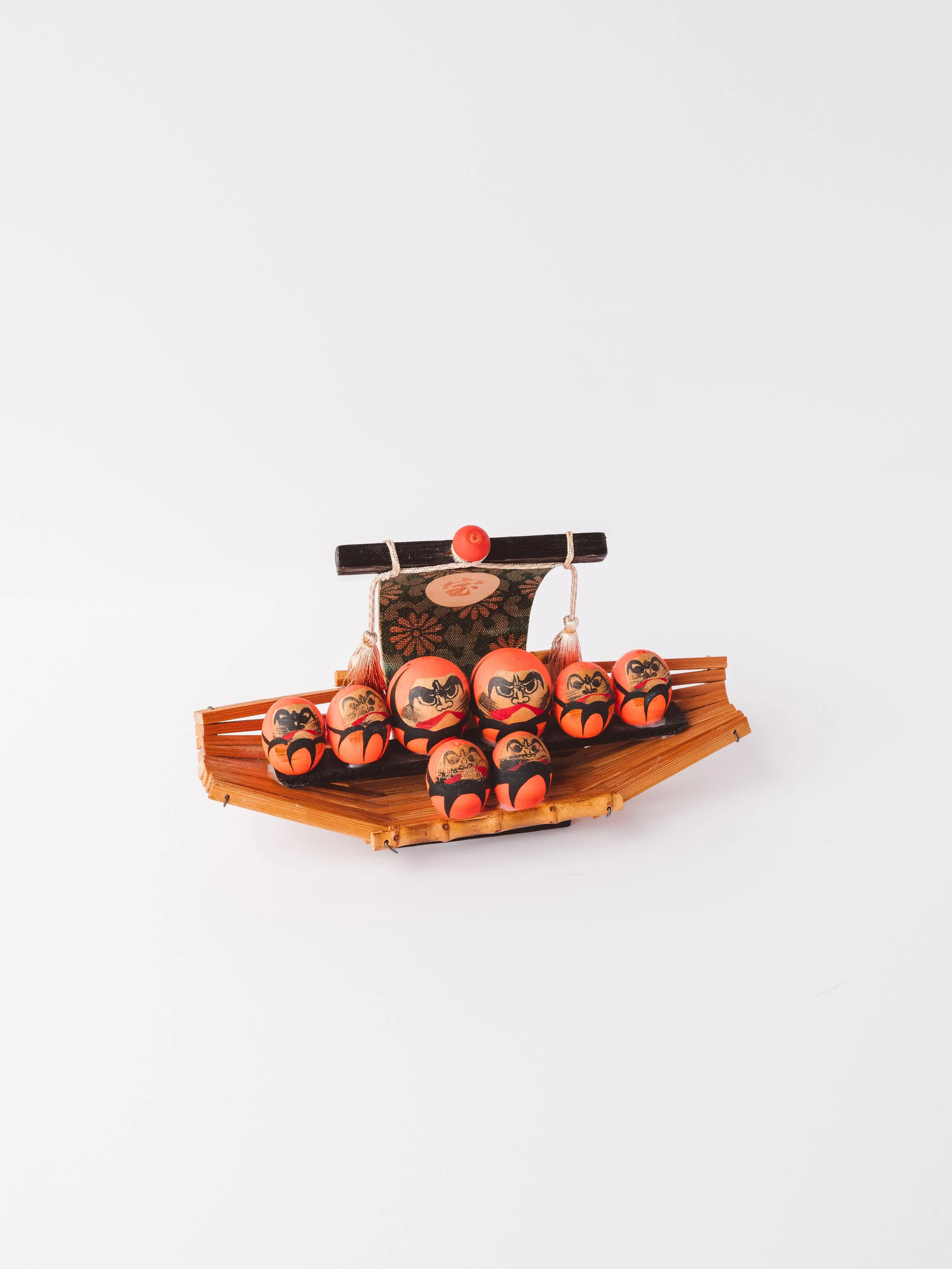 Image 1 of 10
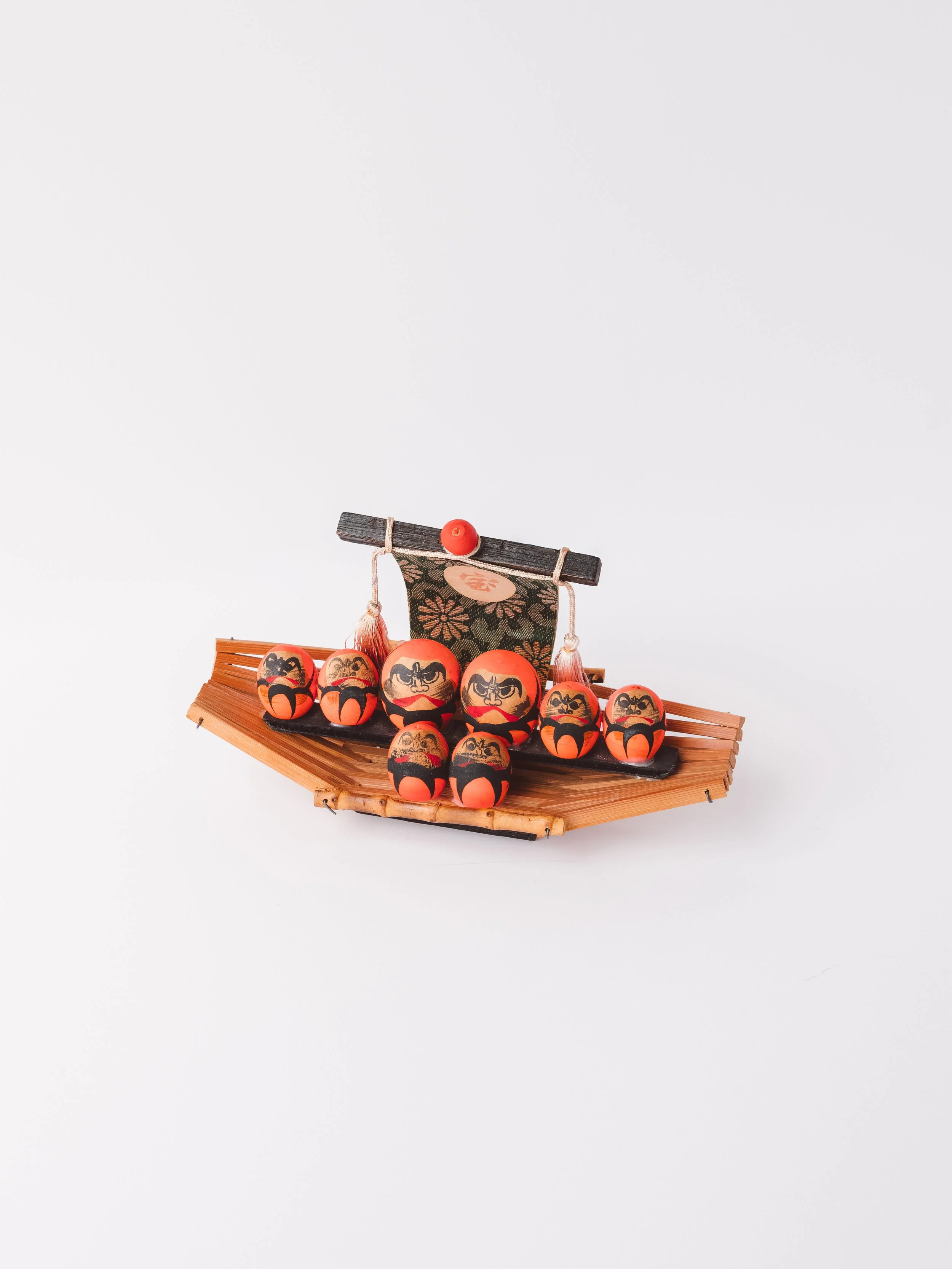 Image 2 of 10
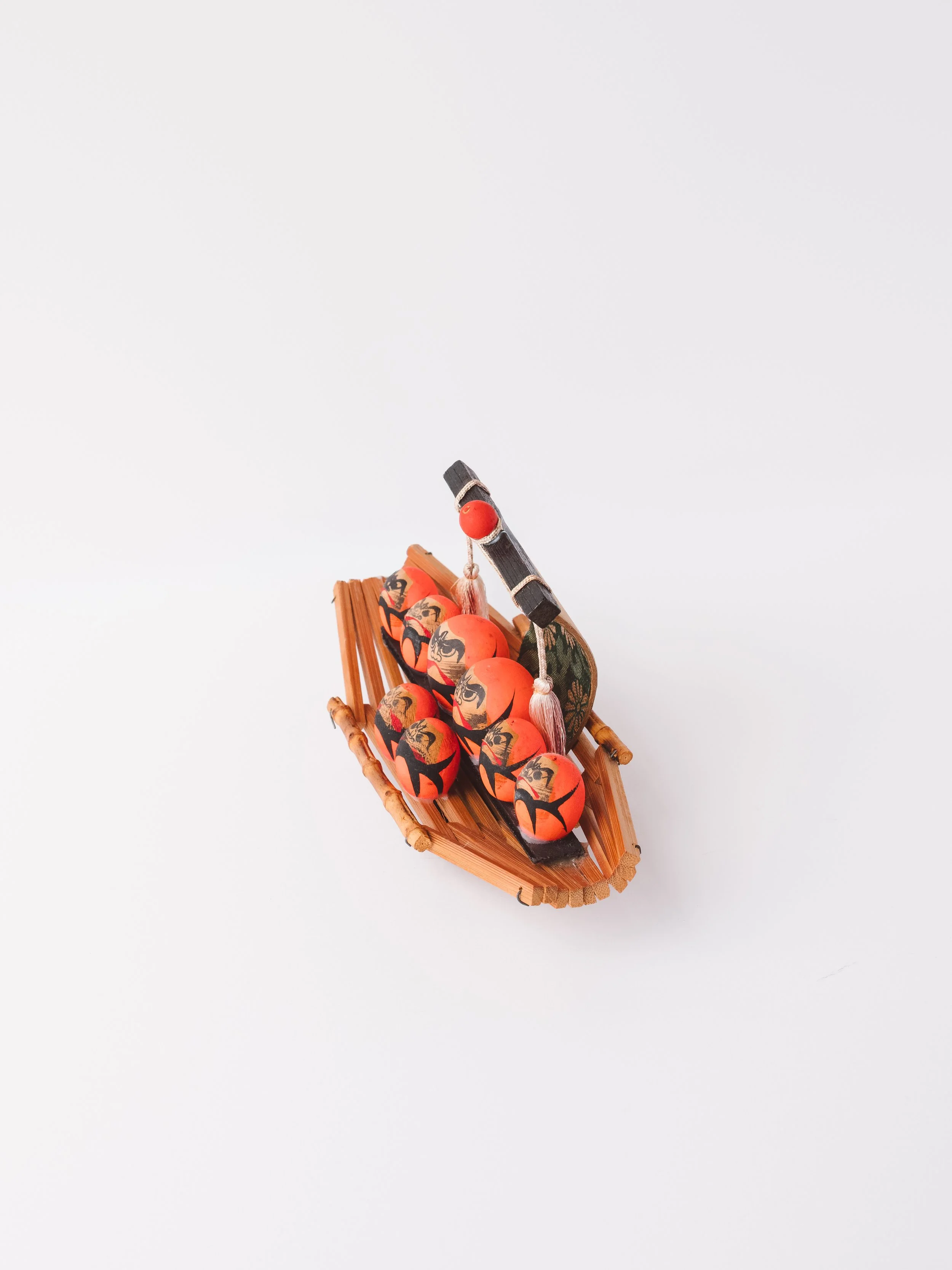 Image 3 of 10
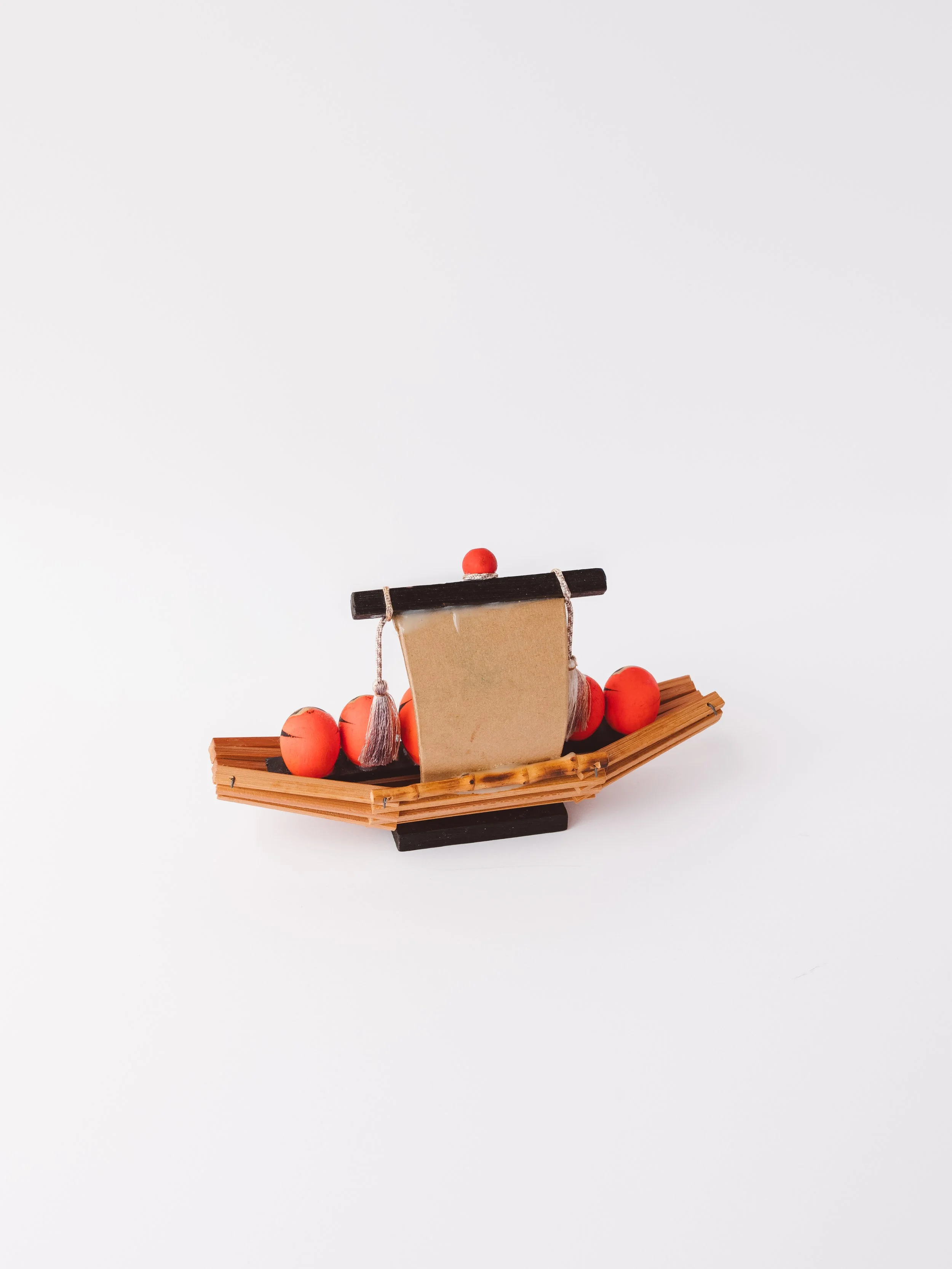 Image 4 of 10
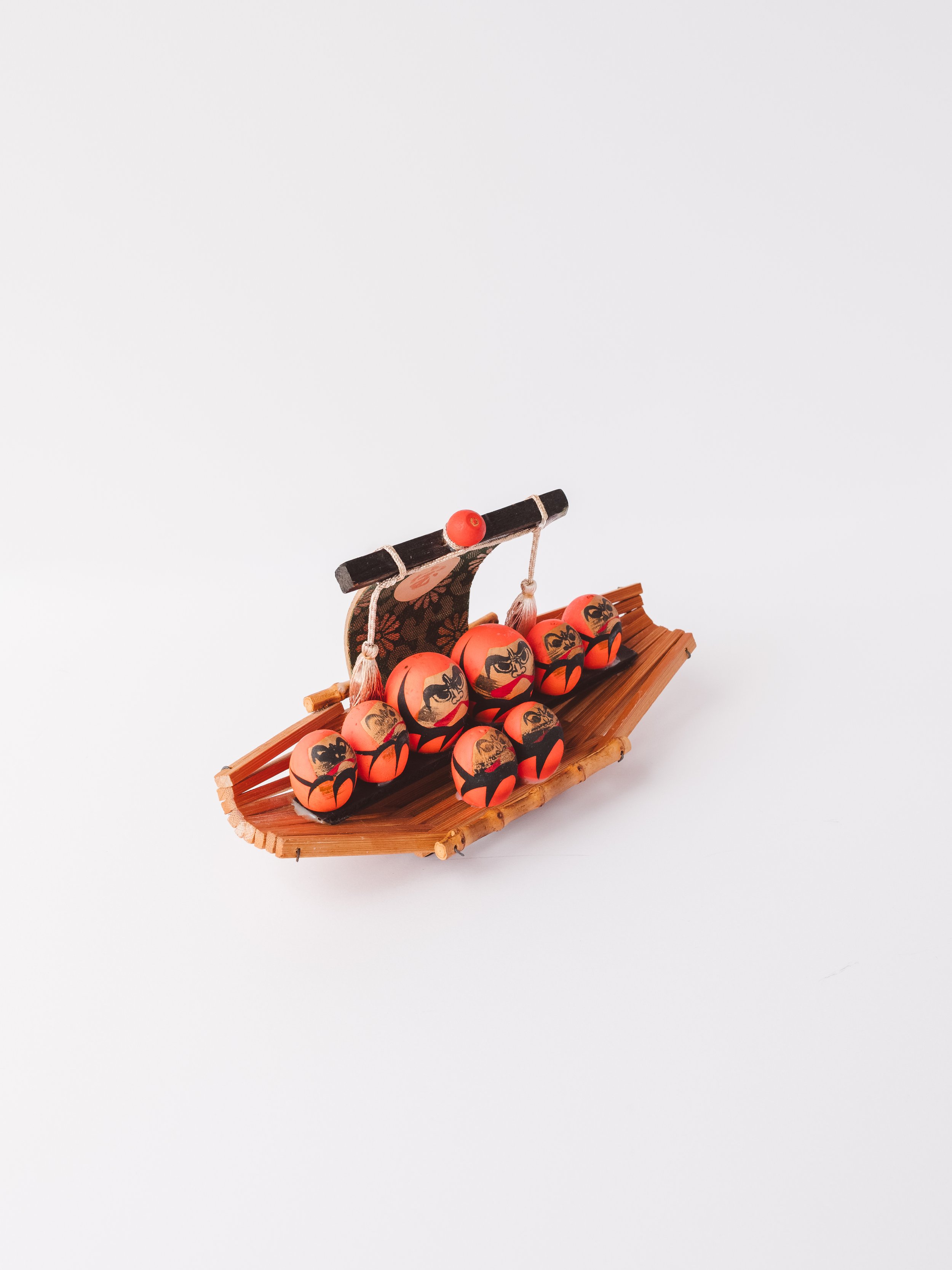 Image 5 of 10
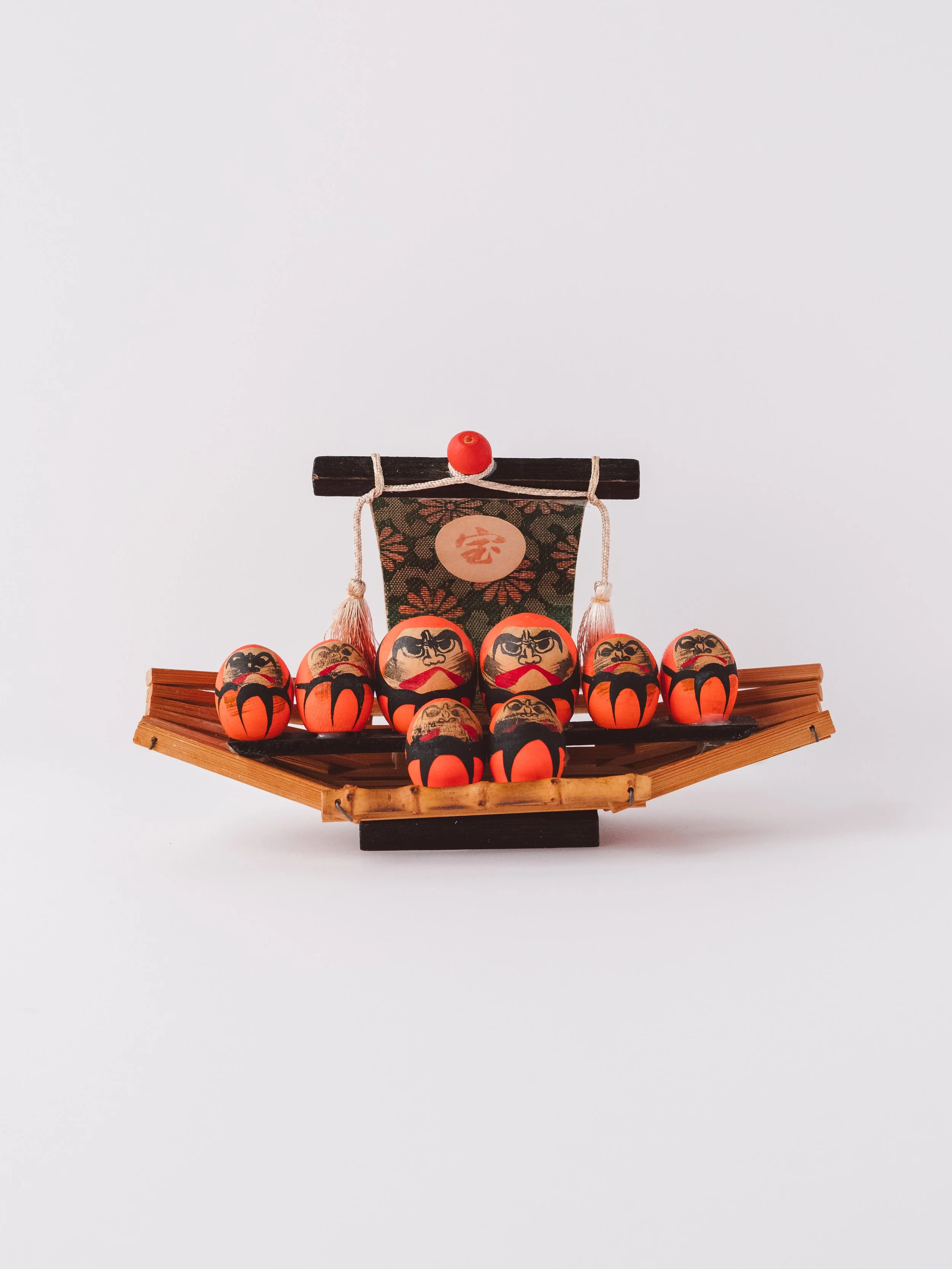 Image 6 of 10
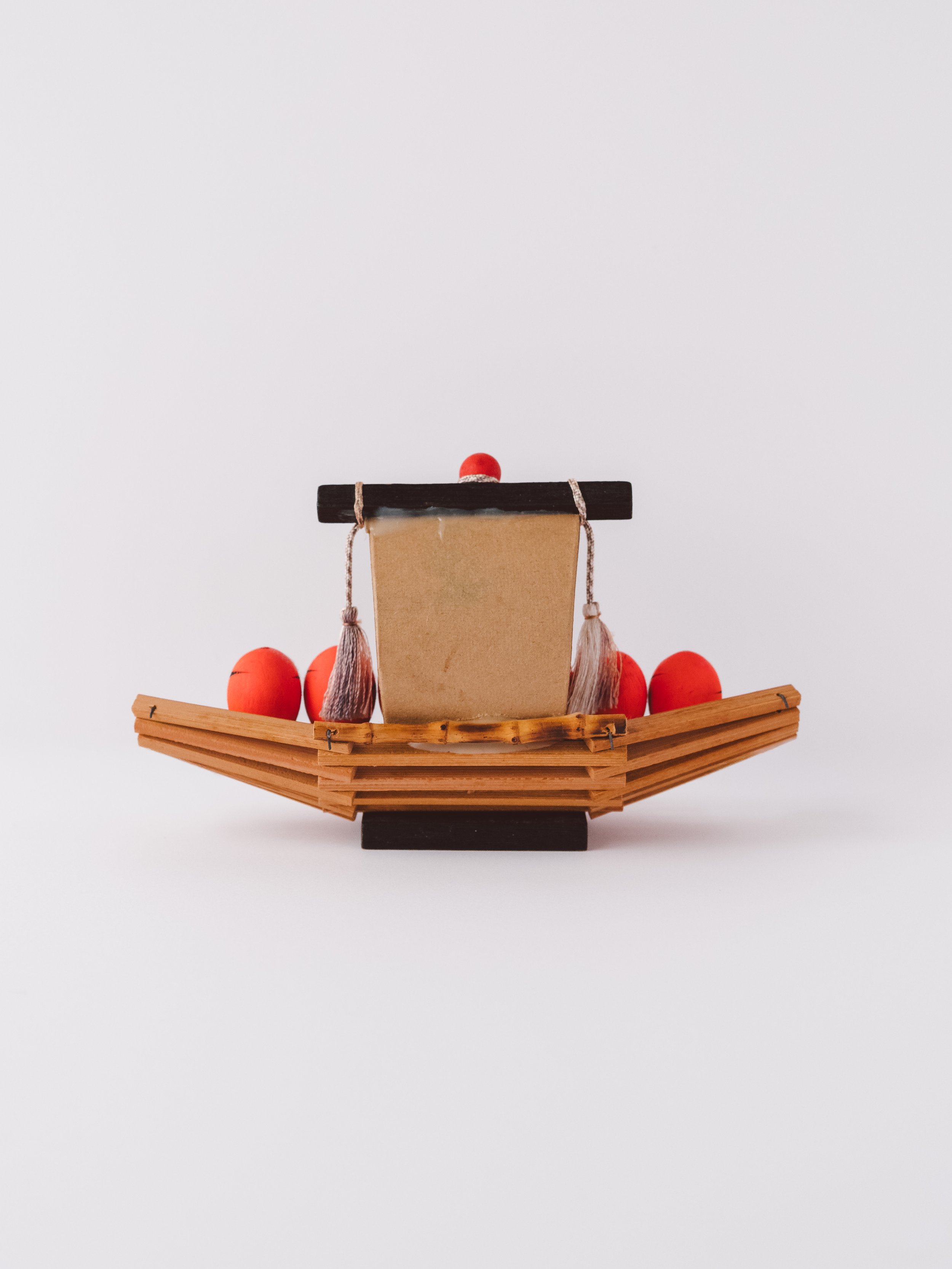 Image 7 of 10
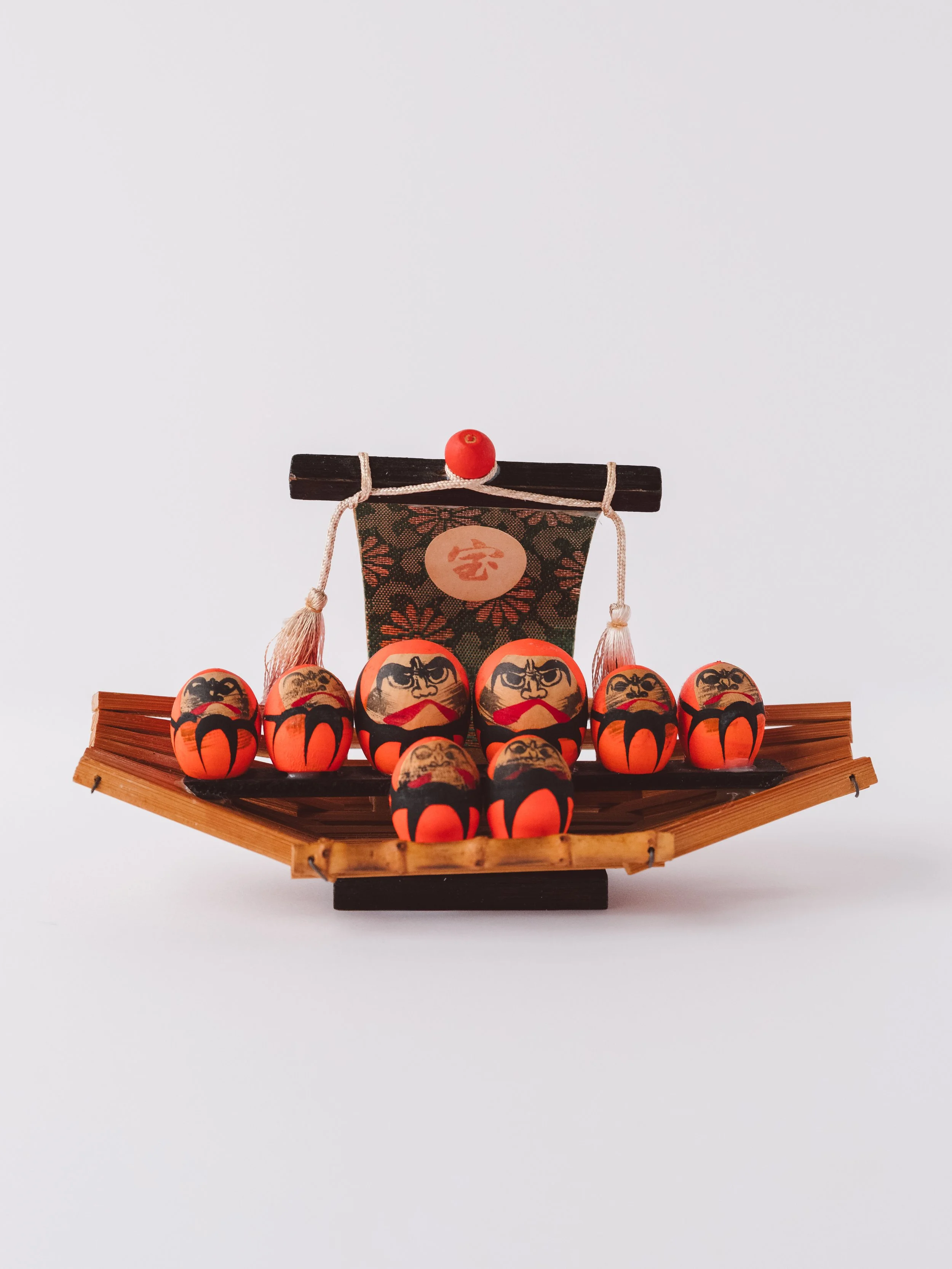 Image 8 of 10
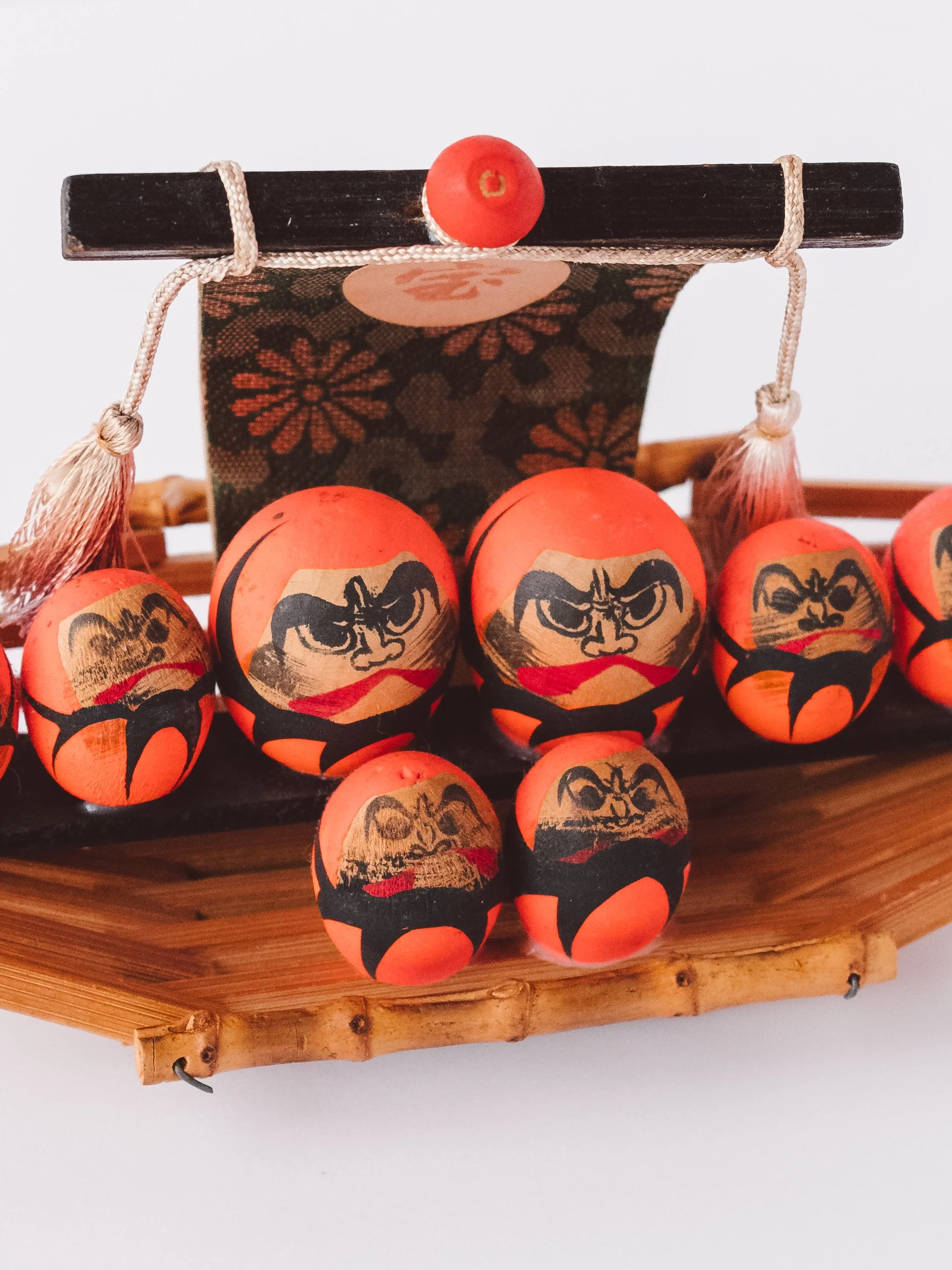 Image 9 of 10
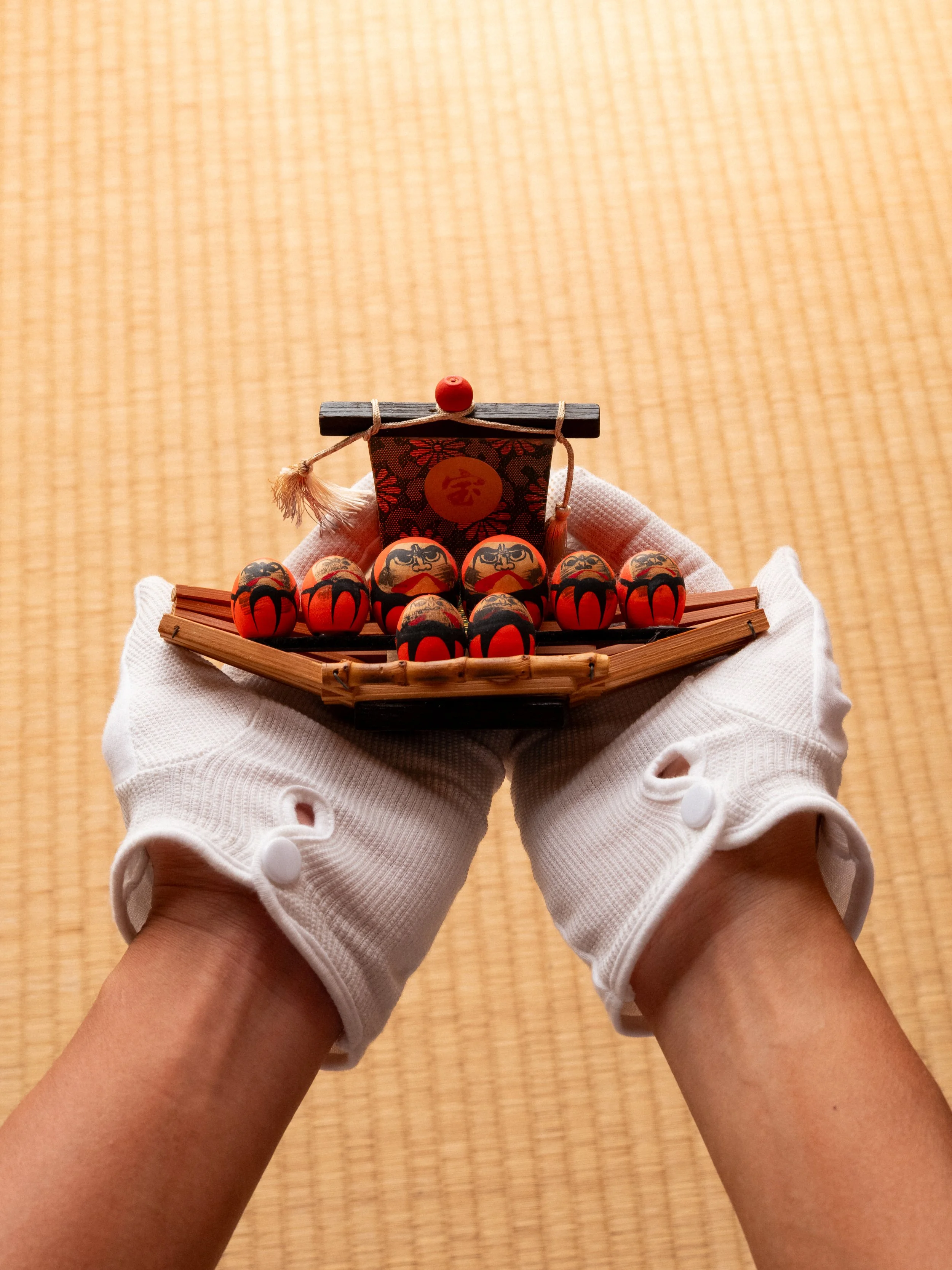 Image 10 of 10