【 The Concept 】
A horse caught at the top of its leap. Its head is turned to the left, calm and composed, as it rises off a craggy Shigaraki-clay base — one foreleg lifted, the others planted, everything forward and upward. On its back it carries a magic mallet, and from that mallet gold coins are tumbling out. Around its body runs a red-and-white cord, and from it hangs a small wooden tablet brushed with two characters: kaiun — "opening fortune." This is not a portrait of a horse. It is a Japanese good-luck figure, built from head to base to pull success, wealth, and welcome guests toward whoever keeps it.
【 What It Carries 】
The object on the horse's back is not a saddle-pack but the uchide-no-kozuchi, the "magic wish-granting mallet" — and gold is pouring from it. In Japanese folklore this small mallet is the ultimate emblem of wealth: shake it, and it grants whatever is wished for, striking gold coins, rice, and treasure into being from nothing. It is the mallet held by Daikokuten, the smiling god of wealth and the harvest and one of the Seven Lucky Gods, who stands upon rice bales with it in his hand; and it is the prize at the heart of the beloved folktale of Issun-bōshi, the one-inch boy, who wins the mallet from a defeated ogre and shakes from it his size, his riches, and his fortune. Here, the rounded, spiral-capped head of the mallet sits on the horse's back, and rows of oval koban — the old gold coins of Japan — spill out and down its flank, with still more koban fallen across the rocky base below. Tassels and a fringed saddle-cloth finish the load. Bound over all of it is a twisted cord of red and white — in Japan the colors of hare, of celebration and ceremony, and a guard against misfortune — tipped with a gilt metal cap. Tied to the cord is a little wooden plaque, stamped with a vermilion seal and reading 開運 / kaiun, "may fortune open." That plaque is a miniature ema, the votive tablet Japanese people hang at shrines to send a wish to the gods — and it tells you plainly what this object is for.
【 Two Clays, One Body 】
The piece is split, deliberately, into two worlds. From the head down through the body, a glossy ash-toned glaze runs olive-green to warm amber, pooling dark in the carved mane and the folds of the load, its surface finely crackled with age. Below the belly, the glaze stops and the bare clay begins: the rock base and legs are unglazed Shigaraki stoneware, glowing scarlet-to-terracotta with black scorching. This is not decoration but the ware itself speaking. Shigaraki — one of Japan's Six Ancient Kilns, fired since the Middle Ages from the sandy clay of an ancient lake bed — is prized for exactly these fireborn effects: hiiro, the "fire color," the pink-to-red blush that iron in the clay takes on in the kiln's oxygen; and koge, the "scorch," the blackened crust left where wood ash settled and burned. The smooth, heaven-facing glaze above and the raw, earth-rooted clay below give the horse a body that is half spirit and half ground.
【 The Horse in Japan 】
The horse has never been an ordinary animal here. In ancient Japan it was the mount the gods rode down to earth — the shinme, the sacred horse — and live horses were offered at shrines to pray for rain or for its ceasing. Because a living horse was a gift only emperors could give, people came to offer horses of wood and clay instead, and at last a painted wooden tablet: the ema, literally "picture-horse," still hung by the millions at shrines today. The kaiun plaque on this figure descends directly from that custom. And the pose — reared and striding, gathering to spring forward — is the horse as an emblem of raw life force and of pushing through and rising: success, advancement, the leap forward.
【 Left-Facing Fortune 】
That the horse turns to the left is not accidental. The left-facing horse, the hidari-uma, is one of Japan's most loved luck-charms, and the reasons layer up through the language itself. Read uma (horse) backwards and you get mau, "to dance" — the dance of celebration, fortune dancing in. The mirrored form of the character is said to resemble an old drawstring purse, whose mouth pulls tight so money enters and never leaves. A horse facing against the usual direction is read as a horse leading a person in — and so a bringer of guests and custom, of senkyaku-banrai, "a thousand guests, ten thousand comings." And because a rider always mounts from the left, the left-horse is the one that "never lets you fall" — a charm for a life without stumbles. A horse turned to the left and shaking gold from a magic mallet gathers every one of these meanings into a single figure.
【 Where to Place It 】
In Japanese practice the horse belongs to the zodiac sign uma, to the element fire, and to the south. The one rule that matters most: face the horse into the room, never out the door — a horse turned outward is read as carrying your good fortune away, while a horse turned inward brings it home. Set it on a clean, stable surface above waist height — an entryway console, a shop counter, an office shelf — not on the floor and not beside anything unclean. Traditional placements: the south for reputation and success, the east for new ventures and fresh starts, and the west — fitting for a horse that already pours out gold — for wealth and thriving trade.
【 Care 】
The unglazed clay is porous, so keep it dry: dust it with a soft brush or cloth. If it ever needs more, wash gently with a little mild soap and no abrasive, then let it dry fully, for days if need be, before it goes back on the shelf — trapped moisture is the only real enemy of bare Shigaraki clay. Over the years the glaze will settle and the clay will deepen in tone; in Japan this slow change is welcomed, not fought — the piece's keshiki, its "landscape," growing richer with time.
【 Function & What It Brings 】
Keep it, place it, or give it. As a talisman it is aimed squarely at prosperity and momentum — a natural piece for a shop, an office, or a home entrance, and a strong gift for a new business, a promotion, or the New Year. As an object it is simply a commanding one: a hand-finished Shigaraki figure with real fireborn color, big enough to anchor a console or a counter and hold a room's attention.
【 The Texture 】
Glazed and unglazed stoneware in one body. Above: a glassy, crackled ash-glaze, smooth and cool, olive shading to amber. Below: bare, sandy Shigaraki clay, scarlet and terracotta flecked with black scorch, faintly rough to the touch. The cord is soft twisted silk-like thread in red and white with a gilt cap; the plaque is light wood.
【 Presence 】
Powerful and celebratory at once. The dark carved glaze and the fire-colored base read as old and earthen, while the spilling gold coins, the red-and-white cord, and the bold kaiun plaque give it the bright, festive charge of a New Year charm.
Archive Note: The number in the name (1990) is a catalogue reference echoing a Year of the Horse in the twelve-year zodiac cycle, to which this horse belongs. It is NOT the date this piece was made.
Provenance Note: Sourced from a private collection in Japan. A Shigaraki-ware auspicious figure.
Condition Note: Sold as acquired, in very good condition, complete with its red-and-white cord and its wooden "kaiun" plaque. The fine crackle in the glaze, the scarlet fire-color, and the black scorching on the base are natural features of Shigaraki ware, not damage. Please see the photographs as part of the description.


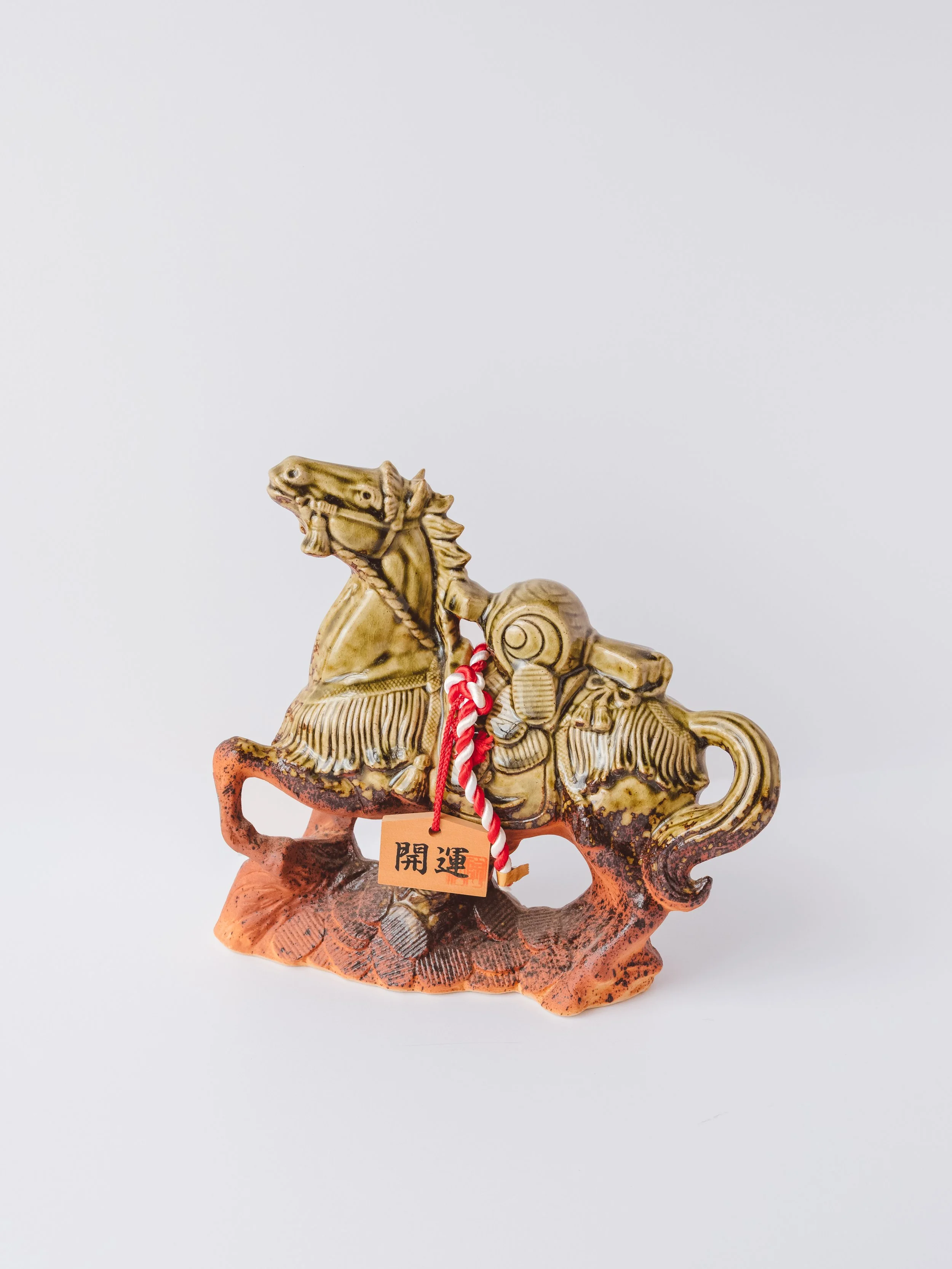 Image 1 of 8
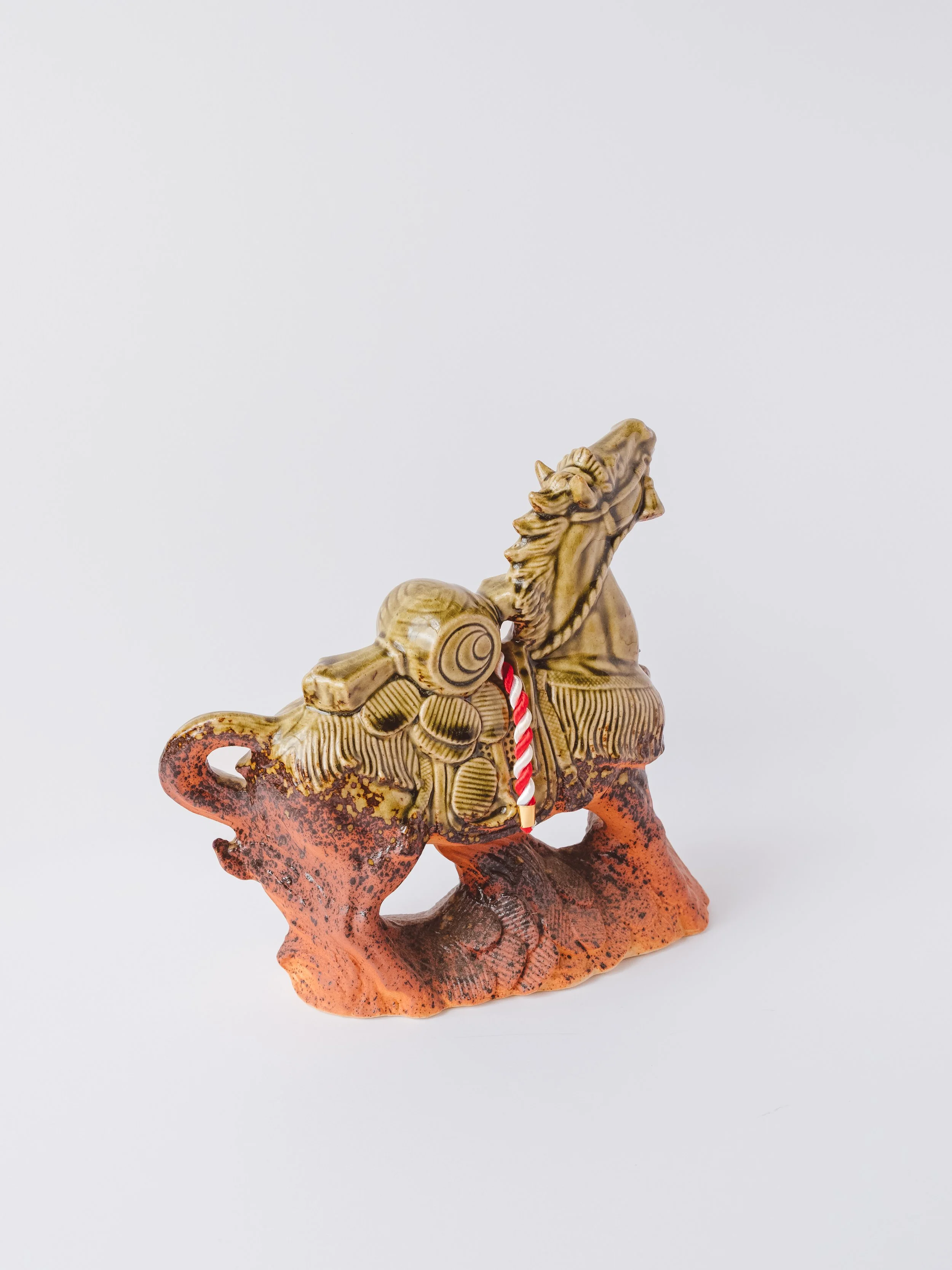 Image 2 of 8
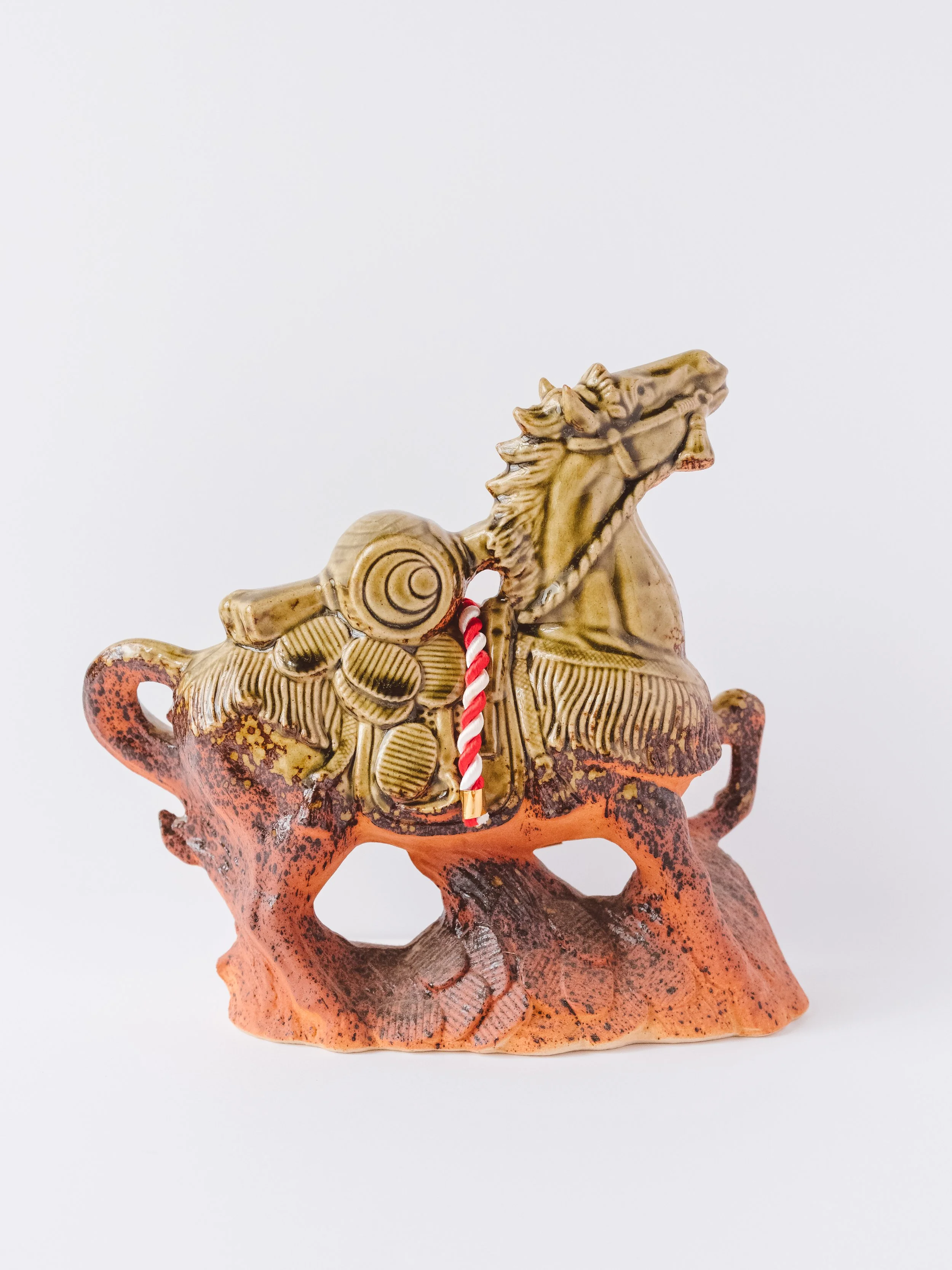 Image 3 of 8
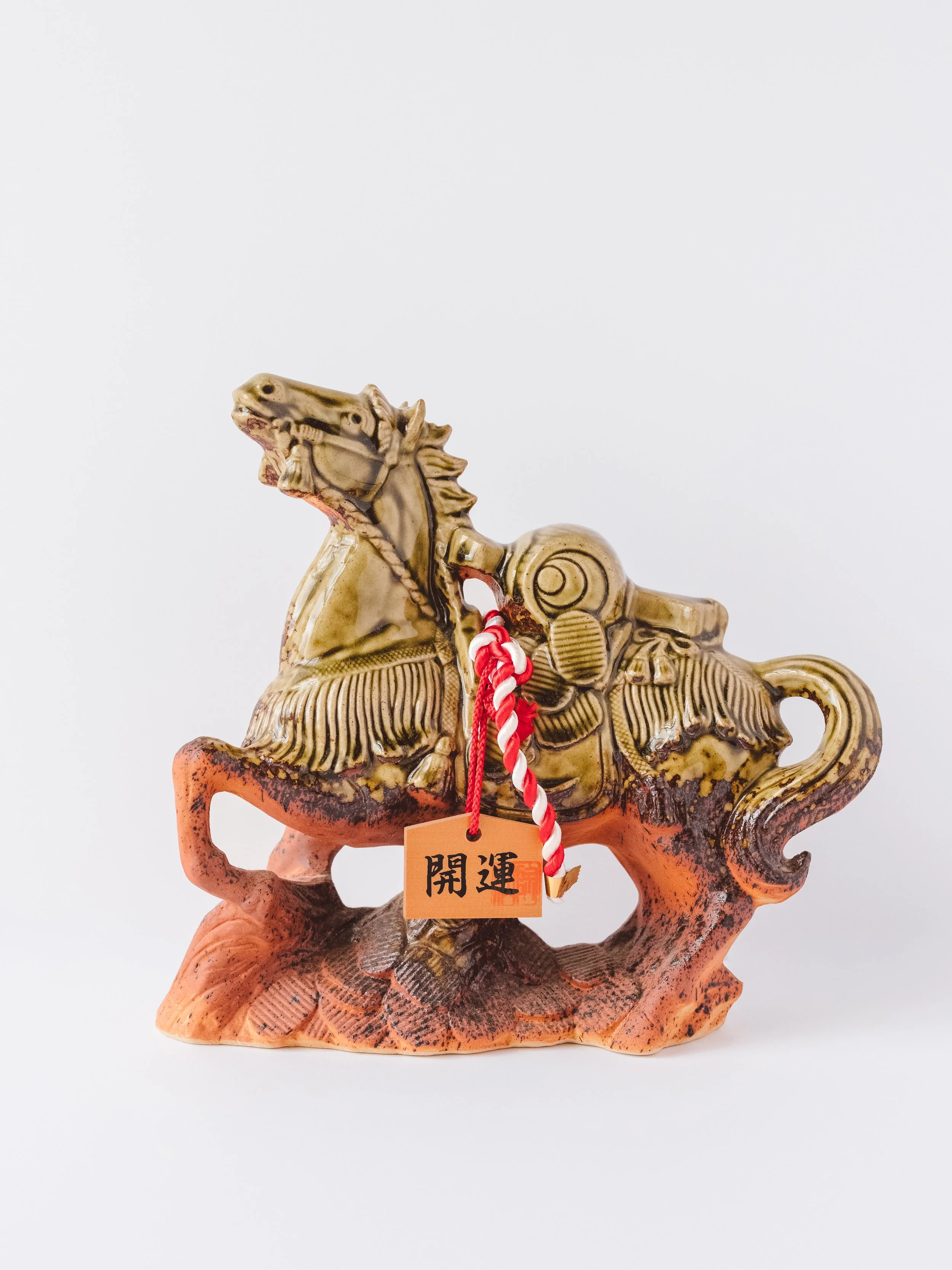 Image 4 of 8
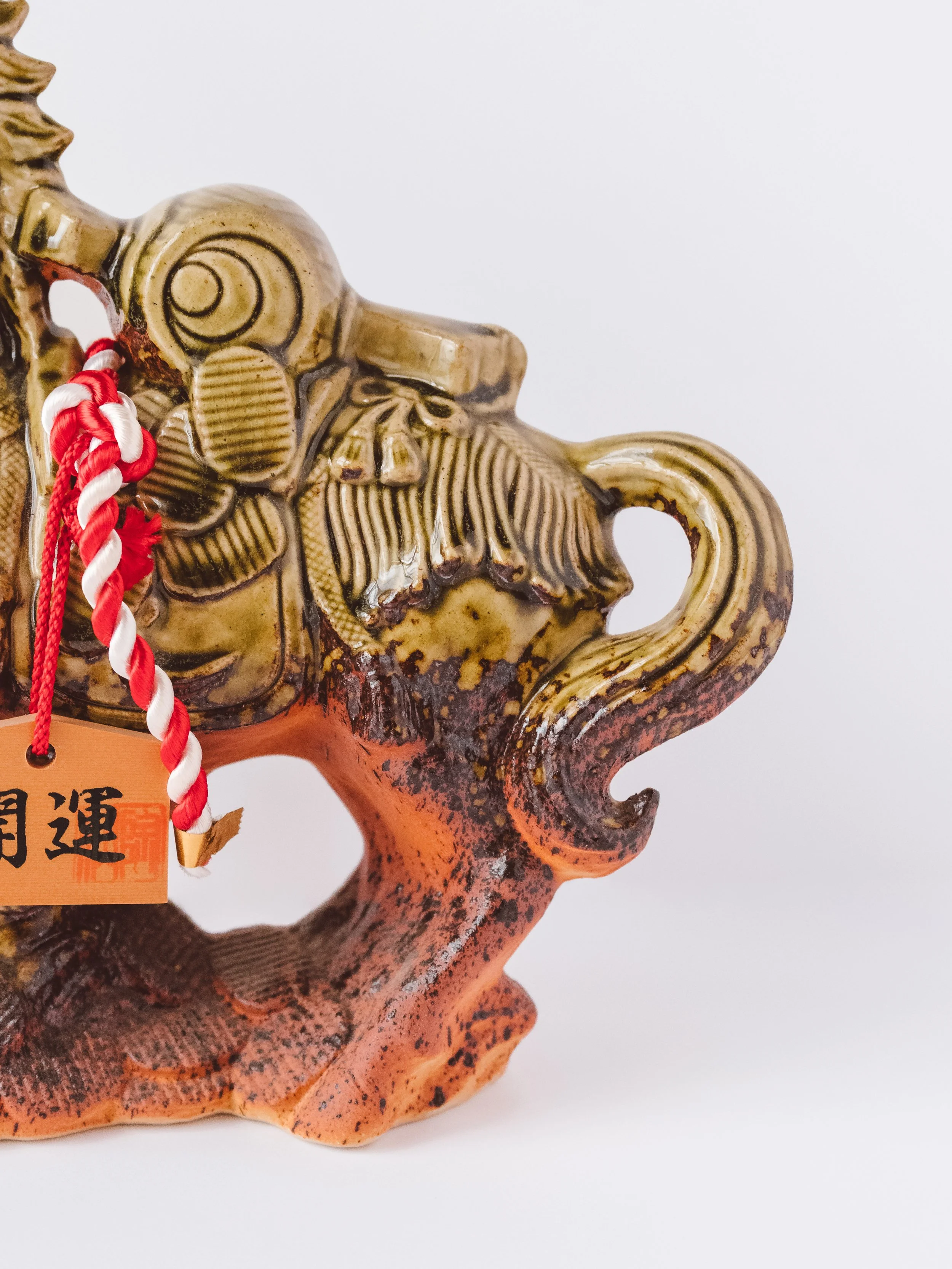 Image 5 of 8
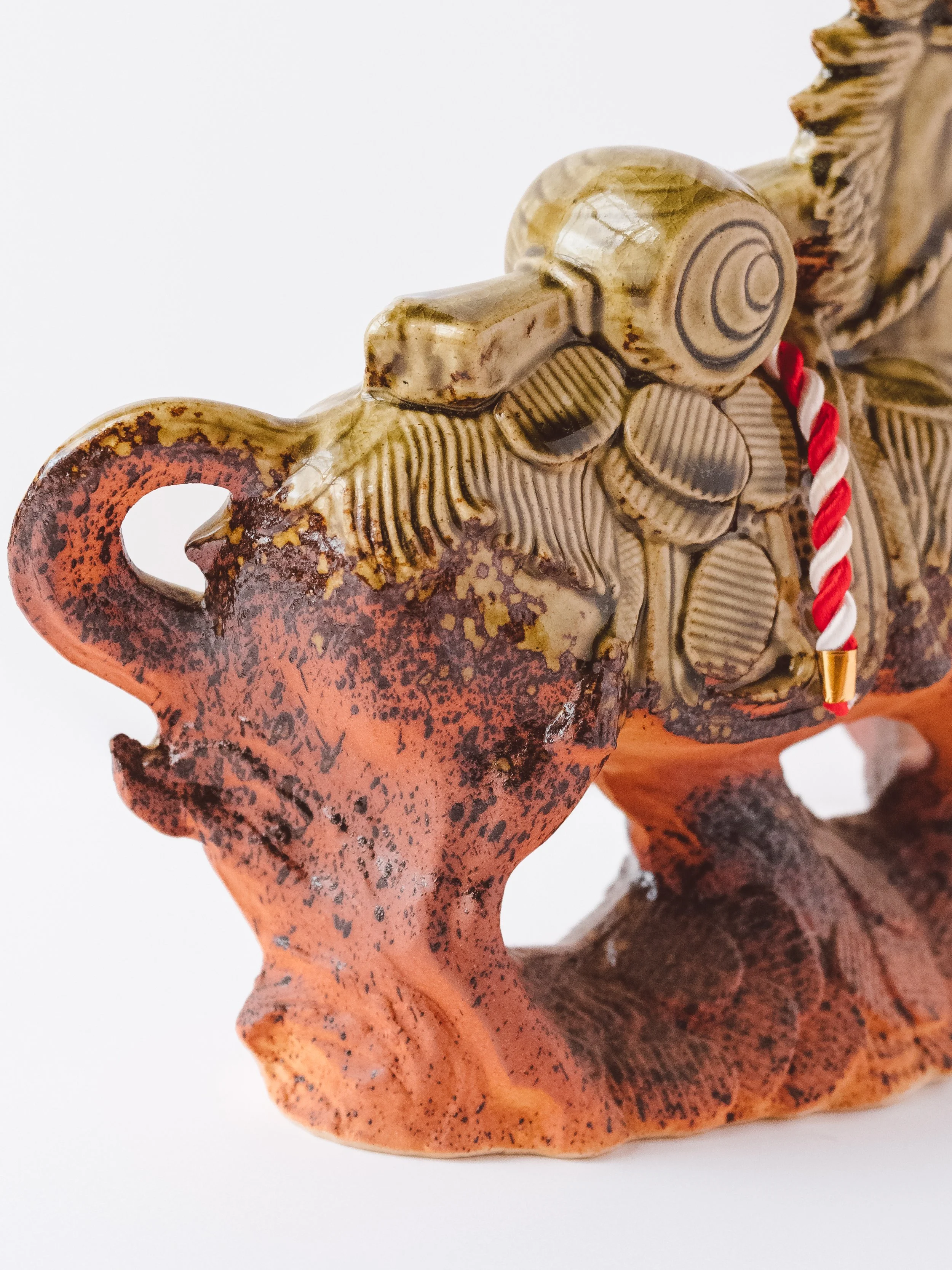 Image 6 of 8
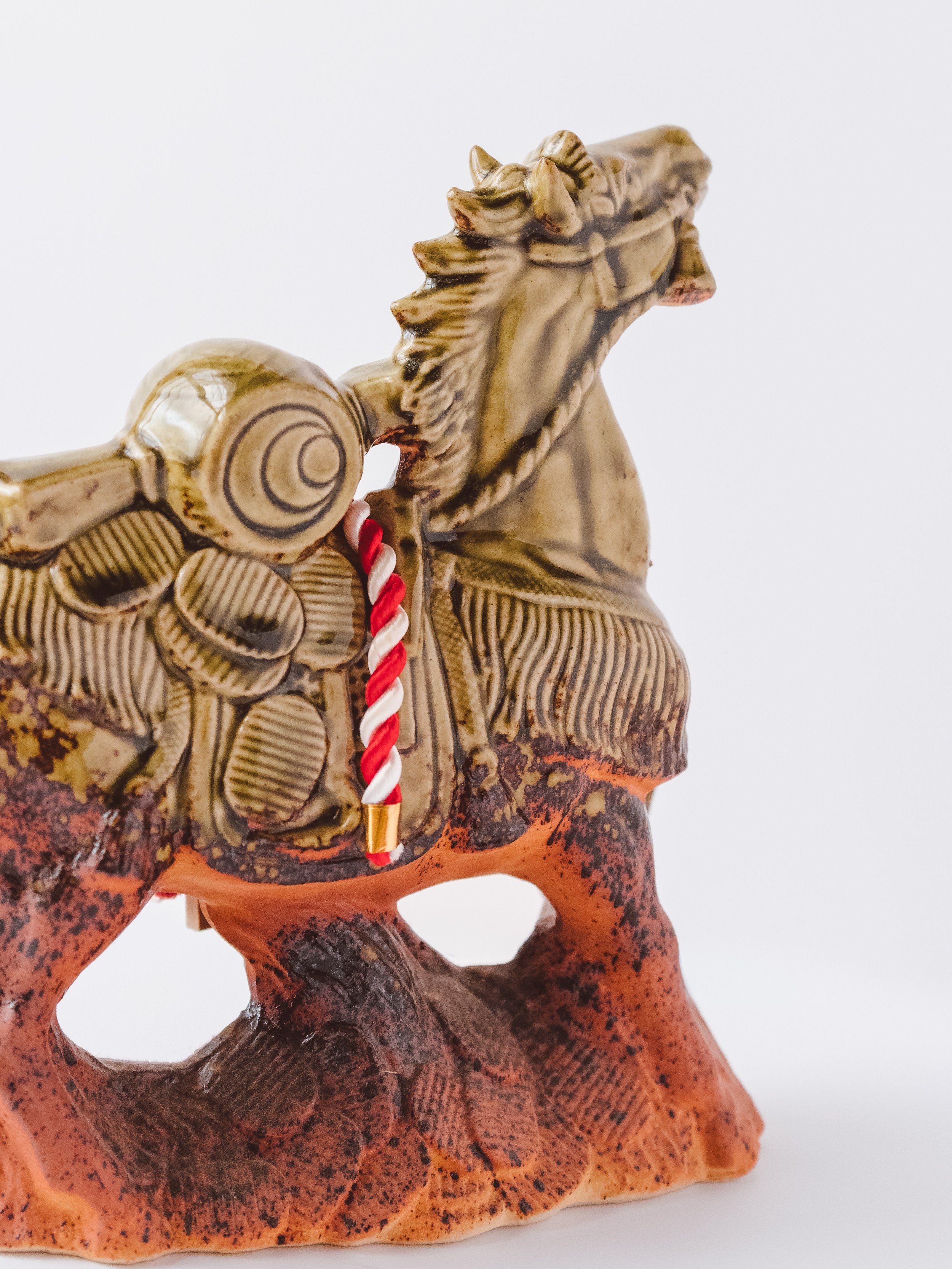 Image 7 of 8
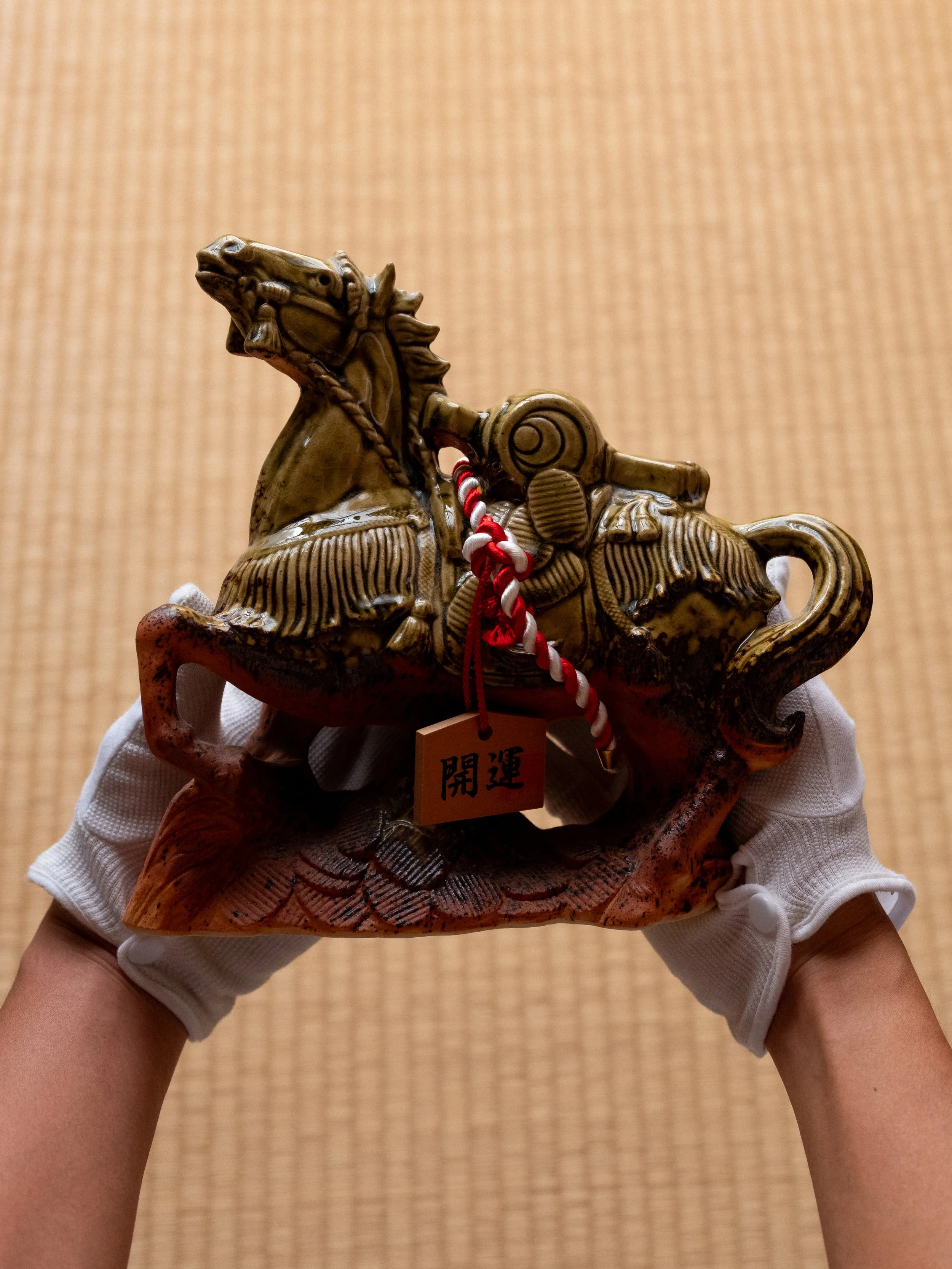 Image 8 of 8